JORDAN : ‘We are in a phase as big as the printing press’: How Jordan became Arab world’s blueprint for media literacy

In interview with Arab News, Jordan Media Institute dean Dr. Ziad Rifai discusses urgent need to equip citizens with tools to navigate today’s information ecosystem

Working alongside UNESCO and the Jordanian government, JMI has spearheaded 2 successive national media literacy strategies, establishing Jordan as a regional model

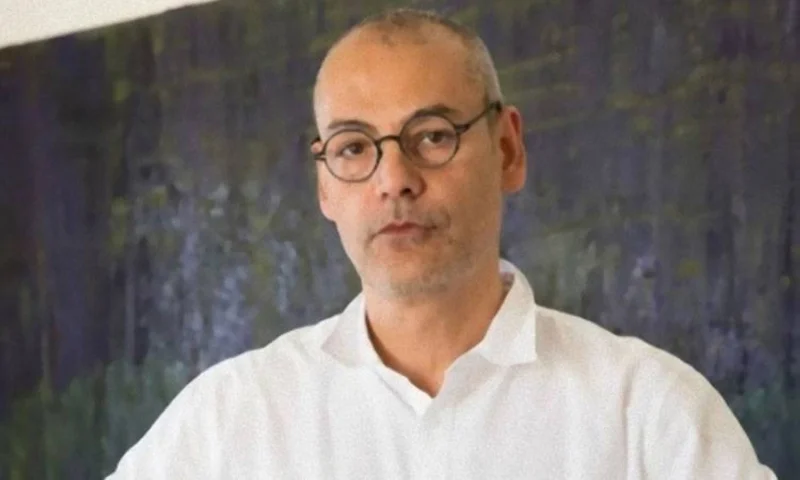
Sitting comfortably in his office in Amman, Dr. Ziad Rifai does not immediately strike you as someone whose grand mission is to fight information warfare.

The dean of the Jordan Media Institute and architect of its media literacy program — one of the first and most comprehensive initiatives of its kind in the Arab region — draws on decades of experience, appearing at times measured while promising to take on a David vs. Goliath challenge.

“Everybody now that has a phone basically has a TV, a radio station, a newspaper. All the media have been consolidated into this small phone,” he told Arab News. “And with that, with the amount of abuse that we’ve witnessed — the hate speech, the echo chambers, the misinformation, the disinformation, the rumors — all that necessitated that we need to do something about it.”

Founded in 2006 by HRH Princess Rym Ali as the first institution in the region to offer an Arabic-language MA in journalism and modern media, in partnership with the University of Jordan, JMI has evolved to keep pace with a rapidly shifting industry. Over the years it has introduced new courses — including mobile journalism and data journalism — alongside its media literacy program.

“Our focus is on journalism, creating journalists who are experienced, dedicated, ethical. That’s the core of our mission,” Rifai said. “But, as you know very well, the media scene is changing rapidly. So, while keeping the basic principles, we had to branch out into the new media scene.”

Rifai, who has worked across newsrooms, the UN, Jordan TV and the Higher Media Council, has watched this transformation unfold over five decades. He recalls a Jordan with one radio station, then the arrival of a single television channel and a handful of newspapers. Invoking Wilbur Schramm — the American scholar widely regarded as the father of modern communication theory, whose four-press model was first published in 1956 — he says the world has grown far more complex since then.

“Things have gotten so mixed up,” he added. “We are in a phase that’s as big as inventing the printing press, if not more. The problem is that the forces that are pushing the change, nobody knows who they are. And I’m not so sure if anybody can control where they’re going. Not to mention if they know where they’re going.”

That chaos, he suggested, is most acutely felt in the information ecosystem, where speed routinely outpaces safeguards — and where the general public is left with few tools to navigate the difference.

“The biggest challenge we have is with the speed that things change. The problem is how to catch up and have enough time to do interventions, awareness, education and introduce legislations.”

AI has become the defining example. In April, UNESCO examined how algorithmic AI systems are transforming information dynamics and amplifying risks — from misinformation to deepfakes — ultimately threatening trust in media and democratic integrity. The report argues that media and information literacy is the critical response. Yet follow-up initiatives, Rifai said, too often become mired in bureaucracy.

“For any initiative like this to take hold in a society, you need a champion. You need someone who believes in the idea and who pushes (it) forward,” he added.

JMI has been that champion in Jordan, working with the government domestically and relying on UNESCO as an international partner to strengthen credibility.

“We are the catalyst, we’re the advocates. UNESCO has the expertise and the global knowledge, but not the local,” said Rifai. “However, without the state, nothing will take hold, especially in our region.”

The model, he argues, is replicable. JMI is already exporting its expertise to a group of countries across the region.

“If (a country) took the strategy that we have and looked at it, they might change dates, they might change budgets, they might change partners, but the basic pillars of the strategy would probably be applicable in most of our region because the phenomenon is universal.”

JMI’s work operates on two levels: national policy design and hands-on training. Following an experimentation phase around 2014, Jordan moved to official adoption in 2019, when media literacy was placed on the government’s priority list alongside pilot projects in schools and youth spaces. The first National Strategy for Media and Information Literacy (2020–2023) earned recognition from UNESCO and a number of Arab and European officials, establishing Jordan as the first Arab country with a comprehensive, formal MIL plan. In late 2025, Jordan launched a second strategy for 2026–2029, again with UNESCO and JMI as core partners.

“The second strategy has full ownership of the government and all the elements of sustainability — that’s what the first strategy did not have,” Rifai said.

The program targets all age groups and all sectors of society, adjusting only in terms of sophistication.

“It essentially targets all sectors of operation. What differs is the level of sophistication,” said Rifai, adding that a 50-year-old housewife can be as active a disseminator of misinformation as a teenager. MIL concepts are now integrated into school curricula across subjects including religion, social sciences and Arabic — but Rifai is candid about the gap between integration and application.

“In my previous career at the UN, we integrated concepts of reproductive health and family planning in two books. The challenge was that teachers didn’t teach it. It was in the book, but in the classroom, they just skipped it. Either because they didn’t believe in it, or because they thought it wasn’t important.”

Monitoring implementation, he acknowledges, is the next frontier. “If awareness is not translated to behavioral impact or behavioral change, it’s not worth the objective. At the end of the day, the campaign should change behaviors and not just create that awareness. Awareness might be the first step in that direction.”

The ambition extends beyond classrooms. This week, JMI signed a memorandum of understanding with Jordan’s Higher Council for the Rights of Persons with Disabilities to develop a code of ethics for journalists covering disability — an area Rifai describes as a blind spot in regional media.

“People with disabilities are absent, at least in our region, from the media scene,” he said. “Whenever you see a person with disability in media, it’s either portrayed as, ‘oh, poor guy,’ or, ‘oh, how wonderful, he got a degree in science.’ Both, from their perspective, it’s the wrong approach. Just treat them like normal human beings.”

He framed the partnership as explicitly two-directional: JMI bringing journalism expertise, the council bringing lived experience.

Rifai acknowledges the world remains full of challenges, but believes the goal is to take back enough control to exploit technology’s possibilities rather than be consumed by them.

“It’s not easy to predict where we’re going. What we know for sure is that things seem to be going out of hand, in terms of media proliferation. We’re being pushed to becoming more and more reliant on (a specific technology), and less and less having any input on controlling where it’s going.”

He sees it, ultimately, as a double-edged sword. “The chaotic scene has its pitfalls,” he said, “but at the end of the day, it is allowing everybody to say what they want. For the first time, there’s freedom of information and everybody now is telling his or her story without the control. It could go either way, and I wouldn’t put money on either side of that prediction.”

For JMI, however, the mission remains constant. “No matter what happens with the media, we should not lose sight of that importance of having a proper journalism. At the end of the day, what matters is what you’re going to say and how you’re going to say it. We will continue to hold the principles and the ethical message of proper journalism. That will continue to be our role, no matter what new technologies or wars come.”

source/content: arabnews.com (headlines edited)

____________
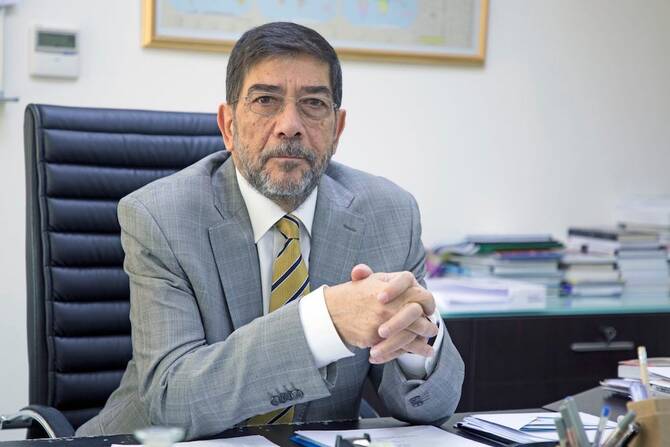
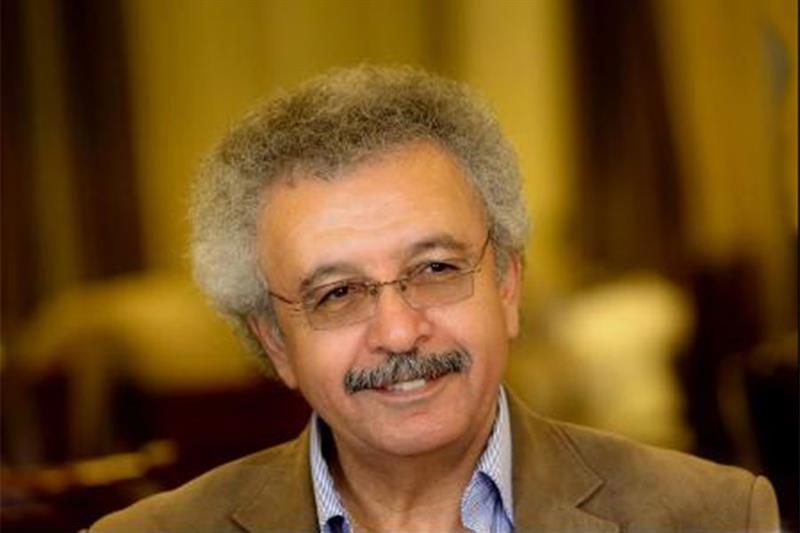
Dr. Ziad Rifai, dean of the Jordan Media Institute and architect of its media literacy program, spoke to Arab News about one of the first and most comprehensive initiatives of its kind in the Arab region. (Supplied)

___________

JORDAN
ABU DHABI, U.A.E : Sheikh Zayed Book Award names 2026 winners and outlines plans for 20th anniversary

Authors, scholars and institutions from Arab world and beyond honoured as Abu Dhabi prize celebrates two decades of cultural influence.

The 2026 winners of the Sheikh Zayed Book Award were announced on Friday, marking two decades of one of the Arab world’s most influential literary prizes.

Established in 2006 and held under the patronage of President Sheikh Mohamed, the award has grown into a fixture on the region’s cultural calendar, drawing submissions from across the world and supporting the global reach of Arabic literature.

This year’s winners reflect that international scope, with recipients from countries including Egypt, Morocco, Germany and the UAE.

Egyptian writer Ashraf Elashmawy took the Literature prize for his novel Births in the Zoo, a work that explores shifts in Egyptian society through closely observed, character-driven storytelling. Moroccan researcher Mustapha Rajouane won in the Young Author category for a study examining how rhetoric shapes narrative in the modern Arabic novel.

In Translation, Iraqi-American scholar Nawal Nasrallah has been recognised for her English edition of a 13th-century Arabic culinary text, bringing a complex historical manuscript to a wider readership. Jordanian academic Zuhair Tawfiq received the Literary and Art Criticism award for his study of how Arab and western cultures have historically imagined one another.

German writer and translator Stefan Weidner won in the Arab Culture in Other Languages category for a major anthology of pre-Islamic Arabic poetry, while the Emirates Literature Foundation was honoured for its role in developing the UAE’s literary scene and supporting readers and writers.

The Encyclopaedias and Lexicons category went to Egyptian academic Mohamed Elkhosht for his six-volume Encyclopaedia of World Religions, and veteran Egyptian singer Nagat Al Saghira was named Cultural Personality of the Year, recognising a career that has helped shape modern Arabic song and language.

More than 4,000 submissions were received from 74 countries, underlining the award’s growing international profile. Since its launch, it has attracted more than 33,000 entries and honoured 136 winners, including writers, translators and cultural institutions.

Mohamed Khalifa Al Mubarak , chairman of the Department of Culture and Tourism – Abu Dhabi, said the award continues to build on the UAE’s long-standing investment in culture and knowledge, while Ali bin Tamim, secretary general of the award, described it as a platform that has helped shape contemporary Arabic literary and research landscapes.

A programme of events is planned throughout the year to mark the award’s 20th anniversary. Winners will be honoured at a ceremony in Abu Dhabi, with Al Saghira receiving Dh1 million for being Cultural Personality of the Year, and other category winners awarded Dh750,000 each.

source/content: nationalnews.com (headline edited)

____________

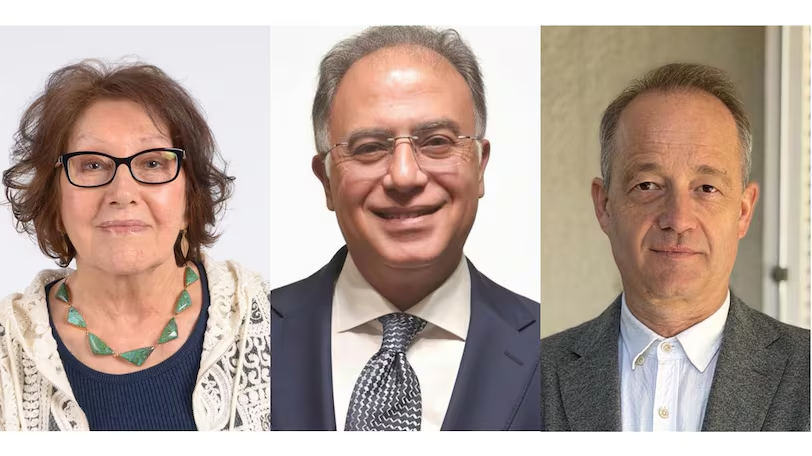
From left, Nawal Nasrallah, Ashraf Elashmawy and Stefan Weidner are among the winners of the 20th edition. Photo: Sheikh Zayed Book Award

_____________________________________________

EGYPT / IRAQ / JORDAN / MOROCCO / U.A.E

ARAB ARTEFACTS : France restitution bill puts five colonial-era artefacts from Algeria, Egypt and Jordan back in focus

As country debates easing return of treasures, attention turns to regional pieces still held in its national collections.

French lawmakers are debating a new bill aimed at simplifying the return of colonial-era cultural objects to their countries of origin, drawing renewed attention to artefacts still held in France’s national collections, which number in the tens of thousands.

The draft legislation was unanimously approved by the Senate in January and now requires backing from the lower house, the Assemblee Nationale, before it can become a law.

While not all cases are at the same stage, these five objects from Algeria, Egypt and Jordan sit within that broader restitution debate, whether through formal state requests, public campaigns or long-standing calls for their return.

1. Baba Merzoug, Algeria

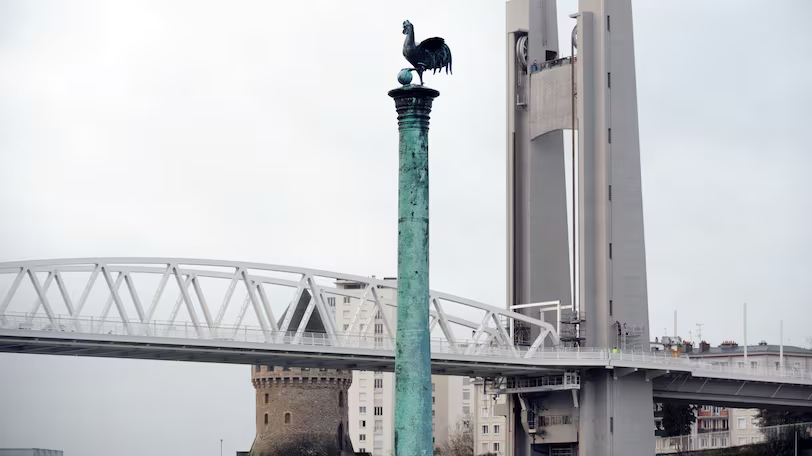
The 16th-century cannon known as Baba Merzoug at the Arsenal of Brest in western France. AFP

The 16th-century bronze cannon from the Ottoman era in Algiers is housed at the naval base in the French coastal city of Brest after being taken by French forces in 1830 following the capture of Algiers.

While seized as a spoil of war, the cannon remains a politically charged symbol of French colonial rule in Algeria. The Algerian government formally requested its return in 2012, and the cannon was explicitly cited during the April 2026 parliamentary debate over France’s proposed restitution framework.

2. Emir Abdelkader’s effects, Algeria

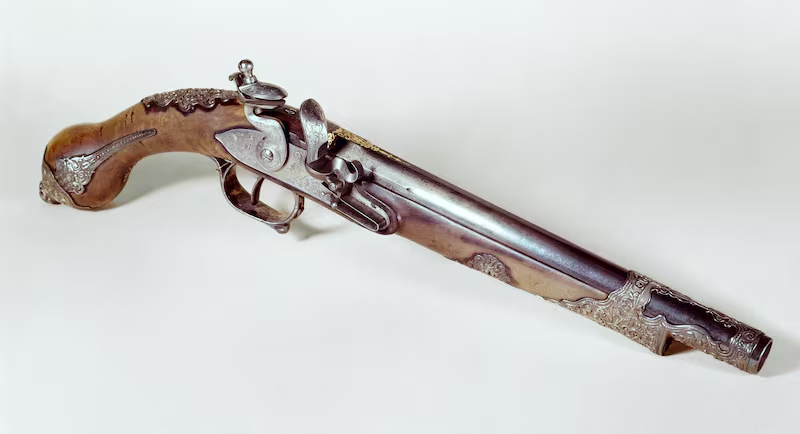
Rather than a single object, this refers to personal items associated with the 19th-century Algerian leader Emir Abdelkader, who led the resistance against French invasion before his surrender in 1847.

Held across French collections including at Musee de l Armee in Paris and Musee Conde in Chantilly, the objects include a steel sabre, pistol, ceremonial cloak and related belongings linked to Abdelkader’s life and leadership.

Algeria has included these effects on a formal restitution list submitted to French authorities in 2021, and they remain a sensitive part of the wider dispute over colonial-era holdings.

3. Dendera Zodiac, Egypt

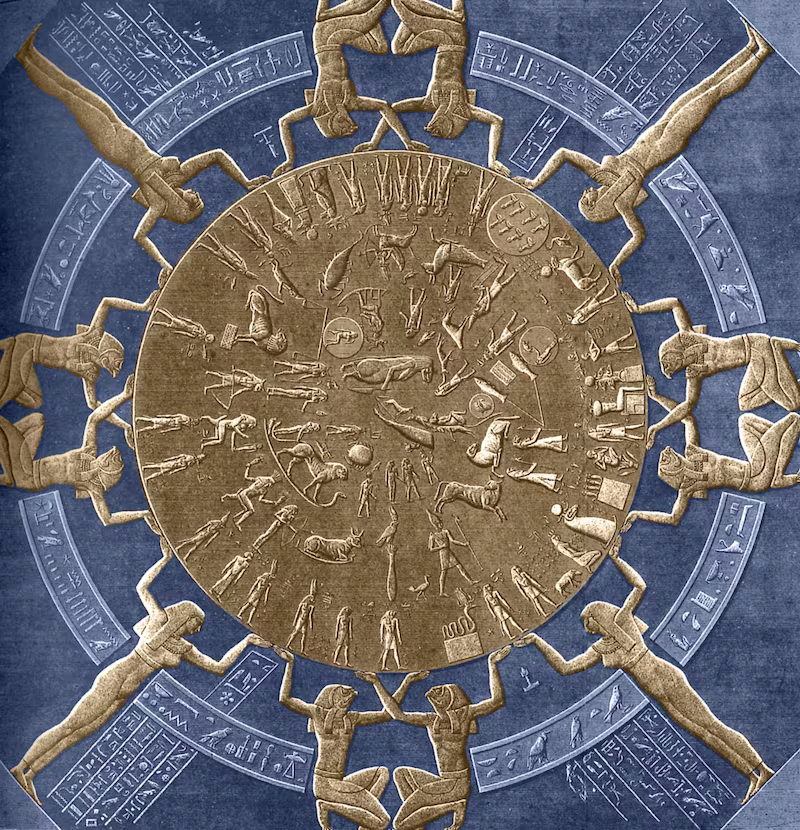
The Dendero Zodiac is an ancient bas-relief that formed part of the ceiling of the Temple of Hathor in Upper Egypt and is now held at the Louvre in Paris.

Removed in the early 19th century, it has been part of the Louvre collection since 1822 and has become one of the most recognisable Egyptian antiquities in a French museum.

While there is no verified formal Egyptian state request for its return, the object has been repeatedly cited in public repatriation campaigns, including those led by archaeologist and former antiquities minister Zahi Hawass.

4. Mesha Stele, Jordan

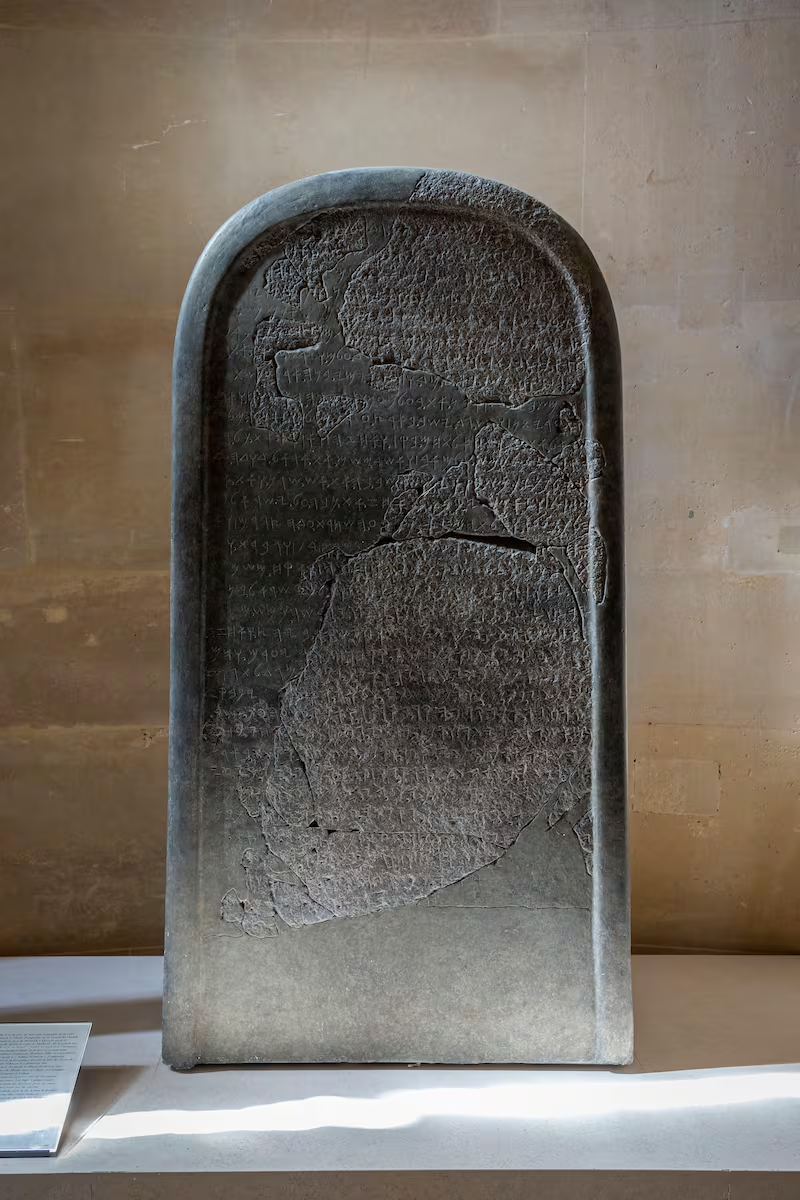
Also known as the Moabite Stone, the Mesha Stele is a 9th-century BC basalt monument from present-day Jordan and is considered one of the most important inscriptions from the ancient Levant.

Discovered in 1868 by the Anglican missionary Frederick Augustus Klein at Dhiban, it was later shattered by the Bani Hamida tribe over an ownership dispute, before the fragments were recovered and reassembled in France.

In June 2014, non-governmental Mesha Centre for Studies and Human Rights delivered an official request for the stele’s return to the French embassy in Amman.

The Jordan Times reported in 2015 that French ambassador Caroline Dumas discussed the request with representatives and said she would convey their public appeal to the French government. No formal response has been reported.

5. The Seated Scribe, Egypt

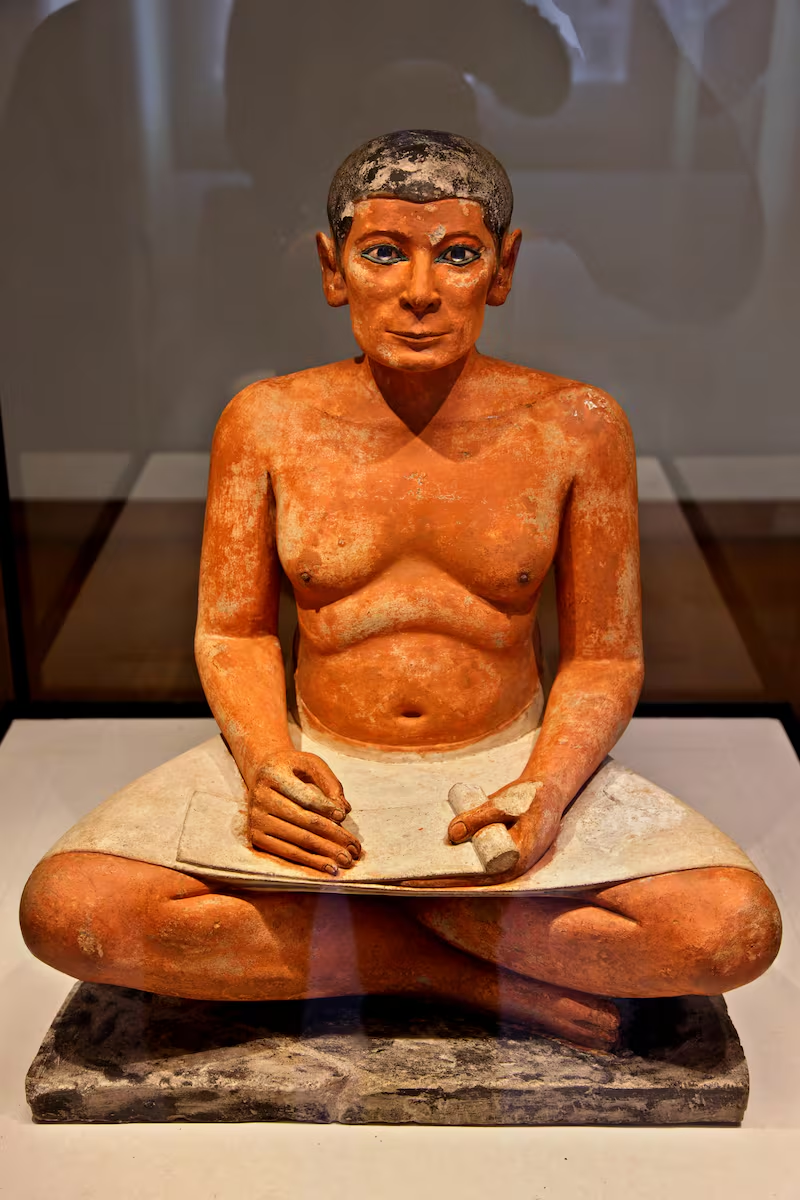
One of the Louvre’s most famous Egyptian works, the Seated Scribe is a painted limestone sculpture from the Old Kingdom, dating back to circa 2600BC-2350BC. It is famed for its striking realism and remarkably preserved features.

Found at Saqqara in the 19th century by the French archaeologist Auguste Mariette, it is among the most celebrated masterpieces of the Louvre’s Department of Egyptian Antiquities.

While the Egyptian government has not included the Seated Scribe on any formal restitution lists, it has appeared in broader public discussion in Egyptian cultural circles around the recovery of major artefacts held abroad.

source/content: thenationalnews.com

______________

ALL PHOTOS ABOVE

_____________________________

ALGERIA / EGYPT / JORDAN

JORDANIAN-AMERICAN :How Malek AlQadi – One Jordanian Architect Brought a Piece of Petra to California

Inspired by his childhood in Amman, Malek AlQadi’s latest project, ‘The Folly Mojave’, injects desert minimalism with sustainable luxury.

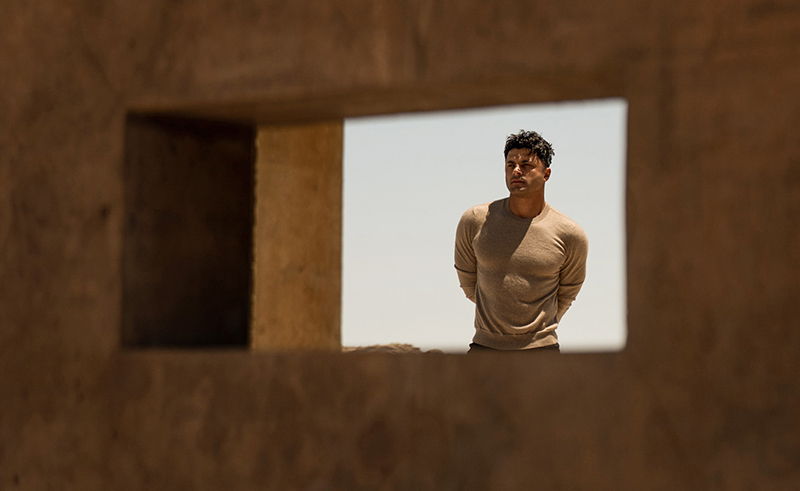
Born in Amman, Jordan, raised in Florida, and based in Los Angeles, Jordanian-American architect Malek AlQadi has dedicated his life to his follies. In architecture, a folly is a building that serves no purpose aside from aesthetics. But AlQadi’s follies? They are worlds unto themselves; portals to places only visited in daydreams and memories.

His first folly came about as part of his thesis project, during which he designed and executed a humble, fully self-sustaining stay in California’s Joshua Tree National Park. Though his design language has evolved over the years, his core principles remain the same: sustainability, minimalism, and a reconnection with nature, all rooted in a childhood spent marvelling at Jordan’s deserts.

In Jordan, ancient structures like Petra dominated his early experiences. In Florida, his exposure to contrasting environments shaped his understanding of space, structure and purpose. AlQadi’s obsession with follies finds its roots in his desire to push the boundaries of design. He’s not interested in the grandiosity of skyscrapers or the utility of commercial buildings. Instead, his work delves into the ethereal, focusing on creating spaces that encourage introspection, exploration and escape.

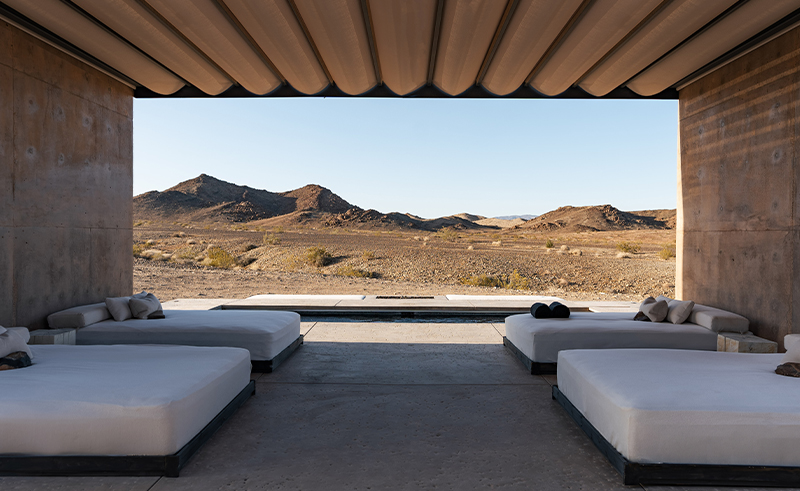
The Folly Mojave, a series of standalone suites dotted across 200 acres at the intersection of The Mojave National Preserve and Joshua Tree National Park, is AlQadi’s most recent and most ambitious project to date. The project is a retreat that blends into the arid environment while providing visitors with an isolated, immersive experience. “A lot of it was navigating childhood memories and connecting them with real-life scenarios and architectural elements, tying vastly different places in the world together, yet still grounded in similar principles and environments.” AlQadi tells SceneHome.

For AlQadi, the desert isn’t just a backdrop. It’s a critical component of the project, shaping the way the Folly Mojave interacts with the land. The retreat’s location in such an extreme environment is intentional; it encourages guests to detach from their everyday lives and engage more fully with their surroundings.

At first glance, the Folly Mojave may appear simple, but its simplicity belies the thoughtfulness of its design. The structure is fully off-grid, powered by solar energy, and equipped with self-sustaining water systems. The retreat is designed for minimal impact on the surrounding environment. Inside, the space is surprisingly open, with large windows that frame the vast desert views.

“A big part of the experience is having less light pollution and being able to see the stars at night. All of that fed into the idea of disconnection,” AlQadi explains. “It’s about having the luxury of time and space to relax and take in nature, which, at its core, is the ultimate healer.”

Malek AlQadi emphasises the “site-responsive” nature of his architectural philosophy. Unlike architects who adhere to a singular aesthetic, AlQadi’s approach is shaped by the environment he works within, adapting to the unique qualities of each location. “No two projects are ever the same,” he explains, yet there’s always a recognisable touch that connects his work. Symmetry, the use of natural materials, and a minimalist design language are core to his style, while he doesn’t shy away from incorporating brutalist elements when appropriate.

For AlQadi, creating spaces that resonate beyond the present – lasting decades or even centuries – is a key part of his architectural philosophy. “Guests often describe the experience as surreal, unique and unplugged,” AlQadi reflects. “Many mention feeling a deep connection while staying there. It’s rewarding to know that people from all walks of life have been able to share in that experience.”

source/content: cairoscene.com (headline edited)

______________

____________________________

AMERICAN / JORDANIAN

PALESTINE – JORDAN : AUC press author Ibrahim Nasrallah wins prestigious Neustadt international prize

AUC Press author Ibrahim Nasrallah, a Palestinian novelist and poet, has won the prestigious Neustadt International Prize for Literature, announced The American University in Cairo (AUC) Press and its literature imprint, Hoopoe.

Nasrallah is the 29th laureate of the prize, an honour frequently dubbed the “American Nobel.”

Nasrallah’s novel, Time of White Horses (Hoopoe, 2016), published in English translation by Hoopoe, was selected as the representative text for the prize.

The AUC Press “is proud that author Ibrahim Nasrallah and his novel, published under our Hoopoe literary imprint, have received such distinguished recognition,” said AUC Press Executive Director Thomas Willshire.

Time of White Horses tells “a deeply moving story rooted in Palestinian history and identity, exactly the kind of powerful, boundary-crossing narrative that embodies Hoopoe’s mission to bring distinguished voices from the Middle East to readers around the world,” he added.

Hoopoe has published four of Nasrallah’s novels in English, including Time of White Horses (2016), Gaza Weddings (2017), and The Lanterns of the King of Galilee (2015).

As outlined in the Neustadt Prize charter, “Any living author writing in any language is eligible, provided that at least a representative portion of their work is available in English—the language used during the jury deliberations.”

Presented biennially by the University of Oklahoma and World Literature Today, the Neustadt International Prize for Literature recognizes writers of exceptional literary achievement across all genres and languages.

The 2025 winner was announced in October, and the next Neustadt Lit Fest, organized by World Literature Today, will be held in the fall of 2026 in honour of Nasrallah.

Nasrallah was nominated for the prize by Shereen Malherbe, an award-winning novelist and children’s book author.

In her nominating statement, Malherbe said “Nasrallah’s literary works span universal issues and themes woven into the Palestinian struggle that allow readers to connect deeply with Palestine outside of a colonial framework.”

“His work is now more important than ever, considering the plight of Palestinians. It is time the world sees the true Palestine, and Nasrallah’s work can offer this perspective.”

Nasrallah’s powerful storytelling, exploring exile, identity, and resistance, places him alongside past laureates such as Gabriel García Márquez, Edwidge Danticat, and Tomas Tranströmer.

Nadine El-Hadi, senior acquisitions editor at AUC Press, noted that Nasrallah is “a writer of a generation and truly deserving of this prize.”

“Never has it been more important to amplify Palestinian voices such as his,” she added.

A leading Arab literature voice

Born in 1954 to Palestinian parents in a Jordanian refugee camp, Ibrahim Nasrallah has become one of the most important voices in contemporary Arab literature.

He has written fourteen poetry collections and fourteen novels, as well as works of literary criticism.

His writing has been translated into multiple languages, earning him international acclaim for his exploration of exile, identity, resistance, and the human condition.

source/content: english.ahram.org.eg (headline edited)

_____________

_______________________

JORDAN / PALESTINE

SAUDI ARABIA : King Faisal Prize winners announced for 2026

Pioneering scientist behind revolutionary weight-loss drugs, global scholars, innovators among winners.

The King Faisal Prize 2026 winners were announced at a ceremony in Riyadh on Wednesday night.

The event honored pioneering scientists, global scholars and innovators for their transformative contributions to medicine, science, Arabic language, Islamic studies and the service of Islam.

Prof. Svetlana Mojsov was named winner in the medicine section for her groundbreaking discoveries that are now reshaping how we treat obesity.

Prof. Carlos Kenig was announced as science laureate in the field of mathematics for helping to revolutionize understanding of nonlinear partial differential equations.

Mojsov, the Lulu Chow Wang and Robin Chemers Neustein research associate professor at The Rockefeller University in New York, pioneered research on glucagon-like peptide-1 (GLP-1) that has fundamentally transformed how obesity and diabetes are treated.

She discovered and characterized the biologically active form of GLP-1, a natural intestinal hormone that regulates blood sugar and appetite, and identified its receptors in the human pancreas, heart, and brain.

Through cutting-edge biochemistry and physiological studies, Mojsov demonstrated that GLP-1 powerfully stimulates insulin secretion while reducing hunger and managing glucose levels.

Her groundbreaking work enabled the development of an entirely new class of medications that mimic this natural hormone, sparking a paradigm shift in obesity treatment.

These therapies today provide life-changing benefits for hundreds of millions of people worldwide living with obesity and its complications — a global health crisis affecting 890 million adults and 160 million children and adolescents in 2022 alone, according to the World Health Organization.

Mojsov’s groundbreaking contributions have earned numerous prestigious honors, including Time magazine naming her one of the 100 Most Influential People in 2024.

Kenig was honored for his groundbreaking contributions to mathematical analysis. His work has transformed understanding of nonlinear partial differential equations — the mathematical equations describing how things change and move in the physical world — and provided researchers with a now-ubiquitous set of techniques. His insights have opened new research frontiers with applications spanning fluid mechanics, optical fibers, and medical imaging.

Kenig, the Louis Block distinguished service professor at the University of Chicago, is recognized for applying harmonic analysis techniques across different areas of partial differential equations.

His work on free boundary problems — determining unknown boundaries such as where ice meets melting water or how fluids flow through soil — has been particularly influential.

Kenig has spent three decades figuring out how complex waves behave over long periods of time, especially in tricky situations where they could either spread out peacefully or build up dangerously.

This matters for understanding everything, from ocean waves to light pulses in fiber optics and to how energy moves through different materials.

His work helps explain phenomena in quantum mechanics, optics, and ocean waves. By combining different mathematical techniques, he has solved longstanding problems that had puzzled mathematicians for decades.

In addition to medicine and science, the King Faisal Prize recognized the achievements of outstanding thinkers and scholars in the field of Arabic language and literature, Islamic studies, and exemplary leaders who have played a pivotal role in serving Islam, Muslims, and humanity at large.

Pierre Larcher, an emeritus professor of Arabic linguistics at Aix-Marseille University and emeritus researcher at the Institute for Studies and Research on the Arab and Muslim Worlds, won this year’s King Faisal Prize for Arabic Language and Literature on “Arabic literature in French.”

His novel presentation of Arabic literature to French readers has earned widespread acclaim from critics and specialists, while his rigorous scholarly approach to classical Arabic literature has made it accessible and appropriate for French culture.

His critical translation project of “Al-Mu’allaqat” and rigorous study of pre-Islamic poetry demonstrate exceptional scholarly depth.

For this year’s Islamic Studies Prize, Abdelhamid Hussein Mahmoud Hammouda, the professor of Islamic history and civilization at Fayoum University, and Mohamed Waheeb Hussein, the professor of archaeology and history of art at the Hashemite University, were announced as co-laureates.

Hammouda’s work encompasses the trade routes across the Islamic world — the Mashreq, Iraq and Persia, Arabian Peninsula, Greater Syria, Egypt, Sahara, Maghreb, and Al-Andalus. This expansive scope delivers coherent understanding of Islamic trade trajectories across history, serving as an authoritative reference for both specialized research and broader scholarship.

Hussein’s groundbreaking work uses archaeological surveys, GPS documentation, and analytical mapping to systematically correlate Qur’anic texts with geographical data. His research offers definitive scholarly interpretation, significantly advancing documentation of early Arabian Peninsula trade routes.

Sheikh Abdullatif Al-Fozan and Dr. Mohammad Abou Moussa were announced as co-laureates in the Service to Islam Prize.

Laureates’ names were announced by Prince Turki Al-Faisal and the King Faisal Prize’s Secretary-General Dr. Abdulaziz Alsebail.

Selection committees included experts, specialists, and scholars who met in Riyadh and examined the nominated works. They selected the laureates in an objective and transparent manner, in accordance with the rules and regulations.

The KFP was established in 1977, and was awarded for the first time in 1979 in three categories: service to Islam, Islamic studies, and Arabic language and literature. Two additional categories were introduced in 1981: medicine and science. The first medicine prize was awarded in 1982, and in science two years later.

Since 1979 the KFP has given awards to more than 300 laureates who have made distinguished contributions to different sciences and causes.

Each prize laureate is endowed with $200,000, a 24-carat gold medal weighing 200 grams, and a certificate inscribed with the laureate’s name and a summary of the work that qualified them for the prize.

source/content: arabnews.com (headlines edited) 

_____________

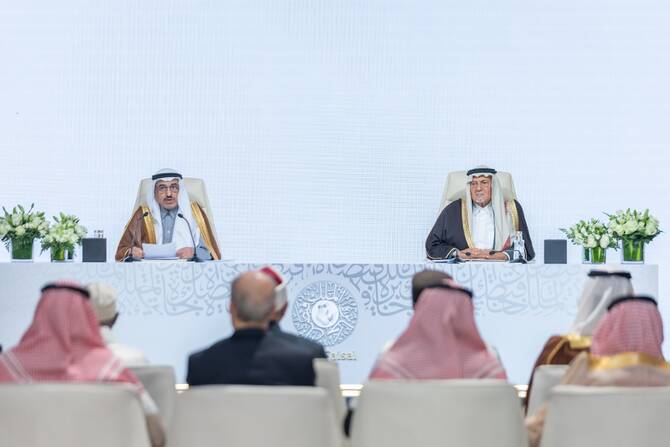
King Faisal Prize laureates’ names for 2026 were announced in Riyadh on Wednesday night by Prince Turki Alfaisal and the Prize’s Secretary General Dr. Abdulaziz Alsebail. (Supplied)

_______________________________________________________

EGYPT / JORDAN / PALESTINE / SAUDI ARABIA (*Arab)


SAUDI-AMERICAN citizen Omar Yaghi among winners of 2025 Nobel Prize in Chemistry

Saudi-American citizen Omar Yaghi, along with scientists Susumu Kitagawa and Richard Robson, has won the 2025 Nobel Prize in Chemistry “for the development of metal–organic frameworks”, the award-giving body said on Wednesday.

Born in Jordan to Palestinian parents, Yaghi was granted Saudi citizenship in 2021 through a royal approval that had been issued to grant Saudi citizenship to several prominent specialists from different fields.

The move was in line with the objectives of Saudi Vision 2030, including encouraging talented individuals to relocate to the Kingdom, localizing foreign investment, and “creating an appropriate social and investment environment,” according to a statement carried by the Saudi Press Agency at the time.

The more than a century-old prize is awarded by the Royal Swedish Academy of Sciences and the winners share 11 million Swedish crowns ($1.2 million), as well as the fame of winning arguably the world’s most prestigious science award.

“Through the development of metal-organic frameworks, the laureates have provided chemists with new opportunities for solving some of the challenges we face,” the award-giving body said in a statement.

The Chemistry Nobel was the third prize announced in this year’s crop of awards, in keeping with tradition, following those for medicine and physics announced earlier this week.

Established in the will of Swedish inventor and businessman Alfred Nobel, the prizes for achievements in science, literature and peace have been awarded since 1901, with a few interruptions mostly due to the world wars.

Nobel was himself a chemist and his developments in that field helped underpin the wealth he amassed from his invention of dynamite in the 19th century. The economics prize is a later addition funded by the Swedish central bank.

Sometimes overshadowed by more famous laureates in the fields of physics, literature and peace, the chemistry awards have still recognized many influential discoveries such as nuclear fission, DNA sequencing techniques, and yeast.

Last year’s chemistry award went to US scientists David Baker and John Jumper and Briton Demis Hassabis for work on decoding the structure of proteins and creating new ones, yielding advances in areas such as drug development.

($1 = 9.3436 Swedish crowns)

With Reuters

source/content: english.alarabiya.net (headline edited)

___________

Saudi-American citizen Omar Yaghi, along with scientists Susumu Kitagawa and Richard Robson, has won the 2025 Nobel Prize in Chemistry “for the development of metal–organic frameworks”, the award-giving body said on Wednesday. (X @SPAregions)

____________________________________________________

AMERICAN / SAUDI ARABIA / JORDAN / PALESTINE

JORDAN : Secretary-General appoints Rana Taha of Jordan United Nations Resident Coordinator in Tunisia

United Nations Secretary-General António Guterres appointed Rana Taha of Jordan as the United Nations Resident Coordinator in Tunisia, with the host Government’s approval, effective 19 June 2025. 

Ms. Taha has over 20 years of diverse experience working for United Nations agencies, funds and programmes, and UN peacekeeping and special political missions. Prior to her appointment as Resident Coordinator in Tunisia she served as a Team Leader and the senior Peace and Development Advisor for the United Nations in Kenya.

From 2015 to 2019, she held several positions in the Departments of Political and Peacebuilding Affairs (DPPA) and Peace Operations (DPO) at UN headquarters, where she managed the Middle East/North Africa Regional Programme for Peacekeeping and Special Political Missions.

Ms. Taha served in UN missions in Lebanon (UNIFIL, UNSCOL) and Sudan (UNMIS and UNAMID), including as a Special Assistant and Advisor to successive representatives of the Secretary General from 2007 to 2015. 

From 2003 to 2007, she served as the representative for Interpeace and the Programme Manager at the United Nations Office for Project Services (UNOPS) in the Occupied Palestinian Territories. 

Earlier in her career, she was a research fellow at the United Nations Institute for Disarmament Research in Switzerland from 2001 to 2002. 

She holds a master’s degree in International Relations and Public Policy from McMaster University and a master’s degree in sociology from the University of Jordan. Ms. Taha is married with one son.

source/content: unsdg.un.org / UN Sustainable Development Group (UNSDG) – (headline edited)

___________

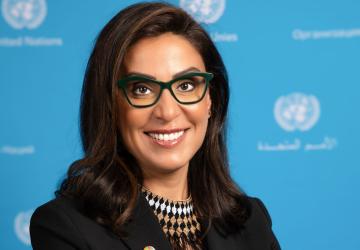
Caption: Secretary-General António Guterres has appointed Rana Taha of Jordan as the United Nations Resident Coordinator in Tunisia / Photo: © UN

____________

JORDAN

JORDAN : Mohammed Bin Rashid congratulates Jordanian Engineer Sahel Al Hayari for winning ‘Great Arab Minds award 2024’

His Highness Sheikh Mohammed Bin Rashid Al Maktoum, Vice President, Prime Minister and Ruler of Dubai, congratulated architectural engineer Sahel Al Hayari, winner of the Great Arab Minds Award 2024 in the field of architecture and design.

Sheikh Mohammed said on X platform, “Today, we congratulate the winner of the Great Arab Minds Award 2024, Architectural Engineer Sahel Al Hayari from Jordan.”

Sheikh Mohammed said that Architect Al Hayari presents designs which combine heritage and modernity, identity and nature and has excelled in many distinctive architectural projects and participated in teaching architecture and presenting his research and works in the most prominent universities around the world.

Sheikh Mohammed emphasised that Arab architecture has influenced human civilisation through its unique styles and designs throughout history, and that there are many exceptional Arab talents among architects and designers who deserve support, empowerment, and appreciation.

Al Hayari is known for integrating innovative modern design with traditional Arab stonework, and for blending contemporary architectural elements with historical context. He has promoted the presence of Arab stone architecture from Jordan in international circles, and his unique style has created an interactive dialogue between topography and architecture.

Al Hayari holds a Bachelor of Architecture and Fine Arts from the Rhode Island School of Design, and a Master of Architecture in Urban Design from the Harvard Graduate School of Design.

He also conducted postgraduate studies at the School of Architecture at the University of Venice and has lectured at prestigious colleges and universities in the fields of architecture and design around the world, including Columbia University and Harvard University in the United States, the University of Venice in Italy, the Swiss Federal Institute of Technology in Zurich, the American University of Beirut, and the University of Science and Technology in Jordan. His works cover a wide range of design-related disciplines, including urban design, architectural structures, interior design, and exhibition design.

Mohammed Bin Abdullah Al Gergawi, Minister of Cabinet Affairs and Chairman of the Higher Committee for the “Great Arab Minds” Initiative, informed Sahel Al Hayari of his win of the award.

In a video call with him, he praised the unique artistic formula he created by combining architecture, fine arts, and urban design.

It is worth mentioning that the ‘Great Arab Minds’ award is the largest award of its kind in the Arab world, and it celebrates, for the second consecutive year, the achievements of Arab innovators for humanity in these fields.

source/content: gulftoday.ae (headline edited)

______________

Sahel Al Hayari is known for integrating innovative modern design with traditional Arab stonework

___________

JORDAN

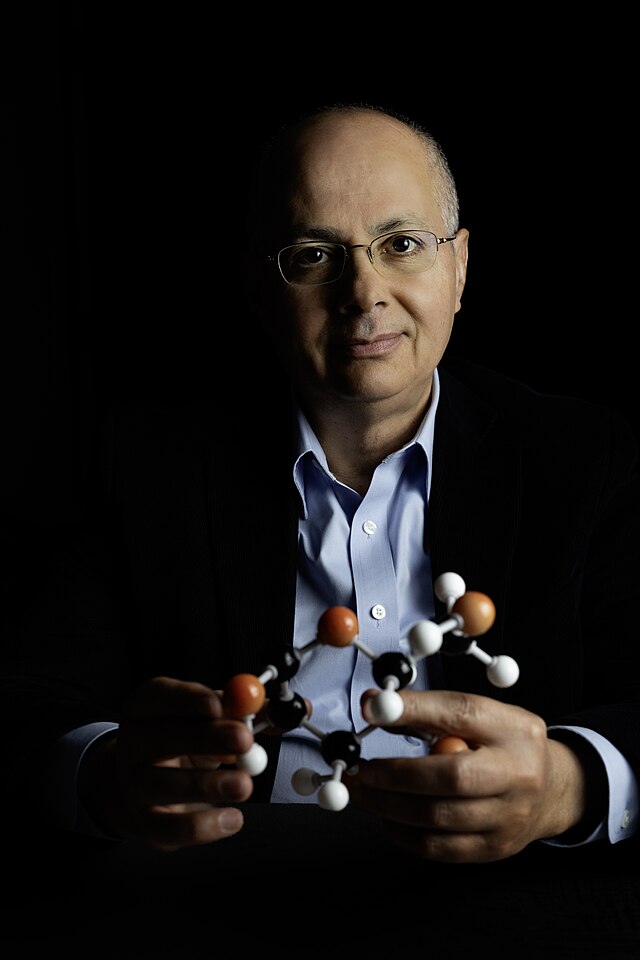
JORDANIAN Academic Omar Yaghi wins ‘2024 Arab Genius Minds Award’

 Jordanian academic Omar Yaghi, a chemistry professor at the University of California, Berkeley, has been awarded the 2024 Arab Genius Minds Award in the Natural Sciences category for his pioneering work in reticular chemistry.

Yaghi is celebrated for his transformative innovations in designing and synthesising metal-organic frameworks (MOFs) and covalent organic frameworks (COFs), the Jordan News Agency, Petra, reported. 

These frameworks address critical global challenges in energy storage, water harvesting, and environmental sustainability.

His research portfolio includes over 300 peer-reviewed papers, which have collectively garnered more than 250,000 citations, underscoring the “far-reaching” impact of his work.

Since 2012, Yaghi has held the James and Neeltje Tretter Chair in Chemistry at UC Berkeley. 

His contributions to reticular chemistry have “revolutionised” the ability to assemble molecular building blocks into highly porous structures with applications in gas storage, catalysis, and drug delivery, among others, yielding significant economic and environmental advancements.

The Arab Genius Minds Award, launched by Sheikh Mohammed Bin Rashid Al Maktoum, Vice President and Prime Minister of the UAE and Ruler of Dubai, honours achievements by Arab scientists and innovators across six key categories essential for the region’s developmental and cultural progress.

source/content: jordantimes.com (headline edited)

__________

pix: source: wikipedia

_________

JORDAN