Arabs & Arabian Records Aggregator. Chronicler. Milestones of the 25 Countries of the Arabic Speaking World (official / co-official). AGCC. MENA. Global. Ist's to Top 10's. Records. Read & Enjoy./ www.arabianrecords.org
The Egyptian teenager breaks the rankings record, four months after also becoming the youngest female world champion.
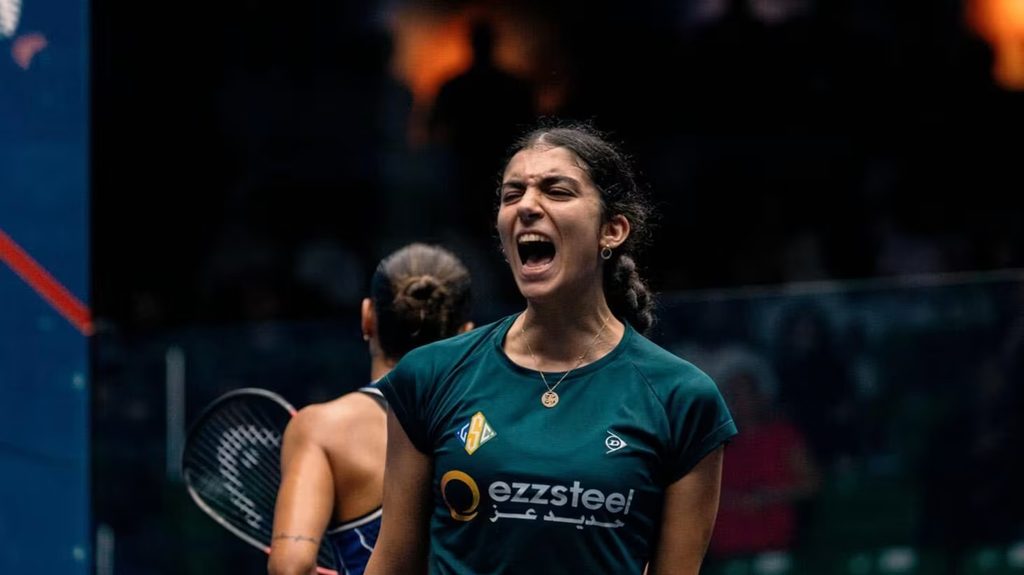
Amina Orfi has become the youngest women’s world No. 1 in squash history after her place at the sport’s summit was confirmed in the latest PSA Squash Tour rankings published on Monday (21 September).
At 19 years and two months old, the Egyptian prodigy has broken a 40-year record that was set by New Zealand’s Susan Devoy when she was 20 years and two months in 1984.
Orfi dethroned the previous world No. 1, compatriot Hania El Hammamy, by defeating her in the final of last week’s QTerminals Qatar Classic in Doha.
A dramatic 3-2 finale secured the teenager’s first Platinum title, and her third major victory in the last four competitions.
Orfi has fast become the face of the sport after rising through the ranks in 2026. In May, she became the youngest-ever female world champion, and is the first player to win the senior PSA world title while still the reigning junior champion.
“It feels amazing,” said Orfi after her victory in Doha on Friday (18 September).
“To become world champion and become world No.1 in the same year is a dream that I’ve had since I was very young and I really want to enjoy it.
“I want to just stay at this level now and keep trying to improve every day. I want to stay on top now that I’m the world No. 1 and I want to win a lot more titles too.”
Amina Orfi eyes gold at LA28
With two years to go ahead of squash’s Olympic debut at LA28, and amid a dominant Egyptian depth of talent, Orfi has continued her rapid progression as one of Egypt’s greatest medal hopes.
“I really want to get to world No. 1 and make the Olympics,” she said back in March.
“Having these goals helps direct my mind in a positive way instead of thinking about the pressure.”
With one milestone achieved, Orfi’s next challenge is to stay there.
Her first tournament as world No. 1 will be a homecoming, with the 19-year-old set to return to Egypt for the CIB Egyptian Open 2026 from 6-16 October.
With LA28 firmly on the horizon, squash’s newest superstar has no intention of taking her foot off the accelerator.
Islamic Ministry begins distribution of 1.9 million editions across the Kingdom’s air, land, sea ports.
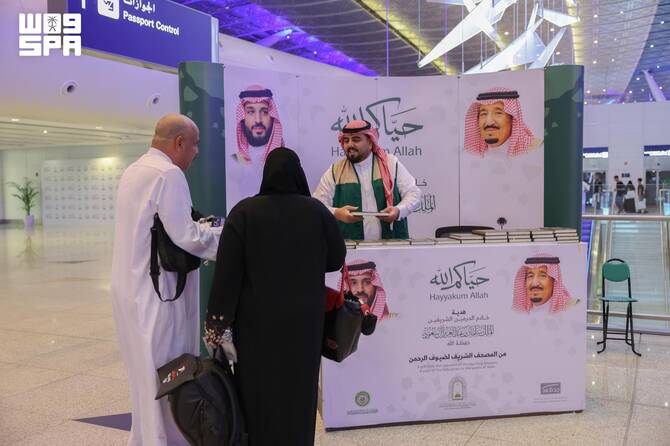
The Ministry of Islamic Affairs has begun distributing King Salman’s gift of the Holy Qur’an and its translated editions to departing pilgrims and seasonal field workers.
Distribution started in the departure halls of King Abdulaziz International Airport in Jeddah, ensuring international pilgrims receive their copies before boarding return flights.
The campaign includes 1.9 million copies produced by the King Fahd Complex for Printing the Holy Qur’an in Madinah, the Saudi Press Agency reported on Saturday.
Available in more than 80 languages, the translated editions enable returning pilgrims to study the Qur’an in their native languages.
The ministry said that distribution will continue around the clock at all air, land and sea ports in the coming days, the SPA added.
Minister of Islamic Affairs Sheikh Abdullatif Al-Alsheikh said the gift reflects the leadership’s commitment to spreading the message of the Holy Qur’an worldwide.
He added that the ministry has mobilized all logistical and human resources to ensure smooth, efficient and accessible distribution for departing pilgrims.
The Passports Department at Jeddah airport has processed departure procedures for the first outbound flights of pilgrims returning home after completing Hajj.
The General Directorate of Passports confirmed its highest level of operational readiness at the Kingdom’s land, air and sea ports to manage post-Hajj departures, urging international pilgrims to adhere to their scheduled travel times.
According to official statistics, 1,707,301 pilgrims performed Hajj this year, up 2.04 percent from 2025. Of the total, 1,546,655 arrived from outside the Kingdom, including 1,485,729 who traveled by air, while 160,646 were citizens or residents of Saudi Arabia.
source/content: arabnews.com (headline edited)
______________
Distribution started in the departure halls of King Abdulaziz International Airport in Jeddah (SPA)
The Doha Historical Dictionary of the Arabic Language is one of the largest projects for the Arab Center for Research and Policy Studies.
Cornell University in the United States and the University of British Columbia in Canada have included the Doha Historical Dictionary of the Arabic Language in their digital library collections.
Cornell University in the United States and the University of British Columbia in Canada are ranked among the world’s leading institutions.
In a statement by the Arab Center for Research and Policy Studies on Tuesday, Mohammed Al-Obaidi, Executive Director of the Doha Historical Dictionary of the Arabic Language, said that this provides researchers worldwide with unique historical material on the Arabic language for the first time.
“Making the dictionary available openly is a translation of the identity of the project, as it is a national project, and one of its most important priorities is to provide researchers wherever they are with the unique historical dictionary material that is available for the first time in the history of this ancient language,” said Al-Obaidi.
In the details, the American Cornell University included the Doha Dictionary in its electronic library, within a hierarchical classification that includes the following titles: Near Eastern Studies, Arabic Literature, Dictionaries, and Dictionaries of Synonyms and Acronyms.
The university also assigned a special subtitle to the dictionary, Arabic Ontology, with a description that provides a tool for comparative research across dictionaries and, in its final form, aims to document the semantic transformation of each word in its blog.
The Doha Historical Dictionary of the Arabic Language is one of the largest projects of the Arab Center for Research and Policy Studies.
It was officially launched on 25 May 2013, and development continued for more than 12 years.
It was completed on 22 December 2025, with more than 500 researchers from across the Arab world contributing to its development. The project is also open to the public for comments, corrections and proposals.
For its part, the University of British Columbia in Canada has added the Doha Historical Dictionary to its library with a different hierarchical classification: Research Guide – Literature, Humanities and Social Sciences – Middle East Studies – Free and Open Sources – Dictionaries.
The description of the dictionary on the University Library reads: “The Doha Historical Dictionary of the Arabic Language is an ongoing project of the Arab Center for Research and Policy Studies located in Doha, Qatar. The first and second phases of the project covered the history of the Arabic language from the earliest written document to the fifth century AH…”
Al-Obaidi welcomed this step, expecting that more universities in the Arab world and beyond will follow suit.
“For more than a decade, we have been keen to adjust the scientific material of the dictionary according to the highest possible academic standards, and then we have made it available through a free electronic portal to be a help for researchers in all fields of humanities and social sciences,” said Al-Obaidi.
Al-Obeidi called on Arab universities and academic institutions to make the dictionary available to students and researchers.
He also invited Arab researchers, “wherever they are, to conduct studies that deal with the dictionary or employ its material.”
1,546,655 people travel from outside of the Kingdom to take part in the pilgrimage, 160,646 are citizens or residents of Saudi Arabia
388,694 benefit from Makkah Route Initiative, a service that lets them complete all entry procedures at point of departure, thereby avoiding long queues on arrival, 23.7% more than last year
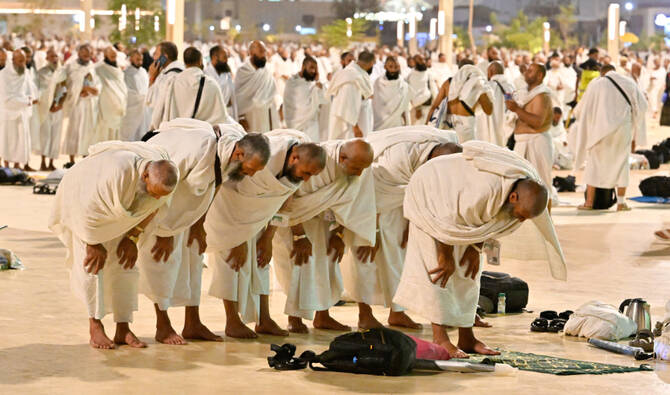
More than 1.7 million pilgrims are performing Hajj this year, the majority of whom live outside of Saudi Arabia, according to authorities in the Kingdom.
The total number of 1,707,301 is an increase of of 34,071, or 2.04 percent, compared with the 1,673,230 who attended the 2025 Hajj.
This comes amid continuing efforts to streamline pilgrimage operations, expand facilities at entry points and enhance services, officials said, and reflects the steady demand for Hajj places despite evolving regional and global conditions.
The increased attendance also underscores the Kingdom’s ongoing focus on operational efficiency, they added, particularly through the digitalization of services, improved crowd-management systems, and enhanced coordination between security, health and logistical authorities.
Figures provided by the General Authority for Statistics reveal that 1,546,655 pilgrims traveled from outside of the Kingdom to perform Hajj, while 160,646 are citizens or residents of Saudi Arabia. The vast majority of those arriving from abroad, 1,485,729, traveled by air, 54,429 entered the country through land crossings, and 6,497 arrived by sea.
The number of pilgrims who benefited from the Makkah Route Initiative, a service that allows them to complete all entry, passport and customs procedures at the point of departure and transports them directly to their accommodation, thereby avoiding long queues at airports on arrival, increased to 388,694, compared with 314,337 last year, an increase of about 23.7 percent.
The total number of people working in support of Hajj operations increased to 441,049 from 420,070 last year. However, the number of volunteers decreased from 34,540 in 2025 to 26,701, a decline of 22.7 percent.
The General Authority for Statistics said its figures were based on administrative data provided by the Ministry of Interior as the primary source, in line with a statistical framework adopted during recent Hajj seasons to ensure accuracy and reliability. The full Hajj data and detailed reports are available on the authority’s website.
source/content: arabnews.com (headline edited)
______________
The increased attendance also underscores the Kingdom’s ongoing focus on operational efficiency. (SPA)
Unlike many literary prizes decided solely by professional juries, the Prix Horizon relies on reader participation.
Moroccan writer Zineb Mekouar has received the Prix Horizon in Belgium for her novel “Souviens-toi des abeilles”, a work that ties environmental fragility with family memory in the landscapes of southern Morocco.
The award ceremony took place on Saturday in Marche-en-Famenne, in southern Belgium. The prize goes every two years to the most accomplished second novel written in French, with a strong focus on authors who deepen their literary voice beyond a debut work.
Mekouar’s novel, published by Gallimard, is set in the High Atlas mountains and draws a portrait of a rural world shaped by ancestral beekeeping practices. Through the eyes of a child, the story links inheritance, silence within families, and the pressures placed on fragile ecosystems.
Unlike many literary prizes decided solely by professional juries, the Prix Horizon relies on reader participation. Reading groups from Belgium and France’s Grand Est region take part in the final vote after a shortlist drawn up by literary professionals.
The Moroccan author meets readers and fellow finalists during a full day of discussions before the final vote. The format emphasizes direct exchange between authors and the public.
Created twelve years ago by the city of Marche-en-Famenne, the Prix Horizon seeks to draw attention to French-language writers who confirm their place in literature through a second novel. The selection begins with a professional jury that reviews dozens of works before readers decide the final winner.
“Souviens-toi des abeilles” has already gained recognition in France. It received the Henri de Régnier Prize from the Académie française in 2025. It also appeared in the Académie Goncourt summer selections for 2024 and entered the first shortlist for the Prix Jean Giono the same year. The novel also won the Folire Prize in 2025.
This year’s other finalists included Claire Vesin with “Le lotissement”, Marie Mangez with “Les vérités parallèles”, Ketty Rouf with “Mère absolument”, and Benjamin de Laforcade with “Berlin pour elles”.
Born in Casablanca in 1991 and based in Paris since 2009, Mekouar first drew attention with her debut novel “La poule et son cumin”, published in 2022. The book reached the final stage of the Goncourt prize for first novel.
With the news of the Netherlands returning a 3,500-year-old Egyptian sculpture this week, here is a list of ten important Egyptian artefacts that are still held abroad.
Earlier last week, Dutch Prime Minister Dick Schoof announced his government would be returning a sculpture from the reign of King Thutmose III to Egypt, where it had been illegally taken during the 2011 Revolution and sold abroad. The announcement was made in the wake of the opening of the Grand Egyptian Museum and was met with praise and applause by many Egyptian observers. In recent years, there have been increasing calls by Egyptians (and by many people of formerly colonized countries) to bring home their country’s lost artefacts. However, the story of how artefacts came to leave a country is often complicated. Oftentimes they were looted, but sometimes they were given as gifts (or otherwise lawfully taken). In any case, in an effort to commemorate the Grand Egyptian Museum becoming the largest museum in the world dedicated to one civilization, here is a list of some of the Egyptian artefacts you still won’t find there.
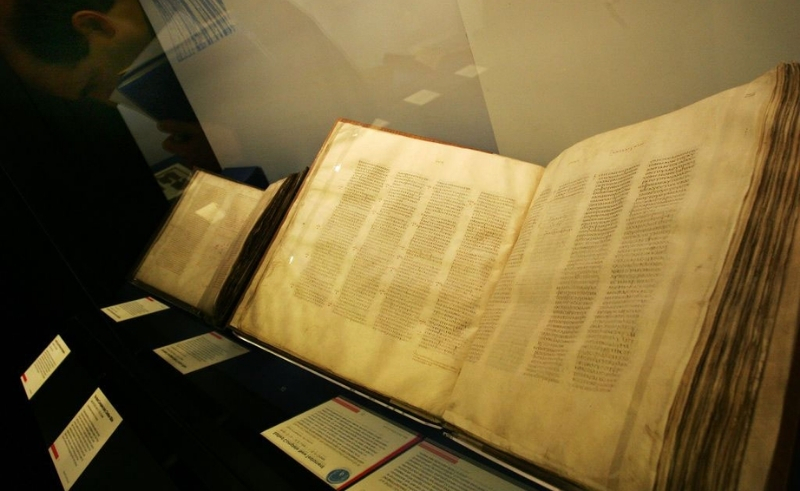
1) The Oldest Bible in the World (British Library, London)
The Codex Sinaiticus, also known as the Sinai Bible, is the oldest complete copy of the New Testament ever found. Dating to around 350 CE during the time of Roman Egypt, it is also the youngest artefact on this list. (The timeline of the Grand Egyptian Museum, which chronicles ancient Egyptian history from prehistoric times to the Greco-Roman period, ends at 400 CE.)
The story of how this Bible left Egypt is complicated. Although the Bible was found in Saint Catherine’s Monastery in Sinai in 1844 by a German theologian, it was given to Tsar Alexander II of Russia, and then sold to the British Museum in London in 1933 by the Soviet government. Today, most of the manuscript remains in British Library (where very few scholars have been allowed to see it in full), though smaller fragments are still scattered across Germany, Russia, and St. Catherine’s Monastery.
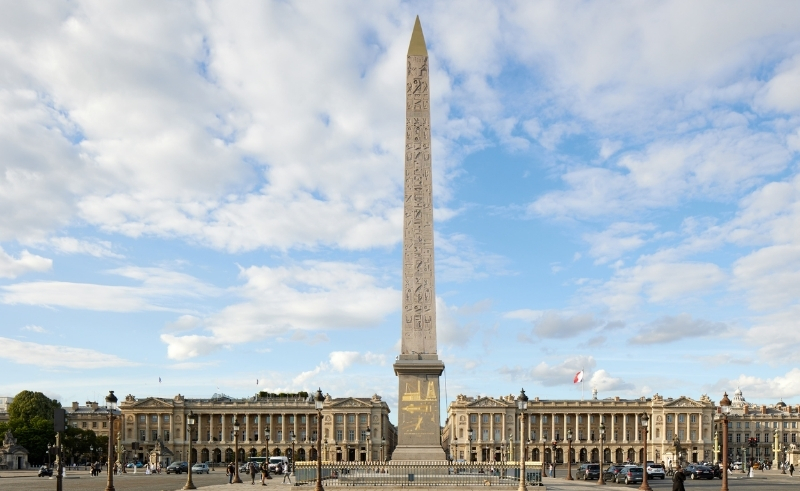
2) Luxor Obelisk (Paris)
If you’ve ever been to the Luxor Temple on the east bank of the Nile River, you will have noticed that in the entranceway there stands only one obelisk, the other clearly missing. Carved during the reign of Ramses II of Egypt’s New Kingdom, the missing granite obelisk now sits in the center of Place de la Concorde in Paris. It was gifted to the French Empire by Muhammad Ali Pasha in 1829 as a gesture of friendship, and it remains the oldest monument in all of France.
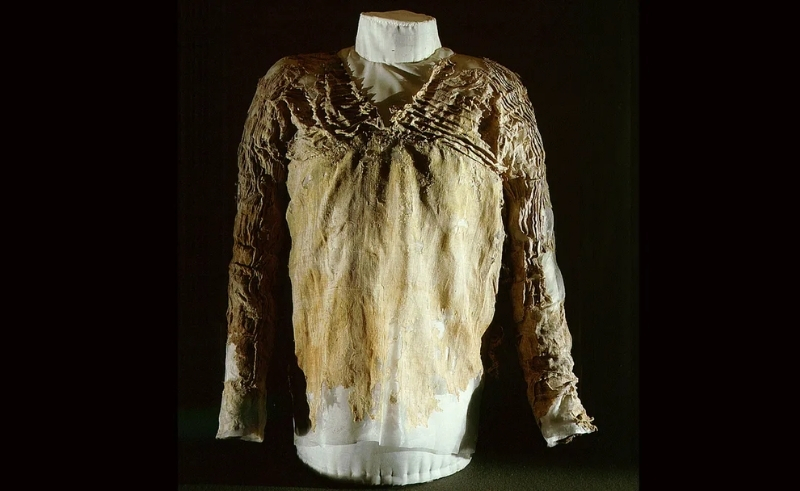
3) The Oldest Woven Dress in the World (Petrie Museum, London)
The Tarkhan dress, a linen garment that was once likely once worn by an Egyptian worker, is a 5000 year old piece of clothing—the oldest woven garment ever found. The dress was found south of Cairo in 1913 by Flinders Petrie, a British archaeologist, who at first believed it to be little more than a rag. He decided to take the rag with him to London anyway, and it wasn’t until the clothing was carbon-dated in 2015 that the true age—and significance—of the dress was understood.
The roughly size 2 dress remains in remarkably good condition (for its age), featuring a V-neck cut and long sleeves, and armpit stains left by its original wearer.
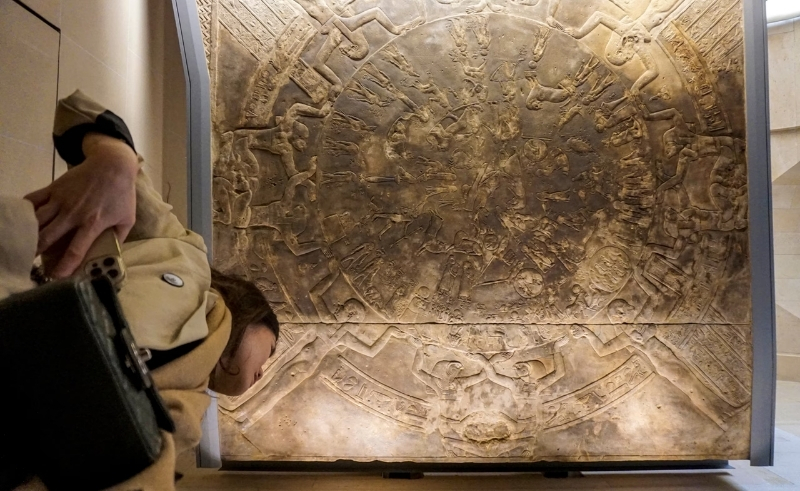
4) The Oldest Complete Map of the Ancient Sky (Louvre Museum, Paris)
The Dendera Zodiac is a celestial map from the time of Ptolemaic Egypt, depicting the twelve zodiac signs (a Greek invention) with Egyptian imagery and style. It was likely created during the reign of Cleopatra, around 50 BCE, and was etched into the walls of the Dendera Temple of Hathor north of Luxor. Besides its beauty, its significance lies in the fact that it is the oldest (and possibly only) known complete map of the ancient sky.
The French removed it from Egypt in 1821 (with some versions of the story claiming they used dynamite to do so), and today it can be found in the Louvre Museum in Paris.
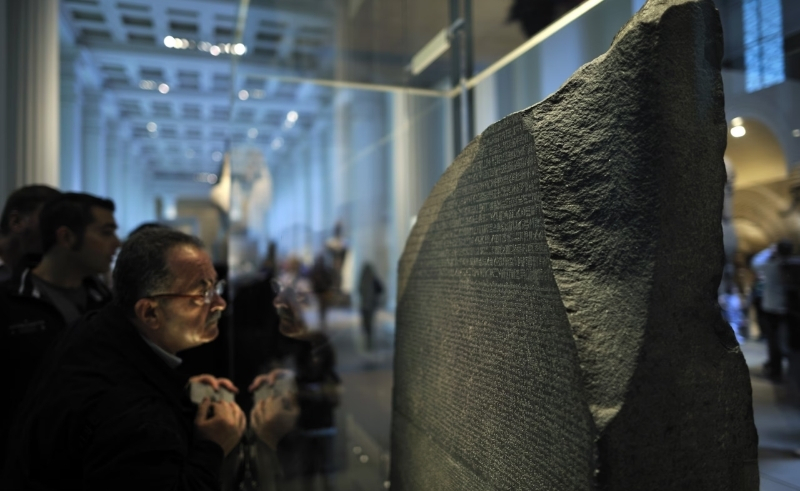
5) The Rosetta Stone (British Museum, London)
Many people believe that the Rosetta Stone was taken by the British from Egypt, but in reality, it was taken by the British from the French, who took it from Egypt. Discovered by French soldiers in the town of Rashid (Rosetta) in 1799, this stone is perhaps the most important archaeological discovery of all time (and it remains the most visited artefact in the British Museum). Its decryption paved the way to understanding ancient Egyptian hieroglyphics (and with it most of ancient Egyptian history), which until then had been illegible to all who tried to read it.
When Egypt formally asked for the Stone’s repatriation in 2003, the British Museum refused to return it, and instead gave Egypt a replica of the Stone. That replica now sits inside the National Museum in Rashid.
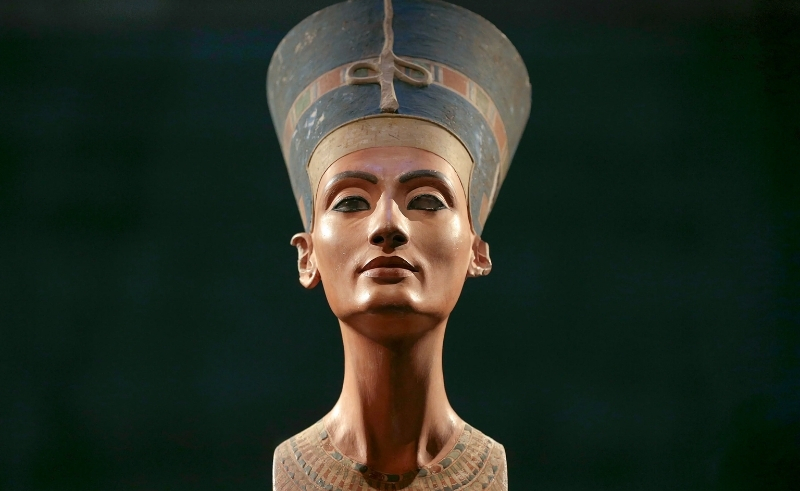
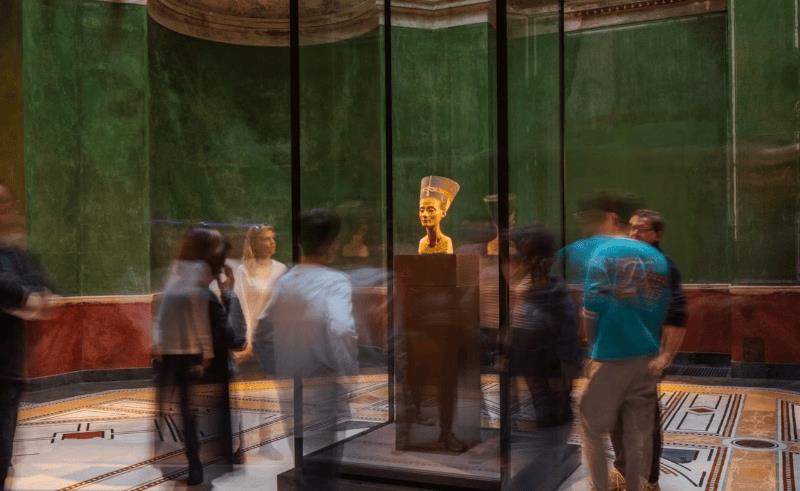
6) The Bust of Nefertiti (Neues Museum, Berlin)
This iconic sculpture is one of the most well-known artefacts from ancient Egypt, and it depicts an equally legendary figure: Queen Nefertiti, wife of Akhenaten, stepmother of Tutankhamun. 3,400 years ago, Akhenaten’s sculptor captured Nefertiti’s beautifully slender neck, raised chin, and level gaze, and when it was discovered in 1912 the painted sculpture was still in remarkably good condition.
At the time of its finding, excavations in Egypt were conducted under a system whereby all items discovered were split between Egypt and the foreign country sponsoring the excavation, but there was a caveat: only ‘non-unique’ items could leave the country. The controversy that surrounds this bust is that the German team that discovered it hid its true value, and thus the bust was allowed to leave Egypt and be transported to Berlin, where it remains today.
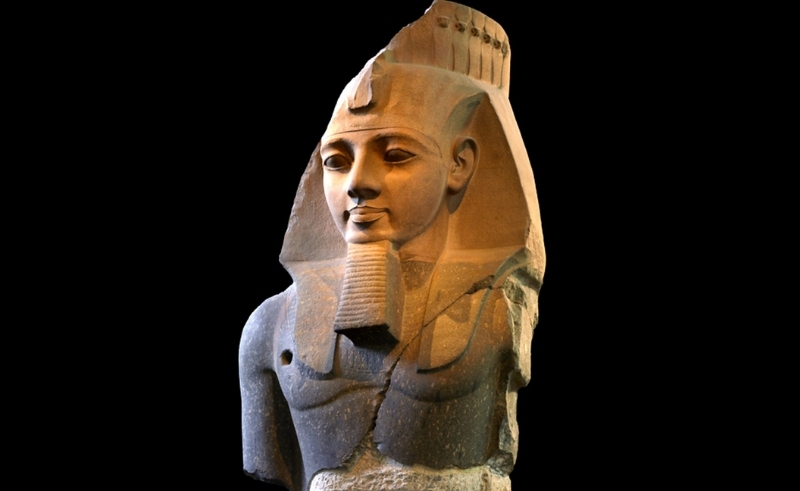
7) Colossal Figure of Ramses II (British Museum, London)
Also known as the Younger Memnon, this colossal torso and head once sat atop a statue of Ramses II located at his mortuary temple in Luxor. In 1798, Napoleon’s men tried extracting the statue but failed, and a couple of decades later the British succeeded in removing the upper portion of the statue (which had, long before, been damaged and detached from the rest of the body during an earthquake). Weighing nearly 20 tonnes, the statue is the largest Egyptian sculpture in the British Museum.
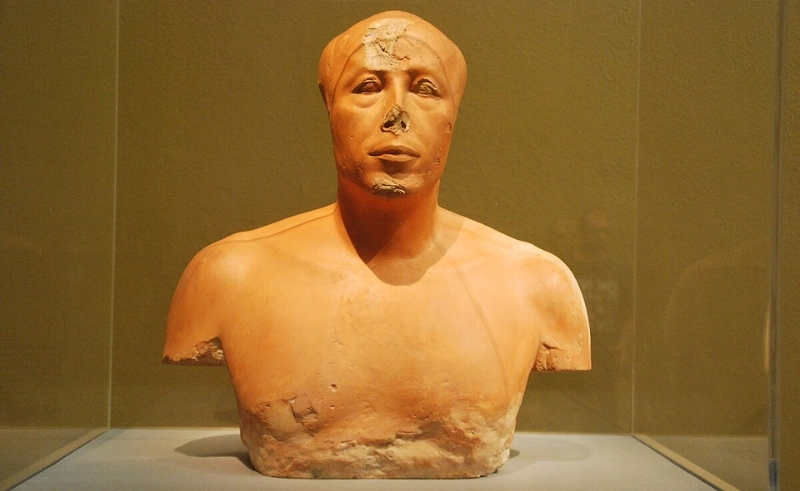
8) Bust of Ankh-haf (Museum of Fine Arts, Boston)
This lesser known artefact is striking for its high level of realism. Its namesake, Ankh-haf, was a government official of the Old Kingdom who oversaw the building of the Great Pyramid of Giza and the Sphinx.
The bust was discovered in 1925 during an expedition by Harvard University, and in 1927 it was gifted by the Egyptian government to an American archaeologist. Perhaps fittingly given the sculpture’s realism, it now rests in the Museum of Fine Arts in Boston.
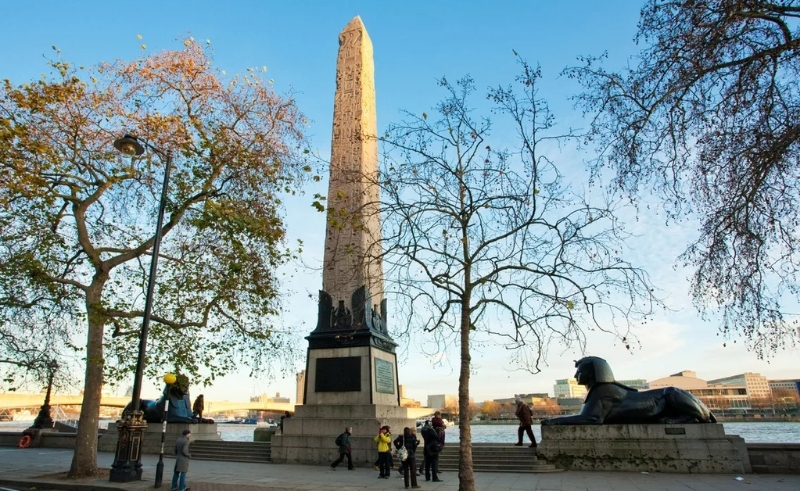
9 & 10) Cleopatra’s Needles (London & New York)
Despite their name, the pair of obelisks called Cleopatra’s Needles bear no relation to Queen Cleopatra herself. Instead, they were constructed during the reign of King Thutmose III of the New Kingdom, more than a thousand years before Cleopatra’s reign. During the Roman era they were moved from their original location in Heliopolis to Alexandria, where they stood for nearly two thousand years.
By the 1800s, one of the two needles had fallen. It was this needle that Muhammed Ali Pasha, in 1819, decided to gift to Britain (as he had gifted the Luxor Obelisk to France). However, the 21-meter tall obelisk was so massive that it was not actually transported to London until the reign of Ismail Pasha in 1877. It was also Ismail Pasha who, in the same year, gifted the remaining needle to the United States.
Authors, scholars and institutions from Arab world and beyond honoured as Abu Dhabi prize celebrates two decades of cultural influence.
The 2026 winners of the Sheikh Zayed Book Award were announced on Friday, marking two decades of one of the Arab world’s most influential literary prizes.
Established in 2006 and held under the patronage of President Sheikh Mohamed, the award has grown into a fixture on the region’s cultural calendar, drawing submissions from across the world and supporting the global reach of Arabic literature.
This year’s winners reflect that international scope, with recipients from countries including Egypt, Morocco, Germany and the UAE.
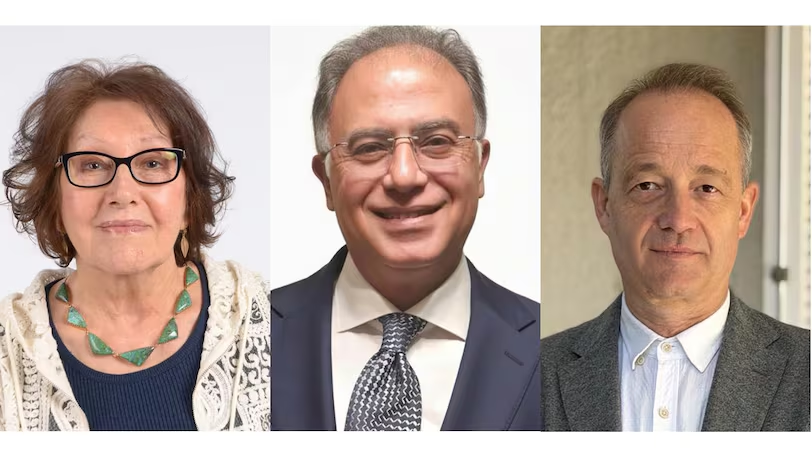
Egyptian writer Ashraf Elashmawy took the Literature prize for his novel Births in the Zoo, a work that explores shifts in Egyptian society through closely observed, character-driven storytelling. Moroccan researcher Mustapha Rajouane won in the Young Author category for a study examining how rhetoric shapes narrative in the modern Arabic novel.
In Translation, Iraqi-American scholar Nawal Nasrallah has been recognised for her English edition of a 13th-century Arabic culinary text, bringing a complex historical manuscript to a wider readership. Jordanian academic Zuhair Tawfiq received the Literary and Art Criticism award for his study of how Arab and western cultures have historically imagined one another.
German writer and translator Stefan Weidner won in the Arab Culture in Other Languages category for a major anthology of pre-Islamic Arabic poetry, while the Emirates Literature Foundation was honoured for its role in developing the UAE’s literary scene and supporting readers and writers.
The Encyclopaedias and Lexicons category went to Egyptian academic Mohamed Elkhosht for his six-volume Encyclopaedia of World Religions, and veteran Egyptian singer Nagat Al Saghira was named Cultural Personality of the Year, recognising a career that has helped shape modern Arabic song and language.
More than 4,000 submissions were received from 74 countries, underlining the award’s growing international profile. Since its launch, it has attracted more than 33,000 entries and honoured 136 winners, including writers, translators and cultural institutions.
Mohamed Khalifa Al Mubarak , chairman of the Department of Culture and Tourism – Abu Dhabi, said the award continues to build on the UAE’s long-standing investment in culture and knowledge, while Ali bin Tamim, secretary general of the award, described it as a platform that has helped shape contemporary Arabic literary and research landscapes.
A programme of events is planned throughout the year to mark the award’s 20th anniversary. Winners will be honoured at a ceremony in Abu Dhabi, with Al Saghira receiving Dh1 million for being Cultural Personality of the Year, and other category winners awarded Dh750,000 each.
As country debates easing return of treasures, attention turns to regional pieces still held in its national collections.
French lawmakers are debating a new bill aimed at simplifying the return of colonial-era cultural objects to their countries of origin, drawing renewed attention to artefacts still held in France’s national collections, which number in the tens of thousands.
The draft legislation was unanimously approved by the Senate in January and now requires backing from the lower house, the Assemblee Nationale, before it can become a law.
While not all cases are at the same stage, these five objects from Algeria, Egypt and Jordan sit within that broader restitution debate, whether through formal state requests, public campaigns or long-standing calls for their return.
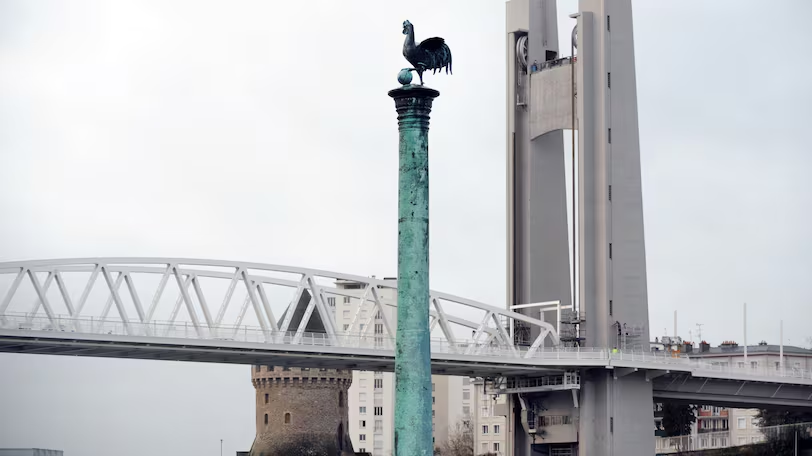
1. Baba Merzoug, Algeria
The 16th-century cannon known as Baba Merzoug at the Arsenal of Brest in western France. AFP
The 16th-century bronze cannon from the Ottoman era in Algiers is housed at the naval base in the French coastal city of Brest after being taken by French forces in 1830 following the capture of Algiers.
While seized as a spoil of war, the cannon remains a politically charged symbol of French colonial rule in Algeria. The Algerian government formally requested its return in 2012, and the cannon was explicitly cited during the April 2026 parliamentary debate over France’s proposed restitution framework.
2. Emir Abdelkader’s effects, Algeria
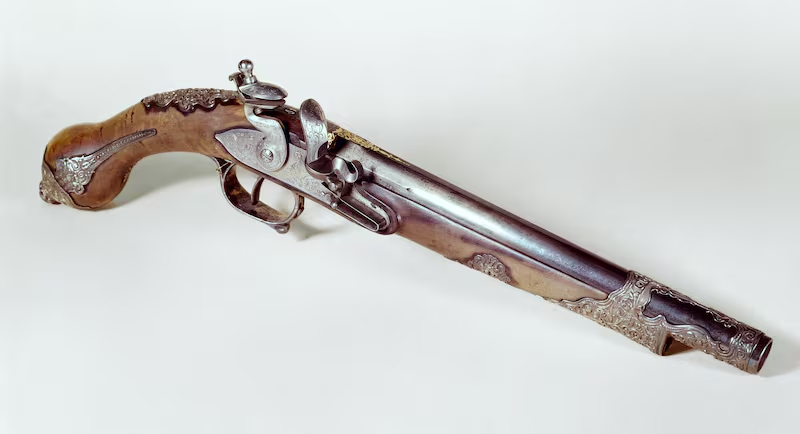
Rather than a single object, this refers to personal items associated with the 19th-century Algerian leader Emir Abdelkader, who led the resistance against French invasion before his surrender in 1847.
Held across French collections including at Musee de l Armee in Paris and Musee Conde in Chantilly, the objects include a steel sabre, pistol, ceremonial cloak and related belongings linked to Abdelkader’s life and leadership.
Algeria has included these effects on a formal restitution list submitted to French authorities in 2021, and they remain a sensitive part of the wider dispute over colonial-era holdings.
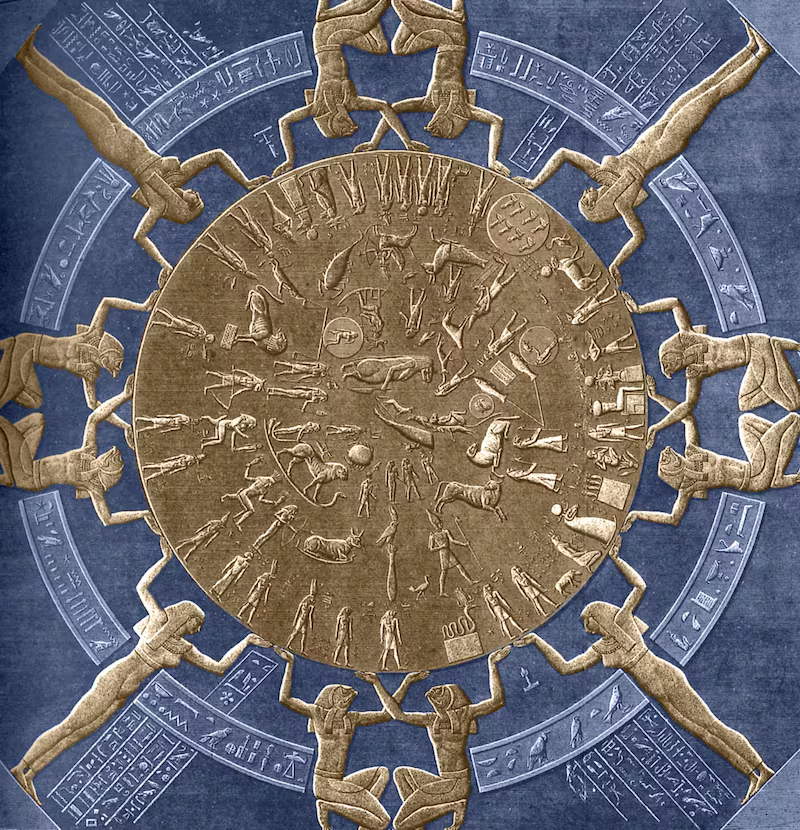
3. Dendera Zodiac, Egypt
The Dendero Zodiac is an ancient bas-relief that formed part of the ceiling of the Temple of Hathor in Upper Egypt and is now held at the Louvre in Paris.
Removed in the early 19th century, it has been part of the Louvre collection since 1822 and has become one of the most recognisable Egyptian antiquities in a French museum.
While there is no verified formal Egyptian state request for its return, the object has been repeatedly cited in public repatriation campaigns, including those led by archaeologist and former antiquities minister Zahi Hawass.
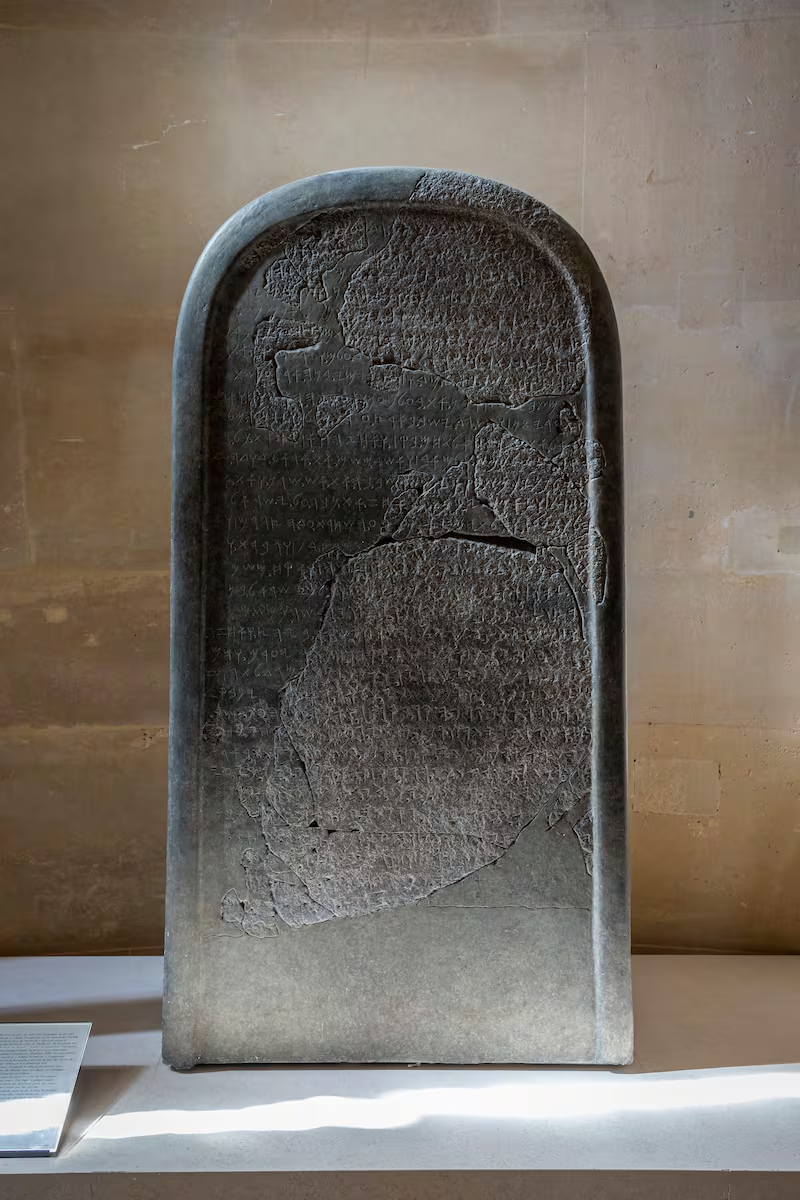
4. Mesha Stele, Jordan
Also known as the Moabite Stone, the Mesha Stele is a 9th-century BC basalt monument from present-day Jordan and is considered one of the most important inscriptions from the ancient Levant.
Discovered in 1868 by the Anglican missionary Frederick Augustus Klein at Dhiban, it was later shattered by the Bani Hamida tribe over an ownership dispute, before the fragments were recovered and reassembled in France.
In June 2014, non-governmental Mesha Centre for Studies and Human Rights delivered an official request for the stele’s return to the French embassy in Amman.
The Jordan Times reported in 2015 that French ambassador Caroline Dumas discussed the request with representatives and said she would convey their public appeal to the French government. No formal response has been reported.
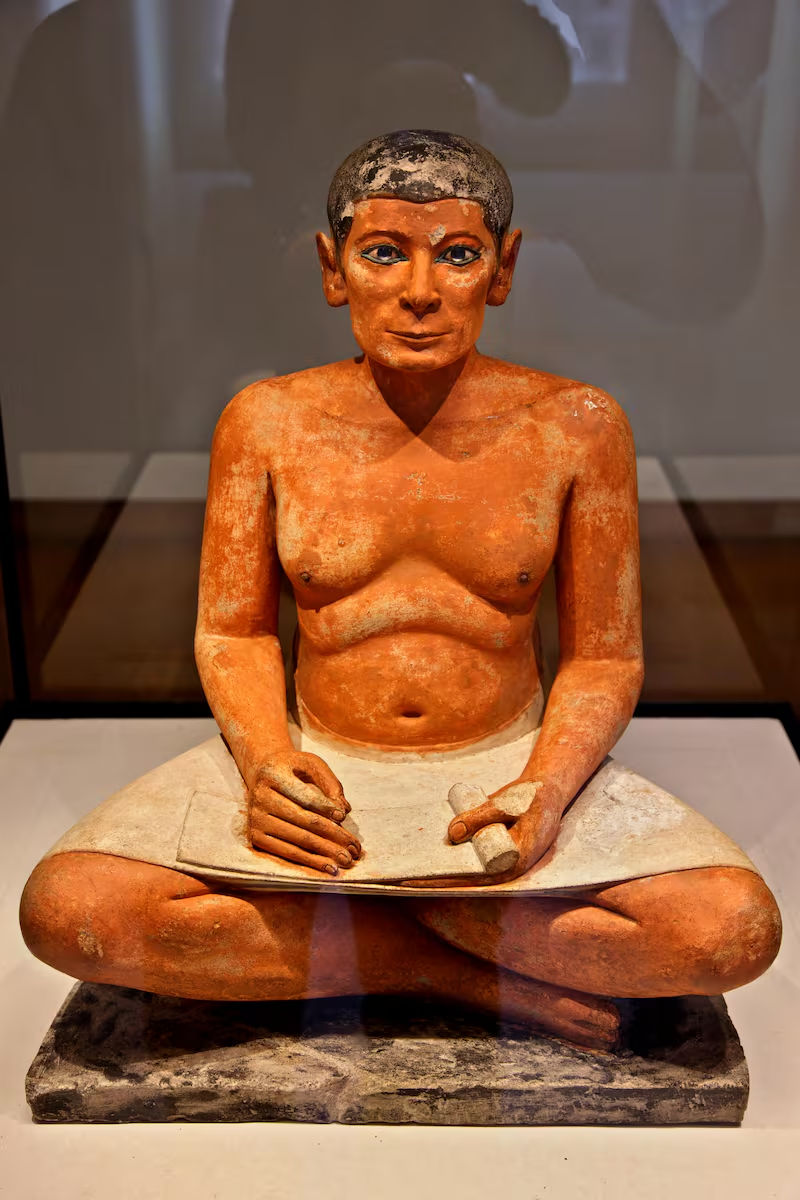
5. The Seated Scribe, Egypt
One of the Louvre’s most famous Egyptian works, the Seated Scribe is a painted limestone sculpture from the Old Kingdom, dating back to circa 2600BC-2350BC. It is famed for its striking realism and remarkably preserved features.
Found at Saqqara in the 19th century by the French archaeologist Auguste Mariette, it is among the most celebrated masterpieces of the Louvre’s Department of Egyptian Antiquities.
While the Egyptian government has not included the Seated Scribe on any formal restitution lists, it has appeared in broader public discussion in Egyptian cultural circles around the recovery of major artefacts held abroad.
Adhwan Al-Ahmari, chairman of the Saudi Journalists Association, was elected at the federation’s International Press Congress in Paris
Seat strengthens Saudi presence within international media institutions, opens the door to a larger role in shaping journalism worldwide
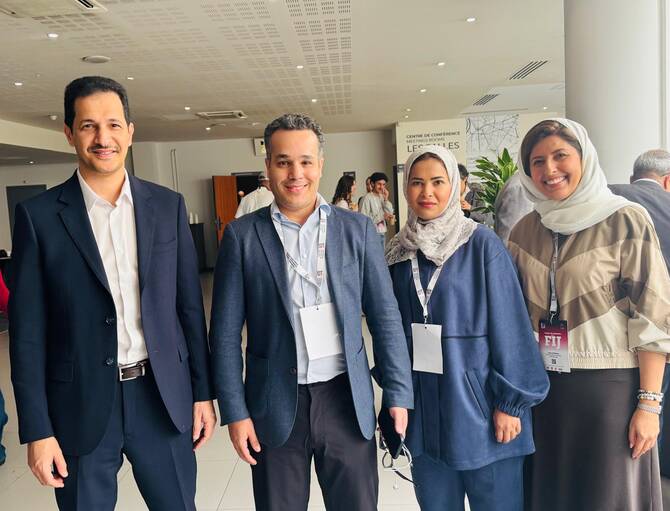
Saudi Arabia has won a first-ever seat on the executive committee of the International Federation of Journalists, the world’s largest journalists’ organization, after Adhwan Al-Ahmari, chairman of the Saudi Journalists Association, was elected at the federation’s International Press Congress in Paris.
Al-Ahmari said the result reflected the confidence of international professional unions in the Saudi Journalists Association, which was founded in 2003.
“This achievement represents the work of my colleagues on the board of directors and in the general secretariat,” he said.
“We have already established an international presence through our presidency of the Executive Office for West Asian Journalists and today we take that further,” he added, saying the association would continue working to expand Saudi Arabia’s presence on the world stage.
The result marks a milestone for the Kingdom’s presence in global media institutions at a time when it is playing a larger role in international bodies, including in the media and communications sphere.
Only 16 candidates secured seats on the committee, which was contested by representatives from more than 148 countries.
Saudi Arabia’s victory gives it a voice in shaping the direction of the federation over the next four years and strengthens its standing within international journalist circles.
Established in 1926, the IFJ is the world’s largest journalists’ organization, representing 600,000 media professionals from 187 trade unions and associations in more than 140 countries.
The executive committee helps steer the federation’s priorities and shape its response to issues affecting journalists globally, making Saudi Arabia’s first-ever presence on the body a notable development for the Kingdom’s media diplomacy.
The Saudi delegation to the congress was led by Al-Ahmari and included board members Lama Al-Shethry, Mai Al-Sharif and Hamed Al-Shehri.
source/content: arabnews.com (headline edited)
____________
The result marks a milestone for the Kingdom’s presence in global media institutions at a time when it is playing a larger role in international bodies, including in the media and communications sphere. (Supplied)
Abu Dhabi’s newest cultural landmark earns global recognition from TIME in 2026.
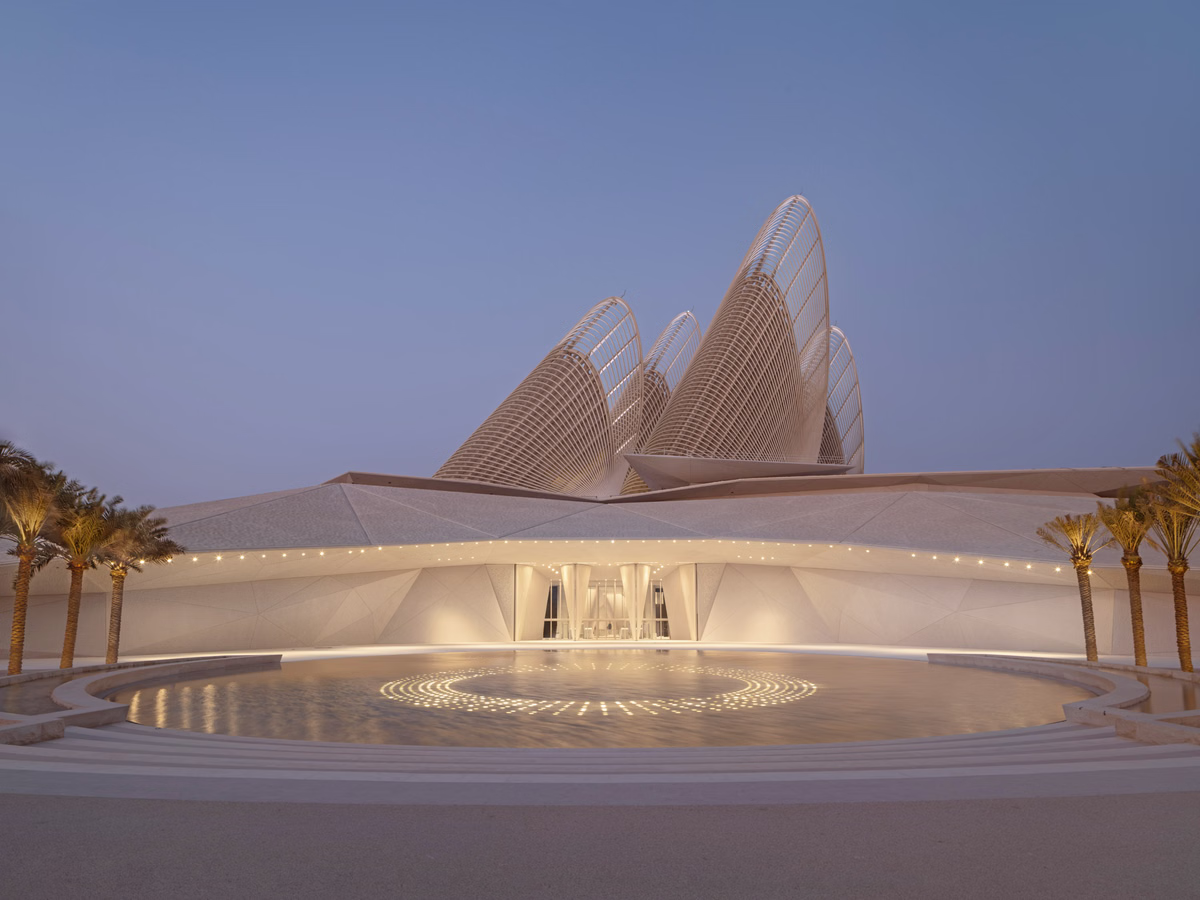
Abu Dhabi has added another standout to its cultural scene. The Zayed National Museum has been named one of TIME’s World’s Greatest Places for 2026, placing it among 100 destinations that offer something truly special for visitors.
Nestled within the growing Saadiyat Cultural District, the museum has quickly become a place people are curious about. It opened its doors in December 2025 and has since drawn attention for both its design and what it represents.
Rather than feeling like a traditional museum, it leans more towards a calm, reflective space where you can spend a few hours moving through stories of the UAE’s past.
Even before stepping inside, the building itself makes an impression. Designed by Norman Foster, the structure is inspired by the wings of a falcon in flight. The shape is striking but not over the top, and it ties back neatly to Emirati heritage.
Inside, the journey stretches back around 300,000 years, tracing human life in the region long before the country we know today. At the heart of it all is the story of Sheikh Zayed bin Sultan Al Nahyan, whose life and values shape much of what you see. The galleries are not overwhelming, which makes it easy to take your time and actually absorb what is on display.
Some pieces naturally draw more attention than others. The Abu Dhabi Pearl, believed to be one of the oldest natural pearls ever discovered, is one of those quiet highlights.
Another is the Blue Qur’an, known for its deep colour and fine detail, offering a glimpse into the artistic traditions of the Islamic world.
One of the more unexpected features is a full-scale reconstruction of an ancient Magan boat. It gives a sense of how people in this region once travelled and traded, long before modern borders existed. It is the kind of exhibit that makes history feel more real and less distant.
Places are selected through nominations from TIME’s international network of correspondents and contributors, as well as an open application process.
With several major institutions now based in the same district, it is becoming a place where visitors can easily spend a full day, or even more, exploring art, history and ideas.
For residents, it is another reason to take a closer look at what is on their doorstep. For travellers, it adds one more stop to an already evolving map of must see places in the region.