SHARJAH, U.A.E: Warsaw International Book Fair 2026 opens with Sharjah as its first-ever Arab Guest of Honour

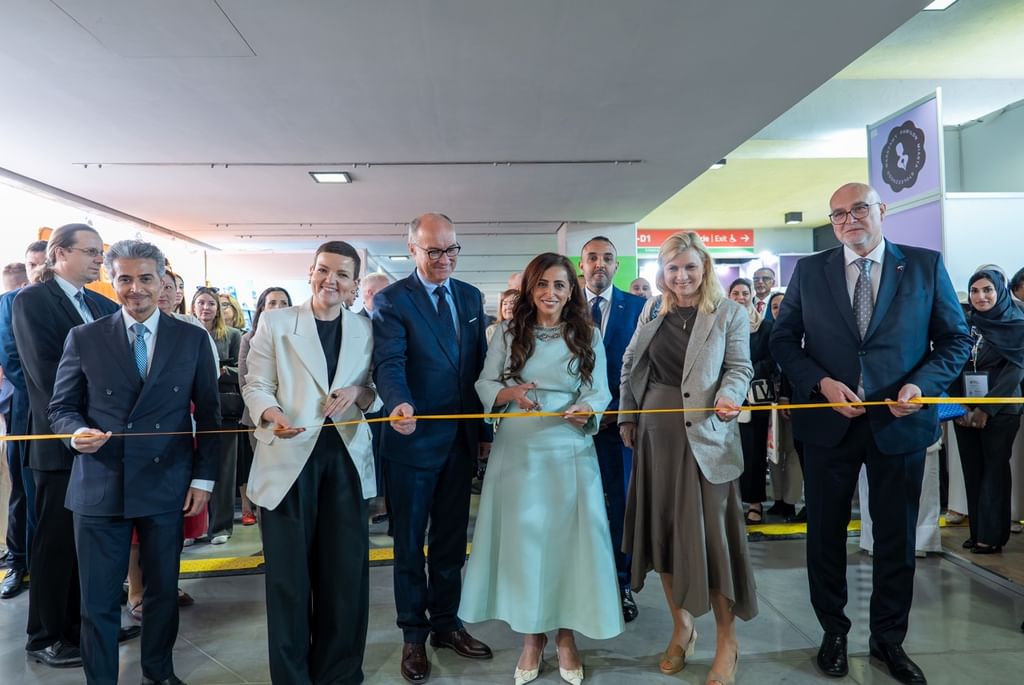
In the presence of Sheikha Bodour bint Sultan Al Qasimi, Chairperson of the Sharjah Book Authority (SBA), Sharjah officially opened its participation on Thursday as the first Arab Guest of Honour in the history of the Warsaw International Book Fair.

The emirate has brought to the European city a cultural project it has built over five decades, presenting a contemporary image of Emirati and Arab culture at one of Central Europe’s leading cultural events.

Sheikha Bodour Al Qasimi joined Włodzimierz Czarzasty, Marshal of Sejm of the Republic of Poland; the lower house of the Polish parliament, Marta Cienkowska, Poland’s Minister of Culture and National Heritage; Dorota Malinowska-Grupińska, Chairwoman of the Warsaw City Council, and Małgorzata Kidawa-Błońska, Marshal of the Polish Senate; at the opening ceremony of the fifth edition of the fair, which runs until 31 May at the National Stadium in Warsaw.

Following the ribbon-cutting, Sheikha Bodour Al Qasimi attended the opening ceremony, where she conveyed the greetings of His Highness Sheikh Dr. Sultan bin Mohammed Al Qasimi, Supreme Council Member and Ruler of Sharjah, and his wishes for the fair’s continued success.

She said His Highness has devoted his life to culture because he believes books create the kind of dialogue that allows civilisations to meet with dignity and depth. She recalled the Sharjah Ruler’s words: “Dialogue between civilisations is not an option, but a necessity. And culture is not an inheritance we keep to ourselves, but a noble bridge through which we connect with others.”

Sheikha Bodour added that Sharjah is proud to be the Guest of Honour in a country that understands language as memory, identity and continuity. Describing Warsaw as a city shaped by history and renewed by culture, she said it reminds us that culture does not merely survive history, but has the power to transform it.

She added that Arab and Polish cultures share a deep understanding of literature’s role, noting that poetry in both traditions remains central to how societies understand themselves and express memory, values and belonging across generations.

Sheikha Bodour said Sharjah’s theme at the fair, “Two Civilisations. One Language of Letters”, celebrates difference and reflects the belief that civilisations do not have to resemble one another to understand one another; they only need to approach each other with patience, curiosity and empathy.

In closing, she said that Sharjah comes to Warsaw not only with its stories but also with an open invitation to read one another, translate one another, and imagine together. She expressed hope that the fair would spark a dialogue that continues long after its conclusion and grows stronger between Warsaw and Sharjah.

Włodzimierz Czarzasty, Marshal of the Sejm of the Republic of Poland, said it was a cultural honour to welcome Sharjah as the Guest of Honour of Warsaw International Book Fair 2026, and described the emirate’s participation as a valuable cultural contribution that reflects the growing ties between Poland and the UAE.

He said books remain a powerful tool for fostering understanding and dialogue between cultures, while publishers continue to play a vital role in preserving and sharing knowledge across societies.

In her keynote, Marta Cienkowska, Poland’s Minister of Culture and National Heritage, thanked Sheikha Bodour for her remarks at the opening ceremony and praised Sharjah’s appreciation of Polish culture and history. She said cultural exchange remains a powerful means of fostering dialogue and understanding between peoples, adding that the Warsaw International Book Fair plays a vital role in connecting readers, writers and publishers with Poland’s cultural scene.

Dorota Malinowska-Grupińska, Chairwoman of the Warsaw City Council, said Sharjah’s participation as Guest of Honour highlights the role of books and publishing in fostering cultural dialogue and mutual understanding. As a publisher herself, she said books serve not only as cultural products but also as a means of human connection and exchange, adding that Sharjah’s presence in Warsaw brings a new dimension to dialogue with the Arab world.

For his part, Jacek Oryl, Director of the Warsaw International Book Fair, said Sharjah’s selection as Guest of Honour marks a significant moment in the fair’s history and reflects growing cultural ties between Poland and the UAE. He added that the emirate’s participation offers visitors insight into Arab and Emirati culture through its literature, arts, thought and living heritage.

Sheikha Bodour led an official tour of the Sharjah pavilion alongside Ahmed bin Rakkad Al Ameri, CEO of SBA, joined by distinguished guests including Dr. Tomasz Makowski, Director of the National Library of Poland; and Grzegorz Jankowicz, Director of the Polish Book Institute, alongside publishers and representatives of cultural institutions from Poland and across Europe.

During the tour, visitors were introduced to key initiatives and programmes that reflect Sharjah’s cultural project, including works presented by Emirati publishers, initiatives led by the emirate’s cultural institutions, and heritage and artistic activities featured as part of Sharjah’s participation in the fair.

The fair’s inaugural day featured the IKAR Publishing Season Awards ceremony, organised by the fair. This year’s Ikar Award was presented to Polish author Professor Stefan Chwin in recognition of his literary and humanitarian contributions, and his role in defending human values and cultural memory in contemporary Polish literature.

The IKAR Publishing Season Awards also honoured Piotr Dobrołęcki, who received the Author award for his contributions to Poland’s cultural and literary scene, while Wydawnictwo Czarne received the Publisher award for its role in enriching the country’s publishing industry and bringing influential literary and intellectual works to readers. The Bookstore award went to Księgarnia Artystyczna Firmin w Gdańsku for its efforts to promote reading culture and strengthen the presence of books in community life.

This year’s Warsaw International Book Fair features more than 1,200 cultural and professional events, reinforcing its position as one of Central Europe’s leading cultural platforms. Sharjah’s participation as Guest of Honour presents a model for Arab cultural engagement built on dialogue, openness and the strengthening of connections between peoples through literature, arts, and knowledge.

Over four days, Sharjah is presenting on its 400-square-metre pavilion, an institutional and creative presence reflecting the diversity of the UAE’s cultural landscape, with the participation of 21 cultural, academic and media institutions, 36 Emirati writers, poets, academics and artists, alongside 15 Polish participants, in a programme based on direct dialogue between Arab and Polish cultural experiences and placing books at the heart of exchange between peoples.

Sharjah’s participation includes 35 cultural events, featuring 28 panel discussions, four poetry evenings, and three children’s workshops, held across the fairgrounds, the University of Warsaw, and the Grochoteka Public Library, in addition to 18 musical performances by the Sharjah National Band at the Warsaw National Theatre. These performances introduce fair visitors and audiences across Warsaw to the elements of traditional Emirati arts through a programme that links written knowledge with immersive cultural experience.

Sharjah will also be activating public spaces, libraries and theatres, transforming Warsaw into an open platform introducing audiences to the history and contemporary Emirati and Arab culture.

As a key part of the programme, the project Tasawurat (“Visions”) brings together 10 artists and designers from the UAE and Poland to produce works inspired by Arabic and Polish poetry, exploring themes including humanity, nature, the sea, and existential reflection. It combines elements of Arabic poetic tradition with poster art, a defining feature of Poland’s visual culture.

The emirate’s pavilion comprises a showcase of cultural and academic institutions.

source/content: wam.ae (headline edited)

_______________

______________________________________________

SHARJAH, UNITED ARAB EMIRATES (U.A.E)

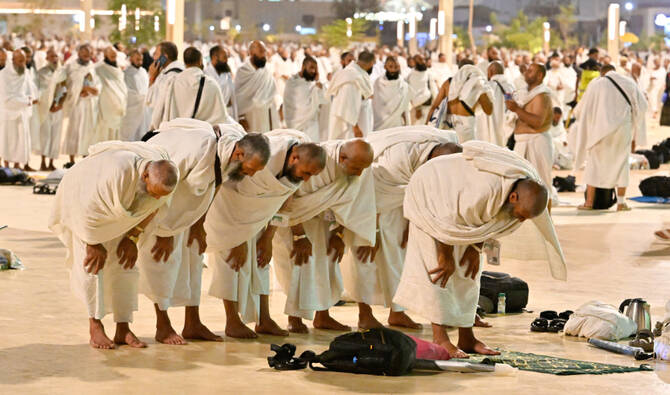
SAUDI ARABIA : MAY 2026: 1.7m pilgrims performing Hajj this year, 2.04% more than last year

1,546,655 people travel from outside of the Kingdom to take part in the pilgrimage, 160,646 are citizens or residents of Saudi Arabia

388,694 benefit from Makkah Route Initiative, a service that lets them complete all entry procedures at point of departure, thereby avoiding long queues on arrival, 23.7% more than last year

More than 1.7 million pilgrims are performing Hajj this year, the majority of whom live outside of Saudi Arabia, according to authorities in the Kingdom.

The total number of 1,707,301 is an increase of of 34,071, or 2.04 percent, compared with the 1,673,230 who attended the 2025 Hajj.

This comes amid continuing efforts to streamline pilgrimage operations, expand facilities at entry points and enhance services, officials said, and reflects the steady demand for Hajj places despite evolving regional and global conditions.

The increased attendance also underscores the Kingdom’s ongoing focus on operational efficiency, they added, particularly through the digitalization of services, improved crowd-management systems, and enhanced coordination between security, health and logistical authorities.

Figures provided by the General Authority for Statistics reveal that 1,546,655 pilgrims traveled from outside of the Kingdom to perform Hajj, while 160,646 are citizens or residents of Saudi Arabia. The vast majority of those arriving from abroad, 1,485,729, traveled by air, 54,429 entered the country through land crossings, and 6,497 arrived by sea.

The number of pilgrims who benefited from the Makkah Route Initiative, a service that allows them to complete all entry, passport and customs procedures at the point of departure and transports them directly to their accommodation, thereby avoiding long queues at airports on arrival, increased to 388,694, compared with 314,337 last year, an increase of about 23.7 percent.

The total number of people working in support of Hajj operations increased to 441,049 from 420,070 last year. However, the number of volunteers decreased from 34,540 in 2025 to 26,701, a decline of 22.7 percent.

The General Authority for Statistics said its figures were based on administrative data provided by the Ministry of Interior as the primary source, in line with a statistical framework adopted during recent Hajj seasons to ensure accuracy and reliability. The full Hajj data and detailed reports are available on the authority’s website.

source/content: arabnews.com (headline edited)

______________

The increased attendance also underscores the Kingdom’s ongoing focus on operational efficiency. (SPA)

_________________

SAUDI ARABIA

KUWAIT launches radio archive digitization project to preserve national media heritage

Al-Omar: Modern technology key to safeguarding historic radio archive.

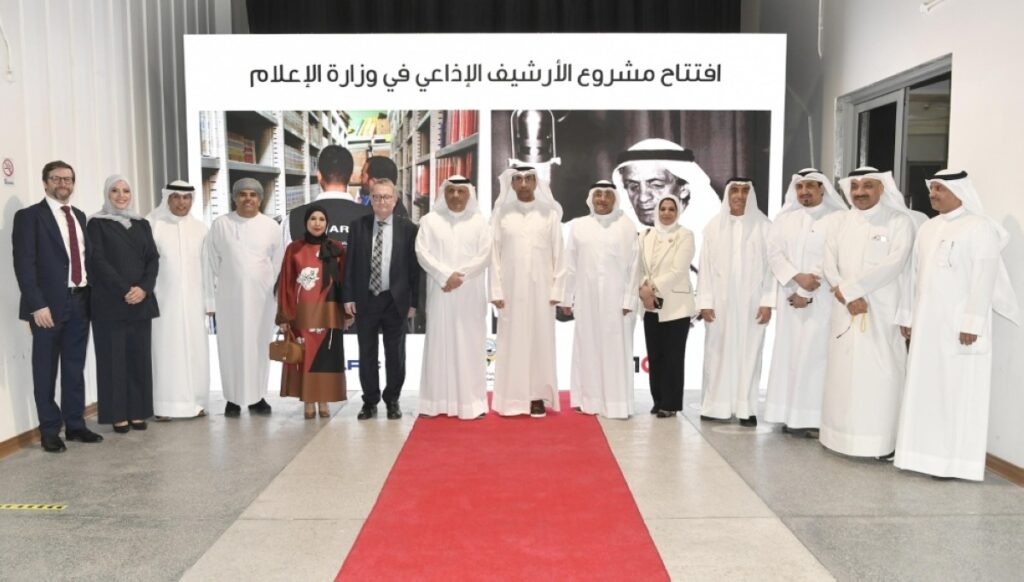
Minister of State for Communications and Information Technology and Acting Minister of Information and Culture Omar Al-Omar said the project to develop the Ministry of Information’s radio archive forms part of ongoing efforts to preserve Kuwait’s national media heritage using the latest technical systems and standards.

Al-Omar made the remarks in a speech during the project’s inauguration on Wednesday, attended by Austrian Ambassador to Kuwait Ulrich Frank and Ministry of Information Undersecretary Dr Nasser Muhaysen. The project is being implemented by Awlad Abdulaziz Abdulmohsen Al-Rashed Company in cooperation with Austrian firm NOA, which specializes in multimedia archiving and digitization, with the aim of preserving and digitizing radio content using advanced technologies.

The minister stressed that safeguarding national media heritage through modern systems ensures the sustainability and accessibility of radio materials, describing them as an integral part of Kuwait’s cultural and historical memory. He added that the initiative reflects the depth of relations between Kuwait and Austria and their shared commitment to strengthening cooperation in the media, cultural and technological fields in line with developments in modern media work.

Al-Omar noted that the Ministry of Information continues to implement development plans aimed at upgrading its technical infrastructure and enhancing capabilities in production, broadcasting and digital archiving, in line with the state’s broader drive to build a modern and efficient media system. He also emphasized the importance of strategic partnerships with specialized international institutions, which he said are essential to improving institutional performance, developing national talent and enhancing the quality of media services. For his part, Ambassador Frank said the project reflects the strong level of cooperation between Kuwait and Austria in cultural and technical fields, expressing his pleasure at participating in the launch of an initiative that contributes to preserving Kuwait’s media heritage.

He noted that the Radio Kuwait archive contains thousands of recordings documenting key stages of the country’s history, including musical works, programmes and diverse audio content. He said digitization and long-term preservation efforts would help safeguard these materials and improve accessibility for future generations, while modern systems would ensure their preservation and usability. Frank added that cooperation between Kuwaiti entities and Austrian specialized companies would support the completion of the digitization process using advanced technological solutions.

Meanwhile, Director of Radio Engineering at the Ministry of Information and project team leader Issa Al-Enezi told KUNA that the project coincides with the 75th anniversary of Radio Kuwait, which has played a key role in documenting the country’s development and cultural history. He said the project is based on three main pillars: cataloguing and classifying radio content, digitizing the archive according to the highest technical standards, and building a comprehensive database to facilitate access to archived materials. He described the initiative as a transition from traditional archiving to digital sustainability, ensuring preservation for future generations.

Chairman and CEO of Al-Rashed Group Abdulaziz Al-Rashed said the group’s role extends beyond implementation to supporting strategic national initiatives that advance development and digital transformation in Kuwait. He said the partnership with the Ministry of Information and Austrian company NOA represents a model of integration between national expertise and global technology, contributing to high-quality national projects and supporting Kuwait’s digital transformation agenda. The inauguration ceremony included a video presentation outlining the project’s implementation phases and archiving processes, as well as a tour of the facilities showcasing the digital preservation systems in use. — KUNA

source/content: kuwaittimes.com (headline edited)

____________

KUWAIT: Minister of State for Communications and Information Technology and Acting Minister of Information and Culture, Omar Al-Omar and other officials are pictured during the project’s inauguration on Wednesday.- KUNA photos

__________

KUWAIT

JORDAN : ‘We are in a phase as big as the printing press’: How Jordan became Arab world’s blueprint for media literacy

In interview with Arab News, Jordan Media Institute dean Dr. Ziad Rifai discusses urgent need to equip citizens with tools to navigate today’s information ecosystem

Working alongside UNESCO and the Jordanian government, JMI has spearheaded 2 successive national media literacy strategies, establishing Jordan as a regional model

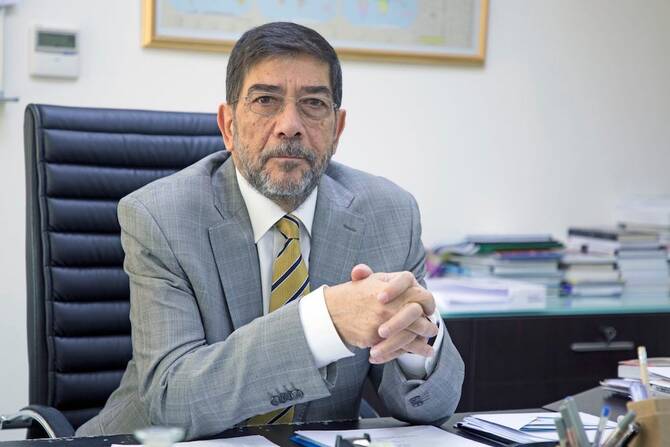
Sitting comfortably in his office in Amman, Dr. Ziad Rifai does not immediately strike you as someone whose grand mission is to fight information warfare.

The dean of the Jordan Media Institute and architect of its media literacy program — one of the first and most comprehensive initiatives of its kind in the Arab region — draws on decades of experience, appearing at times measured while promising to take on a David vs. Goliath challenge.

“Everybody now that has a phone basically has a TV, a radio station, a newspaper. All the media have been consolidated into this small phone,” he told Arab News. “And with that, with the amount of abuse that we’ve witnessed — the hate speech, the echo chambers, the misinformation, the disinformation, the rumors — all that necessitated that we need to do something about it.”

Founded in 2006 by HRH Princess Rym Ali as the first institution in the region to offer an Arabic-language MA in journalism and modern media, in partnership with the University of Jordan, JMI has evolved to keep pace with a rapidly shifting industry. Over the years it has introduced new courses — including mobile journalism and data journalism — alongside its media literacy program.

“Our focus is on journalism, creating journalists who are experienced, dedicated, ethical. That’s the core of our mission,” Rifai said. “But, as you know very well, the media scene is changing rapidly. So, while keeping the basic principles, we had to branch out into the new media scene.”

Rifai, who has worked across newsrooms, the UN, Jordan TV and the Higher Media Council, has watched this transformation unfold over five decades. He recalls a Jordan with one radio station, then the arrival of a single television channel and a handful of newspapers. Invoking Wilbur Schramm — the American scholar widely regarded as the father of modern communication theory, whose four-press model was first published in 1956 — he says the world has grown far more complex since then.

“Things have gotten so mixed up,” he added. “We are in a phase that’s as big as inventing the printing press, if not more. The problem is that the forces that are pushing the change, nobody knows who they are. And I’m not so sure if anybody can control where they’re going. Not to mention if they know where they’re going.”

That chaos, he suggested, is most acutely felt in the information ecosystem, where speed routinely outpaces safeguards — and where the general public is left with few tools to navigate the difference.

“The biggest challenge we have is with the speed that things change. The problem is how to catch up and have enough time to do interventions, awareness, education and introduce legislations.”

AI has become the defining example. In April, UNESCO examined how algorithmic AI systems are transforming information dynamics and amplifying risks — from misinformation to deepfakes — ultimately threatening trust in media and democratic integrity. The report argues that media and information literacy is the critical response. Yet follow-up initiatives, Rifai said, too often become mired in bureaucracy.

“For any initiative like this to take hold in a society, you need a champion. You need someone who believes in the idea and who pushes (it) forward,” he added.

JMI has been that champion in Jordan, working with the government domestically and relying on UNESCO as an international partner to strengthen credibility.

“We are the catalyst, we’re the advocates. UNESCO has the expertise and the global knowledge, but not the local,” said Rifai. “However, without the state, nothing will take hold, especially in our region.”

The model, he argues, is replicable. JMI is already exporting its expertise to a group of countries across the region.

“If (a country) took the strategy that we have and looked at it, they might change dates, they might change budgets, they might change partners, but the basic pillars of the strategy would probably be applicable in most of our region because the phenomenon is universal.”

JMI’s work operates on two levels: national policy design and hands-on training. Following an experimentation phase around 2014, Jordan moved to official adoption in 2019, when media literacy was placed on the government’s priority list alongside pilot projects in schools and youth spaces. The first National Strategy for Media and Information Literacy (2020–2023) earned recognition from UNESCO and a number of Arab and European officials, establishing Jordan as the first Arab country with a comprehensive, formal MIL plan. In late 2025, Jordan launched a second strategy for 2026–2029, again with UNESCO and JMI as core partners.

“The second strategy has full ownership of the government and all the elements of sustainability — that’s what the first strategy did not have,” Rifai said.

The program targets all age groups and all sectors of society, adjusting only in terms of sophistication.

“It essentially targets all sectors of operation. What differs is the level of sophistication,” said Rifai, adding that a 50-year-old housewife can be as active a disseminator of misinformation as a teenager. MIL concepts are now integrated into school curricula across subjects including religion, social sciences and Arabic — but Rifai is candid about the gap between integration and application.

“In my previous career at the UN, we integrated concepts of reproductive health and family planning in two books. The challenge was that teachers didn’t teach it. It was in the book, but in the classroom, they just skipped it. Either because they didn’t believe in it, or because they thought it wasn’t important.”

Monitoring implementation, he acknowledges, is the next frontier. “If awareness is not translated to behavioral impact or behavioral change, it’s not worth the objective. At the end of the day, the campaign should change behaviors and not just create that awareness. Awareness might be the first step in that direction.”

The ambition extends beyond classrooms. This week, JMI signed a memorandum of understanding with Jordan’s Higher Council for the Rights of Persons with Disabilities to develop a code of ethics for journalists covering disability — an area Rifai describes as a blind spot in regional media.

“People with disabilities are absent, at least in our region, from the media scene,” he said. “Whenever you see a person with disability in media, it’s either portrayed as, ‘oh, poor guy,’ or, ‘oh, how wonderful, he got a degree in science.’ Both, from their perspective, it’s the wrong approach. Just treat them like normal human beings.”

He framed the partnership as explicitly two-directional: JMI bringing journalism expertise, the council bringing lived experience.

Rifai acknowledges the world remains full of challenges, but believes the goal is to take back enough control to exploit technology’s possibilities rather than be consumed by them.

“It’s not easy to predict where we’re going. What we know for sure is that things seem to be going out of hand, in terms of media proliferation. We’re being pushed to becoming more and more reliant on (a specific technology), and less and less having any input on controlling where it’s going.”

He sees it, ultimately, as a double-edged sword. “The chaotic scene has its pitfalls,” he said, “but at the end of the day, it is allowing everybody to say what they want. For the first time, there’s freedom of information and everybody now is telling his or her story without the control. It could go either way, and I wouldn’t put money on either side of that prediction.”

For JMI, however, the mission remains constant. “No matter what happens with the media, we should not lose sight of that importance of having a proper journalism. At the end of the day, what matters is what you’re going to say and how you’re going to say it. We will continue to hold the principles and the ethical message of proper journalism. That will continue to be our role, no matter what new technologies or wars come.”

source/content: arabnews.com (headlines edited)

____________

Dr. Ziad Rifai, dean of the Jordan Media Institute and architect of its media literacy program, spoke to Arab News about one of the first and most comprehensive initiatives of its kind in the Arab region. (Supplied)

___________

JORDAN

EGYPT : Shahira Fahmy Named Jury President of Arab World Institute Award

Shahira Fahmy has been announced as the first Egyptian Jury President of the Arab World Institute Design Award 2026.

As the first Egyptian architect to serve as Jury President of the Arab World Institute Design Award, Shahira Fahmy joins a panel of designers, curators, editors and cultural figures shaping the fourth edition of the Paris-based award programme. Organised by the Institut du Monde Arabe, the award recognises emerging and established designers from across the Arab world, with a focus on craftsmanship, material innovation and contemporary design practices.

“Design in the Arab world has always carried memory, resourcefulness and a strong understanding of place,” says Shahira Fahmy. “What interests me about this award is its ability to create visibility for designers responding to current realities while remaining connected to local knowledge and cultural identity.”

The Arab World Institute Design Award 2026 invites projects created between September 2024 and April 2026 across four categories: Emerging Talent Award, Contemporary Craftsmanship Award, Impact Award in partnership with Arab Bank Switzerland, and the Grand Prize for established architects and designers. The programme examines how design engages with sustainability, craft traditions, production processes and material research across the region.

Founded in Cairo in 2005, SFA – Shahira Fahmy Architects expanded to Dubai in 2024 and works across architecture, heritage restoration, urban planning, and interior design. The practice is known for projects including the restoration and rehabilitation of Zone 1 in AlUla Old Town, Dar Tantora The House Hotel and Beit Bin Nouh for the Royal Commission for AlUla. The work contributed to AlUla Old Town’s nomination for the Aga Khan Award for Architecture in 2025.

“For me, architecture and design are tied to people and context,” Fahmy says. “Whether working on a heritage site in AlUla or a contemporary urban project, the process begins by listening to what already exists.”

A graduate of Cairo University, Fahmy taught at the university for a decade and has lectured internationally at institutions including Columbia GSAPP and The American University in Cairo. Her work has also been recognised through fellowships at Harvard University, including the Loeb Fellowship at the Graduate School of Design, the Hutchins Fellowship at the W. E. B. Du Bois Research Institute, and the Berkman Klein Fellowship at Harvard Law School.

Joining Fahmy on this year’s jury are Daniele Gerkens, Memia Taktak, Mette Degn Christensen, Michèle Maria Chaya, Nicolas Lecompte, Samer Yamani, Sheikha Reem Al Thani, Aidan Imanova, Ali Khadra and Arnaud Morand.

“It is important to see platforms like this continue conversations around Arab design through ecology, craftsmanship, material experimentation, and the future of communities across the region,” Fahmy adds.

Finalist projects will be shortlisted in May 2026. The selected projects will then be reviewed by the jury ahead of the awards ceremony at the Institut du Monde Arabe in Paris in September 2026, as part of Paris Design Week.

source/content: cairoscene.com (headline edited)

________________

_________________

EGYPT / ARAB

SAUDI ARABIA : King Abdullah University of Science and Technology (KAUST) scientists develop nanoscale ‘drug factory’ that produces medicine inside living cells

Breakthrough advances programmable drug delivery through nanoscale protein engineering, say researchers.

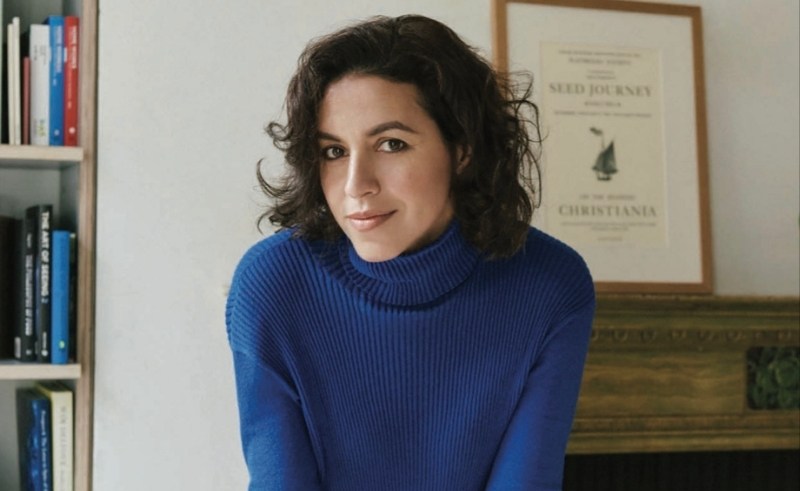
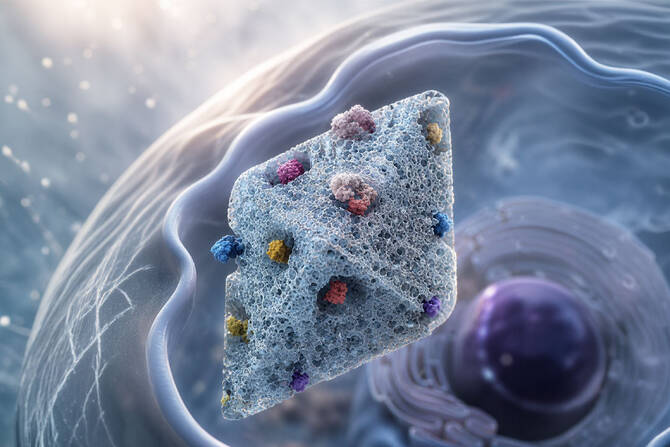
Scientists at the King Abdullah University of Science and Technology have engineered nanoscale particles capable of transporting six proteins into living cells, where they work together as a miniature “drug factory” to produce violacein, a bioactive compound under study for therapeutic use.

The findings, detailed in a press release published recently on KAUST’s news site, offer an early demonstration of how future therapies might one day generate treatment compounds directly inside the body, only where they are needed.

Researchers said the approach could eventually allow treatments to act more precisely at the site of disease while reducing unwanted effects on healthy tissue.

Published in the journal Advanced Materials, the study combines nanotechnology, materials science and bioengineering to tackle a longstanding medical challenge: delivering multiple proteins into cells simultaneously so they can perform coordinated biological functions.

Researchers packaged six proteins inside porous, sponge-like particles known as metal-organic frameworks, or MOFs, creating what they described as synthetic organelles — engineered structures that mimic functions found in living cells.

Once inside mammalian cells, the proteins remained active and worked sequentially to convert a simple amino acid into violacein. According to the researchers, it is the most complex multiprotein system yet delivered into living cells and the first example of a “protein pathway transplant.”

“It was a bit of a moonshot,” said Raik Grunberg, senior research scientist at KAUST and one of the study’s corresponding authors.

“Protein delivery into the cell is difficult enough for individual proteins, so researchers usually do not even try with more than one or two. What we show here is that we can take a whole integrated protein system … and bring it into human cells as one functional unit.”

Niveen Khashab, professor of chemical science at KAUST, said the team overcame major technical hurdles after conventional MOF materials caused proteins to lose activity.

“By engineering a more porous, sponge-like framework, we were able to create an environment where the system could finally work as intended,” she said.

Researchers said the platform is designed to be adjustable, allowing scientists to fine-tune how proteins interact inside cells and potentially paving the way for programmable therapies tailored to specific diseases.

Stefan T. Arold, professor of bioscience at KAUST and another corresponding author, said the project demonstrated how combining expertise across biology and materials science could unlock new therapeutic approaches.

Although the work remains at an early stage and requires further validation before clinical use, the researchers said it points toward future treatments capable of producing beneficial compounds directly inside diseased tissue while minimizing side effects elsewhere in the body.

The KAUST team plans to test the system next in animal models as part of ongoing efforts to explore its therapeutic potential.

source/content: arabnews.com (headline edited)

_______________

The breakthrough offers an early proof of concept for therapies that could one day generate treatment compounds directly inside the body at the site of disease. (KAUST News photo)

__________________

SAUDI ARABIA

ALGERIA : UNESCO Confirms Algeria’s Primacy in the Inscription of Caftan (Statement)

The 20th session of UNESCO’s Intergovernmental Committee for the Safeguarding of the Intangible Cultural Heritage, meeting Thursday in New Delhi, has clearly and unequivocally confirmed the primacy of Algeria’s inscription of the Caftan as an essential component of its rich cultural heritage, the Ministry of Foreign Affairs, the National Community Abroad and African Affairs said in a statement.

On this occasion, the Committee decided to modify the name of the element inscribed in 2024 on the Representative List of the Intangible Cultural Heritage of Humanity to explicitly include the Caftan, as well as the Quat and the Lhef. The Algerian element now bears the new designation: “Women’s ceremonial costume in the Eastern region of Algeria: knowledge and skills associated with the making and adornment of the Gandoura and the Melehfa.”

The Committee also approved the modification of the file titled “Rites and craftsmanship associated with the wedding costume tradition of Tlemcen,” inscribed since 2012 on the Representative List. It decided to add the mention “the Wearing of the Caftan” to section B3 of the ICH-02 form, in accordance with the submitted document.

These decisions represent “a new major diplomatic success for Algeria, both on the international cultural scene and within the framework of multilateral diplomacy.” They reaffirm “the historical and cultural primacy of Algeria’s inscription of the Caftan on the Representative List of the Intangible Cultural Heritage of Humanity and strengthen the international recognition of this exceptional intangible heritage,” the statement added.

The decision “consolidates Algeria’s place on UNESCO’s Representative List” and constitutes explicit recognition of the “sustained and continuous efforts of the State to promote, preserve and highlight Algeria’s rich cultural heritage, the product of centuries of history reflecting the depth and authenticity of our nation.”

This recognition “also reflects the relevance of the approach adopted in implementing the instructions of the country’s high authorities to promote our cultural heritage in all its components and forms, while protecting it from any attempt at imitation, appropriation or falsification,” the statement concluded.

source/content: al24news.dz

__________

______________

ALGERIA

SAUDI ARABIA wins first-ever seat on International Federation of Journalists (IFJ) executive committee

Adhwan Al-Ahmari, chairman of the Saudi Journalists Association, was elected at the federation’s International Press Congress in Paris

Seat strengthens Saudi presence within international media institutions, opens the door to a larger role in shaping journalism worldwide

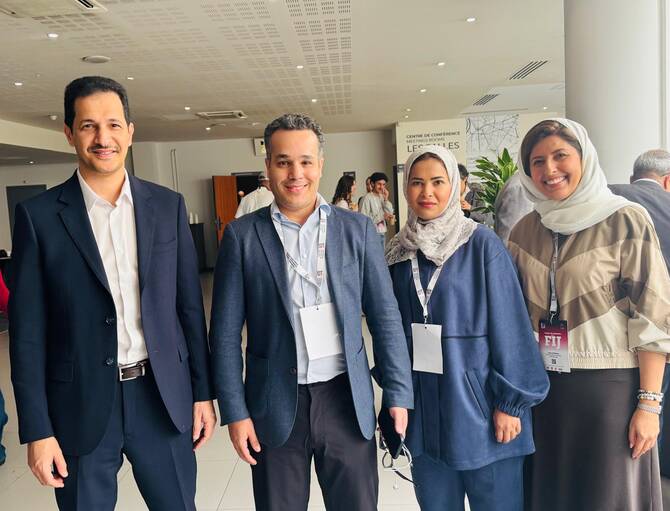
Saudi Arabia has won a first-ever seat on the executive committee of the International Federation of Journalists, the world’s largest journalists’ organization, after Adhwan Al-Ahmari, chairman of the Saudi Journalists Association, was elected at the federation’s International Press Congress in Paris.

Al-Ahmari said the result reflected the confidence of international professional unions in the Saudi Journalists Association, which was founded in 2003.

“This achievement represents the work of my colleagues on the board of directors and in the general secretariat,” he said.

“We have already established an international presence through our presidency of the Executive Office for West Asian Journalists and today we take that further,” he added, saying the association would continue working to expand Saudi Arabia’s presence on the world stage.

The result marks a milestone for the Kingdom’s presence in global media institutions at a time when it is playing a larger role in international bodies, including in the media and communications sphere.

Only 16 candidates secured seats on the committee, which was contested by representatives from more than 148 countries.

Saudi Arabia’s victory gives it a voice in shaping the direction of the federation over the next four years and strengthens its standing within international journalist circles.

Established in 1926, the IFJ is the world’s largest journalists’ organization, representing 600,000 media professionals from 187 trade unions and associations in more than 140 countries.

The executive committee helps steer the federation’s priorities and shape its response to issues affecting journalists globally, making Saudi Arabia’s first-ever presence on the body a notable development for the Kingdom’s media diplomacy.

The Saudi delegation to the congress was led by Al-Ahmari and included board members Lama Al-Shethry, Mai Al-Sharif and Hamed Al-Shehri.

source/content: arabnews.com (headline edited)

____________

The result marks a milestone for the Kingdom’s presence in global media institutions at a time when it is playing a larger role in international bodies, including in the media and communications sphere. (Supplied)

_________________

SAUDI ARABIA

DUBAI Customs leads global digital innovation, earns 3 top accreditations

 Dubai Customs has continued its excellence in service innovation by obtaining three prestigious international accreditations from the Global Innovation Institute in the United States. This milestone once again highlights its ability to develop an advanced customs ecosystem built on innovation, proactivity and value creation.

The three accreditations covered high-impact projects representing a qualitative leap in service development: automation of vehicle clearance certificates, the mega X-ray scanner and the attestation service in collaboration with the Ministry of Foreign Affairs. Two projects were classified at Level 2, which focuses on enhancing services to increase competitive value, while the third achieved Level 3—the institute’s highest classification—due to its strategic value in expanding service scope and strengthening long-term sustainability.

Atiq Al Mehairi, Executive Director of the Customs Development Division at Dubai Customs, stated that this global achievement reflects the organisation’s ability to translate its strategic vision into tangible results. By adopting advanced digital solutions, Dubai Customs has improved operational efficiency, accelerated procedures and enhanced trade flow. The accredited projects also represent a leading model in leveraging technology to support the business environment and reinforce Dubai’s position as a pivotal global hub in supply chains and international trade.

He added that Dubai Customs continues to develop an integrated suite of digital services that keeps pace with global changes and supports the competitiveness of the national economy. Investment in innovation and institutional capability development remains a fundamental pillar for achieving global leadership and strengthening Dubai’s position as a leading trade and logistics hub.

Dr. Hussam Juma, Director of Service Innovation Department at Dubai Customs, affirmed that this achievement is a significant addition to the organisation’s record and reflects renewed international confidence in its ability to develop services in line with the highest standards. He noted that Dubai Customs is steadily enhancing its global presence by investing in talent and fostering a work environment that encourages creativity and supports the adoption of innovative solutions.

He further emphasised that Dubai Customs continues to implement ambitious development initiatives based on adopting the latest technologies and automating customs procedures. These efforts contribute to improving operational efficiency, increasing customer satisfaction and supporting the Dubai Government’s direction towards delivering proactive and innovative services that meet future expectations.

Dubai Customs previously achieved a major milestone by obtaining the Certified Government Organisation – Excellence Level accreditation from the same institute in 2023. It became the first government entity in Dubai and the first customs authority globally to receive this prestigious classification, further confirming its leadership in delivering innovative government services aligned with global best practices.

source/content: wam.ae (headline edited)

______________

____________________________________________

DUBAI, UNITED ARAB EMIRATES (U.A.E)

ABU DHABI, U.A.E. : Zayed National Museum recognised by TIME’s World’s Greatest Places for 2026

Abu Dhabi’s newest cultural landmark earns global recognition from TIME in 2026.

Abu Dhabi has added another standout to its cultural scene. The Zayed National Museum has been named one of TIME’s World’s Greatest Places for 2026, placing it among 100 destinations that offer something truly special for visitors.

Nestled within the growing Saadiyat Cultural District, the museum has quickly become a place people are curious about. It opened its doors in December 2025 and has since drawn attention for both its design and what it represents.

Rather than feeling like a traditional museum, it leans more towards a calm, reflective space where you can spend a few hours moving through stories of the UAE’s past.

Even before stepping inside, the building itself makes an impression. Designed by Norman Foster, the structure is inspired by the wings of a falcon in flight. The shape is striking but not over the top, and it ties back neatly to Emirati heritage.

Inside, the journey stretches back around 300,000 years, tracing human life in the region long before the country we know today. At the heart of it all is the story of Sheikh Zayed bin Sultan Al Nahyan, whose life and values shape much of what you see. The galleries are not overwhelming, which makes it easy to take your time and actually absorb what is on display.

Some pieces naturally draw more attention than others. The Abu Dhabi Pearl, believed to be one of the oldest natural pearls ever discovered, is one of those quiet highlights.

Another is the Blue Qur’an, known for its deep colour and fine detail, offering a glimpse into the artistic traditions of the Islamic world.

One of the more unexpected features is a full-scale reconstruction of an ancient Magan boat. It gives a sense of how people in this region once travelled and traded, long before modern borders existed. It is the kind of exhibit that makes history feel more real and less distant.

Places are selected through nominations from TIME’s international network of correspondents and contributors, as well as an open application process.

With several major institutions now based in the same district, it is becoming a place where visitors can easily spend a full day, or even more, exploring art, history and ideas.

For residents, it is another reason to take a closer look at what is on their doorstep. For travellers, it adds one more stop to an already evolving map of must see places in the region.

source/content: gulfnews.com (headline edited)

_____________

Mohamed Somji

________________________________________________

ABU DHABI, UNITED ARAB EMIRATES (U.A.E)