Arabs & Arabian Records Aggregator. Chronicler. Milestones of the 25 Countries of the Arabic Speaking World (official / co-official). AGCC. MENA. Global. Ist's to Top 10's. Records. Read & Enjoy./ www.arabianrecords.org
Unlike many literary prizes decided solely by professional juries, the Prix Horizon relies on reader participation.
Moroccan writer Zineb Mekouar has received the Prix Horizon in Belgium for her novel “Souviens-toi des abeilles”, a work that ties environmental fragility with family memory in the landscapes of southern Morocco.
The award ceremony took place on Saturday in Marche-en-Famenne, in southern Belgium. The prize goes every two years to the most accomplished second novel written in French, with a strong focus on authors who deepen their literary voice beyond a debut work.
Mekouar’s novel, published by Gallimard, is set in the High Atlas mountains and draws a portrait of a rural world shaped by ancestral beekeeping practices. Through the eyes of a child, the story links inheritance, silence within families, and the pressures placed on fragile ecosystems.
Unlike many literary prizes decided solely by professional juries, the Prix Horizon relies on reader participation. Reading groups from Belgium and France’s Grand Est region take part in the final vote after a shortlist drawn up by literary professionals.
The Moroccan author meets readers and fellow finalists during a full day of discussions before the final vote. The format emphasizes direct exchange between authors and the public.
Created twelve years ago by the city of Marche-en-Famenne, the Prix Horizon seeks to draw attention to French-language writers who confirm their place in literature through a second novel. The selection begins with a professional jury that reviews dozens of works before readers decide the final winner.
“Souviens-toi des abeilles” has already gained recognition in France. It received the Henri de Régnier Prize from the Académie française in 2025. It also appeared in the Académie Goncourt summer selections for 2024 and entered the first shortlist for the Prix Jean Giono the same year. The novel also won the Folire Prize in 2025.
This year’s other finalists included Claire Vesin with “Le lotissement”, Marie Mangez with “Les vérités parallèles”, Ketty Rouf with “Mère absolument”, and Benjamin de Laforcade with “Berlin pour elles”.
Born in Casablanca in 1991 and based in Paris since 2009, Mekouar first drew attention with her debut novel “La poule et son cumin”, published in 2022. The book reached the final stage of the Goncourt prize for first novel.
With the news of the Netherlands returning a 3,500-year-old Egyptian sculpture this week, here is a list of ten important Egyptian artefacts that are still held abroad.
Earlier last week, Dutch Prime Minister Dick Schoof announced his government would be returning a sculpture from the reign of King Thutmose III to Egypt, where it had been illegally taken during the 2011 Revolution and sold abroad. The announcement was made in the wake of the opening of the Grand Egyptian Museum and was met with praise and applause by many Egyptian observers. In recent years, there have been increasing calls by Egyptians (and by many people of formerly colonized countries) to bring home their country’s lost artefacts. However, the story of how artefacts came to leave a country is often complicated. Oftentimes they were looted, but sometimes they were given as gifts (or otherwise lawfully taken). In any case, in an effort to commemorate the Grand Egyptian Museum becoming the largest museum in the world dedicated to one civilization, here is a list of some of the Egyptian artefacts you still won’t find there.
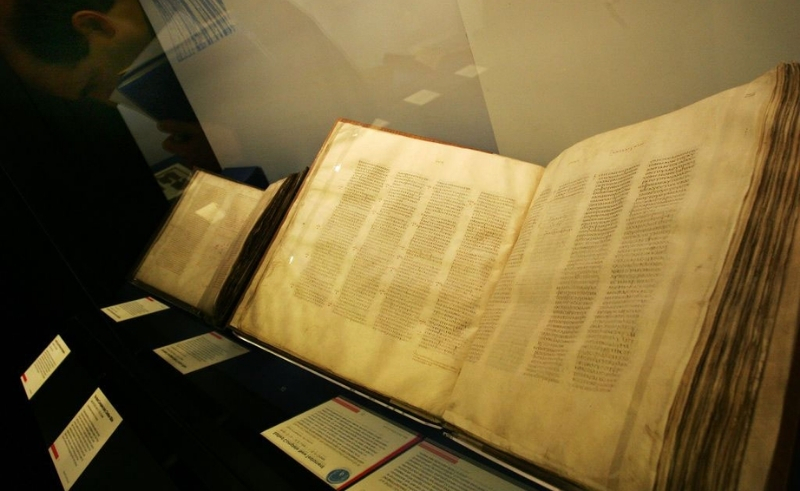
1) The Oldest Bible in the World (British Library, London)
The Codex Sinaiticus, also known as the Sinai Bible, is the oldest complete copy of the New Testament ever found. Dating to around 350 CE during the time of Roman Egypt, it is also the youngest artefact on this list. (The timeline of the Grand Egyptian Museum, which chronicles ancient Egyptian history from prehistoric times to the Greco-Roman period, ends at 400 CE.)
The story of how this Bible left Egypt is complicated. Although the Bible was found in Saint Catherine’s Monastery in Sinai in 1844 by a German theologian, it was given to Tsar Alexander II of Russia, and then sold to the British Museum in London in 1933 by the Soviet government. Today, most of the manuscript remains in British Library (where very few scholars have been allowed to see it in full), though smaller fragments are still scattered across Germany, Russia, and St. Catherine’s Monastery.
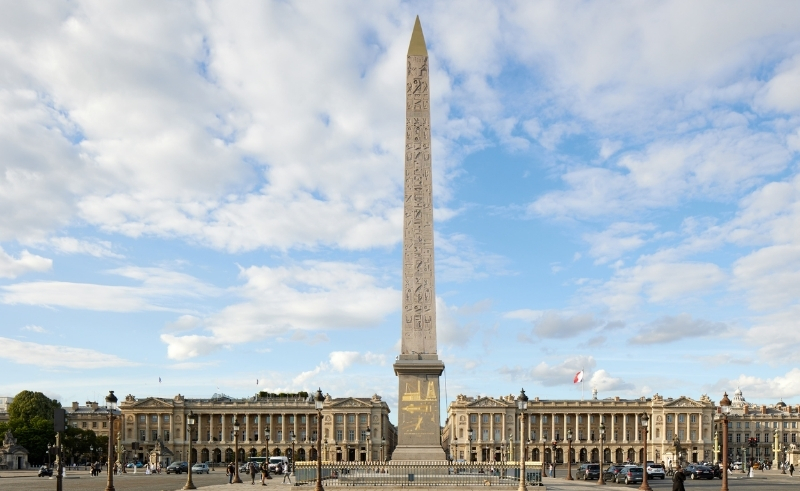
2) Luxor Obelisk (Paris)
If you’ve ever been to the Luxor Temple on the east bank of the Nile River, you will have noticed that in the entranceway there stands only one obelisk, the other clearly missing. Carved during the reign of Ramses II of Egypt’s New Kingdom, the missing granite obelisk now sits in the center of Place de la Concorde in Paris. It was gifted to the French Empire by Muhammad Ali Pasha in 1829 as a gesture of friendship, and it remains the oldest monument in all of France.
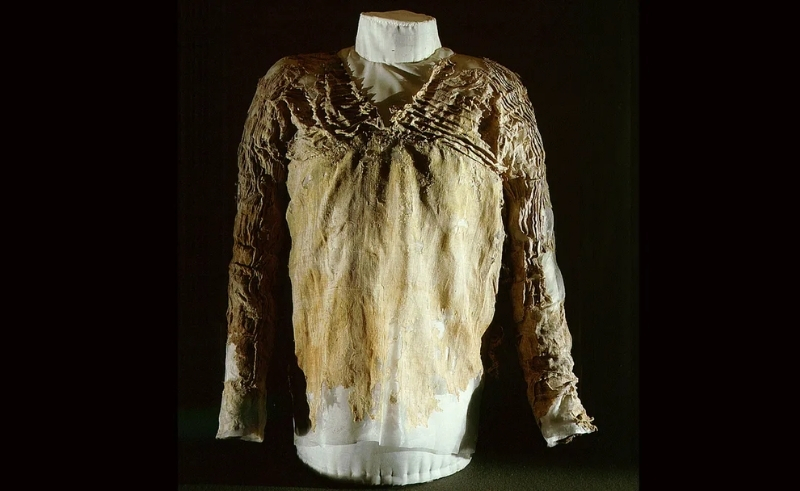
3) The Oldest Woven Dress in the World (Petrie Museum, London)
The Tarkhan dress, a linen garment that was once likely once worn by an Egyptian worker, is a 5000 year old piece of clothing—the oldest woven garment ever found. The dress was found south of Cairo in 1913 by Flinders Petrie, a British archaeologist, who at first believed it to be little more than a rag. He decided to take the rag with him to London anyway, and it wasn’t until the clothing was carbon-dated in 2015 that the true age—and significance—of the dress was understood.
The roughly size 2 dress remains in remarkably good condition (for its age), featuring a V-neck cut and long sleeves, and armpit stains left by its original wearer.
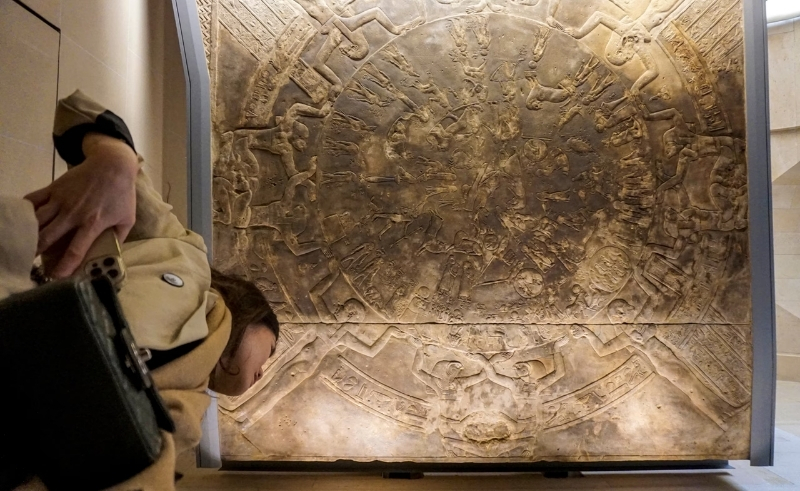
4) The Oldest Complete Map of the Ancient Sky (Louvre Museum, Paris)
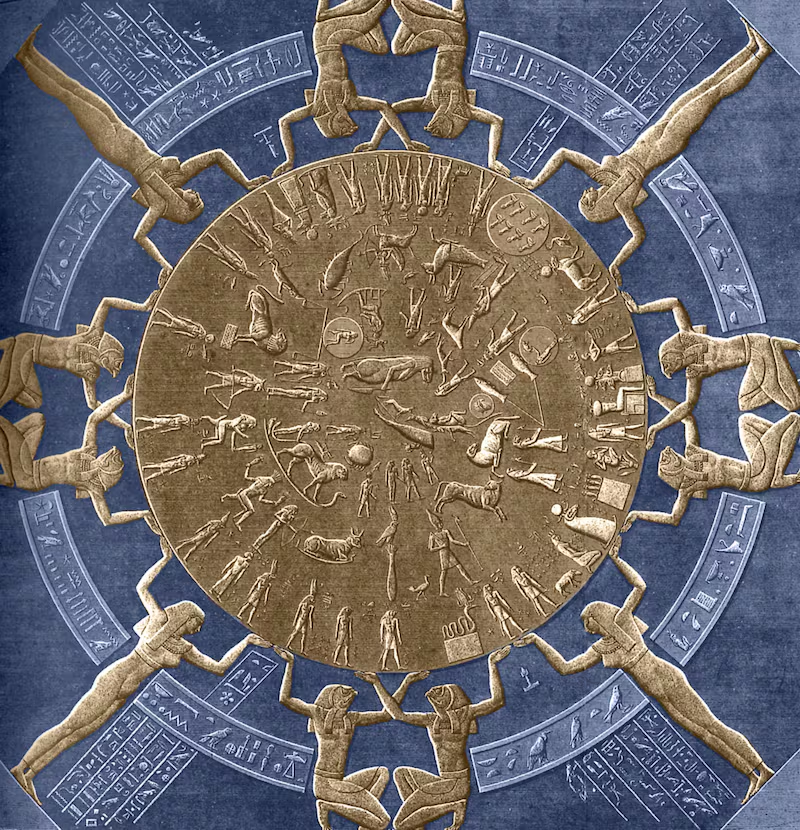
The Dendera Zodiac is a celestial map from the time of Ptolemaic Egypt, depicting the twelve zodiac signs (a Greek invention) with Egyptian imagery and style. It was likely created during the reign of Cleopatra, around 50 BCE, and was etched into the walls of the Dendera Temple of Hathor north of Luxor. Besides its beauty, its significance lies in the fact that it is the oldest (and possibly only) known complete map of the ancient sky.
The French removed it from Egypt in 1821 (with some versions of the story claiming they used dynamite to do so), and today it can be found in the Louvre Museum in Paris.
5) The Rosetta Stone (British Museum, London)
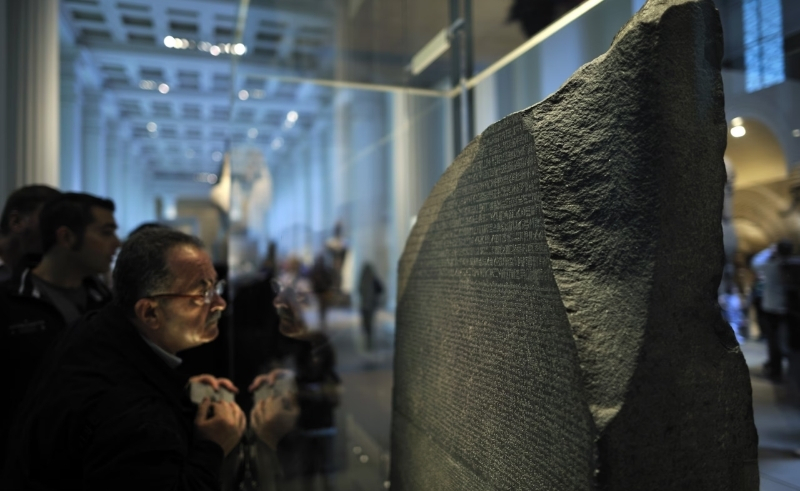
Many people believe that the Rosetta Stone was taken by the British from Egypt, but in reality, it was taken by the British from the French, who took it from Egypt. Discovered by French soldiers in the town of Rashid (Rosetta) in 1799, this stone is perhaps the most important archaeological discovery of all time (and it remains the most visited artefact in the British Museum). Its decryption paved the way to understanding ancient Egyptian hieroglyphics (and with it most of ancient Egyptian history), which until then had been illegible to all who tried to read it.
When Egypt formally asked for the Stone’s repatriation in 2003, the British Museum refused to return it, and instead gave Egypt a replica of the Stone. That replica now sits inside the National Museum in Rashid.
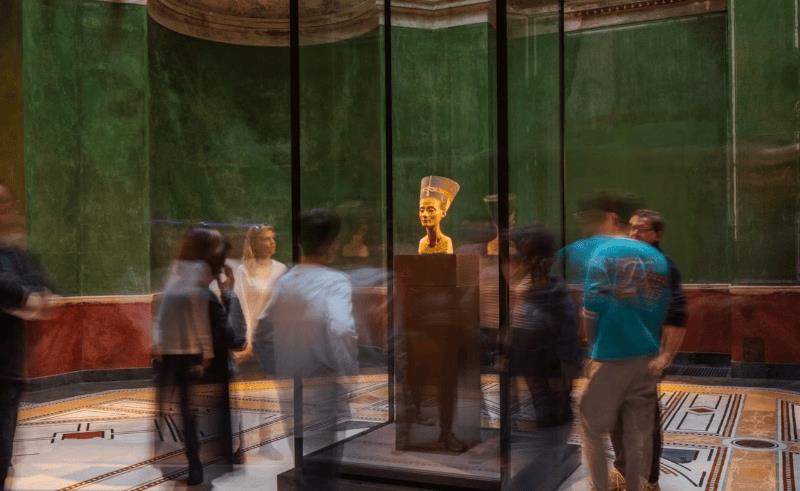
6) The Bust of Nefertiti (Neues Museum, Berlin)
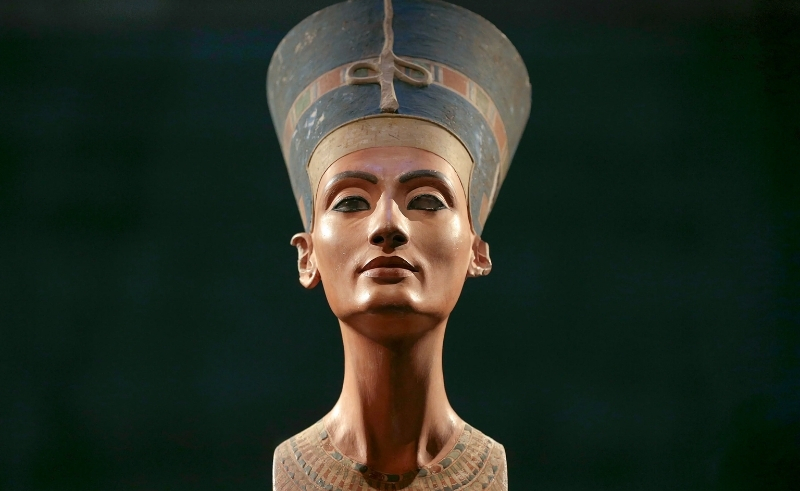
This iconic sculpture is one of the most well-known artefacts from ancient Egypt, and it depicts an equally legendary figure: Queen Nefertiti, wife of Akhenaten, stepmother of Tutankhamun. 3,400 years ago, Akhenaten’s sculptor captured Nefertiti’s beautifully slender neck, raised chin, and level gaze, and when it was discovered in 1912 the painted sculpture was still in remarkably good condition.
At the time of its finding, excavations in Egypt were conducted under a system whereby all items discovered were split between Egypt and the foreign country sponsoring the excavation, but there was a caveat: only ‘non-unique’ items could leave the country. The controversy that surrounds this bust is that the German team that discovered it hid its true value, and thus the bust was allowed to leave Egypt and be transported to Berlin, where it remains today.
7) Colossal Figure of Ramses II (British Museum, London)
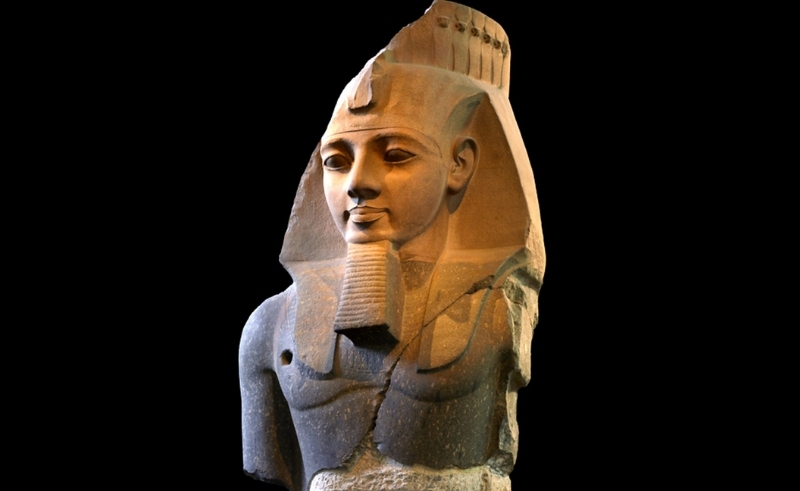
Also known as the Younger Memnon, this colossal torso and head once sat atop a statue of Ramses II located at his mortuary temple in Luxor. In 1798, Napoleon’s men tried extracting the statue but failed, and a couple of decades later the British succeeded in removing the upper portion of the statue (which had, long before, been damaged and detached from the rest of the body during an earthquake). Weighing nearly 20 tonnes, the statue is the largest Egyptian sculpture in the British Museum.
8) Bust of Ankh-haf (Museum of Fine Arts, Boston)
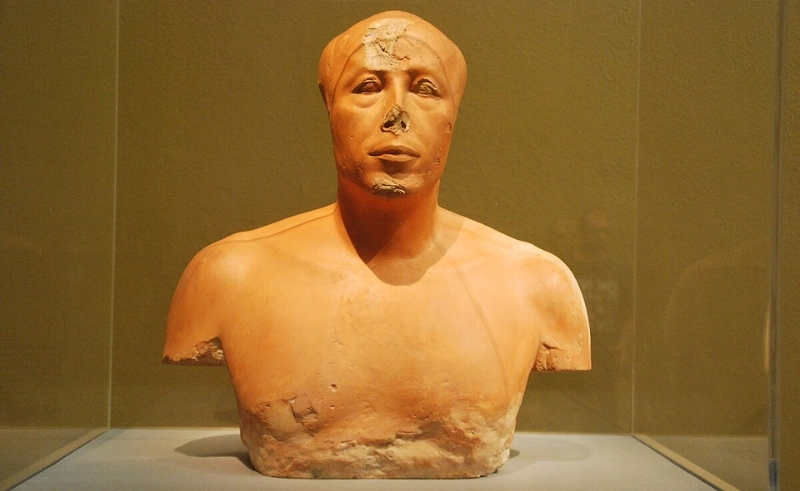
This lesser known artefact is striking for its high level of realism. Its namesake, Ankh-haf, was a government official of the Old Kingdom who oversaw the building of the Great Pyramid of Giza and the Sphinx.
The bust was discovered in 1925 during an expedition by Harvard University, and in 1927 it was gifted by the Egyptian government to an American archaeologist. Perhaps fittingly given the sculpture’s realism, it now rests in the Museum of Fine Arts in Boston.
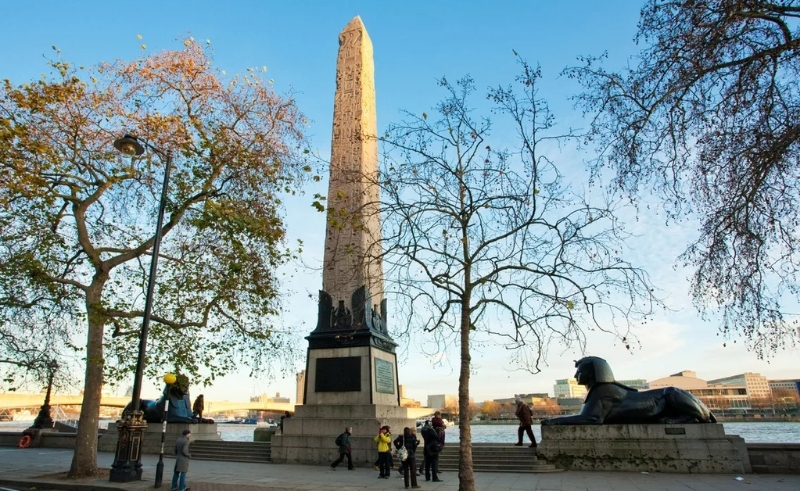
9 & 10) Cleopatra’s Needles (London & New York)
Despite their name, the pair of obelisks called Cleopatra’s Needles bear no relation to Queen Cleopatra herself. Instead, they were constructed during the reign of King Thutmose III of the New Kingdom, more than a thousand years before Cleopatra’s reign. During the Roman era they were moved from their original location in Heliopolis to Alexandria, where they stood for nearly two thousand years.
By the 1800s, one of the two needles had fallen. It was this needle that Muhammed Ali Pasha, in 1819, decided to gift to Britain (as he had gifted the Luxor Obelisk to France). However, the 21-meter tall obelisk was so massive that it was not actually transported to London until the reign of Ismail Pasha in 1877. It was also Ismail Pasha who, in the same year, gifted the remaining needle to the United States.
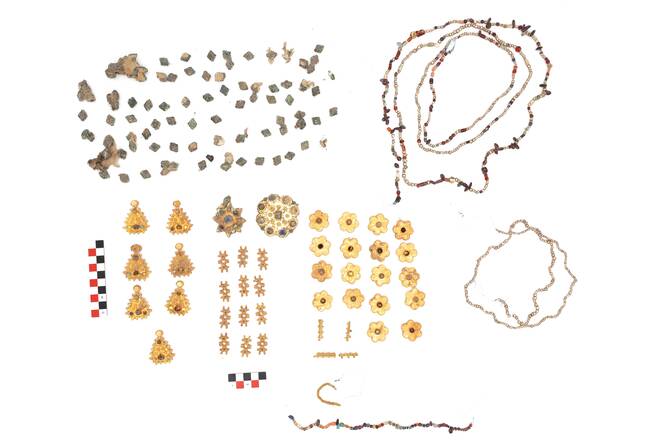
A collection of 100 pieces of gold jewelry dating back to the Abbasid era has been discovered in Saudi Arabia’s Al-Qassim region, the Saudi Heritage Commission announced on Tuesday.
The ancient artifacts are thought to have formed a complete adornment set, and were designed to look like flowers with stone settings fixed within gold frames.
There is also a large disc-shaped piece inlaid with colored stones arranged symmetrically in a central pattern, as well as a large group of multi-colored beads and delicate gold spacers.
The items were crafted using hammering and hand-forming techniques on gold sheets, along with decorative pressing and stone inlay within the frames.
These techniques reflect the advanced craftsmanship of the period and the development of gold jewelry-making during the Abbasid era, according to the commission.
They were found at the Dariyah archaeological site as part of the fourth season of the commission’s archaeological survey and excavation project.
Dr Jasir Suliman Alherbish, CEO of the Saudi Heritage Commission, said in a statement: “This discovery at Dariyah reflects the abundance of the Kingdom’s cultural heritage and its longstanding role as a crossroads of trade routes and cultural exchange.
“It underscores the Heritage Commission’s commitment to research, documentation and preservation, further strengthening understanding of the Kingdom’s history and safeguarding its cultural legacy.”
Excavations also revealed architectural features dating back to the Abbasid period, including the foundations of stone buildings, mud walls, fire hearths and plastered rooms, in addition to pottery vessels and metal tools.
These finds indicate human settlement dating back to the late ninth century A.D. and confirm the strategic importance of the site along pilgrimage and trade routes.
Located in the southwest of Al-Qassim Region, Dariyah is one of Saudi Arabia’s significant archaeological sites, with evidence of activity from the pre-Islamic period into the early Islamic era.
It was historically an important stop on ancient trade and pilgrimage routes, including the Basran Hajj route from Iraq.
Its surviving remains, set among mountains and valleys, include archaeological mounds, stone building foundations, pottery and glass fragments, soapstone artifacts and Islamic inscriptions in the surrounding area, reflecting the site’s long-standing historical and cultural significance.
source/content: arabnews.com (headlines edited)
___________
The set of ancient gold jewelry dates back to the Abbasid era. (Supplied)
Authors, scholars and institutions from Arab world and beyond honoured as Abu Dhabi prize celebrates two decades of cultural influence.
The 2026 winners of the Sheikh Zayed Book Award were announced on Friday, marking two decades of one of the Arab world’s most influential literary prizes.
Established in 2006 and held under the patronage of President Sheikh Mohamed, the award has grown into a fixture on the region’s cultural calendar, drawing submissions from across the world and supporting the global reach of Arabic literature.
This year’s winners reflect that international scope, with recipients from countries including Egypt, Morocco, Germany and the UAE.
Egyptian writer Ashraf Elashmawy took the Literature prize for his novel Births in the Zoo, a work that explores shifts in Egyptian society through closely observed, character-driven storytelling. Moroccan researcher Mustapha Rajouane won in the Young Author category for a study examining how rhetoric shapes narrative in the modern Arabic novel.
In Translation, Iraqi-American scholar Nawal Nasrallah has been recognised for her English edition of a 13th-century Arabic culinary text, bringing a complex historical manuscript to a wider readership. Jordanian academic Zuhair Tawfiq received the Literary and Art Criticism award for his study of how Arab and western cultures have historically imagined one another.
German writer and translator Stefan Weidner won in the Arab Culture in Other Languages category for a major anthology of pre-Islamic Arabic poetry, while the Emirates Literature Foundation was honoured for its role in developing the UAE’s literary scene and supporting readers and writers.
The Encyclopaedias and Lexicons category went to Egyptian academic Mohamed Elkhosht for his six-volume Encyclopaedia of World Religions, and veteran Egyptian singer Nagat Al Saghira was named Cultural Personality of the Year, recognising a career that has helped shape modern Arabic song and language.
More than 4,000 submissions were received from 74 countries, underlining the award’s growing international profile. Since its launch, it has attracted more than 33,000 entries and honoured 136 winners, including writers, translators and cultural institutions.
Mohamed Khalifa Al Mubarak , chairman of the Department of Culture and Tourism – Abu Dhabi, said the award continues to build on the UAE’s long-standing investment in culture and knowledge, while Ali bin Tamim, secretary general of the award, described it as a platform that has helped shape contemporary Arabic literary and research landscapes.
A programme of events is planned throughout the year to mark the award’s 20th anniversary. Winners will be honoured at a ceremony in Abu Dhabi, with Al Saghira receiving Dh1 million for being Cultural Personality of the Year, and other category winners awarded Dh750,000 each.
Shahira Fahmy has been announced as the first Egyptian Jury President of the Arab World Institute Design Award 2026.
As the first Egyptian architect to serve as Jury President of the Arab World Institute Design Award, Shahira Fahmy joins a panel of designers, curators, editors and cultural figures shaping the fourth edition of the Paris-based award programme. Organised by the Institut du Monde Arabe, the award recognises emerging and established designers from across the Arab world, with a focus on craftsmanship, material innovation and contemporary design practices.
“Design in the Arab world has always carried memory, resourcefulness and a strong understanding of place,” says Shahira Fahmy. “What interests me about this award is its ability to create visibility for designers responding to current realities while remaining connected to local knowledge and cultural identity.”
The Arab World Institute Design Award 2026 invites projects created between September 2024 and April 2026 across four categories: Emerging Talent Award, Contemporary Craftsmanship Award, Impact Award in partnership with Arab Bank Switzerland, and the Grand Prize for established architects and designers. The programme examines how design engages with sustainability, craft traditions, production processes and material research across the region.
Founded in Cairo in 2005, SFA – Shahira Fahmy Architects expanded to Dubai in 2024 and works across architecture, heritage restoration, urban planning, and interior design. The practice is known for projects including the restoration and rehabilitation of Zone 1 in AlUla Old Town, Dar Tantora The House Hotel and Beit Bin Nouh for the Royal Commission for AlUla. The work contributed to AlUla Old Town’s nomination for the Aga Khan Award for Architecture in 2025.
“For me, architecture and design are tied to people and context,” Fahmy says. “Whether working on a heritage site in AlUla or a contemporary urban project, the process begins by listening to what already exists.”
A graduate of Cairo University, Fahmy taught at the university for a decade and has lectured internationally at institutions including Columbia GSAPP and The American University in Cairo. Her work has also been recognised through fellowships at Harvard University, including the Loeb Fellowship at the Graduate School of Design, the Hutchins Fellowship at the W. E. B. Du Bois Research Institute, and the Berkman Klein Fellowship at Harvard Law School.
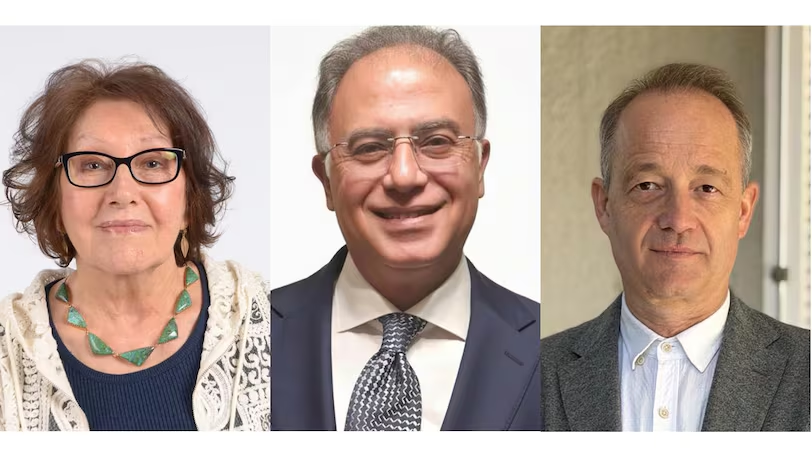
Joining Fahmy on this year’s jury are Daniele Gerkens, Memia Taktak, Mette Degn Christensen, Michèle Maria Chaya, Nicolas Lecompte, Samer Yamani, Sheikha Reem Al Thani, Aidan Imanova, Ali Khadra and Arnaud Morand.
“It is important to see platforms like this continue conversations around Arab design through ecology, craftsmanship, material experimentation, and the future of communities across the region,” Fahmy adds.
Finalist projects will be shortlisted in May 2026. The selected projects will then be reviewed by the jury ahead of the awards ceremony at the Institut du Monde Arabe in Paris in September 2026, as part of Paris Design Week.
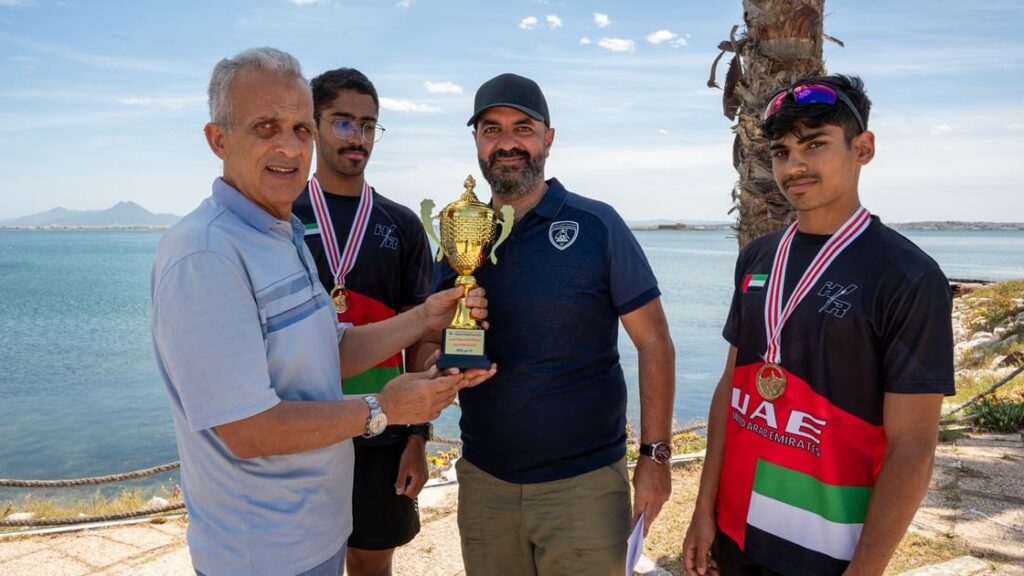
Al Hamriyah modern rowing team claimed a gold medal at the Tunisian Classic Rowing Championship, held on Lake Tunis from 5th to 10th May 2026, with the participation of nine clubs.
Al Hamriyah secured the gold medal through rowers Hamad Abdullah Al Hosani and Salem Al Mansouri in the under-19 double sculls category.
Salem Al Khayyal, Board Member of Al Hamriyah Club and Head of the Individual Games and Talent Development Committee, congratulated the athletes and coach Captain Sayed Ali Wadhah on the achievement, highlighting the advanced level reached by the team.
The two rowers and their coach expressed pride in the achievement and affirmed their determination to continue working hard to raise the name of Al Hamriyah Club in regional and international competitions.
As country debates easing return of treasures, attention turns to regional pieces still held in its national collections.
French lawmakers are debating a new bill aimed at simplifying the return of colonial-era cultural objects to their countries of origin, drawing renewed attention to artefacts still held in France’s national collections, which number in the tens of thousands.
The draft legislation was unanimously approved by the Senate in January and now requires backing from the lower house, the Assemblee Nationale, before it can become a law.
While not all cases are at the same stage, these five objects from Algeria, Egypt and Jordan sit within that broader restitution debate, whether through formal state requests, public campaigns or long-standing calls for their return.
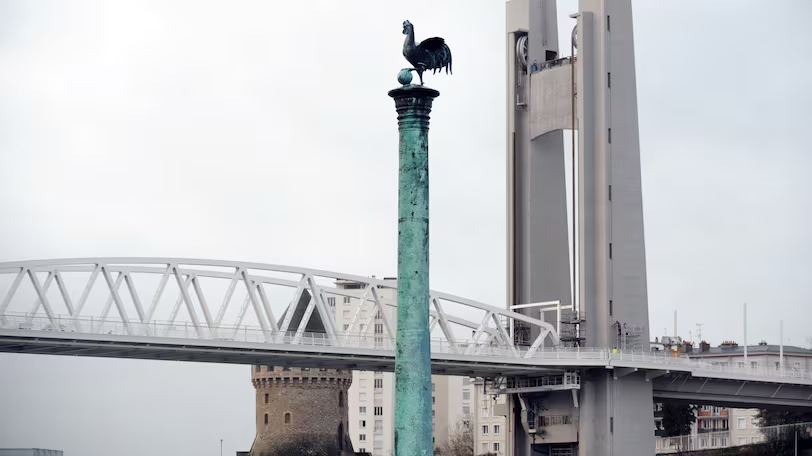
1. Baba Merzoug, Algeria
The 16th-century cannon known as Baba Merzoug at the Arsenal of Brest in western France. AFP
The 16th-century bronze cannon from the Ottoman era in Algiers is housed at the naval base in the French coastal city of Brest after being taken by French forces in 1830 following the capture of Algiers.
While seized as a spoil of war, the cannon remains a politically charged symbol of French colonial rule in Algeria. The Algerian government formally requested its return in 2012, and the cannon was explicitly cited during the April 2026 parliamentary debate over France’s proposed restitution framework.
2. Emir Abdelkader’s effects, Algeria
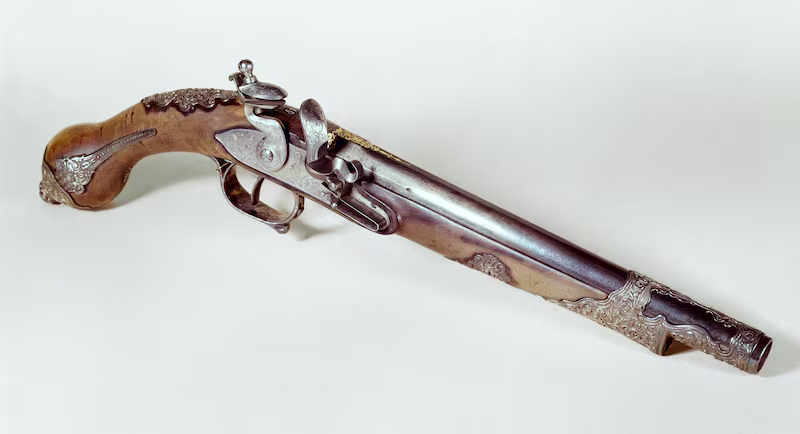
Rather than a single object, this refers to personal items associated with the 19th-century Algerian leader Emir Abdelkader, who led the resistance against French invasion before his surrender in 1847.
Held across French collections including at Musee de l Armee in Paris and Musee Conde in Chantilly, the objects include a steel sabre, pistol, ceremonial cloak and related belongings linked to Abdelkader’s life and leadership.
Algeria has included these effects on a formal restitution list submitted to French authorities in 2021, and they remain a sensitive part of the wider dispute over colonial-era holdings.
3. Dendera Zodiac, Egypt
The Dendero Zodiac is an ancient bas-relief that formed part of the ceiling of the Temple of Hathor in Upper Egypt and is now held at the Louvre in Paris.
Removed in the early 19th century, it has been part of the Louvre collection since 1822 and has become one of the most recognisable Egyptian antiquities in a French museum.
While there is no verified formal Egyptian state request for its return, the object has been repeatedly cited in public repatriation campaigns, including those led by archaeologist and former antiquities minister Zahi Hawass.
4. Mesha Stele, Jordan
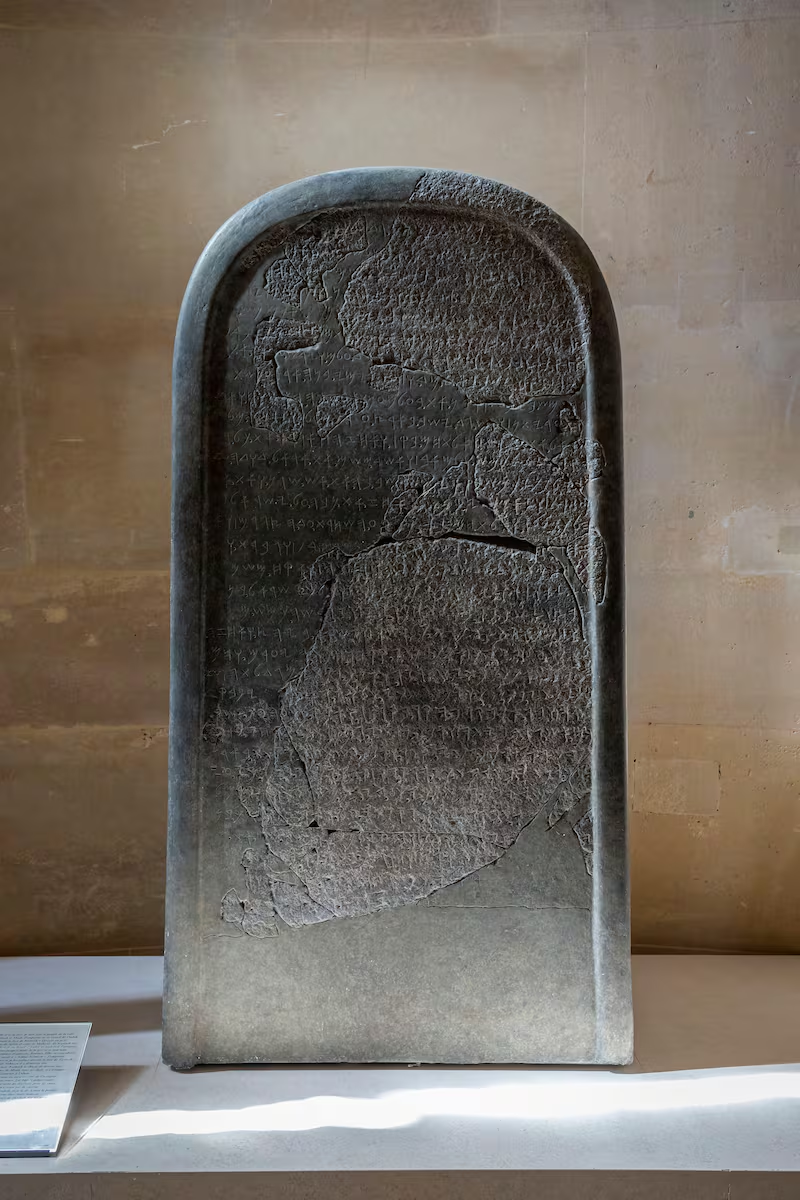
Also known as the Moabite Stone, the Mesha Stele is a 9th-century BC basalt monument from present-day Jordan and is considered one of the most important inscriptions from the ancient Levant.
Discovered in 1868 by the Anglican missionary Frederick Augustus Klein at Dhiban, it was later shattered by the Bani Hamida tribe over an ownership dispute, before the fragments were recovered and reassembled in France.
In June 2014, non-governmental Mesha Centre for Studies and Human Rights delivered an official request for the stele’s return to the French embassy in Amman.
The Jordan Times reported in 2015 that French ambassador Caroline Dumas discussed the request with representatives and said she would convey their public appeal to the French government. No formal response has been reported.
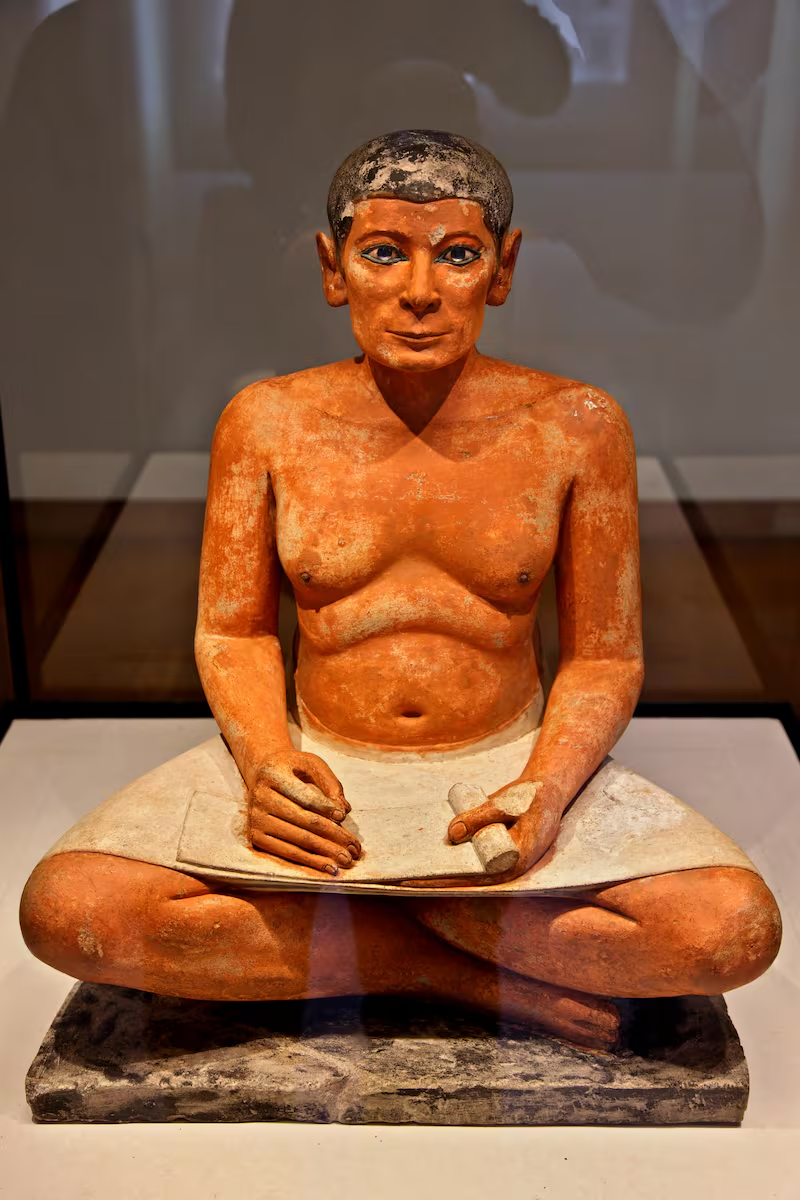
5. The Seated Scribe, Egypt
One of the Louvre’s most famous Egyptian works, the Seated Scribe is a painted limestone sculpture from the Old Kingdom, dating back to circa 2600BC-2350BC. It is famed for its striking realism and remarkably preserved features.
Found at Saqqara in the 19th century by the French archaeologist Auguste Mariette, it is among the most celebrated masterpieces of the Louvre’s Department of Egyptian Antiquities.
While the Egyptian government has not included the Seated Scribe on any formal restitution lists, it has appeared in broader public discussion in Egyptian cultural circles around the recovery of major artefacts held abroad.
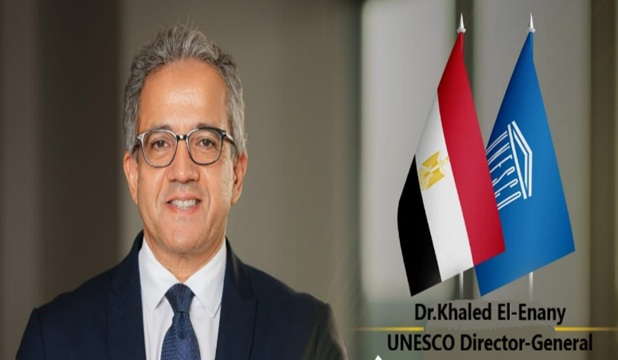
Egypt’s former Minister of Tourism and Antiquities, Dr. Khaled El-Enany, has been elected as the new Director-General of the United Nations Educational, Scientific and Cultural Organization (UNESCO), succeeding France’s Audrey Azoulay after securing a majority of votes in the organization’s Executive Board elections in Paris today, Monday, October 6, 2025, coinciding with the 52nd Anniversary of the Glorious October War Victory.
El-Enany won 55 votes against just two for his closest rival, Firmin Edouard Matoko of the Republic of Congo, the largest winning margin in UNESCO’s history.
His victory marks a historic moment as El-Enany becomes the first Arab and only the second African to lead the United Nations Educational, Scientific and Cultural Organization since its establishment in 1945.
During his acceptance speech, El-Enany said: “I have visited 65 countries in 30 months and one day. I have conducted an inclusive campaign engaging all member countries.”
He added “During my first 100 days, I promise to work with all member states to modernize UNESCO, without discrimination or personal agenda.”
In his speech following his election, El-Enany extended heartfelt thanks to his homeland, Egypt, for entrusting him with this mission, as well as to his Arab family and the Arab League for their steadfast support, and to the African continent and African Union, which had embraced and endorsed his candidacy on three occasions.
He said: “I stand before you with humility and a heart full of gratitude,” acknowledging the broad coalition of support that had propelled his historic victory.
He went on to express his appreciation to all countries that had backed his bid and placed their trust in him, asserting that their confidence in him was a gift that he would never take for granted.
Reflecting on his journey, El-Enany shared that over the past 30 months, his campaign had taken him to 65 countries across the world from the Pacific to the Caribbean and involved more than 400 meetings and dialogues that had helped shape his vision.
He described the experience as “the adventure of a lifetime”, expressing deep gratitude to his Egyptian team and colleagues who “stood by my side with passion and devotion to bring this dream to life.”
His message also carried a tone of unity and inclusivity. “I assure you that, if elected in November by the General Conference, I will serve all nations and peoples as a director-general for all, working together with you to build a UNESCO that is a true home for all humanity, a UNESCO for the People,” he said.
His remarks also paid tribute to the Egyptian team that had accompanied him throughout the 30-month long campaign to bring this project to life in “a dream in which we have deeply believed”.
El-Enany’s remarks were met with warm applause from the delegates gathered at UNESCO’s headquarters in Paris. Leading diplomats and prominent figures described the moment as both historic and deeply symbolic, not only for Egypt but also for the broader Arab and African communities that had rallied behind his candidacy.
About the elections
The elections for the position of Director-General of the United Nations Educational, Scientific and Cultural Organization (UNESCO) for the period 2025-2029 will begin on Monday, October 6, 2025. The elections are witnessing fierce competition between Egyptian candidates Dr. Khaled El-Enany, former Minister of Tourism and Antiquities, and Congolese Firmin Edouard Matoko, UNESCO’s Deputy Director-General for Africa and External Relations.
These elections are of great importance, as they determine who will lead this specialized UN agency, founded in 1945 and headquartered in Paris. Its mission is to promote shared human values by strengthening education, science, and culture, setting standards and tools, and developing knowledge to find solutions to some of the greatest challenges of our time. UNESCO also supports a world of greater equality and peace. UNESCO works with its 194 Member States on a range of issues, including protecting biodiversity, addressing artificial intelligence, promoting quality education, preserving human heritage, and ensuring access to reliable information.
All eyes are on who will succeed Frenchwoman Audrey Azoulay, who has served two terms as president of this organization since 2017. Azoulay’s primary goal is to contribute to peace and security by enhancing cooperation among countries in the fields of education and culture.
Two strong candidates are vying for this high-profile position: Congolese Firmin Edouard Matoko and Egyptian Khaled El-Enany. These elections are of utmost importance to Egypt, which is strongly supporting its candidate for the prestigious position. Previous Egyptian candidates include Ambassador Moushira Khattab in 2017, Minister of Culture Farouk Hosni in 2009, and former Director of the Bibliotheca Alexandrina Ismail Serageldin in 2001.
Egypt’s intensive efforts to support Dr. El-Enany
Egypt has intensified its efforts to garner support for Dr. El-Enany, both regionally and internationally, since the announcement of his candidacy. In April 2023, Prime Minister Dr. Mostafa Madbouly announced the Council’s endorsement of Dr. Khaled El-Enany, former Minister of Tourism and Antiquities, for the position of Director-General of UNESCO for the period 2025 to 2029, as Egypt’s candidate.
The League of Arab States adopted a summit-level resolution in May 2024 supporting and endorsing Dr. El-Enany’s candidacy as the only Arab candidate for the position. This marks the first time a candidate has received such broad Arab consensus. This reflects the aspirations of Arab countries for an effective role within the international organization and the importance of Arab leadership for UNESCO in the coming period.
Al-Anani also received the African Union’s endorsement in February 2024, July 2024, and July 2025, which confirms the official African alignment behind the Egyptian candidacy in appreciation of Al-Anani’s competence and ability and a reflection of the African continent’s confidence in Egypt to achieve the common aspirations of African countries.
Minister of Foreign Affairs, Migration, and Egyptian Expatriates Badr Abdelatty met on Sunday, 5th September, 2025, with the permanent representatives of Turkey, Brazil, Bangladesh, Japan, Qatar, Saudi Arabia, Luxembourg, and the UAE to the United Nations Educational, Scientific and Cultural Organization (UNESCO).
This meeting took place during his visit to Paris as part of the intensive efforts made to support Dr. Khaled El-Enany, Egypt’s candidate in the elections for the Director-General position, and to garner support from various countries.
El-Enany’s Biography
Khaled Ahmed El-Enany Ali Ezz, born in 1971, is a leading figure recognized for his expertise and commitment across diverse fields including teaching, scientific research, culture, tourism, management, public service, and international relations.
A former Egyptian Minister of Tourism and Antiquities, El-Enany currently holds the position of Professor of Egyptology at Helwan University, where he has been a faculty member for over thirty years. His teaching, focused on the civilization, archaeology, and epigraphy of Ancient Egypt, is not only taught in Egypt but also at prestigious international institutions. As a mentor, he has enabled thousands of students and researchers, both Egyptian and international, to benefit from his in-depth knowledge and vast experience. Through his conferences and scientific engagements across twenty countries, he has shared his expertise, enriched academic discourse and encouraged access to knowledge, while promoting intercultural dialogue. His proficiency in Arabic, French, and English demonstrates his communication skills, a key asset for fostering international cooperation. He has served as Vice Dean of the Faculty of Tourism and Hospitality, Director of the Open Learning Center, and Head of the Tour Guide Department. He holds a PhD in Egyptology from Paul-Valéry Montpellier 3 University (France), where he has been a visiting Professor on several occasions.
He directed the National Museum of Egyptian Civilization (2014-2016) and the Egyptian Museum in Cairo (2015-2016). From 2016 to 2022, he served as Minister of Antiquities and then Minister of Tourism and Antiquities of the Arab Republic of Egypt.
He is also a member of several international learned societies. In November 2024, he was appointed Special Ambassador for Cultural Tourism by the World Tourism Organization and, more recently, patron of the African World Heritage Fund. He holds several international distinctions. He speaks Arabic, French and English.
Achievements
El-Enany has wide-ranging academic, scientific, administrative, and executive experience in Egypt and abroad. Over the course of his career, he has developed a strong international network with governments, institutions, and organisations.
During his six-and-a-half-year tenure in government he supervised numerous major projects, boosting tourism and archaeology across Egypt. More than 20 museums, including the National Museum of Egyptian Civilisation (NMEC), developed in collaboration with UNESCO, were opened, and work on the Grand Egyptian Museum (GEM), one of the largest museums in the world, neared completion.
More than 50 restoration and development projects at archaeological sites were inaugurated, and more than 20 restoration projects of historical mosques, monasteries, and churches (including five locations on the Holy Family Trail), and the Eliahu Hanavi Synagogue in Alexandria, were opened.
He inaugurated five ground water-lowering projects at archaeological sites, and the number of archaeological missions, particularly Egyptian ones, increased significantly. He also secured the return of 7,000 smuggled artefacts from more than 20 countries.
El-Enany has played a key role in strengthening Egypt’s international relations through his cultural diplomacy skills, collaborating closely with many countries, academic institutions, and international organisations.
He oversaw the Pharaoh’s Golden Parade and Luxor: The Sphinx Avenue Parade and was instrumental in mitigating the repercussions of the Covid-19 pandemic and the Ukraine-Russia war on Egypt’s tourism sector.
Awards
Dr. Khaled El-Enany Anani has been decorated with several international honors. In 2025, France awarded him the insignia of the Chevalier de la Légion d’honneur, the official emblem awarded to recipients of France’s highest distinction for civil merit, and in 2015 he was awarded the French Order of Arts and Letters, naming him a Knight of the Order of Arts and Letters.
In 2020, he received the Order of Merit of the Republic of Poland, and in 2021 was awarded the Order of the Rising Sun by Japan. In September 2024, El-Enany received an honorary doctorate from the University of Paul-Valéry Montpellier 3 in France.
Annemarie Jacir’s award-winning film “Palestine 36” leads the nominations for the 10th Critics Awards For Arab Films, which were announced on Wednesday.
The annual prizes, organized by the Arab Cinema Center, have been voted on by a record 307 Arab and international critics from 75 countries this year, with the awards ceremony due to take place during the Cannes Film Festival on May 16.
“Palestine 36” has been nominated in six categories including best film, director and screenplay. It is followed by Maryam Touzani’s “Calle Malaga” with five nominations; Cherien Dabis’ “All That’s Left of You” with four; and “Yunan,” “My Father’s Scent,” and “Once Upon a Time in Gaza” with three each.
Kaouther Ben Hania’s Oscar-nominated “The Voice of Hind Rajab” garnered one nomination in the best director category.
“Palestine 36” is set during the 1936 Arab Revolt and follows five interconnected narratives as villages across Palestine confront British colonial rule.
With rising numbers of Jewish immigrants escaping antisemitism in Europe, and the Palestinian population uniting against Britain’s 30-year dominion, all sides spiral toward inevitable collision in a decisive moment for the British Empire and the future of the entire region.
“I hope people see themselves in the film,” she told Arab News in December last year. “I don’t want to teach anyone anything. There’s a lot of history in the film and there’s a lot of history that’s been erased. I hope that’s something that comes through.”
source/content: arabnews.com (headline edited)
______________
Annemarie Jacir’s award-winning film “Palestine 36” leads the nominations for the 10th Critics Awards For Arab Films, which were announced on Wednesday. (Supplied)
His Highness Sheikh Mohammed bin Rashid Al Maktoum, Vice President, Prime Minister and Ruler of Dubai, visited Al Barakah Dates Factory, the world’s largest privately-owned dates factory located in Dubai Industrial City.
The facility spans over 800,000 square feet, with an annual production capacity of 100,000 tonnes, one of the market leaders for packaging and processing dates in the world.
During the visit, H.H. Sheikh Mohammed said that the UAE continues to strengthen its position as a global hub for advanced food industries through innovation, stronger production chains, and boosting the competitiveness of national products. He noted that the dates industry is a successful example of turning the country’s agricultural heritage into a modern, high-value-added sector that supports the economy and enhances food security.
H.H. Sheikh Mohammed said that the UAE continues to invest in key sectors that impact people’s lives, especially the food sector, and is developing its national industries to be more globally competitive through advanced technologies, higher production efficiency, and expanded access to international markets.
H.H. Sheikh Mohammed added that the dates industry is part of the UAE’s identity and heritage, and its development reflects a vision of turning resources into sustainable opportunities.
He also said humanitarian initiatives in the sector, including efforts to combat malnutrition, reflect the UAE’s commitment to improving lives and addressing global food security challenges.
During the visit, H.H. Sheikh Mohammed, accompanied by Malek Al Malek, Chairman of TECOM Group, was briefed by the factory founder Saleem Mohammed and his son Yousuf Saleem Mohammed, Managing Director, on production lines, manufacturing and packaging stages, as well as the factory’s range of products.
H.H. Sheikh Mohammed also reviewed the global reach of the factory’s products, which are exported to 97 countries, with the US, the UK, and EU among the key markets.
The factory is located in Dubai Industrial City, part of TECOM Group’s industrial parks, which was launched in 2004. The Dubai Industrial City hosts over 350 factories and more than 17,000 employees, and is strategically located near Jebel Ali Port, Al Maktoum International Airport, and Etihad Rail’s freight terminal, ensuring strong logistics connectivity. The factory reflects private sector success in the food industry, and was founded by businessman Saleem Mohammed, who began his career in Dubai in 1983 before moving into dates trading and processing in the 1990s.