ARAB AMERICANS : Takreem America honors top Arab American achievers

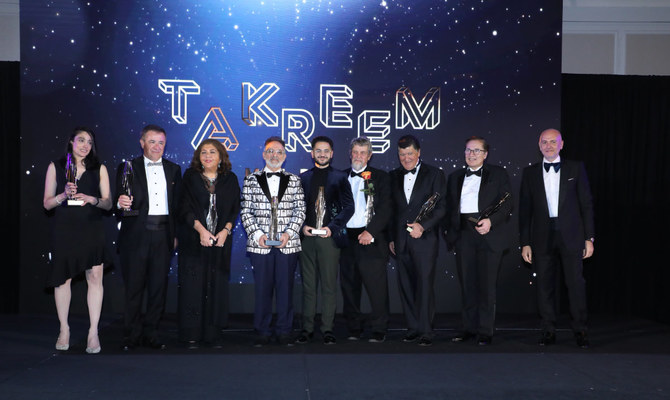
Takreem America honored exceptional Arab American individuals at its annual awards night recently at The Westin Copley Place, in Boston, Massachusetts. The weekend also featured the TAKminds Forum, held at MIT, which brought together 16 distinguished speakers and moderators from various fields.

The nonprofit organization, founded in 2019 to honor Arab Americans and help them build bonds with their motherland, presented awards to outstanding individuals, including: Dr. Magid Abraham (Corporate Leadership Award); Najla Said (Cultural Excellence Award); Dr. Gary Nabhan (Environmental Development and Sustainability); Dr. Elias Zerhouni (Scientific and Technological Achievement); and Ahmed Badr (Young Entrepreneur Award).

In addition, Dr. Dimitri Azar and Professor Rima Kaddurah-Daouk were honored with Lifetime Achievement Awards while the Anthony R. Abraham Foundation was given a “Special Distinction.”

The awards night, hosted by Ghida Fakhry, was a platform to celebrate the remarkable contributions of these individuals. Ricardo Karam, founder and chair of the board, emphasized the significance of the awardees’ actions in inspiring compassion and unity, echoing the spirit of Khalil Gibran’s legacy.

At the TAKminds Forum, participants included prominent figures from the arts, such as Arab American artist Helen Zughaib, art specialist business getter Suzy Sikorski, and art adviser Yasmina Moukarzel. Influential entrepreneurs like Fadel Adib, Edouard Massih, and Sami Shalabi also shared their insights, alongside dynamic change-makers Paul Ayoub and Nicola Yammine. Additionally, AI enthusiasts including Richard Rabbat, founder and CEO of Lighty AI; Raja-Elie Abdulnour, editor at Clinical Development and AI Innovation and assistant professor of medicine at Harvard Medical School; Jean-Claude Saghbini, president at Lumeris Value-Based Care Enablement; and Nadine Chakar, managing director and global head at DTCC Digital Assets, discussed their experiences. The discussions provided enlightening perspectives on the contributions of Arab American minds within their society and beyond, exploring ways to create a lasting impact and legacy.

With more than 500 attendees, Takreem America’s annual weekend celebrations showcased the unity and positive influence of Arab Americans in the Americas.

In a statement, the organization expressed gratitude to its numerous patrons and sponsors for their invaluable support, including Triple V Management LLC, Anthony R. Abraham Foundation, Cedar’s Mediterranean Foods, Fort Partners, PARQ, and JESRA Foundation.

source/content: arabnews.com (headline edited)

___________________

The annual awards night was held at The Westin Copley Place, in Boston.

______________________

AMERICAN / ARABS

ALGERIAN-BRITISH : UK train attack hero named as British-Arab rail worker Samir Zitouni

London North Eastern Railway employee Zitouni is in a critical but stable condition after he was injured shielding passengers from the attacker

His family, colleagues, police and politicians praise his bravery, which is credited with saving many lives during mass stabbing

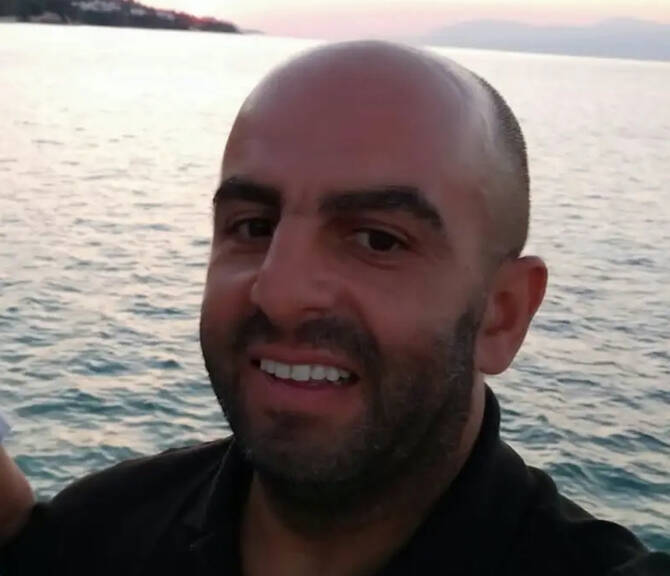
A British-Arab railway worker credited with saving many lives during a mass stabbing on a UK train was named on Tuesday as Samir Zitouni.

The 48-year-old, who shielded passengers from the attack, remains in a critical but stable condition in hospital, British Transport Police said.

Zitouni, a customer experience host who has worked for London North Eastern Railway for more than 20 years, was on duty on the Doncaster to London King’s Cross service on Saturday evening when the attack took place. Witnesses, colleagues, police and politicians have praised his actions as “courageous” and “heroic.”

David Horne, LNER’s managing director, said: “In a moment of crisis, Sam did not hesitate as he stepped forward to protect those around him. His actions were incredibly brave and we are so proud of him, and of all our colleagues who acted with such courage that evening.

“Our thoughts and prayers remain with Sam and his family. We will continue to support them, and wish him a full and speedy recovery.”

Zitouni’s family said they were “deeply touched by the outpouring of love and kindness” toward him.

“We are immensely proud of Sam and his courage,” they added. “The police called him a hero on Saturday evening, but to us he’s always been a hero.”

The statements on Tuesday did not provide any further details about Zitouni. Some social media posts described him as Algerian-born.

Transport police said on Sunday that CCTV footage of the attack showed an LNER employee, now identified as Zitouni, attempting to stop the attacker.

“The actions of the member of rail staff were nothing short of heroic and undoubtedly saved people’s lives,” Deputy Chief Constable Stuart Cundy said.

Home Secretary Shabana Mahmood on Monday paid tribute to the “breathtaking bravery” of those on the train, including Zitouni.

“On Saturday, he went to work to do his job — today, he is a hero and forever will be,” she said.

Passengers told how a man wielding a knife began attacking people on the train as it passed through Cambridgeshire on Saturday evening. Ten people were taken to hospital for treatment after the train stopped at Huntingdon station and another admitted themselves later. Seven have been discharged and three remain in hospital in a stable condition, along with Zitouni.

Anthony Williams, 32, has been charged with 10 counts of attempted murder related to the train attack, and an additional count of attempted murder in connection with a separate incident in London on Saturday.

source/content: arabnews.com (headline edited)

____________

Samir Zitouni, who shielded passengers from a knife attack on a train, is in a critical condition in hospital. (LNER)

______________________________

BRITISH / ARAB /ALGERIAN

ABU DHABI, U.A.E : Sheikh Zayed Book Award names 2026 winners and outlines plans for 20th anniversary

Authors, scholars and institutions from Arab world and beyond honoured as Abu Dhabi prize celebrates two decades of cultural influence.

The 2026 winners of the Sheikh Zayed Book Award were announced on Friday, marking two decades of one of the Arab world’s most influential literary prizes.

Established in 2006 and held under the patronage of President Sheikh Mohamed, the award has grown into a fixture on the region’s cultural calendar, drawing submissions from across the world and supporting the global reach of Arabic literature.

This year’s winners reflect that international scope, with recipients from countries including Egypt, Morocco, Germany and the UAE.

Egyptian writer Ashraf Elashmawy took the Literature prize for his novel Births in the Zoo, a work that explores shifts in Egyptian society through closely observed, character-driven storytelling. Moroccan researcher Mustapha Rajouane won in the Young Author category for a study examining how rhetoric shapes narrative in the modern Arabic novel.

In Translation, Iraqi-American scholar Nawal Nasrallah has been recognised for her English edition of a 13th-century Arabic culinary text, bringing a complex historical manuscript to a wider readership. Jordanian academic Zuhair Tawfiq received the Literary and Art Criticism award for his study of how Arab and western cultures have historically imagined one another.

German writer and translator Stefan Weidner won in the Arab Culture in Other Languages category for a major anthology of pre-Islamic Arabic poetry, while the Emirates Literature Foundation was honoured for its role in developing the UAE’s literary scene and supporting readers and writers.

The Encyclopaedias and Lexicons category went to Egyptian academic Mohamed Elkhosht for his six-volume Encyclopaedia of World Religions, and veteran Egyptian singer Nagat Al Saghira was named Cultural Personality of the Year, recognising a career that has helped shape modern Arabic song and language.

More than 4,000 submissions were received from 74 countries, underlining the award’s growing international profile. Since its launch, it has attracted more than 33,000 entries and honoured 136 winners, including writers, translators and cultural institutions.

Mohamed Khalifa Al Mubarak , chairman of the Department of Culture and Tourism – Abu Dhabi, said the award continues to build on the UAE’s long-standing investment in culture and knowledge, while Ali bin Tamim, secretary general of the award, described it as a platform that has helped shape contemporary Arabic literary and research landscapes.

A programme of events is planned throughout the year to mark the award’s 20th anniversary. Winners will be honoured at a ceremony in Abu Dhabi, with Al Saghira receiving Dh1 million for being Cultural Personality of the Year, and other category winners awarded Dh750,000 each.

source/content: nationalnews.com (headline edited)

____________

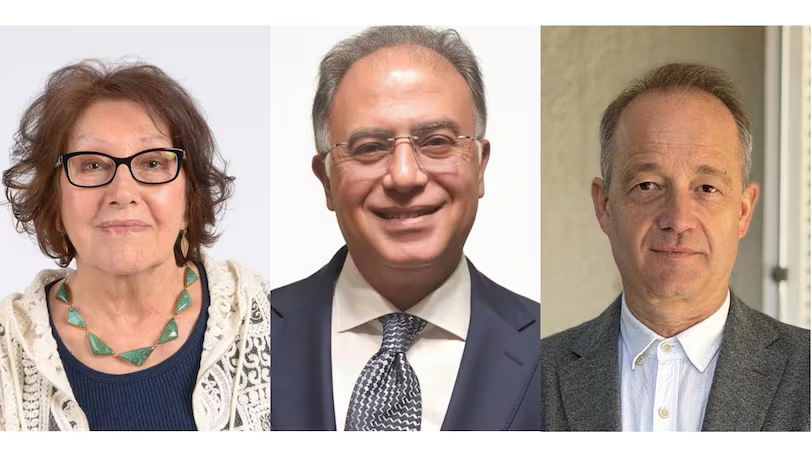
From left, Nawal Nasrallah, Ashraf Elashmawy and Stefan Weidner are among the winners of the 20th edition. Photo: Sheikh Zayed Book Award

_____________________________________________

EGYPT / IRAQ / JORDAN / MOROCCO / U.A.E

ALGERIA : UNESCO Confirms Algeria’s Primacy in the Inscription of Caftan (Statement)

The 20th session of UNESCO’s Intergovernmental Committee for the Safeguarding of the Intangible Cultural Heritage, meeting Thursday in New Delhi, has clearly and unequivocally confirmed the primacy of Algeria’s inscription of the Caftan as an essential component of its rich cultural heritage, the Ministry of Foreign Affairs, the National Community Abroad and African Affairs said in a statement.

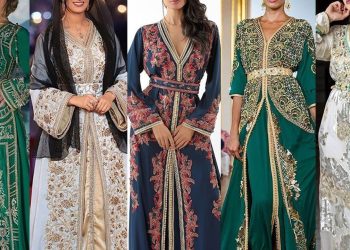
On this occasion, the Committee decided to modify the name of the element inscribed in 2024 on the Representative List of the Intangible Cultural Heritage of Humanity to explicitly include the Caftan, as well as the Quat and the Lhef. The Algerian element now bears the new designation: “Women’s ceremonial costume in the Eastern region of Algeria: knowledge and skills associated with the making and adornment of the Gandoura and the Melehfa.”

The Committee also approved the modification of the file titled “Rites and craftsmanship associated with the wedding costume tradition of Tlemcen,” inscribed since 2012 on the Representative List. It decided to add the mention “the Wearing of the Caftan” to section B3 of the ICH-02 form, in accordance with the submitted document.

These decisions represent “a new major diplomatic success for Algeria, both on the international cultural scene and within the framework of multilateral diplomacy.” They reaffirm “the historical and cultural primacy of Algeria’s inscription of the Caftan on the Representative List of the Intangible Cultural Heritage of Humanity and strengthen the international recognition of this exceptional intangible heritage,” the statement added.

The decision “consolidates Algeria’s place on UNESCO’s Representative List” and constitutes explicit recognition of the “sustained and continuous efforts of the State to promote, preserve and highlight Algeria’s rich cultural heritage, the product of centuries of history reflecting the depth and authenticity of our nation.”

This recognition “also reflects the relevance of the approach adopted in implementing the instructions of the country’s high authorities to promote our cultural heritage in all its components and forms, while protecting it from any attempt at imitation, appropriation or falsification,” the statement concluded.

source/content: al24news.dz

__________

______________

ALGERIA

MOROCCO Marks International Day of Argania, Its ‘Liquid Gold’ Source

The UN-recognized day proves Morocco’s argan tree as a source of heritage, climate resilience, rural livelihoods, and women-led economic activity.

Morocco celebrated the International Day of Argania yesterday, celebrating five years since the United Nations recognized the argan tree as a global symbol of heritage, sustainability, and rural resilience.

The UN General Assembly, in a resolution led by Morocco, proclaimed May 10 the International Day of Argania in 2021. The resolution was co-sponsored by 113 UN member states and adopted by consensus, placing Morocco’s endemic argan tree on the international calendar.

Omar Hilale, Morocco’s Permanent Representative to the United Nations, marked the anniversary with a public address linking the tree to climate action and human heritage.

“Today, we celebrate 5 years since the historic recognition by the United Nations of the International Day of the Argan Tree,” Hilale said. “The Argan Tree, a treasure of Morocco and heritage of humanity, embodies a concrete solution to climate and water challenges. Morocco will continue to champion this ambition in the service of a more sustainable and united future.

A Moroccan tree with global recognition

The argan tree grows mainly in southwestern Morocco, especially between the Atlantic coast and the Atlas Mountains. It has long supported rural communities through food, oil, animal feed, shade, soil protection, and income generation.

The tree also carries several layers of international recognition. UNESCO designated the Arganeraie Biosphere Reserve in 1998, and in 2014 added “practices and know-how concerning the argan tree” to its intangible cultural heritage list. FAO also recognized the argan-based agro-sylvo-pastoral system in the Ait Souab-Ait Mansour area as a Globally Important Agricultural Heritage System in 2018.

This recognition reflects more than the global popularity of argan oil. It points to a fully integrated ecosystem in which people, trees, animals, traditional knowledge, and markets are closely connected.

FAO has described the argan tree as important for food security, nutrition, income generation, and rural livelihoods, especially for women. The organization has also highlighted its role in drought-prone areas, where communities have built production systems around trees that can survive heat and arid conditions.

A key sector for Morocco

Morocco remains the center of global argan production. The sector is rooted in the country’s Indigenous knowledge and women-led cooperative work, with more than 830,000 hectares of argan forests recognized as part of the UNESCO biosphere reserve.

Argan oil production has become one of Morocco’s most visible rural industries. It supplies both food and cosmetics markets, with demand coming from Europe, North America, and the global beauty industry.

In 2020, Morocco’s annual argan oil production was estimated at about 5,000 tons, while exports exceeded 1,200 tons by the end of that year. The sector was also reported to generate nearly MAD 1.2 billion (approximately $131 million) in annual turnover and support more than 25,500 jobs.

More recent market estimates place Morocco’s annual argan oil production between 2,500 and 4,000 metric tons, with a large share exported to European and North American markets.

source/content: moroccoworldnews.com (headline edited)

__________

______________

MOROCCO

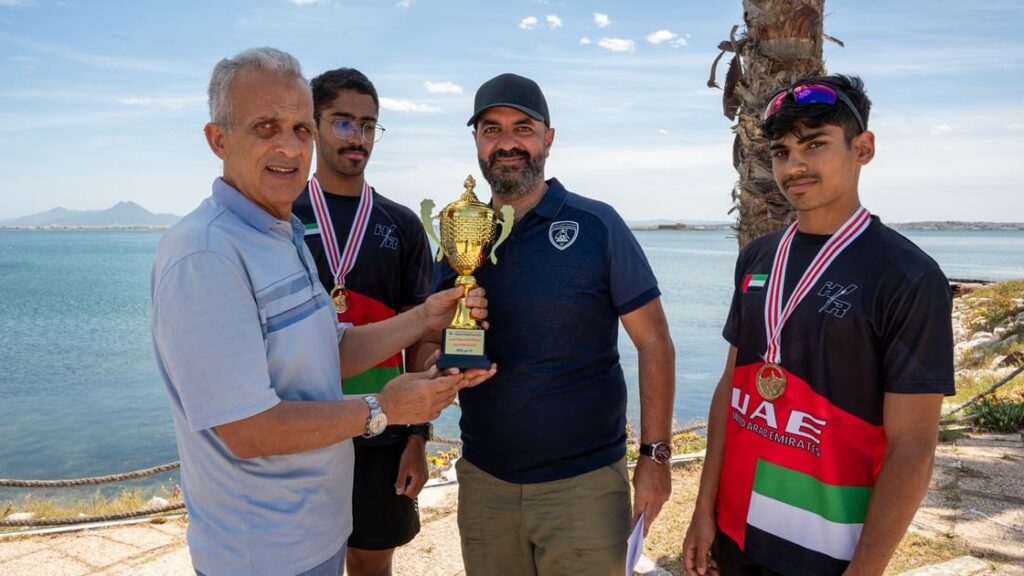
SHARJAH, U.A.E : Al Hamriyah wins gold at Tunisian rowing championship

Al Hamriyah modern rowing team claimed a gold medal at the Tunisian Classic Rowing Championship, held on Lake Tunis from 5th to 10th May 2026, with the participation of nine clubs.

Al Hamriyah secured the gold medal through rowers Hamad Abdullah Al Hosani and Salem Al Mansouri in the under-19 double sculls category.

Salem Al Khayyal, Board Member of Al Hamriyah Club and Head of the Individual Games and Talent Development Committee, congratulated the athletes and coach Captain Sayed Ali Wadhah on the achievement, highlighting the advanced level reached by the team.

The two rowers and their coach expressed pride in the achievement and affirmed their determination to continue working hard to raise the name of Al Hamriyah Club in regional and international competitions.

source/content: wam.ae (headline edited)

___________

___________________

SHARJAH, U.A.E

ARAB ARTEFACTS : France restitution bill puts five colonial-era artefacts from Algeria, Egypt and Jordan back in focus

As country debates easing return of treasures, attention turns to regional pieces still held in its national collections.

French lawmakers are debating a new bill aimed at simplifying the return of colonial-era cultural objects to their countries of origin, drawing renewed attention to artefacts still held in France’s national collections, which number in the tens of thousands.

The draft legislation was unanimously approved by the Senate in January and now requires backing from the lower house, the Assemblee Nationale, before it can become a law.

While not all cases are at the same stage, these five objects from Algeria, Egypt and Jordan sit within that broader restitution debate, whether through formal state requests, public campaigns or long-standing calls for their return.

1. Baba Merzoug, Algeria

The 16th-century cannon known as Baba Merzoug at the Arsenal of Brest in western France. AFP

The 16th-century bronze cannon from the Ottoman era in Algiers is housed at the naval base in the French coastal city of Brest after being taken by French forces in 1830 following the capture of Algiers.

While seized as a spoil of war, the cannon remains a politically charged symbol of French colonial rule in Algeria. The Algerian government formally requested its return in 2012, and the cannon was explicitly cited during the April 2026 parliamentary debate over France’s proposed restitution framework.

2. Emir Abdelkader’s effects, Algeria

Rather than a single object, this refers to personal items associated with the 19th-century Algerian leader Emir Abdelkader, who led the resistance against French invasion before his surrender in 1847.

Held across French collections including at Musee de l Armee in Paris and Musee Conde in Chantilly, the objects include a steel sabre, pistol, ceremonial cloak and related belongings linked to Abdelkader’s life and leadership.

Algeria has included these effects on a formal restitution list submitted to French authorities in 2021, and they remain a sensitive part of the wider dispute over colonial-era holdings.

3. Dendera Zodiac, Egypt

The Dendero Zodiac is an ancient bas-relief that formed part of the ceiling of the Temple of Hathor in Upper Egypt and is now held at the Louvre in Paris.

Removed in the early 19th century, it has been part of the Louvre collection since 1822 and has become one of the most recognisable Egyptian antiquities in a French museum.

While there is no verified formal Egyptian state request for its return, the object has been repeatedly cited in public repatriation campaigns, including those led by archaeologist and former antiquities minister Zahi Hawass.

4. Mesha Stele, Jordan

Also known as the Moabite Stone, the Mesha Stele is a 9th-century BC basalt monument from present-day Jordan and is considered one of the most important inscriptions from the ancient Levant.

Discovered in 1868 by the Anglican missionary Frederick Augustus Klein at Dhiban, it was later shattered by the Bani Hamida tribe over an ownership dispute, before the fragments were recovered and reassembled in France.

In June 2014, non-governmental Mesha Centre for Studies and Human Rights delivered an official request for the stele’s return to the French embassy in Amman.

The Jordan Times reported in 2015 that French ambassador Caroline Dumas discussed the request with representatives and said she would convey their public appeal to the French government. No formal response has been reported.

5. The Seated Scribe, Egypt

One of the Louvre’s most famous Egyptian works, the Seated Scribe is a painted limestone sculpture from the Old Kingdom, dating back to circa 2600BC-2350BC. It is famed for its striking realism and remarkably preserved features.

Found at Saqqara in the 19th century by the French archaeologist Auguste Mariette, it is among the most celebrated masterpieces of the Louvre’s Department of Egyptian Antiquities.

While the Egyptian government has not included the Seated Scribe on any formal restitution lists, it has appeared in broader public discussion in Egyptian cultural circles around the recovery of major artefacts held abroad.

source/content: thenationalnews.com

______________

ALL PHOTOS ABOVE

_____________________________

ALGERIA / EGYPT / JORDAN

EGYPT : Dr. Khaled El-Enany Elected UNESCO Director-General

Egypt’s former Minister of Tourism and Antiquities, Dr. Khaled El-Enany, has been elected as the new Director-General of the United Nations Educational, Scientific and Cultural Organization (UNESCO), succeeding France’s Audrey Azoulay after securing a majority of votes in the organization’s Executive Board elections in Paris today, Monday, October 6, 2025, coinciding with the 52nd Anniversary of the Glorious October War Victory.

El-Enany won 55 votes against just two for his closest rival, Firmin Edouard Matoko of the Republic of Congo, the largest winning margin in UNESCO’s history. 

His victory marks a historic moment as El-Enany becomes the first Arab and only the second African to lead the United Nations Educational, Scientific and Cultural Organization since its establishment in 1945.

During his acceptance speech, El-Enany said: “I have visited 65 countries in 30 months and one day. I have conducted an inclusive campaign engaging all member countries.”

He added “During my first 100 days, I promise to work with all member states to modernize UNESCO, without discrimination or personal agenda.”

In his speech following his election, El-Enany extended heartfelt thanks to his homeland, Egypt, for entrusting him with this mission, as well as to his Arab family and the Arab League for their steadfast support, and to the African continent and African Union, which had embraced and endorsed his candidacy on three occasions.

He said: “I stand before you with humility and a heart full of gratitude,”  acknowledging the broad coalition of support that had propelled his historic victory.

He went on to express his appreciation to all countries that had backed his bid and placed their trust in him, asserting that their confidence in him was a gift that he would never take for granted.

He went on to express his appreciation to all countries that had backed his bid and placed their trust in him, asserting that their confidence in him was a gift that he would never take for granted.

Reflecting on his journey, El-Enany shared that over the past 30 months, his campaign had taken him to 65 countries across the world from the Pacific to the Caribbean and involved more than 400 meetings and dialogues that had helped shape his vision.

He described the experience as “the adventure of a lifetime”, expressing deep gratitude to his Egyptian team and colleagues who “stood by my side with passion and devotion to bring this dream to life.”

His message also carried a tone of unity and inclusivity. “I assure you that, if elected in November by the General Conference, I will serve all nations and peoples as a director-general for all, working together with you to build a UNESCO that is a true home for all humanity, a UNESCO for the People,” he said.

His remarks also paid tribute to the Egyptian team that had accompanied him throughout the 30-month long campaign to bring this project to life in “a dream in which we have deeply believed”.

El-Enany’s remarks were met with warm applause from the delegates gathered at UNESCO’s headquarters in Paris. Leading diplomats and prominent figures described the moment as both historic and deeply symbolic, not only for Egypt but also for the broader Arab and African communities that had rallied behind his candidacy.

About the elections

The elections for the position of Director-General of the United Nations Educational, Scientific and Cultural Organization (UNESCO) for the period 2025-2029 will begin on Monday, October 6, 2025. The elections are witnessing fierce competition between Egyptian candidates Dr. Khaled El-Enany, former Minister of Tourism and Antiquities, and Congolese Firmin Edouard Matoko, UNESCO’s Deputy Director-General for Africa and External Relations.

These elections are of great importance, as they determine who will lead this specialized UN agency, founded in 1945 and headquartered in Paris. Its mission is to promote shared human values ​​by strengthening education, science, and culture, setting standards and tools, and developing knowledge to find solutions to some of the greatest challenges of our time. UNESCO also supports a world of greater equality and peace. UNESCO works with its 194 Member States on a range of issues, including protecting biodiversity, addressing artificial intelligence, promoting quality education, preserving human heritage, and ensuring access to reliable information.

All eyes are on who will succeed Frenchwoman Audrey Azoulay, who has served two terms as president of this organization since 2017. Azoulay’s primary goal is to contribute to peace and security by enhancing cooperation among countries in the fields of education and culture.

Two strong candidates are vying for this high-profile position: Congolese Firmin Edouard Matoko and Egyptian Khaled El-Enany. These elections are of utmost importance to Egypt, which is strongly supporting its candidate for the prestigious position. Previous Egyptian candidates include Ambassador Moushira Khattab in 2017, Minister of Culture Farouk Hosni in 2009, and former Director of the Bibliotheca Alexandrina Ismail Serageldin in 2001.

Egypt’s intensive efforts to support Dr. El-Enany

Egypt has intensified its efforts to garner support for Dr. El-Enany, both regionally and internationally, since the announcement of his candidacy. In April 2023, Prime Minister Dr. Mostafa Madbouly announced the Council’s endorsement of Dr. Khaled El-Enany, former Minister of Tourism and Antiquities, for the position of Director-General of UNESCO for the period 2025 to 2029, as Egypt’s candidate.

The League of Arab States adopted a summit-level resolution in May 2024 supporting and endorsing Dr. El-Enany’s candidacy as the only Arab candidate for the position. This marks the first time a candidate has received such broad Arab consensus. This reflects the aspirations of Arab countries for an effective role within the international organization and the importance of Arab leadership for UNESCO in the coming period.

Al-Anani also received the African Union’s endorsement in February 2024, July 2024, and July 2025, which confirms the official African alignment behind the Egyptian candidacy in appreciation of Al-Anani’s competence and ability and a reflection of the African continent’s confidence in Egypt to achieve the common aspirations of African countries.

Minister of Foreign Affairs, Migration, and Egyptian Expatriates Badr Abdelatty met on Sunday, 5th September, 2025, with the permanent representatives of Turkey, Brazil, Bangladesh, Japan, Qatar, Saudi Arabia, Luxembourg, and the UAE to the United Nations Educational, Scientific and Cultural Organization (UNESCO).

This meeting took place during his visit to Paris as part of the intensive efforts made to support Dr. Khaled El-Enany, Egypt’s candidate in the elections for the Director-General position, and to garner support from various countries.

El-Enany’s Biography

Khaled Ahmed El-Enany Ali Ezz, born in 1971, is a leading figure recognized for his expertise and commitment across diverse fields including teaching, scientific research, culture, tourism, management, public service, and international relations.

A former Egyptian Minister of Tourism and Antiquities, El-Enany currently holds the position of Professor of Egyptology at Helwan University, where he has been a faculty member for over thirty years. His teaching, focused on the civilization, archaeology, and epigraphy of Ancient Egypt, is not only taught in Egypt but also at prestigious international institutions. As a mentor, he has enabled thousands of students and researchers, both Egyptian and international, to benefit from his in-depth knowledge and vast experience. Through his conferences and scientific engagements across twenty countries, he has shared his expertise, enriched academic discourse and encouraged access to knowledge, while promoting intercultural dialogue. His proficiency in Arabic, French, and English demonstrates his communication skills, a key asset for fostering international cooperation. He has served as Vice Dean of the Faculty of Tourism and Hospitality, Director of the Open Learning Center, and Head of the Tour Guide Department. He holds a PhD in Egyptology from Paul-Valéry Montpellier 3 University (France), where he has been a visiting Professor on several occasions. 

He directed the National Museum of Egyptian Civilization (2014-2016) and the Egyptian Museum in Cairo (2015-2016). From 2016 to 2022, he served as Minister of Antiquities and then Minister of Tourism and Antiquities of the Arab Republic of Egypt.

He is also a member of several international learned societies. In November 2024, he was appointed Special Ambassador for Cultural Tourism by the World Tourism Organization and, more recently, patron of the African World Heritage Fund. He holds several international distinctions. He speaks Arabic, French and English.

Achievements

El-Enany has wide-ranging academic, scientific, administrative, and executive experience in Egypt and abroad. Over the course of his career, he has developed a strong international network with governments, institutions, and organisations.

During his six-and-a-half-year tenure in government he supervised numerous major projects, boosting tourism and archaeology across Egypt. More than 20 museums, including the National Museum of Egyptian Civilisation (NMEC), developed in collaboration with UNESCO, were opened, and work on the Grand Egyptian Museum (GEM), one of the largest museums in the world, neared completion.

More than 50 restoration and development projects at archaeological sites were inaugurated, and more than 20 restoration projects of historical mosques, monasteries, and churches (including five locations on the Holy Family Trail), and the Eliahu Hanavi Synagogue in Alexandria, were opened.

He inaugurated five ground water-lowering projects at archaeological sites, and the number of archaeological missions, particularly Egyptian ones, increased significantly. He also secured the return of 7,000 smuggled artefacts from more than 20 countries.

El-Enany has played a key role in strengthening Egypt’s international relations through his cultural diplomacy skills, collaborating closely with many countries, academic institutions, and international organisations.

He oversaw the Pharaoh’s Golden Parade and Luxor: The Sphinx Avenue Parade and was instrumental in mitigating the repercussions of the Covid-19 pandemic and the Ukraine-Russia war on Egypt’s tourism sector.

Awards

Dr. Khaled El-Enany Anani has been decorated with several international honors. In 2025, France awarded him the insignia of the Chevalier de la Légion d’honneur, the official emblem awarded to recipients of France’s highest distinction for civil merit, and in 2015 he was awarded the French Order of Arts and Letters, naming him a Knight of the Order of Arts and Letters.

In 2020, he received the Order of Merit of the Republic of Poland, and in 2021 was awarded the Order of the Rising Sun by Japan. In September 2024, El-Enany received an honorary doctorate from the University of Paul-Valéry Montpellier 3 in France.

For complete biography visit the following link:

SKM_C4050i25031416220

https://www.unesco.org/sites/default/files/medias/fichiers/2025/03/cv_khaled-ahmed-el-enany-ali-ezz_en.pdf

source/content: sis.gov.eg (headline edited)

______________

__________

EGYPT

ALGERIA : Meet the Algerian Filmmakers Creating New Images of the Country

A new generation of talent is turning its lens towards intimate storytelling, with Africa’s largest nation as its backdrop.

“Algeria is a visually unspoilt country,” says Mounia Meddour. Meddour is one of the nation’s most prominent contemporary filmmakers. Her debut film, Papicha (2019), set during the 1990s Algerian Black Decade with Algiers as its backdrop, was screened at the Cannes Film Festival’s Un Certain Regard, bringing her international recognition. Yet, she is right: very few images of Algeria exist within the cinematic landscape.

There are many reasons for this. The industry has long been at a standstill; visas are difficult to obtain and cultural policy remains lukewarm. Algerian landscapes and intimate stories struggle to travel beyond the country’s borders. For several years now, however, a new generation of filmmakers, cameras in hand, has been working to capture and create a contemporary visual archive of a nation longing for representation.

Algeria nonetheless has a rich cinematic history. In 1975, thirteen years after gaining independence from France, the young state won the Palme d’Or at the Cannes Film Festival for the historical fresco Chronicles of the Years of Fire, directed by Mohamed Lakhdar-Hamina — making Algeria the first, and still the only, African and Arab country to achieve this distinction. It is this legacy that leads the film critic Samir Ardjoum to speak of a paradox in Algerian cinema. 

“This symbolic prestige has not translated into industrial continuity,” he says. “Algerian cinema suffers from a lack of stable international distribution. Films circulate widely at festivals, but rarely in commercial circuits.”

Ardjoum explains that Algerian cinema originated as a cinema of nation-building. After 1962, the country invested heavily in films recounting the War of Independence and enshrining a heroic national memory, creating a shared narrative and collective imagery. Many films about the thawra (the Revolution, or Algerian War) were commissioned, with Mohamed Lakhdar-Hamina among the most prominent figures of this movement.

A more mainstream cinema emerged in the 1970s, but was largely forgotten due to poor archiving. The Black Decade of the 1990s brought the industry to a near halt, as it did many others. Since then, Algerian cinema has remained in a state of lethargy. As the filmmaker Malek Bensmaïl puts it: “It is both fragile and very lively. Yet there is a deep desire to create our own stories and not let others tell them for us.”

The act of image-making inevitably raises questions of funding and audience. “All too often, we oscillate between a foreign gaze that restricts us and a nostalgic form of self-aestheticisation akin to self-Orientalism,” argues Amira Louadah, director of The Ark.

For too long, Algeria has been shaped by Western-manufactured representations, beginning with France. “Between 1830 and 1962, during French colonisation, most images of the country — whether in painting, photography or film — were created from a Western perspective,” Louadah notes. In a colonial context, such representations served to criminalise, demean and demonise “Muslim Algerians”, the term used by the colonial administration for indigenous people. Even today, Ardjoum adds, “Algeria is often depicted through the lens of crisis, politics or its colonial past.”

With limited state funding, filmmakers increasingly turn to European backers who, Louadah says, can at times “dictate the stories they want to see from our region”. The result is a striking absence of visual documentation of everyday life. “How did families live? How were social relationships organised? How did people communicate? What did daily routines, household objects or lighting look like? How did people travel, in both rural and urban areas?” she asks.

This new generation hopes to fill that void. “It’s exhilarating to have this rare access to locations and footage,” says Yacine Medkour, co-founder of the Algiers-based production company 2Horloges. “At the same time, it’s a huge responsibility.”

“Our country lacks images produced from its own perspective,” Bensmaïl emphasises. By reclaiming their narratives, this new wave of filmmakers is creating “archives for the future, preserving fragments of memory to pass on to future generations”. Yet this comes with what Louadah calls “a cultural responsibility”. “We need to support a plurality of perspectives rather than a single, black-and-white approach. We should represent all viewpoints and social classes—not just central Algiers. The more diverse, the better. We must break free from monopolies over narrative and representation.” Ardjoum agrees: “It’s not about polishing the country’s image; it’s about expanding the range of representations.”

As part of this shift, many filmmakers are moving away from stories centred solely on the Algerian Revolution. “People are growing tired of heroic narratives,” Ardjoum observes. Bensmaïl, whose forthcoming film The Arab reimagines the unnamed protagonist of Albert Camus’s The Stranger through the testimony of his ageing brother, suggests that “his generation needed to ask questions”. “We are not abandoning the Revolution,” he says. “We are simply no longer treating it as a static icon.” Ardjoum describes this as a shift in political focus — from the grand historical narrative to the personal sphere. “By constantly glorifying the past, it becomes difficult to describe the present.”

Meddour’s Papicha follows Nedjma, a fashion student determined to stage a show during the Black Decade — a period the director herself experienced. Sofia Djama’s The Blessed (Les Bienheureux) centres on a couple, Amal and Samir, celebrating their twentieth wedding anniversary as they reflect on their shared past. Louadah’s documentary La Grosse Moula ou Li Michan explores Algeria’s linguistic history from a personal perspective. “There was a need to ground Algeria in the present, to tell stories that allow us to come to terms with our reality,” Meddour says. As Ardjoum notes, “Contemporary Algerian cinema is no longer solely a cinema of national narrative; it has become a cinema of the personal, of trauma, of urban life and of social tensions.”

To portray Algeria fully, however, filmmakers must look beyond the capital. “Our generation has tended to film what we know — often Algiers, which is inherently cinematic in its vitality,” says Djama, who is currently working on her next film, Jeudi moins quart. “But it would be a shame to limit ourselves. We need to look further afield.”

Progress remains constrained by financial and institutional challenges. “Over the past fifteen years, there has been real progress — more young filmmakers, more women, more films in festivals,” Bensmaïl notes. “But it is not yet enough.” Sustained national funding will be essential if this movement is to endure — allowing it to evolve from a fragile ecosystem of resourceful auteurs into a stable creative industry.

“If the films exist, we also need venues in which to show them,” Bensmaïl adds. Filmmakers are calling for a wider network of cinemas, alongside what Ardjoum describes as “an ambitious policy on archiving and international distribution”, supported by legal protections for creative freedom. “We have a wealth of talented individuals eager to write, produce and direct across genres,” Meddour says.

Medkour remains optimistic: “Algeria is the future of image-making.”

source/content: arabianbusiness.com (headline edited)

_______________

____________

ALGERIA