Arabs & Arabian Records Aggregator. Chronicler. Milestones of the 25 Countries of the Arabic Speaking World (official / co-official). AGCC. MENA. Global. Ist's to Top 10's. Records. Read & Enjoy./ www.arabianrecords.org
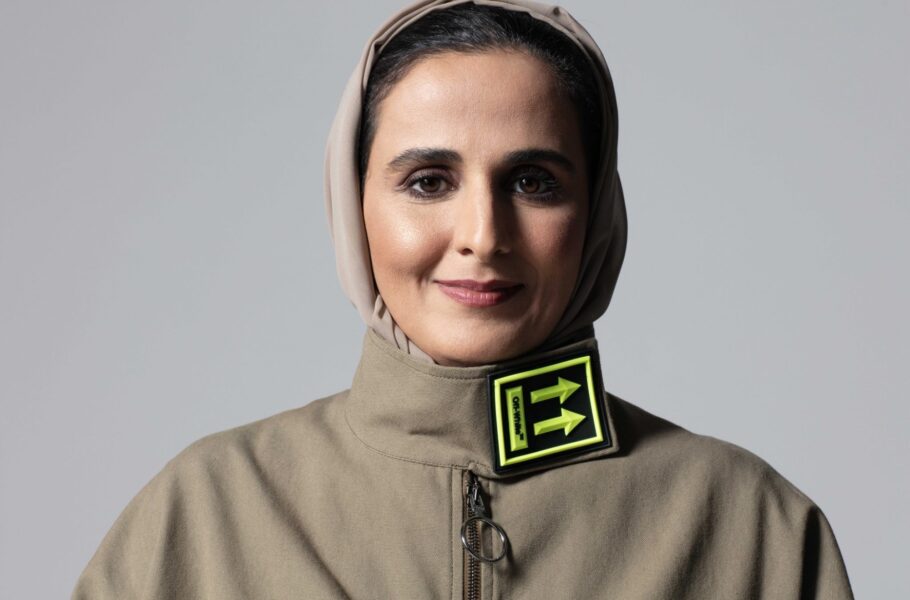
H.E. Sheikha Al Mayassa bint Hamad bin Khalifa Al Thani, Chairperson of Qatar Museums, has been ranked second globally in the 2025 ArtReview Power 100 list.
She first appeared on the Power 100 in 2011 at No. 90, quickly rising to No. 11 in 2012 before reaching the top position at No. 1 in 2013.
The Power 100 is compiled by a panel of around 30 individuals from across the globe, and from all parts of the artworld, who propose those people who have shaped the art that has emerged in their locality over the past year. The criteria for inclusion are that each person on the Power 100 has had an influence on the art being made and shown now; that they have been active in the last 12 months; and that their presence stretches beyond a local scene (while many act locally, the influence of that local action can reverberate internationally).
What emerges is a means of capturing an artworld that is not purely an economic system, or an aesthetic one, but a complex social system. Through this list, ArtReview gives a portrait of the network of relationships that shaped the art of 2025.
A year that started with a sporting success in the form of an Asian Cup win at home ended in mixed results.
Titles, goodbyes, the highs and low: 2024 was anything but a boring year for Qatari sports as the country continued hosting mega events, yet similarly took a few stumbles on the pitch.
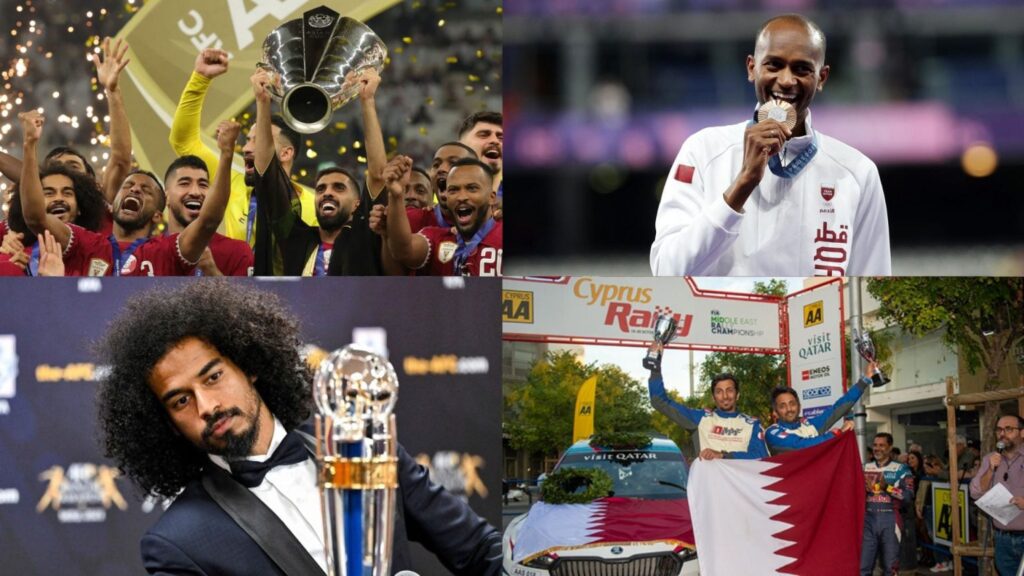
While the likes of Mutaz Barshim and Akram Afif dominated the headlines with their glories, the other side saw Qatari sides struggle to keep up their good form, whether in World Cup qualification or the Olympics.
Let’s take a look at some of the standout themes that defined Qatar’s 2024.
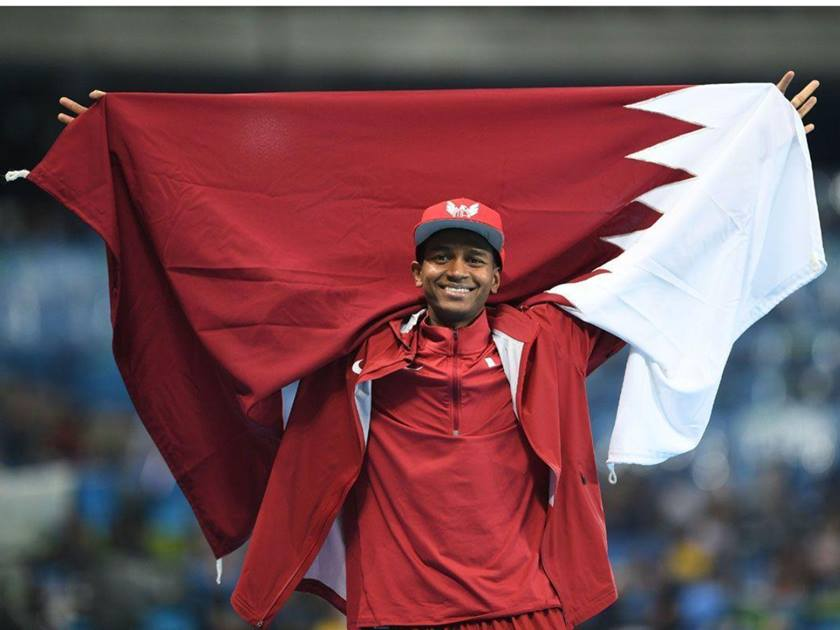
Barshim bags bronze in Paris Olympics 2024
Mutaz Barshim defied odds once again to win bronze at the Men’s high jump event, securing Qatar’s only medal of the Paris Olympics 2024.
While it was an underwhelming campaign for the Qatari contingent that had defied expectations to clinch two golds in Tokyo, Barshim’s win became a highlight. It was his fourth Olympic medal — a fitting end to a tournament that the high jumper had termed to be his last before the trip to Paris.
However, the 33-year-old multiple-time world champion hinted at the possibility of competing in the next Olympics, upon his return to Doha. “Never say never,” he said, in an exclusive chat with Doha News.
‘Sporting DNA : Mutaz Barshim keeps raising the bar and it all starts with his family
The year 2024 was also Aspire Academy’s 20th anniversary, which the country’s premier athletic scouting and training centre celebrated in style, hosting multiple seminars and events, such as the Aspire Global Summit as well as giving home to FIFA’s The Best Football Awards during its Gala Dinner in December.
Asian Cup triumph, Al-Haydos’ farewell and Afif’s ascent
The year ends in uncertainty for Qatar just like it started for Qatari football.
However, there were significant achievements in between. Much like the sport itself, it was a game of two halves for Qatari football — a perfect first half, followed by a tough second.
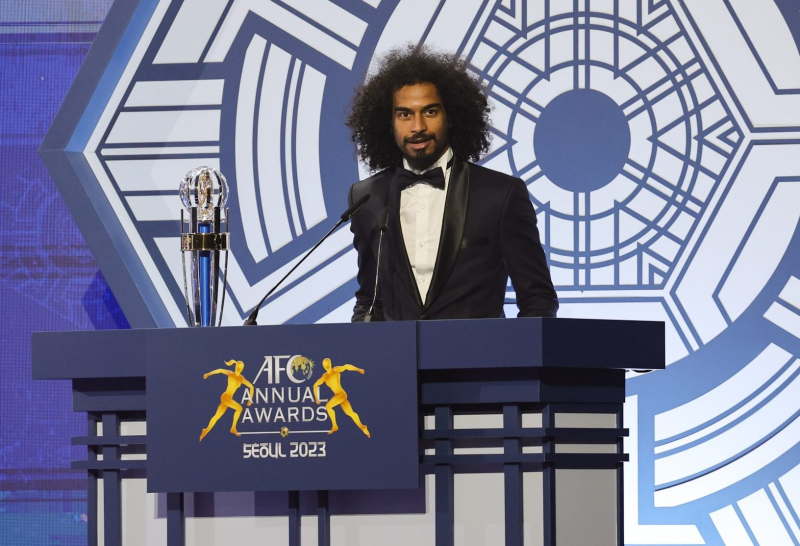
Qatar hosted and ultimately defended the Asian Cup crown in February as Akram Afif became the difference maker yet again. The tournament drew record attendance number as well as record engagement figures, underscoring yet another successful tournament in Qatar.
Al Annabi’s longstanding two-time Asian Cup-winning captain Hassan Al-Haydos retired from international football after the tournament, putting an end to the most capped Qatari career ever.
Qatar continued their good run under Bartolome Marquez Lopez at the World Cup Qualifiers thereafter, ending the second round unbeaten. The AFC U-23 Asian Cup was also hosted by the country in between, where Japan were crowned the champions.
It started going downhill with the loss against UAE at home with the start of the third round of the Asian Qualifiers to the FIFA World Cup 2026. While Afif clinched his second AFC Player of the Year title, Qatar’s hopes of making it to the tournament in North America hangs in balance with just two wins and three losses from the first six games. The team also crashed out of the group stages of the Arabian Gulf Cup following two draws and a defeat.
In the meantime, Qatar also hosted two of the Palestine national team’s qualifying games, the former of which in June saw Al Fida’i make it to the last round of World Cup Qualifiers for the first time in history with a 0-0 draw against Lebanon. Similarly, the Qatar U-20 team seamlessly qualified, at home, for the U-20 Asian Cup to be held in Saudi Arabia next year.
Qatar was also the home to FIFA’s new club competition, the Intercontinental Cup, which saw European champions Real Madrid win in Lusail Stadium. The Stadium 974 was put to use for the first time since the 2022 World Cup for two of the tournament’s matches.
A good year for racket sports
The Khalifa International Tennis and Squash Complex was a busy venue this year as it hosted multiple tournaments throughout the year, including the Qatar Open tennis event in February, the QTerminals Qatar Classic Squash event in September and October, followed by the World Padel Championship in November.
Russian player Karen Kachanov won the men’s Qatar Exxonmobil Open, while Polish Iga Swiatek claimed the women’s event held in February. Qatar Exxonmobil Open will now return as an ATP 500 event and was also voted the best ATP 250 event on calendar for 2024.
The QTerminals Qatar Classic saw Diego Elias and Nour Al-Sherbini come out on top of the men’s and women’s events, marking a thrilling end to the squash event.
Argentina’s men’s team and Spain’s women’s team maintained their dominance by lifting the World Championship in Padel, which saw some of the world’s finest compete in Doha.
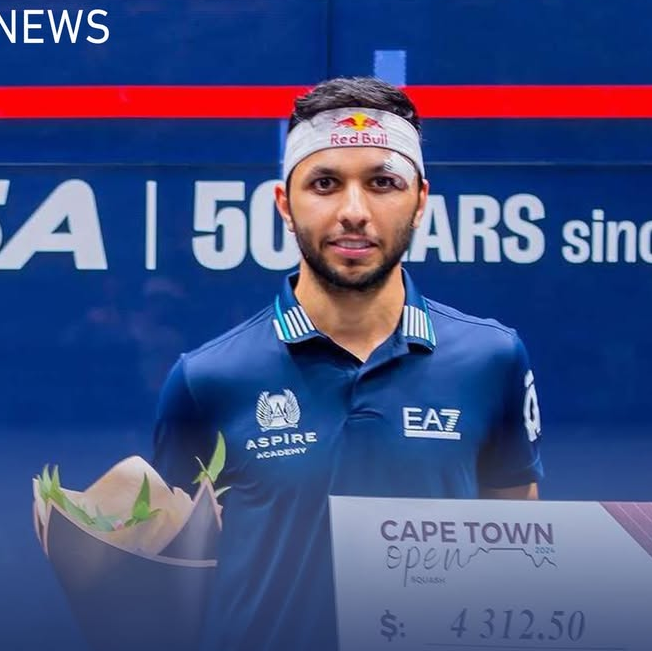
Qatar’s squash ace Abdullah Al-Tamimi capped the year off in style, winning the Cape Town Squash Open 2024 his first title away from Qatar since 2022.
Glory in motorsports and skydiving
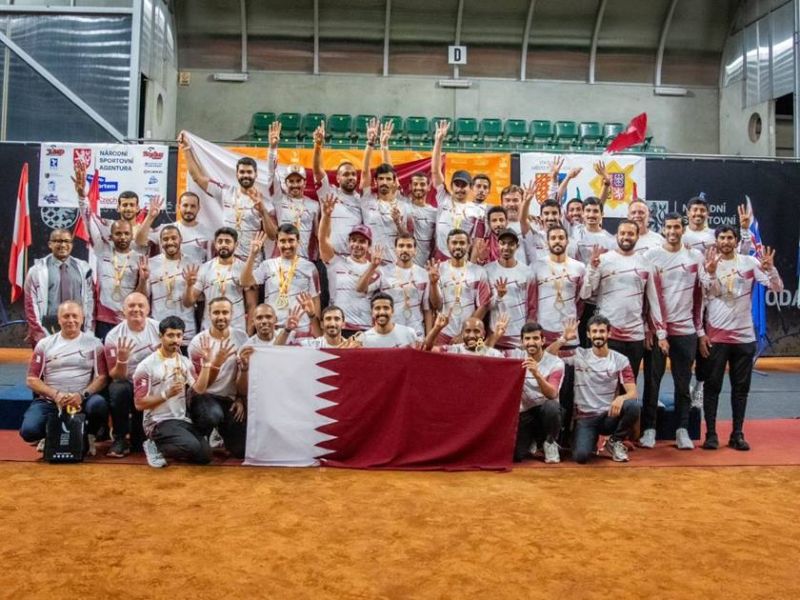
Qatar won four gold medals at the World Air Sports Federation (FAI)’s World Championships which was hosted by Czechia’s Prostejov in the first week of September.
Qatar won three golds in events across the Canopy Formation category and bagged solitary gold in male Style and Accuracy landing in the six-day tournament.
It was yet another year of glory for Qatari rally driver Nasser Al-Attiyah, who clinched his third FIA World Rally-Raid Championship (WR2C) in October after winning the 2024 Rallye du Maroc with his French co-driver Edouard Boulanger for the Dacia Sandriders.
Al-Attiyah’s decorated racing career now boasts seven Rallye Du Maroc titles, in addition to five wins in the Dakar Rally and 13 Middle East Rally wins.
What also stood out, however, was Abdulaziz Al-Kuwari’s victory in the Middle East Rally Championship as well as the Qatar Motor & Motorcycle Federation’s triumph in the Baja Middle East Teams Championship — all of whom were awarded in December at the annual FIA Awards.
Qatar also hosted the pinnacle of motorbike and motor racing, the MotoGP and the F1 Grand Prix – the latter of which saw record-breaking attendance at the Lusail International Circuit.
Defending champion Francesco Bagnaia won the MotoGP event held in March, whereas Max Verstappen rose against the odds to win his second Qatar Grand Prix on December 1, despite starting away from the front of the grid.
Mascot pays tribute to legendary coach Velibor “Bora” Milutinović for his role in advancing football in Qatar and beyond
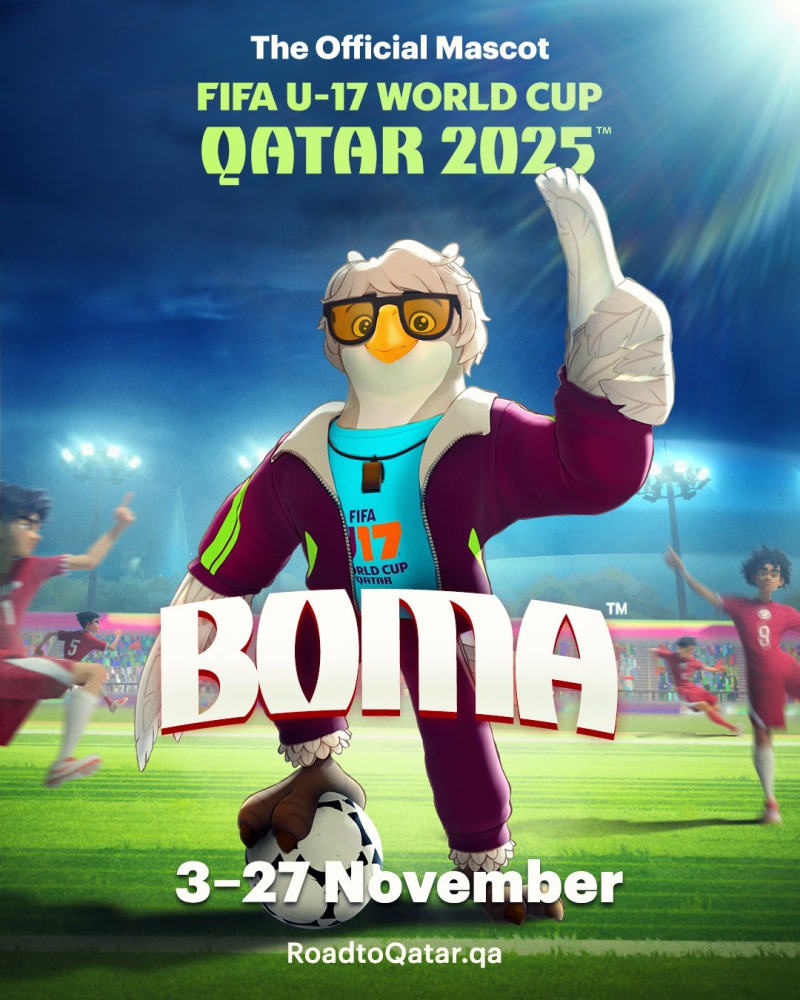
Doha, Qatar: The Local Organising Committee (LOC) for the FIFA U-17 World Cup Qatar 2025 and FIFA today unveiled BOMA – the Desert Owl as the official tournament mascot – a character inspired by the legendary Serbian coach Velibor “Bora” Milutinović, the only manager in football history to lead five different national teams in five consecutive FIFA World Cup™ tournaments.
The name “Boma,” is derived from the Arabic word for owl – regarded as a symbol of wisdom, vision, and mentorship, and is a playful nod to Bora, whose career as both coach and talent scout has profoundly influenced football development in Qatar and across the world.
For a tournament that celebrates the emergence of new talent, BOMA embodies the pivotal role of a football scout – one who sees potential where others may not and helps young players spread their wings on the global stage.
Known affectionately as Coach Bora, Milutinović guided Mexico, Costa Rica, the United States, Nigeria, and China at five successive World Cups between 1986 and 2002 – a unique achievement unmatched in football history. He went on to coach Al Sadd SC of the Qatar Stars League in 2004,leading them to win the Amir Cup in the same year, and contributed to the country’s football development programmes, making him a fitting inspiration for this tournament’smascot.
Speaking to the LOC, Bora highlights the passion he holds for nurturing future footballers and the importance of the upcoming FIFA U-17 World Cup Qatar 2025 in celebrating tomorrow’s stars.
“When it comes to discovering young talent, my greatest satisfaction as a coach has always been to promote emerging players – to show them that they must have the right attitude, believe in their dreams, and aim for the national team,” said Coach Bora. “I really like the idea behind the mascot and want to thank everyone who came up with it.” he added.
The FIFA U-17 World Cup Qatar 2025 marks a historic milestone as the first edition to feature 48 national teams, underscoring the tournament’s growing global reach.
“The World Cup is something truly special. When you’re young, you dream of playing at the highest level – and the U-17 team is the first step on that journey. It’s very important for young players to face the best in the world and see where they stand,” said Coach Bora.
“The team that scores more goals will win – it is as simple as that. But with young players, the outcome of matches often depends on inspiration, talent, and spirit. Most importantly, I hope everyone enjoys this World Cup. Enjoying the game is what truly matters, especially at the U-17 level, because that experience helps you grow both as a person and as an athlete,” he added.
The FIFA U-17 World Cup Qatar 2025, taking place at the state-of-the-art Competition Complex at Aspire Zone, will see as many as eight matches a day, for a total of 104 matches. The final will take place on November 27, 7pm local time, at Khalifa International Stadium.
“Aspire Zone is incredible – it has some of the best facilities in the world. The U-17 World Cup will be played on perfect pitches, in perfect conditions. Qatar has a distinguished track record in hosting major events, and I’m sure we’ll see high-quality football once again. I still remember the 2022 World Cup in Qatar – it was unforgettable,” said Coach Bora.
Fans can purchase tickets at: www.roadtoqatar.qa. Tickets are available as a Day Pass, which will enable fans to attend multiple matches a day as well as cultural and entertainment activities taking place around matches, in what will be an electrifying football festival-like atmosphere.
Fans can also purchase a Prime Pass, which will enable them to reserve seats for high demand matches. Supporters of the Qatar national team can avail the Follow My Team ticket, which will enable them to attend all matches of the Qatari U-17 team during the group stage.
All tickets will be digital and will include wheelchair accessible seating options for disabled fans.
The FIFA U-17 World Cup Qatar 2025 is the first of five consecutive editions that Qatar will be hosting. As the first FIFA World Cup to feature 48 teams, this will be the biggest-ever edition of the youth tournament that saw the likes of Gianluigi Buffon, Luis Figo, Xavi Hernandez, Eden Hazard, Andres Iniesta, Neymar, Ronaldinho, Son Heung-min and Francesco Totti appear on the world stage for the first time.
Qatar’s spectacular line-up of mega-sporting events will kick off with the FIFA U-17 World Cup Qatar 2025 from November 3-27, followed by the FIFA Arab Cup Qatar 2025 from December 1-18. In addition, the country is also set to host the second edition of the FIFA Intercontinental Cup 2025, which will take place on December 10, 13 and 17.
US Qatari artist and writer Sophia Al-Maria has been announced as the recipient of the 2025 Frieze Artist Award, one of the art world’s most highly anticipated annual commissions.
The award is part of Frieze London, a leading international art fair that will return to Regent’s Park from Oct. 15-19, bringing together more than 280 galleries from 45 countries.
Presented in partnership with Forma, the award supports early- to mid-career artists in debuting new works. This year, Al-Maria will perform “Wall Based Work (a Trompe LOL),” a live stand-up comedy show held daily inside the fair tent.
The work marks Al-Maria’s first attempt at stand-up, in which she will blend sharp humor with her long-standing interest in mythology, empire and pop culture.
“In partnership with Forma, we are proud to continue supporting artist-centered programming,” said Eva Langret, director of Frieze EMEA. “Al-Maria’s debut stand-up promises a collective experience exploring vulnerability, creativity, shared anxieties and LOLs.”
Meanwhile, Chris Rawcliffe, artistic director at Forma, said: “By wielding humor as a tool for survival, Al-Maria not only provokes reflection but actively reshapes the cultural conversation … Al-Maria is more than an artist and critic, she is a catalyst for change, and an indispensable voice in both the art world and the wider social landscape.”
Al-Maria’s proposal was selected by a jury of leading industry professionals, including curator and museum consultant Lydia Yee and the artistic director of exhibitions at Ikon Gallery, Melanie Pocock, artistic director of exhibitions at Ikon Gallery, as well as Langret and Rawcliffe.
Based in London, Al-Maria works across drawing, collage, sculpture, film and writing. Her practice is unified by a focus on storytelling and mythmaking, often reimagining histories and envisioning speculative futures. Her work has been shown at major institutions and biennales, including the Gwangju Biennale, the New Museum and Whitney Museum in New York, the Venice Biennale, and Tate Britain.
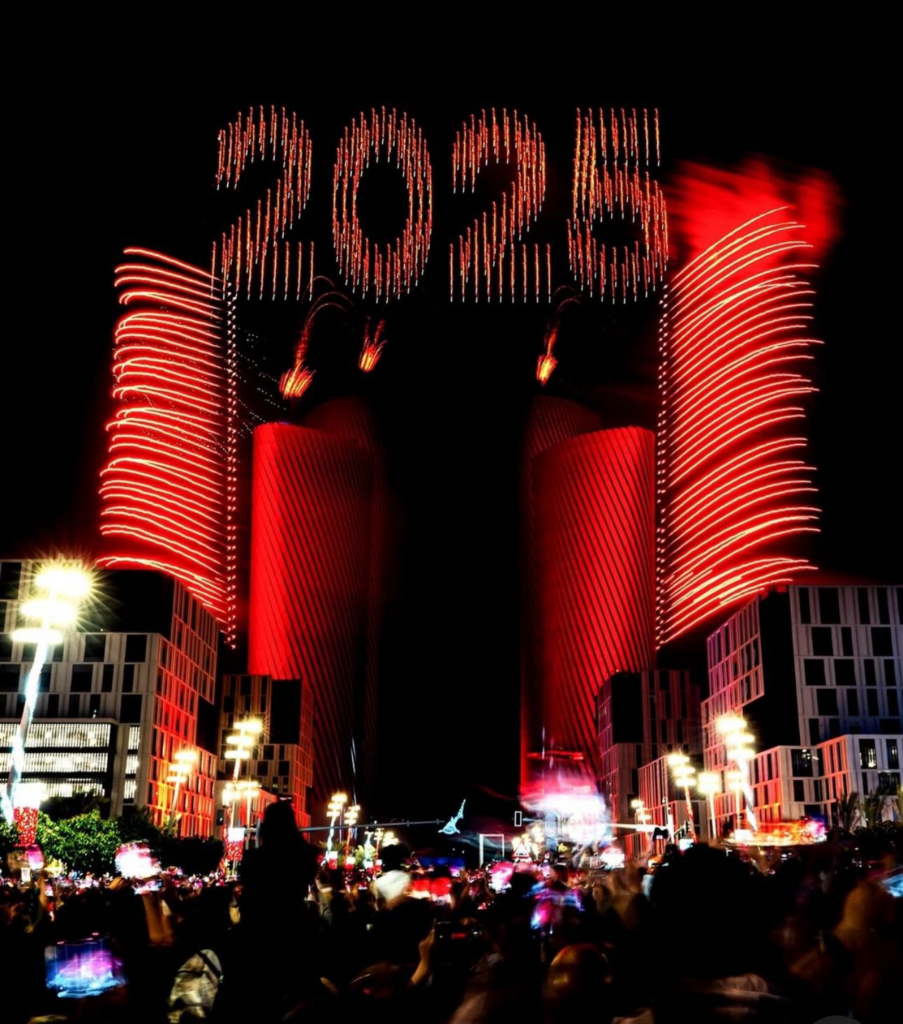
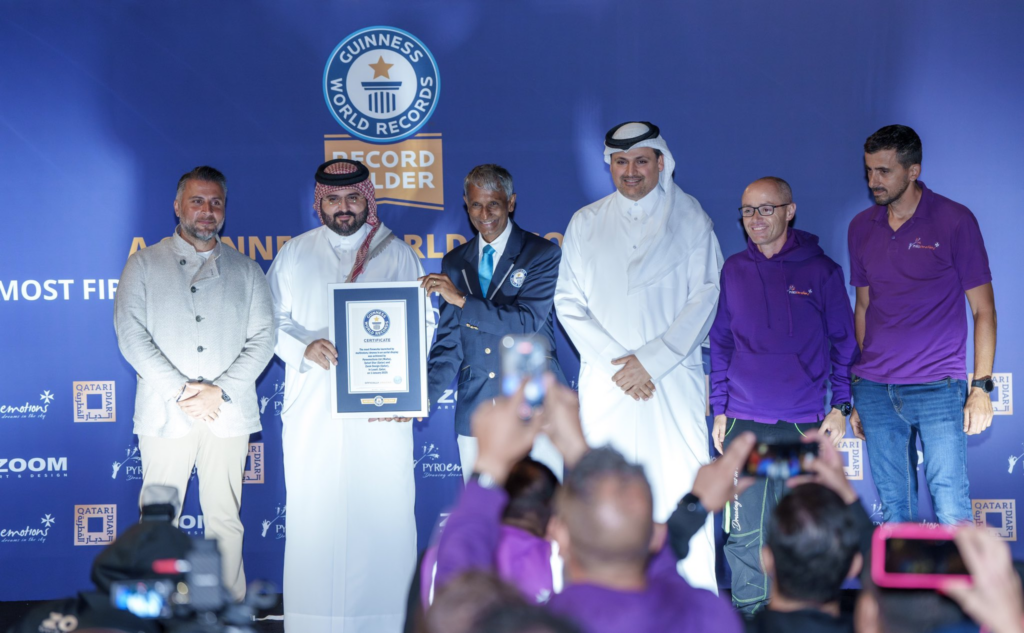
Qatari Diar received a Guinness World Records distinction for “the most fireworks launched by multirotors/drones in an aerial display.”
The distinction was awarded to Qatari Diar on the occasion of the January 1, 2025, New Year’s celebrations that took place in Lusail Boulevard.
The city of Lusail had earlier announced that the “historic” New Year’s festivities held at its boulevard had attracted 300,000 visitors, a record-breaking figure.
The distinction was awarded to Qatari Diar on the occasion of the January 1, 2025, New Year’s celebrations that took place in Lusail Boulevard.
The city of Lusail had earlier announced that the “historic” New Year’s festivities held at its boulevard had attracted 300,000 visitors, a record-breaking figure.
The Fourth Arab Mathematics Olympiad 2024 kicked off Sunday in Doha.
The Olympiad, which will conclude on November 14, is organised by the Ministry of Education and Higher Education in Qatar, in partnership with the Arab League Educational, Cultural, and Scientific Organization (ALECSO) and the Qatar National Commission for Education, Culture, and Science.
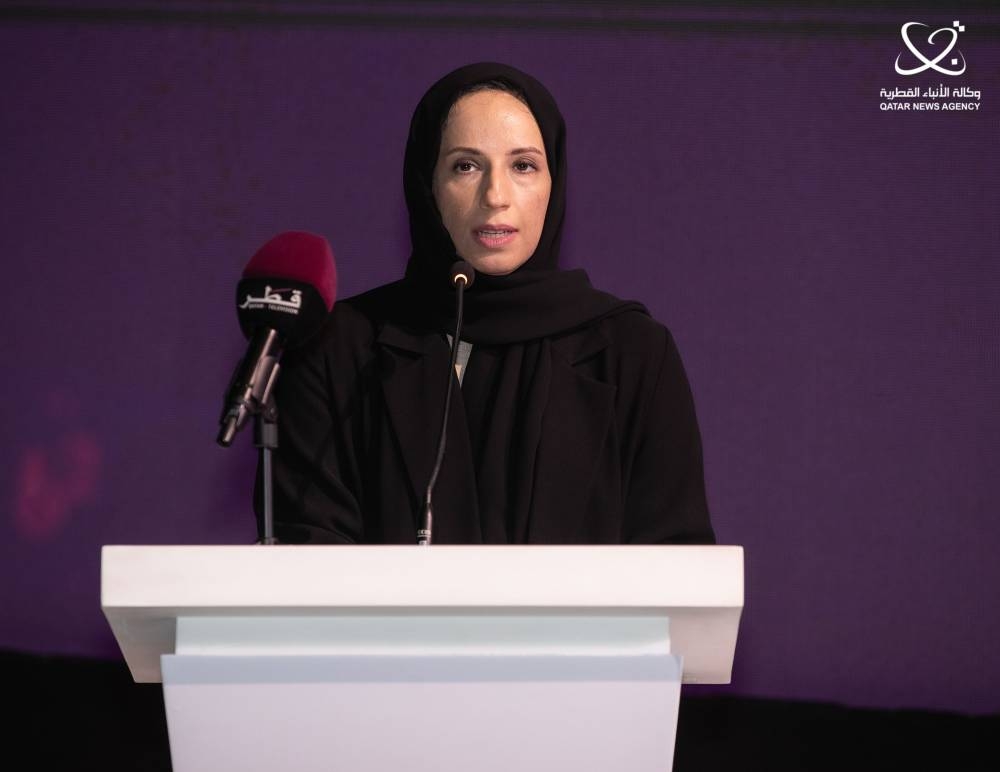
HE Buthaina bint Ali Al Jabr Al Nuaimi, the Minister of Education and Higher Education, Chairperson of the Qatar National Commission for Education, Culture and Science, said that organizing the Fourth Arab Mathematics Olympiad falls under the umbrella of ALECSO and aims to enhance communication between Arab students, develop the spirit of excellence, creativity, talent and self-confidence, pay attention to the sciences of mathematics and develop its curricula and improving its teaching methods.
She noted in her opening speech that mathematics is one of the basic sciences on which many applied sciences depend, it’s based on thinking, setting hypotheses, and mathematical proofs, stressing that working on developing curricula to improve the quality of education and develop students’ skills has become an urgent need to keep pace with current developments and modern life, in a world characterized by rapid development and technological progress.
She explained that the Arab Mathematics Olympiad comes to crystallize the interest of Arab countries in developing the performance of their students in modern sciences as a basic requirement for sustainable development.
HE Buthaina bint Ali Al Jabr Al Nuaimi, the Minister of Education and Higher Education, Chairperson of the Qatar National Commission for Education, Culture and Science
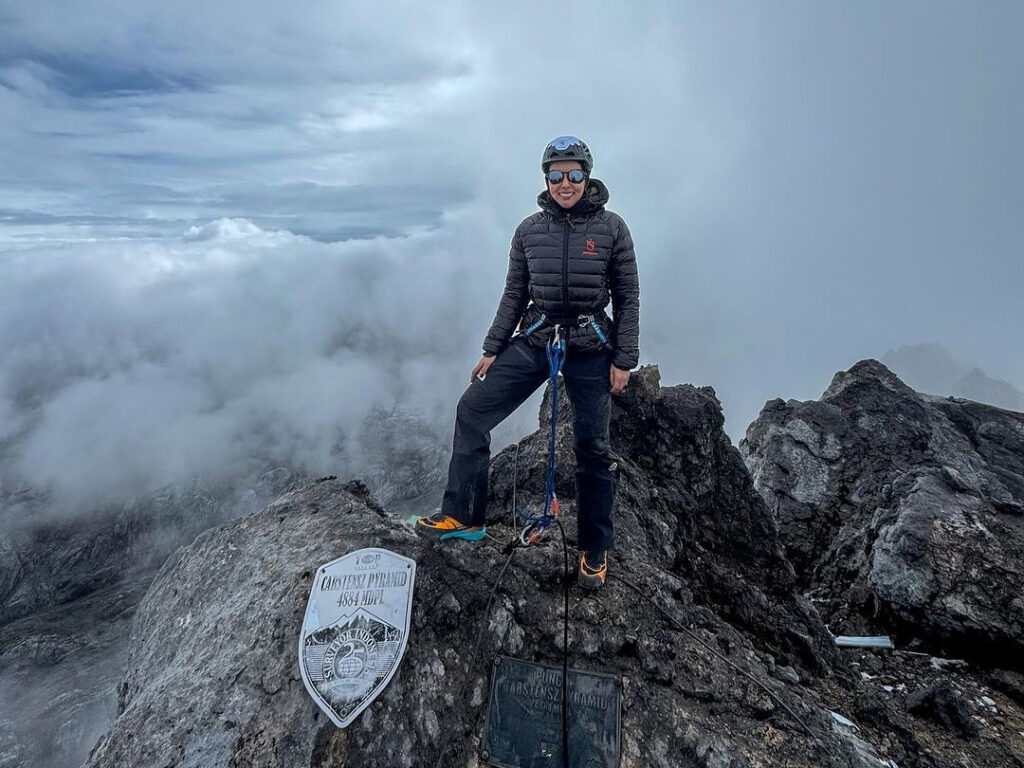
Qatari Mountaineer Sheikha Asma bint Thani Al-Thani made history as she posed atop the Castensz Pyramid in Central Papua, two days back on October 11, 2024, becoming the first Arab woman and Qatari to complete the prestigious Explorer’s Grand Slam.
“The Explorers Grand Slam is one of the world’s most prestigious adventure challenges, involving climbing the highest peak on each continent and skiing to the North and South Poles. Fewer than 75 people in history have completed this incredible feat,” she wrote on her social media account, adding that she was honoured to be the first Arab woman and Qatari national to achieve this milestone.
Sheikha Asma began her Explorer’s Grand Slam journey with Kilimanjaro in 2014, after which she reached the North Pole in 2018, she then conquered the Aconcagua in 2019. In 2021, Sheikha Asma summitted Elbrus and then began the following year with Mount Vinson in January, from where she skied to the South Pole Last Degree. Then in May 2022, she was at the top of her dream destination – the mighty Everest. In June 2022, she conquered Mt Denali, then leaving her one summit away from the Grand Slam.
Writing about her journey so far, Sheikha Asma stated, “A journey that began in 2014 with a dream and a determination to break boundaries. Along the way, I’ve learned that persistence, no matter how challenging the road, always pays off. Each summit represents a step closer to realizing my potential, but more importantly, it’s a testament to staying true to your dreams, even when the path ahead seems impossible.”
Sheikha Asma has also successfully summited Mount Lhotse, Kangchenjunga, Mount Ama Dablam, Mount Dhaulagiri, Mount Manaslu, and Labuche Peak.
Sheikha Asma dedicated her most recent victory to every young girl with big dreams, as she encouraged them to keep dreaming big, “there are no limits to what we can achieve if we remain persistent and believe in ourselves. Keep climbing, keep dreaming, and know that the summit is always within reach.”
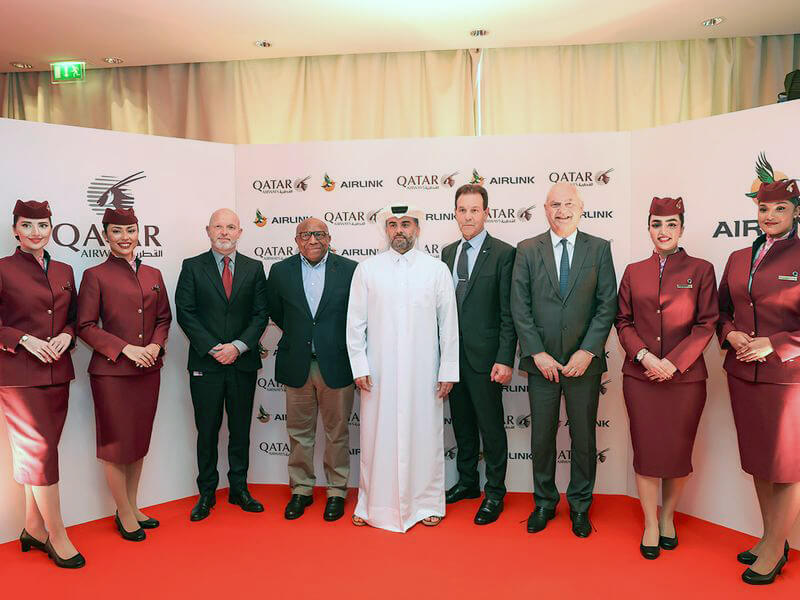
In a strategic move to expand its presence in Africa, Qatar Airways Group has announced the acquisition of a 25% stake in Airlink, a prominent regional carrier based in Southern Africa. This investment, revealed on August 20, 2024, aims to enhance the existing code-sharing partnership between the two airlines and bolster Qatar Airways’ growth strategy across the African continent.
Airlink, established in 1992, has a robust network covering more than 45 destinations in 15 African countries. With a fleet of over 65 jetliners, it serves various cities throughout Southern Africa, as well as destinations in Madagascar and St Helena Island.
The collaboration is expected to bring mutual benefits, including network expansion, increased capacity, and extended marketing reach. Airlink Chief Executive Rodger Foster highlighted the significance of the deal, saying, “Having Qatar Airways as an equity partner is a powerful endorsement of Airlink and echoes our faith in the markets we currently serve and plan to add to our network.”
The partnership will also align both carriers’ loyalty programs – Qatar Airways Privilege Club and Airlink Skybucks – offering enhanced benefits to customers.
Qatar Airways, which currently flies to 29 destinations in Africa, has been actively pursuing its Africa growth strategy since 2019. The airline has been expanding its presence on the continent, adding new destinations such as Abidjan, Abuja, Accra, Harare, Kano, Luanda, Lusaka, and Port Harcourt to its network, while also resuming services to Cairo and Alexandria.
This investment follows Qatar Airways’ previous strategic moves in Africa, including acquiring a 60% stake in a new multi-billion-dollar international airport being built near Kigali, Rwanda, in 2019.
As part of its broader expansion plans, Qatar Airways has also announced increased flight frequencies to popular tourism destinations. Starting October 27, the airline will add an eighth daily flight to London, bringing the total to 56 weekly flights. Additionally, it plans to increase services to Male (Maldives), Miami (US), and Tokyo (Japan) during the 2024-2025 winter season.
This latest acquisition underscores Qatar Airways’ commitment to strengthening its position in the African aviation market and capitalizing on the continent’s growth potential.
With shows that range from political stances to introspective research, Doha’s Mathaf: Arab Museum of Modern Art proves itself to be one of the most authoritative voices for Arab narratives and the Global South in art.
The first impressions viewers get when walking inside the space set up like a unitary installation by Algerian artist Kader Attia, are a big haunting archive, a disquieting museum storeroom. It’s called “The Repair from Occident to Extra-Occidental Cultures” at this particular museum in the Qatari capital. A number of cabinets on the perimeter of the room showcase objects from colonial times: photographs of French admirals and Arab royalty, plus memorabilia, knives, cutlery and weapons.
Pinned rather aggressively on the shelves with metal rods are books from 1800-1900, like La France d’Outre Mer, Occident Noir and The Age of Napoleon, alongside satirical illustrations from magazines. A particularly disturbing one depicts a naive white nurse taking care of wounded African soldiers, who are depicted with malicious grins on their faces. Whether it’s the representation of racist stereotypes, anthropological studies or orientalist perspectives, the selection of materials by Attia shows different aspects of the relationship between coloniser and colonised, and how models of thought carried on in both Western and non-Western cultures.
Among the more harrowing pieces in the installation are several heads sculpted in wood, reminiscent of African statuettes. The features of these faces are distorted, reminding the viewer of the cubist or expressionist effect, that Picasso, Bacon or more recently Marlene Dumas have largely employed in their work. Looking at the anatomy and war surgery books on the shelves — which explain how to reconstruct exploded faces damaged during WW1, and how to attach prostheses — it seems clear that the distortion in the faces references the war wounded. The artist is hinting at the process of repairing historical wounds and abuses by the West towards its colonies, something central to the postcolonial conversation.
The presence of books like Primitive Art and Psychoanalysis summarises one more aspect of the artwork: how the encounter with the “other” is sublimed and transformed in art, and the deep psychological underpinning which lies behind every form of orientalism.
It’s precisely the link between all these seemingly distant concepts that make Kader Attia’s installation so powerful.
The artist leaves it to the viewer to come to terms with that thick, inextricable matter where racist stereotypes, modernism, colonialism, tribal art, sexuality, anthropology, war, imagination and the subconscious meet in a dangerous mix.
The intention of the work, however, is clear. He is examining this magma with a critical eye, in order to move forward and heal the historical wounds from these power dynamics.
Attia’s work is just a small part of the large and rich collection at Mathaf, but it contains one of its most fundamental themes: the creation of an alternative to the non-Western narratives and discourses for history and art history. This seems to be the main mission that the museums in Qatar are highlighting. While in the Western world museums as institutions are increasingly losing their relevance, in the Global South — namely, the parts of the world previously excluded by a Western narrative — museums are fundamental parts in the development of their own art system. In fact, it’s up to these institutions to construct alternative narratives to the West’s by using museums as a central tool.
The permanent collection of Mathaf is a case in point. Offering an excellent survey of 20th and 21st century modern and contemporary art from the Arab world and the Middle East (which is tellingly called “West Asia”), it is highlighting the strong connections of local Qatari and Arab artists with the wider world in Africa, Asia and Europe.
The permanent collection has evolved from an initial donation of a thousand works collected over the past 25 years by Sheikh Hassan Bin Mohammed Bin Ali Al-Thani. Today, it’s continuing to grow, and hosts more than 9,000 artworks by pioneer Arab artists.
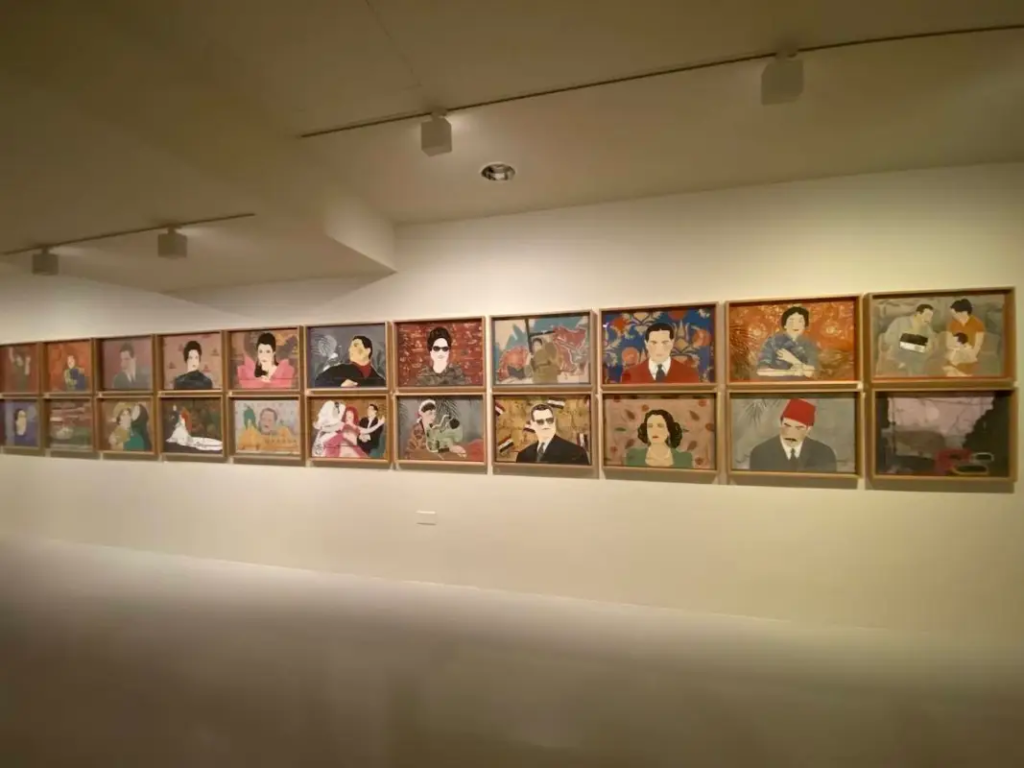
A particularly interesting section of this collection is dedicated to women artists, that has works like “Icons of the Nile” by Egyptian artist Chant Avessidian. This consists of a series of prints and paintings on cardboard representing, in a stylised way, Egyptian icons from modern times, including a number of iconic women.
At the moment, Mathaf is also hosting a temporary exhibition called “Arab Modernism”, which looks at how this current is being articulated in Arab countries, compared with its counterparts around the globe. In the show, we can see not only how Arab artists took visual elements, and techniques from the rich and diverse heritage of the Arab-Muslim world — particularly calligraphy and ornamentation — but also how they mused on the concept of Tajreed. The Arabic term for abstraction, in fact, also means “to strip away” and “purify”, referring to a process of revealing and clarifying through the artistic process itself.
In one room with ochre walls, we can observe how the calligraphic sign was declined to break the division between word and image, opening a space between calligraphy and geometric abstraction. We also find beautiful abstract patterns that intermingle in a big painting by Algerian artist Rachid Koraichi, which is almost tribal in its use of the calligraphic sign and the juxtaposition of primary colours. Etel Adnan, on the other hand, has a much smaller work, part poem, part drawing, where words on paper become abstract lines.
Palestinian Samia Halabi has one painting on show called “The Red One”, an exquisite juxtaposition of touches of colour, which are melodious and musical. Egyptian artist Mounir Canaan, meanwhile, plays on the cubist and modernist usage of pieces of cardboard and wood to create a vibrant image where different plans intersect, creating an effect which is at once aggressive and dynamic.
One of the most beautiful works in the show, though, is by Iraqi artist Hanaa Malallah.
“Secret of Fold Up Squares”, as the name suggests, consists of a series of folded pieces of canvas, burned at their centre. In one of these small squares, almost hidden in the canvas, is a piece of gold, a visually striking and highly evocative detail.
The show lets us observe how shared linguistic and cultural foundations in the Arab world generated a kind of abstraction in the region that stretches far beyond the Western definition of it, or as a simple reaction to academism and realism in art.
A smaller show, “Introspection as Resistance”, is collateral to the Abstraction exhibition. It is dedicated to the mathematical and geometrical work of Iraqi artist Mehdi Moutashar. He has been known as a poet of exactitude and rigour, and his work has been inspired by Abstraction, Minimalism, Op Art and the work of Klein – in its usage of his trademark blue – which is again blended with calligraphy and Arab ornamental patterns.
Overserving graphic motives on the hyper-white walls of the museum, brightly lit, the viewer gets the impression of being catapulted into a different dimension that doesn’t belong to this world, but to computer intelligence.
An early experimenter in geometric abstraction, Moutashar’s work brings mathematical precision and science into art. Looking at the mathematical principles of the universe is, for the artist, a form of introspection. It’s an introspection that bypasses individuals, to connect us with some sort of spiritual truth, a universal order. The artist exemplifies an incessant inquiry and a tireless resistance towards the disorder of the world.
In this sense, the show represents the perfect counterpoint of Kader Attia’s work. Where one acknowledges the impossibility of neatly separating history, imagination, wounding and the mending of wounds, Moutashar launches himself into a Sisyphean attempt to order the work through mathematics.
With these shows, Mathaf proves itself to be one of the most authoritative voices in the Gulf when it comes to speaking about Arab art and its original trajectory. A process of reparation – at least for the art – seems to be possible. One exhibition at a time.
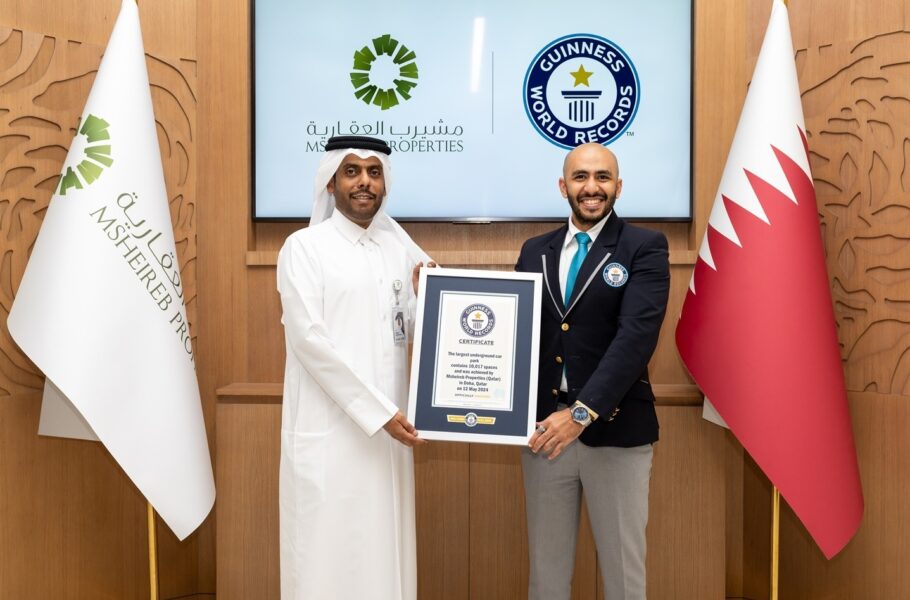
Msheireb Downtown Doha, Qatar’s pioneering sustainable and smart city district, has clinched the Guinness World Records™ title for the “Largest Underground Car Park” with a capacity of 10,017 spaces. The Guinness World Records™ recognition highlights the creative thinking that went into designing Msheireb Downtown Doha to create a sustainable urban district that sets a new benchmark for future smart city projects globally.
Msheireb Downtown Doha was designed for the human scale, which starts from the ground up. Locating car parking and building services underground has allowed the district to keep streets traffic-lite, enabling narrow, pedestrian-friendly walkways. This design improves connectivity across the wider city area, extending underground basements throughout the entire district.
“We wanted to reclaim outdoor spaces for the community by removing vehicles from the streets around Msheireb,” said Msheireb Properties CEO Eng. Ali Al Kuwari. “The Guinness World Records™ for the Largest Underground Car Park is a testament to our dedication to creating a sustainable and innovative city district that prioritizes the well-being of our community. By locating car parking and building services underground, we enabled architects to design attractive buildings with active façades on all sides.”
With an impressive capacity of 10,017 vehicles spread across six levels, Msheireb Downtown Doha’s underground parking system ensures ample space for residents, tenants, and visitors. The cutting-edge facility boasts an intelligent parking system that guides drivers to available spaces, making the parking experience seamless and hassle-free.
The underground parking system also had a significant impact on building design by removing the need for back service entrances which improved street quality and aesthetic cohesion.
As the flagship project of Msheireb Properties, Msheireb Downtown Doha has been designed to revive the historical downtown area with a new architectural language that is modern yet inspired by traditional Qatari heritage. The district incorporates the latest smart city technology and sustainability features, making it a model for future urban development’s worldwide.
Raafat Tawfik, Guinness World Records™ Official Adjudicator, commented, “We are thrilled to recognize Msheireb Downtown Doha for its outstanding achievement in creating the Largest Underground Car Park. This feat showcases the district’s commitment to innovation, sustainability, and enhancing the urban living experience.”
Msheireb Downtown Doha’s underground parking is just one of the many features that make the district a unique and attractive destination. With its pedestrian-friendly streets, diverse mix of residential, commercial, and retail offerings, and cultural attractions such as the Msheireb Museums, the district has become one of Qatar’s go-to destinations for residents and visitors alike.