Arabs & Arabian Records Aggregator. Chronicler. Milestones of the 25 Countries of the Arabic Speaking World (official / co-official). AGCC. MENA. Global. Ist's to Top 10's. Records. Read & Enjoy./ www.arabianrecords.org
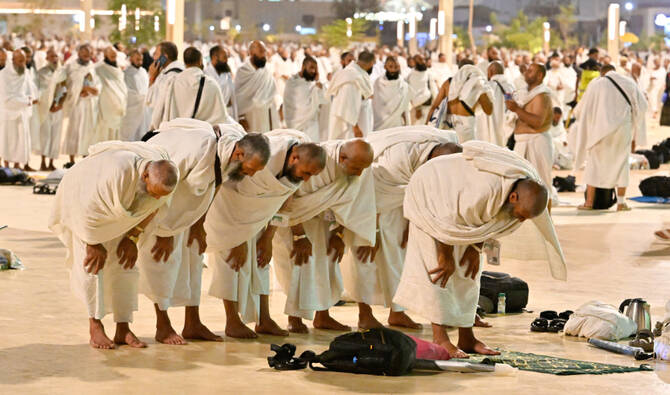
1,546,655 people travel from outside of the Kingdom to take part in the pilgrimage, 160,646 are citizens or residents of Saudi Arabia
388,694 benefit from Makkah Route Initiative, a service that lets them complete all entry procedures at point of departure, thereby avoiding long queues on arrival, 23.7% more than last year
More than 1.7 million pilgrims are performing Hajj this year, the majority of whom live outside of Saudi Arabia, according to authorities in the Kingdom.
The total number of 1,707,301 is an increase of of 34,071, or 2.04 percent, compared with the 1,673,230 who attended the 2025 Hajj.
This comes amid continuing efforts to streamline pilgrimage operations, expand facilities at entry points and enhance services, officials said, and reflects the steady demand for Hajj places despite evolving regional and global conditions.
The increased attendance also underscores the Kingdom’s ongoing focus on operational efficiency, they added, particularly through the digitalization of services, improved crowd-management systems, and enhanced coordination between security, health and logistical authorities.
Figures provided by the General Authority for Statistics reveal that 1,546,655 pilgrims traveled from outside of the Kingdom to perform Hajj, while 160,646 are citizens or residents of Saudi Arabia. The vast majority of those arriving from abroad, 1,485,729, traveled by air, 54,429 entered the country through land crossings, and 6,497 arrived by sea.
The number of pilgrims who benefited from the Makkah Route Initiative, a service that allows them to complete all entry, passport and customs procedures at the point of departure and transports them directly to their accommodation, thereby avoiding long queues at airports on arrival, increased to 388,694, compared with 314,337 last year, an increase of about 23.7 percent.
The total number of people working in support of Hajj operations increased to 441,049 from 420,070 last year. However, the number of volunteers decreased from 34,540 in 2025 to 26,701, a decline of 22.7 percent.
The General Authority for Statistics said its figures were based on administrative data provided by the Ministry of Interior as the primary source, in line with a statistical framework adopted during recent Hajj seasons to ensure accuracy and reliability. The full Hajj data and detailed reports are available on the authority’s website.
source/content: arabnews.com (headline edited)
______________
The increased attendance also underscores the Kingdom’s ongoing focus on operational efficiency. (SPA)
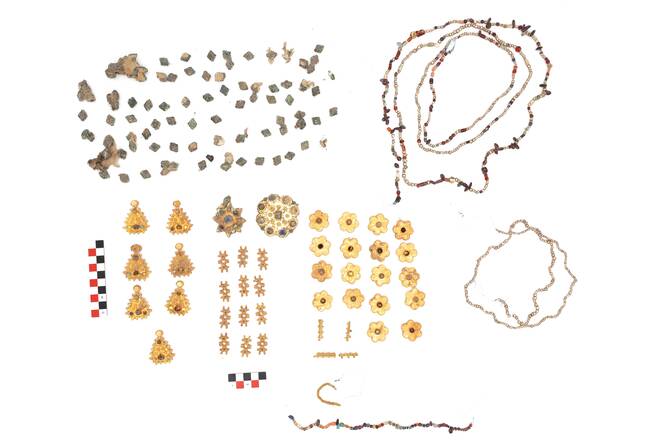
A collection of 100 pieces of gold jewelry dating back to the Abbasid era has been discovered in Saudi Arabia’s Al-Qassim region, the Saudi Heritage Commission announced on Tuesday.
The ancient artifacts are thought to have formed a complete adornment set, and were designed to look like flowers with stone settings fixed within gold frames.
There is also a large disc-shaped piece inlaid with colored stones arranged symmetrically in a central pattern, as well as a large group of multi-colored beads and delicate gold spacers.
The items were crafted using hammering and hand-forming techniques on gold sheets, along with decorative pressing and stone inlay within the frames.
These techniques reflect the advanced craftsmanship of the period and the development of gold jewelry-making during the Abbasid era, according to the commission.
They were found at the Dariyah archaeological site as part of the fourth season of the commission’s archaeological survey and excavation project.
Dr Jasir Suliman Alherbish, CEO of the Saudi Heritage Commission, said in a statement: “This discovery at Dariyah reflects the abundance of the Kingdom’s cultural heritage and its longstanding role as a crossroads of trade routes and cultural exchange.
“It underscores the Heritage Commission’s commitment to research, documentation and preservation, further strengthening understanding of the Kingdom’s history and safeguarding its cultural legacy.”
Excavations also revealed architectural features dating back to the Abbasid period, including the foundations of stone buildings, mud walls, fire hearths and plastered rooms, in addition to pottery vessels and metal tools.
These finds indicate human settlement dating back to the late ninth century A.D. and confirm the strategic importance of the site along pilgrimage and trade routes.
Located in the southwest of Al-Qassim Region, Dariyah is one of Saudi Arabia’s significant archaeological sites, with evidence of activity from the pre-Islamic period into the early Islamic era.
It was historically an important stop on ancient trade and pilgrimage routes, including the Basran Hajj route from Iraq.
Its surviving remains, set among mountains and valleys, include archaeological mounds, stone building foundations, pottery and glass fragments, soapstone artifacts and Islamic inscriptions in the surrounding area, reflecting the site’s long-standing historical and cultural significance.
source/content: arabnews.com (headlines edited)
___________
The set of ancient gold jewelry dates back to the Abbasid era. (Supplied)
Breakthrough advances programmable drug delivery through nanoscale protein engineering, say researchers.
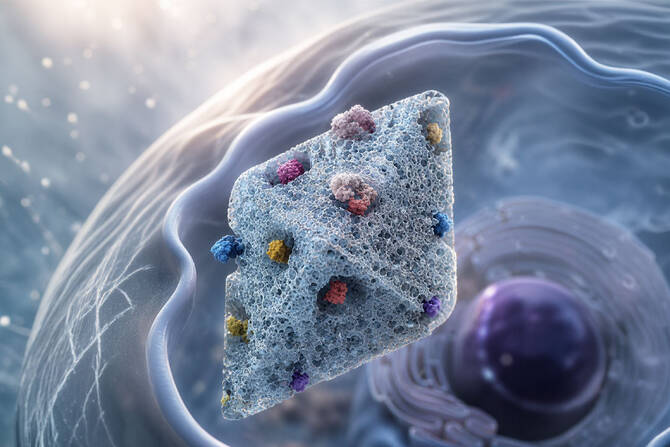
Scientists at the King Abdullah University of Science and Technology have engineered nanoscale particles capable of transporting six proteins into living cells, where they work together as a miniature “drug factory” to produce violacein, a bioactive compound under study for therapeutic use.
The findings, detailed in a press release published recently on KAUST’s news site, offer an early demonstration of how future therapies might one day generate treatment compounds directly inside the body, only where they are needed.
Researchers said the approach could eventually allow treatments to act more precisely at the site of disease while reducing unwanted effects on healthy tissue.
Published in the journal Advanced Materials, the study combines nanotechnology, materials science and bioengineering to tackle a longstanding medical challenge: delivering multiple proteins into cells simultaneously so they can perform coordinated biological functions.
Researchers packaged six proteins inside porous, sponge-like particles known as metal-organic frameworks, or MOFs, creating what they described as synthetic organelles — engineered structures that mimic functions found in living cells.
Once inside mammalian cells, the proteins remained active and worked sequentially to convert a simple amino acid into violacein. According to the researchers, it is the most complex multiprotein system yet delivered into living cells and the first example of a “protein pathway transplant.”
“It was a bit of a moonshot,” said Raik Grunberg, senior research scientist at KAUST and one of the study’s corresponding authors.
“Protein delivery into the cell is difficult enough for individual proteins, so researchers usually do not even try with more than one or two. What we show here is that we can take a whole integrated protein system … and bring it into human cells as one functional unit.”
Niveen Khashab, professor of chemical science at KAUST, said the team overcame major technical hurdles after conventional MOF materials caused proteins to lose activity.
“By engineering a more porous, sponge-like framework, we were able to create an environment where the system could finally work as intended,” she said.
Researchers said the platform is designed to be adjustable, allowing scientists to fine-tune how proteins interact inside cells and potentially paving the way for programmable therapies tailored to specific diseases.
Stefan T. Arold, professor of bioscience at KAUST and another corresponding author, said the project demonstrated how combining expertise across biology and materials science could unlock new therapeutic approaches.
Although the work remains at an early stage and requires further validation before clinical use, the researchers said it points toward future treatments capable of producing beneficial compounds directly inside diseased tissue while minimizing side effects elsewhere in the body.
The KAUST team plans to test the system next in animal models as part of ongoing efforts to explore its therapeutic potential.
source/content: arabnews.com (headline edited)
_______________
The breakthrough offers an early proof of concept for therapies that could one day generate treatment compounds directly inside the body at the site of disease. (KAUST News photo)
Adhwan Al-Ahmari, chairman of the Saudi Journalists Association, was elected at the federation’s International Press Congress in Paris
Seat strengthens Saudi presence within international media institutions, opens the door to a larger role in shaping journalism worldwide
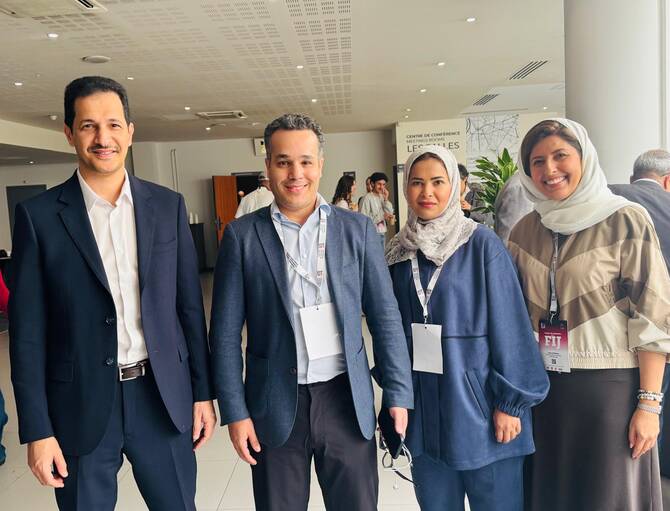
Saudi Arabia has won a first-ever seat on the executive committee of the International Federation of Journalists, the world’s largest journalists’ organization, after Adhwan Al-Ahmari, chairman of the Saudi Journalists Association, was elected at the federation’s International Press Congress in Paris.
Al-Ahmari said the result reflected the confidence of international professional unions in the Saudi Journalists Association, which was founded in 2003.
“This achievement represents the work of my colleagues on the board of directors and in the general secretariat,” he said.
“We have already established an international presence through our presidency of the Executive Office for West Asian Journalists and today we take that further,” he added, saying the association would continue working to expand Saudi Arabia’s presence on the world stage.
The result marks a milestone for the Kingdom’s presence in global media institutions at a time when it is playing a larger role in international bodies, including in the media and communications sphere.
Only 16 candidates secured seats on the committee, which was contested by representatives from more than 148 countries.
Saudi Arabia’s victory gives it a voice in shaping the direction of the federation over the next four years and strengthens its standing within international journalist circles.
Established in 1926, the IFJ is the world’s largest journalists’ organization, representing 600,000 media professionals from 187 trade unions and associations in more than 140 countries.
The executive committee helps steer the federation’s priorities and shape its response to issues affecting journalists globally, making Saudi Arabia’s first-ever presence on the body a notable development for the Kingdom’s media diplomacy.
The Saudi delegation to the congress was led by Al-Ahmari and included board members Lama Al-Shethry, Mai Al-Sharif and Hamed Al-Shehri.
source/content: arabnews.com (headline edited)
____________
The result marks a milestone for the Kingdom’s presence in global media institutions at a time when it is playing a larger role in international bodies, including in the media and communications sphere. (Supplied)
Landmark study bridges history and modern scholarship
Project highlights Kingdom’s preservation of Islamic heritage
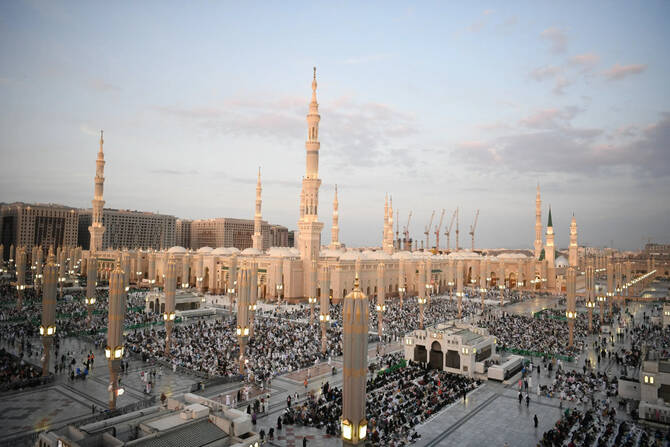
A new scholarly encyclopedia documenting the architectural evolution of the Prophet’s Mosque has emerged as a major reference work, charting the development of one of Islam’s most significant landmarks across centuries.
Published by the Al-Madinah al-Munawwarah Research and Studies Center, the project forms part of broader efforts to systematically record the mosque’s history and features through a rigorous academic framework enhanced by modern research tools, a review by the Saudi Press Agency (SPA) said.
The encyclopedia traces the mosque’s transformation from its foundation during the Prophetic era through successive expansions across Islamic history, culminating in large-scale Saudi-era developments that have expanded capacity while preserving its architectural and spiritual identity.
Beyond historical documentation, the work provides analytical insight into key structural elements — such as arcades, domes, and minarets — examining their functional and aesthetic evolution, alongside associated landmarks that underscore the mosque’s enduring religious and civilizational role.
The initiative reflects Saudi Arabia’s continued commitment to serving the Two Holy Mosques and safeguarding Islamic heritage through specialized knowledge projects, the review said.
By preserving and systematizing the architectural memory of the Prophet’s Mosque, the encyclopedia is expected to fill a critical gap in scholarly research, offering a valuable resource for academics, students, and those interested in the cultural and human dimensions embedded in the mosque’s design,
source/content: arabnews.com (headline edited)
_______________
General view of the Prophet’s Mosque in Madinah. (SPA file photo)
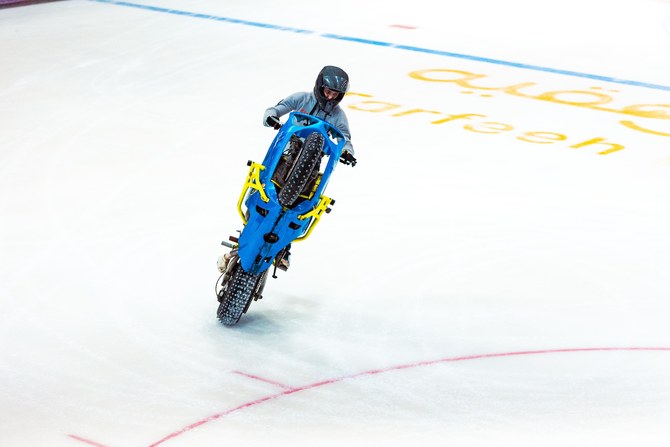
Riding on one wheel of his Kawasaki ZX-6R, he completed 14 circles in one minute.
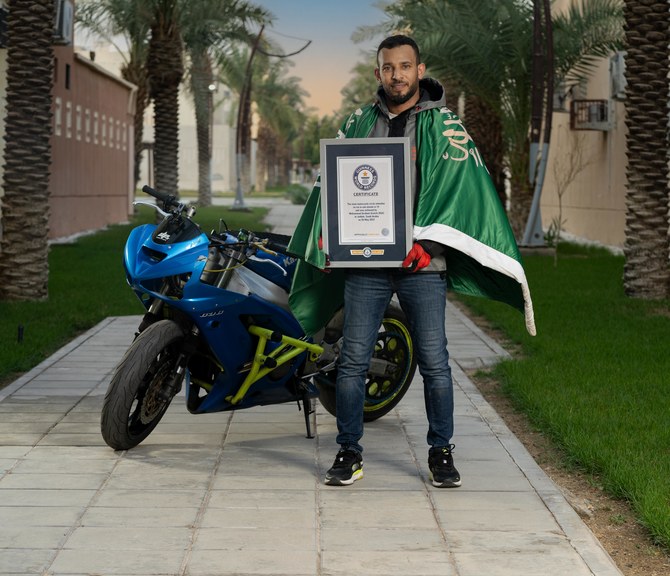
Saudi stunt rider Mohammed Ibrahim Scotch kept his cool to set a new world record for a motorcycle wheelie — on ice.
Riding on one wheel of his Kawasaki ZX-6R, he completed 14 circles in one minute, a feat that has earned him entry into the Guinness World Records 2023 edition.
Scotch, 39, told Arab News that he had been preparing for around two years for the record attempt, which took place at an ice hall in Jeddah.
He said: “I’m proud of achieving this new record because it carries the name of Saudi Arabia, my country. I didn’t break the record, but I achieved a new world record that no one had done before.
“In 2017, to deviate from the norm and at the same time to have fun, the idea stuck in my mind, and I tried it first in a skating rink in Makkah.
“(In 2022), after researching and communicating with officials (from Guinness World Records), they informed me that no one in the world had achieved this record, so I decided to do it.
“I began the journey of rebuilding the project from scratch after obtaining approval from Guinness World Records. I searched for a private ice rink to execute this experiment,” he added.
Scotch designed studded tires and worked out the variables for his motorbike.
“When I received the official email from Guinness World Records congratulating me as a new world record holder, I could not believe it or comprehend it.
“I read the email more than once, and I told my mother, my family, and all my friends who stood with me in obtaining this record, and their joy was unbelievable,” he said.
Scotch has been riding and doing stunts since the age of 16 and turned professional in 2013. He has participated in several international stunt competitions including in Bulgaria, Egypt, and the UAE.
At the beginning of last year, he became a certified trainer with the Saudi Automobile and Motorcycle Federation.
“I am glad that I could raise the name of Saudi Arabia to new levels with my latest achievement and my international appearances,” he added.
Scotch, whose achievements were recently acknowledged by the federation’s chairman, Prince Khalid bin Sultan Al-Abdullah Al-Faisal, aims to set more records.
source/content: arabnews.com (headline edited)
____________
Saudi stunt rider in Jeddah recently set new world record as he popped a wheelie on his motorcycle then drove in 14 circles on ice for one minute. (Supplied)
The Holy Qur’an Museum at the Hira Cultural District in Makkah is showcasing a monumental handwritten copy of the Holy Qur’an, recognized as the largest Qur’an of its kind in the world.
The manuscript measures 312 cm by 220 cm and comprises 700 pages, earning the museum recognition from Guinness World Records for displaying the world’s largest Qur’an, the Saudi Press Agency reported.
The manuscript is a magnified reproduction of a historic Qur’an dating back to the 16th century, the SPA stated.
The original copy measures 45 cm by 30 cm, with the chapters written primarily in Thuluth script, while Surah Al-Fatiha was penned in Naskh, reflecting the refined artistic choices and calligraphic diversity of the era.
The Qur’an is a unique example of Arabic calligraphy, gilding and bookbinding, showcasing Islamic art through intricate decorations, sun-shaped motifs on the opening folio, and elaborately designed frontispiece and title pages that reflect a high level of artistic mastery.
The manuscript was endowed as a waqf in 1883. Its original version is currently preserved at the King Abdulaziz Complex for Endowment Libraries, serving as a lasting testament to Muslims’ enduring reverence for the Qur’an and the richness of Islamic arts across the centuries.
Saudi Arabia won several Arab awards in medicine and nursing during the 63rd session of the Council of Arab Health Ministers, held recently in Tripoli, Libya, highlighting the Kingdom’s growing prominence in regional health excellence and the strength of its national health workforce.
The achievements reflect the rapid development of Saudi Arabia’s health sector and the high caliber of its medical and nursing professionals, who continue to contribute to innovation, enhanced health preparedness and the delivery of sustainable healthcare — in line with the objectives of the Health Sector Transformation Program under Saudi Vision 2030, said a statement issued on Thursday by the Saudi Ministry of Health.
As part of the Arab Doctors Award 2025 by the General Secretariat of the Arab League’s Social Affairs Sector, Dr. Ahmed bin Salem Bahammam, director of the Prince Naif Center for Health Research, received the award for excellence in scientific research and innovation.
Dr. Zuhair bin Yousef Al-Hlais, senior consultant in cardiac surgery at King Faisal Specialist Hospital, was honored with the award for excellence, leadership and professional medical impact.
For nursing, a Saudi team comprising Dr. Manal Saeed Banassr, Iman Mohammed Al-Shammari, Abdulrahman Abdullah Abu Khadaah, Jawharah Fahad Al-Harbi and Reem Mohammed Al-Humaidan won first place in the clinical practice category of the “Outstanding Work in Nursing and Midwifery” award for their project, the INS Model.
The innovative scheme focuses on strengthening surge capacity in intensive care units during disasters by enhancing nursing workforce readiness and increasing ICU capacity in times of crisis.
The model was developed during the COVID-19 pandemic.
In addition, Dr. Badriah Awad Al-Shehri, chief nursing executive at King Saud Medical City, jointly won the “Outstanding Work in Nursing and Midwifery” award with Egypt for the Nethathon Project, which aims to advance nursing education and training, enhance workforce competencies and improve the quality of health education outcomes.
The awards highlight Saudi Arabia’s leadership in medical innovation and professional excellence across the Arab region.
source/content: arabnews.com (headline edited)
______________
Saudi Arabia wins Arab awards in medicine and nursing at Arab Health Ministers’ Meet 2025. (Supplied)
501 vehicles drive through the dunes of scenic Tuwaren.
Hail entered the Guinness World Records at the weekend after producing the largest-ever off-road production car convoy.
The previous record, some 449 vehicles in Australia, was smashed with 501 vehicles driving through the dunes of the scenic Tuwaren area, 42 km northwest of Hail and a location surrounded by the Aja Mountains.
A large number of people from various regions of the Kingdom, Gulf and Arab countries gathered to navigate an unpaved desert trail of 7 km, showcasing their spirit of adventure and the diversity of the region’s terrain.
The event was open to both seasoned off-road drivers and newcomers looking for a unique winter entertainment. This made it suitable for individuals, groups of friends, and families.
The convoy was accompanied by a variety of cultural and entertainment activities that contributed to enhancing the experience for visitors and participants.
Prince Abdulaziz bin Saad bin Abdulaziz, the governor of Hail Province and the chairman of the board of the Development Authority, thanked the Saudi leadership for supporting the development of the Kingdom’s regions. He also praised Hail’s youngsters for taking part in breaking the world record.
Omar Abdullah Al-Abdul-Jabbar, the CEO of Hail Region Development Authority, told Arab News that Hail’s entry into the Guinness World Records was a national achievement.
He said: “Hail’s achievement of this Guinness world record for organizing the largest off-road rally further solidifies its position as a leading destination for desert adventures and activities, and strengthens its presence on the local and regional tourism map.”
The event was organized by the Saudi Tourism Authority and Hail Region Development Authority, with sponsorship from the King Salman bin Abdulaziz Royal Reserve Development Authority, and Culture House.
In addition, 14 government entities supported the event, including the Principality of Hail Region, and the Saudi Automobile and Motorcycle Federation.
source/content: arabnews.com (headline edited)
______________
501 vehicles took part in an off-road drive in Hail over the weekend, smashing the previous world record. (Supplied)
Pioneering scientist behind revolutionary weight-loss drugs, global scholars, innovators among winners.
The King Faisal Prize 2026 winners were announced at a ceremony in Riyadh on Wednesday night.
The event honored pioneering scientists, global scholars and innovators for their transformative contributions to medicine, science, Arabic language, Islamic studies and the service of Islam.
Prof. Svetlana Mojsov was named winner in the medicine section for her groundbreaking discoveries that are now reshaping how we treat obesity.
Prof. Carlos Kenig was announced as science laureate in the field of mathematics for helping to revolutionize understanding of nonlinear partial differential equations.
Mojsov, the Lulu Chow Wang and Robin Chemers Neustein research associate professor at The Rockefeller University in New York, pioneered research on glucagon-like peptide-1 (GLP-1) that has fundamentally transformed how obesity and diabetes are treated.
She discovered and characterized the biologically active form of GLP-1, a natural intestinal hormone that regulates blood sugar and appetite, and identified its receptors in the human pancreas, heart, and brain.
Through cutting-edge biochemistry and physiological studies, Mojsov demonstrated that GLP-1 powerfully stimulates insulin secretion while reducing hunger and managing glucose levels.
Her groundbreaking work enabled the development of an entirely new class of medications that mimic this natural hormone, sparking a paradigm shift in obesity treatment.
These therapies today provide life-changing benefits for hundreds of millions of people worldwide living with obesity and its complications — a global health crisis affecting 890 million adults and 160 million children and adolescents in 2022 alone, according to the World Health Organization.
Mojsov’s groundbreaking contributions have earned numerous prestigious honors, including Time magazine naming her one of the 100 Most Influential People in 2024.
Kenig was honored for his groundbreaking contributions to mathematical analysis. His work has transformed understanding of nonlinear partial differential equations — the mathematical equations describing how things change and move in the physical world — and provided researchers with a now-ubiquitous set of techniques. His insights have opened new research frontiers with applications spanning fluid mechanics, optical fibers, and medical imaging.
Kenig, the Louis Block distinguished service professor at the University of Chicago, is recognized for applying harmonic analysis techniques across different areas of partial differential equations.
His work on free boundary problems — determining unknown boundaries such as where ice meets melting water or how fluids flow through soil — has been particularly influential.
Kenig has spent three decades figuring out how complex waves behave over long periods of time, especially in tricky situations where they could either spread out peacefully or build up dangerously.
This matters for understanding everything, from ocean waves to light pulses in fiber optics and to how energy moves through different materials.
His work helps explain phenomena in quantum mechanics, optics, and ocean waves. By combining different mathematical techniques, he has solved longstanding problems that had puzzled mathematicians for decades.
In addition to medicine and science, the King Faisal Prize recognized the achievements of outstanding thinkers and scholars in the field of Arabic language and literature, Islamic studies, and exemplary leaders who have played a pivotal role in serving Islam, Muslims, and humanity at large.
Pierre Larcher, an emeritus professor of Arabic linguistics at Aix-Marseille University and emeritus researcher at the Institute for Studies and Research on the Arab and Muslim Worlds, won this year’s King Faisal Prize for Arabic Language and Literature on “Arabic literature in French.”
His novel presentation of Arabic literature to French readers has earned widespread acclaim from critics and specialists, while his rigorous scholarly approach to classical Arabic literature has made it accessible and appropriate for French culture.
His critical translation project of “Al-Mu’allaqat” and rigorous study of pre-Islamic poetry demonstrate exceptional scholarly depth.
For this year’s Islamic Studies Prize, Abdelhamid Hussein Mahmoud Hammouda, the professor of Islamic history and civilization at Fayoum University, and Mohamed Waheeb Hussein, the professor of archaeology and history of art at the Hashemite University, were announced as co-laureates.
Hammouda’s work encompasses the trade routes across the Islamic world — the Mashreq, Iraq and Persia, Arabian Peninsula, Greater Syria, Egypt, Sahara, Maghreb, and Al-Andalus. This expansive scope delivers coherent understanding of Islamic trade trajectories across history, serving as an authoritative reference for both specialized research and broader scholarship.
Hussein’s groundbreaking work uses archaeological surveys, GPS documentation, and analytical mapping to systematically correlate Qur’anic texts with geographical data. His research offers definitive scholarly interpretation, significantly advancing documentation of early Arabian Peninsula trade routes.
Sheikh Abdullatif Al-Fozan and Dr. Mohammad Abou Moussa were announced as co-laureates in the Service to Islam Prize.
Laureates’ names were announced by Prince Turki Al-Faisal and the King Faisal Prize’s Secretary-General Dr. Abdulaziz Alsebail.
Selection committees included experts, specialists, and scholars who met in Riyadh and examined the nominated works. They selected the laureates in an objective and transparent manner, in accordance with the rules and regulations.
The KFP was established in 1977, and was awarded for the first time in 1979 in three categories: service to Islam, Islamic studies, and Arabic language and literature. Two additional categories were introduced in 1981: medicine and science. The first medicine prize was awarded in 1982, and in science two years later.
Since 1979 the KFP has given awards to more than 300 laureates who have made distinguished contributions to different sciences and causes.
Each prize laureate is endowed with $200,000, a 24-carat gold medal weighing 200 grams, and a certificate inscribed with the laureate’s name and a summary of the work that qualified them for the prize.
source/content: arabnews.com (headlines edited)
_____________
King Faisal Prize laureates’ names for 2026 were announced in Riyadh on Wednesday night by Prince Turki Alfaisal and the Prize’s Secretary General Dr. Abdulaziz Alsebail. (Supplied)