Arabs & Arabian Records Aggregator. Chronicler. Milestones of the 25 Countries of the Arabic Speaking World (official / co-official). AGCC. MENA. Global. Ist's to Top 10's. Records. Read & Enjoy./ www.arabianrecords.org
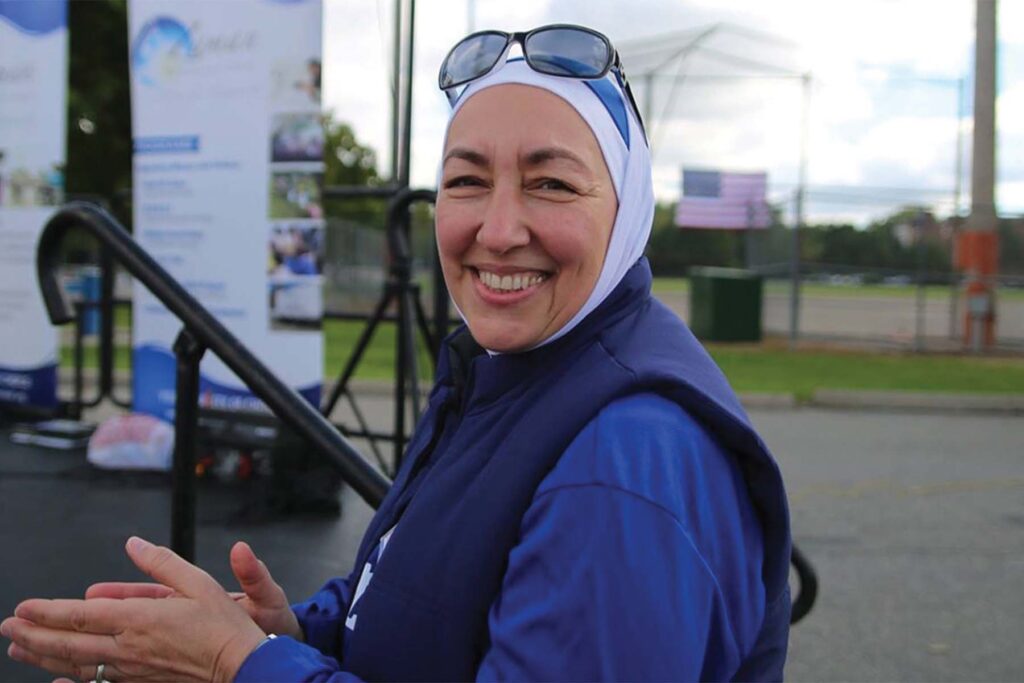
Just recently CNN revealed the Top 10 CNN Heroes of 2019 – these are men and women that are changing the world by helping families affected by the tragedy, cleaning up the environment, protecting neglected animals, and so much more. They were nominated by CNN to receive a ten thousand dollar cash prize with the Hero of the Year to receive one hundred thousand dollars. One of the nominees is Najah Bazzy, an Arab-American who changed the lives of thousands of women and children in the Detroit Metropolitan Area.
Background
Najah learned to navigate through attitudes and beliefs that were conflicting very early in life. Born in a neighborhood that was predominantly Arab and Muslim – Dearborn, Michigan – she refers to herself as ‘a new thing’ – a by-product of a merger between being Arab, American, and Muslim all at once. She believes these are not mutually exclusive identities, even in a post 9/11 America.
They are, which is now having the largest concentration of Arab Americans in the United States, back then was a hub of immigrants. In an interview, Najah says: “It was the people from Poland, Italy, Macedonia, Mexico, and others that we learned about their traditions and their different faiths. That’s why I love diversity so much. Neighbors sat on the front porch and they shared food while their children would go from house to house visit other children and play. The amount of care that people had for each other was tremendous, and this is where I learned to love my neighbor.”
However, she also felt a different attitude towards Muslims after the September 11 attacks. “I’ve had death threats. I’ve had to have protection placed on me. It’s an uncomfortable feeling,” she shares. “To know that you can put out love, and other people judge that love saddens me. I want to make every breath count, so I can’t fear those who choose hate. I can only control the love I have in my heart and choose that love.”
Cause
Najah is the founder of Zaman International, a non-profit organization, which has the mission to facilitate change and advance the lives of marginalized women and children of different backgrounds in the Detroit area; she has been doing it by enabling them to meet essential needs common to all humankind. The group’s 40,000-square-foot warehouse offers for free aisles of food, rows of clothes, and furniture to those in need.
The history of the organization is truly inspirational. In 1996, when a three-month-old infant was with a terminal diagnosis, Najah Bazzy, a Transcultural Clinical Nurse Specialist, provided clinical, spiritual and cultural support to his parents who were new arrivals to the United States. She helped them face the reality that no treatment would save their child.
After visiting the family at their home, Najah was shocked by their living conditions. Instead of a refrigerator, the family used a picnic cooler to house their limited food supply and baby formula. Instead of a stove, a portable propane stove was used for cooking. The infant’s bed was a laundry basket piled high with towels, and the infant only had the hospital’s receiving blanket to keep him warm. When the infant passed away and the family was unable to pay for a funeral, Najah raised funds from the community to provide him with a proper burial. This was the beginning of Plots for Tots, Zaman’s signature program which provides dignified burial support for families that have lost a fetus or infant.
Witnessing this family’s sorrowful experience and shocking living conditions, Najah was inspired and determined to harness the community’s efforts to help struggling families. She asked community members to donate furniture, food, clothing, and household goods. The support and need for such efforts quickly increased, encouraging Zaman to formalize as an organization committed to using community support to address community needs.
Impact
In 2018, Zaman distributed 170,400 pounds of food, collected 886,950 pounds of clothing, provided over 7,750 hours of job skills and literacy instruction to more than 90 women, and gave 268 winter coats and 895 school supply-filled backpacks to local children. Meanwhile, it partnered with 444 community partners on a range of initiatives and funded overseas relief projects, bringing safe water and humanitarian relief to more than 431,900 people.
Now that Zaman’s mission has been shared with the world, Bazzy is encouraging interested readers to help by donating through the CNN Heroes program, for which a CrowdRise donation page has been set up.
“What I’m most proud of this year is that Zaman is 94 cents on the dollar (which has been audited financially), she said, and it goes to programs,” she said about the percentage of donation dollars used to help fund its operations to serve those in need.
“We really encourage people to go to the website and to donate any amount that they can, anything helps.”
Inspired by his childhood in Amman, Malek AlQadi’s latest project, ‘The Folly Mojave’, injects desert minimalism with sustainable luxury.
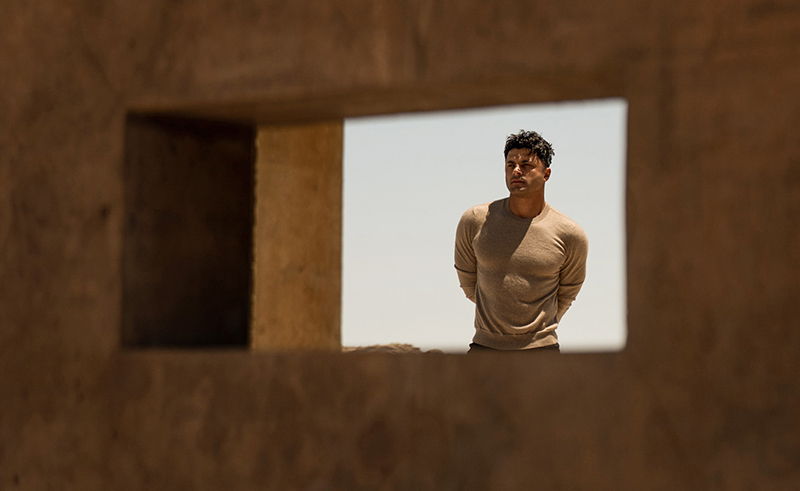
Born in Amman, Jordan, raised in Florida, and based in Los Angeles, Jordanian-American architect Malek AlQadi has dedicated his life to his follies. In architecture, a folly is a building that serves no purpose aside from aesthetics. But AlQadi’s follies? They are worlds unto themselves; portals to places only visited in daydreams and memories.
His first folly came about as part of his thesis project, during which he designed and executed a humble, fully self-sustaining stay in California’s Joshua Tree National Park. Though his design language has evolved over the years, his core principles remain the same: sustainability, minimalism, and a reconnection with nature, all rooted in a childhood spent marvelling at Jordan’s deserts.
In Jordan, ancient structures like Petra dominated his early experiences. In Florida, his exposure to contrasting environments shaped his understanding of space, structure and purpose. AlQadi’s obsession with follies finds its roots in his desire to push the boundaries of design. He’s not interested in the grandiosity of skyscrapers or the utility of commercial buildings. Instead, his work delves into the ethereal, focusing on creating spaces that encourage introspection, exploration and escape.
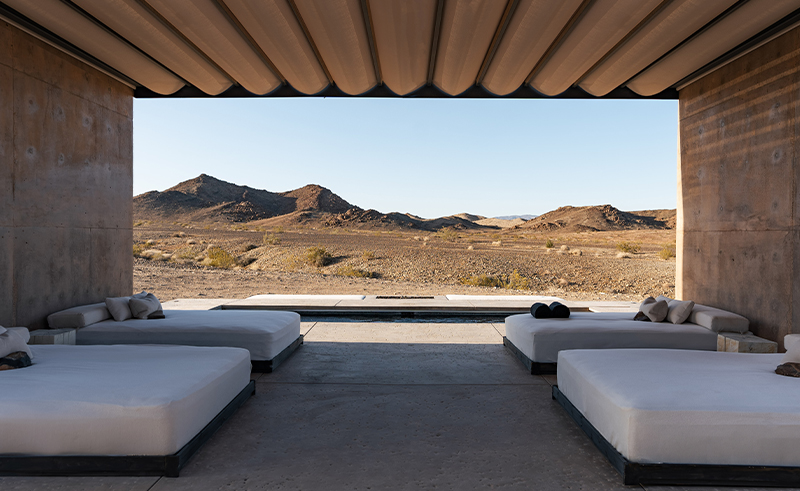
The Folly Mojave, a series of standalone suites dotted across 200 acres at the intersection of The Mojave National Preserve and Joshua Tree National Park, is AlQadi’s most recent and most ambitious project to date. The project is a retreat that blends into the arid environment while providing visitors with an isolated, immersive experience. “A lot of it was navigating childhood memories and connecting them with real-life scenarios and architectural elements, tying vastly different places in the world together, yet still grounded in similar principles and environments.” AlQadi tells SceneHome.
For AlQadi, the desert isn’t just a backdrop. It’s a critical component of the project, shaping the way the Folly Mojave interacts with the land. The retreat’s location in such an extreme environment is intentional; it encourages guests to detach from their everyday lives and engage more fully with their surroundings.
At first glance, the Folly Mojave may appear simple, but its simplicity belies the thoughtfulness of its design. The structure is fully off-grid, powered by solar energy, and equipped with self-sustaining water systems. The retreat is designed for minimal impact on the surrounding environment. Inside, the space is surprisingly open, with large windows that frame the vast desert views.
“A big part of the experience is having less light pollution and being able to see the stars at night. All of that fed into the idea of disconnection,” AlQadi explains. “It’s about having the luxury of time and space to relax and take in nature, which, at its core, is the ultimate healer.”
Malek AlQadi emphasises the “site-responsive” nature of his architectural philosophy. Unlike architects who adhere to a singular aesthetic, AlQadi’s approach is shaped by the environment he works within, adapting to the unique qualities of each location. “No two projects are ever the same,” he explains, yet there’s always a recognisable touch that connects his work. Symmetry, the use of natural materials, and a minimalist design language are core to his style, while he doesn’t shy away from incorporating brutalist elements when appropriate.
For AlQadi, creating spaces that resonate beyond the present – lasting decades or even centuries – is a key part of his architectural philosophy. “Guests often describe the experience as surreal, unique and unplugged,” AlQadi reflects. “Many mention feeling a deep connection while staying there. It’s rewarding to know that people from all walks of life have been able to share in that experience.”
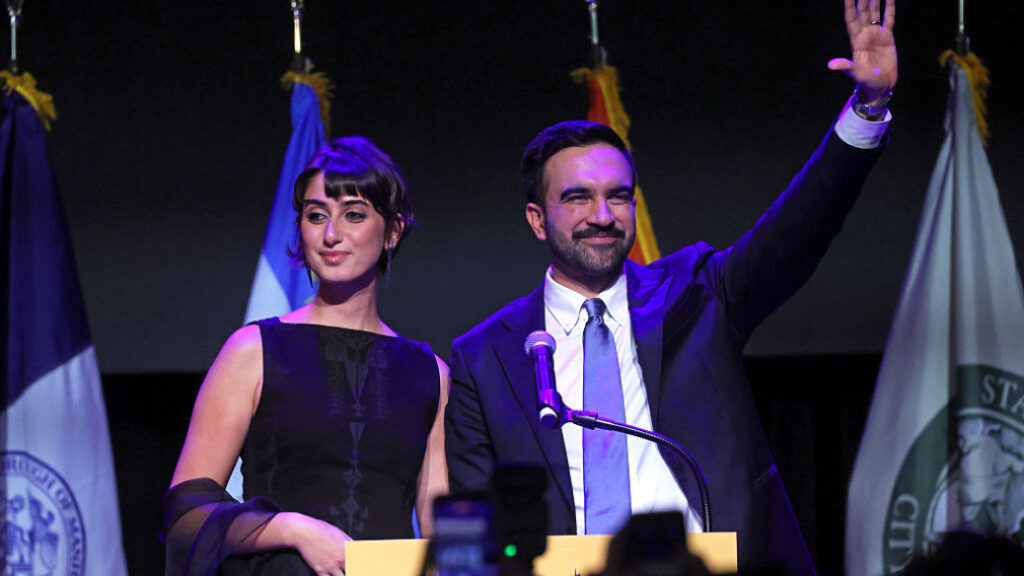
While the world is hailing New York mayor-elect Zohran Mamdani for his win, his artist wife, Rama Duwaji is now also in the spotlight.
With Zohran Mamdani making history on 4 November after being elected New York’s first Indian-American and Muslim mayor, attention has turned to his wife, First Lady Rama Duwaji.
Duwaji was born in Houston, Texas, in the US but her parents are originally from Damascus, Syria, and she spent most of her childhood in Dubai after relocating there. She returned to the US in 2016.
Dubbed a “modern-day Princess Diana”, the 28-year-old works as an illustrator and animator in Brooklyn, New York, graduating from Virginia Commonwealth University in 2019 with a Bachelor of Arts in Communications, then moving to New York City in 2021 to pursue a career in art.
Her work has been featured by Spotify, The New Yorker, The Washington Post, the BBC, Apple, and the Tate Modern in London.
After meeting on dating app Hinge in 2021, while the now-mayor was a member of the state assembly, Duwaji and Mamdani tied the knot in a private Muslim religious ceremony in 2024, followed by a civil ceremony in New York City Hall the following year.
While the illustrator has kept a low profile, reportedly turning down interviews and mostly sharing her work across social media, she paid tribute to Mamdani on Instagram after winning the primary in July.
Mamdani has previously praised his wife as “an incredible artist who deserves to be known on her own terms”.
Pro-Palestine art
Along with Arabic culture and feminist themes, Duwaji frequently uses her art to speak out about current events and politics, including Israel’s war on Gaza and immigration issues, such as the heavy-handed activities of ICE, which has been conducting mass deportation raids in the US since Trump’s appointment.
In May, Duwaji created an animation of a young Palestinian girl holding a large empty pot with the words “not a hunger crisis”, followed by a transition into drawings of several people also holding empty vessels with texts reading “it is deliberate starvation”.
“As I was making this, Israel has been bombing Gaza nonstop with consecutive airstrikes. Keep your eyes on Gaza and support”, the artist said in the caption.
Duwaji had also created an illustration in support of pro-Palestinian activist Mahmoud Khalil, who was detained by ICE over his activism. She called it “an attack on freedom of speech, and sets a scary f**king precedent for anyone who speaks up for what’s right”.
Following her husband’s win, the artist wore a black top made by Palestinian-Jordanian designer Zeid Hijazi on stage as he delivered his winning speech. Hijazi’s designs fuse ancient folklore with Arab futurism.
MAGA supporters were also quick to target Duwaji after she publicly mourned the death of Palestinian influencer Saleh al-Jafarawi, who was accused of “celebrating” the 7 October attacks.
Mandani has been quick to defend his wife against “right-wing trolls”, who are “trying to make this race – which should be about [the people] – about her”.
Attacks by right-wingers
Like her partner, Duwaji has also been subjected to attacks from American right-wing personalities and the media, particularly the New York Post, which described the illustrator as “aloof”, claiming she “quietly steered” her husband’s campaign from behind the scenes.
MAGA supporters were also quick to target the artist after publicly mourning the death of Palestinian influencer Saleh al-Jafarawi, who was accused of “celebrating” the 7 October attacks.
Mandani has been quick to defend his wife against “right-wing trolls”, who are “trying to make this race – which should be about [the people] – about her”.
Amer Ghalib and Bill Bazzi were among a number of Muslim leaders from the state who publicly endorsed Trump for the presidency last year
‘It’s a great honor to have the trust of the president,’ Ghalib tells Arab News. ‘I will utilize my skills … to strengthen the relationship between’ the US and Kuwait
_________________
FAST FACTS
• Amer Ghalib, who became mayor of Hamtramck in November 2021, is the first Arab American and Muslim to hold the office in the city.
• Bill Bazzi, who was born in Lebanon, was appointed mayor of Dearborn Heights in January 2021 following the death of the incumbent and won the election for the office in November that year.
___________
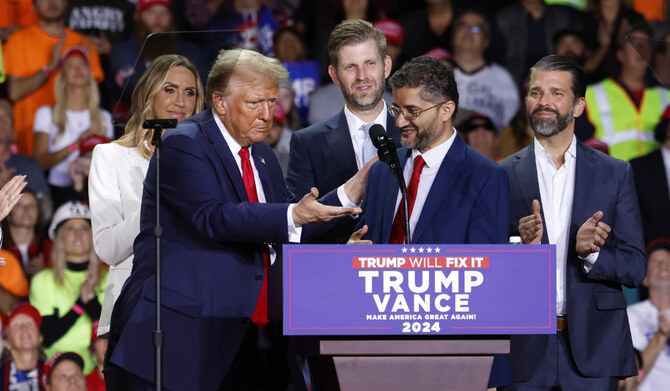
Amer Ghalib, the mayor of Hamtramck, Michigan, said on Friday he was “honored” to be nominated by President Donald Trump for the post of US ambassador to Kuwait.
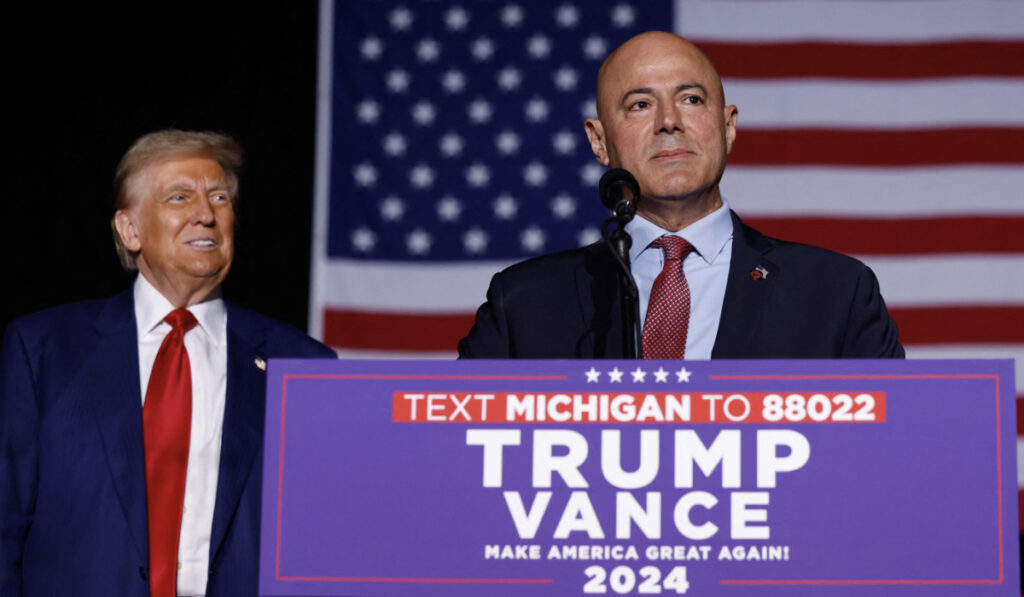
Meanwhile, Bill Bazzi, the mayor of Dearborn Heights, also in Michigan, was nominated by Trump this week to serve as the US envoy to Tunisia. Arab American Muslims Ghalib and Bazzi were among the Michigan officials who publicly endorsed Trump for the presidency last year over Joe Biden and Kamala Harris.
“It’s a great honor to have the trust of the president placed in me to represent our great county and serve as the next ambassador to the State of Kuwait,” Ghalib told Arab News on Friday.
Bazzi did not respond to Arab News when asked to comment on his nomination, but in a message posted on Facebook, he wrote: “I am honored and appreciate President Donald Trump’s appointment to serve as US Ambassador to Tunisia.
“Among the distinct countries I have visited over the years, I hold a great affinity to Tunisia and its honorable parliament, elected officials, educators, and other industry leaders — along with the people I met while touring orphanages, women’s career institutions, schools, and a multitude of companies which distinguish the country’s rising presence in the region.
“With my visits overseas, the cohort’s visits to the US, and the relations we have established over the years, I am excited to return and honorably represent our Country in Tunisia as its US Ambassador. My purpose is to continue serving in capacities which make an impact, promote peace and diplomatic partnerships, which benefit our Country and enhance global relations.”
Trump wrote on social media platform X: “Bazzi is a decorated US Marine, who honorably served our Country for 21 years, collaborating with US Embassy Ambassadors, Diplomats, and Leaders throughout the world.”
Bazzi, who was born in Bint Jbeil, Lebanon, was appointed mayor of Dearborn Heights in January 2021 following the death of the incumbent and won the election for the office in November that year. He had previously served as the temporary chairperson of Dearborn Heights City Council since 2017.
Bishara Bahbah, the founder of Arab Americans for Trump, an organization that worked in several states to rally Arab and Muslim American elected officials and leaders in support of Trump’s presidential campaign, praised the appointments of Ghalib and Bazzi as “a demonstration of the president’s commitment to the Arab and Muslim community.”
He told Arab News: “Arab Americans for Peace, formerly Arab Americans for Trump, is delighted with President Trump’s nomination of two distinguished Arab American mayors from Michigan as the new ambassadors to Kuwait and Tunisia.
“Both men risked their political careers, having been elected as Democrats to their posts. Mayor Bazzi and Mayor Ghalib are outstanding individuals who wanted to see the end of the wars in both Gaza and Lebanon.”
The nominations reflect the growing influence of Arab Americans in US politics, Bahbah said, and are “a testament to the newfound power of Arab Americans in this past US presidential election and future presidential elections.
“We are confident that both mayors will be effective ambassadors representing the best interests of the United States. Their Arab backgrounds will undoubtedly help foster better US-Kuwaiti and US-Tunisian diplomatic relations.”
The nominations must now be considered and approved by a majority vote in the US Senate.
source/content: arabnews.com (headline edited)
____________
US President Donald Trump introduces Democratic Muslim mayor of Hamtramck Amer Ghalib during his last campaign rally at Van Andel Arena in Grand Rapids, Michigan on November 5, 2024. (AFP file photo)
Dearborn Heights, Michigan, Mayor Bill Bazzi†speaks as U.S. President Donald Trump listens during a campaign rally at Suburban Collection Showplace on October 26, 2024 in Novi, Michigan. (AFP file photo)
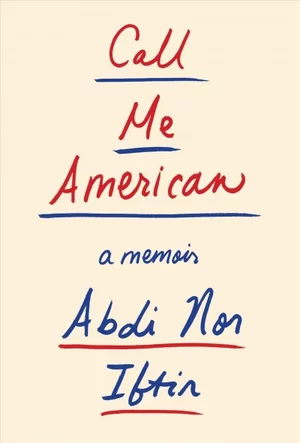
What does it take to become an American? In 2015, This American Life told the story of a Somali refugee who was finally issued a visa to come and live in the United States. “This big smile was on my face. I’ve never had such a big smile,” Abdi Nor Iftin said at the time.
Iftin’s long road to the US began when he was only a child in Mogadishu, watching American movies and teaching himself English, while brutality and war raged around him. In his new memoir, Call Me American, he tells his story from the beginning: with his nomadic parents and their now-unimaginably peaceful, pastoral life.
“She had no idea that the country she was living in was called Somalia,” Iftin says of his mother. “She had always told me, ‘You know, Abdi, there’s only two days: The day that you’re born and the day that you die. Everything else is just grazing and hanging out with the animals.'” Life was so easy, he says, before drought and famine wiped everything out.
Interview Highlights
On his first memories of Somalia’s long-running civil war
I was six years old when the civil war started, militias started pouring into the city, and death and killings and torture, and I just cried. The smell of Mogadishu, it was just the smell of gunpowder. And that had been sticking with me forever … I think this is the most touching memory that I can remember, to have our youngest sister die, and we said, “Good. That is so easy for her,” and then I was jealous. I was jealous because that was the time when our feet were swollen, our bellies were empty. It was a feeling that you could die any time … and I looked at my other sister, and she was just eating sand. And I think that’s the stories that people don’t hear about.
On his encounters with Marines in Mogadishu
I still say they stole my heart, because it was the very first time that I saw people with guns, and the guns were pointed up in the air, not in my face. Then they were coming and giving us sweets — I wanted these people to stick around, I wanted these people to be part of my life.
On being targeted by Islamists because of his nickname, “Abdi the American”
Unfortunately, I still believe that Islamists were born out of the American involvement somewhere in the Middle East, and the phrases that they had used to attract young men of my age was just “America.” They said, “They are the enemies of Islam” … surprisingly, I was out on the streets, defending President Bush, I don’t even know why I did that. But I was defending him, and blaming Osama bin Laden for all the problems. But I thought, to me it was just expressing myself, but then it got me into trouble, and I received a phone call saying, “You got to stop and drop that nickname, or we’re going to kill you.”
On whether Americans know how hard it is to get a visa to come here
I don’t think they do! You know, Americans take so many things for granted. For example, I came to the U.S. through the diversity immigrant visa lottery, which [President Trump] would like to cancel. But if it was not the diversity lottery, I would have never come to America, never. I had been an American since I saw those Marines, and my nickname is going to be my nationality, very soon … When I wake up in the morning, I say, oh, I’m so lucky — I have arrived here before America had turned its back against the rest of the world. If this had happened when I was hiding myself from Islamic terrorists, just trying to come to America and become an American and all that, it would be a disappointment, it would be a betrayal by the United States. Because the way I understand is that America is open to the rest of the world. And I am here to make America great. I did not come here to take anything. I came here to contribute, and to offer and to give.
“The Return” is a meditation on human condition, an exploration of the bonds of family.
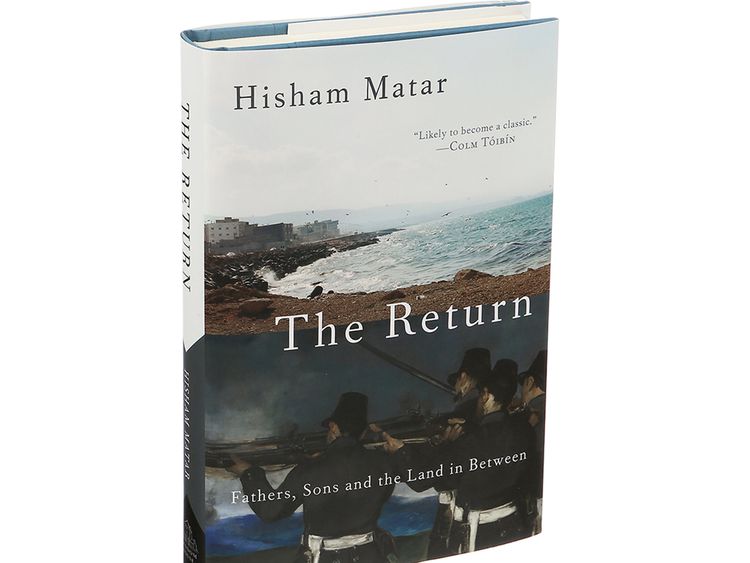
In his poignant and deeply affecting memoir, “The Return,” Hisham Matar invites readers on a journey into the heart of his native Libya, a journey marked by love, loss, and the relentless pursuit of truth.
As the acclaimed author of “In the Country of Men,” Matar brings his exquisite storytelling prowess to bear on the exploration of his own family’s harrowing ordeal amid the turbulent political landscape of their homeland.
The narrative begins with a pivotal moment in Matar’s life, when at the tender age of nineteen, his world was shattered by the abduction of his father, a courageous man. The elder Matar’s disappearance cast a long shadow over the family, leaving them grappling with uncertainty and anguish.
Yet, amid the darkness, Matar clung to a flicker of hope, a stubborn belief that his father may yet be found. It is this unwavering hope that propels him forward, driving him to embark on a decades-long quest for answers.
Against the backdrop of upheaval and societal transformation, Matar chronicles his return to Libya, a homeland he once fled as a child. With his mother and wife by his side, he confronts the ghosts of his past and navigates the complexities of a country in flux.
Through evocative prose and piercing insight, Matar captures the essence of a nation on the cusp of profound change, grappling with the weight of its history and the promise of its future.
“The Return” transcends the confines of a mere memoir; it is a meditation on the human condition, an exploration of the enduring bonds of family and the resilience of the human spirit.
Nature of love and loss
Matar’s storytelling takes the readers to the heart of Libya, immersing them in its sights, sounds, and emotions. With each turn of the page, we are drawn deeper into the labyrinth of Matar’s inner world, as he grapples with questions of identity, belonging, and the nature of love and loss.
At its core, “The Return” is a testament to the power of storytelling to illuminate the darkest corners of our collective experience, offering solace, catharsis, and ultimately, redemption.
Matar paints a poignant portrait of the human spirit’s capacity to endure and find solace in the face of uncertainty. Beyond mere memoir, “The Return” stands as a testament to the strength of hope, offering inspiration to all who confront life’s tribulations.
source/content: gulfnews.com /ahmad nazir (headline edited)
Arab American filmmaker Ruby Malek is shining a spotlight on Saudi talent in the 10-episode docuseries “Herstory” which follows the journeys of Saudi’s modern-day female music stars.
“We were just fascinated by the amount of talent because a lot of these artists are self-taught. And, you know, there were no music schools that they went to. There wasn’t like a piano teacher that would teach these women,” said Malek to Arab News.
“A lot of these artists actually didn’t show their identity, didn’t show their faces, and weren’t really out there… We’re still talking about 2020 now, so it wasn’t like now in 2023.”
Chronicling these artists’ struggles, triumphs and their place in the cultural history of the Kingdom, the series blends the passion for music-infused storytelling Ruby honed making music videos and her skills as a documentarian.
“I’m the generation that grew up watching MTV, VH1, so I was very into the various reality shows, and that’s what I kind of fell into. I fell into creating reality shows and formats, and so went from music videos to reality shows, documentaries. And then one thing led to another,” said Malek.
Motivated by the positive changes of Saudi Vision 2030, Malek sought to showcase a side of Saudi Arabia that she had not seen in the West. With the series having opened doors for the creator, she’s excited to continue working in the Kingdom.
“I actually have been back to Saudi. I shot a show for Vice, and yes, I would definitely (work there again). I mean, as a producer, there’s so much potential and there’s so many stories to be told that I think I will be going there more often and very soon,” she said.
source/content: arabnews.com (headline edited)
__________
Arab American filmmaker Ruby Malek is shining a spotlight on Saudi talent in the 10-episode docuseries “Herstory” which follows the journeys of Saudi’s modern-day female music stars.
Achieving success is no easy feat especially if you are working from the ground up. With passion and skill, a lot of people achieve self-made success. Today we are celebrating one such individual, Sudanese-American physician Iman Abuzeid who is the co-founder and CEO of a digital nurse hiring platform. She just nabbed a spot on Forbes’ ninth annual list of America’s Richest Self-Made Women and for good reason, with an impressive net worth of 350 million US dollars.
Being only one of two Arab women on the Forbes list, Abuzeid’s ranking is placing the Arab identity and voice at the forefront. Beyond that, the 38-year-old doctor is the only self-made millionaire on the list who earns money through the field of medicine on Forbes’ list of America’s Richest Self-Made Women. She achieved her impressive ranking almost a year after her nurse-hiring start-up called Incredible Health was able to raise 80 million US dollars and that helped hike her company’s valuation to 1.65 billion US dollars.
Along with Abuzeid, many other prominent self-made women made it to the Forbes list including TV creator Shonda Rhimes and Insitro founder and CEO Daphne Koller. Also for the sixth consecutive year, the top spot went to building supply distributor Diane Hendricks. With all that being said, knowing the incredible work each of these women achieved acts as a beacon of inspiration for younger girls to follow in their footsteps.
Egyptian-American founder of Affectiva is on a mission to revolutionise the way we connect with our digital devices, and each other, by building in emotional intelligence.
The earliest memory that Rana El Kaliouby can conjure is of standing on a tiny blue plastic chair in a romper suit confidently declaring whatever was on her toddler mind at the time.
She is about three years old, revelling in her father’s attention as he dispenses tips – “look at the audience, enunciate your words” – and records the ramblings for posterity with the first commercially available home video camera.
These regular living room sessions led to El Kaliouby going on to give many accomplished public-speaking performances around the world as an artificial intelligence scientist and entrepreneur, most recently this month at the CogX Festival Deep Tech Summit in London.
Her big message after decades working in technology is that the final frontier lies at the point where AI can be immersed in emotional intelligence , or EI, to revolutionise the human-to-computer experience.
But it’s obvious that the first seeds of that life-fulfilling mission were sown more than 40 years ago in her childhood home in Kuwait where she was first encouraged to get to grips with ideas and machines.
“Our family is really big on education, the thing my parents invested in me and my sisters,” El Kaliouby, 45, tells The National.
“And because they were both in tech, we were always exposed to the latest and greatest gadgets. I was a big Atari game player,” she adds, laughing.
El Kaliouby looks back fondly on those clunky old VHS cassettes and hours the family spent playing Pac-Man as examples of the positive way in which electronic devices can bring loved ones together.
Less happy interactions with latter-day technology, however, brought about the realisation that something was missing – all the rich communication signals provided by non-verbal cues were being lost.
An enterprising mission
Her focus ever since has been on developing artificial intelligence that recognises facial expressions so that people can have better connections with their laptops, and, crucially, with each other.
Born in Egypt after her tech guru father, Ayman, met his future wife, Randa Sabry, on a university campus, it seems almost inevitable that El Kaliouby grew up to be a proud geek pursuing a career in computer science.
“It’s a cute story,” she says. “My dad was teaching COBOL programming, this obsolete language that nobody uses any more but was the programming language in the 70s.
“My mum, who was a business major, decided to explore this thing called computer science, and he was kind of interested in going out with her. She said, ‘I don’t do that. No dating allowed.’ And he was like: ‘Ok, then I’ll propose.’”
Soon after, the newlyweds moved to Kuwait, and her mother became one of the first female computer programmers in the Middle East, until having to flee when Saddam Hussein invaded.
Aiming for the stars
Next stop was Abu Dhabi, where El Kaliouby’s Muslim-Arab upbringing was conventional in many ways, bounded by “lots and lots” of rules that included not making any boy friends while at school.
“I always imagined walking around with a gold star on my forehead. I was a very nice, rule-abiding daughter. I stuck to the strict curfews. I never dated through high school or college and I think, by and large, I was always an A student.
“But, at the same time, it was very empowering. I have two younger sisters and the message was always: ‘You can do anything you want in the world.’”
She continued to meet these expectations into her early 20s, earning undergraduate and master’s degrees in Computer Science at the American University in Cairo, and marrying the founder of a start-up, Wael Amin.
Within a year, though, El Kaliouby was undertaking a PhD 5,000km away at Cambridge University despite both sets of parents saying: “Wait a second, you’re married now and you can’t leave.”
Amin, she says, deserves the credit for supporting her daring dream and agreeing to a long-distance relationship.
“It was really unheard of. I did break rules more as an adult as I explored my passions and my quest for being a researcher and an entrepreneur.
“That’s how I think I pushed the boundaries and definitely made my parents uncomfortable.”
And then? “I like the wording that my life went off the rails. I think that kind of encapsulates it.
“Cambridge opened my horizons. It’s like I discovered the world and it was hard to unlearn that.”
The enthusiasm for her life’s work comes across even through the medium of our Zoom interview, but it’s also clear that this was not an easy time.
El Kaliouby arrived in England a few days after the September 11, 2001 attack in America, a young Arab woman then wearing a hijab.
“I was visibly Muslim. My parents were very concerned about my safety.”
The perpetual smile she adopted by way of a peace offering was also something of a mask, hiding the loneliness and separation from those she loved.
Back then, the technological means for staying in contact across the distance was largely restricted to the kind of messaging that proved a barrier to expressing true feelings, making El Kaliouby all the more determined to humanise technology.
“My PhD was centred around building a machine with emotional artificial intelligence, and I recognised at the time that a lot of the ways I was communicating with my family back home, and especially my husband, was through chat.
“We didn’t have video communication and it was certainly very expensive to make phone calls so we would use texting.
“I often felt I could hide my emotions behind the machine. There were many days where I would be homesick or even in tears, but I’d never communicate that. The best I could do was send a sad face emoji.”
The personal hardships became a driving force for her work. In a career paved with “what if” moments, El Kaliouby began to ask: “What if we could teach technology to understand us in the same way that we understand each other?”
“It’s not even in the choice of words we use. It’s our vocal intonations, our facial expressions, our body posture – and all of that was just getting lost via digitally mediated communications.”
Life was about to take another decisive twist as she received an email that the scientist, inventor and entrepreneur Professor Rosalind Picard was coming to give a talk on campus.
El Kaliouby had long been an admirer of this trailblazing woman in an almost overwhelmingly male-led field, whose book on designing computers to recognise human emotions she read while still in Cairo.
Life-changing encounter
“I often say this is the moment that changed the trajectory of my life,” she says of Picard’s request to meet some of the students.
So impressed was Picard by this intense young woman that she offered El Kaliouby a post-doctorate place on the Affective Computing Research Group at the Massachusetts Institute of Technology Media Lab before their first 20-minute conversation had ended.
“I remember thinking, ‘But I need to go back to Egypt. I have this husband waiting for me.’ And she basically said, ‘Just commute from Cairo. Show up whenever you want to.’’’
By then, El Kaliouby had a daughter, Jana, born in the UK, and a son, Adam, arrived in that other Cambridge in the US, but the constant round trips were becoming unsustainable.
“I was just doing that crazy back and forth. I would say it was OK until it went insanely chaotic when I started the company.”
The company was Affectiva, founded with Picard in 2009 with the goal of creating a commercial applications of emotion-sensing AI.
Growth was fast and it was an exciting time but there was another, darker side. “I was travelling so much, there was very little presence in anything I did,” El Kaliouby says.
Big lesson learnt
“I feel like I was out of balance. I didn’t make any time to sleep well. I would wake up at three in the morning almost every day and fire all these emails to my team. And so these poor people would wake up at six or seven in the morning with a whole slew of notes from me.
“I would go on vacation with my husband and my two young kids, and I’d just be on call all the time. There were zero boundaries, zero balance, and that was a big lesson learnt. There’s always time for self-care. There should always be time to spend with family and loved ones and friends. And, I didn’t do that, you know?”
By 2016, she was a divorced mother of two young children living full-time in America, and decided to bare that vulnerability in her role as chief executive of Affectiva.
Staff could see on El Kaliouby’s calendar that 3.30pm was demarcated to collect her son from school, and she explained to them that a Zumba class each Friday ensured a happier, healthier leader.
“I think it made for a much more authentic environment,” she says.
The family now lives in what El Kaliouby describes as a charming New England home filled with distinctive Middle Eastern touches and often by the aroma of molokhia soup made to her mother’s recipe.
Love for Egypt
“It’s very modern but with a lot of Egyptian things, Arab and Islamic inscriptions. I think of myself as Egyptian American, and very Egyptian in a lot of ways. I love Egypt. A lot of qualities – the Arab warmth, generosity and even intimacy – that’s very much who I am and I would say it’s the same for my kids.
“But I also have embraced what people would call American values. I’m very ambitious, very driven, very globally minded.”
That ambition and drive has taken her far. Affectiva is employed by brands in about 90 countries for market research, but also helps children with developmental difficulties, such as autism , to better interact with those around them.
More recently, the company has developed technology to make driving safer by enabling cars to detect if a motorist is becoming drowsy or distracted.
It was acquired in 2021 by the Swedish AI giant SmartEye for what was said to be about $73 million, with El Kaliouby becoming deputy chief executive.
She has long predicted that the day will come when all devices have an emotion chip and we won’t remember what it was like before screens could comprehend the meaning of us frowning at them.
“When we first started doing this work, we always said this will become ubiquitous and ingrained in every technology. Now, I think it’s more true than ever because AI is becoming a lot more conversational and perceptual.
“You can imagine that the final frontier is this emotional and social intelligence. Initially, my work was very much around human-to-computer interaction, making machines more intelligent, and how they communicate with humans.
“Now it’s back to the human connection. How are AI assistants and AI technologies going to make us better humans, especially better at connecting with each other?”
Along the way, she has learnt that daily affirmations are as integral to life as algorithms, and celebrating the small achievements, such as growing her own tulips, is as important as publishing a best-selling memoir, Girl Decoded.
Among the accolades amassed, El Kaliouby can cite becoming a World Economic Forum Young Global Leader, being listed on the Forbes Top 50 Women in Tech, and receiving the Smithsonian Magazine’s American Ingenuity Award in Technology. Earlier this year, she was invited to ring the opening bell on New York’s Nasdaq exchange as a female pioneer in AI, and was recently made a 2023 Eisenhower Fellow.
None of this seems to have gone to her head, however, perhaps because her family does a good job of keeping her grounded.
When El Kaliouby gave a TED Talk some years ago, she explained that in emotion science all facial muscle movements are measured as action units with specific numbers for each.
Words from the wise
In a throwback to those early guided sessions in the family living room in Kuwait, the night before she walked on stage, her daughter Jana, 12 at the time, helpfully texted: “Good luck mummy!! I’m sure your gonna do awesome. Remember: don’t play with your hair, connect with audience, give them a present, gesture on words, gesture to emphasise.”
The response sent in live time was the old-school 🙂 emoticon but the algorithm that is El Kaliouby’s labour of love would have strongly detected action unit 12, the main component of, in this particular case, a very indulgent smile.
From her parting message to readers of The National, it is clear that she won’t rest until the technology responds just as accurately across the whole gamut of social and emotional states irrespective of people’s age, gender or ethnicity. Going forward, El Kaliouby insists, the watchword has to be inclusivity.
“I’m on this mission to diversify the face of AI. So it’s a call to action to get involved. It’s super exciting and we need a lot of diverse people being part of it.”
Three entrepreneurs share their stories as well as tips to succeed, regardless of background
Steve Jobs, Tony Fadell of iPod and Nest thermostat fame, and Taher Elgamal, the father of SSL technology, may be some of the most successful Arab Americans the global tech world has seen – but bit by bit, that picture is starting to change.
An emerging group of Arab-American women is increasingly taking up the tech mantle in a host of diverse fields.
A year spent in Kansas as a cultural exchange student at the age of 17 led to Morocco native Yasmine El Baggari feeling a profound need to help people connect.
“Most people [in Kansas] had never met someone from Morocco before. It felt like I was a cultural ambassador for Morocco at every opportunity,” she says.
The experience morphed into something more: a road trip to all 50 US states, during which she stayed with families and taught French and Arabic to get by, and later, a career that has seen her visit more than 45 countries – while securing a degree from Harvard University along the way.
All this led Ms El Baggari to found Voyaj, an online platform that fosters connections between people from diverse backgrounds in all corners of the globe.
“Once you build a human connection with someone, they’re more open to considering different perspectives … which is the basis of the work I continue to do: building and facilitating connections with people around the world,” she says.
Voyaj has collaborated with organisations to bring dozens of students from Africa to California for cultural exchange trips.
In March, Ms El Baggari raised more than $50,000 through a crowdfunding campaign involving more than 260 people from 40 countries to help fund the app.
Recently, Voyaj started working with non-profit Alight to help connect Afghan refugees recently arrived in Minnesota with local residents.
With the number of immigrants from the Middle East and North Africa in the US doubling over the past 20 years to 1.2 million, Arab-American women are set to play an increasing role in the tech and entrepreneurial landscape.
But getting to the top is not easy – just ask serial achiever Sherien Youssef.
Born and raised in Cairo, she emigrated to the US aged 11.
“My parents gave up a lot in Egypt to come here. They were comfortable there, but wanted a better life for their children,” she says.
Now living in a suburb of Washington, Ms Youssef is a senior executive and vice president at CGI, a major IT and consulting multinational that employs more than 90,000 people in about 40 countries.
It has taken serious determination to get to where she is.
“Growing up, being Arab American and being a Muslim, it wasn’t easy to find a person that looked like me [in this industry],” she says.
“It wasn’t very prevalent in my field. When you come as an immigrant, you have a desire to be constantly working harder and proving yourself over and over again.”
Today, her professional life consists of speaking at conferences, working closely with chief executives at partner companies and mentoring staff.
Having raised a family, grown her career and secured an MBA, she says there is still room for change.
“This is still a male-dominated field. We don’t see as many women in the C suites in the IT field,” she says.
Health and wellness is another area Arab-American women are making inroads.
For 12 years, Megan Moslimani was a dedicated public servant, working as a lawyer for the city of Detroit and serving as a board member of the Detroit Bar Association.
But a trip to Los Angeles in 2016 made her realise health care and wellness were industries on the up, and that IV drip therapy could be a game-changer.
“We visited different medical spas for fun and to enjoy the luxury experience. I was impressed with the way you could feel instantly better and hydrated [from using the drips],” she says.
Last spring, Ms Moslimani, whose family arrived in the US from Lebanon in the early 19th century, and her colleague, Biane Bazzy, dove headfirst into their passion, opening the House of Drip & Wellness in Dearborn, Michigan.
American designer brings hijabs to the high street
Made popular by celebrities such as the Kardashians and Hailey Bieber, and appearing in popular TV shows such as Billions, restorative IV drip therapy is a way to get vitamins, electrolytes and other nutrients into the bloodstream quickly.
It is believed to help people recover more quickly from illnesses, jet lag, fatigue and other ailments.
“Clients feel results instantaneously as the drip directly enters the bloodstream, bypassing the digestive tract,” she says.
“People love instant gratification, and I knew all could benefit – athletes, tired mums, overworked professionals.”
Restorative IV drip therapy spas or “drip bars” are springing up in strip malls and neighbourhoods across the US. With the global wellness industry estimated to be worth about $1.5 trillion and expected to grow by 5 per cent to 10 per cent per year, IV drip therapy is set to become an important health recovery tool.
For Arab-American women thinking about starting out in the tech and entrepreneurial worlds, the trio have tips to share.
Ms Moslimani says it is important to be prepared to spend money on the right things to grow your business.
“Look for attorneys offering pro bono hours and get real business law advice,” she says.
Ms El Baggari says getting past the stigma of asking for help is essential to succeeding as an entrepreneur.
“Don’t be afraid to ask for what you need – if people say no, that’s OK,” she says. “You want a clear sense of mission. Understand your ‘why?’”
For Ms Youssef, investing in yourself is key, “whether it’s in degrees and certificates, or in networks”.
“Oftentimes it’s the relationships and connections that you make will be the reason that you get to the next step in your career,” she says.
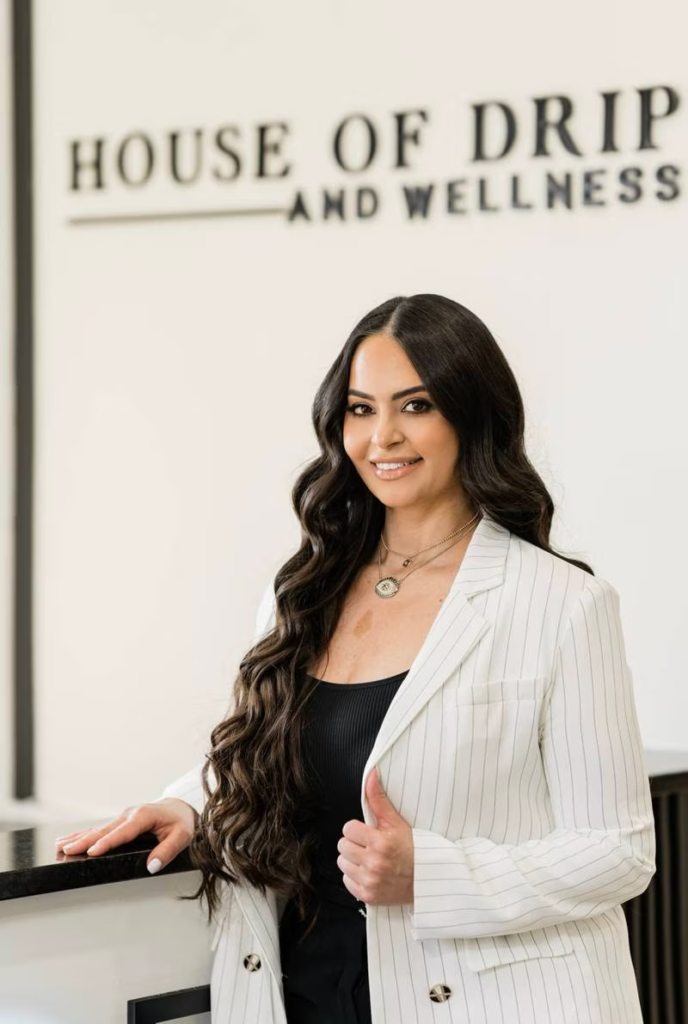
Last spring, Megan Moslimani and a colleague launched the House of Drip & Wellness in Dearborn, Michigan. Photo: Megan Moslimani
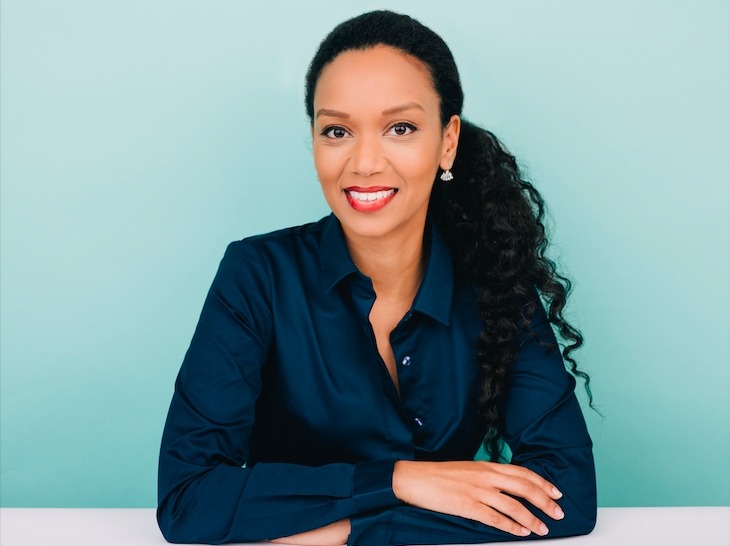
Yasmine El Baggari is the founder of Voyaj, an online platform that fosters connections between people from diverse backgrounds. Photo: Yasmine El Baggari
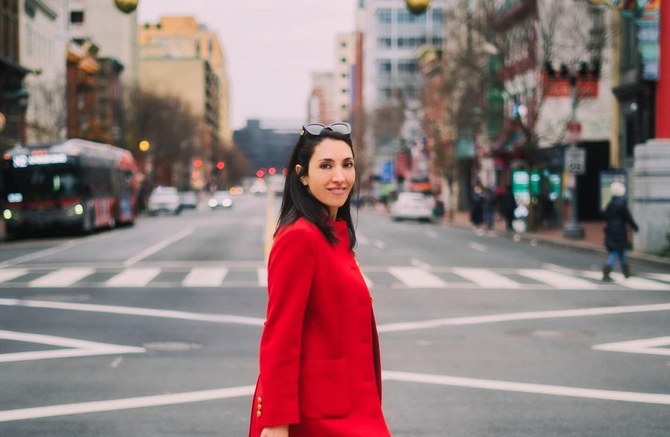
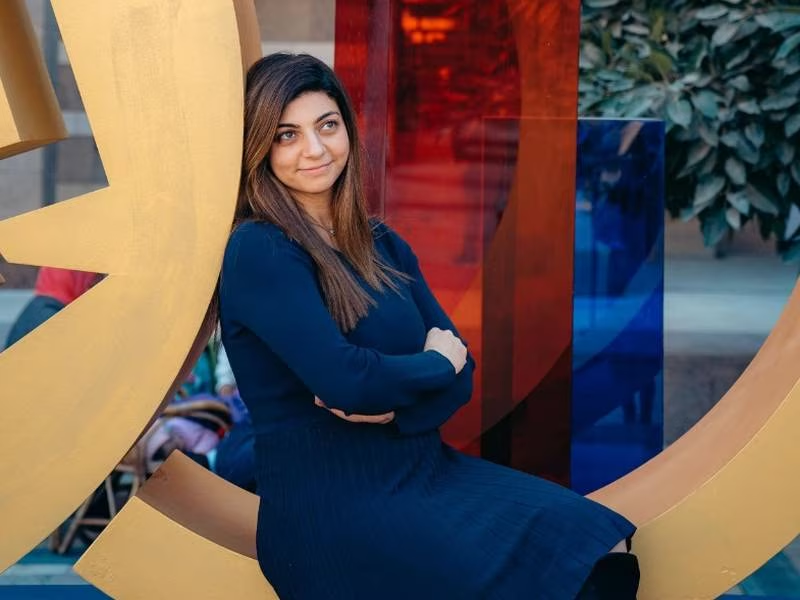
For Sherien Youssef, investing in yourself is key, ‘whether it’s in degrees and certificates, or in networks’. Photo: Sherien Youssef