MOROCCO, UAE Sign $14 Billion Megadeal: Key Details on the Largest Private Investment in Morocco’s History

The pact interweaves water security, renewable energy mastery, and industrial sovereignty – binding Morocco’s future with a 1,400 km electricity superhighway, four desalination jewels, and 25,000 employment opportunities in a $14 billion choreography.

 The largest private investment in Morocco’s modern history has just been inscribed in the country’s economic annals. Yesterday, the country sealed an extraordinary $14 billion accord with the United Arab Emirates – an injection of unprecedented scale that promises to permanently alter the country’s water and energy equation, while fundamentally reshaping its infrastructure landscape for generations to come.

The ceremonial ink still fresh, the agreement binds Morocco’s government and the National Office of Electricity and Drinking Water (ONEE) with a consortium of financial titans: the Mohammed VI Investment Fund, TAQA Morocco (the local subsidiary of Abu Dhabi’s energy colossus), and Nareva (the energy arm of the royal holding Al Mada).

At MAD 130 billion ($14 billion), this collaboration transcends mere commercial arrangement – it heralds a profound reengineering of critical national infrastructure by 2030.

Central to this ambitious blueprint stands a colossal 1,400-kilometer high-voltage transmission corridor stretching from Western Sahara to Casablanca, complemented by a network of sophisticated seawater desalination facilities.

These projects emerge as the culmination of meticulous diplomatic chess moves, coming just five months after King Mohammed VI’s private visit to Abu Dhabi and 18 months following his official state visit to the Emirati capital, where the groundwork for this Moroccan-Emirati renaissance was carefully laid.

Desert kingdoms understand water’s value. The consortium’s hydric strategy unfolds with architectural precision: a vast network connecting the Sebou and Oum Rabia river basins, engineered to channel 800 million cubic meters annually across thirsty territories.

The first phase of water transfer between the Sebou and Bouregreg basins became operational in August 2023, successfully diverting approximately 350 million cubic meters to the Sidi Mohammed Ben Abdellah dam, critical for supplying drinking water to the Rabat region.

Four jewels in this water crown will rise across Morocco’s map. In Tanger, a 50-million-cubic-meter annual capacity station will quench the industrial thirst of this burgeoning port hub.

Nador’s installation, six times more ambitious at 300 million cubic meters, will transform the eastern region’s hydric calculus. The agricultural heartland of Souss will benefit from Tiznit’s 350-million-cubic-meter facility – the largest of the quartet. Completing this hydraulic network, either Tan-Tan or Guelmim will host a 100-million-cubic-meter operation to serve the arid southern frontier.

These cutting-edge desalination facilities, engineered to operate exclusively on renewable energy, will collectively produce 900 million cubic meters annually.

Notably, they will maintain competitive pricing at or below MAD 4.50 per cubic meter (excluding tax), aligning with national benchmark rates established for ongoing desalination initiatives – all without requiring public subsidies.

The electric heartbeat: Energy sovereignty reimagined

The consortium’s energy infrastructure vision is anchored by a groundbreaking high-voltage direct current (HVDC) transmission network spanning 1,400 kilometers between Morocco’s southern territories and its central economic hub.

This sophisticated “electricity highway” will connect Dakhla to Casablanca with a 3,000 megawatt capacity, dramatically strengthening energy distribution capabilities while catalyzing economic and industrial development throughout the corridor.

This transmission masterpiece will be fed by 1,200 megawatts of fresh renewable capacity, predominantly harvested from the sun-drenched southern provinces. The geographic strategy is to harness the natural abundance of Morocco’s desert regions, translate it into clean energy, and deliver it to industrial centers at competitive rates.

Complementing these renewable ambitions, the Tahaddart complex will undergo a renaissance. This gas-fired installation will see its capacity quadrupled through new combined-cycle units, elevating total output to 1,500 megawatts. This expansion offers crucial ballast to a grid increasingly danced upon by the variable rhythms of wind energy.

The human dividend, capital choreography, and implementation cadence

Beyond pipes and pylons lies perhaps the most valuable yield: people. This grand design promises to spawn over 25,000 employment opportunities through construction and operation, with 10,000 permanent positions taking root after commissioning.

The consortium envisions not merely infrastructure but ecosystem – a fertile soil where technology transfer blooms and local industrial expertise in desalination and renewable energy flourishes. From this terrain will grow new educational pathways and technical specializations, training the standard-bearers of Morocco’s water and energy future.

The financial architecture of this mammoth endeavor will be orchestrated by the consortium, drawing capital from domestic and international financial wellsprings. The urgency is palpable; the project’s partners have pledged to assemble elite technical minds to ensure methodical implementation through 2030.

As with all ventures of this magnitude, regulatory gauntlets must be run, particularly regarding concentration operations. Each project component will be governed by bespoke development agreements between ONEE and the consortium. The first such accord, focusing on Tahaddart’s expansion, has already materialized.

The architects of the alliance

This historic partnership harmonizes complementary strengths. Nareva, Morocco’s private electricity champion, brings 3,200 megawatts of installed capacity producing over 15 terawatt-hours annually. As Africa’s wind energy pioneer, it operates eleven parks totaling 1,810 megawatts alongside the thermal goliath of Safi (1,386 megawatts).

With extensive expertise in electrical transmission infrastructure (exceeding 300 kilometers of high-voltage lines) and advanced water engineering, Nareva currently leads the innovative Amensouss project and is constructing the world’s first exclusively renewable-powered desalination facility in Dakhla.

TAQA Morocco, publicly traded on the Casablanca Stock Exchange since 2013, delivers 34% of Morocco’s national electricity requirements despite representing only 17% of installed capacity.

With a strategic focus on desalination, renewable energy development, low-carbon solutions, and infrastructure networks, the company actively advances national energy transition objectives and water security initiatives.

Its parent organization, Abu Dhabi National Energy Company PJSC (TAQA), operates as a diversified energy and utilities powerhouse with operations spanning 25 countries worldwide.

A diplomatic masterpiece

These accords signal the diplomatic renaissance between Morocco and the Emirates after a period of relative ambiguity. They physically manifest the vision sketched during King Mohammed VI’s December 2023 meeting with Sheikh Mohamed bin Zayed Al Nahyan – a blueprint for collaboration in strategically vital domains.

This official visit established a “renewed partnership” between the Maghreb and Gulf country with announcements of strengthened collaboration in strategic domains including energy and infrastructure development. 

The sovereign’s subsequent private voyage proved equally fertile, brokering peace between telecommunications titans Maroc Telecom and Inwi, ending a decade-long legal skirmish and birthing a joint venture to develop 5G infrastructure for international events including the 2025 Africa Cup of Nations and the 2030 World Cup.

For fifteen years, Morocco has methodically invested in renewable energy, which now covers 38% of its electricity needs, with aspirations to reach 52% by 2030. Simultaneously confronting chronic water scarcity, the kingdom has embraced desalination as salvation. This Emirati partnership accelerates both these vital transitions, binding two desert nations in a quest for resource security and sustainable prosperity.

source/content: moroccoworldnews.com (headline edited)

_____________

____________________

MOROCC0 / U..A.E
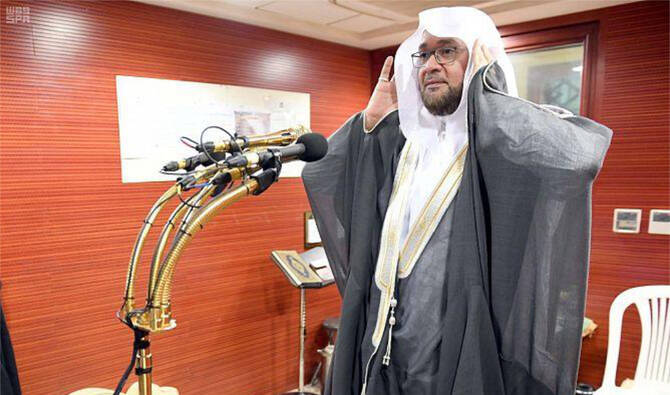
SAUDI ARABIA : Saudi Arabia’s King Abdulaziz Foundation for Research and Archives publishes book on adhan history, muezzins

 The King Abdulaziz Foundation for Research and Archives, known as Darah, has released a new book on the history of the adhan (call to prayer) and biographies of the muezzins of the Two Holy Mosques throughout the centuries.

The book was authored by Sheikh Dr. Saleh bin Abdullah bin Humaid, member of the Council of Senior Scholars and imam and preacher at the Grand Mosque.

It meticulously examines the adhan ritual in the Two Holy Mosques, covering its origins, virtues, and significance, the Saudi Press Agency reported.

The book is divided into three sections: the adhan’s history, biographies of 95 Grand Mosque muezzins, and 147 Prophet’s Mosque muezzins.

It presents biographies of muezzins who have issued the call to prayer from the time of Prophet Muhammad to the present, the SPA reported.

Drawing on credible historical sources and interviews, the author used a scientific approach to document the evolution of adhan tools and the relationship between the muezzin and the mosque.

The book also highlights the Saudi government’s support in selecting skilled muezzins and using advanced audio technology for local and global broadcasts.

This publication enriches the foundation’s collection, serving as a vital resource for researchers and those interested in the history of the Two Holy Mosques and Islamic rituals.

source/content: arabnews.com (headline edited)

___________

________________

SAUDI ARABIA

EGYPTIAN Pavilion Beats 150 Countries to Win Award at 78th Cannes Film Festival

Egypt’s presence at Cannes Film Market wins top honour for design, programming, and industry engagement.

The Egyptian pavilion at Cannes Film Market, headed by a joint cooperation between El Gouna Film Festival, Cairo International Film Festival and the Egyptian Film Commission, has won the award for Best Pavilion Design Award during the 78th Cannes Film Festival.

Designed by cinematic set designer Shereen Farghal, and recognised over competing pavilions from 150 nations, the Egyptian pavilion was awarded for its design, curated programming, and strategic networking opportunities offered to Arab and international filmmakers.

“This award is a global recognition of the position Egyptian cinema occupies today, and of the continuous efforts we make to represent it in international contexts,” Hussein Fahmy, President of Cairo International Film Festival, said. “We made sure that the pavilion reflects the spirit of cooperation and openness to the world through a program full of dialogue, and cultural and artistic interaction, and represents a new step for Egypt’s presence in the global film industry.”

Held annually in parallel with the Cannes Film Festival, Marché du Film is a key space for co-productions, distribution deals, and film financing.

source/content: scenenow.com (headline edited)

_____________

__________

EGYPT

TUNISIA : Remembering the revolutionary Tunisian women who defied colonial rule this Tunisian Independence Day – MARCH 20th

From Habiba Msika to Saïda Sassi, The New Arab celebrates the influential women who risked everything for Tunisia’s independence, yet remain largely forgotten.

March 20 of this year marks the 69th anniversary of Tunisia’s independence from French colonialism, which lasted from 1881 until 1956.

This 75-year settlement, referred to as a ‘protectorate’ by French politicians of the time instead of an actual colony, was marked by numerous injustices and crimes against the local population.

Fighting for independence required both physical and mental stamina, along with a willingness to make sacrifices, in order to achieve a delicate and glorious goal that embodied the shared dream of the nation.

Although many people participated in and contributed to this struggle, history has only remembered a small minority of them.

Moreover, the collective memory of this history appears selective, favouring male activists, with Tunisia’s independence remaining, in the collective psyche, linked to figures such as Habib Bourguiba, the country’s first post-independence president, along with others like Tahar SfarFarhat Hached, and Chedly Khaznadar.

One way this selective memory was reinforced was through the mainstream educational system, where the version of events favored by those in power was taught to future generations.

Unfortunately, this narrative excluded many activists, including women, and minimised their roles in this significant historical event.

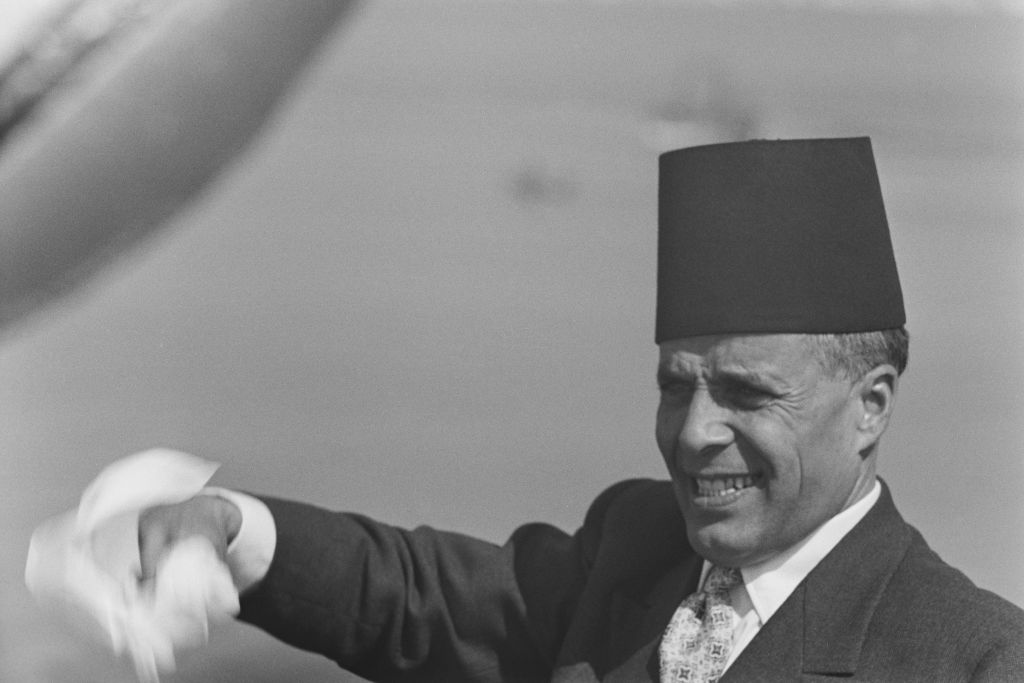
Habib Bourguiba was a Tunisian lawyer, nationalist leader, and statesman who served as prime minister from 1956 to 1957 and then as the first president of Tunisia [Getty]

Game-changers in Tunisian history

That said, although women were marginalised, they were not entirely excluded.

Male politicians often used the names and histories of female activists to enhance their own image, both in Tunisia and abroad, in an effort to project an image of progressivism.

This was not difficult to achieve, as the advocacy of Tunisian female activists had always been closely tied to the defence of women’s rights.

For example, Bchira Ben Mrad, aside from her active participation in demonstrations against French colonialism, her financial and moral support to the families of activists imprisoned by the colonial authorities, and her close collaboration with nationalist leaders such as Habib Bourguiba, founded the Muslim Union of Tunisian Women (UMFT) in 1936.

The UMFT, the first Tunisian women’s organisation, aimed to mobilise Tunisian women in the fight for independence and promote their education and emancipation.

Although the UMFT no longer exists, it played a historic role during the struggle for Tunisian independence and in the first decades of the 20th century.

Bchira Ben Mrad, pictured second from the left [X @Arcdelahistori]

Through her work, Bchira established literacy and education programmes for women and organised courses to raise awareness of their rights and roles in society.

Her advocacy for women’s rights, especially their right to education, work, and political participation, played a key role in preparing Tunisian women to take active roles in society after independence.

Similarly, Radhia Haddad, an active member of the UMFT, was the first female representative in post-independence Tunisia.

She contributed to organising literacy classes and lectures to educate women and encourage them to join the struggle for independence.

Additionally, she worked to improve the living conditions of rural women and informed them about the national movement of resistance against the French.

Radhia Haddad, pictured second from the left [X @DiwanTunissi]

Another emblematic figure was Saïda Sassi, who also played a significant role in both the Tunisian nationalist and feminist movements.

During this time, she took part in demonstrations and protests, and was arrested, imprisoned, and tortured by the French colonial authorities.

Saïda also encouraged women to become involved in the nationalist movement and claim their place in Tunisian society. She also worked to improve the living conditions of women from disadvantaged backgrounds.

Fight for independence and women’s rights already intertwined 

Ultimately, these women were pioneers who paved the way for Tunisian women’s involvement in various fields and their active participation in society.

Their contributions were so impactful that, for Tunisian women, playing an active role in society and being emancipated became ingrained in their culture and an unquestionable standard of life.

This argument is supported by Tunisian director Salma Baccar, who, in her 1994 film La Danse du feu (The Dance of Fire), depicted Tunisian singer Habiba Msika as an emancipated woman for her time in the 1920s.

In one symbolic scene, Habiba is seen on stage in a male-dominated café, preparing for her performance.

Habiba Msika was a Tunisian singer, dancer and actress [X @afikra]

Instead of her usual seductive attire, she wraps the Tunisian flag around her body and sings a poem calling for Tunisia’s independence to the male crowd, who cheer for her. The performance is quickly interrupted by the French police, who arrest Habiba.

This moment is highly symbolic, as it reflects the parallel struggles for independence and women’s rights, both of which were aimed at resisting the oppression of a higher authority.

In fact, Tunisia’s history demonstrates that the fight for independence from French colonialism and the advocacy for women’s rights were intertwined from the very beginning.

When both causes were championed together, efforts were strengthened, and positive results were achieved, as both movements aimed to challenge injustice.

[Cover photo: Habiba Msika (X @historicwomens)]

Tharwa Boulifi is a Tunisian freelancer who writes about feminism, human rights, and social justice. Her work has appeared in Teen Vogue, Newsweek, the New African, and African Arguments

Follow her on X: @TharwaBoulifi

source/content: newarab.com (headline edited)

_____________

_____________

TUNISIA


U.A.E : Fact Sheet: President Donald J. Trump Secures $200 Billion in New U.S.-UAE Deals and Accelerates Previously Committed $1.4 Trillion UAE Investment

BUILDING LASTING PROSPERITY FOR AMERICA AND OUR ALLIES: Today in Abu Dhabi, President Donald J. Trump announced over $200 billion in commercial deals between the United States and the United Arab Emirates—bringing the total of investment agreements in the Gulf region to over $2 trillion.

  • President Trump continues to advance the interests of the American people, enhancing market access for American exporters to strengthen our economic and national security.
  • These deals will significantly expand investment in the United States and U.S. market access in the United Arab Emirates.
  • The following represent just a few of the many transformative deals secured in the United Arab Emirates:
    • Boeing and GE Aerospace secured a $14.5 billion commitment from Etihad Airways to invest in 28 American-made Boeing 787 and 777X aircraft powered by GE engines. With the inclusion of the next-generation 777X in its fleet plan, the investment deepens the longstanding commercial aviation partnership between the UAE and the United States, fueling American manufacturing, driving exports, and supporting 60,000 U.S. jobs.
    • In Oklahoma, Emirates Global Aluminum will invest to develop a $4 billion primary aluminum smelter project, one of the first new aluminum smelters in America in 45 years, that will create a thousand jobs in America, strengthen critical mineral supply chains, and double current U.S. production capacity.
    • In line with President Trump’s executive order to unleash American energy leadership worldwide, ExxonMobil, Occidental Petroleum, and EOG Resources are partnering with the Abu Dhabi National Oil Company (ADNOC) for expanded oil and natural gas production valued at $60 billion that will help lower energy costs and create hundreds of skilled jobs in both countries.
    • RTX is partnering with Emirates Global Aluminum and the UAE’s Tawazun Council on a pioneering Gallium project that will help secure and stabilize the United States’ critical mineral supply chain. By diversifying sources of this essential input for semiconductors and defense technologies, the partnership strengthens America’s supply security, supports high-tech manufacturing, and creates jobs across the U.S. critical minerals and defense industrial base.
    • Qualcomm is expanding its global innovation footprint through partnerships with ADIO and e&.  A new Global Engineering Center in Abu Dhabi will focus on AI, data centers, and industrial IoT – advancing the UAE’s digital transformation while supporting U.S. research, engineering jobs and demand for American technologies.  Meanwhile, the collaboration with e& accelerates the deployment of advanced connectivity, edge AI, and cloud computing solutions.  Together, these efforts strengthen Qualcomm’s leadership in critical technologies, fuel U.S high-tech job creation, and bolster America’s economic and national security. 
    • Amazon Web Services, e&, and the UAE Cybersecurity Council have launched a Sovereign Cloud Launchpad to accelerate public cloud services adoption in the UAE.  The initiative is expected to contribute $181 billion to the UAE’s digital economy by 2033 and includes a new UAE cybersecurity technology Innovation center. This collaboration expands demand for U.S.–developed cloud infrastructure and cybersecurity technologies, supporting high-skilled jobs in the United States and reinforcing U.S. leadership in secure digital innovation globally.
  • These deals lay the foundation for investment, innovation and good-paying U.S. jobs, including in frontier technologies, aerospace, energy, and critical minerals.
  • Today’s deals strengthen the U.S.-UAE investment and trade relationship and build on the UAE’s landmark commitment to a 10-year, $1.4 trillion investment framework that will contribute to the U.S. boom in AI infrastructure, semiconductors, energy, quantum computing, biotechnology, and manufacturing.
    • The U.S. and UAE signed an AI agreement today that supports the $1.4 trillion investment commitment secured in March. This includes the UAE committing to invest in, build, or finance U.S. data centers that are at least as large and as powerful as those in the UAE. The agreement also contains historic commitments by the UAE to further align their national security regulations with the United States, including strong protections to prevent the diversion of U.S.-origin technology.
    • The U.S.-UAE AI agreement strengthens bilateral investment partnerships, ensuring U.S. security interests and dominance in AI while extending the American tech stack to an important strategic partner. 

ACCELERATING TRADE AND INVESTMENT IN STRATEGIC PARTNERSHIP:  The strategic partnership between the United States and the United Arab Emirates has spanned decades and supported the prosperity and security of Americans and Emiratis. This partnership encompasses strategic cooperation in defense, trade, energy, space and diplomacy, reflecting shared interests and mutual respect.

  • This partnership is particularly significant thanks to the historic achievement of the Abraham Accords announced during President Trump’s first term.
  • The UAE stands as a significant commercial partner for the United States in the Middle East.  Bilateral trade and investment have flourished, with the UAE serving as a hub for American businesses seeking opportunities in the region.
    • The UAE had $35 billion in foreign direct investments in the United States, supporting over 33,000 American jobs in 2023.
    • U.S. total goods trade with the UAE was an estimated $34.4 billion in 2024, with a U.S. trade surplus of $19.5 billion, the third largest in the world.
  • President Trump’s historic visit to the United Arab Emirates is another opportunity to welcome new partnerships in frontier technologies, health and life sciences, mobility, entertainment, and many other fields.

NEVER TIRED OF WINNING: President Trump keeps scoring great deals for the American people, securing over $2 trillion in investment agreements with Middle Eastern nations for a more safe and prosperous future.

The $200 billion UAE deals build on the $600 billion in Saudi Arabia and $1.2 trillion in Qatar the President secured on behalf of the American people.
This comes days after President Trump announced the U.S.-UK trade agreement and a joint agreement with China in pursuit of more fair, reciprocal trade that grows good-paying jobs and prosperity in America.
While it took President Biden nearly four years to secure $1 trillion in investments, President Trump achieved this in his first month, with additional investment commitments continuing to roll in.
President Trump is accelerating investment in America and securing fair trade deals around the world, paving the way for a new Golden Age of lasting prosperity for generations to come.

source/content: whitehouse.gov (headline edited)

QATAR : Fact Sheet: President Donald J. Trump Secures Historic $1.2 Trillion Economic Commitment in Qatar

MAKING AMERICAN MANUFACTURING AND INNOVATION GREAT AGAIN: Today in Qatar, President Donald J. Trump signed an agreement with Qatar to generate an economic exchange worth at least $1.2 trillion. President Trump also announced economic deals totaling more than $243.5 billion between the United States and Qatar, including an historic sale of Boeing aircraft and GE Aerospace engines to Qatar Airways.   

  • The landmark deals celebrated today will drive innovation and prosperity for generations, bolster American manufacturing and technological leadership, and put America on the path to a new Golden Age.
  • Since President Trump took office, his commitment to American manufacturing and innovation has attracted trillions of dollars in investments and global commercial deals. Allies like Qatar are partnering in the United States’ success. 
  • The following represent just a few of the many groundbreaking deals secured in Qatar:
    • Boeing and GE Aerospace secured a landmark order from Qatar Airways, a $96 billion agreement to acquire up to 210 American-made Boeing 787 Dreamliner and 777X aircraft powered by GE Aerospace engines. This is Boeing’s largest-ever widebody order and largest-ever 787 order. This historic agreement will support 154,000 U.S. jobs annually, totaling over 1 million jobs in the United States during the course of production and delivery of this deal.
    • McDermott has a strong partnership with Qatar Energy in advancing critical energy infrastructure, with seven active projects worth $8.5 billion. As the sole provider of offshore components for Qatar’s major LNG expansion, McDermott’s work directly supports thousands of U.S. energy sector jobs.
    • Parsons has successfully won 30 projects worth up to $97 billion. These high-value engagements have fueled significant company growth, supporting thousands of jobs across the United States and reinforcing American leadership in cutting-edge engineering and innovation.
    • Quantinuum finalized a Joint Venture Agreement with Al Rabban Capital, a prominent Qatari company. Qatar will invest up to $1 billion in state-of-the-art quantum technologies and workforce development provided by the Joint Venture, supporting U.S. and Qatari jobs and leadership in this critical emerging technology.  
  • Today’s signings mark President Trump’s intent to accelerate Qatar’s defense investment in the U.S.-Qatar security  partnership—enhancing regional deterrence and benefitting the U.S. industrial base.
    • The defense deals secured today lock in Qatar’s procurement of state-of-the-art military equipment from two leading U.S. defense companies.
    • Raytheon, an RTX business, secured a $1 billion agreement for Qatar’s acquisition of counter-drone capabilities, signed by the U.S. and Qatari governments. This deal establishes Qatar as the first international customer for Raytheon’s Fixed Site – Low, Slow, Small Unmanned Aerial System Integrated Defeat System (FS-LIDS) designed to counter unmanned aircraft. The deal directly supports high-skilled manufacturing and engineering jobs in the United States and reinforces America’s leadership in innovative defense technologies.
    • General Atomics secured a nearly $2 billion agreement for Qatar’s acquisition of the MQ-9B remotely piloted aircraft system, signed by the U.S. and Qatari governments. This deal will strengthen the U.S.-Qatar bilateral relationship and provide the Qatari Armed Forces with the most advanced multi-mission remotely piloted aircraft in the world, powered by U.S. products made in America.
    • The United States and Qatar also signed a statement of intent to further strengthen our security partnership, outlining over $38 billion in potential investments including support for burden-sharing at Al Udeid Air Base and future defense capabilities related to air defense and maritime security.
  • These new agreements and instruments aim to drive the growth of the U.S.-Qatar bilateral commercial relationship, create thousands of well-paying jobs, and open new trade and investment opportunities for both countries over the coming decade and beyond.

CATALYZING PROSPERITY THROUGH GREATER TRADE AND INVESTMENT: The United States and Qatar have a long history of trade and a strong commercial relationship, including significant long-term aviation, critical infrastructure, information technology, and consulting deals. 

  • Qatar’s strategic goals outlined in Qatar National Vision 2030 create opportunities for U.S. businesses in multiple sectors.
  • The United States had a $2 billion trade surplus with Qatar in 2024 and has had a positive trade balance with Qatar since 2003.
    • In 2024, U.S.-Qatar trade totaled $5.64 billion, with $3.8 billion in U.S. exports and $1.8 billion in Qatari imports.
    • Qatar’s greenfield investment in the United States totaled $3.3 billion in 2023, focused on hotels and tourism, information technology, advanced manufacturing, financial services, and oil and gas.
  • This visit advances opportunities for U.S. companies to expand long-standing partnerships and for Qatari entities to embrace U.S. technologies, adopt best practices, and finalize new agreements for significant sales and investments.
    • Qatar has made significant investments in the United States across hotels and tourism, financial services, technology, healthcare, and energy, with plans to invest even more over the next five years. These investments strengthen the U.S. economy by supporting good-paying jobs for millions of American workers, expanding U.S. exports, and funding research and development. 
    • Qatar has the third largest proven reserves of natural gas in the world, and has invested in American energy infrastructure, directly contributing to U.S. energy security and industrial resilience.
    • Starting in 2019, QatarEnergy initiated $18 billion in investments in the U.S. energy sector with ExxonMobil’s Golden Pass LNG Terminal ($10 billion) and Chevron Phillips Chemical’s Golden Triangle Polymers Plant ($8 billion), both located on the Texas Gulf Coast.
  • Qatar is our 12th largest Foreign Military Sales partner with active cases valued at more than $26 billion.
  • Qatar’s expansive investment in and trade with the United States contribute to U.S. and Qatari economic growth and prosperity, and Qatar’s choice of U.S. industry’s best-fit solutions supports the U.S. strategic goal of growing our industrial presence throughout the Gulf and the region as a whole.   

THE ART OF THE DEAL: President Trump is securing billions in investments to revitalize American manufacturing, delivering on his promise to bring back “Made in America” and usher in a new Golden Age of prosperity.

  • Today’s announcement builds on yesterday’s $600 billion investment commitment secured in Saudi Arabia.
  • It also follows the announcement of an historic trade agreement with the United Kingdom and a joint agreement with China to reduce reciprocal tariffs. 
  • By securing these investments, President Trump is spurring a manufacturing renaissance, driving economic growth, and creating high-paying jobs across the nation.
  • Prior to this historic deal, President Trump had already attracted trillions in U.S.-based investments, laying the foundation for an era of unprecedented American prosperity.
  • President Trump is building on his record of success with Qatar, exemplified by his leadership in the 2019 GE Aerospace GEnx engine sale to power Qatar Airways’ then-newly acquired Boeing 787-9 aircraft—a monumental purchase in the history of both companies.
  • As the dealmaker in chief, President Trump’s latest achievement in Qatar is another win for America.

source/content: whitehouse.gov (headline edited)

SAUDI ARABIA signs deals worth more than $300 billion with US, crown prince confirms – May 2025

Trump described crown prince as “very great man like no other” and “greatest representative of his people”

Prince Mohammed said Kingdom looking at $600bn of investment opportunities, hoped this would raise to $1tn

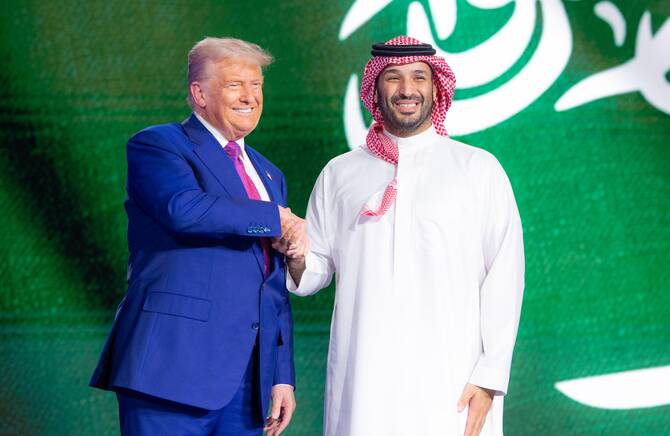
Saudi Arabia has signed deals with the US worth more than $300 billion, Crown Prince Mohammed bin Salman said at the Saudi-US Investment Forum in Riyadh on Tuesday. 

During an address at the event, Prince Mohammed said the Kingdom was looking at $600 billion of investment opportunities, adding that he hoped this would raise to $1 trillion.

He noted that the US was among the largest partners of the Saudi Vision 2030 reform agenda, adding that joint investments were one of the most important pillars of the economic relationship between the two countries.

“The US is a major destination for the Public Investment Fund, accounting for approximately 40 percent of the fund’s global investments,” he said.

He also said that cooperation with Washington was not limited to economic cooperation, but also extended to “establishing peace in the region and the world.”

Also speaking at the event, US President Donald Trump praised the transformation underway in Saudi Arabia, as he attributed it to the leadership of King Salman and the crown prince.

Trump described the crown prince as a “very great man like no other” and “the greatest representative of his people,” and highlighted the role of Saudis in driving development in their own country and the region as a whole.

Trump pointed to Riyadh’s rise as a global business hub and noted that the Kingdom’s non-oil sector revenues had now surpassed those of the oil sector.

He said Saudi Arabia deserved praise for preserving its culture and tradition while also embracing its forward-looking, modern Vision 2030 reform agenda.

During his speech, Trump criticized the Biden administration for removing the Houthis from the US terrorist list, calling it a serious mistake.

He contrasted regional developments, stating: “Some (in the Gulf) have turned deserts into farms, while Iran has turned its farms into deserts,” and warned that if Iran rejected Washington’s outreach, the US would be forced to impose maximum pressure.

Condemning Hezbollah for destabilizing the region and looting Lebanon, Trump said: “The biggest and most destructive of these forces is the regime in Iran, which has caused unthinkable suffering in Syria, Lebanon, Gaza, Iraq, Yemen and beyond.”

He described Lebanon as a victim of Hezbollah and Iran and expressed a desire to help the country.

Trump also praised Saudi Arabia’s role in Russia-Ukraine peace talks and affirmed US support for the Kingdom, saying it has “a great future.”

Earlier on Tuesday, the two leaders signed a strategic economic partnership agreement in Riyadh, the first leg of Trump’s regional visit.

The partnership included the signing of Memorandums of Understanding in the energy, mining, and defense sectors. 

Defense cooperation between the two countries centered on the modernization of the capabilities of the Saudi armed forces, along with an agreement between the Saudi Space Agency and NASA.

Other agreements included an MoU on mineral resources; an agreement with the Department of Justice; and cooperation on infectious diseases.

Trump arrived in Saudi Arabia Tuesday on what he called a “historic” tour of the Middle East that will mix urgent diplomacy on Gaza with huge business deals.

Saudi Crown Prince Mohammed bin Salman warmly greeted Trump as he stepped off Air Force One at King Khalid International Airport in the Saudi capital and kicked off his Middle East tour.

The two leaders then retreated to a grand hall at the Riyadh airport, where Trump and his aides were served traditional Arabic coffee by waiting attendants wearing ceremonial gun-belts.

Royal Saudi Air Force F-15s provided an honorary escort for Air Force One as it approached the kingdom’s capital. Trump and Prince Mohammed took part in a lunch at the Royal Court, gathering with guests and aides. 

* With AFP and AP

source/content: arabnews.com (headline edited)

______________

Saudi Arabia has signed deals with the US worth more than $300 billion, Crown Prince Mohammed bin Salman said at the Saudi-US Investment Forum in Riyadh on Tuesday. (SPA)

__________________

SAUDI ARABIA

MOROCCO : ’06th Moroccan Poets Festival’ concludes

The Moroccan Poets Festival concluded its sixth edition after three days of illustrious writing and celebrating the word.

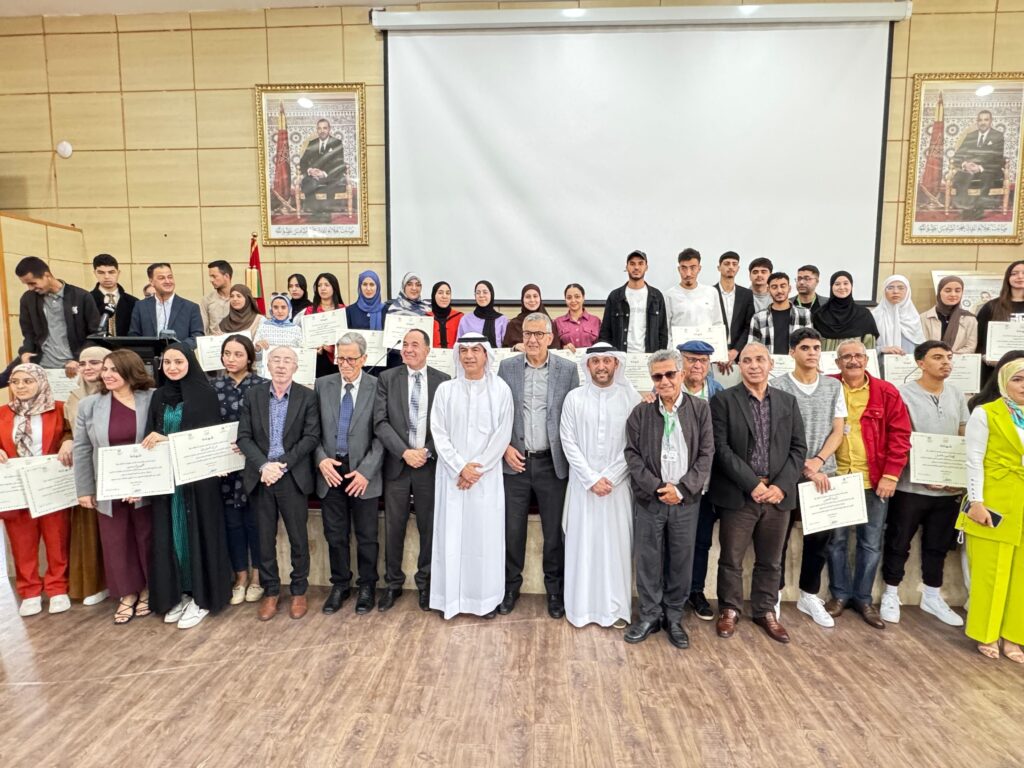
The closing ceremony was held at the National School of Crafts and Arts in Tetouan, in the presence of Abdullah bin Mohammed Al Owais, Chairman of Sharjah Department of Culture; Professor Mohammed Ibrahim Al Qaseer, Director of the Cultural Affairs Department at the Department; Rachid Al Mustafa, Head of the Cooperation Department in the Culture Sector at the Moroccan Ministry of Youth, Culture, and Communication; Dr. Youssef Al Fahri, President of the Higher School of Teachers in Martil; Mukhlis Al Sagheer, Director of the House of Poetry in Tetouan; and a large number of writers, intellectuals, and university students.

Al Sagheer pointed out that the Moroccan Poets Festival strives to innovate with each new edition, and to grow in poetry and cultural resonance in the Arab world. He highlighted that the sixth edition enjoyed a prominent official presence, alongside a public audience with a passion for poetry and art.

He explained that the House of Poetry in Tetouan, founded in 2016, affirms its tireless efforts to organise a distinguished seventh edition next year, to celebrate its tenth anniversary.

Participants in the Moroccan Poets Festival agreed that Sharjah has become a pioneering model in supporting Arab culture and actively contributing to shaping a new generation of Arab intellectuals. They emphasised that Sharjah’s cultural, intellectual, and cultural achievements over the past decades were not a coincidence, but rather the result of the broad cultural vision of His Highness Sheikh Dr. Sultan bin Mohammed Al Qasimi, Supreme Council Member and Ruler of Sharjah. His Highness believes that culture is the cornerstone of human and societal development.

Participants believe that Sharjah’s experience represents a model to be emulated, as it has not only supported cultural production but has also strived to create an integrated knowledge environment that attracts new generations and instils in them a love of reading, thinking, and criticism. They explained that many young Arabs who have benefited from Sharjah’s cultural experiences have now become prominent voices in the fields of literature, thought, and the arts.

The second day of the festival featured a critical symposium titled “Poetry and the Performing Arts”. The speakers emphasised that when poetry is recited on stage, or combined with movement or music, it transforms into a performance art. This is where what is known as “the poetics of performance” emerges, where poetry emerges from the page and is embodied through the body, voice, gaze, and silence. They noted that at this moment, literature intersects with the live arts, providing the recipient with a multi-sensory artistic experience.

Speakers emphasised the intersection of poetry and performance, where word meets movement, voice meets silence. This is when a magic called the poetics of the performing arts is born; where the poem becomes a vibrant body, and the scene becomes a visual poem that is read by the eye and felt by the heart.

The Moroccan Poets Festival has an exceptional section, bringing the audience together with visually impaired poets at the Taha Hussein Institute in Tetouan, in a poetic and humane moment where poetry met with a number of visually impaired creatives who drew inspiration from life’s features and, from its details, wove their vast worlds.

The festival saw the participation of more than 40 poets, poetesses, intellectuals, and artists amidst a festive atmosphere of poetry and its creators. It honoured 83 students in a poetry writing workshop organised by the House of Poetry in Tetouan, in collaboration with the Faculty of Arabic Language at the Higher Teachers’ School in Martil.

Eighteen students were also honoured in the regional competition for Arabic Language Pioneers, organised by the House of Poetry in collaboration with more than 37 secondary and middle school educational institutions.

source/content: wam.ae (headline edited)

________________

______________

MOROCCO

QATAR : By the Nation, For the Nation: Qatar unites through art and AI innovation to mark Qatar National Day—and sets new world record

In collaboration with Google Cloud, Media City Qatar’s initiative, ‘Qatar ArtBeat,’ united the nation’s voices to create a groundbreaking AI-generated artwork.

Qatar National Day marks the unification of the nation in 1878—a defining moment in its history. Celebrated annually on December 18, it is a day to honour Qatar’s rich heritage and look ahead to its boundless aspirations for the future.

At Media City Qatar, we asked ourselves: How can we celebrate this cherished tradition while embracing the innovations that shape tomorrow? How can we bridge the past and the future, merging tradition with technology, to unite our people in a shared celebration?

The answer was ‘Qatar ArtBeat’.

A groundbreaking activation in partnership with Google Cloud, this initiative brought together the collective voices of the nation to generate an AI artwork co-created by the nation. This innovative project marked a historic milestone, merging culture and technology in an unprecedented way.

‘Qatar ArtBeat’ not only captured the collective spirit of Qatar but also set a Guinness World Records™ for the “Most People Contributing to an AI-Generated Image,” with over 15,000 contributions, more than 5.4 million people reached, and in excess of 68,000 engagements from across the country. This milestone showcases the potential of technology to unify communities and amplify their voices on a scale never seen before.

Celebrating innovation and tradition

‘Qatar ArtBeat’ invited citizens and residents to share their reflections on what Qatar means to them between December 9 and December 17 through Media City Qatar’s social media channels.

Additionally, public conversations on various platforms were analysed, with responses processed by Google Cloud’s advanced AI technology—such as Vertex AI platform, Gemini models, and BigQuery data platforms. This cutting-edge process transformed sentiments found in social media comments and posts into a cohesive and breathtaking artwork co-created by the nation, for the nation. 

The final masterpiece, unveiled on December 18, became a visual narrative of Qatar’s collective aspirations and creativity. The initiative perfectly symbolised the harmony between the nation’s traditions and modern innovation, showcasing how technology can preserve and celebrate cultural identity in meaningful ways.

By engaging communities across Qatar, the activation demonstrated how digital platforms can foster inclusivity, accessibility, and collaboration. This activation ensured that every voice contributed to the nation’s story, transforming individual reflections into a collective celebration of shared values and unity.

Pioneering the future of digital media

As a catalyst for next-generation media and technology, Media City Qatar connects media companies, entrepreneurs, innovators, and creative talents to shape the future of the industry.

Our focus spans gaming, news, digital and social media, media technologies, content localization, animation, broadcasters, production and post-production, and publishing. We take particular pride in fostering initiatives that celebrate Arabic-language content, uniting tradition with modern innovation.

By encouraging enterprises that specialise in the Arabic language or seek to expand into Qatar and the Middle East, Media City Qatar continues to champion the region’s voice on a global stage.

‘Qatar ArtBeat’ exemplified this mission, setting a new benchmark as the first-of-its-kind initiative in Qatar—and possibly worldwide—that achieved a new world record.

The project also highlighted the transformative potential of generative AI in storytelling and community engagement. By leveraging Google Cloud’s advanced technology, reflections were seamlessly transformed into art, reinforcing the significance of human input in creating impactful digital experiences.

A legacy for Qatar and beyond

As we look to the future, we imagine the children of today—tomorrow’s dreamers and innovators—continuing to celebrate the heritage of this great nation.

‘Qatar ArtBeat’ is a promise that Qatar’s story will be told in new and imaginative ways for generations to come. At Media City Qatar, where next is made, we are proud to help shape that future, blending tradition and technology to inspire the Qatar of tomorrow.

source/content: dohanews.co

______________

____________

QATAR

MOROCCO: Professor Younes Nafid PhD Receives Excellence Award from Saudi Arabia’s Naif Arab University for Security Sciences

The award is in recognition of the professor’s efforts in scientific research, teaching, and online learning.

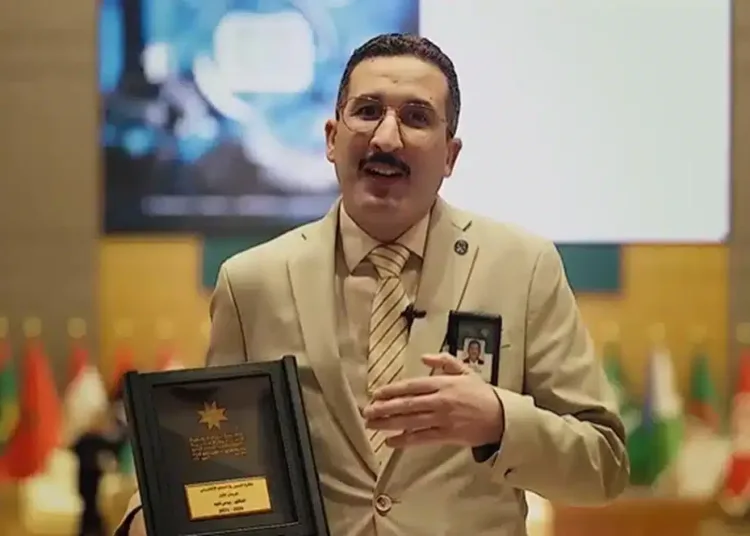
Moroccan scholar and researcher Younes Nafid received this week the Excellence Award in Online Learning from Naif Arab University for Security Sciences in Saudi Arabia.

He received the award on Thursday, recognizing his academic excellence and efforts in scientific research, teaching, and learning.

Nafid is a professor in the Department of Criminal Law at the College of Criminal Justice and Forensic Sciences in Riyadh. He also serves as an advisor for scientific research and innovation at the same university.

The Moroccan scholar authored various books and studies, and also supervised research projects and doctoral theses.

A PhD in Criminal Law and Forensic Sciences from Mohammed First University in Oujda, Nafid previously worked in  Moroccan universities as a professor, including Cadi Ayyad University and Chouaib Doukkali University.

At the award ceremony, the Saudi university celebrated the Moroccan professor and his fellows, honoring the “outstanding efforts in the fields of scientific research, teaching, and online learning, in line with the university’s strategic vision to enhance the academic environment and support the Arab security system.”

In addition to Nafid, several Moroccan professors and teachers were honored on an international scale for their efforts, contributing to enhancing research, teaching, and learning.

In January, Messaoud Ariba, a Moroccan teacher, received an award at the Global Teacher Awards in New Delhi.

Ariba was the sole representative of both North Africa and the Arab world at large, earning recognition from thousands of applicants during the ceremony.

“For me, this is not just about personal achievement but about honoring the incredible work of all those shaping education in the country,” Ariba said.

In February, Moroccan professor Anasse Bari received the Dr. Martin Luther King Jr.Faculty Award for 2025 at New York University. The award recognizes leadership work and commitment to justice and fairness.

In a statement to Morocco World News, Bari said he dedicates the award to his fellow Moroccans.

“Every day in my classroom, I encourage my students to use the skills they have learned at New York University to serve the world,” Bari said, noting that his students are finding “new ways” to use AI and data science to improve the world.

source/content: moroccoworldnews.com (headline edited)

_______________

______________

MOROCCO