Arabs & Arabian Records Aggregator. Chronicler. Milestones of the 25 Countries of the Arabic Speaking World (official / co-official). AGCC. MENA. Global. Ist's to Top 10's. Records. Read & Enjoy./ www.arabianrecords.org
The Arab world attracted 360 foreign renewable energy projects between January 2003 and December 2024, with investments surpassing $351 billion and generating more than 83,000 jobs, according to a new report from the Arab Investment and Export Credit Guarantee Corp., known as Dhaman.
Five countries — Egypt, Morocco, the UAE, Mauritania and Jordan — accounted for 248 projects, or 69 percent of the total, with a combined investment value of $291 billion. These projects alone created nearly 68,000 jobs, representing 82 percent of employment in the sector.
The UAE led regional renewable energy investment over the past two decades, attracting 57 projects worth $88.5 billion, equivalent to a quarter of total investment and generating over 16,000 jobs.
At the corporate level, Saudi Arabia’s ACWA Power topped the list by project volume with 20 initiatives, while UAE-based Infinity Power led in value, with projects totaling $34 billion.
Dhaman’s report also highlighted cross-border cooperation, noting that Saudi Arabia, the UAE, Bahrain, Jordan and Egypt invested in 90 interconnected projects worth $113 billion, accounting for a quarter of all foreign-backed activity and creating 22,000 jobs.
Looking ahead, electricity generation across 15 Arab countries is projected to expand by 4.2 percent, exceeding 1,500 terawatt-hours in 2025 and rising to 1,754 terawatt-hours by 2030. Production will remain concentrated in Saudi Arabia, Egypt, the UAE, Iraq and Algeria, which together represent nearly three-quarters of output.
Consumption is expected to climb 3.5 percent to 1,296 terawatt-hours in 2025, led by Saudi Arabia, Egypt, the UAE, Algeria and Kuwait.
Trade in electricity and power generation equipment also surged, with foreign trade in the sector up 8 percent to $39.2 billion in 2024. Exports increased 9 percent to $7.6 billion, while imports rose 7.8 percent to $31.5 billion. Saudi Arabia, the UAE, Morocco, Iraq and Qatar accounted for 81 percent of this trade.
Turkiye emerged as the region’s top electricity exporter at $446 million, while the US dominated power equipment supply at $6.6 billion. On the import side, Libya was the largest regional buyer of electricity at $59 million, while France topped power equipment imports at $593 million.
Headquartered in Kuwait, Dhaman was established in 1974 as a joint Arab entity owned by member states and four regional financial institutions. Its latest report is the second 2025 sectoral study focused on electricity and renewable energy in Arab economies.
source/content: arabnews.com (headline edited)
______________
At the corporate level, Saudi Arabia’s ACWA Power topped the list by project volume with 20 initiatives, while UAE-based Infinity Power led in value, with projects totaling $34 billion. File
The initiative aims to ensure that individuals with autism can access meaningful opportunities and social integration worldwide.
Qatar, in collaboration with international partners, has launched the Global Autism Advocacy Coalition (GAAC), calling on the global community to join forces in supporting people with autism and their families.
The initiative, announced during the 80th session of the United Nations General Assembly, aims to move beyond awareness and promote concrete collective action for a more inclusive future worldwide.
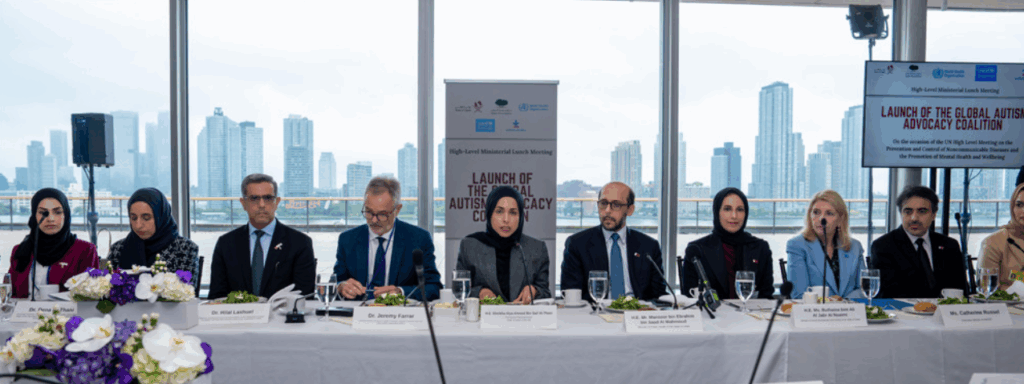
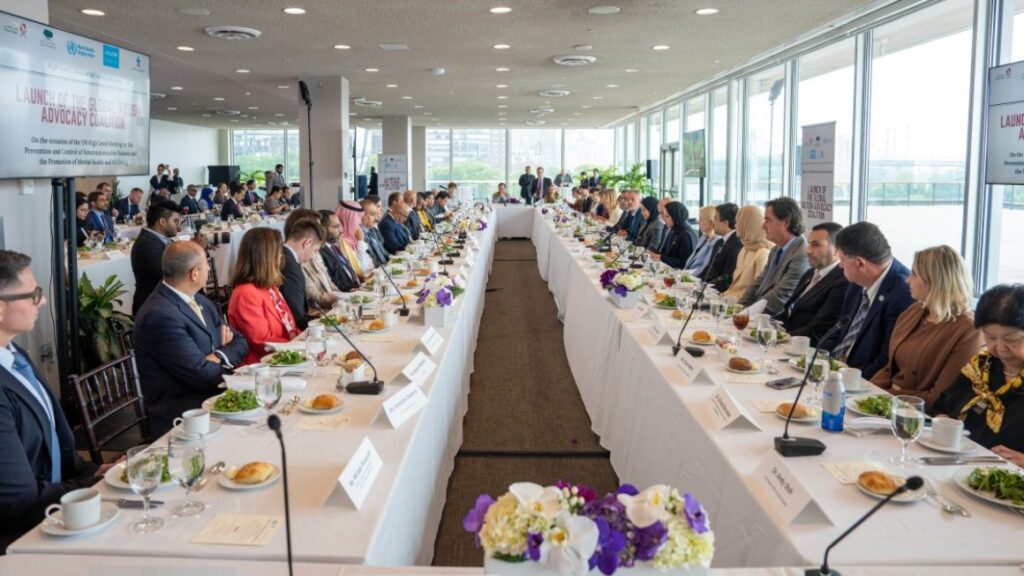
The GAAC, led by Qatar Foundation (QF) alongside the World Health Organization (WHO), UNICEF, and Autism Speaks, was unveiled during the UN’s High-Level Meeting on the prevention and control of non-communicable diseases and the promotion of mental health and well-being.
Current estimates suggest that around 80 million people globally, approximately one percent of the world’s population, are on the autism spectrum, highlighting the urgent need for coordinated international support.
The coalition seeks to advance autism on the global agenda, encouraging governments, NGOs, charities, and private sector partners to allocate resources, develop inclusive policies, and share knowledge across research, education, technology, and community engagement.
Minister of Public Health, Mansoor bin Ebrahim bin Saad Al Mahmoud, described the coalition as “a beacon of what can be achieved when nations unite for good. By working together, we can improve the lives of millions of individuals with autism, helping them reach their full potential and showing the world that collective action delivers hope, dignity, and opportunity,” according to the Ministry of Social Development and Family’s press release.
Buthaina bint Ali Al Nuaimi, Minister of Social Development and Family, highlighted Qatar’s pioneering role in autism support.
“This moment reflects the vision of Her Highness Sheikha Moza bint Nasser, whose leadership has long advanced dignity, inclusion, and opportunity for individuals with autism. In 2017, Qatar launched its first national autism strategy, creating a foundation for inclusive policies and services. Since then, Qatar has championed the rights of the autistic community through early diagnosis, education, and community services, ensuring inclusion at every stage of life,” she said.
She added, “Looking ahead, innovation must remain central to continued progress. For us, innovation is not only about technology, but also about re-imagining how social systems, family support, and community engagement work together so every individual can contribute meaningfully to society.”
Associate Professor Dena Al Thani, Co-Founder of the Autism Sensing Center of Excellence at Hamad Bin Khalifa University, emphasised priority areas for international cooperation, including early diagnosis, investment, and technological innovation in autism assessment and intervention.
Hilal Lashuel, Research, Development, and Innovation Advisor at QF, said: “Having a global voice for autism and launching supportive platforms for individuals with autism has become a global necessity, not a choice. Autism is a worldwide challenge that requires a global response and resources beyond the capacity of any single country or institution. One of the coalition’s main objectives is to strengthen integrated international collective action across all fields, translating decades of hope, investment, and progress into tangible solutions that positively impact individuals with autism and their families.”
Sheikha Moza bint Nasser, Chairperson of Qatar Foundation, has long championed global autism awareness. She said in a post on X: ““I welcome the launch of the Global Autism Advocacy Coalition, marking a milestone that shifts our efforts beyond awareness to collective action. This platform urges the international community to embrace its shared responsibility in addressing autism. As the first coalition of its kind, it will ensure autism becomes an international priority.”
She added, “The State of Qatar’s commitment to the causes of autism extends beyond its national border and is rooted in our belief that every individual deserves the opportunity to thrive and lead a fulfilling life. On this occasion, I urge governments, stakeholders, and development partners to move beyond awareness and commit to concrete collective action, including the meaningful allocation of necessary resources.”
I welcome the launch of the Global Autism Advocacy Coalition, marking a milestone that shifts our efforts beyond awareness to collective action. This platform urges the international community to embrace its shared responsibility in addressing autism. As the first coalition of… https://t.co/EaHBKDJsG9
Sheikha Moza’s leadership has been instrumental in raising international attention to autism, with her 2007 proposal leading to the UN General Assembly’s adoption of World Autism Awareness Day, held annually on 2 April.
Through Qatar Foundation programmes, including the Renad Academy, and the newly launched Autism Strategy 2025-2035, Qatar continues to expand inclusivity, research, and support services for individuals with autism, setting a global example for collaboration and meaningful action.
The World Bank has opened a new regional hub in Riyadh to serve the Middle East, North Africa, Afghanistan, and Pakistan, as the Washington-based lender continues to boost its presence in the region.
According to a press statement, the new Riyadh hub will be co-located with the World Bank Group’s Gulf Cooperation Council regional office, bringing its leadership closer to country teams, clients, and regional partners.
The opening of the new regional hub signals the deepening ties between the World Bank and Saudi Arabia, as in December, the lender signed a strategic agreement to launch a new global knowledge hub in Riyadh to facilitate regional and global knowledge exchange, joint research, and capacity-building initiatives aimed at advancing global development impact.
Commenting on the opening of the new regional hub, Ousmane Dione, vice president of the World Bank for the MENAAP region, said: “Riyadh is not only a gateway to the region’s transformation, but also a powerful platform for global knowledge exchange and policy innovation.”
He added: “It is especially meaningful to mark this relocation on Saudi National Day, a moment that celebrates the Kingdom’s transformation and its growing role as a global convener of development knowledge.”
In the press statement, the lender added that the opening of the new regional hub aligns with the 50th anniversary of technical cooperation between the World Bank and Saudi Arabia.
In recent months, the institution has awarded a $650 million disaster management loan for Turkiye, a $146 million grant to Syria to help restore reliable, affordable electricity, and $930 million in financing to help improve Iraq’s railway performance, boost domestic trade, and diversify the country’s economy away from oil.
The regional hub development aligns with Saudi Arabia’s government-backed regional headquarters program, launched in 2021, which offers incentives such as a 30-year corporate income tax exemption and withholding tax relief, alongside regulatory support for multinationals operating in the Kingdom.
A Saudi Press Agency report in March said that over 600 international companies, including Northern Trust, IHG Hotels & Resorts, and Deloitte, have already established their regional bases in Saudi Arabia.
source/content: arabnews.com (headline edited)
_____________
The new Riyadh hub will be co-located with the World Bank Group’s Gulf Cooperation Council regional office, bringing its leadership closer to country teams, clients, and regional partners. Shutterstock
‘From Ocean to Gulf: Heritage Music of the Arab World’ is a series by Ahram Online, in partnership with the AMAR Foundation (Foundation for Arab Music Archiving and Research). In this article, we present the music of the city of Tunis from the dawn of the 20th century till the years of independence.
Many Tunisians rightly endorse this multi-cultural identity. Its variations are reflected across Tunisia’s different regions, echoing the visionary observations of the great Arab historian Ibn Khaldoun (1332–1406), himself born in the country centuries ago.
This multilayered landscape of cultural expressions is associated with social and religious practices and at different instances combines music, dances and classical and colloquial poetry.
Furthermore, it is geographically configured by the plains, the Atlas mountains, and the Mediterranean sea, and forms a continuity beyond political borders with Libya to the southeast, Algeria to the west, and sub-Saharan Africa to the south.
‘A living mosaic’
To Tunisian singer Ghalia Ben Ali, Tunisian music is a living mosaic shaped by centuries of cultural blending and conquests, yet always anchored in the people’s voices.
“I was inspired by the Amazigh music of South Tunisia, for it’s alive. When I was young, helping my mother do house chores, we used to sing. Young girls would create new wedding songs or songs about our daily lives; there were no newspapers or films to talk about this, “she said.
Moufadhel Adhoum, a Tunisian composer and oud player, showcases the diverse music of Tunis City, as well as the North, Mid, and South of Tunisia:
Ma’luf music is of Andalusian origins. As for Mezwed music, itincorporates a bagpipe-type instrument that shares the same name as the genre, accompanied by a darbuka or similar percussion instruments. However, El Kef Governorate, in northwestern Tunisia, bordering Algeria, has its own repertoire of songs inspired by the region’s customs and traditions, as well as the slopes of the Atlas range.
In the South, El Forja music consists of songs associated with weddings and occasions, whereas Stambeli represents an African dimension of Tunisian spiritual music. As for the Sufi practices, they include El-Ziyara music, chants that accompany visits to Shrines.
However, Shaabi music is a blend of Berber (Amazigh), Arabic, and African, influenced by the region’s natural setting, the desert and camel rhythms. It expresses sentiments about love and historic events. Instrumental genres are also present in Tunisia and feature instruments such as oud, rababa, and nai.
Crossroads
Tunisia has consistently been positioned at the “crossroads of the Islamic and European worlds” throughout various historical periods, as noted by historian Kenneth J. Perkins.
In the latter part of the 19th century, these dynamics paved the way for the interaction of the dominant political, economic and military forces at that time, namely Ottoman rule and European powers.
Under the leadership of the Husainid dynasty (1705-1957), Western-inspired reforms based on the Ottoman Tanzimat were introduced during the Ottoman administration.
Additionally, cultural connections were enhanced with countries such as France, Great Britain, and Italy, alongside other Ottoman states and the Maghreb on a different level.
Colonial cultural dominance
In 1837, a military music academy was founded in Bardo, west of Tunis city, which was succeeded by a symphonic orchestra in 1872.
Communities from these nations living in Tunisia introduced their cultures.
They initiated a significant cultural shift in local music practices, shaped by these nations’ various traditions, which later gained another layer with the establishment of a French protectorate over Tunisia in 1881.
New legislation was implemented to restrict traditional musical traditions among Tunisians, favouring and prioritising the European communities in Tunisia, according to researcher Alla El Kahla.
Francophone culture became a defining force in Tunisian society, with the capital developing into a cosmopolitan centre that saw the establishment of key institutions, including the National Archives (1874), the National Library (1885), and a network of museums across the country.
Simultaneously, traditional regional arts faced scrutiny regarding their worth, societal standing, and performance settings, as noted by the researcher Ruth Davis. Meanwhile, commercial recording began in Tunisia in 1904, coinciding with its development in Europe, where European brands dominated the market ahead of local or Arab brand names such as Baidaphon.
The foreign brands consisted of Pathé (France), Gramophone (England) through its French brand Zonophone, and Odéon’s French subsidiary (Germany). More about these record companies is available through AMAR’s podcasts and Bernard Moussali’s book, Le Congrès du Caire de 1932 (edited by J. Lambert: chap IV). Local record labels followed in 1930, such as Bembarophone.
A music school rooted in European traditions was founded in 1897, which subsequently became the Conservatoire National de Tunis after the nation gained independence in 1956. The musical life witnessed the emergence of orchestras and venues such as café halls and theatres that hosted European musicians, dancers, and actors performing mainly for foreign audiences. These performances eventually attracted Tunisian artists and audiences to music and theatre.
The Egyptian influence
The emergence of theatre groups from Egypt, including the Egyptian Comedy (Al-Comedia Al-Masryia), the Egyptian Troupe (Al-JawqAl-Maṣri) directed by Suleiman El-Qardahi, and Ibrahim Higazi’s troupe (1908 and 1909), came a few years later. Additionally, the Salama Higazi troupe introduced musical theatre to the Tunisian theatre scene in 1913.
These initial encounters sparked the foundational growth of Tunisian theatre. They brought the Arabic language and themes drawn from Arab history and heritage to established spaces that European traditions of music, opera, and theatre had previously dominated. Cultural exchanges from Egypt to Tunisia included screenings of early Egyptian cinema and visits by rising stars such as the Naguib Rihani Troupe (1933), followed two years later by a solo tour from his collaborator Badia Masabni with leading vocalist Nadra.
Other prominent figures, including George Abiad, Zaki Talimat, and Youssef Wehbe, also performed in Tunisia, as documented by Dr. Sayyid Ali Ismael in his study of Tunisian-Egyptian theatrical ties (1889–1962).
The author of the study traces these encounters back to the 1889 Paris Expo, when troupes from Egypt, Tunisia, Algeria, and Morocco shared the stage within the curated “Cairo Street” venue and presented their folk arts. The credit goes to these international expos for the oldest recordings of Tunisian music, notably the 1900 Paris Expo.
It was not long before a Tunisian-Egyptian troupe (Sodq Al-Ekhaa) was created in 1909, subsequently substituted by two Tunisian troupes, Literary Pride (Al-Shahama Al-Adabiyya) and Literary Arts (Al-Adāb), respectively in 1910 and 1911.
Other troupes followed their track across the country. While Al-Adāb expressed opposition to France, Al-Shahama Al-Adabiyya put forth no political agenda. One of the pioneering female names in theatre and music was Habiba Msika (1903-1930), who rapidly rose to stardom in theatres and café halls. Musicians integrated Western and Egyptian elements and practices, with the socio-cultural and political centrality of Egypt at that time.
Egyptian reference points sustained until different perceptions of authenticity grew in succeeding decades, as indicated by the researcher Salvatore Morra, who worked closely on the concepts of authenticity and modernisation in Tunisia.
Revival initiatives looked critically at possible local and regional relevant contexts of Tunisian heritage and identity beyond Egyptian aesthetic idioms and Western influences. Furthermore, the scholar Anas Ghrab points out three mechanisms that significantly transformed the musical aesthetics of traditional Tunisian art music. These include a rise in the number of musicians, the implementation of notation, and the incorporation of new instruments.
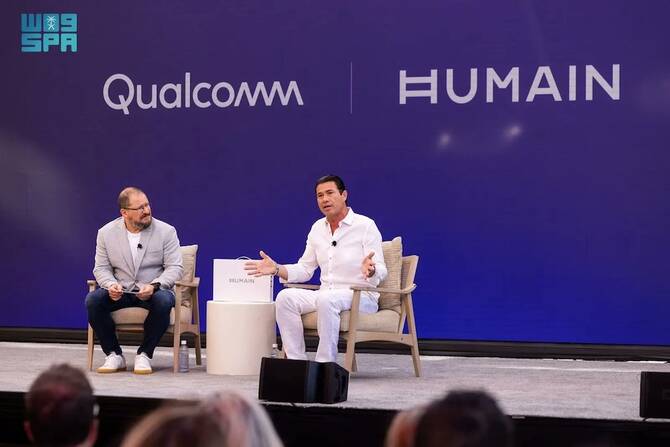
HUMAIN, a Public Investment Fund company has announced the launch of its Horizon Pro PC, billed as “a groundbreaking laptop designed to revolutionize agentic artificial intelligence personal computing.” Agentic AI systems can act independently and with initiative with limited, or no, human oversight.
The launch was announced by HUMAIN CEO Tareq Amin during the Snapdragon Summit in Maui, Hawaii.
According to a press release, the Snapdragon processor family at the core of the HUMAIN Horizon Pro deliver “leading AI performance and a powerful CPU so that the PC can operate up to 100 times faster than human thought.”
It added that the company’s upcoming proprietary HUMAIN ONE operating system “enables users to manage enterprise workflows, communications, and AI applications from a unified, adaptive interface designed to anticipate needs and accelerate decision-making.” It added that the new PC “offers zero-latency wake time, over 18 hours of battery life, a 40-percent reduction in power consumption compared to competing systems, and advanced thermal architecture for sustained, high-performance use across demanding environments.”
HUMAIN’s AI integrates the Arabic-first large language model “ALLaM” and “operates locally for maximum speed and data privacy, with the flexibility of hybrid AI to tap into the cloud when complex processing or broader insights are required, offering enterprise users the ideal blend of performance, control, and scale,” according to the company.
Amin said: “The HUMAIN Horizon Pro represents a paradigm shift in agentic AI personal computing, especially for enterprise environments where AI actively collaborates with users, both locally and in the cloud, to boost productivity.”
Amin also announced that HUMAIN will give away 500 of its PCs to students as part of its launch initiative to “help unlock new potential for learning, creativity, and future leadership in AI-driven fields.”
source/content: arabnews.com (headline edited)
_____________
HUMAIN launched its Horizon Pro PC, a groundbreaking laptop designed to revolutionize agentic AI personal computing. The announcement was made by HUMAIN CEO Tareq Amin during the Snapdragon Summit in Maui, Hawaii. (SPA)
The Safety Wings drone can detect individuals in distress in water, swiftly navigate to their location, and drop inflatable life buoys.
Three Moroccan students from the Faculty of Sciences and Technologies (FST) in Settat have won a gold medal at the Innovation Week (IWA 2025) for their groundbreaking project, Safety Wings.
A drone that saves lives at sea
The winning project introduces a drone designed to revolutionize aquatic rescue operations.
The Safety Wings drone can detect individuals in distress in water, rapidly fly to their position, and deploy inflatable life buoys.
In contrast to existing buoys that sell for around $300 and are typically disposable, the Moroccan designers developed a reusable model that costs under $20. The only recurring expense is replacing compressed air cartridges.
Through the combination of reusability and affordability, the project provides an essential loophole in global rescue missions. The project is an affordable and scalable solution for impoverished communities with fewer resources but frequent aquatic emergency cases.
From Morocco to the world stage
Salah Bouhlal, Moad Es-Sraoui, Mohamed Kerroum, and Aziz Hraiba (supervisor) developed Safety Wings during their days as FST Settat students.
Their success at IWA 2025 places Morocco on the international innovation map and also shows how youthful scientists can convert pressing humanitarian needs into practical technological solutions.
OFEED, the organizer of the Innovation Week, describes the event as both a premier platform for showcasing and fostering cost-effective innovation and a “global community that believes ideas can become impact when courage meets collaboration.”
Innovation with human impact
Safety Wings is one component of a greater movement toward harnessing new technology for the public good. With their provision of life-saving gear, the Moroccan students seek to leave a positive impact on global standards of safety in aquatic environments, from seaside public beaches to remote fishing villages.
In addition to the Safety Wings team, other Moroccan innovators also figured among the winners of IWA 2025. Their projects spanned diverse fields. This collective achievement reinforced Morocco’s reputation as a hub of creativity and problem-solving on the international stage.
Dr. Andilyat Mohamed is a dedicated Comorian scientist who has been actively engaged in plant ecology, specifically in phytogeography, since 2007, accumulating 16 years of experience in Comorian plant formations. She expanded her focus to marine and coastal ecosystems in 2012, concentrating on mangrove algae and seagrass. As a university professor, she delivers lectures and practical work in applied plant ecology and general botany, using special mangrove field trips to demonstrate the theory and practice of different types and their roles to students at the Faculty of Science.
In 2010, Dr. Mohamed established the National Herbarium at the University of the Comoros, where 98% of the staff are women. She also initiated the Comoros mangrove house in partnership with a local village women’s association called “JEUNE FILLE DE DOMOIBOINI .” As the national focal point for the Comoros in the WIOMN network on mangroves in WIOMSA, she authored the first publication of the 23 localities hosting mangroves on the island of Ngazidja as part of her doctoral thesis.
Currently, Andilyat is concentrating on the restoration and assessment of blue carbon in the mangroves of the Comoros, searching for a specific algorithm corresponding to the particular characteristics of amphibious Comorian ecosystems dominated by a recent lava flow substrate as part of her Habilitation to Supervise Research (HDR).
Tell us, what led you to pursue a career in marine/ocean science?
What pushed me to pursue a marine career was the fact that I read the bibliography of an official document printed in 2002 that said there were 5 mangrove sites on the island of Ngazidja. However, when I supervised a master’s student in 2012, we worked on 7 sites, and I knew that there were others. In 2016, I used remote sensing to find out for the first time that the island has mangroves in 23 localities and that the ecosystems had been reduced and divided into several sites by lava flows. Since then, I’ve been working closely with the islands’ conservationists.
As a marine/ocean professional, what critical lessons have you learned? Share your insights and experience with others who aspire to become experts in this field.
Mangroves are more capricious than humans, they are mute but shout loudly in the silence by releasing CO2 when under anthropic pressure or by trapping carbon when conserving and protecting the site.
In celebration of International Women’s Day theme “Invest in Women, accelerate progress”, what progress do you envision for women in the Western Indian Ocean region?
Comorian women are fortunate to be among the few countries where inheritance is matrimonial. This gives them authority and independence in social activities. It is with this vision that I am working with my team to ensure the survival of the mangroves of the Comoros. I started by joining forces with the Jeune Fille Association.
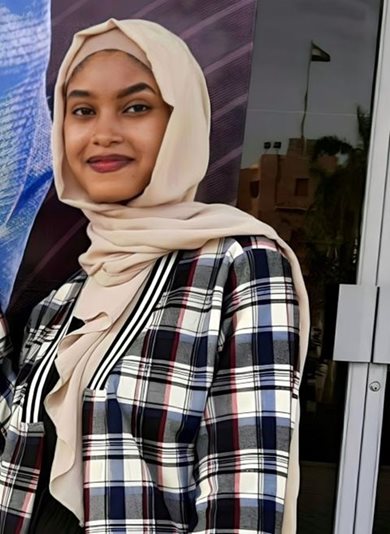
Sara Albagir Abdalla Mohammed is many things—a student, a scientist, an ASM Young Ambassador—but, above all, she is unstoppable. Amid ongoing socio-political upheaval and conflict in her home of Sudan, she is determined to advance her own microbiology journey and ensure others can do the same.
“The challenges I’ve faced have ultimately shaped me into a more resilient and adaptable microbiologist,” Albagir Abdalla Mohammed said. “These experiences have strengthened my commitment to making science accessible to those in resource-limited settings and finding innovative ways to promote scientific development, even in the face of adversity.”
Her penchant for tackling scientific challenges predates her academic activities. As a child, Albagir Aballa Mohammed wanted to find treatments for “untreatable” diseases, though it was during her high school biology classes—where she learned about the intricate complexities of the human body—that her interest in health sciences blossomed. She took that interest and ran with it, going on to pursue a degree in medical laboratory sciences at the University of Khartoum.
Albagir Abdalla Mohammed began her college career by diving head-first into disciplines ranging from hematology to clinical chemistry, though medical microbiology and immunology really drew her in. “I became particularly interested in how such tiny beings [i.e., microbes] could have massive impacts on global health systems. This contrast between the micro and the macro fueled my desire to understand how microbiology could contribute to solving some of the world’s most pressing problems,” she shared. Her experience training in laboratories at Ibn Sina Specialized Hospital—one of Sudan’s largest hospitals for liver diseases, including those caused by microbes like hepatitis B virus—solidified her decision to specialize in medical microbiology.
But, as certain as Albagir Abdalla Mohammed was about her chosen educational path, external circumstances have made the road difficult to navigate. The Sudanese December Revolution shut down the education system in Sudan for almost 2 years; the COVID-19 pandemic tacked on another year. Then, in April 2023, as Albagir Abdalla Mohammed neared the end of earning her degree, conflict broke out in her home of Khartoum, Sudan’s capital. The conflict has displaced over 10 million people, with Albagir Abdalla Mohammed—who was forced to relocate to a rural area—among them.
“Over the past year and a half, I’ve faced ongoing disruption, displacement and uncertainty,” she shared. “This was an especially difficult time, as I was so close to completing my education and reaching my long-awaited goal of graduation. My academic journey, originally planned to take 4 years, [has] stretched into over 6 due to these repeated interruptions.”
Yet, for each obstacle thrown in her path, Albagir Abdalla Mohammed has found ways to continue her scientific development. “I refused to let my educational journey come to a complete halt. I have continued learning, even under challenging conditions with poor internet connectivity in the rural area I’m in,” she said, noting that she has completed various online programs and specializations in public health, epidemiology and data analytics.
What’s striking about Albagir Abdalla Mohammed is that she is not just concerned about her own scientific advancement. She is also invested in the future of countless scientists facing similar circumstances. When universities in war-affected regions of Sudan closed, she watched as her peers lost hope and disengaged from their academic paths. For Albagir Abdalla Mohammed, this was a call to action. “I was determined to keep microbiology alive in Sudan, even amid these challenges.”
Fueled by this determination, she founded MicroGen, an online initiative aimed at empowering early-career microbiologists in Sudan through career guidance, professional development and capacity-building opportunities. Now with a community of 5,000 students and professionals from over 50 Sudanese universities and institutions, MicroGen has hosted informational sessions about various microbiology career paths, highlighting connections between the diverse scientists, disciplines and roles spanning the microbial sciences.
Such interconnectivity has been foundational to Albagir Abdalla Mohammed’s efforts. She considers a strong network of peers and collaborators instrumental for navigating obstacles and creating new opportunities, and credits the ASM Young Ambassador program, with its vast global community of scientists, with helping her build that network. As Young Ambassador to Sudan (an appointment she considers one of the most pivotal moments of her career), Albagir Abdalla Mohammed has focused on leveraging her platform to “increase the engagement of Sudanese microbiologists within ASM and promote its mission of advancing the microbial sciences.”
To say she has been successful in this mission is an understatement. A free online Bioinformatics Workshop she organized in the summer of 2024 attracted a whopping 1,144 participants—over 700 from Sudan and the rest from 32 other countries—and resulted in 865 new ASM members. Albagir Abdalla Mohammed designed the workshop to meet the needs of Sudanese microbiologists who are unable to conduct lab-based research. “By focusing on in silico research, participants were empowered to use computational tools to simulate biological processes, analyze large datasets and conduct meaningful research without the need for fully equipped laboratories,” she said.
Feedback from the event, where participants learned everything from how to analyze microbial genomes, to the ins and outs of bioinformatic data interpretation, was overwhelmingly positive. One participant from Sudan wrote that the workshop was “comprehensive and nicely delivered, even with the war running in the background,” adding that they no longer “feel really stuck, nor [that] the world is steps ahead of me.”
For her part, Albagir Abdalla Mohammed learned that “with the right approach, it is possible to sustain research momentum even in the most difficult circumstances, and that the scientific spirit of curiosity and perseverance can thrive in adversity.”
In many ways, she embodies this spirit of curiosity and perseverance. This is evident not just from her work with MicroGen and the ASM Young Ambassador program, but also from other endeavors. Case in point: Albagir Abdalla Mohammed was behind the effort that led to a collaboration between the non-profit organizations HealthGoes Global and Partners for World Health . The partnership resulted in the shipment of over $340,000 worth of essential medical supplies to aid Sudan’s overwrought health care system. She was also recently appointed a Champion for the Microbiological Society in the U.K. and is currently organizing Sudan’s first national symposium on antimicrobial resistance (AMR), aimed at fostering collaboration among Sudanese microbiologists and health care professionals to address the AMR crisis.
The throughline here? Albagir Abdalla Mohammed is a force, a passionate science advocate. She may be early in her career, but that hasn’t stopped her from taking on leadership roles to enact change. She encourages other future and early-career scientists to adopt a similar outlook.
“Never underestimate your abilities and know that leadership isn’t confined to titles or seniority; it’s about how you contribute, collaborate and support others, regardless of your career stage,” she said. “Often, early-career scientists feel they need to wait for a certain level of experience or recognition before stepping into leadership roles, but that’s not the case. Leadership comes from taking initiative, sharing your ideas and offering guidance—even as a student or young professional.”
Still, while showing initiative as a young scientist is crucial for advancement, Albagir Abdalla Mohammed acknowledged barriers that can slow forward motion. She pointed specifically to the limited number of mentorship and training opportunities for undergraduates like her, as many are geared toward graduate students and advanced professionals. Investments in these advanced scientists is imperative, she noted, but such focus means young scientists at formative stages of their development can get left behind. This is felt strongly in countries like Sudan, where political instability and conflict can extend an undergraduate degree to 6-8 years.
“These delays hinder access to mentorship and resources, and the lack of available opportunities further reinforces these existing barriers, leaving talented students behind and limiting their ability to participate in the global scientific community,” Albagir Abdalla Mohammed explained. “Addressing this gap is essential to fostering a truly inclusive STEM field. Empowering undergraduates, particularly those from underrepresented regions, will not only cultivate diverse talent, but also enrich the global scientific dialogue with fresh perspectives and ideas,” all of which are paramount for propelling science forward to solve big problems.
To that end, Albagir Abdalla Mohammed, who is Sudanese, Muslim, identifies as African and speaks Arabic as her native language, considers diversity in all its forms the cornerstone of innovation. She advised scientists at every career stage to view their background as an asset, not a limitation, highlighting that all the pieces that make her who she is have inspired her work. “My faith emphasizes the values of compassion, community and social responsibility, motivating me to uplift marginalized voices and create inclusive spaces where everyone has the opportunity to contribute and thrive,” she shared.
It doesn’t take much to see that Albagir Abdalla Mohammed is a bright light—and the future of microbiology is brighter because of her. Wherever her path takes her next, one thing is certain: she won’t give up. And she encourages other young scientists not to give up either. “The journey in science will likely present challenges, including systemic barriers, limited resources or unexpected disruptions. In those moments, persistence and resilience are key. Let the obstacles you face shape you into a stronger, more adaptable version of yourself.”
Saudi Arabia actress and filmmaker Sarah Taibah has nabbed a role in a social media campaign for US luxury jewelry house Tiffany & Co.
The actress shared a post on her Instagram account, in which she goes about her day adorned in various pieces by Tiffany & Co.
“Sketchbook in hand, eternal sunshine of a stormy mind, and days rarely slow down. Absolutely in (love) with HardWear by @Tiffanyandco, it’s been my little talisman throughout,” she captioned the short clip.
The HardWear collection draws on a design from 1962, according to the brand.
“HardWear is an expression of love’s transformative strength. Like New York, the city in which it was born, the collection embodies an enduring resilience and ability to be free,” the label wrote on its website.
The collection features necklaces, bracelets and earrings with interlocked links, veering into a more industrial aesthetic than the dainty jewelry the house is known for.
Taibah shows off a pair of diamond encrusted earrings, along with a necklace and watch from the collection that was handcrafted in Switzerland.
Taibah shot to fame for her show “Jameel Jeddan,” the first local production that was wholly created and starred in by a Saudi Arabia woman.
The plot of the 2022 release was anything but typical. Strong-headed Jameel wakes up from a five-year coma and is forced to finish her last year in high school and rejoin an unfamiliar society.
As a coping mechanism, she begins to experience glitches in the form of an animated alternative reality.
Taibah is working on an offbeat Saudi romcom “A Matter of Life and Death,” which she wrote. The film is being directed by Anas Batahaf and will star Taibah and Yaqoub Al-Farhan.
Her collaboration with Tiffany & Co. is not the first time she has worked with a global luxury brand.
In February, Spanish fashion house Loewe unveiled a Ramadan campaign directed by Lebanese-Sudanese auteur Dana Boulos and starring Taibah and Saudi Arabia Olympic rower Husein Alireza.
The cast included Omani artist Mays Almoosawi, Kuwaiti visual artist Najd Al-Taher, Emirati film director Sarah Al-Hashimi, Kuwaiti DJ Cascou and Bahraini contemporary artist Salman Al-Najem.
source/content: arabnews.com (headline edited)
____________
Sarah Taibah shot to fame for her show “Jameel Jeddan.” (File/ AFP)
Long before streaming took over, these film theatres shaped how the Arab world fell in love with cinema. Some still stand, holding stories of generations past.
In 1895, cinema was born. In the French coastal town of La Ciotat along the Mediterranean, the Lumière brothers screened ‘L’arrivée d’un train en gare de La Ciotat’ at the Eden Theatre – now considered the oldest purpose-built cinema still in operation. This moment marked the public birth of film as both an art form and a collective experience. And it didn’t stay in France for long. Crossing oceans and borders, it found new audiences around the globe. Everything started to change, rapidly, violently, and so quickly. Films stormed every means of expressionism out there and, in the process, changed how we literally view life.
The Middle East and North Africa – dreamy, reflective, and rich in storytelling, qualities that are evident in our folklore – embraced this new medium with open arms. In a time when much of the Arab world was under the plague of colonialism, a factor that ironically accelerated cinema’s arrival, films offered a glimpse of hope and a window into other possibilities. Film theatres began to appear, and audiences were obsessed with these ‘moving pictures’. Just a year after the Lumières’ screening, one of the earliest film showings in the world took place in Egypt, at the Zawani Café in Alexandria, in January 1896.
Since then, our love for cinema has been undeniable. The buildings that housed these films became places where we shared our deepest fears, hopes, and desires. So, we’ve taken the opportunity to rewind and take a look at some of the oldest film theatres across the Middle East and North Africa, from Al Maghreb to Egypt to the Levant, where some of these spaces still stand…
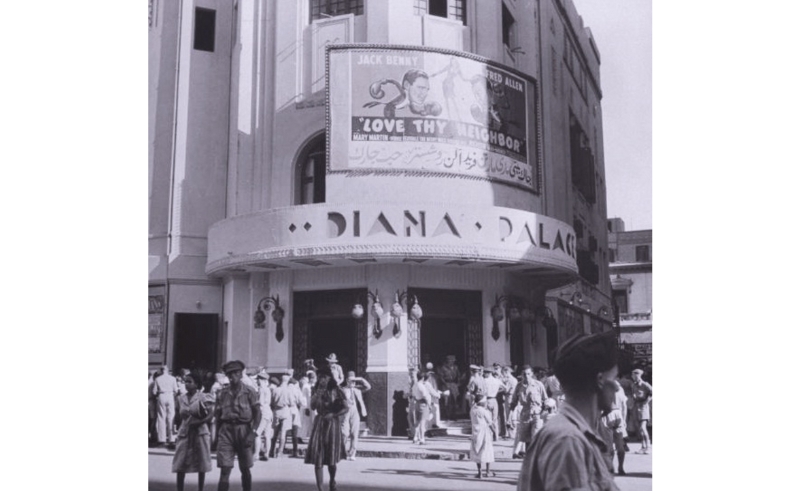
Diana Palace Cinema, Cairo
Originally opened in 1932 as Diana Palace, the cinema was once one of Cairo’s most luxurious and expansive movie theatres, with a grand hall that could seat up to 1,500 people. Designed by Italian architect Gaston Rossi, it quickly became a cultural fixture in the city. The building was damaged during the Cairo fire of 1952 but reopened in 1960 under a new name – Cinema Diana. Located at the intersection of Al-Alfi Street and Bustan Al-Dikka in the Azbakeya district of Downtown Cairo, the cinema has since shifted into the category of second-run theatres. Still, it remains one of the oldest standing film venues in Egypt, a familiar presence tied to the city’s deep-rooted cinematic history.
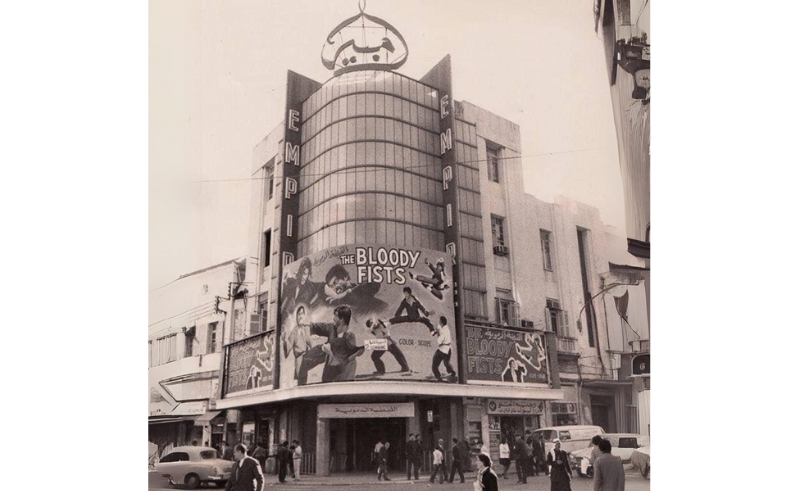
Empire Cinema, Beirut
Originally built as a hotel, the building was converted into a theatre in 1920 by George Haddad and Nicola Kattan, who saw its potential as a cultural space. Just nine years later, in 1929, it was transformed into a film theatre, r. Since then, it has screened countless films from around the world and has remained a cherished destination for generations of moviegoers. Today, Empire stands as one of the oldest surviving cinemas in Lebanon, and a witness to the country’s long love affair with cinema.
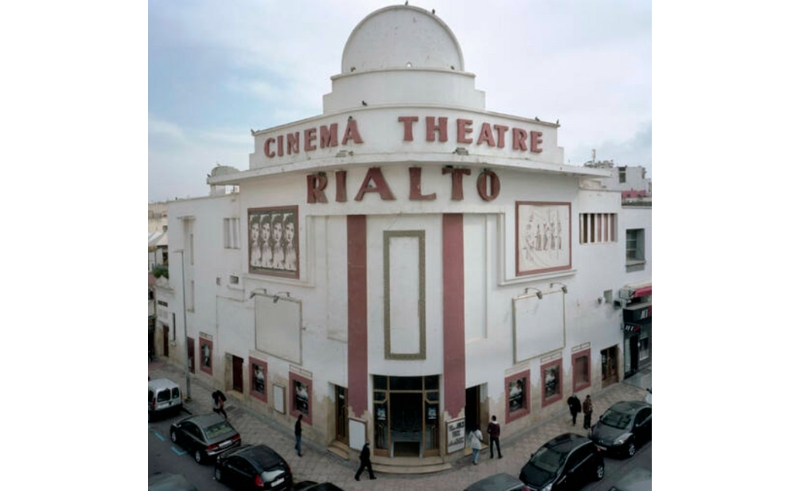
Cinema Rialto, Casablanca
Cinema Rialto is one of Casablanca’s most iconic landmarks, opened in 1929 during the French colonial era. Known for its striking Art Deco architecture and 1,350-seat hall, it was once the go-to spot for moviegoers in Morocco. Over the years, it hosted everything from blockbuster films to live performances by international stars like Edith Piaf and Josephine Baker. Though its popularity has faded with time and multiplexes, Cinema Rialto still stands—and occasionally screens films—offering a nostalgic glimpse into Casablanca’s cinematic golden age.
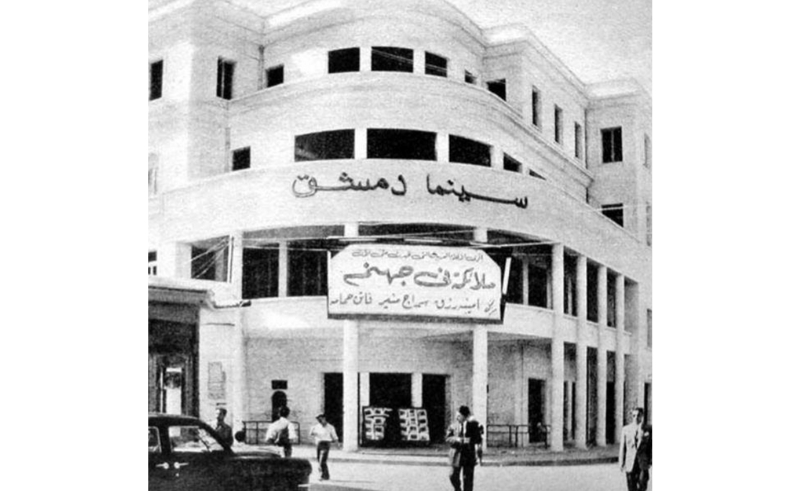
Cinema Dimashq, Damascus
Cinema Dimashq opened its doors in 1943 and quickly became a landmark in Damascus, bringing the magic of cinema to Syrian audiences. With 1,500 seats, it was one of the biggest single-room theaters in the Arab world. After shutting down in 2005, it made a comeback in 2009 as Cinema City – renovated, and rebranded. Today, it houses four mid-sized screening rooms and remains the only cinema in Syria that regularly screens new American and European releases.
Cinema Le Palace, Tunis
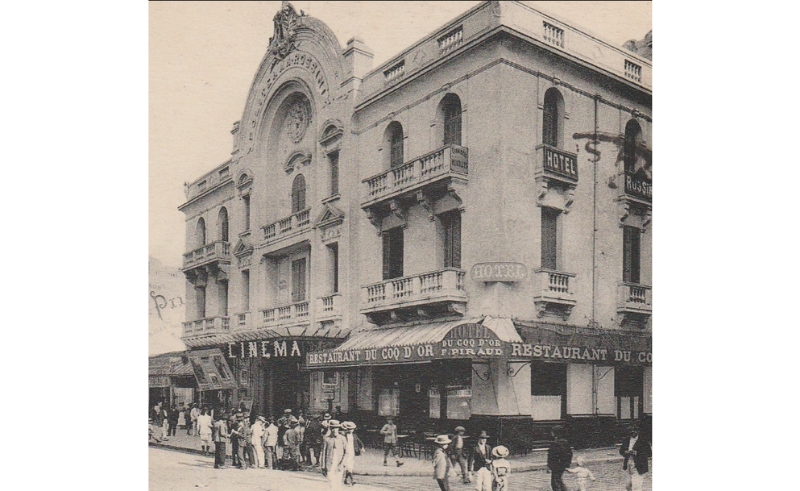
Cinema Le Palace, originally opened in 1903 as Politeama Rossini, was built as a theatre for Tunisia’s Italian community. Located on Avenue Habib Bourguiba in Tunis, the venue was converted into a furniture store in 1923, before later becoming a cinema. In 2002, the building’s historic façade was restored by the Association for the Protection of the Medina of Tunis as part of wider beautification efforts along the avenue. Today, it continues to operate as a movie theatre.
Ciné-Palace Theater, Marrakech
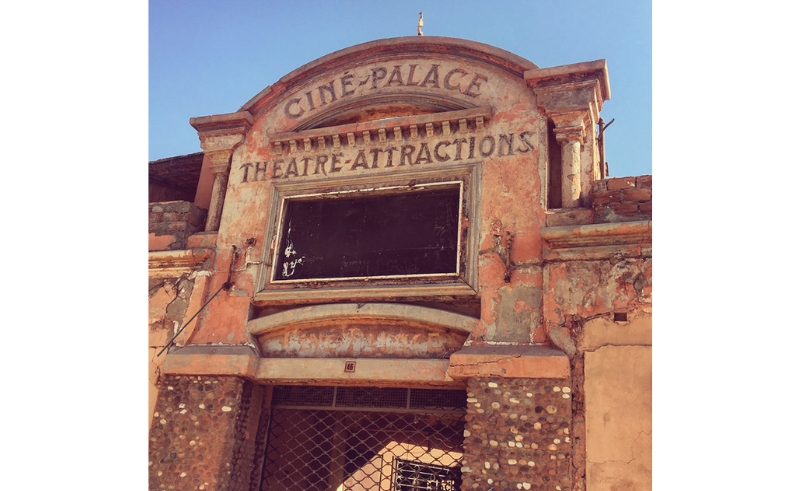
Built in 1926 by architect Serge Escharavil during the French protectorate, Ciné-Palace in Marrakech was the vision of Monsieur Friggeri, who dreamed of creating an artistic, multicultural cinema. Throughout the 1930s, it hosted renowned performers like Nat King Cole and Rita Hayworth. Often seen as Marrakech’s answer to France’s Eden Theatre, Ciné-Palace stood as a cultural hub for nearly four decades before closing in 1984, eventually overshadowed by the rise of luxury hotels.
Metro Cinema, Alexandria
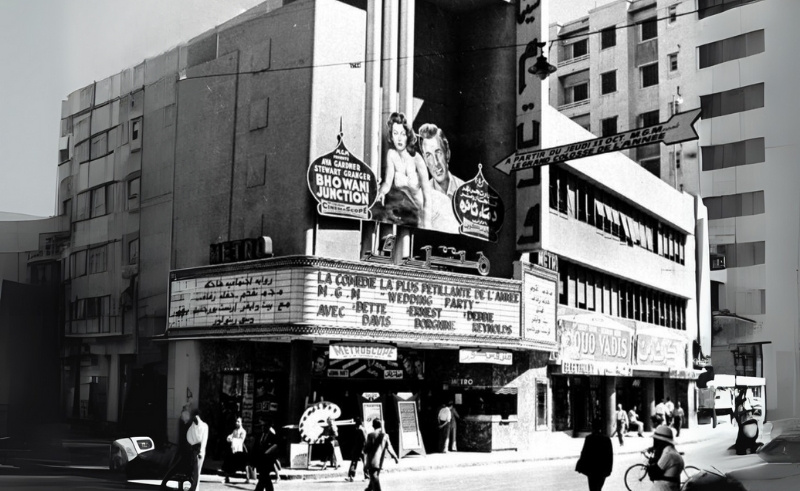
Metro Cinema in Alexandria opened in 1950 as part of the Metro-Goldwyn-Mayer chain, bringing international films and studio prestige to the city’s growing cinema scene. It stood out for its sleek design and strong programming mix, showing both local and foreign titles. While it’s no longer the draw it once was, its presence remains part of Alexandria’s film-going history – less nostalgia, more cultural fixture.
Al Hussein Cinema, Amman
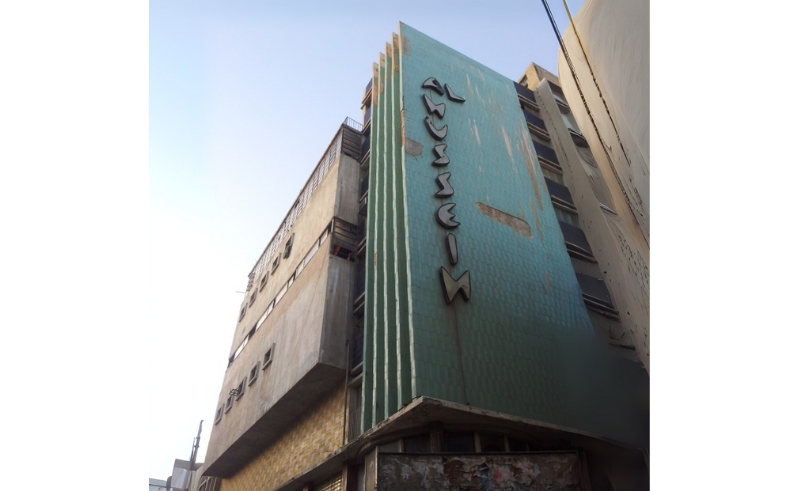
Cinema Al-Hussein opened in 1959 in downtown Amman, Jordan, and quickly became a major cultural hotspot. Designed by Egyptian architect Sayed Karim, it stood out for its bold Art Deco style and modern design. It screened major international films and was popular through the 1960s and ’70s. But with the rise of suburban cinemas and shifting city life, it eventually closed. Today, the building still stands – empty and neglected.