Arabs & Arabian Records Aggregator. Chronicler. Milestones of the 25 Countries of the Arabic Speaking World (official / co-official). AGCC. MENA. Global. Ist's to Top 10's. Records. Read & Enjoy./ www.arabianrecords.org
Saudi Arabia was elected to the Board of Governors of the International Atomic Energy Agency (IAEA) during the organization’s 69th General Conference in Vienna on Friday.
The Kingdom will serve as a member of the 35-member Board for the next term, running until 2027, the Saudi Press Agency reported.
— IAEA – International Atomic Energy Agency (@iaeaorg)
September 19, 2025
———————-
The IAEA board is a key decision-making body, overseeing sensitive issues such as safeguards, which involve verifying the peaceful use of nuclear energy by States Parties to the Treaty on the Non-Proliferation of Nuclear Weapons.
The board also reviews the agency’s program, budget, and financial statements, and makes recommendations to the General Conference.
Saudi Arabia previously held a seat on the Board from 2022 to 2024.
Its election reflects international confidence in the Kingdom’s constructive role in promoting global cooperation and using atomic energy to support development and peace, SPA added.
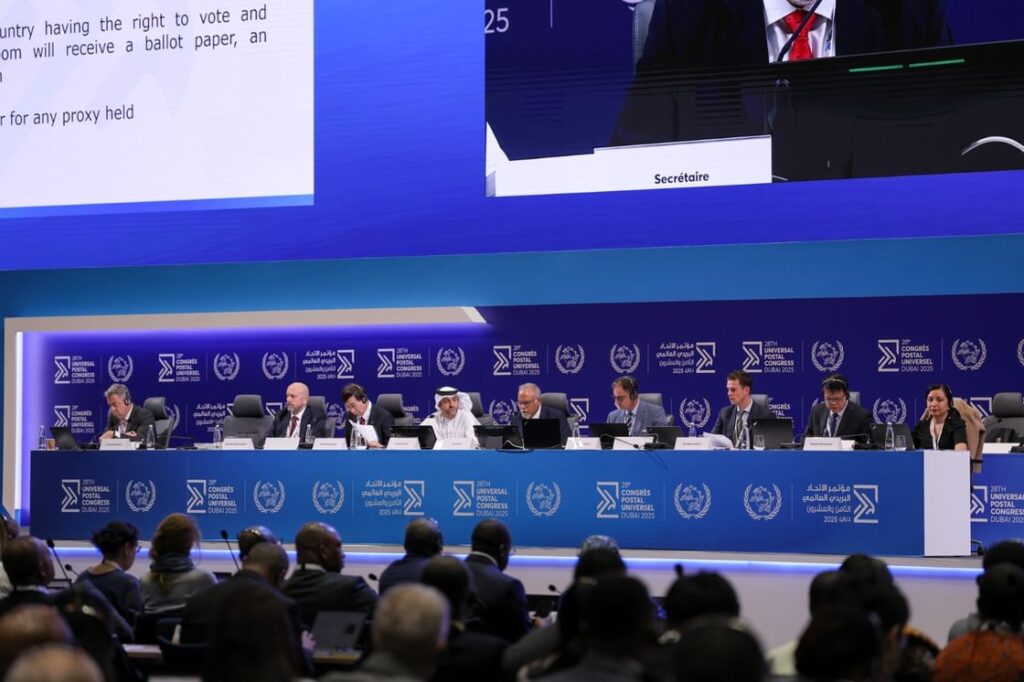
The 28th Universal Postal Congress – Dubai 2025, hosted by the UAE over the past two weeks, concluded today with member countries unanimously adopting the Universal Postal Union’s (UPU) 2026–2029 Strategy, also known as the ‘Dubai Strategy’, serving as a global roadmap for the future of the postal industry and reaffirming its critical role in promoting trade and communication in light of the rapid transformation shaping the global logistics and eCommerce sectors.
The ‘Dubai Strategy’ reflects UPU member nations’ shared vision of an integrated, inclusive and sustainable global society empowered by a seamless, smart and innovative postal system that promotes social and economic development and supports the achievement of the Sustainable Development Goals (SDGs).
The strategy is the result of the most comprehensive consultation process in UPU history, which involved over 2,200 participants from all 192 member countries as well as other public and private sector organisations. The collaborative process reflects broad consensus around the strategy and strengthens its inclusivity.
The UAE has also been appointed to supervise the implementation of the new strategy through the ‘Dubai Business Plan’ in its capacity as Chair of the UPU Council of Administration (CA) over the next four years. The Council, comprising 41 member states elected during the Congress, oversees the Union’s activities and addresses organisational, administrative, and legal matters, ensuring effective governance for the future of the global postal sector.
Furthermore, the UAE has won membership in the UPU’s Postal Operations Council (POC) for the 2026–2029 cycle after achieving 144 votes from member countries, marking another significant achievement that underscores its leading status on the international stage.
The UAE was elected as one of 48 member states of the POC, selected from among the Union’s 192 member countries. The POC is the UPU’s specialised technical body, responsible for supervising the development of key operational policies and postal services, unifying standards, improving quality and enhancing coordination among global postal networks to build a more efficient and sustainable international postal system.
Badr Al-Olama, Chairman of 7X, said, “The UAE’s election to the UPU Postal Operations Council represents a clear affirmation of our nation’s leadership in shaping the future of postal and logistics services worldwide. Hosting the 28th Universal Postal Congress in Dubai and spearheading the implementation of the 2026–2029 Strategy with the chairmanship of the Council of Administration, further demonstrates the UAE’s commitment to fostering consensus that delivers tangible improvements in connectivity, sustainability, and efficiency.
“This new mandate gives us a decisive voice at the heart of the UPU’s key decision-making processes, enabling us to guide the next phase of technologies and policies that will define the future of this critical industry. Guided by our leadership’s vision, we will continue to strengthen the UAE’s role as a platform where sustainable solutions and digital tools are developed and deployed, in collaboration with the global postal sector.”
The Congress re-elected UPU Director General Masahiko Metoki and Deputy Director General Marjan Oswald for a new four-year term, reflecting member countries’ satisfaction with their leadership and trust in the Union’s institutional development trajectory.
Masahiko Metoki, Director-General of the Universal Postal Union, said, “This Congress has been more than a gathering. It has been a moment of transformation, during which we faced challenges head-on, redefined our role in a rapidly changing world, and reaffirmed the values that unite us. I would like to extend my deepest appreciation to the Government of the United Arab Emirates for generously hosting this important assembly of postal decision makers.”
The comprehensive ‘Dubai Strategy’ aims to enhance member countries’ dedication to quality standards, expand access to postal services, and strengthen the rules-based global postal system by establishing national regulatory frameworks.
The strategy also prioritises accelerating innovation and digital transformation by developing new customer-centric products and services, adapting to shifts in the eCommerce sector, and offering digital services at postal access points. Additionally, the vision aims to reinforce cooperation through regional capacity building, technical collaboration, and stakeholder engagement platforms that facilitate postal development.
By modernising regulations, enhancing cross-border supply chains, and ensuring greater compliance with quality standards, the ‘Dubai Strategy’ aims to leverage the single postal territory made possible through an effective, rules-based global postal system.
During the closing session, Tariq Al Wahedi, 28th Congress Chair and GCEO of 7X, stated, “The ‘Dubai Business Plan’ represents a significant transition in the way the global postal sector operates, enabling member countries to curate services in line with their national priorities while ensuring combined efforts at a global level. In the upcoming phase, we seek to create a more efficient, innovative and sustainable postal network that contributes to enabling trade, promoting digital integration and enhancing the quality of life of communities.”
Al Wahedi added, “By chairing the Council of Administration and overseeing the plan implementation, we seek to achieve strategic outcomes such as improved, market-relevant, multilateral systems that guarantee the provision of quality, accessible, affordable, viable postal services. We will make conscious efforts to strengthen customer-focused postal products, encourage innovation in products and services, and fortify cross-border postal supply chains. By expanding partnerships, strengthening regional integration and modernising the postal infrastructure through collaboration and technical assistance, we will also work to solidify the sector’s role in advancing national economic and social objectives and actively contributing towards achieving Sustainable Development Goals.”
The 2026–2029 Strategy includes KPIs, such as increasing the percentage of member countries with comprehensive postal regulatory frameworks aligned with UPU standards and guidelines; boosting the annual growth rate of postal access points to ensure seamless access for all; raising annual nominal growth in operating revenue (SDR); increasing the percentage of international postal items delivered end-to-end in accordance with applicable UPU quality of service standards; and raising the proportion of member countries that integrate the postal sector into their national development plans.
As a result of the significant international momentum that accompanied the adoption of this strategy, the Congress witnessed the signing of multiple memoranda of understanding between member countries, alongside bilateral and multilateral meetings, and the introduction of qualitative policy documents on governance, innovation and sustainability. By strengthening its global footprint and emulating the Congress’ theme, ‘Leading the Change, Creating the Future,’ the UAE further solidifies its position as an active partner in driving the future of the global postal industry, and a major contributor to achieving the Union’s vision in the coming years.
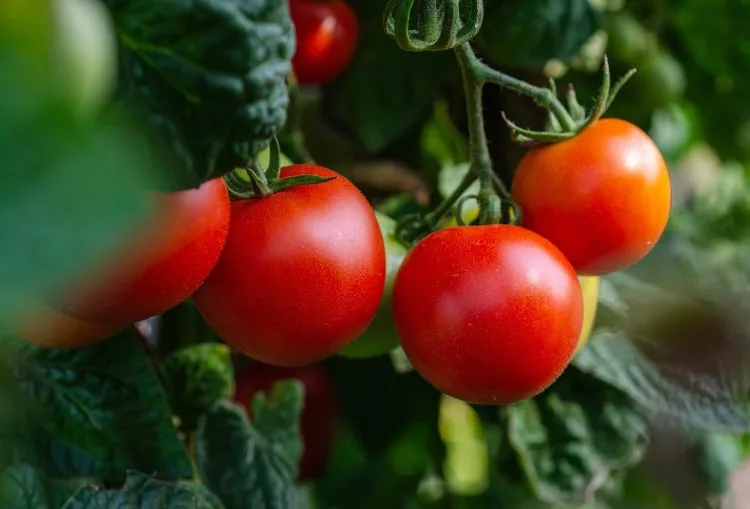
Tomatoes make up over 30% of Morocco’s fruit and vegetable export earnings, ranking the country third in global tomato exports behind Mexico and the Netherlands.
Despite Morocco’s challenging circumstances of drought and worker shortages, the North African country succeeded in exporting 745,000 tons of tomatoes in 2024/25, setting a new record.
Morocco earned nearly $1.2 billion from tomato sales during the period from July 2024 to June 2025, according to EastFruit data from Morocco’s Foreign Exchange Office.
While dealing with long-term drought and insufficient farm workers, Morocco’s exports jumped 8.3% from the previous year and beat the 2022/23 record by four percent.
Tomatoes top Morocco’s farm exports
Tomatoes make up over 30% of Morocco’s fruit and vegetable export earnings, ranking the country third in global tomato exports behind Mexico and the Netherlands.
Morocco ships tomatoes year-round, but exports the majority between November and March. In November 2024, with a monthly shipment of 105,000 tons.
In May 2025, the country’s tomato exports to Norway alone reached a milestone, Morocco sent 5,000 metric tons of the Moroccan produce from July 2024 to March this year.
Where Morocco sells its tomatoes
France buys nearly half of Morocco’s tomato exports, and the UK comes in second place with over 15% of the total
The Netherlands and Spain buy more Moroccan tomatoes each year to fill gaps in their own export seasons. Germany and Portugal also increased Morocco’s tomatoes their purchases.
Sales to West African countries like Mauritania and Senegal continue to grow.
New markets expand fast
Belgium nearly quadrupled its tomato imports from Morocco in just two years, while Denmark and Norway have bought record amounts for three straight years.
Over the last three years, Sweden, Ireland, and Finland’s tomato exports have increased significantly.
Tomatoes make up over 30% of Morocco’s fruit and vegetable export earnings, ranking the country third in global tomato exports behind Mexico and the Netherlands.