‘From Ocean to Gulf: Heritage Music of the Arab World’ is a series by Ahram Online, in partnership with the AMAR Foundation (Foundation for Arab Music Archiving and Research). In this article, we present the music of the city of Tunis from the dawn of the 20th century till the years of independence.
After featuring the Sultana of Tarab Music, the Prince of Arabic Violin, the Master of Buzuq, Hajja Zeinab El Mansouria, the rich music of Happy Yemen (8th Century BC-19th Century AD), Happy Yemen in the 20th Century, and Songs of Satire; the history of Tunisian music in the 20th century emerges as a complex blend of Ottoman, African, European, and Arab Middle Eastern influences—shaping the country’s rich contemporary cultural identity in music and beyond.
Many Tunisians rightly endorse this multi-cultural identity. Its variations are reflected across Tunisia’s different regions, echoing the visionary observations of the great Arab historian Ibn Khaldoun (1332–1406), himself born in the country centuries ago.
This multilayered landscape of cultural expressions is associated with social and religious practices and at different instances combines music, dances and classical and colloquial poetry.
Furthermore, it is geographically configured by the plains, the Atlas mountains, and the Mediterranean sea, and forms a continuity beyond political borders with Libya to the southeast, Algeria to the west, and sub-Saharan Africa to the south.
‘A living mosaic’
To Tunisian singer Ghalia Ben Ali, Tunisian music is a living mosaic shaped by centuries of cultural blending and conquests, yet always anchored in the people’s voices.
“I was inspired by the Amazigh music of South Tunisia, for it’s alive. When I was young, helping my mother do house chores, we used to sing. Young girls would create new wedding songs or songs about our daily lives; there were no newspapers or films to talk about this, “she said.
Moufadhel Adhoum, a Tunisian composer and oud player, showcases the diverse music of Tunis City, as well as the North, Mid, and South of Tunisia:
Ma’luf music is of Andalusian origins. As for Mezwed music, it incorporates a bagpipe-type instrument that shares the same name as the genre, accompanied by a darbuka or similar percussion instruments. However, El Kef Governorate, in northwestern Tunisia, bordering Algeria, has its own repertoire of songs inspired by the region’s customs and traditions, as well as the slopes of the Atlas range.
In the South, El Forja music consists of songs associated with weddings and occasions, whereas Stambeli represents an African dimension of Tunisian spiritual music. As for the Sufi practices, they include El-Ziyara music, chants that accompany visits to Shrines.
However, Shaabi music is a blend of Berber (Amazigh), Arabic, and African, influenced by the region’s natural setting, the desert and camel rhythms. It expresses sentiments about love and historic events. Instrumental genres are also present in Tunisia and feature instruments such as oud, rababa, and nai.
Crossroads
Tunisia has consistently been positioned at the “crossroads of the Islamic and European worlds” throughout various historical periods, as noted by historian Kenneth J. Perkins.
In the latter part of the 19th century, these dynamics paved the way for the interaction of the dominant political, economic and military forces at that time, namely Ottoman rule and European powers.
Under the leadership of the Husainid dynasty (1705-1957), Western-inspired reforms based on the Ottoman Tanzimat were introduced during the Ottoman administration.
Additionally, cultural connections were enhanced with countries such as France, Great Britain, and Italy, alongside other Ottoman states and the Maghreb on a different level.
Colonial cultural dominance
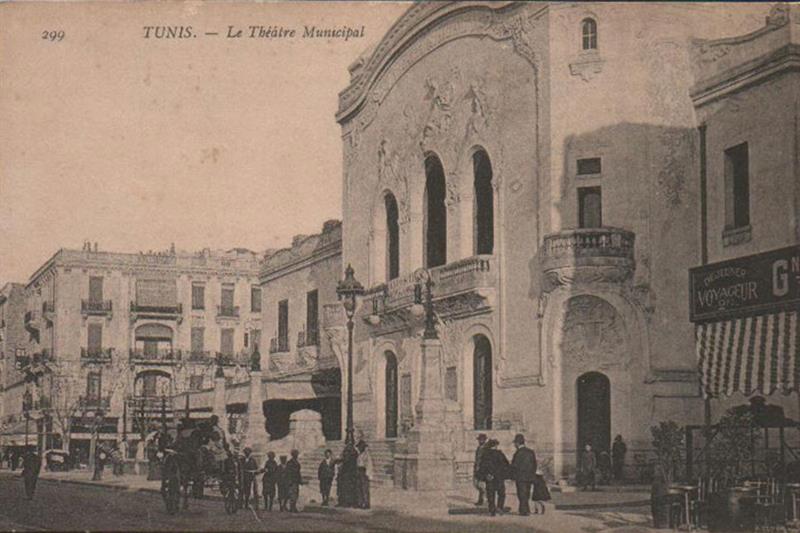
In 1837, a military music academy was founded in Bardo, west of Tunis city, which was succeeded by a symphonic orchestra in 1872.
Communities from these nations living in Tunisia introduced their cultures.
They initiated a significant cultural shift in local music practices, shaped by these nations’ various traditions, which later gained another layer with the establishment of a French protectorate over Tunisia in 1881.
New legislation was implemented to restrict traditional musical traditions among Tunisians, favouring and prioritising the European communities in Tunisia, according to researcher Alla El Kahla.
Francophone culture became a defining force in Tunisian society, with the capital developing into a cosmopolitan centre that saw the establishment of key institutions, including the National Archives (1874), the National Library (1885), and a network of museums across the country.
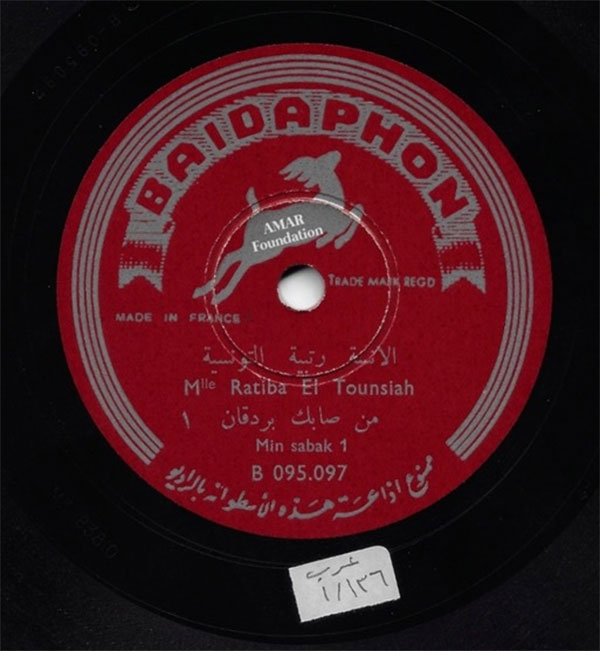
Simultaneously, traditional regional arts faced scrutiny regarding their worth, societal standing, and performance settings, as noted by the researcher Ruth Davis. Meanwhile, commercial recording began in Tunisia in 1904, coinciding with its development in Europe, where European brands dominated the market ahead of local or Arab brand names such as Baidaphon.
The foreign brands consisted of Pathé (France), Gramophone (England) through its French brand Zonophone, and Odéon’s French subsidiary (Germany). More about these record companies is available through AMAR’s podcasts and Bernard Moussali’s book, Le Congrès du Caire de 1932 (edited by J. Lambert: chap IV). Local record labels followed in 1930, such as Bembarophone.
A music school rooted in European traditions was founded in 1897, which subsequently became the Conservatoire National de Tunis after the nation gained independence in 1956. The musical life witnessed the emergence of orchestras and venues such as café halls and theatres that hosted European musicians, dancers, and actors performing mainly for foreign audiences. These performances eventually attracted Tunisian artists and audiences to music and theatre.
The Egyptian influence
The emergence of theatre groups from Egypt, including the Egyptian Comedy (Al-Comedia Al-Masryia), the Egyptian Troupe (Al-JawqAl-Maṣri) directed by Suleiman El-Qardahi, and Ibrahim Higazi’s troupe (1908 and 1909), came a few years later. Additionally, the Salama Higazi troupe introduced musical theatre to the Tunisian theatre scene in 1913.
These initial encounters sparked the foundational growth of Tunisian theatre. They brought the Arabic language and themes drawn from Arab history and heritage to established spaces that European traditions of music, opera, and theatre had previously dominated. Cultural exchanges from Egypt to Tunisia included screenings of early Egyptian cinema and visits by rising stars such as the Naguib Rihani Troupe (1933), followed two years later by a solo tour from his collaborator Badia Masabni with leading vocalist Nadra.
Other prominent figures, including George Abiad, Zaki Talimat, and Youssef Wehbe, also performed in Tunisia, as documented by Dr. Sayyid Ali Ismael in his study of Tunisian-Egyptian theatrical ties (1889–1962).
The author of the study traces these encounters back to the 1889 Paris Expo, when troupes from Egypt, Tunisia, Algeria, and Morocco shared the stage within the curated “Cairo Street” venue and presented their folk arts. The credit goes to these international expos for the oldest recordings of Tunisian music, notably the 1900 Paris Expo.
It was not long before a Tunisian-Egyptian troupe (Sodq Al-Ekhaa) was created in 1909, subsequently substituted by two Tunisian troupes, Literary Pride (Al-Shahama Al-Adabiyya) and Literary Arts (Al-Adāb), respectively in 1910 and 1911.
Other troupes followed their track across the country. While Al-Adāb expressed opposition to France, Al-Shahama Al-Adabiyya put forth no political agenda. One of the pioneering female names in theatre and music was Habiba Msika (1903-1930), who rapidly rose to stardom in theatres and café halls. Musicians integrated Western and Egyptian elements and practices, with the socio-cultural and political centrality of Egypt at that time.
Egyptian reference points sustained until different perceptions of authenticity grew in succeeding decades, as indicated by the researcher Salvatore Morra, who worked closely on the concepts of authenticity and modernisation in Tunisia.
Revival initiatives looked critically at possible local and regional relevant contexts of Tunisian heritage and identity beyond Egyptian aesthetic idioms and Western influences. Furthermore, the scholar Anas Ghrab points out three mechanisms that significantly transformed the musical aesthetics of traditional Tunisian art music. These include a rise in the number of musicians, the implementation of notation, and the incorporation of new instruments.
source/content: english.ahram.org.eg (headline edited)
___________
____________
TUNIS