QATAR , U.S. deepen defence ties with Emiri air force  facility in Idaho

Qatar and the United States have signed an agreement to establish a Qatari Emiri Air Force facility at Mountain Home Air Force Base in Idaho to host F-15 jets and pilots, strengthening bilateral defence cooperation and joint readiness.

The United States and Qatar have agreed to establish a new Qatari air force facility at Mountain Home Air Force Base in Idaho, aimed at strengthening bilateral defence cooperation and providing advanced training for Qatari pilots.

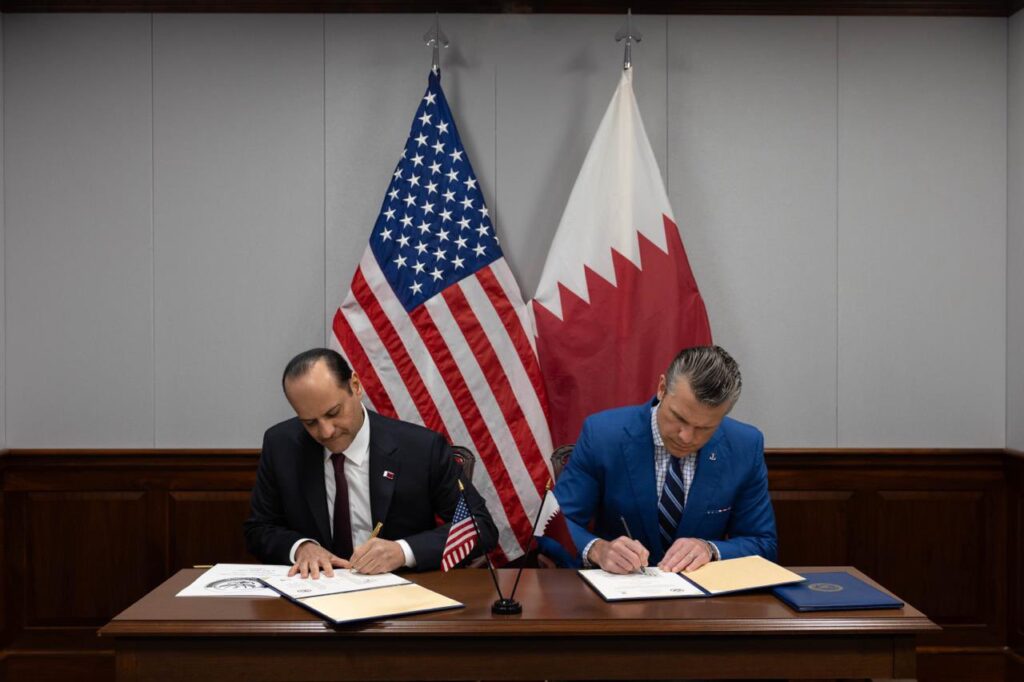
The agreement was signed today, 10 October, by Qatar’s Minister of Defence, Saoud bin Abdulrahman Al Thani, and U.S. Secretary of War Pete Hegseth.

During a ceremony at the Pentagon, Secretary Hegseth highlighted the significance of the agreement, stating: “Today, we’re announcing a letter of acceptance in building a Qatari Emiri Air Force facility at the Mountain Home Air Force Base in Idaho.”

He explained that the facility would host a contingent of Qatari F-15 fighter jets and pilots, aiming to “enhance our combined training, increase lethality, interoperability,” and described the initiative as “just another example of our partnership.”

The establishment of the facility also reflects Qatar’s pivotal role in recent diplomatic efforts. Secretary Hegseth acknowledged Qatar’s contribution to securing a ceasefire agreement in Gaza, noting, “You have been a core part of what has unfolded in Gaza, a historic moment.”

He expressed gratitude for Qatar’s ongoing support, particularly highlighting their assistance at Al Udeid Air Base, a key U.S. military installation in the region.

Qatar’s Deputy Prime Minister and Minister of State for Defence Affairs, Saoud bin Abdulrahman Al Thani, hailed the “deep defence partnership” shared by both states.

“Our nation shares a deep defence partnership grounded in a mutual respect and a common vision for peace and stability in the Middle East. Qatar’s hosting of Al Udeid Air Base stands as a cornerstone of this alliance and a testament to our collective commitment to regional and global security,” he said.

“We further welcome the signing of the letter of acceptance establishing a Qatari Emiri Air Force facility at Mountain Home Air Force Base in Idaho. This step strengthens interoperabilities, enhances joint readiness and advances our shared defence goals,” he added.

“Together we will continue to deepen this strategic partnership in pursuit of lasting peace and shared security.”

Mountain Home Air Force Base, located in southwestern Idaho, is already home to the 366th Fighter Wing, which operates F-15E Strike Eagles. The base also hosts the Republic of Singapore Air Force’s F-15SG fighter jets.

The addition of the Qatari contingent is expected to further enhance the base’s operational capabilities, providing a platform for joint training exercises and fostering closer ties between the U.S. and Qatari air forces.

source/content: dohanews.co (headline edited)

______________
_________________

QATAR / U.S.A
ARAB : 33rd Arab Music Festival to explore Arabic music in era of algorithms

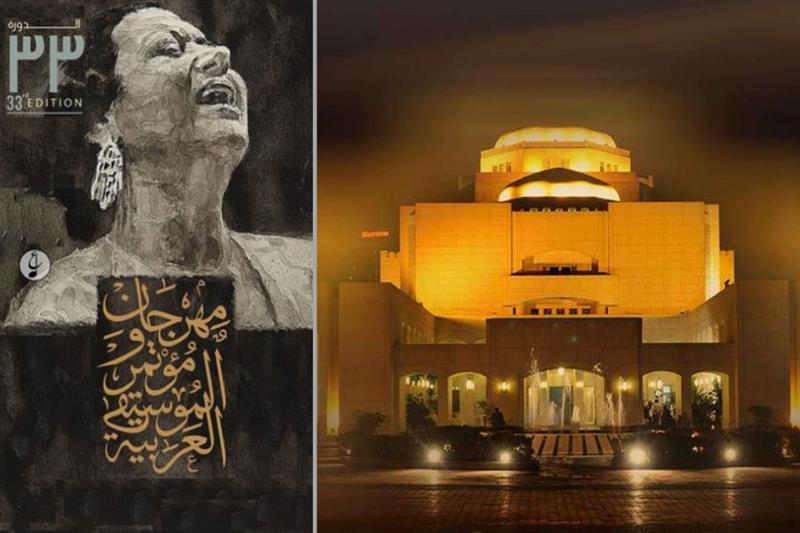
The 33rd edition of the Arab Music Festival and Conference, running from 16 to 25 October, will explore the intersection of artificial intelligence (AI) and traditional Arab music. More than ever, this year’s festival stands as a vital laboratory for the future of Arabic sound.

While paying tribute to the legendary diva Um Kalthoum, the programme features 41 concerts with 83 Egyptian and Arab artists across Cairo, Alexandria and Damanhour. Yet the heart of the event lies in its symposiums, which will gather 40 researchers from 15 Arab and Western countries to debate how the Arab musical world can fully enter the age of algorithms.

Among the highlights is a major symposium titled Arabic Music Facing Digital Transformation: Horizons and Challenges, alongside other events examining the impact of AI tools on Arab music.

A century-long debate
 

The discussion around the role of Arab music and its categorization is not new to the region.

“The Arab Music Festival was founded by Ratiba Al-Hefny, and this year marks its 33rd edition. But conversations about Arab music began as early as the first half of the 20th century,” says Shereen Abdel-Latif, head of the festival’s scientific committee. She refers to the historic Congress of Arabic Music, held in Cairo in 1932 under the patronage of King Fouad I.

“This historic event, initiated by French ethnomusicologist Rodolphe d’Erlanger and attended by leading Eastern and Western composers and musicologists such as Béla Bartók and Paul Hindemith, sought to codify the maqams (musical modes) and archive the region’s diverse traditions in the face of new technologies like the 78 rpm record and radio. These innovations threatened the essence of tarab — the art of improvisation (taqsim),” Abdel-Latif said.


“Today, AI has replaced the phonograph as both a source of hope and concern. While 1932 focused on recording heritage, AI aims to reproduce, analyze and reinterpret it,” she added. 

She has also curated several key presentations exploring the challenges of archiving and digitisation that will be discussed during the festival.

Among them: The Representation of Egyptian Musical Memory in the Digital Era by Ihab Sabry (Egypt); The Need for Documentation and Digitisation of Singing in Yemen by Mohamed Sultan Al-Yousifi (Yemen); Technological Innovation in the Service of Archiving by Salim Al-Zoughbi (Palestine); Documentation Efforts of Tunisian Music and Their Prospects in the Digital Revolution Era by Noura El-Shelli (Tunisia); Documentary Visions Since the 1932 Congress: Egyptian Leadership in Scientific Documentation by Souhaila Abdel-Moati (Egypt); and New Possibilities for Arabic Music in the Digital Age by Jennifer Jolley (United States).

Paradoxes of algorithms 
 

The symposiums will focus on four main themes: creation, education, archiving and the music industry. The scientific committee points to a central paradox in AI’s dual role.

On one hand, AI positions itself as a guardian of heritage. By accelerating production processes and analysing the subtleties of maqams through vast datasets, it can help compose new works that remain faithful to Arabic musical identity.

On the other hand, it poses an ethical and existential threat. Critics fear that Arabic music could lose its soul and emotional depth. The essence of tarab lies in improvisation and deeply felt interpretation, qualities that resist algorithmic reproduction.

Vocal cloning
 

A major debate is also expected over vocal cloning—or “deepfake” singing—where AI creates a synthetic version of a person’s voice.

“Vocal cloning raises the thorny issue of desecrating the myth of great Arab icons. It is crucial to assess AI’s positive and negative impacts,” says Abdel-Latif. “Examples such as the recreation of Um Kalthoum’s voice, or that of Abdallah Al-Rowaished (Kuwait)—whose voice was synthesized with his consent during illness—show that a recreated voice is never the original.”

“By infiltrating music production, distribution and consumption, AI risks stripping away the creative and human dimensions, along with artists’ intellectual property rights. The research presented at the festival seeks to protect our heritage from such distortions,” she explains.
 

The master-disciple bond under threat?
 

The symposiums will also examine Perspectives on Music Education in the Digital Age.

The key question is: how can modern tools—online learning platforms, software and so on—be integrated without eroding the traditional essence of Arabic music, which depends on a deep master–disciple relationship and acute auditory memory?

Educational institutions, says Nahla Mattar, professor of theory and composition at Helwan University’s Faculty of Music Education, are being urged to rethink their curricula and introduce adaptive learning methods.

But can this new partnership with AI preserve the authenticity, human creativity, and melodic genius that gave tarab its glory? Can it ensure continuity without distortion, or must Arabic music simply learn to “dance with AI”?

About the Arab Music Festival and Conference
 

The Arab Music Festival and Conference is Egypt’s largest annual event dedicated to Arabic music.

Across its 10 days, concerts will showcase Egyptian and Arab musicians, ensembles and orchestras on stages operated by the Cairo Opera House, including the Gomhoreya Theatre and the Arabic Music Institute, as well as the Sayed Darwish Theatre in Alexandria and the Damanhour Opera House.

Earlier this year, organizers announced that the 33rd edition will be dedicated to Um Kalthoum, in line with year-long celebrations marking 50 years since the death of the Star of the East.

_____
This article was originally published in Al-Ahram Hebdo (French) on 8 October 2025. Translation and additional edit: Ahram Online.

source/content: english.ahram.org.eg (headline edited)

______________

________________

EGYPT / ARAB

SAUDI philanthropist Rania Moualla honored at international awards event

The Saudi philanthropist received a prestigious Fair Saturday Award during a ceremony at the Guggenheim Museum in Bilbao, Spain.

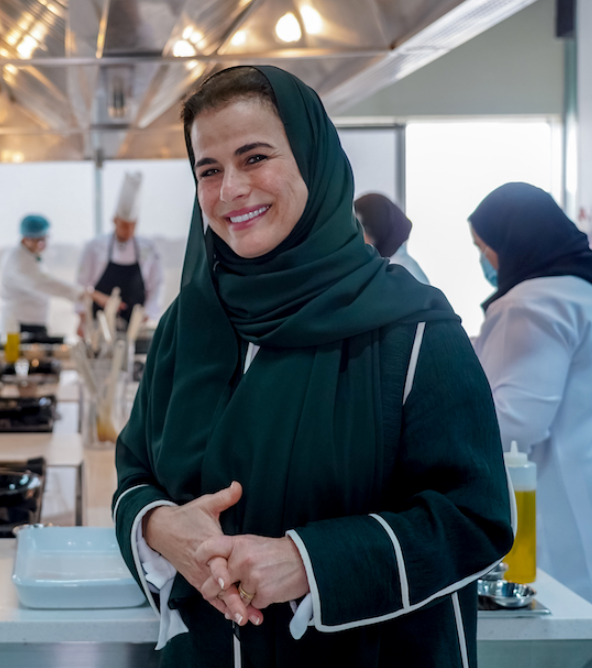
Rania Moualla, ZADK Culinary Academy founder and chairwoman, has received global recognition for her pioneering social entrepreneurship and contributions to community development.

The Saudi philanthropist received a prestigious Fair Saturday Award during a ceremony at the Guggenheim Museum in Bilbao, Spain. The award recognizes her leadership, transformative vision and efforts to promote education, sustainability and the preservation of cultural heritage through gastronomy.

Moualla said: “ZADK is more than just a non-profit culinary academy — our goal is to preserve local culture, protect heritage, promote job creation, emphasize sustainability and drive social transformation. I’m thrilled that our success has now been recognized on the international stage.”

ZADK aims to drive positive social change through excellence in culinary education and innovation. It provides a foundation for passionate Saudis who aspire to be chefs and restaurateurs, nurturing their creativity and knowledge while emphasizing local culture and cuisine.

It provides scholarships for qualifying students and offers a range of culinary courses, including a two-year higher culinary diploma, a one-year associate diploma, and a six-month professional certificate program, along with shorter courses and other services.

The comprehensive training programs aim to prepare students for the workplace, providing employers with competent employees who add value in a professional environment.

The Fair Saturday Awards were launched in 2017 with the aim of recognizing the initiatives of inspiring individuals and organizations, which have proven to generate social impact through art and culture. They emphasize the value of promoting new models of action with the mission of generating more inclusive, fair and sustainable growth.

Other recipients of the 2025 Fair Saturday Awards include Nobel laureate in economics, Joseph Stiglitz; journalist and author Martin Wolf; actress Adjoa Andoh; dancer and choreographer Ahmad Joudeh; pianist Joaquin Achucarro; and cultural association Gerediaga Elkartea.

source/content: arabnews.com (headline edited)

_____________

Rania Moualla, ZADK Culinary Academy founder and chairwoman, has received global recognition for her pioneering social entrepreneurship and contributions to community development. (Supplied)

_________________

SAUDI ARABIA