SAUDI ARABIA exports 1st industrial water treatment plant with nanotechnology to Europe

Saudi Arabia’s GI Aqua Tech is set to export its first industrial wastewater treatment plant using nanotechnology in early 2026, the company’s CEO, Sherif Desouky, told Al Eqtisadiah.

The project, which operates on a per-cubic-meter treatment system, is valued at approximately €5 million ($5.9 million), with the first plant set for France, marking the first nanotechnology-based water treatment and reuse system manufactured and exported from Saudi Arabia to the world.

Expanding exports to GCC states in Q1 2026

These plants are designed for 100 percent reuse of industrial wastewater, and the expansion plan includes exporting several units to Bahrain and other Gulf countries with a combined capacity of 10,000 cubic meters in the first quarter of next year.

Desouky noted that the plant being exported to France will be installed at a cosmetics manufacturing facility, one of the most challenging industries for wastewater treatment.

Previously, wastewater had to be collected and transported for incineration at high costs, but nanotechnology now allows on-site treatment and reuse with higher operational efficiency.

He added that the technology directly contributes to reducing liquid waste disposal costs, saving up to 80 percent of energy, and replacing conventional disposal with reuse solutions compliant with strict environmental standards.

Desouky stated that the technology was fully developed and manufactured in Saudi Arabia with government support, enabling the project to move from local implementation to exports to European and global markets.

The plant, located in Al-Kharj Industrial City under the Saudi Authority for Industrial Cities and Technology Zones, known as Modon, spans 23,000 sq. meters and is the first in the Middle East to combine nanomaterial production with wastewater treatment plant manufacturing, according to Desouky.

Investments reach €150m, with 50 percent of workforce Saudi nationals

The CEO explained that the project investments are expected to reach €150 million upon completion, with 54 percent of the workforce currently Saudi nationals.

He added that the technology has already been deployed across major projects in Saudi Arabia, successfully integrating large volumes of industrial and sanitary wastewater, including at Riyadh’s Third Industrial Area, where it achieved 100 percent water reuse in a global first. 

He added that while Modon allocated 40,000 sq. meters for the project, the technology required only 4,000 sq. meters, allowing the remaining land to be transformed into a public park irrigated entirely with treated, odor-free water, underscoring the high environmental standards achieved.

Decentralized plants in areas not connected to sewage networks

Desouky highlighted the world’s first decentralized nanotechnology wastewater treatment plant within a residential neighborhood in Al-Mousa district, northern Jeddah.

He explained that the plant was constructed and became operational in just 10 days to address the issue of areas not connected to the central sewage network, which previously relied on tankers, and it now serves 8,000 residents.

This model represents a global first as a rapid solution for water and environmental crises, with the added advantage that the plant can later be relocated without leaving any negative impact.

According to the CEO, applications of the technology have also included the world’s largest plant for treating concrete factory wastewater in Neom and the Samhan Hotel plant in Riyadh, which has successfully treated all types of hotel wastewater for a year, including kitchen, laundry, and blackwater — not just greywater, as is common in hotels.

He added that this has opened avenues for collaboration with the global Marriott chain, noting that exporting this technology allows Saudi Arabia to achieve record energy savings of 80 percent, reduce space requirements by 90 percent, and ensure water meets the highest quality standards.

source/content: arabnews.com (headline edited)

_________________
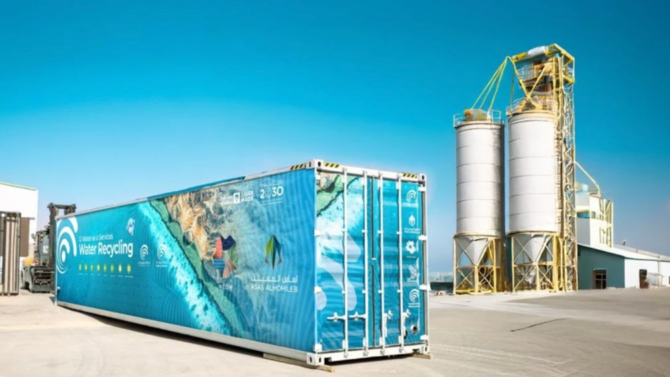
The technology was fully developed and manufactured in Saudi Arabia with government support, enabling the project to move from local implementation to exports to European and global markets. Al-Eqtisadiah

_________________

SAUDI ARABIA
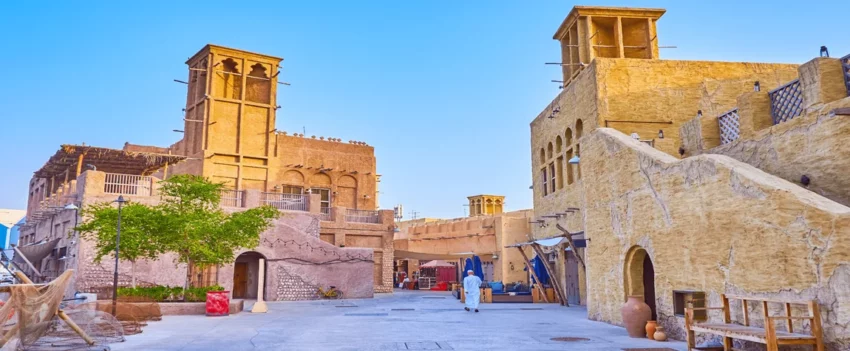
G.C.C States : Saudi Arabia Unites UAE, Qatar, Oman, Bahrain, and Kuwait: The GCC Powerhouses Redefining Heritage Tourism with Jaw-Dropping Cultural Projects That Will Change the Region Forever!

Heritage has become an important pillar of national identity and tourism across the Gulf Cooperation Council (GCC). Saudi Arabia, the United Arab Emirates, Qatar, Oman, Bahrain and Kuwait are investing in museums, restored districts and conservation projects that foreground local history. Projects range from museums and historic districts to botanical gardens, geoparks and open‑air heritage trails. This article highlights key initiatives under development or about to launch. Details are drawn exclusively from official or government‑verified sources; a list of references is provided at the end.

Saudi Arabia

Saudi Arabia’s flagship heritage project is Diriyah Gate, which surrounds At‑Turaif—the mud‑brick citadel of the first Saudi state. A royal decree brought UNESCO recognition. The Diriyah Gate Development Authority is building Najdi‑style hotels and a mixed‑use square that opened in 2024, creating a neighbourhood where cafés, shops and cultural venues reinforce the historic character.

Further north, the Royal Commission for Al‑Ula is executing the Journey Through Time masterplan, which divides the valley into heritage districts and pairs archaeological preservation with museums, eco‑lodges and interpretive trails through 2035. The commission is also developing Khaybar Heritage Village, connecting it with Al‑Ula and Tayma to form a “living museum” that showcases thousands of years of history.

United Arab Emirates

In Sharjah, the Heart of Sharjah project is revitalising the city’s historic core. Led by the government’s Investment and Development Authority (Shurooq), the five‑phase programme is preserving houses, souqs and mosques and repurposing them as museums, workshops and cafés. Completion is expected in 2025, with the restored district seeking UNESCO World Heritage nomination.

Abu Dhabi is building the Saadiyat Cultural District on Saadiyat Island. Its centrepiece, the Zayed National Museum, will open in December 2025 and celebrate the life of Sheikh Zayed and the UAE’s heritage. The museum will stand alongside new institutions such as the Guggenheim Abu Dhabi, complementing the Louvre Abu Dhabi and establishing the island as a cultural hub.

Qatar

Qatar Museums is developing Dadu, Children’s Museum of Qatar, the nation’s first children’s museum. While construction continues, Dadu Gardens has opened as an outdoor space where children learn about gardening and sustainability through play. The broader museum will nurture creativity and support national education goals.

Three other museums will diversify the country’s cultural offering. The Lusail Museum, scheduled to open in 2029 on Al Maha Island, will showcase Orientalist art. The Art Mill Museum, due in 2030, will convert a historic flour mill on Doha’s corniche into galleries and a public park. The Qatar Auto Museum will explore the history and future of cars through exhibitions and workshops.

Oman

Oman’s Ministry of Heritage and Tourism funds community‑led restoration of forts, mosques and other traditional structures. In 2024 it supported more than twenty projects to preserve vernacular architecture and encourage tourism.

The country is also completing the Oman Botanic Garden, a 500‑hectare conservation site near Muscat. Developed between 2021 and 2025, it will protect more than 1,450 native plant species in biomes replicating desert, mountain and coastal environments. After a 2025 handover to Muscat Municipality, the garden is expected to open soon.

Bahrain

Bahrain celebrates its pearling heritage through the Pearling Path, a 3 km route in Muharraq. Managed by the Bahrain Authority for Culture and Antiquities, it links offshore oyster beds with restored merchant houses and mosques and narrates how pearls were harvested and traded. Inscribed on UNESCO’s World Heritage List in 2012, the path is still being restored; Siyadi House is being converted into a pearling museum.

Kuwait

Kuwait is diversifying tourism with projects highlighting geology and modern history. The Kuwait Geopark will showcase desert landscapes and archaeological sites north of Kuwait City. A UNESCO‑backed initiative in Al‑Ahmadi (2024–2025) is documenting the town’s souq, cinema and neighbourhoods and planning heritage‑based regeneration. In Kuwait City the cabinet has revived a delayed Heritage Village that envisages a hotel, shops and villas inspired by traditional architecture.

Conclusion

Heritage has become a driver of tourism across the GCC. Saudi Arabia is transforming Diriyah and Al‑Ula into living museums. The UAE is reviving historic quarters and erecting new museums in Sharjah and Abu Dhabi. Qatar is creating attractions for children, art lovers and car enthusiasts. Oman couples community restoration with a vast botanic garden. Bahrain narrates its pearl‑diving legacy along a restored path. Kuwait is highlighting geological landscapes and mid‑century towns while reviving a heritage‑themed village. Collectively, these projects show a regional commitment to preserving the past while shaping diverse tourism futures.

These efforts are rewriting the region’s tourism story.

Reference List

  1. Diriyah Gate Development Authority. Diriyah Gate timeline and preservation vision[1].
  2. Royal Commission for Al‑Ula. Journey Through Time masterplan and Khaybar development[2][3].
  3. Sharjah Government. Heart of Sharjah project details and restoration timeline[4][5].
  4. Department of Culture & Tourism – Abu Dhabi. Saadiyat Cultural District and Zayed National Museum opening date[6].
  5. Qatar Museums. Dadu Gardens and vision for Dadu Children’s Museum[7]; Art Mill Museum due to open 2030[8]; Qatar Auto Museum concept and design[9].
  6. Visit Qatar. Lusail Museum overview and 2029 opening schedule[10].
  7. Oman News Agency / Federation of Arab News Agencies. Ministry of Heritage and Tourism support for heritage restoration initiatives[11]; Oman Botanic Garden completion and handover for opening[12][13].
  8. Bahrain Authority for Culture and Antiquities. Pearling Path project description and components[14].
  9. Kuwait Times (quoting KUNA and Ministry of Information). Kuwait Geopark initiative and heritage significance[15]; UNESCO Core Data Portal. Heritage and Identity for Al‑Ahmadi’s sustainable development, Phase 1 (2024–2025)[16]; Zawya Projects. Revival of Kuwait Heritage Village project endorsed by cabinet[17].

source/content: travelandtourworld.com (headline edited)

_____________

_______________________________________________________________________

GCC STATES / BAHRAIN / KUWAIT / OMAN / QATAR / SAUDI ARABIA / U.A.E