SUDAN : From el-Obeid to the Arctic: The secret mission that saved over 2,000 seeds from Sudan

To safeguard a vital part of Sudanese agricultural heritage, scientists quietly moved copies of strategic crops to the frozen chambers of the Svalbard vault in Norway.

In December 2023, the civil war that had broken out the previous April between the Sudanese Armed Forces (SAF) and the Rapid Support Forces (RSF) took a troubling turn when the paramilitary group seized the country’s second-largest city, Wad Madani, in a swift offensive.

The sudden fall of Wad Madani, under circumstances that are not yet fully clear, dealt a heavy blow to the regular army and came as a shock to the hundreds of thousands of people, many of them displaced from Khartoum, who had come to see the city as a safe refuge.

The RSF’s advance quickly triggered a new mass displacement of people and disrupted the work of humanitarian agencies that had relocated to the city after the war broke out.

Like in other areas they have passed through, RSF fighters extensively looted Wad Madani and widespread abuses against the population were documented.

Although it drew little attention at the time, Sudanese scientists also issued a call to protect one specific facility in Wad Madani: the city’s seed bank, the most important in all of Sudan.

“We did not expect that the RSF would attack Wad Madani,” Ali Zakaria Babiker, director of the gene bank, told Middle East Eye. 

“But when they did, all the staff fled the city to safer places.”

“We expected they would attack the gene bank,” he admitted, “because ever since they attacked Khartoum, [everyone] had already suffered a lot.”

Hidden cargo to evade checkpoints

Before the war, Sudan’s seed bank, managed by the Agricultural Plant Genetic Resources Conservation and Research Centre (APGRC), housed a collection of more than 17,000 accessions of crops and plant species, including sorghum, millet, wheat and sesame.

The collection, started in 1982, was a reflection of the crop diversity of Sudan, a country with rich biodiversity and a long agricultural tradition. 

It also served as a repository for its agricultural genetic material, considered essential for both local and global food systems.

After fleeing Wad Madani, some APGRC staff met in el-Obeid, the capital of the North Kordofan region, where a subnational gene bank is located, holding copies of most of the material they had left behind.

One of their initial moves was to install a solar power system at the backup facility, ensuring a stable electricity supply to keep the freezers running and safeguard the seed copies.

At the same time, however, the staff began to develop a plan to extract as many copies of the seeds as possible and transfer them to a location where they could be safe.

“El-Obeid was also under threat from the RSF, so we went there straight away and took some duplicate accessions to dispatch them,” Babiker explained.

Their plan involved preparing more than 2,000 seed samples and sending them from el-Obeid to the icy chambers of Svalbard’s seed vault, located on the Norwegian island of Spitsbergen, deep in the Arctic and more than 7,000km from the capital of North Kordofan.

“[We decided to] dispatch them to Svalbard so that we would have a duplicate copy outside the country,” Babiker said. 

One of their initial moves was to install a solar power system at the backup facility, ensuring a stable electricity supply to keep the freezers running and safeguard the seed copies.

At the same time, however, the staff began to develop a plan to extract as many copies of the seeds as possible and transfer them to a location where they could be safe.

“El-Obeid was also under threat from the RSF, so we went there straight away and took some duplicate accessions to dispatch them,” Babiker explained.

Their plan involved preparing more than 2,000 seed samples and sending them from el-Obeid to the icy chambers of Svalbard’s seed vault, located on the Norwegian island of Spitsbergen, deep in the Arctic and more than 7,000km from the capital of North Kordofan.

“[We decided to] dispatch them to Svalbard so that we would have a duplicate copy outside the country,” Babiker said. 

“I did it to ensure that at least some of the seeds were preserved beyond Sudan’s borders.”

The scale of the mission was daunting: if they succeeded, APGRC staff would have managed to secure more than a quarter of Sudan’s seed collection in the depths of the earth.

The seeds selected included crops that have been grown in the region for thousands of years, amongst them key varieties of pearl millet and sorghum –  a crop vital to Sudan’s food security, known for its drought resistance, and part of the country’s agricultural and cultural heritage.

“These [were] some of the main staple crops in Sudan, and also some of the oldest,” Babiker noted. 

“They are essential for food security not only in Sudan, but also for the region – and for global food security as well.”

Before heading to one of the northernmost corners of the world, the seeds had to be taken out of el-Obeid as discreetly as possible and transported all the way to Port Sudan – the main port of the country, located in the northeast –  from where they could be sent abroad.

Babiker described it as an “exciting” mission, particularly at the start, given that the RSF controlled almost all routes in and out of El Obeid. 

To avoid potential trouble at checkpoints, the APGRC staff asked the truck driver transporting the seeds to load their boxes first, and only then pile on the rest of the load.

“The mission took more than 10 days because, for security reasons, it didn’t follow a normal road but routes unfamiliar to the RSF,” said Babiker, who added that no APGRC staff travelled with the shipment to avoid drawing attention.

After those 10 days on the road, the seeds finally made it to Port Sudan, although Babiker said the seed packages were scattered across the truck and had to be collected and organised.

Still, the first half of the journey – and the most challenging part – was now behind them.

Sudan Post to the rescue

Once in Port Sudan, the shipment of seeds to Svalbard was made possible because the Sudan Post courier service was still operating despite the war, said Nelissa Jamora of Crop Trust, an organisation dedicated to safeguarding the world’s crop diversity that supported the entire mission.

“Sudan Post was still functioning, at least in Port Sudan. So it was [arranged] through the regular postal service,” she told MEE, noting that there were three boxes of seeds in total.

On their way to Svalbard, the seeds made a stop at the Nordic Genetic Resource Center (NordGen), an organisation dedicated to safeguarding the Nordic region’s genetic resources. 

There, the centre helped sort, catalogue, re-pack, and document the shipment from Sudan.

“It was a few days’ work for our seed technicians, but an investment well worth its price considering the importance of these seeds for the future of Sudan’s agricultural sector,” said Johan Axelsson, head of NordGen’s seed laboratory.

The seeds finally arrived at the seed vault on 25 February 2025, together with seed shipments sent by 19 other gene banks.

Established in 2008, the Svalbard Global Seed Vault has its storage area more than 100 metres inside a mountain, carved into solid rock and shielded by 40 to 60 metres of stone.

The mountain mass has a stable temperature ranging from -3 to -4 degrees Celsius, but the seed storage area is equipped with a cooling system that keeps it constantly at -18 degrees.

With more than 1,350,000 seed samples, the Svalbard Global Seed Vault is currently the largest backup facility for seeds and crop diversity in the world.

Owned by Norway, the site is operated by three partners: the country’s Ministry of Agriculture and Food, NordGen and Crop Trust.

Gene banks from all over the world can store backup copies of their seeds there free of charge and with no legal transfer of ownership, the seeds always remain property of the depositor.

Sudan made its first deposit in 2019 and today holds 1,884 accessions, a distinct, uniquely identifiable sample of seeds, from 15 different species, according to Svalbard’s website.

Jamora said that the difference from the more than 2,000 seeds initially sent by the APGRC from el-Obeid was likely due to some packages arriving in less-than-optimal condition and not making it into the final set, although they are preserved by NordGen and can be returned.

The mission to evacuate Sudan’s seeds was funded through an emergency reserve launched in 2021 by Crop Trust and the secretariat of the International Treaty on Plant Genetic Resources under the supervision of the UN Food and Agriculture Organization (FAO), to assist gene banks that are under threat.

In Sudan’s case, Crop Trust had been collaborating with the local gene bank before the war through a project called BOLD (Biodiversity for Opportunities, Livelihoods and Development).

“The mission aimed to secure as many seeds as possible,” Jamora noted.

Fears vindicated

Sudan’s army recaptured Wad Madani in January, and when the APGRC staff returned to their facilities, their worst fears were confirmed: the bank’s freezers, computers and servers had been looted, and the seed bags were torn open, their contents scattered across the floor.

However, with the support and funding from the emergency reserve jointly run by Crop Trust and the Plant Treaty, efforts to rebuild and start over are already under way.

For now, the gene bank is still assessing the losses, but it is also beginning to rebuild its seed collection despite limited state funds and power cuts that often last more than 12 hours a day.

When the situation stabilises, the centre hopes to be able to assess the state of its seeds and move into a regeneration phase, but this will require new freezers and other equipment.

During a meeting with the director of Sudan’s Agricultural Research Corporation (ARC) and FAO representatives, the governor of Gezira State – where Wad Madani is located – Tahir al-Khair, pledged to try to install a new cold storage facility for the gene bank.

In the meantime, at least, the seeds stored in the Svalbard vault remain safe, waiting for the day they can once again serve their country.

“We felt very relieved and reassured once we made sure we had these duplicate copies outside Sudan,” Babiker said.  

source/content: middleeasteye.net (headline edited)

____________
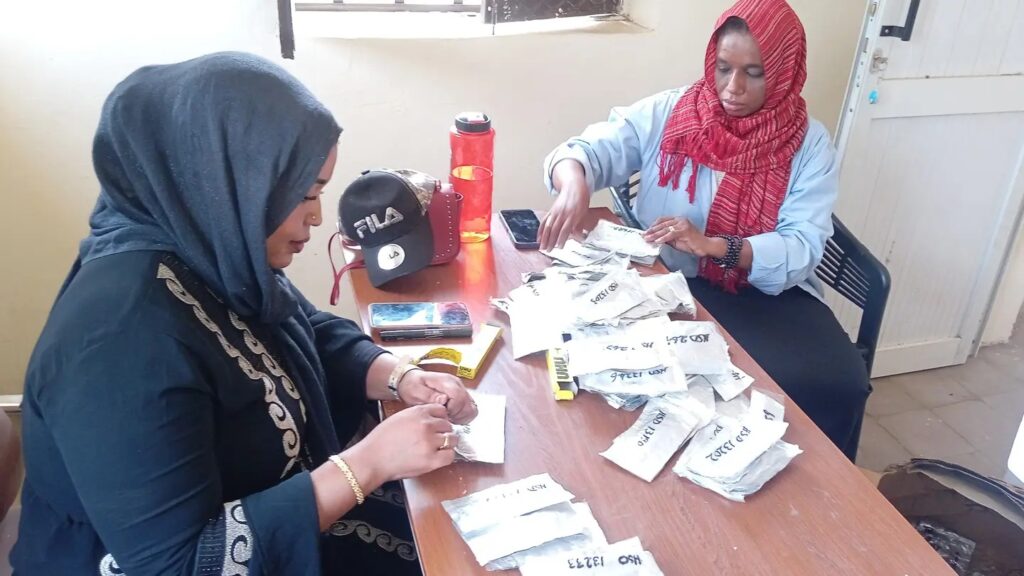
Seeds from Madani are prepared for dispatch to Norway (Supplied/Ali Zakaria Babiker) / Wad Madani. Photo Ali Zakaria Babiker

___________

SUDAN

MOROCCO : Introducing ‘Nabatlé’, Morocco’s First Locally Crafted Plant-Based Milk

Crafted by COPAG-Jaouda, this plant-based milk skips the gluten, lactose, preservatives, and added sugars, keeping things simple and natural.

For Moroccans looking to swap traditional dairy for a local plant-based option, the wait is over! 

COPAG-Jaouda, a household name in the country’s dairy industry, has introduced “Nabatlé”, Morocco’s first entirely homegrown plant-based milk. 

More than just a substitute, “Nabatlé” is set to revolutionize the country’s approach to food innovation.

It also answers a growing demand for healthier, natural choices while proving that local expertise can keep pace with evolving consumer palates. 

Plant-based milk for everyone

As more Moroccans explore healthier alternatives, COPAG-Jaouda is making sure “Nabatlé” is not just an option but an accessible and affordable choice.

This plant-based milk skips the gluten, lactose, preservatives, and added sugars, keeping things simple and natural. 

The cooperative says it delivers healthy fats, essential vitamins, and minerals while staying low in calories. 

Whether vegan, vegetarian, or just curious, consumers can choose from three different varieties to suit their taste: 

Almond: Naturally sugar-free with a light, smooth taste and no cholesterol.

Oat: Rich in fiber, minerals, and plant-based proteins.

Coconut: Creamy with a mild exotic flavor, offering a source of calcium and vitamins A and D3.

To set the record straight on plant-based milk, which is new territory for some Moroccans, COPAG-Jaouda is rolling out an awareness campaign to showcase the milk’s nutritional perks and discover how versatile and beneficial they can be.  

But “Nabatlé” is not just a dairy alternative. The company sees it as a symbol of Morocco’s ambition to create top-tier, competitive products that also care for the planet, all while staying eco-conscious.

What began in 1987 with 39 agricultural producers has grown into COPAG, Morocco’s largest cooperative. 

Now, with over 12,000 employees and support for 24,000 farmers, COPAG continues to shape the agricultural landscape, spanning citrus, fresh produce, dairy, and meat industries.

source/content: moroccoworldnews.com (headline edited)

___________

______________

MOROCCO

EGYPT Becomes Europe’s Second-Largest Fresh Produce Exporter

Egypt’s fresh produce exports to Europe reach 917,000 tonnes, growing 7% in the last season, second only to the Netherlands.

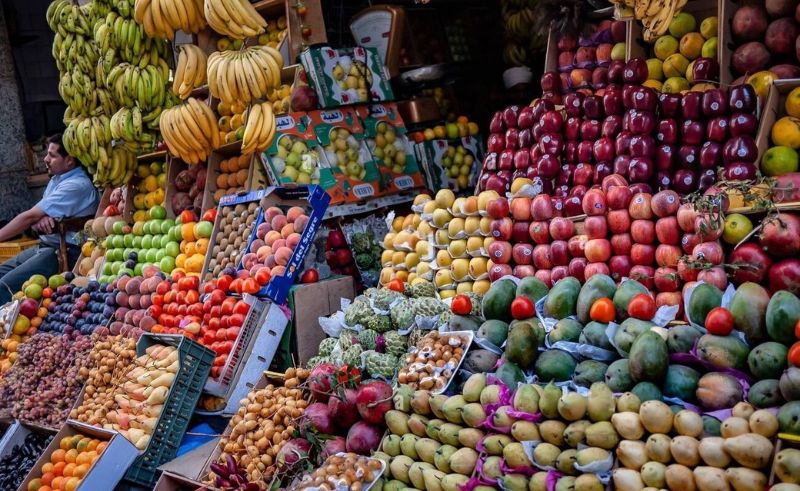
Egypt has ranked as Europe’s second-largest exporter of fresh vegetables and fruits for the latest export season from September 2023 to August 2024, shipping 917,000 tonnes with a 7% year-on-year growth, according to EU data.

Citrus led the way, with 500,000 tonnes exported, an 8% increase from the previous season. Sweet potatoes followed with 117,000 tonnes, onions at 94,600 tonnes and grapes at 58,000 tonnes.

Potatoes saw a strong performance, exceeding 400,000 tonnes last season, capitalising on production issues in key European nations.

Meanwhile, Egyptian onion exports dropped to 92,000 tonnes in 2024, down from 135,000 tonnes in 2023, due to a six-month export ban from October 2023 to April 2024.

Other notable exports include carrots, lemons, garlic, beans, mangoes, peppers, strawberries and watermelons.

source/content: cairoscene.com (headline edited)

______________

________

EGYPT

TUNISIAN change maker Khadija Jallouli, invents a sustainable vehicle

Khadija Jallouli, a young Tunisian entrepreneur with a disability, has called for redoubling international efforts aimed at integrating people with disabilities and involving them in decisions related to finding solutions to the challenges they face.

She is the co-founder and CEO of HawKar, a start-up specialising in manufacturing electric vehicules for people with disabilities with the aim of improving their lives by providing convenient, accessible and sustainable mobility solutions.

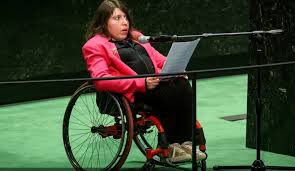
Ms. Jalouli spoked about her experience from the podium in the iconic General Assembly Hall at the opening session of the activities of the 17th session of the Conference of States Parties to the Convention on the Rights of Persons with Disabilities (COSP17), which began on Tuesday and continues until June 13, under the theme Rethinking disability inclusion in the current international juncture and ahead of the Summit of the Future, which is taking place at UN Headquarters in September.

In an interview with UN News, Ms. Jallouli said she is participating in COSP17 to shed light on the challenges facing people in motion and how to find solutions to them to create a more inclusive world as well as to inspire participants to take action to find solutions and involve everyone.

Watch her story below:

source/content: news.un.org /UN News (headline edited)

_____________

UN Photo/Loey Felipe / Khadija Jallouli, a youth representative from Tunisia, addresses the Conference of States Parties (COSP17).

____________

TUNISIA

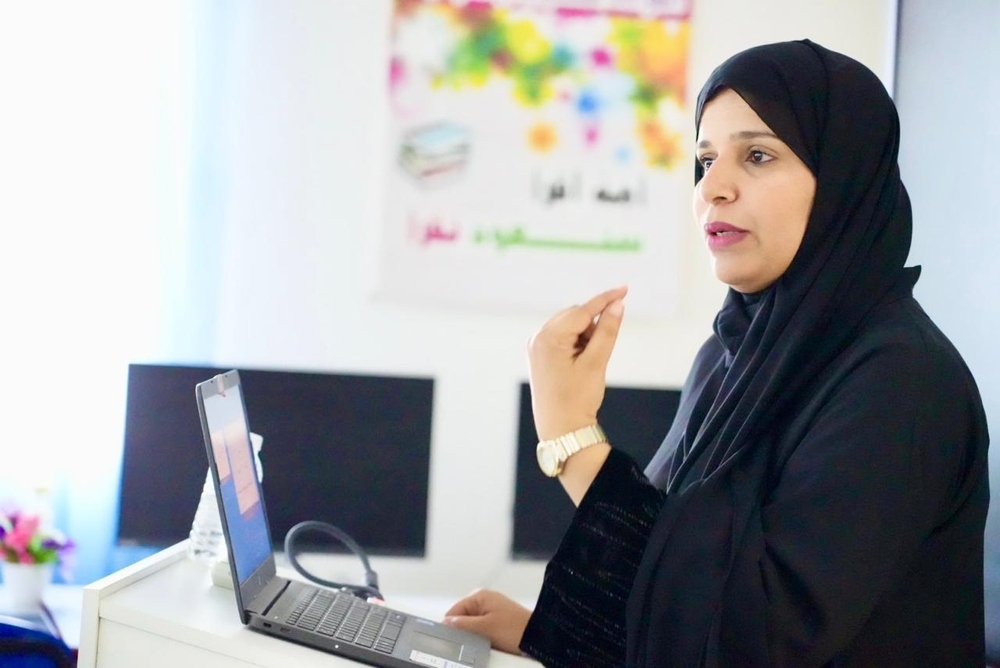
OMANI Researcher Dr Huda Mubarak Al Dai’ree Wins ‘ALECSO Innovation Award for Young Researchers’

The Arab League Educational, Cultural and Scientific Organization (ALECSO) announced that Omani researcher Dr. Huda Mubarak Al Dai’ree won the “ALECSO Innovation Award for Young Researchers” due to her active role in promoting green economy.

The research that won the award was titled “Role of government school principals and teachers in endorsing green economy in education and activating it as one of the objectives of Oman Vision 2024.”

The award reflects ALECSO’s keenness on inspiring and supporting innovative Arab researchers who excel in the fields of technology and scientific applications. The award is an initiative undertaken by ALECSO to spread the culture of research and innovation among Arab youth.

source/content: omannews.gov.om

________

_________

OMAN

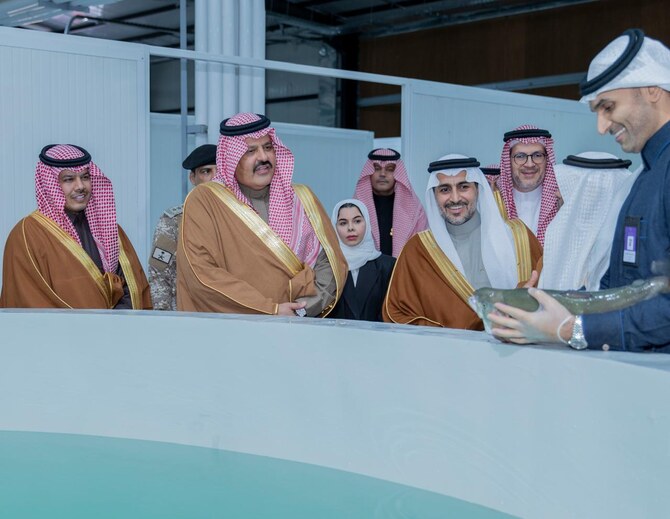
SAUDI ARABIA : Hail governor inaugurates Middle East’s largest salmon production center

The 10,000-square-meter facility features the latest marine technology.

Prince Abdulaziz bin Saad bin Abdulaziz, the governor of Hail, inaugurated the Excellence Center for Salmon Production on Saturday, the largest facility of its kind in the Middle East.

A collaboration between the Ministry of Environment, Water, and Agriculture and King Abdulaziz University, the center aims to produce 100,000 tons of salmon annually, bolstering Saudi Arabia’s food security and aquaculture sector, the Saudi Press Agency reported.

The 10,000-square-meter facility features the latest marine technology, including recirculating aquaculture systems and aquaponics units, which integrate fish and vegetable production.

It is designed to reduce the Kingdom’s reliance on salmon imports, currently at 23,000 tons per year.

Prince Abdulaziz hailed the project as a cornerstone of Vision 2030, promoting sustainable development and economic diversification, while attending officials highlighted its potential to enhance innovation, create jobs, and serve as a model for sustainable aquaculture in the region, SPA added.

source/content: arabnews.com (headline edited)

_________

Prince Abdulaziz bin Saad bin Abdulaziz, the governor of Hail, inaugurated the Excellence Center for Salmon Production on Saturday, the largest facility of its kind in the Middle East. (SPA)

_________________

SAUDI ARABIA

EGYPT : NCE CEO Khaled Noby selected as impact maker for COP29 communications campaign

Khaled Noby, CEO of Nature Conservation Egypt (NCE), was selected as an impact maker for the COP29 Global Communications Campaign. This nomination recognizes NCE’s pioneering work in safeguarding biodiversity in Egypt.

NCE announced that Noby was selected on 19 November as one of the 50 impact makers in a global communications campaign launched by Nigar Arpadarai, the UN Climate Change High-Level Champion for COP29.

The Impact Makers campaign seeks to amplify the voices of leaders significantly impacting how to address the climate crisis. Through his leadership, Noby has played a crucial role in shaping Egypt’s dialogue around nature conservation and renewable energy. His nomination is part of a more significant effort to ensure that global climate strategies include biodiversity conservation as a fundamental element of the transition to renewable energy.

NCE is dedicated to integrating biodiversity conservation into the renewable energy sector. It aims to balance the country’s growing energy needs with the urgent necessity of protecting its rich and diverse wildlife and biodiversity.

NCE is witnessing the ambitious expansion in renewable energy production in Egypt, driven by the growing domestic demand and the need to cut climate change emissions from fossil fuels. However, this transition to renewable energy production negatively impacts habitats and wildlife. Renewable energy infrastructure has been reported to cause significant fatalities in various wildlife forms, particularly migratory birds.

While most conservation efforts have focused on mitigating the impacts within wind farms, NCE has been paying attention to another significant threat that needs to be adequately acknowledged: bird collisions with overhead transmission lines (OHTLs).

Moreover, NCE has effectively advocated adding local biodiversity loss to national and international agendas. Nonmigratory wildlife faces equally severe threats from poorly planned renewable energy infrastructure, yet the lack of data on local species often diverts conservation efforts towards migratory wildlife. NCE has led a successful national effort to translocate the threatened native reptile, the Egyptian spiny-tailed lizard (Uromastyx aegyptia), in collaboration with the Regional Centre for Renewable Energy and Energy Efficiency (RCREEE) and SafeSoar. Thirteen individuals of this endangered lizard species were safely translocated from the AMUNET Wind Farm site before construction, exemplifying effective conservation action.

“I am truly humbled to be recognized as an Impact Maker by the High-Level Champions team. This honour belongs equally to my dedicated colleagues at NCE, whose unwavering commitment to nature conservation in Egypt inspires me every day. This is a celebration of our collective efforts — I’m simply privileged to represent such a sincere and hardworking team,” said Noby.

“This recognition of Khaled Noby is very well deserved and reflects his commitment and dedication to advancing the conservation of nature in Egypt; it also represents the collective effort of the NCE team and their success, under the stewardship of Khaled, in becoming a leader in the conservation field in the Middle East and North Africa. Congratulations to Khaled, NCE, and Egypt for this recognition,” said Sherif Baha El Din, NCE board chairman.

Noby’s inclusion in the campaign places a spotlight on Egypt’s unique position at the intersection of biodiversity conservation and sustainable development, highlighting how the country can serve as a model for other regions facing similar challenges.

source/content: english.ahram.org.eg (headline edited)

_____________

_________

EGYPT

SAUDI ARABIA : Jouf breaks 02 Guinness records for the ‘World’s Largest’ & the ‘World’s most modern, organic olive farms’

Jouf Gov. Prince Faisal bin Nawaf bin Abdulaziz has praised the country’s leaders and the Ministry of Environment, Water and Agriculture for supporting the region’s record-breaking developmental and economic initiatives.

Prince Faisal made the comments during a ceremony marking the region’s achievements, the Saudi Press Agency reported on Monday.

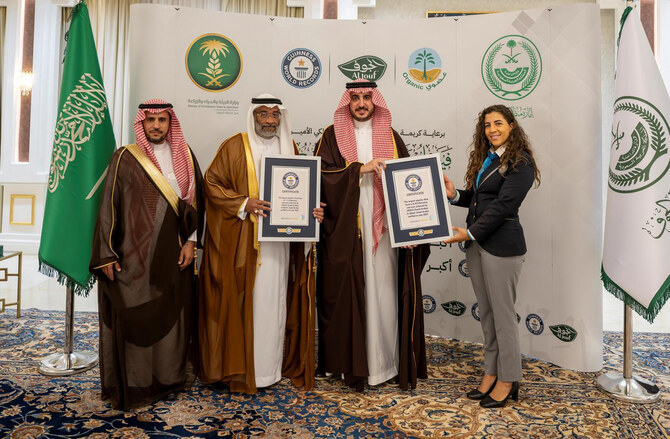
Two certificates were presented by Guinness World Records representative Kenzi Al-Dafrawi to Mazen Badawood, CEO of the Al-Jouf Agricultural Development Co.

The certificates honored the company for having the world’s largest and most modern organic olive farm, the SPA reported.

The event was attended by Abdulaziz Al-Rujai, director general of the ministry in the Jouf region. 

Prince Faisal said: “We take pride in the national accomplishments that the Kingdom’s Vision 2023 has realized in promoting self-sufficiency and achieving food security.”

Badawood thanked Prince Faisal for his dedication to serving the people of the region. 

He said Jouf’s agricultural, environmental and water purification projects provide a model for others to follow.

The awarding of the two certificates coincided with Organic Food Day, celebrated on Nov. 11, which the Kingdom marked with a series of events across the country. 

Organic Food Day is aimed at encouraging people to make healthy dietary choices and embodies efforts to achieve sustainable food security, in line with the objectives of the Kingdom’s Vision 2030 plan. 

The ministry aims to encourage farmers to adopt organic farming practices, educate consumers, as well as promote resource sustainability and local production.

As a part of the celebrations, Riyadh is hosting the Saudi International Exhibition for Organic Products from Nov. 11 to 13 to support the local community, and position the nation as a leading hub in this growing sector.

source/content: arabnews.com (headline edited)

____________


Two certificates were presented by Guinness World Records representative Kenzi Al-Dafrawi to Mazen Badawood, CEO of the Al-Jouf Agricultural Development Co.

_________________

SAUDI ARABIA

TUNISIAN Nadia Selmi – Food Heroes archive of FAO

“I believe in the power of women. The seaweed farm is run by women, and women represent 80 to 90 percent of all staff in administration, the labs and research.”

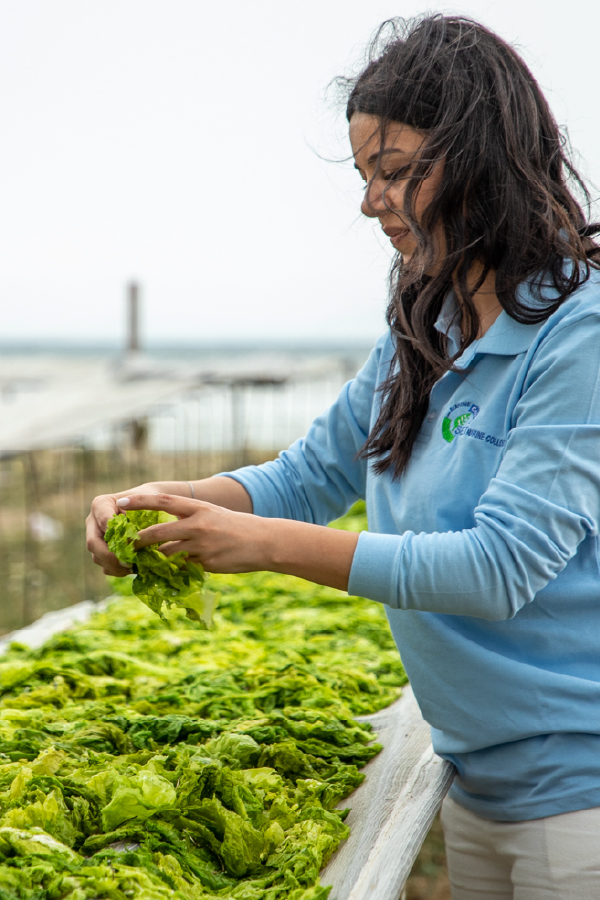
For most people, the word ‘engineer’ doesn’t immediately bring up images of food, and even fewer will think of seaweed. And yet, that’s exactly the niche where Nadia Selmi is pioneering new uses for an oft-overlooked marine resource. 

Today, she is the commercial director of SELT Marine, a Tunisian seaweed company that employs more than 100 women in producing nutritious seaweed powder that can be made into vegetable gelatin for dairy, sweets and vegan products

“I believe in the power of women,” says Nadia. “The seaweed farm is run by women, and women represent 80 to 90 percent of all staff in our administration, the labs and research.”

Many of the women working on the seaweed farm come from vulnerable rural communities and have found a new kind of job in the growing sector. 

And the potential that the sector holds for food security and food system transformation is significant. Using just 0.03 percent of our oceans’ surface, seaweed could add up to 10 percent to the world’s food supply. Importantly, seaweed tends to be rich in vitamins and fibres and low in calories, making it a great addition to a healthy diet.

Beyond the food industry, seaweed powder is already used in many pharmaceutical and cosmetics products. And more recently, it is being transformed into biodegradable bottles and bags.

But that’s not the only way seaweed can contribute to a better environment.

Increasingly, scientists and policy makers are also seeing its potential as a “nature-based solution” to mitigate climate change and support ecosystem services. For example, if seaweed production keeps growing at the current rate, it could absorb 135 million tonnes of carbon dioxide per year by 2050, and 30 percent of all the nitrogen entering the oceans from land-based pollution.

Nadia, who started out as a researcher in the company’s lab, is now championing the uptake of Tunisian seaweed by building partnerships with businesses around the world and working with research institutions to get even more goodness out of the aquatic greens.

FAO supports innovators like Nadia through its General Fisheries Commission for the Mediterranean, which promotes seaweed aquaculture as a way to boost sustainable growth, marine conservation, and livelihoods in the Mediterranean and the Black Sea.

source/content: fao.org (headline edited)

_____________

___________

TUNISIA 

DUBAI, U.A.E. / SAUDI ARABIA : DEWA and ACWA Power sign landmark agreement for world’s largest solar-powered desalination plant

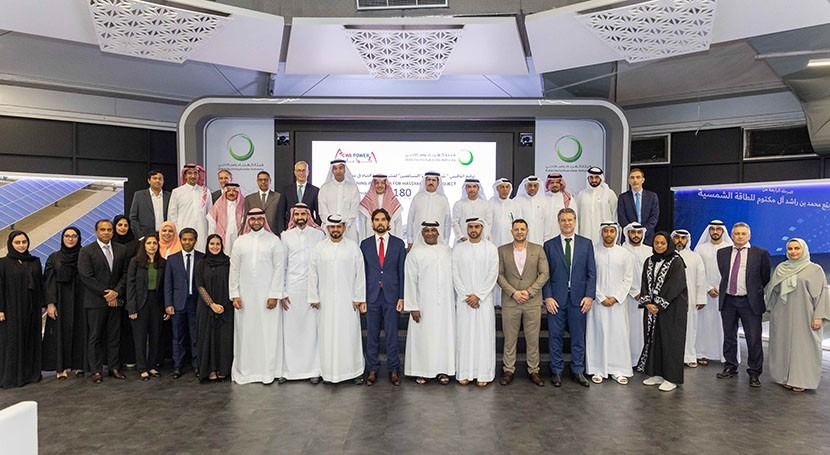
Dubai Electricity and Water Authority (DEWA), signed a 30-year water purchaser agreement with Saudi Arabia’s ACWA Power for phase 1 of the Hassyan sea water desalination project using solar power. The project is part of DEWA’s efforts to increase its water desalination capacity to 730 MIGD by 2030, from 490 MIGD at present.  The project aligns with Dubai’s unparalleled economic growth and the Emirate’s thriving construction sector. This complements the Dubai 2040 Urban Master Plan, addresses the substantial population growth, and meets the steadily increasing demand for water in domestic, commercial, and other consumer sectors.

The agreement was signed by HE Saeed Mohammed Al Tayer, MD & CEO of DEWA; and Mr. Mohammad Abunayyan, Chairman and Founder of ACWA Power. Officials from both entities were present.

Last August, DEWA announced ACWA Power as the ‘Preferred Bidder’ for the construction and operation of the 180 Million Imperial Gallon per Day (MIGD) Sea Water Reverse Osmosis Hassyan Phase 1 Independent Water Producer (IWP) project, with an investment of AED 3.357 billion (USD 914 million). The allocated land area for the project is 252,300 square metres. DEWA achieved a world record by receiving the lowest bid of 0.36536 USD/m³ of desalinated water. This project is the largest of its kind in the world for water production based on Sea Water Reverse Osmosis (SWRO) technology using solar energy. It is DEWA’s first Independent Water Producer (IWP) model project. The water desalination capacity in Dubai is currently 490 MIGD. This capacity will increase to 670 MIGD in 2026 with the completion of this project.

Dubai Electricity and Water Authority (DEWA) signed a 30-year water purchaser agreement with Saudi Arabia’s ACWA Power for phase 1 of the Hassyan sea water desalination project using solar power

“We are pleased to sign the agreement with ACWA Power. This project supports the vision of His Highness Sheikh Mohammed bin Rashid Al Maktoum, Vice President and Prime Minister of the UAE and Ruler of Dubai, to enhance water supplies in Dubai from sustainable sources and achieve the Dubai Clean Energy Strategy 2050 and the Dubai Net Zero Carbon Emissions Strategy 2050 to provide 100% of Dubai’s total power capacity from clean energy sources by 2050. We are building water production plants based on Sea Water Reverse Osmosis (SWRO) technology which require less energy than Multi-Stage Flash distillation (MSF) plants, making it a more sustainable choice for water desalination. By 2030, DEWA aims to produce 100% of desalinated water by a mix of clean energy and waste heat,” said HE Saeed Mohammed Al Tayer, MD & CEO of DEWA.

HE Saeed Mohammed Al Tayer, MD & CEO of DEWA, said: “We ensure the continuation of the 100% availability of DEWA’s services according to the world’s highest levels of availability, reliability, and efficiency thanks to our state-of-the-art infrastructure and advanced technologies. This is based on innovation and sound scientific planning so that we contribute to making the UAE the world’s leading nation by its centennial in 2071.”

Mohammad A. Abunayyan, Chairman of the Board of Directors, ACWA Power, said: “This agreement between ACWA Power and DEWA is another example of the strong collaboration between ourselves and our valued partners in the United Arab Emirates. The Hassyan IWP will be the largest plant of its kind in the world, and we have set a new record for the lowest levelised water tariff. The plant will be highly efficient, desalinating water through reverse osmosis powered by solar energy. With our years of experience in the industry, ACWA Power has ambitious aims and we are proud of continually breaking records through innovation and using new technologies to enhance water security. With this project, we are reaffirming our commitment with our partners towards achieving the Dubai Clean Energy Strategy 2050.”

source/content: smartwatermagazine.com (headline edited)

___________

The Hassyan IWP in Dubai will have a production capacity of 180 million gallons per day of desalinated wate

_____________________________________________________

DUBAI, UNITED ARAB EMIRATES / SAUDI ARABIA