QATAR : Individual honours, struggles, and mega events: Qatar’s 2024 in sports

A year that started with a sporting success in the form of an Asian Cup win at home ended in mixed results.

Titles, goodbyes, the highs and low: 2024 was anything but a boring year for Qatari sports as the country continued hosting mega events, yet similarly took a few stumbles on the pitch.

While the likes of Mutaz Barshim and Akram Afif dominated the headlines with their glories, the other side saw Qatari sides struggle to keep up their good form, whether in World Cup qualification or the Olympics.

Let’s take a look at some of the standout themes that defined Qatar’s 2024.

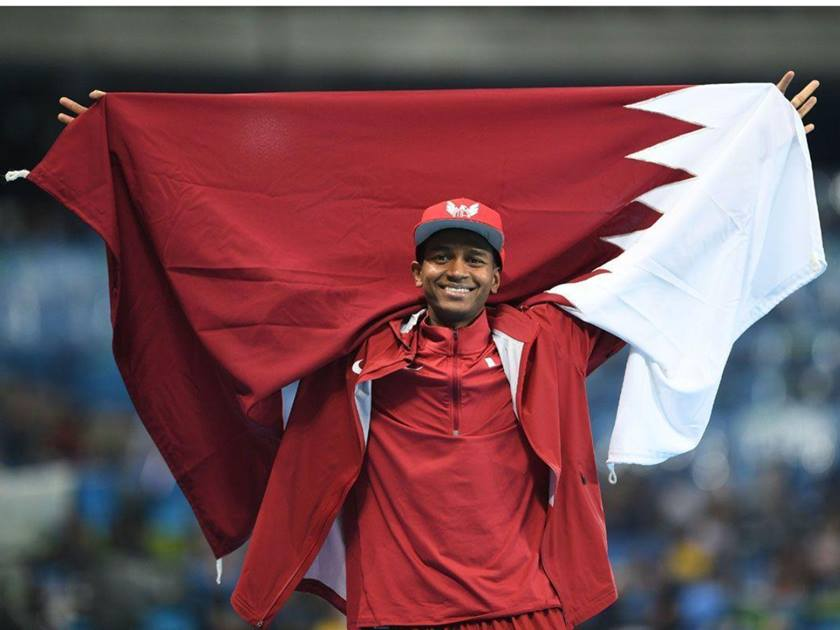
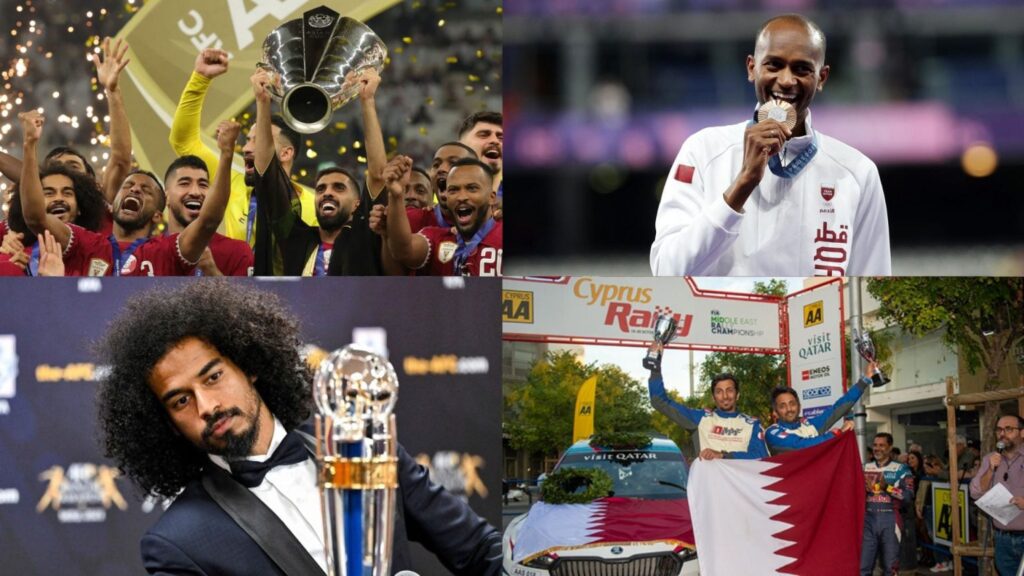
Barshim bags bronze in Paris Olympics 2024

Mutaz Barshim defied odds once again to win bronze at the Men’s high jump event, securing Qatar’s only medal of the Paris Olympics 2024.

While it was an underwhelming campaign for the Qatari contingent that had defied expectations to clinch two golds in Tokyo, Barshim’s win became a highlight. It was his fourth Olympic medal — a fitting end to a tournament that the high jumper had termed to be his last before the trip to Paris.

However, the 33-year-old multiple-time world champion hinted at the possibility of competing in the next Olympics, upon his return to Doha. “Never say never,” he said, in an exclusive chat with Doha News.

Sporting DNA : Mutaz Barshim keeps raising the bar and it all starts with his family

The year 2024 was also Aspire Academy’s 20th anniversary, which the country’s premier athletic scouting and training centre celebrated in style, hosting multiple seminars and events, such as the Aspire Global Summit as well as giving home to FIFA’s The Best Football Awards during its Gala Dinner in December.
Asian Cup triumph, Al-Haydos’ farewell and Afif’s ascent

The year ends in uncertainty for Qatar just like it started for Qatari football.

However, there were significant achievements in between. Much like the sport itself, it was a game of two halves for Qatari football — a perfect first half, followed by a tough second.

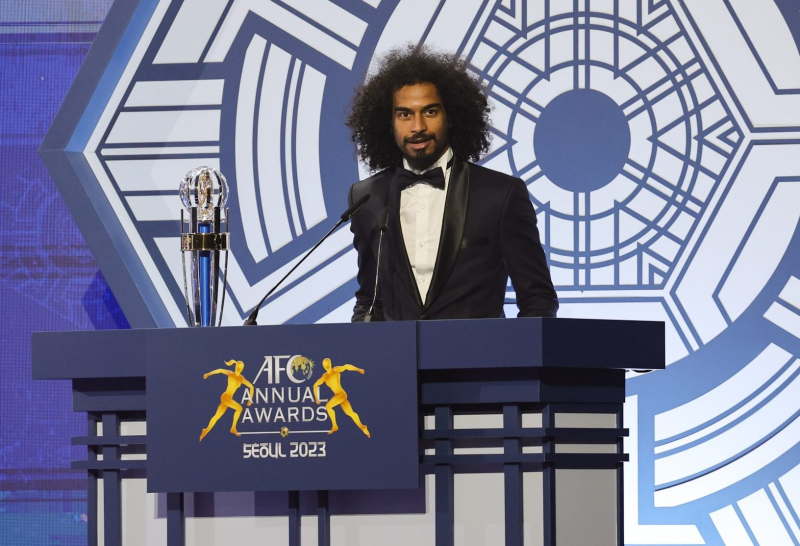
Qatar hosted and ultimately defended the Asian Cup crown in February as Akram Afif became the difference maker yet again. The tournament drew record attendance number as well as record engagement figures, underscoring yet another successful tournament in Qatar.

Al Annabi’s longstanding two-time Asian Cup-winning captain Hassan Al-Haydos retired from international football after the tournament, putting an end to the most capped Qatari career ever.

Qatar continued their good run under Bartolome Marquez Lopez at the World Cup Qualifiers thereafter, ending the second round unbeaten. The AFC U-23 Asian Cup was also hosted by the country in between, where Japan were crowned the champions.

It started going downhill with the loss against UAE at home with the start of the third round of the Asian Qualifiers to the FIFA World Cup 2026. While Afif clinched his second AFC Player of the Year title, Qatar’s hopes of making it to the tournament in North America hangs in balance with just two wins and three losses from the first six games. The team also crashed out of the group stages of the Arabian Gulf Cup following two draws and a defeat.
In the meantime, Qatar also hosted two of the Palestine national team’s qualifying games, the former of which in June saw Al Fida’i make it to the last round of World Cup Qualifiers for the first time in history with a 0-0 draw against Lebanon. Similarly, the Qatar U-20 team seamlessly qualified, at home, for the U-20 Asian Cup to be held in Saudi Arabia next year.

Qatar was also the home to FIFA’s new club competition, the Intercontinental Cup, which saw European champions Real Madrid win in Lusail Stadium. The Stadium 974 was put to use for the first time since the 2022 World Cup for two of the tournament’s matches.

A good year for racket sports

The Khalifa International Tennis and Squash Complex was a busy venue this year as it hosted multiple tournaments throughout the year, including the Qatar Open tennis event in February, the QTerminals Qatar Classic Squash event in September and October, followed by the World Padel Championship in November.

Russian player Karen Kachanov won the men’s Qatar Exxonmobil Open, while Polish Iga Swiatek claimed the women’s event held in February. Qatar Exxonmobil Open will now return as an ATP 500 event and was also voted the best ATP 250 event on calendar for 2024.

The QTerminals Qatar Classic saw Diego Elias and Nour Al-Sherbini come out on top of the men’s and women’s events, marking a thrilling end to the squash event.

Argentina’s men’s team and Spain’s women’s team maintained their dominance by lifting the World Championship in Padel, which saw some of the world’s finest compete in Doha.

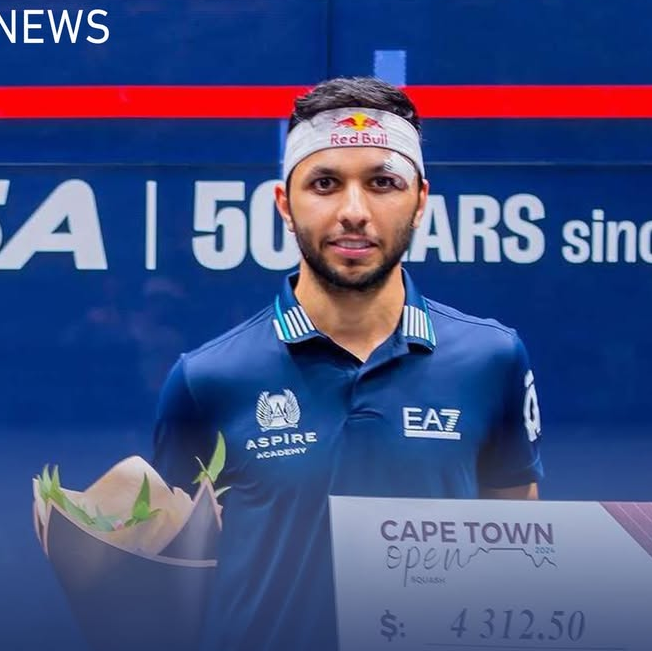
Qatar’s squash ace Abdullah Al-Tamimi capped the year off in style, winning the Cape Town Squash Open 2024 his first title away from Qatar since 2022.
Glory in motorsports and skydiving

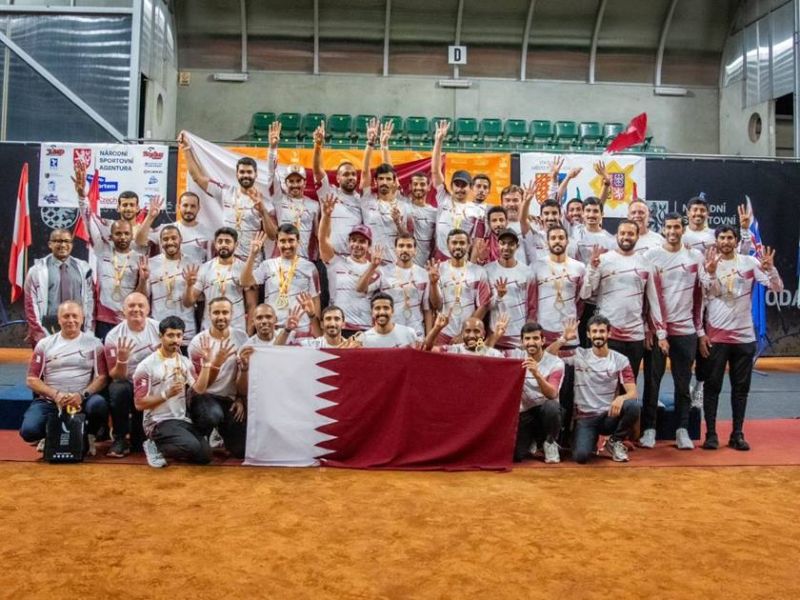
Qatar won four gold medals at the World Air Sports Federation (FAI)’s World Championships which was hosted by Czechia’s Prostejov in the first week of September.

Qatar won three golds in events across the Canopy Formation category and bagged solitary gold in male Style and Accuracy landing in the six-day tournament.
It was yet another year of glory for Qatari rally driver Nasser Al-Attiyah, who clinched his third FIA World Rally-Raid Championship (WR2C) in October after winning the 2024 Rallye du Maroc with his French co-driver Edouard Boulanger for the Dacia Sandriders.

Al-Attiyah’s decorated racing career now boasts seven Rallye Du Maroc titles, in addition to five wins in the Dakar Rally and 13 Middle East Rally wins.

What also stood out, however, was Abdulaziz Al-Kuwari’s victory in the Middle East Rally Championship as well as the Qatar Motor & Motorcycle Federation’s triumph in the Baja Middle East Teams Championship — all of whom were awarded in December at the annual FIA Awards.

Qatar also hosted the pinnacle of motorbike and motor racing, the MotoGP and the F1 Grand Prix – the latter of which saw record-breaking attendance at the Lusail International Circuit.

Defending champion Francesco Bagnaia won the MotoGP event held in March, whereas Max Verstappen rose against the odds to win his second Qatar Grand Prix on December 1, despite starting away from the front of the grid.

source/content: dohanews.co (headline edited)

____________
___________

QATAR
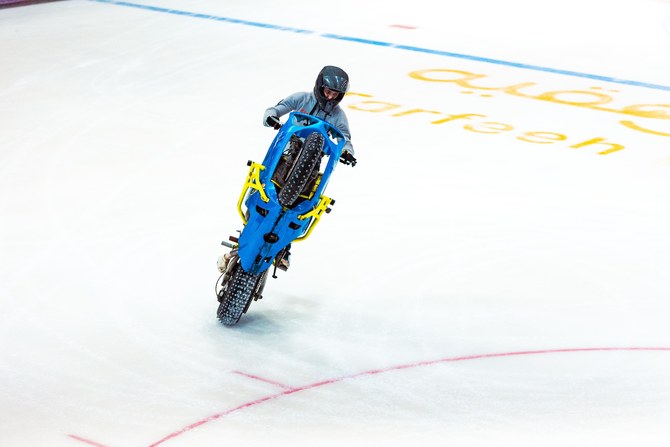
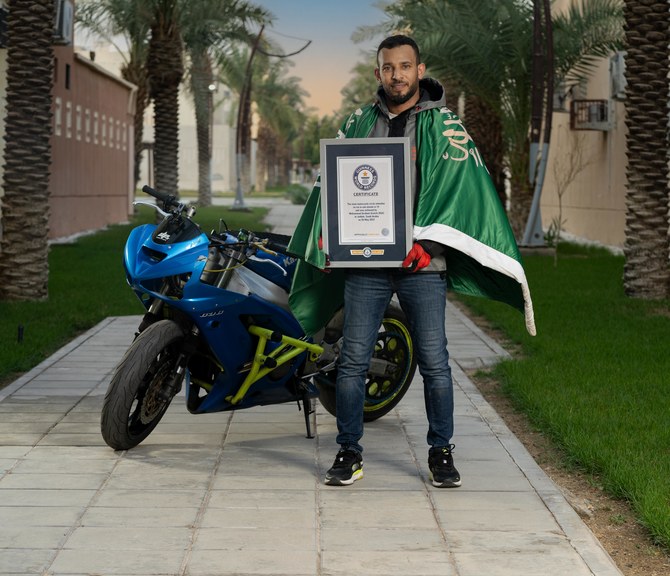
SAUDI motorcycle stunt rider Mohammed Ibrahim Scotch sets new world record on ice

Riding on one wheel of his Kawasaki ZX-6R, he completed 14 circles in one minute.

 Saudi stunt rider Mohammed Ibrahim Scotch kept his cool to set a new world record for a motorcycle wheelie — on ice.

Riding on one wheel of his Kawasaki ZX-6R, he completed 14 circles in one minute, a feat that has earned him entry into the Guinness World Records 2023 edition.

Scotch, 39, told Arab News that he had been preparing for around two years for the record attempt, which took place at an ice hall in Jeddah.

He said: “I’m proud of achieving this new record because it carries the name of Saudi Arabia, my country. I didn’t break the record, but I achieved a new world record that no one had done before.

“In 2017, to deviate from the norm and at the same time to have fun, the idea stuck in my mind, and I tried it first in a skating rink in Makkah.

“(In 2022), after researching and communicating with officials (from Guinness World Records), they informed me that no one in the world had achieved this record, so I decided to do it.

“I began the journey of rebuilding the project from scratch after obtaining approval from Guinness World Records. I searched for a private ice rink to execute this experiment,” he added.

Scotch designed studded tires and worked out the variables for his motorbike.

“When I received the official email from Guinness World Records congratulating me as a new world record holder, I could not believe it or comprehend it.

“I read the email more than once, and I told my mother, my family, and all my friends who stood with me in obtaining this record, and their joy was unbelievable,” he said.

Scotch has been riding and doing stunts since the age of 16 and turned professional in 2013. He has participated in several international stunt competitions including in Bulgaria, Egypt, and the UAE.

At the beginning of last year, he became a certified trainer with the Saudi Automobile and Motorcycle Federation.

“I am glad that I could raise the name of Saudi Arabia to new levels with my latest achievement and my international appearances,” he added.

Scotch, whose achievements were recently acknowledged by the federation’s chairman, Prince Khalid bin Sultan Al-Abdullah Al-Faisal, aims to set more records.

source/content: arabnews.com (headline edited)

____________

Saudi stunt rider in Jeddah recently set new world record as he popped a wheelie on his motorcycle then drove in 14 circles on ice for one minute. (Supplied)

__________________

SAUDI ARABIA

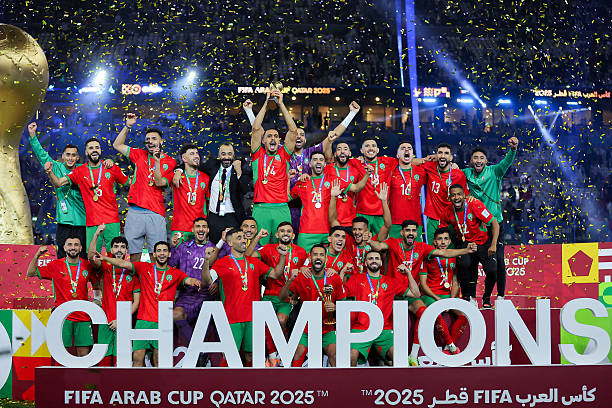
MOROCCO crowned ‘FIFA Arab Cup Champions’ after dramatic final of the 11th edition in Lusail, Doha

Morocco won the 11th edition of the FIFA Arab Cup with an action-packed 3–2 victory over Jordan in the final.

Exactly three years on from the unforgettable 2022 FIFA World Cup final, Lusail Stadium once again hosted the coronation of a champion. This time, it was the Arab world that came together in Qatar for the FIFA Arab Cup.

After 29 matches over 18 days, Morocco and Jordan were the last two teams left in contention for the title. The Atlas Lions had previously won the tournament in 2012, while Jordan were appearing in their first Arab Cup final, just a few years after losing the Asian Cup final at the same venue.

Before kick-off, there were concerns that the match would not go ahead at all. An unusually heavy downpour in Doha led to the suspension of the third-place match between the UAE and Saudi Arabia, raising doubts about the final. While several events were cancelled due to the weather, the showpiece match proceeded as planned.

Tens of thousands of fans braved thunderstorms to pack Lusail Stadium, and they were rewarded just minutes into the game. Oussama Tannane opened the scoring with a stunning long-range effort from inside Morocco’s own half, giving the Atlas Lions an early lead.

Jordan were unable to find an equaliser before the break, but tournament top scorer Ali Olwan levelled the match just two minutes into the second half with a powerful header. He then put Jordan ahead from the penalty spot in the 68th minute, setting up a dramatic finish.

Morocco’s pressure paid off late on when substitute Abderrazak Hamdallah turned the ball in from close range just three minutes before full time, sending the match into extra time. The veteran striker struck again in the 100th minute, restoring Morocco’s lead. This time, the Atlas Lions held firm to seal a memorable victory.

While the atmosphere of the World Cup was always going to be impossible to replicate, echoes of that tournament were felt throughout the Arab Cup. Fans travelled from across the region, filling stadiums, metro stations and fan zones to create a festival-like atmosphere.

There were memorable moments across the competition. Hosts Qatar endured a difficult campaign and exited at the group stage, while Palestine captured widespread admiration with their first-ever run to the knockout rounds. They pushed World Cup-bound Saudi Arabia to extra time in the quarter-finals before eventually bowing out.

Individual honours were also handed out following the final. Jordan’s Ali Olwan was awarded the Golden Boot, Morocco’s Mehdi Benabid received the Golden Glove, and Morocco’s Mohamed Rabie Hrimat was named Best Player of the tournament.

Attention will now turn to the future, with the FIFA Arab Cup set to return to Qatar for its next two editions in 2029 and 2033.

source/content: dohanews.co (headline edited)

____________

Morroco’s players celebrate with the trophy after winning the FIFA Arab Cup 2025 final football match between Jordan and Morocco at the Lusail Stadium Stadium, in Lusail on December 18, 2025. (Photo by Karim JAAFAR / AFP via Getty Images)

______________

MOROCCO

LEBANON : Arab mountaineer Nelly Attar on breaking records and breaking barriers

Nelly Attar has made history by becoming the first Lebanese person to summit the five tallest mountains on Earth, including Everest and the notoriously deadly K2. She has completed over 40 climbs across five continents. A two-time Guinness World Record holder, extreme sports athlete, and former psychotherapist, Nelly blends athletic grit with a community-driven mission: to get people moving, especially across the Middle East.

From founding Saudi Arabia’s first dance studio to training for high-altitude ascents in desert heat, Nelly’s journey is as much about resilience and purpose as it is about summits. Cosmopolitan Middle East sits down with her to reflect on the climbs that changed her, the lessons learned at the edge of endurance, and her vision for making movement and adventure more accessible to all.

CosmoME: What first drew you to mountaineering?

Nelly: My dad took me on my first multi day hike when I was 17. I was going to university soon, so I was moving countries, and we were living in Kenya at the time. Mount Kenya is the second highest peak in Africa. We didn’t know what it was gonna entail. We actually didn’t summit the mountain. My dad got hypothermia, but there was something about the climb or the hike, and just being in nature for two or three days that I was like, this is just amazing. I want to do this when I’m older. I also want to do sports because I was raised in Saudi, and we didn’t really have access to outdoor sports.

CosmoME: Did you feel a calling towards the mountains?

Nelly: No, I felt a pull. A calling is more gentle. It sits at the back of your mind; a pull may feel like swimming against the current, but you can’t let go of the pull. I think I don’t want to do this anymore. It has very high risk and opportunity costs. But then, I feel this same pull, and then I find myself up in the mountain area.

CosmoME: Could you share some details about the mountains you have climbed?

Nelly: When I was 25, I had the summer off, so I went to Mount Kilimanjaro. I fell in love with hiking and climbing. K2 is the second most dangerous. It’s a lot steeper, so avalanches do happen, but not that severe as Annapurna. There is a 33% chance you won’t come back from that mountain. I went to clean up a lot of the waste and we cleaned up about 400 KGs of waste. Annapurna has a very high risk of avalanche. So no matter where you are on the mountain, you’re constantly hearing avalanches break out around you. It’s because of the angle of the mountain, where it sits in a position where just a bit of snow accumulates, and then it slides off. Apart from the altitude, you also have this added layer of constantly being so scared. We don’t know if we’re going to die up there; it just feels like a Russian roulette.

CosmoME: How do you navigate making high pressure decisions in extreme conditions?

Nelly: We were 500 meters away from the summit of Annapurna after being there for one month, and we turned around. I made the call because I was with the team of eight men and most of the guys were from the production team. We got to a point where there was little rope left, not enough for all of us. I was like, if we all made it up together to this point, it doesn’t make sense for three of us to continue and the five to turn around. We either all turn around together, or we all climb up together. It would be another four or five hours to the summit with little or no rope. So if anyone slips, they will slip to their death. And if you’re in doubt, if there’s this much risk on a mountain, you turn around. Climbing is considered the noble art of retreat. You have to know when to turn around. If you want to stay in this game, you have to know when to turn around. My whole team made it down alive and this is what counts.

CosmoME: Which was harder—training your body for extreme altitudes or training your mind to endure the isolation and risk?

Nelly: When you’re training your body, you train your mind. I don’t see them as individuals. I train even when it’s 40 degrees with a heavy pack and that’s a lot of mental training. That discipline and mind/body go hand in hand. The times that I want to give up and I don’t give up is when I train my mind to grow stronger. I always try remind myself that I have so much within me.

CosmoME: Does climbing bring you closer to a sense of God, nature, or something beyond yourself?

Nelly: I think it always makes me feel stronger to God, because it’s almost like I’m stripped away from civilisation. No comfortable beds or showers. I’m left with connecting with my family every now and then through a satellite device, but then it’s just Allah. There’s so much uncertainty. We don’t know what the day is gonna look like. We don’t know who from the team might get hurt. We don’t know who’s not going to come back. I don’t even know if I will come back. God forbid. What keeps me calm is feeling that God is always with me. God is always protecting us. God always chooses what’s best for us. And if we don’t get the summit, that’s God protecting us. If we get to summit, God made that accessible to us. During the times that I’m really really scared, the only thing that gives me calm or peace is thinking: we’re in the safety of Allah. It’s like a mantra I keep repeating. And honestly, it keeps me so calm.

My dad took me on my first hike and he passed away almost five years ago. Climbing connects me to him. When I’m on a mountain, my grief is amplified. I have days on a mountain where I wake up and I start crying uncontrollably.

CosmoME: How does it feel to carry your country’s name on summits?

Nelly: I was born and raised in Saudi, but I started to feel more and more connected to Lebanon when I started to make history around these climbs. Beyond Lebanon, I feel very proud of my Arab heritage. I’ve always been happy about my identity, but I think even more so now, because I have this responsibility to show what Arab woman can do anything. When I started to see how people responded and starting to see how it inspired Arab woman and Muslim woman, I want to continue. I want to pave the way for other Arab women in sports.

CosmoME: What would you like to say to Arab girls and to our readers?

Nelly: I want people to see that if I can, they can too. I’ve done things that were unconventional, creating a job, a career, and a life that are so different from the standard. I managed to excel in it and inspire others. I never imagined I’d make it onto the cover of a magazine for climbing K2. Most people here don’t even know what K2 is. But you have to believe in your dream so strongly that others start to believe in it too. Then it’s no longer just your dream—it becomes everyone’s success.

If I can do this in a career as niche as mountaineering, a sport dominated by men and barely recognized in our region, then they can too. I hope I inspire girls to take the unconventional road, to follow the path that makes sense to them. They will face challenges, resistance from others, and doubt from themselves. But those obstacles will make them stronger. The ups and downs are what make the journey meaningful. When you persevere, lean into your gifts, and live your purpose, that’s when you make the greatest contribution to the world.

CosmoME: Could you share more about the business side of mountaineering?

Nelly: Initially, it was all self-funded. But as it started to take up more of my time and energy, I thought—why not turn this into a job? I was already creating content, so whenever I worked with brands, I’d try to merge it with my climbs. Instead of doing a standard campaign here, I’d say, ‘Why not make it unique and create the campaign up there?’

Over the years, through sponsorships, I’ve partnered with a range of brands—from apparel companies to climbing operators to even medication brands. After a decade, the variety is wide, but sponsorships are what make this possible. Sometimes, it’s still my own savings. Even now, I pay for some climbs myself, funding them through other work and setting money aside for the mountains.

CosmoME: Mountaineering has long been a male-dominated space. What challenges did you face as a woman in that world?

Nelly: I was often the least technically experienced climber on the team. I didn’t grow up with snow, and I didn’t have a climbing background. There was a lot to catch up on. Gear was another challenge. Being petite, I could never find equipment that fit—everything from summit suits to sleeping bags would swallow me whole.

Thankfully, as more women have joined the sport, more brands have started catering to women’s sizes. Now, I don’t see my size or the fact that I’m an Arab woman as a challenge. It’s my strength. I love it when people are surprised and say ‘Oh, you’re a climber?’ and I get to let my performance speak for itself. Training in the extreme heat back home has given me an edge.

CosmoME: What is recovery like? How does coming back to everyday life feel after climbing?

Nelly: It usually takes me two weeks (sometimes a month) to feel like myself again after a climb. My nervous system, my sleep, my training… everything needs time to reset before my body feels strong again. I ease my way back into everything. I don’t like to stop training entirely, but I’m gentle with myself and very aware I’m still recovering.

Even my concentration takes a hit. That first week, I find it hard to focus at work, so I give myself that two-week buffer to slowly re-engage. Psychologically, there’s often a dip too. After so much adrenaline and constant movement in nature with my team, coming back to the noise and overstimulation of the city can feel jarring. That adjustment period, both physically and mentally, is part of the process.

CosmoME: You’ve made history. What is next for you?

Nelly: I’d love to keep climbing, but there’s so much more to life than just summits. For me, sports have always been about community—that’s why I started in the first place. It feels good to be back, training with friends and moving alongside others.

Over the next six months, my focus is on enabling as many people as possible to get active. My background is in therapy, and when I began, sports weren’t widely accessible to women in Saudi. Creating spaces for women to move together changed my life, and I saw firsthand how it transformed theirs. I want to return to that mission.

I have a few adventurous trips planned across the region, coaching sessions, speaking engagements, and an initiative in the works aimed at making movement more accessible to everyone. That’s my goal for now. Then, maybe in six or seven months, I’ll be ready to climb again.

source/content: cosmopolitanme.com (cosmopolitan middle east). (headline edited)

_____________

_____________

LEBANON

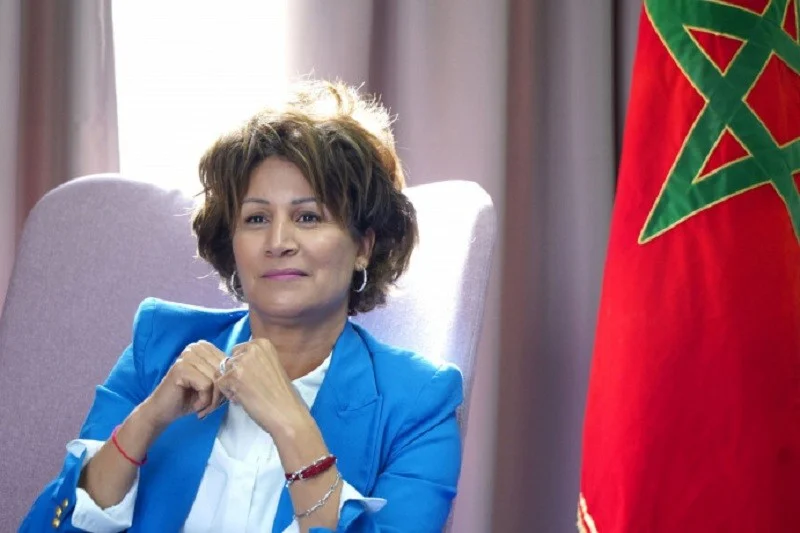
MOROCCAN Nezha Bidouane Secures New Term on International Sport for All Board

Nezha Bidouane has been granted a new four-year term on the governing board of the International Sport for All Federation (FISPT) following elections held during the organization’s general congress in central Italy.

The Moroccan sports official, who serves as President of the Royal Moroccan Federation for Sport for All, retained her seat as delegates from dozens of countries convened on January 24 and 25 to determine the federation’s future leadership.

Bidouane’s renewed mandate reinforces Morocco’s representation within global sports governance at a time when the country continues to expand its engagement on the international sports stage. Her role reflects sustained efforts to promote wider access to sport, emphasizing community participation and inclusivity beyond elite-level competition.

A former world-class athlete, Bidouane built a distinguished career in athletics, securing multiple international titles in the 400-meter hurdles and earning a bronze medal at the 2000 Sydney Olympic Games. She has since transitioned into sports administration, where she remains actively involved in advancing inclusive and developmental sporting initiatives worldwide.

source/content: thegulfobserver.com (headline edited)

_______________

______________

MOROCCO

SAUDI ARABIA : Hail sets world record for largest off-road convoy

501 vehicles drive through the dunes of scenic Tuwaren.

Hail entered the Guinness World Records at the weekend after producing the largest-ever off-road production car convoy.

The previous record, some 449 vehicles in Australia, was smashed with 501 vehicles driving through the dunes of the scenic Tuwaren area, 42 km northwest of Hail and a location surrounded by the Aja Mountains.

A large number of people from various regions of the Kingdom, Gulf and Arab countries gathered to navigate an unpaved desert trail of 7 km, showcasing their spirit of adventure and the diversity of the region’s terrain.

The event was open to both seasoned off-road drivers and newcomers looking for a unique winter entertainment. This made it suitable for individuals, groups of friends, and families.

The convoy was accompanied by a variety of cultural and entertainment activities that contributed to enhancing the experience for visitors and participants.

Prince Abdulaziz bin Saad bin Abdulaziz, the governor of Hail Province and the chairman of the board of the Development Authority, thanked the Saudi leadership for supporting the development of the Kingdom’s regions. He also praised Hail’s youngsters for taking part in breaking the world record.

Omar Abdullah Al-Abdul-Jabbar, the CEO of Hail Region Development Authority, told Arab News that Hail’s entry into the Guinness World Records was a national achievement.

He said: “Hail’s achievement of this Guinness world record for organizing the largest off-road rally further solidifies its position as a leading destination for desert adventures and activities, and strengthens its presence on the local and regional tourism map.”

The event was organized by the Saudi Tourism Authority and Hail Region Development Authority, with sponsorship from the King Salman bin Abdulaziz Royal Reserve Development Authority, and Culture House.

In addition, 14 government entities supported the event, including the Principality of Hail Region, and the Saudi Automobile and Motorcycle Federation.

source/content: arabnews.com (headline edited)

______________

501 vehicles took part in an off-road drive in Hail over the weekend, smashing the previous world record. (Supplied)

_________________

SAUDI ARABIA

EGYPT : From El-Gamaliya to the Olympics: The Story of Boxer Mohamed Reda

From Cairo’s backstreets to the Olympics in Athens, Mohamed Reda opens up about discipline, family, and the academy where he now trains a new generation to dream with grit.

Here is a conversation with Olympic boxer Mohamed Reda, written by someone whose dad has been telling this story for years… Growing up, my dad never ran out of stories about school pranks, scraped report cards, and friends who became family. But one story always stood out. He had a friend, a real friend, who went on to become an Olympic silver medallist in boxing. The guy’s name was Mohamed Reda.

For years, I thought the story might be exaggerated, until I looked him up and found out he’s real, he’s famous, and he runs a professional boxing academy in Cairo. And eventually, I got the chance to sit with him for an interview. My dad was probably more excited than Reda himself when I told him.

Reda welcomed me with the same calm energy that has shaped his whole career. “I’m a son of El-Gamaliya, Haret El-Maghrabaleen, to be specific,” he said. “That neighbourhood taught me that being a man doesn’t come from how you look. It’s how you carry yourself. People there helped each other just because it was the right thing to do. That’s what I grew up around. That’s what shaped me.” He grinned. “Also, I still remember that foul cart on the corner. Mornings with foul and chilli oil… nothing like it.”

His entry into boxing wasn’t really planned. “It looked like a coincidence. My coach lived in our neighbourhood and wanted to do my dad a favour. But the moment I put those gloves on, something clicked. I felt like I’d found something I didn’t know I was looking for.” Reda still remembers the first real match. The nerves, the smell of sweat, the shouting coach, the shaky legs. “It was at Darb Al-Ahmar Club, my first championship. Everything about that day stayed with me. That was the first time I felt like I’d started writing my name in the sport.”

He’s worn gloves with the Egyptian flag stitched into them. When I asked what that meant, his answer was simple. “Every time I put them on, I felt the weight of the country. You carry more than your own goals. It’s an honour. A responsibility.”

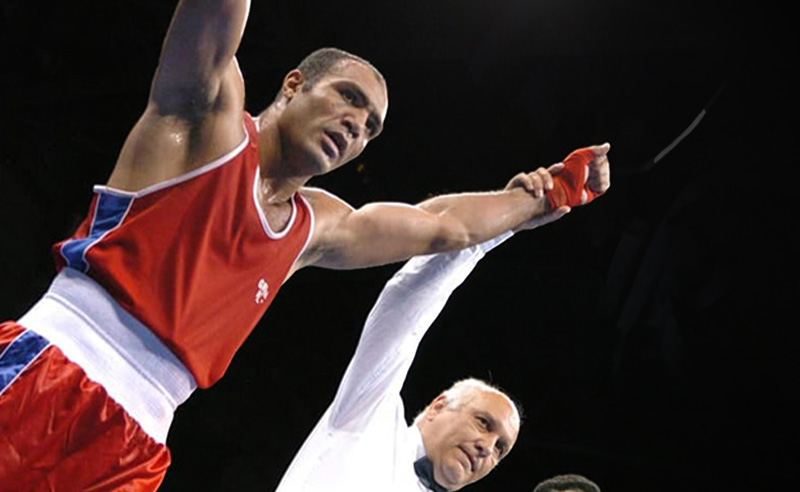
In 2004, he won silver for Egypt in the Athens Olympics. We chatted a lot about it, but what really stood out to me was him saying, “People see the medal. What they don’t see is the years of training, the injuries, the days I went to bed hungry, the nights I was in pain. They don’t see what you give up. You miss moments with people you love because you believe in something no one else can see yet.” After Athens, everything changed – and didn’t.

“People started calling me a star,” he said. “But I stayed Mohamed from El-Gamaliya. What changed was the responsibility. What didn’t change was my faith in God, my respect for my parents… and my love for foul with chilli oil.” Despite offers to go pro in Europe and the US, Reda chose to stay. “I had an eye issue. And more than that, I wanted to set an example. I wanted to build something here. Not everything is about the money.” Instead, he built a boxing academy, which was the next step in a lifelong goal.

“I wanted to train my son differently from how I was trained. I stopped competing, but I didn’t stop dreaming. The academy became that dream, a place to shape people as much as athletes.” The lessons go beyond the ring. “Victory’s great,” he said. “But what really matters is consistency. Show up when you’re tired. Respect your opponent. Respect yourself.” He sees parts of himself in the new generation. What surprises him most is how quickly they grow. “This generation? They’ve got energy. They’ve got guts. All they need is someone to steer them.”

Over the last few years, more women have joined the sport. For Reda, this was an opportunity to evolve his training. “I started listening more. Every girl has her own story. Boxing, for some, carries the weight of protection, the spark of confidence, and the breath of freedom beyond the sport alone. We adjusted our training to focus on skill, self-defence and respect.”

The academy now offers sessions exclusively for women. The experience has changed him as much as it’s changed them. “Give a girl a safe environment, and she’ll surprise you. That’s what I’ve seen. Greatness comes from will; gender has nothing to do with it. Every time one of them pushes through fear, she teaches me something new.”

When I asked about a moment from his career that stayed with him – even though it never made the headlines – he didn’t hesitate. “After losing a championship, I came home feeling like I wasn’t cut out for it any more. I told myself I was done. But when I walked in and saw my wife’s eyes, she didn’t say a word, but the belief she had in me… that’s what brought me back. No one wrote about that. But that moment made me a champion.”When I asked Reda about his definition of strength or power, he answered, “Strength is getting back up when you fall. It’s staying calm when someone tries to get under your skin. It’s holding onto your humanity when things get tough. The real strength? It’s in your heart and your head, not in your gloves.”

Before I left, I asked what he hoped kids would take from his story. “I hope they see that champions rise through what they build, step by step. Built from every tough moment, every ‘I can’t’ that turns into ‘I did.’ Boxing is a big school. It teaches you to face yourself. And if you’ve got a dream – any dream – you’ve got to believe it can happen. There’s always room for another Mohamed Reda.” After the interview, I called my dad to tell him how it went. He said, “I told you he was the real deal.” And honestly? He really is.

source/content: cairoscene.com (headline edited)

_____________

_________

EGYPT

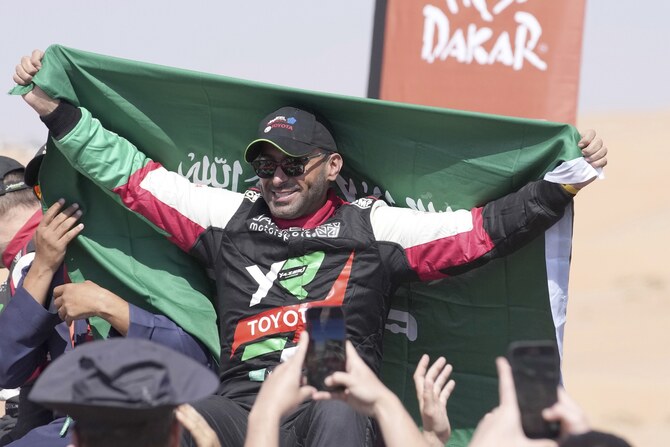
SAUDI driver Yazeed Al-Rajhi records historic Dakar Rally triumph

Saudi Arabia have hosted the Dakar Rally since 2020, when it moved from South America.

The Overdrive pilot held onto his overnight lead to beat South Africa’s Henk Lategan in a Toyota by 3min 57sec with Mattias Ekstrom of Sweden third in his Ford, 20min 21sec adrift.

Saudi Arabia have hosted the Dakar Rally since 2020, when it moved from South America.

There was also a first win in the world’s most famous endurance rally for Australia’s KTM rider Daniel Sanders in the motorbike category.

Sanders, 30, dominated from the moment he won the prologue and finished a comfortable 8min 50sec faster than Spanish runner-up Tosha Schareina on his Honda.

Sanders is the second Australian to prevail in the motorbike category, Toby Price emerging victorious in 2016 and 2019.

“It was a tough race,” said Sanders.

“The last three days couldn’t come quick enough. It was really, really exciting to see the finish line when we came over one dune.

“You see the whole bivouac, I just smiled and had chills go through my whole body. Super special, won’t forget that moment.”

source/content: arabnews.com (headline edited)

__________

Yazeed Al Rajhi celebrates after winning the Dakar Rally 2025 in the car category at the end of the 12th and last stage in Shubaytah, on January 17, 2025 (AFP)

__________________

SAUDI ARABIA

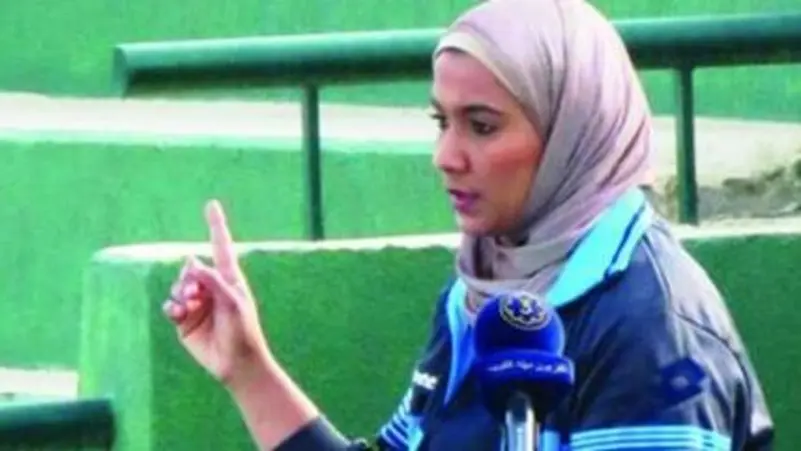
KUWAIT : Meet Aseel Shaheen, the first Arab woman to officiate at Wimbledon

Kuwaiti line umpire Aseel Shaheen was one of the 350 people selected to officiate in the main round of the prestigious tournament.

She is making waves at the All England Club this year after becoming the first Arab woman to officiate in the tournament.

Kuwaiti line umpire Aseel Shaheen was one of the 350 people selected to officiate in the main round of the prestigious tournament.

“It’s an indescribable feeling being here. It’s something big, it’s a challenge. I’m the first female from the Arab world to be an umpire at Wimbledon,” Shaheen, who is on the waiting list for the U.S. Open, told UAE sports paper Sport360.

“I was worried that they wouldn’t accept me because I wear a hijab, but on the contrary, they really accepted me,” she said.

“London is quite open towards hijab, but maybe it’s not too common around the tennis world. But me wearing the hijab and working on court during a tennis match at Wimbledon is a sign that the world is starting to accept us more,” the former swimmer and coach added.

Shaheen, who started officiating classes in 2002 said that reaching her position was a “challenge … because they would always nominate the guys and ignore me.”

“I told them I wanted to be an international umpire, I have the qualification and I have the language skills, because I speak good English. So I went to officiating school and I became a white badge in 2011.”

Last year, Shaheen gained experience of working in the Wimbledon qualifiers.

source/content: english.alarabiya.net /(Al Arabiya English)

____________

____________

KUWAIT

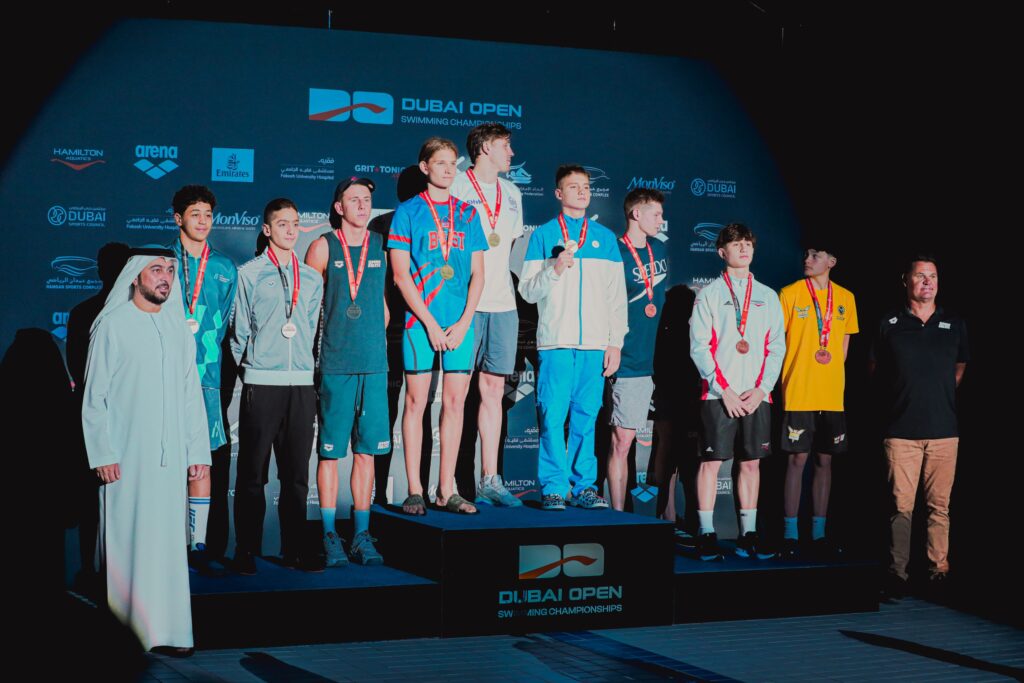
ARAB Excellence & New Records in Dubai Open Swimming Championship 2025

The Championship, which was held with participation of huge numbers of Olympic & world champions, took place at Hamdan Sports Complex and organized by Hamilton Aquatics and ESM Academy in collaboration with the Dubai Sports Council, as part of the Council’s policy to attract & develop sports talents, and in line with Dubai Government’s vision to attract & develop talents in all fields.

The Arab male & female swimmers have attained new records at the level of their national federations during this Championship. In this regard, the Tunisian swimmer Habiba Belghaith has set a new Tunisian record in the 50 M breaststroke (women’s category) with a time of 32.35 seconds, surpassing the previous Tunisian record of 32.68 seconds which was achieved by her compatriot Sara Lajnef.

Tara Aloul of Jordan finished the 200 M race (women’s individual category) within a time of 2:24.78 minutes to break her previous record of 2:25.56 minutes.

Zaid Al-Saraj from Saudi Arabia has attained a new Saudi national record in the 50 M freestyle (men’s category) with a time of 23.22 seconds, surpassing the previous record of his compatriot Yousef Bu Arish with 23.35 seconds.

The Lebanese swimmer Lynn Al-Hajj achieved a new record for the Lebanese open swimming in the 200 M breaststroke (women’s category), as she recorded 2:32.74 minutes, breaking her previous record of 2:33.22 minutes.

The British Olympic champion Ben Praud secured 1st place in the 50 M freestyle with a time of 21.99 seconds. The Switzerland’s Noé Pont, the bronze medalist in the 100 M butterfly at Tokyo Olympics 2020 and three-time world champion, has opened his 2025 season by setting a new world record of 22.83 seconds in the 50 M butterfly during the Championship.  

The Lebanese swimmer Lamar Al-Hajj from Decathlon Club was named as the Best Junior Female Swimmer, while Santiago Valbuena from Dhahran Youth Swimming Club in Saudi Arabia won the Best Junior Male Swimmer’s Award. The All-Stars Swimming Academy from the UAE claimed the Best Junior Club’s Title.

The Netherland’s Tessa Jelly from Feyenoord Albion Swimming Club won the best swimmer’s title in the women’s open category, besides the short distances’ title. The Netherlands’ Shawn Nieuwold from Feyenoord Albion Swimming Club won the best swimmer’s title in the men’s open category, and gained the short distances’ title. “My Swim Club” from Dubai won the Best Club’s title in the Open Category.

Distinctive Participation:

Dubai Open Swimming Championship was held with distinctive participation of 1,294 male & female swimmers who competed in 136 different races in juniors & professionals categories, represented 122 global clubs of 30 countries from the various continents of the world; these are: Algeria, Oman, Australia, Pristina, Azerbaijan, Qatar, Bahrain, Romania, Belarus, Russia, Egypt, Scotland, England, Serbia, Estonia, Seychelles, Faroe Islands, South Africa, India, Switzerland, Iran, Tanzania, Jordan, Thailand, Saudi Arabia, Turkey, Kuwait, Lebanon, Uganda, in addition to the UAE.

Olympic Champions:

The Championship witnessed participation of elite of Olympic champions & world record’s holders, besides group of elite of swimmers from various countries of the world, and therefore the event has become one of the top competitive swimming championships. Among the prominent participants in this Championship were the British Olympic champion Duncan Scott, winner of 8 Olympic medals & 20 global medals / the Swiss Noy Bonte, who gained Olympic bronze medal and 19 world medals / the British world champion Ben Praud, the winner of Paris Olympics 2024 silver medal besides 29 world medals / the Canadian Marie-Sophie Harvey, winner of 21 world medals /Lara Van Niekerk, winner of two world medals.

source/content: emirates247.com (headline edited)

_____________

_________

ARAB