JORDANIAN-AMERICAN :How Malek AlQadi – One Jordanian Architect Brought a Piece of Petra to California

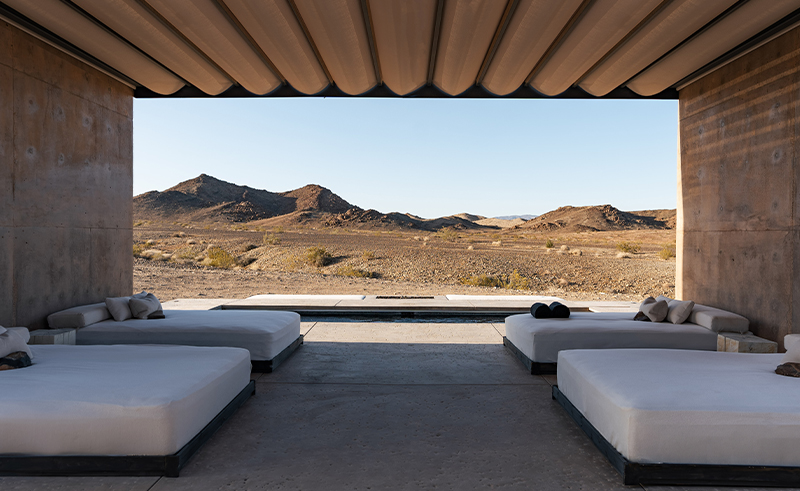
Inspired by his childhood in Amman, Malek AlQadi’s latest project, ‘The Folly Mojave’, injects desert minimalism with sustainable luxury.

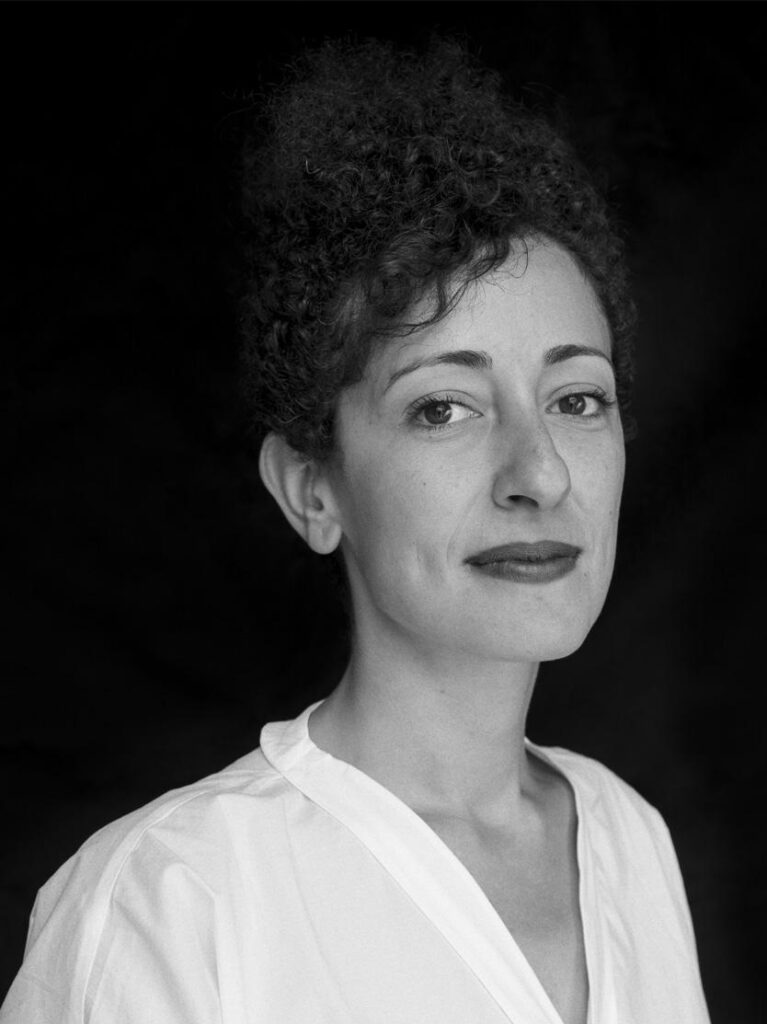
Born in Amman, Jordan, raised in Florida, and based in Los Angeles, Jordanian-American architect Malek AlQadi has dedicated his life to his follies. In architecture, a folly is a building that serves no purpose aside from aesthetics. But AlQadi’s follies? They are worlds unto themselves; portals to places only visited in daydreams and memories.

His first folly came about as part of his thesis project, during which he designed and executed a humble, fully self-sustaining stay in California’s Joshua Tree National Park. Though his design language has evolved over the years, his core principles remain the same: sustainability, minimalism, and a reconnection with nature, all rooted in a childhood spent marvelling at Jordan’s deserts.

In Jordan, ancient structures like Petra dominated his early experiences. In Florida, his exposure to contrasting environments shaped his understanding of space, structure and purpose. AlQadi’s obsession with follies finds its roots in his desire to push the boundaries of design. He’s not interested in the grandiosity of skyscrapers or the utility of commercial buildings. Instead, his work delves into the ethereal, focusing on creating spaces that encourage introspection, exploration and escape.

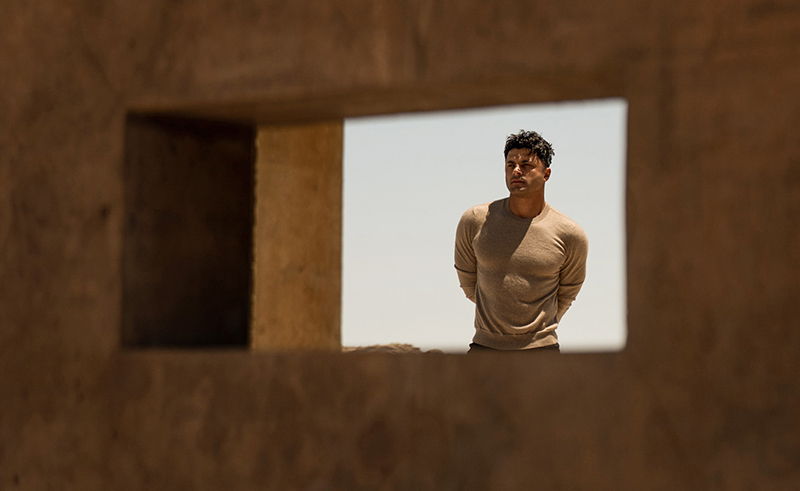
The Folly Mojave, a series of standalone suites dotted across 200 acres at the intersection of The Mojave National Preserve and Joshua Tree National Park, is AlQadi’s most recent and most ambitious project to date. The project is a retreat that blends into the arid environment while providing visitors with an isolated, immersive experience. “A lot of it was navigating childhood memories and connecting them with real-life scenarios and architectural elements, tying vastly different places in the world together, yet still grounded in similar principles and environments.” AlQadi tells SceneHome.

For AlQadi, the desert isn’t just a backdrop. It’s a critical component of the project, shaping the way the Folly Mojave interacts with the land. The retreat’s location in such an extreme environment is intentional; it encourages guests to detach from their everyday lives and engage more fully with their surroundings.

At first glance, the Folly Mojave may appear simple, but its simplicity belies the thoughtfulness of its design. The structure is fully off-grid, powered by solar energy, and equipped with self-sustaining water systems. The retreat is designed for minimal impact on the surrounding environment. Inside, the space is surprisingly open, with large windows that frame the vast desert views.

“A big part of the experience is having less light pollution and being able to see the stars at night. All of that fed into the idea of disconnection,” AlQadi explains. “It’s about having the luxury of time and space to relax and take in nature, which, at its core, is the ultimate healer.”

Malek AlQadi emphasises the “site-responsive” nature of his architectural philosophy. Unlike architects who adhere to a singular aesthetic, AlQadi’s approach is shaped by the environment he works within, adapting to the unique qualities of each location. “No two projects are ever the same,” he explains, yet there’s always a recognisable touch that connects his work. Symmetry, the use of natural materials, and a minimalist design language are core to his style, while he doesn’t shy away from incorporating brutalist elements when appropriate.

For AlQadi, creating spaces that resonate beyond the present – lasting decades or even centuries – is a key part of his architectural philosophy. “Guests often describe the experience as surreal, unique and unplugged,” AlQadi reflects. “Many mention feeling a deep connection while staying there. It’s rewarding to know that people from all walks of life have been able to share in that experience.”

source/content: cairoscene.com (headline edited)

______________
____________________________

AMERICAN / JORDANIAN

ARAB : The Arab World’s Greatest Modern Achievements

The Golden Age never really ended

Arabs are known for having had numerous contributions to civilizations—notably in the fields of Mathematics (Arabs invented Algebra), Astronomy (Al-Biruni discussed the earth’s rotation centuries before it was confirmed by Galileo), and Medicine (Al Razi was one of the first to diagnose diseases like smallpox and measles).  

But Arab achievements didn’t end in the Golden Age and have continuously evolved to modern fields, so we’re here to round up some of the lesser-known greatest modern achievements by Arabs..

Noor Ouarzazte

Morocco is turning the Sahara Desert into the largest concentrated power complex in the world. The project is currently in progress, due to be complete before the end of 2018.

Arabs in Space

Sultan bin Salman Al Saud became the first Arab in space in 1985 – he was also the first royal astronaut ever. Syrian-born Mohammed Ahmed Faris followed in Al Saud’s footsteps in 1987.

Nobel Peace Prize Winners

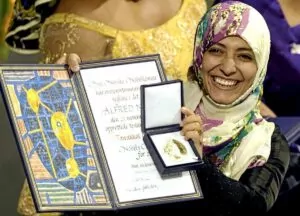
Photo credit ODD ANDERSEN/AFP/Getty Images

The Tunisian national dialogue quartet was awarded the Nobel Peace Prize in 2015 for their role in building a democratic state in Tunisia following the Arab Spring.

Yemeni journalist and activist Tawakkol Abdel-Salam Karman preceded the Tunisian National Dialogue Quartet in 2011 as Nobel laureate—she became the first ever Yemini and Arab Woman to win the Peace Prize, as well as the second youngest ever.

The ‘Father of Femtochemistry”

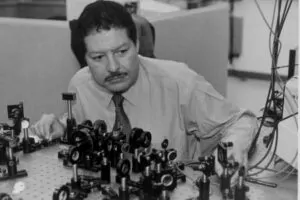
Femtochemistry is probably something too difficult for most of us to understand—but according to Wikipedia it’s “an area of chemistry that studies chemical reactions on extremely short timescales”. Ahmed Hassan Zewail, and Egyptian-American scientist, is known for pioneering a laser technique that allowed for easier analysis of chemical reactions. He even won a Nobel prize for his work in 1999.

Pritzker Architecture Prize Winners

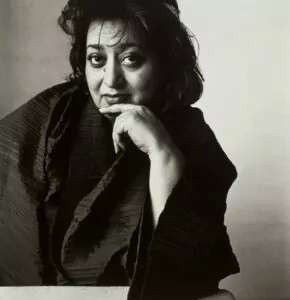
The late Iraqi-British architect Zaha Hadid was an internationally-acclaimed architect, renowned for her sci-fi creations. Having built some of the world’s most innovative spaces. In 2004, she became the first ever woman to win the prestigious Pritzker Architecture Prize—the most prestigious award in architecture.

source/content: mille.com (headline edited) / Olfa Farha

______________

__________

ARABS

EGYPT : Meet Professor Essam Safi El-Din: An Egyptian architect and tutor

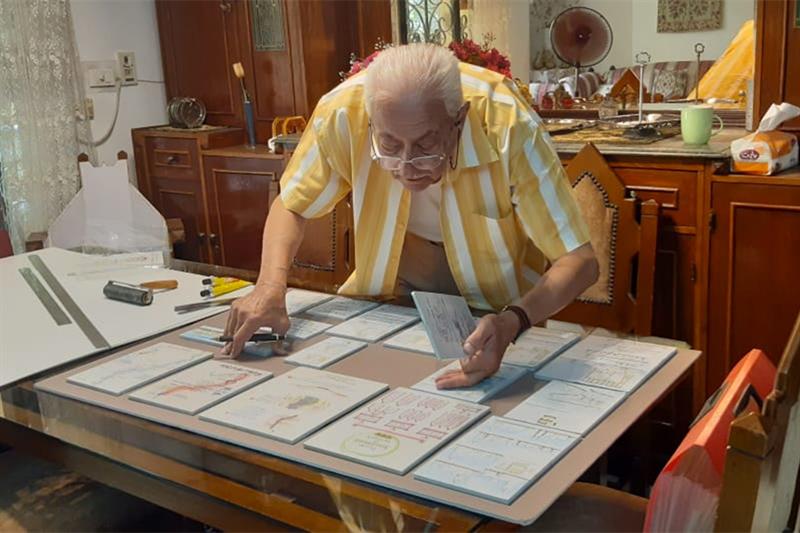
As he submitted the final maquettes (small-scale models) of Egypt’s folk architecture to the soon-to-open Museum of Folk Arts, Ahram Online spoke to the master himself about the merits and grace of architecture.

To Professor Essam Safi El-Din, architecture is an authentic musical note that resonates with the human touch of the people who conceptualised, built and lived in the building.

Known as the Architect and Tutor who, for over 55 years taught, designed and founded the house of Egyptian Architect and The museum of Folk Arts, Essam Safi El-Din has always believed in the philosophy and grace of popular architecture.

From Shubra Tramway to El-Refaai and Sultan Hassan

“In the 1980s, I designed the pedestrian passage between Sultan Hassan and El-Refaai Mosque, which was originally the tracks of the tramway. So my sketches were inspired by my daily tram ride from Shubra where I lived as a child in 1947 to the Citadel. I copied the same pattern that the tram took from narrow streets that end up in a vast square and the pedestrian area captured the grace and serenity of the architectural gems of the two heritage mosques,” he told Ahram Online.

On revisiting the tramway voyages with open eyes, Safi El-Dien realised that his eyes captured the human wisdom and truth in the details of the buildings that ran by him as the tramway moved across various districts of Cairo.

Handmade Architecture

A child to a renowned architect, Safi El-Din has always been fascinated by designing houses. Making his own handmade maquettes was his passion since childhood. “Since I was seven-years-old I was charmed by architecture and my prize for doing my homework was that I would go to my father’s architecture office and draw with him. My eyes started to watch the buildings and ask who built it and why,” he remembered. This passion was manifested into Egypt’s oldest mockup and design architecture in Egypt and the Arab World.

Passion for Old Buildings

Describing his favorite work spot in his home, Safi El-Din revealed to Ahram Online his relationship with the radio. “Wherever I work, I have two radios to choose from, one set to a music programme and the other to the Quran channel,” he noted

“I was always enchanted by the old architecture because of its beautiful art effects, motifs and language. There is a human and visual dialogue between me and the building because I feel the presence of the head of builders, the builders, and the inhabitants of such building. Old architecture is close to me for it fits the human scale with all its space, physiological and emotional needs,” he explained, describing how buildings can promote serenity and induce better mood for humans.

“You see, architecture is still music, and an architect has to be an artist who has a taste in music,” he explained.

Inspiring Architects

“The architects that have inspired me at an early age are Said Karim whose sketches were the first drawings I have seen in my Dad’s office. I was very fond of Hassan Fathy and Ramsis Wissa Wassef because they have this great sense of belonging to the local building techniques as a mission and a cause,” he added. His passion to safeguard the valuable knowledge in architecture and the grace of local architecture was passed on to all the students he taught and mentored in college throughout the course of over 55 years of academic world. However his keenness to pass on such knowledge to the public made him go the extra mile.

The House of Egyptian Architecture and The National Folk Museum

In the early 1980s, he wanted to document all types of Egyptian architecture under one roof. The Ministry of Culture granted him the current House of Egyptian Architecture. The charming Ottoman-style house that belonged to Hassan Fathy – the father of modern architecture in Egypt – was once the studio of Orientalist artists and has since become a cultural hub, and a museum of local architecture.

Safi El-Din’s maquettes portraying the unique identity of Egyptian architecture were the foundation of The National Folk Art Museum that held its soft opening a few months ago.

Located at the High Institute for Folk Arts in the Haram district, Giza, the official opening date for the museum has not yet been announced. 

“The National Folk Art Museum is different from any museum of history because it is not focused just on the historic facts, it is more focused on the cultural value of such items in that era. The value of architecture and its types and how it is comforting. Folk arts as well as folk architecture, reveal the indigenous roots of culture, conduct, the skills of craftsmanship and handicrafts, ” he added.

Essam Safi El-Din’s name resonates with success and authenticity. There is a library dedicated to his works at the British University in Cairo, and he is currently working on a book on his eternal dialogue between architecture and art.

Gems of Wisdom  

The most important thing that I have learned is that the value of history is not about knowing the facts, it’s about contextualizing such facts. He stated that his motto in life is a verse from the Quran stating that God will reward all your efforts.

“A person needs to know what his/her mission in life is; why is he here? We need to teach architectural criticism as a subject not a mere cross cutting theme. We need to know the impact of architects on social life and the environment.”  

source/content: english.ahram.org.eg

_____________

_________

EGYPT

Lina Ghotmeh – Awarded the ‘Tamayouz’ Prize, for ‘Excellence of Women Architects in the Middle East and North Africa’ : January 2021

Lina Ghotmeh. Humanist Architect . Founder of Lina Ghotmeh – Architecture, France

French-Lebanese architect Lina Ghotmeh recently received the “Tamayouz” prize, which rewards the excellence of women architects in the Middle East and North Africa.

An additional recognition for this architect, who has won several other international awards.

www.linaghotmeh.com

________

© Hannah-Assouline-ok./ pix: linaghotmeh.com

_______________________

FRENCH / LEBANESE

UNESCO Competion to Rebuild Iraq’s Al-Nouri Mosque, Mosul – Won by Egyptian Architectural Design : April 2021

The “Courtyards Dialogue” design submitted by eight Egyptian architects has won the UNESCO competition to rebuild the historic Al-Nouri mosque complex mostly destroyed in Iraqi Mosul.

The Egyptian design was selected by an international jury from among 123 entries in the global competition as part of the UNESCO’s project to rehabilitate the ancient city of Mosul, the UN wrote on its website.

The winners of the competition are Salah El Din Hareedy, Khaled El-Deeb, Sherif Ebrahim, Tarek Ali Mohamed, Noha Ryan, Hager Abdel Ghani, Mahmoud Saad Gamal and Yousra El-Baha, the UN said.

Winners at the competition, the Egyptian team, has been awarded the contract for the complex as well as $50,000 prize.

source/content : egypttoday.com

__________

The winning design “Courtyards Dialogue” – Supplied/UNESCO/©Salah El Din Samir Hareedy and team / pix: egypttoday.com

_________

EGYPT