ARAB BRAZILIAN : “We’re our ancestors”

For over two decades, Gabriel Sayegh has worked to keep Arab culture alive in spaces throughout the city of São Paulo.

Born in the southern region of São Paulo city, Gabriel Sayegh, 65, is proud of his Arab heritage. The ancient culture, which comes from both sides of his family and has been part of his life since the beginning, became an essential part of his routine in 1999.

“Since I was a child, I used to go to Esporte Clube Sírio and take part in its cultural activities, and when I was 39, I was invited to become the club’s cultural director. I didn’t think twice and accepted the offer,” says Sayegh.

“It’s very important to keep Arab culture alive because we’re our ancestors. We come from a place that has its own culture, language, and cuisine, and many people don’t know about it. That’s why it’s so important to preserve our culture and make sure others learn about our origins.”

Because of his professional choices, Sayegh would never have been close to Arab culture, but his desire to keep the tradition alive spoke louder. “I always liked math, so I graduated in civil engineering and worked in the field for many years. But I always had the desire to promote the culture of my parents and grandparents, which is why I still work as the cultural director of the club today,” says the engineer.

With a full schedule all month long, the club offers different types of free classes, including Arabic language, belly dancing, and music classes that use traditional Syrian instruments. And at least once a month, there is a lecture given by an important spokesperson from the community.

“We’ve already had writers, politicians, businesspeople, and even the president of the Institute for Arab Culture (ICArabe) here. We also organize sessions to screen Arab films,” says the cultural director of Esporte Clube Sírio.

Despite the effort, the Syrian descendant says he finds it difficult to spread Arab culture among the younger generations. “Culture is no longer as much a part of the younger generations as it was during my youth. Today, there are many things that distract them.”

In addition to working at Esporte Clube Sírio, Gabriel is also involved in two other organizations: the State Parliamentary Council of Communities of Foreign Roots and Cultures (CONSCRE) of the Legislative Assembly of the State of São Paulo (Alesp) and ICArabe.

At CONSCRE, he arrived in 2019, served as president for two terms, and is currently vice president. The São Paulo native has been part of ICArabe since its inception in the early 2000s. He has held several positions within the institute, including vice president, and currently works as financial director.

“In all these places, my work is done voluntarily to help my community. At Alesp, where the space was created to bring together Arab descendants living in São Paulo, we have political ties and try in some way to highlight the culture of my country. At the Institute, the effort is greater. We hold cultural events at different times of the year. The next one will be the Arab film festival to take place in August.”

Very proud of his journey as a promoter of Arab culture, Sayegh is happy to be able to share the richness of his ancestors’ country. “For many years, Arab culture was neglected and ignored by the West, so people still don’t know much about it.”

Culture from the beginning

His mother, Ivete Abdelmalack Sayegh, came to Brazil at the age of 18 with her parents and siblings. His father, Jorge Gabriel Sayegh, is the son of Syrians and lived in São Paulo, where he met Ivete. The family grew when Gabriel’s sister was born and was completed years later when he and his twin brother arrived.

“My parents spoke Arabic when they wanted to say something so we wouldn’t understand, since my maternal grandmother only spoke Arabic. She never really learned to speak Portuguese. Because of that, I ended up speaking Arabic to talk with her,” Sayegh recalls.

Besides the language, Arab food has been and still is part of Sayegh’s and his children’s lives. “I have a daughter from my first marriage and twin sons from my second marriage who love my mother’s cooking; the tradition of Arab food is part of their daily routine. But the culture is more difficult,” Sayegh explains.

“My first wife, who is my cousin, still passed on our heritage to my daughter—however, these younger generations are drifting away from their origins. That’s why I keep stressing how important it is to know your roots. It’s only this way that you can better understand yourself as a human being and learn to respect others.”

Read more:
Memories of Arabs persisting in 25 de Março Street

Report by Rebecca Vettore, in collaboration with ANBA

Translated by Guilherme Miranda

source/content: anba.com.br (headline edited)

______________
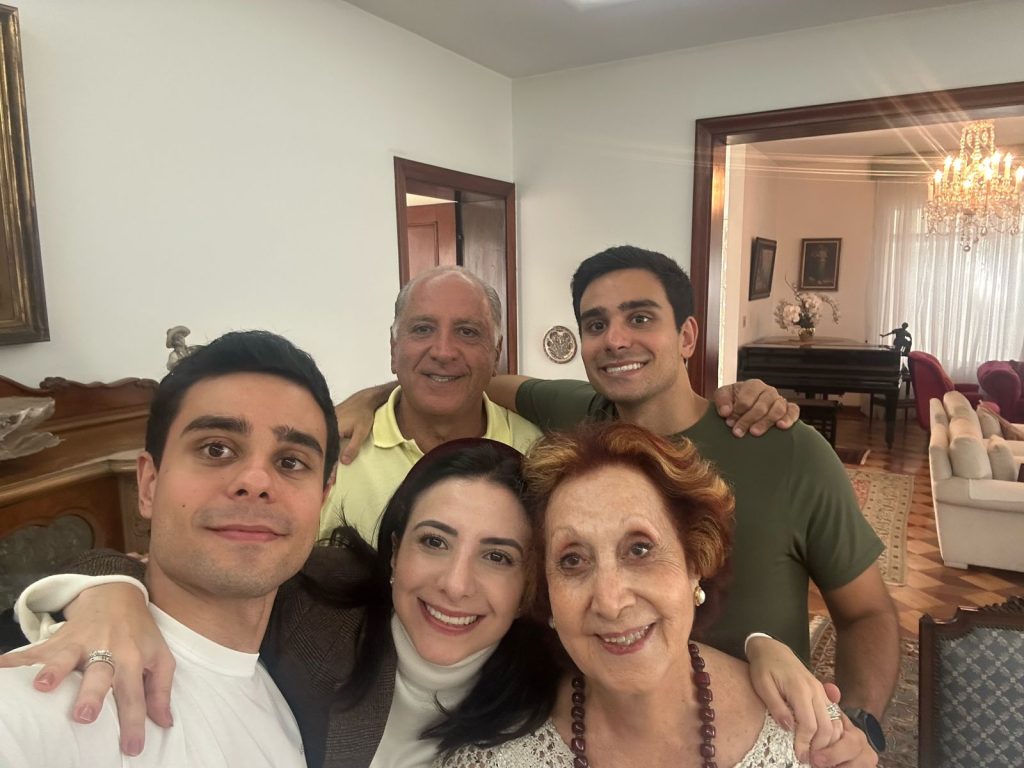
Sayegh with his children and mother: an effort to pass Arab culture on to new generations

____________________

BRAZILIAN ARAB
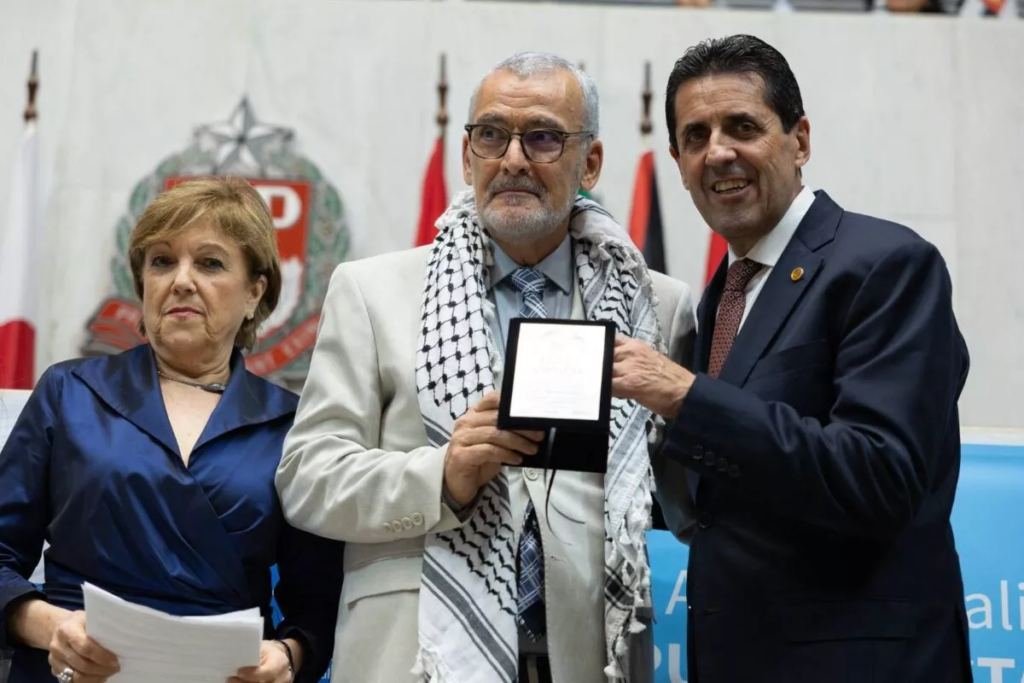
PALESTINIAN-BRAZILIAN Dr Jamal Suleiman – Leading Doctor gets Prestigious Parliamentary Award

The State Parliamentary Council of Communities of Roots and Foreign Cultures (CONSECRE) announced last week that a Palestinian Brazilian citizen has been given a prerstigious award “Honouring Community Personalities” in the State of Sao Paulo, which is home to thousands of Palestinians in exile.

Dr Jamal Suleiman was given the award at an official ceremony in the Legislative Assembly of the State of Sao Paulo, for his work in preserving the memory and cultural identity of the Palestinian people and their original country.

Palestinian Brazilians are respected for their contributions to the socioeconomic development of Sao Paulo and Brazil. Suleiman is the second member of the Palestinian community honoured in this way since the CONSECRE was created in 2001.

“This award is a great honour! I received the news with great joy and pride as a Palestinian,” Dr Jamal told me. “I understand how important this award is for our Palestinian community who started to come to Brazil at least 130 years ago. Now we all experience the pain of exile and have done ever since the 1948 Nakba.”

He pointed out that one of the most prominent characteristics of the Palestinian community in Brazil is the ability to integrate into society and accept others without forgetting their origin, heritage, culture and motherland.

Jamal Suleiman is a well-known Palestinian Brazilian specialist in infectious diseases. He is from a Palestinian family from Silwad, a town to the north-east of Ramallah. His father was living in Haifa when he was expelled during the 1948 ethnic cleansing by Zionist terror gangs. He ended up in Brazil, where his son Jamal was born in 1959 in the State of Sao Paulo. The doctor graduated from the faculty of medicine in 1983.

Suleiman´s story is similar to that of millions of Palestinians living in exile from the land that their families had farmed for generations. It illustrates the fact that Palestinian refugees are living examples of patience and, in many cases, success in the diaspora. Neither the trauma of exile nor the pain of their loss has broken their spirit. On the contrary, their collective experiences have made them stronger.

Dr Suleiman has had an outstanding medical career since the 1980s. He works as a doctor and researcher at the Emilio Ribas Institute, one of the oldest and most important health institutions in Brazil. He rose to prominence within the wider Brazilian community during the Covid-19 pandemic as one of the most sought-after experts due to his direct work in the fight against the disease. He is currently active in training undergraduate medical students.

“I work in Emilio Ribas Hospital that is considered as a reference point for infectious diseases by the World Health Organisation. In addition, I am a focus for Arab patients in the hospital because I speak Arabic. I know the issues related to our Palestinian culture and how we should reveal it in the wider Brazilian community,” he explained.

As an active member of the Palestinian community in Brazil, Suleiman has worked for years to raise awareness about the situation in Palestine. “I know what it means to be a refugee from 1948; I know the pain and suffering of the people who were torn from their roots by force. Unfortunately, this bad situation continues to this day through the continuous violations of the Israeli occupation of Palestine.”

In addition to his work in public health sector, Dr Suleiman has followed his passion to make food products from peppers. “Pimento do Jamal” is now a gourmet brand in Brazil. It has been active since 2010 with dozens of products, ranging from pepper jellies and sauces to peppers with an original Palestinian taste.

He now dedicates some of his time to make the brand represent Palestinian culture and identity. He believes that food can spread knowledge and preserve this valuable asset, while making guests talk about typical Palestinian food. Suleiman has appeared on popular TV programmes to promote Palestinian dishes, including the well-known Makluba.

“One of my hobbies is cooking and making Palestinian traditional dishes, which I think is very important because I can present Palestinian culture through serving food. I find that there is great interaction by the wider Brazilian society towards our culture; they taste our food and they want to know more about us.”

He sees this as both a humanitarian mission and a national duty. “I have Palestinian families living here and there in Palestine. We will never give up. We are all together and we will not leave anything behind. My heart and mind are with the Palestinians in that part of the world.”

source/content: middleeastmonitor.com (MEMO) (headline edited)

____________

Dr Jamal Suleiman receiving the CONSECRE award in Brazil, September 2023 [FEPAL]

______________________

BRAZIL / PALESTINE

Samira Ghannoum – First Winner of Arab Descent in ‘Bake Off Brasil’ Competition, Sao Paulo

Samira Ghannoum – First Muslim woman of Arab descent to have won this competition

A Lebanese Brazilian Muslim woman who won the first series of  Bake Off Brasil in 2015 is now a well-known figure all over the country. Samira Ghannoum won the competition over 13 weeks watched by millions in 20 countries across Latin America.

As a winner of Bake Off Brasil, she published her first cookbook in partnership with the programme.

___________________

Samira Ghannoum on the set of “Bake Off Brazil” [Middle East Monitor] / pix: middleeastmonitor.com

______________________________________________________________

BRAZIL / LEBANESE BRAZILIAN / SOUTH AMERICAN ARAB