ARAB : The Arab World’s Greatest Modern Achievements

The Golden Age never really ended

Arabs are known for having had numerous contributions to civilizations—notably in the fields of Mathematics (Arabs invented Algebra), Astronomy (Al-Biruni discussed the earth’s rotation centuries before it was confirmed by Galileo), and Medicine (Al Razi was one of the first to diagnose diseases like smallpox and measles).  

But Arab achievements didn’t end in the Golden Age and have continuously evolved to modern fields, so we’re here to round up some of the lesser-known greatest modern achievements by Arabs..

Noor Ouarzazte

Morocco is turning the Sahara Desert into the largest concentrated power complex in the world. The project is currently in progress, due to be complete before the end of 2018.

Arabs in Space
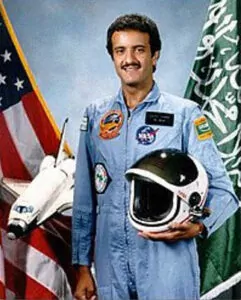
Sultan bin Salman Al Saud became the first Arab in space in 1985 – he was also the first royal astronaut ever. Syrian-born Mohammed Ahmed Faris followed in Al Saud’s footsteps in 1987.

Nobel Peace Prize Winners
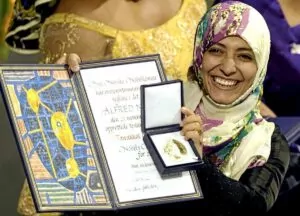
Photo credit ODD ANDERSEN/AFP/Getty Images

The Tunisian national dialogue quartet was awarded the Nobel Peace Prize in 2015 for their role in building a democratic state in Tunisia following the Arab Spring.

Yemeni journalist and activist Tawakkol Abdel-Salam Karman preceded the Tunisian National Dialogue Quartet in 2011 as Nobel laureate—she became the first ever Yemini and Arab Woman to win the Peace Prize, as well as the second youngest ever.

The ‘Father of Femtochemistry”
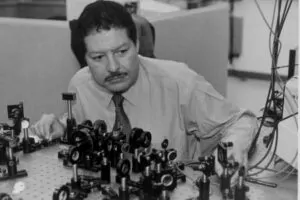
Femtochemistry is probably something too difficult for most of us to understand—but according to Wikipedia it’s “an area of chemistry that studies chemical reactions on extremely short timescales”. Ahmed Hassan Zewail, and Egyptian-American scientist, is known for pioneering a laser technique that allowed for easier analysis of chemical reactions. He even won a Nobel prize for his work in 1999.

Pritzker Architecture Prize Winners

The late Iraqi-British architect Zaha Hadid was an internationally-acclaimed architect, renowned for her sci-fi creations. Having built some of the world’s most innovative spaces. In 2004, she became the first ever woman to win the prestigious Pritzker Architecture Prize—the most prestigious award in architecture.

source/content: mille.com (headline edited) / Olfa Farha

______________

__________

ARABS

U.A.E: Meet Obaid AlSuwaidi, the Emirati Engineer selected to ‘walk’ on Mars in Nasa’s 45-day simulation

The crew will also perform activities like vegetable cultivation and shrimp farming in an environment designed to simulate space conditions.

In a 45-day space exploration simulation in the US, Obaid AlSuwaidi, a captain engineer at the UAE Ministry of Defence has been selected to join the primary crew scheduled to “walk” on Mars.

AlSuwaidi will join the second analog study of the UAE Analog Programme that is scheduled to begin on November 1.

He will join the primary crew, including Kristen Magas, Tiffany Snyder, and Anderson Wilder, in a 45-day mission within the 650-square-foot Human Exploration Research Analog (HERA) facility at Nasa’s Johnson Space Center in Houston, Texas, US. The Analog mission is part of Nasa’s Human Exploration Research Analog (HERA) Campaign 7 Mission 4.

Who is Obaid AlSuwaidi?

In his role at the Ministry, he played a key part in cultivating a skilled team to address the nation’s defence requirements, enhancing productivity, and establishing high professional standards. He also has a wealth of experience in civil and marine engineering.

AlSuwaidi holds a bachelor’s degree in engineering from Western Sydney University in Australia, a master’s degree in civil and environmental engineering from George Washington University in the USA, and a master’s degree in project management from Abu Dhabi University.

Outside of his professional commitments, he enjoys horse riding, swimming, and running.

This year, AlSuwaidi is among the fourth group of volunteers participating in an analog study in HERA. The first phase of the second analog study of the UAE Analog Programme was concluded on March 11, 2024, followed by the completion of the second and third phases on June 25, 2024 and September 23, 2024, respectively.

What is the HERA habitat?

The three-story HERA habitat is designed to simulate the conditions of space exploration on Earth, providing a unique platform for studying human adaptability to isolation and confinement. By mimicking the challenges of long-term space travel, such as missions to Mars, scientists aim to gain insights into how future astronauts will handle the extreme physical and psychological demands of deep space journeys.

During the mission, the crew will engage in various experiments, including a simulated “walk” on Mars using virtual reality, as well as activities like vegetable cultivation and shrimp farming.

Additionally, the crew will experience communication delays with Mission Control, replicating the increasing time lags expected as they “approach” Mars. These delays, which could extend up to five minutes one way, are crucial for understanding how astronauts might cope with similar conditions during future interplanetary missions.

Experiments to aid in deep space missions

Adnan AlRais, Assistant Director General – Space Operations and Exploration Sector, MBRSC said, “We are pleased to announce the selection of Obaid AlSuwaidi for the next phase of the second analog study under the UAE Analog Programme. His involvement in this mission, in collaboration with Nasa, strengthens our scientific foundation in addressing the human factors of long-duration spaceflight.”

He added, “The findings from this study will play a crucial role in shaping the future strategies for deep space missions, including Mars, while reinforcing the UAE’s position as a key player in international space exploration. We remain dedicated to pushing the boundaries of innovation and inspiring future generations to drive forward our vision of space exploration and scientific discovery.”

The four crewmembers will participate in 18 human health experiments, focusing on physiological, behavioural, and psychological responses in a controlled environment. This research will provide valuable data, which seeks to enhance human resilience and performance in spaceflight conditions.

source/content: khaleejtimes.com (headline edited)

___________

Obaid AlSuwaidi. Photo: Supplied

___________________________________

UNITED ARAB EMIRATES (U.A.E)