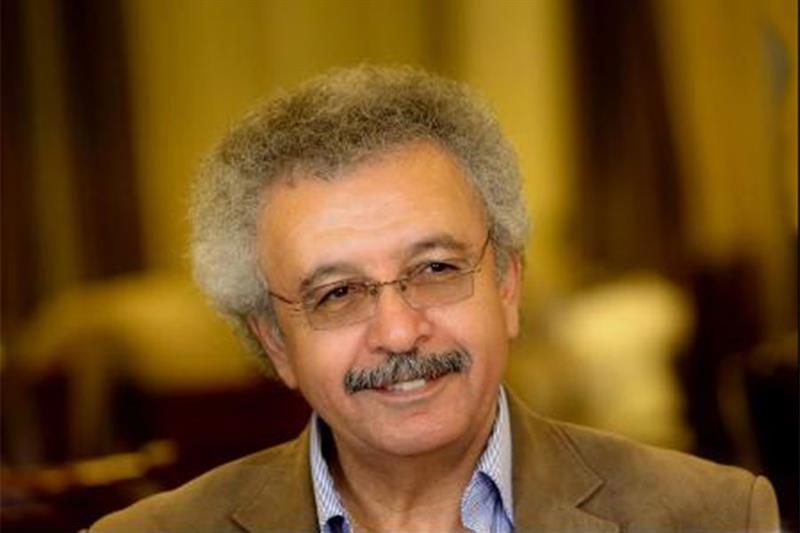
PALESTINE – JORDAN : AUC press author Ibrahim Nasrallah wins prestigious Neustadt international prize

AUC Press author Ibrahim Nasrallah, a Palestinian novelist and poet, has won the prestigious Neustadt International Prize for Literature, announced The American University in Cairo (AUC) Press and its literature imprint, Hoopoe.

Nasrallah is the 29th laureate of the prize, an honour frequently dubbed the “American Nobel.”

Nasrallah’s novel, Time of White Horses (Hoopoe, 2016), published in English translation by Hoopoe, was selected as the representative text for the prize.

The AUC Press “is proud that author Ibrahim Nasrallah and his novel, published under our Hoopoe literary imprint, have received such distinguished recognition,” said AUC Press Executive Director Thomas Willshire.

Time of White Horses tells “a deeply moving story rooted in Palestinian history and identity, exactly the kind of powerful, boundary-crossing narrative that embodies Hoopoe’s mission to bring distinguished voices from the Middle East to readers around the world,” he added.

Hoopoe has published four of Nasrallah’s novels in English, including Time of White Horses (2016), Gaza Weddings (2017), and The Lanterns of the King of Galilee (2015).

As outlined in the Neustadt Prize charter, “Any living author writing in any language is eligible, provided that at least a representative portion of their work is available in English—the language used during the jury deliberations.”

Presented biennially by the University of Oklahoma and World Literature Today, the Neustadt International Prize for Literature recognizes writers of exceptional literary achievement across all genres and languages.

The 2025 winner was announced in October, and the next Neustadt Lit Fest, organized by World Literature Today, will be held in the fall of 2026 in honour of Nasrallah.

Nasrallah was nominated for the prize by Shereen Malherbe, an award-winning novelist and children’s book author.

In her nominating statement, Malherbe said “Nasrallah’s literary works span universal issues and themes woven into the Palestinian struggle that allow readers to connect deeply with Palestine outside of a colonial framework.”

“His work is now more important than ever, considering the plight of Palestinians. It is time the world sees the true Palestine, and Nasrallah’s work can offer this perspective.”

Nasrallah’s powerful storytelling, exploring exile, identity, and resistance, places him alongside past laureates such as Gabriel García Márquez, Edwidge Danticat, and Tomas Tranströmer.

Nadine El-Hadi, senior acquisitions editor at AUC Press, noted that Nasrallah is “a writer of a generation and truly deserving of this prize.”

“Never has it been more important to amplify Palestinian voices such as his,” she added.

A leading Arab literature voice

Born in 1954 to Palestinian parents in a Jordanian refugee camp, Ibrahim Nasrallah has become one of the most important voices in contemporary Arab literature.

He has written fourteen poetry collections and fourteen novels, as well as works of literary criticism.

His writing has been translated into multiple languages, earning him international acclaim for his exploration of exile, identity, resistance, and the human condition.

source/content: english.ahram.org.eg (headline edited)

_____________
_______________________

JORDAN / PALESTINE
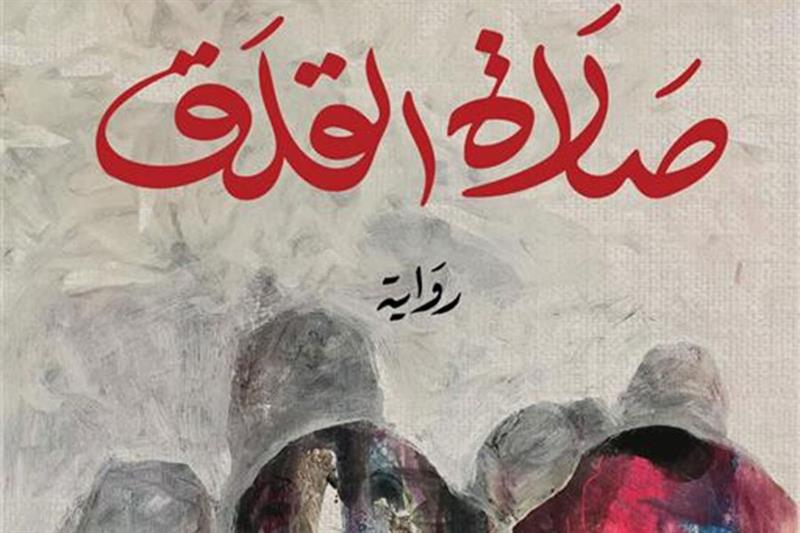
EGYPT : The Prayer of Anxiety wins IPAF 2025 amid acclaim and controversy

On 25 April, Egyptian author Mohamed Samir Nada was awarded the 2025 International Prize for Arabic Fiction (IPAF) for his novel The Prayer of Anxiety, a darkly allegorical tale set in a secluded village in Upper Egypt.

This marks the third time an Egyptian writer has won the prestigious literary award, following Youssef Zidan’s Azazel in 2009 and Bahaa Taher’s Sunset Oasis in 2008.

Nada’s novel, published by the Tunisian press Masciliana, was chosen from a six-title shortlist.

In a televised interview earlier this year, Nada revealed that he had turned to Masciliana after three Egyptian publishers declined to print the manuscript.

Set in the fictional hamlet of Nag’ Al-Manassi — literally “the village of forgetfulness” — the novel unfolds in a reality suspended in misinformation and fear.

Its inhabitants believe a minefield surrounds them and are still at war with Israel decades after the 1967 conflict.

Their only contact with the outside world is Khalil Al-Khoja, a local authority figure who produces the village newspaper, controls access to goods and maintains the illusion of unending war.

When a mysterious object falls from the sky, triggering an illness among villagers, the local sheikh responds by creating a new ritual prayer—The Prayer of Anxiety.

The plot evolves against the backdrop of national icons, culminating in the 1977 death of Abdel-Halim Hafez, a singer synonymous with the era of Gamal Abdel-Nasser.

Told through eight character “sessions,” each beginning with a nightmare and dreamlike awakening, the novel functions as both a dystopian fable and a meditation on collective delusion.

Nada’s characters offer confessional narratives haunted by guilt and helplessness. The result is a richly layered text that explores how fear and propaganda can distort memory and shape reality.

Mona Baker, chair of this year’s IPAF judging panel, praised the novel for “transforming anxiety into an aesthetic and intellectual experience that resonates with the reader and awakens them to pressing existential questions.”

Yasser Suleiman, Chair of the IPAF Board of Trustees, highlighted the novel’s “gripping poetic language” and its “clever use of symbolism,” calling it a powerful reflection on life under tyranny and the mechanisms that uphold it.

Yet the novel’s success has not gone without controversy.

Some critics have criticized its handling of Egypt’s modern history, especially its allusions to Abdel-Nasser’s legacy.

Literary critic Reda Attiya publicly dismissed The Prayer of Anxiety as “poorly structured” and accused the prize committee of rewarding a novel that “takes aim at Nasser,” calling it a “conspiracy against Egypt.”

Others pushed back. Novelist Mohamed Mawafai likened such attacks to the 1994 stabbing of Nobel laureate Naguib Mahfouz by a young man who admitted to never reading his work.

“Both are acts of incitement,” Mawafai said. “There is no difference between one and the other.”

Nada’s novel joins a growing wave of dystopian fiction in the Arab world.

In a recent study of the genre, Syrian novelist and critic Shahla Al-Ogaily argued that dystopian literature has gained traction in post-2011 Arab societies to confront painful political and social realities.

“This genre represents the inability to forgive,” she wrote, “and a confrontation with the hallucinations and phobic fears that emerged after the revolutions failed to deliver on their promises.”

Al-Ogaily traced the rise of Arabic dystopian writing to the translation of authors like Franz Kafka and George Orwell, whose works explored the horrors of surveillance, repression, and modernity.

The influence is evident in Nada’s novel — from Kafka’s The Metamorphosis, echoed when a village sheikh wakes up to find his head missing, to Orwell’s 1984, in the depiction of total narrative control and a fearful, manipulated public.

At its heart, The Prayer of Anxiety critiques political, religious, and media-driven systems that manufacture obedience and stifle thought.

Through poetic language and surreal events, Nada lays bare the quiet complicity that enables authoritarianism.

One of the novel’s characters voices the core dilemma:

“How many shooting stars must fall before we gain a new memory?
How many men must die in war for old women to tell a different story?”

Despite occasional tonal inconsistencies—particularly between the elevated language and the characters’ rural backgrounds—the novel’s literary ambition, conceptual depth, and striking imagery have resonated widely.

The IPAF, launched in 2007 with support from the Emirates Foundation, awards $50,000 to the winner and $10,000 to each shortlisted author. This year’s judges included Said Bengrad, Maryam Al Hashimi, Bilal Orfali, Sampsa Peltonen, and chair Mona Baker.

With The Prayer of Anxiety, Nada has delivered a novel that provokes, unsettles, and — crucially — invites deeper engagement with the structures of power that shape the Arab world’s past and present.

source/content: english.ahram.org.eg (headline edited)

__________

___________

EGYPT