EGYPT: Book Review: 03 Different Accounts of the History of Egyptian Copts

Three recent titles on the life and history of the Copts reflect on elements of a complex story.

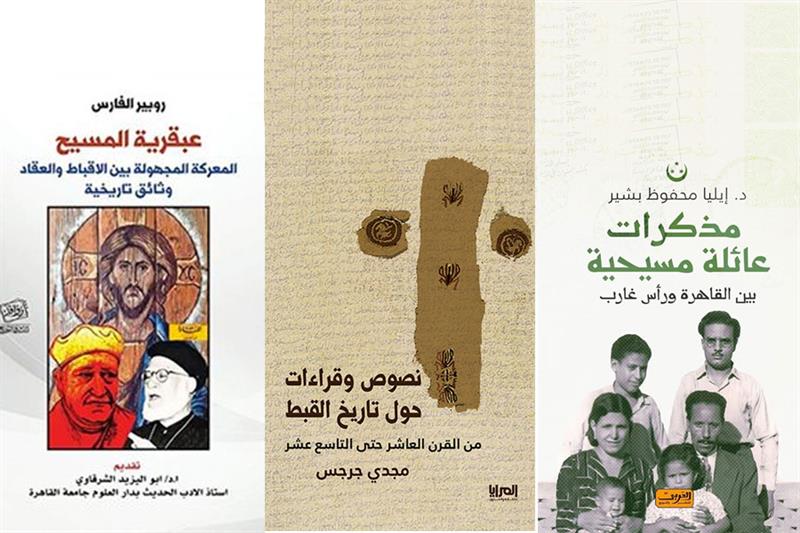
Mozakerat Aaela Masseihiya bein Ras Ghareb wal Qahera (Memoirs of a Christian family between Ras Ghareb and Cairo), by Elia Mahfouz Bashir, Cairo: Al-Arabi Publishing. pp. 196.

“At that time there was a [spontaneous] acceptance of the other; actually, the concept of this other was not really there – not as a fully defined concept any way”.

This is one of very few lines that evokes the “Christian” in the title of the pleasant-to-read 196-page text.

Elia Mahfouz Bashir, now a 65-year-old pathologist, recalls memories of his easy-going and uninhibited childhood in the Red Sea city of Ras Ghareb where his father worked for an oil company.

This is the interesting thing about the choice of the title. It offers a contrast to a sequel of articles where Bashir offers accounts from his time in this city in the late 1950s and early 1960s prior to the retirement of his father that forced the family away from its Red Sea haven to Cairo. Those are accounts of the city, the sea, playmates, school, family gatherings, comparisons between the Red Sea and the Mediterranean and so on.

So, for a while, the reader is left to wonder about the significance of the “Christian” reference. And this is exactly the point. In the childhood of Elia Mahfouz Bashir, his faith and that of his family was not an issue. It only comes up across when he refers to a trip to his maternal family in Upper Egypt where he was escorted by his mother to one of the moulids of the Coptic saints or when he talks about the prayers for healing that a priest performed for he and a playmate of his, who happened to be a Muslim.

As Bashir put it in one of the articles, both the mosque and the church of Ras Ghareb were part of a wider communal ownership. He is attributing this state of mind to the norms that prevailed during the rule of Gamal Abdel-Nasser when the focus was on Egyptian identity and not the affiliation of faith as it later became under the rule of Anwar Sadat.

Bashir had originally started sharing his reflections on his childhood in Ras Ghareb on Facebook before he decided to assemble the pieces into a book that stands as a testimony for his experience.

Abkareit Al-Massih: AlMaaraka AlMaghoula bein AlAqbat wa Al-Akkad – Watheiq Tarikheyah (The Genius of Jesus: The Unknown Battle Between Copts and Al-Akkad – archival documents), by Robert Al-FaresRawafd Publishing, 2023. pp. 172.

In line with his head-on and mince-no-words approach, Robert Al-Fares, journalist and author of several titles on Coptic social history, is putting out a book that addresses the strongly established but often averted conflict between the Christian and Muslim creeds over the nature of Jesus Christ. For Christians, Jesus is as divine as human, and as such there is no point in trying to argue his genius as Al-Akkad did in his book that came out in 1953, under the title of “The Genius of Jesus,” to the dismay of the Copts of Egypt and particularly that of the Coptic Church of Egypt. For Muslims, however, Jesus is a prophet just like any other prophet that God had sent prior to Muhammad.

In this 172-page book, El-Farres digs out the archival details of a confrontation that took place when the book was put out by Akhbar Al-Youm Publishing, at the end of a sequel that Al-Akkad dedicated to argue the genius of Prophet Muhammad and the four early rulers of the Muslim state that followed him.

Those include letters and remarks from Coptic commentators and clergy, including Father Sergius, the prominent preacher of 1919 Revolution, who was put under house arrest by the Free Officers regime “for worry over his public influence.”

He also included the remarks and views of Muslim scholars who defended or disagreed with Al-Akkad.

The book also includes the replies that Al-Akkad offered and the remarks he added to the second edition of the book that came out in 1958 under the new title of “The Life of Jesus.”

While zooming in on this particular account of Al-Akkad “The genius of Jesus”, Al-Fares is being open in his criticism of the attempt of some Coptic and Muslim figures to overlook this difference instead of simply accepting ‘the other’ – given that as much as for Muslims, Christ is just a prophet, for Christians, Muhammad is not a prophet.

“We just need to acknowledge that we have different creeds; this is the core of coexistence,” he wrote.

Nossous wa Kerat hawla tarikh Al-Qapt min Al-Qarn Al-Aasher Hattah Al-Qarn Al-Tassaeiaashr (Texts and Narratives on the History of Copts – From the 10th Century to the 19th Century), by Magdi GirgusAl-Maraya Publishing, 2023. pp. 273.

This book is part of the ambitious and really interesting work of historian Magdi Girgis who has been digging out accounts on the history of Copts from the archives to assemble a comprehensive and solid narrative on the lives of Copts in Egypt under the Muslim rule. As Girgus put it in the introduction to his most recent 273-page volume, it is “a free stroll across the history of Copts [during 10 consecutive centuries] through the text of some archival documents.”

The selection of documents, Girgus writes, is designed to address some significant points of Coptic history, and that of Egypt. He notes that his purpose is not just to share and analyse the content of these documents but to put the accounts they address within the wider context of social and political contexts.

Throughout his 10 chapters, with documents and with narratives on the context of the documents, Girgus goes through some of the most interesting accounts of the history of Copts.

These accounts include history of the Coptic Church and the Arabisation of the language of the church.

They also include a history of the sources used to chronicle the Coptic history and the archiving of documents on the Coptic history.

He also examines the relation between Church and State and the Islamic judiciary system as well as relations between Coptic clergy and Coptic notables and the state.

Moreover, he also examines the role of Coptic clergy in the rural areas.

A most controversial part of this book might relate to the argument Girgus offers on the issue of Arabisation.

Traditionally, many Coptic intellectuals have often argued that this was the outcome of the pressure of the Arab rulers of Egypt.

However, according to Girgus, the ‘choice’ of the Coptic Church to adopt the Arabic language was not necessarily about the pressure from Arab rulers but rather about the ‘choice’ of the Church of Egypt to embrace a national line away from the influences of the Church of Rome.

It was also, he argued, about the wish of the clergy to go along with the notables who had been trying to go along with culture of the new rulers in so many ways, including the most peculiar practice of polygamy by some Coptic notables despite the fact that polygamy is strictly forbidden in Christianity.

Actually, the evolution of relations between Church and State is perhaps one of the best explained issues in this book.

source/content: english.ahram.org.eg (headline edited)

__________
_________

EGYPT

EGYPT: Sweden’s ‘ 13th Malmö Arab Film Festival’ (MAFF) to grant the Egyptian Star Hussein Fahmy Life Achievement Award

Malmö Arab Film Festival (MAFF) announced that the Egyptian star Hussein Fahmy will be tributed with a life achievement award, which he will receive during the opening ceremony of the 13th edition of the festival, which will be held from April 28 to May 4, 2023.

The ceremony will be held in the Royal Hall (Rådhus) under the auspices of the City of Malmö and in the presence of the mayor.

Fahmy will also give a masterclass during the festival, which will be held in Malmö’s city library.

Hussein Fahmy has a tremendous artistic career that extends for more than half a century, from the time he played his first role in the movie “Dalal Al-Masria” directed by Hassan El-Imam in 1970 until his most recent role in the series “Sero El Batie” directed by Khaled Youssef, shown during the current month of Ramadan.

Through his career, Fahmy acted in more than two hundred films, series, plays, and radio works, and worked with the top-notch directors of Egyptian cinema, such as Youssef Chahine, Kamal Al-Sheikh, Henry Barakat, Mohamed Khan, and others, in addition to holding various cultural positions, including the presidency of the Cairo International Film Festival for two terms, the first between 1998 and 2001, and the second started in 2022 and continues to this day.

The founder and director of the Malmö Festival, Muhammad Keblawi, commented on the tribute, saying: “Tributes are not a compulsory annual tradition at MAFF. It is not only related to the presence of a great star or director in the city, but the festival is offering tributes only when those who deserve it attend. This year we are pleased with the presence of a living cinematic legend: Hussein Fahmy, who created a place in the memory of every viewer of Arab cinema and TV”.

For his part, Hussein Fahmy expressed his happiness with the award, stressing his appreciation for the contributions of MAFF to the Arab cinema during the last few years, and his aspiration to meet the audience of the Malmö and talk to them about his career.

The masterclass will be held in the Malmö City Library at 3pm, Sunday, April 30th, and the discussion will be moderated by critic Ahmed Shawky, who in 2022 published a book entitled “Hussein Fahmy: The Biography of Egyptian Cinema in Half a Century.”

source/content: egypttoday.com (headline edited)

___________

Hussein Fahmy

_________

EGYPT

EGYPT: Zamalek Exhibit Pays Tribute to Works of Illustrator Atteyat Elsayed

Elsayed’s family spent a year curating her works, as well as that of her husband El Dessouki Fahmi, from between 1960 and 1970.

When art becomes a family affair, each member with their own medium and distinct style, keeping legacies alive becomes a personal and collective mission, in which each of them pays tribute to loved ones while reviving a piece of modern art history. ‘Press Illustrations and Other Works’ is an exhibition in Zamalek’s Picasso Art Gallery that has been curated by graphic designer and filmmaker Alia Ibrahim and her father Ibrahim El Dessouki, who sought to honour the works of his late mother and father, painter and illustrator Attayat Elsayed and El Dessouki Fahmi.

Elsayed and Fahmi were both professional illustrators at the prominent Egyptian newspaper El Masa in the 1960s and 1970s, with Elsayed also contributing to Al Joumhouria newspaper. The family spent a year curating the exhibition, navigating the late painter’s extensive archive with a focus on her press illustrations.

“Our main objective was to exhibit the press illustrations, and then we added a selection of their paintings as well,” Alia Ibrahim tells CairoScene. “The process of finding the sketches for the illustrations, and copies of the newspapers they were published in was extremely difficult, and there are still countless sketches to be found and documented.”

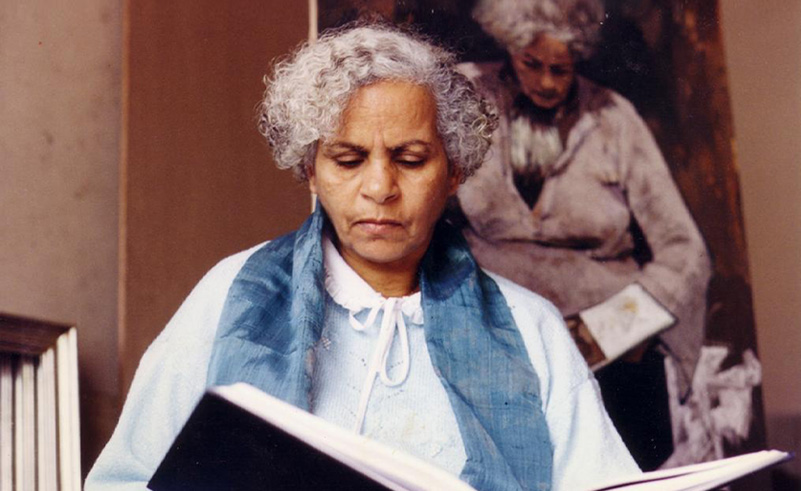
Upon entering the gallery, visitors are met with two halls, one dedicated to Elsayed’s work and the other to Fahmi’s (which includes a portrait of Elsayed herself). Elsayed’s pieces reflect a progressive focus on the mundane, capturing movement through her intricate brush strokes. With the ‘Swing Machine’ and ‘Fan’ pieces – her granddaughter’s favourites – Elsayed spotlights the overlooked items and their constant flow in everyday life.

As an artist herself, Alia credits her late grandmother’s presence and talent to her ability to look at the world from a different perspective, with her abstract paintings becoming an inspiration and lens through which she views her own artistic endeavours. The exhibition is currently running at Zamalek’s Picasso Art Gallery until February 27th.

source/content: cairoscene.com (headline edited)

___________

_________

EGYPT

EGYPTIAN Actress May Elghety Will Star in British Film ‘Due Dating’

Egyptian actress May Elghety makes her international debut in the British romcom‘ Due Dating’ alongside Rowland Stirling.

Egyptian actress May Elghety is making her international debut in the upcoming British film ‘Due Dating’. The romantic comedy follows the hurdle-ridden relationship between a blogger, Cole (Rowland Stirling), and a lawyer, Persia (May Elghety).

The rising actress has starred in multiple films, including ‘Clash’ (2016), ‘Grand Hotel’ (2016), ‘Taye’a’ (2018), and ‘MAMA’ (2022) which premiered at the Cairo International Film Festival. She also made her mark on a number of series including ‘High School Girls’ (2020) and ‘Every Week Has A Friday’ (2020).

Her upcoming cinematic endeavour ‘Due Dating’ is currently being filmed in the UK. The movie is written by Jade Asha, directed by Daniel Pacquette and produced by London Independent Picture.

source/content: cairoscene.com (headline edited)

____________

_________

EGYPT

EGYPT & ARAB: Heritage of 12 Arab countries on show at the 1st Bayt Al-Arab Fair (House of the Arabs) 2023 in Cairo

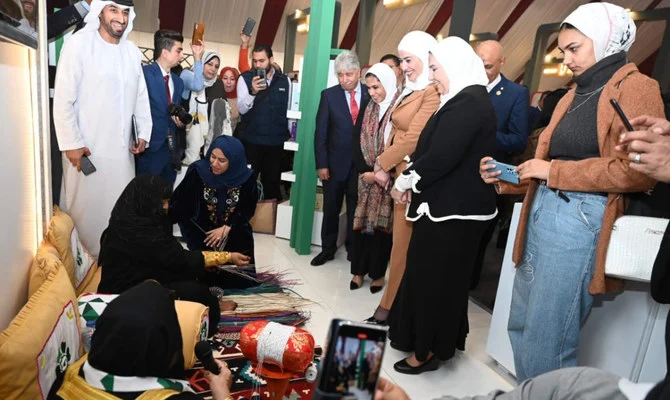
The first Arab exhibition for productive families, Bayt Al-Arab (House of the Arabs) opened in Cairo in the presence of Ahmed Aboul Gheit, the Arab League secretary-general, and several Egyptian and Arab officials, including a high-ranking Saudi delegation.

The products at the exhibition reflect the identity of the 12 participating Arab countries.

It offers an important opportunity to learn about the richness of the cultures of these countries in craftwork and handicrafts in order to protect these industries from extinction.

The number of participants featuring at the exhibition is about 150, of which 70 are Egyptian and 80 from other Arab countries.

The exhibition, which continues until Jan. 11, opens areas for the exchange of expertise between craftsmen, producers and exhibitors. 

Saeed Al-Zahrani, head of the Saudi delegation, shared with the audience at the opening ceremony a number of success stories, and said the participation of the Social Development Bank aimed at supporting and empowering micro-enterprises for family businesses, which are considered a fundamental pillar of the Kingdom’s Vision 2030.

At the Saudi pavilion, visitors were drawn to the heritage products of various regions of the Kingdom, such as Al-Sadu weaving, Al-Qat Al-Asiri, and the manufacture of Al-Masleh, in addition to the products of many Saudi family businesses displayed within the Tagseed (incarnation) initiative, which is marketed for home projects in all international and local exhibitions. 

Nevin Al-Kilani, Egypt’s culture minister, said that the participation of dozens of families from Egypt and the Arab world was “the best evidence of Egypt’s keenness to support heritage both locally and regionally.”

Raef Al-Khouli, an official involved in the organization of the exhibition, told Arab News: “The Arab House exhibition in the Dome Palace is a wonderful opportunity to visit because there are many handicrafts from all Arab countries, which are sold at very reasonable prices, because all who are present are the owners of the profession or craft, and are not merchants.” 

At the entrance, Al-Khouli said, visitors can register their names and phone numbers, and will receive entry for free, taking a dedicated bus to the exhibition venue.

Al-Khouli added: “At the Saudi pavilion there is a wonderful medal that the visitors can buy. It is a commemorative medal for the door of the Kaaba and the door of the Prophet’s Mosque.

“On the sidelines, there is a large theater and artistic performances are held in it throughout the day,” Al-Khouli said, adding that visiting families could bring children as well, because there is a play area and many drawing and coloring activities.

source/content: arabnews.com (headline edited)

___________

The first Arab exhibition for productive families, which continues in Egyptian capital Cairo until Jan. 11, opens areas for the exchange of expertise between craftsmen, producers and exhibitors. (Supplied)

___________________________

EGYPT & ARAB NATIONS

EGYPTIAN Mezzo Soprano Farrah El-Dibany Performs French Anthem in FIFA World Cup Qatar 2022 Final – December 18th

Egyptian mezzo soprano Farrah El-Dibany has performed La Marseillaise the French national anthem, in the beginning of the final FIFA World Cup match against Argentine in Doha, Qatar on Sunday.

Farrah El-Dibany has sang during the re-election of Emmanuel Macron on April 24.

She was awarded France’s Ordre des Arts et des Lettres in the grade of Chevalier (Knight) by France’s Ambassador to Cairo Marc Baréty during an official ceremony in April.

Born in Alexandria in 1989, El-Dibany is one of the well-known Egyptian singers of her generation, establishing herself on an international scale in a short time.

Read more about Farrah  El-Dibany here.

source/content: english.ahram.org.eg (headline edited)

____________

_________

EGYPT

EGYPT enlists ‘Journey of the Holy Family Festivals’ on UNESCO List of Intangible Cultural Heritage of Humanity

“Festivities and celebrations affiliated with the Journey of the Holy Family in Egypt are now on UNESCO’s Representative List of Intangible Cultural Heritage of Humanity,” professor Nahla Imam, heritage consultant at the Egyptian Ministry of Culture and country representative of Egypt at the 2003 Convention of Safeguarding the Intangible Heritage of UNESCO, told Ahram Online on Wednesday.

Imam credited the move to the efforts of the Egyptian ministries of culture and foreign affairs, adding that Egypt’s efforts were almost unanimously supported by UNESCO’s Inter-Governmental Committee.

This is the seventh intangible cultural heritage element that Egypt enlists in UNESCO. Prior to the Journey of the Holy Family, the Egyptian manual-textile industry in Upper Egypt was put on the UNESCO List of Intangible Cultural Heritage Sites in Need of Urgent Preservation.

Egypt first enlisted El-Sirah El-Helalya (The Epic of Beni Helal) in 2008, Tahteeb (Stick Art) in 2016, the Aragouz Puppet in 2018, and the knowledge and traditions affiliated with palm trees in 2019.

According to the accounts of historians, the Holy Family spent around four years in Egypt.

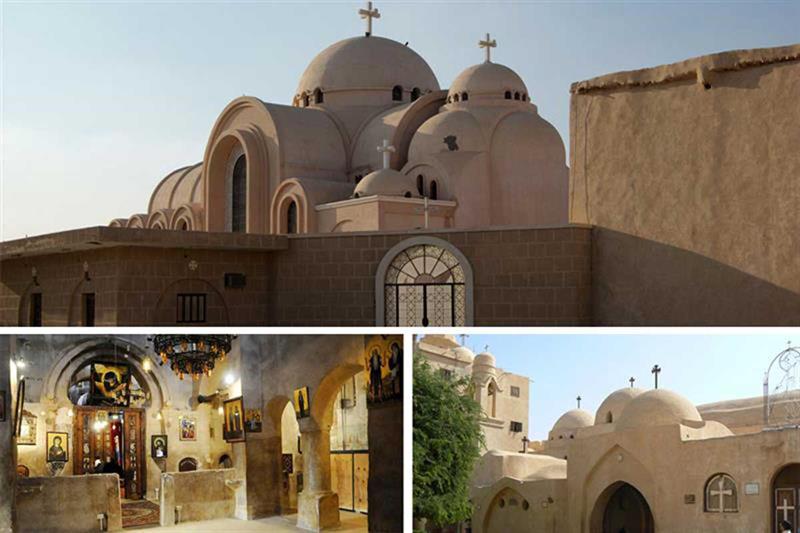
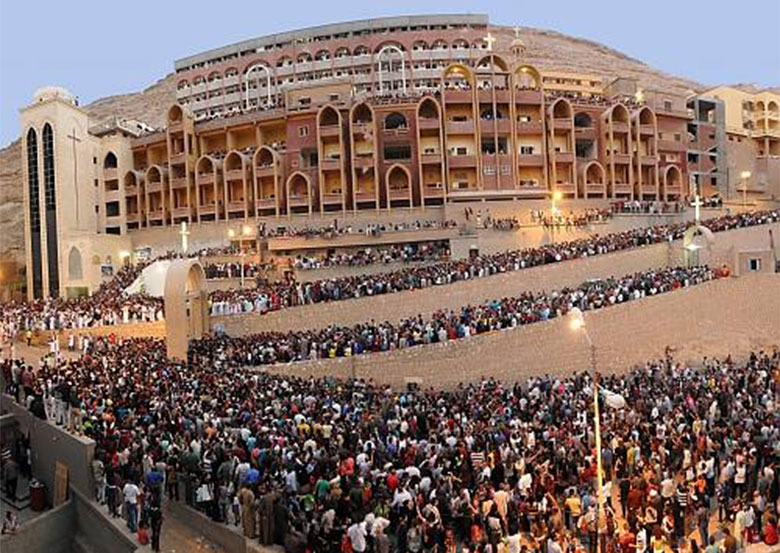
Their trip started in the Sinai at Al-Farma, on the border with Gaza, where they arrived after fleeing Jerusalem. Their trip ended in Durnaka, Assiut, venue of the famous Monastery where the feast of Virgin Mary is celebrated in August each year. ​

source/content: english.ahram.org.eg (headline edited)

___________

__________

EGYPT

EGYPT: 15th November: Google Doodle Celebrates Iconic Egyptian Scientist, TV Presenter Hamed Gohar

Google search engine celebrated the late Hamed Gohar’s 115th birth anniversary on 15 November with a Google Doodle.

The Egyptian scientist, marine biologist and TV host, Gohar is considered the founding father of oceanography in Egypt and the Arab world.

Born on 15 November 1907, he studied medicine at Cairo University in 1925 before shifting to biology. He then received his master’s degree in oceanography from Cambridge University in 1931.

The note under the doodle adds that “Gohar discovered that dugong, a sea mammal that was thought to be extinct in the region, still existed in the Red Sea. He continued studying underwater life for 25 years at the Hurghada marine biological station.”

He worked with the Arabic Language Academy to create scientific dictionaries in Arabic and served as an adviser to the United Nations’ Secretary General and helped organize the first International Conference on Law of the Sea in Geneva.

The general public knows Gohar for his educational show called “The Sea World” which he hosted on national television for 18 years. The programme highlighted underwater scenery and natural sea life, bringing the viewers closer to marine biology.

Gohar died on 17 June 1992 at the age of 84.

source/content: english.ahram.org.eg (headline edited)

__________

_________

EGYPT
EGYPT : The Digital Archive Preserving the Fading Art of Egyptian Typography

Two graphic designers decided to share their most inspirational street finds with everyone on the internet – and launched an online platform to let everyone else share as well.

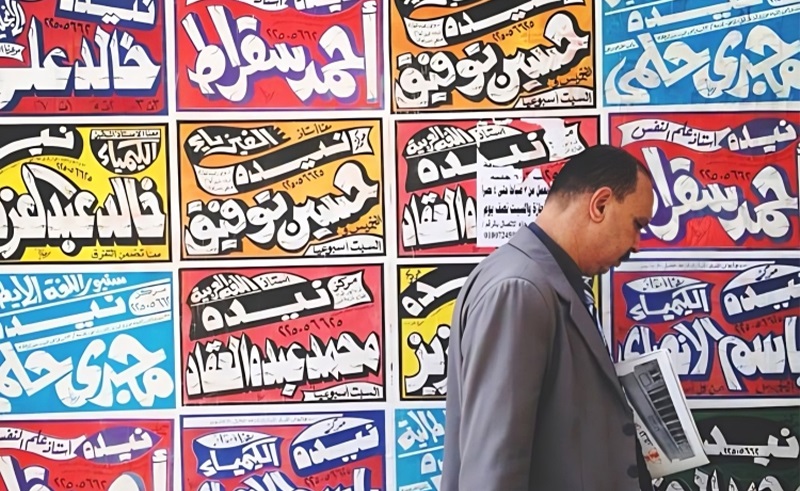
In Egypt, where there are streets and roads and passageways, there are signs and posters and billboards dating back decades and even centuries, each reflecting their own era of styles, tastes and contexts. It’s a beautiful mess of typography that often gets lost with time, and the Egyptian Type Archive was born to capture and encapsulate it for good.

The founders, Toka Assal and Abdo Mohamed, met online and bonded over their shared interest in street typography, drawing inspiration from their travels to cities across Egypt, from Aswan to Minya and Port Said. As graphic designers and type artists, they decided to share their most inspirational street finds with everyone on the internet – and launched an online platform to let everyone else share as well.

“When we started we didn’t even have a logo, we just used a picture I took of some text on a microbus that said ‘Semsem’ and ‘Semsema’,” Mohamed tells CairoScene. “We found out later that those were the names of the bus owners, a brother and sister. Although we know it’s not professionally designed, the text really looked like it was. But now everything is digital and fast-paced, so we’re losing the artistry and craftsmanship of typography and calligraphy.”

Exclusively focused on Arabic street typography in Egypt, the Egyptian Type Archive has amassed a loyal community on Instagram. They collectively document any text they stumble upon, from the quirky to the horrific to the beautiful, whether it’s an ancient sign on a vintage shop or an announcement sprayed on the walls of a local cafe.

“My favourite finds are food carts, their typography has a very distinct style embodying the essence of street art,” Asal shares. “It’s also very instinctual with the text written tackling hasad or rizq.” Here Asal refers to written prayers or phrases traditionally used to ward off the evil eye, or invite God’s blessing – a visual manifestation of deeply held beliefs and spirituality.

Mohamed and Asal’s view on what constitutes art or on the nature of street typography questions notions of ‘professionalism’, where they treat every sign and piece as a story on its own. Initially, they wanted to document the names of the calligraphers until they found that – more often than not – the text is created by commission, so the artists don’t normally sign their names under their work.

Although strangers in the street often regard them with confusion when they see them taking pictures of manhole covers or old movie posters, the founders believe their documentation serves a purpose to typographers, designers, and Egyptians at large. Through their work, and the work of their burgeoning community, they preserve a dying visual culture and ensure it survives to the next generation of Egyptian creators.

source/content: cairoscene.com (headline edited)

_________

_________

EGYPT

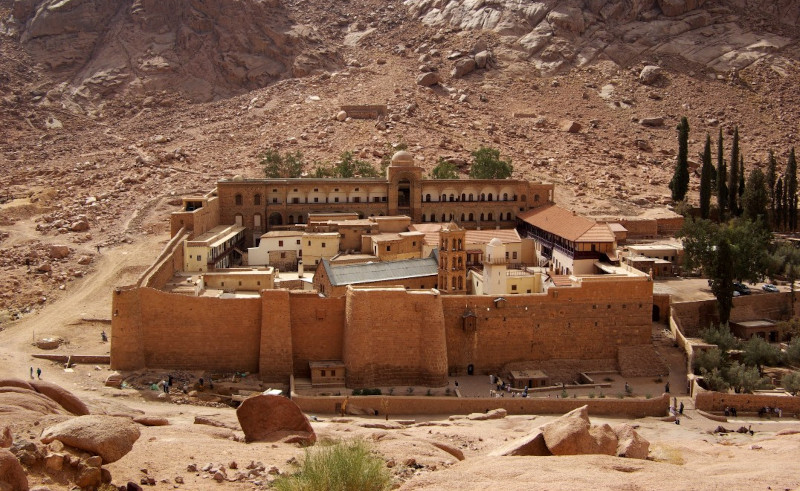
EGYPT: World’s Oldest Star Map Has Been Found in St. Catherine’s Monastery, South Sinai

A fragment of the legendary star map by ancient Greek astronomer Hipparchus has been uncovered in St. Catherine’s Monastery.

Within the library of St. Catherine’s Monastery in South Sinai – the oldest continuously-running Christian monastery in the world – researchers have uncovered a fragment of history’s oldest complete star map, penned by ancient Greek astronomer and mathematician Hipparchus.

Hipparchus is considered to be the greatest astronomer in ancient Greece, and so researchers had been searching for his catalogue of stars for centuries. The manuscript in St. Catherine’s Monastery appeared to be something completely different; the pages contained a collection of 10th or 11th century Syriac text called the Codex Climaci Rescriptus. But as it turned out, it wasn’t just that – the pages were a palimpsest, or a parchment in which previous text was wiped clean so that it can be reused.

But much like scribbling your pencil over recently erased writing, it was possible to discover what was erased from a palimpsest. Researchers from the University of Cambridge, the University of Rochester in New York, the Early Manuscripts Electronic Library in Rolling Hills Estates, California and the French national scientific research centre CNRS in Paris worked together to find layers of writing that had been wiped away. Amongst them were the coordinates for the constellation Corona Borealis, and by comparing these precise coordinates with how the night sky would have been arranged in antiquity, the researchers found that the coordinates would have been made in 129 BC – right when Hipparchus was making his revolutionary cosmic calculations.

An excerpt of the discovered document was recently published in the Journal for the History of Astronomy, and is available online.

source/content: cairoscene.com (headline edited)

_____________

_________

EGYPT