EGYPTIAN scientists pioneer low-cost COVID-19 treatment: Study

Amid the global race to find effective COVID-19 treatments, an Egyptian research team has achieved a breakthrough that could reshape how middle- and low-income countries combat the virus.

The study, titled EVERST, was published on 20 October in Scientific Reports, a leading international journal under the Nature group.

According to the study, Egyptian scientists reported promising results in treating moderate COVID-19 pneumonia with safe, locally available, and affordable drugs.

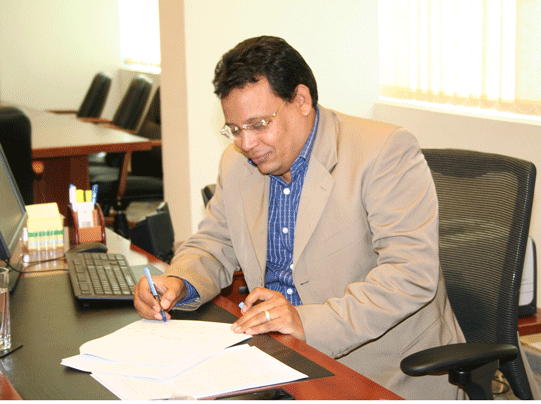
The research, led by Professor Dr Mohamed Abdelsalam El-Gohary, brought together a multidisciplinary team of doctors and scientists from Egyptian and international institutions.

Over two years, the team evaluated the safety and effectiveness of four treatment regimens combining repurposed antiviral drugs — Sofosbuvir/Daclatasvir, Sofosbuvir/Ledipasvir, Ivermectin, and Hydroxychloroquine — in 310 Egyptian patients with moderate COVID-19 infections.

“Our goal was to find a practical, homegrown solution that saves lives without overburdening healthcare systems,” Professor El-Gohary told Ahram Online. “Egypt produces these medications locally, which means they are accessible and affordable for millions.”

The findings showed that two specific combinations —Sofosbuvir/Daclatasvir with Ivermectin and Sofosbuvir/Ledipasvir with Hydroxychloroquine —helped patients recover faster, shortened hospital stays, and provided remarkable protection of lung tissues on CT scans.

Patients treated with these regimens returned home significantly earlier than those who received standard care.


“This reduction in hospitalization time has major implications,” El-Gohary explained. “It not only improves patient recovery but also reduces pressure on hospitals and public health budgets, a critical factor during pandemics.”

The new combination regimen also showed improved CT scan results for pneumonia, a crucial step in preventing post-COVID complications, a growing concern worldwide.

Equally important, the study confirmed that the new treatment combinations were safe and well tolerated, with no major side effects compared with existing protocols. The only factor linked to higher mortality was advanced age.

The EVERST study, which underwent extensive international peer review before publication, reinforces Egypt’s growing role in global medical research and innovation. It also highlights the potential of repurposing affordable antiviral drugs to address emerging diseases.

source/content: english.ahram.org.eg (headline edited)

__________________

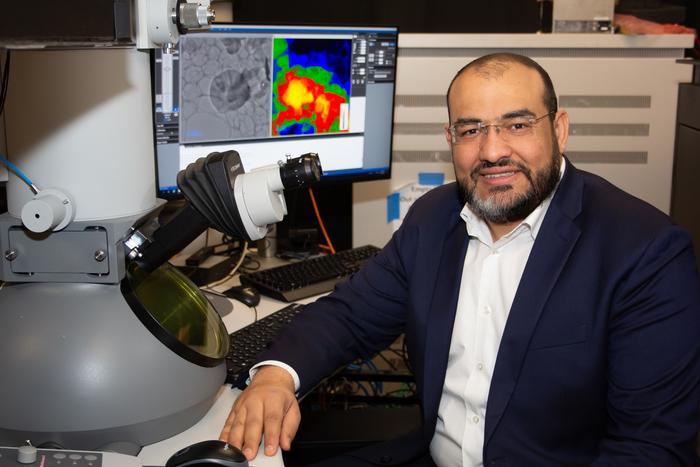
Dr Mohamed Abdelsalam El Gohary

__________

EGYPT
EGYPTIAN Student physicist Kerolos Mousa’s Quantum Breakthrough Featured in Top Science Journal

Egyptian physicist Kerolos Mousa played a role in a Harvard breakthrough using metasurfaces to control light at the photon level, which may pave the way for major advances in quantum technologies.

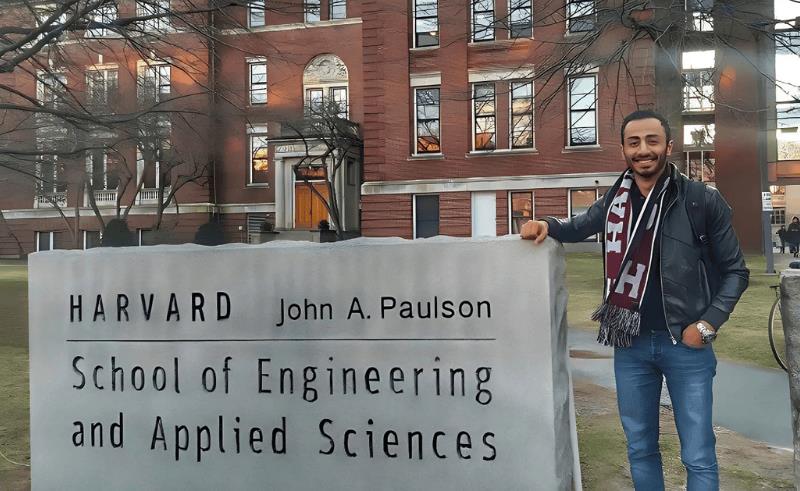
Kerolos Mousa, an Egyptian PhD student who hails from Minya, has contributed to a breakthrough in quantum physics at Harvard University, where a team of physicists developed a device capable of controlling the shape and path of individual photons with unprecedented precision.

The innovation is based on metasurface technology, engineered materials that can manipulate electromagnetic waves, and represents a major advancement in the way light is handled within miniature optical environments. Mousa led efforts to design the nanostructures critical to regulating photon behaviour.

The research, conducted at Harvard’s Applied Physics Lab and supported by leading US scientific institutions, was published in Nature, a top US science journal, and Science, a leading British publications. It was also featured on the university’s official channels.

The advancement is hoped to significantly impact fields such as quantum communication, quantum computing, and the development of next-generation smart optical devices.

source/content: cairoscene.com (headline edited)

_____________

_________

EGYPT

EGYPTIAN-AMERICAN : Freeze-frame: U of A researchers led by Physicist Prof. Mohammed Hassan develop World’s Fastest Microscope that can see electrons in motion

Imagine owning a camera so powerful it can take freeze-frame photographs of a moving electron – an object traveling so fast it could circle the Earth many times in a matter of a second. Researchers at the University of Arizona have developed the world’s fastest electron microscope that can do just that.

They believe their work will lead to groundbreaking advancements in physics, chemistry, bioengineering, materials sciences and more.

“When you get the latest version of a smartphone, it comes with a better camera,” said Mohammed Hassan, associate professor of physics and optical sciences. “This transmission electron microscope is like a very powerful camera in the latest version of smart phones; it allows us to take pictures of things we were not able to see before – like electrons. With this microscope, we hope the scientific community can understand the quantum physics behind how an electron behaves and how an electron moves.”

Hassan led a team of researchers in the departments of physics and optical sciences that published the research article “Attosecond electron microscopy and diffraction” in the Science Advances journal. Hassan worked alongside Nikolay Golubev, assistant professor of physics; Dandan Hui, co-lead author and former research associate in optics and physics who now works at the Xi’an Institute of Optics and Precision Mechanics, Chinese Academy of Sciences; Husain Alqattan, co-lead author, U of A alumnus and assistant professor of physics at Kuwait University; and Mohamed Sennary, a graduate student studying optics and physics.

A transmission electron microscope is a tool used by scientists and researchers to magnify objects up to millions of times their actual size in order to see details too small for a traditional light microscope to detect. Instead of using visible light, a transmission electron microscope directs beams of electrons through whatever sample is being studied. The interaction between the electrons and the sample is captured by lenses and detected by a camera sensor in order to generate detailed images of the sample.

Ultrafast electron microscopes using these principles were first developed in the 2000’s and use a laser to generate pulsed beams of electrons. This technique greatly increases a microscope’s temporal resolution – its ability to measure and observe changes in a sample over time. In these ultrafast microscopes, instead of relying on the speed of a camera’s shutter to dictate image quality, the resolution of a transmission electron microscope is determined by the duration of electron pulses.

The faster the pulse, the better the image.

Ultrafast electron microscopes previously operated by emitting a train of electron pulses at speeds of a few attoseconds. An attosecond is one quintillionth of a second. Pulses at these speeds create a series of images, like frames in a movie – but scientists were still missing the reactions and changes in an electron that takes place in between those frames as it evolves in real time. In order to see an electron frozen in place, U of A researchers, for the first time, generated a single attosecond electron pulse, which is as fast as electrons moves, thereby enhancing the microscope’s temporal resolution, like a high-speed camera capturing movements that would otherwise be invisible.

Hassan and his colleagues based their work on the Nobel Prize-winning accomplishments of Pierre Agostini, Ferenc Krausz and Anne L’Huilliere, who won the Novel Prize in Physics in 2023 after generating the first extreme ultraviolet radiation pulse so short it could be measured in attoseconds.

Using that work as a steppingstone, U of A researchers developed a microscope in which a powerful laser is split and converted into two parts – a very fast electron pulse and two ultra-short light pulses. The first light pulse, known as the pump pulse, feeds energy into a sample and causes electrons to move or undergo other rapid changes. The second light pulse, also called the “optical gating pulse” acts like a gate by creating a brief window of time in which the gated, single attosecond electron pulse is generated. The speed of the gating pulse therefore dictates the resolution of the image. By carefully synchronizing the two pulses, researchers control when the electron pulses probe the sample to observe ultrafast processes at the atomic level.

“The improvement of the temporal resolution inside of electron microscopes has been long anticipated and the focus of many research groups – because we all want to see the electron motion,” Hassan said. “These movements happen in attoseconds. But now, for the first time, we are able to attain attosecond temporal resolution with our electron transmission microscope – and we coined it ‘attomicroscopy.’ For the first time, we can see pieces of the electron in motion.”

source/content: eurekaalert.org / University of Arizona / (headline edited)

_________

Mohammed Hassan, associate professor of physics and optical sciences, let a group of researchers in developing the first transmission electron microscope powerful enough to capture images of electrons in motion.

___________________________

AMERICAN / EGYPTIAN

ARAB : Illuminating Achievements: Arab Physicists Shaping the World of Light

The study of light has led to promising alternative energy sources and lifesaving medical advances in diagnostics technology and treatments. 

These transformative technologies were developed through centuries of fundamental research on the properties of light, including pioneering work such as Ibn Al-Haytham’s seminal Kitab al-Manazir (Book of Optics), published in 1015.

As the world celebrates the International Day of Light on 16 May, various Arab physicists have left an indelible mark on the Arab world’s understanding and utilization of this fundamental phenomenon.

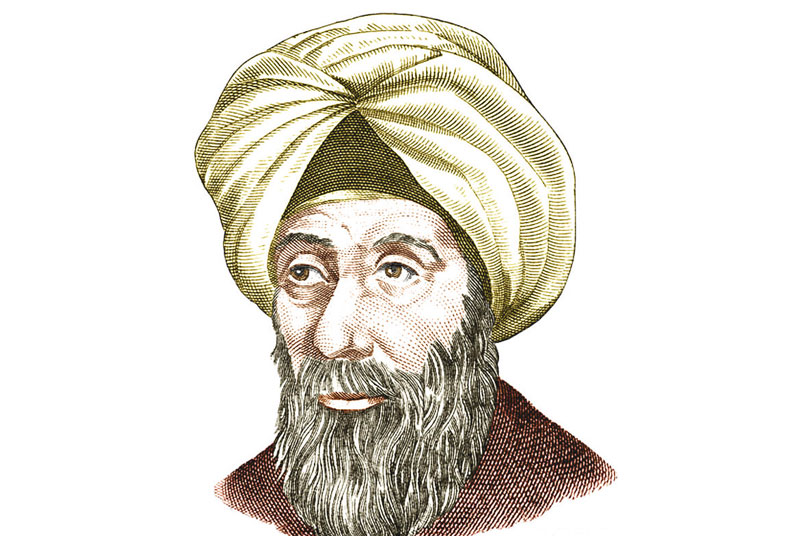
Ibn Al-Haytham (965-1040 CE)

Considered the father of modern optics, Ibn Al-Haytham’s groundbreaking work, Kitab al-Manazir, laid the foundation for our understanding of the behavior of light, including the principles of reflection, refraction, and the workings of the human eye. His experimental approach and rejection of the prevailing theories of his time were revolutionary, and his work influenced generations of scientists who followed in his footsteps.

Photo Source: VH Magazine

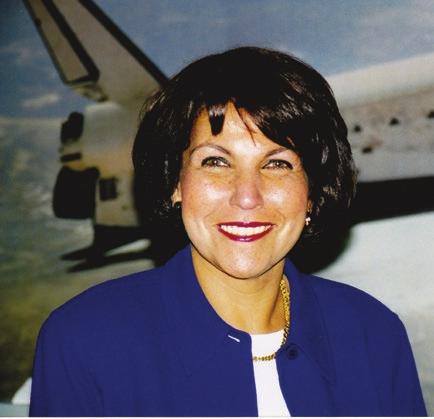
Maha Ashour-Abdalla

A pioneering Egyptian-American plasma physicist, Ashour-Abdalla’s research has advanced our understanding of the complex dynamics of the Earth’s magnetosphere, with applications in space weather forecasting and protection of satellites from cosmic radiation. Her work has been instrumental in developing models to predict and mitigate the impacts of solar storms on technological infrastructure.

Photo Source: UCLA

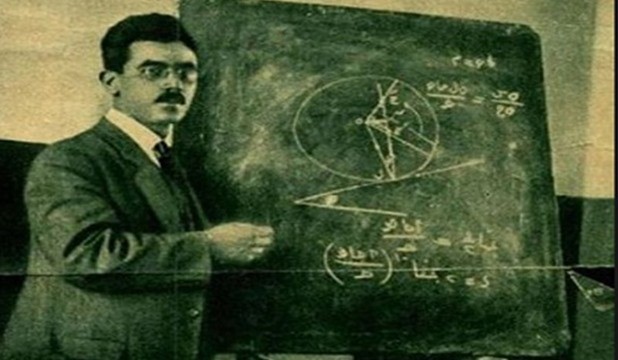
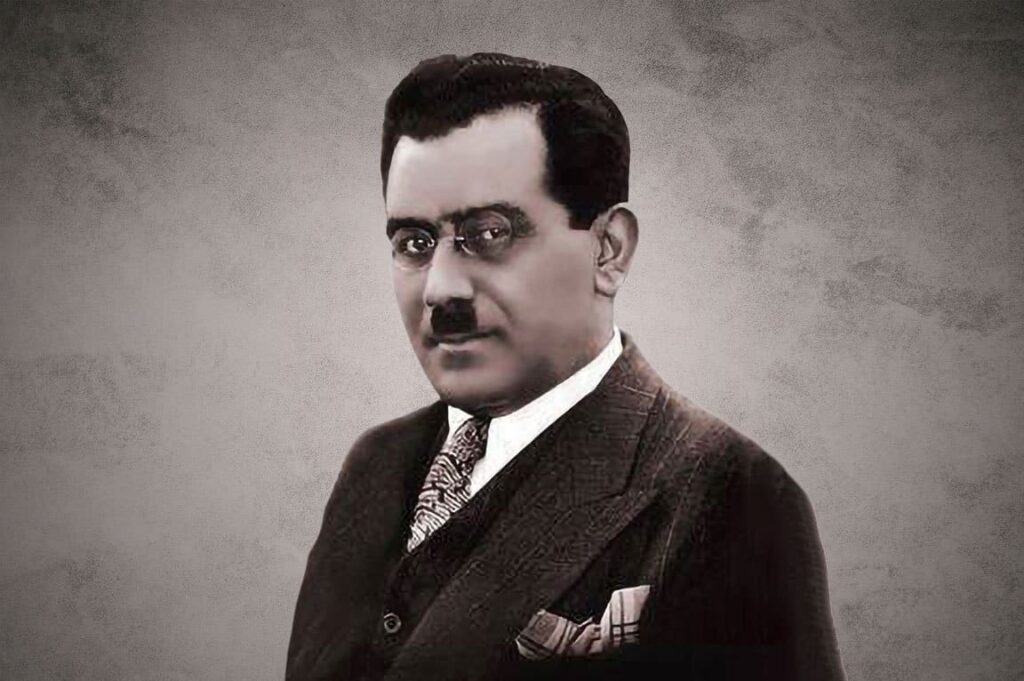
Ali Moustafa Mosharafa (1898-1950) 

This Egyptian physicist made significant contributions to the development of quantum mechanics, building on the work of pioneers like Niels Bohr and Werner Heisenberg. His research helped bridge the gap between classical and quantum physics, laying the groundwork for our modern understanding of the subatomic world. Mosharafa’s work has had lasting implications in fields such as materials science, cryptography, and quantum computing.

Photo Source: Academic Dictionaries

Shaaban Khalil

An Egyptian theoretical physicist, Khalil is a renowned expert in particle physics and cosmology. His work on the unification of fundamental forces has had a lasting impact on our understanding of the cosmos. Khalil’s research, which combined elements of quantum mechanics, general relativity, and high-energy physics, has helped shape the nature of the fundamental forces that govern it.

Photo Source: Zewail City

These Arab scientists, among others, have not only expanded the Arab world’s knowledge of light and its applications but have also paved the way for future generations to harness the power of this fundamental phenomenon to address global challenges and push the boundaries of scientific discovery.

source/content: egyptianstreets.com (headline edited)

_________________

Dr.Ali Moustafa Mosharafa 

_______________________

ARAB / EGYPT / IRAQ

EGYPT: ‘(357148) El Maarry Asteroid’ Named in Honour of Inspirational Khalifa University Professor Dr Mohamed Ramy El Maarry

Dr Mohamed Ramy El Maarry hopes his example will lead next generation of Arab scientists into planetary studies.

A professor at Khalifa University of Science and Technology has had an asteroid named after him in recognition of his achievements in astronomy.

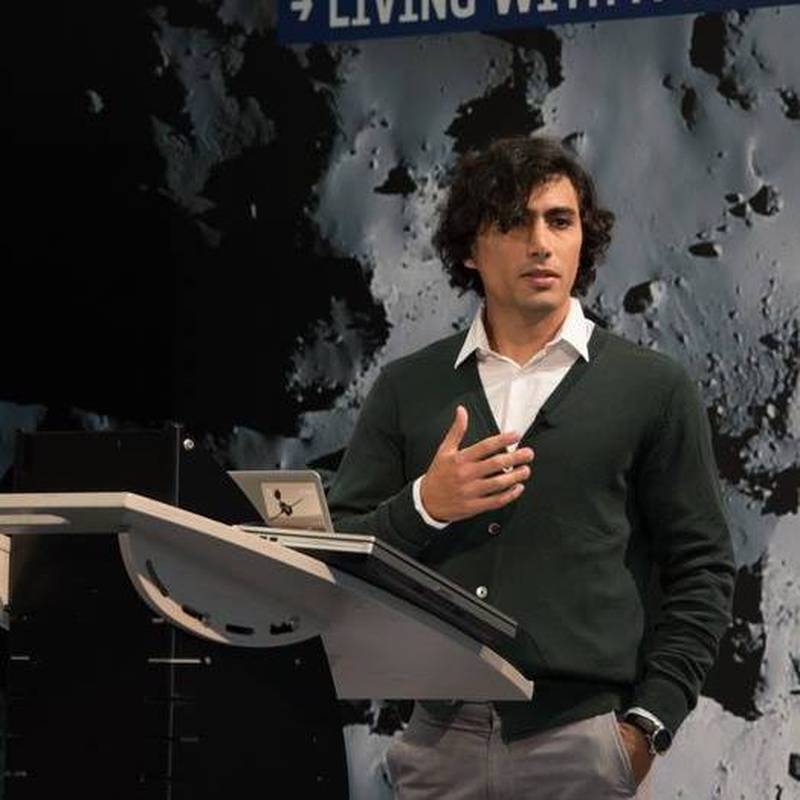
Dr Mohamed Ramy El Maarry, an Egyptian associate professor of planetary science and director of the Space and Planetary Science Centre at Khalifa University of Science and Technology, received the accolade from the International Astronomical Union.

Asteroid 2002 CZ will now be known as (357148) El Maarry, in recognition of his contribution to the study of comets and planetary science.

“I feel humbled and privileged to get such an honour. In a sense, I look at it as a lifetime achievement award, something that’s going to remain as a legacy,” he said.

“I look at it as a form of extra motivation to do more work to impart the love of science and exploration to the next generation.

“I hope this award can be an inspiration to the next generation of Arab scientists.”

Dr El Maarry’s work in the field of cometary geology is what led to his nomination.

“These sorts of nominations and awards highlight the fact that there are Arabs and people outside of the US and Europe who do significant work in planetary science and they are acknowledged by the international community overall,” said Dr El Maarry.

“I hope it will give them [his students] that extra motivation to remove the stigma that this is the sort of science that is only done by Nasa and people in the West.

“We already know that the UAE is making leaps and bounds in their long-term plans, particularly with regards to space and exploration.”

Belting up for next mission

Dr El Maarry will also be representing Khalifa University as part of the UAE’s recently announced mission to explore the asteroid belt between Mars and Jupiter.

He said the mission was aiming to uncover more details about icy asteroids, which could lead to important clues about the formation of the solar system.

The mission would look to explore seven bodies in the asteroid belt, some of them unexplored, to try to better understand more about icy asteroids which could give important clues on how the solar system formed, he added.

“Our Earth Sciences department offers the only bachelor’s degree in Earth and planetary science in the region,” said Dr El Maarry.

“Our ambition is to prepare the next generation of Emiratis to take part in the upcoming UAE space missions, especially the UAE mission to the asteroid belt, which is due to launch in 2028.”

The mission will involve a five-billion-kilometre journey to perform fly-bys of six asteroids and then send a lander that will touch down on the seventh.

“The naming of the asteroid by the International Astronomical Union after our faculty marks a significant milestone for Khalifa University and the UAE,” said Dr Arif Al Hammadi, executive vice president of the university.

“The recognition also emphasises the globally relevant research that our world-class faculty takes up at Space and Planetary Science Centre in scientific exploration.”

Dr El Maarry’s research covers planetary surfaces and the physical processes that affect them, by using data analysis of remote sensing data, modelling, lab work and comparative planetology mainly through fieldwork.

He has played key roles in numerous international space missions over the past 16 years. His body of work includes Nasa’s New Horizons mission exploring Kuiper Belt Objects at the edge of our solar system, the emirates’ lunar missions , the upcoming ESA ExoMars Rover, Comet Interceptor, the planetary defence mission Hera, and the UAE’s mission to the asteroid belt.

His asteroid can be viewed in the Nasa Small Bodies Database. It is located in the inner asteroid belt, more than 300 million kilometres from the Sun. It orbits the Sun approximately once every three-and-a-half years, and should get closest to the Sun on August 11, 2024.

What is now the (357148) El Maarry asteroid was discovered in February 2002, through the efforts of a joint venture between the Department of Astronomy and Astronomical Observatory of Padova University and the German Aerospace Centre, Berlin.

source/content: thenationalnews.com (headline edited)

___________

Dr Mohamed Ramy El Maarry was celebrated for work in the field of cometary geology. Photo: Khalifa University of Science and Technology

__________

EGYPT

EGYPT: 79 Cairo University Scholars among Best Scientists in Stanford University report

A total of 79 scientists from Cairo University are among a list of 160,000 scientists whose practical opinions are cited in various specializations with a (2 percent). 

President of Cairo University Dr. Mohamed Othman Elkhosht received a report on Stanford University’s announcement of a list of scientists whose practical opinions are cited in various specializations with a (2 percent), featuring about 160,000 scientists from 149 countries, based on the Scopus database, in 22 scientific specializations, and 176 sub-specialization for distinguished researchers.

Dr. Elkhosht announced that the Stanford list included a large number of Cairo University scientists, with a total of 79 scientists on the two lists, whether the total from 2011 to 2022, or the latest version 2023, as this year’s list included scientists from 11 colleges (an increase of 8% over the previous year).

Number of scholars featured from Cairo University in the report’s 2022 edition was 73 scholars, representing 9 of the university’s faculties, and compared to the number of 74 and 55 scholars during the previous years (2021 and 2020, respectively), Cairo University thus leads all Egyptian universities and research centers in all years from 2020 until now.

Dr. ElKhosht explained that the annual Stanford University report is an objective, external indicator of the progress of scientific research at Cairo University.

It is also a quantitative indicator for the university to identify the number of distinguished faculty members in research and a reflection of the university’s methodology, plan, applied practices, and the support that the university provides to its employees from the various colleges and institutes affiliated with it.

Dr. Mahmoud Al-Saeed, Vice President of the University for Postgraduate Studies and Research, pointed out that the report reflects the strengthening of the confidence of the international scientific and research community in our scientists in all fields and specializations, and that the results of the classification this year included two lists, the first of which is specific to the list of the total practical years 2011 – 2022 (with a total of 417 scientists), While the second included the list of last year, 2022, with a total of 817 scientists, adding that this year’s list (2023 edition) contained 926 Egyptian scientists, while last year’s list (2022 edition) included 680 Egyptian scientists from various universities and research centers, compared to 605 and 396 during the years 2021 and 2020, respectively.

Stanford University used the Scopus database of the international publisher Elsevier to extract various indicators in this list, including global scientific publishing, the number of citations, the H index, and co-authorship, all the way to the composite citation index.

source/content: egypttoday.com (headline edited)

_________

Image processed by CodeCarvings Piczard ### FREE Community Edition ### on 2019-05-12 11:20:32Z | http://piczard.com | http://codecarvings.com

________

EGYPT