TUNISIA : IDRC-supported Tunisian scientist Emna Harigua wins top award for AI innovation in health

Tunisian scientist Emna Harigua receives national recognition for her AI-powered drug discovery platform.

Tunisian researcher Emna Harigua has been honoured with Tunisia’s 2025 Best Female Scientific Achievement Prize for her innovative drug discovery work powered by artificial intelligence (AI).

In recognition of women’s essential contributions to science and innovation, Harigua, who holds a doctorate in biomathematics, bioinformatics and computational biology, was awarded the prestigious prize by Tunisia’s Ministry of Family, Women, Children and Seniors as part of the celebrations for the country’s National Women’s Day, observed on August 13. Her achievements include leading research in AI-powered drug discovery through a national node in the Global South AI for Pandemic and Epidemic Preparedness and Response Network, a global initiative supported by IDRC and the United Kingdom’s Foreign, Commonwealth and Development Office. 

Harigua, a scientist at the Institut Pasteur de Tunis, Tunisia, and principal investigator of the BIND project (Bioinformatics and Artificial Intelligence for Infectious Diseases), is leading an AI-powered platform that accelerates research against some of the world’s most persistent infectious agents that pose health risks. 

Her research targets neglected tropical diseases such as leishmaniasis and malaria, combining bioinformatics, AI and experimental validation to shorten the drug discovery timeline and reduce costs. The BIND project has already identified nine novel anti-Leishmania drug candidates, with three now in pre-clinical validation. In addition, the team launched CidalsDB, an open-access AI platform for drug identification, marking a step forward in global efforts toward open science and collaborative health research.   

“This award is not just a personal milestone — it’s a recognition of the potential of African-led science to tackle global health challenges,” said Harigua. 

Beyond her lab, Harigua is a strong advocate for building Africa’s capacity in computer-aided drug discovery and ensuring that cutting-edge technologies serve the health needs of African communities. Her work — presented recently at the International Science Council during a workshop held in Nairobi, Kenya, on the impact of emerging technologies on science systems — underscores a vision where innovation, collaboration and inclusion drive the future of medical research. 

source/contents; idrc.crdi.ca (Intl Develop Research Centre, Canada) – (headline edited)

_______________
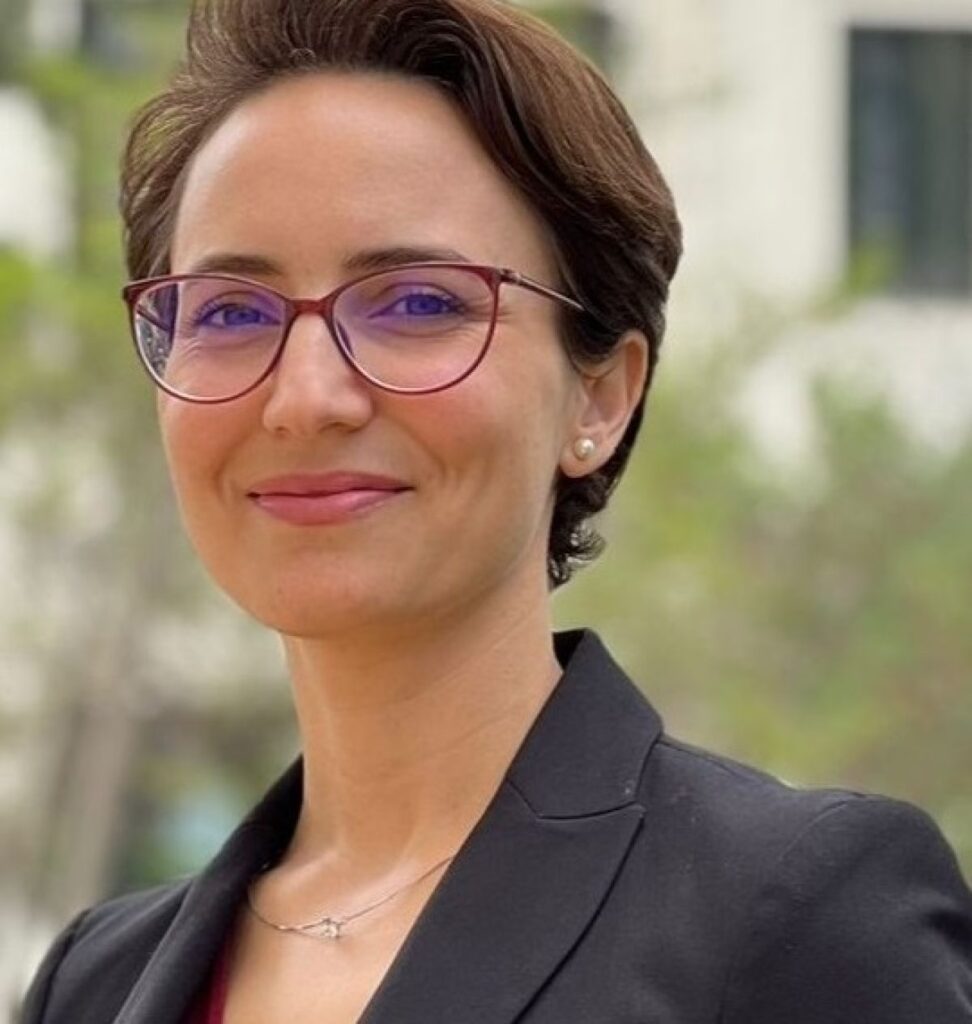
Fourat Thamine, Institut Pasteur Tunisia./

_______________

TUNISIA
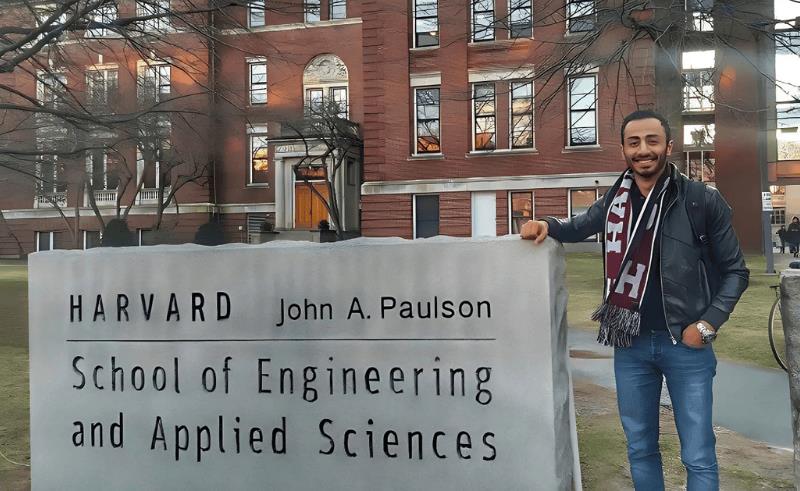
EGYPTIAN Student physicist Kerolos Mousa’s Quantum Breakthrough Featured in Top Science Journal

Egyptian physicist Kerolos Mousa played a role in a Harvard breakthrough using metasurfaces to control light at the photon level, which may pave the way for major advances in quantum technologies.

Kerolos Mousa, an Egyptian PhD student who hails from Minya, has contributed to a breakthrough in quantum physics at Harvard University, where a team of physicists developed a device capable of controlling the shape and path of individual photons with unprecedented precision.

The innovation is based on metasurface technology, engineered materials that can manipulate electromagnetic waves, and represents a major advancement in the way light is handled within miniature optical environments. Mousa led efforts to design the nanostructures critical to regulating photon behaviour.

The research, conducted at Harvard’s Applied Physics Lab and supported by leading US scientific institutions, was published in Nature, a top US science journal, and Science, a leading British publications. It was also featured on the university’s official channels.

The advancement is hoped to significantly impact fields such as quantum communication, quantum computing, and the development of next-generation smart optical devices.

source/content: cairoscene.com (headline edited)

_____________

_________

EGYPT

MOROCCO : Father of the Lithium Battery: Rachid Yazami Honored at International Forum

From a young Moroccan dreamer to a world-renowned inventor, Rachid Yazami’s pioneering spirit and lithium battery breakthrough have powered a global technological revolution.

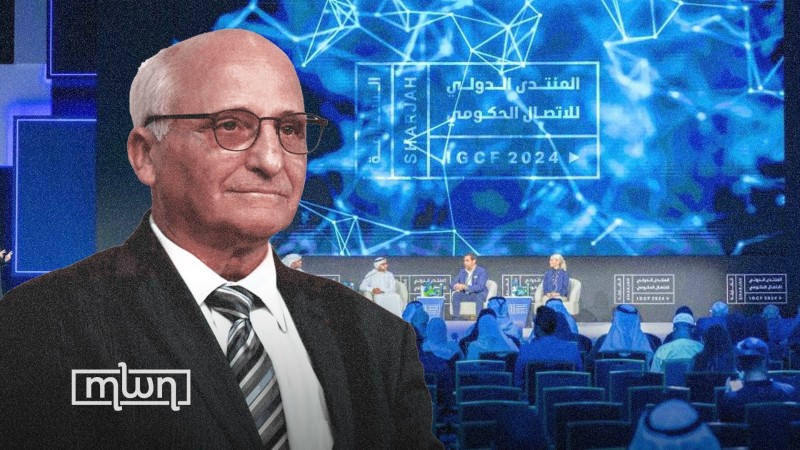
Renowned Moroccan scientist and inventor Rachid Yazami was honored this week for his scientific achievements, particularly his pioneering work on lithium-ion batteries, at the International Government Communication Forum (IGCF 2024) held in Sharjah, United Arab Emirates.

The IGCF, held from September 4-5 under the theme “Agile Governments: Innovative Communication,” brought together over 250 speakers to discuss the key opportunities and challenges facing governments and populations in the 21st century.

Its wide range of panels discussed topics from information warfare and the talent-driven economy to the digital future and the impact of innovative communication on governments’ ability to achieve broad development goals.

In a statement to the Moroccan News Agency (MAP), Yazami described this tribute as a source of pride and honor for Morocco and a “recognition of my invention of the lithium battery that I made when I was 26 years old.”

A journey of scientific discovery

Yazami’s fascination with science began at a young age. “I actually had a strong interest in science from a very early age. A significant event happened in my life around age 11. One of my teachers pointed at me and declared, ‘Rachid, you will be a chemist!’” he recounted in an interview with VinFuture Prize.

This prediction came true when Yazami was admitted to the Grenoble Institute of Technology in France, where he received his engineering degree in 1978. Just a year later, at the age of 26, he made his groundbreaking discovery of the graphite anode, a key component in lithium-ion batteries.

“It was an absolutely unforgettable day in my life,” Yazami said of the moment he first successfully intercalated lithium into graphite, causing it to change color from black to gold. “It felt like alchemy, converting black to gold.”

The impact of the graphite anode

Yazami’s invention of the graphite anode has had a profound impact on the development and proliferation of lithium-ion batteries. “In 2019, 10 billion batteries were produced worldwide. Ninety-eight per cent used the anode. Every cell phone, electric car, storage has my anode,” he noted in an interview with The Register.

The global anode material market is predicted to grow to $10 billion by 2025, with the anode estimated to account for 10 to 15 percent of the total cost of a lithium-ion battery.

Despite the immense commercial success of his invention, Yazami lamented a missed opportunity for his home country.

“If this company in France said, ‘Oh, we think it may be improved, we have no evidence, but maybe it’s interesting, let’s file a patent that doesn’t cost as much money.’ I think it will have brought something between $100-150 billion. Only the invention of the graphite anode,” he said, referring to a French company that passed on the chance to patent his discovery in the early 1980s.

The future of battery technology

The future belongs to clean electrical energy, Yazami asserted in his speech during the opening session of the IGCF 2024, citing the progress made in lithium-ion batteries due to significant advances in the field.

These advancements include improved safety measures in high-temperature zones, reducing charging time to less than 20 minutes, increasing the range of electric vehicles, and extending battery life.

Yazami highlighted the growing demand for lithium-ion batteries in the international market, which is expected to reach a capacity of 4,700 GWh/h, worth more than four trillion dollars by 2030.

This latest prize comes as the Moroccan scientist continues to push the boundaries of battery technology. His company, KVI, recently developed a new fast-charging technology that can fully charge a high-density battery in just ten minutes, seven times faster than a Tesla.

“The target is to go to 300 [watt hours per kilogram]. To my knowledge there is no 300 watt hour per kilogram on the market — not yet. There are some prototypes, but when you increase the energy density there are some problems with life and safety of battery,” Yazami explained, highlighting the challenges and trade-offs in battery development.

Safety is also a major concern for Yazami. “We can’t prevent fire in extreme situations, but at least we can have signs before it happens,” he said, proposing the idea of a sensor that measures battery expansion due to heat and alerts the user well in advance of any potential issues.

Looking to the future, Yazami predicted the rise of electric airplanes for personal use within the next 20 to 30 years and a shift in battery manufacturing to Europe. “Currently the EV market is in the EU, and the manufacturing is in China,” he observed. “That’s a problem.”

source/content: moroccoworldnews.com (headline edited)

______________

Rachid Yazami, honored for pioneering lithium battery invention.

______________

MOROCCO

EGYPT: 15th November: Google Doodle Celebrates Iconic Egyptian Scientist, TV Presenter Hamed Gohar

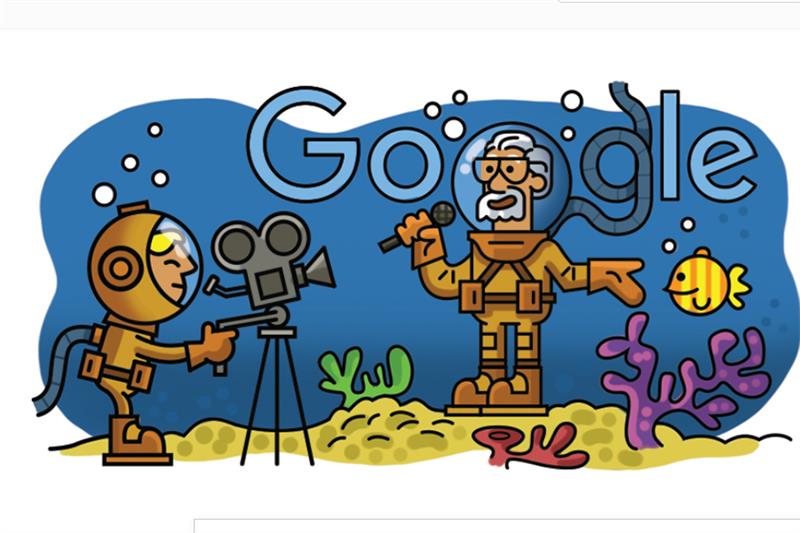
Google search engine celebrated the late Hamed Gohar’s 115th birth anniversary on 15 November with a Google Doodle.

The Egyptian scientist, marine biologist and TV host, Gohar is considered the founding father of oceanography in Egypt and the Arab world.

Born on 15 November 1907, he studied medicine at Cairo University in 1925 before shifting to biology. He then received his master’s degree in oceanography from Cambridge University in 1931.

The note under the doodle adds that “Gohar discovered that dugong, a sea mammal that was thought to be extinct in the region, still existed in the Red Sea. He continued studying underwater life for 25 years at the Hurghada marine biological station.”

He worked with the Arabic Language Academy to create scientific dictionaries in Arabic and served as an adviser to the United Nations’ Secretary General and helped organize the first International Conference on Law of the Sea in Geneva.

The general public knows Gohar for his educational show called “The Sea World” which he hosted on national television for 18 years. The programme highlighted underwater scenery and natural sea life, bringing the viewers closer to marine biology.

Gohar died on 17 June 1992 at the age of 84.

source/content: english.ahram.org.eg (headline edited)

__________

_________

EGYPT

Dr Hajar Mousannif Winner of ‘Artificial Intelligence Award’

Hajar Mousannif Ph.D , Award winning Scientist. Educationist. Researcher

WomenTech Global Awards 2020 (Silicon Valley, California) awarded Artificial Intelligence (AI) researcher Hajar Mousannif as the golden winner of the WomenTech Global AI Inclusion Award.

A researcher and lecturer in AI, professor of machine learning and big data analysis at Cadi Ayyad University in Marrakech, the Moroccan expert conducted her latest research on wireless sensor networks and vehicle networks.

Other Awards/ Honours:

  • 2019 – First Prize in ‘Sustainability’ in Solar Decathalon Africa
  • Entrepreneurial Education Award at 13th National Business Day for Morocco’s Center for Young Leaders (CJD)
  • 2014 – Winner L’Oreal-UNESCO for Women in Science International Award
  • 2012 – Winner ‘Literati Network Award for Excellence
  • etc…

www.mousannifhajar.com

___________________

pix: mousannifhajar.com / Aljazeera.com

_____________

MOROCCO