MOROCCAN Doctor Youssef El-Azouzi Invents First Device to Filter Blood Inside Vessels

The groundbreaking invention aims to aid those with immune deficiencies and provide treatment for chronic infections in intensive care units where antibiotics are ineffective.

Youssef El Azouzi, a Moroccan neurologist, has announced the successful development of the world’s first device capable of filtering blood from within blood vessels.

The revolutionary invention can direct inflammatory cells and certain white blood cells, potentially helping millions of people suffering from immune deficiencies and improving organ transplant success rates.

In a Facebook post, El Azouzi explained that his device “will contribute to treating tens of millions of people suffering from immune deficiencies and chronic infections in intensive care units where antibiotics are ineffective.” He added that it would “help in organ transplantation without fear of new organ rejection.”

The invention works by redirecting inflammatory cells flowing in the blood away from vessels that nourish newly transplanted organs, preventing rejection.

This mechanism was successfully tested on a 75-kilogram pig in an American laboratory, where the device demonstrated its ability to direct immune cells from the left leg to the right leg without any negative effects on the animal.

“The experiment showed that the device was able to direct immune cells from the left leg to the right leg,” El Azouzi explained in a video documenting his journey to America to register the invention. “This is the first device that controls cell direction from within the vessel itself.”

The scientific experiment involved injecting both thighs of the pig to induce inflammation before placing the device. The device’s role was to direct inflammation-causing cells to only one side, concentrating them there compared to the other side. This would demonstrate the device’s actual control over the pathways of white blood cells flowing in the blood.

El Azouzi revealed that the project cost approximately $250,000 as of March, not including effort and time. “All these resources were provided by benefactors, with no contribution from any public institution or organization,” he noted.

The Moroccan doctor is no stranger to innovation. In 2019, he won the title of best inventor in the Arab world in the 11th season of “Stars of Science” competition in Qatar. His winning invention then was a stent that regulates blood flow for heart patients, offering a potential low-cost alternative to current solutions like heart pumps.

Born in 1991, El Azouzi studied at the American School in Rabat before attending Oxford University for three years. He later moved to Boston University and eventually studied medicine in English at Turkish universities. He is the son of Mustapha El Azouzi, a Moroccan neurosurgeon.

He currently serves as CEO of Aorto Medical Company in the US, where he has been developing this latest invention through three years of hard work, design, and manufacturing.

This Moroccan invention marks a major breakthrough in modern medicine, potentially offering an effective tool for addressing immune deficiency problems and chronic inflammations, while improving the success of organ transplantation procedures.

source/content: moroccoworldnews.com (headline edited)

______________
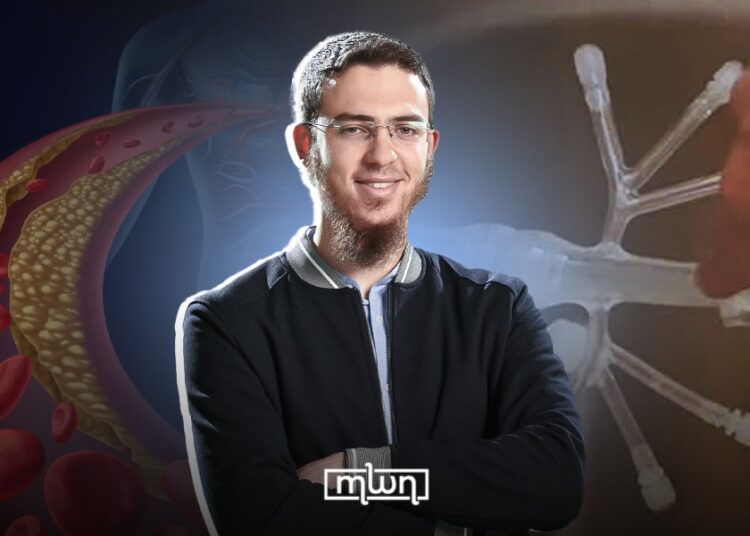
Youssef El Azouzi, a Moroccan neurologist, has announced the successful development of the world’s first device capable of filtering blood from within blood vessels.

____________________

U.S.A / MOROCCO
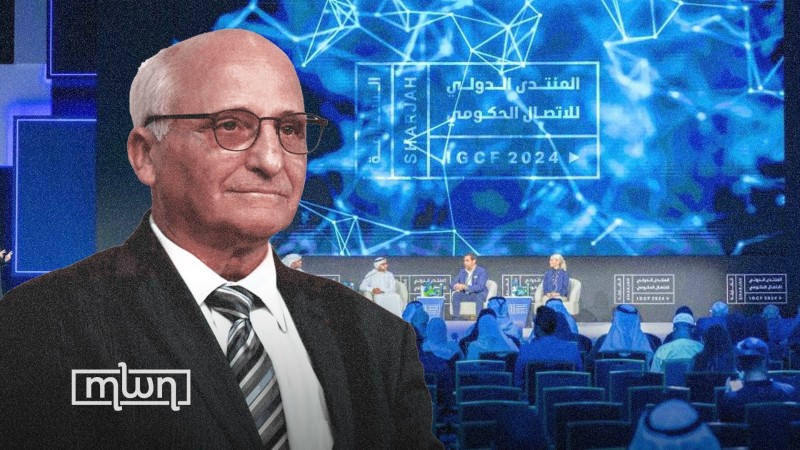
MOROCCO : Father of the Lithium Battery: Rachid Yazami Honored at International Forum

From a young Moroccan dreamer to a world-renowned inventor, Rachid Yazami’s pioneering spirit and lithium battery breakthrough have powered a global technological revolution.

Renowned Moroccan scientist and inventor Rachid Yazami was honored this week for his scientific achievements, particularly his pioneering work on lithium-ion batteries, at the International Government Communication Forum (IGCF 2024) held in Sharjah, United Arab Emirates.

The IGCF, held from September 4-5 under the theme “Agile Governments: Innovative Communication,” brought together over 250 speakers to discuss the key opportunities and challenges facing governments and populations in the 21st century.

Its wide range of panels discussed topics from information warfare and the talent-driven economy to the digital future and the impact of innovative communication on governments’ ability to achieve broad development goals.

In a statement to the Moroccan News Agency (MAP), Yazami described this tribute as a source of pride and honor for Morocco and a “recognition of my invention of the lithium battery that I made when I was 26 years old.”

A journey of scientific discovery

Yazami’s fascination with science began at a young age. “I actually had a strong interest in science from a very early age. A significant event happened in my life around age 11. One of my teachers pointed at me and declared, ‘Rachid, you will be a chemist!’” he recounted in an interview with VinFuture Prize.

This prediction came true when Yazami was admitted to the Grenoble Institute of Technology in France, where he received his engineering degree in 1978. Just a year later, at the age of 26, he made his groundbreaking discovery of the graphite anode, a key component in lithium-ion batteries.

“It was an absolutely unforgettable day in my life,” Yazami said of the moment he first successfully intercalated lithium into graphite, causing it to change color from black to gold. “It felt like alchemy, converting black to gold.”

The impact of the graphite anode

Yazami’s invention of the graphite anode has had a profound impact on the development and proliferation of lithium-ion batteries. “In 2019, 10 billion batteries were produced worldwide. Ninety-eight per cent used the anode. Every cell phone, electric car, storage has my anode,” he noted in an interview with The Register.

The global anode material market is predicted to grow to $10 billion by 2025, with the anode estimated to account for 10 to 15 percent of the total cost of a lithium-ion battery.

Despite the immense commercial success of his invention, Yazami lamented a missed opportunity for his home country.

“If this company in France said, ‘Oh, we think it may be improved, we have no evidence, but maybe it’s interesting, let’s file a patent that doesn’t cost as much money.’ I think it will have brought something between $100-150 billion. Only the invention of the graphite anode,” he said, referring to a French company that passed on the chance to patent his discovery in the early 1980s.

The future of battery technology

The future belongs to clean electrical energy, Yazami asserted in his speech during the opening session of the IGCF 2024, citing the progress made in lithium-ion batteries due to significant advances in the field.

These advancements include improved safety measures in high-temperature zones, reducing charging time to less than 20 minutes, increasing the range of electric vehicles, and extending battery life.

Yazami highlighted the growing demand for lithium-ion batteries in the international market, which is expected to reach a capacity of 4,700 GWh/h, worth more than four trillion dollars by 2030.

This latest prize comes as the Moroccan scientist continues to push the boundaries of battery technology. His company, KVI, recently developed a new fast-charging technology that can fully charge a high-density battery in just ten minutes, seven times faster than a Tesla.

“The target is to go to 300 [watt hours per kilogram]. To my knowledge there is no 300 watt hour per kilogram on the market — not yet. There are some prototypes, but when you increase the energy density there are some problems with life and safety of battery,” Yazami explained, highlighting the challenges and trade-offs in battery development.

Safety is also a major concern for Yazami. “We can’t prevent fire in extreme situations, but at least we can have signs before it happens,” he said, proposing the idea of a sensor that measures battery expansion due to heat and alerts the user well in advance of any potential issues.

Looking to the future, Yazami predicted the rise of electric airplanes for personal use within the next 20 to 30 years and a shift in battery manufacturing to Europe. “Currently the EV market is in the EU, and the manufacturing is in China,” he observed. “That’s a problem.”

source/content: moroccoworldnews.com (headline edited)

______________

Rachid Yazami, honored for pioneering lithium battery invention.

______________

MOROCCO