Arabs & Arabian Records Aggregator. Chronicler. Milestones of the 25 Countries of the Arabic Speaking World (official / co-official). AGCC. MENA. Global. Ist's to Top 10's. Records. Read & Enjoy./ www.arabianrecords.org
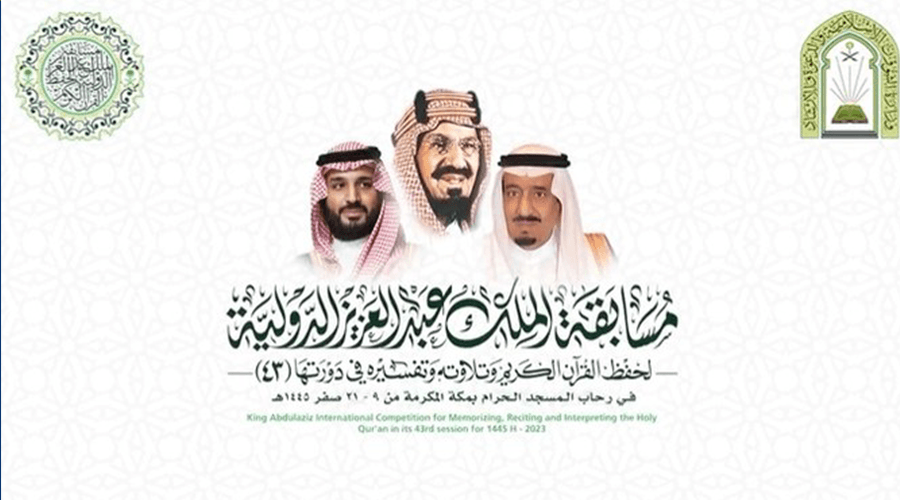
The Minister of Islamic Affairs, Call and Guidance, Sheikh Dr Abdullatif bin Abdulaziz Al Al-Sheikh has approved the results and names of the winners in the 43rd edition of King Abdulaziz International Competition for Memorization, Recitation and Interpretation of the Holy Qur’an.
The competition, held at the Grand Mosque, witnessed the participation of 166 contestants representing 117 countries, competing in all five categories of the competition, with the total prize amount for this edition reaching SAR4,000,000.
In the first category, Ayoub bin Abdulaziz Al-Wahibi from the Kingdom of Saudi Arabia secured first place and received a prize of SAR500,000. Saad bin Saadi Sleim from Algeria came in second place, earning SAR450,000, while Abu Al-Hasan Hassan Najm from Chad achieved the third position, receiving a prize of SAR400,000.
In the second category, Ammar bin Salem Al-Shahri from the Kingdom of Saudi Arabia claimed the first position and was awarded a prize of SAR300,000. Mohammed bin Adnan Al-Omari from Bahrain secured second place, receiving a prize of SAR275,000. The third position went to Abdulaziz bin Malik Atli from Syria, who received a prize of SAR250,000.
In the third category, the winners include Mohammed bin Ibrahim Mohammed from Somalia, who clinched first place and received a prize of SAR200,000. Second place went to Shuaib bin Mohammed Hassan from Sweden, who was awarded SAR190,000 while Faisal Ahmed from Bangladesh secured the third position, earning SAR180,000 Saudi Riyals, and Mohammed Mufid Al-Azza from Indonesia claimed the fourth spot and received SAR170,000. Siraj Al-Din Muammar Kandi from Libya rounded off the top five, receiving a prize of SAR160,000.
Regarding the fourth category, the winners are as follows: Mohammed Ghai from Senegal secured the top position, earning a prize of SAR150,000. Hatem Abdulhamid Falah from Libya claimed the second spot, receiving an award of SAR140,000 and Yassin Abdulrahman from Uganda achieved the third position, with a prize of SAR130,000. Mashfiqur Rahman from Bangladesh attained the fourth position and was granted SAR120,000 while rounding off the top five, Abdulkader Yousef Mohammed from Somalia received a prize of SAR110,000.
As for the fifth category, Elias Abdou from the country of Larionion secured the first position, earning a prize of SAR65,000 while the second place went to Ibrahim Shahbandari from India who was awarded SAR60,000. Marwan bin Shalal from the Netherlands achieved the third position, receiving SAR55,000 and Mustafa Sinnanovic from Bosnia and Herzegovina attained the fourth position and received SAR50,000. Lastly, Hassib Amrullah from North Macedonia took fifth place, earning a prize of SAR45,000.
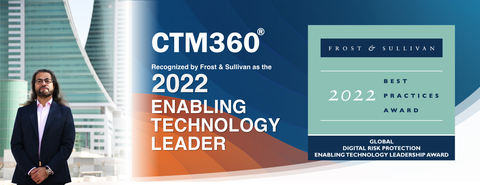
In yet another historic achievement for the Kingdom of Bahrain, Bahrain-based cybersecurity technology provider, CTM360, received Frost & Sullivan’s Best Practices Award for Enabling Technology Leadership in the global Digital Risk Protection (DRP) industry.
Frost & Sullivan Best Practices Awards recognized CTM360 for commercialization success, application diversity, commitment to creativity and customer service experience.
As a leading research and consulting firm, Frost & Sullivan has conducted extensive industry research and analysis to highlight the top companies excelling in Digital Risk Protection (DRP), as well as analysis on companies that combine comprehensive Cyber Threat Intelligence (CTI), Digital Risk Protection (DRP), and External Attack Surface Management (EASM) capabilities into a centralized External Risk Mitigation and Management (ERMM) system. Bahrain-based CTM360 is among the few that originated an integrated approach to consolidate these three technology verticals, now collectively termed ERMM.
Commenting on Frost & Sullivan’s award recognizing CTM360’s leadership in cybersecurity, Mirza Asrar Baig, Chief Executive Officer of CTM360 stated “We are proud to receive Frost & Sullivan’s award which acknowledges our commitment to a consolidated DRP strategy, making CTM360 the first company in the Arab World to be recognized at a global level.
“This Award reflects the efforts and devotion of CTM360’s team in creating and building a world class technology focusing on high data quality and relevance. Making this global mark is a testament to their remarkable design thinking, dedication and agility.” He added.
Mirza lauded Bahrain’s innovation-driven economy founded on Bahrain’s Economic Vision 2030, and the unparalleled extensive focus of the Government of Bahrain on developing and advancing the technology sector, with cyber security as one of the pillars of the Business Friendly Bahrain strategy.
He also commended the tremendous support extended by Bahrain’s various public entities and government agencies, underscoring that “CTM360 has become a technology leader through its consolidated technology platform that allows organizations to do more within one centralized environment and in an extremely cost-effective manner”
Martin Naydenov, Senior Industry Analyst at Frost & Sullivan, observed, “CTM360 empowers organizations to focus on what they do best: their business. With CTM360’s fully managed services and unlimited takedowns, organizations can save significant time and cost by automating the detection and takedowns of fraudulent sites; this is an advantage that few cybersecurity vendors can replicate.”
Frost & Sullivan Best Practices awards recognize companies in various regional and global markets for demonstrating outstanding achievement and superior performance in leadership, technological innovation, customer service, and strategic product development. Industry analysts compare market participants and measure performance through in-depth interviews, analyses, and extensive secondary research to identify best practices in the industry.
CTM360 is a unified external security platform that integrates External Attack Surface Management, Digital Risk Protection, Cyber Threat Intelligence, Brand Protection & Anti-phishing, Surface, Deep & Dark Web Monitoring, Security Ratings, Third Party Risk Management and Unlimited Takedowns. Seamless and turn-key, CTM360 requires no configurations, installations or inputs from the end-user, with all data pre-populated and specific to your organization. All aspects are managed by CTM360.
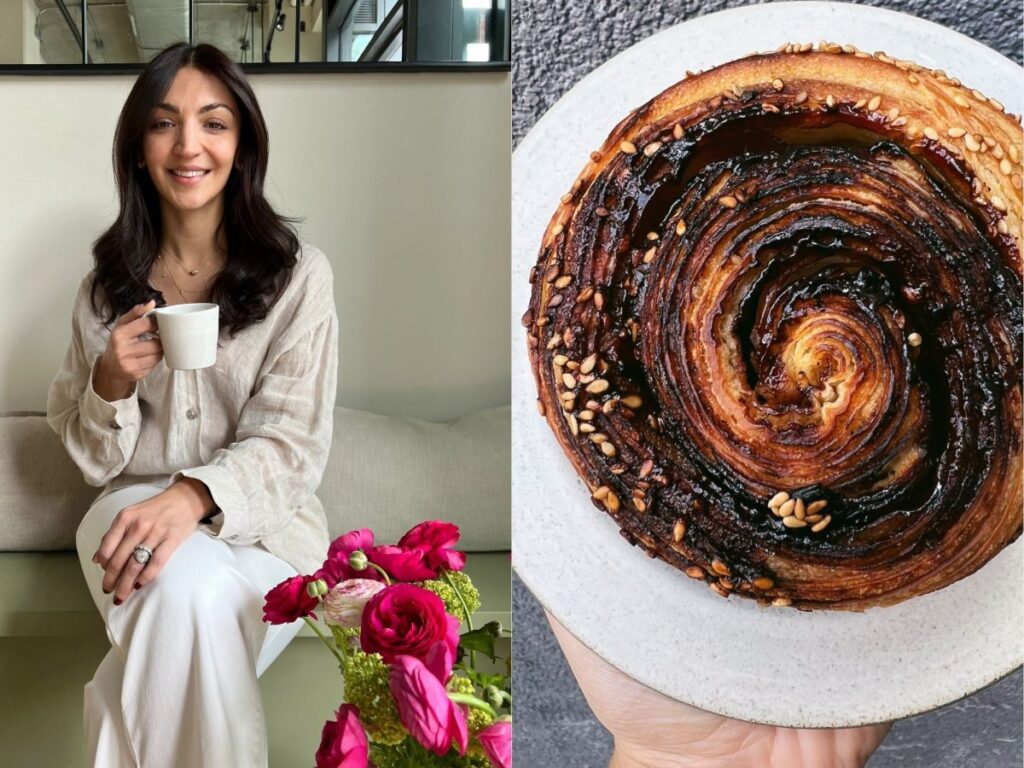
Owner Dona Murad says the motto is Bahraini hospitality, Copenhagen technique and New York energy.
If you ever find yourself in Cooper Square, in the Lower East Side of Manhattan, you might find a queue forming outside a cosy-looking bakery.
That would be Librae, New York’s — and possibly the whole of America’s — first Bahrain-owned-owned bakery. It’s the brainchild of Dona Murad, a Bahraini entrepreneur married to a New Yorker.
“We always wanted to have something in his hometown to represent the both of us,” Murad says on the phone from Dubai, where she lives when she’s not in the Big Apple.
“We wanted a space that brought together different cultures, religions and diversity.”
One quick look at the menu confirms they have achieved exactly that. Highlights include the rose pistachio croissant, a feta and dill scone and a lumee babka bun.
Lumee, or black lime, is liberally used in Bahraini cuisine.
“It’s used in tikka and stews and we wanted to create a pastry that was Bahrain and New York,” Murad says.
“So we took black lime, crushed it up, made it sweet in a lemon curd and put it into a babka, that’s classic New York.
“We gave it oomph and our own identity.”
Murad arrived in New York before the opening with black lime in her suitcase, knowing it was always going to be on the menu.
Another unique dish is the Marmite cheddar and scallion escargot, which is also on the menu at Hopscotch, Murad’s first cafe in Bahrain.
“Marmite is so hard to find in New York. We were buying it on Amazon in tiny little bottles, scraping every morsel out of the corners,” Murad says with a laugh.
“But we took that and put it in our morning bun and get the occasional English or Australian person who gets excited to see it on the menu.
“We love using flavours familiar to us, experimenting with them, putting them together in things that become delicious, like a disco in your mouth.”
Murad describes Librae as a “third culture cafe”, where they use “a little bit of this, a little bit of that”, with flavours and design influences from all over the world, from Bahrain to Bali and Morocco to India.
They also create new desserts for religious occasions, whether it’s for Eid and Ramadan, Christmas or Hanukkah.
It’s not just the flavours that stand out, either, but the technique used in the baking.
Murad and her husband, Andre, love the food scene in Copenhagen and so they were inspired by the Denmark capital’s unique fermentation process, which uses more salt and fat than usual with sourdough.
“Their approach to fermentation is quite a scientific one so giving examples might be a bit tedious, but if I had to explain it in two words it comes down to ‘no shortcuts’,” Murad says.
“Our croissant for example takes over 72 hours to get just the first step.”
Murad says their motto is “Bahraini hospitality, Copenhagen technique and New York energy”.
They were also really inspired by Denmark’s bakery culture, which, she says, is “small, warm and they have really good coffee”.
The combination of great pastries and delicious coffee was important to her when setting up.
“You don’t get two great products in one space. Usually people ignore one or the other,” Murad says.
“It might be a great bakery but they don’t care about coffee, so we wanted to do both.”
This is a similar premise she used in creating Hopscotch and Grind, a roastery she also owns in Bahrain.
Hopscotch opened six years ago and remains a go-to spot for food and coffee lovers on the island.
Nowadays, her brother and mother run the business in Bahrain, while she hops between the US and UAE.
Other dishes on Librae’s menu also hail from Hopscotch. The labneh zaatar morning bun customers find in New York, for example, is inspired by the zaatar labneh twist in Bahrain.
“It’s the evolution of the brand,” says Murad. “Librae is like the cooler, younger sister.”
As someone with no experience of running a business in New York, Murad was nervous about opening Librae.
But what made it even more risky was that they were doing it when there was still a mask mandate in the city because of the pandemic.
“It was scary, it was so polarised there,” she says. “You had people who would not walk into some places for certain reasons, so we were scared at the beginning. We didn’t have our foot in the door.
“Before opening, we were making almost 400 croissants a day. We refused to open until we had a croissant I would stand in line for … so I was standing outside the door, handing out croissants to people on the street.”
People would nudge away from Murad, looking at her as if she was “crazy”, she says, but every third person would respond.
“We would form a connection, tell our story and that got people talking to us and interested. Those people came back and stood in line to support us.”
They finally opened in May last year and the community has responded well.
“It’s so surreal,” Murad says. “I go outside and I look at the line forming and get goosebumps.
“Our communities responded here, in Bahrain, Saudi Arabia, all over the Gulf and a lot of people in New York. We have regulars now.”
Another aspect she brought from the Gulf was the idea of relaxing in a cafe.
“Coffee culture in New York is very different to Dubai or Bahrain,” she says. “We wanted to create a bakery where people would sit down and dwell and enjoy, somewhere to have a good cup of coffee and pastries.
“There are a lot of coffee shops that are beautiful and New York runs on caffeine because it’s such a fast-paced society. This is a space that brings the way we enjoy coffee to the centre of Manhattan.”
Murad hasn’t had much time to think about her next step, but she hasn’t ruled out opening something new in the UAE.
“If the right opportunity comes along, it’s my second home, so why not? Dubai has so many great options, but there is always room.”
As for Librae, which is simply named after her star sign (“You know how when you don’t know how to pronounce something it automatically becomes cooler,” she says with a laugh), she’s focused now on growing the brand.
“I want to continuously learn in the industry. I enjoy what I do. Whatever opportunity comes my way, I want to be able to take it. I want to expand Librae’s horizons and see where it takes me.”
Bahrain’s GHF Financial Group has acquired a second US medical clinics portfolio at $400 million, as the firm continues its US expansion.
According to a press release, the newly acquired portfolio comprises 11 assets spread across four states: California, Texas, Maryland and Louisiana.
The new investment capitalizes on GFH’s joint venture partnership with Big Sky Medical, an asset management firm focused on medical assets.
Over the past six months, GFH, along with Big Sky Medical, has acquired assets worth $500 million.
To date, GFH has built a portfolio of assets in the US medical office building sector valued at $1 billion.
“We are pleased to announce the acquisition of this prime, income-yielding medical clinic portfolio as part of GFH’s ongoing expansion in the medical office building sector in fast-growing cities across the US,” said Nael Mustafa ,co-chief investment officer for real estate at GFH.
He added: “We believe strongly in the long-term fundamentals in the health care sector and the dynamics that are supporting an increase in demand for high-quality medical office space.”
source/content: arabnews.com (headline edited)
____________
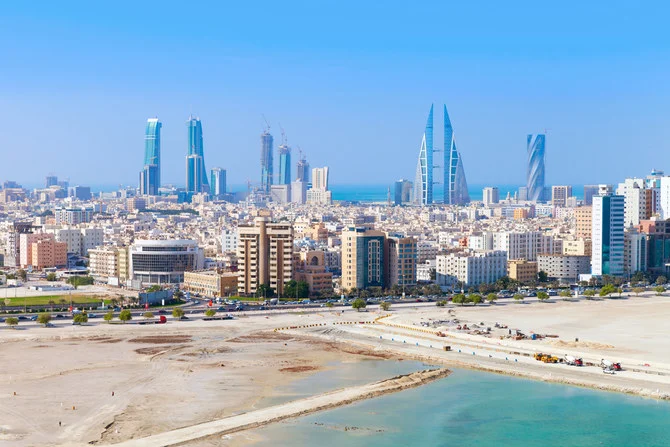
To date, GFH has built a portfolio of assets in the US medical office building sector valued at $1 billion. (Shutterstock)
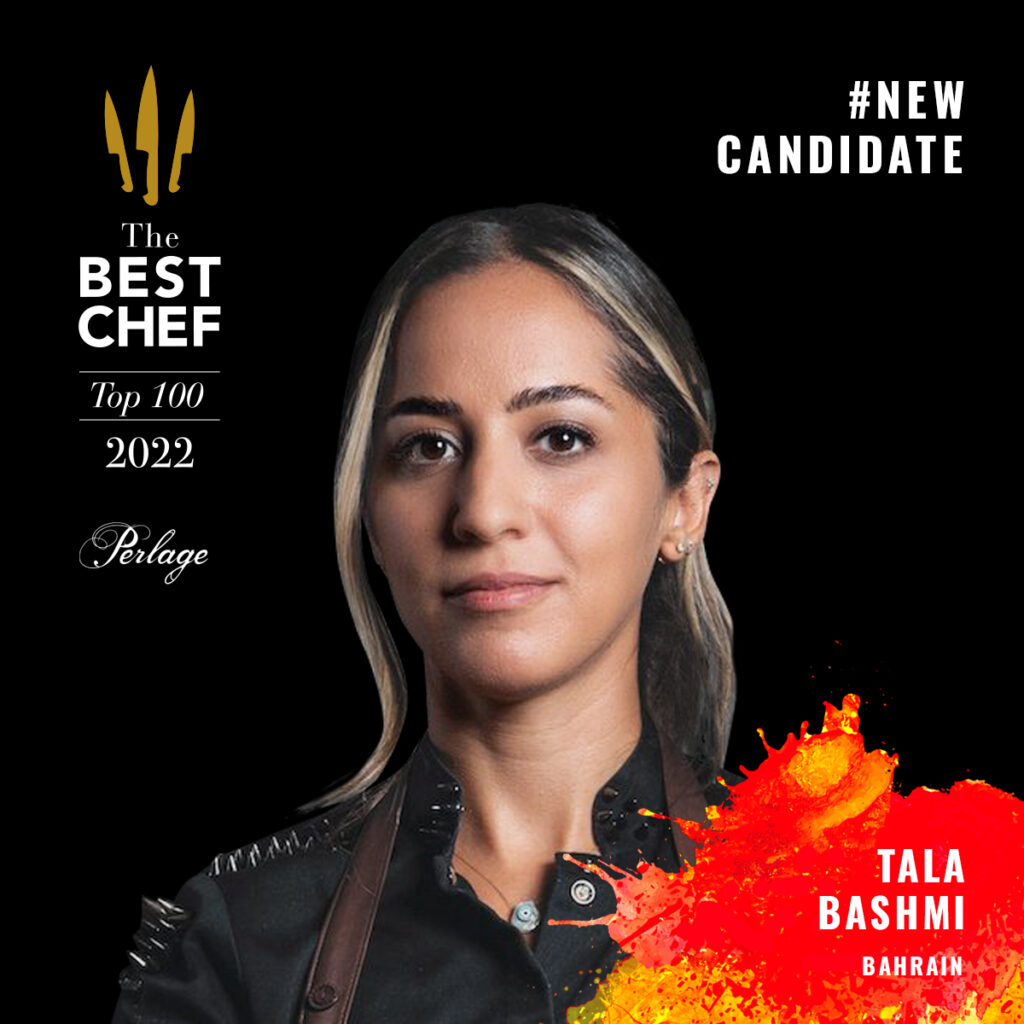
Massimo Bottura, Niko Romito, Yannick Alleno, Heston Blumenthal, Clare Smyth and Anne-Sophie Pic are the big culinary names she’s ranked alongside on the top 100 list for this year’s The Best Chef Awards.
“The people on this list are actual living legends in the culinary field, so for me to be on it at all is amazing,” she tells The National.
“What I’m currently doing is trying to put Middle Eastern cuisine on a global scale, so for me to be the only Arab on this list means I’m taking one step forward to doing that and to give our cuisine its moment in the spotlight and its culinary renaissance.”
Not only is Bashmi the only Arab, she’s also one of only 18 women who have made it on to this list of 100 culinary talents across the globe.
She ranked 93rd, but says the number didn’t “really matter” to her. “Going into this, I had no idea if I was going to make this list,” she says. “I’m from a small island that doesn’t get much exposure, so for me to get this is amazing.”
At the event, which was held at the Crystal Gallery of the Palacio de Cibeles, in Spain’s capital, she met some of her all-time heroes. This includes Andoni Luis Aduriz, a Spanish chef who ranked number five and picked up the award for The Best Science Chef Award. Bashmi describes him as “humble, down to earth and very focused on what matters in this industry rather than distractions around, which I really admire”.
Spain’s Dabiz Munoz picked up the top accolade of The Best Chef for a second consecutive year for his work at DiverXO restaurant in Madrid. Noma’s Rene Redzepi came second, while Spain’s Joan Roca i Fontane rounded out the top three.
Bashmi, who heads The Gulf Hotel Bahrain’s well-regarded restaurant Fusions by Tala, is no stranger to culinary accolades, having picked up her award for Best Female Chef in the region in Abu Dhabi this February. Her restaurant also ranked 39th on the first list of Mena’s 50 Best Restaurants.
She inherited an interest in cuisine and cultural identity from her father through his in-depth knowledge of the ingredients used. She then used this interest to launch Baked by T, before joining the Culinary Arts Academy in Lucerne, Switzerland.
Staying in the central European country, she had roles at the Grand Hotel Les Trois Rois in Basel and the Michelin-starred restaurant Prisma in Vitznau, where she learnt more about restaurant operations, as well as working in fast-paced kitchen environments.
Since returning to the Mena region, Bashmi has competed on MBC’s Top Chef Middle East television show in 2020, where she reached the finals.
In 2017, she took over the helm at Fusions by Tala, where she makes modern interpretations of Bahraini dishes, including the standout bamia, a traditional okra and meat stew, for which she uses Wagyu beef cheek, crispy okra glass and tomato broth rice.
“I try to appeal to every audience from every country, in a sense of bringing them back to a state of nostalgia,” she has previously said of her approach. Bashmi might do this through any of our senses, such as when she adds a campfire aroma to the Saudi-Bahraini dessert aseeda to evoke memories of camping, whether in the desert or the forest.
“I feel like this is still the beginning for me,” she says of her latest achievement. “People haven’t seen what came before, what led to today, so every time something is achieved, it’s a new beginning and opens new doors to opportunities I hadn’t even thought of.
The aspiring fashion designer, who lives in Dubai, says she cannot wait to represent her country at the global pageant, to be held in Israel.
Fashion design student Manar Nadeem Deyani, 25, will make history next week when she becomes the first beauty queen from Bahrain to represent her country at the Miss Universe 2021 pageant.
A Dubai resident, Deyani was named on Monday night as her country’s representative at the global pageant, the winner for which will be crowned on December 12 in Eilat, Israel.
“I may be the shortest candidate in the history of Miss Universe, but I stand tall representing a country of love, peace and kindness – your first ever Miss Universe Bahrain,” the 155cm tall Deyani posted on Instagram, announcing her participation.
“We are honoured to appoint an empowering woman like Manar ‘Jess’ Deyani who embodies the grace, passion and inspiration of a modern and respectful queen,” a spokesperson for Miss Universe Bahrain told The National.
“Manar, also known as Jess, wants to raise awareness on issues like mental health, equality and inclusivity by using her platform to inspire many people to be more comfortable on their own skin and to show that beauty standards are here to be changed,” Deyani’s description on the Miss Universe website reads.
“Nowadays people have a concept of what a beauty queen is, but she is here on the international stage as the first Bahraini representative to show the we are a generation that breaks stereotype.”
A student at the American University in the Emirates, Deyani tells The National she is “excited for this opportunity”.
“I cannot wait to represent Bahraini women in a platform that empowers women and promotes global understanding,” she says.
The aspiring fashion designer, who says she suffers from a disorder that causes anxiety and depression, says she will use her title and the global platform to raise awareness about the negative stigmas associated with mental health.
“A lot of people are suffering from it in their daily lives, but are ashamed of asking help just because they do not want to be identified as someone ‘insane’. This has to change, we need to normalise the discussion about mental health. It is a disease that doesn’t show any symptoms,” she says.
“I am currently using my social media platform to connect with people who suffer from the same challenges and I hope with my new title as Miss Universe Bahrain, I will be able to expand my reach and impact to create a world that truly understands the mental health issues.”
Israeli authorities on Sunday said the Miss Universe pageant would go ahead as scheduled, despite a travel ban on foreigners in an effort to stave off the Omicron coronavirus variant. Participants would be granted waivers while undergoing PCR testing every 48 hours, along with other precautionary measures, the country’s tourism minister said.
On Monday, organisers revealed a contestant had tested positive upon arrival and was taken to a government-run isolation hotel. The Miss Universe Organisation did not identify the contestant who tested positive, or her nationality, but said most of the 80 contestants have arrived ahead of the finals next week.
To those who think beauty pageants are outdated, Deyani says it’s all about perspective.
“I am a modern Bahraini woman who has a globalised mindset while celebrating my rich heritage and culture. I think pageants are a great platform to celebrate our differences and unite as a one,” she says. “I see pageants as a conference, but done is a very fashionable way where we learn from each other, share knowledge and interact with like-minded people.”
Bahrain has won the chairmanship seat of the Committee on Safeguards, a subcommittee of the Council of Trade in Goods at the World Trade Organization (WTO).
Maryam Abdulaziz Al Doseri, Commercial Attaché of the Ministry of Industry, Commerce and Tourism at Bahrain’s Permanent Mission to the United Nations and other organizations in Geneva, is now the Chairperson of the Committee on Safeguards.
On May 23, WTO members reached consensus on the names of the chairpersons for the 14 subsidiary bodies that report to the Council for Trade in Goods.
The Committee on Safeguards (the Safeguards Committee) was established to administer the Safeguards Agreement. It oversees the operation of the Agreement and is responsible for the surveillance of Members’ commitments.
Minister of Industry, Commerce and Tourism Zayed bin Rashid Al Zayani extended his heartfelt congratulations to His Majesty King Hamad bin Isa Al Khalifa and to His Royal Highness Prince Salman bin Hamad Al Khalifa, the Crown Prince and Prime Minister, on Bahrain’s achievement.
“The success of Bahrain in becoming the chair of the Committee on Safeguards is a source of immense pride as it affirms the unlimited support to the Kingdom of Bahrain,” the minister said.
“It reflects the ambitious and unprecedented visions to chart a strong trade based on justice, transparency, diversity and innovation under the generous support of HM King Hamad bin Isa Al Khalifa and the follow-up of HRH Prince Salman bin Hamad Al Khalifa, Crown Prince and Prime Minister. This success is a strong motivation for further achievements and accomplishments by the Kingdom of Bahrain.”
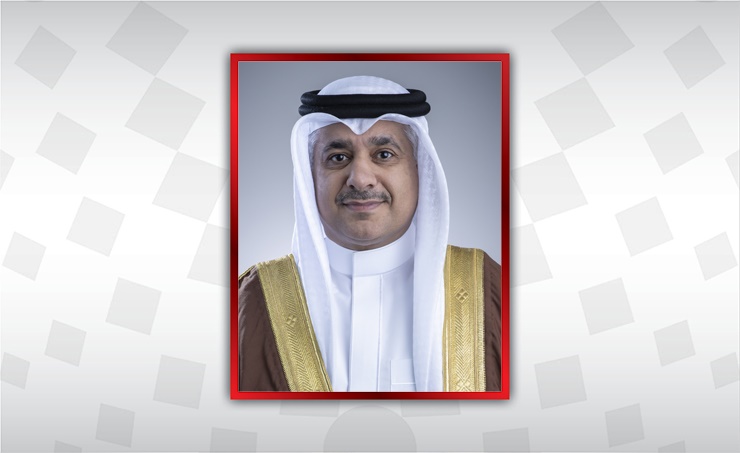
Bahrain’s Minister of Transportation and Telecommunications, HE Eng. Kamal bin Ahmed Mohammed, today announced that the Council of the International Civil Aviation Organization (ICAO) has decided that the Kingdom of Bahrain will continue to manage air traffic in the airspace over international waters in the Arabian Gulf, extending from the borders of the United Arab Emirates flight information region (FIR) to the borders of the State of Kuwait FIR.
HE Eng. Kamal bin Ahmed Mohammed welcomed the decision which follows the outcomes of the ICAO Council’s 225th Session.
All member states of the Council commended the longstanding air navigation services provided by the Kingdom of Bahrain. The Kingdom has successfully managed the ICAO mandate since 1959, providing safe and efficient air traffic control services that have garnered the approval of ICAO and the airlines that use the airspaces.
In line with international laws which grant countries the right to exclusive sovereignty over airspace above its territories, the establishment of the Doha FIR was approved to include the airspace over the land and water of the State of Qatar.
In the highly anticipated final, host nation Bahrain took on Ireland. With $100,000 on the line, all was to play for on the last day of competition.
Sabrina De Sousa (Bah) won the first bout of the day against Kerry Ann Vernon (Ire). She showed once again why she’s the #1 ranked female athlete in the world, finishing Vernon with a rear-naked choke in the first round.
Jordan Bradshaw (Ire) then took on Haj Mohammad Ali (Bah). Bradshaw landed a beautiful headkick, almost finishing the bout. However, Ali survived, then finished Bradshaw via a head-and-arm-triangle. This took the score to 4-0 in favour of Bahrain.
Next up, Lewis Byrne (Ire) attempted to turn the tide against Kurban Idrisov (Bah). In one of the closest matches of the day, Idrisov managed to edge out the unanimous decision, taking the score to 5-0. This clinched the MMA Supercup for Bahrain, along with the $100,000 prize.
Jordan Furey (Ire) was impressive in this competition, finishing both of his previous matches. However, Magomed Isaev (Bah) fought the perfect fight, taking Furey down and finishing him with a rear-naked choke early in the first round.
Then the pound-for-pound #1 ranked Ramazan Gitnov (Bah) faced off against Cameron Clements. Gitnov extended his win streak to 22, and Bahrain’s lead to 7-0, with a TKO win in the second round.
Gadzhi Gadziev (Bah) then finished Dennis Perry (Ire) via TKO in the first round.
And in the final match of the day, Sultan Gapizov (Bah) defeated Gustavo Lopez (Ire) via a unanimous decision, taking the final score to 9-0.
Bahrain finished as dominant winners of the inaugural MMA Supercup. The host nation claimed the $100,000 prize in style, remaining undefeated. Ireland will be disappointed to have lost all of their matches, however, they still take home the massive second place prize of $75,000.
The inaugural MMA Supercup concluded in the Kingdom of Bahrain.
Eight teams battled it out for the biggest prizes ever awarded in amateur MMA.
Kazakhstan finished 3rd, winning $50,000, Ireland 2nd, winning $75,000, and Bahrain claimed the first place prize of $100,000.
Top winners of the 17th edition of Algeria’s international Quran competition were awarded in a ceremony on Sunday, February 28th
Zeinab Bin Yousuf won claimed the title of the event. Yahya Bilal Yousuf from Bahrain and Syrian Abd al-Rahman Mohammad Hardan ranked third.
The ceremony was attended by a host of Algerian Quran activists and officials.
Representatives from 48 countries took part in this edition, which was held virtually due to the coronavirus pandemic.
The contestants went to Algeria’s embassies and consulates in their country to take part in the competition via video links.
Members of the panel of judges were from Algeria, Egypt, and Guinea.
According to Algeria’s Awqaf ministry, Wa Rattil al-Quran Tartila (referring to verse 4 of Surah a-Muzmmil that orders reciting the Quran in Tarteel) was the motto of this year’s competition.
Unlike previous editions that were held in the holy month of Ramadan, this edition was organized in the lunar Hijri month of Rajab on the occasion of Lailat-Al-Miraj, the day when Prophet Muhammad (PBUH) ascended to all the seven stages of heaven.
Launched in 2004, Algeria’s international Quran contest is held annually on memorization of the Holy Quran with the participation of young people under the age of 25.