Arabs & Arabian Records Aggregator. Chronicler. Milestones of the 25 Countries of the Arabic Speaking World (official / co-official). AGCC. MENA. Global. Ist's to Top 10's. Records. Read & Enjoy./ www.arabianrecords.org
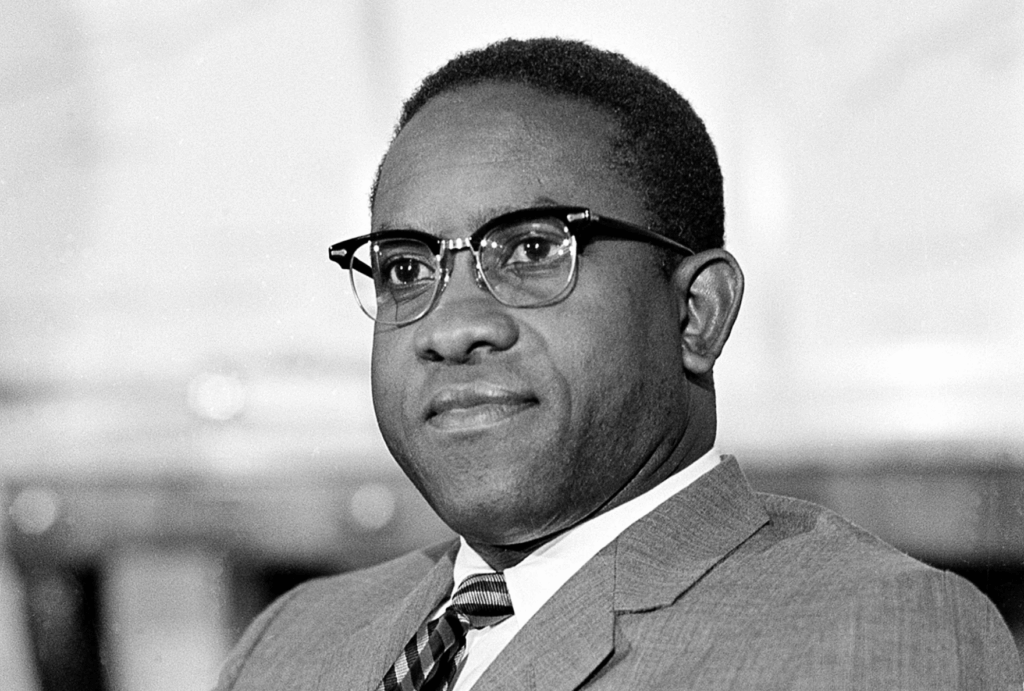
While researching connections between African Americans and the Sudan, University of Washington history professor came upon a name from the school’s past: Andrew Brimmer.
Born in Louisiana in the 1920s, Brimmer made his way to the Pacific Northwest when he joined the U.S. Navy during World War II and came to Bremerton, Washington. From there, he earned two degrees from the UW, where he studied economics before moving on to Harvard Business School.
Then, in 1966, Brimmer’s phone rang.
“I got a call in my office from [William] Marvin Watson who’s [President Lyndon B.] Johnson’s appointment secretary who said ‘the boss wants to see you,’ Brimmer recalled, according to The History Makers. “And I went over to the White House.”
Johnson was about to appoint him to the board of governors for the Federal Reserve, a powerful position that helps set the country’s economic policy. He would become the first African American in that role.
Brimmer’s trailblazing career in public service — and a connection to the Sudan — is something that’s fascinated Tounsel, who heads the African Studies Program at UW.
“As an African American, I asked myself, ‘Well, you know, whose shoulders am I standing on? You know, whose kind of genealogy am I a part of?’ I can’t be the only African American ever, right, who’s been interested in modern Sudan and has traveled to the Sudan? And so that really kind of sparked my interest,” Tounsel said.
“Historically, the Sudan has always had a really important role in African American pride.,” Tounsel continued.
“There was an ancient civilization just south of Egypt called Kush. And people like historian Michael Gomez have talked about the fact that Kush represented this example, of a kind of, pre-transatlantic slave trade example of African glory. The whole ‘We come from kings and queens’ narrative. But it’s one thing for ancient Sudan to have such a prominent place in kind of African American thought, but what about modern Sudan?”
Sudan won its independence from Great Britain and Egypt in 1956. Brimmer was subsequently invited to join a U.S. delegation to travel to the Sudan to explore the idea of building the country’s first post-colonial national bank.
As part of his research, Tounsel got a chance to page through Brimmer’s diary, in which Brimmer describes how many of the Sudanese were taken aback when they met him. Here was someone who looked like them, Brimmer wrote, but came from such a different place.
“You’ve got this, you know, Black man from Jim Crow, Louisiana, engaging with these, you know, formerly colonized, but now newly independent Sudanese citizens,” Tounsel said. “And so I just think that those moments in the archive where he’s talking about that are just so rich.”
Calling Brimmer a “kind of economic genius,” Tounsel described him as a civil servant who entered into and navigated corridors of power.
“Throughout his career, he was really keen on exploring Black economics, in particular,” said Tounsel, reflecting on Brimmer’s contributions as a member of the Reserve’s Board of Governors.
“He was not what, you know, Cornel West has called, kind of, ‘a Black face in a high place’…who is good for the optics, but is not really thinking about how one can use their power and influence in that role to help those disenfranchised people who look like them.”
Brimmer lived to be 86 years old before he died in 2012.
Tounsel profiled Brimmer in his latest book, Bounds of Blackness: African Americans, Sudan, and the Politics of Solidarity, which is due out later this year.
source/content: knkx.org /NPR – Emil Moffat, Freddie Monares (headline edited)
____________
Dr. Andrew F. Brimmer, Harvard graduate and the only Black member of the Board of Governors of the Federal Reserve System, is shown in New York City in 1970.
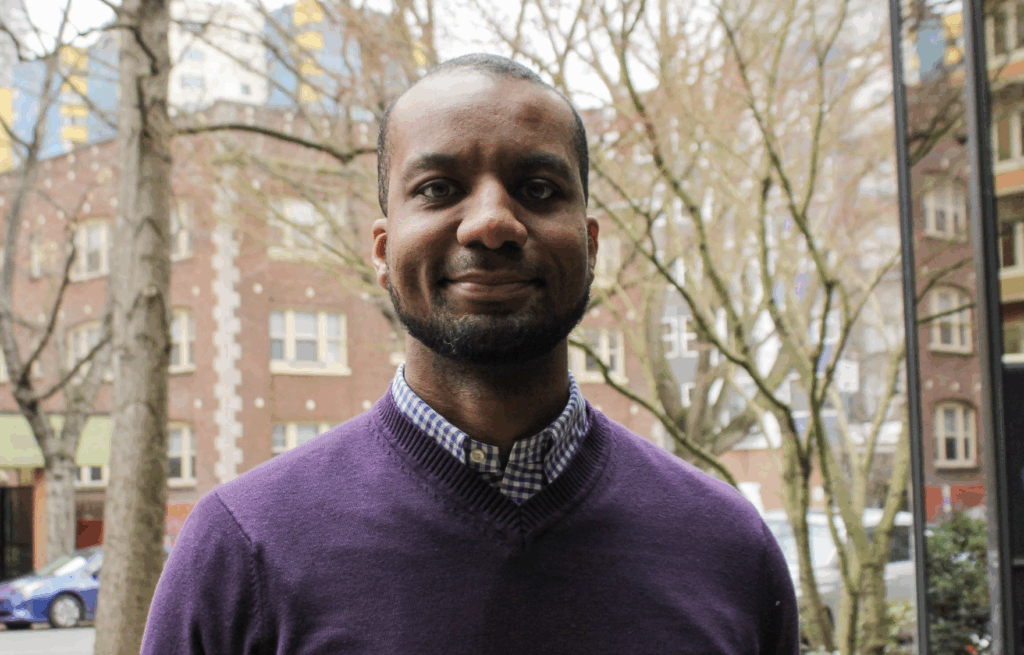
Emil Moffatt / KNKXUW History Professor Christopher Tounsel has written extensively on the connection between African-Americans and Sudan
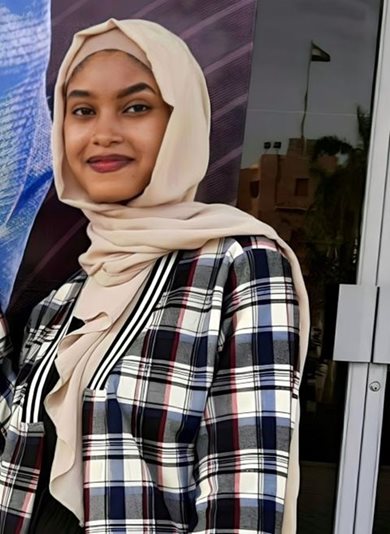
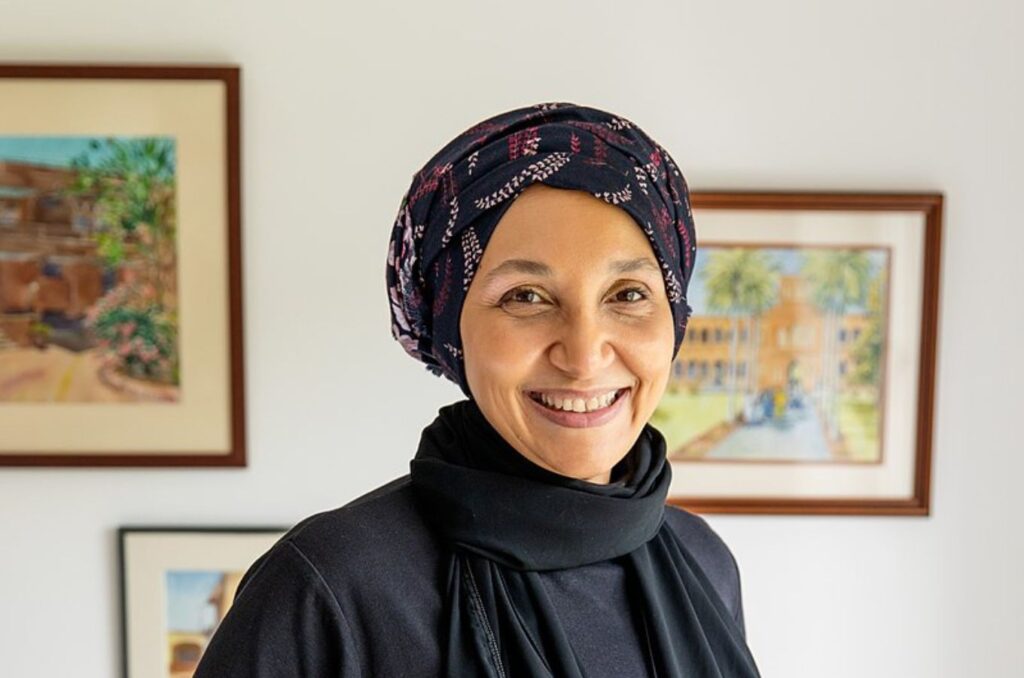
Sara Albagir Abdalla Mohammed is many things—a student, a scientist, an ASM Young Ambassador—but, above all, she is unstoppable. Amid ongoing socio-political upheaval and conflict in her home of Sudan, she is determined to advance her own microbiology journey and ensure others can do the same.
“The challenges I’ve faced have ultimately shaped me into a more resilient and adaptable microbiologist,” Albagir Abdalla Mohammed said. “These experiences have strengthened my commitment to making science accessible to those in resource-limited settings and finding innovative ways to promote scientific development, even in the face of adversity.”
Her penchant for tackling scientific challenges predates her academic activities. As a child, Albagir Aballa Mohammed wanted to find treatments for “untreatable” diseases, though it was during her high school biology classes—where she learned about the intricate complexities of the human body—that her interest in health sciences blossomed. She took that interest and ran with it, going on to pursue a degree in medical laboratory sciences at the University of Khartoum.
Albagir Abdalla Mohammed began her college career by diving head-first into disciplines ranging from hematology to clinical chemistry, though medical microbiology and immunology really drew her in. “I became particularly interested in how such tiny beings [i.e., microbes] could have massive impacts on global health systems. This contrast between the micro and the macro fueled my desire to understand how microbiology could contribute to solving some of the world’s most pressing problems,” she shared. Her experience training in laboratories at Ibn Sina Specialized Hospital—one of Sudan’s largest hospitals for liver diseases, including those caused by microbes like hepatitis B virus—solidified her decision to specialize in medical microbiology.
But, as certain as Albagir Abdalla Mohammed was about her chosen educational path, external circumstances have made the road difficult to navigate. The Sudanese December Revolution shut down the education system in Sudan for almost 2 years; the COVID-19 pandemic tacked on another year. Then, in April 2023, as Albagir Abdalla Mohammed neared the end of earning her degree, conflict broke out in her home of Khartoum, Sudan’s capital. The conflict has displaced over 10 million people, with Albagir Abdalla Mohammed—who was forced to relocate to a rural area—among them.
“Over the past year and a half, I’ve faced ongoing disruption, displacement and uncertainty,” she shared. “This was an especially difficult time, as I was so close to completing my education and reaching my long-awaited goal of graduation. My academic journey, originally planned to take 4 years, [has] stretched into over 6 due to these repeated interruptions.”
Yet, for each obstacle thrown in her path, Albagir Abdalla Mohammed has found ways to continue her scientific development. “I refused to let my educational journey come to a complete halt. I have continued learning, even under challenging conditions with poor internet connectivity in the rural area I’m in,” she said, noting that she has completed various online programs and specializations in public health, epidemiology and data analytics.
What’s striking about Albagir Abdalla Mohammed is that she is not just concerned about her own scientific advancement. She is also invested in the future of countless scientists facing similar circumstances. When universities in war-affected regions of Sudan closed, she watched as her peers lost hope and disengaged from their academic paths. For Albagir Abdalla Mohammed, this was a call to action. “I was determined to keep microbiology alive in Sudan, even amid these challenges.”
Fueled by this determination, she founded MicroGen, an online initiative aimed at empowering early-career microbiologists in Sudan through career guidance, professional development and capacity-building opportunities. Now with a community of 5,000 students and professionals from over 50 Sudanese universities and institutions, MicroGen has hosted informational sessions about various microbiology career paths, highlighting connections between the diverse scientists, disciplines and roles spanning the microbial sciences.
Such interconnectivity has been foundational to Albagir Abdalla Mohammed’s efforts. She considers a strong network of peers and collaborators instrumental for navigating obstacles and creating new opportunities, and credits the ASM Young Ambassador program, with its vast global community of scientists, with helping her build that network. As Young Ambassador to Sudan (an appointment she considers one of the most pivotal moments of her career), Albagir Abdalla Mohammed has focused on leveraging her platform to “increase the engagement of Sudanese microbiologists within ASM and promote its mission of advancing the microbial sciences.”
To say she has been successful in this mission is an understatement. A free online Bioinformatics Workshop she organized in the summer of 2024 attracted a whopping 1,144 participants—over 700 from Sudan and the rest from 32 other countries—and resulted in 865 new ASM members. Albagir Abdalla Mohammed designed the workshop to meet the needs of Sudanese microbiologists who are unable to conduct lab-based research. “By focusing on in silico research, participants were empowered to use computational tools to simulate biological processes, analyze large datasets and conduct meaningful research without the need for fully equipped laboratories,” she said.
Feedback from the event, where participants learned everything from how to analyze microbial genomes, to the ins and outs of bioinformatic data interpretation, was overwhelmingly positive. One participant from Sudan wrote that the workshop was “comprehensive and nicely delivered, even with the war running in the background,” adding that they no longer “feel really stuck, nor [that] the world is steps ahead of me.”
For her part, Albagir Abdalla Mohammed learned that “with the right approach, it is possible to sustain research momentum even in the most difficult circumstances, and that the scientific spirit of curiosity and perseverance can thrive in adversity.”
In many ways, she embodies this spirit of curiosity and perseverance. This is evident not just from her work with MicroGen and the ASM Young Ambassador program, but also from other endeavors. Case in point: Albagir Abdalla Mohammed was behind the effort that led to a collaboration between the non-profit organizations HealthGoes Global and Partners for World Health . The partnership resulted in the shipment of over $340,000 worth of essential medical supplies to aid Sudan’s overwrought health care system. She was also recently appointed a Champion for the Microbiological Society in the U.K. and is currently organizing Sudan’s first national symposium on antimicrobial resistance (AMR), aimed at fostering collaboration among Sudanese microbiologists and health care professionals to address the AMR crisis.
The throughline here? Albagir Abdalla Mohammed is a force, a passionate science advocate. She may be early in her career, but that hasn’t stopped her from taking on leadership roles to enact change. She encourages other future and early-career scientists to adopt a similar outlook.
“Never underestimate your abilities and know that leadership isn’t confined to titles or seniority; it’s about how you contribute, collaborate and support others, regardless of your career stage,” she said. “Often, early-career scientists feel they need to wait for a certain level of experience or recognition before stepping into leadership roles, but that’s not the case. Leadership comes from taking initiative, sharing your ideas and offering guidance—even as a student or young professional.”
Still, while showing initiative as a young scientist is crucial for advancement, Albagir Abdalla Mohammed acknowledged barriers that can slow forward motion. She pointed specifically to the limited number of mentorship and training opportunities for undergraduates like her, as many are geared toward graduate students and advanced professionals. Investments in these advanced scientists is imperative, she noted, but such focus means young scientists at formative stages of their development can get left behind. This is felt strongly in countries like Sudan, where political instability and conflict can extend an undergraduate degree to 6-8 years.
“These delays hinder access to mentorship and resources, and the lack of available opportunities further reinforces these existing barriers, leaving talented students behind and limiting their ability to participate in the global scientific community,” Albagir Abdalla Mohammed explained. “Addressing this gap is essential to fostering a truly inclusive STEM field. Empowering undergraduates, particularly those from underrepresented regions, will not only cultivate diverse talent, but also enrich the global scientific dialogue with fresh perspectives and ideas,” all of which are paramount for propelling science forward to solve big problems.
To that end, Albagir Abdalla Mohammed, who is Sudanese, Muslim, identifies as African and speaks Arabic as her native language, considers diversity in all its forms the cornerstone of innovation. She advised scientists at every career stage to view their background as an asset, not a limitation, highlighting that all the pieces that make her who she is have inspired her work. “My faith emphasizes the values of compassion, community and social responsibility, motivating me to uplift marginalized voices and create inclusive spaces where everyone has the opportunity to contribute and thrive,” she shared.
It doesn’t take much to see that Albagir Abdalla Mohammed is a bright light—and the future of microbiology is brighter because of her. Wherever her path takes her next, one thing is certain: she won’t give up. And she encourages other young scientists not to give up either. “The journey in science will likely present challenges, including systemic barriers, limited resources or unexpected disruptions. In those moments, persistence and resilience are key. Let the obstacles you face shape you into a stronger, more adaptable version of yourself.”
Twenty-one-year-old swimmer, Ziyad Saleem, is one of four athletes representing Sudan in three disciplines at the Olympic Games in Paris.
Born in the United States, he says he’s proud to be racing in the 200m backstroke on behalf of his parents country.
“I’m super grateful, I’m excited to go back to Sudan, I was able to win gold medals at the African championships and also Arab, but I was never able to go back and kind of enjoy that with them,” he said.
Saleem add that the hopes to go back to Sudan “whenever Sudan’s back to normal”
The country was plunged into a civil war in 2023 which has seen hundreds of thousands of people displaced around the country and beyond its borders.
The young swimmer said he knows people back home are going through a lot and this has motivated him to be a positive factor, albeit for a short period.
“My own family has been displaced from Sudan to like Egypt and Ethiopia and different countries nearby, so I just know that they’re going through a lot,” he said.
“I’m just grateful that I have the opportunity to represent them and hopefully give them something to look forward to by my swimming.”
Also representing Sudan are 15-year-old 100m freestyle swimmer, Rana Hani, marathon runner, Yas Ezzeddine, and rower, Abdullah Al Araby.
source/conten: africanew.com (headline edited)
__________
US-born swimmer proud to represent Sudan, his parent’s country, at Olympics /africanews / youtube.com
To safeguard a vital part of Sudanese agricultural heritage, scientists quietly moved copies of strategic crops to the frozen chambers of the Svalbard vault in Norway.
In December 2023, the civil war that had broken out the previous April between the Sudanese Armed Forces (SAF) and the Rapid Support Forces (RSF) took a troubling turn when the paramilitary group seized the country’s second-largest city, Wad Madani, in a swift offensive.
The sudden fall of Wad Madani, under circumstances that are not yet fully clear, dealt a heavy blow to the regular army and came as a shock to the hundreds of thousands of people, many of them displaced from Khartoum, who had come to see the city as a safe refuge.
The RSF’s advance quickly triggered a new mass displacement of people and disrupted the work of humanitarian agencies that had relocated to the city after the war broke out.
Like in other areas they have passed through, RSF fighters extensively looted Wad Madani and widespread abuses against the population were documented.
Although it drew little attention at the time, Sudanese scientists also issued a call to protect one specific facility in Wad Madani: the city’s seed bank, the most important in all of Sudan.
“We did not expect that the RSF would attack Wad Madani,” Ali Zakaria Babiker, director of the gene bank, told Middle East Eye.
“But when they did, all the staff fled the city to safer places.”
“We expected they would attack the gene bank,” he admitted, “because ever since they attacked Khartoum, [everyone] had already suffered a lot.”
Hidden cargo to evade checkpoints
Before the war, Sudan’s seed bank, managed by the Agricultural Plant Genetic Resources Conservation and Research Centre (APGRC), housed a collection of more than 17,000 accessions of crops and plant species, including sorghum, millet, wheat and sesame.
The collection, started in 1982, was a reflection of the crop diversity of Sudan, a country with rich biodiversity and a long agricultural tradition.
It also served as a repository for its agricultural genetic material, considered essential for both local and global food systems.
After fleeing Wad Madani, some APGRC staff met in el-Obeid, the capital of the North Kordofan region, where a subnational gene bank is located, holding copies of most of the material they had left behind.
One of their initial moves was to install a solar power system at the backup facility, ensuring a stable electricity supply to keep the freezers running and safeguard the seed copies.
At the same time, however, the staff began to develop a plan to extract as many copies of the seeds as possible and transfer them to a location where they could be safe.
“El-Obeid was also under threat from the RSF, so we went there straight away and took some duplicate accessions to dispatch them,” Babiker explained.
Their plan involved preparing more than 2,000 seed samples and sending them from el-Obeid to the icy chambers of Svalbard’s seed vault, located on the Norwegian island of Spitsbergen, deep in the Arctic and more than 7,000km from the capital of North Kordofan.
“[We decided to] dispatch them to Svalbard so that we would have a duplicate copy outside the country,” Babiker said.
One of their initial moves was to install a solar power system at the backup facility, ensuring a stable electricity supply to keep the freezers running and safeguard the seed copies.
At the same time, however, the staff began to develop a plan to extract as many copies of the seeds as possible and transfer them to a location where they could be safe.
“El-Obeid was also under threat from the RSF, so we went there straight away and took some duplicate accessions to dispatch them,” Babiker explained.
Their plan involved preparing more than 2,000 seed samples and sending them from el-Obeid to the icy chambers of Svalbard’s seed vault, located on the Norwegian island of Spitsbergen, deep in the Arctic and more than 7,000km from the capital of North Kordofan.
“[We decided to] dispatch them to Svalbard so that we would have a duplicate copy outside the country,” Babiker said.
“I did it to ensure that at least some of the seeds were preserved beyond Sudan’s borders.”
The scale of the mission was daunting: if they succeeded, APGRC staff would have managed to secure more than a quarter of Sudan’s seed collection in the depths of the earth.
The seeds selected included crops that have been grown in the region for thousands of years, amongst them key varieties of pearl millet and sorghum – a crop vital to Sudan’s food security, known for its drought resistance, and part of the country’s agricultural and cultural heritage.
“These [were] some of the main staple crops in Sudan, and also some of the oldest,” Babiker noted.
“They are essential for food security not only in Sudan, but also for the region – and for global food security as well.”
Before heading to one of the northernmost corners of the world, the seeds had to be taken out of el-Obeid as discreetly as possible and transported all the way to Port Sudan – the main port of the country, located in the northeast – from where they could be sent abroad.
Babiker described it as an “exciting” mission, particularly at the start, given that the RSF controlled almost all routes in and out of El Obeid.
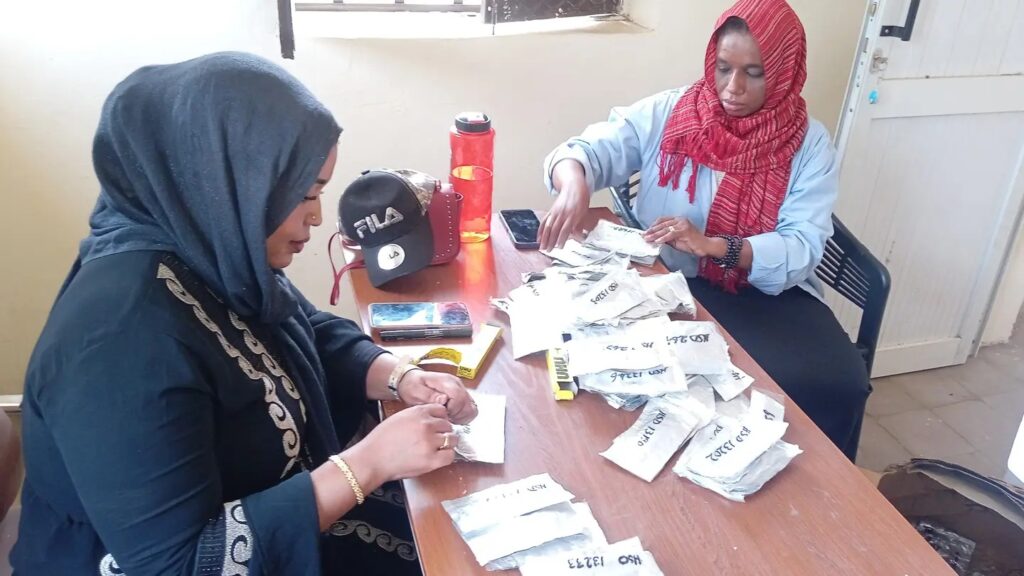
To avoid potential trouble at checkpoints, the APGRC staff asked the truck driver transporting the seeds to load their boxes first, and only then pile on the rest of the load.
“The mission took more than 10 days because, for security reasons, it didn’t follow a normal road but routes unfamiliar to the RSF,” said Babiker, who added that no APGRC staff travelled with the shipment to avoid drawing attention.
After those 10 days on the road, the seeds finally made it to Port Sudan, although Babiker said the seed packages were scattered across the truck and had to be collected and organised.
Still, the first half of the journey – and the most challenging part – was now behind them.
Sudan Post to the rescue
Once in Port Sudan, the shipment of seeds to Svalbard was made possible because the Sudan Post courier service was still operating despite the war, said Nelissa Jamora of Crop Trust, an organisation dedicated to safeguarding the world’s crop diversity that supported the entire mission.
“Sudan Post was still functioning, at least in Port Sudan. So it was [arranged] through the regular postal service,” she told MEE, noting that there were three boxes of seeds in total.
On their way to Svalbard, the seeds made a stop at the Nordic Genetic Resource Center (NordGen), an organisation dedicated to safeguarding the Nordic region’s genetic resources.
There, the centre helped sort, catalogue, re-pack, and document the shipment from Sudan.
“It was a few days’ work for our seed technicians, but an investment well worth its price considering the importance of these seeds for the future of Sudan’s agricultural sector,” said Johan Axelsson, head of NordGen’s seed laboratory.
The seeds finally arrived at the seed vault on 25 February 2025, together with seed shipments sent by 19 other gene banks.
Established in 2008, the Svalbard Global Seed Vault has its storage area more than 100 metres inside a mountain, carved into solid rock and shielded by 40 to 60 metres of stone.
The mountain mass has a stable temperature ranging from -3 to -4 degrees Celsius, but the seed storage area is equipped with a cooling system that keeps it constantly at -18 degrees.
With more than 1,350,000 seed samples, the Svalbard Global Seed Vault is currently the largest backup facility for seeds and crop diversity in the world.
Owned by Norway, the site is operated by three partners: the country’s Ministry of Agriculture and Food, NordGen and Crop Trust.
Gene banks from all over the world can store backup copies of their seeds there free of charge and with no legal transfer of ownership, the seeds always remain property of the depositor.
Sudan made its first deposit in 2019 and today holds 1,884 accessions, a distinct, uniquely identifiable sample of seeds, from 15 different species, according to Svalbard’s website.
Jamora said that the difference from the more than 2,000 seeds initially sent by the APGRC from el-Obeid was likely due to some packages arriving in less-than-optimal condition and not making it into the final set, although they are preserved by NordGen and can be returned.
The mission to evacuate Sudan’s seeds was funded through an emergency reserve launched in 2021 by Crop Trust and the secretariat of the International Treaty on Plant Genetic Resources under the supervision of the UN Food and Agriculture Organization (FAO), to assist gene banks that are under threat.
In Sudan’s case, Crop Trust had been collaborating with the local gene bank before the war through a project called BOLD (Biodiversity for Opportunities, Livelihoods and Development).
“The mission aimed to secure as many seeds as possible,” Jamora noted.
Fears vindicated
Sudan’s army recaptured Wad Madani in January, and when the APGRC staff returned to their facilities, their worst fears were confirmed: the bank’s freezers, computers and servers had been looted, and the seed bags were torn open, their contents scattered across the floor.
However, with the support and funding from the emergency reserve jointly run by Crop Trust and the Plant Treaty, efforts to rebuild and start over are already under way.
For now, the gene bank is still assessing the losses, but it is also beginning to rebuild its seed collection despite limited state funds and power cuts that often last more than 12 hours a day.
When the situation stabilises, the centre hopes to be able to assess the state of its seeds and move into a regeneration phase, but this will require new freezers and other equipment.
During a meeting with the director of Sudan’s Agricultural Research Corporation (ARC) and FAO representatives, the governor of Gezira State – where Wad Madani is located – Tahir al-Khair, pledged to try to install a new cold storage facility for the gene bank.
In the meantime, at least, the seeds stored in the Svalbard vault remain safe, waiting for the day they can once again serve their country.
“We felt very relieved and reassured once we made sure we had these duplicate copies outside Sudan,” Babiker said.
The African literary world is celebrating as Sudanese author Leila Aboulela receives the 2025 PEN Pinter Prize. The announcement was made at English PEN’s summer party, where actors Khalid Abdalla and Amira Ghazalla brought Aboulela’s words to life with powerful readings from her work.
Aboulela will officially receive the award on October 10 at the British Library in London. At this ceremony, she will also reveal her choice for the PEN Pinter Writer of Courage award, an honor reserved for an author “active in defence of freedom of expression, often at great risk to their own safety and liberty.”
In a moving statement, Aboulela reflected on the significance of this recognition:
“This comes as a complete and utter surprise. Thank you English PEN and the judges for considering my work worthy of this award. I am honoured to win a prize established in memory of Harold Pinter, a great writer who continues to inspire so much loyalty and consistent high regard. For someone like me, a Muslim Sudanese immigrant who writes from a religious perspective probing the limits of secular tolerance, this recognition feels truly significant. It brings expansion and depth to the meaning of freedom of expression and whose stories get heard.”
This year’s judges include Ruth Borthwick (British arts administrator and literature executive), Mona Arshi FRSL (award-winning British poet and novelist), and Nadifa Mohamed FRSL (Somali-British novelist). Mohamed praised Aboulela’s work for its “commitment” to the “lives and decisions of Muslim women,” how she centers both their “struggles and pleasures with dignity.” She also noted the timeliness of such a work: “In a world seemingly on fire, and with immense suffering unmarked and little mourned in Sudan, Gaza, and beyond, her writing is a balm, a shelter, and an inspiration.”
Aboulela is a prominent voice in the global literary space for her celebration and examination of the lives of Muslim women. Her writing has been translated into 15 languages. She has published 11 books, with River Spirit, Lyrics Alley, and Translator gaining high critical acclaim. She is also know for being the inaugural winner of the Caine Prize for African Writing when it was launched in 2000, an award that would go on to define 21st century African fiction.
The PEN Pinter Prize, established in 2009, honors writers of outstanding literary merit who, in the spirit of Harold Pinter, cast an “unflinching, unswerving gaze upon the world” and display a “fierce intellectual determination to define the real truth of our lives and our societies.” Their work draws public attention to literature that engages with contemporary realities and injustices. Past African recipients include Chimamanda Ngozi Adichie (2018) and Tsitsi Dangaremgba (2021).
Congrats to Aboulela! This is a well-deserved win. Her work truly challenges the boundaries of whose stories are heard and brings a whole new meaning to the idea of freedom of expression in a way that makes sense for our time.
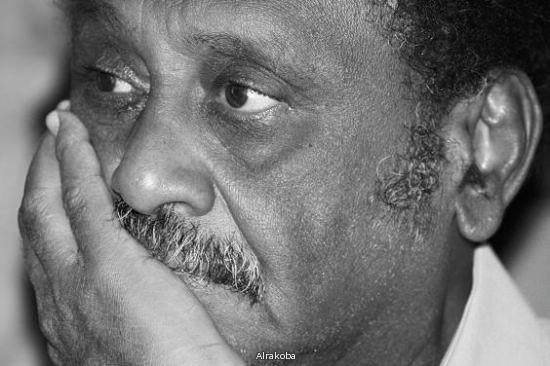
Many Sudanese are mourning the death of the famous poet and dramatist Hashim Siddig, who died in the United Arab Emirates (UAE) on Saturday morning. He was 77 years old. Siddig is not only famous for his epic poem on the 1964 revolution in Sudan, but also for his radio and television dramas.
His body was buried in Abu Dhabi, where he spent the last months of his life after he was forced to leave Sudan in September last year, because both his health deteriorated and the living conditions in Omdurman worsened due to the occupation of the paramilitary Rapid Support Forces (RSF) five months before.
Hashim Siddig was a creative, multi-talented poet. Millions of Sudanese knew his poems, in particular On a Strange Day, and Laugh, sang by famous musician Abu Araki El Bakheet, and other songs, sang by sang by the late very popular singer Sayed Khalifa. Many can recite large parts of “his immortal poetic epic” on the October 21 popular revolt against the military regime of Ibrahim Abboud in 1964.
Siddig was also an actor and playwright. His play Nabta Habibati [Napata, my love] caused a shift in the history of Sudanese theatre. He wrote pioneering contributions to radio drama, with series like Gatar El Ham [land of worries] and to television drama, in particular Teir El Shafag El Gharib [a strange twilight bird]. He also presented many radio and television programmes, the last of which was a series of reviews on world cinema.
Hashim Siddig taught generations of students at the Drama and Music College in Khartoum, after he graduated there himself in 1974 and studied acting at a British institution. He was persecuted and regularly detained during the military regimes of Jaafar Nimeiry (1969-1985) and Omar Al Bashir (1989-2019). His revolutionary poems circulated in opposition circles, especially his poem Gerentiya [rhinoceros] which left its mark on the history of the Sudanese’s struggle against military dictatorship.
Shukrallah Khalafallah, writer and television director, considers Hashim Siddig “a national and artistic symbol who represents the memory of a nation”. He told Radio Dabanga on Sunday that the people in Omdurman and in particular the Banat neighbourhood, where he lived, “are wearing a mourning dress today because Hashim Siddig represented the national radio, television, theatre, folk arts, acrobatics, film production, and the Artists Union for Omdurman.
“All of these ‘neighbourhoods’ have become orphans with the departure of Hashim Siddig – as he was a milestone in the history of many creative people. He taught them and learned from them things that cannot be obtained from books.”
Khalafallah recounts that a few days before the disastrous war broke out between the Sudanese army and the Rapid Support Forces (RSF), on April 15 last year, he went to see Siddig at his home, together with Abu Araki El Bakheet. “Despite his health conditions, he insisted on receiving us lying on his bed. We discussed new projects together, the most important of which was a project to document his career. The interview was supposed to be held on April 16 and would be presented as part of the Eid El Fitr [feast at the end of the fasting month of Ramadan] programme, but the war cut off everything.”
He said that Siddig’s last wish, to return to Omdurman, was not fulfilled. “His long journey from Banat to El Sawra [district in northern Omdurman], from there to Atbara, from Atbara to Port Sudan, and then to the UAE left a deep wound, making his return to Omdurman his first and last concern.”
Well-known Sudanese singer and percussionist Asia Madani, who lived in Cairo, passed away on Sunday, the Sudanese Artists Union in Egypt reported.
Madani was born in Wad Madani, the capital of the Gezira State in central Sudan.
She started her career in her early years, moving to Egypt in the early 2000s, and quickly found her place in the country’s music scene.
Her initial breakthrough was on the Cairo Opera House stage.
Later, she became best known for presenting Sudanese folk music mixed with modern musical rhythms.
Madani performed with her troupe and joined many ensembles that focused on traditional and folkloric music of the south, earning herself the title of Messenger of Sudanese Folklore.
The star often spoke about her deep love for Sudanese rhythms, explaining that her journey in music began at a young age.
She highlighted how she learned diverse musical and vocal rhythms from different regions of Sudan — from the south to the north and the central areas — which greatly influenced her artistic style.
The singer was deeply influenced by the works of iconic Egyptian singers like Mohamed Abdel-Wahab and Abdel-Halim Hafez and even reinterpreted some of Sayed Darwish’s songs in her unique voice.
Moreover, Madani participated in the Nile Project, which she co-founded and which brought together African musicians from the Nile basin countries.
She was also featured in the documentary Far From the Nile presenting the project. The film was screened in the main competition of the Cairo International Film Festival (2022), winning awards.
Among her best-known songs were Jibal Al-Nuba (Mountains of Nubia), Al-Qamar Badawi (The Moon Shines), and Al-Zul (The Man).
Additionally, Madani participated in many international festivals and founded a children’s choir for Sudanese children in Egypt.
Numerous artists have expressed their sorrow after Madani’s sudden death.
“May God have mercy on you, forgive you, and grant you eternal rest. You were a true artist who loved her country and lived in her second country, Egypt. You were a strong person, never afraid to speak the truth, kind, pure-hearted, and a true artist who sang for the people everything she felt in a genuine way. Goodbye,” singer and songwriter Hani Adel wrote on Facebook.
Sudanese director Amjad Abu Al-Alaa wrote on his Facebook account: “A great loss, Asia.”
“To be an artist with a beautiful voice and a following is a normal thing, but what is extraordinary is to have a message in what you present, to have your own artistic project based on Sudanese identity, the unity of the Sudanese people, its uniqueness, enriching and renewing its heritage, presenting it in an attractive way, and touring the world proudly and persistently,” Sudanese media personality Dalia Al-Tahir wrote on her X account.
“This is what the true artist, the revolutionary soul from the heart of the country, Asia Madani, excelled in,” she expressed.
Ashwag Mukhtar is working as a visiting researcher at the National Cancer Research Centre thanks to the Ellas Investigan programme organised by Fundación Mujeres por África
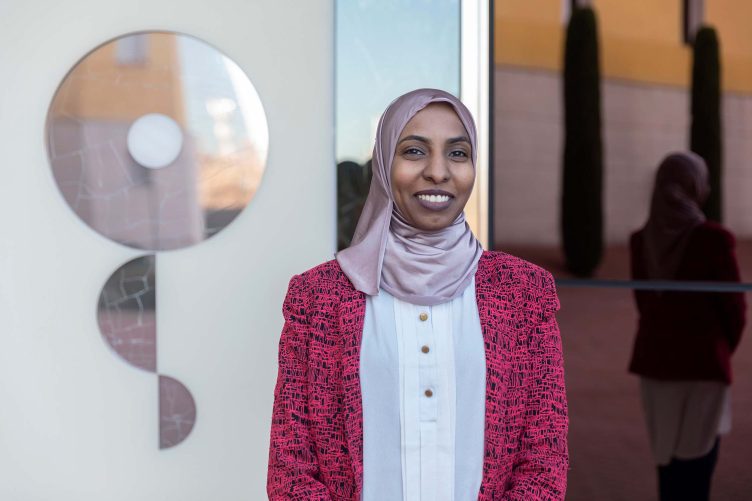
“It will be the most important experience of my life, I am now part of CNIO,” says Sudanese scientist Ashwag Mukhtar, assistant professor with the Department of Histopathology and Cytology at the University of Alneelain (Khartoum), referring to her time at the National Cancer Research Centre (CNIO), where she has been a visiting researcher linked to the Genetic and Molecular Epidemiology Group of this centre since last December.
Ashwag Mohammed Mukhtar is one of the African scientists selected by Fundación Mujeres por África to take part in its Ellas Investigan programme, which promotes stays in Spain for senior African women researchers from affiliated scientific institutes. The stays are for six months and allow these researchers to carry out, in collaboration with these institutes, projects previously selected by the programme’s Scientific Committee. In this case, funding was provided by Exolum.
The Sudanese scientist aims to compare bladder cancer in Spain and North African countries. She will compare and contrast the environmental factors causing this cancer and genetic diversities in order to provide important findings and data regarding this type of cancer and its treatments.
Holder of a PhD from the University of Alneelain, Ashwag Mohammed Mukhtar explains what her work will entail during her time in Spain: “On the one hand, I am conducting a meta-analysis, focusing on reanalysing the treatment of bladder cancer, genetic mutation, and mortality, and comparing it with data from the Spanish Bladder Cancer Foundation. On the other hand, I intend to determine the expression of certain genes that can predict the type of chemotherapy. We are doing this on Sudanese tissue samples and comparing our findings with Spanish tissue samples.”
As well as science, her other passions are music, meditation, and nature walks, as she explains in this video. In it, she gives recommendations about the Sudanese music she likes most, including the band AGD Aljalad.“Having the opportunity to work in another country is a very enriching experience, both professionally and personally,” says the scientist.
About Ellas Investigan
Ellas Investigan (Women Researching) is the most important programme promoted by Fundación Mujeres por África in the scientific field and has achieved spectacular growth. Since it was launched in 2014 with five associated research centres, it has grown to more than 20 affiliated centres and has launched seven editions.
The centres brought into this programme in the last edition are the Barcelona Institute of Material Science (ICMAB); IIS Biodonostia; and INCLIVA, Research Institute of the Clinical Hospital in Valencia. The company Abertis has also been brought on board as a sponsor, which will finance the chosen researcher’s stay at the National Biotechnology Centre on Biodiversity Issues. So far more than a hundred African women scientists have been involved in Ellas Investigan.
About CNIO
CNIO is a Spanish institution dedicated to the research, diagnosis, and treatment of cancer. CNIO has obtained accreditation as a Severo Ochoa Centre of Excellence for the third time in a row. It is ranked seventh among the world’s best cancer research centres (according to the Scimago report; Nature Index) and has been named Europe’s leading cancer research centre.
More than 450 scientists work at CNIO to transfer their results quickly and efficiently to Spain’s National Health System and the pharmaceutical and biotechnology market. In recent years, the strand of research devoted to metastasis – responsible for 90% of cancer deaths worldwide – has been strengthened with the incorporation of several fully dedicated research groups. Interdisciplinarity has also been boosted by recruiting computer experts to gain a more in-depth view of the complexity of cancer and to propose new therapeutic hypotheses.
One of the goals at CNIO is to bring science closer to society through initiatives such as CNIO Arte , a project that brings together scientists and artists to create new works of art around scientific research, and CNIO Friends, a philanthropic platform through which any person, company or association can support cancer research carried out at the Centre, and through which a CNIO Friends International Contracts Programme has been launched to attract research talent.
source/content: cnio.es (headline edited)
______________
Ashwag Mukhtar. / Laura M. Lombardía. CNIO
Ashwag Mukhtar. Visiting researcher from Sudan. Women for Africa Foundation / source: youtube.com / canalcnio
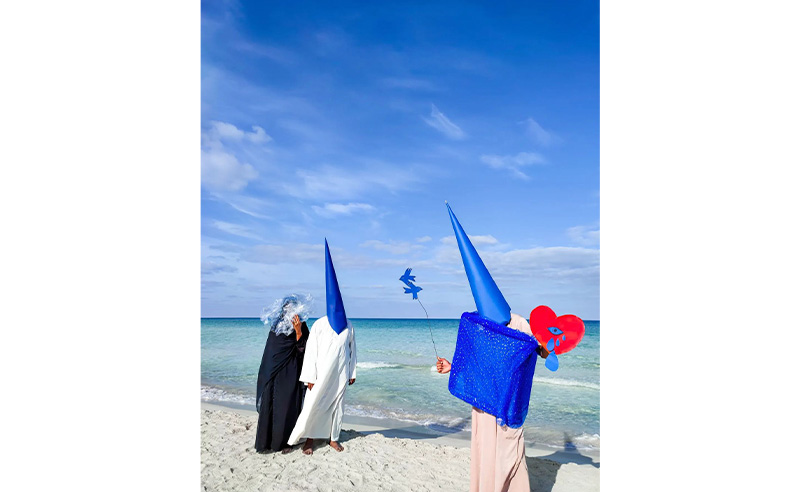
Upon first glance at the works of Hashim Nasr, a Sudanese multidisciplinary artist and photographer now displaced in Alexandria, Egypt, one immediately notices several things; a personal act of deliberate introspection portrayed through his subjects, and an invitation to delve into your own contemplative analysis of said displayed works. Upon further examination, one may note that there is no face to be seen in any of Nasr’s portraits, with the subjects’ faces more often-than-not tactfully – and intentionally – covered with quite the jarring element, a triangular royal blue cone.
But why? While one may guess – and would indeed by partially correct in their guess – that by covering the subjects’ faces, Nasr is able to effectively convey a deeper meaning, one unclouded by superficial perceptions, the real answer is perhaps rooted in serendipity. Nasr’s signature approach to portraiture was not perhaps initially intentional, yet grew to become so. Nasr would begin asking family members to model for his shoots, and for the sake of their own comfort, he would offer them a blue cone to mask their features.
Little did Nasr know that the blue cone would transcend its initial purpose, becoming a symbol that compels viewers to look beyond the surface, mirroring his own childhood desire to be understood in a way that transcends mere visibility – to be deeply seen, even when unseen.
Born in 1990 in Khartoum, Sudan, Nasr’s journey is as multifaceted as his art. Trained initially as a dentist, he balanced the rigorous demands of his profession with an insatiable drive to explore his creative instincts. Nasr’s early forays into the art world were deeply rooted in his connection to his homeland. “I started taking pictures of what I held dearest – my family and the city I call home, Khartoum. My love for photography comes from my love for Khartoum,” he shares. This intrinsic link to his roots has been a cornerstone of his work ever since.
Nasr’s photographs present a world that seems suspended in time between dreams and reality, inviting the viewer to pause and reflect. “These photos are not just pixels; they are my catharsis. The only form I have,” Nasr asserts. In each image, there is a quiet dialogue between the seen and the unseen, the conscious and the subconscious.
In Khartoum, he had the freedom to explore vast, open spaces, and the liberty to use diverse and often unconventional settings for his shoots. However, since his move to Egypt, and more specifically to Alexandria, the dynamics of his work have shifted. Nasr, alongside his family, came to Alexandria in March 2023 on a three week-long vacation, one that turned out to be an unexpected exile as the war in Sudan had intensified, and Nasr could not return home.
Since his displacement to Alexandria, Hashim Nasr has faced significant constraints that have impacted his creative process. “You wake up one day and you realize your country is at war. It changes everything,” Nasr reflects. The once vibrant streets and open spaces of his hometown, which served as the canvas for his explorations, have been replaced by the marginally restrictive environment of Alexandria. “Reality has never sunk in. There are days I’d wake up and find myself back in Khartoum, only to realize I am not.” This dislocation has not only been a physical one but also a profound emotional and artistic shift.
In Alexandria, Nasr has encountered a city that, while rich in history and culture, imposes tighter limitations on his artistic freedom, whether deliberately or not. “It is not easy to walk around the streets of Alexandria with my camera and take photos. I felt trapped. What was my catharsis was now no longer attainable, not in the way that I had accustomed myself to.” Despite the city’s picturesque spirit, Nasr has only managed to conduct two outdoor shoots since his arrival, finding the public spaces less accessible and open to his creative expressions. “The fishermen just kept asking me, ‘what the hell are you doing?’ and I had to make up some story about a university project. I’m 34.”
Faced with these challenges, Nasr has turned inward, creating art within the confines of his own private spaces. “I began making art in my room, playing with light and shadow. It’s my safe haven; no one can tell me ‘you can’t shoot here’.” In the intimacy of his room, he manipulates light and shadow to craft evocative scenes using his own hands, resonating with the themes of solitude and introspection that permeate his work. This transition to working indoors has become a new frontier for Nasr, a place where he can still explore his artistic vision without external interference.
However, this adaptation has not been without its struggles. “All these dreams I had slowly started transforming into realities were now once more fading away. It’s been difficult, and it’s not as easy as it was back in Khartoum.” The limitations in Alexandria have challenged Nasr to rethink his approach and find new ways to express his creativity, even as he navigates the emotional and practical difficulties of his displacement. Through this process, he continues to explore the depths of his inner world, finding solace and expression in the play of light and shadow within his own sanctuary.
While his earlier works were deeply personal, exploring themes of loneliness and masculinity, his recent creations have been profoundly influenced by his experiences of exile. Now, his art navigates the painful realities of displacement and the concept of home, both physically and mentally. The recurring motifs of the blue cone and other geometric shapes have evolved to symbolize not just personal introspection but also the broader and more poignant themes of exile and identity.
In Alexandria, Nasr finds himself in a state of limbo. “For me now, Alexandria has become a second home, my family is here. It’s unimaginable to leave them behind. Yet I want to explore, I want to grow, I want to seek opportunities abroad to expand on my artistic abilities, but I cannot leave them behind.” This duality reflects the complex reality of exile – a simultaneous pull towards new horizons and an unbreakable bond with the past. His longing for exploration and artistic growth is tempered by the deep-rooted ties to his family and the shared experience of displacement.
“The idea of having a new home, it’s not something easy to adapt to. There’s something missing. It is a feeling so intense and unescapable,” Nasr confides. This poignant sentiment echoes throughout his work, as he navigates the emotional landscape of exile. The sense of something irrevocably lost, yet clashing the necessity of building a new life, is a recurring undercurrent in his photography. His images encapsulate the struggle to find a sense of belonging in an unfamiliar place while holding onto the memories and identity tied to a homeland left behind. “Such is the reality of exile,” he adds.
Through his lens, Nasr offers a profound exploration of what it means to be caught between worlds, crafting a narrative that is both deeply personal and universally resonant.
Born in Saudi Arabia and the daughter of a Sudanese father and Egyptian mother, Marwa Zein is a woman that truly embodies multiple identities, and for many it is this that perhaps shines through the most in her work. Even when it comes to her roles, that diversity and multiplicity are frontline and center. An award-winning director, scriptwriter, film producer, women’s rights activist, and founder of ORE Production, a Khartoum-based film production company, Zein is inspiring in every way.
Before setting off on a journey to become a filmmaker, Zein enrolled in Cairo University as a chemical engineering student to please her parents. While studying, she worked and saved up to have the means to leave her degree behind three years later, instead study cinema at the Academy of Arts in Cairo, Egypt in 2005. In 2009, she graduated with honors and moved to Germany to continue her film studies. Her graduation project, “A game,” was an official selection of more dozens of international festivals across the globe and was translated into five languages.
From her inspiring start into the world of film and her academic achievements, Zein moved on to bigger goals, nabbing awards for her short film “One Week, Two Days,” which premiered at the 2016 Dubai International Film Festival. In 2019, she was selected as one of the seven young filmmakers from across to attend the Cannes Film Festival 2019 by the International Emerging Film Talent Association (IEFTA).
Perhaps her most renowned recent work is “Khartoum Offside,” which was awarded Best Documentary for 2019 at the 15th Africa Movie Academy Awards AMAA 2019. The documentary tells the story of women footballers whose dream it is to play for Sudan at a Women’s World Cup hosted by their home country, revealing the challenging social, economic, and political situations they face and inspiring audiences with their tale.
Speaking to Women and Hollywood in 2019, Zein had some inspiring words of advice for other female filmmakers, saying, “There’s no competition. Everyone is unique, and we can’t tell the same story even we have the same idea. You are special, different, and inspiring, and you lead the way for the people coming after you.”
“Take care of your mental, physical, and financial situations. It’s a very challenging and demanding business, so don’t lose your soul in the process. Stay true to who you are, and you will reach the horizon,” she continued.