Arabs & Arabian Records Aggregator. Chronicler. Milestones of the 25 Countries of the Arabic Speaking World (official / co-official). AGCC. MENA. Global. Ist's to Top 10's. Records. Read & Enjoy./ www.arabianrecords.org
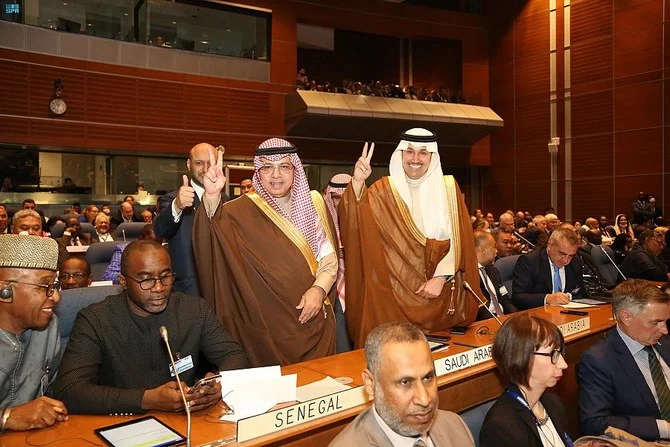
Saudi Arabia was elected to the membership of the Council of the International Civil Aviation Organization until 2025 during voting at the ICAO 41st general assembly in Montreal, Canada.
The Kingdom was re-elected after a voting process with the participation of 193 UN member states.
The council has 36 members, including the US, France, Singapore and the UK, “thus providing a voice to the Arab and Islamic countries,” the Saudi Press Agency reported on Saturday.
Saudi Minister of Transport and Logistics Saleh bin Nasser Al-Jasser praised the importance of the election for the Kingdom, saying: “Since the establishment of the first airline in 1945, the Kingdom has proven its commitment and tireless work toward the aviation sector, both domestically and internationally.”
He added that the Kingdom is now working in line with the vision of Crown Prince Mohammed bin Salman by consolidating its global leadership role in the sector.
Al-Jasser said that the election “represents a broad tribute to the tireless efforts being made by the Kingdom to be a center for air linkage between the three continents to achieve the objectives of the national strategy for transport and logistics services.”
source/content: arabnews.com (headline edited)
___________
Saudi Minister of Transport and Logistics Saleh Al-Jasser attends 41st International Civil Aviation Organization General Assembly in Canada. (SPA)
Dr. Abdulaziz bin Mohammed Alsubayel, chairman of the board of trustees of the King Abdulaziz Center for National Dialogue and secretary general of the King Faisal International Prize, has won the cultural pioneer award during the Ministry of Culture’s second session of the “National Cultural Awards.”
He received the prize in recognition of his distinguished literary and cultural career, as well as his roles in cultural administration, where he held a number of leadership and academic positions while serving Saudi culture, intellectuals and literature.
The event was held under the patronage of Saudi Crown Prince Mohammed bin Salman.
A global prize, called the “international cultural excellence award,” will be launched in the next session of the event, organizers announced. The award will recognize and celebrate global and regional cultural personalities and institutions that enrich the cultural landscape, and reaffirms the Kingdom’s determination to open new avenues for cultural creativity and expression and encourage cultural dialogue with the world.
Deputy Culture Minister Hamed bin Mohammed Fayez said in a speech delivered on behalf of Saudi Minister of Culture Prince Badr bin Abdullah bin Farhan: “I am delighted to welcome you to the Capital of Culture, the Beacon of Knowledge, and the Oasis of Art in a cultural event in which we celebrate the creative personalities, with the support of the Custodian of the Two Holy Mosques and the patronage of His Highness the Crown Prince, who is supportive of our culture and the champion supporter of it.
“The historical depth and civilization of our homeland and the creativity of our people have put the Kingdom in an advanced cultural place, which enabled the Ministry of Culture to highlight our creative treasures as per the Vision 2030,” he said.
Fayez said: “The National Cultural Awards initiative was an inspiration for creators and an essential pillar for further advancement of cultural and cognitive development.”
Cultural sector award recipients were also recognized.
Kifah Bu Ali won first place in the literature prize while Jarir Bookstore won the publishing award. Shareef Bogona, a translator and poet, won the translation award while Samira Alotaibi won the fashion award. Ahmed Alneghaither, a researcher in drawings and engravings, won the national heritage award and Abdulsamad Alhawsawi won the culinary art award.
Badr Al-Hamoud, a writer and filmmaker, received the “youth cultural” award for his efforts in the film industry, publishing initiatives, translation and technical projects. He founded the Center Menaverse for Innovation and Development, the world’s first center to interactively disseminate cultural products, and has established a platform called “Meaning” to spread knowledge, artistic and philosophical content. He managed the translation projects of 30 books in philosophy and humanities.]
Kifah Bu Ali won first place in the literature prize while Jarir Bookstore won the publishing award. Shareef Bogona, a translator and poet, won the translation award while Samira Alotaibi won the fashion award. Ahmed Alneghaither, a researcher in drawings and engravings, won the national heritage award and AbdulsamadAlhawsawi won the culinary art award.
Artist Muhannad Shonu won the visual arts award while Ali Khobrani won the theater and performing arts award. Bandar Bin-Obaid won the music award while Faisal Battoyoor won the film award and Muhammed Shafea won the architecture and design award.
The Diriyah Gate Development Authority won the cultural institutions award in the state sector while the Misk Institute of Art won the cultural institutions award in the non-profit sector. The Music Home School of Art won the cultural institutions award in the private sector.
Ahmed Qirran Al-Zahrani, deputy dean of communications and information for graduate studies and academic research at King Abdulaziz University, told Arab News that nations founded on cultural legacy were able to elevate their homelands to the forefront of the cultural landscape around the world.
Cultural symbols deserved to be honored and acknowledged for their contributions to the nation, as well as to preserve cultural memory and encourage future generations to follow in their footsteps, he said.
Al-Zahrani said that the Ministry of Culture had a significant obligation to revitalize heritage, assist the cultural movement and financially and morally encourage intellectuals.
The cultural movement was evident in domestic cultural activities such as organizing book fairs, holding cultural festivals, holding conferences, supporting cultural institutions, honoring intellectuals, participating in outdoor cultural events and supporting intellectuals individually participating in festivals, meetings and outdoor exhibitions to represent and communicate local culture beyond geographical boundaries.
Abdulaziz Al-Kheshaiban, chairman of the board of the Media and Public Relations Society in Onaizah, said that recognizing local cultural symbols was connected with recognizing cultural pioneers, creators and achievers.
He said that the cultural movement was witnessing a diversity of platforms, and that official literary clubs, private literary meeting places and cultural cafes were the most important of these.
Al-Kheshaiban said that education and knowledge were important in the evolution and progress of cultures.
source/content: arabnews.com (headline edited)
___________
The National Cultural Awards ceremony was held under the patronage of Crown Prince Mohammed bin Salman. (SPA)
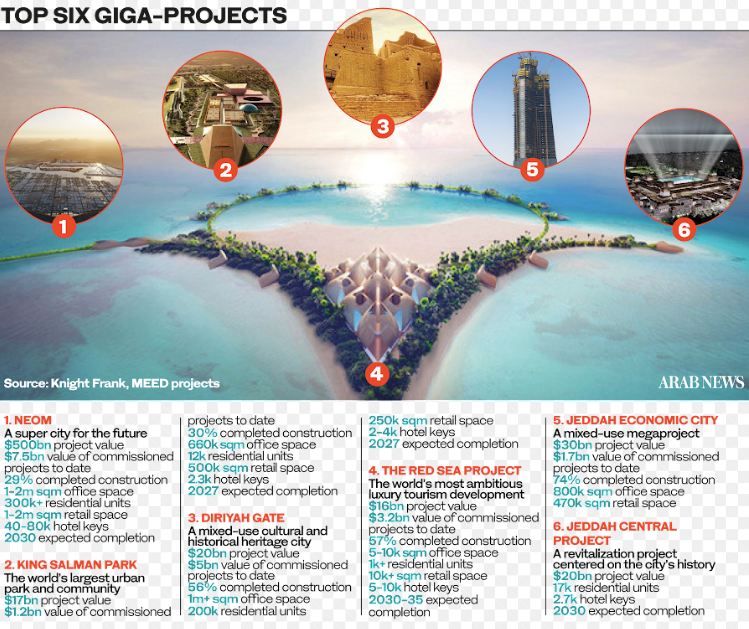
Following the launch of Saudi Arabia’s Vision 2030 in 2016, the Kingdom is on its way to becoming the world’s biggest construction site with a total investment of SR4.13 trillion ($1.1 trillion) in infrastructure and real estate projects, according to global real estate consultancy Knight Frank.
The real estate firm projected that Riyadh’s population will reach 17 million by 2030, up from about 7.5 million today. The city has unveiled real estate projects worth $104 billion since the Kingdom’s National Transformation Plan launch in 2016.
“Vision 2030 has lit the embers of excitement across the Kingdom, and with NEOM positioned as a crown jewel in the transformative plans, people are eager to be part of history,” Faisal Durrani, partner and head of Middle East research, Knight Frank told Arab News.
Saudi Arabia will easily become the largest construction site in history, with planned construction projects in the Kingdom being over 555,000 residential units, over 275,000 hotel keys, over 4.3 million square meters of retail space, and over 6.1 million square meters of office space, Durrani said.
The consultancy firm is currently monitoring 15 giga-projects in the Kingdom, many of them new standalone supercities, said Harmen de Jong, partner and head of real estate, Strategy& Consulting in the Kingdom.
NEOM is expected to house 9 million residents across 300,000 new homes once completed, making it the largest giga-project announced to date, Jong added.
Among 1,000 Saudi households surveyed, Diriyah Gate came third in popularity as a place to own a home, behind NEOM and The Red Sea Project.
NEOM is radically redefining urban living in resource-poor regions, Durrani said. At the same time, sub-cities like the Octagon, Trojena and the Line will set new benchmarks for luxury living in the area.
Around 30 percent of Saudi homeowners are prepared to spend more than $800,000 on a second home at NEOM. “Developers have their work cut out to satisfy this pent-up demand,” Durrani added.
De Jong said that the construction progress of part of the projects stands at 29 percent, with only $7.5 billion of subprojects being commissioned.
Riyadh’s rebirth
Another head-turning giga-project is the $20 billion Diriyah Gate which will give Riyadh 20,000 homes when it is completed in 2027, creating a city-sized historic district.
Knight Frank estimated that about $2.3 billion had been spent on Diriyah Gate’s construction.
“Not to be outdone, Riyadh’s repositioning as a commercial nerve center of the Kingdom is well underway. And businesses from the world over are already clamoring to be at the center of the Middle East’s second and much-needed global hub,” Durrani said.
Durrani added that the planned development of 2.8 million square meters of world-class office space could not come at a better time with Grade A office occupancy levels hovering around 97 percent across the city.
According to Knight Frank, an international airport worth $147 billion is also set to open shortly. Nearly 74 percent of the $200 billion national infrastructure investment goes toward the new airport.
“The city is also attracting a huge number of internal migrants, and with readily available support to get on the housing ladder, house prices are rising rapidly and currently stand some 26 percent higher than this time last year,” he said.
Well-being hub
The Kingdom is also improving and providing world-class urban environments for its residents with the $500 million Riyadh Sports Boulevard and the $23 billion Green Riyadh, planting 7.5 million trees in the Saudi capital to transform it into a green, vibrant metropolis.
It also extends to the 19,000 hospital beds planned for $13.8 billion, of which $8.6 billion will be spent in Riyadh Province alone.
According to de Jong, over 80 new educational institutions are being constructed for $82 billion.
“What’s more, healthcare, education and well-being sit at the core of the transformative plans, which will contribute to an extraordinary evolution in the Kingdom’s physical realm, making it unrecognizable from what we see today by the end of the decade,” Durrani said.
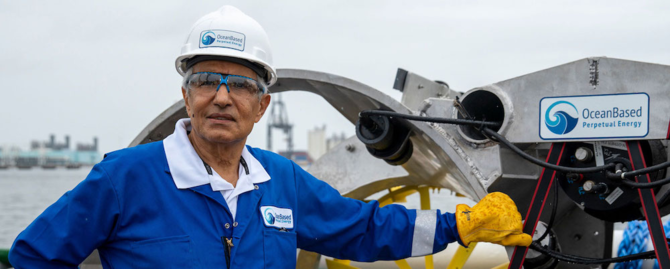
Saudi inventor Nasser Al-Shemaimry showed a method to harness energy from ocean currents using turbines at a press conference at the Movenpick hotel in Jeddah on Wednesday.
The press conference was attended by Prince Abdulaziz bin Nasser, who served at the Ministry of Interior for more than 40 years.
Al-Shemaimry, CEO of OceanBased Perpetual Energy, founded in Miami, signed a memorandum of understanding with Prince Abdulaziz.
“This memorandum will be presented to the inventor Nasser Al-Shemaimry for engineering supplies and most office services,” he told Arab News. “And to connect with ministries, and we will help him with anything he needs.”
Al-Shemaimry’s project was first used in south Florida to harness the Florida Gulf Stream current and convert it to clean and renewable power.
“Oceans and seas have some currents that go from one direction to another, the current varies in speed, but the current we are using is 5 to 6 miles per hour,” he told Arab News.
“Five-six miles per hour is enough to make the propellers turn, and our propeller is 64 meters long, so as it turns, it turns the turbines inside of the cowling, and that turbine rotates the generator, which produces electricity,” he said.
He said that his project takes the electricity from the generator to a substation then the substation regulates the electricity to what is needed.
“Then it goes to the shore and we connect it to the main substation on shore, then it is up to the city hall or the people who are in charge of the town, city or country to take it from there and take it to the power lines,” he said.
Highlighting how it compares to other sustainable power sources such as solar or wind, he said the ocean provided a continuous and uninterrupted supply of energy.
For solar energy requirements, he said as long as the sun was up the panels would work and charge batteries.
“Each energy source has its own advantages and disadvantages. Solar energy has been around forever, it works and serves its purpose, it’s inexpensive and on land,” he said.
“Windmills are everywhere, but the difference in my opinion is that our energy is perpetual; it doesn’t stop, it works 24/7 and 365 days a year.”
Since the launch of the Kingdom’s Vision 2030 in 2016, Saudi Arabia has made effective efforts to protect the environment and reduce the effects of climate change to achieve sustainability.
Extensive studies within the Green Saudi Initiative revealed a reduction of carbon emissions by more than 4 percent, and efforts to provide 50 percent electricity through renewable energy projects by the year 2030.
source/content: arabnews.com (headline edited)
___________
Saudi inventor Nasser Al-Shemaimry, CEO of OceanBased Perpetual Energy. (Supplied)
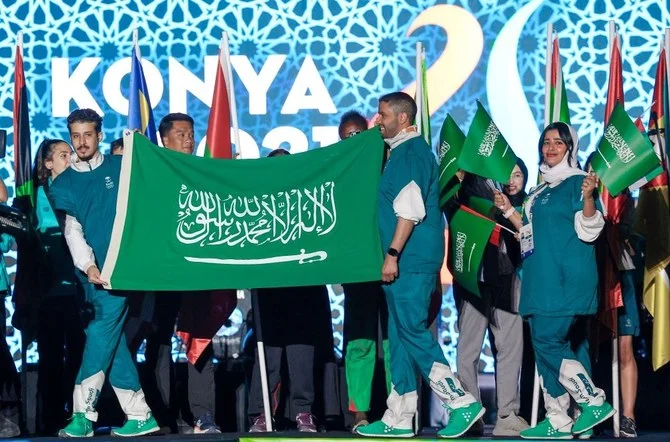
Team Saudi returned home to the Kingdom after collecting a record 24 medals at the 5th Islamic Solidarity Games held in Konya, Turkey, from Aug. 9-18.
They won two gold, 12 silver, and 10 bronze medals. The previous record was 11 medals at the 2017 Islamic Solidarity Games in Baku.
The competition saw the participation of 54 countries and 4,000 athletes.
The Saudi team placed 15th in the overall country standings, and its weightlifting athletes scooped 11 medals between them (one gold, six silver, and four bronze).
Athletics came second with five medals (four silver and one bronze), Karate with three medals (gold and two bronze), table tennis with two medals (one silver and one bronze), Paralympic swimming with one bronze medal, and finally a silver medal in the U23 football competition.
The Saudi weightlifting team won their first medals when Abdullah Al-Biladi delivered three bronzes on the opening day.
Siraj Al-Saleem delivered three silver medals in the 61kg event. On Thursday, Mansour Al-Saleem won gold in the 55kg event. Additional weightlifting medals came from Ali Al-Othman, who delivered a silver and a bronze.
Saudi track and field athlete Yousef Masrahi came second in the 400m race. His teammate Mazin Al-Yasin came third to secure the bronze in the same event.
Karate silver medalist at the Tokyo Olympics, Tarek Hamdi, secured first place on the podium after defeating his Azerbaijani opponent Ismayilov Gurban to win gold.
Hamdi said: “I’m thankful for all the support we get from SOPC (Saudi Olympic and Paralympic Committee) president Prince Abdulaziz and his VP Prince Fahad and all the Saudi karate fans and people who believed in me. I dedicate this success to them, and hopefully, our next goal is (the) Riyadh Asian Games 2034, where we hope to meet you all.”
Saud Al-Bashir and Sultan Al-Zahrani brought the other two bronze medals in Karate.
At the closing ceremony, SOPC vice president Prince Fahd bin Jalawi and the head of the Saudi delegation congratulated all the medal winners.
He also extended his appreciation and thanks to Turkish President Recep Tayyip Erdogan and Minister of Youth and Sports Dr. Muhammad Muharram Kasaboglu for successfully hosting the games.
source/contents: arabnews.com (headline edited)
__________
Saudi’s delegation claimed a total of 24 medals at the 5th Islamic Solidarity Games in Turkey. (SOPC)
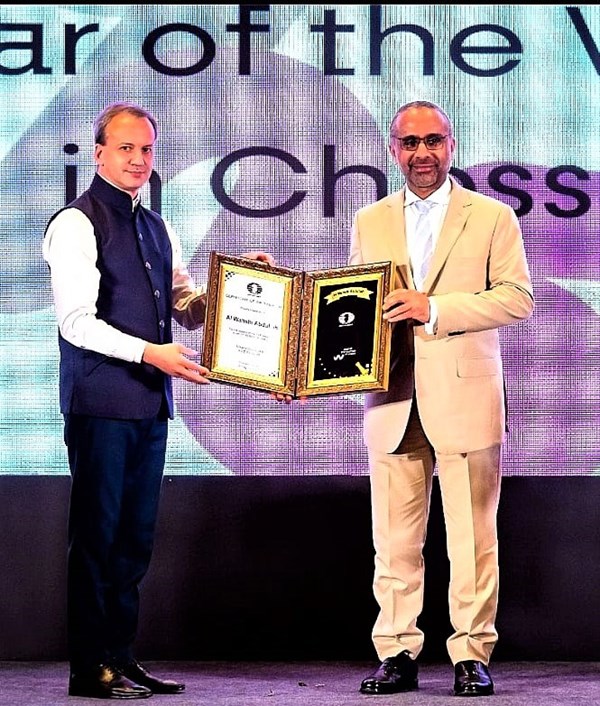
Saudi Arabia has become the first Arab country awarded a place on the advisory board of the International Chess Federation, the Saudi Press Agency reported.
The seat will be filled by Abdullah Al-Wahshi, the president of the Saudi Chess Federation.
“The weight of the Kingdom of Saudi Arabia and its position in all fields has a role in joining this advisory council, as our country has previously organized ably and with great success for a period of time,” said Al-Wahshi as he thanked the country’s leaders for their unwavering support for all sports and activities.
“From 2017 to 2019, the King Salman International Cup Rapid and Blitz Championship marked an unprecedented (chess) event with the participation of most countries of the world. This achievement raised the status of Saudi chess, leading to the Kingdom’s participation in the World Chess Olympiad in India and obtaining four international … titles.”
The advisory board, the International Chess Federation’s highest advisory authority, oversees all of the organization’s decisions and regulations.
source/content: arabnews.com
____________
Arkady Dvorkovic, President of the International Chess Federation with Abdullah Bin Salem Al-Washi, President, Saudi Chess Federation / pix: trixabia.com
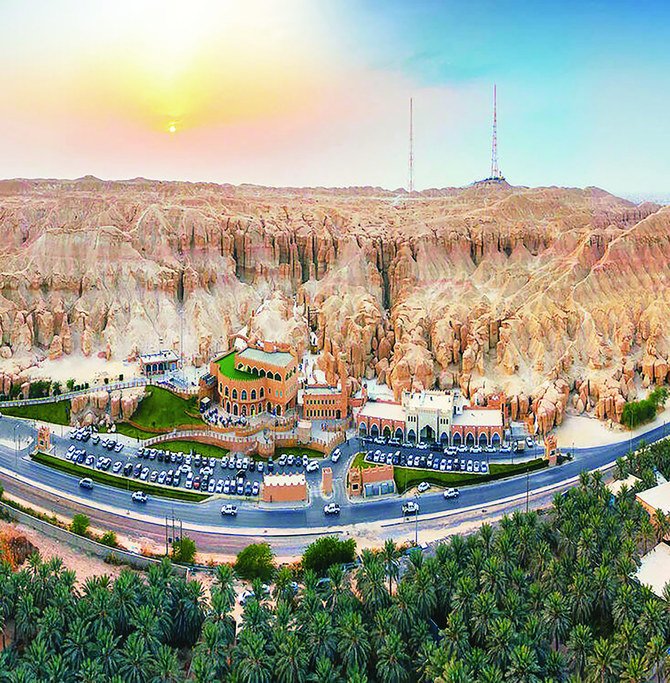
Al-Ahsa, the world’s largest date palm oasis, is generating a new era of prosperity following the launch of a new development authority.
On May 12, the Kingdom formed the board of directors for the Al-Ahsa Development Authority, headed by Prince Ahmed bin Fahd bin Salman, deputy governor of the Eastern Province.
The move aims to enhance the governorate’s potential while helping develop the tourism, heritage and cultural aspects of Al-Ahsa.
The authority will create a balanced and sustainable development environment that supports the governorate’s economy and promotes development, modernization and diversity, according to the state press agency.
“The decision reflects the leadership’s keenness to invest in the comparative advantage of Al-Ahsa and to utilize it in economic projects that will align with Vision 2030,” Ibraheem Alshekmubarak, secretary-general at Al-Ahsa Chamber of Commerce, said in an exclusive interview with Arab News.
The city of 1.3 million people was included in the UNESCO Creative Cities Network in 2018.
UNESCO said: “The city has an ancient tradition of handicrafts, considered cultural and social practices passed on from generation to generation.
“Around 50 expressions of crafts and folk art have remained throughout the city’s history and bear witness to Al-Ahsa’s scenic wealth, including textiles from palm trees, pottery, weaving and joinery.”
Boosting tourism
The governorate hosts 36 weekly open markets and stages several festivals a year.
“When we talk about tourism in Al-Ahsa, we are talking about agricultural, heritage and natural tourism,” Alshekmubarak said.
In February 2022, the Ministry of Tourism launched a high-profile investment conference in the city called Destination Tomorrow. The conference showcased Saudi destinations to local investors and international operators.
“Post pandemic, people are a little bit more conservative internationally regarding cross-border investment. But we are proving to be a destination attracting quite a decent amount of interest,” Mahmoud Abdulhadi, Saudi Arabia’s deputy minister for investment attraction, told Arab News.
The Kingdom seeks to generate 10 percent of the gross domestic product from the tourism sector and to attract over 100 million visitors by the end of this decade, creating an additional 1 million jobs in the sector.
“We want to make the sector stand on its own two feet. So we are keen on large private sector investment to come in, even as we are mindful that the whole sector is built on small and medium enterprises,” added Abdulhadi.
The city’s chamber of commerce led several initiatives to support SMEs, monitoring the sectors most affected by the pandemic to keep them formulating plans and drawing strategies that help them overcome the damage.
“Al-Ahsa Chamber organized a set of development initiatives and advisory services provided to entrepreneurs through the Prince Ahmed bin Fahd bin Salman Center for Business Development,” Alshekmubarak added.
Airport expansion
Al-Ahsa airport’s capacity will more than double the expectations of fast regional growth, Fahad Alharbi, the CEO of Dammam Airports Co., said in an earlier interview with Arab News.
The city’s airport has a capacity of around 400,000 passengers but aspires to reach 1 million, Alharbi added.
Saudi Aramco mainly uses the facility, but before the pandemic struck, there was commercial activity from two or three local destinations and another two or three international sites.
“With the economic and tourism boom expected in Al-Ahsa, the development of Al-Ahsa International Airport is the most in need of projects at present,” said Alshekmubarak.
Business destination
The city is already growing in businesses as the Ministry of Municipal Rural Affairs and Housing announced in June that the investment opportunities in the city increased by 53 percent in 2021, with 362 available options on its online portal.
The total value of these investments exceeded SR275 million, Essam Al-Mulla, the mayor of Al-Ahsa, told Arab News.
The available opportunities in the portal in 2022 already reached 112 investments, said the Saudi Minister of Municipal Rural Affairs and Housing Majid Al-Hogail, according to the Saudi Press Agency.
source/content: arabnews.com (headline edited)
____________
Investment opportunities in the city increased by 53 percent in 2021, with 362 available options on the ministry’s online portal. (Supplied)
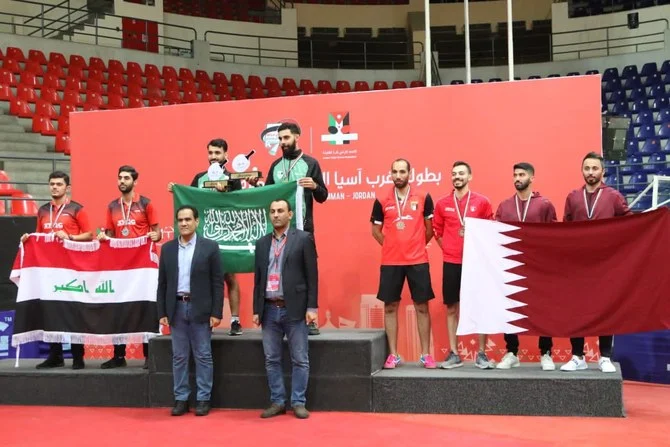
In a remarkable feat, Saudi Arabia’s national team claimed a total of 19 medals at the recently concluded West Asian Table Tennis Championships in Jordan.
The wins were spread across the Saudi men’s and women’s teams and came in several different age categories.
The final tally was six gold, four silver and nine bronze.
Saudi Olympian Ali Khadrawi partnered Abdelaziz Bushulaibi to gold in the men’s doubles and there was also a first ever gold in the girl’s doubles under-11 category for Nihal Al-Qahtani and Fatima Al-Awami.
Three Saudi players — Khadrawi, Bushulaibi and Azzam Alem — qualified for the 2023 World Table Tennis Championships, to be held in South Africa, due to their performances in Jordan.
source/content: arabnews.com (headline edited)
___________
Saudi’s Ali Khadrawi (left) and Abdelaziz Bushulaibi top the podium in Jordan. (@sttf_ksa)
Dr Samiha Sinan worked as an internal medicine doctor for 43 years in several Saudi hospitals
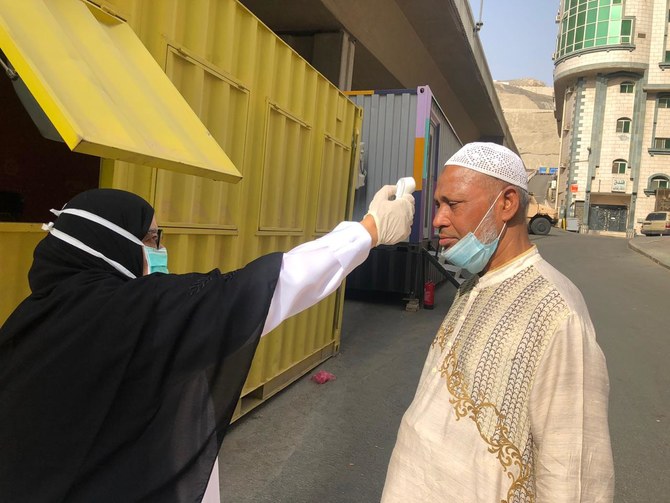
Saudi Minister of Health Fahad Al-Jalajel has named 65-year-old retired doctor and volunteer Dr. Samiha Sinan the “Mother of Volunteers.”
“One retires from office work, not from serving pilgrims,” Al-Jalajel said, praising Sinan’s efforts in providing health care to pilgrims.
Sinan told Arab News that volunteering to serve pilgrims is a work of great honor if done sincerely and honestly.
She worked as an internal medicine doctor for 43 years in several Saudi hospitals, retiring four years ago.
As soon as the pandemic hit across the world, placing great pressure on the health sector, Sinan jumped back into the field to help out.
“I am still able to give, and I tried to think of how a person could serve their religion, country and king, so I submitted a request on the volunteer platform at the Ministry of Health. I was afraid I would be rejected given my age, but my instinct told me to apply because I wanted to give and serve. The Ministry of Health approved my request, and I immediately decided to get back in the field and fight the pandemic,” she said.
Sinan added: “The Makkah health authorities tried to put my comfort first and asked me to work in a small medical clinic in Makkah, but I refused since the pandemic was growing stronger. I headed directly to a COVID-19 center in an isolated area in Al-Masfalah, in Makkah. No one was allowed to enter or leave, but we worked in a comfortable environment thanks to the measures the state had taken to support citizens. I volunteered there for two years, 12 hours a day, seven days a week.”
Even though COVID-19 has witnessed a steady decline in the Kingdom over the past few months, Sinan still volunteers in one of the squares at the Grand Mosque by providing medical care to injured pilgrims.
source/content: arabnews.com (headline edited)
________
Dr Samiha Sinan volunteers by providing medical care to injured pilgrims at the Grand Mosque. (Supplied)
The Jamarat Bridge project is a massive structure built to save pilgrims’ lives and facilitate a crucial Hajj ritual.
Pilgrims gather in this place to throw stones at the devil in a symbolic act as part of their Hajj. Without this act, their pilgrimage is incomplete and considered to be unaccepted.
The concept of stoning the devil began when Prophet Ibrahim intended to sacrifice his son Ismael upon Allah’s order. The devil tried to dissuade the prophet three times from carrying out the order.
On each of the three occasions, the prophet pelted the devil with seven small pebbles to drive him away, after which the devil disappeared. This act has become a symbolic ritual and an integral part of Hajj.
It takes place over two or three days, from the 10th day of Dhul Hijjah until before sunset on the 13th.
The three pillars were previously built of stone and mud with low barriers surrounding them. They were then covered with cement, with the size of the pillars remaining unchanged for years.
However, the increasing number of pilgrims called for a project to help manage the hundreds of thousands of worshippers gathering in one place.
According to Mohammed Idris, former vice dean of The Custodian of the Two Holy Mosques Institute for Hajj and Umrah Research, the three pillars were surrounded by circular walls until 1975.
“A substantial enlargement of the area took place in 1987, and other expansions followed to upgrade the Jamarat area’s capacity to ease pilgrim movement and avoid accidents. The exit points and entrances to the pillars were amended, and the curved paths to the Jamarat were made straight,” he told Arab News.
The Jamarat Bridge was originally a pedestrian structure built in 1963 to facilitate the stoning ritual. Since then, it has been expanded several times to accommodate the increasing number of pilgrims.
A substantial enlargement of the bridge took place in 1974, and other expansions followed to upgrade the bridge’s capacity to ease pilgrim movement and avoid accidents.
Despite this, the structure witnessed several deadly incidents owing to actions of pilgrims who violated instructions, thereby sparking stampedes and deaths.
In 1990, over 1,400 pilgrims were killed by trampling and suffocation in Al-Ma’aisim pedestrian tunnel, which led from Makkah to Mina. Between 1994 and 2006, more than 1,030 pilgrims were killed in stampedes while trying to stone the pillars. Around 470 others were injured.
The worst stoning-related incident in recent memory occurred on Sept. 25, 2015, when more than 700 pilgrims died and another 800 were injured when pilgrims surged toward the intersection of Street 204 and Street 223.
A doctor at an emergency department of a Mina hospital told Arab News at the time that most of the pilgrims died of asphyxiation.
A Saudi interior ministry spokesman had blamed the stampede on “unprecedented high numbers of pilgrims” as compared to previous years, plus the fact that a majority of the victims had descended onto a pathway during a time that they were not allowed to enter it.
Witnesses to the tragedy had confirmed that a large group of Iranian pilgrims passed through Souq Al-Arab Street and refused to return, ignoring Hajj guidelines.
__________
FASTFACTS
• Stampedes and surges caused thousands of deaths at the Jamarat Bridge before the infrastructure was upgraded.
• The project, to alleviate overcrowding and avoid tragedies, cost $1.12 billion.
_________
Regardless of the causes of the tragedies, they prompted the Saudi government to devise a solution that could save lives. After the 2015 incident, Saudi Arabia’s King Salman offered condolences and immediately ordered an urgent review of the Hajj plan.
Over four years, Saudi authorities studied and researched the site before the old structure was completely removed and replaced by the existing engineering marvel known as the Jamarat Bridge.
The new project details were approved by top engineering and architectural committees consisting of local experts and highly experienced US, German, and British engineers. The opinion of senior Muslim scholars was taken into consideration for the religious position on the project details.
“In 2005, the circular walls around the pillars were reshaped, making them elliptical to facilitate the movement of the pilgrims,” Idris told Arab News.
“ In 2007 the old Jamarat project was discarded, and work on the new project began. A year later, one floor as per the project was fully constructed. In 2009, the second floor was made ready to serve pilgrims. By 2010, the entire planned construction was fully complete.”
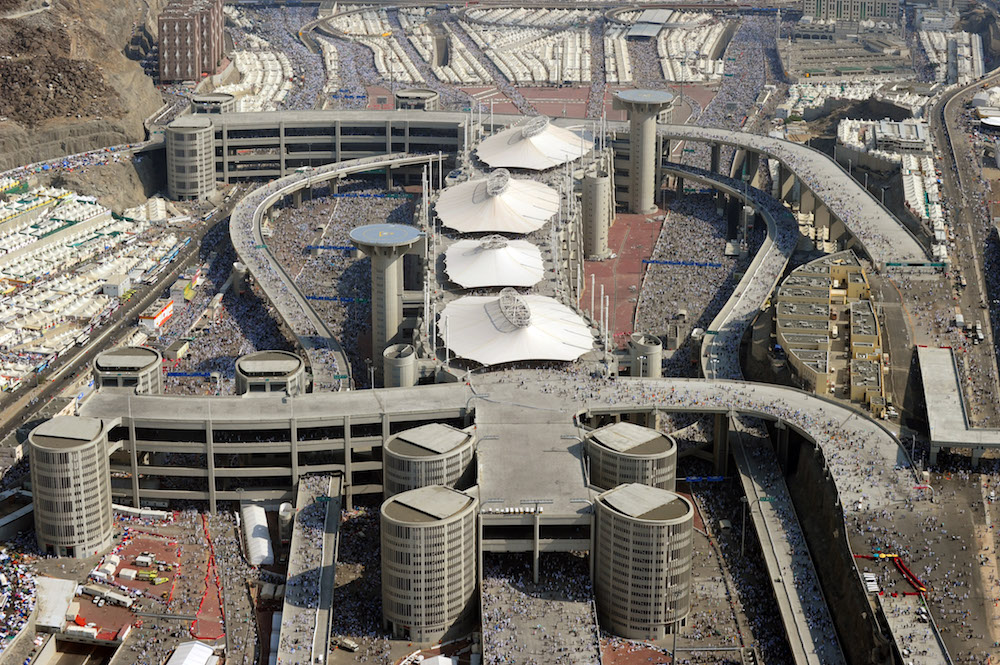
The bridge, which was constructed over three years by more than 11,000 workers, is 950 meters long and has six floors, including the basement, with a height of 12 meters per floor. Each floor can absorb up to 120,000 pilgrims per hour.
Its foundation was constructed to withstand 12 floors to accommodate 5 million pilgrims by 2030.
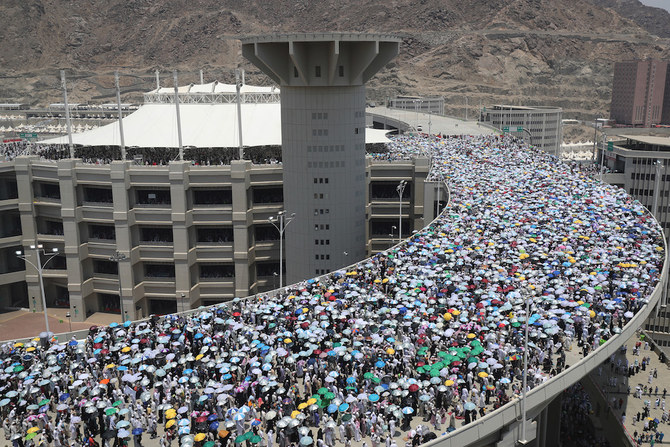
On the fifth level, umbrellas cover the site of the three Jamarat to enhance the comfort of pilgrims and protect them from the sun and heat.
The Hajj infrastructure showpiece, which has won several local and global awards, was built at a cost of over SR4.2 billion ($1.12 billion).
It has 12 entrances, 12 exit roads from four directions, two tunnels, 19 ramps, escalators, emergency exits, helipads, six service buildings, and an air-conditioning system with water sprinklers to cool the atmosphere and reduce the area’s temperature to 29 degrees Celsius.
The building also contains three electric stations and a standby generator that automatically supplies electricity in case of any temporary power cut.
Unlike the old circular shape of the walls around the three pillars, the new oval design has contributed to a better pilgrim flow. It has also assisted in increasing the bridge’s capacity for pilgrim numbers.
The new bridge was designed by Dar Al-Handasah and constructed by the Saudi Binladin Group. It features a wider and column-free interior space, longer Jamrah pillars, additional ramps and tunnels for easier access, large canopies to cover each of the three pillars to protect pilgrims from the sun, and ramps adjacent to the pillars to speed up evacuation in the event of an emergency.
No casualties have been reported at the Jamarat sites in six years. However, both Saudi Hajj and health authorities are prepared for any scenario. This year, 17 emergency centers will be present at Jamarat Bridge to assist in any emergencies — from crowd surges and falls to illness — that pilgrims may face on their Hajj journey.
source/contents: arabnews.com (headline edited)
___________
The walkway leading to the symbolic stoning of the devil, the oval design has contributed to better pilgrim flow and boosted the structure’s capacity for accommodating people. (AFP)A substantial enlargement of the bridge took place in 1974, and other expansions followed to upgrade the bridge’s capacity to ease pilgrim movement and avoid accidents. (AFP/File Photo)