Arabs & Arabian Records Aggregator. Chronicler. Milestones of the 25 Countries of the Arabic Speaking World (official / co-official). AGCC. MENA. Global. Ist's to Top 10's. Records. Read & Enjoy./ www.arabianrecords.org
Arabs are known for having had numerous contributions to civilizations—notably in the fields of Mathematics (Arabs invented Algebra), Astronomy (Al-Biruni discussed the earth’s rotation centuries before it was confirmed by Galileo), and Medicine (Al Razi was one of the first to diagnose diseases like smallpox and measles).
But Arab achievements didn’t end in the Golden Age and have continuously evolved to modern fields, so we’re here to round up some of the lesser-known greatest modern achievements by Arabs..
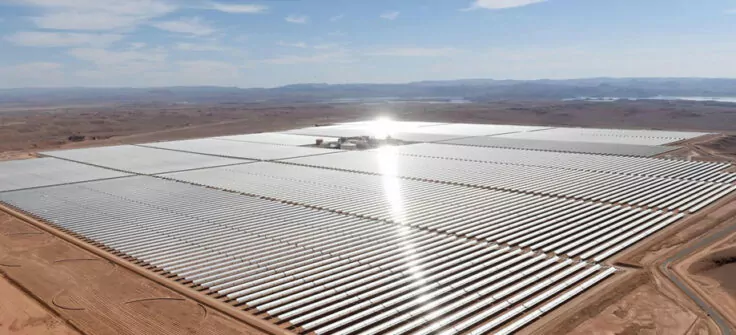
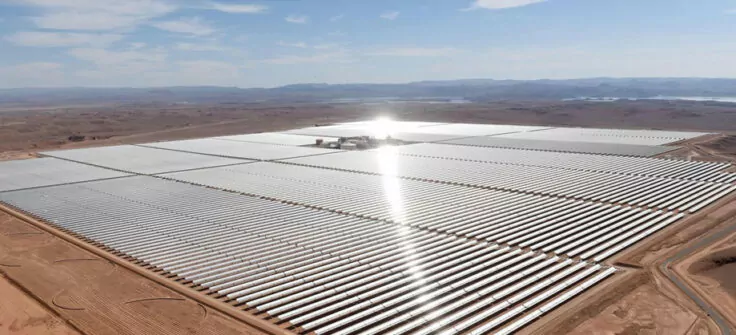
Noor Ouarzazte
Morocco is turning the Sahara Desert into the largest concentrated power complex in the world. The project is currently in progress, due to be complete before the end of 2018.
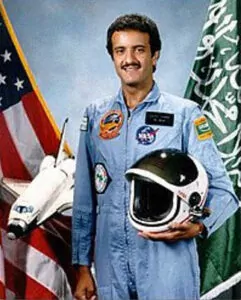
Arabs in Space
Sultan bin Salman Al Saud became the first Arab in space in 1985 – he was also the first royal astronaut ever. Syrian-born Mohammed Ahmed Faris followed in Al Saud’s footsteps in 1987.
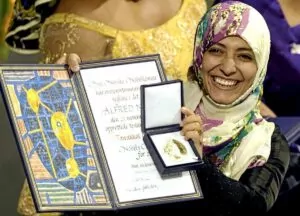
Nobel Peace Prize Winners
Photo credit ODD ANDERSEN/AFP/Getty Images
The Tunisian national dialogue quartet was awarded the Nobel Peace Prize in 2015 for their role in building a democratic state in Tunisia following the Arab Spring.
Yemeni journalist and activist Tawakkol Abdel-Salam Karman preceded the Tunisian National Dialogue Quartet in 2011 as Nobel laureate—she became the first ever Yemini and Arab Woman to win the Peace Prize, as well as the second youngest ever.
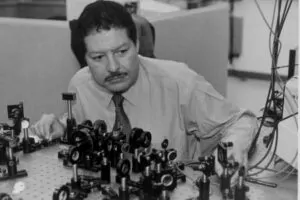
The ‘Father of Femtochemistry”
Femtochemistry is probably something too difficult for most of us to understand—but according to Wikipedia it’s “an area of chemistry that studies chemical reactions on extremely short timescales”. Ahmed Hassan Zewail, and Egyptian-American scientist, is known for pioneering a laser technique that allowed for easier analysis of chemical reactions. He even won a Nobel prize for his work in 1999.
Pritzker Architecture Prize Winners
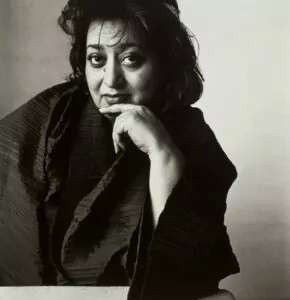
The late Iraqi-British architect Zaha Hadid was an internationally-acclaimed architect, renowned for her sci-fi creations. Having built some of the world’s most innovative spaces. In 2004, she became the first ever woman to win the prestigious Pritzker Architecture Prize—the most prestigious award in architecture.
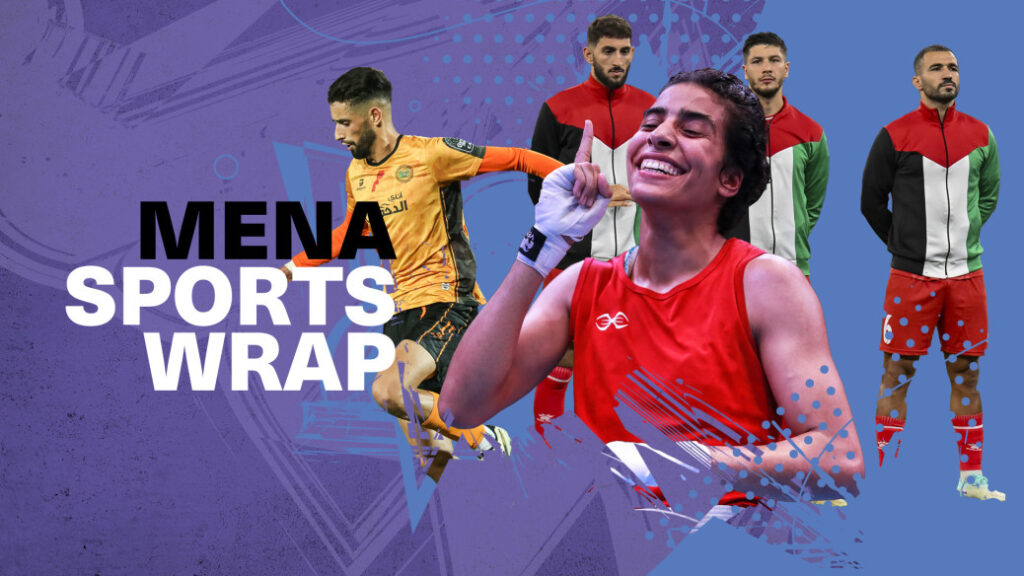
Moroccan boxer Widad Bertal was crowned world champion in the women’s bantamweight, showcasing the country’s surging talent in the combat sport.
Widad Bertal, one of Morocco’s rising boxing stars, is a world champion after winning the women’s bantamweight category at the 2025 IBA World Boxing Championships in Serbia. Meanwhile, the Palestinian squad for the upcoming 2026 World Cup qualifiers due to be held this month has been revealed through a touching video, showcasing life in the devastated Gaza Strip.
Also in Morocco, underdogs RS Berkane were crowned league champions after a near-undefeated run in the 2024/2025 soccer season.
Moroccan boxer Widad Bertal crowned world champion at Women’s World Boxing Championships
Moroccan boxer Widad Bertal has claimed the World Champion title in the 52-54 kg weight category at the Women’s World Boxing Championships, held in Nis, Serbia, from 9 to 16 March 2025, after defeating Turkish competitor Hatice Bektas.
Bertal’s victory cements her status as one of the sport’s rising stars. She previously secured gold medals at the African Championships in Yaoundé in 2023 and Kinshasa in 2024, establishing herself as a dominant force in the ring.
Her latest triumph represents a major achievement for Moroccan boxing on the global stage.
Morocco’s success in Serbia did not end there. Fellow Moroccan boxer Hasnae Larti added to the country’s medal haul by winning bronze in the 75-81 kg weight category, further highlighting Morocco’s growing strength in women’s boxing.
The achievements of Bertal and Larti reflect Morocco’s rising prominence in international boxing competitions . Their success has drawn praise from sports officials and fans alike, who see them as an inspiration for aspiring athletes across the country.
In recognition of her remarkable victory, King Mohammed VI sent a congratulatory message to Bertal, celebrating her world title triumph.
“We share with you, with great joy, feelings of pride in this well-deserved victory that crowned your perseverance and ambition to raise your country’s flag high on the podium and inscribe your name in the register of champions,” the King’s message read.
“We pray to God to grant you continued success and brilliance in your upcoming competitions.”
Palestinian World Cup qualifier squad revealed in touching Gaza video
The Palestinian Football Association unveiled their squad for the upcoming World Cup qualifiers via a video highlighting Israel’s devastating war on Gaza, and Palestinians’ love for the sport.
The players are revealed bit by bit in the 3-minute, 11-second clip showcasing life in the destroyed enclave.
The clip starts with a young boy by wearing a Palestinian football shirt playing on the seashores of Gaza. He then spots a portrait of Musab al-Battat, the team’s captain, among rubble.
The child then walks into the city’s ruins clutching the portrait, as we see Gaza’s population living in makeshift tents, queuing for water and selling what they can to make a living .
The boy then meets with a friend, who also reveals a portrait of another player. The two boys are joined by a third friend, who also pulls out a picture. The trio continue to be joined by more friends, as more Palestinian players are revealed.
Some of the players are revealed in during a segment where we see a young man selling snacks, other members of the Palestinian team are shown during a makeshift classroom as children attend a lessson amid war .
The clip also shows Gaza City’s emblematic Yarmouk Stadium. The venue is one of the oldest stadiums in Palestine, and was turned into a internment camp by Israeli forces during the early months of the war in Gaza. It has since become a place of refuge for the territory’s displaced Palestinians.
The video ends by showing children playing football in the stadium.
The Palestinian side will face Jordan in an away game on Thursday as part of the third round of the 2026 FIFA World Cup qualifiers . They will also play against Iraq on 25 March at Amman’s International Stadium.
Among the players selected are forward Oday Dabbagh, midfielder Mahmoud Abu Warda and defenders Yaser Hamed and Mohamed Saleh.
RS Berkane make Moroccan football history after being crowned league champions
Moroccan football team RS Berkane made history in the country this week, winning their first-ever league title, locally known as Botola.
Their crowning came as they drew 1-1 in a home game against Rabat side Union de Touarga on Saturday.
The team, located in northeastern Morocco, have had their strongest-ever runs in the Moroccan championship, having only lost one game so far, winning 18 and drawing six – putting them in a comfortable lead against competition favourites Wydad Casablanca and Rabat-based AS FAR.
The squad sits comfortably at the top of the Botola table, having gathered 60 points, while second-place AS FAR trail behind with 45 points.
Their coach, Tunisian Mouine Chaabani, has been instrumental to their success, having joined in February of last year following his success with Tunisian club Espérance Sportive de Tunis.
Chaabani’s coaching skills propelled the team from their sixth-position finish two seasons ago to third last year, before winning the title this season.
RS Berkane’s winning ways have also secured them a place in the CAF African Champions League for the first time ever.
Their win has made headlines across Morocco, with celebrations held in the city of Berkane among fans and locals.
The Moroccan Football Federation (FRMF) and the Confederation of African Football (CAF) also extended their congratulations to the club.
The Director-General of UNESCO, Audrey Azoulay, announced the designation of Rabat (Morocco) as World Book Capital for 2026, based on the recommendation of the World Book Capital Advisory Committee.
“ Following Rio de Janeiro in 2025, I am pleased to announce the designation of Rabat as World Book Capital for 2026. Rabat is a cultural crossroads where books help transmit knowledge and the arts in all their diversity. The growing local book industry is also playing a crucial role in advancing education. These actions resonate with UNESCO’s mandate.
Audrey AzoulayUNESCO Director-General
With 54 publishing houses, the third largest international book and publishing fair in Africa and a growing number of bookstores, Rabat’s book industry is not only a vital part of the city’s creative economy but also at the forefront of democratizing knowledge.
UNESCO and the World Book Capital Advisory Committee have recognized Rabat for its clear commitment to literary development, the empowerment of women and youth through reading and the fight against illiteracy, especially among underserved communities.
As World Book Capital for 2026, Rabat will roll out a series of initiatives with the aim of fostering sustainable economic growth and social benefits by enhancing access to books and supporting the local publishing industry. In particular, the city will launch a major initiative to reinforce literacy of all its citizens.
The year of celebrations will start on 23 April 2026, on World Book and Copyright Day.
About the world book capitals
Cities designated as UNESCO World Book Capital undertake to promote books and reading for all ages and groups, within and across national borders, and to organize a programme of activities for the year.
As the twenty-sixth city to bear the title since 2001, Rabat follows Madrid (2001), Alexandria (2002), New Delhi (2003), Antwerp (2004), Montreal (2005), Turin (2006), Bogota (2007), Amsterdam (2008), Beirut (2009), Ljubljana (2010), Buenos Aires (2011), Erevan (2012), Bangkok (2013), Port Harcourt (2014), Incheon (2015), Wroclaw (2016), Conakry (2017), Athens (2018), Sharjah, (2019), Kuala Lumpur (2020), Tbilisi (2021), Guadalajara (2022), Accra (2023), Strasbourg (2024) and Rio de Janeiro (2025).
The UNESCO World Book Capital Advisory Committee comprises representatives of European and International Booksellers Federation (EIBF), the International Authors Forum (IAF), the International Federation of Library Associations (IFLA), the International Publishers Association (IPA), and UNESCO.
With 194 Member States, the United Nations Educational, Scientific and Cultural Organization contributes to peace and security by leading multilateral cooperation on education, science, culture, communication and information. Headquartered in Paris, UNESCO has offices in 54 countries and employs over 2300 people. UNESCO oversees more than 2000 World Heritage sites, Biosphere Reserves and Global Geoparks; networks of Creative, Learning, Inclusive and Sustainable Cities; and over 13 000 associated schools, university chairs, training and research institutions. Its Director-General is Audrey Azoulay.
“Since wars begin in the minds of men, it is in the minds of men that the defenses of peace must be constructed” – UNESCO Constitution, 1945.
FM Bourita stressed the need to confront attempts to distort human rights issues in favor of unrelated agendas, while launching initiatives to strengthen the Council’s effectiveness.
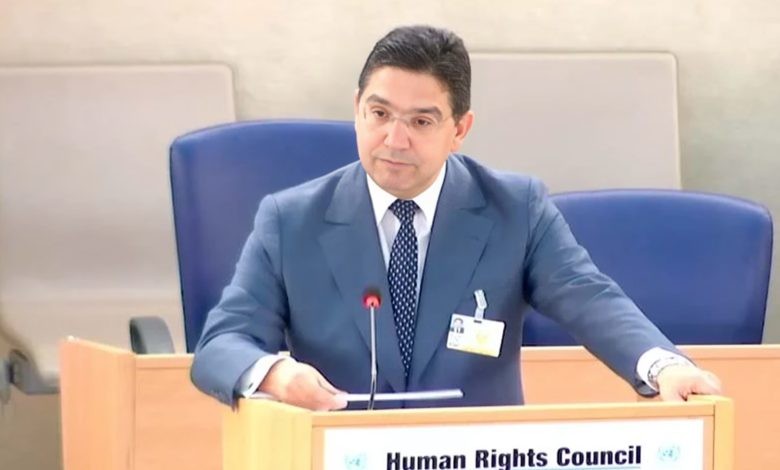
Morocco’s Minister of Foreign Affairs, Nasser Bourita, affirmed in Geneva that the Kingdom’s tenure leading the Human Rights Council will prioritize “credibility and dynamism,” aiming to foster constructive consensus towards the council’s objectives.
Addressing the high-level segment of the 55th session of the Human Rights Council, chaired by Morocco, Bourita emphasized the adherence to principles synonymous with Moroccan diplomacy.
He highlighted Morocco’s dedication to credibility in action, dynamism in performance, innovation in methods, and the pursuit of constructive consensus.
The election of Morocco to preside over this crucial United Nations body, with 30 out of 47 votes, serves as international validation of the nation’s unwavering dedication to human rights under the leadership of King Mohammed VI.
Surpassing South Africa in the vote, Morocco’s victory signals recognition of its far-sighted vision and commitment to the rule of law and fundamental rights.
Following his election, Morocco’s permanent representative to the UN in Geneva, Omar Zniber, reiterated the kingdom’s pledge to promote, respect, and guarantee universally recognized human rights.
Zniber highlighted Morocco’s role as a unifying leader on key issues such as interreligious dialogue, tolerance, environmental sustainability, migrants’ rights, and the impact of new technologies.
According to Minister Bourita, the Moroccan presidency builds on significant progress in establishing a comprehensive human rights framework.
He noted that despite the challenges posed by a complex international landscape marked by polarization and human rights violations, the country remains committed to advancing the Council’s agenda.
Bourita stressed the need to confront attempts to distort human rights issues in favor of unrelated agendas, while launching initiatives to strengthen the Council’s effectiveness.
In parallel with these efforts, Bourita took part in bilateral discussions with his counterparts from Bahrain, Kazakhstan and the Netherlands, as well as meetings with the UN High Commissioner for Refugees and the UN High Commissioner for Human Rights.
During her lifetime, Fatima was called the “mother of boys”. According to historian Mohammed Yasser Hilali, “this nickname probably stems from her charity and the fact she took students under her wing”.
When thinking of the oldest universities in the world, probably the first ones that come to most people’s minds are Oxford and Bologna, but according to UNESCO and the Guinness World Records, Al-Qarawiyyin University (also written as Al-Karaouine) is the “oldest existing, and continually operating educational institution in the world.”
Founded in 859 A.D. by Tunisian-born Fatima al-Fihri in Morocco’s Fez, the university is not only the oldest higher education institution on Earth but also the first to be founded by a Muslim woman. Fatima used her inheritance from her merchant father’s wealth to found the university which started as an associated school – known as a madrasa – and a mosque that eventually grew into a place of higher education. It also introduced the system of awarding degrees according to different levels of study in a range of fields, such as religious studies, grammar and rhetoric. Though the university first focused on religious instruction, its fields of study quickly expanded to include logic, medicine, mathematics and astronomy, among many others.
The University of Al Quaraouiyine became a state university in 1963 and now awards degrees in Islamic, religious and legal sciences with an emphasis on classical Arabic grammar and linguistics and law.
Interestingly, teaching is still delivered in a very traditional manner, whereby students are seated in a semi-circle around a Sheikh (Islamic scholar), who prompts them to read sections of particular texts, asks them questions on aspects of grammar, law, or interpretation, and explains difficult points. Education at the University of al-Qarawiyyin concentrates on the Islamic religious and legal sciences with a heavy emphasis on, and particular strengths in, Classical Arabic grammar/linguistics and Maliki Sharia, though lessons on non-Islamic subjects are also offered to students. Teaching is still delivered in the traditional methods. The university is attended by students from all over Morocco and Muslim West Africa, with some also coming from further abroad. Women were first admitted to the institution in the 1940s
Fatima al-Fihri was born in 800 A.D. She was the daughter of Mohammed Bnou Abdullah al-Fihri – a rich merchant who settled in Fez with his family during the reign of Idris II.
Fatima’s family was part of a community called the “Qarawiyyin” (the ones from Qayrawan) whose two thousand families migrated from Qayrawan in Tunisia, to Fez in Morocco which was then under the rule of Idris II, a respected and devout ruler.
After the community was banned by the local ruler. The caravan included Fatima’s father Muhammad bin Abdullah Al-Fihri, and sister Mariam. Fatima was well versed in classical Islamic learning such as fiqh (jurisprudence) and hadith (Islamic traditions based on Prophet’s life). She inherited a large fortune from her merchant father which she used to build the university. She personally supervised the entire gigantic enterprise, from putting up the foundation to the functionalizing of these institutions. When she embarked on her mission, she had lost her father, husband, and brother – all primary sources of support and protection for a woman. Any other woman would have retreated to the backwaters of domestic life. But Fatima appears to have been an extraordinarily inspired and determined woman with steely grooves. All her great achievements came during periods of loneliness and in circumstances when women normally shun the world and seek the company of the home.
During her lifetime, Fatima was called the “mother of boys”. According to historian Mohammed Yasser Hilali, “this nickname probably stems from her charity and the fact she took students under her wing.” Fatima al-Fihri herself is considered a saint and she is much respected among the believers especially in Fez. In 2017, a prize was created in Tunisia in her honor. It rewards initiatives which encourage access to training and professional responsibilities for women. Furthermore, an academic program and a scholarship given to students from Europe and North Africa pay tribute to Fatima al-Fihri.
The University of Al-Qarawiyyin (also Al-Karaouine), which was then just called a madrasa (an institute of religious learning), was 30 m long, with a courtyard, a large library, and several schoolrooms. Although initially only the Qur’an and related religious lessons were taught, many other courses of study, like mathematics, medicine, Arabic grammar, history, geography, astronomy, chemistry, music and logic were soon introduced. Fatima studied there herself, along with her students, and awarded them degrees once they completed the courses: a degree that was chiseled onto a wooden board, which is now displayed in the university’s library. She also conducted debates and symposiums periodically for her students, producing politically-aware individuals.
With these innovative ideas, Fatima al-Fihri had not merely founded the first university but had introduced the concept of awarding degrees that is now an essential part of modern higher education.
In fact, the university produced many celebrated intellectuals and historians who are still known to this day: the Islamic philosopher Ibn Rushd, Andalusi diplomat and geographer, Hassan al-Wazzan and historian and thinker Ibn Khaldun, the famous Jewish philosopher, Moses Ben Maimon and Aka Maimonides.
The Christian scholar, Gerbert of Aurillac, who later became Pope Sylvester II, is believed to have visited the university several times. His visits helped him introduce Arabic numerals and the concept of zero to Europe. The University of Al Qarawiyyin is still considered a leading religious and education institution in the Muslim world. The university has moved away to another part of Fez, but the mosque and the library remain at the ancient complex. The University of Al-Qarawiyyin is the oldest existing, continually operating and the first degree awarding educational institution in the world according to UNESCO and Guinness World Records and is sometimes referred to as the oldest university.
(M Ahmad is a regular writer for this newspaper and can be reached at specialachivers78@gmail.com)
Morocco’s berry production is one of the country’s key contributors to the agricultural sector.
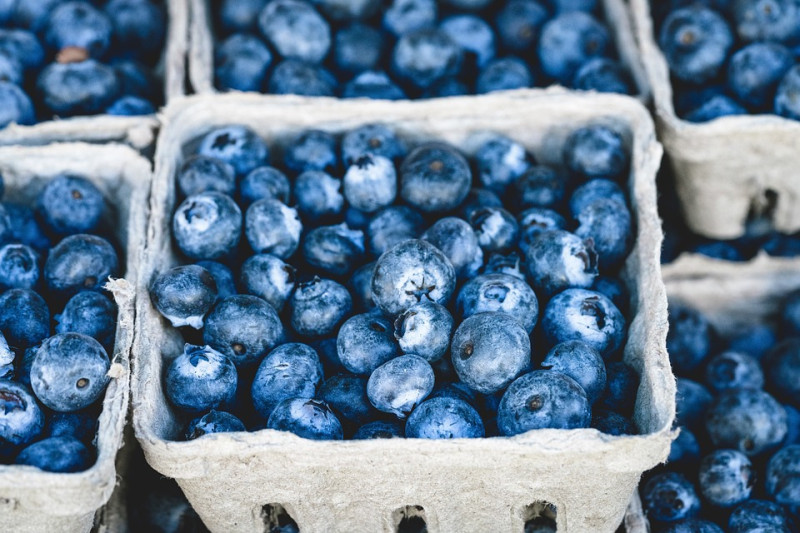
Morocco has outperformed the US becoming the fourth largest blueberry exporter in the world.
Data from East Fruit said that Morocco exported 53,000 tonnes of blueberries in 2022. Peru was the largest exporter of fresh blueberries last year, with 277,000 tonnes, followed by Chile (105,000 tonnes) and Spain (87,000).
Despite Morocco’s leading position in blueberry exports, the Netherlands exported more blueberries than the North African country in 11 months of last year, the same source said.
“It should be noted that the exports from the Netherlands in 11 months of last year were higher than that of Morocco, having amounted to 104 000 tonnes,” East Fruit reported.
Elaborating on the data, the news outlet said: “However, if we take into account the volume of re-exports, the real result of the Netherlands will be much lower since it imported 130 000 tonnes of fresh blueberries during this period.”
East Fruit also recalled that Morocco ranked seventh place among the largest exporters of cultivated blueberries in 2017.
Berry production in Morocco has contributed to the country’s agricultural sector significantly.
Morocco’s revenues from strawberry exports to the international market are estimated between $40 and $70 million annually.
According to previous data from East Fruit strawberry products are one of the top 10 most exported goods from Morocco.
According to estimates, Morocco exported 22,400 tonnes of fresh strawberries globally in 2022, representing an increase of 17% compared to a year earlier.
Countries like the UAE, Qatar were key buyers of Moroccan goods. In Europe, the US is one of Morocco’s strawberry importers. In 2022, the US imported almost half of Morocco’s strawberry export supply.
With a strong determination to help women’s inclusion in the mining industry, Bensetti has a strong belief in women’s ability to defy norms and pursue a career in any industry.
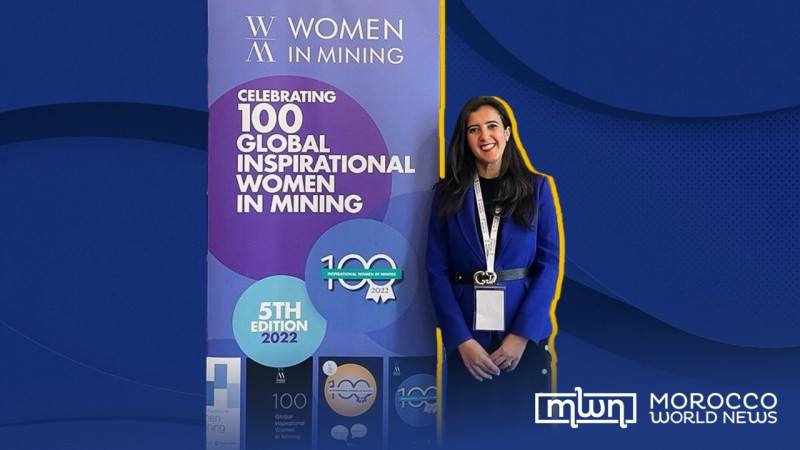
Women in Mining UK, an NGO dedicated to supporting women in the mining sector, selected CEO of OCP subsidiary DOOC Ibtissam Bensetti to feature in the 2022 “100 Global Inspirational Women in Mining” (WIM100) in recognition of her contributions to the global mining industry.
With this nomination, Bensetti became the first OCP personnel and Moroccan national to feature in the 100 Global Inspirational Women in Mining.
The NGO’s global top 100 list celebrates women’s contribution to the mining industry at all levels. The biennial publication stresses women’s skills and expertise in the global mining industry and celebrates role models for future generations.
Women inclusion in mining
The organization selects nominees based on different criteria, including creative innovation and sustainable working.
“A WIM100 woman offers proactive advocacy to those working in the mining industry and beyond. She empowers her colleagues to ensure everyone feels heard, welcomed, and respected,” the NGO said.
Bensetti has been able to take her place in the WIM100 for her leadership in OCP as a CEO at the group’s subsidiary DOOC, which specializes in industrial operations consulting, safety, and sustainability.
Having joined OCP in 2012, Bensetti has more than a decade of experience in the mining industry at different levels, particularly in sustainability roles in mining and chemical industrial operations, as well as corporate development.
Carrying the spirit of women’s empowerment during her journey, Bensetti has been working on spreading that spirit among her team members, particularly women, through supporting OCP’s female talent as well as increasing the number of women in management.
Delighted to be part of the WIM100 list, Bensetti stressed her emphasis and belief in women’s talents.
“In my mind, there is no impenetrable fortress for women, women can defy the norms and pursue a career in any industry,” she said, conveying her encouragement and endorsement for the inclusion of women in the mining industry.
The CEO acknowledged that the industry might have been a male-dominated industry but claimed that that’s in the past thanks to global efforts seeking to ensure gender equality at different levels. Women make up between 8% and 17 % of the global mining workforce, a McKinsey report has found.
The report also identified, however, several reasons and challenges that prompt women’s exit from the industry.
“The top reasons for leaving the industry are feeling that work is no longer intellectually challenging and having the perception that there are fewer advancement opportunities than there are for their male colleagues,” the report stressed.
Appointment and education
Bensetti was appointed as CEO of DOOC in June 2021 to replace Hamid El Mahfoudi, who retired.
She joined OCP a decade ago, filling positions related to strategy, corporate development, and industrial operations.
Graduating from Telecom Paris in 2004, Bensetti amassed 18 years of experience in management consulting, industry managing, coaching, and leading teams in transformation journeys.
Bensetti is also a graduate of The World Business Council for Sustainable Development’s LEAP Program, a one-year sustainability training program that seeks to empower women and help advance their positions and careers.
Having gender equality as a center of focus during her career, Bensetti is determined to continue her battle to help empower women in the mining industry.
“Being a woman engineer in industry, I have been fighting this battle all my life,” she wrote on her LinkedIn bio.
After his recent achievement, El Bakkali became the “king of steeplechase.”.
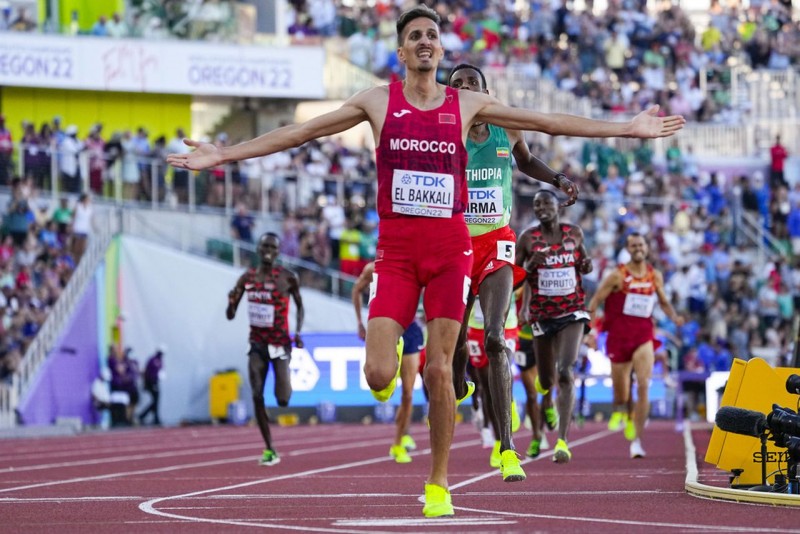
King Mohammed VI sent on Tuesday a message to Moroccan steeplechase runner Soufiane El Bakkali, congratulating him on winning the gold medal at the World Athletics Championships held in Eugene, US.
The Moroccan athlete brought Morocco its first gold in the 3,000m steeplechase in this year’s World Championships, ending Kenya’s 15-year reign in the discipline at the international competition.
The King expressed his appreciation for El Bakkali’s achievement, saying that the Moroccan athlete “was able, thanks to his competitive spirit and patriotism, to achieve this well-deserved victory.”
“As we commend this well-deserved global crown, with which you raised the flag of Morocco in this prestigious international event, we wish you success in your rich sporting career, covered by our generous sympathy and satisfaction,” the King added.
A teary-eyed El Bakkali raised the Moroccan flag after his triumph, telling the media he was dedicating this win to King Mohammed VI, his parents, and to all the Moroccans who have shown him endless support and encouragement.
Several international media reporting on El Bakkali’s recent achievement described him as the “king of steelechase” after claiming world title.
He added, “After the semi-final I had a good look at the strategy of the Kenyan athletes. I was on my own, the only Moroccan in the race, but I did not limit myself to winning silver nor bronze. Instead I managed to come first in two world league meetings and now the World Championship.”
El Bakkali began earning his first medals at international events at the 2017 World Championship in London, where he placed second, before finishing first in the 2018 Mediterranean Games in Spain.
In August 2021, Soufiane El Bakkali gave Moroccans a moment of pride after his historic achievement at the Olympics, ending Kenya’s dominance over the men’s 3,000m steeplechase and winning the gold medal at Tokyo 2020.
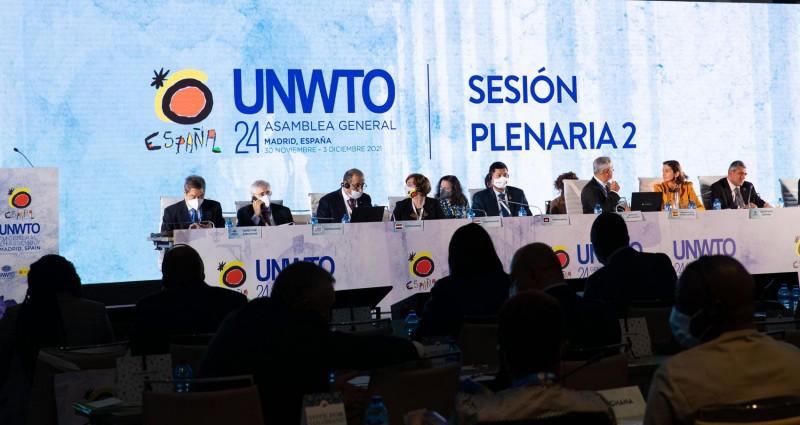
Morocco’s bid to host the first African office of the World Tourism Organization (UNWTO) was ratified at the 24th session of the Organization’s General Assembly.
The bid was approved amid strong competition from four other African countries, and UNWTO’s first regional office will open in Marrakech.
Morocco’s bid to host the first African office of the World Tourism Organization (UNWTO) was ratified at the 24th session of the Organization’s General Assembly.
The bid was approved amid strong competition from four other African countries, and UNWTO’s first regional office will open in Marrakech.
Ammor led the Moroccan delegation at UNWTO’s General Assembly, which was attended by more than 500 government officials and several tourism professionals from member countries.
Morocco’s participation shed light on the village of Sidi Kaouki in the province of Essaouira as “Best Tourism Village 2021.”
The seaside village of Sidi Kaouki was selected from more than 170 villages from 75 countries, echoing Morocco’s continuous efforts to build an eco-friendly destination for global tourism.
source/content: moroccoworldnews.com
___________
UNWTO Regional Office for Africa to Open in Marrakech. Credits: UNWTO
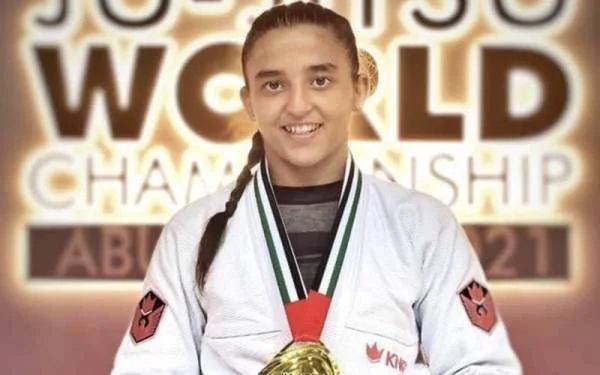
Amal Amjahid. Athlete. Martial Arts. Jiu Jitsu Sports. Represents Belgium.
Belgian-Moroccan Jiu-Jitsu fighter Amal Amjahid , won on November 13 her 9th world champion title after defeating the French fighter Laurence Cousin Fouillat in the 2021 World Jiu-Jitsu Championship finale.
The 26-year-old secured the title in the “below 57 kilos” category with a victory by advantage following a score of 2-2.
Amal Amjahid began Jiu-Jitsu at the age of 7 in Brussels. From 2013 to 2019, she won many world titles and medals in various competitions such as the World Games, the Grand Slam Tokyo, and the European Jiu-Jitsu Championship