Arabs & Arabian Records Aggregator. Chronicler. Milestones of the 25 Countries of the Arabic Speaking World (official / co-official). AGCC. MENA. Global. Ist's to Top 10's. Records. Read & Enjoy./ www.arabianrecords.org
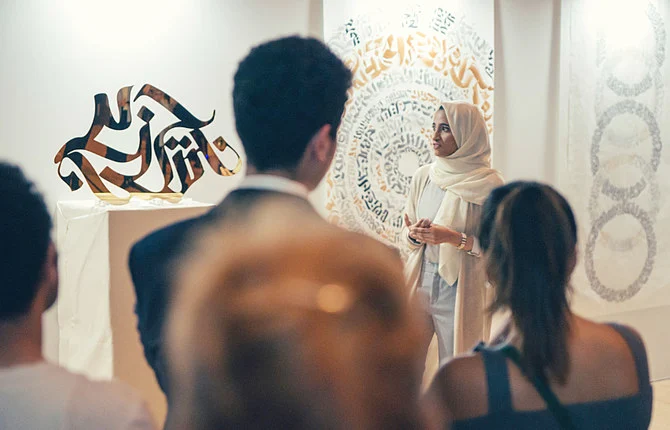
Mawadah Muhtasib, an emerging Saudi artist who reversed the typeface of the Arabic language, is well on her way to becoming a prominent name in the global art scene.
From learning her mother’s technique of writing backward at age 13 to exhibiting in London and New York City, Muhtasib has generated international intrigue in the art of Arabic by creating the first reversed Arabic calligraphy, or calligraffiti, typeface.
Her messages are not only meant to be read, but are also designed to be deciphered. Engaging her audience with the challenge of decoding letters is a large part of experiencing the artwork itself.
“It’s about expanding your human capabilities into creating the impossible. And this is exactly what I have been trying to do,” she told Arab News in an exclusive interview.
FASTFACT
The Arabic language is one of the richest art forms, the artist says, but in modernity, it is difficult to appreciate the depths of something that has become so ordinary.
Born out of a quest to layer the heritage of Arabic letters with innovative graffiti art methods, her work dares to be the first of its kind, granting her Dubai’s Art Bus competition award and a chance to show her work at exclusive showcases.
As graffiti art surged in popularity in 2013, Muhtasib experimented with mural painting alongside a novel group, hoping to develop a boundaryless form of art.
With a vision to modernize the traditional, she created a decorative typeface that mixed Arabic and Latin, written from left to right.
It’s about expanding your human capabilities into creating the impossible.
Mawadah Muhtasib
Muhtasib said: “We are so used to Arabic calligraphy when it comes to Thuluth calligraphy, Al-Kufi, Al-Naskh, and so on, and we just read that way and pass it on.
“When I’m doing my Arabic calligraphy, people sit and stare at my work for hours trying to figure out what these letters are, and the moment they realize it’s Arabic, they start to analyze and see all these letters in a different form that we as Arabic speakers are not used to.”
The Arabic language is one of the richest art forms, the artist says, but in modernity, it is difficult to appreciate the depths of something that has become so ordinary.
The goal is not only to get the viewer to read but to actively reflect on the beauty and form of each stroke and letter within the alphabet.
Muhtasib now passes on her craft through community workshops exclusively for women, most recently at Saudi’s largest light-based festival, Noor Riyadh.
“In my workshops, I do not teach people to write in reverse … I’m basically giving you the key of how to use the tools of starting to practice in the form of Latin calligraphy,” she said.
As soon as students understand the anatomy of the font family, Muhtasib introduces slanted brushes, layering techniques and stroke pressure. From the first session, students are sent home with a new creative form of expression. “The soul of a person is laid out on a page,” she said.
Writing in reverse is not new; the artist’s mother passed down the habit after having to write backward to maintain privacy at work. Alongside that, she passed down her passion for creative innovation.
While most calligraphers in the Kingdom were mimicking Western methods, Muhtasib, at 16 years old, was inspired and encouraged by Tunisian artist eL Seed and Saudi Moroccan artist Shaker Kashgari.
“I took that trick that my mom taught me years ago on how to write and then I changed it into a decorative typeface,” she said.
The concept was designed to preserve the rich heritage of the Arabic language. For foreigners, it offers a chance to engage in the language and learn its history.
“This is Arabic calligraphy in reverse that I took, improved, adjusted and made into a different form. But viewers will also wonder how it actually looked like (originally) and this will make a lot of people go in-depth and learn more about Arabic calligraphy,” Muhtasib said.
The philosophy behind the Typeform has gained interest from international luxury brands such as Louis Vuitton, Carolina Herrera, Montblanc, Sephora and more, resulting in several collaborations.
Muhtasib urges creators to push the boundaries of art and culture.
With calligraphy, “your sky’s the limit,” she said.
source/content: arabnews.com (headline edited)
____________
Mawadah Muhtasib now passes on her craft through community workshops exclusively for women. (Supplied)
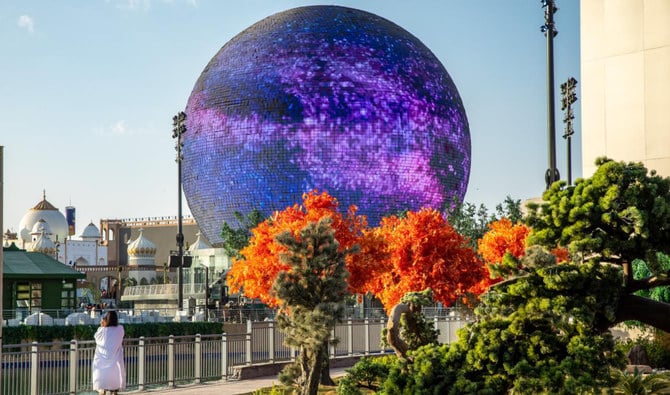
A new modern landmark in the capital of the Kingdom, the Light Ball, has been named by Guinness World Records as the largest illuminated LED ball in the world, with an estimated height of 35 meters.
Located at Boulevard World, the exterior of the ball emanates bright lighting that flickers in different patterns, while the interior boasts a 220-seat theater equipped with state-of-the-art features.
Guests can recline in their seats facing a 360-degree circular screen. The short films presented in the theater are five minutes long, with varying genres suitable for families to enjoy. The shows run every 30 minutes daily from 3:30 p.m. to 10:30 p.m.
In addition to cultural experiences, Boulevard World includes the largest artificial lake in the world. Visitors can take part in boat and submarine rides in the lake — a first for Riyadh Season.
There are also distinctive entertainment options, such as Combat Village, Super Hero, the largest sphere in the world and cable car trips between Boulevard World and its neighboring zone, Boulevard Riyadh City.
The zone offers visitors other entertainment experiences as well, such as Boulevard Pier, Discovery, Realistic Monopoly, The Mountain, Area 15, Ninja Warriors and Fun Zone for children.
source/contents: arabnews.com (headline edited)
___________
Located at Boulevard World, the exterior of the ball emanates bright lighting that flickers in different patterns, while the interior boasts a 220-seat theater equipped with state-of-the-art features. (Supplied)
Aid constitutes 1.05 percent of Saudi Arabia’s gross national income, says KSrelief chief.
Supervisor General of the King Salman Humanitarian Aid and Relief Center Dr. Abdullah Al-Rabeeah said that Saudi Arabia ranked first among donor countries in offering official development assistance (humanitarian and development) to low and medium-income countries, with a total of SR26.71 billion ($7.12 billion), according to data published by Development Assistance Committee of the Organization for Economic Cooperation and Development.
The data showcased the official 2021 development assistance offered by donor countries — member states and states with associate memberships at DAC, where the Paris-based committee is considered the biggest forum.
In a statement published by the Saudi Press Agency on Monday, Al-Rabeeah said that this assistance constitutes 1.05 percent of Saudi Arabia’s gross national income.
He added that by this proportion the Kingdom has topped the donor countries and surpassed the target approved by the UN General Assembly in October 1970 that donor countries should allocate a 0.7 percent of their gross national income as official development assistance while seeking innovative sources of financing development in developing countries.
KSrelief is exerting relentless efforts to register Saudi Arabia’s humanitarian and development assistance in the Saudi Aid Platform launched by King Salman in 2018, where assistance is documented in cooperation with relevant Saudi ministries and departments to highlight the Kingdom’s humanitarian and development identity, he said.
Al-Rabeeah expressed appreciation for the efforts of these agencies in documenting and recording the assistance provided by Saudi Arabia to the countries of the world through international platforms in accordance with internationally approved standards.
“The directives of King Salman and Crown Prince Mohammed bin Salman have contributed to this big achievement that put Saudi Arabia at the top of international humanitarian action,” he said.
Concluding his speech, Al-Rabeeah extended his appreciation and gratitude to the Kingdom’s leadership for its unlimited support and concern for humanitarian action, which ensure Saudi Arabia maintains its prestigious global status in this field.
source/content: arabnews.com (headline edited)
____________
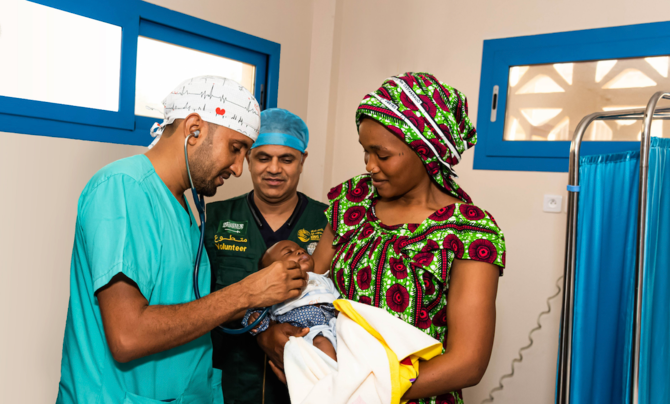
Beneficiaries of a KSrelief medical project for open-heart surgery and catheterization in Mali can be seen. (KSrelief)
The celebrated pharmaceutical chemist, nano engineer and inventor reveals why she has spent a career focusing her mind over matter.
When the Berlin Wall came down, Adah Almutairi watched the event unfold on a television screen 5,000 kilometres away in the family living room in Jeddah.
Too young at the time to fully understand the implications, 12-year-old Adah could nonetheless tell that the moment was significant, by the reaction of her parents.
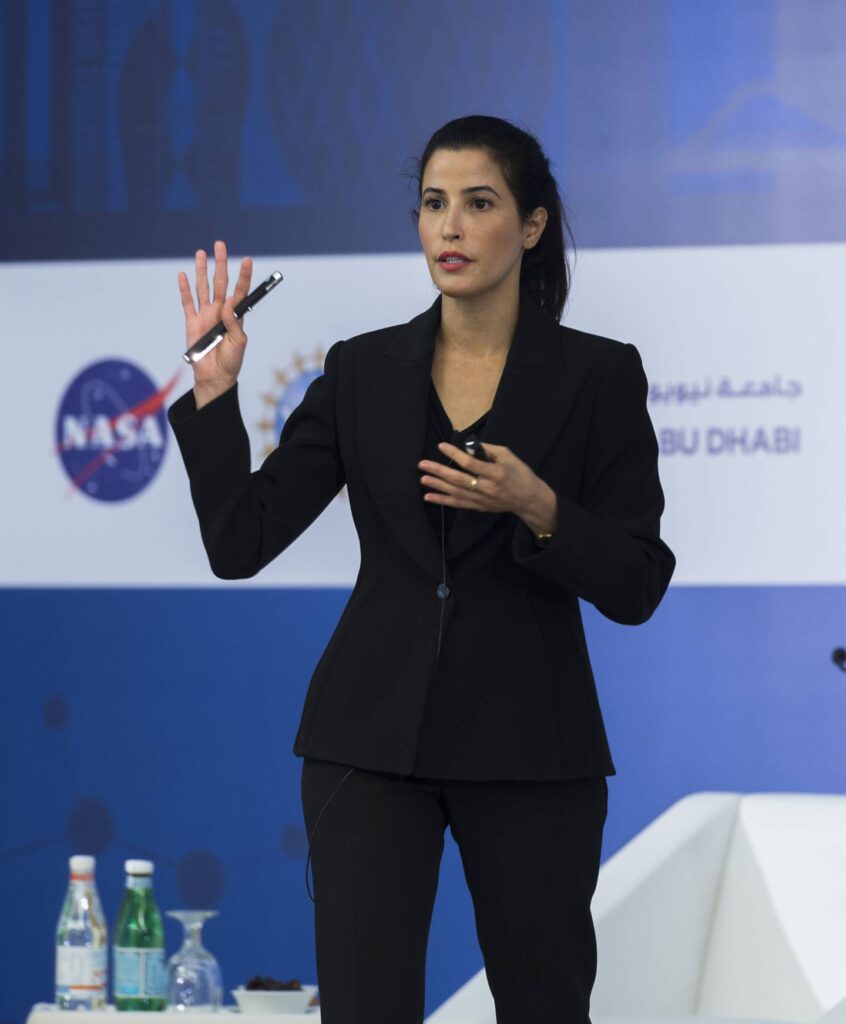
Years later, at a conference to mark the 25th anniversary of the reunification of Germany, Ms Almutairi was on a stage in Berlin talking about her ground-breaking achievements in knocking down walls in science.
Back then, public speaking made her nervous. The knowledge that Chancellor Angela Merkel, a fellow chemist revered by Ms Almutairi, was among the 700 top international scientists and guests taking part merely compounded the feeling.
She broke the ice with a quote from the 1967 romantic comedy drama The Graduate, which earned her a laugh from the audience: “I just have one word to say,” she told them. “Just one word. Are you listening? Are you listening? Plastics.”
Ms Almutairi went on to describe herself as a plastics chemist, but she is much more besides. Her wide-ranging work combining materials chemistry with nanotechnology as well as developing tools for the future of biology and medicine makes her in great demand at conferences in the US, Europe, the Middle East and China.
The Saudi-American pharmaceutical chemist and nanomedicine engineer has won all manner of honours and recognition, including the prestigious and lucrative National Institutes of Health director’s new innovator award.
At the Falling Walls event, she gave an engaging, if sometimes faltering, presentation of her life-changing nanoparticle discovery feted in the US Congress as one of the four most important US technology breakthroughs of 2012.
“I used to be a nervous wreck before I gave a talk and would practise for two weeks beforehand,” she tells The National. “Plus, Angela Merkel is such an amazing woman, so meeting her was really special.
“She got elected just as I got my degree in chemistry and the way she spoke at that conference, and later welcomed so many Syrians into Germany, made me really respect her views on being kind citizens.”
With practice, Ms Almutairi, now 45, is much more comfortable as a public speaker. “Preparation,” she says, “is key.”
It was a lesson she learnt as a schoolgirl after a fluffed first gymnastics performance before a crowd left her sobbing on a bench. Determined never to repeat the same mistake, she rose to become the top gymnast on the team as well as the fastest 1,500-metre runner.
Preparedness forms the backbone of her professional life as she puts known scientific truths into practice while always remaining open to unexpected outcomes.
Discoveries and their effects, she and Ms Merkel wholeheartedly agree, can often surprise the scientists and engineers themselves.
“If you decide there is going to be a challenge down the road and that is going to deter you, nothing will happen,” she says. “If you go down that road anyway, you’ll solve the problem when you get there.”
No amount of planning, though, could have readied her for a year when the rug was pulled out from beneath her feet. In 2015, her beloved father died at the age of 65 and her 20-year marriage to a banker she met at university fell apart.
It was, she says, a painful time – not least because Mutlaq bin Abdul Rahman Almutairi, born into a traditional Saudi family, was his daughter’s greatest ambassador, enabling her to break free from what could have all too easily been a restrictive mould.
He was just five years old and still mourning his mother’s death when his own father packed up their goat-hair tent, strapped their few possessions to the back of a camel and made the arduous 100km journey from the Bedouin desert enclave of Al Harra to seek work and a new life in Jeddah.
Desperately poor, the family squatted on land and, when old enough, the enterprising Mutlaq enrolled himself and his younger sister in school.
His conservative father, who could not read or write, was furious and sent his daughter home. Mutlaq stood his ground and continued with his education – a moment that shaped the course of his own future and subsequently that of his five children.
“Sometimes in life, one decision changes everything,” Ms Almutairi says.
Mutlaq’s offspring have flourished in their respective fields of science and medicine. Khalid, 46, a plastic surgeon, Heba, 38, a professor in radiology, and Ahmed, 37, a dentist, still live in Saudi Arabia while Amer, 41, a professor in family medicine, is based in Houston.
Ms Almutairi was named recently on the Forbes list of the world’s Top 10 Influential Female Engineers, and often thinks of the debt owed to a father who championed her right to education.
The stance made him something of an anomaly among the Almutair tribe, whose roots can be traced back to the Quran.
“It still makes me emotional,” she says. “He was enlightened from God.
“No one around him was educated. He was the first in his entire family to learn how to read and write and go to college.
“My father and grandfather got into a lot of fights because my grandfather did not believe women should be educated.”
While she inherited drive and motivation from her father, a love of learning was instilled at a young age by her mother Najat, who, aptly enough, was a teacher.
“My family on my mother’s side were extremely well educated and my mother is very well read,” she says.
Indeed, her parents met because Mutlaq had become besotted with Ms Almutairi’s great-aunt Hilal, an intellectual who was one of the first dentists in Saudi Arabia.
Despite the 20-year age gap, he approached the family to ask for her hand in marriage but was advised instead to wed the daughter of Hilal’s brother, with whom he would build a strong bond.
“My father appreciated a smart woman,” Ms Almutairi says. “He didn’t go after the young, pretty girl. He initially went for the older woman he enjoyed talking to.
“Now when I think back, I realise how special and unique he was, and how much respect he had for women.”
Mutlaq studied criminology and justice administration in Portland, Oregon, where Adah Almutairi was born, before returning to his homeland to become a police investigator.
The young Adah attended international schools in Jeddah and Riyadh, excelling not only at sport but in maths and science.
On leaving school at 16, she was at a loss as to what to do next. Her mother was applying for teaching posts so, on a whim, Ms Almutairi submitted an application to Najd National School in Riyadh – and surprised everyone, including herself, by landing a job teaching English.
“I didn’t have a degree, and when the headmistress realized how young I was, she said: ‘Don’t tell anyone, just put some lipstick on.’
“It was the best job ever. I loved every minute of it. I had such a connection with the girls. I used to take in copies of my mother’s Reader’s Digests and make up writing exercises around them.”
A year later, she began applying to universities. King Abdulaziz University in Jeddah turned her down but she secured a sports scholarship to Occidental College in Los Angeles, Barack Obama’s alma mater.
The opportunity once again put her father at loggerheads with her grandfather and members of the Almutairi clan, who did not think a young woman should travel overseas alone. Unperturbed, Mutlaq sent her anyway, even though he and Najat had doubts about her choice of subject.
The couple wanted her to be a doctor but Ms Almutairi chose maths as her major before switching to chemistry in her second year.
The lightbulb moment came when her tutor, the widely loved chemistry professor Tetsuo Otsuki, told her she was “a diamond in the dirt”.
“He made me feel smart and capable, and worth being taught,” she says.
“I have twice been told the phrase: ‘You remind me of myself’. It is one of the nicest things you can say to a young person if they look up to you. It really sat in my heart.”
Chemistry appealed because it was based on “concepts where once I wrapped my head around them, I could use them in so many ways”.
A scholarship to continue her studies at the University of California, Riverside, led her to create lightweight plastic polymers, or molecules, capable of conducting electrons that had uses in everything from robotics to space research.
“Around that time,” she says, “Hideki Shirakawa was winning the Nobel chemistry prize for his work with conductive polymers, and both Nasa and Walt Disney were funding and supporting that work.”
She may not have become a doctor of medicine as her parents had wished, but Ms Almutairi did turn her attention to the field during postdoctoral studies at the University of California, Berkeley, where she worked with Jean Frechet, a chemist innovating in the area of in-vivo imaging to diagnose disease.
After being turned down for jobs in Saudi Arabia, she took up a post at the University of California, San Diego, going on to lead an interdisciplinary research group at the Centre for Excellence in Nanomedicine and Engineering.
Perhaps one of Ms Almutairi’s proudest moments was collaborating with an ophthalmologist for a decade to come up with a way to regenerate failing retinas and prevent blindness.
“That particular innovation is now commercialised and makes me feel really good about myself,” she says. “I enjoy all sorts of application materials but medicine is especially rewarding. I like to solve problems and have a positive impact on the world.”
Her work with lanthanides – popularly classed as rare earth elements but actually, she says, abundant – involves a chemical reaction that could be applied to the delivery of drugs and diagnostics in medicine but also solar energy harvesting.
She has more than 100 patents registered, including one with her brother Khalid to use gold molecules in liposuction.
“My work is very rewarding,” Ms Almutairi says, “and my father was very proud of me. When I became well known in the US, it was a big moment because the people who were criticising him for sending his daughter away were the same people congratulating him.”
A strong proponent of the “health is wealth” philosophy, she may no longer run, but she does lift weights regularly and spends time in the garden with her 10-year-old son cultivating avocados, figs, and citrus trees, and growing aubergines, tomatoes and cucumbers.
She has visited Saudi Arabia many times to see her family and speak at conferences. One in particular that has stayed with her was a graduation speech at Princess Nourah bint Abdulrahman University in Riyadh.
There was no film quote for these graduates of the largest women’s university in the world. In a clear voice, without a hint of nerves, she instead passed on the words of that staunch defender of her own access to education.
Remain forever curious about the world, she told the audience, and live a meaningful life with impact.
It was clear that the woman of substance standing before them had been shaped by her father’s advice. She didn’t need to ask if they were listening.
The Saudi Arabian-American pharmaceutical chemist and nanomedicine engineer is in great demand at conferences in the US, Europe, the Middle East and China. Photo: Adah Almutairi
Saudi Arabia was first vice-chair of the executive council for 2022.
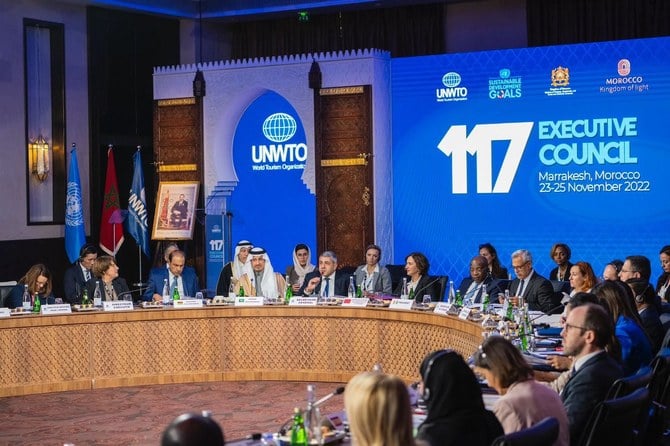
Saudi Arabia’s Ministry of Tourism has announced the election of the Kingdom as chair of the executive council of the United Nations World Tourism Organization for 2023.
The announcement was made at the 117th session of the organisation’s executive council being held in Marrakesh, making the Kingdom the first Gulf country to hold the post.
“The Kingdom is honored to be elected as chair of the World Tourism Organization’s executive council and we believe in the importance of the organization’s pioneering role. We look forward to cooperating with all countries to support and develop the global tourism sector,” the Minister of Tourism Ahmed Al-Khateeb said.
He added that the Kingdom has been an active member of the organization by launching initiatives, supporting new ideas, and opening the organization’s first regional office in Saudi Arabia to promote its agenda and work in the Middle East and beyond.
“At the heart of the UNWTO is a desire to promote tourism as a catalyst of economic development, which Saudi Arabia wholeheartedly supports. We have committed $800 billion of government investment into the Saudi tourism industry by 2030.
“Our imperative is that the development we seek, both as a nation and globally, is sustainable, inclusive and resilient. That’s how we will address the fast-changing needs of businesses, communities and the planet,” Al-Khateeb said.
As chair, Saudi Arabia will set the agenda for all meetings, ensuring that it captures the most pressing issues and concerns for the tourism industry. It will facilitate and moderate meetings effectively, chair dialogue and encourage actionable outcomes.
More than 9,000 people signed up online to learn first aid within 24 hours of the campaign launching.
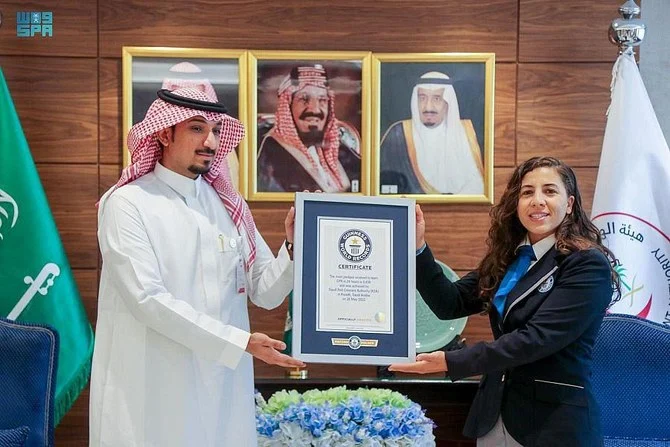
The Saudi Red Crescent Authority has received a Guinness World Record for its “Saving a Soul” awareness campaign after 9,836 people signed up to learn first aid within 24 hours.
More than 9,000 people signed up online to learn first aid and how to use automated external defibrillators within 24 hours of the campaign launching, Saudi Press Agency reported.
Spokesperson for the Saudi Red Crescent Authority, Abdulaziz Al-Suwaine, said the campaign was held at Riyadh Front and witnessed a big turnout from both citizens and residents who showed true willingness to learn first aid and ways to use AEDs.
The authority has installed defibrillators in several public places to help save lives, he added.Al-Suwaine said the campaign’s success in attracting such a large number of people in a short amount of time shows how responsible Saudi society is and the will of its individuals to be influencers at the humanitarian level.
source/content: arabnews.com (headline edited)
___________
The Saudi Red Crescent Authority receives a Guinness World Record for its “Saving a Soul” awareness campaign. (SPA)
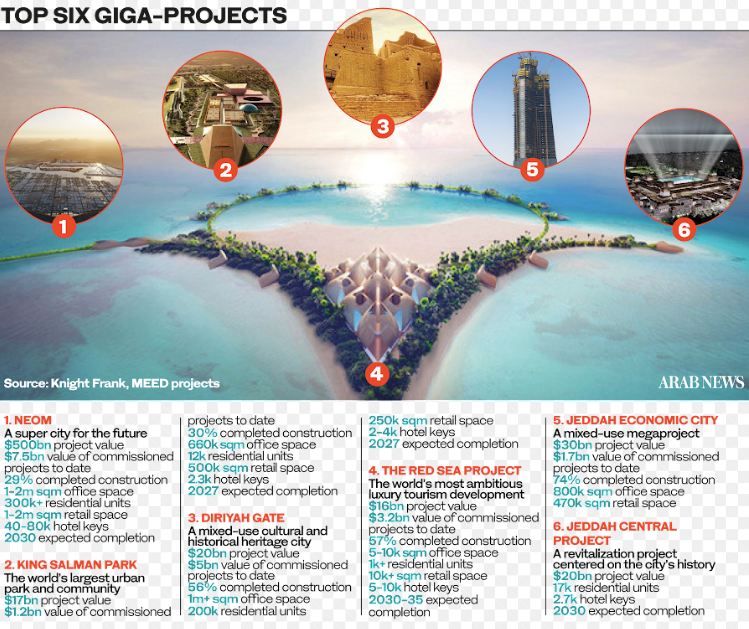
Following the launch of Saudi Arabia’s Vision 2030 in 2016, the Kingdom is on its way to becoming the world’s biggest construction site with a total investment of SR4.13 trillion ($1.1 trillion) in infrastructure and real estate projects, according to global real estate consultancy Knight Frank.
The real estate firm projected that Riyadh’s population will reach 17 million by 2030, up from about 7.5 million today. The city has unveiled real estate projects worth $104 billion since the Kingdom’s National Transformation Plan launch in 2016.
“Vision 2030 has lit the embers of excitement across the Kingdom, and with NEOM positioned as a crown jewel in the transformative plans, people are eager to be part of history,” Faisal Durrani, partner and head of Middle East research, Knight Frank told Arab News.
Saudi Arabia will easily become the largest construction site in history, with planned construction projects in the Kingdom being over 555,000 residential units, over 275,000 hotel keys, over 4.3 million square meters of retail space, and over 6.1 million square meters of office space, Durrani said.
The consultancy firm is currently monitoring 15 giga-projects in the Kingdom, many of them new standalone supercities, said Harmen de Jong, partner and head of real estate, Strategy& Consulting in the Kingdom.
NEOM is expected to house 9 million residents across 300,000 new homes once completed, making it the largest giga-project announced to date, Jong added.
Among 1,000 Saudi households surveyed, Diriyah Gate came third in popularity as a place to own a home, behind NEOM and The Red Sea Project.
NEOM is radically redefining urban living in resource-poor regions, Durrani said. At the same time, sub-cities like the Octagon, Trojena and the Line will set new benchmarks for luxury living in the area.
Around 30 percent of Saudi homeowners are prepared to spend more than $800,000 on a second home at NEOM. “Developers have their work cut out to satisfy this pent-up demand,” Durrani added.
De Jong said that the construction progress of part of the projects stands at 29 percent, with only $7.5 billion of subprojects being commissioned.
Riyadh’s rebirth
Another head-turning giga-project is the $20 billion Diriyah Gate which will give Riyadh 20,000 homes when it is completed in 2027, creating a city-sized historic district.
Knight Frank estimated that about $2.3 billion had been spent on Diriyah Gate’s construction.
“Not to be outdone, Riyadh’s repositioning as a commercial nerve center of the Kingdom is well underway. And businesses from the world over are already clamoring to be at the center of the Middle East’s second and much-needed global hub,” Durrani said.
Durrani added that the planned development of 2.8 million square meters of world-class office space could not come at a better time with Grade A office occupancy levels hovering around 97 percent across the city.
According to Knight Frank, an international airport worth $147 billion is also set to open shortly. Nearly 74 percent of the $200 billion national infrastructure investment goes toward the new airport.
“The city is also attracting a huge number of internal migrants, and with readily available support to get on the housing ladder, house prices are rising rapidly and currently stand some 26 percent higher than this time last year,” he said.
Well-being hub
The Kingdom is also improving and providing world-class urban environments for its residents with the $500 million Riyadh Sports Boulevard and the $23 billion Green Riyadh, planting 7.5 million trees in the Saudi capital to transform it into a green, vibrant metropolis.
It also extends to the 19,000 hospital beds planned for $13.8 billion, of which $8.6 billion will be spent in Riyadh Province alone.
According to de Jong, over 80 new educational institutions are being constructed for $82 billion.
“What’s more, healthcare, education and well-being sit at the core of the transformative plans, which will contribute to an extraordinary evolution in the Kingdom’s physical realm, making it unrecognizable from what we see today by the end of the decade,” Durrani said.
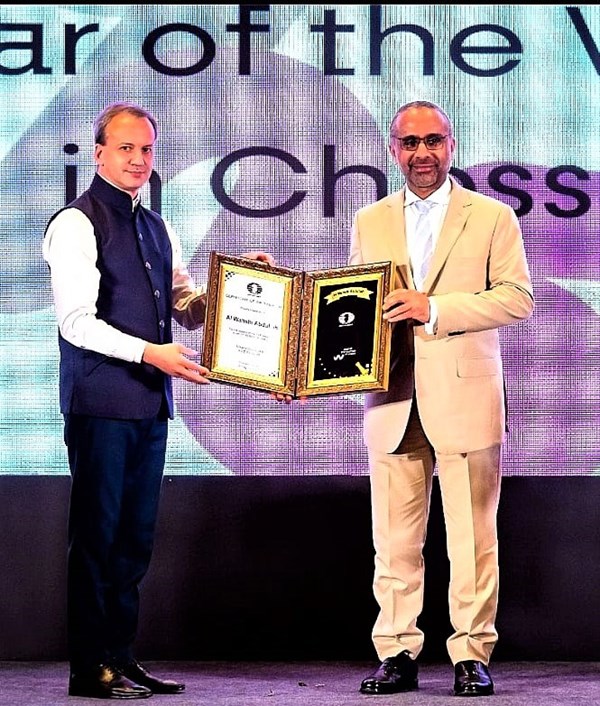
Saudi Arabia has become the first Arab country awarded a place on the advisory board of the International Chess Federation, the Saudi Press Agency reported.
The seat will be filled by Abdullah Al-Wahshi, the president of the Saudi Chess Federation.
“The weight of the Kingdom of Saudi Arabia and its position in all fields has a role in joining this advisory council, as our country has previously organized ably and with great success for a period of time,” said Al-Wahshi as he thanked the country’s leaders for their unwavering support for all sports and activities.
“From 2017 to 2019, the King Salman International Cup Rapid and Blitz Championship marked an unprecedented (chess) event with the participation of most countries of the world. This achievement raised the status of Saudi chess, leading to the Kingdom’s participation in the World Chess Olympiad in India and obtaining four international … titles.”
The advisory board, the International Chess Federation’s highest advisory authority, oversees all of the organization’s decisions and regulations.
source/content: arabnews.com
____________
Arkady Dvorkovic, President of the International Chess Federation with Abdullah Bin Salem Al-Washi, President, Saudi Chess Federation / pix: trixabia.com
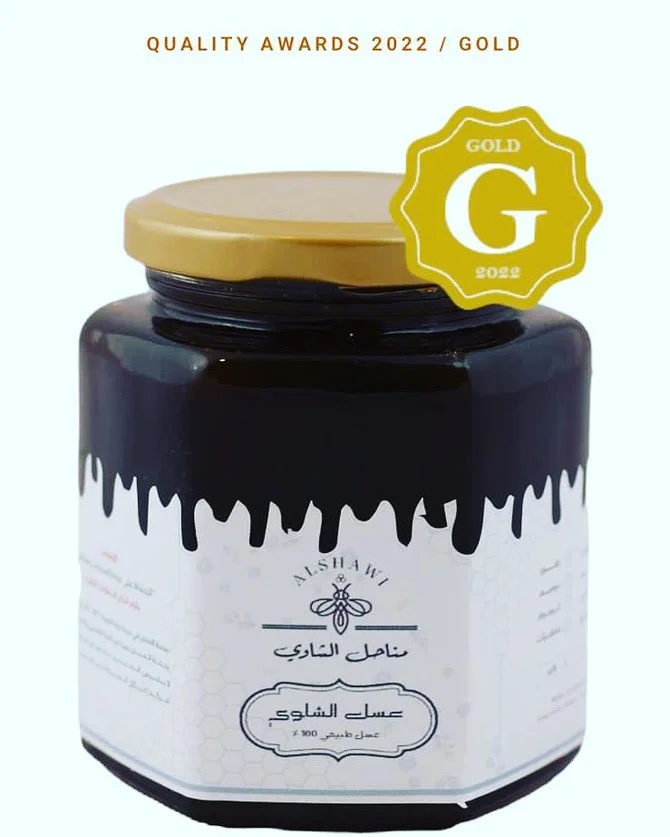
A female Saudi beekeeper is tasting sweet success on the international stage after winning a gold medal for her honey in a prestigious global competition.
Businesswoman Norah Shawi Al-Shimmari, from the Hail region, scooped the accolade for best-quality talah (acacia) honey in the world at the London Honey Awards.
It was the first time the enterprising apiarist had taken part in the awards scheme, and she told Arab News: “Winning was one of my biggest wishes for this year. I could not believe it at first, to win is a wonderful feeling.
“It gave me a great boost to keep the good work up and participate in more competitions.”
The annual London Honey Awards competitions aim to inform honey-growers, producers, beekeepers, processors, and retailers, who distribute their standardized products legally, to preserve and ameliorate the quality of their branded items by promoting high-quality honey products in all aspects of its use and consumption.
Al-Shimmari is the only female honey farmer in Hail and is known in the Kingdom as “the beekeeper of the north.”
She and two other award winners were recently honored for their achievements by Hail Deputy Gov. Prince Faisal bin Fahd bin Muqrin.
It was while exhibiting at an event in Riyadh that she was urged to enter the London Honey Awards. “I was highly encouraged by one of my beekeeper colleagues, and I am so grateful for him and his recommendation and all the help he offered.”
Al-Shimmari runs her business from Al-Khita village, on the outskirts of the city of Hail, and moves her hives on a daily basis to different locations in the area to allow her bees access to colorful and nectar-rich athel, sidr, and acacia flowers.
Acacias are distinguished by their small, often fragrant yellow, and occasionally white, flowers, that have many pollen-producing stamens and a fuzzy appearance.
To win her award, Al-Shimmari’s honey was laboratory checked for humidity levels, sucrose and glucose content, texture, and other factors. Samples were then evaluated by a jury panel, with each judge conducting an organoleptic taste analysis and marking the product based on criteria such as appearance, odor, and flavor.
Up against competitors from around the world including the UK, China, Saudi Arabia, and other Middle Eastern countries, she said: “The competition was huge, and my winning was a surprise and a shock.
“Beekeeping is about persistence and being eager to produce distinguished honey. However, my goals do not stop here. I would like to walk a steady journey; I am still dreaming of more success and achievements. This is just the beginning. I want to see my products everywhere worldwide.”
Al-Shimmari has been in the honey trade for more than five years producing 11 different products, and she recently launched a skincare line made of organic honey and honeycomb materials.
Last year, she was the only woman among 33 beekeepers who took part in the Hail Honey Festival. The event helps apiarists market their products, while increasing investment opportunities.
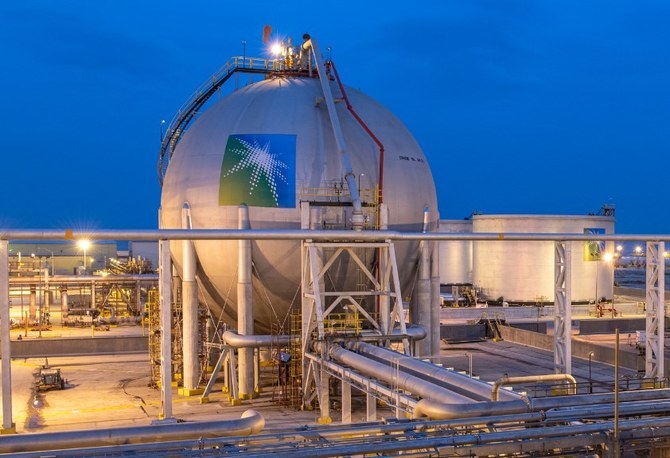
Saudi Aramco has been named one of the top 100 global innovators by American analytics company Clarivate.
In its report titled “Top 100 Global Innovators 2022,” Clarivate revealed that Saudi Aramco is the first-ever company from the Middle East and North Africa region to be placed in the list.
“The regional diversity continues to increase, with the first-ever Middle Eastern list entry via energy firm Saudi Aramco,” wrote Clarivate in the report.
Apart from Saudi Aramco, other new entrants to the list are China’s Alibaba, Germany’s Continental, US’ General Motors, South Korea’s Hyundai Motors and Kia Motors, US’s Philip Morris International, and UK’s Rolls-Royce.
Clarivate added that companies have been included in the list based on factors like influence, success, globalization, and technical distinctiveness.
source/content: arabnews.com (headline edited0
____________
Apart from Saudi Aramco, other new entrants to the list are China’s Alibaba, Germany’s Continental, US’ General Motors, South Korea’s Hyundai Motors and Kia Motors, US’s Philip Morris International, and UK’s Rolls-Royce.