Arabs & Arabian Records Aggregator. Chronicler. Milestones of the 25 Countries of the Arabic Speaking World (official / co-official). AGCC. MENA. Global. Ist's to Top 10's. Records. Read & Enjoy./ www.arabianrecords.org
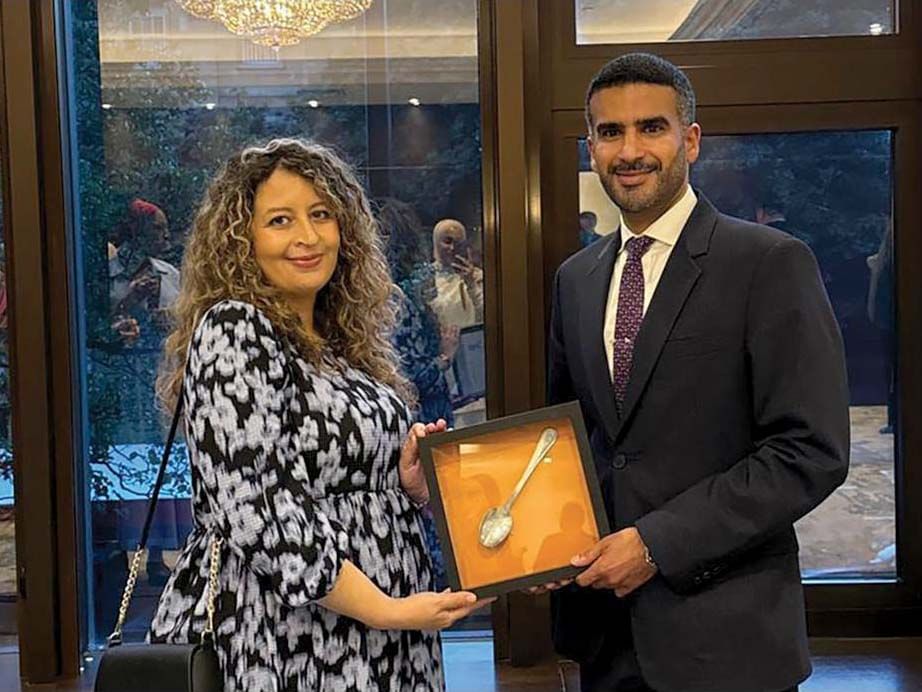
Counsellor Talal Ibrahim Al Absi, Diplomat with the Embassy of the Kingdom of Bahrain to the United Kingdom, has been elected President of the Young Diplomats in London (YDL).
According to the Bahrain News Agency, Counsellor Al Absi’s election marks the first time a GCC diplomat has held the presidency of the association since it was founded 17 years ago.
The association was established in 2008 to enhance ties between young members of diplomatic missions and international organisations accredited to the UK by organising cultural and social events, promoting understanding between peoples, and helping new diplomats integrate into the UK political, social and cultural scene.
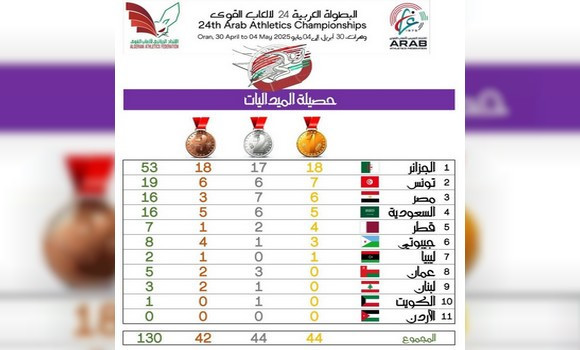
Algerian national team has won the title of the 24th Arab Athletics championships, wrapped up Sunday evening at the Miloud Hadefi Olympic Stadium in Oran (432-km west of Algiers), after collecting a total of 53 medals (18 gold, 17 silver and 18 bronze).
On the first day of the competition, the Algerian athletes won the majority of events, outclassing their opponents all along the championship.
On Sunday, Algerian athletes clinched 16 medals (7 gold, 4 silver 5 bronze), namely Ouanis Chaima (400m hurdles), Chentif Haithem (800m), Hocine Tarek (long jump), Ramdani Ouarchi (5000m) and the men’s and women’s 4 x 400m relay.
The silver medals went to Karkas Wissal (triple jump), Reffas Abid (women’s 1500m), Lamraoui Louai (men’s long jump), Boudjeltia Zakaria (5000m).
The bronze medals were won by Benkaci Manel (women’s 200m), Houma Sarah (women’s 400m hurdles), Ouaba Leiticia (women’s triple jump), Benyache Adem (men’s 200m) and Boukhamouche Saber (men’s 400m hurdles).
UNESCO has officially added 26 new cultural and natural sites in Yemen to its World Heritage Tentative List, marking a historic expansion that underscores the country’s enduring legacy as a cradle of ancient civilizations.
The newly listed sites span a wide geographic and historical spectrum—from the ancient cities of Ma’in and Tarim to the incense trade routes and biodiversity reserves in Hadhramaut. This brings Yemen’s total tentative entries to 35, reflecting its rich tapestry of archaeological landmarks, architectural marvels, and ecological treasures.
The nomination process was led by Yemen’s Permanent Delegation to UNESCO in collaboration with regional heritage organizations and a team of Yemeni experts. Despite the country’s ongoing humanitarian and political challenges, the effort signals a renewed commitment to preserving and promoting Yemen’s cultural identity on the global stage.
Mohammed Jumaih, Yemen’s representative to UNESCO, hailed the achievement as “a significant gain for Yemen’s heritage protection,” emphasizing that the recognition affirms the country’s historical depth and its contributions to human civilization.
From the towering mudbrick structures of Shibam Kawkaban to the ancient water systems of the Himyarite Kingdom, each site tells a story of innovation, resilience, and cultural exchange. The inclusion of these landmarks not only enhances global awareness of Yemen’s heritage but also opens doors for future conservation and tourism initiatives.
This milestone serves as a powerful reminder that, even amid adversity, Yemen’s legacy as a beacon of history and culture continues to shine.
Twenty-one-year-old swimmer, Ziyad Saleem, is one of four athletes representing Sudan in three disciplines at the Olympic Games in Paris.
Born in the United States, he says he’s proud to be racing in the 200m backstroke on behalf of his parents country.
“I’m super grateful, I’m excited to go back to Sudan, I was able to win gold medals at the African championships and also Arab, but I was never able to go back and kind of enjoy that with them,” he said.
Saleem add that the hopes to go back to Sudan “whenever Sudan’s back to normal”
The country was plunged into a civil war in 2023 which has seen hundreds of thousands of people displaced around the country and beyond its borders.
The young swimmer said he knows people back home are going through a lot and this has motivated him to be a positive factor, albeit for a short period.
“My own family has been displaced from Sudan to like Egypt and Ethiopia and different countries nearby, so I just know that they’re going through a lot,” he said.
“I’m just grateful that I have the opportunity to represent them and hopefully give them something to look forward to by my swimming.”
Also representing Sudan are 15-year-old 100m freestyle swimmer, Rana Hani, marathon runner, Yas Ezzeddine, and rower, Abdullah Al Araby.
source/conten: africanew.com (headline edited)
__________
US-born swimmer proud to represent Sudan, his parent’s country, at Olympics /africanews / youtube.com
As one of the Gulf countries, Iraq provided the setting for the final chapter of the five-part series Tribes of Arabia.
Produced by Kia Middle East and Africa, the series traced a journey across the Gulf, beginning in the United Arab Emirates, continuing through Saudi Arabia and Kuwait, and concluding in Basra and the Al-Ahwar wetlands.
The final episode features Eisa Alhabib of Kuwait and Abdulaziz Alfudhili of Saudi Arabia, who drove the beige Kia Tasman through Basra’s historic markets and along its waterways before entering the marshes.
The content influencers were introduced to the Marsh Arabs, also known as the Ma’dan people, whose way of life has been shaped for centuries by the wetlands.
Alhabib and Alfudhili stepped inside a traditional Mudhif, an arched structure built from reeds and rushes harvested from the marshes, and enjoyed Iraq’s popular Masqoof fish, prepared in the traditional riverside style.
By closing in Iraq, the series reinforced the country’s role within the Gulf region while celebrating the heritage of the Marsh Arabs and the ecological significance of the southern wetlands.
Following its screening, Kaouther Ben Hania’s film The Voice of Hind Rajab (2025) received a 22-minute-long standing ovation — the longest in the Venice Film Festival’s history – culminating in theatre-wide chants to “Free Palestine.”
The film had its world premiere at the 82nd edition of the renowned Venice Film Festival, which runs until 6 September.
The film is also Tunisia’s official submission to the 98th Academy Awards.
The first screening of the film was completely sold out hours before its showing.
Several artists from the film’s cast and crew attended the screening, including lead actor Motaz Malhees, who held a photo of Hind Rajab on the red carpet and raised the Palestinian flag on the stage of the theatre after the film’s conclusion.
The film’s unprecedented success was reflected in the longest standing ovation in the festival’s history, with chants of “Free Palestine” resonating across the hall.
The Tunisian-French co-production also stars Amer Hlehel, Clara Khoury, and Saja Kilani.
“Film anchored in truth”
In a post-screening press conference, Kilani declared that “the Voice of Hind Rajab does not need our defence. This film is not an opinion or a fantasy; it is anchored in truth. Hind’s story carries the weight of an entire people.”
Film director Ben Hania also commented on Trump’s plans to turn Gaza’s coastline into a “Riviera,” saying, “When I think about Hind playing on the beach, and I think about this project, [I find myself asking] in what world do we live in?”
Hind Rajab
The film recounts the events of 29 January 2024, when Red Crescent volunteers received an emergency call. A six-year-old girl named Hind Rajab was trapped in a car under fire in Gaza, pleading for rescue.
While trying to keep her on the line, they do everything they can to get an ambulance to her.
The film uses real-life voice recordings between Hind and the Red Crescent correspondents, who attempted to rescue her from the unrelenting Israeli attack.
Explaining her vision for the film, Ben Hania said, “What I wanted was to focus on the invisible: The waiting, the fear, the unbearable sound of silence when help doesn’t come. Sometimes, what you don’t see is more devastating than what you do. At the heart of it is something very simple, and very hard to live with. I cannot accept a world where a child calls for help and no one comes. That pain, that failure, belongs to all of us.”
Kaouther Ben Hania
Kaouther Ben Hania is one of the most acclaimed filmmakers of the Arab World, known for her bold storytelling and cinematic innovation.
Her 2023 film, Four Daughters, won the L’Oeil d’Or at Cannes and was nominated for Best Documentary at the 2024 Academy Awards.
Her 2020 feature, The Man Who Sold His Skin, was nominated for Best International Feature and won Best Actor at Venice’s Horizons Section.
Earlier works like Beauty and the Dogs (2017), Zaineb Hates the Snow (2026), and Le Challat de Tunis (2012) also earned international acclaim.
For OCP Africa, the approach is clear: deliver the right product with the right support and finance, then localize manufacturing where demand warrants it – a model already boosting margins and farm productivity.
With its eyes fixed on transforming African farming, OCP Africa has entrusted the leadership of its continental strategy to Hajar Alafifi, who assumes the role of CEO effective September 1. This strategic move brings home one of Morocco’s most accomplished international executives to spearhead the group’s ambitious continental vision.
Born and educated in Casablanca, Alafifi represents the pinnacle of Moroccan talent on the world stage. A graduate of ENCG Casablanca, she embarked on an impressive career trajectory that took her from initial positions at Unilever Morocco to increasingly significant roles across multiple continents.
Over her two-decade journey with the consumer goods giant, Alafifi steadily climbed the corporate ladder, holding key positions in London, the Netherlands, and South Africa before making her mark in Southeast Asia.
Her professional evolution included roles as Regional Brand Manager, Senior Global Brand Manager, Brand Development Director for Europe, and CMO for global brands including Sun, Domestos, and CIF, where she led billion-dollar brands across four continents.
A Moroccan executive with global impact, her international career reached its apex when she was appointed Chairperson and General Manager of Unilever Sri Lanka, becoming the first Moroccan to lead a major subsidiary of this size in the region.
Most recently, she served as GM for Southeast Asia and Indonesia Nutrition at Unilever, further broadening her expertise in emerging markets.
“This designation marks a new stage in the company’s development strategy on the continent,” said OCP Africa in its announcement, stressing the significance of bringing such accomplished talent to lead its African operations.
Leadership philosophy and recognition
Throughout her career, Alafifi has distinguished herself not merely through business results but through transformative leadership. In Sri Lanka, she implemented progressive workplace policies that achieved gender parity and introduced specialized leave provisions, while also launching campaigns against domestic violence.
Her management approach is built on three clear principles: deep cultural understanding to ensure products meet local consumer needs; rapid, responsive innovation; and authentic leadership characterized by clarity and composure, particularly during challenging circumstances.
This distinctive leadership style earned her the Global Leader of the Year Award, a prestigious international recognition celebrating the world’s most inspiring executives.
True to her collaborative philosophy, upon receiving this honor, she remarked, “This is not my success, it’s that of an entire team.”
Taking the helm at OCP Africa
The decision by Mostafa Terrab, President of OCP Group, to bring Alafifi back to Morocco represents a strategic bet on combining global expertise with deep African understanding.
She succeeds Mohamed Hettiti, who had been serving in an interim capacity, successfully maintaining operational continuity and advancing strategic initiatives during the transition period.
With her appointment, OCP Africa gains a leader who brings fresh perspective on emerging markets, having navigated complex economic environments, diverse consumer landscapes, and significant operational challenges while building trusted brands and resilient value chains.
Alafifi brings extensive experience from her tenure at a Fortune 500 international group, and the Board of Directors has expressed confidence that her proven track record in driving transformation projects in complex contexts, coupled with her commitment to sustainability and ESG principles, aligns perfectly with OCP Africa’s evolving vision and strategic priorities.
OCP Group: A global phosphate powerhouse with African ambitions
Alafifi joins OCP Africa at a pivotal moment in the parent company’s development. OCP Group, Morocco’s state-owned phosphate and fertilizer leader, has been delivering impressive financial results while simultaneously implementing ambitious sustainability initiatives.
In 2024, the Group reported revenues of MAD 96.99 billion (approximately US$9.76 billion) with a robust 40% EBITDA margin, representing substantial growth from 2023 as fertilizer sales increased and Triple Super Phosphate (TSP) exports surged by 48%. Fertilizers now comprise 69% of total revenue, showing the strategic importance of this segment.
The foundation of OCP’s global strength lies in its control of what is often cited as 68% of global phosphate rock reserves, providing long-term security of supply for Africa’s fertilizer needs.
This natural advantage underpins the Group’s ambitious “Green Investment Program” for 2023-2027, valued at approximately $12-13 billion, which aims to expand capacity while transitioning toward carbon-neutral operations by 2040.
Major milestones in this sustainability journey include the utilization of 63 million cubic meters of desalinated water in 2024 and the successful injection of the first green kilowatt-hour at Benguerir.
New capacity developments at Jorf Lasfar (sulfuric acid lines, +1 Mt DAP-equivalent unit) and a TSP hub coming online from 2025 position the Group to serve fast-growing African and global demand; in 2024 alone, TSP volumes rose 48% with notable uptake in India and Brazil.
OCP Africa: Transforming continental agriculture
As the dedicated African subsidiary of OCP Group, OCP Africa executes a distinct strategy centered on “localization”: establishing blending and production facilities close to farmers, developing country-specific product formulas, and providing services that reduce adoption risks for smallholders.
The subsidiary’s customization process begins with comprehensive soil mapping, followed by tailoring N-P-K and micronutrient balances to specific agricultural needs, and where feasible, implementing local production.
This approach has led to significant investments across the continent, including the acquisition and operation of blending facilities in Ethiopia and the development of blending units in Nigeria (Ogun, Kaduna, and Sokoto).
A memorandum of understanding and joint venture (MoU/JV) with the Nigeria Sovereign Investment Authority aims to develop an industrial platform for ammonia and fertilizers, while a state-backed complex in Akwa Ibom was announced at $1.5 billion, alongside approximately $43 million allocated for blending plants.
Similar country programs in Ghana, Ethiopia, and other nations are structured around value-chain partnerships with governments, agribusiness, and research organizations to scale the adoption of appropriate fertilizers for local soils.
Farmer services constitute the second pillar of OCP Africa’s strategy. Through the Agribooster program, the company delivers a comprehensive package of inputs (fertilizer, seed, crop protection), training, market off-take, and finance/insurance.
This initiative has reached approximately 600,000 smallholder farmers, achieving average yield increases of 33% across maize, rice, millet, and sorghum value chains.
Complementing this is the mobile “OCP School Lab,” which brings free on-site soil tests and training directly to remote villages, building farmer confidence and promoting proper application practices.
The impact has been measurable: independent reporting shows that in Nigeria, fertilizer use tripled with yields increasing by about 27% since 2016, while in Ethiopia, yields rose by approximately 37% while farmers’ fertilizer expenditure decreased by about one-fifth – demonstrating how customized recommendations can simultaneously enhance productivity and input efficiency.
Financing and strategic alliances form the third component of the strategy. In 2024, OCP launched an international bond roadshow (up to $2 billion) to fund its development plan and subsequently completed a $2 billion Eurobond, later expanding it by an additional $300 million. The Group also issued MAD-denominated bonds to support its capital expenditure program.
On the developmental finance front, OCP partnered with the International Finance Corporation (IFC) to establish an agri-finance platform targeting $800 million in blended capital by 2030 to scale resilient African food systems.
Energy partnerships further extend the decarbonization initiative: OCP and Fortescue announced a joint venture to develop green hydrogen/ammonia and fertilizers (with an R&D hub in Marrakesh), while a separate framework with Engie envisions multi-billion-euro investments in renewables, desalination, and green molecules for OCP’s Moroccan sites.
In West Africa, OCP Africa’s joint venture with Nigeria’s NSIA (within the Presidential Fertilizer Initiative) aims to localize ammonia/fertilizer value chains and improve input affordability at scale.
A forward-looking African strategy
Looking ahead, OCP’s African strategy aligns its industrial expansion directly with continental food-security goals.
The foundation of this approach is greener, more resilient infrastructure – solar phases nearing completion, water pipelines, and desalination to reduce dependence on hydrological conditions – while university-led soil-mapping and agronomy research (conducted through UM6P) extend the data layer into more than ten African countries.
For OCP Africa under Alafifi’s leadership, the path forward is clear: deliver the right product in the right place with appropriate support and financing, then localize manufacturing where demand warrants it. This model has already strengthened OCP Group’s margins while delivering measurable productivity gains for African farmers.
With Hajar Alafifi at the helm, OCP Africa gains not just an executive with global credentials, but a Moroccan leader who understands that performance metrics only matter when they translate to tangible social and environmental impact – a philosophy perfectly aligned with the continental ambitions of one of Africa’s most important agricultural enablers.
A year that started with a sporting success in the form of an Asian Cup win at home ended in mixed results.
Titles, goodbyes, the highs and low: 2024 was anything but a boring year for Qatari sports as the country continued hosting mega events, yet similarly took a few stumbles on the pitch.
While the likes of Mutaz Barshim and Akram Afif dominated the headlines with their glories, the other side saw Qatari sides struggle to keep up their good form, whether in World Cup qualification or the Olympics.
Let’s take a look at some of the standout themes that defined Qatar’s 2024.
Barshim bags bronze in Paris Olympics 2024
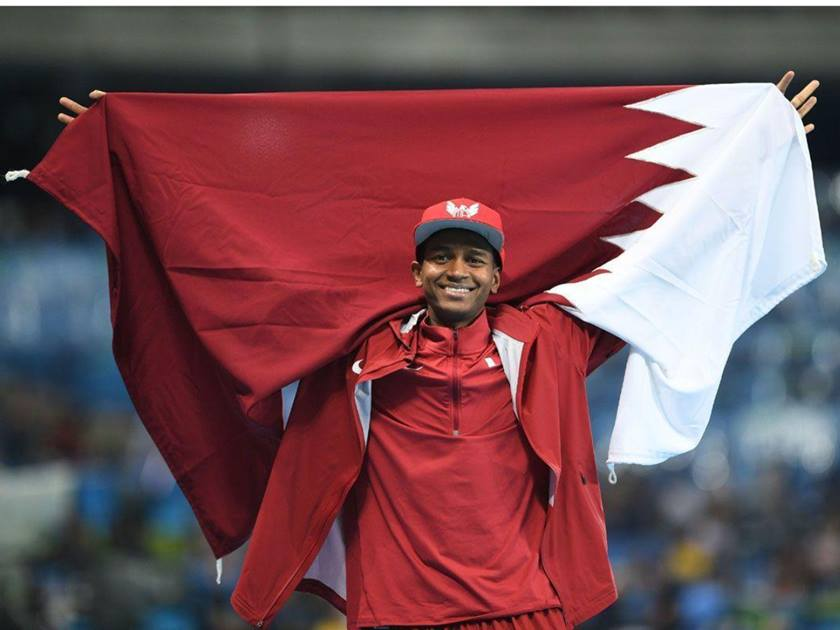
Mutaz Barshim defied odds once again to win bronze at the Men’s high jump event, securing Qatar’s only medal of the Paris Olympics 2024.
While it was an underwhelming campaign for the Qatari contingent that had defied expectations to clinch two golds in Tokyo, Barshim’s win became a highlight. It was his fourth Olympic medal — a fitting end to a tournament that the high jumper had termed to be his last before the trip to Paris.
However, the 33-year-old multiple-time world champion hinted at the possibility of competing in the next Olympics, upon his return to Doha. “Never say never,” he said, in an exclusive chat with Doha News.
“Sporting DNA : Mutaz Barshim keeps raising the bar and it all starts with his family
The year 2024 was also Aspire Academy’s 20th anniversary, which the country’s premier athletic scouting and training centre celebrated in style, hosting multiple seminars and events, such as the Aspire Global Summit as well as giving home to FIFA’s The Best Football Awards during its Gala Dinner in December.
Asian Cup triumph, Al-Haydos’ farewell and Afif’s ascent
The year ends in uncertainty for Qatar just like it started for Qatari football.
However, there were significant achievements in between. Much like the sport itself, it was a game of two halves for Qatari football — a perfect first half, followed by a tough second.
Qatar hosted and ultimately defended the Asian Cup crown in February as Akram Afif became the difference maker yet again. The tournament drew record attendance number as well as record engagement figures, underscoring yet another successful tournament in Qatar.
Al Annabi’s longstanding two-time Asian Cup-winning captain Hassan Al-Haydos retired from international football after the tournament, putting an end to the most capped Qatari career ever.
Qatar continued their good run under Bartolome Marquez Lopez at the World Cup Qualifiers thereafter, ending the second round unbeaten. The AFC U-23 Asian Cup was also hosted by the country in between, where Japan were crowned the champions.
It started going downhill with the loss against UAE at home with the start of the third round of the Asian Qualifiers to the FIFA World Cup 2026. While Afif clinched his second AFC Player of the Year title, Qatar’s hopes of making it to the tournament in North America hangs in balance with just two wins and three losses from the first six games. The team also crashed out of the group stages of the Arabian Gulf Cup following two draws and a defeat.
In the meantime, Qatar also hosted two of the Palestine national team’s qualifying games, the former of which in June saw Al Fida’i make it to the last round of World Cup Qualifiers for the first time in history with a 0-0 draw against Lebanon. Similarly, the Qatar U-20 team seamlessly qualified, at home, for the U-20 Asian Cup to be held in Saudi Arabia next year.
Qatar was also the home to FIFA’s new club competition, the Intercontinental Cup, which saw European champions Real Madrid win in Lusail Stadium. The Stadium 974 was put to use for the first time since the 2022 World Cup for two of the tournament’s matches.
A good year for racket sports
The Khalifa International Tennis and Squash Complex was a busy venue this year as it hosted multiple tournaments throughout the year, including the Qatar Open tennis event in February, the QTerminals Qatar Classic Squash event in September and October, followed by the World Padel Championship in November.
Russian player Karen Kachanov won the men’s Qatar Exxonmobil Open, while Polish Iga Swiatek claimed the women’s event held in February. Qatar Exxonmobil Open will now return as an ATP 500 event and was also voted the best ATP 250 event on calendar for 2024.
The QTerminals Qatar Classic saw Diego Elias and Nour Al-Sherbini come out on top of the men’s and women’s events, marking a thrilling end to the squash event.
Argentina’s men’s team and Spain’s women’s team maintained their dominance by lifting the World Championship in Padel, which saw some of the world’s finest compete in Doha.
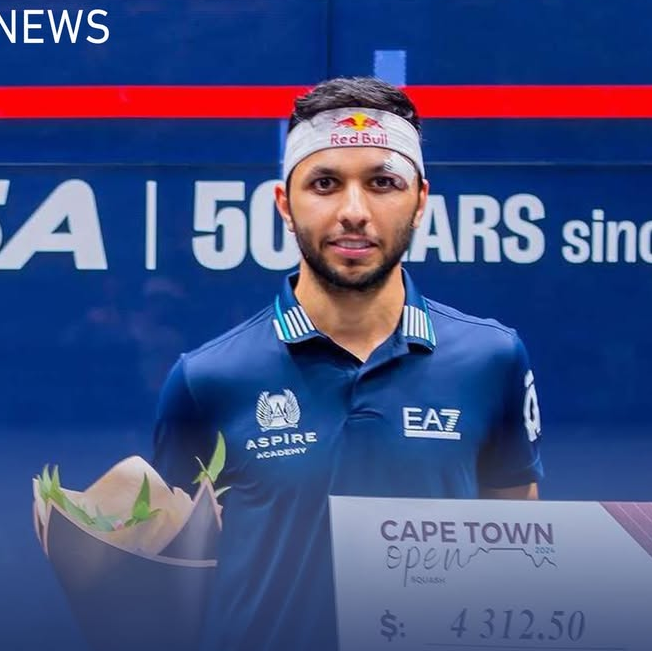
Qatar’s squash ace Abdullah Al-Tamimi capped the year off in style, winning the Cape Town Squash Open 2024 his first title away from Qatar since 2022.
Glory in motorsports and skydiving
Qatar won four gold medals at the World Air Sports Federation (FAI)’s World Championships which was hosted by Czechia’s Prostejov in the first week of September.
Qatar won three golds in events across the Canopy Formation category and bagged solitary gold in male Style and Accuracy landing in the six-day tournament.
It was yet another year of glory for Qatari rally driver Nasser Al-Attiyah, who clinched his third FIA World Rally-Raid Championship (WR2C) in October after winning the 2024 Rallye du Maroc with his French co-driver Edouard Boulanger for the Dacia Sandriders.
Al-Attiyah’s decorated racing career now boasts seven Rallye Du Maroc titles, in addition to five wins in the Dakar Rally and 13 Middle East Rally wins.
What also stood out, however, was Abdulaziz Al-Kuwari’s victory in the Middle East Rally Championship as well as the Qatar Motor & Motorcycle Federation’s triumph in the Baja Middle East Teams Championship — all of whom were awarded in December at the annual FIA Awards.
Qatar also hosted the pinnacle of motorbike and motor racing, the MotoGP and the F1 Grand Prix – the latter of which saw record-breaking attendance at the Lusail International Circuit.
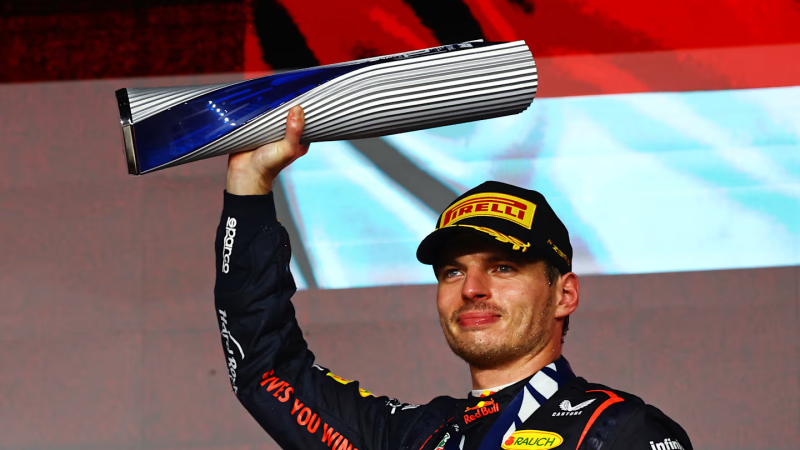
Defending champion Francesco Bagnaia won the MotoGP event held in March, whereas Max Verstappen rose against the odds to win his second Qatar Grand Prix on December 1, despite starting away from the front of the grid.
Senior scholars and thousands of male and female memorizers of the Holy Qur’an from ASEAN countries attended the event
Forum was dedicated to examining the challenges associated with the authentication of Qur’anic ijazahs and to propose effective solutions
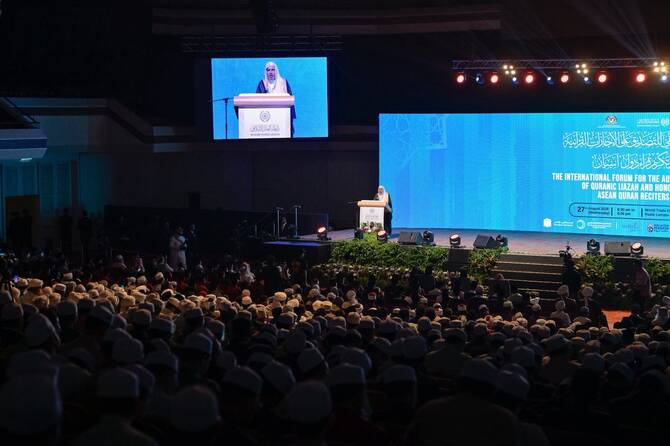
The International Forum for the Authentication of Qur’anic Ijazah and Honoring ASEAN Qur’an Reciters has concluded in Kuala Lumpur.
A Qur’anic ijazah is a certificate given by a qualified teacher to a student, attesting that the student has memorized the Quran with the correct rules and pronunciation. Ijazahs for correct recitation, without memorization, can also be issued.
Each ijazah lists the continuous chain of transmission from the holder back to the imams of Qur’anic recitation. This makes it easy to identify every teacher in the chain and the shorter the chain, the stronger the ijazah.
As part of the forum, senior Qur’an reciters from countries that are members of the Association of Southeast Asian Nations and who have been granted an ijazah with the continuous chain of transmission, were honored in recognition of their efforts in serving and teaching the Holy Qur’an.
Senior scholars and thousands of male and female memorizers of the Holy Qur’an from ASEAN countries attended the event.
The forum, organized by the Muslim World League, was dedicated to examining the challenges associated with the authentication of Qur’anic ijazahs and to propose effective solutions.
It sought to prevent the uncontrolled granting of ijazahs to those who lack proper mastery, in order to uphold the quality of Qur’anic recitation and teaching, and to serve the Holy Qur’an, the MWL said.
It also aimed to strengthen collaboration among specialized institutions, facilitate the exchange of expertise, and unify efforts.
The secretary-general of the MWL Sheikh Mohammad bin Abdulkarim Al-Issa, who presided over the forum, witnessed the honoring of a number of prominent Qur’an reciters from ASEAN countries, in recognition of their role in spreading and teaching the holy book, and their contributions to building generations of Quranic reciters.
He also witnessed the graduation of a new group of male and female memorizers who obtained a Qur’anic ijazah through the MWL’s Global Technical Recitation Center.
A group of students from the Institute of Quran Memorization and Recitation at the Islamic Foundation in Malaysia, affiliated with the Muslim World League, also graduated at the forum.
source/content: arabnews.com (headline edited)
______________
The International Forum for the Authentication of Qur’anic Ijazah and Honoring ASEAN Qur’an Reciters took place in Kuala Lumpur. (MWL)
Film received partial funding from Saudi Arabia’s Red Sea Fund, Qatar-based Katara Studios.
Palestinian filmmaker and writer Annemarie Jacir’s “Palestine 36” has been selected as Palestine’s official submission for the Oscars’ international feature film category.
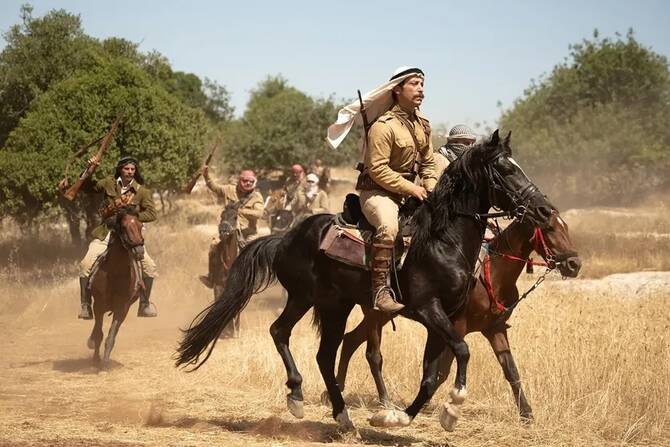
Set in 1930s Palestine, the drama explores the lives of individuals during the uprising against British colonial rule. Against a backdrop of sweeping change, the film delves into themes of identity, resistance and transformation.
The story follows Yusuf (Karim Daoud Anaya), a young man caught between his rural village and the rapidly changing city of Jerusalem; Afra (Wardi Eilabouni), a girl navigating an uncertain world with the guidance of her grandmother (Hiam Abbass); and a port worker (Saleh Bakri), who finds himself drawn into an emerging uprising. A British official, portrayed by Oscar-winner Jeremy Irons, attempts to maintain order as tensions rise.
The cast also features “Game of Thrones” star Liam Cunningham, Tunisian actor Dhafer L’Abidine, and Palestinian talents Yasmine Al-Massri and Kamel El-Basha.
“Palestine 36” was selected as Palestine’s Oscar entry by an independent committee of Palestinian film professionals in a move officially confirmed by the Palestinian Ministry of Culture.
The film received partial funding from Saudi Arabia’s Red Sea Fund, and Qatar-based Katara Studios. Watermelon Pictures has acquired distribution rights to the film.
Featuring rare archival footage of 1930s Palestine, “Palestine 36” is set to have its world premiere at the Toronto International Film Festival on Sept. 5, where it will become the first Arab film to screen in the festival’s prestigious Gala section.
Jacir, who has been working on “Palestine 36” since before the pandemic, is known for her focus on Palestinian narratives. Her previous films include “Salt of This Sea” (2008), “When I Saw You” (2012), and “Wajib” (2017), all of which received critical acclaim and represented Palestine at the Academy Awards. “Palestine 36” is her fourth film to be submitted by Palestine for Oscar consideration.
It is the 18th film to be submitted by Palestine since it began participating in the international feature category. To date, the country has received two nominations in the category, both for films directed by Hany Abu-Assad: “Paradise Now” in 2006 and “Omar” in 2014.
The Oscars’ international feature shortlist will be announced on Dec. 16, with final nominations revealed on Jan. 22.
source/content: arabnews.com (headline edited)
__________
Set in 1930s Palestine, the drama explores the lives of individuals during the uprising against British colonial rule. (Supplied)