Month: May 2026
SAUDI ARABIA : Departing pilgrims receive Qur’an gift in 80 languages – May 2026
Islamic Ministry begins distribution of 1.9 million editions across the Kingdom’s air, land, sea ports.
The Ministry of Islamic Affairs has begun distributing King Salman’s gift of the Holy Qur’an and its translated editions to departing pilgrims and seasonal field workers.
Distribution started in the departure halls of King Abdulaziz International Airport in Jeddah, ensuring international pilgrims receive their copies before boarding return flights.
The campaign includes 1.9 million copies produced by the King Fahd Complex for Printing the Holy Qur’an in Madinah, the Saudi Press Agency reported on Saturday.
Available in more than 80 languages, the translated editions enable returning pilgrims to study the Qur’an in their native languages.
The ministry said that distribution will continue around the clock at all air, land and sea ports in the coming days, the SPA added.
Minister of Islamic Affairs Sheikh Abdullatif Al-Alsheikh said the gift reflects the leadership’s commitment to spreading the message of the Holy Qur’an worldwide.
He added that the ministry has mobilized all logistical and human resources to ensure smooth, efficient and accessible distribution for departing pilgrims.
The Passports Department at Jeddah airport has processed departure procedures for the first outbound flights of pilgrims returning home after completing Hajj.
The General Directorate of Passports confirmed its highest level of operational readiness at the Kingdom’s land, air and sea ports to manage post-Hajj departures, urging international pilgrims to adhere to their scheduled travel times.
According to official statistics, 1,707,301 pilgrims performed Hajj this year, up 2.04 percent from 2025. Of the total, 1,546,655 arrived from outside the Kingdom, including 1,485,729 who traveled by air, while 160,646 were citizens or residents of Saudi Arabia.
source/content: arabnews.com (headline edited)
______________
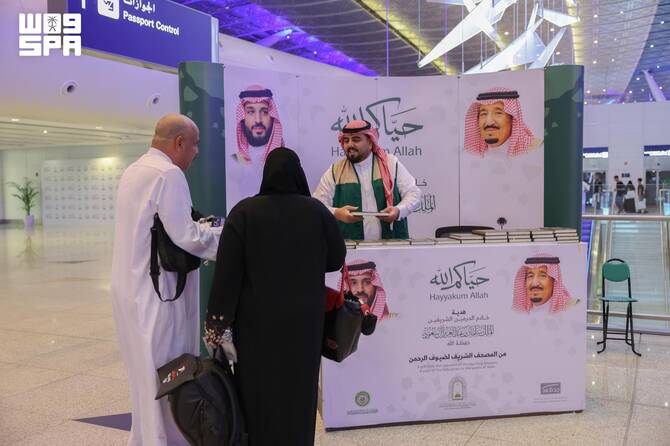
Distribution started in the departure halls of King Abdulaziz International Airport in Jeddah (SPA)
__________________
SAUDI ARABIA
QATAR : Two of the world’s best universities add the Doha Historical Dictionary to their digital libraries
The Doha Historical Dictionary of the Arabic Language is one of the largest projects for the Arab Center for Research and Policy Studies.
Cornell University in the United States and the University of British Columbia in Canada have included the Doha Historical Dictionary of the Arabic Language in their digital library collections.
Cornell University in the United States and the University of British Columbia in Canada are ranked among the world’s leading institutions.
In a statement by the Arab Center for Research and Policy Studies on Tuesday, Mohammed Al-Obaidi, Executive Director of the Doha Historical Dictionary of the Arabic Language, said that this provides researchers worldwide with unique historical material on the Arabic language for the first time.
“Making the dictionary available openly is a translation of the identity of the project, as it is a national project, and one of its most important priorities is to provide researchers wherever they are with the unique historical dictionary material that is available for the first time in the history of this ancient language,” said Al-Obaidi.
In the details, the American Cornell University included the Doha Dictionary in its electronic library, within a hierarchical classification that includes the following titles: Near Eastern Studies, Arabic Literature, Dictionaries, and Dictionaries of Synonyms and Acronyms.
The university also assigned a special subtitle to the dictionary, Arabic Ontology, with a description that provides a tool for comparative research across dictionaries and, in its final form, aims to document the semantic transformation of each word in its blog.
The Doha Historical Dictionary of the Arabic Language is one of the largest projects of the Arab Center for Research and Policy Studies.
It was officially launched on 25 May 2013, and development continued for more than 12 years.
It was completed on 22 December 2025, with more than 500 researchers from across the Arab world contributing to its development. The project is also open to the public for comments, corrections and proposals.
For its part, the University of British Columbia in Canada has added the Doha Historical Dictionary to its library with a different hierarchical classification: Research Guide – Literature, Humanities and Social Sciences – Middle East Studies – Free and Open Sources – Dictionaries.
The description of the dictionary on the University Library reads: “The Doha Historical Dictionary of the Arabic Language is an ongoing project of the Arab Center for Research and Policy Studies located in Doha, Qatar. The first and second phases of the project covered the history of the Arabic language from the earliest written document to the fifth century AH…”
Al-Obaidi welcomed this step, expecting that more universities in the Arab world and beyond will follow suit.
“For more than a decade, we have been keen to adjust the scientific material of the dictionary according to the highest possible academic standards, and then we have made it available through a free electronic portal to be a help for researchers in all fields of humanities and social sciences,” said Al-Obaidi.
Al-Obeidi called on Arab universities and academic institutions to make the dictionary available to students and researchers.
He also invited Arab researchers, “wherever they are, to conduct studies that deal with the dictionary or employ its material.”
source/content: dohanews.co (headline edited)
_____________
_____________
QATAR
PALESTINE : Point-blank: Ongoing Nakba
This is the month in which Palestinians commemorate the Nakba, a catastrophe often described in historical accounts as having displaced some 750,000 people.
It is true that Israel expelled this number of Palestinians from the territories it occupied unlawfully during the 1948 War. Yet the victims of Israel’s seizure of lands that had not been allocated to it under the UN Partition Plan — territories it appropriated by force during the conflict — are many times that number. Official statistics indicate that nearly 5.9 million Palestinian refugees are registered with the United Nations Relief and Works Agency (UNRWA), in addition to countless Palestinians who settled in other Arab or foreign countries and became part of their host societies, so they are no longer officially classified as refugees.
All of these people are victims of the Nakba that befell the Palestinian people as a result of the establishment of a Jewish state on Palestinian land. This reality makes the Nakba far more than a passing historical episode. It represents a profound transformation that redrew the map of the Middle East and altered the destiny of an entire people.
When we look at the images commonly associated with the Nakba, they usually depict masses of Palestinians leaving their homes and carrying their belongings on their backs, as though the tragedy unfolded in a single day. But this is misleading. Photographs capture only the instance in which they are taken, whereas the Nakba was never a single moment or an isolated event in Palestinian history. It was a prolonged process that began during the British Mandate in Palestine and continued long after its end.
Throughout this process, more than 500 Palestinian towns and villages were destroyed. The Deir Yassin massacre, for example, took place even before the outbreak of the 1948 War, claiming the lives of more than 110 men, women and children. When we speak of the Nakba, therefore, we are speaking of the systematic dismantling of an entire society that had once been stable and deeply rooted in its land, a deliberate project aimed at erasing a people’s geographic and civilisational identity.
That project, moreover, has never truly ceased. What happened in Gaza, and what is now unfolding in the West Bank, reflects the continuation of the same logic: emptying the land of its inhabitants through expulsion, displacement or killing; transforming the identity of the place; and erasing its cultural character. This confirms that the Nakba was not confined to the war of 1948. It is an ongoing process that began before the war and continues to this day.
* A version of this article appears in print in the 28 May, 2026 edition of Al-Ahram Weekly
source/content: english.ahram.org.eg / Mohamed Salmawy (headline edited)
_____________
_______________
PALESTINE
PALESTINE : Photo and video journalists in Gaza to receive ‘Golden Pen’ award
Professional photo and video journalists working in Gaza are to receive an annual press freedom award on Monday for risking their lives to report on the war, an association of publishers has said.
The 2026 Golden Pen of Freedom will be handed to representatives of global news agencies still operating in Gaza — Agence France-Presse, The Associated Press and Reuters — “whose local journalists continue to provide consistent, professional coverage under extremely challenging conditions”, said the World Association of News Publishers (WAN-IFRA).
“For over two and a half years, journalists in Gaza have recorded death, destruction, and human suffering in unparalleled terms,” reads the citation of the award.
“They are as much victims of the conflict as they are chroniclers of a war that erupted — and continues — around them.”
Since October 2023, Israel’s war on Gaza — documented by international experts as a genocide against the Palestinian people — has killed over 72,819, wounded 172,894 others, and forcibly displaced 90 percent of the population. The military campaign and crippling blockade have reduced the entire territory to rubble, destroying much of Gaza and sparking a severe humanitarian crisis in the strip that has at times crossed into famine.
To suppress the truth, Israel has systematically targeted the journalists documenting these atrocities.
Media rights group Reporters Without Borders (RSF) says Israeli forces have killed more than 220 journalists, at least 70 of whom were killed in the context of their professional duties.
AFP photographer Mohammed Abed, who worked in Gaza until April 2024 before joining its Cairo bureau, will be among those at the ceremony in the French city of Marseille.
The award “acknowledges the sacrifice and endurance of local Palestinian media professionals living and working in a war zone,” said WAN-IFRA, which holds its 2026 World News Media Congress from Monday to Wednesday.
“It also recognises colleagues injured and killed in the course of doing their job.”
The Israeli government has barred foreign journalists from independently entering the blockaded territory since the war began.
Despite the October 2025 ceasefire, Israel has continued near-daily attacks on the defenceless Palestinian population, killing at least 877 and injuring over 2,602 while refusing to lift its blockade or withdraw forces occupying up to 60 percent of the strip.
*This story was edited by Ahram Online.
source/content: english.ahram.org.eg (headline edited)
______________

Palestinian men carry an injured man at Nasser Hospital in Khan Younis in the southern Gaza Strip. Saher ALGHORRA for AP
______________
PALESTINE
SHARJAH, U.A.E: Warsaw International Book Fair 2026 opens with Sharjah as its first-ever Arab Guest of Honour
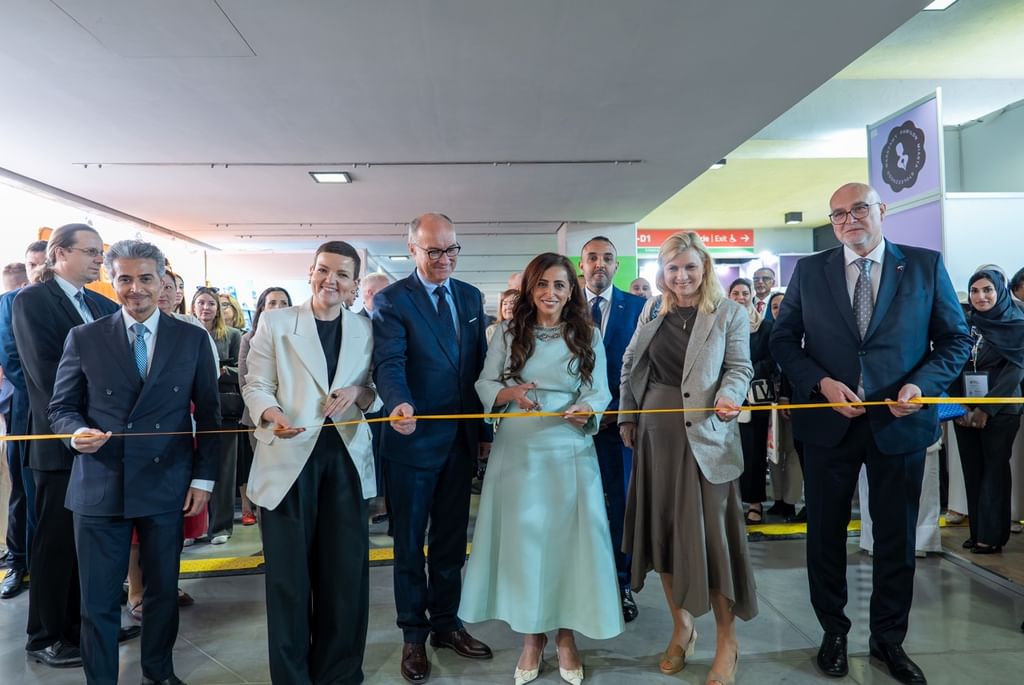
In the presence of Sheikha Bodour bint Sultan Al Qasimi, Chairperson of the Sharjah Book Authority (SBA), Sharjah officially opened its participation on Thursday as the first Arab Guest of Honour in the history of the Warsaw International Book Fair.
The emirate has brought to the European city a cultural project it has built over five decades, presenting a contemporary image of Emirati and Arab culture at one of Central Europe’s leading cultural events.
Sheikha Bodour Al Qasimi joined Włodzimierz Czarzasty, Marshal of Sejm of the Republic of Poland; the lower house of the Polish parliament, Marta Cienkowska, Poland’s Minister of Culture and National Heritage; Dorota Malinowska-Grupińska, Chairwoman of the Warsaw City Council, and Małgorzata Kidawa-Błońska, Marshal of the Polish Senate; at the opening ceremony of the fifth edition of the fair, which runs until 31 May at the National Stadium in Warsaw.
Following the ribbon-cutting, Sheikha Bodour Al Qasimi attended the opening ceremony, where she conveyed the greetings of His Highness Sheikh Dr. Sultan bin Mohammed Al Qasimi, Supreme Council Member and Ruler of Sharjah, and his wishes for the fair’s continued success.
She said His Highness has devoted his life to culture because he believes books create the kind of dialogue that allows civilisations to meet with dignity and depth. She recalled the Sharjah Ruler’s words: “Dialogue between civilisations is not an option, but a necessity. And culture is not an inheritance we keep to ourselves, but a noble bridge through which we connect with others.”
Sheikha Bodour added that Sharjah is proud to be the Guest of Honour in a country that understands language as memory, identity and continuity. Describing Warsaw as a city shaped by history and renewed by culture, she said it reminds us that culture does not merely survive history, but has the power to transform it.
She added that Arab and Polish cultures share a deep understanding of literature’s role, noting that poetry in both traditions remains central to how societies understand themselves and express memory, values and belonging across generations.
Sheikha Bodour said Sharjah’s theme at the fair, “Two Civilisations. One Language of Letters”, celebrates difference and reflects the belief that civilisations do not have to resemble one another to understand one another; they only need to approach each other with patience, curiosity and empathy.
In closing, she said that Sharjah comes to Warsaw not only with its stories but also with an open invitation to read one another, translate one another, and imagine together. She expressed hope that the fair would spark a dialogue that continues long after its conclusion and grows stronger between Warsaw and Sharjah.
Włodzimierz Czarzasty, Marshal of the Sejm of the Republic of Poland, said it was a cultural honour to welcome Sharjah as the Guest of Honour of Warsaw International Book Fair 2026, and described the emirate’s participation as a valuable cultural contribution that reflects the growing ties between Poland and the UAE.
He said books remain a powerful tool for fostering understanding and dialogue between cultures, while publishers continue to play a vital role in preserving and sharing knowledge across societies.
In her keynote, Marta Cienkowska, Poland’s Minister of Culture and National Heritage, thanked Sheikha Bodour for her remarks at the opening ceremony and praised Sharjah’s appreciation of Polish culture and history. She said cultural exchange remains a powerful means of fostering dialogue and understanding between peoples, adding that the Warsaw International Book Fair plays a vital role in connecting readers, writers and publishers with Poland’s cultural scene.
Dorota Malinowska-Grupińska, Chairwoman of the Warsaw City Council, said Sharjah’s participation as Guest of Honour highlights the role of books and publishing in fostering cultural dialogue and mutual understanding. As a publisher herself, she said books serve not only as cultural products but also as a means of human connection and exchange, adding that Sharjah’s presence in Warsaw brings a new dimension to dialogue with the Arab world.
For his part, Jacek Oryl, Director of the Warsaw International Book Fair, said Sharjah’s selection as Guest of Honour marks a significant moment in the fair’s history and reflects growing cultural ties between Poland and the UAE. He added that the emirate’s participation offers visitors insight into Arab and Emirati culture through its literature, arts, thought and living heritage.
Sheikha Bodour led an official tour of the Sharjah pavilion alongside Ahmed bin Rakkad Al Ameri, CEO of SBA, joined by distinguished guests including Dr. Tomasz Makowski, Director of the National Library of Poland; and Grzegorz Jankowicz, Director of the Polish Book Institute, alongside publishers and representatives of cultural institutions from Poland and across Europe.
During the tour, visitors were introduced to key initiatives and programmes that reflect Sharjah’s cultural project, including works presented by Emirati publishers, initiatives led by the emirate’s cultural institutions, and heritage and artistic activities featured as part of Sharjah’s participation in the fair.
The fair’s inaugural day featured the IKAR Publishing Season Awards ceremony, organised by the fair. This year’s Ikar Award was presented to Polish author Professor Stefan Chwin in recognition of his literary and humanitarian contributions, and his role in defending human values and cultural memory in contemporary Polish literature.
The IKAR Publishing Season Awards also honoured Piotr Dobrołęcki, who received the Author award for his contributions to Poland’s cultural and literary scene, while Wydawnictwo Czarne received the Publisher award for its role in enriching the country’s publishing industry and bringing influential literary and intellectual works to readers. The Bookstore award went to Księgarnia Artystyczna Firmin w Gdańsku for its efforts to promote reading culture and strengthen the presence of books in community life.
This year’s Warsaw International Book Fair features more than 1,200 cultural and professional events, reinforcing its position as one of Central Europe’s leading cultural platforms. Sharjah’s participation as Guest of Honour presents a model for Arab cultural engagement built on dialogue, openness and the strengthening of connections between peoples through literature, arts, and knowledge.
Over four days, Sharjah is presenting on its 400-square-metre pavilion, an institutional and creative presence reflecting the diversity of the UAE’s cultural landscape, with the participation of 21 cultural, academic and media institutions, 36 Emirati writers, poets, academics and artists, alongside 15 Polish participants, in a programme based on direct dialogue between Arab and Polish cultural experiences and placing books at the heart of exchange between peoples.
Sharjah’s participation includes 35 cultural events, featuring 28 panel discussions, four poetry evenings, and three children’s workshops, held across the fairgrounds, the University of Warsaw, and the Grochoteka Public Library, in addition to 18 musical performances by the Sharjah National Band at the Warsaw National Theatre. These performances introduce fair visitors and audiences across Warsaw to the elements of traditional Emirati arts through a programme that links written knowledge with immersive cultural experience.
Sharjah will also be activating public spaces, libraries and theatres, transforming Warsaw into an open platform introducing audiences to the history and contemporary Emirati and Arab culture.
As a key part of the programme, the project Tasawurat (“Visions”) brings together 10 artists and designers from the UAE and Poland to produce works inspired by Arabic and Polish poetry, exploring themes including humanity, nature, the sea, and existential reflection. It combines elements of Arabic poetic tradition with poster art, a defining feature of Poland’s visual culture.
The emirate’s pavilion comprises a showcase of cultural and academic institutions.
source/content: wam.ae (headline edited)
_______________
______________________________________________
SHARJAH, UNITED ARAB EMIRATES (U.A.E)
SAUDI ARABIA : MAY 2026: 1.7m pilgrims performing Hajj this year, 2.04% more than last year
1,546,655 people travel from outside of the Kingdom to take part in the pilgrimage, 160,646 are citizens or residents of Saudi Arabia
388,694 benefit from Makkah Route Initiative, a service that lets them complete all entry procedures at point of departure, thereby avoiding long queues on arrival, 23.7% more than last year
More than 1.7 million pilgrims are performing Hajj this year, the majority of whom live outside of Saudi Arabia, according to authorities in the Kingdom.
The total number of 1,707,301 is an increase of of 34,071, or 2.04 percent, compared with the 1,673,230 who attended the 2025 Hajj.
This comes amid continuing efforts to streamline pilgrimage operations, expand facilities at entry points and enhance services, officials said, and reflects the steady demand for Hajj places despite evolving regional and global conditions.
The increased attendance also underscores the Kingdom’s ongoing focus on operational efficiency, they added, particularly through the digitalization of services, improved crowd-management systems, and enhanced coordination between security, health and logistical authorities.
Figures provided by the General Authority for Statistics reveal that 1,546,655 pilgrims traveled from outside of the Kingdom to perform Hajj, while 160,646 are citizens or residents of Saudi Arabia. The vast majority of those arriving from abroad, 1,485,729, traveled by air, 54,429 entered the country through land crossings, and 6,497 arrived by sea.
The number of pilgrims who benefited from the Makkah Route Initiative, a service that allows them to complete all entry, passport and customs procedures at the point of departure and transports them directly to their accommodation, thereby avoiding long queues at airports on arrival, increased to 388,694, compared with 314,337 last year, an increase of about 23.7 percent.
The total number of people working in support of Hajj operations increased to 441,049 from 420,070 last year. However, the number of volunteers decreased from 34,540 in 2025 to 26,701, a decline of 22.7 percent.
The General Authority for Statistics said its figures were based on administrative data provided by the Ministry of Interior as the primary source, in line with a statistical framework adopted during recent Hajj seasons to ensure accuracy and reliability. The full Hajj data and detailed reports are available on the authority’s website.
source/content: arabnews.com (headline edited)
______________
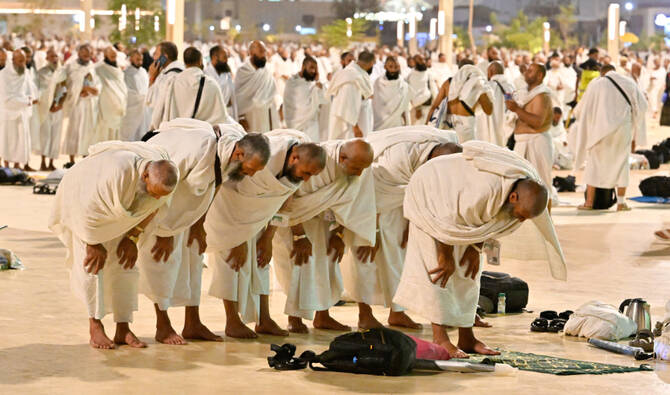
The increased attendance also underscores the Kingdom’s ongoing focus on operational efficiency. (SPA)
_________________
SAUDI ARABIA
ARAB AMERICANS : Takreem America honors top Arab American achievers
Takreem America honored exceptional Arab American individuals at its annual awards night recently at The Westin Copley Place, in Boston, Massachusetts. The weekend also featured the TAKminds Forum, held at MIT, which brought together 16 distinguished speakers and moderators from various fields.
The nonprofit organization, founded in 2019 to honor Arab Americans and help them build bonds with their motherland, presented awards to outstanding individuals, including: Dr. Magid Abraham (Corporate Leadership Award); Najla Said (Cultural Excellence Award); Dr. Gary Nabhan (Environmental Development and Sustainability); Dr. Elias Zerhouni (Scientific and Technological Achievement); and Ahmed Badr (Young Entrepreneur Award).
In addition, Dr. Dimitri Azar and Professor Rima Kaddurah-Daouk were honored with Lifetime Achievement Awards while the Anthony R. Abraham Foundation was given a “Special Distinction.”
The awards night, hosted by Ghida Fakhry, was a platform to celebrate the remarkable contributions of these individuals. Ricardo Karam, founder and chair of the board, emphasized the significance of the awardees’ actions in inspiring compassion and unity, echoing the spirit of Khalil Gibran’s legacy.
At the TAKminds Forum, participants included prominent figures from the arts, such as Arab American artist Helen Zughaib, art specialist business getter Suzy Sikorski, and art adviser Yasmina Moukarzel. Influential entrepreneurs like Fadel Adib, Edouard Massih, and Sami Shalabi also shared their insights, alongside dynamic change-makers Paul Ayoub and Nicola Yammine. Additionally, AI enthusiasts including Richard Rabbat, founder and CEO of Lighty AI; Raja-Elie Abdulnour, editor at Clinical Development and AI Innovation and assistant professor of medicine at Harvard Medical School; Jean-Claude Saghbini, president at Lumeris Value-Based Care Enablement; and Nadine Chakar, managing director and global head at DTCC Digital Assets, discussed their experiences. The discussions provided enlightening perspectives on the contributions of Arab American minds within their society and beyond, exploring ways to create a lasting impact and legacy.
With more than 500 attendees, Takreem America’s annual weekend celebrations showcased the unity and positive influence of Arab Americans in the Americas.
In a statement, the organization expressed gratitude to its numerous patrons and sponsors for their invaluable support, including Triple V Management LLC, Anthony R. Abraham Foundation, Cedar’s Mediterranean Foods, Fort Partners, PARQ, and JESRA Foundation.
source/content: arabnews.com (headline edited)
___________________
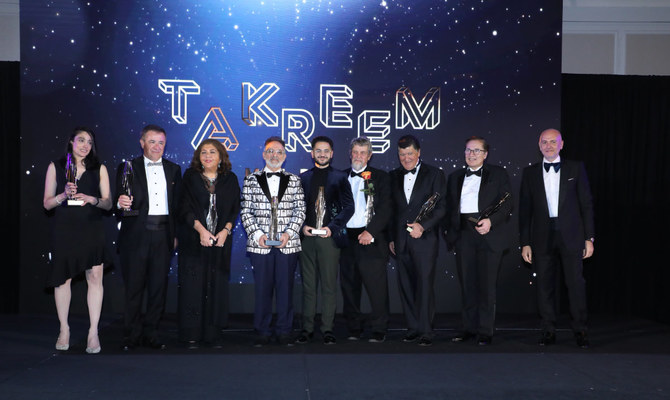
The annual awards night was held at The Westin Copley Place, in Boston.
______________________
AMERICAN / ARABS
MOROCCAN Writer Zineb Mekouar Wins Belgium’s Prix Horizon for Second Novel
Unlike many literary prizes decided solely by professional juries, the Prix Horizon relies on reader participation.
Moroccan writer Zineb Mekouar has received the Prix Horizon in Belgium for her novel “Souviens-toi des abeilles”, a work that ties environmental fragility with family memory in the landscapes of southern Morocco.
The award ceremony took place on Saturday in Marche-en-Famenne, in southern Belgium. The prize goes every two years to the most accomplished second novel written in French, with a strong focus on authors who deepen their literary voice beyond a debut work.
Mekouar’s novel, published by Gallimard, is set in the High Atlas mountains and draws a portrait of a rural world shaped by ancestral beekeeping practices. Through the eyes of a child, the story links inheritance, silence within families, and the pressures placed on fragile ecosystems.
Unlike many literary prizes decided solely by professional juries, the Prix Horizon relies on reader participation. Reading groups from Belgium and France’s Grand Est region take part in the final vote after a shortlist drawn up by literary professionals.
The Moroccan author meets readers and fellow finalists during a full day of discussions before the final vote. The format emphasizes direct exchange between authors and the public.
Created twelve years ago by the city of Marche-en-Famenne, the Prix Horizon seeks to draw attention to French-language writers who confirm their place in literature through a second novel. The selection begins with a professional jury that reviews dozens of works before readers decide the final winner.
“Souviens-toi des abeilles” has already gained recognition in France. It received the Henri de Régnier Prize from the Académie française in 2025. It also appeared in the Académie Goncourt summer selections for 2024 and entered the first shortlist for the Prix Jean Giono the same year. The novel also won the Folire Prize in 2025.
This year’s other finalists included Claire Vesin with “Le lotissement”, Marie Mangez with “Les vérités parallèles”, Ketty Rouf with “Mère absolument”, and Benjamin de Laforcade with “Berlin pour elles”.
Born in Casablanca in 1991 and based in Paris since 2009, Mekouar first drew attention with her debut novel “La poule et son cumin”, published in 2022. The book reached the final stage of the Goncourt prize for first novel.
source/content: moroccoworldnews.com (headline edited)
_______________

_________________________
FRENCH / MOROCCAN
EGYPT : Ten Egyptian Monuments the World Still Won’t Give Back
With the news of the Netherlands returning a 3,500-year-old Egyptian sculpture this week, here is a list of ten important Egyptian artefacts that are still held abroad.
Earlier last week, Dutch Prime Minister Dick Schoof announced his government would be returning a sculpture from the reign of King Thutmose III to Egypt, where it had been illegally taken during the 2011 Revolution and sold abroad. The announcement was made in the wake of the opening of the Grand Egyptian Museum and was met with praise and applause by many Egyptian observers. In recent years, there have been increasing calls by Egyptians (and by many people of formerly colonized countries) to bring home their country’s lost artefacts. However, the story of how artefacts came to leave a country is often complicated. Oftentimes they were looted, but sometimes they were given as gifts (or otherwise lawfully taken). In any case, in an effort to commemorate the Grand Egyptian Museum becoming the largest museum in the world dedicated to one civilization, here is a list of some of the Egyptian artefacts you still won’t find there.
1) The Oldest Bible in the World (British Library, London)
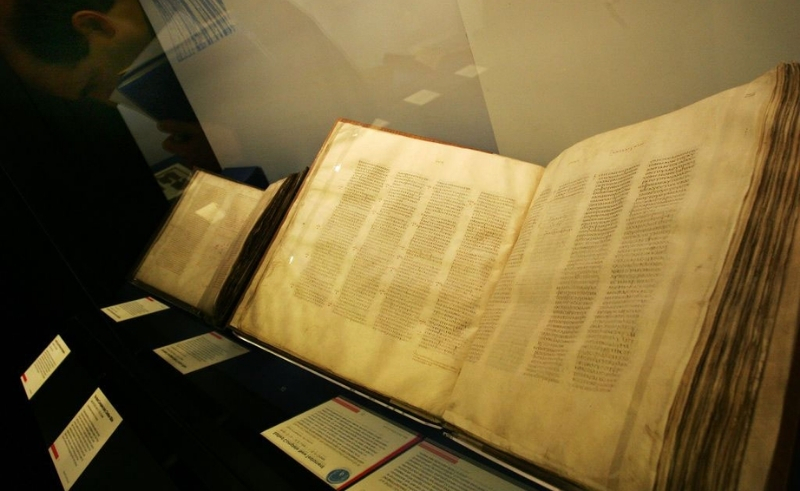
The Codex Sinaiticus, also known as the Sinai Bible, is the oldest complete copy of the New Testament ever found. Dating to around 350 CE during the time of Roman Egypt, it is also the youngest artefact on this list. (The timeline of the Grand Egyptian Museum, which chronicles ancient Egyptian history from prehistoric times to the Greco-Roman period, ends at 400 CE.)
The story of how this Bible left Egypt is complicated. Although the Bible was found in Saint Catherine’s Monastery in Sinai in 1844 by a German theologian, it was given to Tsar Alexander II of Russia, and then sold to the British Museum in London in 1933 by the Soviet government. Today, most of the manuscript remains in British Library (where very few scholars have been allowed to see it in full), though smaller fragments are still scattered across Germany, Russia, and St. Catherine’s Monastery.
2) Luxor Obelisk (Paris)
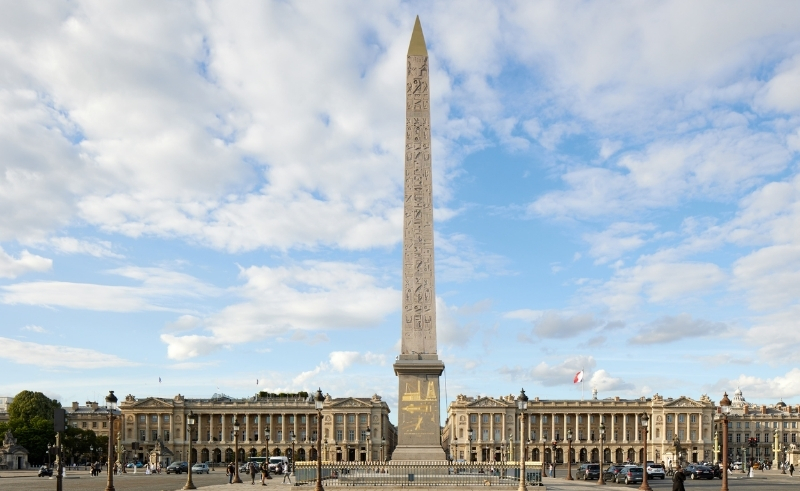
If you’ve ever been to the Luxor Temple on the east bank of the Nile River, you will have noticed that in the entranceway there stands only one obelisk, the other clearly missing. Carved during the reign of Ramses II of Egypt’s New Kingdom, the missing granite obelisk now sits in the center of Place de la Concorde in Paris. It was gifted to the French Empire by Muhammad Ali Pasha in 1829 as a gesture of friendship, and it remains the oldest monument in all of France.
3) The Oldest Woven Dress in the World (Petrie Museum, London)
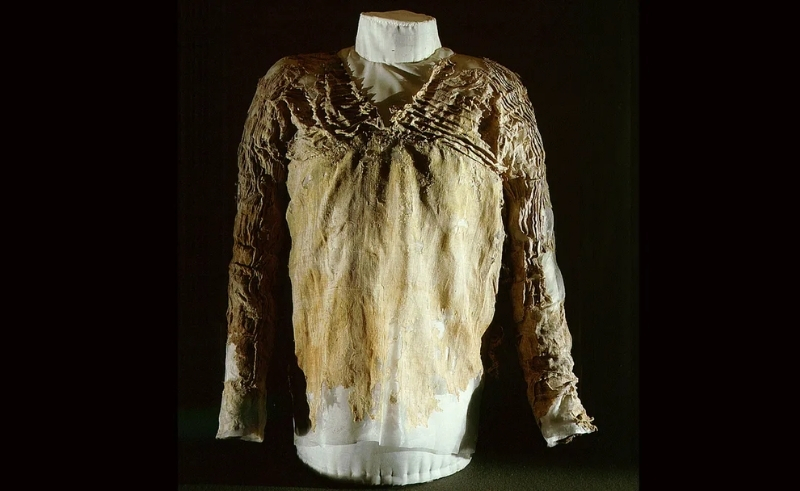
The Tarkhan dress, a linen garment that was once likely once worn by an Egyptian worker, is a 5000 year old piece of clothing—the oldest woven garment ever found. The dress was found south of Cairo in 1913 by Flinders Petrie, a British archaeologist, who at first believed it to be little more than a rag. He decided to take the rag with him to London anyway, and it wasn’t until the clothing was carbon-dated in 2015 that the true age—and significance—of the dress was understood.
The roughly size 2 dress remains in remarkably good condition (for its age), featuring a V-neck cut and long sleeves, and armpit stains left by its original wearer.
4) The Oldest Complete Map of the Ancient Sky (Louvre Museum, Paris)
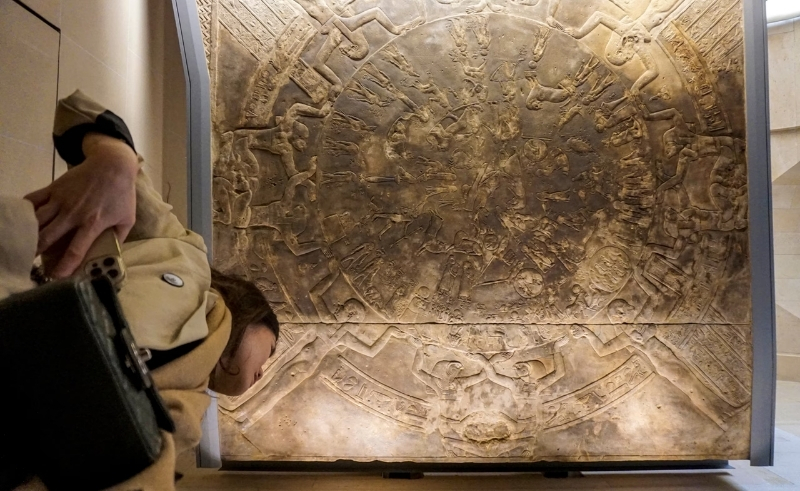
The Dendera Zodiac is a celestial map from the time of Ptolemaic Egypt, depicting the twelve zodiac signs (a Greek invention) with Egyptian imagery and style. It was likely created during the reign of Cleopatra, around 50 BCE, and was etched into the walls of the Dendera Temple of Hathor north of Luxor. Besides its beauty, its significance lies in the fact that it is the oldest (and possibly only) known complete map of the ancient sky.
The French removed it from Egypt in 1821 (with some versions of the story claiming they used dynamite to do so), and today it can be found in the Louvre Museum in Paris.
5) The Rosetta Stone (British Museum, London)
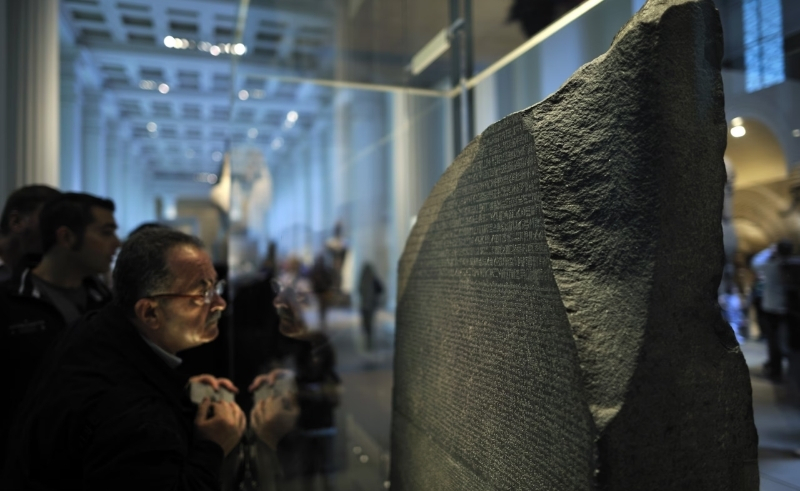
Many people believe that the Rosetta Stone was taken by the British from Egypt, but in reality, it was taken by the British from the French, who took it from Egypt. Discovered by French soldiers in the town of Rashid (Rosetta) in 1799, this stone is perhaps the most important archaeological discovery of all time (and it remains the most visited artefact in the British Museum). Its decryption paved the way to understanding ancient Egyptian hieroglyphics (and with it most of ancient Egyptian history), which until then had been illegible to all who tried to read it.
When Egypt formally asked for the Stone’s repatriation in 2003, the British Museum refused to return it, and instead gave Egypt a replica of the Stone. That replica now sits inside the National Museum in Rashid.
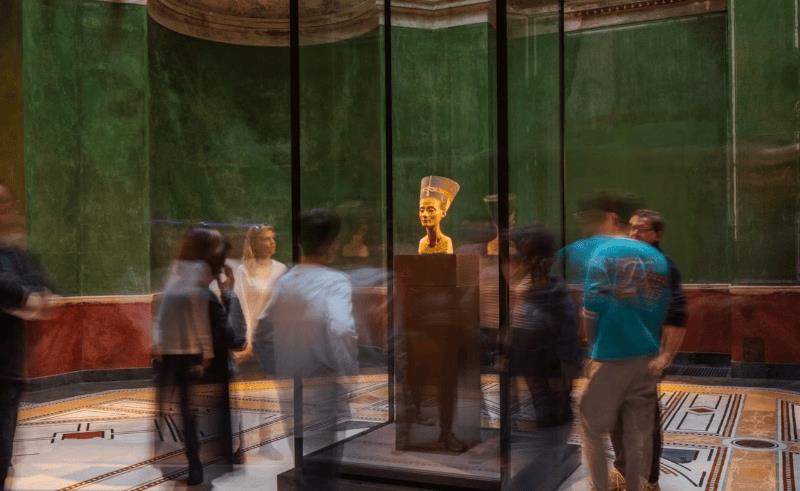
6) The Bust of Nefertiti (Neues Museum, Berlin)
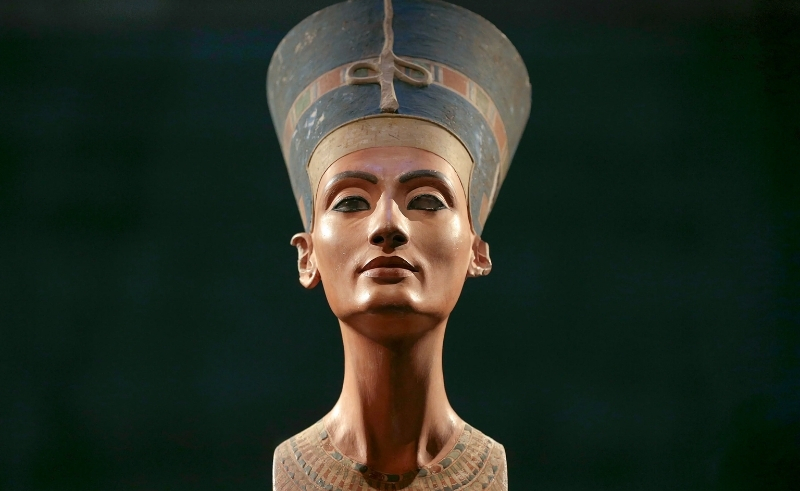
This iconic sculpture is one of the most well-known artefacts from ancient Egypt, and it depicts an equally legendary figure: Queen Nefertiti, wife of Akhenaten, stepmother of Tutankhamun. 3,400 years ago, Akhenaten’s sculptor captured Nefertiti’s beautifully slender neck, raised chin, and level gaze, and when it was discovered in 1912 the painted sculpture was still in remarkably good condition.
At the time of its finding, excavations in Egypt were conducted under a system whereby all items discovered were split between Egypt and the foreign country sponsoring the excavation, but there was a caveat: only ‘non-unique’ items could leave the country. The controversy that surrounds this bust is that the German team that discovered it hid its true value, and thus the bust was allowed to leave Egypt and be transported to Berlin, where it remains today.
7) Colossal Figure of Ramses II (British Museum, London)
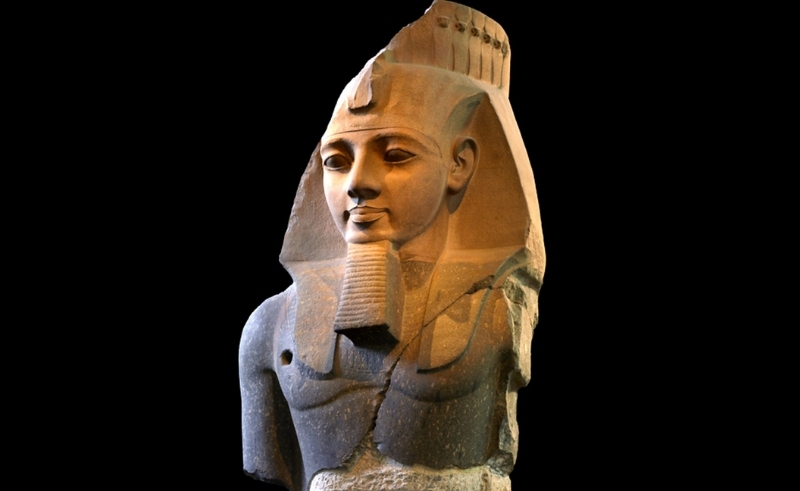
Also known as the Younger Memnon, this colossal torso and head once sat atop a statue of Ramses II located at his mortuary temple in Luxor. In 1798, Napoleon’s men tried extracting the statue but failed, and a couple of decades later the British succeeded in removing the upper portion of the statue (which had, long before, been damaged and detached from the rest of the body during an earthquake). Weighing nearly 20 tonnes, the statue is the largest Egyptian sculpture in the British Museum.
8) Bust of Ankh-haf (Museum of Fine Arts, Boston)
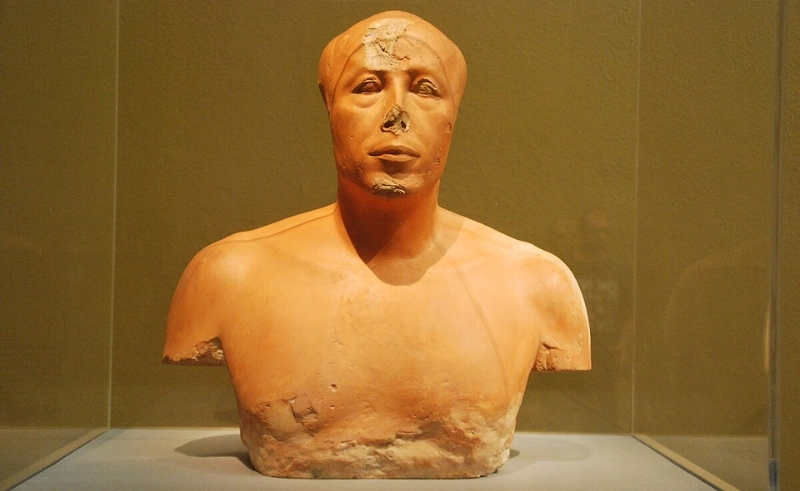
This lesser known artefact is striking for its high level of realism. Its namesake, Ankh-haf, was a government official of the Old Kingdom who oversaw the building of the Great Pyramid of Giza and the Sphinx.
The bust was discovered in 1925 during an expedition by Harvard University, and in 1927 it was gifted by the Egyptian government to an American archaeologist. Perhaps fittingly given the sculpture’s realism, it now rests in the Museum of Fine Arts in Boston.
9 & 10) Cleopatra’s Needles (London & New York)
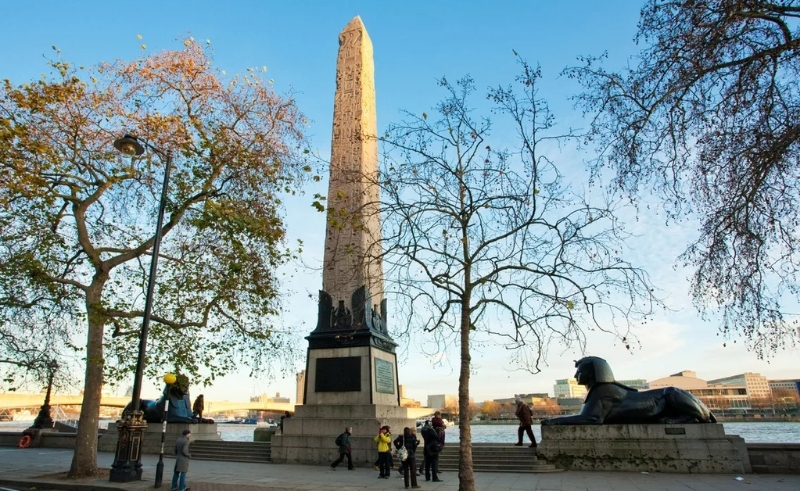
Despite their name, the pair of obelisks called Cleopatra’s Needles bear no relation to Queen Cleopatra herself. Instead, they were constructed during the reign of King Thutmose III of the New Kingdom, more than a thousand years before Cleopatra’s reign. During the Roman era they were moved from their original location in Heliopolis to Alexandria, where they stood for nearly two thousand years.
By the 1800s, one of the two needles had fallen. It was this needle that Muhammed Ali Pasha, in 1819, decided to gift to Britain (as he had gifted the Luxor Obelisk to France). However, the 21-meter tall obelisk was so massive that it was not actually transported to London until the reign of Ismail Pasha in 1877. It was also Ismail Pasha who, in the same year, gifted the remaining needle to the United States.
source/content: cairoscene.com (headline edited)
______________
Originally published on November 9th, 2025.
____________
EGYPT