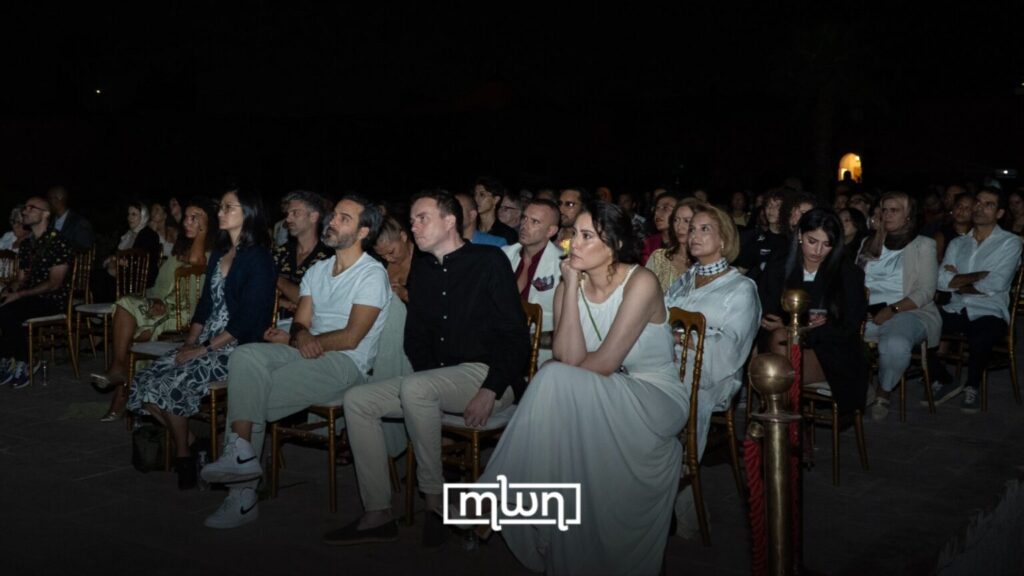
Marrakech’s most iconic landmarks welcomed artists and visionaries today, transforming its ancient walls into a stage for dialogue, discovery, and cultural exchange.
The highly anticipated Marrakech Short Film Festival (MARRAKECHsFF) officially opened last night, running through October 1, across some of the city’s most iconic sites, including El Badi Palace, Cyber Parc Moulay Abdeslam, and Centre Culturel Les Étoiles de Jamaa El Fna.
This year’s edition welcomes El Salvador as the guest country, with a diverse lineup of international and Moroccan films.
Festival founder and director Ramia Beladel opened the evening by highlighting this year’s theme, “Ka wla Maka,” a Darija expression familiar to Marrakchis that emphasizes both action and the spirit of Bahja (happiness).
Beladel described the festival as an “act of resistance and resilience,” emphasizing its role in giving visibility to emerging filmmakers and preserving cultural dialogue.
The opening night drew an international crowd of filmmakers and industry figures, including jury members such as Jane Kim, producer of industry programming at the Toronto International Film Festival (TIFF), and the president of the Alexandria Film Festival.
The program at El Badi Palace began with a red Berber carpet and presentation, followed by screenings that brought together stories from Palestine, El Salvador, Morocco, and Kenya.
Highlights included “A Short Film About Kids” by Palestinian director Ibrahim Handal, competing for the International Nakhil Prize, “Not For Sale” by El Salvador’s Ale Pinto, presented as part of the guest country spotlight, and “Chikha” by Moroccan directors Ayoub Layoussifi and Zahoua Raji, in competition for the National Belarj Prize.
Now in its fifth edition, MARRAKECHsFF has steadily grown into a key platform for short-format cinema in the region, positioning itself as both a launchpad for emerging Moroccan talent and a bridge to wider international audiences.
Founded during the pandemic to revive open-air screening culture, the festival maintains an open call format with both national and international competitions, and includes programs such as low-budget support for local filmmakers.
By embracing diverse narratives and forging international collaborations, the festival strengthens Marrakutation as a hub foech’s repr cultural exchange.
Rather than competing with the larger Marrakech International Film Festival, this festival complements it – while remaining distinct – by putting shorter works and emerging filmmakers at the center of the conversation.
source/content: moroccoworldnews.com (headline edited)
______________
______________
MOROCCO