Arabs & Arabian Records Aggregator. Chronicler. Milestones of the 25 Countries of the Arabic Speaking World (official / co-official). AGCC. MENA. Global. Ist's to Top 10's. Records. Read & Enjoy./ www.arabianrecords.org
Riding on one wheel of his Kawasaki ZX-6R, he completed 14 circles in one minute.
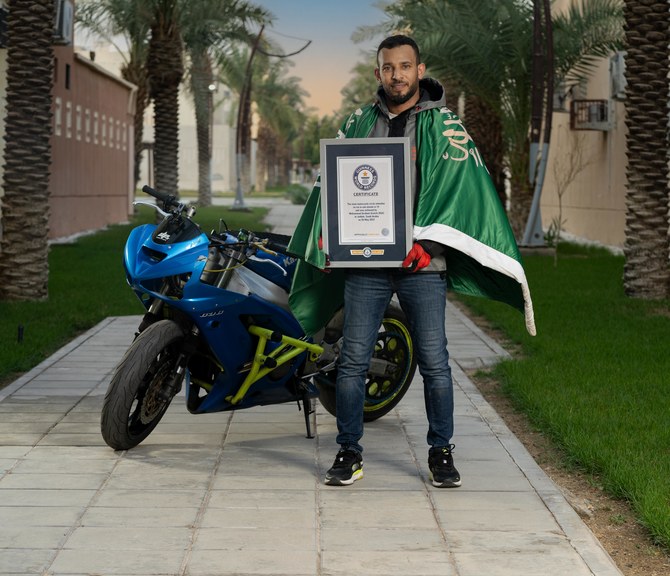
Saudi stunt rider Mohammed Ibrahim Scotch kept his cool to set a new world record for a motorcycle wheelie — on ice.
Riding on one wheel of his Kawasaki ZX-6R, he completed 14 circles in one minute, a feat that has earned him entry into the Guinness World Records 2023 edition.
Scotch, 39, told Arab News that he had been preparing for around two years for the record attempt, which took place at an ice hall in Jeddah.
He said: “I’m proud of achieving this new record because it carries the name of Saudi Arabia, my country. I didn’t break the record, but I achieved a new world record that no one had done before.
“In 2017, to deviate from the norm and at the same time to have fun, the idea stuck in my mind, and I tried it first in a skating rink in Makkah.
“(In 2022), after researching and communicating with officials (from Guinness World Records), they informed me that no one in the world had achieved this record, so I decided to do it.
“I began the journey of rebuilding the project from scratch after obtaining approval from Guinness World Records. I searched for a private ice rink to execute this experiment,” he added.
Scotch designed studded tires and worked out the variables for his motorbike.
“When I received the official email from Guinness World Records congratulating me as a new world record holder, I could not believe it or comprehend it.
“I read the email more than once, and I told my mother, my family, and all my friends who stood with me in obtaining this record, and their joy was unbelievable,” he said.
Scotch has been riding and doing stunts since the age of 16 and turned professional in 2013. He has participated in several international stunt competitions including in Bulgaria, Egypt, and the UAE.
At the beginning of last year, he became a certified trainer with the Saudi Automobile and Motorcycle Federation.
“I am glad that I could raise the name of Saudi Arabia to new levels with my latest achievement and my international appearances,” he added.
Scotch, whose achievements were recently acknowledged by the federation’s chairman, Prince Khalid bin Sultan Al-Abdullah Al-Faisal, aims to set more records.
source/content: arabnews.com (headline edited)
____________
Saudi stunt rider in Jeddah recently set new world record as he popped a wheelie on his motorcycle then drove in 14 circles on ice for one minute. (Supplied)
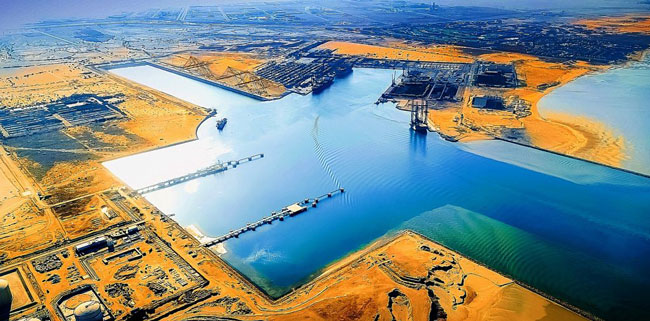
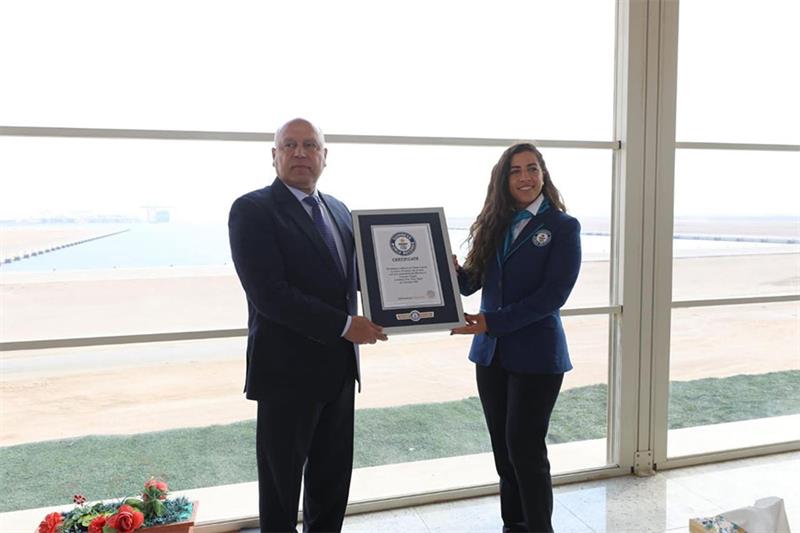
Egypt’s Ain Sokhna Port has been recognized by Guinness World Records as the deepest man-made port basin constructed on land, with a depth of 19 metres, the Ministry of Industry and Transport said on Monday.
Deputy Prime Minister for Industrial Development and Minister of Industry and Transport Kamel Al-Wazir received the certificate, which the ministry said reflects recent expansion works at the Red Sea port, a key hub within the Suez Canal Economic Zone (SCZone).
Ain Sokhna is being developed as a major logistics and transit centre serving Egypt’s eastern coastline and the Gulf of Suez, with the government aiming to boost export and import flows and strengthen Egypt’s role in global supply chains.
The ministry said ongoing development plans include the excavation of five additional port basins, each with a depth of 19 metres, with a total excavation volume of 120 million cubic metres. Dredging operations are underway, with planned dredging volumes reduced from an initial 70 million cubic metres by 25 million cubic metres following technical reviews.
The port has also been linked to a multimodal transport network through a 30-kilometre internal railway system connecting it to national rail lines, road networks, dry ports, and logistics zones.
As part of Egypt’s Vision 2030 transport strategy, the ministry plans to construct 70 kilometres of new quays with depths ranging from 18 to 25 metres, bringing the total quay length across Egyptian seaports to more than 100 kilometres. The strategy also targets expanding the national maritime fleet to 40 vessels capable of transporting up to 25 million tonnes of cargo annually.
Egypt has stepped up investment in port infrastructure nationwide. At Alexandria Port, a second floating storage and regasification unit (FSRU), Energos Power, with a liquefied natural gas storage capacity of 174,000 cubic metres, has recently entered service under a lease agreement with US-based New Fortress Energy.
The Egyptian Holding Company for Maritime and Land Transport has also signed a memorandum of understanding with Abu Dhabi Ports Group to develop logistics areas at Alexandria Port, including storage, customs warehousing, and re-export services.
At Ain Sokhna and Dekheila ports, Egypt has partnered with global shipping and terminal operators —including CMA CGM, COSCO Shipping, and Hutchison Ports—in projects valued at $1.6 billion to build, operate, and manage container terminals. Dubai-based DP World is also operating three major projects at Ain Sokhna Port, with the first phase of its logistics zone completed earlier this year .
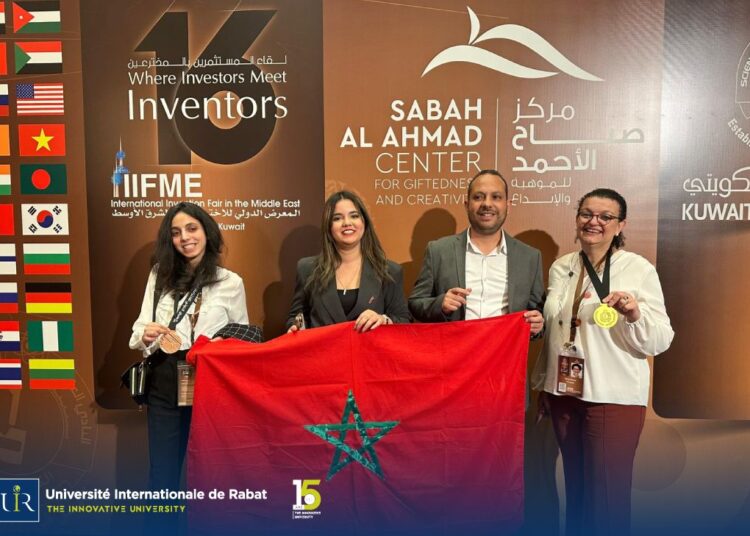
In addition to individual distinctions, UIR received an institutional Gold Medal in recognition of its academic excellence and strong commitment to innovation and research development.
The International University of Rabat (UIR) has once again gained international recognition after winning major awards at the International Fair in the Middle East
The event, held with the support of the World Intellectual Property Organization (WIPO) and the International Federation of Inventors’ Associations (IFIA), brought together innovators from around the world, highlighting cutting-edge research and technological advancements.
The fair highlighted two health-related innovations developed at UIR. The first received a Gold Medal for an innovative endodontic instrument designed by Professor Sonia Ghoul and Professor Abdelwahed Barkaoui from the university’s CRESS and LERMA laboratories.
The dental tool is designed to recover itself in case of fracture during a root canal procedure, a complication that can create serious challenges in dental practice. The innovation reduces risks for patients, lowers stress during procedures, and limits the need for invasive interventions by integrating a recovery mechanism directly into the instrument.
It introduces a new approach in endodontics by addressing potential technical failure as part of the solution itself, according to a statement from UIR.
The second award, a Bronze Medal, was granted to iRespire, a smart asthma monitoring system developed by Nouhaila Fraihi and Professor Ouassim Karrakchou at UIR’s TIC Lab.
The system relies on Edge AI technology to provide continuous and personalized monitoring for asthma patients. It combines a smart inhaler, an electronic stethoscope, environmental sensors, and a connected watch to analyze real-time physiological and environmental data.
Its goal is to predict asthma attacks before they occur and improve medical management through data-driven insights. The project represents a step toward more predictive and connected healthcare, UIR said.
In addition to these individual distinctions, UIR also received an institutional Gold Medal in recognition of its academic excellence and strong commitment to innovation and research development.
Founded in 2010, UIR has quickly positioned itself as one of Morocco’s leading higher education institutions. The university has strengthened its international reputation in recent years through global rankings and research achievements.
UIR entered the top 1,000 universities worldwide in the Times Higher Education World University Rankings and has ranked first nationally in the Impact Rankings, which measure universities’ contributions to the United Nations Sustainable Development Goals.
The university has also expanded its global academic partnerships, including a strategic collaboration with Mississippi State University in the United States to promote joint research and student exchange programs.
Meanwhile, its flagship Rabat Business School has earned international recognition in global management rankings, ranking 20th worldwide in the 2025 Financial Times Masters in Management (MiM) ranking.
The UIR’s leadership has celebrated the university’s achievement during its 15th anniversary in November, including the high employability rate of 93% one year after graduation.
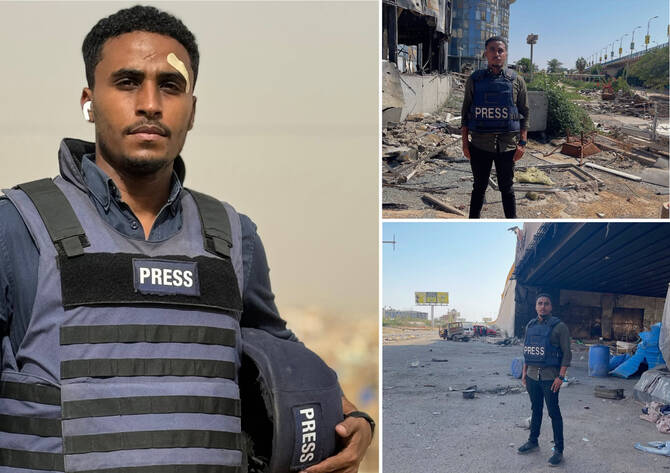
Almigdad Hassan describes his journey covering killings, hunger and disease
RSF continues onslaught as world fails to stop Sudan war
When war erupted in Sudan in April 2023, Almigdad Hassan, a 27-year-old pharmacy graduate from the University of Khartoum, had just begun his first job at a pharmaceutical company.
Within days, the explosions that trapped him in the capital pushed him into frontline war reporting for Saudi Arabia broadcasters Al Arabiya and Al Hadath.
It was a decision that would later earn him an international free press award for courageous coverage of one of the world’s most underreported and inaccessible humanitarian catastrophes.
As most residents fled Khartoum, Hassan said he felt compelled to stay.
“Something inside me was driving me to stay, but I didn’t know what it was,” Hassan told Arab News after winning the Newcomer of the Year award from Free Press Unlimited, a Netherlands-based international press freedom organization.
“I just felt that this was my chance to use my talent in media to do something for my people and humanity.”
At the time, he took three days to accept Al Arabiya’s offer to become an official war correspondent, following a previous internship with the network.
He did not anticipate that the power struggle between the Sudanese Armed Forces and the Abu Dhabi-backed Rapid Support Forces would spiral into a protracted war — now nearing its third anniversary and widely described as the world’s worst humanitarian crisis.
“Things escalated so quickly in Khartoum. Main roads and bridges were blocked, armored vehicles and military checkpoints were seen everywhere,” Hassan said, referring to the RSF’s seizure of Khartoum International Airport, the presidential palace, and several military bases in April 2023.
“Every time I carried my equipment and stepped outside to report, I did not know whether I would reach my assignment or make it back home. Every decision put my life at risk.”
He shared harrowing testimonies from survivors in displacement camps in El-Obeid, North Kordofan, where residents had fled violence in the RSF-controlled towns of Kadugli and Dilling in South Kordofan before their liberation during a major SAF army breakthrough last fortnight.
“I heard more than 10 accounts of grave human rights violations, including mass killings, torture, widespread gang rape, and arbitrary imprisonment,” Hassan said of his reporting last December.
Hassan recounted 15 months of reporting from RSF-controlled Khartoum before the SAF retook the capital last March, describing it as “the darkest time of my life”.
“Khartoum was hell back then. It was the worst place in the world in terms of security and the violation of every basic human right to a level no one can imagine,” Hassan said.
He recalled that the most harrowing scenes he witnessed came within the first week of the war, when “bodies of residents lay decomposing in the streets and were eaten by dogs.”
“This was the moment I realized our humanity was being erased, just as those bodies were slowly vanishing,” Hassan said, “but it reinforced my belief that documenting these horrors was my mission, no matter the risks.”
He reported attacks involving killings, rape, and arbitrary kidnappings carried out inside private homes. He also pointed to unofficial mass graves hastily dug into residential streets to bury the dead, while some bodies were left to decompose inside houses.
“The armed men would celebrate killing residents because anyone living in army-controlled areas was seen as supportive of the army,” Hassan said.
“These are not only media narratives. It is a reality people lived.”
Since the war began, both the RSF and SAF have been accused of committing atrocities. However, the RSF has been accused of genocide against non-Arab groups such as the Masalit, Fur, and Zaghawa tribes in West Darfur. Abu Dhabi has been accused of backing the RSF.
Last year, a detailed report produced by Amnesty International provides evidence for the presence of UAE armored personnel carriers and infantry fighting vehicles in Sudan being used by the RSF in particular. Amnesty also accuses the RSF of war crimes.
In August 2024, 15 months into the war, the UN-backed Famine Review Committee of the Integrated Food Security Phase Classification declared famine in North Darfur’s Zamzam displacement camp, which had been under RSF blockade — the committee’s first such determination in more than seven years.
Last November, the UN declared famine in RSF-controlled Al-Fasher, the capital of North Darfur, and Kadugli, the capital of South Kordofan, warning that a further 20 areas across Darfur and Greater Kordofan were at risk in what it described as “the world’s largest hunger crisis.”
Last fortnight, the global hunger monitor issued an alert saying famine thresholds for acute malnutrition had been surpassed in the contested North Darfur localities of Um Baru and Kernoi.
Hassan pointed to the lack of safety and severe movement restrictions in RSF-controlled areas, describing neighborhoods as “largely emptied of residents” and cut off, with no services or medical supplies.
By autumn 2024, months before Khartoum was reclaimed by the army, residents in some neighborhoods were dying from diseases such as dengue fever, with no access to basic medical supplies or care.
Hospitals, he said, were reporting at least four deaths a day.
During the outbreak, which also infected some of his fellow journalists, Hassan said he relied on his training as a pharmacist to assess the risks but was still “scared for my life, knowing the risk was high and there was little protection.”
He said he felt a responsibility to document both the military and humanitarian dimensions of the war, particularly in the absence of any rule of law or effective security presence.
People, he noted, were entirely dependent on humanitarian support at a time when aid organizations were denied access.
“It was hard to witness this as a human being, let alone document it as a journalist,” he said. “Even enemies have basic human rights that need to be maintained, but unfortunately, what I saw was that fighters and armed militia got used to the act of killing in a horrific manner.”
The RSF, he said, engaged in direct clashes that killed civilians while also burning entire villages and looting livestock, shops, and property. Once-bustling roads in Khartoum had become deserted, unrecognizable corridors of destruction.
According to UN figures, the conflict has displaced roughly 14 million people and killed hundreds of thousands.
Hassan said his work as a journalist allowed limited movement around Khartoum after complex security arrangements with both sides — a privilege unavailable to most civilians.
“Yet, we were often caught in crossfire and at risk of being killed by the other warring party, which viewed us as siding with the enemy,” he said.
“As journalists, we relied on solar power to charge our equipment and stay connected, which gave us more access than ordinary citizens. Even then, once we left our office — often our only safe space — we were completely isolated. If something happened to you in the streets, no one would know.”
Beyond the devastating loss of human life, Hassan said the violations extended to Sudan’s cultural heritage and national history.
Reporting from the aftermath of attacks on the presidential palace and the national museum, he said he witnessed the destruction and looting of artifacts tracing the country’s history since independence.
“I watched the country’s history being erased in front of my eyes,” he said, referring to damaged artifacts, gifts from earlier eras, and the destruction of classic cars once used by former presidents.
“I realized the brutality of this war when I saw people killing their own countrymen and destroying their own culture, heritage and history.”
Hassan described residents’ “hysterical happiness” in every area retaken by the army. Many, he said, likened life under RSF rule to “colonialism,” saying they were treated like foreigners rather than Sudanese.
Though both sides have been accused of violations, Hassan said people want a ruling authority that restores the basic dignity and human rights they lost.
In announcing the award, Free Press Unlimited said Hassan was recognized for his “dedication, courage, and ability to deliver compelling, accurate reporting under extreme conditions.”
Hassan said the recognition deepened his sense of responsibility toward humanity and strengthened his determination to continue reporting on the devastating war.
“With time, I understood the importance of what I do,” he said. “I realized how journalism can protect lives and deliver voices that would otherwise go unheard.”
He described the award as a shared responsibility with the international community. With his work now recognized globally, Hassan said his reach — and his mission — has only grown.
“It is no longer a job. It is my mission.”
source/content: arabnews.com (headline edited)
______________
Almigdad Hassan recounted 15 months of reporting from paramilitaries controlled Khartoum before the Sudan Armed Forces retook the capital last March, describing it as “the darkest time of my life.” (Supplied photos)
The Ministry of Culture has announced the inscription of five UAE heritage sites on the Islamic World Educational, Scientific and Cultural Organisation’s (ICESCO) List of Islamic World Tangible Heritage.
The announcement was made during the 13th session of the meeting of the Islamic World Heritage Committee (IWHC), held in Uzbekistan.
The newly inscribed UAE sites include Saruq Al Hadid in Dubai, alongside four sites in Sharjah – Al Faya site in the central region, the historic towers and forts of Khorfakkan, the Al Nahwa, and Wadi Al Helo.
Sheikh Salem bin Khalid Al Qassimi, Minister of Culture and Chairperson of the National Commission for Education, Culture and Science, said, “The inscription of these new sites on the List of Islamic World Tangible Cultural Heritage marks a significant milestone that reflects the depth and richness of the UAE’s cultural heritage, as well as the country’s commitment to protecting and preserving its historical sites. This recognition further underscores the UAE’s position as an active and effective member in the efforts led by ICESCO to preserve heritage across the Islamic world.”
He added, “We will continue to strengthen the presence of Emirati heritage on international heritage lists by documenting our historical sites and supporting initiatives that promote heritage sustainability and ensure its protection for future generations.”
The Minister of Culture also commended the efforts of the Ministry’s working teams, including the National Commission for Education, Culture and Science, for their pivotal role in coordination and follow-up with ICESCO. He lauded the contributions of the Ministry’s partners, including the Dubai Culture and Arts Authority and the Sharjah Archaeology Authority.
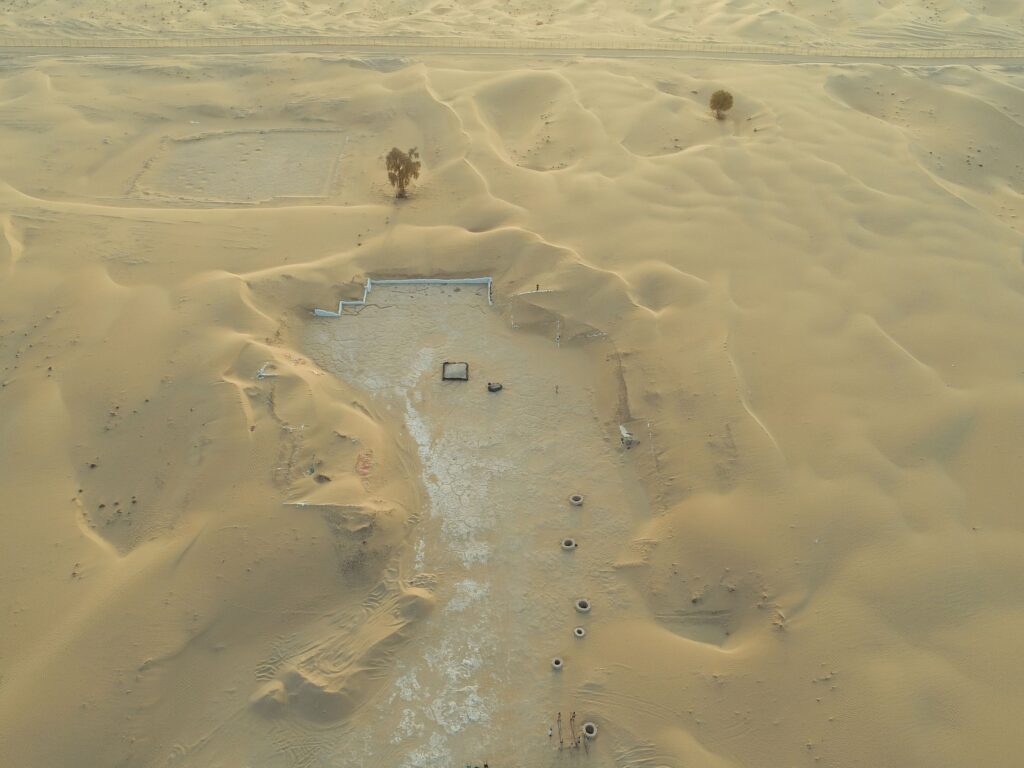
Located approximately 95 kilometres from the city, Saruq Al Hadid is one of the Dubai’s most remarkable archaeological sites. Discovered in 2002 after His Highness Sheikh Mohammed bin Rashid Al Maktoum, Vice President, Prime Minister and Ruler of Dubai, noticed dark patches in the sand dunes during a flight, the site was later identified as remnants of metallurgical slag from ancient smelting activities. Archaeological studies indicate that the site dates back to the Early Bronze Age (2600 BCE) and remained active until the Late Iron Age (550 BCE), making it one of the richest mining and metal production sites in the south-eastern Arabian Peninsula.
Excavations have uncovered thousands of historical artefacts, including bronze, pottery, and stone tools, a variety of weapons, gold and silver ornaments, seals, beads, and metal snake figures. These findings reaffirm the site’s standing as an advanced industrial hub for metal smelting during the Iron Age.
In the emirate of Sharjah, ICESCO inscribed the “Faya Palaeolandscape,” one of the region’s most significant heritage sites and an exceptional testament to early human settlement. Additionally, the inscription included Wadi Al Helo in the Eastern Region, recognised as the most ancient testimony of copper mining in the Arabian Peninsula during the transitional period from the Neolithic period.
The site stands as a comprehensive testament of the local development of copper mining techniques, reflecting the ancient relations between the valley’s inhabitants and the environment by adapting to its geological and geographical factors. Al Wadi contains rock carvings that date back to the Bronze Age as well as the remains of historic villages, making it living example of the integration between natural and cultural heritage and an ideal destination for ecotourism such as hiking and camping.
ICESCO also inscribed the historic towers and forts of Khor Fakkan, which form an integrated defensive system reflecting the city’s strategic importance over the centuries. These include the Portuguese Fort and Al Adwani Tower. These fortresses have played a pivotal role in protecting the harbour, standing as a living testament to the advancement of fortress architecture from the 14th century to the 20th century. The significance of the Portuguese Fort lies in being the only surviving triangular-shaped fort that remains standing in the eastern Arabian Peninsula to this day.
Located south of Khor Fakkan, the Al Nahwa was inscribed on ICESCO’s List for its unique archaeological and cultural value. The area features rock carvings from various historical periods, ranging from the Bronze Age to modern times. These carvings have been documented by using cutting-edge three-dimensional digital technologies as part of scientific efforts to preserve this human heritage and its endurance.
This new inscription builds on the UAE’s efforts to strengthen its presence on the Islamic World heritage lists. Previously inscribed sites include the Settlement and Cemetery of Umm An-Nar Island in Abu Dhabi, Abu Dhabi Sabkha, Khor Dubai, Sharjah: the Gate to the Trucial States, Sir Bu Nair Island, Sharjah’s Cultural Landscape of the Central Region, Ed-Dur Site in Umm Al Quwain, Al Bidya Mosque in Fujairah, as well as Dibba Al Hisn Fort, Fili Fort, and Wadi Shees in Sharjah.
“Festivities and celebrations affiliated with the Journey of the Holy Family in Egypt are now on UNESCO’s Representative List of Intangible Cultural Heritage of Humanity,” professor Nahla Imam, heritage consultant at the Egyptian Ministry of Culture and country representative of Egypt at the 2003 Convention of Safeguarding the Intangible Heritage of UNESCO, told Ahram Online on Wednesday.
Imam credited the move to the efforts of the Egyptian ministries of culture and foreign affairs, adding that Egypt’s efforts were almost unanimously supported by UNESCO’s Inter-Governmental Committee.
This is the seventh intangible cultural heritage element that Egypt enlists in UNESCO. Prior to the Journey of the Holy Family, the Egyptian manual-textile industry in Upper Egypt was put on the UNESCO List of Intangible Cultural Heritage Sites in Need of Urgent Preservation.
Egypt first enlisted El-Sirah El-Helalya (The Epic of Beni Helal) in 2008, Tahteeb(Stick Art) in 2016, the Aragouz Puppet in 2018, and the knowledge and traditions affiliated with palm trees in 2019.
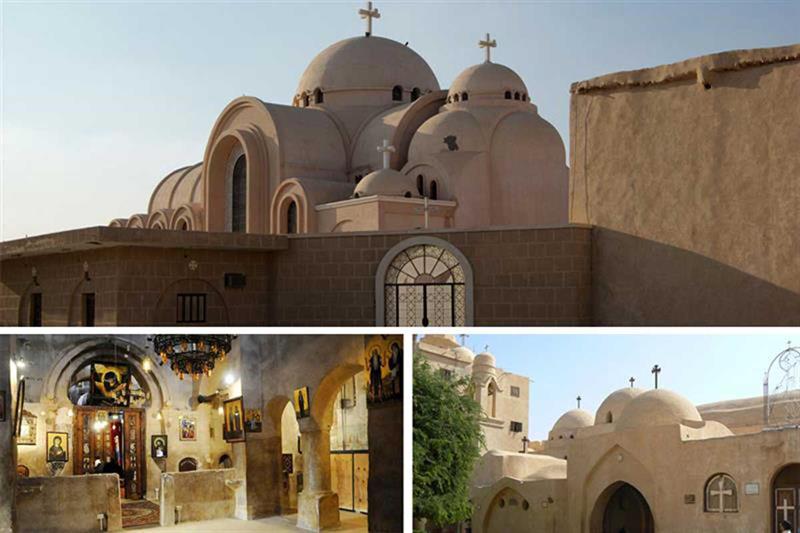
According to the accounts of historians, the Holy Family spent around four years in Egypt.
Their trip started in the Sinai at Al-Farma, on the border with Gaza, where they arrived after fleeing Jerusalem. Their trip ended in Durnaka, Assiut, venue of the famous Monastery where the feast of Virgin Mary is celebrated in August each year.
Great Omari Mosque in Gaza being hit by Israeli strikes in the two-year war muffled by an uncertain ceasefire
With major military operations halted, Palestinians are gaining a clearer picture of the destruction
Muneer Elbaz remembers the joy of visiting the Great Omari Mosque in Gaza with his family, praying at a site where people have worshipped over centuries as empires came and went.
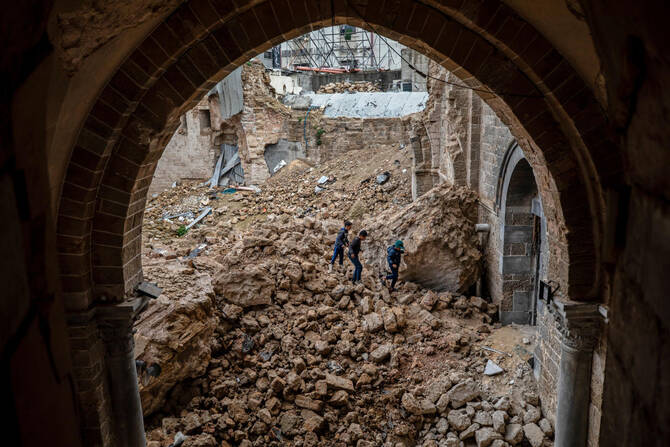
Today, much of the mosque stands in ruins – like most of Gaza – after being hit by Israeli strikes in the two-year war muffled by an uncertain ceasefire. The sight of the rubble brings to mind “a tree that had been uprooted from the land,” said Elbaz, a Palestinian heritage consultant involved with recovery work at the site.
Israel’s military offensive killed over 72,000 Palestinians, according to Gaza’s Health Ministry, and erased entire extended families.
Gone too is some of the heritage of a land with a rich history going back to ancient times. The mosque was built on a site where a Byzantine church had stood, and changed hands and even religions as one invader followed another.
With major military operations halted, Palestinians are gaining a clearer picture of the destruction. Some organizations are trying to save what they can at historical sites, even as full-scale restoration – and the broader reconstruction of the territory – face major obstacles.
Dozens of sites were damaged
Israel launched its offensive after Hamas-led militants killed some 1,200 people, mostly civilians, and took another 251 hostage in the Oct. 7, 2023, attack. The military accuses Hamas of concealing military assets beneath or near heritage sites, as well as other civilian structures.
The UN cultural agency, in an ongoing assessment based on satellite images, says it has verified damage to at least 150 sites since the start of the war. They include 14 religious sites, 115 buildings of historical or artistic interest, nine monuments and eight archaeological sites.
They are fragments of Gaza’s soul, connecting Palestinians to a place and a history that many fear is at risk of being erased.
“These sites were an important element that solidifies the presence of the Palestinian people on this land and that represents the continuity of their cultural identity,” said Issam Juha, co-director of the Center for Cultural Heritage Preservation, based in the Israeli-occupied West Bank.
“They want to erase the Palestinian identity and Palestinian heritage and … to remove any connection that keeps the Palestinian society clinging to this land,” he said.
The center is doing urgent rescue work at the badly damaged Pasha Palace, which housed centuries-old artifacts, many of which appear to have been looted, Juha said. Among the missing items are an Ottoman-era Qur’anic manuscript, jewelry from the medieval Mamluk era and a Roman-era sarcophagus from which only some fragments have been recovered, according to Hamouda Al-Dohdar, an expert working at the site.
The Israeli military said it struck “a Hamas military compound and an anti-tank missile array” at the site. It said its forces struck a “terror tunnel” at the Omari mosque. It did not provide evidence in either case.
Amir Abu Al-Omrain, an official with Gaza’s endowments ministry, part of the Hamas-run government, denied the allegation about the mosque.
UNESCO does not have a mandate to assign responsibility for the damage it assesses.
An independent commission established by the UN’s Human Rights Council said it was not aware of any evidence of a tunnel shaft in the mosque. Noting the Israeli allegations about the mosque, it said that even the presence of a “legitimate military objective … would not have justified the resulting damage.” Israel has previously accused the commission of bias.
The centuries-old Saint Porphyrius Orthodox church complex, which had been sheltering displaced Palestinians, was also hit in an Israeli attack early in the war, causing deaths and injuries. The military said it had targeted a nearby Hamas command center. UNESCO said the church complex was moderately damaged.
Some of Gaza’s heritage sites appear to have been spared. UNESCO said it has found no evidence of damage at the Saint Hilarion Monastery, dating to the 4th century.
Under international law, cultural property should not be targeted or used for military purposes.
The Israeli military says it takes the sensitivity of cultural and religious sites into account, aims to minimize damage to civilian infrastructure and adheres to international law.
A rich history
Artifacts and accounts stretching back thousands of years testify to Gaza’s long history of commerce and conflict. Egypt’s pharaohs sent chariots through the low-lying coastal strip in their wars with the Hittites in modern-day Turkiye. Traders in Gaza did brisk business with the ancient Greeks.
The Omari mosque, named for Islam’s second caliph, was initially built in the seventh century. Centuries later, the Crusaders converted it into a cathedral, and it went back to being a mosque after they were expelled, said Stephennie Mulder, associate professor of Islamic art at the University of Texas at Austin.
The mosque was damaged during World War I, when the British shelled Gaza in their campaign against the Ottoman Turks, and was later rebuilt.
“The building itself told the story of Gaza’s past as a crossroads of trade, armies, empires, and religious traditions,” said Mulder. “For many Gazans, the Omari mosque stood as a beloved symbol of multiplicity, resilience and persistence.”
More than stones
Mohammad Shareef, 62, remembers attending prayers at the mosque with his father when he was a child, and studying for exams in its quiet confines. Years later, he would bring his own children there. He wept when it was hit.
“We were raised in it and around it, and there’s no stone here that we haven’t stepped on,” he said. “For the people of Gaza, this is their history.”
The loss will feel particularly acute during the Muslim holy month of Ramadan, which begins later this month. Before the war, thousands converged on the mosque for Ramadan prayers amid a festive atmosphere. This year, a large tented structure has been erected.
In recent days, workers have been filling wheelbarrows in the shadow of a damaged minaret.
Hosni Almazloum, an engineer working at the site, said the mosque’s prayer hall ceiling had collapsed and columns had crumbled. He said it could be rebuilt, if construction supplies are allowed in. For now, teams have been focused on recovery and preventing further damage, sifting through and storing stones.
The US-brokered ceasefire agreement, which halted most of the fighting in October, gives no timeline for Gaza’s reconstruction, which may prove impossible if Israel maintains the blockade it imposed on the territory when Hamas seized power in 2007, after the militant group won Palestinian elections in 2006.
Many historic sites suffered from neglect before the war. The blockade and previous Israel-Hamas wars, along with a lack of resources and urban sprawl, posed challenges. Hamas-run authorities have leveled parts of what archaeologists believe was a Bronze Age settlement to make way for construction projects.
Elbaz says that before the ceasefire, grief was a luxury he couldn’t afford – his family was just trying to survive.
“What would you begin to cry over?” he asked. “The historic mosques or your home or your history or your children’s schools or the streets?”
Now, as he processes the war’s toll, he sometimes weeps, away from the eyes of his children.
“Gaza is our mother,” he said. “We have memories everywhere – in this tree, this flower, this garden and this mosque. Yes, we cry over every part of Gaza.”
source/content: arabnews.com (headline edited)
______________
Palestinian children walk through rubble at the Great Omari Mosque in Gaza City on Feb. 12, 2025. With major military operations halted, Palestinians are gaining a clearer picture of the destruction in Gaza. (AP)
The internationally acclaimed Damascene painter Sara Shamma will represent Syria at the 61st International Art Exhibition – La Biennale di Venezia, which scheduled to run from May 9 through November 22, 2026.
This year’s pavilion titled ‘The Tower Tomb of Palmyra’, will be represented at the National Pavilion of Syria, located in the open-air courtyard of the University Institute of Architecture of Venice’s Cotonificio campus. The exhibition is commissioned by the Syrian Ministry of Culture, and curated by Yuko Hasegawa, art critic and director of the 21st Century Museum of Contemporary Art, Kanazawa, Japan.
“I had long envisioned building a tower inspired by the Palmyra tomb housed at the National Museum of Damascus since 2016,” Shamma told Al Arabiya English. “When the Ministry of Culture invited me to undertake this project, I felt deeply honored and profoundly excited.”
The National Museum of Damascus holds remnants of Palmyra’s tower tombs, first- to third-century AD limestone mausoleums distinguished by their multi-level design and carved reliefs. Although several tower tombs, such as the Tower of Elahbel, were destroyed in situ in 2015 during the Syrian civil war (2011–2024), key sculptural artifacts remain housed at the National Museum of Damascus.
The project involves the construction of a tower-like structure inspired by the Tower Tombs of Palmyra. The installation will house between 18 and 20 paintings, each measuring approximately two meters by two meters. Visitors will enter the structure and experience the works from within, surrounded by the paintings arranged along a polygonal interior – either nine or ten sides – with an overall interior height of approximately four meters.
The tower itself will rise to a height of approximately fifteen to sixteen meters, with a diameter of roughly ten meters. Due to its scale and architectural complexity, the project requires serious commitment. Work on the paintings began in October 2025 and is in its final stages. The Venice Biennale is one of the oldest and most significant international Biennales, bringing together national pavilions from around the world, each striving to present its strongest cultural representation. “While awards are presented, the true importance of the Biennale lies in participation itself rather than in prizes,” Shamma said.
Syria was unable to participate in the 2024 edition. The 2026 Biennale therefore marks the country’s first participation following the collapse of the former Syrian regime, signaling a new chapter in Syria’s cultural and international presence. This moment reflects a period of profound transition, and the emergence of a new Syria.
The project will include sound recordings from the Palmyra desert, along with scent elements derived from the region’s plants, sand, and soil.
Hasegawa has mentioned in a press release that “‘Sara Shamma’s work transcends national narratives, using Palmyra’s history to explore universal ideas of memory, loss, and cultural resilience. The exhibition invites audiences to experience these themes through an immersive artistic experience, and positions Syria firmly within global contemporary art discourse.”
Shamma’s practice centers on hyper-realistic oil painting as a means of examining death, grief, and the human condition, often articulated through self-portraiture and representations of children. Addressing themes commonly suppressed within contemporary culture, her work reflects on loss and mortality as formative forces of meaning.
Influenced by the Syrian conflict, her work draws on lived experience and photography to create powerful, emotionally charged images.
In previous interviews, Shamma has also described beginning her paintings without a predetermined outcome, working directly on the canvas, while drawing on a consciously induced subconscious state. Her work has received international recognition, with works included in prominent public and private collections across the world.
Shamma’s final exhibition in Syria before the outbreak of the civil war took place at the Art House in January 2011. Titled Birth, it presented a series of works created during her pregnancy, radiating a profound sense of optimism, joy, and serenity.
At the beginning of the Syrian civil war in 2011, Shamma adapted by bringing parts of her studio into her home to continue her work. By the end of 2012, however, a car bomb explosion near her home prompted her to relocate to Lebanon, her mother’s homeland.
Shamma relocated to London with her family in 2016 on an Exceptional Talent Visa, following twenty years of sustained professional and personal engagement with the city.
From November 2024 to January 2025, the National Museum of Damascus presented Sara Shamma: Echoes of 12 Years, a poetic installation of 27 large-scale works spanning the full breadth of her practice and reflecting a twelve-year psychological and philosophical journey.
Shamma continues to live and work between London and Damascus.
______________
Sara Shamma is shaped by the Syrian conflict. Working from life and photographic references, she uses oil paint to achieve hyper-realism, incorporating transparent lines and movement to convey distance and an expansive emptiness. (Supplied)
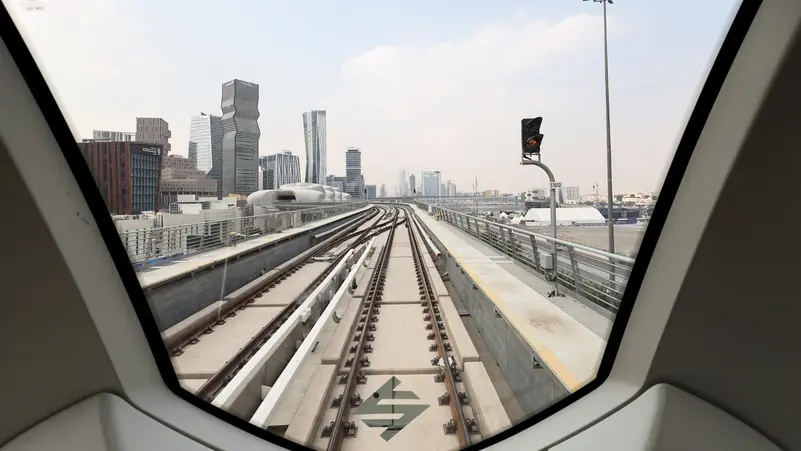
The Riyadh Metro has been recognized as the world’s longest fully driverless train network, breaking a Guinness World Record, the Saudi Press Agency (SPA) reported on Friday.
“The achievement reflects the Kingdom’s rapid progress in developing modern and sustainable transportation systems,” the report said.
The Riyadh Metro was officially inaugurated in December 2024. Its network comprises six lines, 85 stations and a total of 176 kilometers (109 miles) and is expected to reduce the city’s traffic. It operates fully driverless on all lines managed through advanced central control rooms equipped to monitor operations.
“This achievement highlights the efforts of the Royal Commission for Riyadh City in adopting smart and sustainable urban transport concepts, and its commitment to innovation and development in establishing modern infrastructure that enhances the quality of life in the capital and supports the goals of Saudi Vision 2030,” the report said.
Vision 2030 aims to strengthen the non-oil economy sectors.
A view from inside of the green line of Riyadh Metro, as it approaches the King Abdullah Financial District Metro Station in Riyadh, Saudi Arabia. (File photo: Reuters)
Cancer Run™ 2026 presented by Cleveland Clinic Abu Dhabi and organised by Plan b Group has achieved a historic milestone by setting a new Guinness World Records™ title for Most Nationalities in a Run at its Abu Dhabi edition on Sunday at Hudayriyat Island.
Supported by Abu Dhabi Sports Council, the event witnessed the participation of 71 nationalities, uniting cancer warriors, runners, families, communities, cultures, and health advocates from across the country in solidarity to combat cancer.
The event has etched itself as a one-of-a-kind annual campaign to promote regular cancer screening, general awareness, and active lifestyles across the UAE, aligning itself with the nation’s goal to create a healthier, happier society. It also aligns with Abu Dhabi’s recent announcements on cancer awareness, research, and treatment, the latest being the opening of a high-potency facility to manufacture oncology drugs.
The event featured 1km, 3km, 5km, and 10km categories, ensuring that families, beginners, fitness enthusiasts, and professional athletes could all take part. Hydration stations and medical support were available along the routes to ensure participant safety and comfort.
Dr. Harmeek Singh, Founder and Chairman of Plan b Group, said, “The Guinness World Records™ title aptly reflects what collective action can achieve. At Hudayriyat Island, Abu Dhabi, we witnessed people from all walks of life come together to support a noble cause and express solidarity against an illness that not only affects patients, but also people around them.”
The Dubai edition of Cancer Run™ 2026 is set to take place on 7th February at Dubai Festival City, supported by the Dubai Sports Council. The event is expected to witness a larger crowd and greater enthusiasm, promoting collective awareness and solidarity against the disease.