Arabs & Arabian Records Aggregator. Chronicler. Milestones of the 25 Countries of the Arabic Speaking World (official / co-official). AGCC. MENA. Global. Ist's to Top 10's. Records. Read & Enjoy./ www.arabianrecords.org
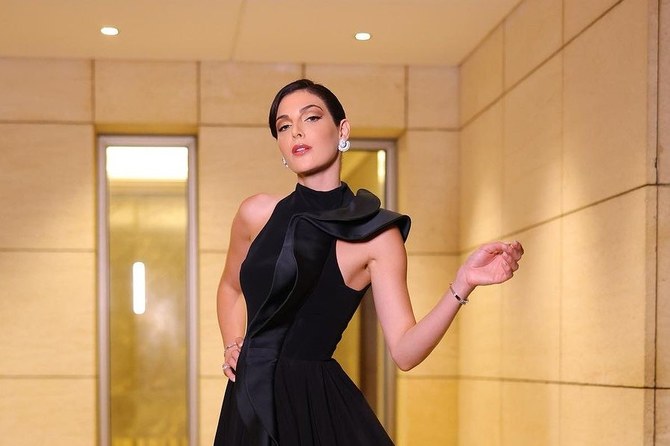
British Lebanese actress Razane Jammal, who broke out internationally with a role in Netflix’s adaptation of DC Comics’ “The Sandman,” picked up an award for Best Lebanese Actress on the Arab and Global Scene at the AFDAL International Festival in Lebanon.
The actress, who has previously starred opposite Hollywood actor Liam Neeson in “A Walk Among the Tombstones,” attended the gala evening wearing a black gown by Beirut-based label Azzi & Osta.
The star, who is the brand’s Middle East ambassador, was featured in a shoot for the new capsule collection, Dior Or.
Jammal told Hia magazine at the time: “Giving up is not an option, because despite the obstacles faced by anyone on their journey, they should be completely ready to seize the opportunity that arises.”
In “The Sandman,” Jammal plays Lyta Hall, a woman who dreams of her dead husband each night, slowly realizing that he is not a figment of her imagination but is hiding out in the dream world to be with his wife.
It is a part that Jammal managed to play truthfully with subtlety — a subtlety for which she credited her mother.
Jammal, who was raised in Beirut, told Arab News: “I’ve always been extra, and my mom was far more subtle than I am. I had to fine-tune myself to vibrate on her frequency, a frequency that was very sweet and very raw and vulnerable and nurturing. I took that from her.
“I grew up having a simple, community-based life in a place where you have 500 mothers and everyone feeds you and you feel safe — even if it’s not safe at all. At the same time we went through so many traumas, from civil wars to assassinations to losing all our money in another financial crisis.”
source/content: arabnews.com (headline edited)
_____________
British Lebanese actress Razane Jammal picked up an award for Best Lebanese Actress on the Arab and Global Scene at the AFDAL International Festival in Lebanon. (Instagram)
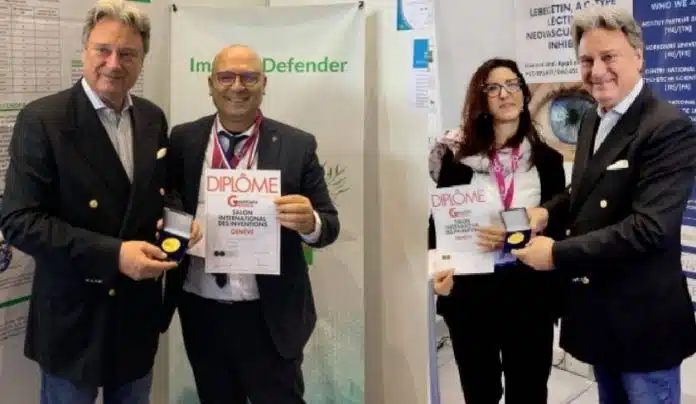
This is a new consecration for Tunisia on an international scale. This is the International Exhibition of Inventions Geneva 2023, one of the largest events dedicated to invention organized by the World Intellectual Property Organization and the Swiss government. Two gold medals were awarded to Erij Messadi, researcher, and Mounir Bezzarga, professor, for their inventions.
Tunisia causes a stir with two revolutionary inventions
The two Tunisian winners were distinguished among a total of 1,000 other inventions from 50 different countries, thanks to the gigantic potential of their projects.
Dr. Erij Messadi, representative of the Institut de Pasteur, presented a one-of-a-kind project at this prestigious event. Baptized “Lebecetine, Lectin type C, as an inhibitor of neovascularization”, it was able to capture the attention of the public and was able to win the gold medal with congratulations from the jury. His innovative invention aims to demonstrate the crucial role of Lebecetine in blocking the formation of new blood vessels, which could slow the progression of several diseases such as cancer.
The ImmunoDefender project won in the Q category. Designed and produced by Dr. Mounir Bezzarga to fight against COVID-19, this winning invention continues to receive awards and shine on an international scale. After winning a prize at TICAD and another at the Euro-Mediterranean Intellectual Property Conference, this plant-based project was on the way to winning the gold medal with congratulations from the jury at the Geneva fair.
Beyond the obstacles, Tunisia continues to shine
Despite the turbulent political scene and the difficult economic situation, Tunisia continues to shine thanks to the exploits of its talents. Indeed, the country is always represented on the podium of international events, especially those dedicated to technologies and inventions. Tunisian inventors like Erij Messadi and Mounir Bezzarga are often awarded for their inventions covering several fields. All this bears witness to remarkable innovation and dynamism on the Tunisian scene.
This immense potential can only be an incomparable asset for our Tunisia. The future therefore looks promising in this area.
Mohamed Helmy led Berlin hospital department, faced persecution under Nazi racial laws
‘It’s unfathomable to me, this type of courage and integrity,’ says artist
An Egyptian doctor who saved a Jewish family in Germany during the Second World War is being celebrated with a Google Doodle, the BBC reported.
Mohamed Helmy was born in Sudan in 1901 to an Egyptian father and German mother. In 1922, he traveled to Germany to take up medicine, and later became the head of a urology department at a Berlin hospital.
Amid the growing persecution of non-Germans in the country, Helmy was arrested twice and prevented from marrying his German fiancee. He also lost his hospital position.
The Egyptian physician aided the family of one of his Jewish patients following the introduction of racial laws, at one point disguising a teenage girl, Anna Boros, in a headscarf, and calling her his niece.
Helmy’s courage was honored in the Google Doodle, which was launched by Berlin-based artist Noa Snir on what would have been the Egyptian’s 122nd birthday. It depicts Helmy, in his doctor’s clothing, sheltering a family with outstretched arms.
Snir said: “I think Helmy’s case is an especially interesting one as he himself suffered persecution due to his background and ethnicity, and that still didn’t stop him from helping as many people as he could. It’s unfathomable to me, this type of courage and integrity.”
Helmy and the Jewish girl he saved stayed in contact long after the war until his death in 1982.
He was posthumously given the Righteous Among the Nations award by Yad Vashem, Israel’s Holocaust memorial site, in 2013
source/content: arabnews.com (headline edited)
___________
Google Doodle honored Dr. Mod Helmy, an Egyptian-German medical doctor who risked his life to rescue Jewish people during the Holocaust. (Google)
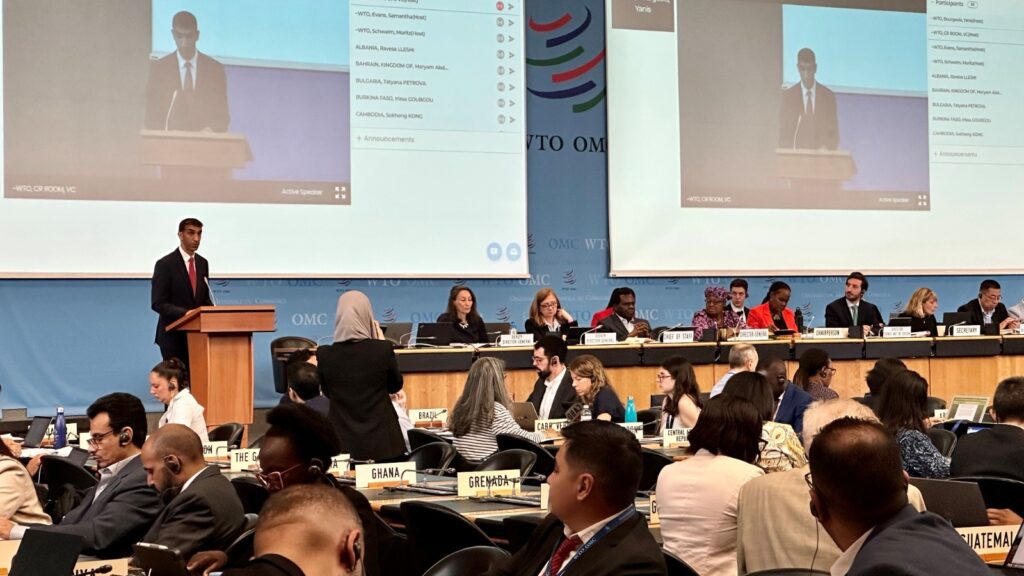
The General Council of the WTO has elected Dr. Thani bin Ahmed Al Zeyoudi, Minister of State for Foreign Trade, as Chair of the World Trade Organisation’s 13th Ministerial Conference (MC13).
The Ministerial Conference, attended by leading representatives from the 164 countries and customs blocs that make up the WTO, will take place in Abu Dhabi in February 2024.
MC13 comes at a critical time for world trade, and the conference will build on the outcomes of MC12, review the performance of the multilateral trading system, make decisions on the future work of the WTO, and set up the roadmap for MC14.
“This is a pivotal moment for world trade,” commented Al Zeyoudi. “As a Ministerial Conference, we have to tackle pressing issues and challenges, consider all the forces shaping the future of trade and come up with clear solutions, and challenge ourselves to take actionable decisions that move the needle on making trade more efficient, inclusive and sustainable.
“At the heart of all of this is the need to modernise trade and embed technology across supply chains, and we look forward to working closely with all the members of the WTO to make real progress at MC13. Our goal must be driving forward momentum for more change at the conference in Abu Dhabi next year, but also in the years to come, and I have the utmost confidence in our collective ability to make this happen.”
The announcement was made during the WTO General Council in Geneva, Switzerland, where he met with the WTO Director-General, Ngozi Okonjo-Iweala.
During their meeting they discussed the preparations for MC13, in addition to the landmark inclusion of trade as a thematic day at COP28, which is set to take place in Dubai later this year.
Dr. Thani delivered his first address as Chair at the General Council, where he stressed the importance of building resilient trade frameworks to tackle today’s challenging landscape.
In his address, he called for focused and decisive deliberations amongst WTO members ahead of MC13, and commented, “Trade policy extends far beyond the scope of trade itself; it is about shaping our common future. It is our collective responsibility to contribute to a predictable, rules-based, and open trade and investment environment that creates prosperity for all – and this is precisely why the success of MC13 is so imperative.”
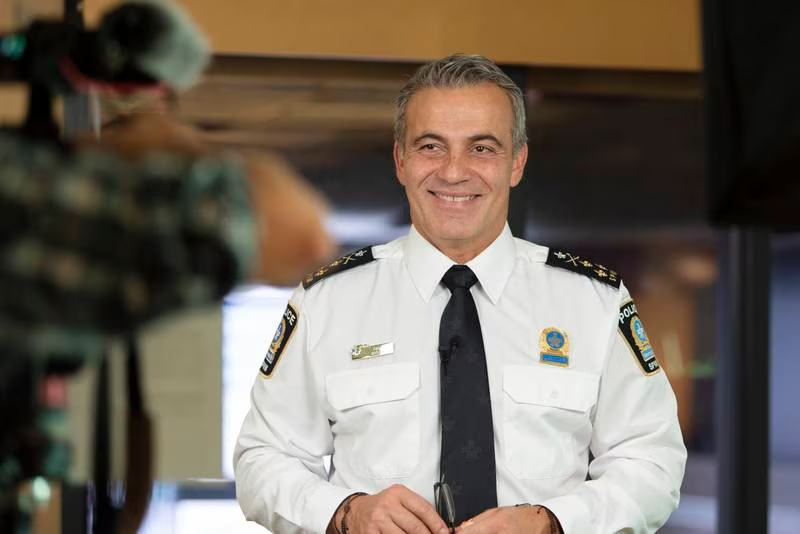
Fady Dagher is the first minority-background officer to head Canada’s second-largest force.
A map of Lebanon hangs in Chief Fady Dagher’s office in the grey stone headquarters of Montreal’s police force. It is a constant reminder of where he is from and the place he hopes to return to.
“For me, it helps me to stay connected to my roots and not to forget where I come from,” Mr Dagher said.
The 55-year-old Lebanese-Canadian officer, who moved to Canada when he was 17, is the first person from a minority background to lead Montreal police in the force’s nearly 200-year history.
His appointment in January was the culmination of a lifetime of service to his adopted homeland.
“I always felt I had a debt to the Montreal community,” Mr Dagher told The National. “They welcomed me so well and it was a duty for me to serve them.”
Softly spoken with a slightly gravelly voice, Mr Dagher said that when he came to Canada in 1985 his original plan was to go to university and then return to Abidjan in the Ivory Coast, where his father ran a manufacturing company. But a chance encounter with a police officer drew him to a different life, despite strong opposition from his father.
“Oh my God, he lost it,” Mr Dagher recalled with a chuckle.
Not even an unplanned trip from his beloved father could dissuade Mr Dagher from pursuing a career in law enforcement.
“I didn’t see my father from 1985 to 1991 and he came right away to discourage me.”
While policing may not have held the same allure and status in Lebanon and Ivory Coast as it did in Canada, Mr Dagher has brought the values of both places to his role leading Montreal’s nearly 5,000 officers.
“In Lebanon and Africa, we really have the community spirit deep in us and in the police, if you don’t have the community spirit, you cannot be close to the community and you cannot find your resolve to apply the law,” he said.
Mr Dagher has championed a community approach that involves immersing officers in the neighbourhoods they patrol.
The police chief leads by example. Earlier this year, he spent five days living and sleeping at various Montreal homeless shelters to better understand the struggles faced by the city’s homeless population.
“There is no way you can lead without walking the talk,” Mr Dagher said.
At the heart of his approach to policing is a Lebanese ethos.
“I want to be able to be inside those houses, sit with them, cook with them, clean with them, eat with them and see what their stories are,” he said.
He is hoping he can help to transform a police force that is facing a severe shortage of personnel and a city grappling with a sharp rise in gun violence.
Mr Dagher estimated that the force is 20 per cent to 30 per cent short of the officers it needs. A huge part of his first few months on the job has been to go on a charm offensive trying to attract new recruits.
“That’s my first priority,” he said. “To be able to recruit and to keep the recruit is huge.”
He’s looking at immigrant communities and hoping his own career can help new Canadians see a potential future in the ranks of the Service de Police de la Ville de Montreal.
Like many cities across North America, Montreal recorded a sharp increase in violent crime during the pandemic, a trend that continued in 2022.
Mr Dagher said the force was actively looking at ways to reverse that trend and was optimistic it would.
In terms of gun violence, “last year was the worst year that we went through”, he said, but noted that since he took over in January gun violence appears to be down, a trend he hopes will continue through to the end of the year.
Mr Dagher, who signed a seven-year contract, is determined to help recharge the department, but he dreams of having one more professional act after he retires.
“I am hoping that one day I will finish my career as ambassador of Canada in Lebanon, so I can go back to where I come from,” he said.
It would be the cherry on top of an exceptional life and allow Mr Dagher to spend time closer to his ancestral village of Bikfaya in the Mount Lebanon region.
Even while he is busy leading Canada’s second-largest police force, his mind and heart are never far from the small Mediterranean country that generations of Daghers have called home.
Throughout his busy career, he said, Lebanon has always held a restorative power.
“Every time I go back to Lebanon my heart beats better, again and again. My heart is in good health when I go to Lebanon because I feel welcomed,” he said.
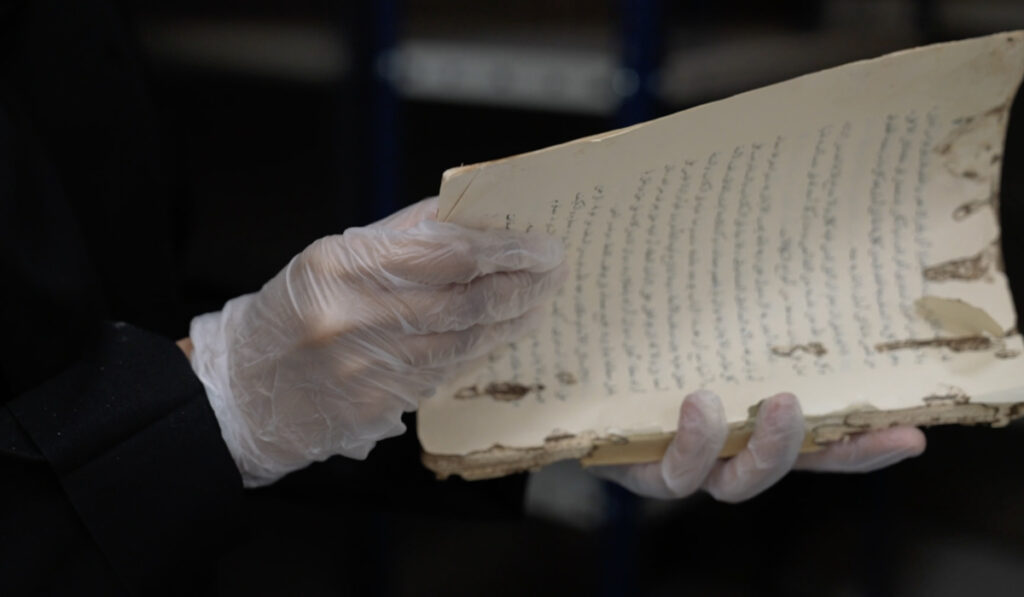
The newly established restoration center at the King Abdulaziz Public Library in Riyadh has succeeded in preserving more than 3,000 rare scientific materials of cultural heritage. This includes photographs, documents, maps and rare books, as well as manuscripts.
The center was able to restore rare images depicting the old city of Diriyah, showcasing its location surrounded by a sea of palm trees.
The center restored 415 rare images of the city of Jeddah. The team of experts were also able to also restore 117 rare books, including their leather covers and internal pages.
In addition, the center restored a group of Saudi currencies, issued on 14 Dhu Al-Qa’da 1372 AH, corresponding to July 25, 1953 AD, when the Saudi Monetary Agency issued what was then known as the “receipts of pilgrims.” These were lightweight banknotes distributed and used during Hajj, starting at ten Riyals, of which 5,000 were printed with phrases in both Arabic and English.
The restoration center rehabilitated more than 615 rare documents and restored a series of rare magazines.
The center also cleaned up 2,235 rare and valuable maps in preparation for their restoration and preservation. The most notable was a map of the continent of Africa and the Arabian peninsula, drawn by Abraham Ortelius in 1570 AD.
The restoration center was inaugurated in late 2022, and has served as a space to handle artifacts carefully. Careful consideration is given to each item to maintain and preserve these pieces of history for future generations.
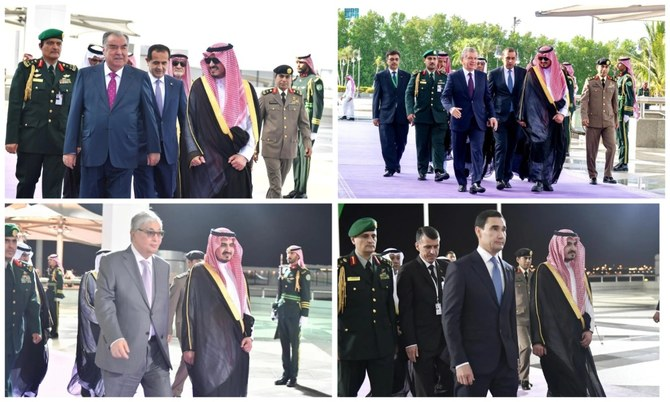
Saudi Arabia’s Crown Prince Mohammed bin Salman welcomed on Wednesday the heads of delegations participating in a summit of Gulf Cooperation Council and Central Asian countries.
Participants in the Jeddah summit include the presidents of Kazakhstan, Kyrgyz Republic, Tajikistan, Turkmenistan, and Uzbekistan.
From the GCC side, the Emir of Qatar Sheikh Tamim bin Hamad Al-Thani, the Crown Prince of Kuwait Sheikh Meshal Al-Ahmad Al-Jaber Al-Sabah, the Vice President of the UAE Sheikh Mohammed bin Rashid are attending.
Oman and Bahrain’s rulers are being represented by Sayyid Asaad bin Tariq Al-Said and Sheikh Nasser bin Hamad Al-Khalifa respectively.
Sheikh Nasser praised the active role played by the Kingdom in enhancing cooperation and coordination among GCC countries and consolidating friendship and joint cooperation with other countries.
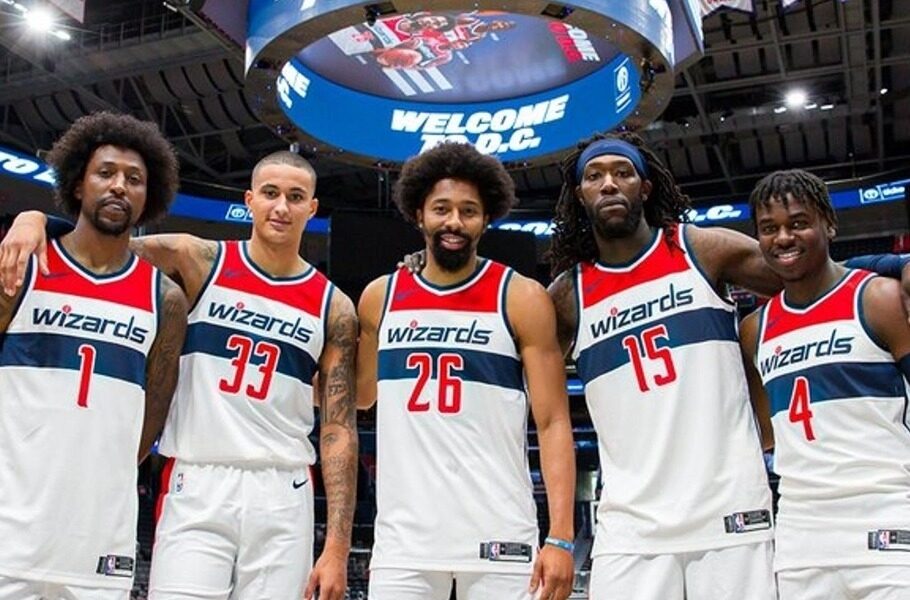
A report by the Financial Times has said that the country’s sovereign wealth fund, Qatar Investment Authority (QIA), has taken a stake in the owner of Washington’s professional basketball and hockey teams in US sport.
As per the report, the fund is paying $200mn for a 5% stake in Monumental Sports and Entertainment (MSE) in a deal that values the owner of the National Basketball Association’s Washington Wizards, the Women’s National Basketball Association’s Washington Mystics and the National Hockey League’s Washington Capitals at $4.05bn.
The report also mentions that the investment from QIA, at an estimated $450bn in assets, comes less than a year after the NBA amended its bylaws to allow sovereign wealth funds to invest in clubs.
The QIA said, “As one of the largest integrated sports and entertainment companies in the country, MSE’s platform provides unique opportunities and scalability for growth and partnerships”.
As per the report, people familiar with the Monumental deal said that the QIA was taking a stake in the group as a financial transaction to gain exposure to a company with a diverse range of assets. As per reports, QIA will not gain board representation as part of the transaction.
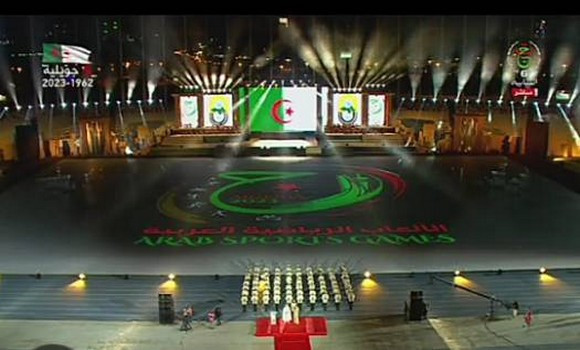
PM chairs opening ceremony of 15th Arab Sports Games.
On behalf of the President of the Republic, Abdelmadjid Tebboune, the Prime Minister, Aimene Benabderrahmane chaired the opening of the 15th Arab Sports Games organized by Algeria from on 5-15 July at Mohamed-Boudiaf Olympic Complex in Algiers, with the participation of nearly 2,000 athletes representing 22 Arab countries.
The opening ceremony of the 15th Arab Sports Games hosted by Algeria (July 5-15) started Wednesday in the Mohamed Boudiaf Olympic Complex in Algiers, in the presence of Prime Minister Aymen Benabderrahmane, members of government and guests from various countries and organizations.
While winning an Olympic medal is a personal goal for thousands of athletes, for 24 nations it is a dream that has only ever come true once. Tokyo2020.org looks at the glorious moment and the impact it had on the lives of the athletes who achieved it.
The background
Sudan made its Olympic debut at Rome 1960 and since then the country has participated in most of the Olympic Games.
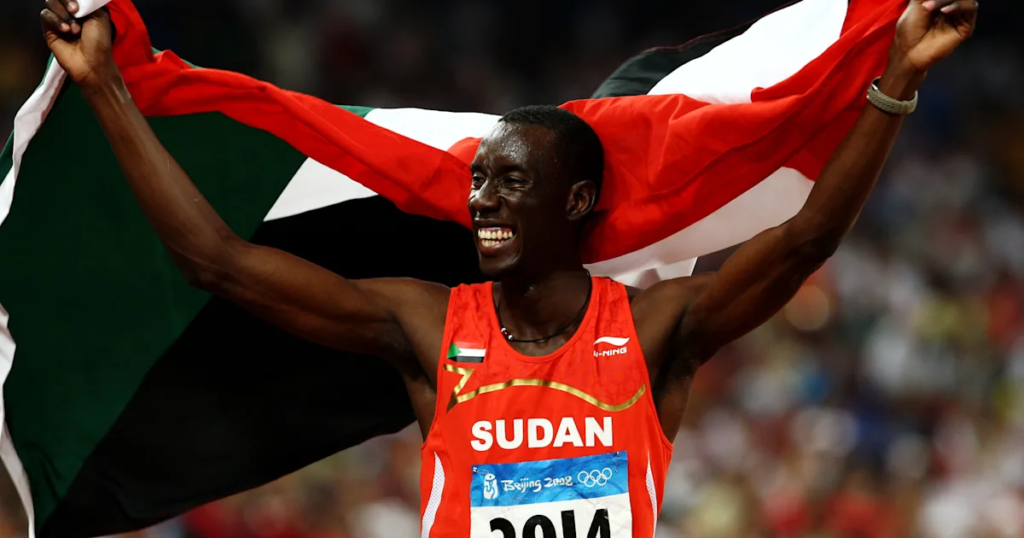
Despite its nearly 50 years of participation in the Olympics, Sudan’s first medal on the world’s greatest sporting stage didn’t come until Beijing 2008, when Ismail Ahmed Ismail won silver in the men’s 800m.
Born in a Darfur farming tribe, Ismail was introduced to athletics at school. Surprisingly, instead of 800m, he started as a 3,000m runner and participated in 1,500m races as well. After watching his performance in long-distance races, the then national athletics coach Omer Khalifa advised him to move down to 800m. So he did and went to win the National Junior Championships.
In 2002, Ismail participated in the World Junior Championships in Kingston, Jamaica and finished fifth in a time of 1:47.20. Two years later, he had his first Olympic experience at Athens 2004, where he made to the 800m final after a personal best in the semi-final. But he would go on to finish last in the final.
In an interview with IAAF in 2008, Ismail explained that he was not optimistic at the prospect of winning at the Games and was exhausted in the final.
“I just wanted to do my best,” he said.
History in the making Al though Ismail continued improving his performance in 800m, since Athens he had been troubled by injuries and only took part in a few races throughout 2007. But he did not allow this setback to seize his dreams on the track.
“I knew I was going to come back. My coach (Jama Aden) was the one talking to me. I ran in the African Championships (2008, in Addis) and I was 2nd. I know I can do it again,” he said in the IAAF interview.
Somali-born Jama Aden is an Olympian himself and had coached Abdi Bile to a world title in 1987. He saw great potential in Sudanese runners like Ismail.
Aden’s confidence became a driving force behind the athletes, who trained on a land troubled by conflicts and poverty. According to a report by The Christian Science Monitor back in 2008, Ismail and his teammates had to use old paint cans filled with concrete for weight training and would run at the track at the never-completed athletics stadium surrounded by rubble. They also had to finish training before sunset as there were no floodlights.
Thanks to a rebound in early 2008, Ismail made it to Beijing 2008 together with another home favourite Abubaker Kaki, who ran a world junior 800m record of 1:42.79 at the Oslo Bislett Games in June 2008.
But a small injury stopped Kaki in the 800m semi-final in Beijing with Ismail making the final. This time, he did not let the chance go.
Placed at lane eight, Ismail had a relatively slow start but then he sped up on the second lap to pass reigning world champion Alfred Yego of Kenya. He kept the momentum until the finish line to finish behind Wilfred Bungei of Kenya. Clocking 1:44.70, he won Sudan’s long-awaited Olympic medal, a silver.
Life-changing impact
Ismail’s historic win in Beijing has another huge significance on the world outside sport. His success came in a time when Sudan was facing an unprecedented political crisis. To him and his teammate, Beijing was a chance to show people the positive side of Sudan.
After securing the country’s first Olympic medal, according to AP, people in Sudan hailed Ismail as a national hero and the picture of him wrapped in a Sudanese flag landed him on the front pages of the country’s newspapers.
Quoted by the Sudan Media Centre, Ismail said, “I can’t find words to express my joy. This is an achievement for my country first and then for me. I was able to achieve this honour because of a lot of hard training.”
With his achievement at the Beijing 2008 Games saw Ismail became the flagbearer at the Opening Ceremony of London 2012. However, in London he failed to make the 800m final.
At Rio 2016, no Sudanese athlete participated in the men’s 800m.
Scrolling through Sudan’s Olympic record, one could easily notice that athletics has been their major field of competition. Among the 81 Olympic participants, 33 of them are in athletics, followed by 17 in boxing. With Ismail’s historic breakthrough, there is a fair reason to expect Sudanese athletes to mark another milestone in the future.