Arabs & Arabian Records Aggregator. Chronicler. Milestones of the 25 Countries of the Arabic Speaking World (official / co-official). AGCC. MENA. Global. Ist's to Top 10's. Records. Read & Enjoy./ www.arabianrecords.org
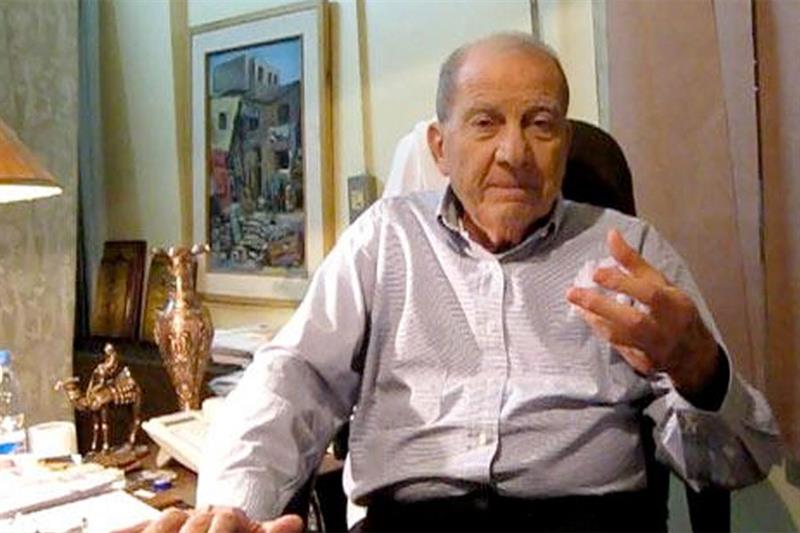
Prominent Egyptian gynaecologist and author Mohamed Abul-Ghar won on Sunday the State Nile Award in Science and Advanced Technological Sciences.
Minister of Higher Education and Head of the Scientific Research and Technology Academy Mohamed Ashour announced that Cairo University’s Professor at the Faculty of Medicine Dr Mohamed Abul-Ghar and Mansoura University’s professor at the Faculty of Medicine Dr Hassan Abul-Enein won the State Nile Award in Science and Advanced Technological Sciences.
“It is the state’s recognition of scientists’ efforts in advancing the nation and building the new republic and knowledge economy,” Ashour said on Sunday in a press conference at the New Administrative Capital.
Abul-Ghar started, with a group of medical doctors, Egypt’s first-ever centre for in vitro fertilisation (IVF).
Abul-Ghar, 82, received the Egyptian National Award for Scientific Excellence in 1999. He also received honourary membership of the European Society for Human Reproduction and Embryology in 2004 and honourary membership in the International Federation of Fertility Societies in 2000.
Abul-Ghar has also been active politically as he established, with other university professors, the 9 March Movement for the Independence of Universities during the rule of the late President Mubarak. He was also among the spokespersons of the National Association of Change.
Following the ouster of Mubarak in February 2011, Abul-Ghar was among the founders of the left-liberal Egyptian Social Democratic Party.
Aside from his medical scientific career and political activism, the prominent gynaecologist established himself in recent years as a bestselling non-fiction author with a special interest in the modern history of Egypt, specifically the pre-1952 liberal era.
Among his bestselling books are Egyptian Jews in the 20th Century, The Egyptian Legion and The Pandemic that Killed 180,000 Egyptians.
Panthera co-founder Thomas Kaplan told Arab News the resolution will boost the work of wildlife champions worldwide, as well as those in the Kingdom
The Arabian Leopard has been etched into Saudi consciousness for thousands of years, he said, but is the most persecuted of all big cats and critically endangered
When the UN General Assembly voted this month to adopt a resolution designating Feb. 10 as International Day of the Arabian Leopard, Thomas S. Kaplan’s reaction was one of “absolute delight.”
The leopard has been etched into Saudi consciousness for thousands of years, he said, with the petroglyphs on AlUla’s ancient walls that depict the animal bearing witness to its significance to the Saudi people and their ancestors.
Having the importance of the Arabian Leopard now finally enshrined by the UN General Assembly is therefore “a major triumph for the Saudi people and for the Kingdom of Saudi Arabia itself,” Kaplan added during an exclusive interview with Arab News.
As co-founder of Panthera, the global wild cat conservation organization, and founder and chairperson of the Global Alliance for Wild Cats, Kaplan in 2019 signed an agreement with Prince Badr bin Abdullah, the Saudi minister of culture and governor of the Royal Commission for AlUla, to support regional and international conservation initiatives, at the heart of which is the Arabian Leopard Initiative to protect the critically endangered animal, which is indigenous to AlUla.
“The Arabian leopard is the most persecuted of all the big cats,” Kaplan said. “So having a champion like Saudi Arabia helping us to do the work that we do so passionately is really a gift from God.”
The UN resolution enshrining an International Day of the Arabian Leopard is “a clear win, both for the leopard and for the Kingdom,” he added. “It is in many respects a beautiful affirmation of one of the most ambitious environmental and conservation initiatives in generations: The restoration of AlUla as a cultural center point for the new Saudi Arabia is complemented by one of the most significant environmental restoration programs in the world.”
Wild cats play a critical role in ecosystems. They are considered an “umbrella species” when making conservation-related decisions, because efforts to protect them also indirectly protect many other species. They represent “Apex Predator Strategy Opportunities.” What this means is that a thriving wild cat population can help ensure the survival of its entire habitat.
Even the human population can benefit when the animals thrive, because they help boost tourism and shine a light on local communities. In the case of Saudi Arabia, such communities can become important parts of the Kingdom’s broader development agenda, leading to better local amenities and opportunities.
“In places where we have gone in to save leopards or jaguars or other animals that are part of the local tourist industry, we have always brought with (us) increased medical attention, building schools, building clinics, (showing) the local communities that not only do they have nothing to fear, but they have everything to gain by a thriving cat population, (and that) because of the leopard, there will be socioeconomic opportunities for their children,” said Kaplan.
“If in its own way the Arabian Leopard Initiative is something that not only gives people national pride, but gives those who live in the same habitat as the leopard even greater opportunities for their children, then this is a huge win.
“So the success of the Arabian Leopard Initiative becomes a signal to the Kingdom, and to the rest of the world, that Saudi Arabia has been successful in restoring the landscape. For these reasons, I believe that AlUla is one of the most transformational initiatives in the preservation of cultural and environmental heritage for future generations.”
None of this would have been possible, he said, without “the passion and commitment” of Crown Prince Mohammed bin Salman; Prince Badr; and Princess Reema bint Salman, the Kingdom’s ambassador to the US. “The revolution from above that has been implemented by the crown prince is the catalyst for all (the reforms that) followed, and the Arabian leopard is no exception,” said Kaplan.
“I have personal experience in engaging with the Crown Prince on the Arabian leopard and leopard conservation globally. He is truly committed not only to the Arabian leopard but also to advancing the cause of leopard conservation in other countries that are not necessarily playing catch-up like Saudi Arabia, but trying to stay ahead of the curve.
Regarding Prince Badr’s role, Kaplan said “everyone knows that (he is) the initiator of the Arabian leopard process. He is, in many respects, the father of the Arabian leopard program, for which I think he will go down in the history books.” Kaplan also had nothing but praise of Princess Reema.
“Anyone who has come into contact with Princess Reema in Washington DC, or elsewhere, immediately is presented with the passion of what the Arabian leopard means for the Kingdom,” he said.
“It’s not simply because the Arabian leopard is, in my mind, to Saudi Arabia what the panda is to China, an instrument of soft power, it’s much more than that. “The crown prince, Prince Badr and Princess Reema understand that the Arabian leopard is a symbol of national unity for Saudi Arabia. It is something that goes back thousands of years.”
The UN recognition of the animal’s importance will help boost the efforts of conservationists to save the leopard, Kaplan said.
“Being able to show the buy in of the international community allows us the freedom to show to environmental activists all over the world the significance of this initiative,” he added.
“It allows us to be able to evidence that the reintroduction of the Arabian leopard is real, that it has the full support of Saudi Arabia, that it is not some form of power exercise but it’s the product of passion.
“This in turn allows people such as myself on the international stage to be able to recruit the highest-quality experts to work with us in our field.”
Kaplan said the UN resolution will also aid the work of Saudi environmental and wildlife champions, including Catmosphere, a foundation established by Princess Reema to assist big-cat conservation efforts worldwide.
“Catmosphere has the potential to be the most important cat-conservation awareness program ever undertaken, not simply in the Middle East, but globally, and that was originated by a Saudi, by Princess Reema,” he said.
“It’s an extraordinary story. The impact that it can have on cat conservation is very obvious but, at the same time, the impact that can have on our agenda, which is to get people to see the Arabian Leopard as being Saudi Arabia’s panda, as being a symbol of commitment to the best practices in wildlife conservation, this is absolutely enormous.”
“When you combine the work that Prince Badr is doing at the Royal Commission of AlUla with the work of Catmosphere, what you see is an organic, Saudi-generated initiative and campaign to save the Arabian leopard and, as the crown prince asked us to do, to be able to help countries around the world save their leopards, so that rather than playing catch-up, they’re getting ahead of the curve, and are not in the same situation.
“This is an act of generosity to the world, and it’s coming from Saudi Arabia.”
source/content: arabnews.com (headline edited)
____________
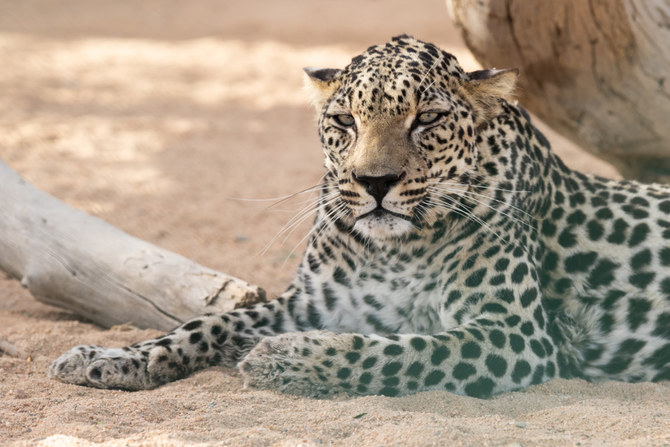
Arabian leopard(s) at the Arabian Leopard Conservation Breeding Center of Taif, Kingdom of Saudi Arabia. March 2023. / Panthera and Saudi Arabia signed an agreement in 2019 to protect the Arabian leopard, which is said to be “the most persecuted of all the big cats” in the world. (Photo courtesy of Arabian Leopard Breeding Center)
Gulf Food Production Company “Raw’a“, one of the leading companies in the State of Qatar in dairy production, won the Fine Taste Award for the year 2023, which is one of the most prestigious awards in the field of food and beverage industry worldwide, presented by the International Taste Company Institute in Brussels, Belgium. The evaluation was conducted by a committee of more than 200 international chefs with 86 Michelin Stars awarded to the finest chefs and restaurants around the world after competing with more than 120 international products.
136 hours of blind tasting
Rawa is the first Qatari dairy company to receive the award for good taste, after it was subjected to an organoleptic assessment that includes the visual, aromatic, flavour and textural aspects, in addition to the final mouth texture. The evaluation process took place over 136 hours of blind tasting conducted on hundreds of products from around the world, with the aim of selecting the best among them.
Award-winning product
The award-winning product is yogurt consisting of four grains and fruits containing (wheat – barley – oats – rye – apple fruit – coconut fruit). It is a healthy choice full of wholesome fruits and grains . It is the consumer’s first choice in market’s and best seller.
Mr. Mohammad Ali Al-Kuwari CEO of Raw’a, stated that Gulf food Co. pursues a strict strategy related to the quality and safety of its products and revolves around adopting several practices in its factories, including, for example, the activation of several internal audits on dairy products. In addition, the quality of these products is periodically tested.
The company is always keen to perform the above in order to ensure the safety of its products and their compliance with the highest standards of quality and taste before they reach the consumer.
It also pays great attention to developing its products with the support of a specialized research and development team to ensure that the company is compatible with the latest technologies that guarantee quality and taste while maintaining the characteristics that Qatari consumer is accustomed to in our range of products.
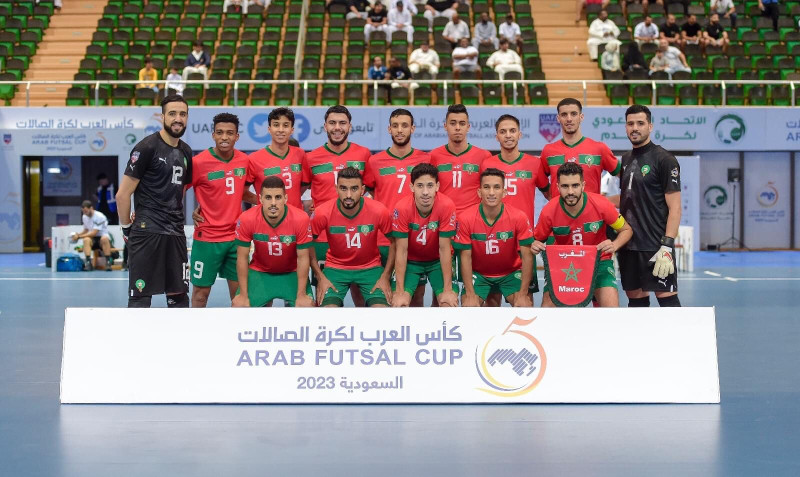
Morocco wins the Arab Futsal Cup for the third consecutive year, cementing their status as a force to be reckoned with in the world of futsal.
Morocco’s national futsal team achieved a remarkable 7-1 victory over Kuwait in the final of the 2023 Arab Futsal Cup, securing their third consecutive championship title.
Led by coach Hicham Dguig, the team made history as the most successful in the tournament’s record books.
Before the clash at the Ministry of Sports Hall in Jeddah, Kuwait faced off against Algeria, emerging victorious with a hard-fought 3-2 win, which propelled them into the finals.
They also faced off against Egypt in the quarter-finals, clinching a 6-2 victory.
The Moroccan team exhibited a remarkable performance throughout the tournament, overwhelming their opponents with a series of commanding victories. Their journey started with a 5-0 triumph over Comoros, followed by a 6-0 win against Lebanon.
In the knockout stages, the Atlas Lions continued their relentless pursuit of victory. They faced Saudi Arabia in the quarter-finals, delivering a 5-2 win, and then went on to conquer Libya with an impressive 5-1 victory in the semi-finals.
Moroccan coach Hicham Dguig’s squad members previously defeated Kuwait 4-2 in the group stage, entering the game with confidence and a clear understanding of their opponents’ strengths and weaknesses.
Morocco’s national futsal team is currently ranked 8th globally and leading the Arab world and Africa in the Futsal World Ranking (FWR).
Meanwhile, Kuwait is ranked the third highest-ranked Arab nation and ranked 41st globally.
With their awe-inspiring performance in the final, the Moroccan national futsal team has undoubtedly etched their names in the annals of Arab futsal history.
This remarkable achievement will not only be celebrated by the team and their fans, but will also inspire future generations of Moroccan futsal players to strive for greatness on both regional and international stages.
Beyond the Middle East, scores of towns and cities owe their names to the region’s far-reaching influence.
In 711, Arab commander Tariq ibn Ziyad led his victorious Berber army across the narrow strait between North Africa and Spain, where he took the first step towards founding what would become the Muslim state of Al Andulus.
To honour his achievement, the mountain where the army had first landed was named after him. They called it Jabal Tariq – Mount Tariq.
More than 1,000 years later, we now call it Gibraltar , the name evolving with the centuries that saw the peak regained by Spain, only to later become a British territory.
It is a reminder that Arab influence is often visible in plain sight, sometimes far from the boundaries of the Middle East.
The Mexican city of Guadalajara is known for mariachi music and two football World Cups. It has little to do with river beds or stones, yet that is the origin of its name: Wadi Al Hajarah, translated as the Valley of Stone from Arabic, or possibly the fortified valley.
Guadalajara in Mexico is also a product of conquest. In the 15th century, it was founded by a conquistador who named it in honour of his boss Nuno de Guzman, who had been born in the Spanish city Guadalajara, which once fitted the description. The city in Spain was named during the Muslim rule over the Iberian Peninsula.
The South Pacific island of Guadalcanal, more than 16,000 kilometres from Spain, was the scene of one of the bloodiest battles of the Second World War, with more than 30,000 Japanese and American soldiers killed in six months of fighting.
Guadalcanal was part of the British Solomon Islands, now independent, but had been colonised by Spain in 1568 and named after a town near Seville, one of the country’s biggest cities in the south. Seville was originally founded by Arabs as Wadi Al Qanal.
These names mark the rise and fall of empires – Arab, Spanish and British – and the conflicts that shaped our world, from the creation of the Caliphates, which once stretched from Afghanistan to Portugal, to the British Empire, on which it was said the sun never set.
London’s Trafalgar Square honours one of that empire’s great heroes, Admiral Lord Nelson, who defeated the combined might of the French and Spanish naval fleets in 1805.
The square and the column that carries Nelson’s statue take their name from the Cape of Trafalgar, where the famed battle of the same name took place offshore. It was first known as Tarif Al Ghar or Tarif Al Gharb, thought to mean either Cape of the Cave or the West, respectively, in the original Arabic.
It is estimated at least 4,000 Spanish words have their origins in Arabic. Benacazon, another city in Spain, was originally Bani Qasum, or the Sons of Qasum. El Burgo, in Malaga, is simply “the tower”, or “al burj”. In neighbouring Portugal, the popular holiday destination the Algarve was once Al Gharb, or The West.
Granada, the city at the heart of Islamic Spain, was first Garnata to the Arabs, although the meaning of the name is unclear and may be much older. Its famous palace, the Alhambra, comes from the Arabic “al hamra”, or “red one”, after the colour of its walls.
Arab reach in Europe stretched beyond Spain. The Italian island of Sicily was an emirate between 831 and 1091, with the city of Marsala, famous for its wine, probably either Marsa Ali – Ali’s harbour or anchorage – or Marsa Allah. Many smaller towns begin with the prefix “cala”, evolving from the Arabic word “qalat”, or fortification.
In France, the small town of Ramatuelle, close to Saint-Tropez, was once ruled by the Moors, who raided the Rhone Valley in the ninth and 10th centuries. At that period, it was called Rahmatallah, an Arabic phrase meaning “mercy of God”.
The Bosnian town of Gornji Vakuf-Uskoplje derives the second part of its name from the Islamic word “waqf”, meaning a charitable gift.
Thousands of kilometres away, and on another continent, the Comoro Islands in the Indian Ocean, owe their name to the Arabic “qamar”, or moon. The population converted to Islam as far back as the 7th century.
In East Africa, Mozambique was named by Portuguese colonisers after the offshore island of the same name. That Mozambique is actually derived from Mussa Bin Bique, the Arab trader who ruled the island before the Portuguese took over in 1544.
In the Middle East, though, many place names are derived from languages other than Arabic. Baghdad comes from Farsi for “God’s gift”; Byblos is Greek, as is Alexandria in Eygpt, which is named for Alexander the Great.
The city of Aleppo is called Halab, which is originally Aramaic, the language of the Hebrew Bible. Beirut is unclear but possibly a Phoenician word for a “well”.
And Amman, the capital of Jordan? This shows how complex the origin of place names can be. Three thousand years ago it was founded as Rabbath Ammon by the Ammonites, who spoke a Semitic language. Rabbath, originally used to mean “king”, but was dropped as the city eventually became Amman.
For around 50 years though, in the 3rd century, it was part of the kingdom of the Pharaoh Ptolemy II, who renamed it using a combination of the Greek words “brotherly” and “love” – “phileo” and “adelphos” – or Philadelphia.
Nearly 2,000 years later, the Quaker William Penn named a new town he was building in the American colony of Pennsylvania. Inspired by the sentiments of Ptolemy, he also called it Philadelphia in a state which, incidentally, also includes a Damascus, Hebron and Bethlehem.
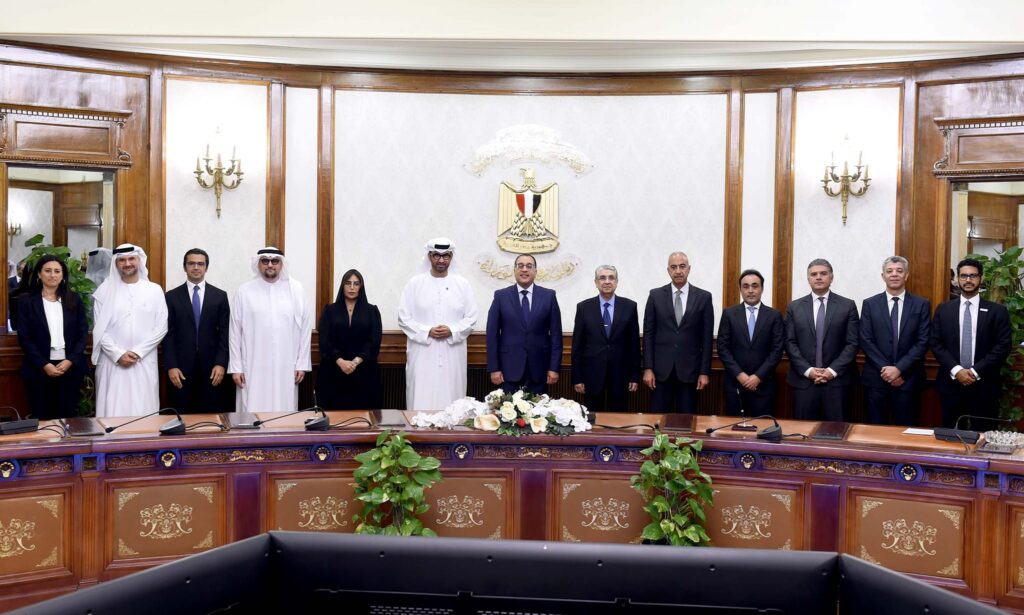
Prime Minister Mostafa Madbouli attended Tuesday evening the signing of an agreement between the Ministry of Electricity and Renewable Energy and the Abu Dhabi Future Energy Company (Masdar) to allocate a land plot for the establishment of a $10-billion wind farm whose capacity will be 10 gigawatts, making it the world’s largest.
Masdar will operate within a consortium that includes Infinity Power and Hassan Allam Utilities. The project is estimated to save $5 billion in natural gas costs per annum, and reduce carbon emissions by 23.8 million tons, which is nine percent of Egypt’s annual emissions.
The farm will produce 47,790 GWh of clean energy every year contributing in Egyptian efforts aimed at making the share of renewables in the energy mix 42 percent by 2035.
The initial agreement was signed on the sidelines of COP 27 held in Sharm El Sheikh in November, so as the signing was attended by President Abdel Fatah al-Sisi and Emirati counterpart Sheikh Mohamed Bin Zayed.
The managerial ability of Pep Guardiola was backed by Sheikh Mansour’s long-term project as City won a historic treble.
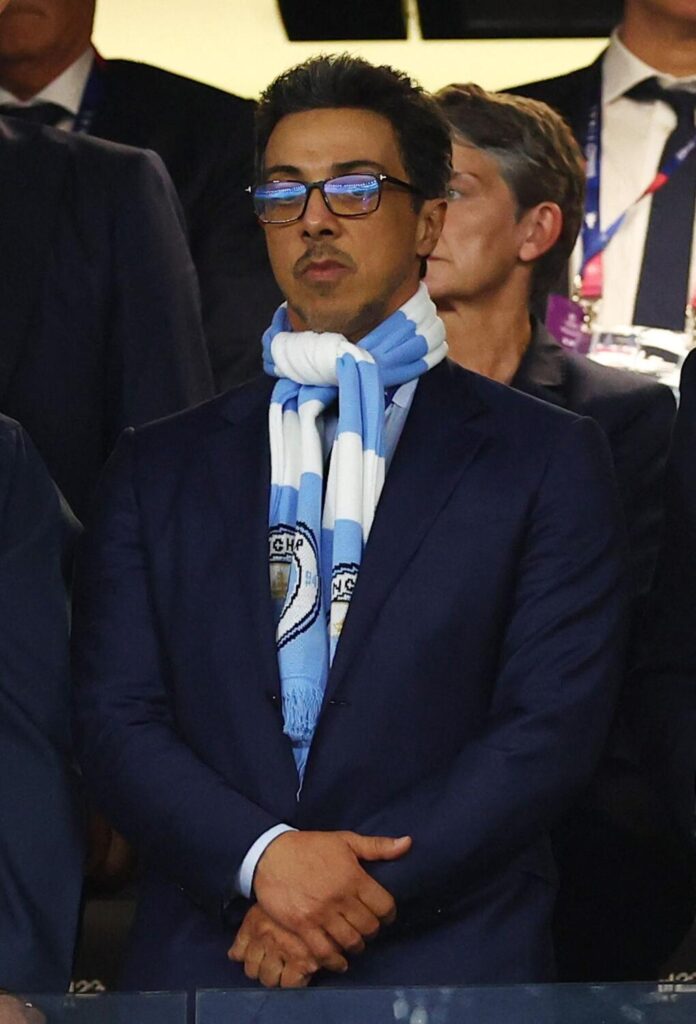
When Sheikh Mansour bin Zayed Al Nahyan, UAE Vice President, Deputy Prime Minister and Minister of Presidential Court, bought Manchester City in 2008, the club was languishing in the mid-table of the English Premier League.
It had just finished the previous season in ninth position, 32 points behind Manchester United, the champion of England and its famously successful city rival.
United then was brimming with world-class talent.
A team featuring Cristiano Ronaldo, Wayne Rooney, Carlos Tevez, Ryan Giggs, Paul Scholes, Rio Ferdinand, Patrice Evra, Nemanja Vidic and Edwin van der Sar, United had also won the Champions League in 2008.
It was Sir Alex Ferguson’s second European triumph with United as manager following the famous treble-winning season in 1999.
So it was a couple of months after United enjoyed one of its greatest seasons that Sheikh Mansour made his foray into English football with a club that was never able to sit alongside the elites in the sport.
But the visionary UAE leader went on to change the footballing landscape in such a way that City is now football’s ultimate aristocrat.
So how did City, who completed a historic treble by winning the Premier League, FA Cup and the Champions League this season, become the most dominant team after Sheikh Mansour took over the club?
Long-term goal
Brazilian star Robinho joined Man City from Real Madrid in 2008. — Twitter
City did not become successful overnight despite the takeover from Sheikh Mansour in 2008.
It made a slow and steady progress and one that was backed by Sheikh Mansour in every step.
In the first season after the takeover, City could only finish 10th in the league despite acquiring a big-name player from Real Madrid, Robinho, the Brazilian superstar.
But City made gradual improvement and next season in 2010, the team became stronger after the arrival of Emmanuel Adebayor, Carlos Tevez and Kolo Toure.
Chelsea, United, Arsenal and Tottenham were the top four teams that season as City finished fifth, narrowly missing out on a place in the Champions League.
FA Cup triumph
The next season in 2011, City finally ended its trophy drought. A Carlos Tevez-inspired City won the FA Cup that season with a 1-0 win over Stoke City in the final – it was the team’s first major triumph since 1976.
City had reached the final with victory over United in the semifinal, the club’s first success in a knockout game against the bitter rival since 1975.
City then went on to finish third in the league, qualifying directly for the Champions League in what was another landmark for the club.
Premier League ecstasy
After breaking into the top-three of the Premier League, City turned on the style in England.
Sergio Aguero had just joined City from Atletico Madrid and the Argentina star made an instant impact.
City thrashed Tottenham 5-1 and humiliated United 6-1, signalling its arrival on the big stage as the big contender for the title.
The battle for the league title, though, was not easy with United bouncing back only to fall again.
It went to the last day with City needing a win against the Queens Park Rangers to pip United for the title.
But City was trailing 2-1 until the 91st minute in the dramatic last game of the season.
The Blues though scored an equalizer in the 92nd minute before Aguero found the winner in the last minute of injury time with a moment of magic, sparking wild celebrations on the field and in the stands.
It was City’s first league title in 44 years and it was the start of a golden era for the club.
Guardiola arrives
City had added one more Premier League title in 2014. Two years later, the club hired Pep Guardiola, who famously led Lionel Messi’s Barcelona to glorious triumphs during his four-year stint as manager of the Catalan club.
Guardiola arrived in City after a two-year spell at Bayern Munich.
A man famous for building teams that play eye-catching football, Guardiola was entrusted with the responsibility of making City a serial winner as well as an aesthetically pleasing team.
The Spanish coach imposed his style on the team and it won the league in 2017-2018 by collecting the highest points for a season.
City retained the Premier League title next season, its first successful defence of the title in history.
With world-class players in the team, City was producing mesmeric football as it also won two more league titles in 2021 and 2022.
But the biggest dream — the Champions League title — remained unfulfilled after defeat to Chelsea in the 2021 All-England final.
Historic treble
Sheikh Mansour’s Manchester City was finally rewarded in Europe for its perseverance.
City produced another masterclass in beautiful and brilliant football as Guardiola’s team won its third straight Premier League title, overcoming a spirited challenge from Arsenal.
The club then beat city rival United in the final to win the FA Cup.
And once it outplayed Real Madrid, the most dominant team in the history of European football, in the Champions League semifinal, City became the overwhelming favourite in the final against Inter Milan.
The Italians put up a big fight in the Istanbul final, but the superior quality of City made the difference as Rodri’s sumptuous goal separated the victor from the vanquished.
City’s wait to be European champion was finally over as it also became the first team since Manchester United to complete the treble.
It has taken the team 15 years since the takeover from Sheikh Mansour to scale the highest peak.
The long-term vision of Sheikh Mansour helped City become the king of European football.
The club has won seven Premier League, three FA Cup, six League Cup and the 2023 Champions League title in these 15 trophy-laden years under Sheikh Mansour’s leadership.
“One of the main reasons why this club became what we are is because of the people from Abu Dhabi, Sheikh Mansour, took over the club,” Guardiola said. “Without that, we would not be here.”
The biggest tribute City can pay to Sheikh Mansour now is by becoming the first team since Real Madrid to defend the Champions League title.
Sheikh Mansour bin Zayed Al Nahyan, UAE Vice President, Deputy Prime Minister and Minister of Presidential Court, attends the Champions League final. — Reuters
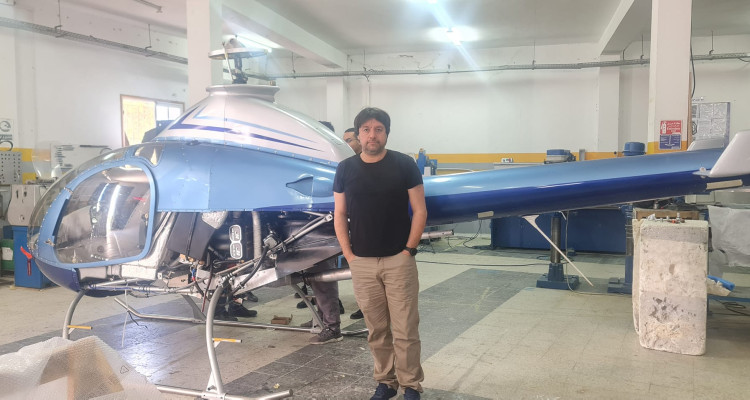
Avionav managed to export the first Tunisian-made helicopter. The Tunisia-based aircraft manufacturer company is gearing up to deliver more helicopters as it has embarked on the manufacturing of light utility helicopters. The company has been exporting its aircrafts to countries throughout Europe, Africa, the Middle East and the Americas.
Avionav is a Tunisian aircraft manufacturer that produces light aircraft for recreational and training purposes. The company was founded in 2007 in Mateur, Bizerte, by two Italian manufacturers. Later, a group of Tunisian engineers acquired it and relocated its main production facility to Sousse, Tunisia.
Avionav currently produces two models of light aircraft: the AV3 and the AV4. The AV3 is a two-seat, low-wing monoplane designed for training and recreational flying. The AV4 is a four-seat, high-wing monoplane that can be used for a variety of purposes including transportation, agricultural, advertising banner transportation, and surveillance. The company does also offer maintenance, repair, and overhaul services for its own aircraft as well as for other aircraft types.
“Since then, we’ve been doing our utmost to provide total customer satisfaction by providing high-quality, top-of-the-line products at 30% lower prices than our competitors,” Kamel said.
More than 1,300 of its models are currently flying, and roughly 40 light aircrafts (two to four passengers) are produced annually.
The company’s market includes the United States, Europe (Belgium, France, Italy, and Spain), Latin America (Brazil and Argentina), Asia/the Middle East (Pakistan, the United Arab Emirates, and Iran), and Africa (Tunisia, Algeria, Senegal). According to Kamel, new markets such as Costa Rica, the Czech Republic, and Qatar are being explored.
“Africa is an extremely lucrative market. We are presently in negotiations with Senegal and Mauritania,” he stated.
Any of the company’s aircraft can be delivered one month after being ordered. Which is “quite rare” in this industry, Kamel says with pride.
Due to its numerous advantages, the company chose carbon fiber for its Rally aircraft with large wings. It has certifications from ultralight aircraft manufacturers (ULM) and light sport aircraft (LSA).
While aspiring to become a boxing champion, Taghmaoui’s fascination with cinema eventually led him to pursue a career in acting.
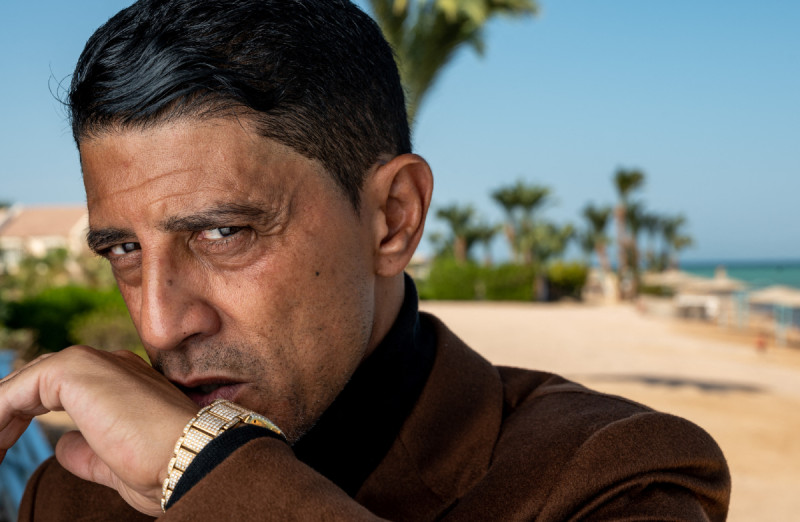
French-Moroccan Actor Said Taghmaoui has solidified his presence in the Hollywood industry, successfully securing various roles alongside renowned stars.
His latest endeavor sees him teaming up with Golden Globe nominee Mark Wahlberg in an upcoming feature film called “The Family Plan,” produced by Apple Original Films and Skydance.
Written by David Coggeshall, “The Family Plan” follows the story of a suburban father who finds himself on the run with his family when his past catches up to him.
The movie is directed by Simon Cellan Jones and produced by Wahlberg, Municipal Pictures’ Stephen Levinson, and Skydance’s David Ellison, Dana Goldberg, and Don Granger.
In addition to “The Family Plan,” Taghmaoui has also landed a role in the action-packed film “Tin Soldier,” which boasts an impressive cast including Oscar winners Jamie Foxx and Robert De Niro, as well as Scott Eastwood.
During a recent interview with French lecturer and essayist Idriss Jamil Aberkane, Taghmaoui opened up about his journey as an actor. He described himself as an “autodidact,” highlighting the fact that he didn’t attend school but instead pursued his passions with unwavering dedication.
Recalling his boxing days, the actor expressed how the sport played a significant role in his personal growth. He believes that either boxing chose him or he chose boxing, emphasizing its complexity and the introspection it demanded.
While aspiring to become a boxing champion, Taghmaoui’s fascination with cinema eventually led him to pursue a career in acting.
Born in France to Moroccan immigrant parents, Taghmaoui became a naturalized US citizen in 2008 and swiftly made a name for himself in the Hollywood industry.
Despite dropping out of school at a young age, his boxing talent propelled him to second place in his category in France. It was during this time that he met Mathieu Kassovitz, with whom he co-wrote the acclaimed French film “La haine” (1995), which earned the Best Director award at Cannes.
Since then, Taghmaoui has become a prominent figure in cinema and has expanded his repertoire to include films from various countries, such as Italy, Germany, the United States, and Morocco.
He has featured in Hollywood productions like “G.I. Joe,” “Wonder Woman,” “Traitor,” “John Wick,” and “The Forgiven,” showcasing his versatility and talent as an actor.
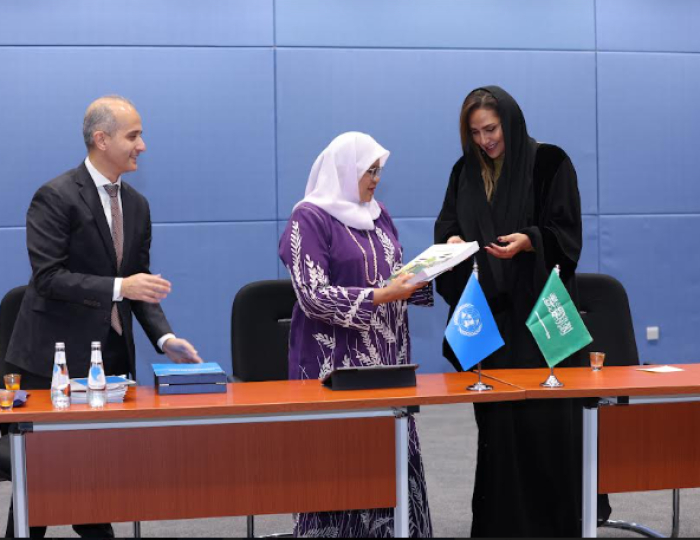
Her Royal Highness (HRH), Princess Lamia Bint Majed Al Saud, the Secretary General of Alwaleed Philanthropies, was reappointed as the UN-Habitat Goodwill Ambassador for the Arab region for a second term during a meeting held at the UN-Habitat premises in Riyadh.
As the first ever UN-Habitat Goodwill Ambassador for the Arab region appointed in 2020, HRH shed the light on key urban issues through her engagement with UN-Habitat activities and events, including the tenth session of the World Urban Forum 2020 and World Habitat Day Global Observance 2020.
HRH further advocated for topics, including Cities free from Violence against Women and Girls and COIVID-19 response in urban areas, as well as supported resource mobilization for a number of projects, targeting housing for the most vulnerable groups, COVID-19 response and climate action, spanning Iraq, Palestine, Sudan, Yemen, and Tunisia.
“I am greatly honoured to have been appointed for the second time as the UN-Habitat Regional Goodwill Ambassador for the Arab world. Our partnership with UN-Habitat will support our efforts to address issues around urbanization and its implications on societies, economies and environments. We promise to continue building bridges for a more compassionate, tolerant and accepting future along with our key partners.”
HRH signed her appointment letter in the presence of Maimunah Mohd Sharif, UN-Habitat Executive Director, Erfan Ali, UN-Habitat Regional Representative for the Arab States and Ayman El-Hefnawi, UN-Habitat Head of Office in Saudi Arabia.
“In the past three years during UN-Habitat’s cooperation with HRH Princess Lamia bint Majid Al Saud as UN-Habitat’s regional Goodwill Ambassador, HRH has shown the utmost commitment to the advocacy for the UN-Habitat mandate to realise more sustainable, resilient and inclusive cities,” Sharif commented.
UN-Habitat is keen on continuing the cooperation with HRH for the years 2022, 2023 and beyond in all relevant areas, including climate action, urban crisis response, housing and advocating the realization of better cities for all.