Arabs & Arabian Records Aggregator. Chronicler. Milestones of the 25 Countries of the Arabic Speaking World (official / co-official). AGCC. MENA. Global. Ist's to Top 10's. Records. Read & Enjoy./ www.arabianrecords.org
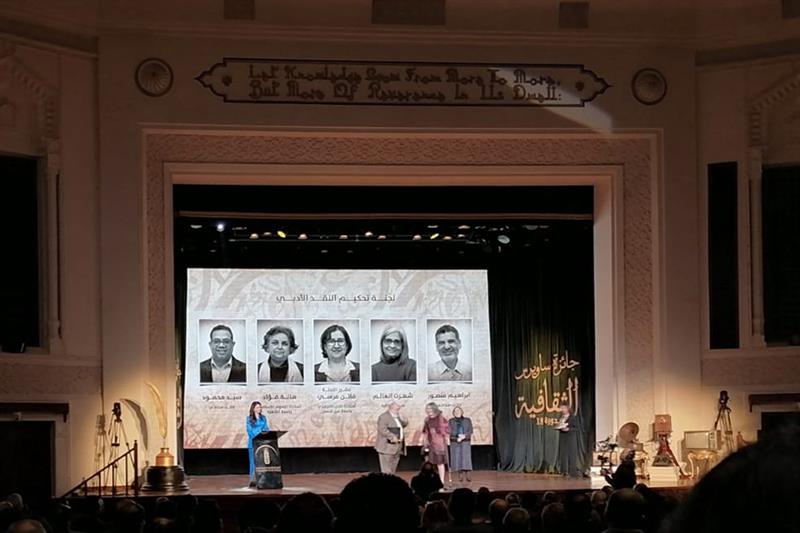
Why doesn’t the crocodile fly? : Meet the winners of Sawiris’ 18th Cultural Award, celebrated on 08th January 2023.
The annual event was held at Ewart Memorial Hall of the Tahrir Cultural Center, downtown Cairo.
The event was attended by many cultural and literature figures and artists and included a performance by the popular musical troupe Masar Igbari.
A New Prize
The event kicked off at 7 pm with a short speech by movie star Mahmoud Hemeda, followed by a mini-documentary celebrating 20 years of Sawiris Foundation’s contribution to social development through influencing the lives of about 700,000 people throughout Egypt.
Renowned Doctor and scholar Mohamed Abul-Ghar, member of the award’s board of trustees, introduced a special prize that went to the posthumously released book of late journalist Mohamed Abul-Gheit, titled ” I am Coming, Light”. Prominent writer Mohamed Shoeir, deputy of Akhbar El-Adab magazine, was the one who suggested that the prize go to Abul-Gheit’s book even though it hadn’t been on the list of entries for the competition. Abul-Gheit had been a celebrated journalist who passed away this December after a battle with cancer. The prize, which is worth EPG 150,000, will be given to his wife and child.
Children Books
The prize for Best Children’s book under 12 years old was a tie between writer Ahmed Korany’s book Lemaza La yateer Al Timsah (Why Doesn’t the Crocodile Fly?), illustrated by Nemma Zidan, and writer Ashraf Abul-Yazid’s book Qetati Toalef Ketaba ( My Cat Writes a Book).
Critic and Narrative books
The prize for Best Critic and Narrative writings was also a tie between renowned poet Bahaa Jaheen, for his book Al Molk Wal Malek (The Creation and Creator), and writer Magdy Gergis for his book Al-Moalem Ibrahim Al-Gohary.
Play Script
The first prize for best play script went to playwright Ahmed Nabih for his play Nozhet El-Sindbad fi Dawayer Baghdad (Sinbad’s Voyage in the Circles of Baghdad). The second prize for best play script went to playwright Emad Motawaa for his play Mosiqa Hadiaa (Soft Music).
Screen Play
The prize for Best Screenplay, youth section, went to screenwriter Mohamed Al-Samman for his script Ardioon (Earth People).
The prize for Best Screenplay, older generation, went to screenwriters Ahmed Hawari and Ibrahim Al-Battout for their script Hekayet Risha w Samaka (The Story of a Feather and a Fish)
Best Novel and Short stories
The first prize for best Novel and Short stories, youth section, went to writer Mohamed Sorour for his short stories Thalath Fekhakh le Zeab Awar (Three Traps for a One Eyed Wolf). The second prize for best Novel and Short stories, youth section, went to writer Mohamed El-Barmy for his short stories Lel Mohebein Wal Awghad wa Qotaa Al Toroq ( For the Lovers, the Bastards and the Villains)
The first Prize for best Novel, youth section, went to novelist Sharl Aql for his novel Ahmar Lareng (Larenge Red ).
The second Prize for best Novel, youth section, went to novelist Ahmed Ibrahim Ismail for his novel Abu Gamea.
The first prize for Novel and Short stories, older generation, went to novelist Shady Louis for his novel Tarikh Mogaz lel Khalifa wa Sharq Al Qahera (A Brief History of Al Khalifa District and East Cairo). The novelist, however, announced later last night that although grateful for winning such an award, he will give it back.
The second prize for Novel and Short stories, older generation, went to writer Ahmed Abdel-Latif for his short stories The Kingdom of Mark Zuckerberg and his Fictional Birds.
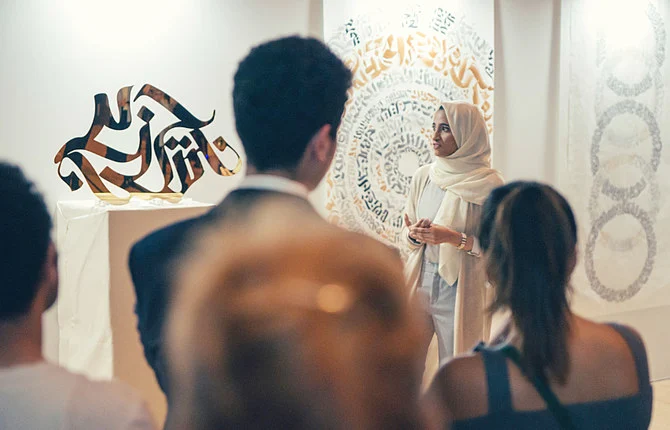
Mawadah Muhtasib, an emerging Saudi artist who reversed the typeface of the Arabic language, is well on her way to becoming a prominent name in the global art scene.
From learning her mother’s technique of writing backward at age 13 to exhibiting in London and New York City, Muhtasib has generated international intrigue in the art of Arabic by creating the first reversed Arabic calligraphy, or calligraffiti, typeface.
Her messages are not only meant to be read, but are also designed to be deciphered. Engaging her audience with the challenge of decoding letters is a large part of experiencing the artwork itself.
“It’s about expanding your human capabilities into creating the impossible. And this is exactly what I have been trying to do,” she told Arab News in an exclusive interview.
FASTFACT
The Arabic language is one of the richest art forms, the artist says, but in modernity, it is difficult to appreciate the depths of something that has become so ordinary.
Born out of a quest to layer the heritage of Arabic letters with innovative graffiti art methods, her work dares to be the first of its kind, granting her Dubai’s Art Bus competition award and a chance to show her work at exclusive showcases.
As graffiti art surged in popularity in 2013, Muhtasib experimented with mural painting alongside a novel group, hoping to develop a boundaryless form of art.
With a vision to modernize the traditional, she created a decorative typeface that mixed Arabic and Latin, written from left to right.
It’s about expanding your human capabilities into creating the impossible.
Mawadah Muhtasib
Muhtasib said: “We are so used to Arabic calligraphy when it comes to Thuluth calligraphy, Al-Kufi, Al-Naskh, and so on, and we just read that way and pass it on.
“When I’m doing my Arabic calligraphy, people sit and stare at my work for hours trying to figure out what these letters are, and the moment they realize it’s Arabic, they start to analyze and see all these letters in a different form that we as Arabic speakers are not used to.”
The Arabic language is one of the richest art forms, the artist says, but in modernity, it is difficult to appreciate the depths of something that has become so ordinary.
The goal is not only to get the viewer to read but to actively reflect on the beauty and form of each stroke and letter within the alphabet.
Muhtasib now passes on her craft through community workshops exclusively for women, most recently at Saudi’s largest light-based festival, Noor Riyadh.
“In my workshops, I do not teach people to write in reverse … I’m basically giving you the key of how to use the tools of starting to practice in the form of Latin calligraphy,” she said.
As soon as students understand the anatomy of the font family, Muhtasib introduces slanted brushes, layering techniques and stroke pressure. From the first session, students are sent home with a new creative form of expression. “The soul of a person is laid out on a page,” she said.
Writing in reverse is not new; the artist’s mother passed down the habit after having to write backward to maintain privacy at work. Alongside that, she passed down her passion for creative innovation.
While most calligraphers in the Kingdom were mimicking Western methods, Muhtasib, at 16 years old, was inspired and encouraged by Tunisian artist eL Seed and Saudi Moroccan artist Shaker Kashgari.
“I took that trick that my mom taught me years ago on how to write and then I changed it into a decorative typeface,” she said.
The concept was designed to preserve the rich heritage of the Arabic language. For foreigners, it offers a chance to engage in the language and learn its history.
“This is Arabic calligraphy in reverse that I took, improved, adjusted and made into a different form. But viewers will also wonder how it actually looked like (originally) and this will make a lot of people go in-depth and learn more about Arabic calligraphy,” Muhtasib said.
The philosophy behind the Typeform has gained interest from international luxury brands such as Louis Vuitton, Carolina Herrera, Montblanc, Sephora and more, resulting in several collaborations.
Muhtasib urges creators to push the boundaries of art and culture.
With calligraphy, “your sky’s the limit,” she said.
source/content: arabnews.com (headline edited)
____________
Mawadah Muhtasib now passes on her craft through community workshops exclusively for women. (Supplied)
William Mullally picks the best movies by Arab filmmakers over the past year.
‘Perfect Strangers’
Director: Wissam Smayra
Starring: Mona Zaki, Nadine Labaki, Georges Khabbaz
The original Italian version of “Perfect Strangers” had already been remade across the world before its Arabic-language iteration was released on Netflix. But nowhere else has it caused the stir that it did in the Middle East. The conceit is simple: Seven friends at a dinner party decide to play a game, placing their phones in the center of the table to make their calls and messages known to all. As the night goes on, their secrets are revealed, upending everything they thought they knew about each other. Not only was this the best version of the film so far, with pitch-perfect casting and memorable performances, it was also the bravest: each of its stars pushed themselves in ways they had never been able to in regional film previously, shattering taboos, capturing the world’s attention and changing Arab cinema forever.
The highest grossing film in the history of Egyptian cinema, “Kira & El Gin” is Marwan Hamed at his best. This is a crowd-pleasing historical epic that not only captures the spirit of Egypt past and present, but sets a course for a new future for the country’s film industry. Following two men fighting the British occupation in Egypt during the 1919 revolution, Hamed’s film rarely sags despite its nearly three-hour run time and sprawling cast, structured more as a suspense thriller than a social studies lecture. As Hamed jumps from genre to genre across his films, proving equally adept at each, one wonders how he will top this, should he try. But it would be foolish to bet against him as he continues to notch up career high after career high.
‘Boy From Heaven’
Director: Tarik Saleh
Starring: Fares Fares, Tawfeek Barhom, Mohammad Bakri
Egyptian-Swedish filmmaker Tarik Saleh has a bone to pick. Growing up in Europe, he was always labeled as ‘other’ — an idea reinforced in the books in his school library describing Arabs as “stupid” and “uncivilized.” Now firmly entrenched as a filmmaker, Saleh refuses to make films tailored to the Western gaze, turning his camera deep into the inner workings of Egyptian society and forcing international viewers to accept that they are seeing things through eyes that are not their own. In “Boy from Heaven,” Saleh goes deep into a corruption scandal at the influential Al-Azhar Mosque, following a hero whose strong Muslim faith is unrattled as he uncovers the evils hiding from plain sight, with scenes and images you won’t soon forget.
‘The Alleys’
Director: Bassel Ghandour
Starring: Maisa Abd Elhadi, Nadia Omran, Munther Rayahna
In 2014’s “Theeb,” Jordanian writer Bassel Ghandour crafted perhaps the greatest example of the Bedouin Western in cinema history. With “The Alleys,” Ghandour steps into the director’s chair for the first time and turns the streets of Amman into the setting for a modern noir, in which the darkness hiding in the city’s back streets slowly boils to the surface. The film’s sprawling nature is both benefit and detriment, but it’s a stirring snapshot nonetheless, elevated by star-making performances from Maisa Abd Elhadi and Nadia Omran.
‘You Resemble Me’
Director: Dina Amer
Starring: Dina Amer, Mouna Soualem, Lorenza Grimaudo
Filmmaker Dina Amer is most familiar to global audiences for her fearless journalism in 2013’s “The Square” and various Vice News stories she produced as their foreign correspondent from the front lines of regional conflicts. “You Resemble Me” cements her as a filmmaker to watch, as her harrowing experimental recounting of the life of Hasna Ait Boulahcen, the woman miscredited as Europe’s first suicide bomber, is a deeply affecting dissection of the roots of terrorism and the racism that Arab women face in Europe. One of the most original films released this year.
The story of Yusra and Sara Mardini, two sisters from Syria who risked their lives to escape conflict for a better future only for one of them to become an Olympian, is so powerful that a film capturing their story could not help but be inspirational. El-Hosaini, the Welsh-Egyptian filmmaker behind 2012’s excellent “My Brother the Devil,” made it into something more — a thought-provoking reframing of the refugee experience at a time when Syrians and many others still suffer from that stigma, as well as a chronicle of women’s empowerment as the structures that held them back crumble, all told with a light touch that never alienates the huge global viewership the Netflix film has enjoyed.
‘Mediterranean Fever’
Director: Maha Haj
Starring: Amer Hlehel, Ashraf Farha, Anat Hadid
Palestinian cinema is often, understandably, a no-holds-barred dissection of the plight of its people. But that is by no means its only manifestation, as Maha Haj, a previous collaborator with renowned satirist Elia Suleiman, proves with her latest feature, “Mediterranean Fever,” the follow up to her acclaimed 2016 feature “Personal Affairs.” Haj focuses here on smaller human problems, following an aspiring writer who suffers from depression and befriends a small-time crook living next door. At times comedic, the film drifts into dark territory while always keeping its audience guessing. After winning best screenplay at Cannes in 2022, Haj has confirmed herself as one of the region’s most singular voices.
There is no more versatile actor working in Arab cinema today than Palestinian actor Saleh Bakri, who, with Touzani’s “The Blue Caftan,” has capped off a tremendous run of eight films in the last two years, including Farah Nabulsi’s Oscar-nominated “The Present” and Mohammed Diab’s “Amira.” This is perhaps his best performance yet. He plays Halim, a struggling master tailor in Morocco whose life is turned upside down when he and his wife take in a young apprentice. Stealing the strikingly-filmed show, however, is his co-star Lubna Azabal as his wife Mina, who is quietly enduring her own private battle with breast cancer as she and her husband struggle to communicate. With this and 2019’s “Adam,” Touzani is already one of Morocco’s great chroniclers.
‘Raven Song’
Director: Mohamed Al-Salman
Starring: Asem Alawad, Ibrahim Alkhairallah, Abdullah Aljafal
The singular contemporary Gulf filmmaker Mohamed Al-Salman is not making films so that the world may understand Saudi Arabia — he’s making them so that Saudi Arabia may understand itself. “Raven Song,” his debut feature after years of acclaimed shorts, is a stylish jump back to 2002 in the Kingdom, a formative time for both the filmmaker and his country, in which the fight between traditionalism and modernity was so heated that it manifested prominently even in the world of poetry. At times dream-like, “Raven Song” is a film that defies definition, with interpretations likely to roll in for years to come.
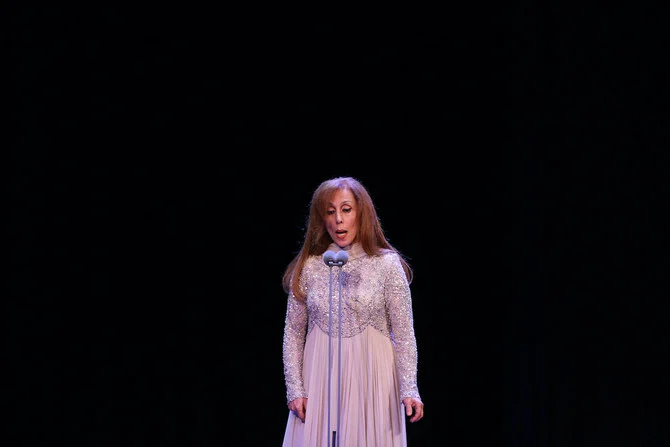
She is the Arab world’s greatest living musical icon, but Fayrouz remains an enigma. She retains a sometimes-infuriating aura of mystery, rarely giving interviews and ardently protecting the privacy of her family. On stage she appears devoid of emotion — motionless and expressionless. Those characteristics have themselves become iconic, with Fayrouz’s striking but emotionless features adorning everything from handbags and posters to Beirut’s city walls.
Born Nouhad Haddad in 1934, during the course of her career Fayrouz has recorded hundreds of songs, starred in dozens of musicals and movies, and toured the world. From 1957 onwards, when she first performed at the Baalbeck International Festival, she has become one of the Arab world’s most beloved singers. And in doing so she would unite her often-fractious homeland.
All Lebanese remember the first time they heard Fayrouz. For Tania Saleh, it was during a drive to Syria to escape the beginning of the Lebanese Civil War. She remembers one song in particular — “Roudani Ila Biladi” (Take Me Back To My Homeland).
“That song really marked me,” says Saleh, a singer-songwriter and visual artist. “My mother was crying while she was driving and the song created this really intense emotional moment. And I remember thinking, ‘How can a song affect someone so much? It’s just a song.’ But it affected me, too, in a manner that I didn’t understand back then.”
Fayrouz remained in Lebanon for the entirety of the war and refused to take sides. Although she continued to sing in venues across the world, she did not perform in Lebanon until the conflict was over. This neutrality, and the patriotic nature of many of her songs, meant she was a rare symbol of national unity, with all sides listening to her music throughout the 15 years of civil war. She was, as Saleh says, an “emotional anchor for all Lebanese during the war,” regardless of religion or political beliefs. When she released “Li Beirut“ (arranged and adapted by her son Ziad Rahbani) in 1984, Fayrouz and Beirut became inseparable. More than ever she embodied the very essence of what it meant to be Lebanese.
None of which would have been possible without the music of the Rahbani Brothers. Fayrouz, who was a chorus singer at Radio Lebanon in the early 1950s, met Mansour and Assi Rahbani through the composer Halim El-Roumi in 1951. She went on to marry Assi a few years later and together the trio would revolutionize popular Lebanese music. The Rahbani Brothers fused musical genres, including Levantine folkloric traditions and the music of Latin America, and incorporated both Western and Russian elements into their compositions. It was Fayrouz, however, who gave voice to their musical vision.
Fayrouz sang of an almost mythical Lebanon. She sang of love and desire, but also of an idealized Lebanese mountain village, of olive trees and jasmine, of vineyards and streams. “Lyrically, they created the Lebanon we now love,” says Saleh of the brothers, who followed in the footsteps of writers such as Khalil Gibran and Mikhail Naimy, who helped to forge a romanticized image of Lebanon that many of its citizens still cling to today.
As the Palestinian poet and film director Hind Shoufani notes, Fayrouz represents “the village girl, the stories of love, the fetching of fresh water, the mountain, the resistance, the power of the people; that kind of simple, beautiful daily existence that is in harmony with nature.” As such, her songs have an additional, heartbreaking poignancy, because the Lebanon she sings of bears no resemblance to the Lebanon of today. She sings of a fading dream — one that is shared by much of the Arab world.
That vision was rooted in Lebanon’s golden age, with Fayrouz intimately linked to the formation of a national cultural identity in the years following independence from France. As the acclaimed indie-music producer Zeid Hamdan says, Fayrouz would carry that identity “with elegance and depth like no other singer.”
Fayrouz and the Rahbani Brothers changed popular Arabic music forever. Umm Kulthoum, another icon of the Arab world, sang songs of love that could last for up to an hour and were deeply embedded in the tarab tradition. The songs of Fayrouz and the Rahbani Brothers, however, were far shorter, utilized the Lebanese dialect, and embraced new melodic forms.
“As a musician, I am very inspired by the dialect that Fayrouz sings,” says Hamdan, “arguably best known as one half of the trip-hop duo Soapkills. “It’s not only classical Arabic, it’s often modern Lebanese, and the Rahbanis — from Assi to Ziad — used the Lebanese dialect in a very clever way throughout their repertoire.”
Hamdan was introduced to Fayrouz in the late 1990s by Yasmine Hamdan (no relation), his Soapkills partner. Encouraged by her, he bought a double K7 cassette of Fayrouz’s “Andaloussiyat” and immediately fell in love with three tracks, one of which was “Ya Man Hawa.”
“The lyrics are simply incredible,” he says. “It’s a form of poetry that is several hundred years old called muwashshah and I wish I could do justice to the beauty of the words.” Another was “Yara El Jadayel,” on which, at a certain point, Fayrouz “sings at a very high pitch and very softly, the melody almost whispered on a piano arpeggio”.
It is the wonder and versatility of Fayrouz’s voice that continues to entrance audiences across the world. El-Roumi thought her voice so beautiful that he gave her the nickname Fayrouz (Arabic for turquoise) and went on to become the first person to compose for her.
“Fayrouz has one of the most distinctive voices in the Arab world,” says Egyptian-Belgian singer Natacha Atlas, who has worked with the likes of Peter Gabriel and Nitin Sawhney. “One can always tell that it’s (her) voice. It is as delicate as it is beautiful and strong, and her voice’s ability to (carry) such strong emotions is always extraordinary. She is one of my greatest influences. When I hear her, I often melt in tears at the sheer beauty of her voice and how it also evokes a deep nostalgia in me for the Middle East as it once was, and how everything has changed almost beyond recognition.”
Fayrouz’s fame outside of the Levant can also be traced back to her support of the Palestinian cause. As early as 1957, Fayrouz and the Rahbani Brothers released “Rajioun” (We Will Return), a collection of pro-Palestinian anthems. This was followed in 1967 by the release of “Al-Quds Fil Bal” (Jerusalem In My Heart), and as recently as 2018 she was still dedicating songs to Palestinians killed on Gaza’s border with Israel.
When her husband’s health began to fail in the 1970s, Fayrouz began to collaborate more closely with her son Ziad — the eldest of her four children. One of the albums composed and arranged by him was “Wahdon,” which was released on the Zida record label in 1979 and includes the song “Al Bosta.”
“I cherish and love her experience with Ziad,” says Saleh. “The albums that she did with him took her to jazz and bossa nova and sometimes to funk. This gave Fayrouz another dimension — that of the risk taker. She went out of her comfort zone, and that is very rare.”
This helped to cement her reputation with a younger generation and she continues to evoke a deep sense of nostalgia, not only among the Lebanese, but across the Levant and North Africa. Many Lebanese still start their day listening to Fayrouz’s songs and, despite family disputes over royalties, her controversial performance in Damascus in 2008, and accusations of plagiarism directed at the Rahbani family, her status as a cultural icon endures. When the French President Emmanuel Macron visited Lebanon in 2020, he chose the home of Fayrouz as one of his first ports of call, not those of the country’s political leaders.
“They described this beautiful Lebanon and they made us dream that this is our country, which was actually just a picture they had created,” says Saleh of Fayrouz and the Rahbani Brothers. “We were looking for it: ‘Where is this Lebanon you are talking about guys?’ We were always trying to find it but we never did. But thankfully they did create this image, because the bond that we have with our country is mainly because of them.”
Arabic is spoken by more than 400 million people across the Middle East and in diaspora communities across the world.
Spoken by around 400 million people across the globe, the Arabic language in its classical form is also the liturgical language of Islam, the world’s second largest religion with at least 1.6 billion adherents.
Marked every year since 2012, the date was chosen based on when the UN General Assembly recognised Arabic as one of the organisation’s official languages in 1973.
In a statement released ahead of the occasion, Audrey Azoulay, Unesco’s director-general, said: “Throughout the centuries, Arabic has been at the heart of exchanges between continents and across cultures.”
She added the language was “used by so many great poets, thinkers, scientists and scholars”.
To mark the occasion, here are some facts about the language, which you may not have known:
1. There’s no agreement on how old the language is
Depending on who you ask, the earliest records of Arabic appear as far back as the second millenium BCE, around the eighth-century BCE or as late as the fourth-century BCE.
The reason for the debate is establishing what constitutes the Arabic language as we know it today.
Languages spoken today are evolved versions of languages that were spoken thousands of years ago, but determining at what point a language becomes so distinct from its ancestor that it can no longer be considered the same is up for debate.
Languages spoken today are evolved versions of languages that were spoken thousands of years ago, but determining at what point a language becomes so distinct from its ancestor that it can no longer be considered the same is up for debate.
2. The oldest Arabic inscription dates to 470 CE
A 2014 discovery by a French-Saudi-led team unearthed the world’s oldest known inscription written in the Arabic script – “Thawban Ibn Malik” were the three words etched into stone, alongside what is thought to be a Christian cross.
The stone slab was discovered in Najran in Saudi Arabia and is said to date from around 470 CE.
The text is thought to be written in an early version of the Arabic script known as Nabataean-Arabic, which evolved from historic Nabataean and Aramaic scripts.
The Nabataean kingdom lasted from around the 4th-century BCE to 106 CE and is famed for the structures Nabataeans carved out of rock formations, such as the one found at Petra in Jordan.
3. Arabic is related to Hebrew and Amharic
Arabic is a member of the Semitic language family, which itself is a member of the Afro-Asiatic family.
The Semitic family includes languages still spoken today, such as Hebrew in Israel and Amharic in Ethiopia, as well as extinct languages that were once widely spoken, such as Akkadian and Phoenician.
Belonging to a language family means that at some point the languages evolved out of a common dialect.
While there are no records of the original language, there are enough similarities between languages such as Arabic and Hebrew to make it clear that their origin is the same.
One of the most notable features of the Semitic languages is the triliteral root system, in which words are formed out of a combination of three consonants.
4. There are dozens of Arabic dialects
Modern Standard Arabic remains a unifying dialect across the Arab world and is used in formal broadcasts, religious sermons and literature, but in day-to-day life Arabs speak a diverse array of dialects.
Sometimes differences between dialects can be so big that two native Arabic speakers cannot communicate without resorting to formal Arabic or a more commonly understood dialect, such as Egyptian or Levantine Arabic.
There are at least 30 Arabic dialects and the differences between any two are generally more stark the more geographically separated they are.
The biggest split is between the Maghrebi or western dialects found in North Africa and the Mashreq or eastern dialects found in the Levant.
There are many reasons for such dramatic differences in dialects.
As Muslim conquerors took over vast tracts of land between Morocco and Iraq, they encountered people who spoke other languages. As those people interacted with their new rulers, they had an effect on the language the new arrivals spoke.
There are also other factors, such as the influence of subsequent conquests by Turkic and European rulers and the independent evolution of languages separated by geography over long periods of time.
In that sense, the Arabic dialects are similar to the Romance languages, such as French, Spanish and Italian, which developed out of spoken Latin.
5. There’s an EU language closely related to Arabic
Maltese, the national language of Malta, was given official language status when the island joined the European Union in 2004, and is the only Semitic language to have that designation.
The country’s 450,000 natives speak a language that has its roots in Arabic, as it was spoken when the nearby island of Sicily was ruled by North African Muslims.
Although it grew out of North African dialects of Arabic, the Maltese language has taken on a lot of vocabulary from Romance languages, such as Italian, and is considerably distinct from Arabic as it is spoken today.
Nevertheless, the similarities will be obvious to an Arabic speaker. Greetings, such as merhba (welcome)and questions, such as x’jismek? (shi-yismek/what is your name?), will be instantly recognisable to an Arab.
6. Arabic was once spoken as far east as Central Asia
After the founding of Islam, successive Arab empires established control over a territory that spanned from Morocco in the west to the borders of what is now China.
This led to mass movements of people from the interior of the Middle East to areas on the periphery of the Islamic world to work as soldiers, administrators, religious leaders and merchants.
These new migrants brought their language with them and even in areas that did not become fully Arabised, their descendants continued to speak Arabic until very recently.
One such example is in Central Asia, where a variety of Arabic was spoken among some communities until the late 19th-century.
While thought to have numbered in the tens of thousands of speakers in the early Islamic era, today these populations have been assimilated into neighbouring Persian and Turkic-speaking populations.
Many descendants of these Arabic-speaking communities are still aware of their roots despite having forgotten their original language.
7. Arabic loanwords are found in many languages
Alcohol, arsenal, algebra, coffee, gauze, mascarade and safari are just a selection of words used in everyday English that have their roots in Arabic.
Safari for example comes from the Arabic for “journey” or safar, while Arsenal comes from the Arabic dar al-sina’ or “house of production”.
Some languages owe more of their vocabulary to Arabic than others. Turkish and Persian were heavily influenced by Arabic due to geographic proximity and conquest by Arab rulers, as well as the movement of Arabic speakers to areas where those languages are spoken.
Those additions are not always welcomed by nationalists in those countries and efforts have been made at various points to remove Arabic influence.
One of the most intense efforts in that regard was by the founder of the Turkish Republic, Mustafa Kemal Ataturk, who began a process of Turkification to replace Arabic words in the Turkish language with Turkic equivalents.
Nevertheless thousands of Arabic-origin words remain in modern Turkish.
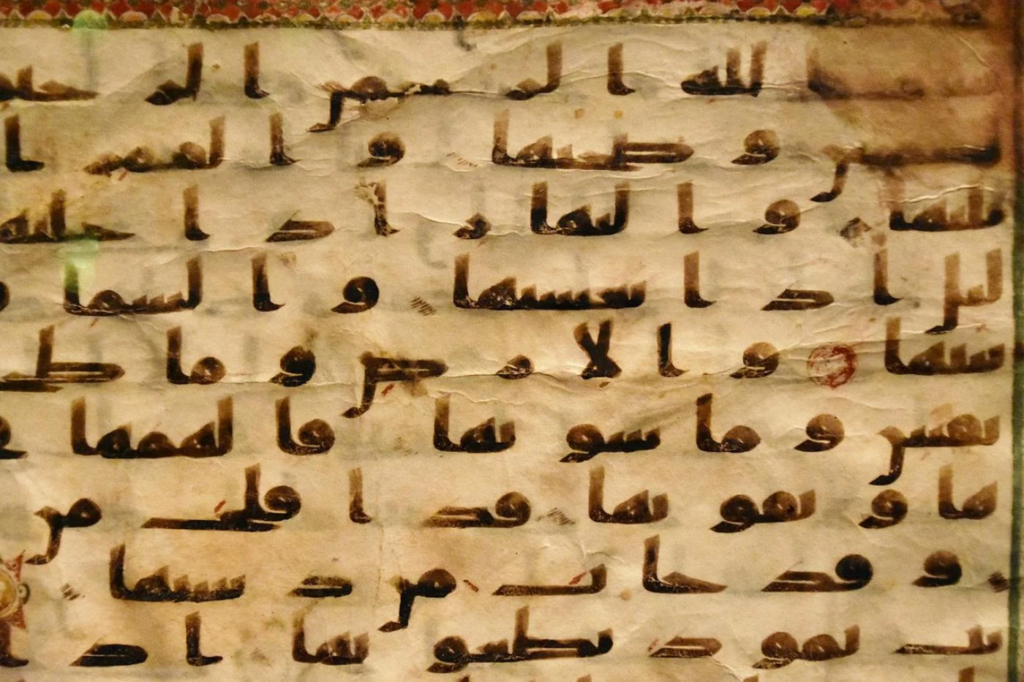
The month-long Pearls of Wisdom exhibition launched this month at Qasr Al-Watan, Abu Dhabi’s Presidential Palace, on the sidelines of the third edition of the Abu Dhabi Manuscripts Conference.
Running until Jan. 6, 2023, it will showcase valuable manuscripts in the fields of literature, heritage, religion, music, philosophy and science.
Split into seven zones, the exhibition will take visitors on a historical journey that deliberates on the influence of Arab culture in generating religious dialogue and contributing to knowledge that paved the way for the European Renaissance.
At the heart of the House of Knowledge, visitors will find themselves in an immersive gallery panel covering the Golden Age of Islamic civilization and two regions that are at the heart of medieval Europe: Al-Andalus in the Iberian Peninsula and Sicily in southern Italy.
Before visitors conclude their visit, they can head to the palace’s library to explore a collection of more than 50,000 books about the UAE’s history and politics along with topics including history, architecture, biology and ethnography.
Organized by the Department of Culture and Tourism – Abu Dhabi, the conference is being held under the theme “Arabic Manuscripts from East to West: Spain and Italy as a Model,” and in coordination with the National Marciana Library of the Italian Ministry of Cultural Heritage, the University Library of Bologna in Italy, the National Library of Spain, and Royal Library of San Lorenzo de El Escorial.
source/content: arabnews.com (headline edited)
_____________
The exhibition will showcase valuable manuscripts in the fields of literature, heritage, religion, music, philosophy and science. (Supplied)
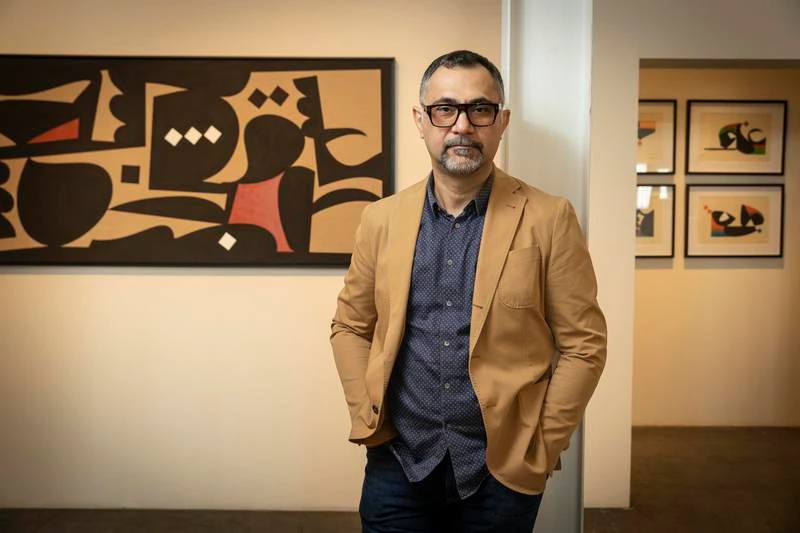
The artist’s latest exhibition of 50 works is the culmination of a lifetime spent studying ancient script.
One day in 1984, in Basra, Iraq, an art teacher taught his students calligraphy. He drew four letters on the blackboard in Ruqʿah script, a plain style often used for signage.
As the teacher drew the letters alif, bah, jim, dal, Wissam Shawkat, then aged 10, watched absolutely entranced.
“Seeing that Arabic letters can take that form was fascinating for me,” Shawkat tells The National at the Mestaria Gallery in Alserkal Avenue — where his latest calligraphy exhibition, Letters of Love II, is running until November 30. “I was really intrigued by this.”
Today, Shawkat is an international leading authority on calligraphy, a self-taught master who pioneered his own technique known as “calligraforms.”
On the eve of his solo exhibition, Shawkat is surrounded by 50 original artworks all centred on the theme of love. He stands in the middle, surrounded by a landscape of letters, composed and morphed by a myriad styles that push the boundaries of traditional calligraphy practices. The result is a delicate balance of ancient forms and modern sensibilities.
“Letters by themselves are like an abstract shape,” he says.
“If you take any letter in Arabic or in English, any part of that letter, you will end up with an abstraction. We give it sound or when it’s merged with another letter, we give it meaning. But in reality, it’s a form, a beautiful form.”
As a teenager, due to the sanctions imposed on Iraq following the Gulf War, Shawkat’s resources were limited. Despite this stark reality, the artist took what summer courses were available, worked in sign-making shops and practised with different mediums and brushes. He drew comics, decorated skateboards, created sketches for friends, and took any chance available to practice mark-making and the art of calligraphy.
“If you spend years writing and perfecting this form, it’s definitely something you’ll fall in love with,” Shawkat says.
“After all these years, I arrived at this point where I love the abstract form of the letters and I think that’s why I’m still making it.”
Letters of Love II was launched on November 11, a significant date for Shawkat. Not only did he leave Iraq on the same date in 2002, but 11 years ago, his solo exhibition, Letters of Love, took place in New York to major critical success.
Shawkat’s new exhibition is an extension of the technical ideas he first experimented with in the New York show, an homage to his personal milestones and, of course, a celebration of love.
“For me, love is a universal concept,” Shawkat says.
“Plus, I wanted to take calligraphy away from always being associated with religion. Historians from the West call it Islamic calligraphy, but it’s not true. The art of calligraphy is about the language, it’s not the religion.”
Shawkat took the Arabic word for love, “hub”, and some of its variations such as “mahaba”, meaning to have love for something, “‘ishq”, to long for something, and “gharam”, meaning desire, and reconstructed them — experimenting with the inner and outer forms of the letters and the composition of the words; blocking parts of their shape, opening up others; extending and bending; changing their silhouettes.
The range of forms and shapes he created within each frame are meticulously composed. They exist in relation to the frames and the spaces they occupy, possessing a uniquely stylised sense of harmony fuelled by Shawkat’s departure from the traditional “rules” of calligraphy.
Even the notion of freedom is expressed uniquely within the works. Free of the cliche of words bursting out of their frame or paint spilling out on to the physical space, freedom is organic and planned in Shawkat’s work. It teases and pushes the idea of Arabic letter forms and calligraphy into new spaces.
“I want to show something aesthetically beautiful,” Shawkat says. “When I’m sketching or putting together the work, everything I do is first in black and white. Colour comes as a second thing, I work with it later.”
It’s this focus on form and composition that gives the varied works an overall sense of grounded weight, rooted and connected to each other through a slow gravitational force, as opposed to an intertwined sense of drama.
Shawkat achieves this thorough planning, like an architect of words, an engineer of letters.
“When I started planning for this show, I went back and opened my old files from the New York show,” Shawkat says.
“I found some ideas that were interesting but weren’t refined yet. I took some of them and made them work, and now they are pieces in this show. It’s always a process, it’s progress. Sometimes it fails and sometimes it works.”
Shawkat’s work reveals not only an artist who has a significant understanding of the forms and symbolism of letters and language, but one with technical knowledge and prowess.
All the paper in the show is handmade, the ink made from personalised pigment colours. Each piece is a juxtaposition of these traditional materials with Shawkat’s forward-thinking experimentation in calligraphy.
It’s also these part-conscious, part-instinctive decisions that make Shawkat’s work timeless and appealing to an international audience, many of whom don’t speak or can’t read Arabic.
“I think people who don’t know Arabic fall in love with calligraphy for the same reason I first did in class,” Shawkat says.
“It’s because they enjoy the form. They look at them as beautiful abstract shapes. As simple as that.”
Letters of Love II will be on show at the Mestaria Gallery in Alserkal Avenue
Wissam Shawkat’s solo exhibition Letters of Love II is on show at Mestaria Gallery in Alserkal Avenue until November 30. All Photos: Antonie Robertson/The National
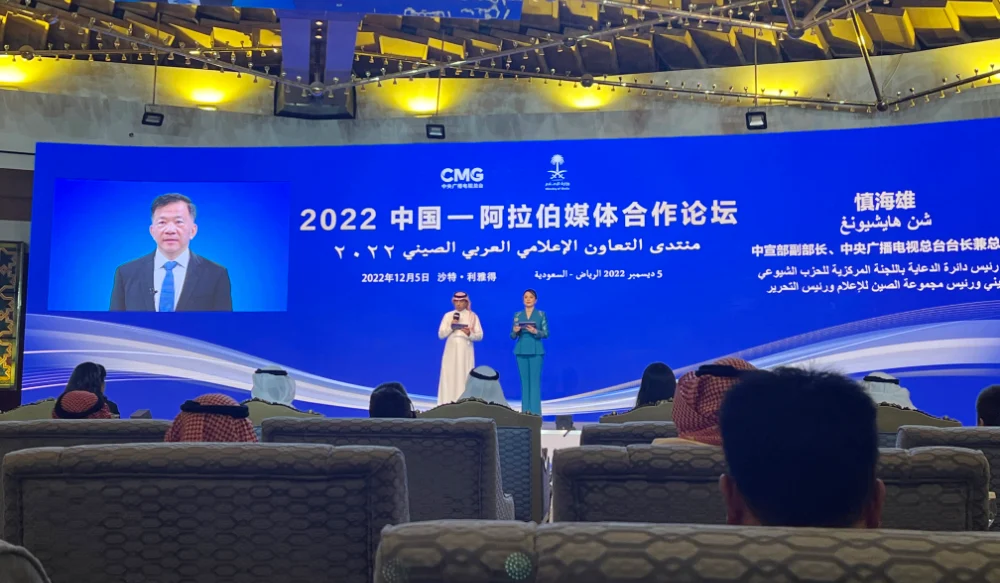
Ahead of the Chinese President’s visit to Saudi Arabia, the Saudi Ministry of Media and the China Media Group announced the launch of a joint partnership initiative to promote relations between Arab countries and China through media in a ceremony in Riyadh on Monday.
“It gives me great pleasure to welcome you to the Arab-Chinese Media Cooperation Forum, which is being held today in Riyadh…between the Saudi Ministry of Media and the China Media Group,” Acting Minister of Media Majid Al-Qasabi said.
Al-Qasabi addressed the audience in a speech via video extending his support for the cooperation.
“We look forward to the cooperation today to launch new media initiatives that contribute to deepening the ties between the Arab and Chinese cultures and between their peoples,” he said.
The initiative, he explained, will promote the presence of Chinese media on Arab channels, translating Chinese television shows into Arabic.
Through the initiative, Saudi and Chinese television will also work together to create programs highlighting the stories of individuals from both Saudi Arabia and China who achieved success in each other’s countries.
The initiative will also create opportunities for travel between the two countries, opening a space for greater understanding and strengthening the relationship between China and Saudi Arabia through media and cultural exchange.
In line with the aim of improving communication, the ceremony was held in both Arabic and Chinese in the presence of Ambassador of China to Saudi Arabia Chen Weiqing, Director-General of the Arab States Broadcasting Union Abdulraheem Sulaiman, and Chinese politician Li Shulei, head of publicity at the Central Committee of the Chinese Communist Party.
Mohammed Fahad Al-Harthi, president of the Arab States Broadcasting Union and CEO of the Saudi Broadcasting Authority, presented the initiative in a speech during the ceremony.
“Saudi-Chinese relations are old and well-established and strong, and they are witnessing prosperity and expansion,” he said, citing Crown Prince Mohammed bin Salman’s visit to China, the over 20,000 Arab students studying in China and the several schools in Saudi Arabia that teach the Chinese language and culture.
“We hope that this relationship will witness greater growth with the connection of interests and relations between the two peoples,” he added.
Toward the end of the ceremony, top media representatives from Palestine, Egypt, Bahrain, Libya, Yemen and Iraq extended their support for the initiative.
Al-Harthi stressed the importance of media in any country’s diplomatic relations.
“To achieve a solid relationship between the two societies, the media must play this role,” Al-Harthi said.
Through the initiative, translated Chinese works will be broadcast in Palestine, Algeria, Jordan, Sudan, Iraq and Saudi Arabia.
Tunisia’s prestigious industry event enjoys another successful year, helping spread a love of culture across the country.
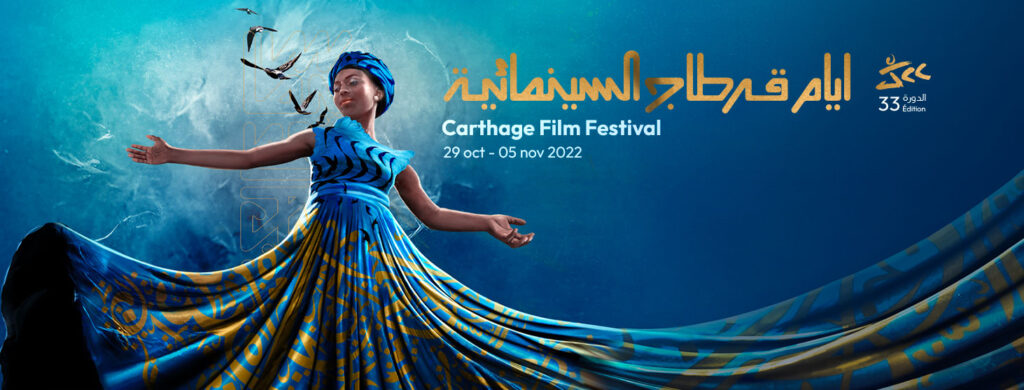
Another week of movie magic, street art and music has come to an end following the 33rd edition of the International Carthage Film Festival in Tunisia.
Titled “Hel Thneya”, which means “Open the Path” in Tunisian dialect, the festival once again cemented its status as a major cultural attraction for visitors of all ages, who flocked to cinemas and filled the streets en masse.
The festival, one of the eldest and most prestigious in the Mena region, ended on Sunday.
As is tradition, the capital Tuniswas transformed into an open celebration of not only cinema but all forms of arts, with independent young painters getting the chance to show their artworks to the public for the first time and musicians performing every evening to audiences in the middle of Avenue Habib Bourguiba. For many, it was an opportunity to watch films that they don’t usually have the means or the opportunity to see.
Speaking outside the Theatre de Region Cinema, Downtown Tunis, Amina told The National she had been waiting for the festival to introduce her two children to the world of the cinema.
“As a family, we always discuss films together but we never find the time nor age-appropriate films to watch. This is a great opportunity to let them discover the big screen,” Amina said.
Amina’s daughter Ritej, who is in the sixth grade, was grinning with happiness as she prepared to enter the cinema hall. “I’m excited, I’m sure I’m going to enjoy this and tell my friends about it,” Ritej said.
Amina said that she often encourages her children to value the arts, with Ritej currently rehearsing for a school play, and she wishes there were more events like it in Tunisia.
This year’s International festival was an opportunity to revive the city. According to organisers, the festival aimed to showcase both new cinema productions and also timeless films that the younger generations needed to be introduced to.
This year, 72 countries participated with Saudi Arabia being the guest of honour and special emphasis placed on Palestinian and Spanish Cinema — a choice that organisers said highlighted the intersection between north and south, placing migration under an artistic lens.
The festival also paid tribute to Arab filmmakers, both living and dead, namely the Moroccan director Mohamed Abderrahmen Tazi and Egyptian director Daoud Abdel Sayed, as well as the late Algerian director Yamina Chouikh and late Tunisian director Kalthoum Bornaz.
“Through this 33rd edition, we continued to foster cultural decentralisation by bringing new sections to the festival and programming screenings in different parts of the country,” journalist and cinema critic Yosra Chikhaoui told The National.
“This year marks the first edition of JCC for kids. We are bringing more screenings as part of our “street cinema” section as well as continuing the special screenings for prisoners and members of the Tunisian army inside military bases,” Chikhaoui, who is a member of the festival’s media committee, added.
JCC in Prisons, now in its eighth year,is the fruit of a partnership between the Tunisian Ministries of Culture and Justice and the International Organisation Against Torture. This year, 12 films were showcased in three prison facilities, while juvenile detainees were transferred to Tunis for a special showcase in a cinema.
According to Ridha Behi, general director of this year’s festival, film screenings in prisons serve as a reminder of the right all people have to access and experience culture.
Awards, meanwhile, highlighted the multitude and variety on show, with a focus on filmmakers whose work depicts the struggles of their respective societies.
The Tanit d’Or award for best feature film was given to Tug of War, directed by Amil Shivji — marking the first time a film from Tanzania has won the award. Meanwhile, the Tanit d’Argent and Tanit de Bronze were respectively awarded to the films Under the Fig Trees by Erige Sehiri from Tunisia and Sharaf by Samir Nasr from Egypt
The Sheikh Zayed Book Award (SZBA) of the Abu Dhabi Arabic Language Centre (ALC), part of the Department of Culture and Tourism – Abu Dhabi (DCT Abu Dhabi), has revealed the longlists for its 17th edition (2022/2023) in the Literature, Children’s Literature, and Young Author categories.
The announcement was made as the SZBA judging committees begin the evaluation process for all the longlisted entries.
The Young Author category saw 954 submissions this year, an increase of more than 8 percent from the 881 received last year. The Young Author recorded the highest growth in number of submissions among all categories, and now accounts for 30 percent of total nominations across all categories.
The Literature category received 688 submissions this year, ranking second in terms of submissions, while the Children’s Literature category saw 386 participations, up nearly 63 percent from the 236 submissions registered last year.
The Children’s Literature category received 12 submissions from nine Arab countries: UAE, Saudi Arabia, Egypt, Lebanon, Syria, Jordan, Bahrain, Kuwait, and Iraq. These included:
“La Ahad Yal’ab Ma’ai” (No One Plays With Me) by Mohammed Alohaly from Saudi Arabia, issued by Al Hudhud Publishing and Distribution in 2022.
“Lu’bat al-Nujoom” (The Star Game) by Afra Mahmood from the UAE, issued by Al Hudhud Publishing and Distribution in 2022.
“Min al-Fajr ila al-Ghuroob maa’ Toyour Ghabat Alkharuwb” (From Dawn to Dusk with the Birds of the Carob Forest) by Flora Majdalawi from Jordan, issued by Majdalawi Masterpieces Books in 2022.
“Mala Narah” (What We Don’t See) by Shaima Alwatani from Bahrain, issued by Afkar for Culture & Publishing in 2021.
“Aba’at Abi” (My Father’s Gown) by Basemah Alwazzan from Kuwait, issued by National Council for Culture, Arts and Literature in 2022.
“Jaddi wa al WhatsApp” (My Grandfather and WhatsApp) by Parween Habib from Bahrain, issued by Dar Al Saqi in 2022.
“lastu Wahedan” (I Am Not Alone) by Rami Tawil from Syria, issued by Dar Al Saqi in 2021.
“Rabieon Samet” (Silent Spring) by Razan Al Naeemy from Iraq, issued by Qindeel printing, publishing & distribution in 2022.
“Abhathu an Shai’”(I Am Looking for Something) by Sahar Naja Mahfouz from Lebanon, issued by Dar Kiwi Stories in 2022.
” Einstein: Asrar Alkoutaa 99” (Einstein and the Secrets of the 99th Element) by Sharif Saleh from Egypt, issued by Wow for Publishing & Educational Services in 2022.
“Rehla Dafeaa Molawana” (A Colourful Warm Journey) by Doha Jawad from Syria, issued by Dar Ashjar Publishing & Distribution in 2020.
“Al Sorra Al Ajeebah” (The Wonder Bundle) by Nadia AlNajjar from the UAE, issued by Alfulk Translation & Publishing in 2022.
The longlist for the Young Author category ranged from theses to literary works and included 12 titles, submitted from eight Arab countries: Tunisia, Egypt, Algeria, UAE, Iraq, Oman, Lebanon, and Saudi Arabia. The works on the longlist are:
“Madeeh Al Ikhtilaf: Derasat fi Falsafat Al Ketabawa Siasat Alhawiya ” (Praise of Difference: Studies in the Philosophy of Writing and Identity Politics) by Mohamed Bekkaye from Algeria, issued by Al Rawafed Culture and Nadim Edition in 2022.
“Al Khetab Al Kasasi fi Ayyam Al Arab fi Al Jahileya: Kiraah Tadawouleyah Hijajeyah (Narrative Discourse in the Days of Arabs in the Pre-Islamic Era: A Pragmatic and Argumentative Examination) by Dr. Abdessattar Al Jamai from Tunisia, issued by Dar Kunouz Al-Marefa Publishing & Distribution in 2021.
“Al Badawi Al Abiad” (The White Nomad) by Mutaz Albader from Saudi Arabia, issued by Dar Al Tanweer Publishing & Printing in 2021.
“Aroos Al Kamar, Hekayat Al Holm Al Afriki” (The Comoros Bride: An African Dream Tale) by Mohammad Tarazi from Lebanon, issued by Arab Scientific Publishers Inc. in 2021.
“Al Wahl wa Al Noujoom” (Dirt and Stars) by Ahmad Lutfi from Egypt, issued by Aseer AlKotb in 2022.
“Al Tajreeb fi Al Khetab Al Sheary Al Emarati Al Mouaaser” (Experimentation in Contemporary Emirati Poetic Discourse) by Dr. Hessa Abdulla Al Ketbi from the UAE, issued by Sharjah Department of Culture in 2021.
“Haraket Alfadh Al Hadarh Al Arabieyah min Bayan Al Jahedh to Aked iben Abd Rabbeh” (The Movement of Words in the Arab Civilization: From the Statement of Al Jahiz to the Unique Contract of Ibn Abd Rabbeh) by Dr. Ali bin Hamad Al Riyami from the Sultanate of Oman, issued by Alaan Publishers & Distributors & The Omani Society for Writers & Literati in 2022.
“Nehayat Al Sahra’a” (The End of the Desert) by Said Khatibi from Algeria, issued by Hachette Antoine / Nofal in 2022.
“Fawka Jisr Al Joumhoureyah” (Over the Republic Bridge) by Shahid Alrawi from Iraq, issued by Dar Alhikma Publishing & Distribution in 2020.
“Al Belad Al Tounnouseaya fi Oyoun Al Rahhalah Al Alman” (Tunisia in the Eyes of German Travelers (1535-1881 AD) by Dr. Atef Salem from Tunisia, issued by Editions Arabesques in 2021.
“Naqd Al Naqd Wa Tajalleyatoh Fi Al Tourath Al Nakdi Wa Al Balaghi Al Arabi” (Criticism of Criticism and Its Manifestations in the Arabic Rhetoric and Critical Heritage) by Dr. Issam Benchellel from Algeria, issued by Difaf Publishing & El-lkhtilef Publishing in 2021.
“Fareedah Wa Sedi Al Mathloum” (Farida and My Oppressed Master) by Heba Ahmad Hassab from Egypt, issued by Al Mahrousa Center for Publishing, Press Service, and Information in 2021.
As for the Literature category, 12 titles made it onto the longlist by novelists, writers and poets representing eight countries: Egypt, Morocco, Syria, Tunisia, Saudi Arabia, Lebanon, Sudan and Iraq. The titles are:
“Almer: Akhtam Al Madeenah Al Fadelah: (Almer: Seals of the Utopian City) by Abdelillah Benarafa from Morocco, issued by Dar Al Adab Publishing & Distribution in 2022.
“Hijab Al Saher” (A Magician’s Veil) by Ahmed Al Shahawi from Egypt, issued by Al-Dar Al-Masriah Al-Lubnaniah in 2022.
“Aseer Nish: Rakan bin Falah bin Hethlain” (Prisoner of Nish: Rakan bin Falah bin Hethlain) by Ahmed Hamad AlSubait from Saudi Arabia, issued by United Takween Group Press, Publishing & Distribution in 2022.
“Rasasa fi Al Raas” (A Bullet in the Head) by Ibrahim Issa from Egypt, issued by AlKarma Books in 2021.
“Hourrass Al Houzn” (Guardians of Sadness) by Amir Tag Elsir from Sudan, issued by Hachette Antoine / Nofal in 2022.
“Al-Qata’i: Thoulatheyat Ibn Tulun” (Al-Qata’i: Ibn Tulun’s Trilogy) by Reem Bassiouney from Egypt, issued by Nahdet Misr Publishing in 2022.
“Abnaa Hura” (The Sons of Hura) by Abdelrahim Kamal from Egypt, issued by AlKarma Books in 2021.
“Ifrah ya Qulbi” (Rejoice, My Heart) by Alawiya Sobh from Lebanon, issued by Dar Al Adab Publishing & Distribution in 2022.
“Ila Ayn Ayyathouha Al Kaseedah” (Whereto, O Poem? An Autobiography) by Ali Jaafar Alallaq from Iraq, issued by Alaan Publishing in 2022.
“Antakia Wa Molouk Al Khafaa” (Antioch and the Kings of Secrecy) by Lina Hawyan Alhasan from Syria, issued by Dar Al Tanweer Publishing & Distribution in 2021.
“ Moujazafat Al Aref” (Knowledgeable Risk) (Poetic Work) by Mohammed Ibrahim Yaghob from Saudi Arabia, issued by Tashkeel Publishing & Distribution in 2022.
“Kullo Aoushbaten Sawtouha wa Kullo Ghaimaten Kathalek” (To Every Grass Leave Its Sound, and to Every Cloud as Well) (Poetic Work) by Mohamed Ghozi from Tunisia, issued by Contraste Editions in 2022.
The Sheikh Zayed Book Award will soon be announcing the longlisted titles for the remaining categories in the 17th edition.