Arabs & Arabian Records Aggregator. Chronicler. Milestones of the 25 Countries of the Arabic Speaking World (official / co-official). AGCC. MENA. Global. Ist's to Top 10's. Records. Read & Enjoy./ www.arabianrecords.org
Mohammad Abdullah Al Gergawi, Minister of Cabinet Affairs, Chairman of the Committee leading Great Arab Minds, and Secretary-General of the Mohammed Bin Rashid Al Maktoum Global Initiatives (MBRGI), highlighted the details of “The Great Arab Minds” initiative.
Launched by His Highness Sheikh Mohammed bin Rashid Al Maktoum, Vice President, Prime Minister and Ruler of Dubai, in January 2022, the initiative is the Arab world’s largest movement designed to search for exceptional talents among Arab scientists, thinkers, and innovators across key fields.
The Great Arab Minds initiative, under the MBRGI, aims to identify, support and acknowledge leading thinkers in the region, amplify their impact and inspire future generations. One of its main purposes is to reduce the emigration of Arab scientists, specialists, intellectuals, doctors, and engineers.
He affirmed that “The Great Arab Minds” initiative reflect His Highness’ vision in reigniting the Arab World’s Civilisation Drive, support great Arab minds and acknowledge their work and achievements, in service of humanity.
Mohammad Al Gergawi pointed out the importance of the Arab Reading Challenge initiative launched by His Highness Sheikh Mohammed bin Rashid Al Maktoum, among many other development projects, serving more than 91 million beneficiaries.
A study conducted by KPMG, showed that ignorance costs the Arab world more than US$2 trillion. The Great Arab Minds initiative aims to change this reality and contribute to shaping a brighter future for Arab generations.
During an event organised in the Museum of the Future to announce the details of the initiative, Mohammad Al Gergawi witnessed the signing of four partnerships between “The Great Arab Minds” initiative and KPMG, LinkedIn, Meta, and Majarra.
The initiative’s mission is to search for exceptional talents among Arab scientists, thinkers, and innovators across key fields, aiming to identify, support and acknowledge leading thinkers in the region, amplify their impact and inspire future generations.
Over a 5-year period, “The Great Arab Minds” will reward scientists, thought leaders, scholars, and innovators across 6 categories: Natural Sciences (Physics and Chemistry), Medicine, Literature and Arts, Economics, Technology and Engineering, and Architecture & Design.
The initiative includes the “Mohammed bin Rashid Medal for Great Arab Minds”, which will be awarded to 6 winners of six categories each year.
The Great Arab Minds initiative aims to facilitate the recognition of Arab thought leaders, scholars, scientists, geniuses, and transforming their ideas to real-life breakthroughs and solutions. It also aims at empowering cluster of Arab scientists and thinkers and building a network of Arab thinkers, scientists, and exceptional talents in various fields to work as one team to drive the Arab world’s intellectual renaissance.
The Prince Sultan bin Abdulaziz Al Saud Foundation steering committee has met to review the strategy of its program to strengthen the use of Arabic at UNESCO.
The virtual meeting was attended by the foundation’s Director General Saleh Al-Khulaifi as well as UNESCO Assistant Director General for the Social and Human Sciences Sector Gabriel Ramos, and UNESCO Permanent Representative Princess Haifa Al-Muqrin.
UNESCO officials praised the foundation’s efforts to develop new businesses and projects that serve the Arabic language, thereby contributing to the program’s goals of promoting dialogue between different cultures, consolidating cultural communication, and implementing projects that serve the language and heritage.
They also praised international organizations for providing more programs and activities related to the Arabic language, such as translating research, literature, session minutes, meetings and field reports.
They added that spreading Arabic around the world was the quickest way to strengthen global dialogue and cohesion.
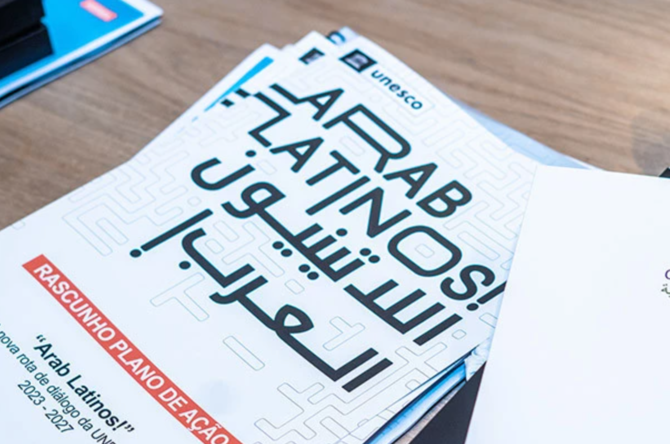
Many initiatives have been implemented in the past, most notably UNESCO’s celebration of World Arabic Language Day on Dec. 18 each year, as well as the launch of “Arab Latinos!”
That event, which was held in August in Sao Paulo, promoted intercultural dialogue for social inclusion and built on the Arabic cultural imprint in Latin America.
source/content: arabnews.com (headline edited0
___________
Prince Sultan bin Abdulaziz Al Saud Foundation aims to strengthen the use of Arabic at UNESCO. (UNESCO)
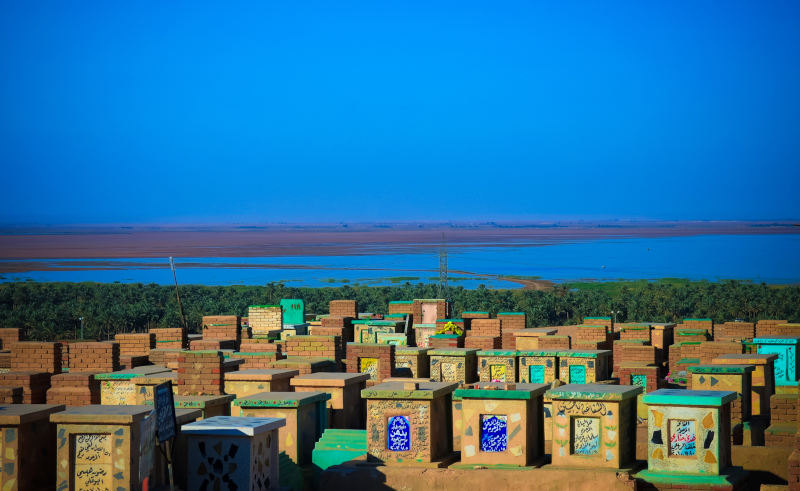
Dating back to the early middle ages, this Iraqi cemetery holds the remains of kings, dignitaries, scholars, and soldiers alike.
Wadi Al-Salam, which means ‘Valley of Peace’ in Arabic, is a necropolis in which every Shiite Muslim hopes to be buried some day, in the belief that it is these burial grounds that will hold eternal peace for them.
Located in the Iraqi city of Najaf, Wadi Al-Salam is a cemetery that dates back to the early middle ages, hosting the remains of kings, dignitaries, scholars, and soldiers alike.
Every year, an estimated 50,000 Shiite Muslims are buried in this hallowed ground. The cemetery stretches across 1500 acres, taking up almost 13% of the city, and allegedly holds over six million bodies. The necropolis, however, isn’t just a morbidly beautiful burial ground. Rather, each tombstone contains a name and an engraving that paints a vivid timeline of Iraq’s (arguably tragic) history, with a hyperfocus on internal disputes, natural disasters, and wars.
In 1981, Rahim Jabr, an Iraqi foot soldier, was martyred in the eight-year war with Iran. 25 years later, his brother, Naeem Jabr, was a casualty of the sectarian civil war that killed hundreds in Baghdad in 2006. The siblings are buried next to each other, united in the necropolis that holds many others whose stories are eternally intertwined with that of the bloody history of this country.
The 2003 invasion of Iraq by the United States and its subsequent conflicts alone led to the graveyard expanding by over 40% (7.5 square kilometres) to contain the bodies of the martyred Shiites.
Wadi Al-Salam has been the responsibility of a single Shiite family for over three centuries, and the Abu Seiba’s stand testament to the cruelty of war, having carried hundreds of thousands of bodies belonging to their brethren into the ground.
Wadi Al-Salam is considered a UNESCO World Heritage site and has been since 2011, as the cemetery stands witness to thousands of years of history, religious tradition and dedication by Shiite Muslims.
Dr. Abdulaziz bin Mohammed Alsubayel, chairman of the board of trustees of the King Abdulaziz Center for National Dialogue and secretary general of the King Faisal International Prize, has won the cultural pioneer award during the Ministry of Culture’s second session of the “National Cultural Awards.”
He received the prize in recognition of his distinguished literary and cultural career, as well as his roles in cultural administration, where he held a number of leadership and academic positions while serving Saudi culture, intellectuals and literature.
The event was held under the patronage of Saudi Crown Prince Mohammed bin Salman.
A global prize, called the “international cultural excellence award,” will be launched in the next session of the event, organizers announced. The award will recognize and celebrate global and regional cultural personalities and institutions that enrich the cultural landscape, and reaffirms the Kingdom’s determination to open new avenues for cultural creativity and expression and encourage cultural dialogue with the world.
Deputy Culture Minister Hamed bin Mohammed Fayez said in a speech delivered on behalf of Saudi Minister of Culture Prince Badr bin Abdullah bin Farhan: “I am delighted to welcome you to the Capital of Culture, the Beacon of Knowledge, and the Oasis of Art in a cultural event in which we celebrate the creative personalities, with the support of the Custodian of the Two Holy Mosques and the patronage of His Highness the Crown Prince, who is supportive of our culture and the champion supporter of it.
“The historical depth and civilization of our homeland and the creativity of our people have put the Kingdom in an advanced cultural place, which enabled the Ministry of Culture to highlight our creative treasures as per the Vision 2030,” he said.
Fayez said: “The National Cultural Awards initiative was an inspiration for creators and an essential pillar for further advancement of cultural and cognitive development.”
Cultural sector award recipients were also recognized.
Kifah Bu Ali won first place in the literature prize while Jarir Bookstore won the publishing award. Shareef Bogona, a translator and poet, won the translation award while Samira Alotaibi won the fashion award. Ahmed Alneghaither, a researcher in drawings and engravings, won the national heritage award and Abdulsamad Alhawsawi won the culinary art award.
Badr Al-Hamoud, a writer and filmmaker, received the “youth cultural” award for his efforts in the film industry, publishing initiatives, translation and technical projects. He founded the Center Menaverse for Innovation and Development, the world’s first center to interactively disseminate cultural products, and has established a platform called “Meaning” to spread knowledge, artistic and philosophical content. He managed the translation projects of 30 books in philosophy and humanities.]
Kifah Bu Ali won first place in the literature prize while Jarir Bookstore won the publishing award. Shareef Bogona, a translator and poet, won the translation award while Samira Alotaibi won the fashion award. Ahmed Alneghaither, a researcher in drawings and engravings, won the national heritage award and AbdulsamadAlhawsawi won the culinary art award.
Artist Muhannad Shonu won the visual arts award while Ali Khobrani won the theater and performing arts award. Bandar Bin-Obaid won the music award while Faisal Battoyoor won the film award and Muhammed Shafea won the architecture and design award.
The Diriyah Gate Development Authority won the cultural institutions award in the state sector while the Misk Institute of Art won the cultural institutions award in the non-profit sector. The Music Home School of Art won the cultural institutions award in the private sector.
Ahmed Qirran Al-Zahrani, deputy dean of communications and information for graduate studies and academic research at King Abdulaziz University, told Arab News that nations founded on cultural legacy were able to elevate their homelands to the forefront of the cultural landscape around the world.
Cultural symbols deserved to be honored and acknowledged for their contributions to the nation, as well as to preserve cultural memory and encourage future generations to follow in their footsteps, he said.
Al-Zahrani said that the Ministry of Culture had a significant obligation to revitalize heritage, assist the cultural movement and financially and morally encourage intellectuals.
The cultural movement was evident in domestic cultural activities such as organizing book fairs, holding cultural festivals, holding conferences, supporting cultural institutions, honoring intellectuals, participating in outdoor cultural events and supporting intellectuals individually participating in festivals, meetings and outdoor exhibitions to represent and communicate local culture beyond geographical boundaries.
Abdulaziz Al-Kheshaiban, chairman of the board of the Media and Public Relations Society in Onaizah, said that recognizing local cultural symbols was connected with recognizing cultural pioneers, creators and achievers.
He said that the cultural movement was witnessing a diversity of platforms, and that official literary clubs, private literary meeting places and cultural cafes were the most important of these.
Al-Kheshaiban said that education and knowledge were important in the evolution and progress of cultures.
source/content: arabnews.com (headline edited)
___________
The National Cultural Awards ceremony was held under the patronage of Crown Prince Mohammed bin Salman. (SPA)
In-person and virtual festival showcases films from Arab world and diaspora.
The Arab American National Museum in Dearborn, Michigan, will kick off the Arab Film Festival on Friday.
Home to one of the largest Arab-American communities in the country, some consider Dearborn to be the “Arab capital” of the US and the museum has been devoted to documenting, preserving and presenting the history, culture and contributions of the community since 2005.
The annual festival will run from August 12 to 21, with a line-up featuring comedy shorts and documentaries tackling America’s Israel bias.
“As a young Arab American myself, I never really saw my story, my family story reflected in the music I listened to or the films that I watched or the textbooks in my classroom,” said Dave Serio, curator of education at the museum.
“So our goal really is to kind of inspire Arab Americans to see their stories, their perspective, people that look like them, names that they might have, on the big screen.”
Beginning in 2005, it is one of the museum’s longest-running programmes and offers a range of windows into Arab cinematic creativity and storytelling.
One of the films in this year’s set is When Beirut Was Beirut from writer-director Alessandra El Chanti. The short is a “poetic hybrid documentary” that focuses on an imagined conversation between three famous buildings in the Lebanese capital and what they witnessed during the country’s civil war.
“I wonder what inanimate objects could say, because they also have stories, too,” Ms El Chanti, a Lebanese citizen who now lives in Doha, Qatar, told The National.
“I feel like we always go to Lebanon and we’re just passers-by — we recognise that there are war-torn buildings, you can see the bullet holes.
The film, which began production in 2020, was produced entirely over Zoom by an all-Lebanese team of six artists.
Many of the films at this year’s festival will be making their US or Michigan state debut, Mr Serio said.
Ms El Chanti hopes members of the Lebanese diaspora watching her film at the festival walk away feeling “there’s a lot that you should learn about your country that you don’t know about — it literally could be from the perspective of anything and everything”.
Yasmina Tawil, the director of film programming at the Arab Film and Media Institute — one of the festival’s sponsors — told The National that while Arab film festivals such as this are considered “niche” in the entertainment industry, they can build towards more inclusion in the mainstream.
“We’re not a Sundance, we’re not a Cannes.
“But when a distributor goes to pick up a film, [the festivals] will add to the credence and the hype of the film. And I would at least hope that distributors would look at that as a sign of one of their big audiences … already knows about and really likes the film enough to programme it in their festival.”
“They’ll get picked up for distribution in the Middle East, in Europe and then maybe not make it over here [to the US]. Or if a torrented copy does, it might not have English subtitles and things like that.”
She added that her institute’s mission is, in part, to serve as a “caretaker” for Arab films in America.
The museum has offered both virtual and in-person attendance options, opening its mission to viewers across state and national borders.
“The Arab-American community is ridiculously talented,” said Mr Serio. “And our film festival is just honoured to be able to showcase a fraction of the amazing work that the Arab-American community is working on.”
source/content: thenationalnews.com (edited)
__________
Poster for the 2022 Arab Film Festival at Dearborn, Michigan’s Arab American National Museum. All photos: Arab American National Museum
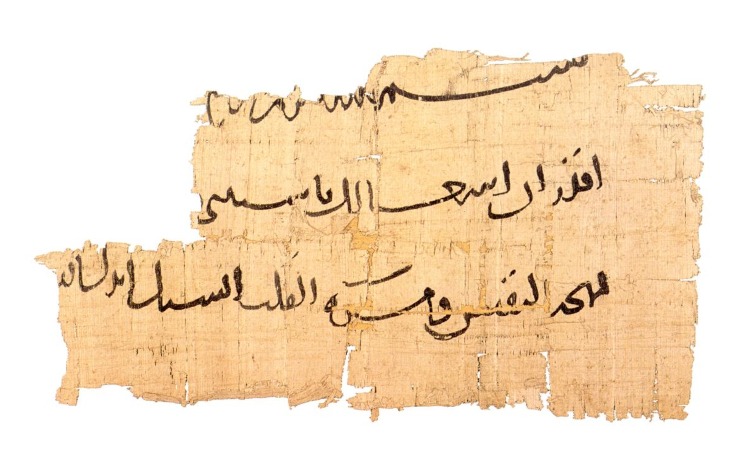
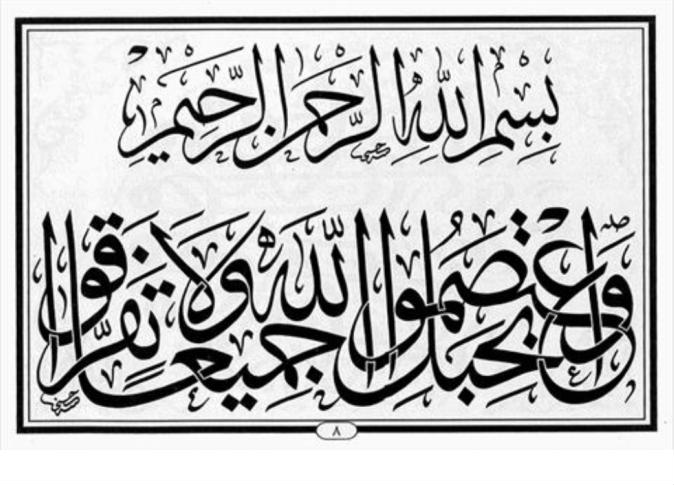
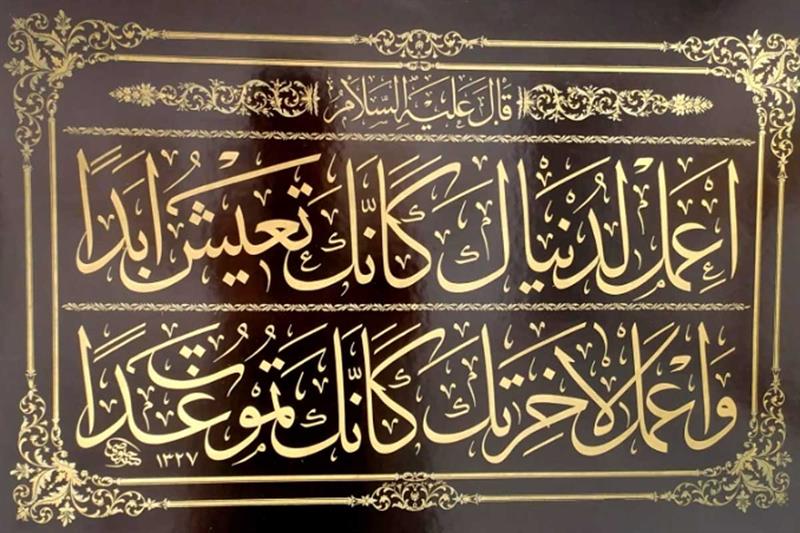
Arabic Calligraphy, the art of creating decorative handwriting or lettering, is one of the oldest art forms from the Arab region; one that has not only thrived with time but also evolved into a unique form of expression. It survived through several tumultuous periods that threatened its existence, from civil wars to an invasion by the Mongol Empire that destroyed Baghdad.
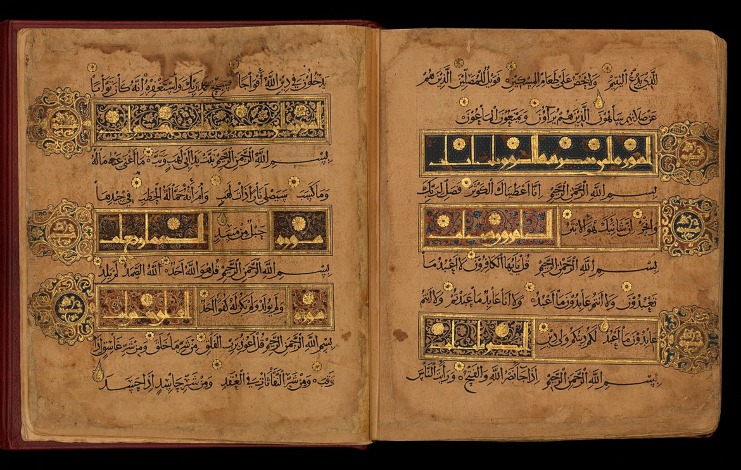
Even though the writing wasn’t as focused on in the past, with many Arabs preferring to memorize poetry and other forms of text and pass them down verbally, that changed significantly later. Calligraphy would flourish to include the preservation of the Quran, adorn mosques as well as the palaces of kings, and by royal scribes when writing decrees, among other things.
In celebration of World Calligraphy Day, we decided to dive into the past and look back at some of the most well-known and prominent calligraphers from the Arab world.
Ibn Muqla
One of the biggest names in developing and improving Arabic calligraphy, born in 885 AD in Baghdad, Iraq, during the Abbasid Caliphate, he started out as a tax collector before rising through the ranks and becoming the Caliph’s Vizier three different times.
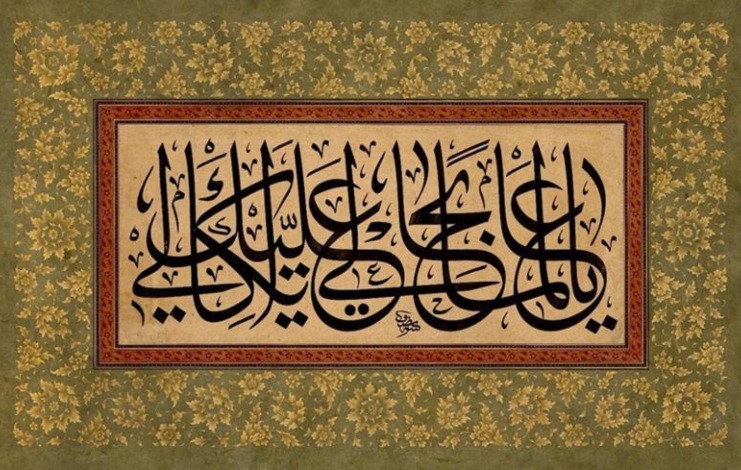
At this time, the Kufi style dominated the calligraphy scene, but Ibn Muqla invented new art styles that superseded the previous ones. Ibn Muqla was the one who invented the Thuluth and Al-Mansoub styles, as well as the foundations and rules for others, such as Naskh. The Naskh and Thuluth got further development throughout the centuries that followed, and calligraphers still use them today.
While the Kufic style was rigid in its overall design, Naskh had a more cursive structure but wasn’t as popular and as used at the time, Ibn Muqla changed that by improving on it and using it in official decrees, and private correspondence.
Ibn Muqla’s Thuluth style was new with its letters having long vertical lines with broad spacing. Its name translates to “one-third”, in reference to the maximum height for the letters on the same line must not exceed one-third of the ‘alif.
As for the Al-Mansoubstyle, it mainly focused on three measurements: the size of the period meaning the “Noqta”, the circle with a diameter equal to the height of the alif (the first letter in the Arabic language) and, and the height of the alif.
Little is known when exactly Ibn Al-Bawwab was born. However, we know of his existence and his body of work thanks to the survival of many of his manuscripts, Qurans, and texts referring to him by name.
With his name literally translating to “son of the doorman,” he didn’t grow up in a wealthy family and had to work to make a name for himself. He did so by learning about law and theology and working in several professions, such as a home decorator. However, he would later settle on working in book illumination and calligraphy.
Over years of hard work, he became renowned as a master calligrapher; fluent in six different styles in the field, perfecting the Al-Mansoub style and developing the Reyhani, Naskh, Tawqi, and Muhaqaq styles significantly.
Housed at the Chester Beatty Library in Dublin, Ireland, is the sole surviving Qur’an penned by Ibn al-Bawwab gifted to the country by Ottoman Sultan Selim I.
Originally from Syria, Mohammad Hosni Al-Baba was born in 1894 and is considered one of the last classical calligraphers. Al-Baba received his initial formal training with the Turkish master, Istanbul-based Yousef Rasa, who had renovated the Umayyad Mosque in Damascus, Syria. Al-Baba would later study under another renowned calligrapher, Mehmed Showki Afendi, author of the work “The Thuluth & Naskh Mashqs.”
He would later travel to Cairo, Egypt, becoming one of the leaders in Islamic and Arabic calligraphy, turning his home into a hub for artists, calligraphers, and poets. Al-Baba would be famous for improvements to the lettering in the Thuluth style, the linear structure of Arabic script, and was appointed by King Farouk as the first professor to be a master at the Royal Institute of Calligraphy.
His children would continue his legacy but in different fields since many grew up surrounded by artists when they visited Al-Baba’s home. The most famous of his children are actress Soad Hosni, dubbed “Cinderella of Egyptian Cinema,” and Najat Al Saghira, who became an actress and singer.
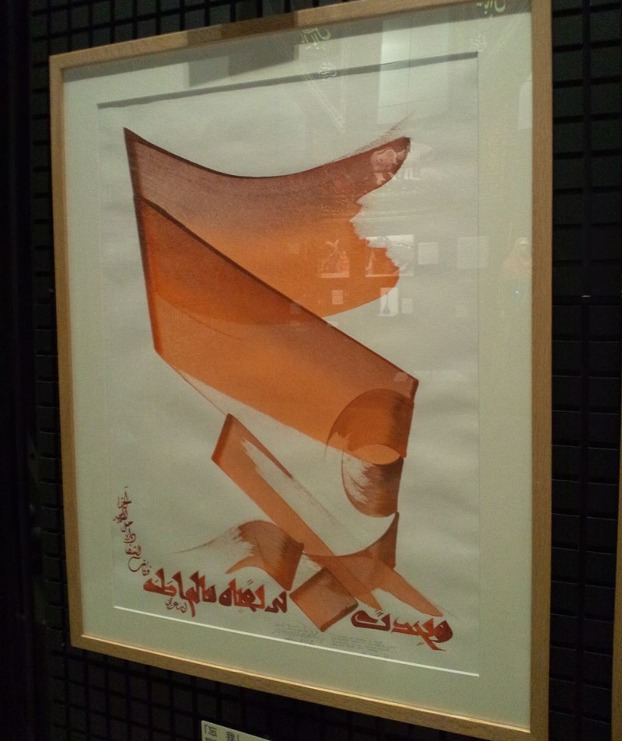
Born in 1944, Iraqi painter and calligrapher Hassan Massoudy continues to be one of the biggest inspirations for many modern artists today. French writer Michel Tournier even considered him as the “greatest living calligrapher” in 1989.
Massoudy grew up in Baghdad, Iraq, until 1969, when he fled to Paris, France, entering the École des Beaux-Arts, where he studied figurative painting. At the time, he looked for a job to pay for his studying, finally finding one as a calligrapher in Arabic magazines, writing their headlines.
While he wasn’t famous for a traditional calligraphy style, his distinct and elaborate designs made him stand out among the rest of the artists of his time. Massoudy would delve into the world of theater, collaborating with artists and choreographers, creating different productions focusing on the harmony of dance, calligraphy, and dance routines.
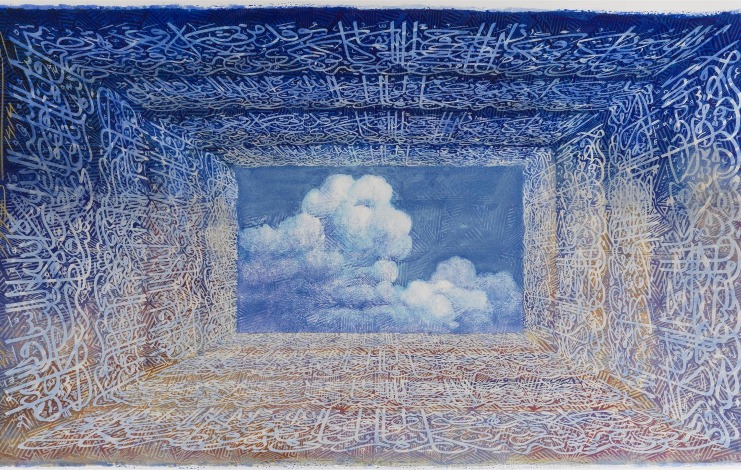
Studying abroad but seeking inspiration from his traditional roots, Tunisian artist and calligrapher Nja Mahdaoui invented the world of Arabic calligraphy as a graphic style, creating what was called “Calligrams.”
Born in 1937 in Tunis, Tunisia, he first started learning art history and painting at the Carthage National Museum. He later traveled to Rome, Italy, where he continued to study painting and learned more about philosophy at the Santa Andrea Academy. He also moved to Paris, France, where he went to the Cité Internationale des Arts and École du Louvre before returning to his home country in 1977.
His calligraphic style focuses mainly on the designs he creates as a whole rather than the composition of words since his “calligrams” resemble Arabic letters but have no literal meaning, leading to many naming him the “inventor of abstract calligraphy.” People can see Mahadaoui’s work on several materials used as a canvas, including jewelry, drums, leather, paintings, walls, glass, and so much more.
A UNESCO Crafts Prize laureate, Mahdaoui, graced the Facebook campus in 2018 by painting one of their halls using Arabic calligraphy in his unique style as part of the “FB AIR program,” turning their hall into a vividly colorful masterpiece.
Egyptian artist and calligrapher Ahmed Mustafa was born in 1943 in Alexandria, Egypt, graduating from the Faculty of Fine Arts at Alexandria University in 1966 before traveling to the UK on a scholarship to the Central School of Art and Design in London, England, where he earned his Ph.D. in 1989.
Inspired by his Islamic roots, his calligraphic works mainly focused on quotes from the Quran, among other sources. Working on several materials as his canvas, Mustafa has designs on glass and carpets, among others.
Mustafa also set up the Fe-Noon Ahmed Moustafa Research Centre for Arab Art and Design in London in 1983. He lectures and creates workshops globally as well as does commissions, one of which was presented by Queen Elizabeth II to Pakistan for the country’s fiftieth anniversary in 1997.
The following year, the Vatican invited him to do an exhibition at the Pontifical Gregorian University in Rome, Italy. World media at the time announced it as the first achievement of its kind in the history of Muslim-Christian relations.
Did you know that many of the Egyptian colloquial words Egyptians use on a daily basis are not actually Arabic?
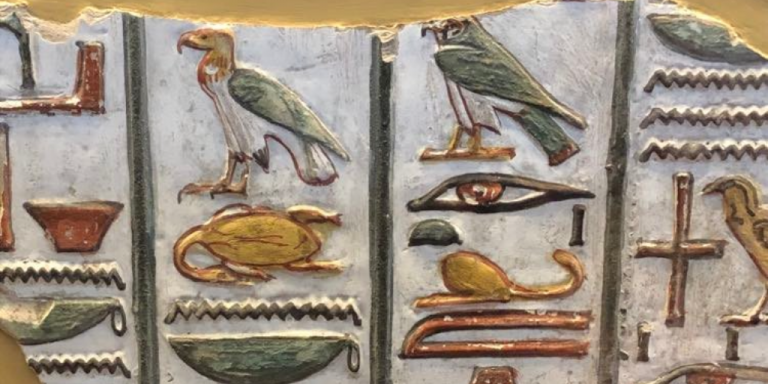
The Egyptian Arabic dialect is fundamentally Arabic, but with the influence of history and local populations, some of the peculiarities that set the Egyptian dialect apart come from the integration of ancient Egyptian, Greek and Coptic words and expressions. Surviving for thousands of years, many commonly used, modern-day Egyptian words and phrases can actually be traced back to the current dialect’s ancient predecessors.
Here are some examples of words Egyptians use, often not knowing their ancient origin, as per the books ‘From Pharaoh’s Lips’ (2003) by Ahmad Abdel-Hamid Youssef, and ‘Al Logha Al Masrreya Al Qadeema’ (Ancient Egyptian Language, 2012 ) by Abdelhaleem Nour El-din.
UMBU (DRINK)
Often, in communication with infants or toddlers, broken down or simplified words are used to allow the news speakers to express themselves without too much difficulty. For example, umbu is the word commonly used by Egyptian children to express their thirst. The ancient Egyptian term simply means “from the water”.
TA TA (STEP BY STEP)
When Egyptian parents try to help their crawling baby how to walk, they use the phrase “ta ta” derived from the ancient Egyptian word “ti ti”. Though Arabic became the primary language in Egypt, the Coptic language was initially still being used in everyday life for the majority of the population. The term “ti ti” was adopted by the Coptic language and modified to “ta ta”, which is used until today.
MAMM (FOOD)
The word Mumm is an Egyptian slang word derived from the ancient Egyptian “my wnm”, which means ‘give to eat’. Many Egyptians, until this day, teach their babies to say “mumm” whenever they are hungry — as it is easy and quick to sound out.
DAHYA TIWADDIH AL AMENDI (MAY A DISASTER SEND HIM TO HELL)
The Egyptian phrase “Dahya tiwaddih al amendi”, is originally ancient Egyptian. The word “amendi” is a Coptic word meaning “hell”, which was derived from the ancient Egyptian word “imntt”, meaning the ‘underworld’.
BIKH (BOO!)
The word “Bikh!”, meaning “Boo!”, is often used in modern day Egypt to sneak up on someone and scare them. The term is an ancient Egyptian word “pa akh” meaning “demon” or “ spirit”.
WAHAWY YA WAHAWAY IYUHA (THE MOON HAS APPEARED)
The Egyptian phrase “Wahawy ya Wahaway iyuha” is part of a song Egyptians sing during the holy month of Ramadan. Families and young children swing their fanoos (lanterns) as they sing the lyrics to Wahawy ya Wahaway iyuha. The popular lyric is believed to be inspired from the ancient Egyptian word “wah” meaning ‘to put’ or ‘appear’, and “iyah” meaning “moon”. Thus, comprising the lyric “the moon has appeared” during the month of Ramadan, which is decided upon according to the lunar calendar in Islam.
KRKR (LAUGHING)
The word “krkr” is used frequently in modern Egyptian day to describe someone who is laughing uncontrollably. The term is originally ancient Egyptian “ķrķr” and was adopted into modern day Egyptian society.
GATEK MAW (MAY A LION FETCH YOU)
The phrase “jak maw” or “gatek maw”, often switched depending on the region it is used in, essentially means “may a lion come to you”. The phrase is an Egyptian expression used as an insult. The ‘maw’ is based on a pun on the words “lion” and “mother”. The expression is often used by mothers bothered by their children.
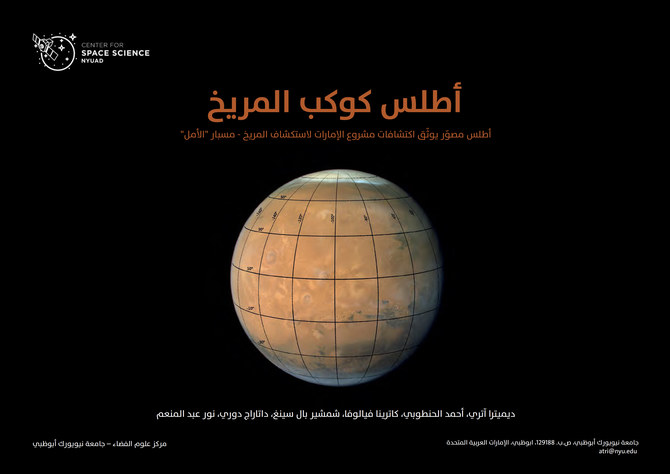
NYU Abu Dhabi research scientist Dr. Dimitra Atri has produced the world’s first ever Mars atlas in Arabic, Emirates News Agency reported.
The atlas uses data from the UAE’s Emirates Mars Mission (EMM) — also known as Hope or Al-Amal — in order to make the findings of the probe more accessible to both the UAE’s Arabic-speaking population and the rest of the world.
The Mars Atlas Project combines various images from the Hope probe to map the planet’s surface.
The end result is a comprehensive view of Mars and stunning images of a planet that once had similar atmospheric conditions to Earth.
Dimitra Atri used data from UAE’s Hope probe to map the red planet.
Atri and his team compiled the atlas by processing observational data from EMM’s Emirates eXploration Imager, one of three instruments onboard the orbiter. The device will also assist the team in showing how the planet changes over the course of one Mars year, which is roughly equivalent to two Earth years.
As more data from the Hope probe becomes available, the atlas will be gradually updated.
The data will help scientists gain a better understanding of the planet’s atmospheric thinning, which has caused it to cool and dry over the last 4 billion years.
Atri predicts that the collected data will be used to answer unsolved scientific questions about the erosion of Mars’ atmosphere.
The findings could help the international scientific community to better understand Earth’s atmospheric processes, he said.
Cairo witnessed the seventh edition of the Cairo International Biennale of the Arabic Calligraphy Art under the auspices of Minister of Culture Ines Abdel-Dayem at the premises of Cairo Opera House.
Under the slogan ‘Pioneers and Renovators in 100 years (1922/2022)’, the biennale included a three-day seminar that ran from 6 to 9 June at El-Hanager Cinema that highlighted the most prominent figures of Arabic Calligraphy in Egypt and the Arab world as well as an art exhibition showcasing artistic gems of this Art from 125 countries represented by 15 artists at the Art Palace in the Cairo Opera House Complex that is running from 7 to 20 June.
Furthermore, the event established a new tradition of honouring artists and researchers for their achievements, and a side competition was held in the name of renowned Egyptian calligrapher Khedr El-Portsaidy — the founder of the Arabic Calligraphy Museum as well as the one who accredits and certifies Arabic calligraphers in Egypt.
In the opening session, Mohamed El-Baghdady — the general commissioner of the biennale — noted that this year marks the centenary jubilee of the establishment of Egypt’s first calligraphy school during the reign of king Fouad in 1922.
The session also included the presentation of a research paper written by Nahla Imam — country representative of Egypt at the 2003 Convention of Safeguarding the Intangible Heritage of UNESCO — who shared her experience in adding Arabic calligraphy knowledge, skills, and practice on UNESCO’s representative list of intangible cultural heritage in December 2021.
Mohamed Hassan Abu El-Khair — the first to innovate the ‘mashq’
The second day of sessions showcased the pioneers and renovators of such enchanting art.
The first paper was presented by researcher and calligrapher Mohamed El-Shafaai on passing down the practice of such art in Egypt, taking the family of Mohamed and Abdel-Aziz Abu El-Khair as an example, as the two are renowned Egyptian calligraphers that this year’s round was dedicated to.
He started off by revealing that the concept of passing down this form of art dates back to the pre-Islamic era, explaining that the initial idea behind Arabic calligraphy was transcription, and then the artistic element came later.
“During the pre-Islamic era, except for a small circle, very little knew how to write Arabic, and according to Abdalla Ibn Abbas, the first person to begin writing in Arabic in the tribe of Qureish was Harb Ibn Umaya — one of the masters of the tribe and the father of Sufian Ibn Harb.
The other key person in calligraphy art was El-Wazir Ibn Noqla, who was famous during the Abbasid Caliphate and inherited the art from his father El-Ali Ibn Hassan, explained El-Shafaai.
Mohamed Hassan Abu El-Khair was born in Cairo in 1921, he studied in Al-Azhar and then joined The School of Improving Calligraphy when he was only 17, where he was the top of his class and was taught by calligraphy masters such as Sheikh Fakhr El-Din, Sheikh Ali Badawi, and Mohamed Hosni El-Baba — the father of iconic Egyptian actress Soad Hosni to name but a few.
He excelled in El-Sulus and Reqaa calligraphy and soon became a professor of the art of calligraphy at Oum El-Qoura University in Mecca for 20 years.
“He was the first to innovate in the mashq (an educational manual technique) of the solos of Arabic calligraphy that are taught to fourth graders, where he started teaching students to write whole sentences from the beginning instead of focusing on letters with no context,” El-Shafaai added.
Abdel-Qader Al-Shihabi — the calligrapher of the Palestinian government
The second paper focused on Abdel-Qader Al-Shihabi — a Palestinian calligrapher — that was written by Farag Hussieny. Al-Shihabi is a renowned Palestinian calligrapher whose fame reached its peak during the first half of the 20th century and was known as the ‘calligrapher of the Palestinian government.’
“Born and raised in Jerusalem, Abdel-Qader Al-Shihabi comes from a long line of calligraphers that started off this art between the 12th and 14th year of the Hijri calendar, however, Al-Shihabi learned calligraphy in Istanbul at the hand of Mohamed Ezzat, the biggest artist. He was known for his suluth calligraphy, which decorates the walls of Al-Aqsa Mosque to date. He also spent all his life teaching calligraphy in Jerusalem and encouraging young artists to follow his passion,” explained Hussieny.
Abdalla Al Zohdi: the calligrapher of Al-Haramein Al-Sharifine
The third paper covered the ‘calligrapher of Al-Haramein Al-Sharifine(The Two Holy Mosques) Abdalla Al-Zohdi and was written by Sami Saleh Abdel-Malak.
“Born in Nablus, Abdalla Al-Zohdi was born around 1251. His family moved to Istanbul, where he studied and excelled in calligraphy at a very early age. His artistic fame made him the official calligrapher of the Prophet’s Mosque in Medina, where his calligraphy adorns the walls and ceilings of the mosque till now,” the paper explained,
“During the reign of khedive Ismail, he was commissioned to write the calligraphy of the Keswa of the Kaaba and Mahmal. His implacable calligraphy was quite visible and stood out in the design of the keswa from that day onwards. He was known by his highly complex and geometric Sulus calligraphy.”
The translators of books about culture, physics and data mining are among the latest recipients of the prestigious King Abdullah bin Abdulaziz International Awards for Translation.
This year’s event, covering works published in 2021, marks the 10th anniversary of the awards. There were six categories and the winners, chosen by the event’s board of trustees, were announced on Monday.
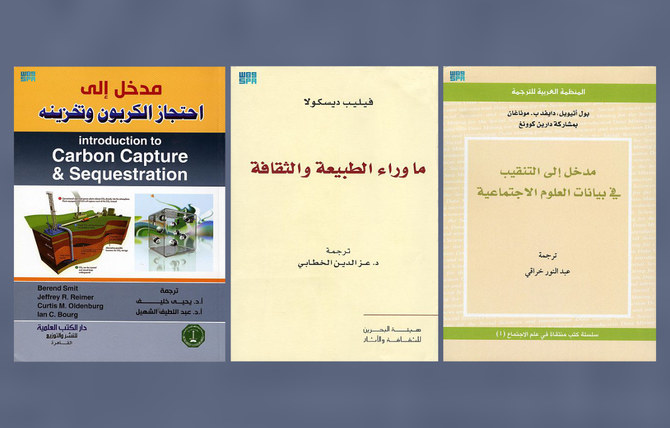
Izz ddeen Khattabi Riffi’s translation from the original French of “Beyond Nature and Culture” by Philippe Descola took the award for works in the humanities category translated into Arabic. It was shared by Abdelnour Kharraki for his translation of “Data Mining for the Social Sciences: An Introduction” by Paul Attewell, David Monaghan and Darren Kwong, originally published in English.
The award for institutions went to the publishing and translation department of Obeikan Company, and to Al-Arabi Publishing & Distribution.
There were also two winners in category for works in the natural sciences translated into Arabic, both for books originally published in English: Dr. Sausan Hassan Al-Sawwaf and Dr. Laila Saleh Babsil for their translation of “Physics in Biology and Medicine” by Paul Davidovits; and Yahya Khlaif and Abdullatif Al-Shuhail for their translation of “Introduction to Carbon Capture and Sequestration” by Berend Smit, Jeffrey A Reimer and Curtis M. Oldenburg.
Three awards were presented in the category of Individual Efforts in Translation, to Hamza Qablan Al-Mozainy from Saudi Arabia, Murtazo Saydumarov from Uzbekistan, and Samir Mina Masoud Greeis, who is of Egyptian-German nationality.
The judges decided to withhold the awards in the two remaining categories, for books about the humanities and natural sciences translated from Arabic into other languages.