QATAR : Resistance and postcolonialism at the Mathaf: Arab Museum of Modern Art in Doha

With shows that range from political stances to introspective research, Doha’s Mathaf: Arab Museum of Modern Art proves itself to be one of the most authoritative voices for Arab narratives and the Global South in art.

The first impressions viewers get when walking inside the space set up like a unitary installation by Algerian artist Kader Attia, are a big haunting archive, a disquieting museum storeroom. It’s called “The Repair from Occident to Extra-Occidental Cultures” at this particular museum in the Qatari capital. A number of cabinets on the perimeter of the room showcase objects from colonial times: photographs of French admirals and Arab royalty, plus memorabilia, knives, cutlery and weapons.

Pinned rather aggressively on the shelves with metal rods are books from 1800-1900, like La France d’Outre MerOccident Noir and The Age of Napoleon, alongside satirical illustrations from magazines. A particularly disturbing one depicts a naive white nurse taking care of wounded African soldiers, who are depicted with malicious grins on their faces. Whether it’s the representation of racist stereotypes, anthropological studies or orientalist perspectives, the selection of materials by Attia shows different aspects of the relationship between coloniser and colonised, and how models of thought carried on in both Western and non-Western cultures.

Among the more harrowing pieces in the installation are several heads sculpted in wood, reminiscent of African statuettes. The features of these faces are distorted, reminding the viewer of the cubist or expressionist effect, that Picasso, Bacon or more recently Marlene Dumas have largely employed in their work. Looking at the anatomy and war surgery books on the shelves — which explain how to reconstruct exploded faces damaged during WW1, and how to attach prostheses — it seems clear that the distortion in the faces references the war wounded. The artist is hinting at the process of repairing historical wounds and abuses by the West towards its colonies, something central to the postcolonial conversation.

The presence of books like Primitive Art and Psychoanalysis summarises one more aspect of the artwork: how the encounter with the “other” is sublimed and transformed in art, and the deep psychological underpinning which lies behind every form of orientalism.

It’s precisely the link between all these seemingly distant concepts that make Kader Attia’s installation so powerful.

The artist leaves it to the viewer to come to terms with that thick, inextricable matter where racist stereotypes, modernism, colonialism, tribal art, sexuality, anthropology, war, imagination and the subconscious meet in a dangerous mix.

The intention of the work, however, is clear. He is examining this magma with a critical eye, in order to move forward and heal the historical wounds from these power dynamics.

Attia’s work is just a small part of the large and rich collection at Mathaf, but it contains one of its most fundamental themes: the creation of an alternative to the non-Western narratives and discourses for history and art history. This seems to be the main mission that the museums in Qatar are highlighting. While in the Western world museums as institutions are increasingly losing their relevance, in the Global South — namely, the parts of the world previously excluded by a Western narrative — museums are fundamental parts in the development of their own art system. In fact, it’s up to these institutions to construct alternative narratives to the West’s by using museums as a central tool.

The permanent collection of Mathaf is a case in point. Offering an excellent survey of 20th and 21st century modern and contemporary art from the Arab world and the Middle East (which is tellingly called “West Asia”), it is highlighting the strong connections of local Qatari and Arab artists with the wider world in Africa, Asia and Europe.

The permanent collection has evolved from an initial donation of a thousand works collected over the past 25 years by Sheikh Hassan Bin Mohammed Bin Ali Al-Thani. Today, it’s continuing to grow, and hosts more than 9,000 artworks by pioneer Arab artists.

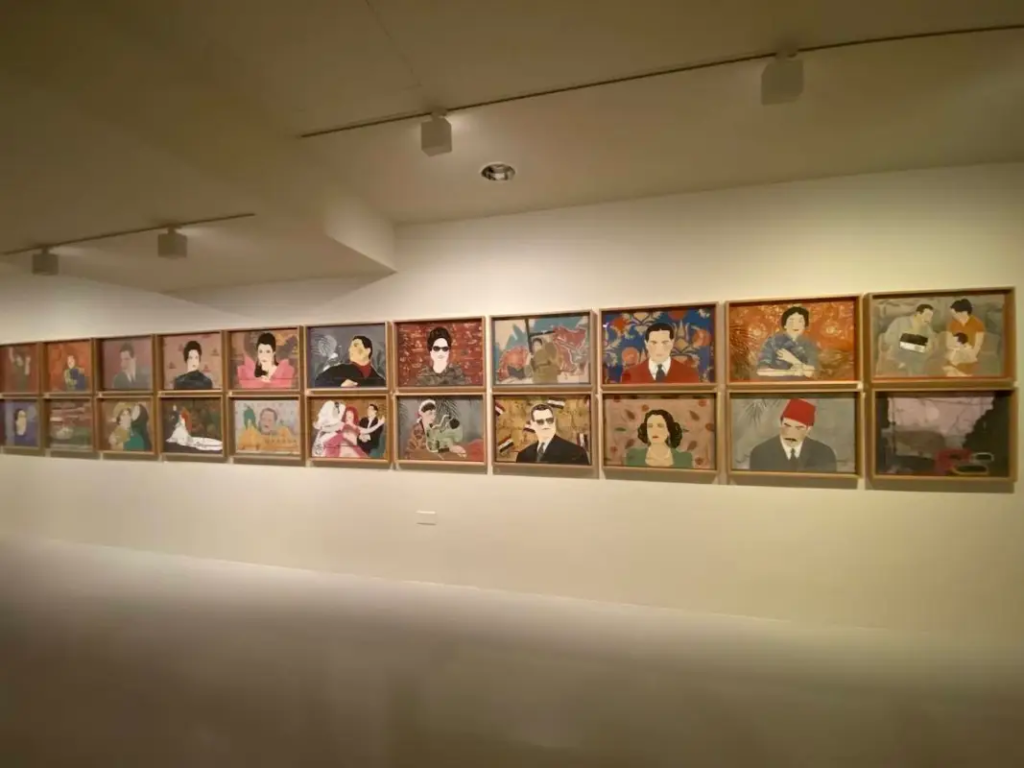
A particularly interesting section of this collection is dedicated to women artists, that has works like “Icons of the Nile” by Egyptian artist Chant Avessidian. This consists of a series of prints and paintings on cardboard representing, in a stylised way, Egyptian icons from modern times, including a number of iconic women.

At the moment, Mathaf is also hosting a temporary exhibition called “Arab Modernism”, which looks at how this current is being articulated in Arab countries, compared with its counterparts around the globe. In the show, we can see not only how Arab artists took visual elements, and techniques from the rich and diverse heritage of the Arab-Muslim world — particularly calligraphy and ornamentation — but also how they mused on the concept of Tajreed. The Arabic term for abstraction, in fact, also means “to strip away” and “purify”, referring to a process of revealing and clarifying through the artistic process itself.

In one room with ochre walls, we can observe how the calligraphic sign was declined to break the division between word and image, opening a space between calligraphy and geometric abstraction. We also find beautiful abstract patterns that intermingle in a big painting by Algerian artist Rachid Koraichi, which is almost tribal in its use of the calligraphic sign and the juxtaposition of primary colours. Etel Adnan, on the other hand, has a much smaller work, part poem, part drawing, where words on paper become abstract lines.

Palestinian Samia Halabi has one painting on show called “The Red One”, an exquisite juxtaposition of touches of colour, which are melodious and musical. Egyptian artist Mounir Canaan, meanwhile, plays on the cubist and modernist usage of pieces of cardboard and wood to create a vibrant image where different plans intersect, creating an effect which is at once aggressive and dynamic.

One of the most beautiful works in the show, though, is by Iraqi artist Hanaa Malallah.

“Secret of Fold Up Squares”, as the name suggests, consists of a series of folded pieces of canvas, burned at their centre. In one of these small squares, almost hidden in the canvas, is a piece of gold, a visually striking and highly evocative detail.

The show lets us observe how shared linguistic and cultural foundations in the Arab world generated a kind of abstraction in the region that stretches far beyond the Western definition of it, or as a simple reaction to academism and realism in art.

A smaller show, “Introspection as Resistance”, is collateral to the Abstraction exhibition. It is dedicated to the mathematical and geometrical work of Iraqi artist Mehdi Moutashar. He has been known as a poet of exactitude and rigour, and his work has been inspired by Abstraction, Minimalism, Op Art and the work of Klein – in its usage of his trademark blue – which is again blended with calligraphy and Arab ornamental patterns.

Overserving graphic motives on the hyper-white walls of the museum, brightly lit, the viewer gets the impression of being catapulted into a different dimension that doesn’t belong to this world, but to computer intelligence.

An early experimenter in geometric abstraction, Moutashar’s work brings mathematical precision and science into art. Looking at the mathematical principles of the universe is, for the artist, a form of introspection. It’s an introspection that bypasses individuals, to connect us with some sort of spiritual truth, a universal order. The artist exemplifies an incessant inquiry and a tireless resistance towards the disorder of the world.

In this sense, the show represents the perfect counterpoint of Kader Attia’s work. Where one acknowledges the impossibility of neatly separating history, imagination, wounding and the mending of wounds, Moutashar launches himself into a Sisyphean attempt to order the work through mathematics.

With these shows, Mathaf proves itself to be one of the most authoritative voices in the Gulf when it comes to speaking about Arab art and its original trajectory. A process of reparation – at least for the art – seems to be possible. One exhibition at a time.

source/content: middleeastmonitor.com (headline edited)

__________
___________

QATAR
SAUDI ARABIA: The King Salman Global Academy for Arabic Language (KSGAAL) launches books on promotion of Arabic in 4 countries

  • – Four publications are part of The Arabic Language in the World series
    • – Publications aim to build bridges of communication with Arabic- speaking peoples around the world

The King Salman Global Academy for Arabic Language (KSGAAL) launched four new publications on Thursday.

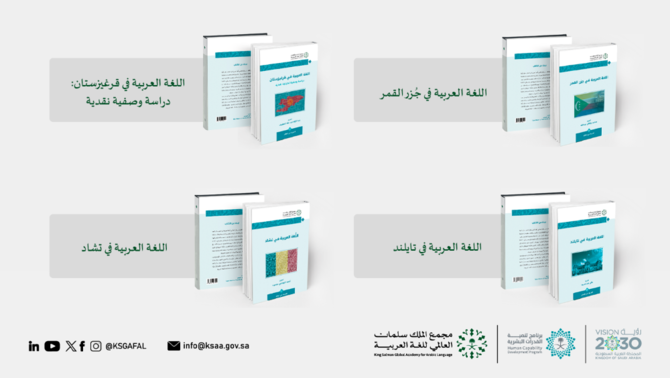
According to a statement, the four publications are part of The Arabic Language in the World series, and include the books: “The Arabic Language in Chad,” “The Arabic Language in Thailand,” “The Arabic language in Kyrgyzstan: A Critical Analytical Descriptive Study” and “The Arabic Language in the Comoros.”

The publications aim to build bridges of communication with Arabic-speaking peoples around the world.

Language researchers, academics, and institutions inside and outside the Kingdom can view the books on the KSGAAL website via: https://library.ksaa.gov.sa/index/view/78.

Dr. Abdullah Al-Washmi, secretary-general of KSGAAL, said the academy’s Specialized Global Research Track project includes a variety of disciplines and arts related to the Arabic language.

The Arabic Language in the World series seeks to deepen communication between institutions and individuals concerned with the language.

The program involves about 1,100 researchers from 76 countries around the world.

KSGAAL is tasked with supporting the Arabic language, enhancing its status, preserving its integrity in speech and writing, documenting its origins, methods, vocabulary and grammar, and facilitating learning inside and outside Saudi Arabia, Al-Washmi said.

source/content: arabnews.com (headline edited)

___________

The King Salman Global Academy for Arabic Language (KSGAAL) has launched four new publications. (Supplied)

_________________

SAUDI ARABIA

MOROCCAN Writer Abdelfattah Kilito Wins 2024 Grand Francophonie Prize

Kilito has won several accolades, with his most recent being the International Prize of King Faisal for Arabic Language and Literature in 2023.

The renowned Moroccan writer Abdelfattah Kilito has been awarded the 2024 Grand Prix de la Francophonie by the French Academy.

Since its establishment in 1986, the Grand Prix of the French Academy has been dedicated to acknowledging Francophone individuals whose impactful efforts, whether locally or globally, have greatly supported the maintenance and propagation of the French language.

The French Academy revealed its roster of 2024 honorees on Thursday evening, recognizing 67 individuals across diverse domains such as literature, poetry, criticism, philosophy, history, cinema, theater, and French music.

Born in 1945, Kilito is a professor emeritus in the French department at Mohammed V University in Rabat. He has also taught in Paris, Princeton, and Harvard. 

He has authored numerous works in both Arabic and French, in addition to publishing studies and research in Moroccan and Arab journals and scientific reviews.

Kilito has been recognized with numerous accolades, most notably the 2023 International Prize of King Faisal for Arabic Language and Literature.

Among his other awards, Kilito has received the Great Moroccan Award in 1989, the Atlas Award in 1996, the French Academy Award in 1996, and the Sultan Al Owais Prize for Criticism and Literature Studies in 2006.

The Grand Prix represents a pinnacle of achievement in celebrating Kilito’s profound influence on the French language and culture, both in his homeland and on a global scale. 

As his scholarly contributions and literary talent continue to resonate globally, this latest award is another resounding acknowledgement of Kilito’s enduring legacy and his dedication to advancing intercultural dialogue within the global francophone community. 

source/content: moroccoworldnews.com (headline edited)

_________

______________

MOROCCO

SAUDI ARABIA assumes Presidency of ‘Arab League Educational, Cultural & Scientific Organisation (ALESCO) until 2026

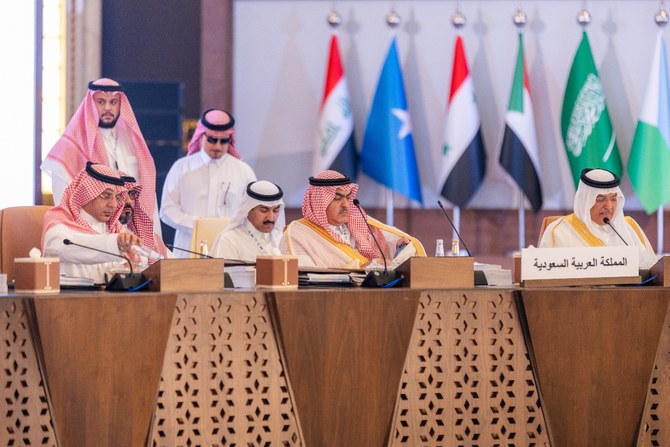
Saudi Arabia has assumed the presidency of the Executive Council of the Arab League Educational, Cultural and Scientific Organization until 2026.

The official announcement was made on Friday during the 27th session of the ALECSO, which was held in Jeddah under the presidency of Saudi Arabia. During the session, Iraq handed over the presidency to the Kingdom.

In a speech delivered on behalf of Minister of Culture Prince Badr bin Abdullah bin Farhan, Minister of Education and Chairman of the Saudi National Committee for Education, Culture and Science Yousef Al-Benyan welcomed the ministers and heads of national committees for education and science participating in the session.

Al-Benyan stressed the Kingdom’s humanitarian and fraternal support for the Gaza Strip within the framework of Arab cooperation and solidarity.

He affirmed Saudi Arabia’s support for Khalid Anan, the only Egyptian and Arab candidate for the position of director-general of the organization.

Al-Benyan concluded the speech by praising the efforts of Arab countries in supporting ALECSO, and building bridges of communication to achieve common regional goals.

Saudi Deputy Minister of Education Mohammed Al-Sudairi confirmed that holding the ALECSO meetings in Jeddah coincides with an increase in the role of Saudi national institutions to support the work of the organization.

He added that the number of Saudi initiatives exceeded 45, reflecting Saudi Arabia’s interest and belief in the importance of working with international organizations and its regional environment.

Iraqi Minister of Education Ibrahim Al-Jabouri, head of the 26th session, pointed out achievements made in the previous session, and various programs aimed at building bridges of cooperation between Arab culture and the rest of the world.

Director General of ALECSO Mohammed Ould Omar thanked King Salman and Crown Prince Mohammed bin Salman for hosting the event in Jeddah.

He presented the most prominent programs, initiatives, and projects implemented by the organization between the 26th and 27th sessions with international organizations, such as UNESCO, the work of the Arab Summit in Algeria, the Francophone Summit, the 13th Conference of Arab Ministers of Education in Rabat, and the International Conference on Adult Education, also held in Morocco.

At the end of the 27th session, ministers and heads of the Arab delegations agreed on the importance of supporting the Palestinian cause, condemning and denouncing the displacement that the Palestinian people, as well as the destruction of Palestinian antiquities.

They also addressed the importance of supporting culture, education, innovation, and science in the Arab world. 

source/content: arabnews.com (headline edited)

_________

__________________________________

SAUDI ARABIA / ARAB SCIENCE

SUDANESE-EGYPTIAN Marwa Zein, A Multi-identity Film Director, Scriptwriter, & Film Producer

Get to know this brilliant Arab woman !

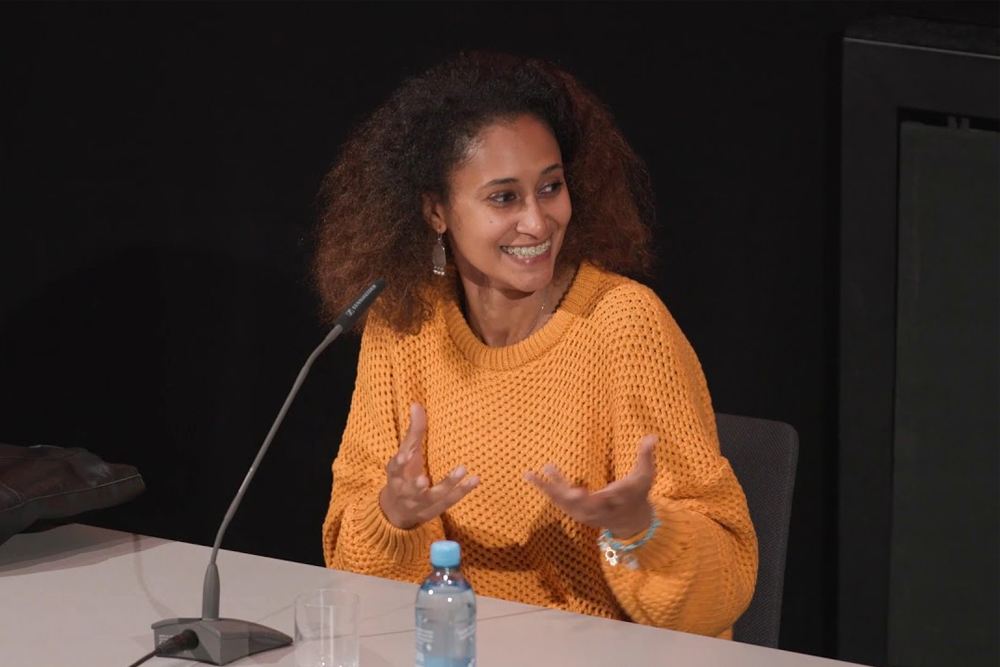
Born in Saudi Arabia and the daughter of a Sudanese father and Egyptian mother, Marwa Zein is a woman that truly embodies multiple identities, and for many it is this that perhaps shines through the most in her work. Even when it comes to her roles, that diversity and multiplicity are frontline and center. An award-winning director, scriptwriter, film producer, women’s rights activist, and founder of ORE Production, a Khartoum-based film production company, Zein is inspiring in every way.

Before setting off on a journey to become a filmmaker, Zein enrolled in Cairo University as a chemical engineering student to please her parents. While studying, she worked and saved up to have the means to leave her degree behind three years later, instead study cinema at the Academy of Arts in Cairo, Egypt in 2005. In 2009, she graduated with honors and moved to Germany to continue her film studies. Her graduation project, “A game,” was an official selection of more dozens of international festivals across the globe and was translated into five languages.

From her inspiring start into the world of film and her academic achievements, Zein moved on to bigger goals, nabbing awards for her short film “One Week, Two Days,” which premiered at the 2016 Dubai International Film Festival. In 2019, she was selected as one of the seven young filmmakers from across to attend the Cannes Film Festival 2019 by the International Emerging Film Talent Association (IEFTA).

Perhaps her most renowned recent work is “Khartoum Offside,” which was awarded Best Documentary for 2019 at the 15th Africa Movie Academy Awards AMAA 2019. The documentary tells the story of women footballers whose dream it is to play for Sudan at a Women’s World Cup hosted by their home country, revealing the challenging social, economic, and political situations they face and inspiring audiences with their tale.

Speaking to Women and Hollywood in 2019, Zein had some inspiring words of advice for other female filmmakers, saying, “There’s no competition. Everyone is unique, and we can’t tell the same story even we have the same idea. You are special, different, and inspiring, and you lead the way for the people coming after you.”

“Take care of your mental, physical, and financial situations. It’s a very challenging and demanding business, so don’t lose your soul in the process. Stay true to who you are, and you will reach the horizon,” she continued.

source/content: abouther.com (headline edited)

________

_________________________

SUDAN / EGYPT

ARAB: Beyond flying carpets: A COLOURFUL HISTORY OF ARABS in WESTERN FILM

A fascinating new exhibit in Beirut is showcasing 108 original movie posters advertising Western films set in the Arab world.

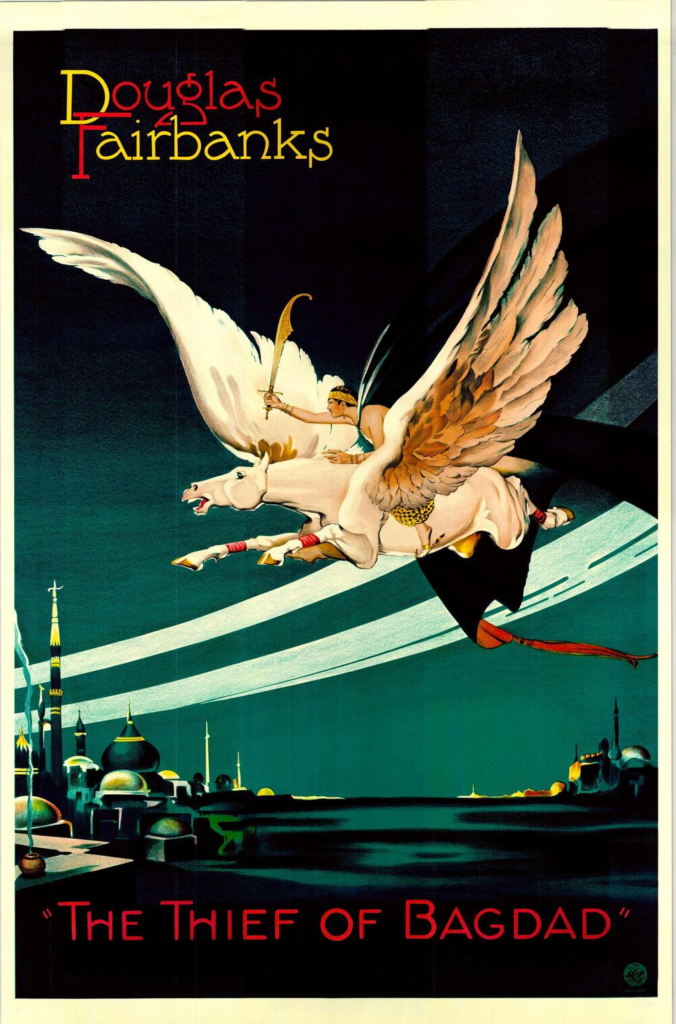
The original poster for the 1924 American film ‘Thief of Baghdad’. Courtesy Abboudi Abou Jaoude

The original poster for the 1924 American film Thief of Baghdad hangs on the wall of Dar El-Nimer for Arts and Culture in Beirut. Based on a story from One Thousand and One Nights, a collection of Middle Eastern folk tales, the film tells the story of a robber who pretends to be a prince after falling in love with a princess.

It features a young black-haired man flying through the night sky on a winged steed, above a city of domes and spires that looks more like Istanbul than the capital of Iraq. He clutches a gold scimitar with a wicked curved blade in one hand.

It is one of 10 posters, all advertising adaptations of the film in different languages. The silent swashbuckler was so popular that it was remade three times, in 1940, 1961 and 1978. The French poster for the 1940 version is particularly beautiful and lurid, featuring a procession of robed figures and elephants making their way through a marketplace in front of an orange palace. In the foreground, a boy in a large turban looks shiftily to one side as he bites into a piece of fruit, presumably stolen from a market stall. In the sky, another turbaned figure stands on a flying carpet.

The collection

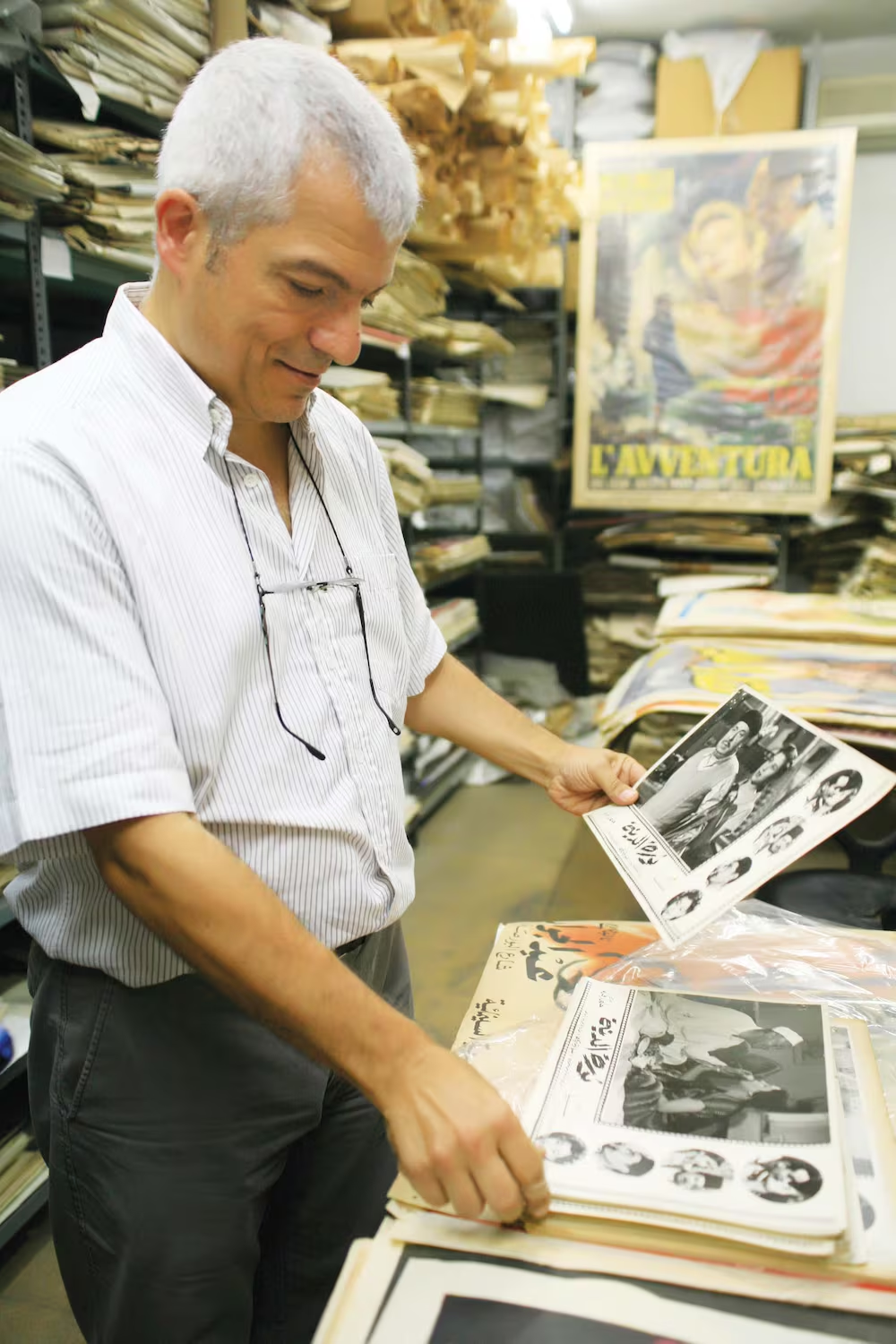
The pieces are part of a selection of 108 original posters advertising western films set in the Arab world and are on loan from private collector Abboudi Abou Jaoude, the curator of the show. “I have about 550 posters and about 300 pictures in my col­lection,” he says, strolling through the exhibition, which is organised by genres designated by neon signs. He stops frequently to point out a detail that makes him laugh or to delve into the facets of a particular film. “I started collecting because my favourite actors were Steve McQueen and Clint Eastwood,” he says. “Bullitt was the first poster I collected. Then For a Few Dollars More, a Spaghetti Western from Eastwood. But afterwards my interest changed and I started collecting foreign posters.”

Collector Abboudi Abou Jaoude​. Courtesy Abboudi Abou Jaoude and Dar el-Nimer

Jaoude chose to name the exhibition Thief of Bagdad, not only because the film was so popular, but because it inspired so many others. “Baghdad is the most popular city at the beginning of the movies. There are around 55 films made in the 20th century with Baghdad in the name,” he says.

Most of them were shot in studios in America or Europe and bear no resemblance to reality. Thanks to the Orientalist fascination with One Thousand and One Nights, the Baghdad of these films is a place of total fantasy, filled with camels and elephants, flying carpets and genies, as well as heroes, villains and damsels waiting to be rescued or wooed.

The posters are hand-drawn in riotous colours and often show several different scenes. Many feature white actors playing Arab characters and reinforce Orientalist tropes such as dashing desert sheikhs and feisty dancing girls, or enslaved beauties who await rescue by a civilised foreign hero.

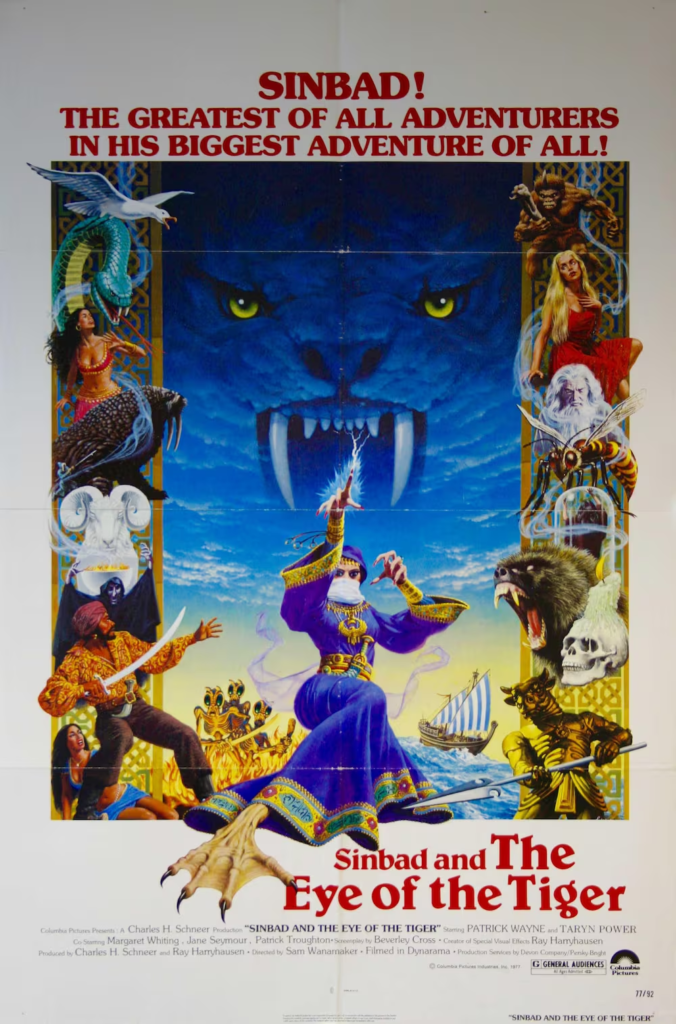
Like the Orientalist painters of the 19th century, the filmmakers and poster artists are fascinated by the idea of the harem. Many of the posters feature statuesque, white women posing evocatively. Others are simply bizarre. A 1977 poster for Sinbad and the Eye of the Tiger features a woman in a niqab and a bejewelled purple and gold robe, who shoots lightning from her hand as she kicks towards the viewer with a giant foot that resembles an eagle’s talon.

‘It’s about imagination’

Jaoude has divided the exhibition into four sections: love, fantasy, adventure and comedy. A fifth section features the posters of films shot on location in the Middle East. Beirut and Cairo were particularly popular filming locations in the 1960s and early 1970s, he explains, because shooting costs were low. That they were shot in the Arab world didn’t make the films – or their posters – any more accurate or realistic, however. Many of them are espionage themed and feature gun-toting spies and Soviet villains in Lebanon, running around the ruins of Baalbeck or fighting on top of the crusader castle in Saida.

The artists had sometimes not even seen the films they were advertising, so they based the posters on their own ideas about the Middle East, explains Jaoude. “It’s about imagination. They take the story from Arabian Nights. You can see in the posters that it’s a continuation of Orientalism,” he says.

Because viewers would not have a chance to see trailers for the films, the posters were intended to excite audiences and convince them the film was worth their time and money. “The shapes that shook a Harem Empire!” is the excited legend on the poster for the 1952 British film Babes in Bagdad, positioned beside images of fair-skinned women in belly dancer costumes and chains. The poster promises: “All its spectacle captured in exotic colour.” 

An Italian poster for the 1961 adaptation of Thief of Bagdad advertises “The fantastic deeds … the incredible daring of the thief who defied an empire!” At the bottom of the poster, the artist lists a series of features that viewers can expect in the film: “Adventure! Trees that become monsters! Adventure! Flying horses soar! Adventure! The faceless fighters! Adventure! Army created by magic! Adventure! Gigantic killer crab! Adventure! Men turned into stone!”

Jaoude has spent decades building up his collection, visiting cinemas in Morocco, Syria, Egypt and across the region. “Whenever I visit these countries, most days I go to the old cinemas, the ones around the city, not in the centre, because they leave these posters in the theatres for re-­issues,” he says. “Every five or six years they show the films again because people like these kinds of movies. After 20 years we find it funny, but at the time we found it very nice. People like the hero, the way he fights with the villain. It was popular.”

The films featured in the exhibition, which date from the 1920s to the 1970s, were intended to make money and entertain, rather than provide commentary on the Arab world. That changed after 1967 and the Arab-­Israeli conflict, he says. “After 1967 there are many political movies about the Arabs, but before that I think it wasn’t political,” Jaoude explains.

“I think there are three eras. The first one is about imagination and the Arab world. In the second, there are many films with singing and dancing set in the Arab world and lots of films about the First and Second World Wars, set in Arab countries. After 1967, it changes. It’s the Arabs as villains.”

Despite their Orientalist attitudes, garish colours and an overabundance of cliches, the posters are often beautiful and always entertaining. For Jaoude, they are artefacts that are more important than the films they represent. “What stays in my mind is the posters. I forget the movies,” he says with a smile.

Thief of Baghdad is at Dar El-Nimer for Arts and Culture in Beirut

source/content: thenationalnews.com (headline edited)

__________

__________

ARAB

ARABIC / SHARJAH, U.A.E: The Arabic Language Academy in Sharjah sheds light on the features of “VERBAL HARMONY ” in the Holy Qur’an

Al-Qasimi Hall at the Council of the Arabic Language in Mauritania hosted a scientific symposium entitled “Feature of verbal harmony in the construction of the Qur’anic surah: an authentic pause,” in which Dr. Muhammad Safi Al-Mustaghanemi, Secretary-General of the Arabic Language Academy in Sharjah, spoke via video communication technology, in the presence of Dr. Allah Al-Washmi, President of the King Salman International Academy for the Arabic Language, and an elite group of scholars, researchers and linguists, and it was moderated by Dr. Al-Bakai Abdel Malik, Secretary-General of the Council of the Arabic Language in Mauritania.

Dr. Khalil Al-Nahwi, Chairman of the Arabic Language Council, said that the Council recently launched the “Hadith Al-Tayef” program as part of its research and scientific initiatives with the aim of hosting an elite group of scholars and researchers through audio-visual communication technology from various parts of the world, and Dr. Ahmed Safi Al-Mustaghanemi was chosen, who represents the Arabic Language Academy in Sharjah – the Knowledge Edifice. The main partner of the Arab Linguistics Council, he will be the first guest to lecture in this pioneering scientific program.

Mosteghanemi highlighted the unique characteristics that distinguish the surahs of the Holy Qur’an, pointing to the wonderful harmony and precise linguistic organization that reflects unparalleled precision and miracle. He explained that each surah in the Holy Qur’an follows its own axis while adopting studied linguistic choices that are in harmony with this axis.

Al-Mustaghanemi provided illustrative examples from the Holy Qur’an, such as Surat Al-Naba’ and Surat Al-Nazi’at, to highlight these features, noting that linguistic harmony is not limited to the vocabulary of each surah and its focus, but extends to include the relationship between the conclusion of the surah and the opening of the surah that follows it, which is what the scholars of interpretation have confirmed in their previous studies, in addition to the connection between the surahs. Different types that share similar vocabulary, structures, or stories.

source/content: wam.ae (headline edited)

________

________________________________________________________

SHARJAH, UNITED ARAB EMIRATES (U.A.E) / ARABIC

SHARJAH, U.A.E: Arab Leader Sheikh Dr Sultan bin Mohammad Al Qassimi Develops Rich Historical Work on France in Arabic to Educate the Region on Their Invaluable Contributions to Western Civilisation

Sharjah Ruler collected 8,000 rare titles documenting French cultural history.

His Highness Sheikh Dr. Sultan bin Muhammad Al Qasimi, Member of the UAE Supreme Council and Ruler of Sharjah, is a leading Arab scholar and historian who has made contributions to documenting France’s cultural history from an Arab perspective.

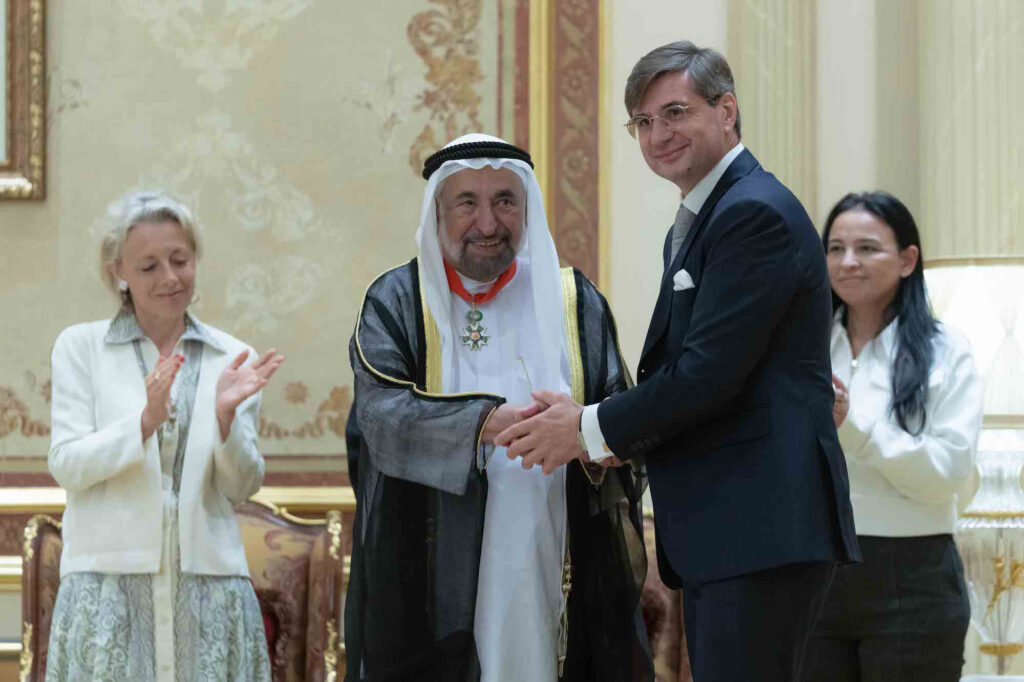
The historian has been recently conferred the title of The Legion of Honour, with the rank of Commander – one of the highest national honours in the Republic of France in recognition of his efforts to strengthen cooperation relations between the French Republic and Sharjah in a variety of fields, particularly culture. The honour was granted to the Sharjah Ruler by His Excellency Emmanuel Macron, the French President, and presented by Nicolas Niemtchinow, Ambassador of the French Republic to the UAE.

His Highness is currently developing the chapters of a comprehensive work, the first of which is titled ‘The Century of Lights.’ Set in the 18th century – the chapter focuses on the era that established the foundations of Western society and examines the pivotal role played by Denis Diderot, the founder of the Encyclopédie, in collaboration with D’Alembert, as well as the contributions of liberal philosophers of that century such as Jean-Jacques Rousseau and Voltaire.

The Arab historian navigates the remainder of the 18th and 19th centuries in the following two chapters, before penning the fourth chapter titled, ‘Controversial Issues on Globalisation and Cultural Exception’ detailing everything that had happened in relation to globalisation and France’s role in it.

“France, at the helm of the European Union, began vigorously defending the idea of cultural exception; it has prevailed. From my end, I will publish this book in Arabic to introduce all Arabs to French culture,” His Highness said.

“In 2003, the French Republic conferred the ‘Order of the French Republic for Arts and Letters,’ with the rank of ‘Knight Commander’ upon me. I saw this honour as a mandate to continue cultural giving, and I discussed the Republic of France’s pioneering role in intellectual enlightenment and civilised communication, as well as its contributions to the cultural field, translation, and literature, and the spread of the concepts of freedom and justice,” His Highness added.

From that day forward, the Ruler of Sharjah initiated the acquisition of available written records that document the cultural history of the French Republic, using the titles of books in the Egyptian Scientific Institute in Cairo. “I collected nearly 8,000 rare titles in French and decided to establish a scientific institute for those books in Sharjah, similar to the French and Egyptian Institute,” His Highness added, saying he donated his entire collection to the institute in Egypt after it was turned to ashes by a violent fire in December 2011.

source/content: businesswire.com / AETOSWire (headline edited)

_____________

His Highness Ruler of Sharjah while receiving the title of The Legion of Honour, with the rank of Commander (Photo: AETOSWire)

______________________________________________

SHARJAH, UNITED ARAB EMIRATES (U.A.E)

SAUDI ARABIA : World’s Largest Grand Arabic Opera opens in Riyadh

The opera was produced by the Saudi Theater and Performing Arts Commission.

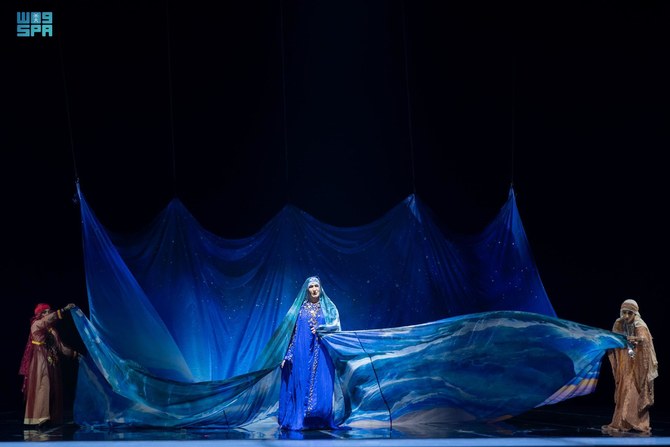
 “Zarqa Al-Yamama,” the world’s first and largest grand opera in Arabic, made its debut at the King Fahad Cultural Center in Riyadh, taking the audience on a lyrical journey through one of the best-known folkloric tales in the Arabian Peninsula.


The opera was produced by the Saudi Theater and Performing Arts Commission, and will run until May 4, telling the story of the central character’s attempts to warn her Jadis tribe of an imminent invasion.

source/content: arabnews.com (headline edited)

_________

ـ “Zarqa Al-Yamama,” the world’s first and largest grand opera in Arabic, made its debut at the King Fahad Cultural Center in Riyadh. (SPA)9

________________

SAUDI ARABIA

MOROCCAN Ilyas Hajri Wins World Quran Recitation Prize (Hafiz Category), BAHRAIN’s Mohamed Sameer Mohamed Mujahid (Tajweed Category) & YEMEN’s Ahmed Mohamed Saleh Ahmed ( Junior Reciter) , in 4th edition of ‘Bahrain Online Quran Recitation 2014

Moroccan reciters performed well at the competition and demonstrated exceptional talent and proficiency in Quranic recitation.

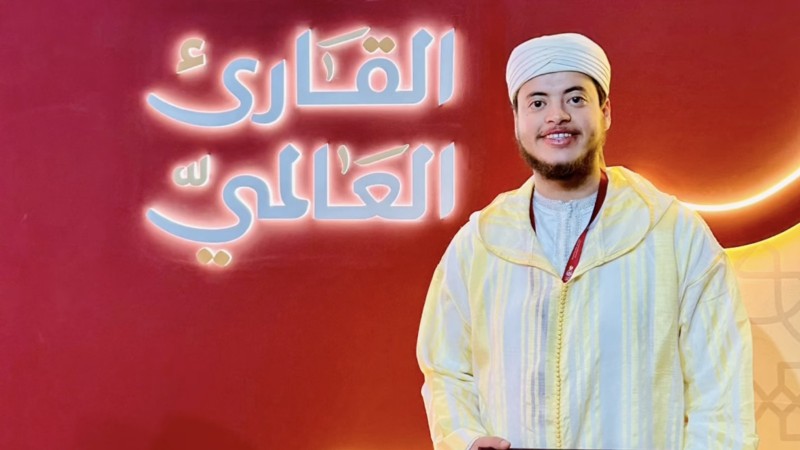
Moroccan Ilyas Hajri has clinched the title of World Quran Reader in the Hafiz category at the fourth edition of the Bahrain Online Quran Recitation Competition. 

The Moroccan Quran reciter won the prize for his exceptional proficiency in reciting the Holy Quran.

This win adds to a string of previous successes, as Hajri has consistently shown excellence in Quranic recitation competitions. Last year, he won first place in the International Quran memorization competition in Astana, Kazakhstan.

In addition to Hajri, Moroccan Yassine El Kazzini secured the second position in the same category. 

Meanwhile, Moroccans Abdelbasset Ourach and Mustapha Zahid claimed third places in the categories of memorized recitation (Tajweed) and melodious recitation (Murattal) respectively.

The finals of the competition were conducted in-person in Bahrain’s capital city Manama, where the top performers competed to secure their positions in various categories of Quranic recitation.

The competition brought together over 5,000 participants from 74 countries. 

Meanwhile, Mohamed Sameer Mohamed Mujahid from Bahrain was crowned the World Quran Reciter in the Tajweed category, while Ahmed Mohamed Saleh Ahmed from Yemen secured the same title in the category of junior reciters.

Organizers of the competition highlighted its mission to promote and celebrate the recitation and memorization of the Holy Quran.

It also aims to serve the Quranic tradition by providing a platform for individuals of all ages and nationalities to showcase their skills and proficiency in reciting the Quran.

Moroccans have built a strong reputation for their excellence in Quran recitation competitions, consistently shining on the global stage.

Last month, Moroccan Elias Al-Mahiawi won first place at the 20th International Quran Competition in Tanzania.

source/content: moroccoworldnews.com (headline edited)

_______

__________________________________

BAHRAIN / MOROCCO / YEMEN