Arabs & Arabian Records Aggregator. Chronicler. Milestones of the 25 Countries of the Arabic Speaking World (official / co-official). AGCC. MENA. Global. Ist's to Top 10's. Records. Read & Enjoy./ www.arabianrecords.org
QatarEnergy will build the world’s largest “blue” ammonia plant, which is expected to come online in the first quarter of 2026 and to produce 1.2 million tons per year, Saad Al-Kaabi, chief executive and state minister for energy, said .
While conventional ammonia production emits CO2 if it is made with fossil fuel, during the production of blue ammonia any carbon dioxide generated is captured and stored.
The facility, the Ammonia-7 project, will cost $1.156 billion to build and capture and sequester 1.5 million tons of carbon dioxide a year through the manufacturing process, he added.
“We see an increasing interest in using ammonia as fuel, driven by the need to reduce CO2 emissions in the energy ecosystem,” Al-Kaabi said.
Ammonia is mainly made from hydrogen produced from natural gas and nitrogen from the air. It does not emit CO2 when burned.
It is principally used as a raw material for fertilizer and chemicals, but it can also be used as a low-carbon fuel in power stations.
Thyssenkrupp and Consolidated Contractors Co. are the contractors of the project.
source/content: arabnews.com
___________
While conventional ammonia production emits CO2 if it is made with fossil fuel, during the production of blue ammonia any carbon dioxide generated is captured and stored.
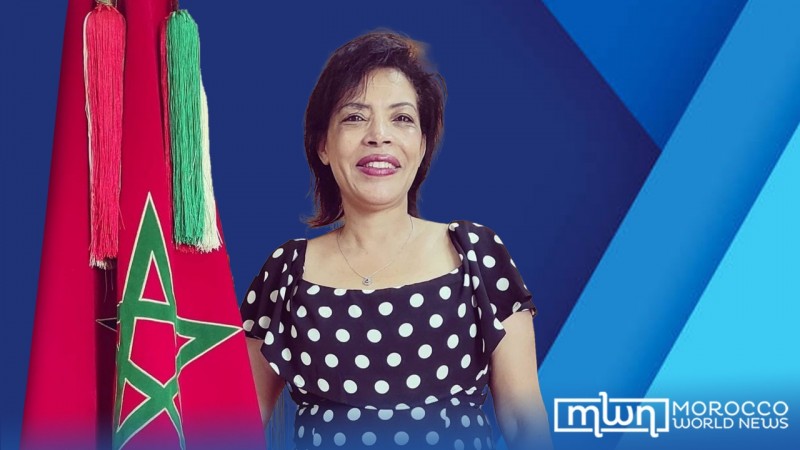
A women’s rights advocate and secretary general of the Moroccan climate coalition, Laila Amili is now working to build a bridge between Moroccan associations and the All-African-Movement Assembly.
From August 29 to 31, pan-African activists from across Africa and the Diaspora will gather in Arusha, Tanzania, for the All-African-Movement Assembly (AAMA) conference promoting justice, peace, and dignity.
AAMA organized a first validation conference in August 2016 in Arusha, gathering 272 people from 40 countries from across the continent.
The pan-African movement is built on five pillars : fighting for more civic and political action; promoting women’s rights and individual freedoms across the continent; advocating for the right to equity and dignity; promoting democratic and corruption-free governance; and calling for climate and environmental justice.
Morocco’s Lingering Gender Injustices
Laila Amili, president of Mains Libres (Free Hands), a Moroccan association fighting for girls and women’s rights, joined the AAMA two months ago. She’s a socialist, a founding member of the Arab feminist network Tha’era, and a climate activist.
In conversation earlier this week with Morocco World News, Amili spoke passionately of her new challenge: working to build a bridge between the pan-African movement AAMA and Moroccan associations.
“We hope to promote African solidarity to build the future we want as Africans: the right to peace, social inclusion, and prosperity for Africans all around the world,” Amili said.
For the Moroccan activist, sharing different experiences from different African actors would be a way to build progress for women’s rights. In Morocco, much of Amili’s activism revolves around fighting against underage marriage and domestic violence, as well advocating for greater female visibility in leadership positions.
It’s been three years since Mains Libres first launched its fight to forge substantive changes in the Moudawana, the Moroccan family code. In particular, the group has ceaselessly called for both the criminalization of child marriages and the protection of divorced mothers’ rights to keep their children.
Underage Article 175 and 176 of the current Moroccan family code, a divorced mother loses child custody if she remarries and her child is over 7 years old.
For Mains Libres, Amili said, “the child should stay with her mother until 15, even if she decides to remarry.”
And when legislative change does occur, as was the case in 2018 with the parliament’s adoption of Law 103.13 about violence committed against women, Amili insists that effective implementation should follow. Legislative change is only meaningful if it actually leads to tangible impact or perceptible changes in the everyday lives of the women who have long borne the weight of gender inequality.
Embracing Africa
“I see that these struggles are common in most African countries,” Amili said. “That’s why a lot of people are willing to join AAMA and participate in African solidarity.”
She recalled that after the first AAMA regional convention in Rabat on July 28, 2022, more Moroccan associations expressed keen interest in pan-African cooperation. This was a notable, emphatic, and overdue break from a long tradition, Amili argued, pointing out that Moroccan activists previously tended to work a lot with Arab or European countries. Now is the time to value and participate in pan-African solidarity, she insisted.
The AAMA summit in Tanzania is even more relevant amid the slow post-COVID across Africa. For Amili, one main reason for the event’s particular significance is the opportunity to discuss with fellow pan-African activists the far-reaching consequences that the pandemic has on the lives of many women across their continent, especially those who were already living in a precarious financial situation.
According to a March 2021 information note from Morocco’s High Commission for Planning (HCP), women were by far the hardest hit by the COVID-induced unemployment in the North African country.
The World Needs Solidarity
In addition to the devastating socio-economic disruptions brought about or further exacerbated by the COVID crisis, people – especially women – from the Global South are also the principal victims of the emerging ecological challenges.
“Us, people from the South, are the ones who are suffering more and more, because of poverty and increasing drought,” Amili said. “Poor people are the main victims of climate change.”
Amili is also the secretary general of the Moroccan coalition for climate justice, a gathering of 230 associations. Having participated in numerous international climate conventions in that role, she deplores the lack of women in leadership decisions.
One of the priorities of the Moroccan climate coalition is to heighten awareness about climate justice to make it “real” and not only written on official papers, said Amili.
Over the past months, one of Amili’s many activities – or duties – as the president of the coalition has been to travel to rural, marginalized areas to raise awareness about the climate and share vital information about environmental challenges with underserved communities whose lives and livelihoods have long been upended by rampant changes that they do not know of, let alone understand.
For Amili, the world can meet several of the challenges it faces if enough people are taught – or learn – to nurture a certain disposition toward empathy and solidarity when making sense of global challenges.
“We need solidarity for peace, human dignity, and human rights,” she said. “One hand can’t build anything, it’s with two, three, or four hands that we can achieve our goals.”
I like the idea of making people dream through creation, says Ali.
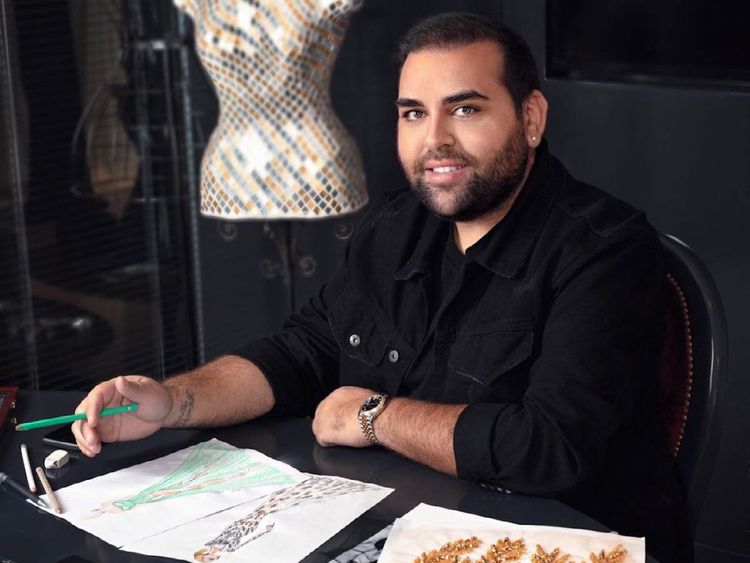
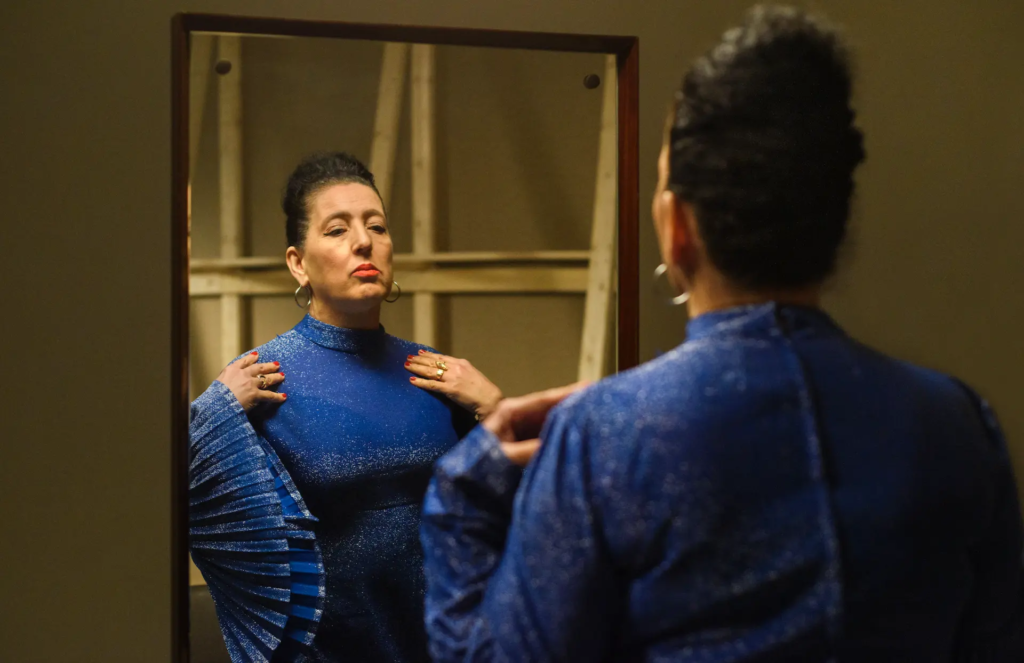
Tunisian designer Ali Karoui is best known for his red carpet haute couture as the favoured creator for fashion icons such as Cristiano Ronaldo’s girlfriend Georgina Rodriguez.
He chatted to The Kurator exclusively about being at the zenith of the world of fashion.
What draws you toward the world of haute couture instead of ready-to-wear?
I like this idea of making people dream through creation… And the rarity and the mystery that surrounds the world of haute couture.
Your interest in fashion began at an early age – how did your upbringing in Tunisia inspire you to go into fashion design?
I was lucky enough to grow up in an environment where women are treated like queens. I was looking at the closets of famous couturiers when I was a child, especially that of my grandmothers and mother, and that’s what gave me the love that I have today for haute couture.
You now dress A-listers and celebrities all over the world – does this create additional pressure to impress and attract attention with your designs?
Yes, of course, it creates a bit of stress because the more we are known the more demand there is on us, and it means more work for me and my team, but it is so enjoyable to see your creations worn by celebrities on the world’s biggest red carpets. It is a consecration for each artist to see his work recognized.
How did you first start collaborating with Georgina Rodriguez and in a way creating her signature look for her?
I met the beautiful Georgina at the Cannes festival in 2019. Her stylist contacted me to try one of my dresses that she saw in a picture. As she said on Netflix, I’m not trying to change her, she fell in love with my work and since then we are inseparable.
Your style can be interpreted as somewhat risqué – has this affected your career early on and did you face resistance in the Arab world of fashion design?
In no case did it affect my career, on the contrary, my style has made me known all over the world. You must believe in your dreams and continue to move forward, that is the key to success.
What kind of influence did Azzedine Alaïa have on you?
Azzedine Alaïa was a visionary. I had the chance to meet him several times. He gave hope to young Tunisian fashion designers, and allowed us all to dream that for us too, it was possible…
Who are some other fashion designers that you respect or that you looked up to early in your career?
There are many… I was in love with the vision of Gianni Versace, Thierry Mugler, Jean Paul Gaultier, and the master, Alaïa. Legends!
Do you keep an eye out on young and up-and-coming designers from the North Africa and Middle East region?
Of course! Many of them have a very bright future
source/content: gulfnews.com
_____________
Tunisian designer Ali Karoui is drawn to the “mystery that surrounds the world of haute couture”.Image Credit: Instagram @alikaroui
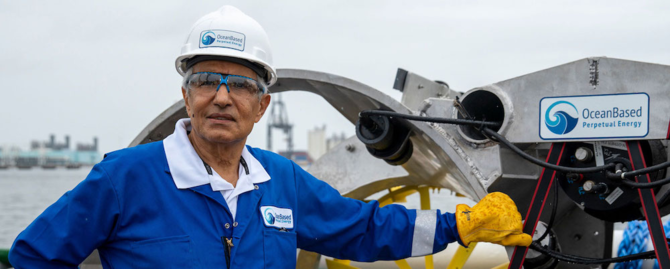
Saudi inventor Nasser Al-Shemaimry showed a method to harness energy from ocean currents using turbines at a press conference at the Movenpick hotel in Jeddah on Wednesday.
The press conference was attended by Prince Abdulaziz bin Nasser, who served at the Ministry of Interior for more than 40 years.
Al-Shemaimry, CEO of OceanBased Perpetual Energy, founded in Miami, signed a memorandum of understanding with Prince Abdulaziz.
“This memorandum will be presented to the inventor Nasser Al-Shemaimry for engineering supplies and most office services,” he told Arab News. “And to connect with ministries, and we will help him with anything he needs.”
Al-Shemaimry’s project was first used in south Florida to harness the Florida Gulf Stream current and convert it to clean and renewable power.
“Oceans and seas have some currents that go from one direction to another, the current varies in speed, but the current we are using is 5 to 6 miles per hour,” he told Arab News.
“Five-six miles per hour is enough to make the propellers turn, and our propeller is 64 meters long, so as it turns, it turns the turbines inside of the cowling, and that turbine rotates the generator, which produces electricity,” he said.
He said that his project takes the electricity from the generator to a substation then the substation regulates the electricity to what is needed.
“Then it goes to the shore and we connect it to the main substation on shore, then it is up to the city hall or the people who are in charge of the town, city or country to take it from there and take it to the power lines,” he said.
Highlighting how it compares to other sustainable power sources such as solar or wind, he said the ocean provided a continuous and uninterrupted supply of energy.
For solar energy requirements, he said as long as the sun was up the panels would work and charge batteries.
“Each energy source has its own advantages and disadvantages. Solar energy has been around forever, it works and serves its purpose, it’s inexpensive and on land,” he said.
“Windmills are everywhere, but the difference in my opinion is that our energy is perpetual; it doesn’t stop, it works 24/7 and 365 days a year.”
Since the launch of the Kingdom’s Vision 2030 in 2016, Saudi Arabia has made effective efforts to protect the environment and reduce the effects of climate change to achieve sustainability.
Extensive studies within the Green Saudi Initiative revealed a reduction of carbon emissions by more than 4 percent, and efforts to provide 50 percent electricity through renewable energy projects by the year 2030.
source/content: arabnews.com (headline edited)
___________
Saudi inventor Nasser Al-Shemaimry, CEO of OceanBased Perpetual Energy. (Supplied)
In 2021, Sudanese digital marketplace, alsoug, raised $5 million from investors, including Egyptian fintech startup, Fawry.
For many people, including myself, that was their first introduction to a Sudanese tech startup as the country has been embroiled in war for much of its 66-year history. It was also the first investment in a Sudanese startup following years of sanctions by the United States and other Western governments.
Fortunately, that has not been a one-off situation with fintech startup Bloom joining Y Combinator’s Winter 2022 batch.
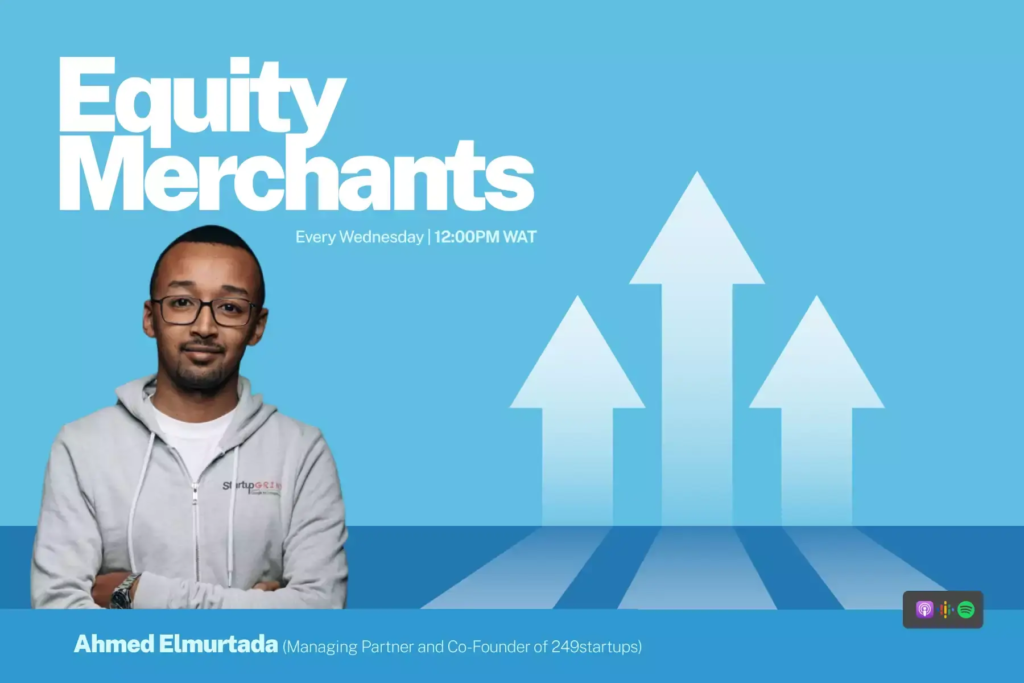
In this episode of Equity Merchants, we spoke to Ahmed Elmurtada, Co-founder and Managing Partner of 249startups, on developments in the Sudanese tech ecosystem.
From the ground up
After graduating from the University of Khartoum with a Bachelor’s degree in electrical and electronics engineering, Elmurtada went on to work as an engineer with several fintech and telecommunications companies, including MTN.
During this time, he met his co-founders, Mutaz Mohamednour and Khansa Alhag. Together, they ran hackathons, conducted research, and visited other countries to learn how startups worked.
In 2018, they started 249startups, an accelerator that incubates and funds some of the most promising startups in Sudan. The name “249startups” signals the company’s ambition to put Sudanese startups on the map.
“249 is the country code for Sudan, and our mission is to connect Sudanese entrepreneurs with the international community and reshape economic activities in Sudan. To invest in Sudan, you call 249, and this is where 249 comes [from].
“It also shows our internal aspiration to put Sudan on the map in terms of identity; a local hub that is going out of Khartoum, Sudan and across the world, getting investment and helping these startups and entrepreneurs scale and create impact across the region.
“The term “startups” is mainly inspired by the fact that we wanted to focus on highly impact-driven companies, tech-enabled and high growth companies. So startups show that we are trying to focus on the innovative ones, the riskier ones.”
249startups has three primary programmes. The first is called Orange Corners and is managed in partnership with the Dutch government and other companies in the country. The second focuses on small and medium enterprises, providing finance and business development support.
Its third programme, Rhino Acceleration Programme, is an equity investment platform through which it invests funds raised from angel investors. Through these programmes, 249startups has supported over 120 businesses that have created over 1,000 jobs and raised over $700,000 in follow-up funding.
Currently a $500,000 fund, Elmurtada revealed that they plan to grow it to a $3 million fund, investing between $20,000 to $30,000 in seven startups annually.
Impact of Y Combinator’ s investment in Bloom
Only a few accelerators or investors have picked more winners than US-based Y Combinator. Consequently, there seems to be an unspoken assumption that YC-backed startups are doing something right. In Nigeria, for example, there have been suggestions that local investors wait until a startup gets into YC before investing.
For a country like Sudan with little investor activities, Elmurtada disclosed that YC’s recent investment in Bloom has helped bring startup activities in the country to the fore. But he also noted that YC’s investment is not the only one with alsoug’s investment attracting significant foreign coverage of the country.
“Sudan doesn’t have many VCs that you can see. In nearly ten years of growing the ecosystem, we’ve just now started to see these deals in the last three years.
“There is always an issue of finding startups in Sudan that have the traction of a seed round or Series A company but have not raised much money. So any investment from the likes of YC, 500 Startups, TechStars, or other regional accelerators or funds will have a positive impact on the country. Not necessarily in terms of taking over the market, but it’s a message of hope, of what is possible.”
Getting local support for startups
In 2021, African startups raised approximately $5 billion from investors in a record-breaking year. However, compared to global startup funding figures, African startups raised only 0.78%.
Elmurtada revealed that with less money to fund their operations, Sudanese founders often have to be creative with managing the money they make. He also pointed out that this limited access to finance means that the startup failure rate is higher in Sudan than in most countries.
“Even SMEs can access some finance from banks. But even that in Sudan is a challenge. The banks’ interest rates can go up to 30% to 60% a year. On the equity side, most investments are angel investments, family investments and friends.
“This is one of the reasons why the survival rate of startups in Sudan is meagre because, by the time they would like to raise follow-on capital, they will get an offer that wouldn’t work for them. And then they wouldn’t take it, and unfortunately, they will die because they will run out of cash.”
To combat this, 249startups invests at the early stages, typically the seed or pre-seed round, in exchange for 5% equity. These startups can then build significant traction and position themselves for future investments.
“Our conversations and experience show that if we’re able to get these entrepreneurs one step ahead, even with small cash tickets, they can generate good traction, build their legalities, governance, and chances of being accepted or raising further rounds would increase.”
While investments in African startups remain on the rise, most of these funds are from investors outside the continent.
One reason for this is that venture capital is a new asset class for most Africans and convincing African investors to choose it over options like real estate is an uphill battle. In a country like Sudan, ravaged by high inflation and years of political instability, this is even harder and Elmurtada shared that they overcome this through education.
“What we have done is that we show these investors how our startups are growing. We provide insights and host demo days where they meet the startups gathered from our programmes.
“They see them, and they get a chance to talk to them, going through their financial data and business plans. Gradually, this is creating momentum and some sort of trust. Recently, one of our graduates raised above $100,000 in equity investment from Sudanese living in the diaspora.”
Positioning Sudan as an investment destination
Most of the reporting on Sudan has often focused on negative news, with tales of war the most prevalent. That has affected the perception of most people outside the country. However, Elmurtada maintained that there is more to Sudan than war. With over 40 million people, most of whom are below 30 years, he posited that the country can be positioned as a tech hub.
For foreign investors who wish to understand the Sudanese business landscape better, he disclosed that 249startups has a market research team that provides reports for investors and assists them through the due diligence process.
As a burgeoning ecosystem, he added that the government has a role in driving its growth. Some of his suggestions were: improving the policy landscape to accommodate new ideas and ways of business and reducing business registration costs. With data often hard to come by in Africa, he suggested that government aids in data gathering.
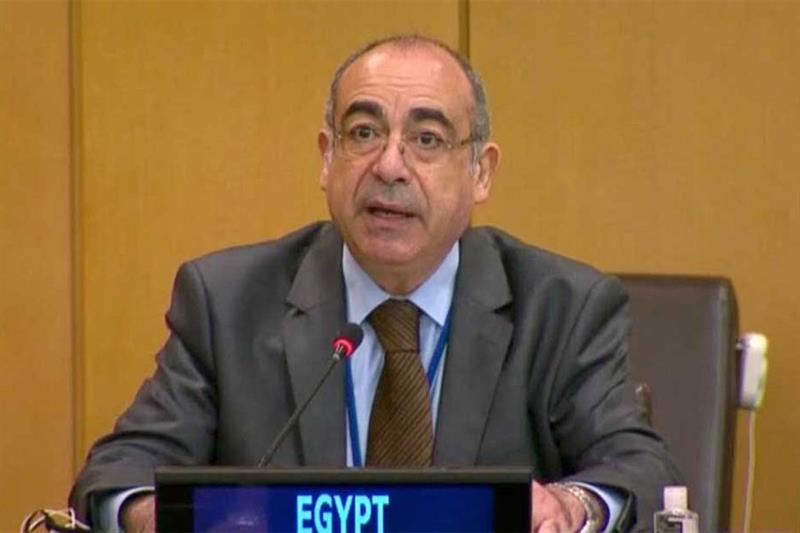
Secretary-General of the United Nations Antonio Guterres has appointed Egypt’s former permanent representative to the UN Mohamed Idris as a member of the Advisory Group of the United Nations Peacebuilding Fund, the Egyptian foreign ministry announced .
The appointment is in appreciation of the Egyptian diplomat’s efforts during Egypt’s 2021 presidency of the UN Peacebuilding Commission and as an affirmation of Egypt’s leadership in enhancing the effectiveness of the UN peacebuilding structure since its establishment in 2005, the foreign ministry said in a statement.
This is the fourth time an Egyptian has been appointed as a member of the Advisory Committee of the United Nations Peacebuilding Fund, representing African countries, it added
The members of the Advisory group have an important role in advising the UN Secretary-General on the programmes and activities of the Peacebuilding Fund in accordance with requests from Member States and overseeing the implementation of the programmes of the Fund, a large part of which is located on the African continent, the ministry said.
Project shines a light on the cultural exchange between Algeria, France and Italy during the 1960s.
Zineb Sedira has outlined plans for her presentation at the French pavilion at this year’s Venice Biennale (23 April-27 November), revealing that the project will focus on Algerian cinema of the 1960s and 1970s and its links to the Italian and French film industries. The subject matter is timely as 2022 is the 60th anniversary of Algeria achieving independence from France. On 5 July 1962, Algeria became a sovereign state after an eight-year war which resulted in the deaths of at least 400,000 Algerians.
Sedira is the first artist of Algerian descent to be selected as the country’s representative. Sedira, who was born in Paris to Algerian parents, attended college in London, completing her undergraduate studies at Central Saint Martins school of art. She is now based in South London.
Sedira revealed her ideas for the cinematographic installation Dreams have no titles in an online press briefing held 18 February, outlining how she initially researched the history of Algerian film for an exhibition at the Jeu de Paume in Paris in 2019. Her passion for cinema was sparked by childhood trips to the local cinema in the 1960s in her home town of Gennevilliers outside Paris (these film outings were made with her father every Thursday when school was closed).
This interest developed further during her time as a student in London. “As part of postcolonial studies, I came across [the philosopher] Frantz Fanon and [the 1966 film] The Battle of Algiers. In France, I never came across those people because The Battle of Algiers was still censored in France [in the late 1970s and early 1980s],” she said. “There were no intellectual role models to me of Algerian origin; in England, I discovered there was a wealth of [Algerian] men, women and filmmakers.”
For the pavilion piece, Sedira carried out research at the Cinémathèque in Algiers, discovering that many films financed by the state of Algeria at the time were also co-produced with Italian and French filmmakers. “So when I was asked to propose an idea for the French pavilion, I thought of the Mostra [Venice Film Festival]. I thought it was interesting to do something around the three countries,” she said. Sedira wants to focus on the cooperation between France, Italy and Algeria— and the solidarity between the trio of nations—though her Venice “project goes beyond that”, the artist stresses.
Sedira visited numerous film archives in Algeria, France and Italy as part of the research process. “In Italy, [we visited] Venice, Turin and Bologna. We discovered a film that had disappeared,” says Yasmina Reggad, the co-curator of the French pavilion, referring to Les Mains Libres made by the Italian director Ennio Lorenzini in 1964.
“It was the first international film collaboration between Algeria and another country [Italy],” said Sedira, but after 1966 Les Mains Libres was lost. She eventually found the forgotten work in a small archive in Rome. “It is an important film for anyone interested in post-1962 Algerian history,” she adds.
The French pavilion project aims to be a starting point for discussions on other topics such as colonialism, collective and individual histories, national identity and the fight against racism. “The notion of a nation begs to be critiqued and challenged. What is a nation at the end of the day? It is a big fiction to believe that when you draw a certain line, everyone who happens to be behind this line is of the same mentality and culture,” said Sam Bardaouil, the co-director of the Hamburger Bahnhof in Berlin along with Till Fellrath (the duo have also co-curated the French pavilion).
“In a sense, a pavilion is an attempt to give a physical form to a fiction, so to use fiction in the language of cinema as a way to critique nation and belonging is such an intelligent and timely way to discuss these issues,” Bardaouil said.
The three pavilion curators will participate in a film to be shown in the pavilion. “We’ll be turned into actors and actresses,” said Reggad. Bringing together an artistic community was paramount, added Sedira, who relished the opportunity “to work with friends, to be surrounded by friends”. The film production will also include members of the crew and her son. “I was playing on the aesthetic and structure in cinema in the 1960s in low-budget films when one would play many roles,” she said
The pavilion project will also include a “conversation” with the UK pavilion artist, Sonia Boyce, and the Swiss representative, Latifa Echakhch. “Sonia was my neighbour for many years and she taught me at one point when I was studying art in London,” said Sedira.
At the briefing, the curators also discussed the three accompanying journals linked to the pavilion project. Each issue refers to a city—Algiers, Venice, and Paris—that has played an integral part in Sedira’s practice. “The journal is an extension of what the project entails inside the pavilion. The cities mark the phases of Zineb’s life, they become entry points to questions that are related to the themes that will be discovered in the film and installation in the pavilion,” said Bardaouil. Contributors include the French artist Laure Prouvost and the actor Nabil Djedouani.“The journal has allowed for a diversity and plurality of voices,” Bardaouil added.
The journal design is based on film magazines of the 1960s and 1970s, added Reggad, and also borrows from militant leaflets of the era. The journals are “doors to an intellectual horizon [with] texts, images and playlists”, said Eva Nguyen Binh, the president of L’Institut Français which is supporting the pavilion. Other sponsors include Arts Council England and the dealer Kamel Mennour who represents Sedira
The aspiring fashion designer, who lives in Dubai, says she cannot wait to represent her country at the global pageant, to be held in Israel.
Fashion design student Manar Nadeem Deyani, 25, will make history next week when she becomes the first beauty queen from Bahrain to represent her country at the Miss Universe 2021 pageant.
A Dubai resident, Deyani was named on Monday night as her country’s representative at the global pageant, the winner for which will be crowned on December 12 in Eilat, Israel.
“I may be the shortest candidate in the history of Miss Universe, but I stand tall representing a country of love, peace and kindness – your first ever Miss Universe Bahrain,” the 155cm tall Deyani posted on Instagram, announcing her participation.
“We are honoured to appoint an empowering woman like Manar ‘Jess’ Deyani who embodies the grace, passion and inspiration of a modern and respectful queen,” a spokesperson for Miss Universe Bahrain told The National.
“Manar, also known as Jess, wants to raise awareness on issues like mental health, equality and inclusivity by using her platform to inspire many people to be more comfortable on their own skin and to show that beauty standards are here to be changed,” Deyani’s description on the Miss Universe website reads.
“Nowadays people have a concept of what a beauty queen is, but she is here on the international stage as the first Bahraini representative to show the we are a generation that breaks stereotype.”
A student at the American University in the Emirates, Deyani tells The National she is “excited for this opportunity”.
“I cannot wait to represent Bahraini women in a platform that empowers women and promotes global understanding,” she says.
The aspiring fashion designer, who says she suffers from a disorder that causes anxiety and depression, says she will use her title and the global platform to raise awareness about the negative stigmas associated with mental health.
“A lot of people are suffering from it in their daily lives, but are ashamed of asking help just because they do not want to be identified as someone ‘insane’. This has to change, we need to normalise the discussion about mental health. It is a disease that doesn’t show any symptoms,” she says.
“I am currently using my social media platform to connect with people who suffer from the same challenges and I hope with my new title as Miss Universe Bahrain, I will be able to expand my reach and impact to create a world that truly understands the mental health issues.”
Israeli authorities on Sunday said the Miss Universe pageant would go ahead as scheduled, despite a travel ban on foreigners in an effort to stave off the Omicron coronavirus variant. Participants would be granted waivers while undergoing PCR testing every 48 hours, along with other precautionary measures, the country’s tourism minister said.
On Monday, organisers revealed a contestant had tested positive upon arrival and was taken to a government-run isolation hotel. The Miss Universe Organisation did not identify the contestant who tested positive, or her nationality, but said most of the 80 contestants have arrived ahead of the finals next week.
To those who think beauty pageants are outdated, Deyani says it’s all about perspective.
“I am a modern Bahraini woman who has a globalised mindset while celebrating my rich heritage and culture. I think pageants are a great platform to celebrate our differences and unite as a one,” she says. “I see pageants as a conference, but done is a very fashionable way where we learn from each other, share knowledge and interact with like-minded people.”
The award recognises AUC’s Rare and Special Books Library as a leading institution in the preservation and restoration of Arabic historical documents.
The American University in Cairo’s Rare and Special Books Library was awarded UNESCO Jikji Memory of The World Prize. This prestigious award places the American University in Cairo next to some of the world’s leading history conservation entities. The award ceremony is set to take place this coming September in Cheongju-si, South Korea.
Founded in 1992, the AUC Rare and Special Books Library plays a fundamental role in restoring and preserving Egyptian history. Starting with just a few collector’s items, the RBSCL then developed to contain historic maps of Egypt, archives of oral recordings, historical magazines and periodicals, and historical AUC archives.
The UNESCO Jikji Memory of the World Prize is a USD 30,000 grant, given every two years, that honours institutions that have made notable contributions to the preservation and accessibility of documented history. The prize also pays close attention to the degree of expertise in treating said documents and the presence of special circumstances in procuring them.
Funded by the Republic of Korea, the prize was created to commemorate the inscription of the ‘Buljo jikji simche yojeol’, the oldest movable metal print in the world.
The $40m Bustanica hydroponic farm near DWC will produce more than a million kilos of greens annually with 95% less water than conventional farming.
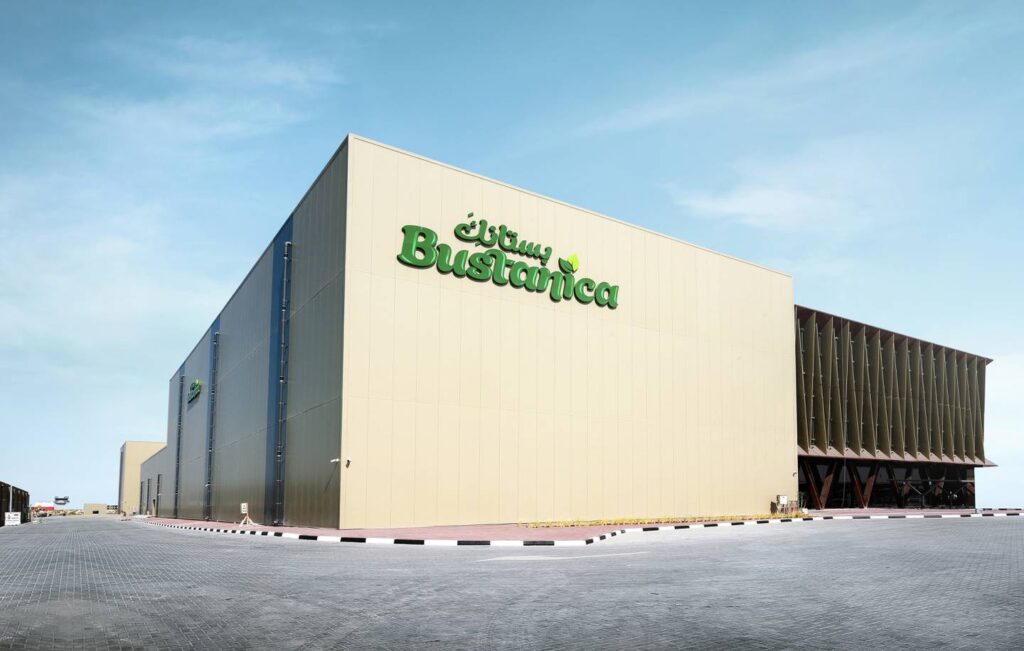
Emirates has opened the world’s largest vertical farming plant in Dubai, a $40 million (Dh147m) joint venture with US-based Crop One, as the UAE continues to bolster its food and water security.
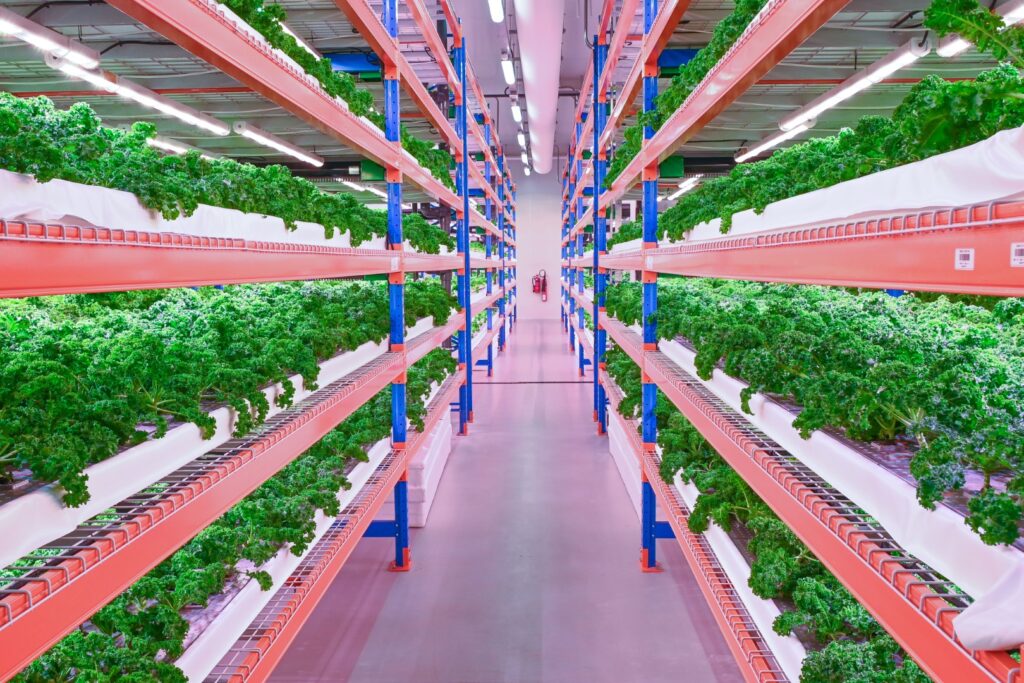
Bustanica, the 330,000 square-foot hydroponic farm located near Al Maktoum International Airport (DWC), is set to grow more than a million kilograms of leafy greens annually, or about 3,000kg per day, Emirates said in a statement on Monday.
Using 95 per cent less water than traditional farming and saving 250 million litres of water, Bustanica will grow fresh produce without pesticides, herbicides or chemicals.
“Long-term food security and self-sufficiency are vital to the economic growth of any country, and the UAE is no exception,” said Sheikh Ahmed bin Saeed Al Maktoum, chairman and chief executive of Emirates Group.
“Bustanica ushers in a new era of innovation and investments, which are important steps for sustainable growth and align with our country’s well-defined food and water security strategies.”
Bustanica is the first facility for Emirates Crop One, a joint venture between Emirates’ flight catering unit and indoor vertical farming firm Crop One.
Emirates Flight Catering, a subsidiary of Emirates group, supplies in-flight food for Emirates and other airlines at Dubai International Airport.
Vertical farming is a technique with a significantly smaller carbon footprint than traditional agriculture. This method grows plants using mineral nutrient solutions, in water and without soil. They are grown in a fully controlled environment — everything from temperature, humidity, lighting, water and nutrients is precisely monitored, maximising growth and yield.
The new farm is in line with the UAE’s National Food Strategy 2051 agenda for reliable year-round crop production and stable supply chain that is independent of weather and attacks by pests or fungus.
Bustanica will rely on machine learning, artificial intelligence and advanced methods — and a specialised in-house team of agronomy experts, engineers, horticulturists and plant scientists — to grow fresh produce.
Passengers on Emirates and other airlines can start consuming these leafy greens, including lettuces, arugula, mixed salad greens and spinach, onboard flights from this month.
UAE consumers will also soon be able to add these greens to their shopping carts at the nearest supermarkets, according to the statement.
Bustanica also plans to expand into the production and sale of fruits and other vegetables.
Bustanica will secure Emirates Flight Catering’s supply chain and reduce its carbon footprint by bringing production closer to consumption and “reducing the food journey from farm to fork”, Sheikh Ahmed said.
The plant opened after “significant planning and construction” and navigating the unforeseen challenges of the Covid-19 pandemic, Craig Ratajczyk, chief executive of Crop One, said.
“It’s our mission to cultivate a sustainable future to meet global demand for fresh, local food, and this first large format farm is the manifestation of that commitment. This new facility serves as a model for what’s possible around the globe.”
The UAE has been accelerating its support of AgriTech companies to reduce reliance on food imports, which is thought to make up nearly 90 per cent of food consumed in the country. Abu Dhabi has launched a number of initiatives, including $41m in grants and incentives worth $545m to support expansion.
UAE residents are already seeing evidence of recent efforts to localise agriculture: locally harvested produce at the market or on dining menus is now a common sight. Much of this has surfaced over the past few years as vertical and hydroponic farming ventures, research and cloud-seeding bear fruit.