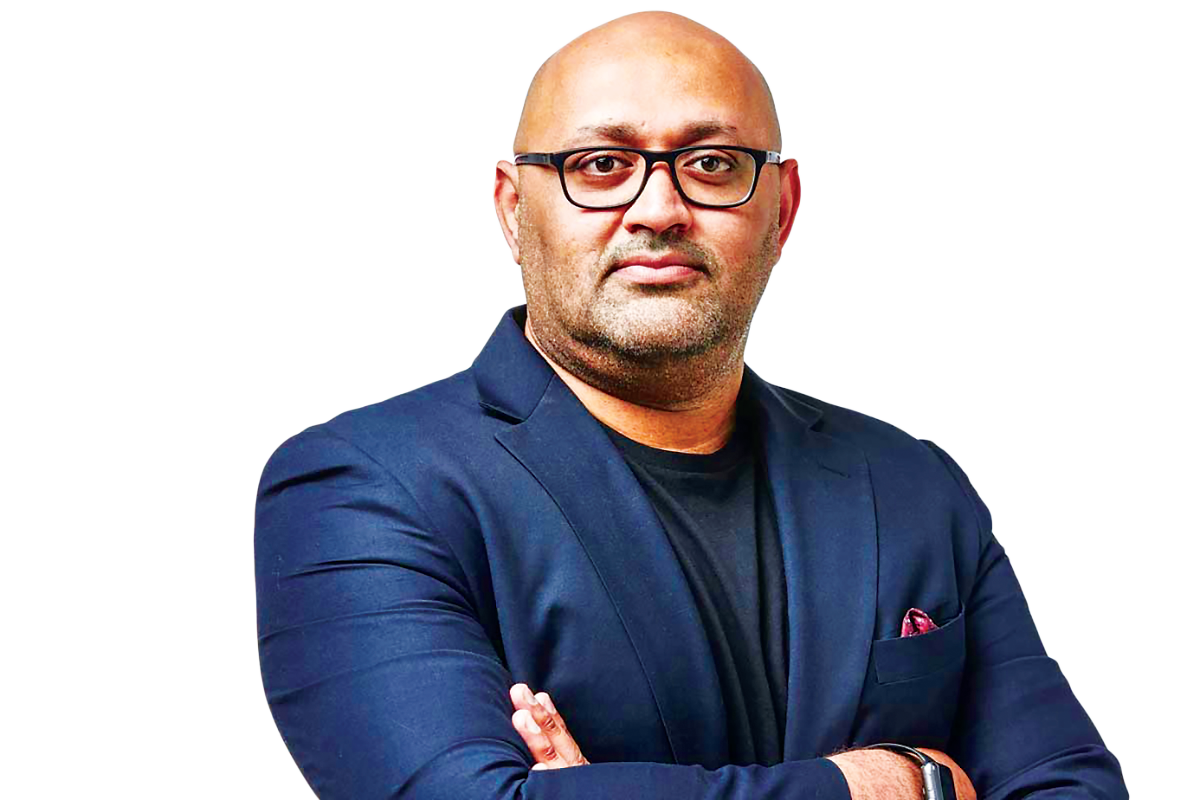
Abdulaziz Fahad Al-Jouf, Founder and CEO of Payment Processing Company ‘PayTabs’

Abdulaziz Fahad Al-Jouf is the founder and CEO of PayTabs, a payment processing company founded in Saudi Arabia in January 2014 and now based in Bahrain.

He graduated from Riyadh’s Imam Muhammad Ibn Saud Islamic University in 1999 with a bachelor’s degree in Islamic business and subsequently obtained a bachelor’s degree in information technology from the University of Nebraska-Omaha and a master’s degree in e-business from the New York Institute of Technology.

PayTabs was founded in 2013 after Al-Jouf “faced problems finding a suitable payments gateway for one of his business startups … and figured there would be many others with the same issues.”

PayTabs was, according to Al-Jouf, “taken under the wing” of Saudi Aramco’s entrepreneurship scheme “Wa’ed” and made headlines in August 2017 when it raised $20 million investment from unnamed sources.

In 2018 PayTabs was recognized by Forbes Middle East as No. 1 among “the top 20 Fintech startups to watch.”

In the same year, Al-Jouf was featured on the cover of Arabian Business magazine, and PayTabs was named “Fintech Company of the Year” at the Arabian Business Achievement Awards.

source/content : arabnews.com

___________

Abdulaziz Fahad Al-Jouf

____________________________

SAUDI ARABIA / BAHRAIN

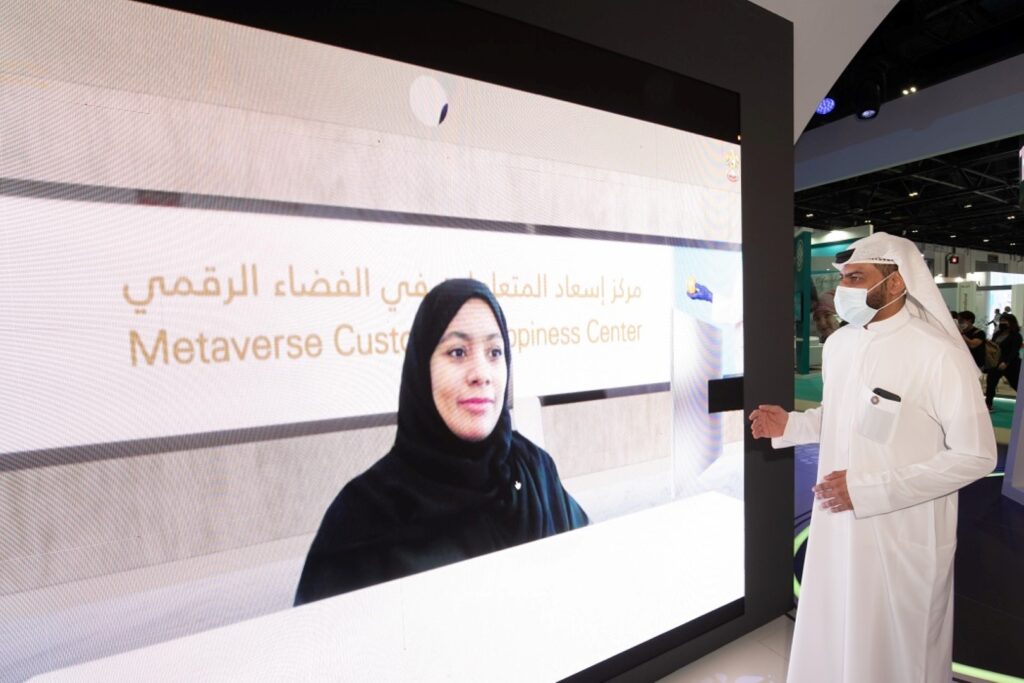
UAE’s MoHAP launches World’s First Metaverse Customer Happiness Service Centre

The Ministry of Health and Prevention (MoHAP) has launched the world’s first Metaverse customer happiness service center at the Arab Health 2022, the first experience of its kind in a health exhibition in the world.

The step ushers in a new era of digital reality and human-computer interaction in government health care services, by enhancing the integration of the real, virtual and digital world.

The Ministry’s stand at the Arab Health being held at the Dubai Trade Centre from 24th to 27th January, will be a unique stage to showcase this unique technology and test the performance of virtual activities that provide real experiences in one of the most innovative and future initiatives launched by the ministry.

Although the full version of the MoHAP MetaHealth platform is expected to be launched by mid-2022, visitors to Arab Health 2022 will have the opportunity to instantly teleport into the world of MetaHealth and choose to speak with a real employee from the Customer Happiness Center in a must-try experience.

he new technology also provides an opportunity for customers to join the MetaHealth space and move from their current location to the Ministry’s virtual Customer Happiness Center, without actually crossing the distance between the two areas. Customers, then, can request information, submit documents, pay fees and more, with the actual faces of users being displayed in the virtual room instead of avatars.

The new service also provides a tangible solution for the people of determination who are unable to move physically from their homes to one of the Ministry’s customer happiness centers and finish their transactions smoothly.

Al Owais added, “Today, we are experiencing the world of “Metaverse”, with the launch of the world’s first virtual customer happiness center in the three-dimensional digital space, in the first experience of its kind, in preparation for a new and promising future health sector through Arab Health, one of the largest international exhibitions.”

The UAE health minister asserted that Virtual Reality technology will play a more important role in the future of the UAE during the next fifty years, especially in light of the development of advanced digital infrastructure, which is one of the best in the world.

“The flourishing of digital transformation in the government sector pushes us forward to continue achieving the goals and aspirations of the UAE to lead the artificial intelligence and virtual reality sector, which places the country in a perfect position to attract and use advanced technologies, especially Metaverse,” said Dr. Muhammad Salim Al Olama, Under-Secretary of the Ministry and Chairman of the Board of Directors of the Emirates Health Services.

source/content: wam.ae

___________

___________________________________

UNITED ARAB EMIRATES (U.A.E)

Tunisian-French Film Producer Tarak Ben Ammar buys Studios De Paris from EuropaCorp

Tunisian-French film producer Tarak Ben Ammar has finalized a $37 million deal to purchase Studios de Paris, the production facility outside the French capital.

The studios are known for being home to Netflix shows such as “Emily in Paris” and “Murder Mystery 2” and blockbusters such as “Jackie,” “Lucy” and “Taken 2”.

The facility, which has nine sound stages, was placed under court protection a year ago for its debt which are being paid by the acquisition, reported Variety

The studios were co-founded by Ben Ammar, who co-owned them through his company Bleufontaine along with EuropaCorp, a French film and TV production and distribution company created by Luc Besson in 1999, Front Line, Europacorp’s holding company, and Euromedia, a live transmissions company.

Now, Ben Ammar has acquired the shares owned by all three other partners in a deal completed via Eagle Pictures France, a subsidiary of the producer’s Italy operation.

The studios will continue to “represent a center of excellence for the French film industry and be an attractive factor for the entire sector,” according to a statement released by EuropaCorp to investors.

source/content: arabnews.com

___________

The studios are known for being home to Netflix shows such as “Emily in Paris” and “Murder Mystery 2.” (Studio de Paris)

____________________

FRANCE / TUNISIA

Egyptian Mobile App helps Hearing-Impaired Master the Art of Sewing

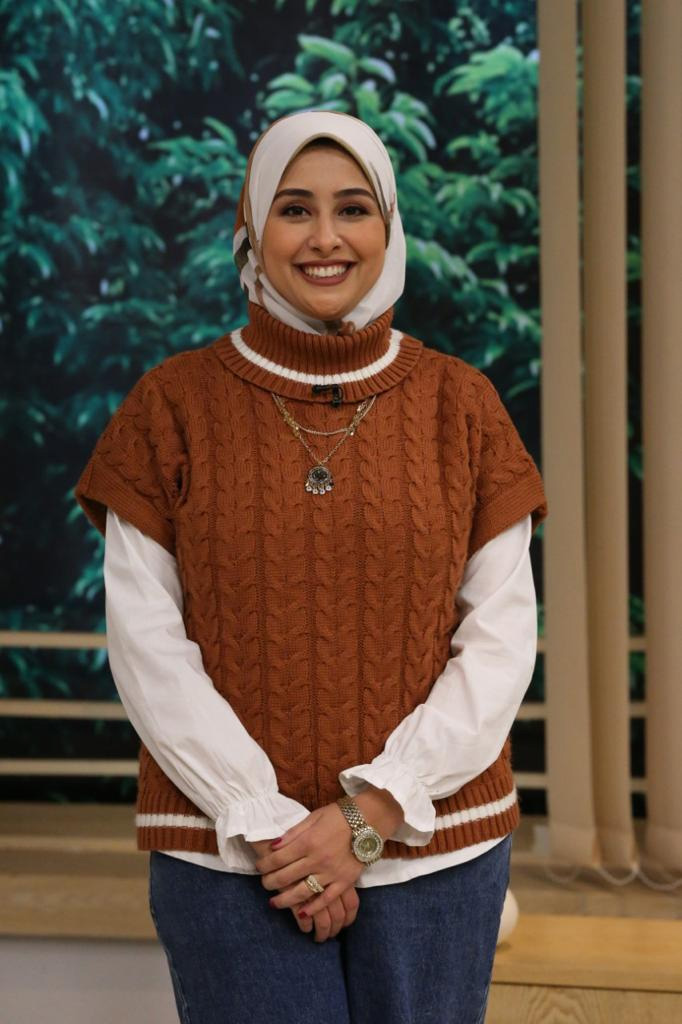
Fashion design was part of my study at a very young age and  I started my career 10 years ago,” says Egyptian designer Esraa Adel, who graduated from a vocational-technical high school’s ready-made garments department.

Adel specialises in women’s casual wear designs après midi, soiree and much more. She launched her own line of soiree dresses under the title Fashion Corner Brand.

“I took a course to learn sign language for two months to be able to communicate with the hearing-impaired, then introduced changes to the course content to fit their needs. I offer patron (sewing patternmaking) courses using sign language too,” she adds.

Adel stresses that her stern belief in social work and making a difference for people prompted her to help the hearing-impaired with opportunities to start their own businesses.

She teaches drawing mannequins for different female body types, how to choose the right dress for the right body shape, patron drawing and the basics of sewing..

The mobile app ‘Professional Course for Tailoring Clothes with Patron’ was released two years-ago and is available on the Android play store in Arabic version.

“70 percent of users are hearing-impaired and people with disabilities,” Adel says.

The idea for the app won the top prize at the Tamkeen Competition in 2020, which aims to develop software and mobile phone applications for people with disabilities and is held under the auspices of the Ministry of Communications and Information Technology.

El-Khalifa Computer Group is an Egyptian Software Company that turned the idea for the app into reality. 

“The company is the owner and it plans out the entire process. It generates the idea, app design, software, and financial part,” Adel says.

The company received a grant from the ministry to give the hearing-impaired sewing courses in Cairo. 

“I was the only one to give this kind of course in Egypt,” Adel adds. “I am responsible for shooting the videos and creating accessible material and scientific subjects for the application.”

 “The app content helps users master tailoring. It takes two months to study before the user can launch their own project,” she adds.

The app consists of 30 tutorial videos for woman’s wear. It includes how to take accurate body measurements and using sewing machines, needles, scissors and fabrics. It shows applicants the full steps of the tailoring process and how to get the best finish for the final product.

The “fabrics dictionary” is a newly added option that is not available in other sewing apps. It has a full list of fabric types and a video on how to identify them by touch. The fabric glossary is for sewing terms, expressions, and terminology.

The app has three features: sign language, audio, and text for the hearing-impaired.

source/content : english.ahram.org.eg

_________

________

EGYPT

Saudi Cup 2022 ‘Most Expensive Equestrian Race in the World’ certified by Guinness World Records, March 2022

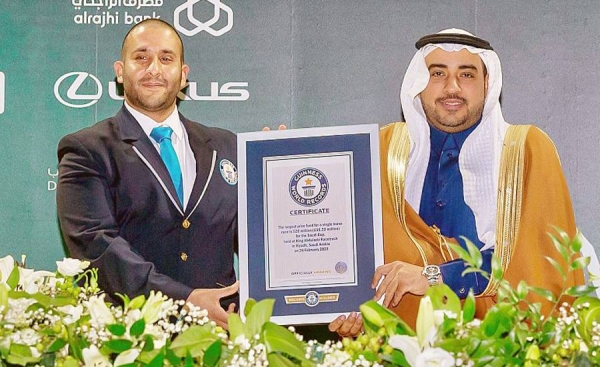
The CEO of the Horse Races Club and Secretary-General of the Equestrian Authority, Eng. Marwan Bin Abdulrahman Al-Olayan, received at the club’s headquarters in Riyadh, a Guinness World Records certificate for the most expensive equestrian race in the world.

Guinness World Records official Adjudicator, Ahmed Bucheeri, presented the certificate and award during a ceremony on the platform of the King Abdulaziz Racecourse for Horse Racing.

The 2022 Saudi Cup was able to break records as the most expensive horse race in the world, with a financial prize of $20 million, while the total value of the Saudi Cup race prizes is $35.1 million, representing the most expensive horse racing prize in the world.

He added that the largest financial prize for the individual race, worth $20 million, was in the Saudi Cup, which was organized at King Abdulaziz Racecourse, in Riyadh on Feb. 26, 2022, pointing out that Guinness World Record is now officially registered under the name of the Saudi Cup 2022 after it used to be under the name of the Dubai World Cup, where the prize amounted to $10 million.

source/content: saudigazette.com.sa

___________

The CEO of the Horse Races Club and Secretary-General of the Equestrian Authority, Eng. Marwan Bin Abdulrahman Al-Olayan, received at the club’s headquarters in Riyadh, a Guinness World Records certificate for the most expensive equestrian race in the world.

_________________

SAUDI ARABIA

Ahmad bin Saeed tops Forbes Middle East’s Top 50 Travel & Tourism Leaders list

 Sheikh Ahmed bin Saeed Al Maktoum, Chairman of Dubai Civil Aviation Authority and Chairman and Chief Executive of Emirates Airline and Group, topped Forbes Middle East’s Top 50 Travel & Tourism Leaders list.

The list spotlights 50 leaders who drive growth in the Middle East’s travel and tourism industry, building on their desire to reconnect with the world.

Emirates Airline and Group’s revenue reached US$6.7 billion in the first half of the 2021/2022 fiscal year.

Moreover, Dubai Airports CEO Paul Griffiths ranked third on the list.

The UAE dominated this month’s list with 24 of the leaders featured based in the UAE, followed by 11 in Saudi Arabia, and four in Egypt.

The hotels and hospitality sector is the most dominant on the list with 26 entries, followed by aviation with 17, and tourism with seven entries.

source/content: wam.ae

________________

__________________________________+

DUBAI, UNITED ARAB EMIRATES (U.A.E)

13th Makkah Excellence Award Winners Honored – Saudi Arabia, March 2022

The winners’ ceremony for the 13th Makkah Excellence Award took place on Wednesday, with recipients honored by Gov. Prince Khalid Al-Faisal.

The awards were announced earlier in February during the sixth session of the Makkah Cultural Forum, which was held under the theme of “How to be a role model in the digital world.”

In its sixth session, the Makkah Cultural Forum achieved nearly 771 digital initiatives, and the Makkah Excellence Award, since its inauguration, received more than 4,500 initiatives.

The awards covered nine categories.

The Ministry of Sports won the award for administrative excellence, with the prize handed to Sports Minister Prince Abdulaziz bin Turki Al-Faisal.

The scientific and technical excellence award went to the Ministry of Communications and Information Technology.

King Abdulaziz International Airport in Jeddah won the environmental excellence award and this was presented to Abdulaziz Alduailej, president of the General Authority of Civil Aviation.

The Special Forces for Hajj and Umrah Security won the award for Hajj and Umrah services. The prize was presented to Maj. Gen. Mohammed Al-Bassami, commander of the Hajj Security Forces.

Two companies were honored for their economic excellence. The first was Um Al Qura Development Company, with the prize presented to Abdullah Saleh Kamel, chairman of the company’s board of directors. The second was Petro Rabigh Company, and the award was presented to Othman A. Al-Ghamdi, Petro Rabigh’s president and CEO.

The humanitarian excellence award went to the Saudi Red Crescent Authority, with the award given to the authority’s president Jalal Alowaisi. The other winner of this award was Fayez Al-Malki, a Saudi actor known for his humanitarian work. Al-Malki was the only individual winner across all categories.

The cultural excellence award went to the Red Sea International Film Festival, and was presented to Film Commission CEO Abdullah Al-Eyaf.

The urban excellence award was given to the Jeddah dome project, and the prize was presented to Nawaf Abdulkareem, director general of Jeddah season.

The Ehsan charity platform was recognized for its social excellence.

Wednesday’s ceremony also honored and announced the winners of the Makkah Days Challenge for Programming and Artificial Intelligence.

Winners included the University of Jeddah for their “Air Supply Ambulance” initiative in the field of Hajj and Umrah, Taif University for an initiative called “Mustahil” in the field of smart cities, and Um Al Qura University for its “Athar” initiative in the field of tourism and entertainment.

source/content: arabnews.com

___________

Prince Khalid Al-Faisal, the Governor of Makkah region, during his speech. (Supplied)

________________

SAUDI ARABIA

Saudi Arabia Unveils Guinness World Record-Breaking Riyadh Season Postage Stamp

Saudi Arabia has officially unveiled a special Riyadh Season stamp that set a new Guinness World Record.

Measuring an incredible 64 square feet 7 square inches, it broke the record for the biggest special stamp in the world on Feb. 14. The public finally got a glimpse of it when Saudi Post displayed it at Boulevard Riyadh City, one of the special Riyadh Season zones.

“By revealing this stamp, the world’s largest special stamp, we broke Walt Disney’s record, set in 2019,” Bandar Al-Toaimi, Saudi Post’s general manager of corporate communications, told Arab News.

“We are so delighted it has been achieved by Saudi capabilities; from concept to design and implementation, it was all done by Saudi talents devoted to Riyadh season.”

The special stamp celebrates Riyadh Season, which was introduced in 2019 and has become one of the biggest events in the Saudi entertainment calendar. The design includes a winter wonderland scene, the Riyadh Season logo, a hot air balloon, a fountain, a racing car and fireworks.

source/content: arabnews.com

___________

The special stamp is modeled around Riyadh Season, Saudi Arabia’s major event, and features winter wonderland, the Riyadh Season emblem, an airship, a fountain, a race vehicle, and fireworks. (Basheer Saleh)

_________________

SAUDI ARABIA

RECORDS : Morocco holds the Record for ‘Africa’s Tallest Turbine’ : February 2022

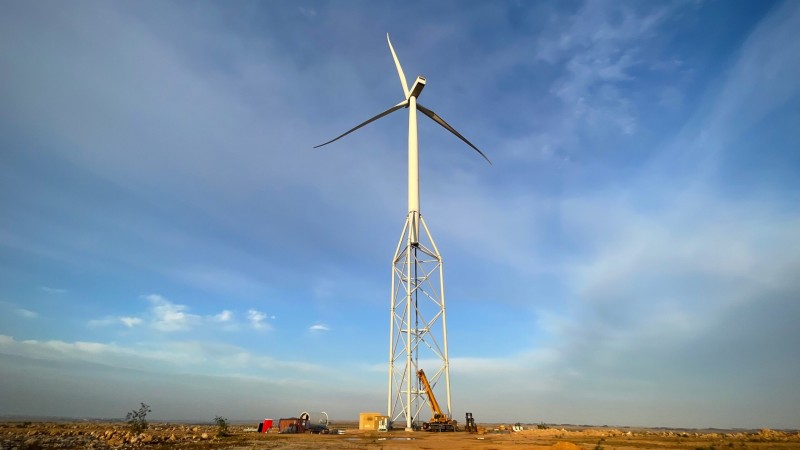
The state-of-the-art wind turbine in Morocco’s Oualidia is expected to generate an annual average of 2.500 MW/h, reducing CO2 emissions by 2.500 tonnes every year.

The 144-meter tall structure, part of the InnoVent’s Oualidia wind farm, provides a milestone thanks to high production capacity and cost-efficiency.

Construction work for the turbine began in 2019 following a deal between Morocco’s government and Spanish renewable energy company Nabrawind Technologies.

The installation is the first “self-erecting turbine” for Nabrawind Technologies.

Aside from breaking the continental height record for turbines, the Nabralift tower is special on grounds of the innovative construction method. The company used an innovative self-erecting system to construct the tower, without the need for conventional large-size cranes.

Built in collaboration with French developer InnoVent, the turbine additionally breaks the record for the tallest turbine constructed with a self-erecting system.

The innovative construction model was also cost-optimal as the tower only needed 80 square-cubic meters of concrete for its foundation, down from 500 square-cubic meters necessary for structures of such height, lowering cost by 60%.  

source/content: moroccoworldnews.com

___________

____________

MOROCCO

Saudi Arabia Founding Day. The Inside Story of Saudi Arabia’s Founding Day, Celebrating the Year it all Began

The Kingdom’s new Founding Day celebrates the true birthday of the First Saudi State in 1727

A 1946 photograph of Shada Palace in Abha, built in 1820.

For generations, historians and writers have unwittingly perpetuated the myth that the First Saudi State, forerunner of the modern-day Kingdom of Saudi Arabia, was founded in the year 1744.

In fact, as a new reappraisal of the origins of the Kingdom reveals, they were 17 years out.

There is no doubt that the events of 1744, the year in which Imam Mohammed ibn Saud of Diriyah offered sanctuary to the religious reformer Sheikh Mohammed ibn Abdulwahhab, were hugely significant. 

In this ‘Carte de Dreiye,’ the oldest-known map of Diriyah, drawn by a French diplomat in 1808, the historic UNESCO-listed district of At-Turaif on the Wadi Hanifah is recorded as ‘El Tereif.’

But over time the importance of that admittedly historic moment of common cause between state and faith came to obscure the far more complex and deeper-rooted origins of the First Saudi State.

It is to correct this neglect of the Kingdom’s crucial embryonic years that Founding Day has been created, to celebrate 1727 as the true moment of birth and to give Saudis a deeper appreciation of a past far richer than many realize. 

The original Makkah Gate in Jeddah.

It was in 1727 that Imam Mohammed ibn Saud came to the throne, carrying with him the dream of transforming the city state founded by his forebears three centuries earlier into the capital of a nation which, at its height, would bring peace and stability to most of the Arabian Peninsula.

This resetting of the clock from 1744 to 1727 is the outcome of extensive historical research that has been carried out studying the historical resources held by the new Saudi Historical School. 

Ibn Saud’s warriors on the move in the early 20th century as the future founder of Saudi Arabia fought to bring the Najd and the Hejaz together.

“Many historians have linked the rise of the state to the arrival of Sheikh Mohammed ibn Abdul Wahab, and have neglected the initial period of Imam Mohammed ibn Saud’s rule and the preceding era, even though this was the foundational period of the state,” said Dr. Badran Al Honaihen, associate director of historical research and studies at Diriyah Gate Development Authority.

“The revision and reinterpretation of historical events is an intellectual phenomenon found in every part of the world. Previous writings can be considered judgments and opinions that do not prevent revisions or the reaching of new conclusions.” 

It was in 1727 that Imam Mohammed ibn Saud came to the throne, carrying with him the dream of transforming the city state founded by his forebears three centuries earlier into the capital of a nation which, at its height, would bring peace and stability to most of the Arabian Peninsula. (Supplied)

Today, no one can pinpoint exactly when the long journey toward statehood began. The first certain waypoint on the path is the year 430 when the Banu Hanifah tribe migrated to Al-Yamamah in the lower Najd from their home in the Hejaz on the Red Sea coast.

Here, at the junction of several important caravan routes, the tribe to which the ruling house of Al-Saud belongs settled and thrived, founding Hajr — modern-day Riyadh — trading, and growing crops in the fertile valley that in time would take their name — Wadi Hanifah.

With the coming of Islam the Banu Hanifah stepped on to the stage of world history for the first time. 

It was in 1727 that Imam Mohammed ibn Saud came to the throne, carrying with him the dream of transforming the city state founded by his forebears three centuries earlier into the capital of a nation which, at its height, would bring peace and stability to most of the Arabian Peninsula. (Supplied)

In 628, six years after the hijra, the flight of Mohammed and his persecuted followers from Makkah to Madinah, the Prophet sent letters to various Arabian rulers, inviting them to embrace “Islam,” submission to the will of God.

The ruler of the Banu Hanifah at this time was Thumamah ibn Uthal, whose spiritual journey from initial rejection to heartfelt acceptance of Islam is celebrated in the Hadiths.

_____________________________________

IMAM MOHAMMED IBN SAUD’S MOST SIGNIFICANT ACHIEVEMENTS

• Unified Diriyah under his rule and contributed to its stability.

___________________________

• Managed internal affairs and strengthened Diriyah’s community.

__________________________

• Ensured regional stability.

_________________________

• Built the Diriyah wall to counter external attacks.

_______________________

• Began unification campaigns.

_______________________

• Political independence from any external influence.

______________________

• Organized the country’s resources.

_____________________

• Unified the majority of Najd.

_____________________

• Secured Hajj and trade routes.

________________________________________

In Hadith number 189, he is recorded as telling Mohammed: “There was no face on the face of the Earth that was more hateful to me than your face, but now your face has become the most beloved of all faces to me.”

In historical terms, Al-Yamamah would lay dormant for much of the next 800 years. This was a dark age of neglect and widespread emigration to escape the economic hardship endured under the oppressive Ukhaidhir dynasty, which rose to temporary prominence in the Najd in the ninth century. 

Destiny, however, is a patient force, and by the 15th century the stage was finally set for the return to influence of the Banu Hanifah. 

Generations earlier, part of the tribe had migrated eastwards to settle on the shores of the Arabian Gulf. But in 1446, Manaa’ Al-Muraide, leader of the Marada clan of the Al-Duru tribe of the Banu Hanifah, led his people back to the heart of Arabia, at the invitation of his cousin, Ibn Dira’, the ruler of Hajr.

The settlement they had founded on the coast they had named Diriyah after their tribal name, Al-Duru. Now they established a new Diriyah on the fertile banks of the Wadi Hanifah.

In the words of historian Dr. Badran Al-Honaihen, Al-Muraide’s arrival “laid the building blocks for the establishment of the greatest state in the history of the Arabian Peninsula, after the Prophetic State and the Rashidun Caliphate.” 

It was in 1727 that Imam Mohammed ibn Saud came to the throne, carrying with him the dream of transforming the city state founded by his forebears three centuries earlier into the capital of a nation which, at its height, would bring peace and stability to most of the Arabian Peninsula. (Supplied)

Another 300 years would pass before the next momentous steps were taken. In 1720, Saud ibn Mohammed assumed the leadership of Diriyah, who the Saudi Royal Family named after him.

Today, historians date the origin of the First Saudi State to 1727, when Saud’s son, Mohammed, became the ruler of the city state.

He had, said Al-Honaihen, “assumed power in exceptional circumstances.” Diriyah had been rent by internal divisions, and a plague that had spread throughout the Arabian Peninsula had claimed many lives in the Najd. Nevertheless, “Imam Mohammed was able to unite Diriyah under his rule, and to contribute to the spread of security and peace at the regional level and on the level of the Arabian Peninsula.

“The project of the first Saudi state began in 1727, and then his sons took it on after him. What we need to remember from this story is unity, security and peace after centuries of lack of unity.” 

It was in 1727 that Imam Mohammed ibn Saud came to the throne, carrying with him the dream of transforming the city state founded by his forebears three centuries earlier into the capital of a nation which, at its height, would bring peace and stability to most of the Arabian Peninsula. (Supplied)

At last, here was a leader with a vision that extended beyond his immediate horizon, and who was determined to found a new state, based on education, culture and security and allegiance to the true faith of Islam.

It was to this dynamic and politically and economically increasingly powerful new state that the religious reformer Sheikh Mohammed ibn Abdul Wahab was drawn.

The sheikh, a religious scholar from the nearby village of Al-Uyayna, had become increasingly concerned that many in the Arab world were forsaking the teachings of the Prophet and returning to heretical pre-Islamic ways. His attempts to introduce reforms were met with hostility in Al-Uyayna, but he would find sanctuary in Diriyah.

“The migration to Diriyah of Sheikh Mohammed ibn Abdul Wahab came as a natural result of Imam Mohammed ibn  Saud’s policies,” said Al-Honaihen. “The Imam was known to be religious, and his two brothers, Thunayan and Mishari, and his son Abdulaziz were among those in contact with Sheikh Mohammed ibn Abdulwahhab in Al-Uyayna. 

“Sheikh Mohammed did not leave al-Uyayna until after Imam Mohammed invited him to come to Diriyah, and there was a state capable of protecting the Sheikh’s religious mission.”

For his part, “in supporting this reformist mission, Imam Mohammed saw that it was in agreement with the principles of the state he was working to establish, especially its religious aspect.”

In short, it was not the alliance of Sheikh and Imam that made possible the foundation of the First Saudi State, but rather it was the existence of that state, already politically and economically strong, that made possible the spread of the message of reform. 

It was in 1727 that Imam Mohammed ibn Saud came to the throne, carrying with him the dream of transforming the city state founded by his forebears three centuries earlier into the capital of a nation which, at its height, would bring peace and stability to most of the Arabian Peninsula. (Supplied)

Al-Honaihen stressed that the decision to officially recognize 1727 as the year of founding should in no way be interpreted as undermining religion as the cornerstone of the Kingdom of Saudi Arabia.

“That’s not correct,” he said. “The objective is merely to put a precise political date to the founding of the state, namely Imam Mohammed ibn Saud’s accession to power in Diriyah, since a number of erroneous policies and opinions had arisen concerning the rise and establishment of the state.

“Moreover, the state in its constitution stipulates that the Kingdom of Saudi Arabia is an Arab Islamic state whose religion is Islam and whose constitution is the Book of God and the Sunna of His Prophet.” 

It was in 1727 that Imam Mohammed ibn Saud came to the throne, carrying with him the dream of transforming the city state founded by his forebears three centuries earlier into the capital of a nation which, at its height, would bring peace and stability to most of the Arabian Peninsula. (Supplied)

He is also clear that Founding Day is not an alternative to National Day, celebrated on Sept. 23, but complementary to it.

“Founding Day is not intended to replace Saudi National Day, which celebrates the unification of the Kingdom of Saudi Arabia in 1932, but rather to recognize the beginning of the Saudi state’s history with a new event that celebrates the deep historical roots of the Kingdom.”

Although there is no doubt about the year, 1727, the precise date of the start of Imam Mohammed’s reign is lost to history, according to Al-Honaihen.

Feb. 22 was selected as Founding Day simply because a number of important events are known to have taken place in the first months of Imam Mohammed’s reign, at the start of 1727.

source/contents : arabnews.com

__________

_________________

SAUDI ARABIA