Arabs & Arabian Records Aggregator. Chronicler. Milestones of the 25 Countries of the Arabic Speaking World (official / co-official). AGCC. MENA. Global. Ist's to Top 10's. Records. Read & Enjoy./ www.arabianrecords.org
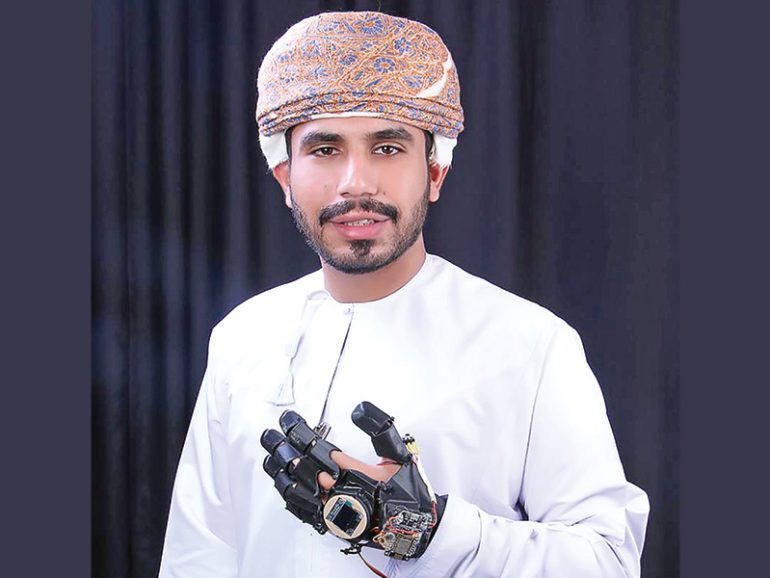
Al Azhar Zahir al Jabri, a 22-year-old Chemical Engineering student from the University of Technology and Applied Sciences in Muscat, has developed a ‘Smart Medical Glove’ to assist patients suffering from hemiplegia – a condition that causes paralysis on one side of the body.
Inspired by the memory of his late mother, who suffered from hemiplegia, Jabri embarked on this project in early 2021.
“After my mother’s passing, I wanted to do something for those people affected by hemiplegia, and so I started working on this project. It has now reached an advanced stage, and I hope to complete it early next year and introduce the glove for permanent use,” he said.
The Smart Medical Glove has been developed for individuals with hemiplegia, muscular dystrophy, the elderly, and children.
“The glove aids in rehabilitating the affected hand through pre-programmed specialised movements stored in the device. It also connects to a mobile application that allows patients to communicate with doctors worldwide and displays health sensor readings,” Jabri explained.
The glove includes simple daily movements that help patients perform certain activities independently.
“I faced several challenges, primarily because I’m not an expert in rehabilitation science. However, through consultations with specialists, I was able to identify the essential movements and ensure their accuracy,” he added.
In 2022, Jabri secured a patent for his invention from the Ministry of Commerce, Industry, and Investment Promotion. He believes the project represents a valuable economic resource for Oman.
“Projects like these are vital for keeping up with Oman’s ongoing development and vision.”
Jabri recently represented Oman at the TEXPO exhibition in Malaysia, where he reached the final stages. He also collaborated with Khoula Hospital, which provided specialised consultations for the project and will continue to support its success.
“My family has been my primary supporter, and Khoula Hospital’s expertise has been invaluable. I hope my project will soon see the light of day and become available in the market for the benefit of those who need it,” he concluded.
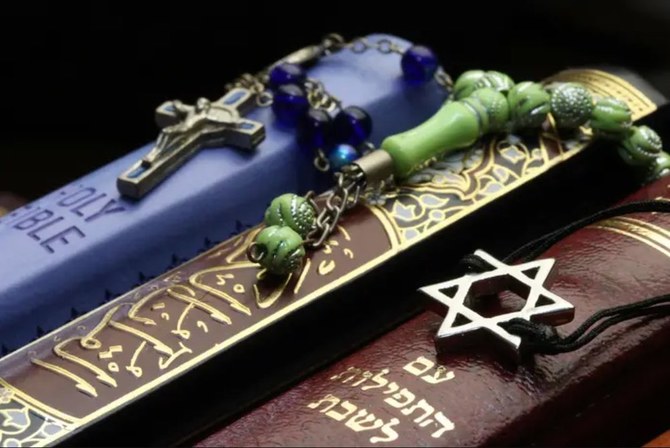
The King Abdullah bin Abdulaziz International Center for Interreligious and Intercultural Dialogue is hosting a global dialogue forum in Lisbon, Portugal, from May 14 to May 16, the Saudi Press Agency reported.
Themed “Transformative Dialogue: Building Alliances for Peace in a Changing World,” this event marks a significant milestone in the center’s decade-long commitment to fostering global change and peace.
Bringing together influential leaders from decision-making institutions, the forum offers an opportunity to forge partnerships addressing today’s complex challenges, the SPA reported.
It serves as a platform for global political figures, intellectual leaders and clerics to tackle issues of peaceful coexistence and sustainable development amid rapid transformations.
Attendees include former French president, Francois Hollande; Sheikh Dr. Saleh bin Abdullah bin Humaid, the imam of the Grand Mosque in Makkah; Ecumenical Patriarch Bartholomew I, the archbishop of Constantinople; Matteo Renzi, former Italian prime minister; and former president of Austria, Heinz Fischer.
Exploring dialogue’s transformative potential, the forum aims to advance human rights, social cohesion, reconciliation and environmental cooperation in line with the center’s mission, the SPA said.
By fostering cooperation among nations, international institutions and civil society, the forum seeks to build understanding between cultures and religions.
With participation from prominent figures across various fields, this forum holds significant potential to shape policies and priorities for peaceful coexistence and societal advancement, the SPA reported.
source/content: arabnews.com (headline edited)
___________
The Lisbon forum marks a significant milestone in the center’s decade-long commitment to fostering global change and peace. (X: @KAICIID)
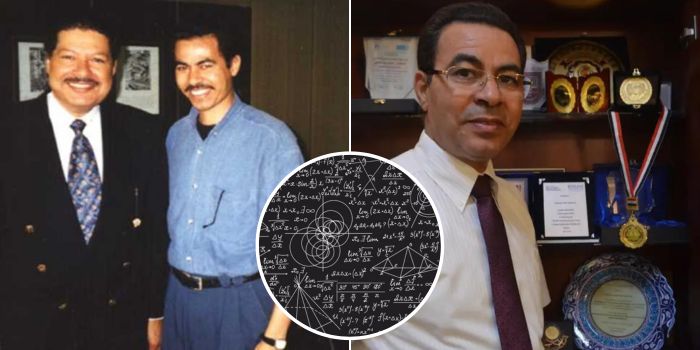
Born in Sohag, Egypt, Mathematician Mahmoud Abdel-Aty was awarded the world’s best mathematician by China for his contribution to quantum algorithms and quantum optics!
The scientist told Sky News Arabia “My name was nominated by a number of scholars from more than one country, and the committee filtered all the applicants and selected the best among them,”
The Chinese award Qin-Jiu-Shao is considered to be one of the most important awards in mathematics in the world will be awarded to winners in November.
The Egyptian scientist, who occupies the position of Chairman of the National Committee for Mathematics, confirmed that through him he was able to explain a large number of problems that had no explanation in the past, especially with the great and amazing progress in the manufacture of computers, especially quantum computers.
He also mentioned how happy he gets whenever he’s awarded saying, “It’s the most beautiful in his life,”
Adding “It gives us confidence that what we are doing is of real value.
The Award represents the great appreciation of our country, and the international awards represent a global appreciation for the name of Egypt and its great scientists.”
Sharjah Ruler collected 8,000 rare titles documenting French cultural history.
His Highness Sheikh Dr. Sultan bin Muhammad Al Qasimi, Member of the UAE Supreme Council and Ruler of Sharjah, is a leading Arab scholar and historian who has made contributions to documenting France’s cultural history from an Arab perspective.
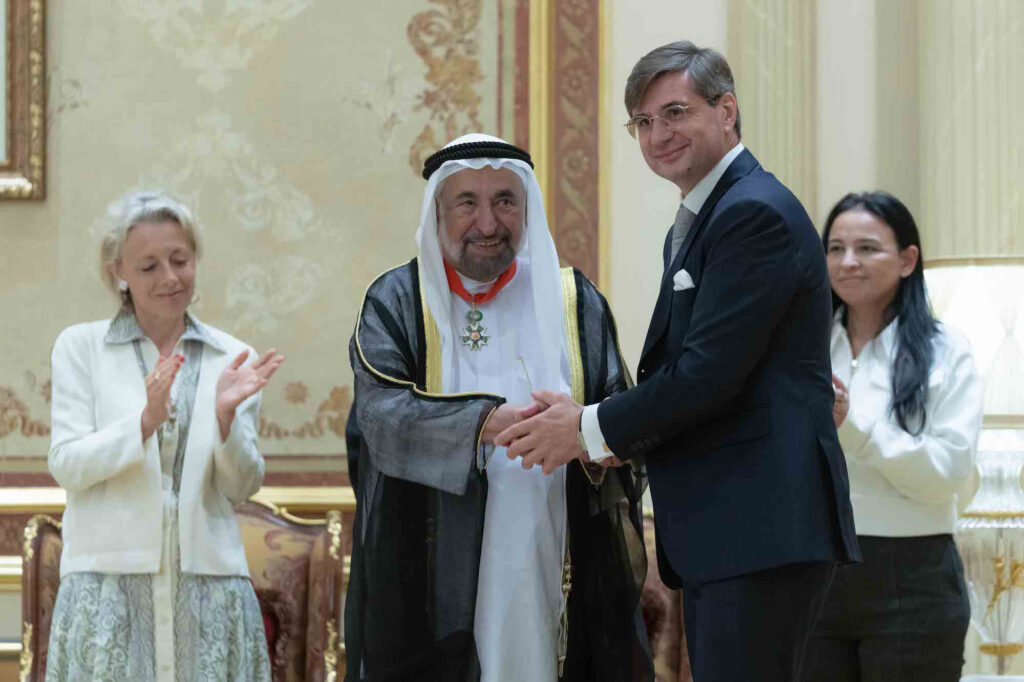
The historian has been recently conferred the title of The Legion of Honour, with the rank of Commander – one of the highest national honours in the Republic of France in recognition of his efforts to strengthen cooperation relations between the French Republic and Sharjah in a variety of fields, particularly culture. The honour was granted to the Sharjah Ruler by His Excellency Emmanuel Macron, the French President, and presented by Nicolas Niemtchinow, Ambassador of the French Republic to the UAE.
His Highness is currently developing the chapters of a comprehensive work, the first of which is titled ‘The Century of Lights.’ Set in the 18th century – the chapter focuses on the era that established the foundations of Western society and examines the pivotal role played by Denis Diderot, the founder of the Encyclopédie, in collaboration with D’Alembert, as well as the contributions of liberal philosophers of that century such as Jean-Jacques Rousseau and Voltaire.
The Arab historian navigates the remainder of the 18th and 19th centuries in the following two chapters, before penning the fourth chapter titled, ‘Controversial Issues on Globalisation and Cultural Exception’ detailing everything that had happened in relation to globalisation and France’s role in it.
“France, at the helm of the European Union, began vigorously defending the idea of cultural exception; it has prevailed. From my end, I will publish this book in Arabic to introduce all Arabs to French culture,” His Highness said.
“In 2003, the French Republic conferred the ‘Order of the French Republic for Arts and Letters,’ with the rank of ‘Knight Commander’ upon me. I saw this honour as a mandate to continue cultural giving, and I discussed the Republic of France’s pioneering role in intellectual enlightenment and civilised communication, as well as its contributions to the cultural field, translation, and literature, and the spread of the concepts of freedom and justice,” His Highness added.
From that day forward, the Ruler of Sharjah initiated the acquisition of available written records that document the cultural history of the French Republic, using the titles of books in the Egyptian Scientific Institute in Cairo. “I collected nearly 8,000 rare titles in French and decided to establish a scientific institute for those books in Sharjah, similar to the French and Egyptian Institute,” His Highness added, saying he donated his entire collection to the institute in Egypt after it was turned to ashes by a violent fire in December 2011.
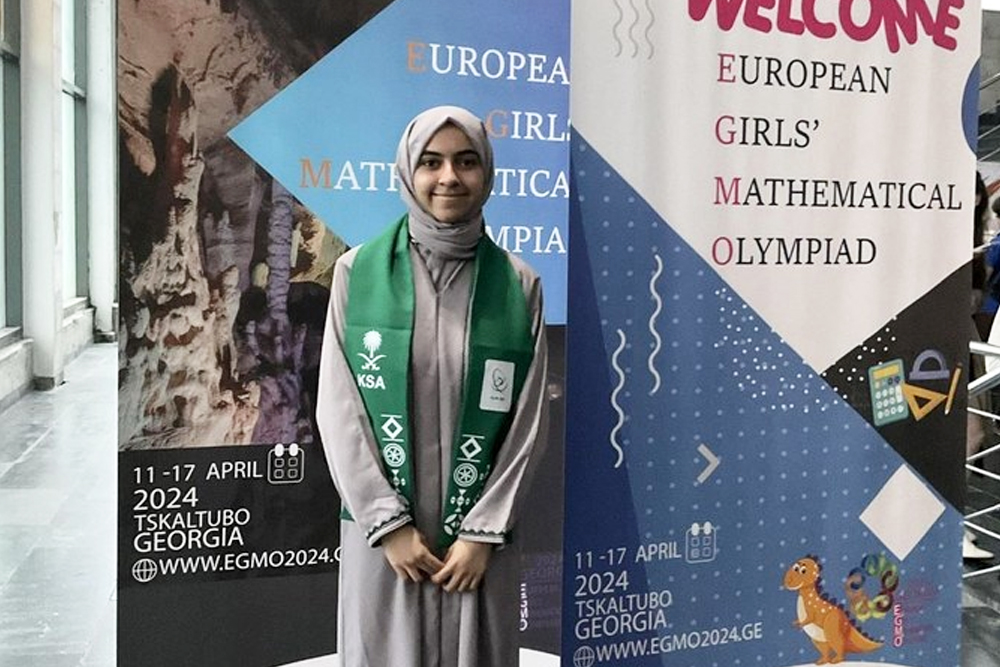
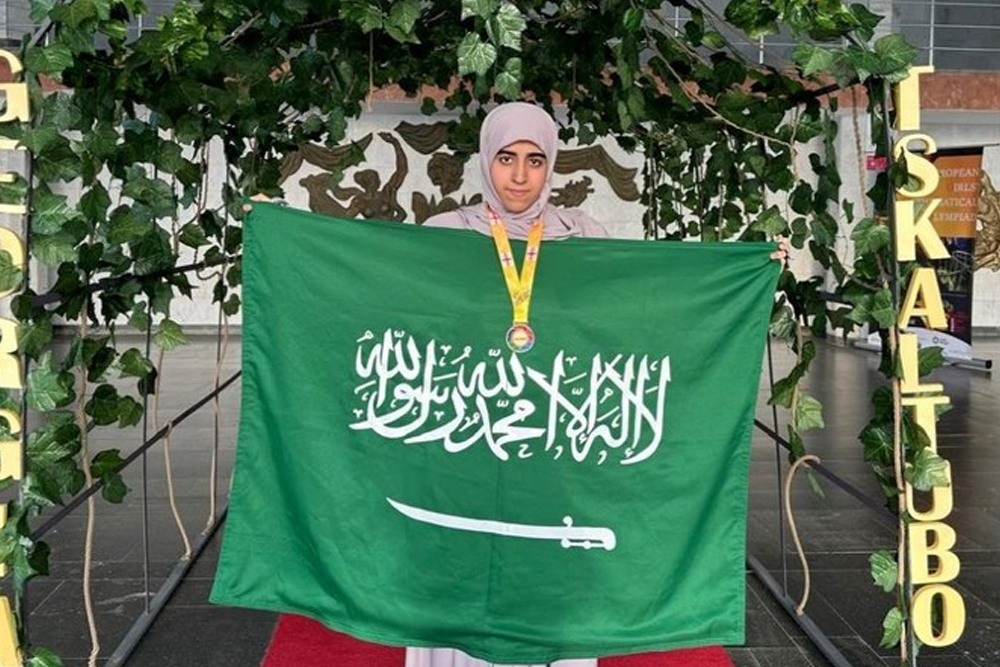
Two Saudi students distinguished themselves at the European Girls’ Mathematical Olympiad, which took place in Georgia from April 11 to 17. The Olympiad stands as a prestigious international platform tailored for high school girls with a profound enthusiasm for mathematics that extends beyond conventional academic boundaries. This year’s event witnessed the participation of 212 students hailing from 54 different nations.
A bronze medal and certificates of appreciation, respectively, were awarded to Fatimah Hassan Buali from Al-Ahsa and Retaj Al-Saleh from the Eastern Province, who represented Saudi Arabia, the King Abdulaziz and His Companions Foundation for Giftedness and Creativity (Mawhiba), and the Ministry of Education. This marks the Kingdom’s 12th engagement in the Mathematical Olympiad, showcasing a consistent presence on this global stage. Over the years, Saudi students have amassed a commendable collection of accolades, including two gold, six silver, and 13 bronze medals, alongside seven certificates of appreciation.
Amal bint Abdullah Al-Hazzaa, the Secretary-General of Mawhiba, underscored the significance of the students’ triumphs, emphasizing the cooperation between Saudi institutions and their dedication to nurturing young talents through education and training, aligning with international benchmarks. She commended Mawhiba and the Ministry of Education’s collaboration, noting that both institutions have as their common objective the development of Saudi human resources in accordance with Saudi Vision 2030 and the National Transformation Program.
Mawhiba, in close partnership with the Ministry of Education, administers the Mawhiba Program for International Olympiads, meticulously preparing Saudi teams for such competitive arenas. This comprehensive initiative encompasses advanced training modules and curriculum updates that are carefully timed to coincide with Saudi scientific teams’ yearly participation in international contests. The Saudi female participants in the Mathematical Olympiad underwent rigorous training regimes designed to sharpen their scientific acumen, their selection for participation being predicated on their performance in the training sessions convened by Mawhiba.
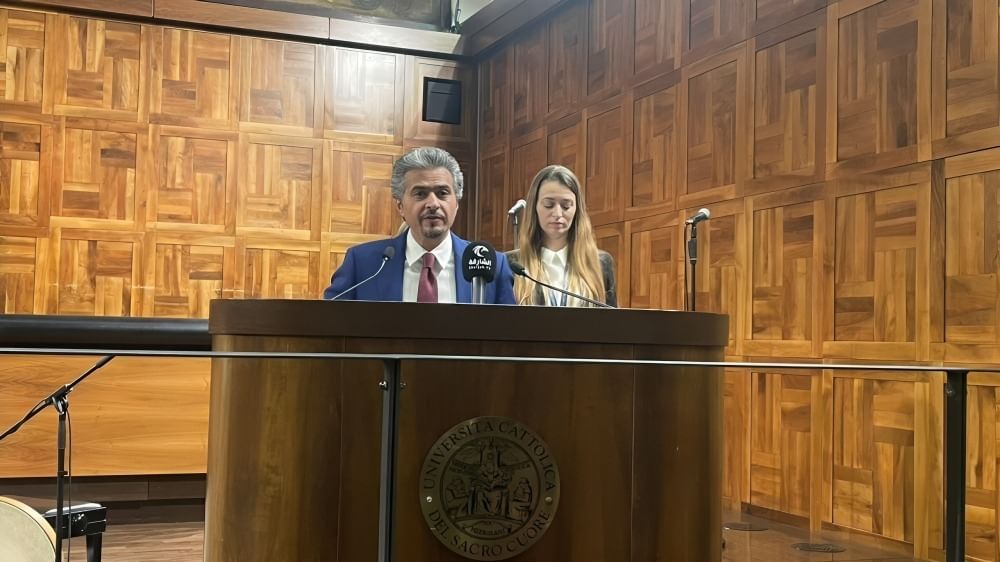
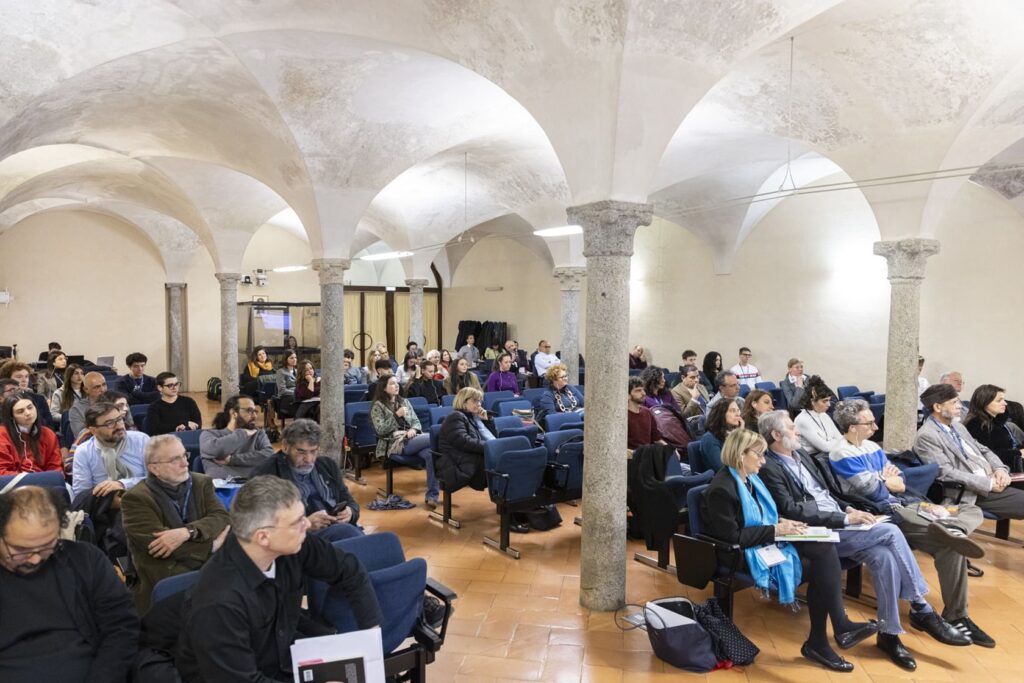
The activities of the seventh session of the International Festival of Arabic Language and Culture were concluded in the Italian city of Milan, which was held under the auspices of the Sharjah Book Authority and organized by the College of Linguistic Sciences and Foreign Literatures and the Arabic Language Research Center at the Catholic University, under the title “Language and Artificial Intelligence: A Limit to the Past or a Horizon for the Future.”
“In a step that reflects the spirit of the global cultural mission of the Emirate of Sharjah and confirms the vision of His Highness Sheikh Dr. Sultan bin Muhammad Al Qasimi, Member of the Supreme Council and Ruler of Sharjah, in highlighting the role of the Arabic language as a bridge for civilizational and cultural communication between peoples.
The events were attended by His Excellency Ahmed bin Rakad Al Ameri, CEO of the Sharjah Book Authority, Mario Cristina Gatti, Director of the Arabic Language Research Center at the University, His Excellency Muhammad Hassan Khalaf, Director General of the Sharjah Radio and Television Authority, and Dr. Amhamed Safi Al Mosteghanemi, Secretary General of the Arabic Language Academy in Sharjah, while participating in The festival sessions included 35 researchers from 18 countries, including 9 Arab countries: the United Arab Emirates, Egypt, Iraq, Morocco, Lebanon, Syria, Algeria, Yemen and Palestine, in addition to Turkey’s presence for the first time. The festival also hosted 12 academics and university professors from the Catholic University in Italy.
The seventh session of the festival sought to explore the intersections of artificial intelligence with Arabic language and culture, highlighting key topics that include “ethics and legislation of artificial intelligence” and its role as a translator who crosses linguistic borders, as a poet who organizes poems, and as a novelist who weaves stories.
The festival also focused on the impact of artificial intelligence on language teaching and its applications in the language of social communication. It discussed “the role of artificial intelligence in the scientific research and philosophy sector” and its potential in “restructuring the Arab heritage” with a focus on “its impact on language and the arts” in a way that enhances the status of Arabic as a living language. Interact with modern technologies.
His Excellency Ahmed bin Rakkad Al Ameri had stressed in a keynote speech at the opening ceremony of the festival that pride in one’s own language is pride in all languages, as the diversity of languages is a necessity for the diversity of cultures, and it is not possible to imagine the world in one language because this means that cultures lose much of the beauty and incentives for learning and discovery, highlighting Shedding light on the major project led by His Highness Sheikh Dr. Sultan bin Muhammad Al Qasimi, Member of the Supreme Council and Ruler of Sharjah, which is the historical dictionary of the Arabic language, of which 67 volumes have been published to date covering 15 of the 28 letters of the Arabic language.
For his part, Dr. Wael Farouk, director of the festival, said: “The participants in this year’s session presented ideas on the topic of ‘Language and artificial intelligence: a limitation of the past or a horizon for the future.’
The opening session presented by Mario Cristina Gatti, director of the Arabic Language Research Center at the university, also witnessed the launch of The first Italian translation of the poetry of Al-Mu’allaqat, which is considered one of the most famous classical texts in the history of Arabic poetry. It is a translation presented by Jolanda Guardi, and it presents a poetic reading by the Iraqi poet and translator Kazem Jihad on the occasion of the publication of his collection of poems in the Italian language.
The festival devoted sessions on the digitization of the Arabic language, artificial intelligence, imagination, artificial intelligence, and translation, with the participation of Dr. Emhamed Safi Mosteghanemi, Secretary General of the Arabic Language Academy in Sharjah, who reviewed the emirate’s experience in collecting and publishing the largest historical dictionary of the Arabic language as a successful example of digitization.
The translators, Muhammad Haqqi Sushin, Samir Greiss, and Naglaa Wali, raised questions about the capabilities of artificial intelligence as a translator of literary texts, the role of literary translators in the era of artificial intelligence, and the ways in which literary translation can benefit from artificial intelligence.
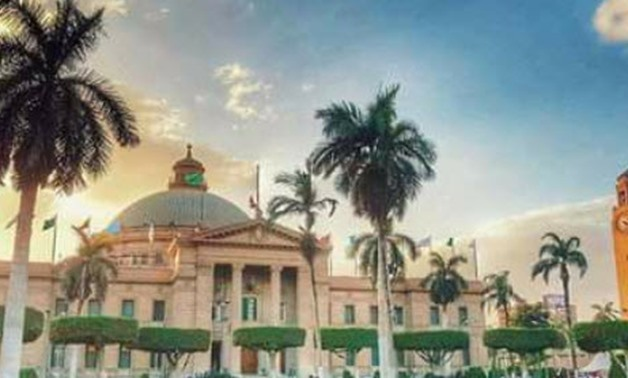
A total of 79 scientists from Cairo University are among a list of 160,000 scientists whose practical opinions are cited in various specializations with a (2 percent).
President of Cairo University Dr. Mohamed Othman Elkhosht received a report on Stanford University’s announcement of a list of scientists whose practical opinions are cited in various specializations with a (2 percent), featuring about 160,000 scientists from 149 countries, based on the Scopus database, in 22 scientific specializations, and 176 sub-specialization for distinguished researchers.
Dr. Elkhosht announced that the Stanford list included a large number of Cairo University scientists, with a total of 79 scientists on the two lists, whether the total from 2011 to 2022, or the latest version 2023, as this year’s list included scientists from 11 colleges (an increase of 8% over the previous year).
Number of scholars featured from Cairo University in the report’s 2022 edition was 73 scholars, representing 9 of the university’s faculties, and compared to the number of 74 and 55 scholars during the previous years (2021 and 2020, respectively), Cairo University thus leads all Egyptian universities and research centers in all years from 2020 until now.
Dr. ElKhosht explained that the annual Stanford University report is an objective, external indicator of the progress of scientific research at Cairo University.
It is also a quantitative indicator for the university to identify the number of distinguished faculty members in research and a reflection of the university’s methodology, plan, applied practices, and the support that the university provides to its employees from the various colleges and institutes affiliated with it.
Dr. Mahmoud Al-Saeed, Vice President of the University for Postgraduate Studies and Research, pointed out that the report reflects the strengthening of the confidence of the international scientific and research community in our scientists in all fields and specializations, and that the results of the classification this year included two lists, the first of which is specific to the list of the total practical years 2011 – 2022 (with a total of 417 scientists), While the second included the list of last year, 2022, with a total of 817 scientists, adding that this year’s list (2023 edition) contained 926 Egyptian scientists, while last year’s list (2022 edition) included 680 Egyptian scientists from various universities and research centers, compared to 605 and 396 during the years 2021 and 2020, respectively.
Stanford University used the Scopus database of the international publisher Elsevier to extract various indicators in this list, including global scientific publishing, the number of citations, the H index, and co-authorship, all the way to the composite citation index.
As many as25,000 fragments of artifacts dating back the Islamic caliphates during the first two centuries of the Hijri Calendar, corresponding to the 7th to 8th centuries AD, have been discovered from the Jeddah Historic Area.
The announcement in this regard was made by the Jeddah Historic District Program (JHDP), in collaboration with the Saudi Heritage Commission. The archaeological discoveries were announced as part of the Historic Jeddah Revival Project, initiated by Crown Prince and Prime Minister Mohammed bin Salman..
According to a press release from the JHDP, the project of excavation started in January 2020 with exploratory studies and a geophysical survey. The goal was to unveil the historical significance of four key locations: Othman bin Affan Mosque, Al-Shona, a segment of the Northern Wall, and Al-Kidwah. This archaeological endeavor falls within the purview of the Jeddah Historic District Program. The project aims to preserve national antiquities and archaeological sites, uncover the rich history of the Kingdom, and promote Historic Jeddah as a cultural and tourist destination, in line with the Saudi Vision 2030.
According to the release, in November 2020, the archaeological survey and excavations yielded significant findings, including 11,405 pottery shards weighing 293 kg, 11,360 animal bones weighing 107 kg, 1,730 shells weighing 32 kg, 685 building materials weighing 87 kg, 187 glass artifacts weighing 5 kg, and 71 metal artifacts weighing 7 kg. The combined weight of these archaeological findings is 531 kg; and they constitute a valuable contribution to Saudi Arabia’s archaeological discoveries.
Archaeological investigation at Othman bin Affan Mosque revealed artifacts dating back the first two centuries AH and spanning different historical periods, notably, ebony pillars found near the Mihrab, analyzed and traced back to Ceylon (now Sri Lanka) Island in the Indian Ocean, which highlight the extensive trade connections of historic Jeddah.
According to the release, excavations at the same site also unveiled a collection of ceramic vessels and fragments, including high-quality porcelain. Some of the pieces are made in the Chinese province of Jiangxi and date back to the 16th-19th centuries AD, while older pottery fragments are from the Abbasid era.
The archaeological site at Al-Shona, dating back at least to the 19th century AD, has yielded numerous pottery shards, including porcelain and ceramic from Europe, Japan, and China, dating from the 19th to 20th centuries. Excavations at Al-Kidwah (Bab Makkah – Makkah gate) revealed parts of the Eastern Moat, which most likely date back to the late 18th century.
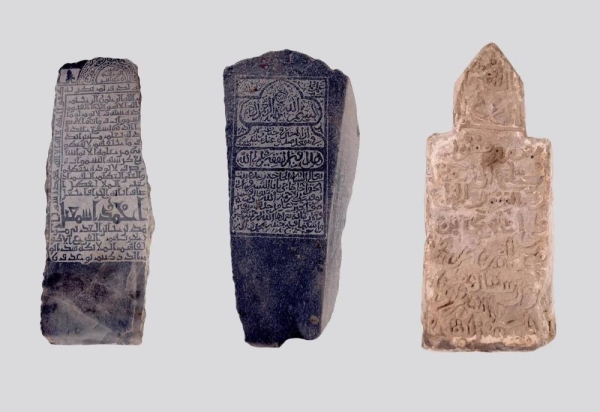
Tombstones made of Mangabi stone, marble, and granite were found at different locations within historic Jeddah. These tombstones contain inscriptions of names, epitaphs, and Qur’anic verses, dating back possibly to the 2nd and 3rd centuries AH. Specialists are currently studying them carefully.
The archaeological studies at the four historical sites involved excavations, radiocarbon analysis, soil analyses, geophysical surveys and scientific examination of artifacts. Samples of wood from 52 buildings were sent to international laboratories for identification and dating. Moreover, extensive international archival research led to the collection of over 984 historical documents, including maps and drawings of historic Jeddah. They are currently undergoing detailed study.
The Jeddah Historic District Program and the Heritage Commission collaborated to oversee the documentation, registration and preservation of archaeological artifacts found in Historic Jeddah. These discoveries were listed in the National Archaeological Register, and scientific databases were created to preserve the information related to the discovered artifacts.
The archaeological discoveries were announced as a part of the Historic Jeddah Revival Project, initiated by the Crown Prince and Prime Minister Mohammed bin Salman
Acamar, Rasalased, Kochab.. these words are examples of star names. At a first glance, they look unidentifiable. So where do they come from? The short answer is Arabic, but the long answer is a bit more nuanced than that.
The story begins in 8th century Middle East , Abbasid Caliphs became more and more interested in science and exploration. So they requested that the scientific works of previous translators be translated in Arabic, the rising scientific lingua franca of the world at that era. Greek and Roman scientific texts, notably Claudius Ptolemy’s Almagest, were translated into Arabic. But this was not merely a linguistic transfer; it also involved a comprehensive assimilation and expansion of knowledge. Ptolemy’s Almagest, translated in the 8th and 9th centuries, became a cornerstone in Islamic astronomy, enriched with commentaries and refinements by scholars of the time. It inspired many Arabs to take on the study of astronomy and carry on the study of space.
The advent of Islamic astronomy
Islamic astronomers like Al-Ḥasan Ibn al-Haytham and Ibn al-Shatir made significant strides in refining observational techniques and developing advanced instruments. Astrolabes and sundials, products of this new civilization, enabled precise measurements of celestial positions and movements. The practical application of astronomy was paramount in the Islamic civilization, particularly in the context of trade and navigation. The vast Islamic trade routes necessitated accurate navigation, and astronomy provided the means to achieve this. Bright stars, visible without telescopes, became vital reference points for navigation, leading to the naming of stars in Arabic, a practice that persisted due to its utility.
The influence extended beyond astronomy into mathematics, where the adoption of Arabic numerals revolutionized calculations. The spread of these numerals to Europe further increase the influence of Arab-Islamic scientific practices on the continent. As Europe entered the Middle Ages and Renaissance, Arabic astronomical texts, including star names, were reintroduced through translations. However, linguistic challenges and imperfect translations led to alterations and Latinizations of some names. Despite these modifications, many Arabic star names have endured and continue to be used in contemporary astronomy, which is why, while most of these names come from Arabic, they are often Latinized, and sometimes slightly modified. Other star names from Arabic include Altair, from Arabic Al-ta’ir, meaning the flying, Menkar, from Arabic Minkhar meaning the nostril, or Sulafat, from Arabic Sulahfat, meaning the tortoise.
He may be younger than their children but one of Britain’s brainiest children, a Muslim, has been hired by a University to help adults with their sums as reported by Daily Mail .
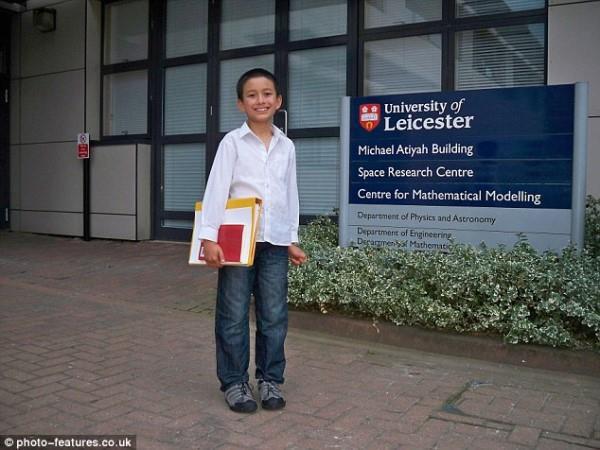
Yasha Asley, 14, is employed by the University of Leicester – where he is also a degree student – to run tutorials.
He became the youngest ever student at the University and is now the youngest ever employee.
Yasha was interviewed and offered the paid job when he was just 13–years old – beating adult applicants. Admin staff had to apply to Leicester city council for special permission to employ him because he was so young. The weekly tutorials Yasha runs are for adult students who need help and support solving problems following lectures. Proud Yasha said:’I am having the best years of my life. I love going to university and I love my new job helping other students.
No more school uniform for me thank you very much.’
Yasha, who has been dubbed a ‘human calculator’, is now in his final year and plans to start a Phd when he finishes his course.
The child genius attended a state primary school before winning his place to study degree level maths at just 12 years old in 2014.He was the first child in the world to achieve an A grade in maths A Level scoring 100 per cent and 99 per cent in two of the six papers when he was just 8 years old.
He passed more A levels in maths and statistics aged 9 and 10.
After finishing year 6 at primary he went straight to University. Of his achievements, Yasha said:’I love maths because it is an exact science. It is the only science where you can prove what you say is correct. It is so easy and an enjoyable subject to study.’
Proud father Moussa Asley, 53, who raised him single-handedly at their home in Leicester, said his son had been made welcome by staff and students alike.
Mr Asley, who drives his son to lectures every day, said:
‘I am just so proud watching him flourish and grow doing something he loves.
He is so good at understanding problems and explaining them in a clear way he is perfect for the job.’