MOROCCO : January 11th, 1944. Independence Manifesto at 81: How a Single Document Changed Morocco’s History. Final Independence March 02, 1956

Sometimes history can feel like a dusty textbook. But this piece breaks down Morocco’s 1944 Independence Manifesto into bite-sized moments of midnight meetings, diplomatic chess moves, and revolution-sparking paper.

The battle for freedom began with a piece of paper that shook colonial foundations. January 11, 1944: Morocco’s Independence Manifesto landed on French authorities’ desks, marking what historians now call the turning point in North African colonial resistance.

Looking back 81 years later, this watershed document rewrote history – but the story behind it reveals an even more fascinating tale.

In 1944, Morocco was a nation carved up by colonial powers, with French controlling the center, Spain holding the north and south, and Tangier under international administration.

But beneath this fragmented surface, something revolutionary was brewing in secret midnight meetings at the Royal Palace.

“The time has come to demand independence, but it must be done under calm circumstances,” Sultan Mohammed V reportedly told national movement leaders in one of those clandestine gatherings.

These meetings, held in a special bunker built for protection against German air raids, saw the King and nationalist leaders swearing on the Quran to maintain secrecy and serve the nation.

The road to revolution

The manifesto didn’t appear out of thin air. The groundwork began with the massive uprising against the “discriminatory colonial decree” on May 16, 1930, which unified Moroccan resistance.

Then in 1934, reformists tested the waters with urgent demands for change, followed by more comprehensive reform requests in 1936.

That same year, the National Reform Party emerged in northern Morocco, followed by the National Action Bloc – both eventually banned by French authorities in March 1937.

By April 1937, the National Party formed to advance Moroccan demands, marking an escalation in organized resistance.

Here’s where it gets interesting: The independence ideal had been the secret oath of every nationalist group since the early days of colonial resistance. From traditional Zawiyas (religious brotherhoods) to modern political parties, independence remained the ultimate goal.

As one historical document notes, “Members secretly swore to work toward independence, even while publicly demanding reforms.”

External events accelerated independence demands. In 1941, the Allies published the Atlantic Charter, promising freedom to occupied nations and promoting Roosevelt’s principle of “people’s right to self-determination.”

The Moroccan National Movement seized this opportunity, sending telegrams to Allied nations demanding this principle be applied to Morocco.

Sultan Mohammed V played his diplomatic cards masterfully. After ascending to the throne on November 18, 1927, he consistently advocated for Morocco’s independence, defying colonial attempts to suppress Moroccan identity and sovereignty.

At the January 1943 Anfa Conference, while Allied leaders discussed war strategy, he reminded them of a pointed fact: Morocco had fought alongside them against Nazi Germany, so what about that independence they kept talking about? After all, wasn’t that what the war was supposedly about – freedom from foreign domination?

President Roosevelt’s response? He considered Morocco’s independence aspirations “reasonable and legitimate.”

Inside the manifesto

The document itself was revolutionary in both content and delivery. Its demands came in two parts, according to historical records.

First: “Complete independence under the leadership of His Majesty Sidi Mohammed Ben Youssef.”

Second: A sweeping vision for internal reforms, calling for “a consultative political system similar to those in Eastern Arab and Islamic countries.”

“The idea of independence shaped Morocco’s history since ancient times… In modern history, its aspiration for constitutional life took many forms. Modern parliamentary life had spread in major Western nations and America, then was adopted by some Eastern Islamic kingdoms. By the mid-nineteenth century, the call for democratic systems began taking various shapes,” writes historian Abdellah Hitout.

The nationalists strategically delivered copies not just to French authorities, but also to American and British consulates and Soviet representatives – a diplomatic masterstroke showing their global awareness.

The public response was electric. “By afternoon, the manifesto was being read aloud in public squares, markets, and mosques from Fes to Marrakech, from Tetouan to Tangier, from the Atlas Mountains to the Souss region,” historical accounts reveal.

People exchanged congratulations in Rabat, Salé, and Kenitra, while crowds gathered spontaneously across the country.

Beyond the document

What many don’t know: In the Spanish-controlled north, the National Reform Party took a bold step, forming a united front with the Moroccan Unity Party led by Mohammed al-Makki al-Nasiri.

This coalition, known as the National Front, formed on December 18, 1942. On February 11, 1943, they submitted their own independence manifesto, demanding “complete independence, territorial unity, and final abolition of the protectorate system.”

Three days later, they presented these demands to major power representatives in Tangier – technically making it the first international Moroccan independence demand.

The manifesto transformed Morocco’s resistance from reform-seeking to independence-demanding. “It reflected Moroccans’ awareness and maturity,” contemporary documents state, “proving their ability to determine their destiny and manage their affairs.”

The French response was swift and harsh – by January 28, 1944, French authorities arrested and exiled numerous nationalist leaders. This crackdown culminated in the events of January 29-31, 1944, when widespread protests erupted across Morocco.

The struggle intensified through the following years, leading to Sultan Mohammed V’s exile to Madagascar in 1953, which sparked increased resistance. The Sultan’s triumphant return in 1955 paved the way for negotiations that finally secured Morocco’s independence on March 2, 1956.

Today, 81 years later, that single document’s impact continues echoing through Morocco’s diplomatic achievements, territorial integrity efforts, and national identity. From a divided colony to an emerging regional power, Morocco’s journey began with those words penned in secret meetings, sworn to on the Quran, and delivered on a January morning that changed everything.

As Allal Al Fassi recalled after returning from exile: “Two days after my return from exile, His Majesty received me and spoke about the phase that followed the submission of the independence petition, and the tremendous efforts he had made.”

“He didn’t hide his readiness to sacrifice everything, even the throne, if it served the Moroccan cause. I left that audience completely certain that Morocco would achieve its goal as long as it had a great king like Sidi Mohammed at its helm.”

King Mohammed VI now continues the diplomatic vision his grandfather initiated. The anniversary now lands as Morocco’s racking up diplomatic wins on the Western Sahara front. The country now has 29 consulates in the southern provinces – 17 in Dakhla alone. The latest was Chad’s consulate, which opened on August 14, 2024.

source/content: moroccoworldnews.com (headline edited)

____________
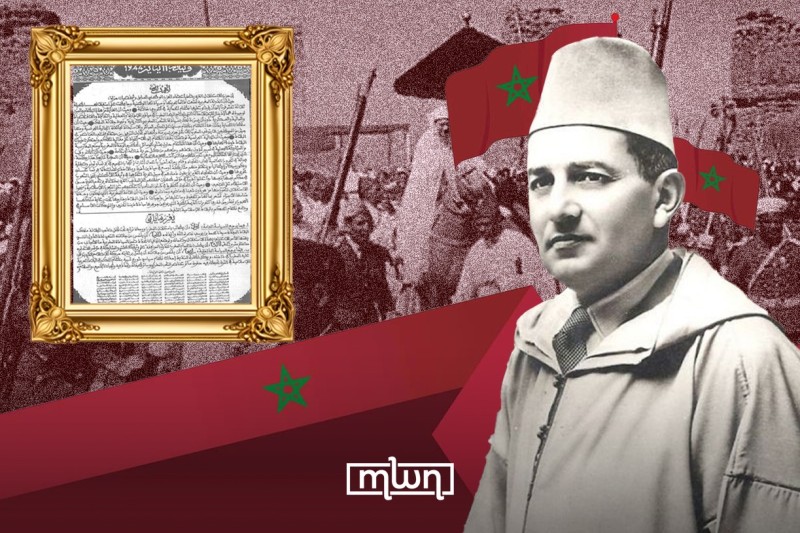
Eighty-one years ago, Morocco submitted a document that demanded its independence.

_____________

MOROCCO
U.A.E : 3rd edition ‘The 1 Billion Followers Summit’ to convene over 125 prominent CEOs , Jan 11 to 13th 2025. Worlds First & Largest Event dedicated to shaping the Content Creator Economy’

The 1 Billion Followers Summit, the world’s first and largest event dedicated to shaping the content creator economy, organised by the UAE Government Media Office, will convene over 125 prominent CEOs from major global firms, as it returns for its third edition, organised by the UAE Government Media Office and hosted in the UAE from 11 to 13 January 2025 at Dubai’s Emirates Towers, DIFC and the Museum of the Future, under the theme “Content for Good.”

These CEOs will join a prestigious lineup of content creators and influencers from around the world, sharing their expertise during panels, interactive discussions, workshops and roundtables. These sessions will explore the latest trends in business, economy, investment, and content creation, empowering aspiring talents and fostering innovation within the industry.

The list of speakers at the third edition of the 1 Billion Followers Summit include Maye Musk, mother of Elon Musk, the world’s richest man. A 76-year-old millionaire and model, Musk’s career began in 1969 as a Miss South Africa finalist. She became a prominent model, representing numerous major brands, and continues to work today. Despite her busy schedule, she earned two degrees in dietetics and nutritional science and founded her own nutrition company.

Musk, who enjoys an active social media presence with over 3.35 million followers, will share her parenting journey at the 1 Billion Followers Summit, discussing how she raised three children, including Elon, and the parenting style that contributed to his success.

Leading Egyptian businessman and global entrepreneur Naguib Sawiris, who has over 10.6 million social media followers, will share his insights at the Summit. He leads global companies in various sectors, including mining, real estate, financial services, telecom, investment, and media.
Naguib Sawiris is the owner of Orascom Telecom, launched the first mobile network in North Korea in 2008 and founded ONTV network. He also owns 88% of EuroNews shares, and is the founder of Egypt’s El Gouna Film Festival.

Andre Le Masurier, Senior Director and Global Head of brand and Creative at Skyscanner, will share his experience of over 20 years in brand vision, marketing and product design, as he held leadership roles in leading companies and contributed award-winning work that spanned major brands.

Andrew Graham, Head of Digital Corporate Advisory & Partnerships at the Creative Artists Agency (CAA), will share his experience in cultivating and monetizing digital-native talent, and his work in developing digital strategies for A-list celebrities.

Ben Relles, who leads Content Strategy at the Office of entrepreneur and LinkedIn Co-founder Reid Hoffman, will address the topic of AI and its utilization in social media content creation.

Cayman Rojas, Community Manager at LinkedIn, will discuss how he works with, and supports prominent voices on the platform. He works closely with influencers with an outsized impact on the community, from CEOs and content creators to musicians, actors, and celebrities.

Joining the speakers lineup is Chris Williams, who founded and leads Pocket Watch, a studio specializing in kids and family entertainment through digital-first content and lifestyle products. Williams will share his experience of 20 years in developing online video content.

Emma Harman, President, EMEA at Whalar Group, will share her experience of over 25 years blending entertainment, music, and social marketing, and applying this experience in brand-talent collaborations. Harman will also highlight the importance of impactful content and supporting the Creator growth Economy.

Grigory Lavrov, VP Marketing, Local Brands & Franchise Management in CEE & MENAT at Warner Bros. Discovery, is also speaking at the Summit. In addition to his publishing experience, Lavrov oversees brands like TLC, DMAX, and Fatafeat.

Kate Ward & Zach Honarvar will share their experience as Founders of Creator Now, a platform that aims to build a film school reimagined for creators to help the next generation turn their creative passions into a full-time career.

The list includes Lewis Crosbie, Co-founder and CEO of Komi, which is a software platform and “one-stop-shop” for creators, bringing features found on Shopify, Patreon, and Linktree into one place to help creators engage with their fans around the world.

Paul Bakaus, Executive Vice President of Product and Creator Tools at Spotter, will showcase the platform’s efforts in empowering content creators everywhere to accelerate their workflow and unlock their creative potential.

Also joining the lineup of prominent speakers at the Summit are Brittany Brown, Director of Digital Communications & Strategy at NASA, sharing insights into impactful visual storytelling; Aliana Miller, Director of Influencer Marketing at Roblox, discussing strategies for building authentic creator relationships and achieving record-breaking results; Elise Swopes, Sr. Adobe Express Evangelist & Community, offering her perspective on mobile creativity and the intersection of art and technology; Sherry Wong, CEO at Roster, focusing on building strong support teams for creators; Ahad Khan, CEO at Kajabi, sharing insights into scaling online businesses using creator-focused platforms; and Jonathan Chanti, President of Talent at Viral Nation & CGO of Viral Nation Group, who will share insights into leveraging data-driven strategies and emerging technologies for influencer collaborations and brand growth.

source/content: wam.ae (headline edited)

___________

____________________________________________

UNITED ARAB EMIRATES (U.A.E)

ALGERIA to head UN Security Council in January 2025

Beginning January 1, 2025, Algeria assumes the presidency of the United Nations Security Council for one month, marking a notable step in its diplomatic engagement. With its long-standing support for just causes in the Middle East and Africa, this presidency provides the country with a strategic opportunity to highlight crucial issues.

Clear Priorities for a Central Role
As a non-permanent member of the Council for a year, Algeria is concentrating on major issues such as the situation in Palestine, the humanitarian crisis in Gaza, and security challenges in Africa, especially the fight against terrorism.

An open ministerial discussion on “The Situation in the Middle East, including the Palestinian Question” will bring together key international players, including UN Secretary-General Antonio Guterres.

Focus on Palestine: A Historic Priority
The Palestinian issue, a cornerstone of Algeria’s diplomacy, is paramount to this presidency. Fifteen months after a deadly escalation in Gaza, Algeria reaffirms the need for an “immediate” and “permanent” ceasefire.

Algerian Ambassador to the UN, Amar Benjama, has been leading efforts since March 2024 to promote peace in the region. In parallel, Algeria is renewing its call for full Palestinian membership in the UN, aiming to realize the two-state solution and restore the legitimate rights of the Palestinian people.

Addressing Regional Crises
In addition to Palestine, Algeria will focus on other major conflicts:

Syria: A session will address the political and humanitarian situation in this war-torn country.
Yemen: UN Special Envoy Hans Grundberg will intervene to evaluate peace prospects and respond to the humanitarian emergency.


An African Priority: Fighting Terrorism
On the African front, Algeria will convene a high-level meeting on counterterrorism, a growing threat to the stability of many states on the continent.

Ahmed Attaf, Minister of Foreign Affairs, will emphasise ways to strengthen international cooperation in addressing this scourge.

A Presidency Full of Hope
Under the leadership of President Abdelmadjid Tebboune, Algeria aims to use this platform to promote peace, security, and justice in key regions.

With ambitious initiatives and active leadership, this presidency of the Security Council represents a unique opportunity for Algeria to defend the interests of Arab and African nations while consolidating its position on the global diplomatic stage.

source/content: news-tunisia.tunisenumerique.com/algeria (headline edited)

____________

______________

ALGERIA

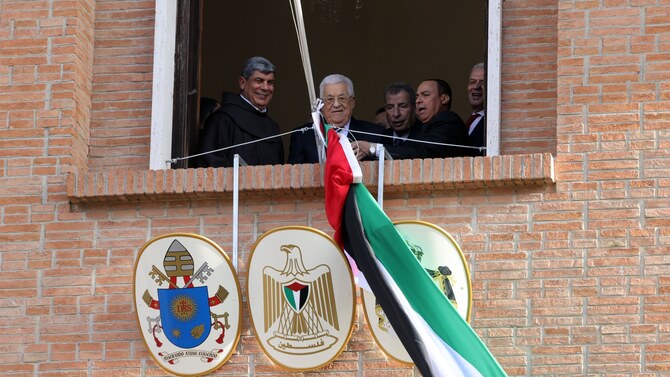
PALESTINIAN President Mahmoud Abbas opens new embassy building in Vatican City – December 12th, 2024

Palestinian President Mahmoud Abbas officially inaugurated the new building of Palestine’s Embassy in Vatican City on Thursday.

Abbas called on countries that have not yet recognized Palestine to do so, and to acknowledge the right of the Palestinian people to self-determination, the news and information agency WAFA reported.

After raising the Palestinian flag, Abbas spoke of efforts to gain full UN membership and achieve greater international recognition for Palestine.

The Vatican officially recognized the State of Palestine on May 13, 2015. On June 26 of the same year, the Vatican’s Holy See and the Palestinian Authority signed a comprehensive agreement for mutual recognition.

Armenia was the last country — the 149th — to recognize Palestine, on June 21, 2024. There are Palestinian embassies, consulates, and diplomatic missions in 110 countries.

The opening ceremony of the new embassy building was attended by several Palestinian Authority officials, including Ziad Abu Amr, the first deputy prime minister, and Issa Kassissieh, the Palestinian ambassador to the Vatican.

Earlier, Abbas had a private audience with Pope Francis and senior Vatican officials. He is also scheduled to meet Italian Prime Minister Giorgia Meloni and President Sergio Mattarella in Rome.

source/content: arabnews.com (headline edited)

_____________

Palestinian President Mahmoud Abbas officially inaugurated the new building of Palestine’s Embassy in Vatican City, Dec. 12 (WAFA)

_____________

PALESTINE

SAUDI ARABIA : Saudi official Khalid Al-Zahrani elected vice chair of ‘Codex Alimentarius Commission’ the organization that sets standards for global food trade

Saudi Food and Drug Authority says selection of Khalid Al-Zahrani by Codex Alimentarius Commission is a ‘milestone’ and ‘testament to our commitment to global food safety

Al-Zahrani has represented the Kingdom on several international committees, including at the World Trade Organization

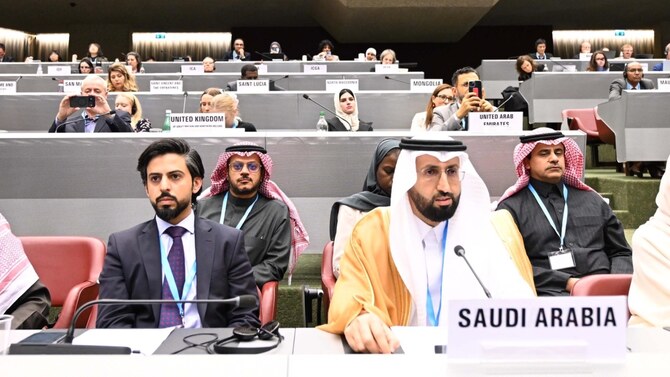
Saudi official Khalid Al-Zahrani was chosen on Wednesday to be vice chair of the Codex Alimentarius Commission, which sets the standards for the international food trade that are designed to ensure products are safe and protect consumer health.

Representatives of the Saudi Food and Drug Authority who were present for the vote at the commission’s 47th annual session in Geneva, Switzerland, congratulated Al-Zahrani on his election.

“This is a significant milestone for Saudi Arabia and a testament to our commitment to global food safety and standards,” said Hisham Aljadhey, the authority’s CEO.

“By assuming the role of vice chair of Codex, (Saudi Arabia) aims to further strengthen international collaboration, promote sustainable food practices and ensure the well-being of consumers worldwide.”

Al-Zahrani has served as the Codex chairperson for the Near East region since 2020 and was reelected to the position in 2023.

He also represented Saudi Arabia on several international committees, including the World Trade Organization’s Technical Barriers to Trade, the Gulf Cooperation Council Standardization Organization, and the International Organization for Standardization’s Food Products Committee.

He works closely with the Kingdom’s Food and Drug Authority, which aims to prioritize sustainability and enhance efficiency, inclusiveness and transparency within food systems. The authority was recognized in January by the World Health Organization as one of the first five countries in the world to eliminate the use of industrially produced trans fats in food, alongside Denmark, Lithuania, Poland and Thailand.

“Al-Zahrani’s election highlights the exceptional quality of Saudi staff at the SFDA and the authority’s efforts in food-safety legislation and oversight,” the authority said.

The Codex Alimentarius (Latin for “Food Code”) is a collection of internationally recognized standards, codes of practice, guidelines and other recommendations related to food production, labeling and safety, published by the UN’s Food and Agriculture Organization and the WHO.

source/content: arabnews.com (headline edited)

___________

Khalid Al-Zahrani and the CEO of the Saudi Food and Drug Authority, Hisham Aljadhey, during the vote at the Codex Alimentarius Commission in Geneva. (Supplied)

_________________

SAUDI ARABIA

SAUDI ARABIA: GLOBAL RECORD: Amount of desalinated water produced by Saudi Arabia each day equivalent to global oil production

President of the Water Authority tells Local Content Forum 2024 in Riyadh the Kingdom aims to be a pioneer in desalination industry.

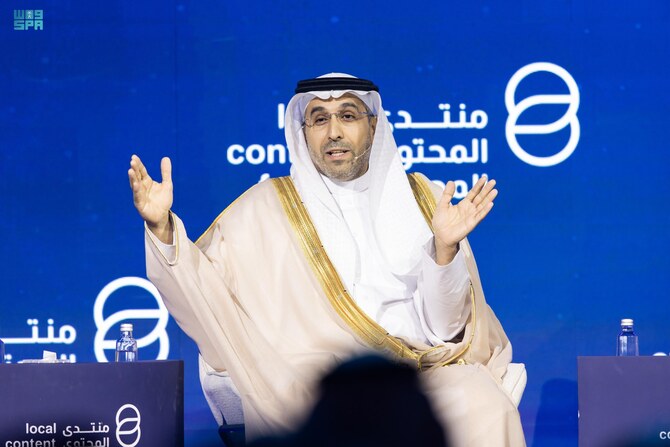
The volume of desalinated water produced by Saudi Arabia each day is equivalent to daily global oil production, the president of the Saudi Water Authority said on Thursday.

Speaking on day two of the three-day Local Content Forum 2024 in Riyadh, Abdullah Al-Abdulkarim said the Kingdom desalinates an estimated 15 million cubic meters of water daily. In 2023, global oil production amounted to nearly 15.3 million cubic meters a day, the Saudi Press Agency reported.

The nation’s water sector has undergone significant shifts in recent years as a result of critical issues such as climate change and growing demand for fresh water, he added, and there are “great opportunities for the Kingdom to become a pioneer” in the desalination industry.

The Water Authority is working tirelessly to support Saudi manufacturers and contractors and help them enter the desalination sector, Al-Abdulkarim said.

“Partnerships in the water sector start from research and innovation, and transforming them into new projects,” he added.

source/content: arabnews.com (headline edited)

__________

Abdullah Al-Abdulkarim, the President of the Saudi Water Authority, at the Local Content Forum held in Riyadh on Nov. 21, 2024 (SPA)

________________

SAUDI ARABIA

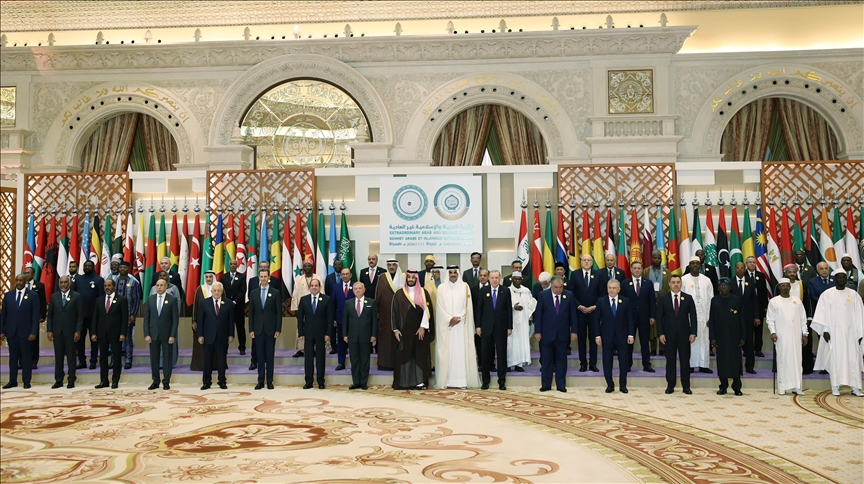
ARAB : Extraordinary Arab-Islamic summit opens in Riyadh to discuss Israeli wars in Gaza, Lebanon

Saudi crown prince calls for Palestinian state with East Jerusalem as its capital.

An extraordinary Arab-Islamic summit kicked off in the Saudi capital Riyadh on Monday to discuss Israel’s ongoing wars in the Gaza Strip and Lebanon.

“We reiterate our rejection of the genocide committed by Israel against the Palestinian people,” Saudi Crown Prince Mohammed bin Salman said in an opening speech at the summit.

He stressed the need to continue efforts to establish an independent Palestinian state on the lands of 1967 with East Jerusalem as its capital.

The crown prince also condemned Israeli attempts to prevent the UN agency for Palestinian refugees (UNRWA) from delivering aid to Gaza.

Bin Salman said that his country rejects any threat to the security and sovereignty of Lebanon.

Palestinian President Mahmoud Abbas, for his part, called on the Arab and Islamic countries to show the highest levels of solidarity with the Palestinian people.

He also demanded the implementation of a UN resolution to halt Israeli assaults on Gaza and to secure the delivery of humanitarian aid into the enclave.

More than 50 leaders of Arab and Islamic countries are taking part in the summit, including Turkish President Recep Tayyip Erdogan.

source/content: aa.com.tr / ahmedasmar (headline edited)

_______________

_________________________

ARAB / SAUDI ARABIA

SAUDI ARABIA : Jouf breaks 02 Guinness records for the ‘World’s Largest’ & the ‘World’s most modern, organic olive farms’

Jouf Gov. Prince Faisal bin Nawaf bin Abdulaziz has praised the country’s leaders and the Ministry of Environment, Water and Agriculture for supporting the region’s record-breaking developmental and economic initiatives.

Prince Faisal made the comments during a ceremony marking the region’s achievements, the Saudi Press Agency reported on Monday.

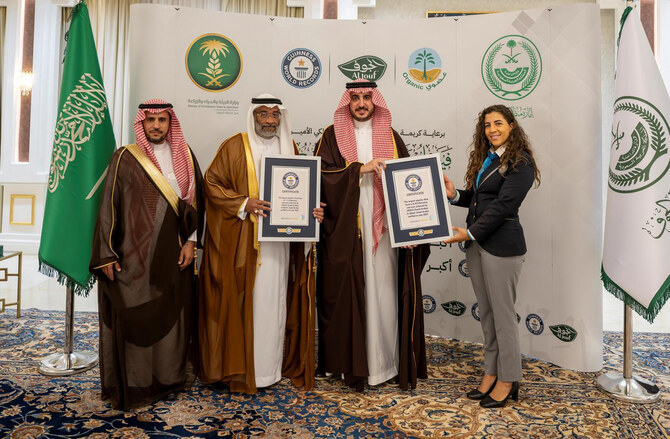
Two certificates were presented by Guinness World Records representative Kenzi Al-Dafrawi to Mazen Badawood, CEO of the Al-Jouf Agricultural Development Co.

The certificates honored the company for having the world’s largest and most modern organic olive farm, the SPA reported.

The event was attended by Abdulaziz Al-Rujai, director general of the ministry in the Jouf region. 

Prince Faisal said: “We take pride in the national accomplishments that the Kingdom’s Vision 2023 has realized in promoting self-sufficiency and achieving food security.”

Badawood thanked Prince Faisal for his dedication to serving the people of the region. 

He said Jouf’s agricultural, environmental and water purification projects provide a model for others to follow.

The awarding of the two certificates coincided with Organic Food Day, celebrated on Nov. 11, which the Kingdom marked with a series of events across the country. 

Organic Food Day is aimed at encouraging people to make healthy dietary choices and embodies efforts to achieve sustainable food security, in line with the objectives of the Kingdom’s Vision 2030 plan. 

The ministry aims to encourage farmers to adopt organic farming practices, educate consumers, as well as promote resource sustainability and local production.

As a part of the celebrations, Riyadh is hosting the Saudi International Exhibition for Organic Products from Nov. 11 to 13 to support the local community, and position the nation as a leading hub in this growing sector.

source/content: arabnews.com (headline edited)

____________


Two certificates were presented by Guinness World Records representative Kenzi Al-Dafrawi to Mazen Badawood, CEO of the Al-Jouf Agricultural Development Co.

_________________

SAUDI ARABIA

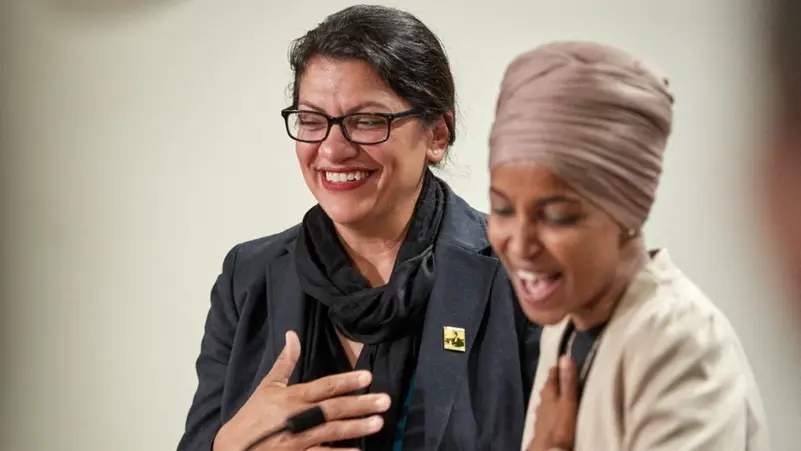
PALESTINIAN & SOMALI -AMERICANS’ : Rashida Tlaib and Ilhan Omar win re-election amid Gaza conflict and US foreign policy debate – November 2024

Democrats Rashida Tlaib and Ilhan Omar have won re-election and continue their position in American politics after being the first two Muslim women to serve in the United States Congress.

Their victories come amid the backdrop of Israel’s ongoing war in Gaza, which has killed more than 43,000 Palestinians with diplomatic and military support from Tel Aviv’s key ally, the United States.

Tlaib, who is also the only Palestinian-American woman in US Congress, defeated her Republican opponent on Tuesday for a fourth term as a representative for Michigan with support from the large Arab-American community in Dearborn.

The Associated Press called the race with just 18 percent of the votes counted. Tlaib secured 77 percent of the vote with her opponent receiving 19 percent.

In the days leading up to the election, Tlaib declined to endorse Vice President and Democratic candidate Kamala Harris for US President. She, however, urged Americans to go to the polls and vote.

Omar, a former refugee and Somali American, won for a third term in Minnesota. She faced Republican challenger Dalia al-Aqidi, an Iraqi-American journalist who describes herself as a “secular Muslim” and called Omar, who is a proponent of Palestinian rights, pro-Hamas.

The congresswoman won 76.4 percent of the vote compared to al-Aqidi’s 23.6 percent, according to the Associated Press, which called the race with 87 percent of the vote counted.

Both Tlaib and Omar have repeatedly spoken against Israel’s war on Gaza followed by the Oct. 7 Hamas attack, the ensuing humanitarian crisis and the Biden administration’s stance on the conflict. The two have faced a slew of attacks from pro-Israel groups as well as fellow lawmakers for their remarks.

Tlaib has been a leading voice against America’s military aid to Israel and for the Palestinian people in Gaza and the West Bank. She was censured by the House last year over rhetoric she used following the Hamas attack

Meanwhile, Omar is a part of an informal group of lawmakers known as the “Squad,” which is made up of progressive members of Congress including Alexandra Ocasio-Cortez, among others.

source/content: english/alarabiya.net (headline edited)

____________

U.S. Reps. Rashida Tlaib (D-MI) and Ilhan Omar (D-MN) hold a news conference on August 19, 2019 in St. Paul, Minnesota. (AFP)

_______________________________________

AMERICAN / PALESTINIAN/ SOMALI

LIBYA : Council of Arab Information Ministers names Tripoli as headquarters for ‘Arab Institue for Peace & Journalism’

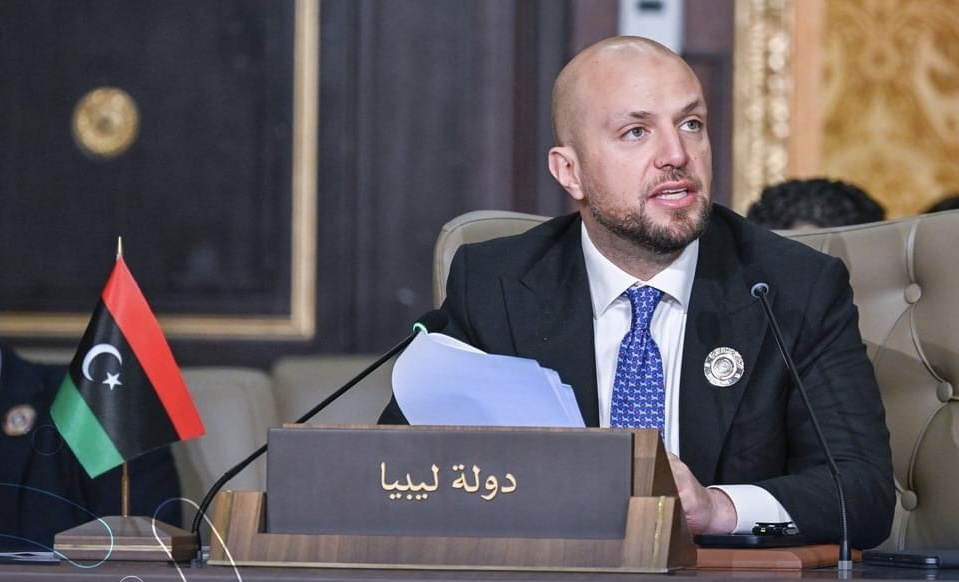
The Council of Arab Information Ministers approved the internal bylaws of the Arab Institute for Peace and Journalism, for which the Libyan capital, Tripoli, was chosen as its headquarters.

This came during the activities of the 54th regular session, held in the Bahraini capital, Manama, in which the Minister of State for Communication and Political Affairs, Walid Al-Lafi, participated.

In his speech, Al-Lafi welcomed the steps aimed at establishing and approving the internal system and organizational structures of the Institute, as it is the first international institution affiliated with the League of Arab States with its permanent headquarters in Tripoli, calling for the completion of the steps for the opening.

Al-Lafi stressed the responsibility that the Arab media bears through various digital, media and audio interfaces, toward the massacres taking place in Gaza. He also reiterated Libya’s support for Arab initiatives aimed at stopping the aggression, exposing the crimes of the occupation, and supporting youth initiatives in social media platforms in support of the Palestinian Cause.

Al-Lafi also called on Arab Information Ministers to participate in the activities of the Tripoli Media Days in its third edition, which will be held at the end of next December, coinciding with Libya’s celebrations of the 73rd anniversary of independence.

source/content: libyaobserver.ly (headline edited)

__________

_________

LIBYA