Arabs & Arabian Records Aggregator. Chronicler. Milestones of the 25 Countries of the Arabic Speaking World (official / co-official). AGCC. MENA. Global. Ist's to Top 10's. Records. Read & Enjoy./ www.arabianrecords.org
Category: Leaders, on the World Stage – All Others
Arabs are known for having had numerous contributions to civilizations—notably in the fields of Mathematics (Arabs invented Algebra), Astronomy (Al-Biruni discussed the earth’s rotation centuries before it was confirmed by Galileo), and Medicine (Al Razi was one of the first to diagnose diseases like smallpox and measles).
But Arab achievements didn’t end in the Golden Age and have continuously evolved to modern fields, so we’re here to round up some of the lesser-known greatest modern achievements by Arabs..
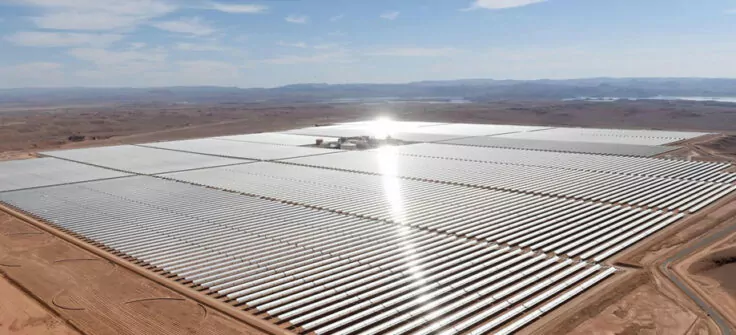
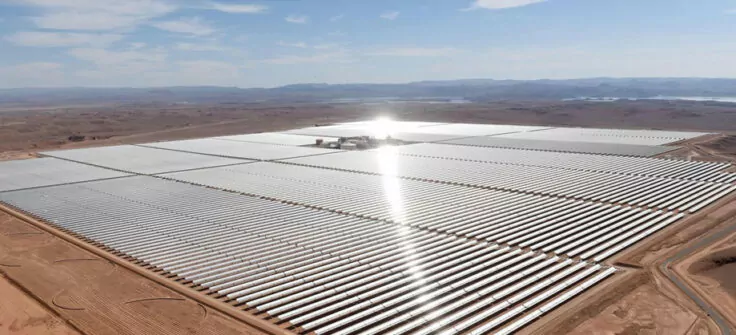
Noor Ouarzazte
Morocco is turning the Sahara Desert into the largest concentrated power complex in the world. The project is currently in progress, due to be complete before the end of 2018.
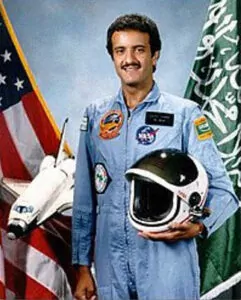
Arabs in Space
Sultan bin Salman Al Saud became the first Arab in space in 1985 – he was also the first royal astronaut ever. Syrian-born Mohammed Ahmed Faris followed in Al Saud’s footsteps in 1987.
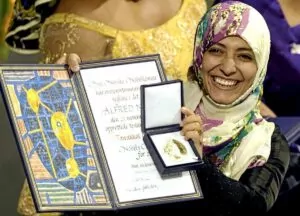
Nobel Peace Prize Winners
Photo credit ODD ANDERSEN/AFP/Getty Images
The Tunisian national dialogue quartet was awarded the Nobel Peace Prize in 2015 for their role in building a democratic state in Tunisia following the Arab Spring.
Yemeni journalist and activist Tawakkol Abdel-Salam Karman preceded the Tunisian National Dialogue Quartet in 2011 as Nobel laureate—she became the first ever Yemini and Arab Woman to win the Peace Prize, as well as the second youngest ever.
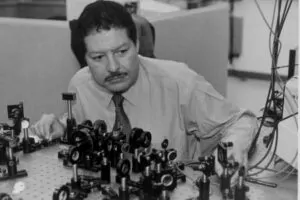
The ‘Father of Femtochemistry”
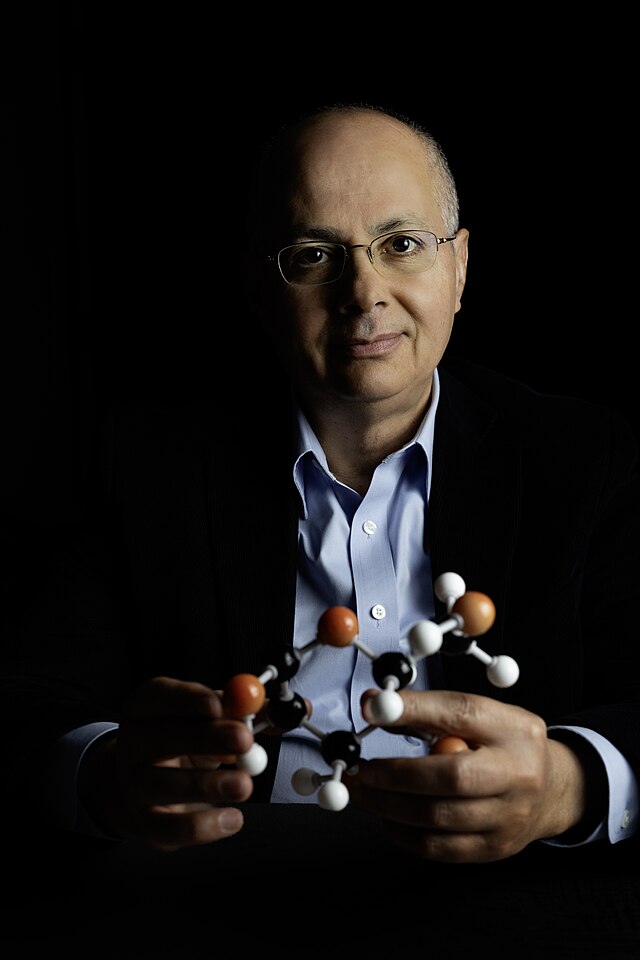
Femtochemistry is probably something too difficult for most of us to understand—but according to Wikipedia it’s “an area of chemistry that studies chemical reactions on extremely short timescales”. Ahmed Hassan Zewail, and Egyptian-American scientist, is known for pioneering a laser technique that allowed for easier analysis of chemical reactions. He even won a Nobel prize for his work in 1999.
Pritzker Architecture Prize Winners
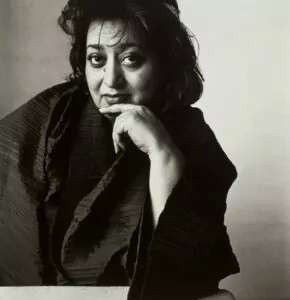
The late Iraqi-British architect Zaha Hadid was an internationally-acclaimed architect, renowned for her sci-fi creations. Having built some of the world’s most innovative spaces. In 2004, she became the first ever woman to win the prestigious Pritzker Architecture Prize—the most prestigious award in architecture.
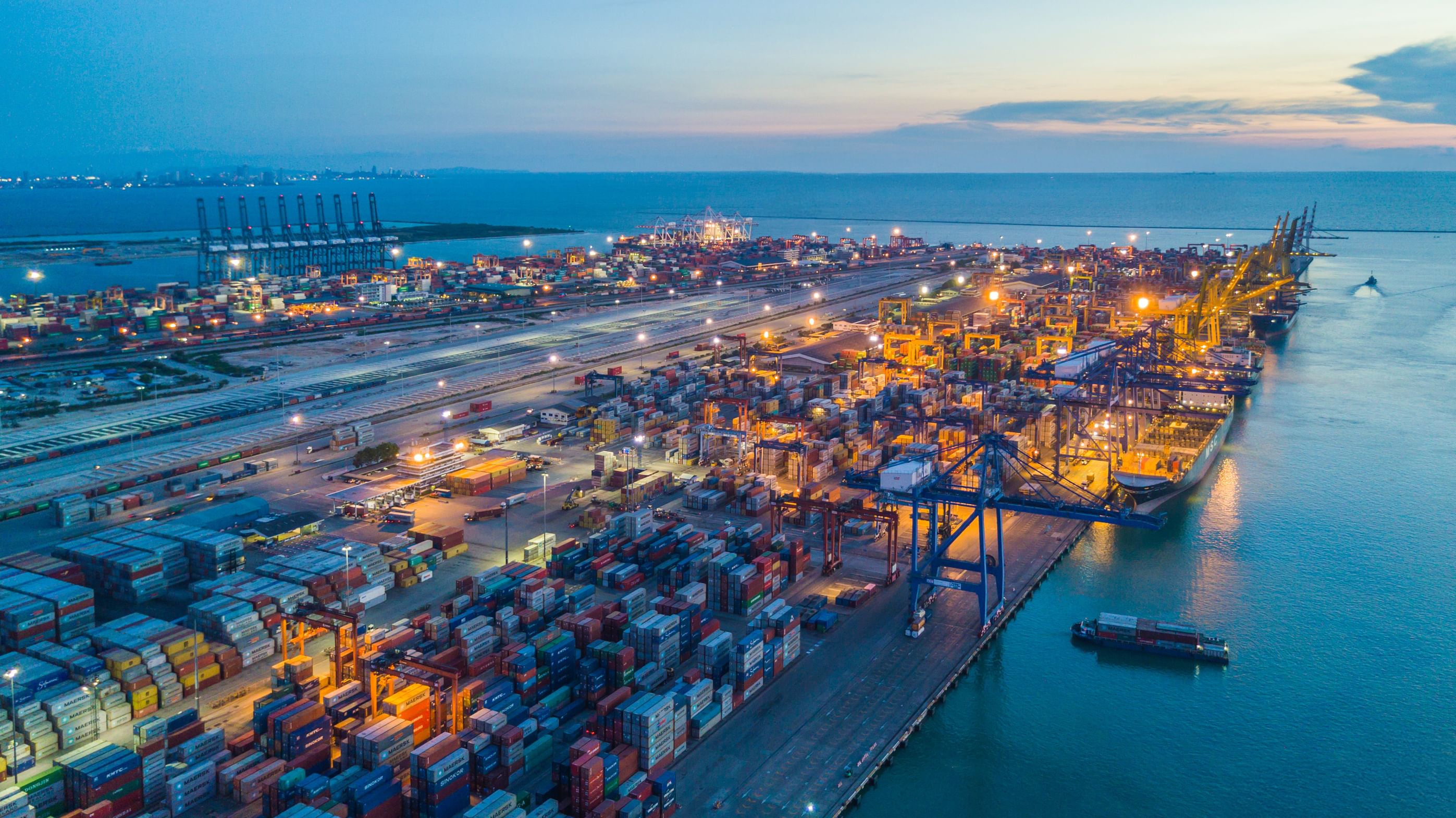
Dubai has reinforced its status as a leading global maritime hub, earning the title of “the crown jewel of the Middle East’s maritime sector,” according to the 2025 International Shipping Centre Development Index report, issued by Xinhua News Agency in collaboration with the Baltic Exchange. The report ranks Dubai among the top five global shipping centres and first in the Arab region.
Sheikh Dr. Saeed bin Ahmed bin Khalifa Al Maktoum, CEO of the Dubai Maritime Authority, part of the Ports, Customs, and Free Zone Corporation, hailed the achievement stating: “Dubai’s ranking as fifth globally and first in the Arab world in the 2025 International Shipping Centre Development Index reflects the vision of our leadership, as well as the effective coordination between strategic partners and maritime sector companies in the emirate.
We remain committed to continuous development, delivering world-class services, adopting global maritime best practices, implementing innovative solutions, updating regulations, and fostering a thriving maritime business environment to position Dubai as an innovative and sustainable global centre for shipping and logistics.”
The report highlights Dubai’s comprehensive maritime ecosystem, offering navigation services, shipbuilding and repair, and capacity to handle the increasing number of vessels. It also emphasised the Dubai Maritime Transport Plan 2030, aligned with the Dubai Economic Agenda D33, which aims to expand maritime transport usage, enhance the network of marine transportation, and develop Dubai Maritime City.
The report specifically praised Jebel Ali Port for its strategic role as a regional shipping hub, underpinned by continuous investment in infrastructure and services. In 2024, the port handled 15.5 million twenty-foot equivalent units (TEUs), the highest since 2015, accounting for 18% of the total 88.3 million TEUs managed by DP World, the port operator.
On sustainability, the report highlighted Jebel Ali Port’s initiatives to reduce emissions, including the provision of biofuel for ships, installation of 50,000 m² of solar panels for renewable energy, and the use of electric vehicles for container handling—contributing to an annual reduction of 2,000 tons of CO₂ emissions.
Captain Ibrahim Al Blooshi, Executive Director of Dubai Ports Authority, commented: “We take pride in this achievement, which underscores Dubai’s strong position as a global maritime hub. Jebel Ali Port, operated by DP World under the Ports, Customs, and Free Zone Corporation, continues to excel at both regional and international levels.
Dubai Ports Authority is committed to proactive measures to enhance the maritime sector’s contribution to the strategic objectives of the Dubai Economic Agenda D33, through its three ports—Jebel Ali, Port Rashid, and Hamriyah—despite global economic challenges and market fluctuations. We are dedicated to preserving the emirate’s marine environment and ensuring the highest operational safety standards in the maritime sector.”
Participants from more than 90 countries discuss development of comprehensive Islamic identity
1,800-page ‘Encyclopedia of Islamic Intellectual Harmony’ prepared by 60 scholars
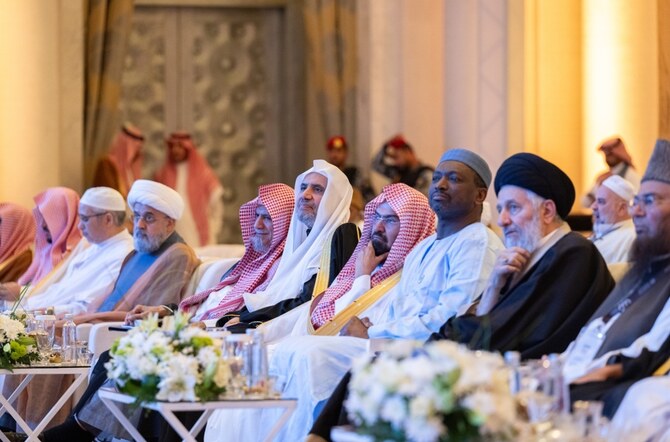
The second “Building Bridges Between Islamic Schools of Thought” international conference concluded in Makkah early on Saturday, with participants from more than 90 countries adopting the “Encyclopedia of Islamic Intellectual Harmony.”
Held under the patronage of King Salman bin Abdulaziz, the two-day conference gathered senior muftis, scholars, and thinkers who also approved the strategic and executive plan for the document “Building Bridges between Islamic Sects,” a media statement said on Saturday.
The conference was organized by the Muslim World League and held under the theme “Towards an Effective Islamic Alliance.”
The high-level session dedicated to the recitation of the conference’s final statement, which was issued at dawn on Saturday, was attended by the Secretary-General of the Muslim World League, and Chairman of the Muslim Scholars Association, Sheikh Dr. Mohamed bin Abdul Karim Al-Issa; Member of the Council of Experts for Leadership in Iran, Sheikh Ahmed Mobalghi; Adviser at the Royal Court in Saudi Arabia, Imam and Preacher of the Grand Mosque, Sheikh Dr. Saleh bin Abdullah bin Hamid; Head of Religious Affairs at the Grand Mosque and the Prophet’s Mosque, Imam and Preacher of the Grand Mosque, Sheikh Dr. Abdulrahman Al-Sudais; Secretary-General of the International Islamic Fiqh Academy of the Organization of Islamic Cooperation, Dr. Mustafa Qutb Sano; Member of the Council of Senior Scholars in Saudi Arabia, Dr. Youssef bin Mohamed bin Saeed; and the Mufti of Sidon in Lebanon, Sheikh Mohamed Osseiran.
The attendees witnessed the launch of the “Encyclopedia of Islamic Intellectual Harmony,” which was supervised by the Intellectual Protection Center at the Saudi Ministry of Defense, and was prepared by 60 scholars over about 1,800 pages.
The encyclopedia was refereed by the General Secretariat of the Council of Senior Scholars in Saudi Arabia, the Islamic Fiqh Academy, and the Supreme Council of the Muslim World League to be a roadmap for relations between Muslim sects.
Participants also decided in the final statement to consider the “Document on Building Bridges between Islamic Schools of Thought” with its 28 articles as the basis and starting point for the path of joint Islamic action “scientifically” and “intellectually,” with a view to strengthening brotherhood and solidarity among the peoples of Muslim nations.
The attendees further extended their sincere thanks to the leadership of the Kingdom for the great services they are providing to Islam and Muslims.
They also affirmed their pride in the comprehensive Islamic identity, and their supportive stance toward the steadfastness of the Palestinian people on their land, and their rejection of displacement and destruction projects.
The conference witnessed several sessions addressing developments in Palestine, Sudan, and Syria, as well as issues concerning Muslim minorities around the world.
Imagine owning a camera so powerful it can take freeze-frame photographs of a moving electron – an object traveling so fast it could circle the Earth many times in a matter of a second. Researchers at the University of Arizona have developed the world’s fastest electron microscope that can do just that.
They believe their work will lead to groundbreaking advancements in physics, chemistry, bioengineering, materials sciences and more.
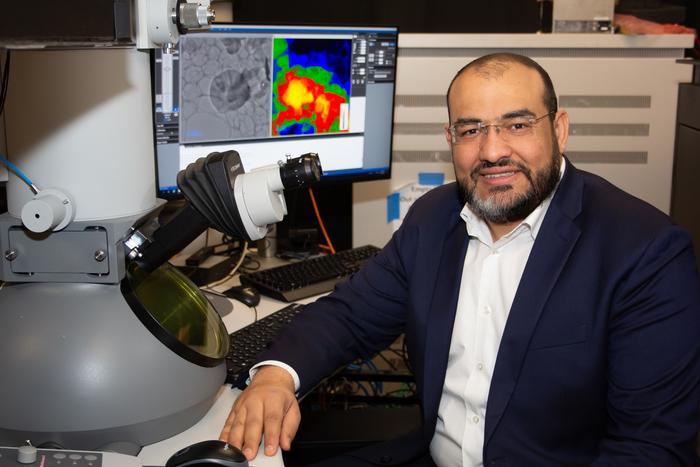
“When you get the latest version of a smartphone, it comes with a better camera,” said Mohammed Hassan, associate professor of physics and optical sciences. “This transmission electron microscope is like a very powerful camera in the latest version of smart phones; it allows us to take pictures of things we were not able to see before – like electrons. With this microscope, we hope the scientific community can understand the quantum physics behind how an electron behaves and how an electron moves.”
Hassan led a team of researchers in the departments of physics and optical sciences that published the research article “Attosecond electron microscopy and diffraction” in the Science Advances journal. Hassan worked alongside Nikolay Golubev, assistant professor of physics; Dandan Hui, co-lead author and former research associate in optics and physics who now works at the Xi’an Institute of Optics and Precision Mechanics, Chinese Academy of Sciences; Husain Alqattan, co-lead author, U of A alumnus and assistant professor of physics at Kuwait University; and Mohamed Sennary, a graduate student studying optics and physics.
A transmission electron microscope is a tool used by scientists and researchers to magnify objects up to millions of times their actual size in order to see details too small for a traditional light microscope to detect. Instead of using visible light, a transmission electron microscope directs beams of electrons through whatever sample is being studied. The interaction between the electrons and the sample is captured by lenses and detected by a camera sensor in order to generate detailed images of the sample.
Ultrafast electron microscopes using these principles were first developed in the 2000’s and use a laser to generate pulsed beams of electrons. This technique greatly increases a microscope’s temporal resolution – its ability to measure and observe changes in a sample over time. In these ultrafast microscopes, instead of relying on the speed of a camera’s shutter to dictate image quality, the resolution of a transmission electron microscope is determined by the duration of electron pulses.
The faster the pulse, the better the image.
Ultrafast electron microscopes previously operated by emitting a train of electron pulses at speeds of a few attoseconds. An attosecond is one quintillionth of a second. Pulses at these speeds create a series of images, like frames in a movie – but scientists were still missing the reactions and changes in an electron that takes place in between those frames as it evolves in real time. In order to see an electron frozen in place, U of A researchers, for the first time, generated a single attosecond electron pulse, which is as fast as electrons moves, thereby enhancing the microscope’s temporal resolution, like a high-speed camera capturing movements that would otherwise be invisible.
Hassan and his colleagues based their work on the Nobel Prize-winning accomplishments of Pierre Agostini, Ferenc Krausz and Anne L’Huilliere, who won the Novel Prize in Physics in 2023 after generating the first extreme ultraviolet radiation pulse so short it could be measured in attoseconds.
Using that work as a steppingstone, U of A researchers developed a microscope in which a powerful laser is split and converted into two parts – a very fast electron pulse and two ultra-short light pulses. The first light pulse, known as the pump pulse, feeds energy into a sample and causes electrons to move or undergo other rapid changes. The second light pulse, also called the “optical gating pulse” acts like a gate by creating a brief window of time in which the gated, single attosecond electron pulse is generated. The speed of the gating pulse therefore dictates the resolution of the image. By carefully synchronizing the two pulses, researchers control when the electron pulses probe the sample to observe ultrafast processes at the atomic level.
“The improvement of the temporal resolution inside of electron microscopes has been long anticipated and the focus of many research groups – because we all want to see the electron motion,” Hassan said. “These movements happen in attoseconds. But now, for the first time, we are able to attain attosecond temporal resolution with our electron transmission microscope – and we coined it ‘attomicroscopy.’ For the first time, we can see pieces of the electron in motion.”
source/content: eurekaalert.org / University of Arizona / (headline edited)
_________
Mohammed Hassan, associate professor of physics and optical sciences, let a group of researchers in developing the first transmission electron microscope powerful enough to capture images of electrons in motion.
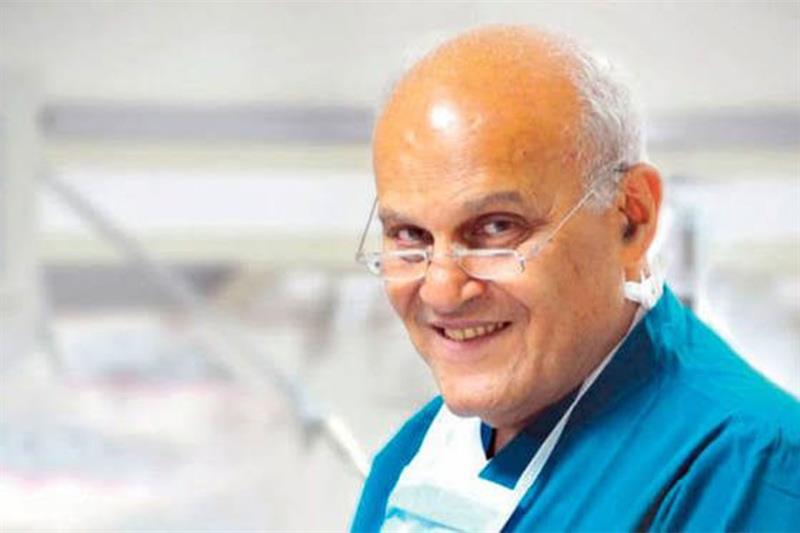
Making history again! Egyptian heart surgeon Sir Magdi Yacoub innovates valves that grow naturally in body.
This pioneering innovation envisions the development of biological heart valves that can grow and be accommodated naturally within the human body. This opens the door to a new era in heart disease treatment.
The prospect of heart valves naturally expanding within the body, a concept once confined to science fiction, is now on the brink of realization, thanks to the remarkable discovery spearheaded by renowned heart surgeon Professor Sir Magdi Yacoub.
While the initial study documenting this breakthrough was unveiled in Nature in 2023, recent media coverage has underscored its practical implications.
Esteemed publications like The Times have pinpointed this cutting-edge innovation’s profound impact on biomedical science and medical engineering. They have recognized it as a monumental leap in the realm of healthcare.
On Monday, Dr. Yacoub discussed the latest developments in this field with Egyptian talk show host Amr Adib.
He explained how his team has engineered temporary heart valve scaffolds composed of surgically implanted fibres into the body.
These scaffolds gradually disintegrate over time, leaving behind a living, fully functional valve crafted from the patient’s tissues, a testament to the marvels of modern medical ingenuity.
Jordanian academic Omar Yaghi, a chemistry professor at the University of California, Berkeley, has been awarded the 2024 Arab Genius Minds Award in the Natural Sciences category for his pioneering work in reticular chemistry.
Yaghi is celebrated for his transformative innovations in designing and synthesising metal-organic frameworks (MOFs) and covalent organic frameworks (COFs), the Jordan News Agency, Petra, reported.
These frameworks address critical global challenges in energy storage, water harvesting, and environmental sustainability.
His research portfolio includes over 300 peer-reviewed papers, which have collectively garnered more than 250,000 citations, underscoring the “far-reaching” impact of his work.
Since 2012, Yaghi has held the James and Neeltje Tretter Chair in Chemistry at UC Berkeley.
His contributions to reticular chemistry have “revolutionised” the ability to assemble molecular building blocks into highly porous structures with applications in gas storage, catalysis, and drug delivery, among others, yielding significant economic and environmental advancements.
The Arab Genius Minds Award, launched by Sheikh Mohammed Bin Rashid Al Maktoum, Vice President and Prime Minister of the UAE and Ruler of Dubai, honours achievements by Arab scientists and innovators across six key categories essential for the region’s developmental and cultural progress.
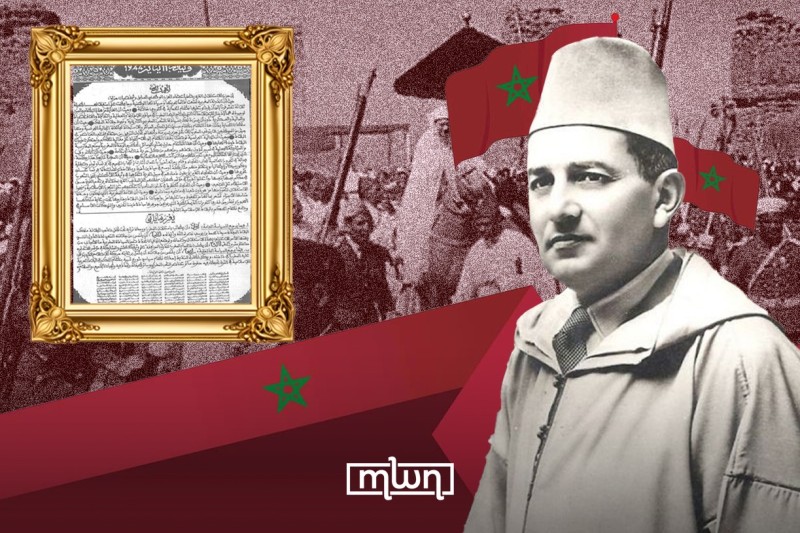
Sometimes history can feel like a dusty textbook. But this piece breaks down Morocco’s 1944 Independence Manifesto into bite-sized moments of midnight meetings, diplomatic chess moves, and revolution-sparking paper.
The battle for freedom began with a piece of paper that shook colonial foundations. January 11, 1944: Morocco’s Independence Manifesto landed on French authorities’ desks, marking what historians now call the turning point in North African colonial resistance.
Looking back 81 years later, this watershed document rewrote history – but the story behind it reveals an even more fascinating tale.
In 1944, Morocco was a nation carved up by colonial powers, with French controlling the center, Spain holding the north and south, and Tangier under international administration.
But beneath this fragmented surface, something revolutionary was brewing in secret midnight meetings at the Royal Palace.
“The time has come to demand independence, but it must be done under calm circumstances,” Sultan Mohammed V reportedly told national movement leaders in one of those clandestine gatherings.
These meetings, held in a special bunker built for protection against German air raids, saw the King and nationalist leaders swearing on the Quran to maintain secrecy and serve the nation.
The road to revolution
The manifesto didn’t appear out of thin air. The groundwork began with the massive uprising against the “discriminatory colonial decree” on May 16, 1930, which unified Moroccan resistance.
Then in 1934, reformists tested the waters with urgent demands for change, followed by more comprehensive reform requests in 1936.
That same year, the National Reform Party emerged in northern Morocco, followed by the National Action Bloc – both eventually banned by French authorities in March 1937.
By April 1937, the National Party formed to advance Moroccan demands, marking an escalation in organized resistance.
Here’s where it gets interesting: The independence ideal had been the secret oath of every nationalist group since the early days of colonial resistance. From traditional Zawiyas (religious brotherhoods) to modern political parties, independence remained the ultimate goal.
As one historical document notes, “Members secretly swore to work toward independence, even while publicly demanding reforms.”
External events accelerated independence demands. In 1941, the Allies published the Atlantic Charter, promising freedom to occupied nations and promoting Roosevelt’s principle of “people’s right to self-determination.”
The Moroccan National Movement seized this opportunity, sending telegrams to Allied nations demanding this principle be applied to Morocco.
Sultan Mohammed V played his diplomatic cards masterfully. After ascending to the throne on November 18, 1927, he consistently advocated for Morocco’s independence, defying colonial attempts to suppress Moroccan identity and sovereignty.
At the January 1943 Anfa Conference, while Allied leaders discussed war strategy, he reminded them of a pointed fact: Morocco had fought alongside them against Nazi Germany, so what about that independence they kept talking about? After all, wasn’t that what the war was supposedly about – freedom from foreign domination?
President Roosevelt’s response? He considered Morocco’s independence aspirations “reasonable and legitimate.”
Inside the manifesto
The document itself was revolutionary in both content and delivery. Its demands came in two parts, according to historical records.
First: “Complete independence under the leadership of His Majesty Sidi Mohammed Ben Youssef.”
Second: A sweeping vision for internal reforms, calling for “a consultative political system similar to those in Eastern Arab and Islamic countries.”
“The idea of independence shaped Morocco’s history since ancient times… In modern history, its aspiration for constitutional life took many forms. Modern parliamentary life had spread in major Western nations and America, then was adopted by some Eastern Islamic kingdoms. By the mid-nineteenth century, the call for democratic systems began taking various shapes,” writes historian Abdellah Hitout.
The nationalists strategically delivered copies not just to French authorities, but also to American and British consulates and Soviet representatives – a diplomatic masterstroke showing their global awareness.
The public response was electric. “By afternoon, the manifesto was being read aloud in public squares, markets, and mosques from Fes to Marrakech, from Tetouan to Tangier, from the Atlas Mountains to the Souss region,” historical accounts reveal.
People exchanged congratulations in Rabat, Salé, and Kenitra, while crowds gathered spontaneously across the country.
Beyond the document
What many don’t know: In the Spanish-controlled north, the National Reform Party took a bold step, forming a united front with the Moroccan Unity Party led by Mohammed al-Makki al-Nasiri.
This coalition, known as the National Front, formed on December 18, 1942. On February 11, 1943, they submitted their own independence manifesto, demanding “complete independence, territorial unity, and final abolition of the protectorate system.”
Three days later, they presented these demands to major power representatives in Tangier – technically making it the first international Moroccan independence demand.
The manifesto transformed Morocco’s resistance from reform-seeking to independence-demanding. “It reflected Moroccans’ awareness and maturity,” contemporary documents state, “proving their ability to determine their destiny and manage their affairs.”
The French response was swift and harsh – by January 28, 1944, French authorities arrested and exiled numerous nationalist leaders. This crackdown culminated in the events of January 29-31, 1944, when widespread protests erupted across Morocco.
The struggle intensified through the following years, leading to Sultan Mohammed V’s exile to Madagascar in 1953, which sparked increased resistance. The Sultan’s triumphant return in 1955 paved the way for negotiations that finally secured Morocco’s independence on March 2, 1956.
Today, 81 years later, that single document’s impact continues echoing through Morocco’s diplomatic achievements, territorial integrity efforts, and national identity. From a divided colony to an emerging regional power, Morocco’s journey began with those words penned in secret meetings, sworn to on the Quran, and delivered on a January morning that changed everything.
As Allal Al Fassi recalled after returning from exile: “Two days after my return from exile, His Majesty received me and spoke about the phase that followed the submission of the independence petition, and the tremendous efforts he had made.”
“He didn’t hide his readiness to sacrifice everything, even the throne, if it served the Moroccan cause. I left that audience completely certain that Morocco would achieve its goal as long as it had a great king like Sidi Mohammed at its helm.”
King Mohammed VI now continues the diplomatic vision his grandfather initiated. The anniversary now lands as Morocco’s racking up diplomatic wins on the Western Sahara front. The country now has 29 consulates in the southern provinces – 17 in Dakhla alone. The latest was Chad’s consulate, which opened on August 14, 2024.
The 1 Billion Followers Summit, the world’s first and largest event dedicated to shaping the content creator economy, organised by the UAE Government Media Office, will convene over 125 prominent CEOs from major global firms, as it returns for its third edition, organised by the UAE Government Media Office and hosted in the UAE from 11 to 13 January 2025 at Dubai’s Emirates Towers, DIFC and the Museum of the Future, under the theme “Content for Good.”
These CEOs will join a prestigious lineup of content creators and influencers from around the world, sharing their expertise during panels, interactive discussions, workshops and roundtables. These sessions will explore the latest trends in business, economy, investment, and content creation, empowering aspiring talents and fostering innovation within the industry.
The list of speakers at the third edition of the 1 Billion Followers Summit include Maye Musk, mother of Elon Musk, the world’s richest man. A 76-year-old millionaire and model, Musk’s career began in 1969 as a Miss South Africa finalist. She became a prominent model, representing numerous major brands, and continues to work today. Despite her busy schedule, she earned two degrees in dietetics and nutritional science and founded her own nutrition company.
Musk, who enjoys an active social media presence with over 3.35 million followers, will share her parenting journey at the 1 Billion Followers Summit, discussing how she raised three children, including Elon, and the parenting style that contributed to his success.
Leading Egyptian businessman and global entrepreneur Naguib Sawiris, who has over 10.6 million social media followers, will share his insights at the Summit. He leads global companies in various sectors, including mining, real estate, financial services, telecom, investment, and media. Naguib Sawiris is the owner of Orascom Telecom, launched the first mobile network in North Korea in 2008 and founded ONTV network. He also owns 88% of EuroNews shares, and is the founder of Egypt’s El Gouna Film Festival.
Andre Le Masurier, Senior Director and Global Head of brand and Creative at Skyscanner, will share his experience of over 20 years in brand vision, marketing and product design, as he held leadership roles in leading companies and contributed award-winning work that spanned major brands.
Andrew Graham, Head of Digital Corporate Advisory & Partnerships at the Creative Artists Agency (CAA), will share his experience in cultivating and monetizing digital-native talent, and his work in developing digital strategies for A-list celebrities.
Ben Relles, who leads Content Strategy at the Office of entrepreneur and LinkedIn Co-founder Reid Hoffman, will address the topic of AI and its utilization in social media content creation.
Cayman Rojas, Community Manager at LinkedIn, will discuss how he works with, and supports prominent voices on the platform. He works closely with influencers with an outsized impact on the community, from CEOs and content creators to musicians, actors, and celebrities.
Joining the speakers lineup is Chris Williams, who founded and leads Pocket Watch, a studio specializing in kids and family entertainment through digital-first content and lifestyle products. Williams will share his experience of 20 years in developing online video content.
Emma Harman, President, EMEA at Whalar Group, will share her experience of over 25 years blending entertainment, music, and social marketing, and applying this experience in brand-talent collaborations. Harman will also highlight the importance of impactful content and supporting the Creator growth Economy.
Grigory Lavrov, VP Marketing, Local Brands & Franchise Management in CEE & MENAT at Warner Bros. Discovery, is also speaking at the Summit. In addition to his publishing experience, Lavrov oversees brands like TLC, DMAX, and Fatafeat.
Kate Ward & Zach Honarvar will share their experience as Founders of Creator Now, a platform that aims to build a film school reimagined for creators to help the next generation turn their creative passions into a full-time career.
The list includes Lewis Crosbie, Co-founder and CEO of Komi, which is a software platform and “one-stop-shop” for creators, bringing features found on Shopify, Patreon, and Linktree into one place to help creators engage with their fans around the world.
Paul Bakaus, Executive Vice President of Product and Creator Tools at Spotter, will showcase the platform’s efforts in empowering content creators everywhere to accelerate their workflow and unlock their creative potential.
Also joining the lineup of prominent speakers at the Summit are Brittany Brown, Director of Digital Communications & Strategy at NASA, sharing insights into impactful visual storytelling; Aliana Miller, Director of Influencer Marketing at Roblox, discussing strategies for building authentic creator relationships and achieving record-breaking results; Elise Swopes, Sr. Adobe Express Evangelist & Community, offering her perspective on mobile creativity and the intersection of art and technology; Sherry Wong, CEO at Roster, focusing on building strong support teams for creators; Ahad Khan, CEO at Kajabi, sharing insights into scaling online businesses using creator-focused platforms; and Jonathan Chanti, President of Talent at Viral Nation & CGO of Viral Nation Group, who will share insights into leveraging data-driven strategies and emerging technologies for influencer collaborations and brand growth.
Beginning January 1, 2025, Algeria assumes the presidency of the United Nations Security Council for one month, marking a notable step in its diplomatic engagement. With its long-standing support for just causes in the Middle East and Africa, this presidency provides the country with a strategic opportunity to highlight crucial issues.
Clear Priorities for a Central Role As a non-permanent member of the Council for a year, Algeria is concentrating on major issues such as the situation in Palestine, the humanitarian crisis in Gaza, and security challenges in Africa, especially the fight against terrorism.
An open ministerial discussion on “The Situation in the Middle East, including the Palestinian Question” will bring together key international players, including UN Secretary-General Antonio Guterres.
Focus on Palestine: A Historic Priority The Palestinian issue, a cornerstone of Algeria’s diplomacy, is paramount to this presidency. Fifteen months after a deadly escalation in Gaza, Algeria reaffirms the need for an “immediate” and “permanent” ceasefire.
Algerian Ambassador to the UN, Amar Benjama, has been leading efforts since March 2024 to promote peace in the region. In parallel, Algeria is renewing its call for full Palestinian membership in the UN, aiming to realize the two-state solution and restore the legitimate rights of the Palestinian people.
Addressing Regional Crises In addition to Palestine, Algeria will focus on other major conflicts:
Syria: A session will address the political and humanitarian situation in this war-torn country. Yemen: UN Special Envoy Hans Grundberg will intervene to evaluate peace prospects and respond to the humanitarian emergency.
An African Priority: Fighting Terrorism On the African front, Algeria will convene a high-level meeting on counterterrorism, a growing threat to the stability of many states on the continent.
Ahmed Attaf, Minister of Foreign Affairs, will emphasise ways to strengthen international cooperation in addressing this scourge.
A Presidency Full of Hope Under the leadership of President Abdelmadjid Tebboune, Algeria aims to use this platform to promote peace, security, and justice in key regions.
With ambitious initiatives and active leadership, this presidency of the Security Council represents a unique opportunity for Algeria to defend the interests of Arab and African nations while consolidating its position on the global diplomatic stage.
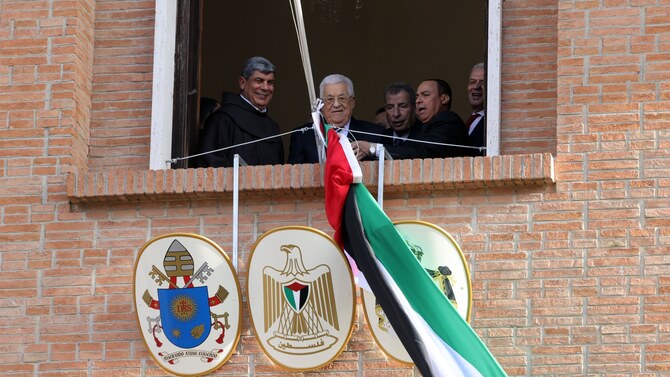
Palestinian President Mahmoud Abbas officially inaugurated the new building of Palestine’s Embassy in Vatican City on Thursday.
Abbas called on countries that have not yet recognized Palestine to do so, and to acknowledge the right of the Palestinian people to self-determination, the news and information agency WAFA reported.
After raising the Palestinian flag, Abbas spoke of efforts to gain full UN membership and achieve greater international recognition for Palestine.
The Vatican officially recognized the State of Palestine on May 13, 2015. On June 26 of the same year, the Vatican’s Holy See and the Palestinian Authority signed a comprehensive agreement for mutual recognition.
Armenia was the last country — the 149th — to recognize Palestine, on June 21, 2024. There are Palestinian embassies, consulates, and diplomatic missions in 110 countries.
The opening ceremony of the new embassy building was attended by several Palestinian Authority officials, including Ziad Abu Amr, the first deputy prime minister, and Issa Kassissieh, the Palestinian ambassador to the Vatican.
Earlier, Abbas had a private audience with Pope Francis and senior Vatican officials. He is also scheduled to meet Italian Prime Minister Giorgia Meloni and President Sergio Mattarella in Rome.
source/content: arabnews.com (headline edited)
_____________
Palestinian President Mahmoud Abbas officially inaugurated the new building of Palestine’s Embassy in Vatican City, Dec. 12 (WAFA)