Museum in São Paulo, Brazil Celebrates Stories of Arab Immigration

In a partnership with the Arab Brazilian Chamber, the Immigration Museum held an event celebrating the Day of the Arab Community in Brazil on Saturday (26). The program featured a project and a survey presentation and short-film screenings, as well as many tales of immigration.

On Saturday (26) the Immigration Museum in São Paulo was the venue for Arab descendants to look back at the stories of their ancestors. The museum held in partnership with the Arab Brazilian Chamber of Commerce (ABCC) an event celebrating the Day of the Arab Community in Brazil, whose official date is March 25.

The program featured the launch of a link that provides access to records of the history of Arab immigration, the presentation of data from a survey on the Arab presence in Brazil, and the screening of short films. The focus of the event was the recollection of life stories of parents and grandparents. They were present both in documentaries and speeches by the leaders and members of the projects presented.

Unlike the Europeans, who came to Brazil with government subsidies to work in farms, the Arabs moved here on their own, especially in search of opportunities. Most of them worked with commerce. The date of the Day of the Arab Community in Brazil was chosen after the name of the 25 de Março Street in São Paulo, where they established their first shops.

In the event at the museum, ABCC president Osmar Chohfi told a brief story about his two grandfathers who came to Brazil from Syria, where they were peddlers. One of them opened a store, while the other first worked as a traveling salesman. “All of us Syrian and Lebanese and Palestinian descendants have stories similar to my families’,” he said.

ABCC cultural director Silvia Antibas also recalled facts from her own family. Her father’s suitcase from when he was a traveling salesman had been donated to the Immigration Museum. She said that upon arrival, an immigrant would receive instructions on the local currency and goods to sell. “My father did that when he was seven. He was told about the currency and set off to sell balloons. He had landed in Niterói,” she said.

The coordinator of the Digitization Project of the Memory of Arab Immigration in Brazil, Heloisa Dib, called the attendees to help keep the stories of immigration alive by preserving pictures, documents and journals. The materials contain information on how the immigrants traveled, how they lived in their countries of origin, what they did back there. “We only know what they told us, and that was not much,” she says.

The attendees got to learn the size of the Arab community in Brazil. ABCC and H2R Pesquisas Avançadas director Alessandra Frisso said they account for 6% of the Brazilian population and amount to 12 million people. The data comes from a survey carried out by H2R and research firm IBOPE Inteligência commissioned by the ABCC. The Arabs and descendants play a leading role in the Brazilian society, the survey says. Amongst the leaders of associations in Brazil, the Arabs account for 26%.

Launch of project

The event marked the official launch of the access to 100,000 pieces digitized by the Digitization Project of Arab Immigration in Brazil. They are pictures and journal pages created by the first Arab immigrants to Brazil that were digitized by the project. Researchers and interested parties can access the collection catalog on this link and request the materials by sending an email to reference@usek.edu.lb.

The initiative is part of a project by the Holy Spirit University of Kaslik (USEK) in Lebanon aimed at preserving the memory of Arab immigration in Latin America through the Latin American Studies and Cultures Center (CECAL) directed by historian Roberto Khatlab. In Brazil, USEK has partnered up with the ABCC to take the project forward. The access to the collection of materials from other countries in Latin America is open, too.

Films

In the short-film screenings the attendees got to know more about the history of Arab immigration in Brazil. The films brought stories about Arab ancestors and the history of immigration. The films were selected in a contest held by the ABCC. On Sunday, as part of the celebration, the play Cartas libanesas [Lebanese Letters] will stream on the YouTube channel of the Immigration Museum.

Immigration Museum

Immigration Museum executive director Alessandra Almeida said she hopes that the partnership with the ABCC in the celebrations of the Day of the Arab Community in Brazil goes on. “I hope that in the coming years we continue to host this event, given the celebration that the Arabs have given to the development of Brazil,” she said.

The Immigration Museum’s Research, Preservation and Reference Center manager Henrique Trindade Abreu said that the Arabs weren’t so present at the Immigrant Inn – a building in São Paulo that used to welcome the immigrants to São Paulo and now hosts the museum – but hundreds of them stayed there.

Translated by Guilherme Miranda

source/contents: anba.com.br (edited)

___________
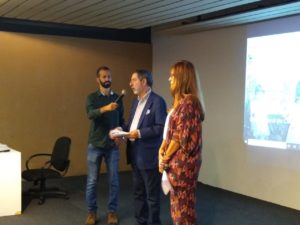
Osmar Chohfi, President, ABCC (C) and representatives of the museum

__________

BRAZIL

Ghalia Benali: Tunisian Singer, Writer, Graphic Designer & Actress

An electrifying voice.

Ghalia Benali is a Tunisian poet, writer, and songwriter best known for dabbling in multiple music genres, multiculturalism, and defining contemporary Arabic music. She is also an actress and a graphic designer, a talent that goes hand-in-hand with her literature works such as “Romeo and Leila.”

Although born in Brussels in 1968, Benali was raised in Zarzis, in southeastern Tunisia, where she got her early exposure to songs and dances, with her mother being her personal music teacher. Growing up, she was exposed to the world of Egyptian and Indian films, as well as the voices of Arab singers such as Adib AlDayikh, Oum Kalthoum, and Sabah Fakhri, all of which influenced her multicultural style of singing growing up.

By the age of 19, Benali returned to Belgium to study graphic design at the Institut Saint-Luc of Graphic Arts where she would begin to sing and perform professionally. Her early performances would include collaborations with live bands and fellow musicians in 1993, a tour in Portugal in 1994, and a live performance with the band “Timna,” in Brussels, in 1999.

From 2001, she released a number of loved albums such as “Wild Harissa,” “Nada,” and “Romeo and Leila.” However, the very album that put her on the map was “Ghalia Benali Sings Umm Kulthum.” In fact, it was a smashing hit, earning her the title Ambassador of Arab Culture in Europe in 2009. By the following year, Benali would be featured on television across several Arab countries.

Benali is also renowned for her poetry, some of which centered around works by famous poets, Sufism, and Persian mystics. She is also known for her acting, winning an award from Women for Africa Foundation for her role in “As I Open My Eyes” in 2016, and nominated by Les Magrittes du Cinema for “Best Hope Actress” in 2017. She had played recent roles in the films “Fatwa,” and “A Tale of Love and Desire.”

Finally, Benali is credited for launching the Brussels-based MWSOUL Art Foundation. Having had to deal with unorganized management, she took it upon herself to launch her very own platform, a non-profit organization that brings awareness through art. You can follow them on Instagram for featured artworks and photography.

source/content: abouther.com

_________

_______________________

BELGIAN / TUNISIAN

Faouzi Annajah: Moroccan-French Businessman Behind Hydrogen SUV NamX

NamX’s prototype was unveiled earlier this week. Yet the car will not be available in the market until 2025.

Morocco-French businessman Faouzi Annajah, founder of NamX, has co-created the world’s first car partially powered by a patented removable hydrogen tank system.

NamX’s patented technology consists of a fixed hydrogen tank and six removable capsules. 

Set to be released in 2025, NamX responds to the rising demand for hydrogen and hybrid cars amid an increasingly prevailing shift towards clean energy sources and decarbonization worldwide. 

“Our double ambition is to become a new reference in the world of zero-emission cars, and to constantly explore new territories to facilitate mobility of our consumers,” Faouzi ANNAJAH, Founder and President of NAMX said in a press release. “ NAMX is a collective project built with the best industrial and technical partners in Europe and Africa.”

The European-African project gathered the support of renowned stakeholders on both continents including Ibrahima Sissoko, founder of over 30 companies, Pierre-Yves Geels, former VP strategy of Matra automotive, Alain Diboine, former Director of the R&D Division at Renault, Mustapha Mokass, clean energy and carbon finance expert, and Raphaël Schoetgen, former Chairman of Hydrogen Europe and international hydrogen expert. 

NamX was co-designed by Thomas de Lussac, co-founder of NamX, and Kevin Rice, Chief Creative Officer of Italian car design firm Pininfarina. Inspired by science fiction and American designs of the 50s and 60s, Lussac “chose to give the vehicle’s shape the cutting edge of the coming era.”

NamX is the first car designed by Pininfarina that was created from the back to the front with an eye-catching feature, an X-shaped chassis. 

Commenting on the hydrogen SUV, Paolo Pininfarina, President of the Italian design firm, said that “the NAMX HUV [hybrid utility vehicle] is simply at the heart of our DNA: inventing the best driving experience to infinite mobility, with style.” 

Upon its release in the final quarter of 2025, NamX will be marketed in two different versions including an entry-level rear-wheel drive with a regulated top speed of 200 km/h and acceleration from 0 to 100 km/h in 6.5 seconds. The second option provides a four-wheel drive with a regulated top speed of 250 km/h and acceleration from 0 to 100 km/h in 4.5 seconds. 

The two versions will have a price tag ranging between €65,000 and €95,000. 

The NamX prototype was first unveiled on May 11 in the Pininfarina headquarters in Cambiano. The public will have a glimpse of NamX at the upcoming Paris Motor Show scheduled between October  17 and 23, 2022. 

As Annajah’s home country, Morocco might host the production operations of NamX, the founder told a Moroccan news outlet, promising future announcements on the matter. 

As a leading African automotive hub, Morocco has attracted renowned international automotive manufacturers including ones interested in developing hybrid and electric cars. 

source/content: moroccoworldnews.com

________

Faouzi Annajah: Moroccan-French Businessman Behind Hydrogen SUV NamX

________________________

FRENCH / MOROCCAN

A Lebanese Online Archive Chronicles Arab Immigration to Latin America

  • Most of the migration occurred in the final decades of the 19th century and the first half of the 20th
  • Project of Holy Spirit University of Kaslik in Jounieh highlights individual journeys of the Arab pioneers

Sao Paulo, Brazil:

Although an estimated 18 million Latin Americans can trace their ancestry to the Arab region, little effort has been made to chronicle and conserve the writings, photographs and news clippings that document the history of their migration and settlement — until now.

Most of the Arabs who moved to Latin America did so in the final decades of the 19th century and the first half of the 20th, with the majority of them traveling from Syria and Lebanon in search of fortune and a fresh start far from the Ottoman Empire.

To collect and highlight the individual journeys of these Arab pioneers and their contribution to the New World, an archive dedicated to telling their stories has been created by the Holy Spirit University of Kaslik, also known as USEK, a private, not-for-profit Catholic university in Jounieh, Lebanon.

Inaugurated at the end of March this year, the collection currently includes about 200,000 pages from Arab newspapers and magazines, stacks of photographs, and other illuminating documents that help shed light on the diaspora’s presence in Latin America.

Brazilian-born Roberto Khatlab, director of USEK’s Latin American Studies and Cultures Center, or CECAL for short, conceived the project after spending several years working in the cultural department of the Brazilian embassy in Beirut and conducting independent research on Lebanese migration to Brazil.

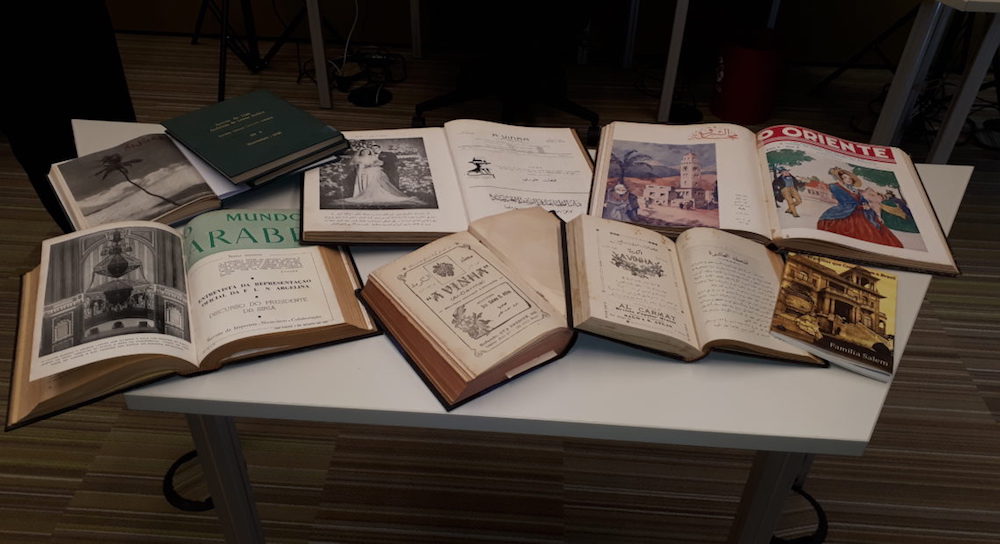
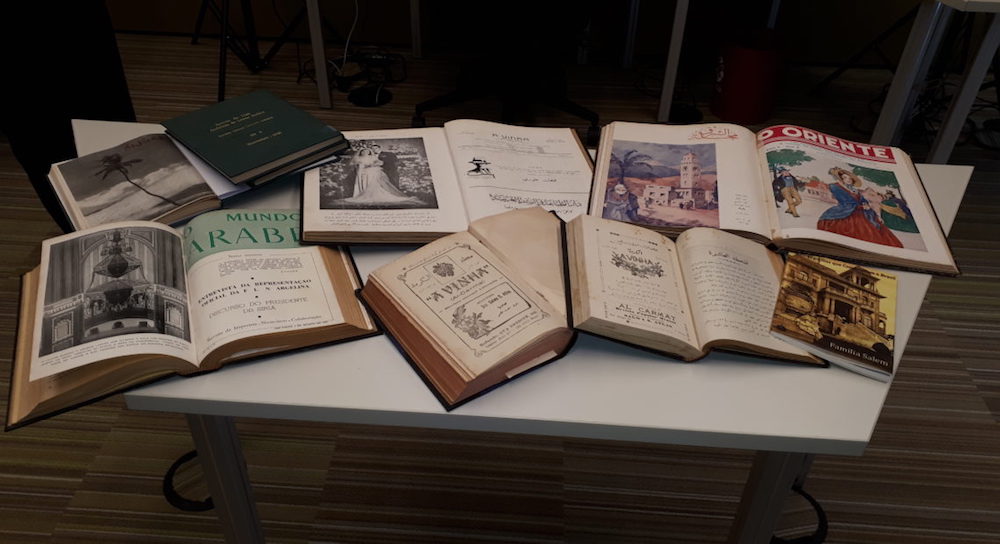
Some of the documents that have been digitized and now are part of USEK’s archive, including magazines Oriente and A Vinha. (Arab Brazilian Chamber of Commerce (CCAB) / USEK / Supplied)

“Over the years, I gathered lots of documents concerning that history,” he told Arab News.

During a trip to Latin America a few years ago, Khatlab realized a wealth of important historical material was at risk of being lost unless it could be properly collected and collated.

“Over time, such documents end up in the hands of grandchildren or great-grandchildren who do not speak Arabic and do not know what to do with them,” he said.

As a result, many people end up throwing away family collections or donating them to local libraries, which are not always equipped or qualified to adequately catalog them.

In addition, newspapers produced by early Arab immigrants were often printed on cheap, poor-quality paper that does not always stand the test of time, and so surviving copies can be extremely fragile.

“I have received 100-year-old newspapers which literally disintegrated as we tried to take them out of the envelope,” said Khatlab.

Syrian-Lebanese immigrants created the first Arabic-language Latin American newspaper, called Al-Fayha, in 1893 in the Brazilian city of Campinas.

In the local Portuguese language, its name was Mundo Largo, which translates as Wide World. As the author of several books about Brazil’s historical relationships with Lebanon and the wider Arab world, Khatlab recognizes the value of such historical documents for academic study and posterity.

“Under the Ottoman Empire, many intellectuals were not able to publish their ideas in the Arab world at the end of the 19th century,” said Khatlab. “In the nascent Arab press in countries like Brazil and Argentina, they found the space they needed.

“Many times, the articles published in the Arab press in Latin America by such thinkers were sent back to the Arab world and disseminated there in intellectual and political circles.”

Most of the early Arabic newspapers in Latin America were produced by Syrian or Lebanese migrants but there were also a number of Egyptian publications. Over the years, the Arab community launched newspapers that reflected a variety of viewpoints based around political ideologies, religious creeds, social clubs and the arts.

“Many poets and writers published works in the Latin American Arab press,” said Khatlab. “Some of them were renowned in the Arab world, while others disappeared. But their production and the ideas conveyed in their texts have great importance to Arabs, even now.”

The archive has attracted the support of institutions across Latin America that have connections to the Arab community and they have provided small teams who are helping to collect and digitize materials, using equipment donated by USEK.

_________________

IN NUMBERS

Estimated Arab population by country

Brazil: 7-12 million

Argentina: 4.5 million

Venezuela: 1.6 million

Mexico: 1.5 million

Colombia: 1.5 million

Chile: 800,000

Source: Atlantic Council

_____________________

One such institution is the Arab Brazilian Chamber of Commerce, or CCAB for short, which helped to collate full collections of magazines, including Revista Oriente (Orient Magazine), one of the most prominent publications produced by the Arab diaspora in Brazil during the 20th century.

“Different libraries and institutions had partial collections of Oriente,” Silvia Antibas, the director of CCAB’s cultural department, told Arab News. “Now, we managed to gather and digitize all of them for the first time.”

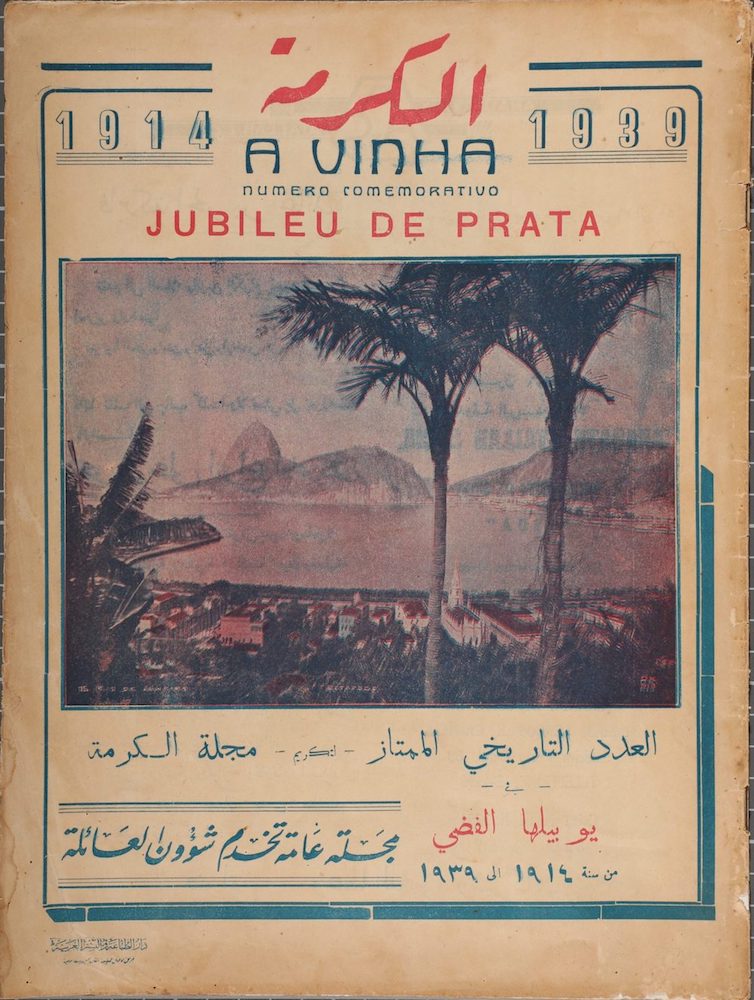
The Brazilian team also managed to assemble a collection of the magazine Al-Carmat, known in Portuguese as A Vinha (The Vineyard). It was edited for many years by a female Syrian-Brazilian author called Salwa Atlas.

The CCAB has also contributed to the archive an illuminating collection of photographs that provide a window on the social and domestic lives of the diaspora through the years.

“The pictures we collected show not only the community’s social events but also the architecture of houses, the fashion trends of those years, and how immigrants financially progressed and integrated into Brazilian society over time,” said Antibas.

The cover of one edition of A Vinha, published for years by Syrian-Brazilian intellectual Salwa Atlas, who was a pioneer among female intellectuals of the Syrian-Lebanese community in Brazil. (Clube Homs / USEK / Supplied)

The Jafet family — who ranked among the most illustrious families in Sao Paulo in the early 20th century — contributed a superb collection of photographs depicting the palatial homes built around that time by the city’s industrial bourgeoisie.

“Benjamin Jafet, my great-grandfather, came to Brazil in 1890 and worked as a ‘mascate’ (a word used in Brazil for an Arab door-to-door salesmen) for a few years in the countryside until he founded his first shop in downtown Sao Paulo,” Arthur Jafet, a 38-year-old lawyer and businessman, told Arab News.

Over the years, Benjamin and his brothers built one of Brazil’s greatest textile manufacturers and became wealthy leaders of the Lebanese community in the country.

As important philanthropists in Sao Paulo, the Jafets helped to fund not only Arab institutions such as the local Orthodox cathedral, the Syrian-Lebanese Hospital, and the Mount Lebanon Club, but also publications such as Revista Oriente.

“Their small palaces pointed to a rather European taste, with visible influences of the French neoclassical style but also oriental aspects,” said Jafet.

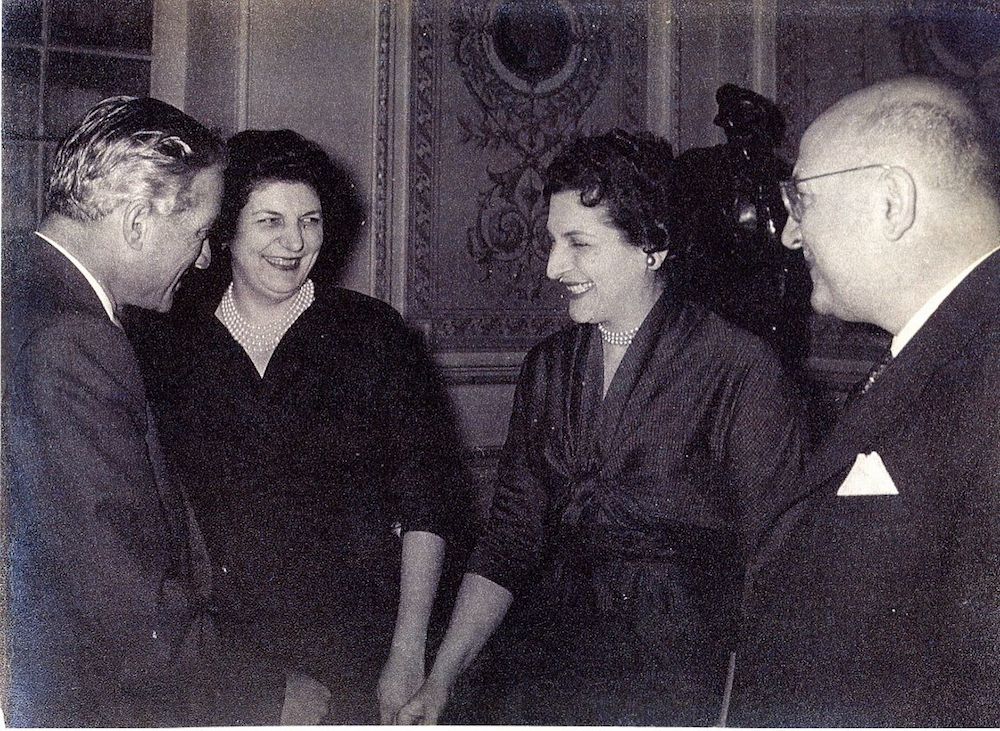
One of the photos in the collection shows Camille Chamoun, Lebanon’s president between 1952 and 1958, staying at one of the Jafet family’s opulent homes during a trip to Brazil.

As director of the Institute of Arab Culture in Sao Paulo and an adviser to the CCAB, Jafet is part of a new generation of Arab Latin Americans taking a renewed interest in their cultural origins.

Paulo Kehdi is the executive director of Chuf magazine, the in-house publication of the Mount Lebanon Club. He is among a number of Lebanese community leaders who launched Lebanity, a movement dedicated to encouraging Lebanese-Brazilians to rediscover their cultural roots.

“There has been a deliberate effort to reconnect Lebanese-Brazilians to their motherland, incentivizing them to obtain Lebanese citizenship, to visit the country and to help it during donation campaigns,” he told Arab News.

Lebanon’s President Camille Chamoun with members of the Jafet family in São Paulo. He visited Brazil in 1954 and stayed at one of the family’s palaces. (Arthur Jafet / Supplied)

The situation is similar in Argentina, which is home to an estimated 3 million people with Syrian or Lebanese roots.

For several years, Ninawa Daher, a journalist of Lebanese descent, hosted a TV show in the country devoted to reviving the interest among younger generations in their Lebanese origins. After her death in a car accident at the age of only 31 in 2011, her mother, Alicia, created the Ninawa Daher Foundation to continue her legacy, and it has partnered with USEK for the archive project.

“With Ninawa’s contacts, within a very short time we had already been able to obtain access to several wonderful collections of the community in Argentina,” Alicia Daher told Arab News.

The team has gathered stacks of newspapers, photographs and other rare materials, including two books written and autographed by renowned Lebanese-American writer, poet and visual artist Khalil Gibran.

“The Syrian and Lebanese people had a tremendous cultural impact in Argentina,” said Daher. “Now, more and more people and institutions are approaching us in order to offer materials about the immigration.”

In Beirut, meanwhile, Khatlab is hopeful the archive will continue to grow as the work on it expands to other Latin American countries and to include other types of documents, such as letters, film footage and even passenger manifests of the vessels that brought Arabs to the region.

Access to the archive is free and it is open to the general public.

source/content: arabnews.com

______________

Some of the documents that have been digitized and now are part of USEK’s archive, including magazines Oriente and A Vinha. (Arab Brazilian Chamber of Commerce (CCAB) / USEK / Supplied)

________________________________________

LEBANESE / LATIN AMERICAN ARABS

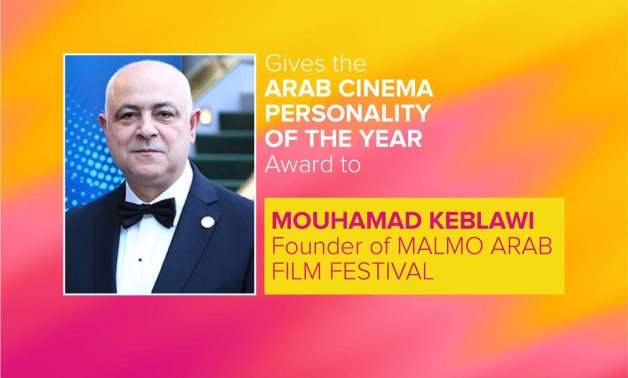
Arab Cinema Center Grants Mouhamad Keblawi the ‘Arab Cinema Personality of the Year Award’

During the 72nd Berlin International Film Festival (Berlinale), Arab Cinema Center (ACC) granted Mouhamad Keblawi, Founder and Head of Malmö Arab Film Festival in Sweden, the Arab Cinema Personality of the year award.

This comes in recognition of his contribution and immense support to Arab Cinema through the festival, with an aim to promote Arab cinema in Sweden and Scandinavia.

Mohamed Keblawi is a Swedish-Palestinian director and producer, who has worked in television and documentary film production.

In 2011, he founded the Malmö Arab Film Festival in Sweden, which is set on encouraging Arab filmmakers to find more opportunities to tell their stories, and support Arab film projects.

The festival screened hundreds of Arab films since its establishment, including Oscar-nominated films; Director Naji Abu Nowar’s Jordanian film Theeb, Kaouther Ben Hania’s Tunisian film The Man Who Sold His Skin, and Palestinian short film The Present by Farah Nabulsi.

The festival also featured several award-winning Arab films that have been to numerous international festivals; Wajib by director Annemarie Jacir, EXT. Night by Ahmad Abdalla, A Son by Mehdi Barsaoui, Gaza Mon Amour by Arab and Tarzan Nasser, and Ali, the Goat and Ibrahim by Sherif Elbendary, among others.

Mohamed Keblawi also launched MAFF Market Forum as part of the festival with the aim of supporting Arab film projects and helping them come to light. During its latest edition, the Forum presented monetary prizes worth of $ 250,000. Ever since it was created, this annual prize supported almost 100 projects including Costa Brava, Lebanon by Mounia Akl, Beauty and the Dogs by Kaouther Ben Hania, Captains of Zaatari by Ali El Arabi, 200 Meters by Ameen Nayfeh,

Our River…Our Sky by Maysoon Pachachi, Communion by Nejib Belkadhi, Khartoum Offside by Marwa Zein, and Tiny Souls by Dina Naser.

Keblawi is also the founder of Arab Cinema in Sweden, a company that works on the distribution of Arab films in Sweden. These films include Mohamed Jabarah Al-Daradji’s Jordanian film The Journey, Sophie Boutros’ Lebanese film Solitaire, Mohamed Khan’s Egyptian film Factory Girl, and Khadija al-Salami’s Yemeni film I Am Nojoom, Age 10 and Divorced.

Most recently, Mohamed Keblawi received the City of Malmö’s Grant for Art and Culture for the year 2021. This is an annual grant allocated to twelve creators in the fields of music, theater, cinema and literature. From 2015 to 2017, he was a member of the documentary film nomination committee for the Guldbagge Awards, one that is considered as Sweden’s Oscars.“What Keblawi did by establishing a main venue for Arab cinema in Sweden, is certainly a first of its kind. Through which, thanks to his tireless efforts, he was able to develop a platform for filmmakers in Sweden and Europe, and so Arab filmmakers became quite familiar faces in Sweden. He was able to create an exceptional fan base for a festival that caters for Arab films in Europe. We are honored to grant him the prize, as he continues to expand his horizons each year, whether through the festival or through his distribution and production firms.” commented Alaa Karkouti and Maher Diab, the Co-founders of Arab Cinema Center.”The prize crowns many years of hard work to try to grant the Arab film a chance to be acknowledged in places that it has never been before,” Keblawi said after announcement of the prize. “Things like the release of an Arab picture in Swedish theaters or Sweden’s funding of an Arab film were fictitious at the beginning of the millennium, this is an achievement which I am proud of. I’d like to thank everyone who helped me reach my goal. I’d also like to thank the Arab Cinema Center for this award, which I’m very proud of.

The Arab Cinema Personality of The Year award is part of its strategy of promoting the Arab film industry internationally and supporting Arab filmmakers.

During the last years, Arab Cinema Center (ACC) presented the Arab Cinema Personality of The Year award to Chiraz Latiri, former Tunisian Minister of Cultural Affairs, Screenwriter and Producer Mohamed Hefzy, the President of the Cairo International Film Festival (CIFF), Abdulhamid Juma, Chairman of the Dubai International Film Festival (DIFF), and Masoud Amralla, Artistic Director of DIFF.

Arab Cinema Center (ACC), founded in 2015 by MAD Solutions, is a non-profit organization incorporated in Amsterdam. ACC also provides networking opportunities with representatives of companies and institutions specialized in co-production and international distribution, among others. ACC’s activities vary between film markets, stands,pavilions, networking sessions, one-on-one meetings bringing together Arab and foreign filmmakers, welcome parties, and meetings with international organizations and festivals.

Also, the activities include the issuance of Arab Cinema Magazine to be distributed at the leading international film festivals and markets.  Furthermore, newsletter subscription is now available on ACC’s website, allowing users to obtain digital copies of Arab Cinema Magazine, as well as news on ACC’s activities, notifications of application dates for grants, festivals and offers from educational and training institutions, updates on Arab films participating at festivals, exclusive news on the Arab Cinema LAB, and highlights from ACC’s partners and their future projects.

Arab Cinema Center has launched the Arab Cinema Directory in English language on its website, which is a comprehensive cinema directory that provides multiple tools in one place for the first time in order to enhance easy access to information on cinema to film makers inside and outside the Arab world. It also aims to facilitate the connection between the Arab film and Filmmakers and the International market. It also helps International Filmmakers to easily identify the Arab Cinema Productions.

source/content: egypttoday.com

_________

________________________

SWEDEN / PALESTINE

Moroccan Origin Nora Bloza Entrepreneur of Saudi Dates from Madinah , Makes them Available in Hesse, Germany

Nora Bloza, Founder & CEO – Nakheel Fruits gmbh, Germany

 Dates have always been omnipresent in Nora Blouza’s life. The 37-year-old is from southern Morocco, where her late grandfather once owned a date plantation. “Dates would always be in the house,” she told Arab News.

When Blouza’s Dutch-Moroccan husband came to Germany due to his work in 2018, she followed him with their three children after having lived in the Netherlands for 17 years.

“Originally we planned to just stay for three years,” she said. But the coronavirus pandemic thwarted the family’s plans.

It was during Ramadan last year that her daughter brought up a topic that gave Blouza a new idea. “She reminded me of the high amounts of dates people consume, especially during Ramadan, of the many different types and tastes.”

It was then that Blouza had the idea of launching her own date business in Germany and importing large amounts. Although she was raised on dates, the business itself was something new to her.

As Blouza is Moroccan, her home country and its neighbors Algeria and Tunisia were the first that came to mind as potential suppliers, but none of them met her criteria.

“Saudi Arabia has many different and often unique types of dates,” she said. “Ajwa, for example, is something that only grows in the city of Madinah.”

Blouza undertook research and found a supplier that suited her ideas best: Nakheel Alya, a company in Madinah.

Despite that, it “met my criteria,” said Blouza, who fulfilled her dream and launched her business, Nakheel Fruits, in August 2021.

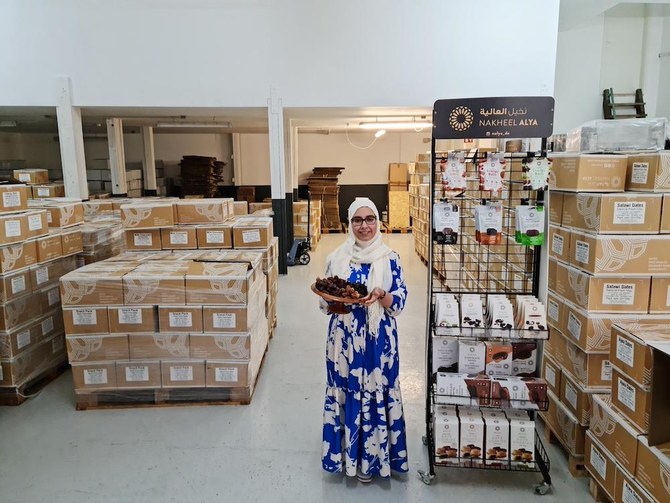
Boxes of different products such as natural dates, date cookies, and dates covered in chocolate and filled with almonds or walnuts, fill the company’s warehouse in Eppstein, a town in the state of Hesse at the edge of the Taunus mountains.

“We mostly supply supermarkets and individual clients that order our products via our website,” said Blouza

While individual clients are from all over Germany, the supermarkets are mostly from Hesse, with demand rising during Ramadan.

She hopes that her business will grow and expand nationwide. “My dream is that we will develop further and that German customers will discover the quality and diversity of Saudi dates and date products.”

www.nalya.de

source/content: arabnews.com (edited)

___________

When Nora Blouza’s Dutch-Moroccan husband came to Germany due to his work in 2018, she followed him with their three children. (Supplied)

___________________________________________

GERMAN / NETHERLANDS / MOROCCAN

Somali American Fartun Osman Awarded ‘2022 Legacy Award’ by NCAA, USA

Fartun Osman, the CEO and head coach of Girls Rock, an all-girls club founded in 2004 that promotes sport for Somali and Muslim girls, will be honoured by the NCAA with the 2022 Legacy Award for her local activism in the Minneapolis area.

The award ceremony is part of the NCAA Men’s and Women’s Final Four festivities.

Osman is one of eight community leaders in the US to be recognized for her contributions to female athletics. She will be awarded a plaque during the semifinal games at the Women’s Final Four in Minneapolis on April 1.

Born in Somalia, Fartun Osman was a rare female basketball player in her native country. She was always active in sports and said that her first love was soccer but pivoted to basketball because of the lack of opportunities for women in the sport.

Osman traveled to other countries as part of the women’s Somali national basketball team as a teenager.

Following the breakout of the civil war in the early 1990s, Fartun emigrated to the US. She quickly discovered similar barriers to entry for Somali and Muslim girls into sports and made it her mission to make sports more equitable for girls who look like her.

She fought hard for the rights of her all-Muslim girl soccer teams to play with their hijabs, and her Girls Rock initiative has coached and mentored over 1,000 girls.

“The 2022 NCAA Legacy honorees are an impressive slate of community leaders and citizens who, through their daily actions, have shown their care and concern for their neighbors,” said Felicia Martin, NCAA senior vice president of inclusion, education and community engagement. 

source/content: hiiraan.com (edited)

___________

_______________________

AMERICAN / SOMALI

Winners of 2022 King Faisal Prize Awards Honored in Riyadh : March 2022

Awards made for services to Islam, Arabic language, literature, medicine, and science.

The winners of this year’s King Faisal Prize on Tuesday received their awards at a glittering ceremony staged in Riyadh.

The annual gongs — held under the auspices of King Salman — are the most prestigious in the Muslim world and recognize outstanding achievement in services to Islam, Islamic studies, Arabic language and literature, medicine, and science.

The service to Islam prize was jointly awarded to former Tanzanian President Ali Hassan Mwinyi and Egyptian scholar Prof. Hassan Mahmoud Al-Shafei.

The Arabic language and literature award went to Prof. Suzanne Stetkevych and Prof. Muhsin Al-Musawi from the US.

American Prof. David Liu secured the medicine prize while the science accolade was shared by Prof. Martin Hairer of the UK and Prof. Nader Masmoudi of Tunisia.

The Islamic studies prize, that this year focused on the Islamic heritage of Al-Andalus, was withheld because the nominated works did not meet the necessary criteria.

Mwinyi was honored for actively participating in Islamic advocacy and promoting religious tolerance. He established Islamic schools and translated many resources and references in hadith, jurisprudence, and the Prophet Mohammad’s biography into Swahili, the language spoken by millions of people in East Africa.

Al-Shafei, who was president of the Academy of the Arabic Language in Cairo from 2012 to 2020, held several academic positions and established a series of institutes concerned with Al-Azhar. He also contributed to the establishment of the International Islamic University in the Pakistani capital Islamabad.

The Arabic language and literature prize was jointly presented to Stetkevych, chair of the department of Arabic and Islamic studies at Georgetown University, and Al-Musawi, professor of Arabic and comparative literary studies at Columbia University.

Stetkevych’s extensive research and numerous works have analyzed Arabic literature with unmatched depth from the pre-Islamic period to the Nahda/revivalist period. Her research approach, which is characterized by its application of varied methodologies, resulted in the renewal of the critical perspective and methods of studying classical Arabic poetry.

The research and studies of literary critic and novelist Al-Musawi have had a great impact on Arabic studies students and researchers in the Arab world and the West, through his distinctive methods of presentation, analysis, critical interpretation, and openness to Arab and international creative texts in prose and poetry.

Meanwhile, the medicine prize concentrated on gene-editing technologies. Its winner Liu, director of the Merkin Institute for Transformative Technologies in Healthcare, invented the first so-called base editor to make alterations on DNA and genes by replacing letters in the DNA base.

Hairer, chair in probability and stochastic analysis at Imperial College’s mathematics department, was one of the science prize recipients. His work has been in the general area of probability theory with a focus on the analysis of stochastic partial differential equations. He recently developed the theory of regularity structures which gave a precise mathematical meaning to several equations that were previously outside the scope of mathematical analysis.

The other joint science award winner, Masmoudi, a professor of mathematics at the New York University of Abu Dhabi, unlocked the mystery surrounding many physics problems which have remained unsolved for centuries.

He found a flaw in (Leonhard) Euler’s mathematical equations, which for more than two centuries had described the motions of fluids under any circumstance. Masmoudi discovered that the equations did not apply to all circumstances, as previously thought, and his findings helped to solve a raft of conundrums related to fluid-modeling, such as weather predictions.

Each winner received a $200,000 prize, a 24-carat gold medal, and a certificate written in Arabic calligraphy signed by the Chairman of the prize board, Prince Khalid Al-Faisal.

source/content : arabnews.com (edited)

_____________

Winners of 2022 King Faisal Prize awards honored in Riyadh. (SPA)

_________________________________________________

SAUDI ARABIA / EGYPT / TANZANIA / TUNISIA

Inaugural ‘Time 100 Impact Awards’ held at Dubai’s Museum of the Future

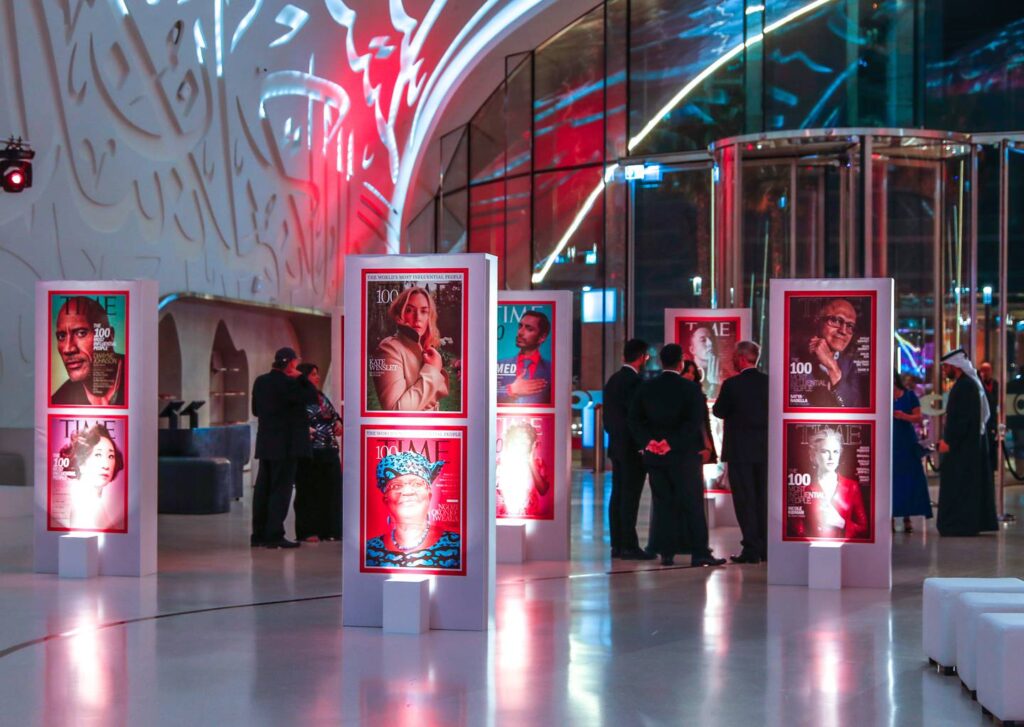
The inaugural Time 100 Gala and Impact Awards was held at Dubai’s Museum of the Future . The ceremony was the first major event to take place at the museum since its opening on February 22.

The landmark was lit with a touch of Time’s red as regional leaders and cultural figures gathered alongside members of the global Time 100 community.

Notable personalities who attended the red carpet event included civil rights activist Amanda Nguyen, who was named in Time’s first Women of the Year list this month; Omotola Jalade Ekeinde, Nigerian singer, actress and philanthropist; French-Tunisian contemporary artist el Saeed; US model Tyra Banks; and Sheikha Lubna Al Qasimi , the first woman to hold a ministerial position in the UAE.

Sheikha Lubna was formerly the minister of state for tolerance, minister of state for international co-operation and development, and minister of economy and planning

The winners

Minister of State for Advanced Technology Sarah Al Amiri was among the award recipients. Chairwoman of the UAE Space Agency and the UAE Council of Scientists, Ms Al Amiri was honoured for her role in helping to take the UAE to Mars.

British-Ghanian architect Sir David Adjaye,  whose designs include the National Museum of African American History and Culture in the US, as well as the Abrahamic Family House in Abu Dhabi, was also honoured for his work.

Mr Adjaye was honoured, according to Time, for “reorienting the world’s attention and shining a light on cultures from every corner of the world”.

Tony Elumelu was also a winner of the Impact Awards. The Nigerian economist was honoured for his efforts, through his eponymous foundation, in empowering African entrepreneurs to create jobs on the continent.

Bollywood star Deepika Padukone was also among the winners. The actress was recognised for her advocacy work on mental health..

Makeup artist and founder of Huda Beauty, Huda Kattan, was awarded the prize for “disrupting what it means to be beautiful”.

The Iraqi-American entrepreneur launched her skincare line Wishful in 2020 with a campaign that featured Kattan and the company staff without filters or makeup.

Will.i.am was also a winner of the inaugural Impact Awards. The Black Eyed Peas founder was praised as much for his music as his philanthropy, and his work advocating forward-thinking tech and artificial intelligence strategies.

Pop star Ellie Goulding was also named a winner for being “a champion and protector of the environment”.

source/content: thenationalnews.com (edited)

______________

The inaugural Time 100 Gala and Impact Awards was the first major event at Dubai’s Museum of the Future since its opening ceremony on February 22. Victor Besa / The National

__________________________________

UNITED ARAB EMIRATES (U.A.E)

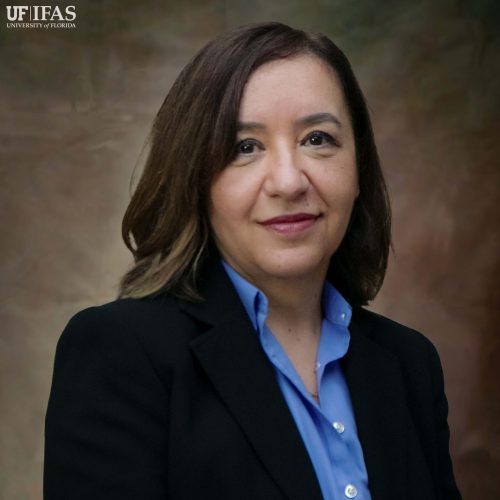
Dr. Samira Daroub – UF/IFAS Scientist Shares How Love for Learning Led to Lifetime of Teaching, International Work

Dr. Samira Daroub Ph.D. Soil & Water Scientist. Director, EREC.FL, USA.

Throughout history, women have played a key role in humanity’s scientific advancements. As mentors, innovators and thought leaders, women in science have inspired and empowered countries, communities, women and young girls with their work and knowledge.

In celebration of National Women’s History Month, Samira Daroub shares how a love for learning inspired a lifetime of teaching and research that has expanded beyond United States borders. Daroub is the second woman in 100-year-old history of UF/IFAS Everglades Research & Education Center (EREC) to take the center’s helm.

Q: What was your early life like?

A: I was born in Beirut, Lebanon. My grandfather was a farmer. One of my uncles also had a farm. I always loved math and had a constant desire to learn. I also wanted to attend a university.

My career in soil and water sciences didn’t really take shape until I was an undergraduate. It is all due to the power of teachers and mentoring, and it goes back to my first semester in college when I took a soil science class. The instructor took time to teach each lesson. I learned how it had practical application, and it was through that mentorship and others that I gained a love for this applied science.

That is a life lesson that I took to heart and have paid that support forward ever since. It is my goal to  serve as a mentor for every student, rising faculty member or researcher who I encounter throughout my career.

Q: Where did you pursue your undergraduate and graduate degrees and in what fields?

A: I earned a bachelor’s degree in agriculture and a diploma in agricultural engineering from The American University of Beirut in Lebanon. I later obtained my master’s degree in soil sciences there. For my Ph.D. in soil chemistry, I attended Michigan State University on a full scholarship awarded by the non-profit Hariri Foundation-Lebanon.

Q: Tell us about your life at UF/IFAS?

A: I arrived at UF/IFAS in 2000 as an assistant professor of soil and water sciences where I conducted research and taught classes both at EREC and at Fort Lauderdale Research and Education Center. I later became a professor and the distance education coordinator in the department of soil and water sciences.

I have been teaching classes in soil sciences, soil chemistry and environmental nutrient management as part of the undergraduate and graduate distance education programs. I also advise distance education students pursing non-thesis master’s degrees in the environmental science track at UF.

As a researcher, I focus on environmental issues related to soil and water quality. I specialize in the development and implementation of best management practices (BMPs) to reduce phosphorus leaching in soils and ultimately prevent it from entering surface waters in the Everglades in south Florida. A second research focus is on the sustainability of organic soils and agriculture in the Everglades Agricultural Area (EAA). A third focus is on international development aimed on building individual and institutional capacity in India and Middle East in soil health and water resources.

I established a nationally recognized research and Extension program for the development of best management practices to improve water quality as part of a comprehensive effort for Everglades’ restoration in Florida. I offer in-person and online best management practices workshops and have always been committed to providing Extension and outreach activities to local area growers

I later became interim center director of EREC, until February this year when I was appointed as center director.

Q: You have conducted extensive international educational and research work. Tell us about it.

A: My journey in international research and education started when I was a postdoctoral fellow at Michigan State University with Dr. Joe Ritchie. I visited national and international research centers in Colombia, Brazil, Syria, Kenya and Hungary for collaboration and data acquisition to be used in crop modelling.

My international education experiences include teaching and mentoring undergraduate and graduate international students. I have mentored interns, visiting scholars and Borlaug fellows from Brazil, Honduras, Costa Rica, India and Iraq. The scholars were trained for laboratory and research techniques and introduced to sustainable practices in South Florida agriculture and water management. I have conducted research in India, as well as educational projects and capacity building workshops in India, Jordan, Syria, Lebanon and Egypt. 

At UF/IFAS, I have always been interested in international research and educational projects to share and gain native knowledge into soil and water management and online learning. I have collaborated with Sandra Russo at the UF International Center on various educational projects in the Middle East. Effective mentoring is a big part of what I do for local and international scholars. I have always taken an approach to advising and mentoring that allows students and postdocs opportunities to strengthen their interpersonal skills and technical competence, while also developing leadership skills and confidence.

Q: What words of inspiration would you give to other women and girls as a mentor and leader in your field?

A: Education is key. Never stop learning. Lean on family, peers, educators and supporters to succeed. A support system is vital. 

The mission of the University of Florida Institute of Food and Agricultural Sciences (UF/IFAS) is to develop knowledge relevant to agricultural, human and natural resources and to make that knowledge available to sustain and enhance the quality of human life. With more than a dozen research facilities, 67 county Extension offices, and award-winning students and faculty in the UF College of Agricultural and Life Sciences, UF/IFAS brings science-based solutions to the state’s agricultural and natural resources industries, and all Florida residents. ifas.ufl.edu  |  @UF_IFAS

source/content : bocaratontribune.com

___________

Samira Daroub

_________________________

AMERICAN / LEBANON