Arabs & Arabian Records Aggregator. Chronicler. Milestones of the 25 Countries of the Arabic Speaking World (official / co-official). AGCC. MENA. Global. Ist's to Top 10's. Records. Read & Enjoy./ www.arabianrecords.org
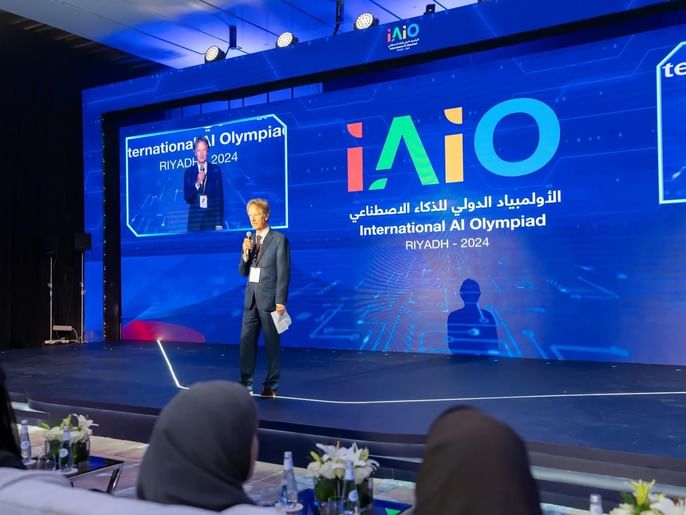
The first activities of the International Artificial Intelligence Olympiad (IAIO) began yesterday, Sunday, which is organized by the Kingdom of Saudi Arabia, represented by the Saudi Data and Artificial Intelligence Authority (SDAIA), for the first time in the world, in cooperation with the International Center for Research and Ethics in Artificial Intelligence (ICAIRE) and the International Research Center for Artificial Intelligence in Slovenia, and under the auspices of the United Nations Educational, Scientific and Cultural Organization (UNESCO), with the participation of more than 25 countries.
The Saudi Press Agency (SPA) reported that the Olympiad, which will continue until September 12, 2024, contributes to strengthening friendly international relations between technology and software experts and artificial intelligence teachers in various countries, drawing the attention of young people to these modern technologies, and encouraging other countries to organize similar competitions in the future.
The Olympiad aims to motivate participants to engage in active discussions to explore the various applications of artificial intelligence, and encourage exceptionally talented young people in this field, which is of increasing global interest.
It also contributes to enhancing the organization of artificial intelligence competitions for secondary school students, and motivating them to find smart solutions by designing algorithms based on learning, data structuring, and programming.
The Olympiad enables male and female students, artificial intelligence specialists, and influencers in the world to delve into the future landscape of artificial intelligence, keep pace with the rapid changes the world is witnessing in this field, and provide young cadres with modern technical skills
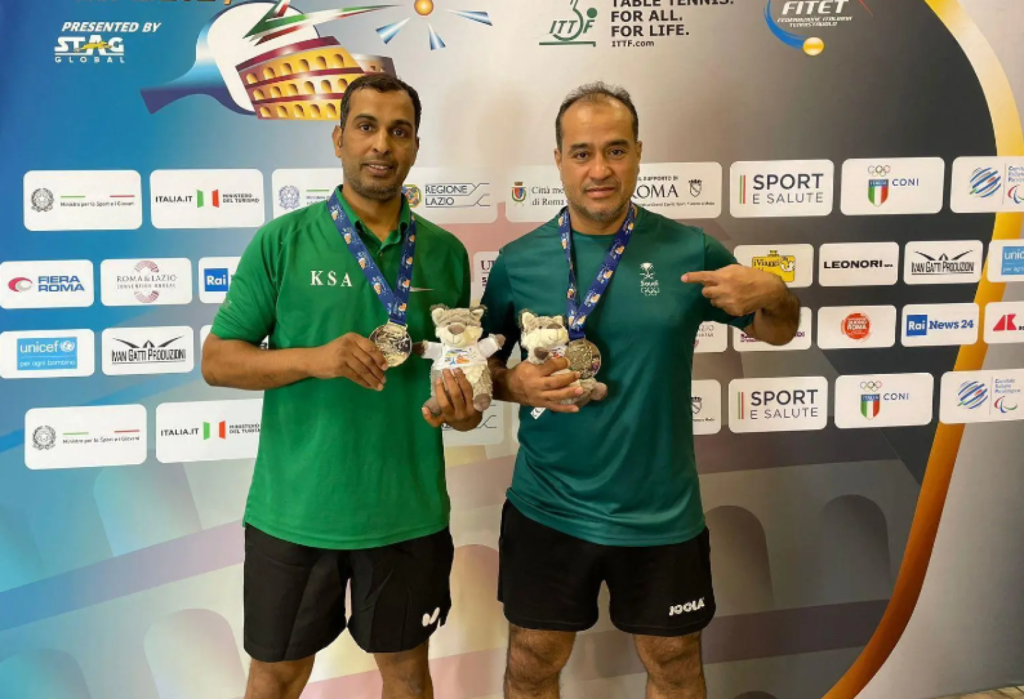
Saudi Arabia’s Majid Binsuaiger and Khalid Al-Harbi achieved a remarkable feat on Sunday by winning the silver medal in table tennis doubles at the ITTF World Masters Championships Rome 2024.
Competing in the 45-49 years age category, the Saudi duo showcased their skills and defeated teams from Sweden, Germany, and France on their way to the podium, SPA reported. Their exceptional performance earned them a well-deserved spot in the finals, where they secured the silver medal.
They narrowly finished behind the duo of Giovanni Maria from Italy and Cédric Merchez from Belgium, highlighting their strong performance throughout the championship.
Saudi Arabia’s Majid Binsuaiger and Khalid Al-Harbi win the silver medal in table tennis doubles at the ITTF World Masters Championships Rome 2024. SPA
Rafeef Ayedh Alshahrani wins gold for innovative tech; Dr. Najia Al-Zanbagi silver for her work in medical parasitology .
Two Saudi citizens were awarded prestigious medals for their groundbreaking work at the Indonesia Inventors Day 2024 exhibition, which was held from Aug. 28 to 31 in Bali, Indonesia.
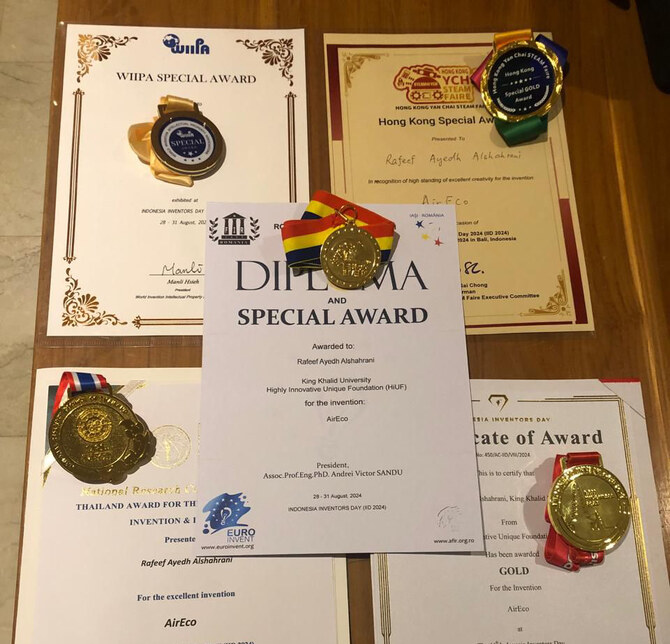
Rafeef Ayedh Alshahrani, a researcher from King Khalid University, won a gold medal for her innovation “AirEco,” which has the ability to detect and locate living beings in hard-to-reach mountainous terrain, where search efforts are typically hindered by challenging conditions.
By integrating advanced detection technologies with artificial intelligence, the device provides crucial support to rescue teams. It not only identifies precise locations but also executes functions to assist in rescue operations once the target is located.
It is one of the projects backed by the university’s Agency for Business and Community Partnership, through the Entrepreneurship Center.
The project has also earned four prestigious awards from Taiwan, Romania, Hong Kong and Thailand.
Reflecting on her achievement, she described it as a truly unique and fulfilling experience. She expressed the joy of seeing the fruits of her hard work over the past days and months, stating that the greatest reward was the pride and recognition from those around her. “It’s an incredible feeling,” she said.
“This accomplishment has fueled my desire to see it implemented quickly and made widely available,” she added. “I sincerely hope that authorities and companies will adopt the project, provide support, and help manufacture it to the highest standards so it can fully achieve its purpose.”
When asked how such achievements can positively influence Saudi participation in international competitions, she said: “Accomplishments serve as a powerful driving force for young people, pushing them toward their ambitions and future goals.
“The Kingdom’s Vision 2030, in particular, has become a major source of motivation, inspiring all Saudis to think creatively and pursue their aspirations.
“Saudi achievements have now become a source of national pride, shifting perspectives on the significance of success and its far-reaching impact. These accomplishments are key drivers of development, progress and prosperity.
“Beyond boosting individual self-confidence, they foster a positive mindset in society, encouraging leadership, innovation and the creation of economic opportunities. The impact of success doesn’t stop with the individual; it resonates throughout the community.”
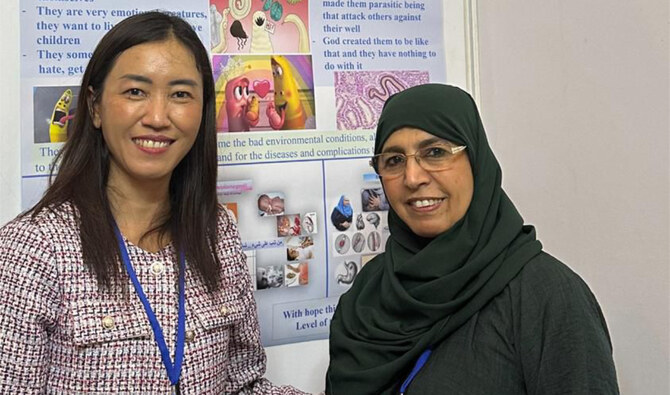
Dr. Najia Al-Zanbagi, headmaster of Highly Innovative Unique Foundation, also earned a silver medal at the Indonesia Inventors Day 2024 for her remarkable work in medical parasitology.
“My contribution was a personal achievement: I authored a book on medical parasitology, using engaging, narrative-driven stories to simplify the complex scientific content and make it easier for learners to distinguish between various parasites.
“I first introduced this approach while teaching at King Abdulaziz University, and it was incredibly well received by students, who found the subject much more enjoyable and accessible.”
She aid that the book, titled “Lisan Al-Hal,” has now been published and is now available in the market.
Dr. Majid Al-Aziman, director of the Entrepreneurship Center at King Khalid University, emphasized the university’s commitment to supporting innovators, raising awareness and redefining the concept of entrepreneurship.
The university also seeks to spotlight the success of projects incubated by the Entrepreneurship Center and actively contribute to creating new job opportunities.
source/content: arabnews.com (headline edited)
___________
Dr. Najia Al-Zanbagi (R), headmaster of Highly Innovative Unique Foundation, earned a silver medal at the Indonesia Inventors Day 2024 for her remarkable work in medical parasitology. (Supplied)
Rafeef Ayedh Alshahrani’s project has also earned four prestigious awards from Taiwan, Romania, Hong Kong and Thailand. (Supplied)
Winning novel The Water Diviner is a poetic work set in rural Oman.
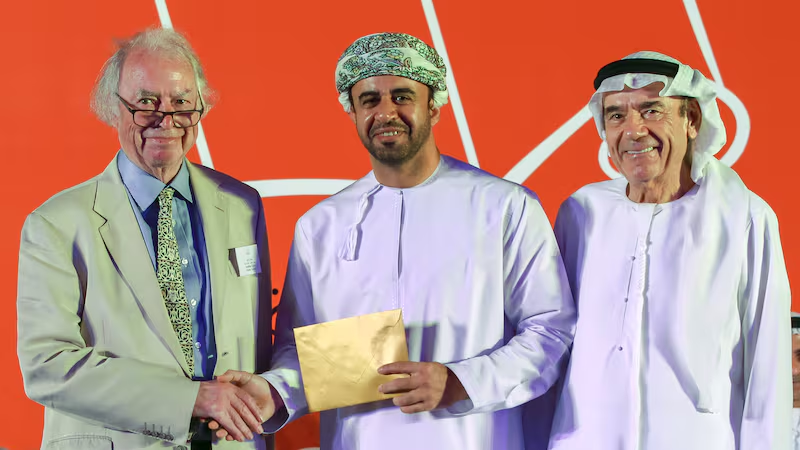
Novelist Zahran Alqasmi is the first Omani to win the International Prize for Arabic Fiction for his fourth novel The Water Diviner.
Announced at a ceremony in Abu Dhabi on Sunday, Alqasmi was named winner of the $50,000 prize and will also receive funding for an English translation.
Published in 2021, The Water Diviner follows the life of an enigmatic and mystical man employed by Omani villages to track the ebb and flow of local rivers and ravines.
Haunted by the deaths of his parents, “the water diviner” faces his fear as he battles for his life while stuck in a water channel.
Moroccan author Mohammed Achaari, the 2011 IPAF winner and chairman of this year’s judging panel, hailed the work for its innovative subject matter and cohesive structure.
“It is a new subject in modern fiction: water and its impact on the natural environment and the lives of human beings in hostile regions.
“Blurring the boundaries of reality and myth, the novel’s precise structure and sensitive poetic language are the conduit for compelling characters like the water diviner, who plays an essential role in people’s lives, yet simultaneously inspires their fear and revulsion,” he said.
“The Water Diviner transports us to the world, little known in the Arabic novel, of the riverbeds and the aflaj [water channels] of Oman, showing how natural forces influence the relationship between individuals, environment and culture.”
Professor Yasir Suleiman, chairman of the award’s board of trustees, praised Alqasmi’s rich prose and use of authentic Omani colloquialisms.
“The novel takes the reader into a world dominated by vulnerability and ready-made modes of thinking,” he said.
“Written in exquisite language suffused with the local cadences, the novel charms the reader with its narrative flow and poetic impulse.
The Water Diviner was one of six shortlisted novels , which included The Highest Part of the Horizon by Saudi author Fatima Abdulhamid, published by Masciliana in the UAE.
All shortlisted authors will receive a $10,000 prize.
Who is Zahran Alqasmi?
Born in the agriculture region of Dima Wattayeen in northern Oman, Alqasmi is a prolific author – having published four novels, 10 poetry books and two Biography of the Stone short story collections,released in 2009 and 2011.
In an interview on the IPAF website, he says the novel was inspired by his experience growing up in rural Oman.
“Anyone looking at life in the Sultanate of Oman will find that it largely depends upon an old system for providing water for drinking and agriculture, the system of the aflaj,” he said.
“They are a complicated social system, linked to social and class strata. Water is divided in equal shares throughout the year so that the owners of gardens can take what is due to them.
“Since I am a son of one of these villages, since my early childhood I have known a lot about the system of aflaj and heard many astonishing stories and legends connected with this system.
“This enriched me as I wrote the novel. I imagined the environment of the book as an Omani village. I visualised its paths, gardens, alleyways. It was easy at that time to write the chapters fluidly.”
Alqasmi will make his first public appearance after winning the prize at the Abu Dhabi International Book Fair on Monday.
Taking place at the Ayasofya Stage at 8.45pm, the discussion will include the shortlisted authors and centre on their works and the challenges facing modern Arabic fiction.
2023 International Prize for Arabic Fiction Awards winner Zahran Alqasmi, centre, with Jonathan Taylor, left and Zaki Nusseibeh, cultural adviser to the President of the UAE. Victor Besa / The National
Al-Kaabi also announced that QatarEnergy will more than double the local solar energy production by adding new power plants in Dukhan, to become “one of the largest” of their kind in the world.
QatarEnergy is set to become the world’s largest exporter of urea by building a new production complex, a move that is set to ramp up production from a current six MTPA (million tonnes per annum) to 12.4 MTPA by 2030, marking a 106 percent spike.
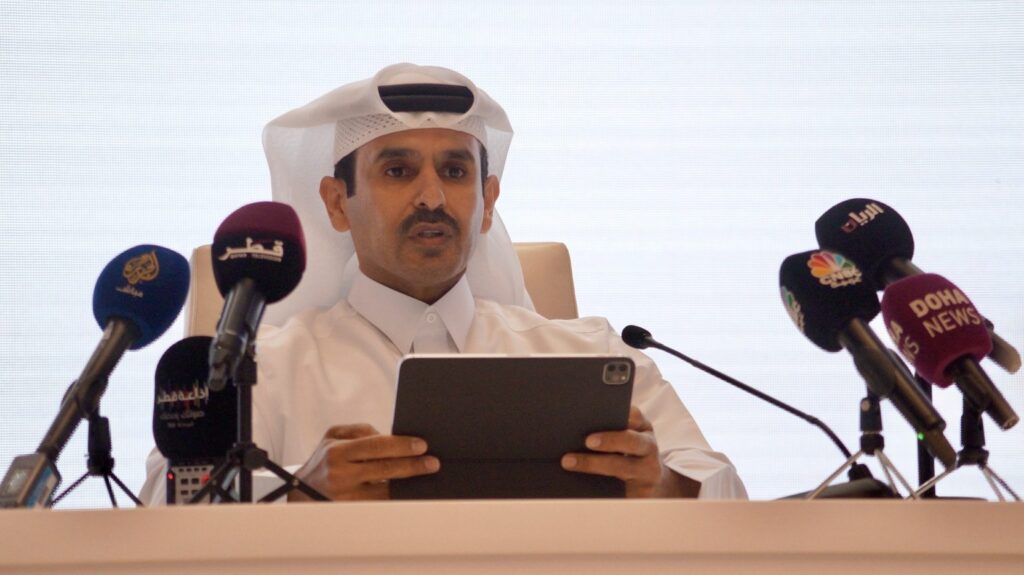
QatarEnergy’s President and CEO Saad Sherida Al-Kaabi announced the mega project in a press conference on Sunday at the Qatari company’s headquarters in Doha.
In response to the press, Al-Kaabi said the new facility will more than double Qatar’s urea, or fertilizer, production while supporting global food production and security. He noted that the production from the project’s first urea train is expected before the end of this decade.
“When we look at the future market of urea with the growth of humanity[…]the urea requirement for food production will be exponentially increased,” Al-Kaabi told the press.
The expansion process will take place by building three ammonia production lines that will in turn provide feedstock to four new mega urea production trains in Mesaieed Industrial City.
The announcement also came against the backdrop of Qatar’s growing ammonia and urea production over the past 50 years.
In 2022, QatarEnergy Renewable Solutions and the Qatar Fertilizer Company (QAFCO), inked a major agreement over the development of the Blue Ammonia project, the largest of its kind in the world, in Mesaieed Industrial City.
Production is expected to commence in the first quarter of 2026.
Qatar to more than double solar power production
Al-Kaabi also announced that QatarEnergy will more than double the local solar energy production by adding new power plants in Dukhan, which will become “one of the largest” of their kind in the world.
The new plant will have a production capacity of 2,000 megawatts, doubling Qatar’s solar power production capacity from existing projects and those still under construction. Some of the projects include the Al-Kharsaah solar power plant, inaugurated in 2022 with the capacity of 800 megawatts.
Others include two solar power plants under construction in Ras Laffan and Mesaieed with a total production capacity of 875 megawatts. According to Al-Kaabi, the production will commence before the end of this year.
“By adding the Dukhan solar power plant to these three plants, we will achieve our Sustainability Strategy objective of about 4,000 megawatts of electricity from solar power by 2030, which makes up 30 percent of Qatar’s total electric power production,” he explained.
Al-Kaabi described the latest announcement as a “continuation” of Qatar’s efforts to provide the world with energy products and meet global needs.
“QatarEnergy’s specialised technical teams will immediately begin the necessary detailed engineering studies to implement these mega projects in accordance with the highest safety, health and environmental standards,” Al-Kaabi said.
The films tell stories of hopes, dreams, and challenges from the Arab world.
Arab cinema is about to make waves as the 81st Venice Film Festival rolls out the red carpet.
Running from August 28 to September 7, this year’s Venice International Film Festival will feature 12 Arab films backed by the Doha Film Institute.
These movies will light up key sections of the festival, including Orrizonti and Orrizonti Shorts, and make waves at Critics Week, Giornate degli Autori, Final Cut, and the Venice Gap-Financing Market.
These selections showcase the rich diversity of the region, bringing unique stories from Egypt, Jordan, Lebanon, Morocco, Palestine, Tunisia, and Yemen into the spotlight.
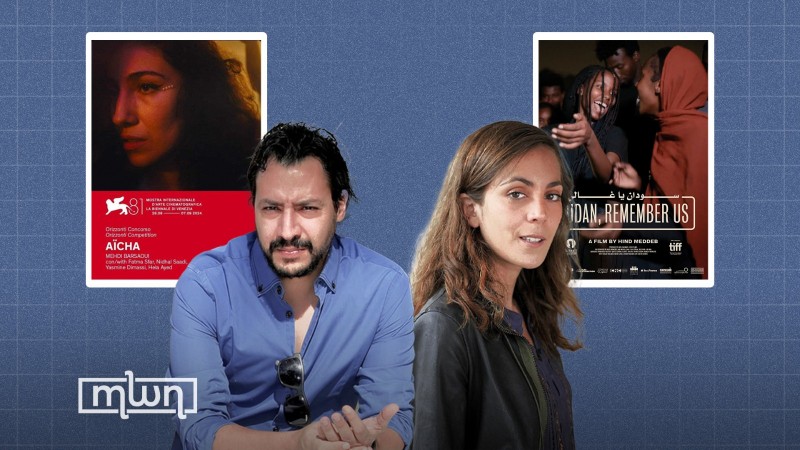
Highlights include “My Father’s Scent” by Mohamed Siam, featuring Egyptian star Ahmed Malek, “Aïcha” by Mehdi Barsaoui, and “Sudan, Remember Us” by Hind Meddeb, which offers a powerful portrayal of a generation’s fight for freedom through words, poems, and chants.
“We are proud to continue a successful festival season with a strong showcase of films by Arab talent at Venice,” stated Fatma Hassan Alremaihi, chief executive officer of the Doha Film Institute.
“Our mission is to support independent creators in cinema, and the compelling selection at Venice is a testament to our commitment to shed light on stories that transcend borders and present unique perspectives. We hope these films receive the acclaim and attention they deserve,” she added.
The 2024 Venice International Film Festival is set to showcase a diverse array of Arab cinema.
In the Orizzonti category, the festival will present “Aïcha” directed by Mehdi Barsaoui and “Happy Holidays” by Scandar Copti. The Orizzonti Shorts category will meanwhile include “Shadows” by Rand Beiruty.
“Sudan, Remember Us,” directed by Hind Meddeb, will be showcased in the Giornate degli Autori section. Critics’ Week will highlight “Perfumed with Mint” by Muhammed Hamdy.
The Final Cut section will present several notable films, including “Aisha Can’t Fly Away” by Morad Mostafa, “In This Darkness I See You” by Nadim Tabet, “My Father’s Scent” by Mohamed Siam, and “Those Who Watch Over” by Karima Saidi.
Finally, the Venice Gap-Financing Market will feature “Marie & Jolie” by Erige Sehiri, “The Station” by Sara Ishaq, and “Theft Of Fire” by Amer Shomali.
With a lineup that promises to dazzle and surprise, these films are set to turn heads and set new standards.
The League of Arab States has hailed the achievements and contributions of Emirati women at the national level, calling them a role model in the Arab world.
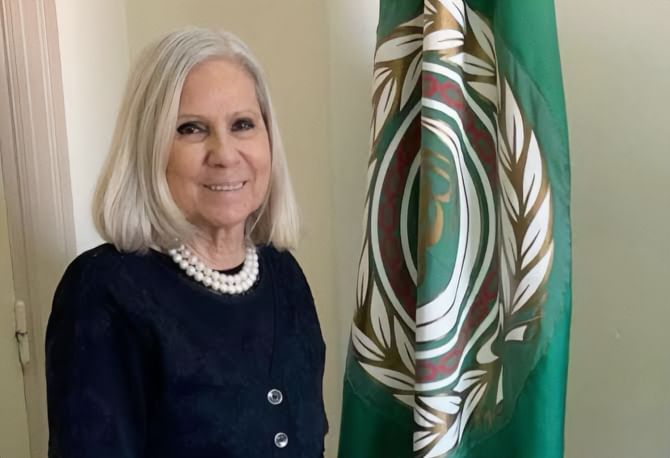
Ambassador Dr. Haifa Abu Ghazaleh, Assistant Secretary-General and Head of Social Affairs sector at League of Arab state, congratulated the UAE leadership, government and people on Emirati Women’s Day, which is a source of pride for Arabs due to the prominent position achieved by the UAE women at the Arab, regional and international levels.
In her statements to the Emirates News Agency (WAM), Dr. Abu Ghazaleh praised the efforts of HH Sheikha Fatima bint Mubarak (The Mother of the Nation), Chairwoman of the General Women’s Union (GWU), President of the Supreme Council for Motherhood and Childhood (SCMC), and Supreme Chairwoman of the Family Development Foundation (FDF), to enhance the status of Emirati women in all fields for more than 5 decades and commended the great achievements of the General Women’s Union under her leadership, making Emirati women an honorable model for Arab women.
She added that the assumption of important and influential positions by Emirati women reflects their pioneering role in society and makes them a bright sign in the Arab world, noting that the achievements of Emirati women represent a strong push towards further progress and excellence at all levels.
Dr. Abu Ghazaleh wished Emirati women further success and prosperity and expressed her aspiration for women in the UAE and the Arab world to witness more progress and active participation in building societies.
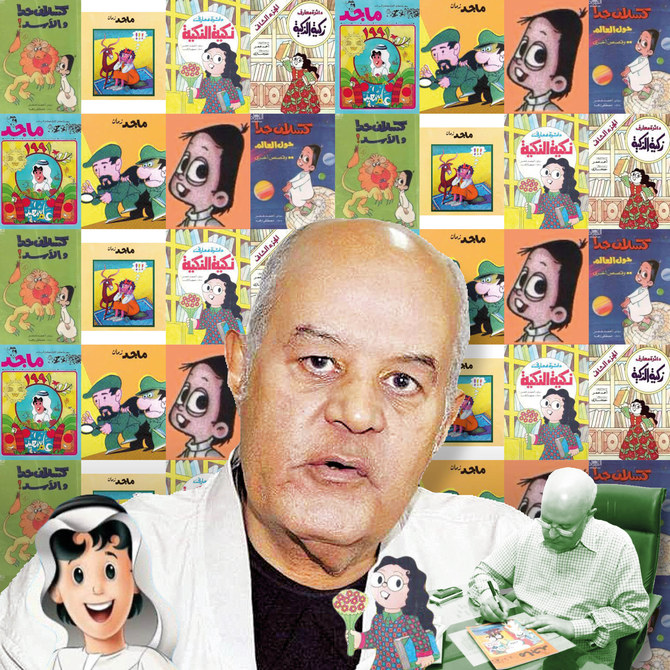
Omar created and launched Majid Magazine for children, and an array of adorable characters, in 1979.
Just as Walt Disney founded one of the world’s largest and most influential entertainment conglomerates, an Egyptian journalist is hailed as the “Walt Disney of the UAE” for his pivotal role in shaping the region’s media landscape with Majid Magazine.
For many Arab adults now in their 50s, the magazine and its beloved characters, like Majid, Kaslan Jiddan and Captain Khalfan, are cherished symbols of childhood joy. Yet, few recognize the creative genius behind these treasured memories: Ahmed Omar, who passed away on Aug. 9 at the age of 85.
His vision and storytelling prowess were crucial in shaping the magazine’s enduring legacy.
Born in Egypt in September 1939, Omar embarked on a lifelong journey with words and stories.
His passion for reading blossomed at a young age, and school and public libraries became his sanctuaries, where he delved into a world of diverse books and nurtured a profound love for literature.
Omar’s frequent visits to Cairo’s Azbakeya Book Market, where he discovered affordable secondhand books, helped him build a personal library filled with diverse titles. His extensive reading played a crucial role in shaping his vision and enriching his ideas, which later shone through in his literary works.
He read to build a deep reservoir of knowledge, with classical literature captivating him from an early age. Naguib Mahfouz’s novels, which delve into the intricacies of life in Egyptian neighborhoods, had a profound impact on him. Omar was also shaped by the works of renowned Egyptian writers like Yusuf Idris, Gamal El-Ghitani, Mohamed Hassanein Heikal and other prominent authors.
He began his professional career at the UAE’s Al-Etihad newspaper, where he was a founding member and contributed to laying its foundation. He later managed the local news section.
The most significant achievement of his career was establishing Majid Magazine for children and becoming its editor-in-chief in 1979. The idea for the magazine was born within Al-Etihad daily and eventually transformed into one of the most important children’s magazines in the Arab world.
Omar recognized the need for Arab children to have a publication that represented them, stimulated their imagination and nurtured their minds. Working alongside a talented team of journalists and illustrators, he turned the magazine into a platform for expressing the thoughts and emotions of Arab children through words and drawings.
Through his tireless efforts, Omar made the magazine a symbol of Arab childhood and a cherished part of the memories of successive generations.
He spent most of his time in the magazine’s offices, creating, planning, overseeing writers and content, and preparing issues. When a new issue was printed, he had several weeks’ worth of issues ready in advance.
The inaugural issue of the magazine was published on Feb. 28, 1979, with 5,000 free copies that quickly vanished from the shelves. Majid, a character representing human values rather than superpowers, struck a chord with children. Majid Magazine maintained a weekly publication schedule every Wednesday without fail, gaining significant popularity throughout the region.
Omar oversaw and managed the magazine with ultimate care and interest for almost 30 years. He provided guiding articles for children and wrote scripts for comic stories, enriching each issue with beloved characters such as Zaki the Clever and Captain Khalfan, among others.
His editorials in Majid Magazine served as weekly lessons for both children and adults, filled with educational messages and moral guidance. His contributions established him as an educational pioneer, as he dedicated his knowledge to serving the younger generation and imparting valuable lessons.
Through his deep understanding of the nuances and secrets of childhood, Omar succeeded in capturing the attention of children from across the Arab world. The magazine’s readership grew to hundreds of thousands of young readers.
The late journalist believed that nurturing a love of reading in children is a collective duty of families, schools and magazines alike. He famously remarked: “Instilling a reading habit early in life is crucial, as it is difficult to cultivate later on. Introducing a child to a magazine is not just about providing entertainment — it’s a crucial step toward nurturing a lifelong passion for reading.”
Since the inception of the magazine, Omar was dedicated to imbuing it with a distinctly Gulf Arab flavor, reflected in its content, stories and characters. He attracted leading children’s writers and cartoonists, ensuring the magazine resonated deeply with young readers across the Arab world by preserving the unique identity of Gulf children.
Notable characters such as Kaslan Jiddan, Fadooli, Abu Al-Dhurfaa, Zakiyah Al-Zakiyah, Shamsa and Dana, and Captain Khalfan and his assistant Fahman became beloved figures among the magazine’s young audience.
Omar emphasized that his magazine was designed to appeal to children growing up in a traditional environment, instilling religious values, cultural awareness and pride in their Arab heritage.
As a testimony to his magazine’s success, mail subscriptions to Majid flourished throughout the Arab World as fans eagerly awaited each issue every Wednesday. For decades, it managed to compete with translated comics magazines such as Mickey (licensed from Disney and translated in Egypt) and Little Lulu (licensed and translated in Lebanon).
Consequently, the magazine evolved alongside the UAE’s social progress and embraced digital advancements with a YouTube channel and a website, although critics would argue that it is nowhere as influential today — despite the additional reach provided by modern technology — as it once was in the 1990s and 1980s.
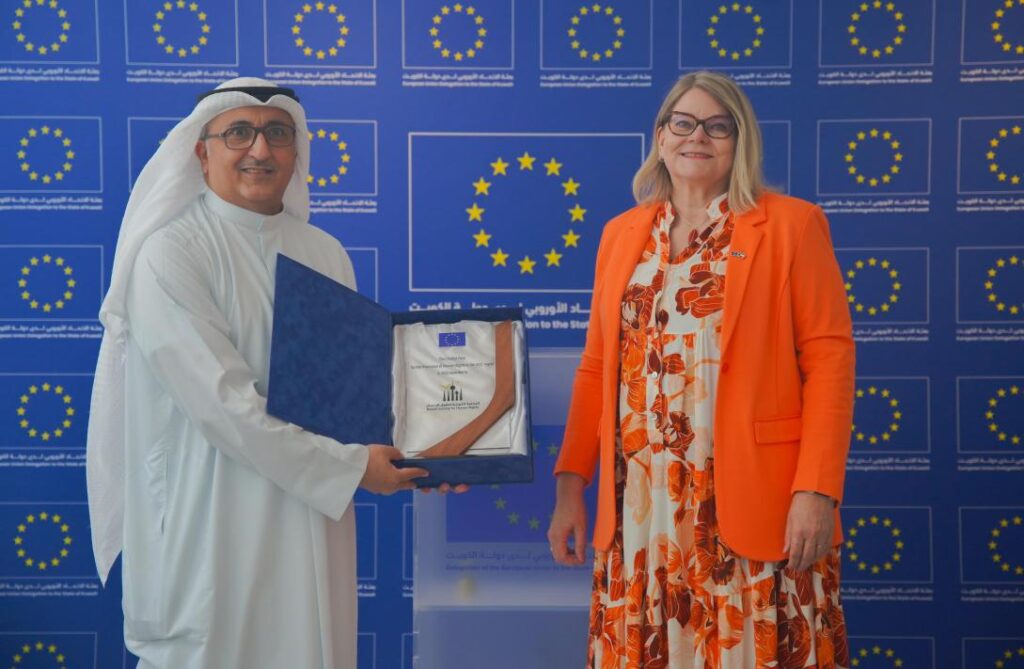
The EU Ambassador to the State of Kuwait H.E. Anne Koistinen presented the 2023 Chaillot Prize for the Promotion of Human Rights in the GCC region to the Kuwaiti Society for Human Rights.
The EU Ambassador to the State of Kuwait H.E. Anne Koistinen presented the 2023 Chaillot Prize for the Promotion of Human Rights in the GCC region to the Kuwaiti Society for Human Rights. The European Union awards the Chaillot Prize every year for actions, campaigns, projects and lifetime achievements that favour Human Rights promotion and awareness in the GCC region. The Prize is named after the Palais de Chaillot in Paris where the Universal Declaration of Human Rights was adopted by the United Nations General Assembly on 10 December 1948.
In her speech during the ceremony held at the EU Residence in Kuwait, Ambassador Koistinen said: “I am honoured to present the Chaillot Prize for the Promotion of Human Rights in the GCC Region to the Kuwait Society for Human Rights for their unwavering dedication over the years to promoting and advancing human rights in Kuwait. I would like to highlight in particular their work in supporting and advocating for migrant workers’ rights in Kuwait and raising awareness about their labour rights. Engagement with the civil society in Kuwait is a very important part of EU Delegation’s work, therefore I am looking forward to continuing our long-standing cooperation with the Kuwait Society for Human Rights.
Mr. Khaled Al-Humaidi, President of the Board of Directors of the Kuwaiti Society for Human Rights, said in his speech during the ceremony that ‘To be honoured today by awarding us the Challiot Prize for Human Rights is a great moral support for the Kuwaiti Society for Human Rights. This Society has taken upon itself the responsibility of defending human rights and promoting them in the Kuwaiti society through concerted efforts at the government and community levels. We are delighted that the Chaillot Prize was granted to us for our tireless efforts in protecting the rights of migrant workers in Kuwait through the ‘Together Project’, which aims at raising awareness and protecting the rights of migrant workers in Kuwait. This project was implemented by the Kuwaiti Society for Human Rights in cooperation with the European Union Delegation in Kuwait, the Netherlands Embassy, the Swiss Agency for Development and Cooperation, in addition to the US-Middle East Partnership Initiative (MEPI).’
For the EU, promoting and protecting human rights is at the heart of EU external policy as they are among the EU’s founding values of human dignity, freedom and respect of human rights. Cooperation on human rights and engagement with the civil society are an integral part of the relations between the European Union and all countries, including Kuwait. The European Union and Kuwait held their fourth Human Rights Dialogue in Brussels on 5 December 2023, where the two sides exchanged about the latest developments on both sides and reiterated their commitment to an open and constructive dialogue to jointly address human rights challenges and share best practices.
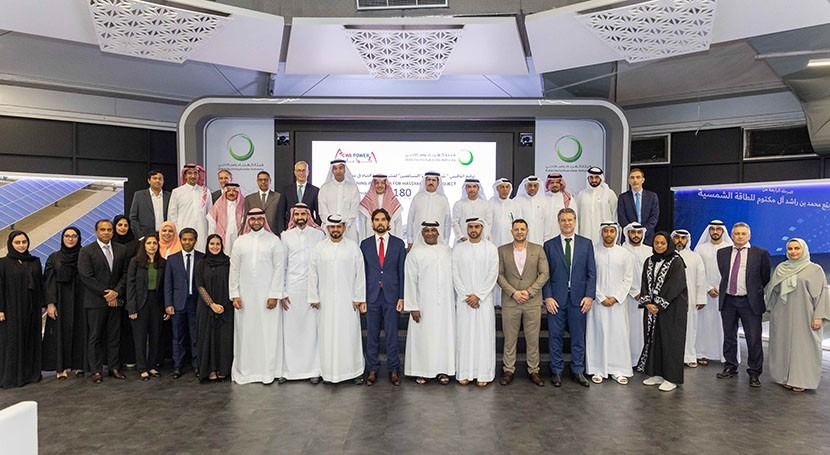
Dubai Electricity and Water Authority (DEWA), signed a 30-year water purchaser agreement with Saudi Arabia’s ACWA Power for phase 1 of the Hassyan sea water desalination project using solar power. The project is part of DEWA’s efforts to increase its water desalination capacity to 730 MIGD by 2030, from 490 MIGD at present. The project aligns with Dubai’s unparalleled economic growth and the Emirate’s thriving construction sector. This complements the Dubai 2040 Urban Master Plan, addresses the substantial population growth, and meets the steadily increasing demand for water in domestic, commercial, and other consumer sectors.
The agreement was signed by HE Saeed Mohammed Al Tayer, MD & CEO of DEWA; and Mr. Mohammad Abunayyan, Chairman and Founder of ACWA Power. Officials from both entities were present.
Last August, DEWA announced ACWA Power as the ‘Preferred Bidder’ for the construction and operation of the 180 Million Imperial Gallon per Day (MIGD) Sea Water Reverse Osmosis Hassyan Phase 1 Independent Water Producer (IWP) project, with an investment of AED 3.357 billion (USD 914 million). The allocated land area for the project is 252,300 square metres. DEWA achieved a world record by receiving the lowest bid of 0.36536 USD/m³ of desalinated water. This project is the largest of its kind in the world for water production based on Sea Water Reverse Osmosis (SWRO) technology using solar energy. It is DEWA’s first Independent Water Producer (IWP) model project. The water desalination capacity in Dubai is currently 490 MIGD. This capacity will increase to 670 MIGD in 2026 with the completion of this project.
Dubai Electricity and Water Authority (DEWA) signed a 30-year water purchaser agreement with Saudi Arabia’s ACWA Power for phase 1 of the Hassyan sea water desalination project using solar power
“We are pleased to sign the agreement with ACWA Power. This project supports the vision of His Highness Sheikh Mohammed bin Rashid Al Maktoum, Vice President and Prime Minister of the UAE and Ruler of Dubai, to enhance water supplies in Dubai from sustainable sources and achieve the Dubai Clean Energy Strategy 2050 and the Dubai Net Zero Carbon Emissions Strategy 2050 to provide 100% of Dubai’s total power capacity from clean energy sources by 2050. We are building water production plants based on Sea Water Reverse Osmosis (SWRO) technology which require less energy than Multi-Stage Flash distillation (MSF) plants, making it a more sustainable choice for water desalination. By 2030, DEWA aims to produce 100% of desalinated water by a mix of clean energy and waste heat,” said HE Saeed Mohammed Al Tayer, MD & CEO of DEWA.
HE Saeed Mohammed Al Tayer, MD & CEO of DEWA, said: “We ensure the continuation of the 100% availability of DEWA’s services according to the world’s highest levels of availability, reliability, and efficiency thanks to our state-of-the-art infrastructure and advanced technologies. This is based on innovation and sound scientific planning so that we contribute to making the UAE the world’s leading nation by its centennial in 2071.”
Mohammad A. Abunayyan, Chairman of the Board of Directors, ACWA Power, said: “This agreement between ACWA Power and DEWA is another example of the strong collaboration between ourselves and our valued partners in the United Arab Emirates. The Hassyan IWP will be the largest plant of its kind in the world, and we have set a new record for the lowest levelised water tariff. The plant will be highly efficient, desalinating water through reverse osmosis powered by solar energy. With our years of experience in the industry, ACWA Power has ambitious aims and we are proud of continually breaking records through innovation and using new technologies to enhance water security. With this project, we are reaffirming our commitment with our partners towards achieving the Dubai Clean Energy Strategy 2050.”