Arabs & Arabian Records Aggregator. Chronicler. Milestones of the 25 Countries of the Arabic Speaking World (official / co-official). AGCC. MENA. Global. Ist's to Top 10's. Records. Read & Enjoy./ www.arabianrecords.org
Kuwait National Day is always celebrated on 25th February. This holiday marks the day when Sheikh Abdullah Al-Salem Al-Sabah ascended to the throne in 1950.
To commemorate the day , Kuwait’s Ministry of Defense held a show of military vehicles and equipment
NATIONAL DAY KUWAIT – Timeline
1613
Kuwait City is Founded
Kuwait City is founded as a fishing village.
1792
The East India Company Arrives
The East India Company secures the sea routes between Kuwait, India, and the east coasts of Africa.
1946 — 1982
Golden Era of Kuwait
Kuwait experiences a period of prosperity driven by oil and its liberal atmosphere.
2006 — 2009
The Peak of Prosperity
Kuwait has the highest Human Development Index ranking in the Arab world
______________________________
KUWAIT LIBERATION DAY
Kuwait Liberation Day is observed annually on February 26.
This holiday remembers the day Kuwait was liberated from Iraqi occupation in 1991.
The Liberation was the U.S. marshaled military operation — Operation Iraqi Freedom, to recoup Kuwait from Iraq after the 1991 bombing of Iraq. U.S. troops arrived to find the Iraqis surrendering as a whole, although pockets of resistance prevailed, especially at Kuwait International Airport where Iraqi troops, supposedly clueless that a retreat order had already been given, proceeded with fighting, which only resulted in an intense battle over the airport itself. Most of the fight happened in Iraq instead of Kuwait. The military operation is also commonly referred to as the Gulf War.
source/content : nationaltoday.com
_________
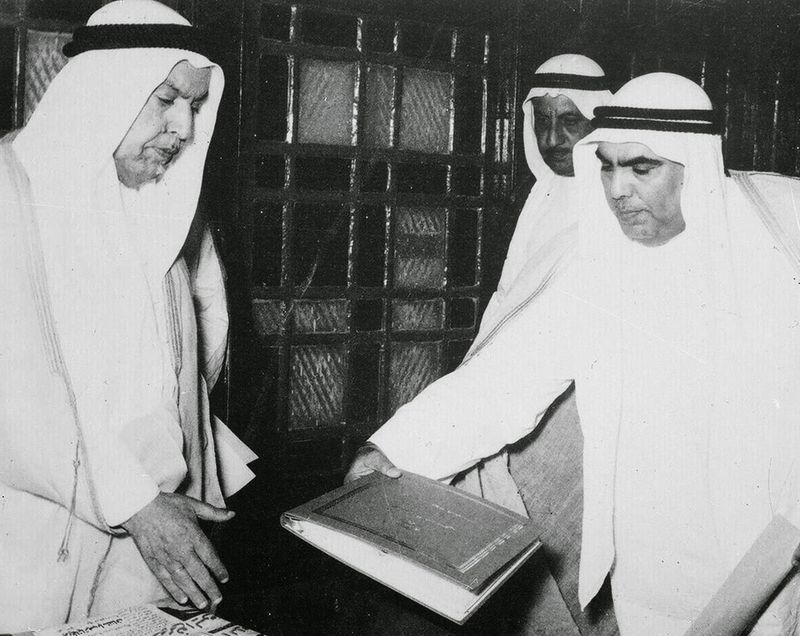
On February 25, Kuwait celebrates 61 years since it gained its independence from the British mandate. While the treaty was signed in June, Kuwait’s National Day was changed to February 25 in 1963 to coincide with the date that Abdullah Al Salem became ruler of Kuwait back in 1950. / Image Credit: Supplied / www.gulfnews.com
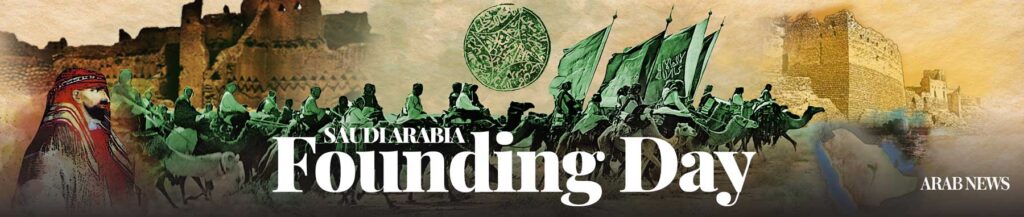
The Kingdom’s new Founding Day celebrates the true birthday of the First Saudi State in 1727
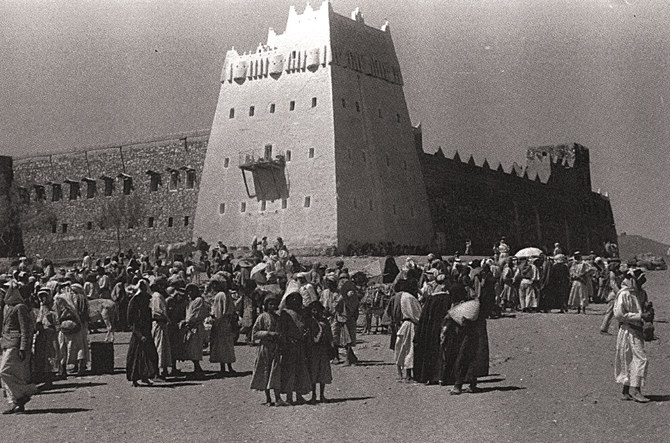
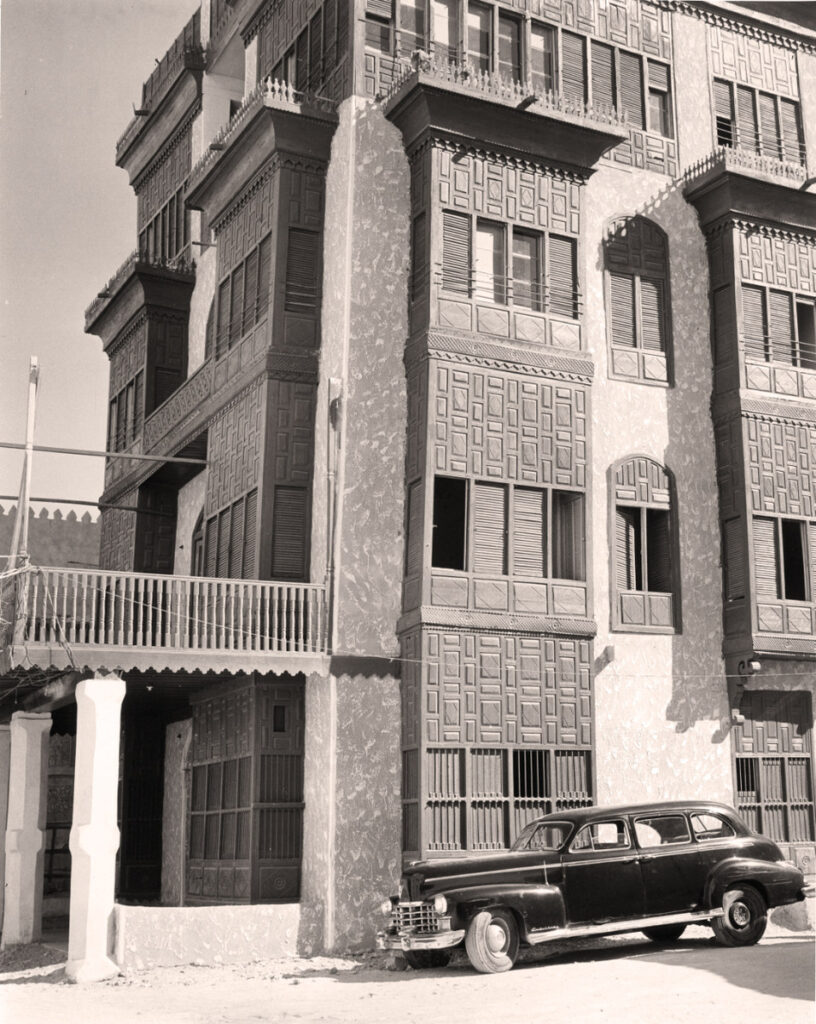
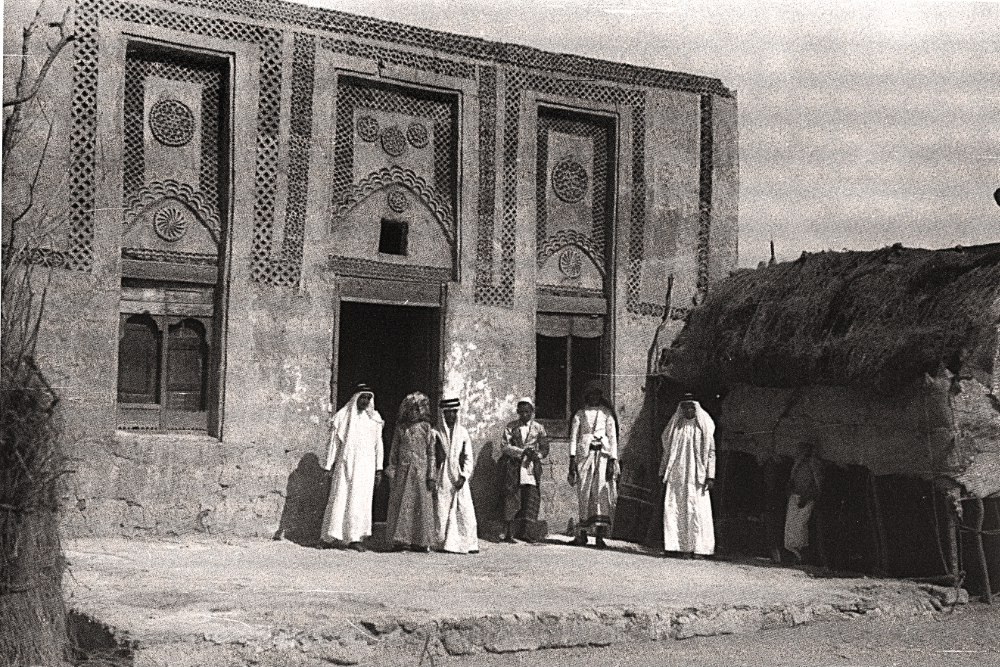
A 1946 photograph of Shada Palace in Abha, built in 1820.
For generations, historians and writers have unwittingly perpetuated the myth that the First Saudi State, forerunner of the modern-day Kingdom of Saudi Arabia, was founded in the year 1744.
In fact, as a new reappraisal of the origins of the Kingdom reveals, they were 17 years out.
There is no doubt that the events of 1744, the year in which Imam Mohammed ibn Saud of Diriyah offered sanctuary to the religious reformer Sheikh Mohammed ibn Abdulwahhab, were hugely significant.
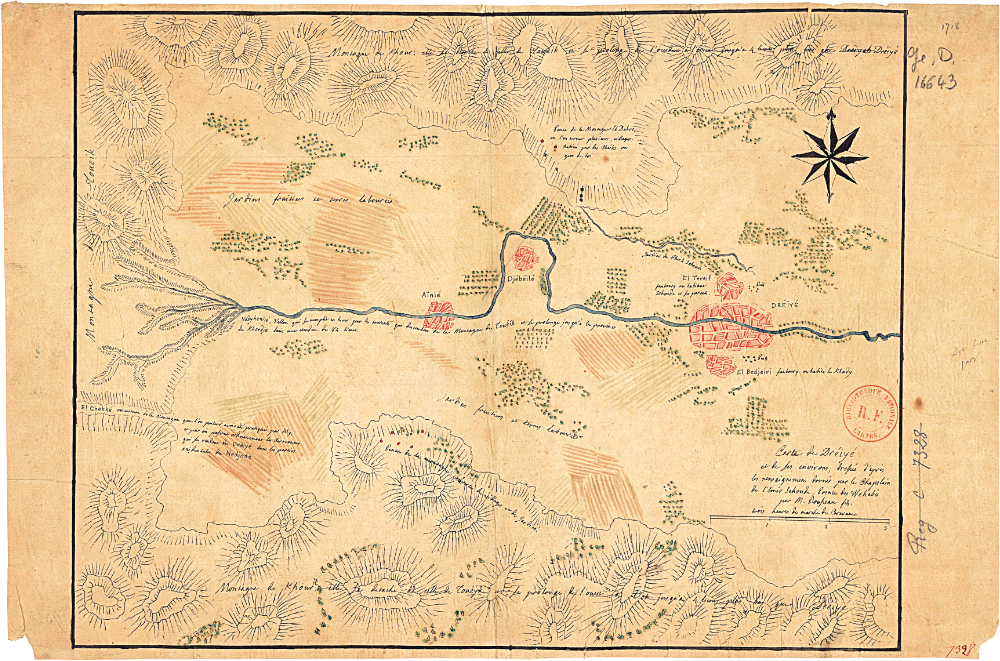
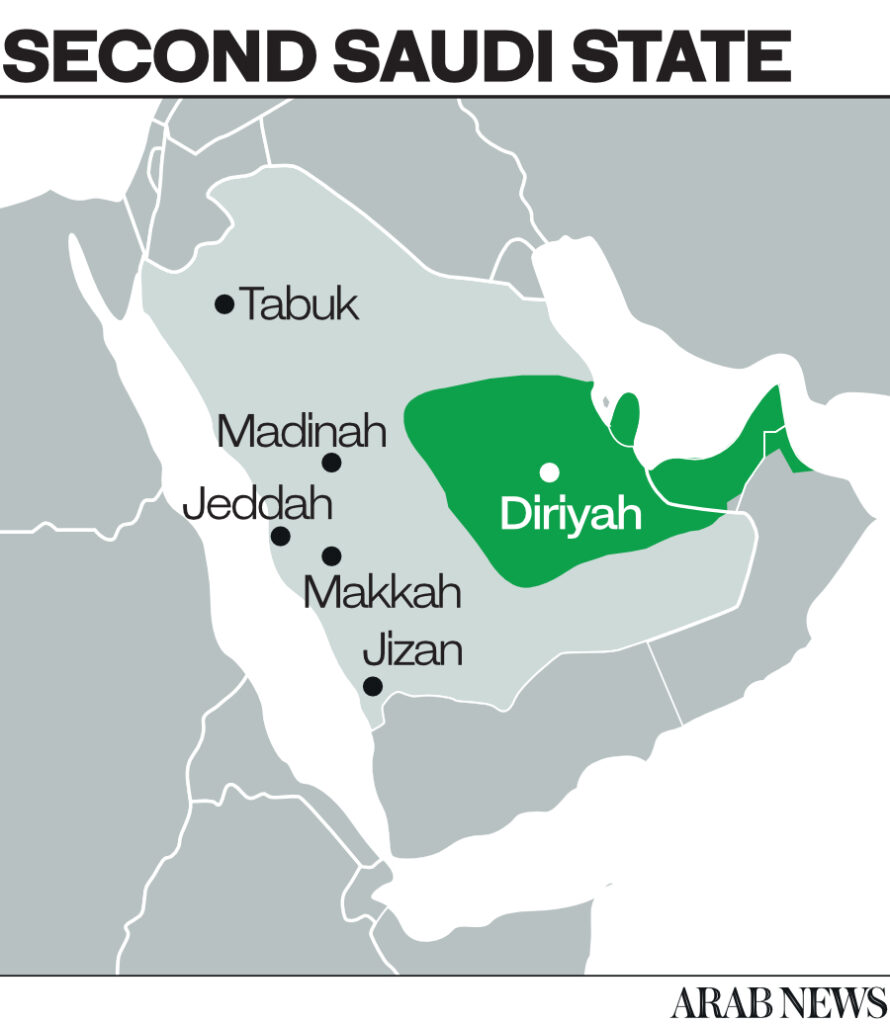
In this ‘Carte de Dreiye,’ the oldest-known map of Diriyah, drawn by a French diplomat in 1808, the historic UNESCO-listed district of At-Turaif on the Wadi Hanifah is recorded as ‘El Tereif.’
But over time the importance of that admittedly historic moment of common cause between state and faith came to obscure the far more complex and deeper-rooted origins of the First Saudi State.
It is to correct this neglect of the Kingdom’s crucial embryonic years that Founding Day has been created, to celebrate 1727 as the true moment of birth and to give Saudis a deeper appreciation of a past far richer than many realize.
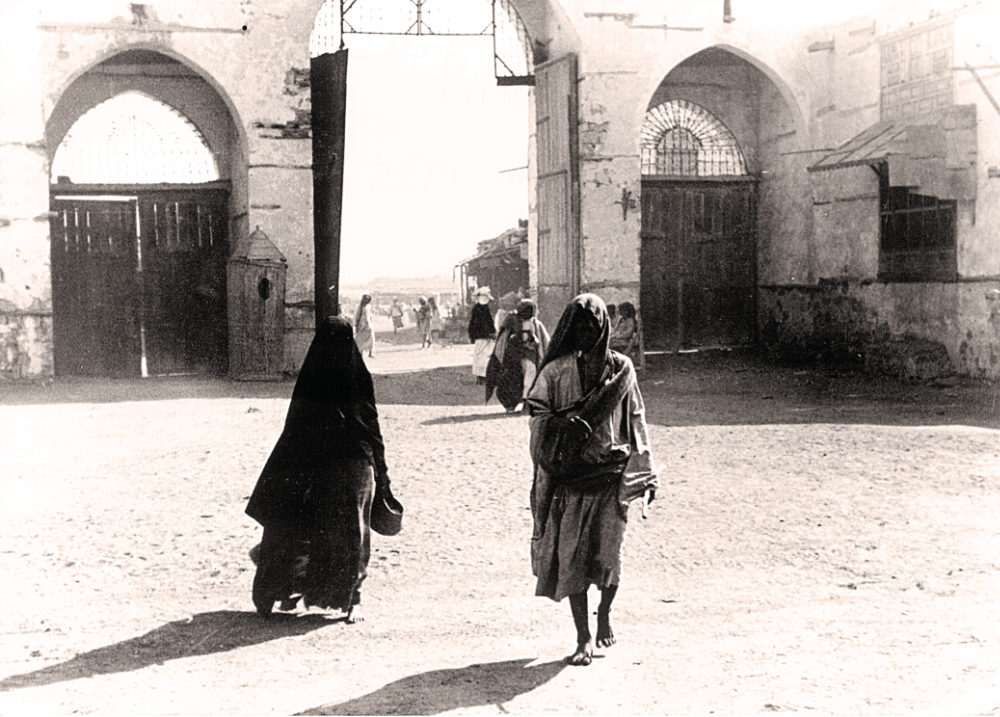
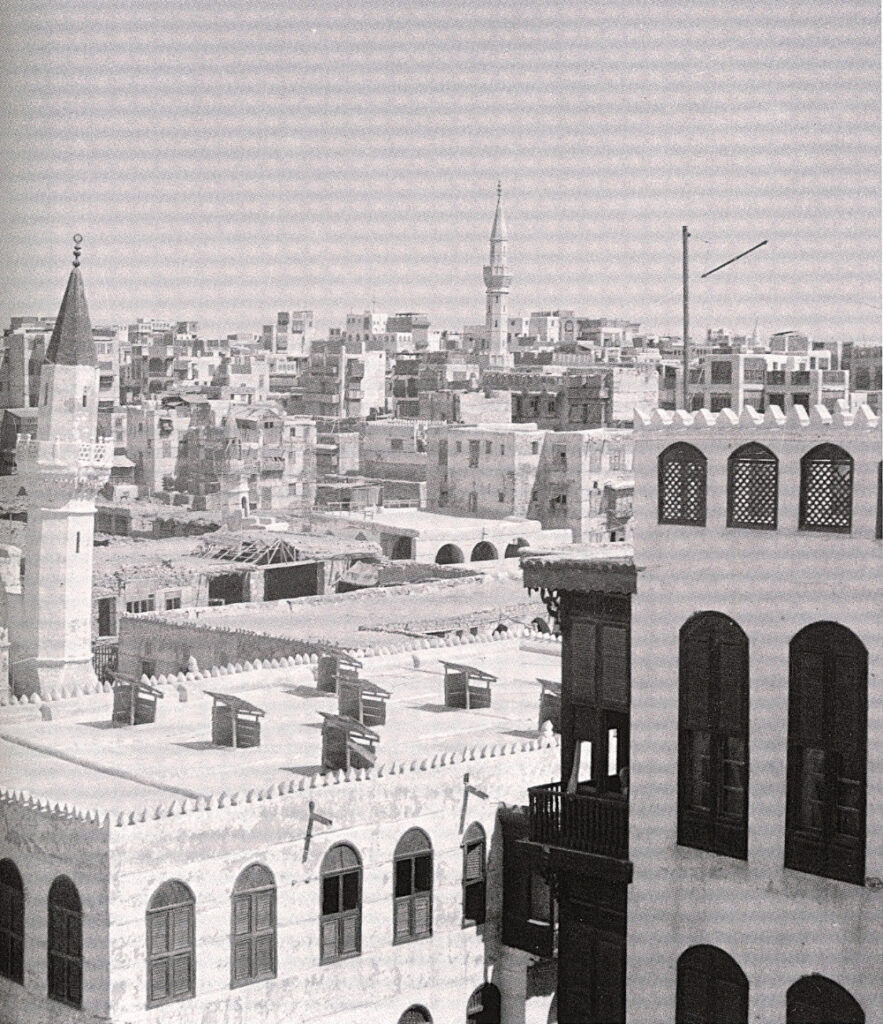
The original Makkah Gate in Jeddah.
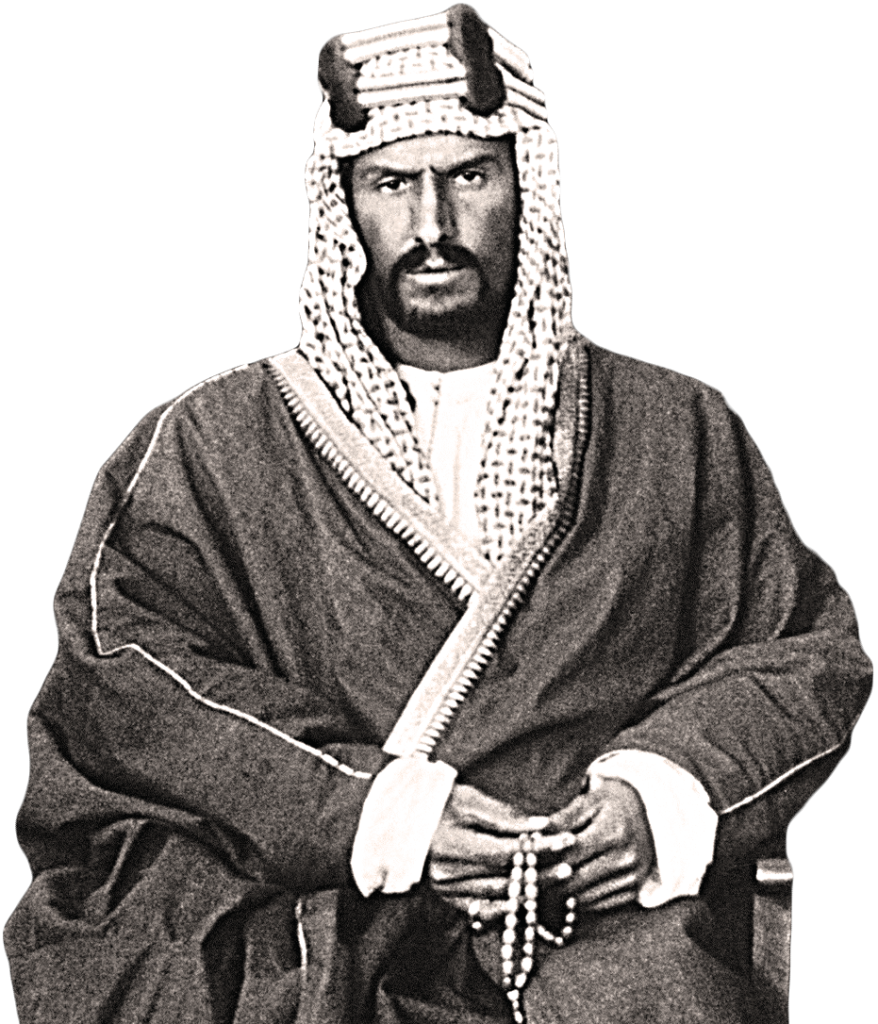
It was in 1727 that Imam Mohammed ibn Saud came to the throne, carrying with him the dream of transforming the city state founded by his forebears three centuries earlier into the capital of a nation which, at its height, would bring peace and stability to most of the Arabian Peninsula.
This resetting of the clock from 1744 to 1727 is the outcome of extensive historical research that has been carried out studying the historical resources held by the new Saudi Historical School.
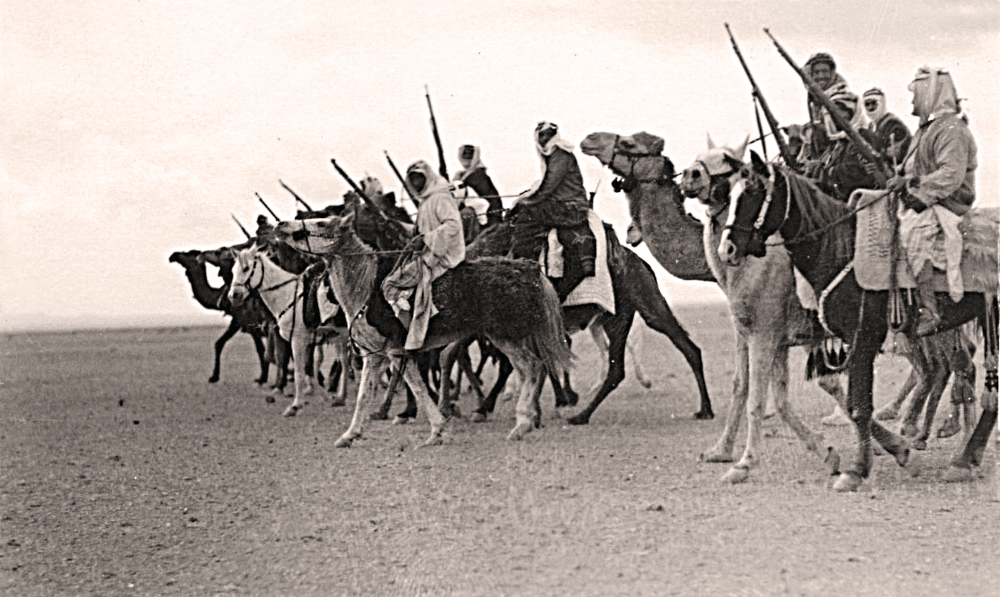
Ibn Saud’s warriors on the move in the early 20th century as the future founder of Saudi Arabia fought to bring the Najd and the Hejaz together.
“Many historians have linked the rise of the state to the arrival of Sheikh Mohammed ibn Abdul Wahab, and have neglected the initial period of Imam Mohammed ibn Saud’s rule and the preceding era, even though this was the foundational period of the state,” said Dr. Badran Al Honaihen, associate director of historical research and studies at Diriyah Gate Development Authority.
“The revision and reinterpretation of historical events is an intellectual phenomenon found in every part of the world. Previous writings can be considered judgments and opinions that do not prevent revisions or the reaching of new conclusions.”
It was in 1727 that Imam Mohammed ibn Saud came to the throne, carrying with him the dream of transforming the city state founded by his forebears three centuries earlier into the capital of a nation which, at its height, would bring peace and stability to most of the Arabian Peninsula. (Supplied)
Today, no one can pinpoint exactly when the long journey toward statehood began. The first certain waypoint on the path is the year 430 when the Banu Hanifah tribe migrated to Al-Yamamah in the lower Najd from their home in the Hejaz on the Red Sea coast.
Here, at the junction of several important caravan routes, the tribe to which the ruling house of Al-Saud belongs settled and thrived, founding Hajr — modern-day Riyadh — trading, and growing crops in the fertile valley that in time would take their name — Wadi Hanifah.
With the coming of Islam the Banu Hanifah stepped on to the stage of world history for the first time.
It was in 1727 that Imam Mohammed ibn Saud came to the throne, carrying with him the dream of transforming the city state founded by his forebears three centuries earlier into the capital of a nation which, at its height, would bring peace and stability to most of the Arabian Peninsula. (Supplied)
In 628, six years after the hijra, the flight of Mohammed and his persecuted followers from Makkah to Madinah, the Prophet sent letters to various Arabian rulers, inviting them to embrace “Islam,” submission to the will of God.
The ruler of the Banu Hanifah at this time was Thumamah ibn Uthal, whose spiritual journey from initial rejection to heartfelt acceptance of Islam is celebrated in the Hadiths.
_____________________________________
IMAM MOHAMMED IBN SAUD’S MOST SIGNIFICANT ACHIEVEMENTS
• Unified Diriyah under his rule and contributed to its stability.
___________________________
• Managed internal affairs and strengthened Diriyah’s community.
__________________________
• Ensured regional stability.
_________________________
• Built the Diriyah wall to counter external attacks.
_______________________
• Began unification campaigns.
_______________________
• Political independence from any external influence.
______________________
• Organized the country’s resources.
_____________________
• Unified the majority of Najd.
_____________________
• Secured Hajj and trade routes.
________________________________________
In Hadith number 189, he is recorded as telling Mohammed: “There was no face on the face of the Earth that was more hateful to me than your face, but now your face has become the most beloved of all faces to me.”
In historical terms, Al-Yamamah would lay dormant for much of the next 800 years. This was a dark age of neglect and widespread emigration to escape the economic hardship endured under the oppressive Ukhaidhir dynasty, which rose to temporary prominence in the Najd in the ninth century.
Destiny, however, is a patient force, and by the 15th century the stage was finally set for the return to influence of the Banu Hanifah.
Generations earlier, part of the tribe had migrated eastwards to settle on the shores of the Arabian Gulf. But in 1446, Manaa’ Al-Muraide, leader of the Marada clan of the Al-Duru tribe of the Banu Hanifah, led his people back to the heart of Arabia, at the invitation of his cousin, Ibn Dira’, the ruler of Hajr.
The settlement they had founded on the coast they had named Diriyah after their tribal name, Al-Duru. Now they established a new Diriyah on the fertile banks of the Wadi Hanifah.
In the words of historian Dr. Badran Al-Honaihen, Al-Muraide’s arrival “laid the building blocks for the establishment of the greatest state in the history of the Arabian Peninsula, after the Prophetic State and the Rashidun Caliphate.”
It was in 1727 that Imam Mohammed ibn Saud came to the throne, carrying with him the dream of transforming the city state founded by his forebears three centuries earlier into the capital of a nation which, at its height, would bring peace and stability to most of the Arabian Peninsula. (Supplied)
Another 300 years would pass before the next momentous steps were taken. In 1720, Saud ibn Mohammed assumed the leadership of Diriyah, who the Saudi Royal Family named after him.
Today, historians date the origin of the First Saudi State to 1727, when Saud’s son, Mohammed, became the ruler of the city state.
He had, said Al-Honaihen, “assumed power in exceptional circumstances.” Diriyah had been rent by internal divisions, and a plague that had spread throughout the Arabian Peninsula had claimed many lives in the Najd. Nevertheless, “Imam Mohammed was able to unite Diriyah under his rule, and to contribute to the spread of security and peace at the regional level and on the level of the Arabian Peninsula.
“The project of the first Saudi state began in 1727, and then his sons took it on after him. What we need to remember from this story is unity, security and peace after centuries of lack of unity.”
It was in 1727 that Imam Mohammed ibn Saud came to the throne, carrying with him the dream of transforming the city state founded by his forebears three centuries earlier into the capital of a nation which, at its height, would bring peace and stability to most of the Arabian Peninsula. (Supplied)
At last, here was a leader with a vision that extended beyond his immediate horizon, and who was determined to found a new state, based on education, culture and security and allegiance to the true faith of Islam.
It was to this dynamic and politically and economically increasingly powerful new state that the religious reformer Sheikh Mohammed ibn Abdul Wahab was drawn.
The sheikh, a religious scholar from the nearby village of Al-Uyayna, had become increasingly concerned that many in the Arab world were forsaking the teachings of the Prophet and returning to heretical pre-Islamic ways. His attempts to introduce reforms were met with hostility in Al-Uyayna, but he would find sanctuary in Diriyah.
“The migration to Diriyah of Sheikh Mohammed ibn Abdul Wahab came as a natural result of Imam Mohammed ibn Saud’s policies,” said Al-Honaihen. “The Imam was known to be religious, and his two brothers, Thunayan and Mishari, and his son Abdulaziz were among those in contact with Sheikh Mohammed ibn Abdulwahhab in Al-Uyayna.
“Sheikh Mohammed did not leave al-Uyayna until after Imam Mohammed invited him to come to Diriyah, and there was a state capable of protecting the Sheikh’s religious mission.”
For his part, “in supporting this reformist mission, Imam Mohammed saw that it was in agreement with the principles of the state he was working to establish, especially its religious aspect.”
In short, it was not the alliance of Sheikh and Imam that made possible the foundation of the First Saudi State, but rather it was the existence of that state, already politically and economically strong, that made possible the spread of the message of reform.
It was in 1727 that Imam Mohammed ibn Saud came to the throne, carrying with him the dream of transforming the city state founded by his forebears three centuries earlier into the capital of a nation which, at its height, would bring peace and stability to most of the Arabian Peninsula. (Supplied)
Al-Honaihen stressed that the decision to officially recognize 1727 as the year of founding should in no way be interpreted as undermining religion as the cornerstone of the Kingdom of Saudi Arabia.
“That’s not correct,” he said. “The objective is merely to put a precise political date to the founding of the state, namely Imam Mohammed ibn Saud’s accession to power in Diriyah, since a number of erroneous policies and opinions had arisen concerning the rise and establishment of the state.
“Moreover, the state in its constitution stipulates that the Kingdom of Saudi Arabia is an Arab Islamic state whose religion is Islam and whose constitution is the Book of God and the Sunna of His Prophet.”
It was in 1727 that Imam Mohammed ibn Saud came to the throne, carrying with him the dream of transforming the city state founded by his forebears three centuries earlier into the capital of a nation which, at its height, would bring peace and stability to most of the Arabian Peninsula. (Supplied)
He is also clear that Founding Day is not an alternative to National Day, celebrated on Sept. 23, but complementary to it.
“Founding Day is not intended to replace Saudi National Day, which celebrates the unification of the Kingdom of Saudi Arabia in 1932, but rather to recognize the beginning of the Saudi state’s history with a new event that celebrates the deep historical roots of the Kingdom.”
Although there is no doubt about the year, 1727, the precise date of the start of Imam Mohammed’s reign is lost to history, according to Al-Honaihen.
Feb. 22 was selected as Founding Day simply because a number of important events are known to have taken place in the first months of Imam Mohammed’s reign, at the start of 1727.
The Industry convenes for Dubai Diamond Conference 2022.
DMCC – the world’s flagship Free Zone and Government of Dubai Authority on commodities trade and enterprise – today hosted its flagship Dubai Diamond Conference (DDC) held under the theme “The Future of Diamonds”.
In his opening remarks, Ahmed Bin Sulayem, Executive Chairman and Chief Executive Officer, DMCC, announced that the UAE reached the top spot globally as a rough diamond hub, trading over USD 22.8 billion worth of rough diamonds in 2021. The country’s polished segment continues to grow at pace, closing in on the current market leader.
Since 2015, the UAE has increased its rough diamonds trade by 76%, overtaking Belgium as the world’s leading rough trade hub. The total diamond trade in the UAE grew by 83% between 2020 and 2021, demonstrating both the industry’s resilience and Dubai’s critical role in the global sector. Dubai boasts direct flights to other diamond hubs across the world, including mining countries in Africa and manufacturing centres in India, resulting in a connected supply chain with Dubai at its centre. Additionally, Dubai is home to the two Kimberly Process (KP) offices in the UAE, making the emirate the only entry point for rough diamonds in the country.
Ahmed Bin Sulayem, Executive Chairman and Chief Executive Officer, DMCC, and Chairman, Dubai Diamond Exchange, said: “I am humbled to share that in 2021, Dubai, UAE, became the number one rough diamond trading hub in the world. With USD 22.8 billion in rough trade last year, we are continuing to grow thanks to the trust and support received from so many of our guests here today – we accomplished this together. This major milestone clearly demonstrates the determination of both Dubai and DMCC in advancing the global industry.
DMCC’s Dubai Diamond Exchange is the largest diamond tender facility in the world and home to over 1,100 diamond companies, providing members and industry professionals with state-of-the-art infrastructure, facilities and services to trade with confidence.
source/content: mediaoffice.ae
__________
(L to R) Bruce Cleaver-CEO, De Beers, Iris Van Der Veken – Exec Director, Responsible Jewellery Council, Amit Dhamani – CEO & MD, Dhamani Jewels Group and Ahmed Bin Sulayem – CEO & Exec Chairman, DMCC
In 1851, the Great Exhibition set out to bring culture, history and innovations together in one place — London — for the world to see. Since this inaugural world expo, however, more than 85 percent of the global events have been hosted by either European or North American cities.
Some notable exceptions are the expos held in Asia, including Osaka in 1970, Aichi in 2005 and Shanghai in 2010, almost all of which set attendance records. But to date, these major events have been predominantly northern and western hemisphere affairs.
That is why Expo 2020 Dubai has been such a big deal, not just for world expos but also for the Middle East and North Africa region as a whole, with the Arab world occupying center stage for the first time.
As host, the UAE has offered the very essence of Arab hospitality, first by dedicating a pavilion to every participating nation, and, second, by giving every nation its own “national day” throughout the event. Saudi Arabia’s day fell on Jan. 7.
Expo 2020 Dubai has also had a distinctly Arab feel. The site is peppered with traditional Arabic design features, on its sunshades, water fountains and even public seating.
It is a well-known expo fact that pavilion positioning is everything, often indicating a nation’s global significance and its relationship with the host. With masterful design planning, the UAE was able to place participating Arab countries at the heart of the action, giving them greater visibility and prominence.
Naturally, the UAE pavilion is the largest, occupying the prime position. Its immediate neighbor is the impressive, world record-setting Saudi Arabian pavilion, and close by are Morocco, Palestine, Egypt, Kuwait and other Arab countries.
The Saudi pavilion achieved three Guinness World Records for the largest interactive light floor, the longest interactive water curtain and the largest interactive digital screen mirror. But it is not alone in showcasing avant-garde architecture ideas.
While the expo lives up to its theme of “Connecting Minds, Creating the Future,” it also offers a visible celebration of Arab cultures and nations on a global stage.
Themes celebrating the past are normally divided between the ancient past, such as the Bronze Age settlements of Failaka Island in Kuwait, and the more recent past, before the rapid urbanization of the last half-century.
Indeed, the Arab pavilions go to great lengths to pay homage to the feats and wisdom of past generations. For example, the first exhibit in the UAE pavilion features a stylized desert, with the soft, fine sand of Emirati dunes used as a projection surface for old film reels paying tribute to Sheikh Zayed Al-Nahyan, the UAE’s founding father.
In the nearby Vision Pavilion, dedicated to Sheikh Mohammed bin Rashid Al-Maktoum, a guided video tour begins with the story of his stay with a Bedouin leader in the desert as a child, and the lasting impact that connection with the land made on him as a leader.
In the Saudi pavilion, ancient cultural sites, such as the tombs in Al-Hijr, At-Turaif District and the AlUla valley, are featured in a striking visual tour of the rich cultural history and natural beauty of the Kingdom.
In the Oman pavilion, meanwhile, a focus on frankincense highlights the sultanate’s eye-catching landscape and long trading history.
Far from focusing exclusively on their glorious past, Arab pavilions look to the future. Many have a concrete vision that highlights targets set in order to achieve desired development outcomes.
Saudi Arabia has put sustainability at the heart of its vision for the future, Vision 2030, which seeks to diversify its economy, alongside a pledge to reach net-zero carbon emissions by 2060.
Egypt has its own Vision 2030 plan, announced in 2016, which sets out eight national targets aligned with the UN’s Sustainable Development Goals, focusing on an inclusive economy, education and the environment.
In this vein, Kuwait’s pavilion addresses the resilience of its earliest settlements, while a stylized water tower at the pavilion’s center highlights the ways in which humans have carefully managed its natural resources in order to flourish there.
Although Lebanon’s pavilion is much more austere compared with other Arab offerings, its message is a strong reminder of the resilience of its people.
Taken together, Arab participants in Expo 2020 Dubai have made good use of this global stage to highlight their achievements, heritage, ambitions and fortitude. In this sense, the expo can be considered an Arab triumph.
source/content: arabnews.com
___________
Expo 2020 Dubai has been such a big deal, not just for world expos but also for the Middle East and North Africa region as a whole, with the Arab world occupying center stage for the first time. (AFP/AN Photo)
Coinciding with the country’s 51st National Day celebrations, Karwa Motors has rolled out its first Karwa-branded bus proudly bearing the ‘Made in the Sultanate of Oman’ tag called ‘Salam’.
The company has a manufacturing facility in the Duqm Special Economic Zone.
The event also marks the start of manufacturing operations for the joint investment project between Oman and Qatar, which in its first phase aims to produce 500 buses annually.
Karwa Motors is a joint venture between Mowasalat Qatar, the state-owned transport company of Qatar, and Oman Investment Authority’s sovereign wealth fund.
Commenting on the new facility, Dr Ibrahim al Balushi, chief executive officer of Karwa Motors, said, “Located on a 600,000sqm site, the manufacturing facility is outfitted with the latest in technology. Our factory will also create job opportunities for Omanis, whether they are regular jobseekers or have experience in the automotive field.
“The first phase of ramp-up will be focused on producing the first of three Karwa-branded buses – Salam – which will be used at the FIFA World Cup 2022.
Qatar’s Nasser Saleh Al Attiyah won Qatar International Rally to record a 16th victory at his home event and achieve a stunning milestone of 80 wins in the FIA Middle East Rally Championship (MERC) since 2003.
The success was a 28th for co-driver Mathieu Baumel in the MERC and his fifth in Qatar, while Al Attiyahs 80th success as a driver equaled the number of wins achieved last month by French legend Sébastien Loeb in the FIA World Rally Championship.
Oman’s Abdullah Al Rawahi was patient and stayed clear of trouble as chaos ensued around him. He and Jordanian co-driver Ata Al Hmoud were rewarded with a stunning second place in their Oman Rally Team-run Skoda Fabia R2 evo and a useful haul of championship points.
Andorra-based Ulsterman Kris Meeke and co-driver Chris Patterson led after two stages on Friday before rolling out of contention for the win in stage four. Meeke climbed from fifth to third during the final day and then overcame a damper issue on the final loop of three stages to regain third overall and the final place on the podium.
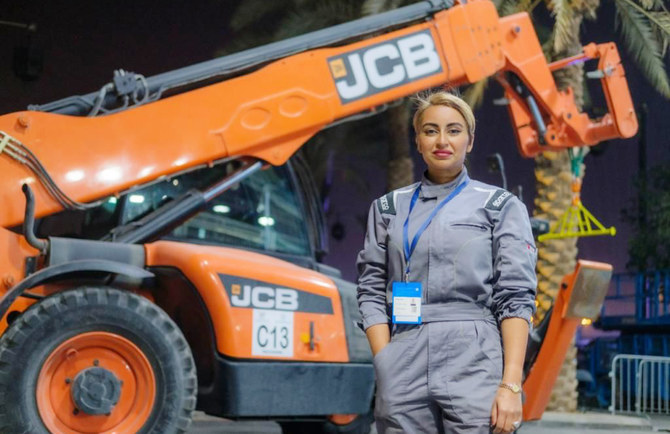
Merryhan Al-Baz’ has been taking apart cars and indulging her curiosity in the world of vehicles since she was 13 years old.
This passion for motors and engines, inherited from her father, lead the now 30-year-old to participate in the Diriyah E-Prix 2022 as a recovery marshal last month, becoming the world’s first female crane driver in race competitions.
“No one ever thought a woman could enter this field — the world of mechanics is a male dominated career. Fortunately, in my household, my mother and father always support any talents, ideas, or anything you desire to do,” Al-Baz told Arab News.
Al-Baz explained that there are four types of marshals at the E-Prix; fire, recovery, flag, and trackside. On the ground, authorities saw her capabilities and assigned her to join the recovery marshal team.
Recovery marshals must clean up the circuit immediately after an accident happens in order for a race to continue its course.
Al-Baz is a self-taught mechanic, with her educational background completely different from her career path. “I actually studied psychology and media in Lebanon, but I see myself in the world of cars,” she said. Al-Baz registered at an institute in Jeddah to receive a certificate to pursue her career in a more official manner. Her autodidactic reputation earned her a position as an instructor too, and she hopes that she will be able to open her own automobile repair shop in the near future.
source/content: arabnews.com
__________
Merryhan Al-Baz, 30-year-old Saudi woman with passion for motors and engines, becomes the world’s first female crane driver in race competitions. (Supplied)
Saudi Arabia has declared Feb. 10 as “Arabian Leopard Day” in a bid to raise awareness of the endangered big cat.
The move, which was announced by the Council of Ministers last month, is part of the Kingdom’s efforts to protect the species, which is now classed as critically endangered, from extinction.
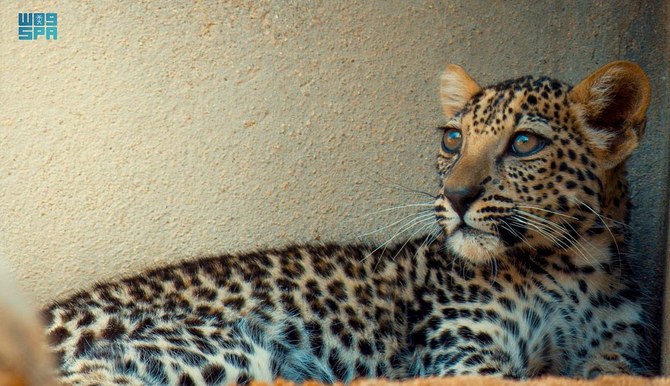
The Arabian leopard is the chief predator in Saudi Arabia and plays a major role in the Kingdom’s culture. But overhunting and a lack of natural prey means there are now fewer than 200 left in the wild.
In December 2020, Prince Badr Bin Farhan, the minister of culture and governor of the Royal Commission for AlUla, established the Global Fund to Protect the Arabian Leopard from Extinction in the Sharaan Nature Reserve. Its aim is to sustain the leopard population and its prey, and protect its natural habitat.
Images of the Arabian Leopard were projected onto buildings and monuments across Saudi Arabia and the UAE on Feb.10.
In recent years, the commission and the National Center for Wildlife have been working on a number of initiatives to protect the big cat. Among these is expanding a breeding program within the Sharaan reserve.
Also, last year, Princess Reema bint Bandar Al-Saud, Saudi Arabia’s ambassador to the US, launched the nonprofit foundation Catmosphere to raise awareness of the many endangered cat species around the world, including the Arabian leopard.
The Kingdom also works closely with Panthera, which is devoted to the conservation of the world’s wild cat species.
The Arabian leopard lives in high mountains and is native to Saudi Arabia, Yemen, Oman and the UAE. Anyone found hunting the animal in the Kingdom faces a fine of SAR400,000 ($106,000) — rising to SAR30 million for repeat offenders — and up to 10 years in prison.
source/content: arabnews.com
______________
The Arabian leopard is the chief predator in Saudi Arabia and plays a major role in the Kingdom’s culture. (SPA)
The video chain features 265 people of different nationalities speaking various languages while passing the “Expo 2020 Dubai” pin in the Al Forsan Park at Expo 2020 Dubai.
The Dubai Police General Command and Expo 2020 Dubai received an official Guinness certificate in the presence of Reem bint Ibrahim Al Hashemy, Minister of State for International Cooperation and Director-General of the Expo 2020 Dubai Office; Major General Ahmed Mohammed Rafea, Assistant Commander-in-Chief of Dubai Police for Administrative Affairs; Brigadier Saleh Murad, Director of the General Department of Human Resources; and many officers and officials representing the various pavilions at the global event.
The event witnessed the participation of 265 people, 146 females and 119 males, from 193 nationalities of participating pavilions at Expo 2020 Dubai.
The UAE-Bahraini Light-1 CubeSat was successfully launched into orbit from the International Space Station, in cooperation with the Japan Aerospace Exploration Agency (JAXA).
Light-1 CubeSat is a collaboration initiative of the UAE Space Agency, Bahrain’s National Space Science Agency, Khalifa University of Science and Technology, and New York University (NYU) Abu Dhabi.
JAXA coordinated the launch from the Tsukuba Space Centre (TKSC) in Japan, and the event was broadcast live on social media channels. It was also live-streamed on Bahrain’s NSSA National TV and JAXA.
The Light-1 CubeSat represents the region’s first scientific mission to monitor and study Terrestrial Gamma-ray Flashes (TGFs) from thunderstorms and lightning. Data gathered from the Light-1 CubeSat, which aims to leverage space science to support sustainable economic growth, will be shared globally to support scientific analysis and encourage cooperation with research centres around the world.
The team that worked on the design and development of Light-1 bus consists of 22 university students from Khalifa University including nine Bahrainis, 10 Emiratis, and three international students, advised by Dr. Firas Jarrar, Manager, Yahsat Space Lab, Assistant Professor, Mechanical Engineering.
The NYU Abu Dhabi team of five Emirati students and five international students, who worked on the development of the payload called Rapid Acquisition Atmospheric Detector (RAAD – Arabic for ‘thunder’), was advised by Dr. Francesco Arneodo, Programme Head of Physics, and Dr. Mallory Roberts, Professor of Physics”