Arabs & Arabian Records Aggregator. Chronicler. Milestones of the 25 Countries of the Arabic Speaking World (official / co-official). AGCC. MENA. Global. Ist's to Top 10's. Records. Read & Enjoy./ www.arabianrecords.org
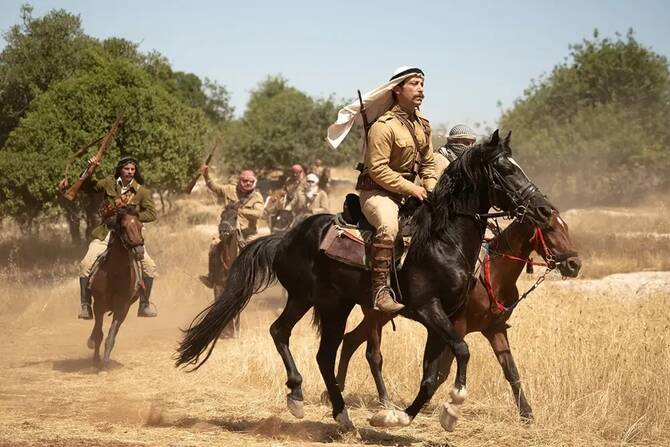
Annemarie Jacir’s award-winning film “Palestine 36” leads the nominations for the 10th Critics Awards For Arab Films, which were announced on Wednesday.
The annual prizes, organized by the Arab Cinema Center, have been voted on by a record 307 Arab and international critics from 75 countries this year, with the awards ceremony due to take place during the Cannes Film Festival on May 16.
“Palestine 36” has been nominated in six categories including best film, director and screenplay. It is followed by Maryam Touzani’s “Calle Malaga” with five nominations; Cherien Dabis’ “All That’s Left of You” with four; and “Yunan,” “My Father’s Scent,” and “Once Upon a Time in Gaza” with three each.
Kaouther Ben Hania’s Oscar-nominated “The Voice of Hind Rajab” garnered one nomination in the best director category.
“Palestine 36” is set during the 1936 Arab Revolt and follows five interconnected narratives as villages across Palestine confront British colonial rule.
With rising numbers of Jewish immigrants escaping antisemitism in Europe, and the Palestinian population uniting against Britain’s 30-year dominion, all sides spiral toward inevitable collision in a decisive moment for the British Empire and the future of the entire region.
“I hope people see themselves in the film,” she told Arab News in December last year. “I don’t want to teach anyone anything. There’s a lot of history in the film and there’s a lot of history that’s been erased. I hope that’s something that comes through.”
source/content: arabnews.com (headline edited)
______________
Annemarie Jacir’s award-winning film “Palestine 36” leads the nominations for the 10th Critics Awards For Arab Films, which were announced on Wednesday. (Supplied)
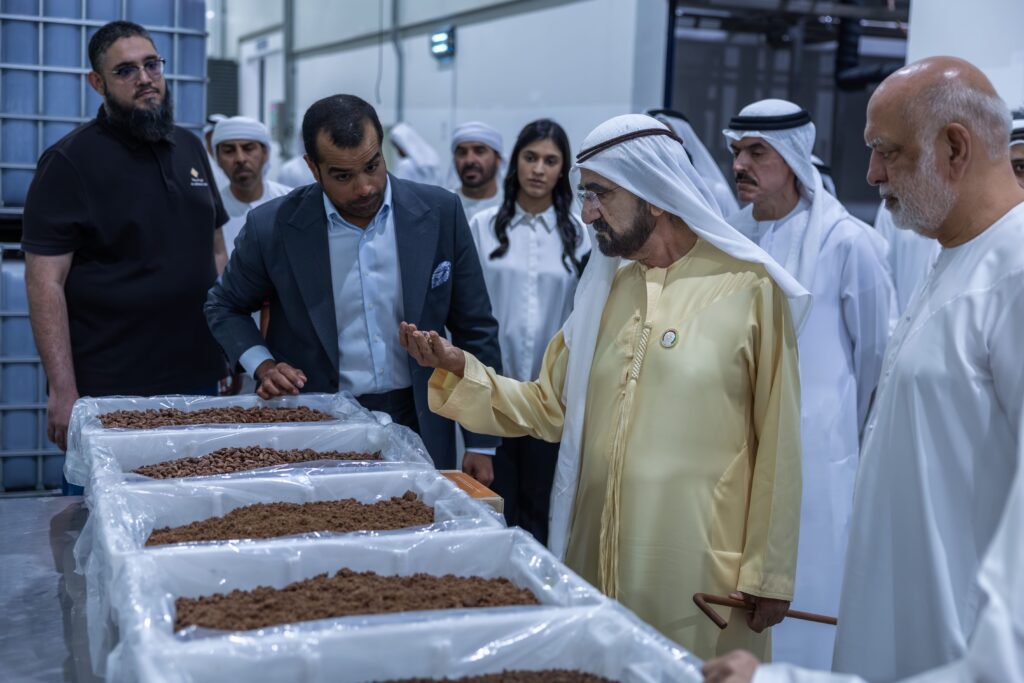
His Highness Sheikh Mohammed bin Rashid Al Maktoum, Vice President, Prime Minister and Ruler of Dubai, visited Al Barakah Dates Factory, the world’s largest privately-owned dates factory located in Dubai Industrial City.
The facility spans over 800,000 square feet, with an annual production capacity of 100,000 tonnes, one of the market leaders for packaging and processing dates in the world.
During the visit, H.H. Sheikh Mohammed said that the UAE continues to strengthen its position as a global hub for advanced food industries through innovation, stronger production chains, and boosting the competitiveness of national products. He noted that the dates industry is a successful example of turning the country’s agricultural heritage into a modern, high-value-added sector that supports the economy and enhances food security.
H.H. Sheikh Mohammed said that the UAE continues to invest in key sectors that impact people’s lives, especially the food sector, and is developing its national industries to be more globally competitive through advanced technologies, higher production efficiency, and expanded access to international markets.
H.H. Sheikh Mohammed added that the dates industry is part of the UAE’s identity and heritage, and its development reflects a vision of turning resources into sustainable opportunities.
He also said humanitarian initiatives in the sector, including efforts to combat malnutrition, reflect the UAE’s commitment to improving lives and addressing global food security challenges.
During the visit, H.H. Sheikh Mohammed, accompanied by Malek Al Malek, Chairman of TECOM Group, was briefed by the factory founder Saleem Mohammed and his son Yousuf Saleem Mohammed, Managing Director, on production lines, manufacturing and packaging stages, as well as the factory’s range of products.
H.H. Sheikh Mohammed also reviewed the global reach of the factory’s products, which are exported to 97 countries, with the US, the UK, and EU among the key markets.
The factory is located in Dubai Industrial City, part of TECOM Group’s industrial parks, which was launched in 2004. The Dubai Industrial City hosts over 350 factories and more than 17,000 employees, and is strategically located near Jebel Ali Port, Al Maktoum International Airport, and Etihad Rail’s freight terminal, ensuring strong logistics connectivity. The factory reflects private sector success in the food industry, and was founded by businessman Saleem Mohammed, who began his career in Dubai in 1983 before moving into dates trading and processing in the 1990s.
The commission is headquartered in Beirut and brings together 21 member states across the Middle East and North Africa.
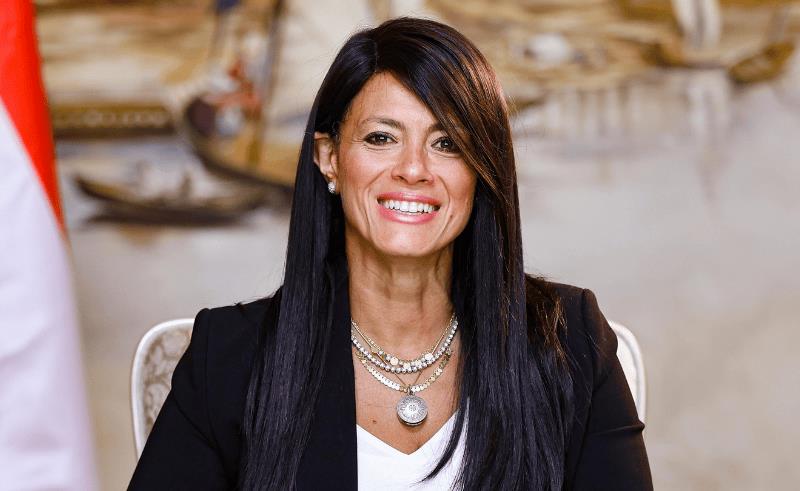
Rania Al-Mashat has been appointed Under-Secretary-General of the United Nations and Executive Secretary of the Economic and Social Commission for Western Asia, following an announcement by Secretary-General António Guterres.
Al-Mashat brings more than 25 years of experience in macroeconomic policy, central banking and international development. Between 2018 and 2026, she served in Egypt’s government across multiple portfolios, including tourism, international cooperation, and planning and economic development, becoming the country’s first female minister of tourism.
Prior to her ministerial roles, she served as sub-governor for monetary policy at the Central Bank of Egypt and worked as an adviser to the chief economist at the International Monetary Fund in Washington.
The Economic and Social Commission for Western Asia, headquartered in Beirut, is one of the UN’s five regional commissions, serving 21 countries across the Middle East and North Africa. Its mandate includes supporting economic integration, policy coordination and sustainable development across the region.
Al-Mashat holds a PhD and MA in economics from the University of Maryland, College Park and a BA in economics from the American University in Cairo. She has also completed executive programmes in leadership and public policy at Harvard and Oxford.
Leo XIV’s upcoming visit will honour Saint Augustine’s roots and a small Catholic community that shared the nation’s suffering.
For the first time in Catholic history, a pope will make an official visit to Algeria.
From 13 to 15 April, Pope Leo XIV will begin an African tour in the Maghreb country, which will then take him to Cameroon, Angola and Equatorial Guinea.
His trip to Algeria will include two stops: the capital, Algiers, and Annaba, the city of Saint Augustine. The fourth century thinker is a key figure in the pope’s life and in the meaning given to this unprecedented visit.
“I am an Augustinian, a son of Saint Augustine, who once said: ‘With you I am a Christian, and for you I am a bishop’,” Leo said in his first address as Pope to the crowd gathered in St Peter’s Square in Rome in May last year to celebrate his election.
These words sparked enthusiasm in the Algerian media, which emphasised the new Pope’s attachment to the cleric and theologian born in 354 in Thagaste, an Amazigh-Roman city known today as Souk Ahras, in northeastern Algeria.
As bishop of Hippo, the ancient name for the city of Annaba, he profoundly influenced Christian thought.
“Saint Augustine is important to the Pope because he entered the Augustinian Order at a very young age,” Cardinal Jean-Paul Vesco, Archbishop of Algiers, told Middle East Eye.
“From the age of 13, Leo attended a school in the United States [where he was born] run by the Augustinians,” he added.
After studying mathematics and philosophy in Philadelphia, the man then known as Robert Francis Prevost joined the Augustinian order at the age of 22 and rose through the ranks to become prior general of the order.
It was in this capacity that he made his first visit to Algeria, in 2001, to participate in the first international symposium on Saint Augustine at the University of Annaba.
Cardinal Vesco says he convinced the new Pope to visit Algeria in the early days of his pontificate.
On the agenda for his upcoming visit is a public address at the Martyrs’ Monument, erected on the heights of the capital in memory of those killed during the Algerian war of independence, followed by a meeting with the country’s highest authorities at the conference centre of the Great Mosque.
Augustine ‘was born here’
The Algerian authorities are attaching particular importance to this visit, the preparations for which are being personally overseen by President Abdelmadjid Tebboune.
Annaba, in particular, has been transformed into a vast construction site, with asphalting, painting and cleaning of the streets along the road leading to the Basilica of Saint Augustine, which is also undergoing maintenance work.
‘Augustine is a figure rooted in North African geography and culture. Yet, this essential dimension has long been obscured’
– Abdenasser Smail, historian
For historian Abdenasser Smail, who recently published Saint-Augustin, un Nord-Africain universel (Saint Augustine, a Universal North African), the Pope is visiting Algeria and Annaba to pay homage to the philosopher of antiquity but also “because Augustine is not just a Christian figure.
A key element of Augustine’s thought was how he radically internalised the relationship with God in the depths of the self, what he calls the “inner trinity”: memory, intelligence and will.
“He is one of the major thinkers in the history of humanity. Europe embraced him. The Vatican drew inspiration from him. But he was born here,” Smail told MEE.
The pope’s visit, he added, is not only religious: “It is about historical memory.”
According to him, the tribute Leo is paying to Saint Augustine is a way of righting a historical wrong that has long obscured the theologian’s true origins.
“Augustine is a figure rooted in North African geography and culture. Yet, this essential dimension has long been obscured, both in Western representations and in contemporary Algerian national narratives,” Smail said.
In a country with an overwhelming Muslim majority, “an Algerian Muslim can be proud of this,” he added.
“Because being proud of one’s history doesn’t mean adopting another faith. It means recognising that this land has produced multiple great figures. To deny this is not to defend Islam. It is to impoverish our own memory,” he said.
An Algerian Church
Beyond the very symbolism of Saint Augustine, Pope Leo XIV’s visit to Algeria is also a tribute to, and support for, the Algerian Church, “a very small Church in a Muslim world”, as Vesco described it.
“This is the church of that people, the Algerians,” added the archbishop of Algiers, who has lived in the country for nearly 20 years and was naturalised as an Algerian citizen in 2023.
The Catholic Church in Algeria is one of the smallest in the world: barely 4,200 faithful spread across four dioceses – Algiers, Oran, Constantine and Laghouat – out of a population of 46 million.
It has about 60 priests and 100 nuns and monks, primarily from Europe, Africa and Latin America. Its most striking characteristic is its composition: the faithful are overwhelmingly foreign and of sub-Saharan origin, a reality now visible in every parish.
Native Algerian Catholics number only a few hundred; no official figures are available. The number of faithful plummeted dramatically with Algeria’s independence in 1962 and the mass exodus of Europeans from the country.
“Of course, the Church returned to Algeria with [French] colonisation, because it had practically disappeared [after the Arab-Islamic conquest of North Africa in the 7th century],” Vesco said.
However, this Church has become Algerian, he explained, emphasising the essential role of the archbishop of Algiers from 1954 to 1988, Leon-Etienne Duval, in the process.
As early as 1955, a year after the start of the War of Independence that pitted Algerians against the French occupiers, Duval denounced the socio-economic injustices of the colonial system and the torture and massacres of Algerians committed by the French army, while supporting their self-determination.
Naturalised Algerian in 1964 and promoted to cardinal, Duval succeeded in transforming the church in Algeria from a colonial institution into a church officially recognised and supported by a newly independent state where Islam was proclaimed the state religion.
“Our church remains marked by Cardinal Duval’s appeal in 1962 to priests to stay in Algeria [at the end of the war],” Cardinal Vesco said.
‘It is a church that truly serves Algerian society’
– Cardinal Jean-Paul Vesco, archbishop of Algiers
“This is how we kept schools, dispensaries, etc open from independence onward, because it is a church that truly serves Algerian society.”
The position defended by Duval, inherited from decades of struggle by liberal Catholics in Algeria, was supported by the Vatican and contributed to the Catholic Church’s dialogue with the Muslim world.
“By bringing the problems of the ‘Third World’ to the forefront, the Algerian experience also contributed to a profound shift in the Church’s theological and political stance toward Islam,” writes researcher Uriel Gadessaud in the journal Outre-Mers.
“It was during the Second Vatican Council (1962–1965) that the Holy See underwent a true aggiornamento, under the influence of the Algerian War,” he added, referring to the Vatican’s new opening to the world and other religions.
In addition to aspirations for independence, members of the Catholic Church in Algeria shared with local Muslims the sufferings of the “black decade”, the civil war that ravaged the country between 1992 and 2002.
Triggered by the army’s halt to the electoral process in January 1992 after the Islamic Salvation Front (FIS) won the first round of parliamentary elections, the conflict between armed Islamist groups and security forces killed an estimated 200,000 people.
Among them were 19 Christian religious figures killed between 1994 and 1996, including the Bishop of Oran, Pierre Claverie, and the seven monks of Tibhirine, whose abduction and murder in 1996 remain shrouded in mystery.
Declared martyrs by former Pope Francis, they were beatified in December 2018 in Oran – the first beatification ceremony held in a Muslim country. During his upcoming visit to Algiers, Pope Leo is scheduled to pray in the chapel of these 19 “martyrs of Algeria”.
Calls to address human rights
Today, the small Catholic community lives in harmony with a predominantly Muslim Algerian society, and the faith is officially protected and recognised by the authorities, even if non-Muslim religious practices remain confined to specific spaces.
“I live my faith discreetly, as required by the fact that I live in a Muslim society, but I have never received a single derogatory remark,” Simon, an Ivorian student who has been living in Algiers for three years, told MEE.
Every Sunday, he attends mass at the Diocesan Centre in Hydra, an upscale neighbourhood of the capital.
‘I live my faith discreetly, as required by the fact that I live in a Muslim society, but I have never received a single derogatory remark’
– Simon, Ivorian student in Algiers
“Beyond prayer and communion, we meet to organise charitable activities, classes for disadvantaged Algerian children and book clubs,” added Simon, who said he is “proud and happy about the Pope’s visit”.
“It’s a gift, a grace, for our little flock here in Algeria.”
However, the Christian presence in Algeria also has a dark side: the restrictions targeting Protestant worship and its evangelical branch, although freedom of worship is enshrined in the constitution.
Since 2006, a decree “establishing the conditions and rules for the practice of religions other than Islam” requires authorisation for the creation of religious associations, their practices and their use of buildings.
While the Catholic Church in Algeria enjoys the status of an approved association, and its sermons are even broadcast on public radio, this is not the case for the Protestant Church of Algeria, officially recognised since 2011 but whose activities are only authorised within its main headquarters in Algiers.
There are no longer any legally open Protestant places of worship in the country. The authorities closed them because they suspect evangelicals of conducting conversions, which is prohibited by Algerian law. Some pastors are even facing legal action.
Several Christians contacted by MEE declined to express themselves for fear that the authorities would suspect them of being converted evangelicals.
This situation is regularly denounced in the US State Department’s report on religious freedom and by human rights groups.
On Tuesday, three international NGOs urged Pope Leo XIV to raise issues of human rights and religious freedom with the Algerian authorities during his visit to Algeria.
“We ask you to call on the authorities to end discrimination against religious minorities and to respect their right to freedom of religion or belief, including the right to practice their religion freely,” EuroMed Rights, Human Rights Watch and MENA Rights Group said in a letter addressed to the pontiff.
According to the groups, religious minorities “face discriminatory legal and administrative restrictions that limit their ability to practice, organise and express their faith openly”.
In addition to Protestants, they cite Ahmadis, followers of a faith originating in India who consider themselves Muslim but are regarded as heretics by the Sunni majority in Algeria.
The NGOs also urged the Pope to call on Algerian authorities to “release those arbitrarily detained for exercising their human rights”.
“Hundreds of protesters, activists, journalists and human rights defenders have been arbitrarily detained, unjustly prosecuted and sentenced to prison terms for exercising their rights to freedom of expression and peaceful assembly,” they said.
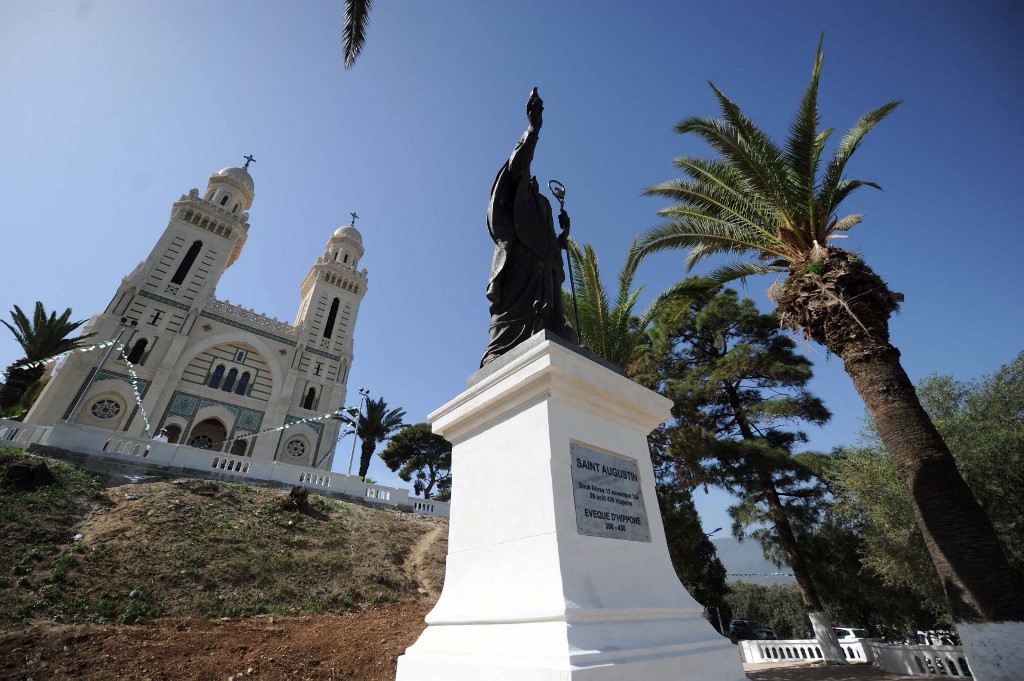
A picture taken on October 19, 2013 shows a statue of Saint-Augustin in front of the Saint-Augustin basilica after its reopening in the Algeria’s eastern city of Annaba. The basilica, built in 1909 during the colonial period, fell into disrepair before being reopened after major restoration works. AFP PHOTO / FAROUK BATICHE (Photo by FAROUK BATICHE / AFP)
“Houris” (Virgins, in English) focuses of the victims of what Algerians call the “black decade,” when tens of thousands of people were killed as the army fought an Islamist insurgency.
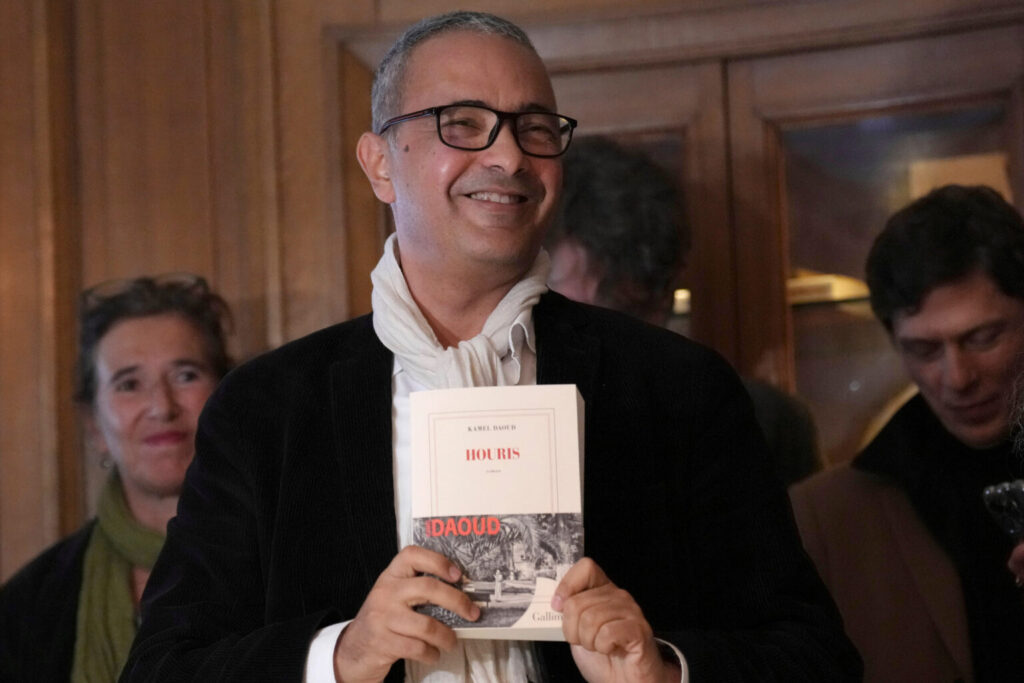
French-Algerian author Kamel Daoud said Wednesday that he has been sentenced to three years in prison in Algeria for his book “Houris,” a recipient of France’s most prestigious literary award.
The writer, who lives in France, announced on X that the verdict was delivered on Tuesday. He said that he was also fined 5 million Algerian dinars ($38,000).
“Houris” (Virgins, in English) focuses of the victims of what Algerians call the “black decade,” when tens of thousands of people were killed as the army fought an Islamist insurgency. The conflict erupted in 1991 after Islamists won a first round of legislative elections, prompting the military-backed government to cancel the second round of voting.
It was awarded the Goncourt Prize, France’s top literary award, in 2024.
Daoud said that he was convicted under what is known as the Charter for Peace and National Reconciliation, a text adopted by referendum in 2005 that offered widespread pardons to both armed Islamists and security forces.
“The text punishes any public mention of the civil war,” Daoud said. “Ten years of war, nearly 200,000 dead according to estimates, thousands of terrorists granted amnesty … and only one guilty party: a writer.”
In addition to the legal action brought by the court in the Algerian city of Oran, Daoud is the target of two international arrest warrants issued by Algeria in May 2025 and is also under threat of being stripped of his Algerian nationality.
Another French-Algerian writer, Boualem Sansal, has faced similar problems.
The author — whose works have been critical of Islam, colonialism and contemporary Algerian leaders — was convicted of undermining national unity and insulting public institutions and was sentenced to five years in prison under Algeria’s anti-terrorism laws.
He was granted a Humanitarian pardon in Algeria after an appeal by Germany’s president, and returned to France last year after serving a year in prison.
Daoud’s book “Houris” tells the story of Aube, a young girl who miraculously survives a nighttime terrorist attack in her village of Had Chekala in western Algeria, despite having her throat slit. Following the novel’s publication, an Algerian woman, Saâda Arbane, accused Daoud of “stealing” her story and using it as the basis for his book.
Arbane previously had been treated by Aicha Dahdouh, Daoud’s wife, a psychiatrist at Oran University Hospital and a specialist in trauma linked to violence during the civil war.
“Kamel Daoud and his wife asked for my permission to use my story, and I refused every time,” she said during several appearances on Algerian television, adding that it constituted “an invasion of her privacy.”
A collective of lawyers was subsequently formed in solidarity to defend Arbane, invoking provisions of the Charter for Peace and National Reconciliation, which prohibits even the mere mention of this painful period in Algeria’s history.
FILE – Algerian-French novelist Kamel Daoud holds his book Houris after being awarded with the Goncourt, France’s most prestigious literary prize, Monday, Nov. 4, 2024 in Paris. (AP Photo/Aurelien Morissard, File)
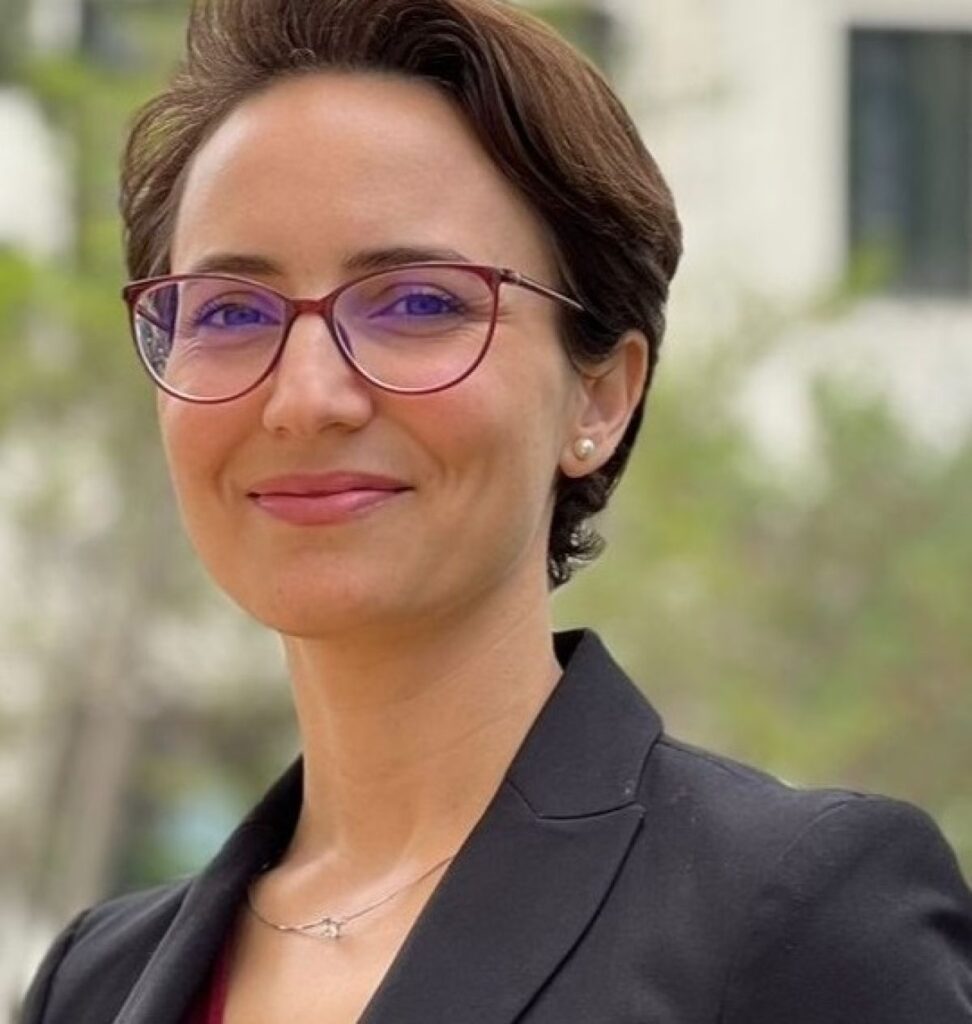
Tunisian researcher Emna Harigua has been honoured with Tunisia’s 2025 Best Female Scientific Achievement Prize for her innovative drug discovery work powered by artificial intelligence (AI).
In recognition of women’s essential contributions to science and innovation, Harigua, who holds a doctorate in biomathematics, bioinformatics and computational biology, was awarded the prestigious prize by Tunisia’s Ministry of Family, Women, Children and Seniors as part of the celebrations for the country’s National Women’s Day, observed on August 13. Her achievements include leading research in AI-powered drug discovery through a national node in the Global South AI for Pandemic and Epidemic Preparedness and Response Network, a global initiative supported by IDRC and the United Kingdom’s Foreign, Commonwealth and Development Office.
Harigua, a scientist at the Institut Pasteur de Tunis, Tunisia, and principal investigator of the BIND project (Bioinformatics and Artificial Intelligence for Infectious Diseases), is leading an AI-powered platform that accelerates research against some of the world’s most persistent infectious agents that pose health risks.
Her research targets neglected tropical diseases such as leishmaniasis and malaria, combining bioinformatics, AI and experimental validation to shorten the drug discovery timeline and reduce costs. The BIND project has already identified nine novel anti-Leishmania drug candidates, with three now in pre-clinical validation. In addition, the team launched CidalsDB, an open-access AI platform for drug identification, marking a step forward in global efforts toward open science and collaborative health research.
“This award is not just a personal milestone — it’s a recognition of the potential of African-led science to tackle global health challenges,” said Harigua.
Beyond her lab, Harigua is a strong advocate for building Africa’s capacity in computer-aided drug discovery and ensuring that cutting-edge technologies serve the health needs of African communities. Her work — presented recently at the International Science Council during a workshop held in Nairobi, Kenya, on the impact of emerging technologies on science systems — underscores a vision where innovation, collaboration and inclusion drive the future of medical research.
source/content: idrc-crdi.ca (headline edited)
____________
Fourat Thamine, Institut Pasteur Tunisia. / Tunisian scientist Emna Harigua receives national recognition for her AI-powered drug discovery platform.
Basim Khandakji describes conditions in Israeli prisons and his journey to writing despite the challenges.
The night Basim Khandakji’s novel won the 2024 “Arabic Booker Prize”, Israeli prison guards stormed his cell, assaulted him, bound his hands and feet, and threatened him.
The 42-year-old was then placed in Ofer Prison’s solitary confinement for 12 days.
It was retaliation, he believes, for embarrassing the Israeli prison system, managing to publish a book under the noses of guards, drawing attention to himself and the conditions he faced.
Now he is out of Israeli prison after serving 21 years of three life sentences.
“I still feel like I’m dreaming, and I’m terrified I might wake up and find myself back in a cell,” Khandakji said.
After his release, he remains unable to return home to his family in Nablus. Exiled from his homeland by Israel, he now waits in Egypt as his family fights to reach him.
‘We saw new horrors’
As happy as he is about escaping “the cemetery of the living” in Israeli prisons, Khandakji is still trying to process the horrors that he saw there and his sadness at leaving other prisoners behind.
He was convicted in 2004 of being part of a “military cell” and being involved in a suicide bombing in Tel Aviv, a crime he says he was forced to confess to.
“The lawyer told me I had to sign a confession … so that three young men could be spared life sentences. There was a kind of quid pro quo: You admit to a particular charge in exchange for getting some younger men out of life sentences, and that is what happened.”
The United Nations estimates that at least 75 Palestinians have died in Israeli prisons since October 2023, and organisations like B’Tselem and the Palestinian Centre for Human Rights have revealed systematic abuse.
Khandakji spent months at a time in solitary confinement and was often moved between prisons, spending time in most of Israel’s 19 facilities that hold Palestinians – each as “hellish” as the last, he tells Al Jazeera.
“There are deliberate policies of starvation, abuse, psychological and physical torture, constant humiliation, and intentional medical neglect.”
Images of released Palestinian detainees have prompted outrage around the world. Appearing fit and healthy in photos of them before incarceration, on release, many had been reduced to emaciated, cadaverous shadows of their former selves.
Things changed, Khandakji says, after October 7, 2023 – the date of a Hamas-led attack during which 1,139 people died in Israel and some 250 were taken captive, in response to which Israel launched a two-year genocidal war on Gaza.
Khandakji says prisoners began to die with shocking regularity, with guards using “new horrific methods” – particularly on detainees rounded up by the hundreds from Gaza.
“Inmates saw guards hanging up the bodies of dead prisoners in cells and leaving them there, decaying,” he said.
“Another told me he saw more than 12 dead bodies packed into cells at al-Jalama detention centre.”
Khandakji says the harrowing memories of dead Palestinians and the brutal torture he witnessed and experienced will haunt him for his entire life.
“The main strategy authorities used to break prisoners was starvation,” he said. “There was also ‘cooling’, meaning denial of clothing, blankets, or any heating during the bitter winter.
“There was also constant beatings,” he added. “They use horrifying, savage methods – targeting the head, neck, and spine.”
Al Jazeera reached out to Israeli prison authorities for comment on Khandakji’s accusations, but received no reply.
Communication with friends and family was banned, he added, and he was prevented from accessing news from the outside world – although he did receive word of his father’s death.
“I was deprived of my father while he was alive, and after his death I was denied the chance to bury him,” he said.
Nearly 9,000 Palestinians remain in Israeli jails, many taken in mass roundups, and more than 3,500 are held under “administrative detention”, which Israel created to justify imprisoning people indefinitely without charge or trial.
Smuggling out an award-winning novel
In prison, Khandakji says: “Writing gave me … a refuge, a hiding place through which I could escape the brutality of the jail and reclaim my freedom, even if only in my imagination.”
He had to go on hunger strike repeatedly to get notebooks and pens.
He wrote as much as he could, keeping his manuscripts hidden from the guards and staying out of their way until he could smuggle his writing out via his lawyer or any other visitor.
In 2023, his award-winning novel, A Mask, The Colour of the Sky, was published in Lebanon in Arabic and was shortlisted for the International Prize for Arabic Fiction, known as the Arabic Booker.
The book tells the story of Nur, a Palestinian archaeologist who finds an Israeli ID and takes on the identity of “Ur”, eventually joining an archaeological dig on an illegal Israeli settlement.
In it, Khandakji reflects on the uncovering of Palestine’s antiquity and the difference between the constrained life of Nur with his Palestinian ID and Ur, whose sky-blue ID allowed him to go anywhere.
Hearing of the shortlisting, an enraged ultranationalist Israeli national security minister, Itamar Ben-Gvir, demanded harsher conditions for Khandakji, while others on the Israeli extreme right called for his murder.
His award triumph included a $50,000 prize and funding for an English translation, paving the way for a global readership.
When Israel launched its war on Gaza, conditions became worse in the prison, and guards confiscated Khandakji’s writing material and smashed his reading glasses.
He felt “completely powerless”, he says. “Being deprived of my pens and notebooks felt like being deprived of air.”
Now free, he aims to publish another novel, which he wrote in his head in his final year of captivity. It is based on one of his closest friends, writer Walid Daqqa, who died of cancer after allegedly deliberate medical neglect by prison authorities.
Aside from writing, Khandakji’s only solace in jail was the friendships he made “that even death cannot erase”.
“I live with sorrow and pain because I left behind so many friends in prison, still suffering,” he adds.
One of these friends, with whom he shared a cell, was Fatah politician Marwan Barghouthi, sentenced to five life sentences plus 40 years in 2004.
Barghouthi is often compared to South African anti-apartheid leader Nelson Mandela, due to his decades behind bars as a political prisoner and the unifying popularity he has among Palestinians.
“Marwan Barghouthi is a great man,” he said. “If he were released, he could become a unifying national figure.”
The 66-year-old was beaten unconscious last month by Israeli jail authorities, and his son, Arab, told international media his father fears for his life as Israel continues to ignore international calls for his release.
His homeland lives within him
Khandakji was arrested in 2004, at the age of 21, while in his final year of a journalism and political science degree at An-Najah National University in his hometown of Nablus.
Raised in a family of socialists, Khandakji became active in the Palestinian People’s Party as a teenager. He is now an elected member of the party’s political bureau.
But during the second Intifada in the early 2000s, he decided to join the armed resistance in the Popular Front for the Liberation of Palestine (PFLP).
Looking back, he says: “In the end, violence in all its forms is inhuman.
“As human beings, we should first try to solve our issues through peaceful and civilised means,” Khandakji said. “But when someone tries to erase you – to annihilate you – your struggle becomes one of existence.
“But if time could go back… I might look for other ways,” he adds, of seeking a different path, one that didn’t deprive him of his family for 21 years.
He was one of 250 high-profile detainees freed by Israel on October 13 as part of the United States-brokered Gaza ceasefire deal between Hamas and Israel.
Israeli captives held by Hamas were released in exchange for nearly 2,000 Palestinian detainees, most of whom were “disappeared” by Israel from Gaza, according to the UN.
Khandakji described the night of his release as “terrifying”, adding that his body was shaking as he “knew the moment of freedom had finally come”.
When he passed the prison gates and his bus went south instead of towards Nablus, he knew his full freedom would be denied a little longer.
“Being exiled from your homeland is a burning, painful feeling,” he said. “My first joy, first sorrow, and first dreams were all in my city, Nablus.
“Palestinians, unlike others, do not live in their homeland – their homeland lives within them,” he said.
For now, Khandakji will continue writing and plans to pursue a PhD after achieving a master’s degree in Israeli studies while imprisoned.
His family is fighting desperately to reunite with him in Egypt, only to be repeatedly thwarted by Israel.
“I still hope that in the coming period, there will be some human justice that allows me to embrace my mother,” he says.
“Not as a freed prisoner – but simply as a child searching for the scent of his childhood in his mother’s arms.”
source/content: aljazeera.com (headline edited)
_____________
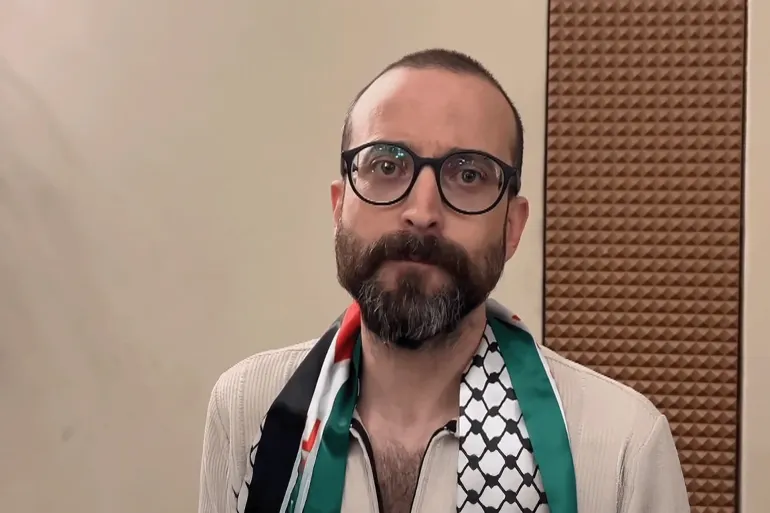
Freed prisoner and novelist Basim Khandakji was deported to Egypt after being released from Israeli prisons under a prisoner exchange agreement [Al Jazeera]
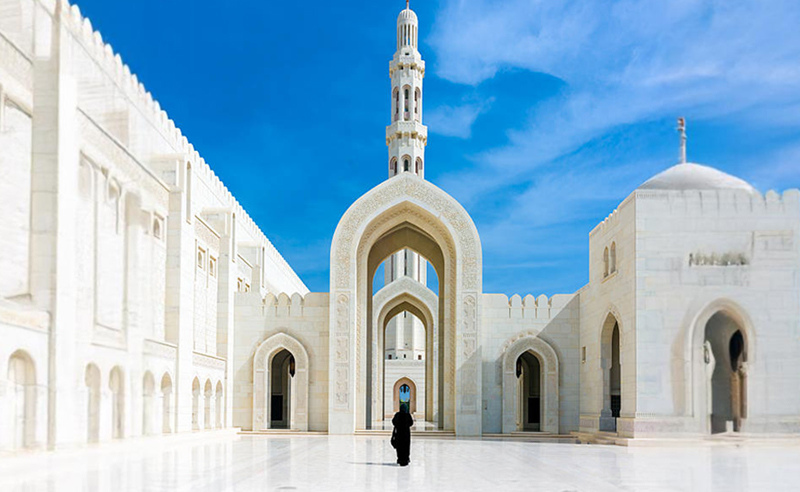
Thanks for highlighting Oman’s cultural wonders, UNESCO. Here’s everything you need to know about them.
As the oldest Arab state with over 100,000 years of human history, the Sultanate of Oman is home to a wealth of cultural and natural treasures that have captured the imagination of poets and travellers for centuries.
From the rugged peaks of the Hajar Mountains to the pristine shores of the Arabian Sea, this mesmerising country possesses a diverse collection of sites that have been recognized by UNESCO for their cultural, historical, or natural significance – all things we look for when we’re choosing our next global destination.
To be considered for inscription on the prestigious World Heritage List, sites must meet at least one of ten criteria, which include representing a masterpiece of human creative genius, exhibiting an important interchange of human values, bearing a unique or exceptional testimony to a cultural tradition, or containing outstanding examples of geological formations and/or habitats of significant biodiversity.
So, we figure if it’s good enough for UNESCO, it’s good enough for us. That’s why we’ve put together a list of the five Omani cultural sites that have been given UNESCO’s special designation, providing you with the information you need to dive into the rich history of this breathtaking Middle Eastern country.
Aflaj Irrigation Systems of Oman
Ad Dakhiliyah, Ash Sharqiyah South and Al Batinah South / 500 AD
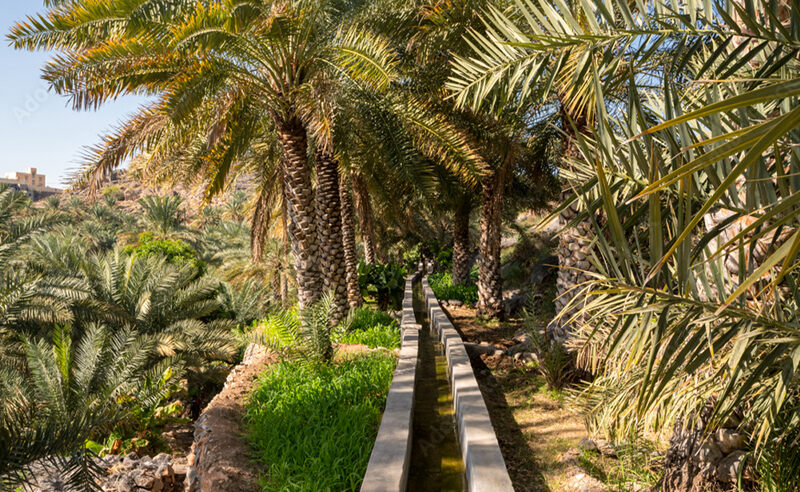
Oman’s Aflaj Irrigation Systems are a feat of ancient engineering. These networks, which collect and transport water across the country using gravity, date back to 500 AD.
This revolutionary technology shaped the development of agriculture, particularly date palm cultivation, in arid Oman. There are more than 3,000 still-functioning aflaj water distribution systems in Oman, and UNESCO has highlighted five locations for their historical significance: Falaj Al Jeela, Falaj Muyasser, Falaj Daris, Falaj Malki, and Falaj Khatmein. Four of these sites are found in the Al Jabal Al Akhdar mountain range, and the fifth is located in the Sharqi mountains.
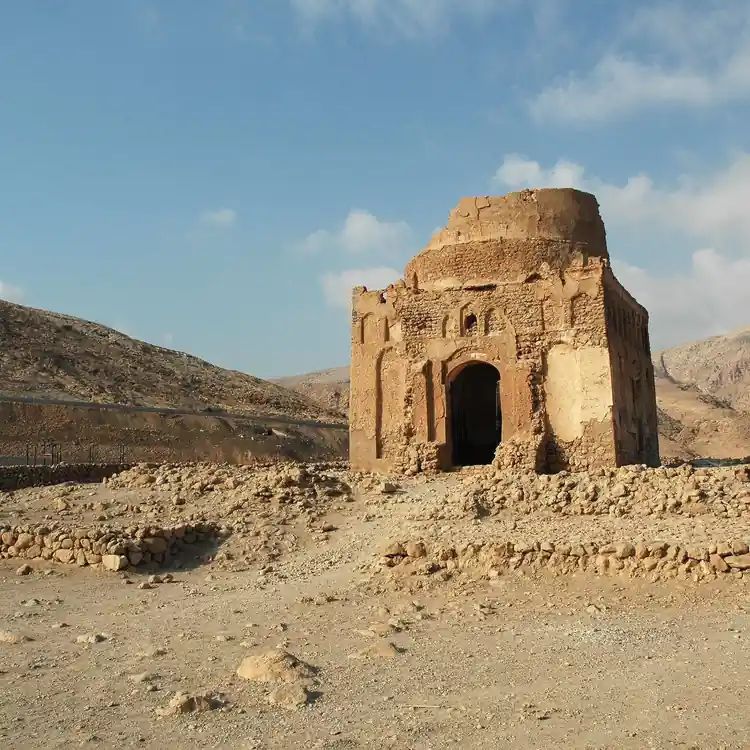
Ancient City of Qalhat
pix credit: whc-unesco.org/en
The remnants of this once-thriving port city are tucked into Oman’s rugged eastern coast, right by the Indian Ocean.
A bustling city centre of trade and commerce between the 11th and 16th centuries, Oman’s first capital – of which there is not much left – contains the remnants of necropolises, residences, workshops, and the tomb of an Omani queen, Bibi Maryam. Believed to have been commissioned in the 13th century by a local ruler in honour of his beloved wife, this mausoleum is the best-preserved monument in the historic city.
Those hoping to visit this site should be aware that, due to conservation efforts, it might not be open to the public.
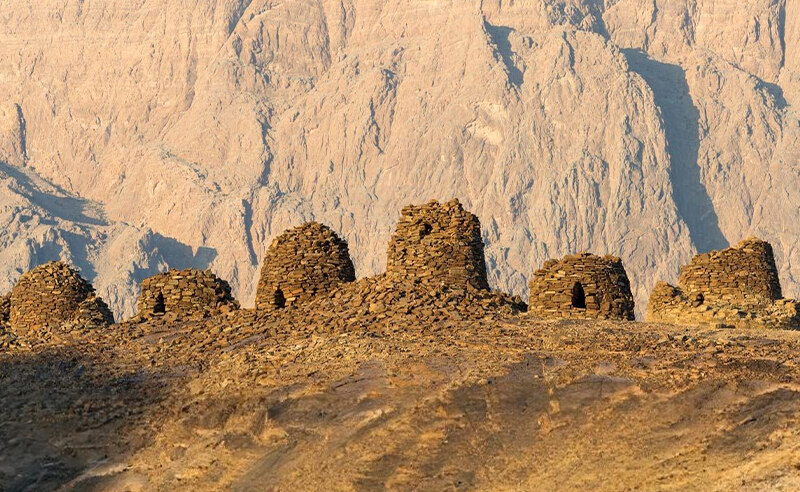
Bat, Al-Khutm and Al-Ayn Archaeological Sites
Al Dhahira / 3rd Millennium BC
Dating back to the 3rd millennium B.C., the Archaeological Sites of Bat, Al-Khutm, and Al-Ayn provide a glimpse into the prehistoric settlements and burial grounds of Oman. These three sites cover 14 square kilometres and are situated within the rocky landscapes of the Al-Dhahirah Governorate.
A trip to these ancient sites gives travellers the opportunity to examine and explore the enigmatic ‘beehive tombs’ dotting the surrounding hills.
Older than the Pyramids of Giza, these tombs are free for anyone to visit.
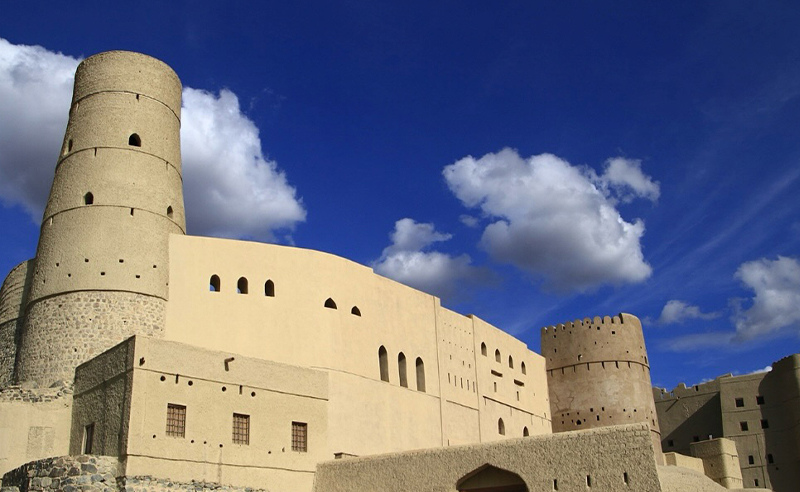
Bahla Fort
Ad Dakhiliyah / 12th–15th century
The immense Bahla Fort can be found in a palm-filled oasis in the Omani desert.
The fort and settlement was the capital of the Banu Nebhan tribe, who dominated what is now central Oman from the 12th to the 15th century. An intricate irrigation system of wells and tunnels brings water from distant springs to this ancient settlement – a testament to the skills of mediaeval engineers in this region. Visitors to this heritage site can see the ornate Friday Mosque, the remains of a semi-covered market, and the towers and parapets of the fort’s walls.
This site is open to visitors, and is widely considered to be one of Oman’s top attractions.
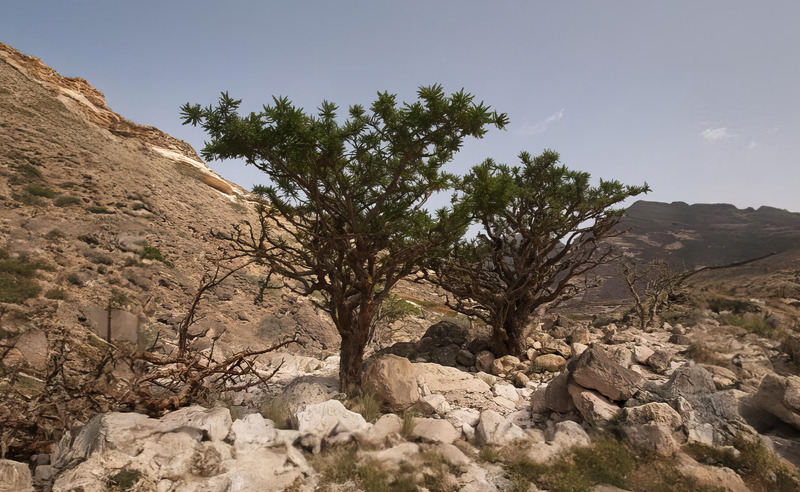
Land of Frankincense
Oman’s Dhofar Governorate is one of the few places where frankincense trees still thrive. These plants carry important historical and economic significance in the region, as frankincense was one of the most luxurious trade items in ancient times.
There are four sites included in this UNESCO heritage listing that preserve the remains of the caravan trade of this precious commodity. One of these is the Frankincense Park of Wadi Dawkah, which allows visitors to learn about how incense is sourced. Another, Shishr, is an agricultural oasis that – in the past – allowed caravans transporting this precious resource to refuel on their trade routes. Sumhuram in the Khor Rori Nature Reserve is another component of this UNESCO World Heritage Site, and was once the heart of the world’s frankincense trade. A trip to this city offers views of structures from the 3rd Century BC to the 5th century AD, including storerooms and city fortifications. The final component of this heritage site is the Al Baleed archeological park. Although this site is open to the public, it is also still being explored, with new discoveries being made. This park includes a Frankincense museum, citadel, and more.
The best time to visit this area is in April, when the fragrant frankincense trees are in bloom.
Riyadh-based academics’ findings on broad beans being tested in US.
At the same time when the Fifa World Cup is being held in South Africa, another fascinating tournament of sorts has been held in Singapore — a “medical championship”, so to speak, on broad beans.
Tens of scientists from all over the world presented and discussed research and papers in the first international conference titled: “Neuro Talk 2010: from Nervous Functions to Treatment”, held from June 25-28.
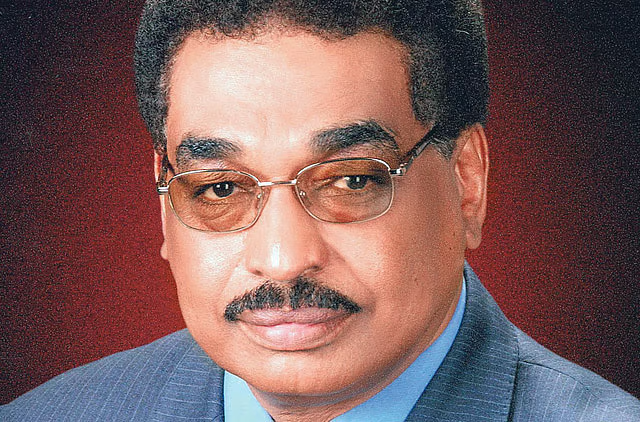
Scientists and doctors from 30 countries discussed brain and nervous system malfunctions and diseases, Professor Mustafa Abdullah Mohammad Saleh, consultant neurologist at the College of Medicine at King Saud University in Riyadh, who attended the conference, told Gulf News.
He said the conference discussed the latest methods of treatment by gene and stem cell therapy.
“The conference discussed a paper on the scientific discovery we have recently made and which was published in the US medical journal about the therapeutic potential of broad beans in preventing epileptic fits,” he said. Western news reports had earlier said that professor Saleh and his countryman, Ali Ahmad Mustafa, professor of pharmacology at the College of Medicine at King Saud University, had discovered that broad beans have a positive effect on epilepsy treatment.
Plant extracts
The two Sudanese scientists agreed in research on the treatment of epilepsy using plant extracts, to conduct joint research to decide the anti-convulsant substance in broad beans that prevents convulsions.
Professor Saleh’s discovery about the characteristics of broad beans in treating epilepsy is currently being tested in the labs of Harvard University.
He said his discovery was sparked by his observation that epilepsy cases among schoolchildren in Sudan who eat foul (broad beans) for breakfast (and sometimes dinner) rated between 0.9 per cent and one per cent per 1,000.
This figure is remarkably lower than that in countries which do not eat broad beans like North and South America which was about 2.6 per cent per 1,000 students and other African countries which was two to three times higher than that of the Americas.
“This is how I got the idea that broad beans must contain a substance that protects against epileptic convulsions. I immediately started the research work with my colleague, Professor Ali Mustafa,” he said.
Professor Saleh said they injected a group of mice with strychnine and picrotoxin, two drugs which cause convulsions leading to death, while they fed another group of mice with a fluid made of foul before giving them the two drugs.
“Convulsions and deaths from strychnine were decreased by about 66 per cent in the group of mice which were pre-treated with foul,” he said.
Professor Saleh said the rate of protection was 100 per cent in the mice which were given both foul and valium before they were injected with strychnine.
He explained that following this and other experiments, a drop of broad bean concentrate was examined by a form of chemical analysis (chromatography) and compared with drops of phenobarbitone (anticonvulsant drug), valium and glycine substance.
“The drop of foul had the same speed as that of glycine,” he concluded.
Professor Saleh had earlier discovered, along with other scientists, a new inherited gene which causes muscular myopathy. This gene has been named after him as ‘Salih myopathy’.
Should scientists look into people’s lifestyle around the world for treatments on different diseases? Is this discovery proof that people should start eating less processed food and more whole food?
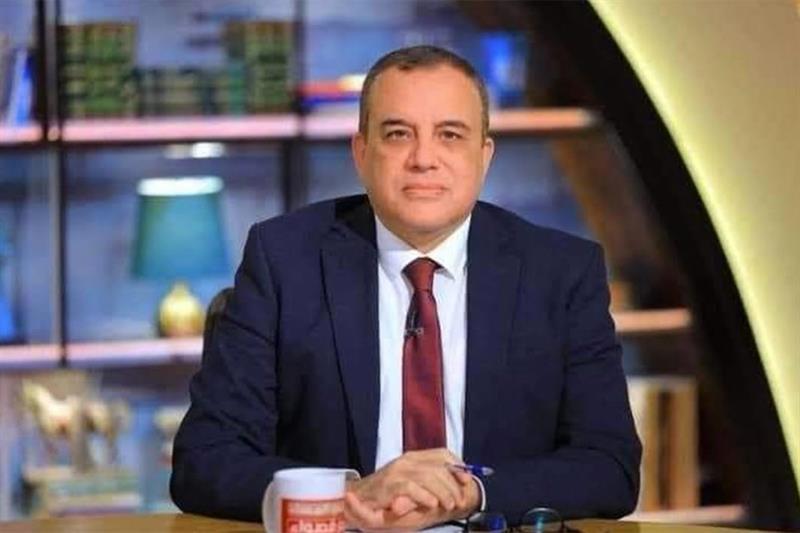
Prominent Egyptian journalist Ezzat Ibrahim, editor-in-chief of Al-Ahram Weekly and Ahram Online, has won the Best Columnist Award for 2025 at the Mustafa and Ali Amin Journalism Awards, the awards’ board of trustees announced on Monday.
Renowned journalist Mohamed Salmawy was named Journalist of the Year, while Mohamed El-Shamaa of Al-Akhbar newspaper received the Commitment Award, according to a statement from the awards foundation.
In the investigative journalism category, Amany Awad of Al-Mal newspaper won for her report titled “The Dark Side of the Smart Companion.”
Samar Ibrahim of Al-Shorouk newspaper received the Humanitarian Journalism Award for “Testimonies of Sexual Humiliation Victims by Rapid Support in Sudan.”
The Youth Award went to Ahmed Al-Ameer of Al-Watan newspaper for his piece “The Killer Light: The Journey of White Phosphorus from the Gap to the Bodies of Gaza Strip Residents.”
In visual journalism categories, Khaled Kamel of the Youm7 website won the Photojournalism Award for “A Mother’s Sacrifice for Her Children in the Rain,” while Maroula Magdy of the Al Arabiya Egypt website received the Video Journalism Award for “Mawlawiya Dance for Love and Peace.”
The awards also recognized student journalists. Jana Mohamed Hanfi won first place in the journalism department at Akhbar El-Youm Academy, while Mai Ahmed El-Sayed took first place in the journalism department at Cairo University’s Faculty of Mass Communication.
The winners were selected after impartial judging committees reviewed entries published during 2025, the foundation said.
Safia Mustafa Amin, chair of the awards’ board of trustees, said a ceremony will be held to honour the legacy of journalists Mustafa Amin and Ali Amin, during which the prizes will be presented to the winners.