Arabs & Arabian Records Aggregator. Chronicler. Milestones of the 25 Countries of the Arabic Speaking World (official / co-official). AGCC. MENA. Global. Ist's to Top 10's. Records. Read & Enjoy./ www.arabianrecords.org
The index measures the levels of trust and credibility between governments and citizens.
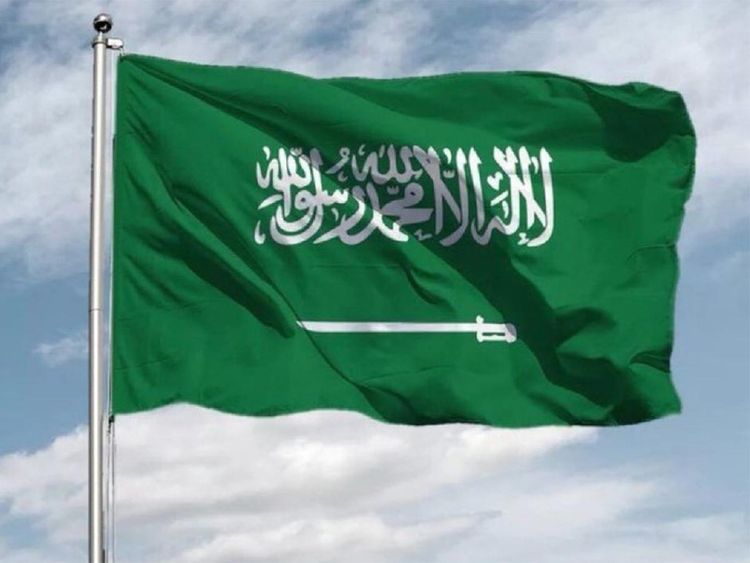
Saudi Arabia has claimed the top spot in the “Edelman Trust Barometer 2024” index, which measures the levels of trust and credibility between governments and citizens. The kingdom achieved a remarkable 86 per cent in the Index for Trust in Government, marking a significant 5 per cent increase compared to the previous year.
According to Edelman, a global public relations consultancy firm, China followed closely in second place with 85 per cent, the UAE secured third place with 84 per cent, and Singapore ranked fourth with a trust level of 77 per cent.
Edelman report unveiled that Saudi Arabia stands at the fourth position globally in the business confidence index. Additionally, the Kingdom earned the seventh spot in the media trust index among the 28 countries included in the report.
Saudi Arabia’s Ministry of Information has recently implemented major changes, covering both organizational and administrative aspects. These reforms are complemented by dynamic movements in various media fields, including the launch of several media initiatives, projects, and programs.
Trust in Saudi Arabia’s government increased to 86 per cent, followed by the business sector at 78 per cent. Non-Governmental Organizations (NGOs) and media have trust levels of 64 per cent and 61 per cent, respectively.
The survey gathered responses from nearly 32,000 individuals across 28 countries. China, the UAE, and Singapore also ranked high in government trust.
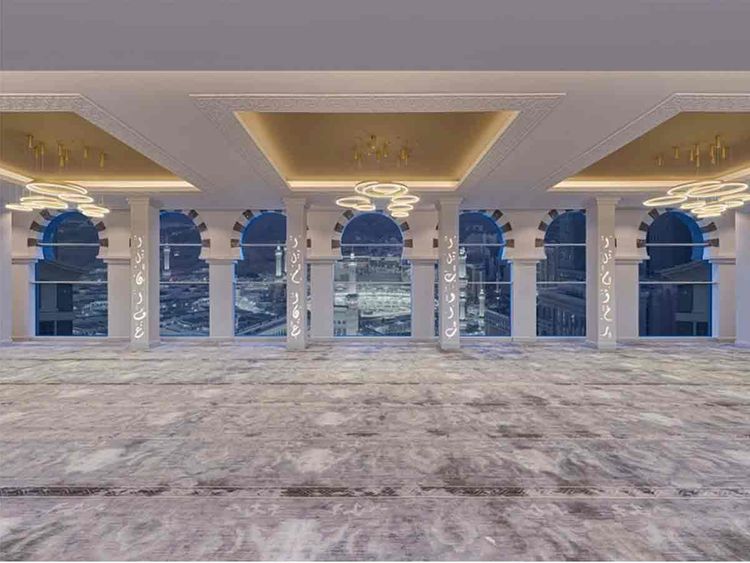
Saudi Arabia’s record-breaking hanging prayer room offers spectacular Kaaba views.’
Saudi Arabia has set a new world record with the opening of the highest hanging prayer room, as recognised by Guinness World Records.
Situated at a breathtaking 483 meters above sea level, this architectural marvel offers unparalleled views of the Kaaba and other significant religious landmarks in Mecca.
Nestled within the bridge connecting the two towers of the Address Jabal Omar Mecca Hotel, the prayer room is not just a feat of engineering but also a testament to architectural ingenuity and creative prowess.
Using the latest technology and specially designed equipment, the 650-tonne steel bridge was initially assembled at 312 meters above ground before being elevated to its final position, linking the hotel’s twin towers across floors 36, 37, and 38.
The hall, which can accommodate up to 520 worshippers in a spacious 550 square meter area, blends traditional Arabic designs with modern luxury. Arabic calligraphy adorns its interiors, enhancing the room’s sanctity with the names of Allah and reflecting the rich Islamic heritage.
Worshippers in this prayer hall are treated to a spiritual experience filled with peace and tranquility. During Fajr prayers, they can witness the sunrise over Mecca, while the sunset bathes the chapel in warm.
source/content: gulfnews.com (headline edited)
_________
It was initially assembled at 312 meters above ground before being elevated to its final position, linking the hotel’s twin towers across floors 36, 37, and 38. / Image Credit: Courtesy of X/@ThamerAlbugami
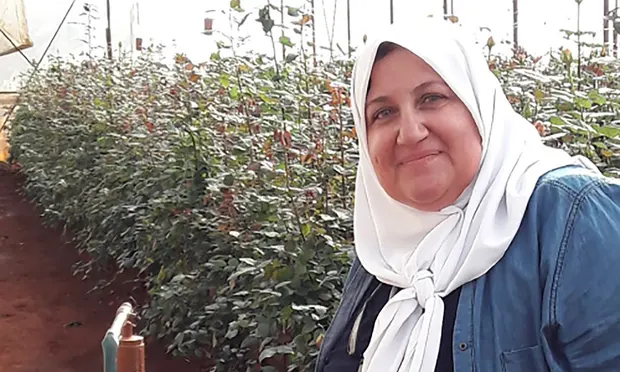
Plant virologist Dr Safaa Kumari discovered seeds that could safeguard food security in the region – and risked her life to rescue them from Aleppo.
The call came as she sat in her hotel room. “They gave us 10 minutes to pack up and leave,” Dr Safaa Kumari was told down a crackling phone line. Armed fighters had just seized her house in Aleppo and her family were on the run.
Kumari was in Addis Ababa, Ethiopia, preparing to present a conference. She immediately began organising a sprint back to Syria. Hidden in her sister’s house was a small but very valuable bundle that she was prepared to risk her life to recover.
Kumari is a plant virologist. Her work focuses on a quiet yet devastating development crisis. Climate-fuelled virus epidemics affecting fava beans, lentils and chickpeas are spreading from Syria to Ethiopia, gradually destroying the livelihoods of low-income populations. Known as “poor man’s meat”, these pulses are vital for both income generation and food security in many parts of the world.
Finding a cure was urgent, Kumari explains. Hopeless farmers were seeing increasing levels of infected crops turning yellow and black. The cause? “Climate change provides aphids with the right temperatures to breed exponentially and spread the epidemics,” she says.
For 10 years, Kumari worked to find a solution. Finally, she discovered a bean variety naturally resistant to one of the viruses: the fava bean necrotic yellow virus (FBNYV). “When I found those resistant seeds, I felt there was something important in them,” says Kumari from her lab in Lebanon where she now works. Only the fighting in Syria had moved. “I had left them at my sister’s in central Aleppo to protect them from the fighting,” she says.
Determined not to let a war get in the way of her work “for the world’s poor”, Kumari felt it her duty to rescue the seeds in Aleppo. “I was thinking: how am I going to get those seeds out of Syria?
“I had to go through Damascus, and then drive all the way to Aleppo. There was fighting and bombings everywhere.” After two days’ driving along dangerous roads, seeds in hand, Kumari made it to Lebanon, where she now works as a researcher at Icarda (International Center for Agricultural Research in the Dry Areas) in the Bekaa valley, close to the Syrian border. Hassan Machlab, Icarda’s country manager says: “Many of the Syrian scientists we welcomed here have suffered. It is tough.”
But bringing the seeds to safety was only the beginning. Kumari needed to turn them into a sustainable solution.
As crop production collapsed in the region, producers started to rely heavily on insecticides. “Most farmers go to the field and spray it without safety material – masks and appropriate jacket,” she says. “Some are dying, others are getting sick or developing pregnancy issues.”
At first, the sample failed. “So we crossed them with another variety that had a better yield and obtained something that is both resistant and productive,” says Kumari. “When we release it, it will be environment-friendly and provide farmers with a good yield, more cheaply and without insecticide.”
Kumari now plans to distribute her super-seeds free to farmers. She has already turned down an offer from a large company for the virus detection technology.
“They wanted to buy our product and then sell it to the farmers, but we refused,” says Kumari. “Ours is free. It’s our responsibility to provide our solutions to people everywhere,” she says.
But, as for many Syrian refugees, the war is never far from her thoughts, “Something she won’t tell you is that it wasn’t easy for her,” says Machlab. “She was working on all this and she didn’t have a clear mind as her family were in Aleppo and her house was destroyed.”
Kumari adds: “Last week I saw my family in Turkey. I have five sisters and three brothers, scattered in Germany, Turkey, Syria. The last time we met was in Aleppo in 2012. When I came back someone told me ‘Safaa, you’re looking great today!’ Of course, I had just spent time with my family again!” she says, laughing.
But she adds: “It’s not easy for me, it’s not easy for a woman to work on agriculture (research). It’s not easy, but it’s OK.
“When I’m working, I’m not thinking I am a Syrian or a woman though. But I do feel I sometimes receive funding [from westerners] because I’m a woman,” she says. “Perhaps!”
Dr Safaa Kumari’s seeds are resistant to the climate-fuelled viruses that have destroyed crops of pulses in Syria. Photograph: Courtesy of Arab Society for Plant Protection
Invention scans for threats and informs driver on display or mobile
Boost for Saudi Arabia’s Ceer Motors, fledgling electric car industry, says lead developer
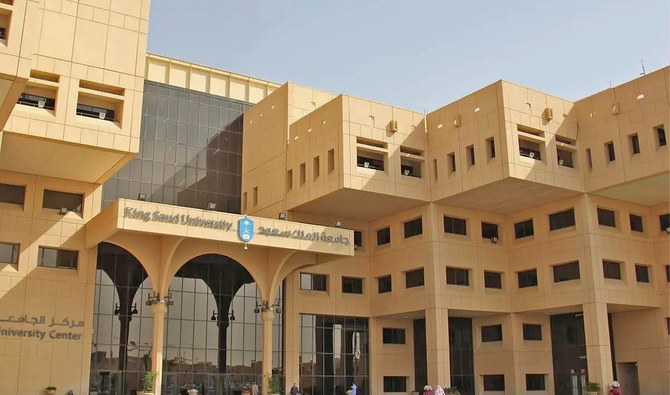
King Saud University in Riyadh has been granted a patent in the US for software that protects the computer systems of electric cars when linking to charging stations.
The invention is named the Motor Vehicle Cyber Inspection System. After conducting an inspection, the system notifies the driver of the cybersecurity status on a smart display or mobile device. The system can scan for malware, ransomware, backdoors, data leakage, and software vulnerabilities.
Announcing the receipt of the patent, the KSU media center said Thursday the team that achieved this success was led by Prof. Muhammad Khurram Khan and included Dr. Wazir Khan.
“This breakthrough patent achievement highlights KSU’s dedication to pioneering research and technological advancements, solidifying its position at the forefront of innovation in automotive cybersecurity,” it said.
The approval was granted by the US Patent and Trademark Office on Jan. 16, and the application was submitted in March 2023.
Khan, who led the team, told Arab News: “The granting of this US patent to the KSU represents a momentous achievement in the realm of cybersecurity, particularly for the burgeoning automotive sector in Saudi Arabia under Vision 2030. The invention holds substantial significance for the local automotive industry, particularly for entities like Ceer Motors and the Electric Vehicle Infrastructure Company.”
“Saudi Vision 2030 emphasizes the importance of developing a skilled and knowledgeable workforce to meet the demands of a diversified economy. Therefore, the development and implementation of advanced technologies, as reflected in the patent, contribute to job creation and skill development,” he added.
Khan further said: “Integrating patented technology into vehicles and charging stations would offer a considerable competitive advantage. It would not only enhance the cybersecurity resilience of automotive products but also position local manufacturers at the forefront of technological innovation and economic diversification efforts while the Saudi automotive industry is taking off.”
He added that the “patent aligns with the national goals of technological innovation and localization. By implementing this technology locally, companies could contribute to building indigenous capabilities, fostering economic growth, and creating high-value jobs in the technology and automotive sectors.”
Under the Vision 2030 initiative, Saudi Arabia is actively diversifying its economy, with a particular emphasis on the automotive sector. This commitment is exemplified by the establishment of Ceer Motors, the Kingdom’s inaugural EV brand, dedicated to manufacturing local electric vehicles.
Moreover, a recent development includes the launch of the Electric Vehicle Infrastructure Co., or EVIQ, a strategic initiative to bolster EV adoption. The firm aims to facilitate this transition by establishing a nationwide network of 1,000 charging stations consisting of 5,000 chargers by 2030.
Cloud computing to add $181 bn to UAE’s economy by 2033.
The UAE has been chosen to lead the Cloud Computing Working Group within the World Bank, a testament to its remarkable progress in advanced technology and digitization. Recognized as a global pioneer in digital transformation and the successful implementation of cloud computing best practices, the UAE assumes this role to support both government entities and private sector companies in their transition to cloud computing systems. By prioritizing the utilization of cutting-edge data protection and cybersecurity solutions, the UAE reaffirms its commitment to facilitating the seamless adoption of cloud technology while ensuring utmost security for all stakeholders.
Sheikh Hamdan congratulates Dr. AlBlooshi
Sheikh Hamdan bin Mohammed bin Rashid Al Maktoum, Crown Prince of Dubai and chairman of the Executive Council, extended his congratulations to Dr. Bushra AlBlooshi from the Dubai Electronic Security Center (DESC) on being appointed as the leader of the Cloud Computing division within the World Bank Group.
In addition, Sheikh Hamdan posted the message on X (formerly Twitter) and said, “Congratulations to Dr Bushra AlBlooshi of the Dubai Electronic Security Center (DESC) on being appointed by the World Bank as the head of the World Bank Group for Cloud Computing, comprising of 27 countries, organisations, and major international technology firms.”
He added, “We are immensely proud of the continuous achievements of Emirati talent. With their expertise and accomplishments, they further strengthen the UAE’s international stature and role in advancing global sustainable digital development.
According to her profile on the World Economic Forum (WEF), Dr. AlBlooshi possesses more than 17 years of expertise in digital transformation, cybersecurity, and strategy management. She is recognized as an author and a prominent speaker in the areas of cybersecurity and digital transformation, demonstrating her extensive experience in the field.
Significance of cloud adoption for GDP growth
A report commissioned by Amazon Web Services (AWS) revealed in May that the widespread adoption of cloud technology among the public is projected to contribute an estimated $181 billion in economic value to the UAE over the next decade. This figure represents approximately 2.5 percent of the UAE’s economy. The paper further highlighted that a mere 1 percent increase in cloud adoption by organizations in the UAE would result in an average gross domestic product (GDP) growth of 0.21 percent or $854.7 million. This growth rate is three times higher than the regional average for the Middle East and North Africa, making it the highest in the region.
Dr. Bushra AlBlooshi of the Dubai Electronic Security Center (DESC) appointed by the World Bank as the head of the World Bank Group for Cloud Computing, comprising of 27 countries, organisations, and major international technology firms.
Rajaa Cherkaoui El Moursli was part of the research team that made the groundbreaking discovery of the Higgs Boson particle.
Moroccan prominent nuclear physicist Rajaa Cherkaoui El Moursli was featured this year on the list of Forbes 50 Over 50 for the Middle East and Africa (MENA) in recognition of her outstanding scientific contributions.
El Moursli’s research has helped prove the existence of the Higgs Boson, which is the particle responsible for the creation of mass.
“While her almost 30-year-long career in science has been filled with achievements, it’s a career that would not have existed had she not convinced her father to let her seek out a graduate degree in France in the early 1980s,” Forbes wrote. This was a time when Moroccan women were “expected to leave home to marry and not pursue a vocation.”
After earning her Ph.D in Nuclear Physics from the University of Joseph Fourier in Grenoble, France, El Moursli returned to Morocco in 1982. There, she joined the Faculty of Sciences at the University Mohammed V in Rabat.
Early in her career, she took the helm as the head of the Laboratory of Nuclear Physics in Rabat. El Moursli’s research focuses on the applications of nuclear physics, medical physics, and high-energy physics.
A pivotal moment in her career occurred in 1996 when she became an integral part of Morocco’s participation in the international ATLAS collaboration at the European Organization for Nuclear Research (CERN). The event marked her entry into one of the world’s most prestigious scientific research centers, located in Geneva.
El Moursli’s contributions have extended beyond the laboratory giving her membership with international organizations such ATLAS, KM3NET, and ANTARES.
Within these roles, she has been vital in creating and implementing master’s degree programs at her university, notably creating Morocco’s first master’s program in medical physics. Currently, over thirty graduates from her program hold crucial positions as radio physicists in Moroccan hospitals.
Throughout her career, she has supervised numerous doctoral and master’s students and has played a crucial role in building and strengthening academic programs.
In 2015, she became the first Moroccan to receive the L’Oreal-UNESCO award for Women in Science, representing Africa and the Arab States.
El Moursli served as VP of Research, Innovation, Cooperation, and Partnership at Mohammed V University. She also chaired the competition program “My Thesis in 180 Seconds.”
Her accolades include being a fellow of the World Academy of Sciences (TWAS) and serving on the “For Women in Science” international jury.
In 2017, she was honored by the Organization of Islamic Cooperation for her outstanding contributions to science and technology in the Islamic world.
Now in 2024, El Moursli continues to play a pivotal role in shaping the global scientific landscape and showcasing Moroccan achievements to the world.
Event will cement the Kingdom’s efforts to promote cultural communication and exchange, scientific and social development.
Saudi Arabia, represented by its National Commission for Education, Culture and Science, is hosting the 44th session of the executive council of the Islamic World Educational, Scientific and Cultural Organization in Jeddah from Jan. 16 to Jan. 18.
ICESCO media department told Arab News: “The proceedings of the executive council of the 44th Islamic Educational, Scientific and Cultural Organization will kick off in Jeddah, Saudi Arabia on Tuesday (Jan. 16, 2024) with the participation of 54 member states. The event will run until Thursday.”
As the representative of the Kingdom, the NCECS said that hosting the event comes as part of the support provided to the education, culture and science sectors. It is also indicated the Kingdom’s role in driving forward educational, cultural and scientific development, both regionally and globally, it said.
Among the items on the executive council agenda are future strategies and action plans. The organization’s budget will also be discussed.
The council’s final recommendations will be handed over and included in a report to be endorsed by the ICESCO’s biannual general conference, the organization’s policy governing body event.
Prince Badr bin Abdullah bin Farhan, minister of culture and chairman of the NCECS, said: “The event will cement the Kingdom’s efforts aiming at creating spheres of cultural communication and exchange as well as scientific and social development. These sectors are considered to be cornerstones for developed human societies.”
As a prominent member of ICESCO, it is the strategy of the Kingdom to pursue all avenues supporting the organization’s goals in the best interests of the Muslim world.
Operating under the Organization of Islamic Cooperation, ICESCO is an intergovernmental organization specializing in the development of education, science and culture. Established in 1982 with its headquarters in Rabat, Morocco, ISESCO acts in line with the OIC’s general strategy aimed at achieving sustainable development in these sectors across all Muslim states.
Saudi Arabia is set for a groundbreaking technological venture in the mining sector with the launch of the Geoscience Data Analytics Center.
Commissioned by the Saudi government, the facility is expected to commence operations later this year.
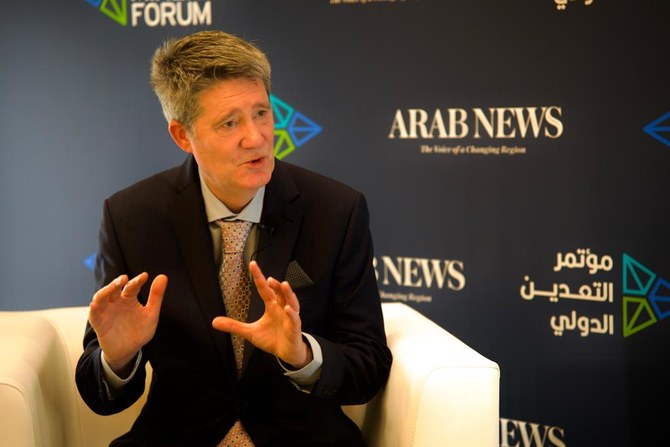
Speaking to Arab News at the Future Minerals Forum, Commissioner Rob Wood emphasized the interdisciplinary nature of the center and the significance of developing new programs to train professionals with hybrid skills.
Wood said: “It will be the very first of its kind globally. It will become operational probably in late 2024.”
Saudi Arabia boasts 31 critical minerals and strategic resources, ranging from gold, and silver to nickel and cobalt.
The Kingdom is poised to establish a third industrial pillar centered on mining, with potential reserves estimated at $2.5 trillion, as Wood also highlighted the significance of the Kingdom’s commitment to diversify its economy.
He emphasized that the Geoscience Data Analytics Center would play a pivotal role in utilizing AI to uncover potential mining deposits.
The $2.5 trillion estimate, Wood clarified, is extrapolated from the known data available, emphasizing that extensive land exploration and data collection support this estimation.
“The amount of land that we’ve actually explored and done data collection for. So, we know that there is a significant amount of opportunity left within the Kingdom that we haven’t explored yet,” he noted.
Wood explained that there is a need to establish new interdisciplinary programs, where geologists will be trained in computer science.
He highlighted novel aspects of the center, such as state-of-the-art robotic labs for core scanning and cumulative effects research.
“Literally, nobody on the planet is doing what we’re talking about,” he claimed, adding: “The intent is that the Kingdom will, in fact, have complete control and will be running the center for decades to come.”
Wood elaborated on the ongoing data collection efforts, stating that the gathered information will be fed into a new artificial intelligence platform capable of conducting analytics to identify high-potential mining targets.
The commissioner emphasized the use of AI in modeling mineral deposits, stating, “We’re using machine learning to uncover these high-potential deposits very early in the process.”
He acknowledged the formidable challenge in the mining sector, particularly the difficulty in identifying new targets, referred to as “greenfields,” which he termed as a highly risky endeavor.
“So frequently, they can go out and do a full drilling program and come back with nothing, and you spend literally hundreds of millions of dollars for potentially no result whatsoever.”
To address this challenge, Wood unveiled the ambitious plan to use advanced artificial intelligence to de-risk the costs associated with finding new targets.
“What we’re looking to do is, in fact, de-risk those costs on the mining companies by using advanced artificial intelligence to, in fact, actually find these new targets,” he explained.
The commissioner emphasized the significance of addressing environmental and social impacts in the mining sector, stating: “One of the things the center is going to be doing is actually complex environmental and social impact research.”
In conclusion, Wood highlighted the uniqueness of Saudi Arabia’s position in undertaking this venture, stating: “The discovery of oil is substantially easier than the discovery of minerals. Minerals require sophisticated analytics to find these new deposits.”
As the Kingdom embarks on this groundbreaking initiative, Wood expressed his optimism, stating, “It’s an exciting time to be in Saudi Arabia.”
source/content: arabnews.com (headline edited)
_________
Rob Wood, commissioner of the Geoscience Data Analytics Center, speaking to Arab News.
A group of academics have spent close to a decade scanning historic documents and images and making them available online.
Sudanese academic Badreldin Elhag Musa followed the news with alarm when Al Qaeda-affiliated fighters set fire to two libraries containing historic documents in the Malian city of Timbuktu in 2013.
While local residents managed to smuggle many manuscripts to safety in advance, a Unesco team later found that some 4,200 of the documents stored in the libraries were either destroyed or stolen – about a tenth of its archives .
At the time, Elhag Musa already had concerns about the preservation of rare documents in his country. The events in Timbuktu accelerated the sense of urgency for the scholar, a member of the Sudanese Association for Archiving Knowledge (Saak).
The tragic episode served as a warning that highlighted the plight of cultural heritage artefacts in areas of actual or potential conflict – just like Sudan.
Elhag Musa set a plan in motion, connecting with King’s College London Professor Marilyn Deegan, who has over 20 years of experience in digital humanities. His goal: to find ways to safeguard as much of Sudan’s cultural heritage as possible.
A decade later, the result is Sudan Memory, a project that seeks to preserve and promote valuable cultural materials about Sudan through digitisation. The online platform aims to ensure current and future generations can benefit from the country’s rich heritage.
In total, more than 200 people and over 40 institutions have been involved in the project, which offers 60,000 digitised documents.
The results are invaluable: The materials range from manuscripts, photographs, books and films, covering a myriad of topics, as well as jewellery, traditional dresses, and artefacts from different regions spanning around 6,000 years of history.
“We never expected such success when we started,” Elhag Musa told Middle East Eye.
His colleague Deegan notes, “We’ve digitised… well over 100.000 images,” adding, “We thought we would be able to do millions…but I think we did do a lot.”
Sourcing collections
One of the reasons that prompted Elhag Musa and his colleague at Saak to protect Sudan’s cultural heritage with such urgency was that many of the country’s richest archives, particularly private collections, are in danger.
The reasons are manifold, ranging from extreme weather and lack of appropriate storage to neglect and conflict.
Many valuable collections, whether public or private, are also locked away and not easily accessible to the public.
Yet at the same time, many of Sudan’s archives and collections were in good enough condition to undertake a project like Sudan Memory, as Deegan saw for herself on her first visit to Khartoum, Omdurman and Atbara in May 2013.
“Archives in Sudan are not (like) the British Library, but they are not too bad,” she said.
Although its origins go back a decade, the Sudan Memory team was only able to start digitising documents in 2018, some time after securing funds.
At first, the focus was on large institutions; one of the entities that contributed the most was the National Records Office (NRO), which serves as Sudan’s national archives.
The NRO holds more than 30 million documents, some dating as far back as 1504 CE, and they are currently classified into around 300 collections.
Today, some of these materials can be found in the Sudan Memory archive, including early issues of The Sudan Times newspaper, as well as old magazines, rare books and precious photographs.
Another major collection included in the Sudan Memory project was provided by Al Rashid Studio, the largest private photo studio in the country.
Located in the city of Atbara, once the centre of Sudan’s railway industry and regarded as the cradle of its trade union and communist movements, the studio holds over four million negatives dating back to the 1940s.
Through these negatives, the Rashid family has captured the cosmopolitanism that once defined Atbara, as well as some of the changes Sudan has undergone in recent decades.
“What’s interesting about [it] is looking at the early images and seeing over time how things like fashion changed, and how that’s related to politics,” Deegan noted.
A turbulent process
Building the Sudan Memory archive was not an easy task, primarily as a result of political circumstances in the country.
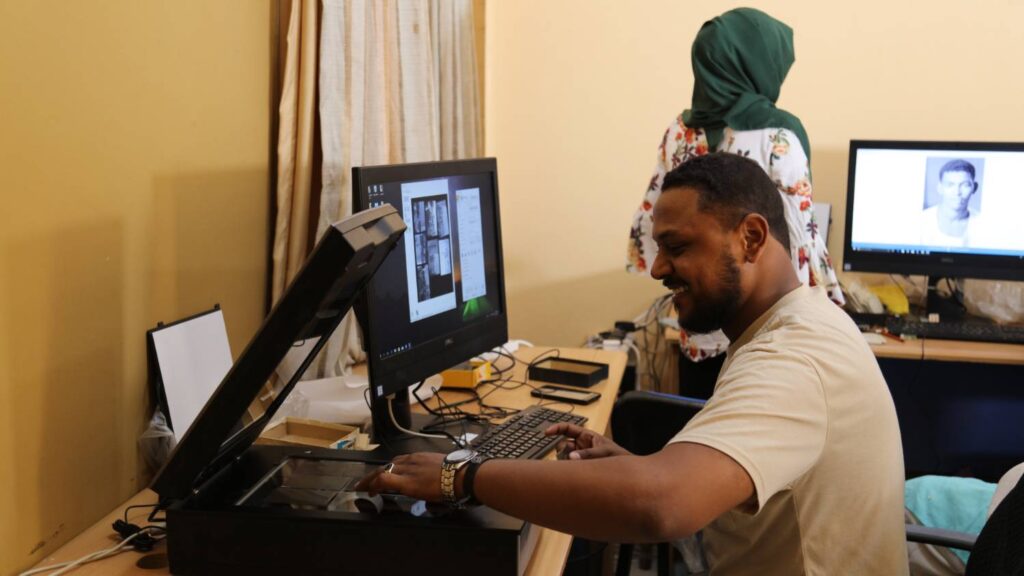
Training could not start until scanners were imported into the country and these were not installed until July 2018, as the team had to navigate sanctions still in place at the time – a period when former president, Omar al-Bashir, was still in charge.
These restrictions also affected the purchase of other equipment and the transfer of funds to teams within Sudan.
Additionally, in the lead-up to the revolution in Sudan in late 2018 and the period until the formation of the now-ousted transitional government, there was little stability within the country’s institutions with many regularly closing, thereby disrupting the project.
And just as the situation began to settle down and work restarted, the Covid-19 pandemic hit in early 2020, once again putting a hold on scanning in local institutions.
Throughout this turbulent process the project stayed going thanks to the efforts of Katharina von Schroeder, Sudan Memory’s project manager in Khartoum.
“Just like many other projects, Covid times were difficult,” Elhag Musa said.
“But for us the passion was great, and as Marilyn continued to work on targeting international sources [of funding], we went on to focus on training talented team members on digitisation skills,” he added.
As if all this was not enough, the military coup of October 2021, which derailed the fragile transition in the country, further aggravated political instability in Sudan and delayed the project’s launch in Khartoum indefinitely.
“It has just been so turbulent over the last few years,” Katherine Ashley, another of Sudan Memory’s project managers, told MEE.
“But people, if anything, have become as or even more generous and excited to share their collections and do things about it,” she noted.
Private collections
About halfway through the project, the Sudan Memory team decided to expand beyond the country’s major institutions and dive into private collections as well.
And that’s when Ashley, who has extensive experience in the field, came in.
“The big collections are amazing, but the ones that people feel so passionate about are (ones) hidden away in people’s homes; private collections and stories,” she said.
“This is what (made me realise) how important it is to try and make some effort…on Sudan and record some of these oral histories and stories,” Ashley added.
One such preserved collection is that of Sadia el-Salahi , a Sudanese artist and designer born in 1941 in Omdurman and famous for her pioneering work on Sudanese folklore and traditional costumes.
In 1968, Salahi joined the Sudanese Ministry of Culture and became the first Sudanese national to hold the position of head costume designer, according to Sudan Memory.
“She sadly passed away…but we were lucky to record what was left of her collection and also do a video recording about her career and life story,” Ashley said of Salahi, who died in 2022.
Another jewel in the crown of the Sudan Memory project is an interactive 3D reconstruction of Suakin Island , on the west coast of the Red Sea, as it was in 1900.
The portal also features some important documentation about the history of the island, and links to digitised content about it.
To a great extent, the reconstruction of Suakin was possible thanks to Mohamed Nour, a local Sudanese citizen, and his family, who dedicated their life to building a museum of the island’s history through photographs, artefacts and other documents.
“It’s a lifelong work that they are continuing,” Ashley said.
Remembering Sudan’s Jewish community
A significant part of the archive created by Sudan Memory does not come from within the country but by a process they call digital repatriation: content about Sudan acquired from institutions and individuals abroad.
“We are bringing Sudanese materials back into the country,” Deegan noted, adding: “We are pushing Sudanese materials out to the world, but also bringing stuff back in.”
One example is the Tales of Jewish Sudan archive , a collection of stories, photos and recipes from Sudan’s Jewish community compiled by historian Daisy Abboudi, a descendant of the Sudanese-Jewish community born in the UK.
The history of Sudan’s Jews is difficult to trace, but Abboudi has documented that from the early 20th century onwards, Jews from all over the Middle East and North Africa began to arrive after the building of a rail connection to Cairo by the British army.
At its peak in 1950s, Sudan’s Jewish community numbered approximately 250 families, mainly concentrated in Khartoum, Omdurman and Wad Madani. And its members were predominantly merchants involved in the textiles, silks and Arabic gum trades.
“The community was very active, they had a club, a synagogue… It was an equipped, functioning community,” Abboudi told MEE.
“It was small, but I think that that made it even more vibrant and active,” she added.
However, from the mid-20th century onwards, and for reasons ranging from the establishment of the State of Israel to the rise in antisemitic incidents and rhetoric in Sudan, the Jewish community began to shrink amid successive waves of emigration.
According to Abboudi, by the end of 1973 following the Arab-Israeli war, the last remaining Jews left Sudan.
To prevent the memory of the once vibrant Jewish community in Sudan from fading, Abboudi started Tales of Jewish Sudan in 2015 with the aim of preserving its history and stories before it was too late – a goal now shared with Sudan Memory.
“Living in the more Ashkenazi-dominant British community, I felt that my history was neglected, ignored or somehow not present. And that’s why I started,” she said.
“But also for my generation and the generations to come, because I realised that as soon as those people are no longer here, that community will be forgotten,” she explained further.
Another curious example of repatriated Sudanese materials comes from Air Tickets History , a collection belonging to Greek collector, Gklavas Athanasios, that today holds over 4,500 airline tickets and boarding passes from more than 1,000 airlines spanning six continents.
The extensive collection includes several documents dated from 1960 to 1983 from Sudanese airlines, such as Sudan Airways, the national airline; also one of the first airlines in Africa, Mid Airlines, a charter airline established in Khartoum in 2002, and Marsland Aviation.
“I started collecting tickets when I was eight and had my first flight with Olympic Airways, from Athens to Samos Island,” Athanasios told MEE. “But about the Sudanese tickets I unfortunately don’t have much information, as I bought them on Ebay many years ago.”
All in all, the compilation of these documents gathered from major institutions and private collections both inside and outside Sudan helps to build up a complex picture of the memory of a nation.
“We were optimistic, but we didn’t expect at all that we would succeed in the organisation of such magnificent collaboration,” Elhag Musa said.
And the process that has been followed also serves to pave the way to go further.
“What we do have at least is a much broader understanding of what is there and what else could be done in the future,” Ashley said.
The initiative is part of the upcoming World Defense Show which will take place in Riyadh from Feb. 4-8
Princess Reema said Kingdom places great importance on promoting and supporting women’s work in various sectors, including defense and security
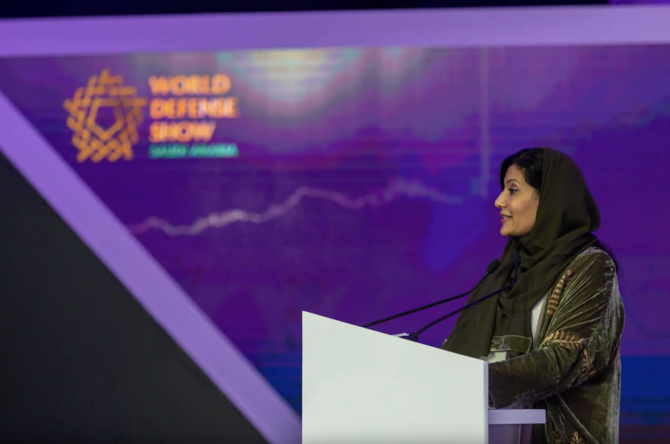
Princess Reema bint Bandar, Saudi ambassador to the US, is to chair the International Women in Defense program.
The initiative aims to promote women’s participation and celebrate their role in the defense sector.
It is part of the upcoming World Defense Show which will take place in Riyadh from Feb. 4-8 under the patronage of King Salman.
Princess Reema, who leads the program, said the Kingdom placed great importance on promoting and supporting women’s work in various sectors, including defense and security.
She said Saudi Vision 2030 had contributed to the success and excellence of women in different fields by integrating them into the Saudi labor market.
“These programs reflect the Saudi government’s commitment to empowering women and increasing their participation globally. The Women in Defense program provides a unique platform to enhance opportunities for further success,” she added.
The program will host executive directors and female leaders from different countries, showcasing women’s achievements, discussing ongoing challenges and exploring their contributions to the defense sector worldwide.
CEO of the World Defense Show, Andrew Pearcey, said the event would focus on the growth of small and medium-sized Saudi enterprises and startups to highlight their talents and ideas in the sector. The Kingdom was now one of the biggest spenders in the defense market, he added.
The first show, in 2022, brought together 600 defense and security exhibitors from 42 countries and recorded SR29.7 billion ($7.9 billion) in deals.
source/content: arabnews.com (headline edited)
___________
The Women in Defense program aims to empower and celebrate female participation in the defense sector. (@WDS_KSA)