Arabs & Arabian Records Aggregator. Chronicler. Milestones of the 25 Countries of the Arabic Speaking World (official / co-official). AGCC. MENA. Global. Ist's to Top 10's. Records. Read & Enjoy./ www.arabianrecords.org
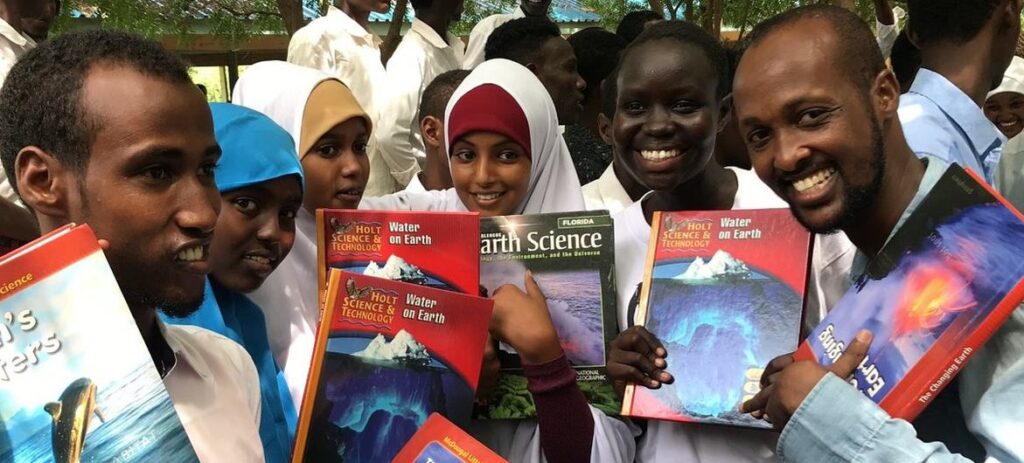
A former child refugee born in Somalia, who dedicated himself to changing lives through education, has been namedas this year’s winner of the prestigious UNHCR Nansen Refugee Award.
Abdullahi Mire grew up in the sprawling Dadaab refugee complex in northeastern Kenya with its population today of more than 240,000 registered refugees, mostly from Somalia.
The UN refugee agency (UNHCR) coordinates operations there together with partners, relying also on the support of the Kenyan Government and host communities.
The majority of the population, around 56 per cent according to 2020 figures, are children.
At that point there were over 60,000 students enrolled up to secondary school level, but despite that, the demand for teachers, supplies and classroom space, has long outstripped supply, leading to poor educational outcomes.
Educational pioneer
Of those managing to complete secondary school only a small number have been able to carry on into tertiary education.
Mr. Mire spent 23 years living in the Dadaab complex himself, from the early 1990s, and eventually went on to graduate with a diploma in journalism and public relations in 2013 from Kenya’s Kenyatta University.
After working for the UN migration agency IOM , in Somalia, specialising in the disarmament, demobilisation and reintegration of former combatants, he realised that without being literate, many were being brainwashed and radicalized.
Life-changer
His experience led him to start the Refugee Youth Education Hub (RYEH) in 2018, focusing on refugee education and youth development.
“I want to change the lives of refugee children and youth living in Daadab”, he told the UN Assistance Mission in Somalia (UNSOM) in 2020.
“The only way to do that is through education. If you give quality education for these children or youths, their lives will be improved for good,” he added. “For societies to progress, especially the ones recovering from decades of conflict, education must be a priority. I think it’s the midwife of peace and stability, if not more.”
Personifying change
Speaking ahead of the award announcement, UN High Commissioner for Refugees, Filippo Grandi, said: “Abdullahi Mire is living proof that transformative ideas can spring from within displaced communities.
“He has shown great resourcefulness and tenacity in strengthening the quality of refugee education.”
UNHCR noted that after growing up in the Dadaab camps, Mr. Mire had resettled to Norway, “but a yearning to serve his community drew him back”.
His education hub has opened three libraries in the camps – stocked with donated books – and expanded learning opportunities for tens of thousands of displaced children and youth.
“The win is not for me alone,” said Mr. Mire, 36. “It is for all the volunteers I work with… It is for the children in the schools.”
Regional winners
UNHCR also announced the regional winners to be honoured this year:
• Elizabeth Moreno Barco (Americas): a human rights defender who advocates for communities affected by armed internal conflict in Colombia
• Asia Al-Mashreqi (Middle East & North Africa): founder and chairperson of the Sustainable Development Foundation, which has assisted nearly two million individuals in Yemen affected by conflict
• Abdullah Habib, Sahat Zia Hero, Salim Khan and Shahida Win (Asia-Pacific): four Rohingya storytellers documenting the experiences of stateless Rohingya refugees
• Lena Grochowska and Władysław Grochowski (Europe): a Polish couple whose hotel chain and foundation provide shelter and training to refugees
The awards will be presented at a ceremony in Geneva on 13 December at the Global Refugee Forum 2023.
Hosted by the prominent US television journalist Ann Curry, the event will showcase the winners’ work and feature performances by Lous and the Yakuza, MIYAVI and Ricky Kej. It will also be livestreamed.
The awards are made possible through support from the Governments of Norway and Switzerland, IKEA Foundation, and the City and Canton of Geneva.
They are named after the Norwegian explorer, scientist, diplomat and humanitarian Fridtjof Nansen.
source/content: news.un.org (headline edited)
____________
UNSOM / Abdullahi Mire (far right) is supporting education initiatives in Dadaab refugee complex in northeastern Kenya.
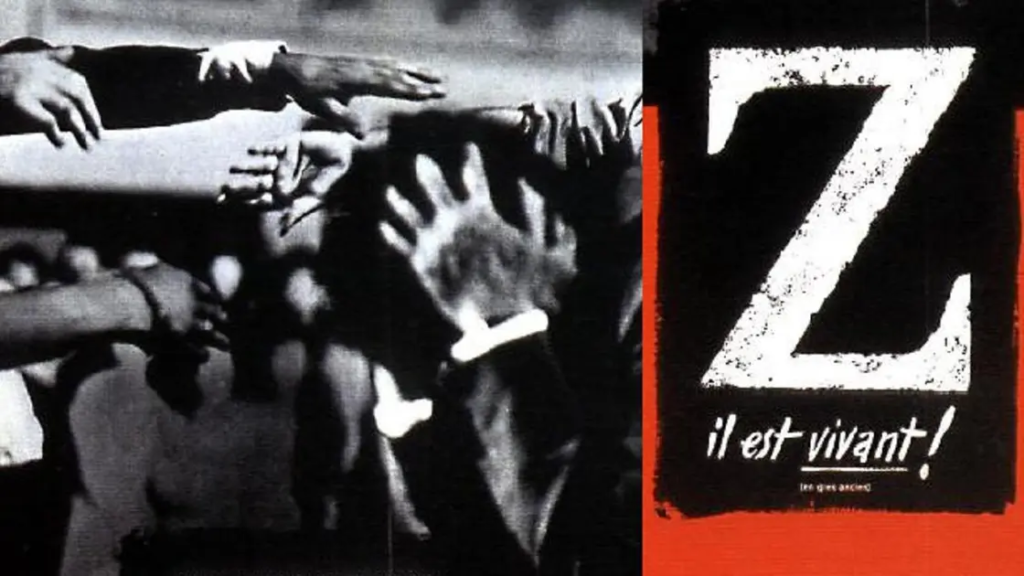
8 years have passed since the Algerian film “Z,” the only Arab film, received an Oscar award for best foreign film and best montage.
In 1970, American actor Clint Eastwood and Claudia Cardinal, the famous Italian actress, announced Algeria’s win.
It was received by Ahmed Rashdi, on behalf of the production department of the National Organization for Algerian Cinema, which produced the film.
The film “Z”, one of the most prominent political films in the history of international cinema, was a joint French-Algerian production, dealing with the assassination of the politician Gregory Lambrax in 1963, and the uprising of youth and students condemning dictatorship and repression.
The story was an adaptation of a book by Greek novelist Vassilis Vassilikos inspired by the events of the coup which took place in Greece in the mid-sixties as the army took control of power.
It focused on the assassination of the of democratic Greek politician Grigoris Lambrakis in 1963, and the uprisings of youth and students angry at his assassination, denouncing dictatorship and repression.
Most of the scenes were filmed in Algeria by director Costa-Gavras in areas similar to the nature of the city of Athens.
French actors including Jean-Louis Trintignant, Yves Montand along with Greek actress Irene Papas, Algerians Hassan Hassani, Sayed Ahmed Akoumi and Alal al-Mohaib were among the actors.
The letter “Z” was chosen as the title of the film, because it represents a symbolic political connotation in the Greek language, meaning “living.”
It was used by political adversaries of the coup in Greece, as they wrote it on the walls of the Greek cities to denounce the politics of repression and the death of Lambrax.
The news follows a memorandum of understanding signed in July 2022 between the Ministry of Health and Social Protection and the IAEA.
Morocco and the International Atomic Energy Agency (IAEA) have signed an agreement for the Rabat-based Sidi Mohammed Ben Abdellah National Oncology Institute, which is affiliated with the Ibn Sina University Hospital, to become a collaborating center for the IAEA.
IAEA made the announcement was made on Friday. The Moroccan institution was elected as an IAEA collaborating center during the 67th regular session of the IAEA General Conference held in Vienna from September 25 to 29.
The news constitutes a recognition of Morocco’s commitment to advancing nuclear sciences in Africa, improving access to cancer treatments, and combating animal-transmitted diseases across the continent.
Khalid Ait Taleb, the Minister of Health and Social Protection, presided over the official announcement ceremony, emphasizing that the IAEA’s accreditation is an acknowledgment of the institute’s prolonged dedication to battling cancer.
He praised the institute’s exceptional staff and expertise having elevated its standards to a commendable level of quality.
Maintaining the prestigious accreditation in the upcoming years is now a primary challenge, Minister Ait Taleb stressed. He underscored the institute’s pivotal role in combating cancer and nurturing medical expertise in the field, both nationally and continentally.
For his part, Director-General Raouf Mohsine of the Ibn Sina University Hospital in Rabat emphasized the profound significance of this election within Morocco and across the continent.
This recognition is a source of immense pride for Morocco amid ongoing reforms in the national healthcare system, he said. The milestone follows a memorandum of understanding signed in July 2022 between the Ministry of Health and Social Protection and the IAEA, through which the two institutions committed to reinforcing collaboration in the fight against cancer and zoonotic diseases.
source/content: moroccoworldnews.com (edited)
_____________
Morocco and the International Atomic Energy Agency (IAEA)
NEOM’s water and electricity subsidiary ENOWA has developed a blueprint for the world’s first renewable, high-voltage smart grid, Peter Terium, the company’s CEO, told Arab News.
In an interview on the sidelines of the 2023 UN Climate Change Conference, Terium said that the “grid of microgrids” will allow ENOWA to supply the NEOM region with sizable, 100 percent renewable electricity that simultaneously provides a 50 percent reduction of the corridor footprint.
According to the CEO, the principle of smart grids is simple, as they are traditionally used on a small scale in buildings. However, the sheer size of the development and the scope of coverage needed for the nine to 10 million individuals who will be residing in NEOM adds to the difficulty of the undertaking.
“That’s a huge achievement given it’s the size that makes it complex. You know, one windmill, a refrigerator, and a television are all 100 percent renewable. But a NEOM within the Kingdom that eventually is going to have nine to 10 million inhabitants. That’s very sizable,” Terium said.
In order to ensure minimum disturbance to the natural terrain and minimize visual disruption, the CEO noted that this would require limiting the number of corridors and implementing part of the grid to operate underground.
To achieve 100 percent renewable electricity in NEOM, Terium emphasized the crucial role of an efficient grid, highlighting that individuals often underestimate that all solar and wind farms require connectivity to “bring the electrons to the customer.”
Another key element, the CEO underscored, is storage. In order to ensure the stabilization, backup, and security of its renewable supply, the giga-project is implementing a portfolio of storage solutions.
The development is investing “billions and billions of Saudi riyals” to ensure that its first customers have access to green electricity, sustainable water, and reliable quality electricity through its grid and storage.
“One example is already for sure and we are expanding into the market with that, which is the world’s largest closed-loop pump, hydro storage, and it combines the traditional form of water-based hydro storage, so a small upper lake and a lower lake,” Terium said.
“That has two effects. First of all, it reduces the evaporation of the water. So that’s an economic effect. But the second effect is that it is a great attractor for birds. Birds and wildlife. So we have a major positive solution for storage that is pretty sizable, the largest in the world,” he added.
Considering the challenges ahead, the CEO highlighted that the development isn’t exclusively centered on creating new technologies. Instead, their key focus is to ensure that the electricity supplied to the NEOM region is renewable, dependable, and affordable.
While not entirely cheap, mature large-scale solar and wind technologies remain affordable, underscored Terium, and will thus be primarily implemented into the framework of connectivity used by the futuristic city.
“The NEOM region has a combination of very intensive solar irradiation and very abundant wind profiling — the solar during the day and the wind mainly in the evening. That makes it a perfect combination to take these two cheapest renewable technologies and get as much as possible out of them,” he outlined.
While the existing infrastructure for electricity amounted to half a gigawatt to 1 GW, the company has “ramped that up” to 3 GW with the aim of 5-6 GW in the near future.
According to Terium, the first tenders of solar and wind power plants have already been established, and the large green hydrogen plant being built will amount to 5-6 GW of installed capacity for power generation by the year 2026.
Due to the size of the NEOM development, the executive underscored that ENOWA is currently at about 5 percent completion of its infrastructure, with the goal of accelerating to 10 percent in the coming 12 to 18 months.
He said: “NEOM is going to be a large undertaking. And what we do is build the infrastructure in line with the growth of NEOM. So that’s why the percentage of 5 or 10 percent sounds low, but it is connected to the size, eventually, of NEOM. And then again, five or 10 eventually of a massive undertaking is already a huge project.”
The company is working with the Kingdom’s Ministry of Energy and collaborating with entities like the King Abdullah University of Science and Technology in its energy-centric ventures. Alongside KAUST, ENOWA will be installing the first carbon capture capacity into a gas-fired plant in the Kingdom. The executive said: “That is one example, but there are many other ones and all the institutions that are there in the Kingdom we work with, but also outside of the Kingdom.”
Through collaboration, it hopes to bring some of its ideas on how to scale renewable energy to the region through its renewable energy approaches and Saudi Arabia’s green hydrogen strategy, a part of which is the NEOM green hydrogen plant.
Terium said: “The Kingdom has now embarked upon a hydrogen strategy and a renewable energy strategy, but it may take advantage of some of the lessons learned that we had in the early stage. And we can bring in some of our ideas of how you can do that bigger and at a larger scale.”
What is important, according to the CEO, is that hydrogen needs to reach its customers, and there are more cost-effective solutions than shipping it in the form of ammonia.
Thus the decision to build a pipeline corridor infrastructure to Europe is something “that only a country like Saudi Arabia can do because that’s a job and a size which is even way too big for even NEOM.”
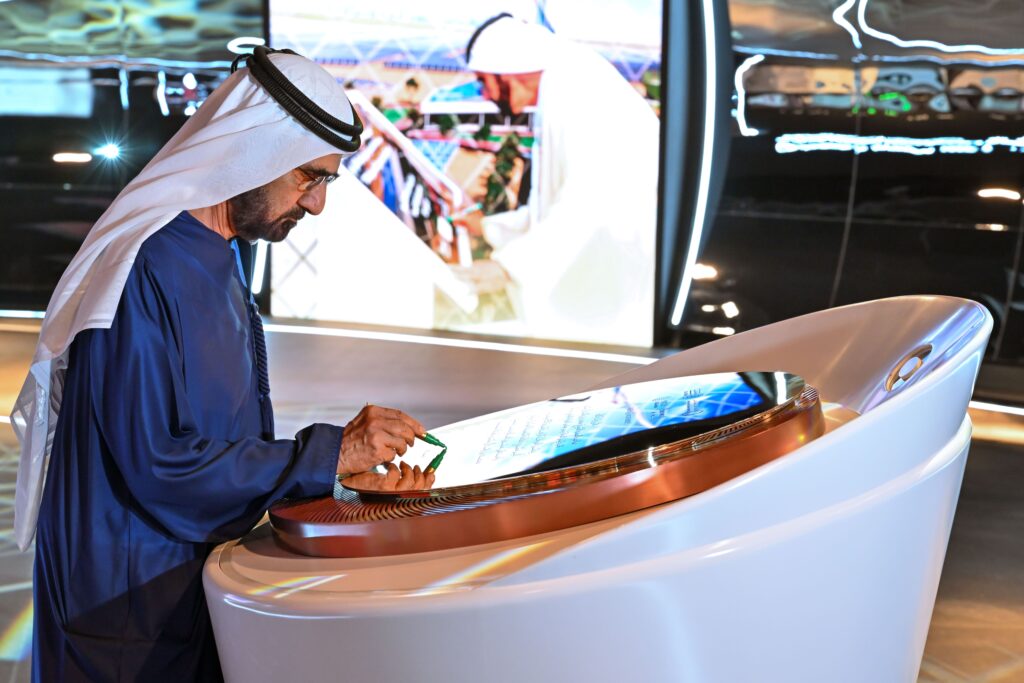
His Highness Sheikh Mohammed bin Rashid Al Maktoum, Vice President and Prime Minister of the UAE and Ruler of Dubai, has inaugurated the largest concentrated solar power (CSP) project in the world, within the fourth phase of the Mohammed bin Rashid Al Maktoum Solar Park in Dubai.
The 950-megawatt (MW) fourth phase is the largest investment project that uses three hybrid technologies: 600MW from a parabolic basin complex, 100MW from the CSP tower, and 250MW from photovoltaic solar panels. Built at an investment of AED15.78 billion, using the independent power producer (IPP) model, the project features the tallest solar tower in the world, at 263.126 metres, and the largest thermal energy storage capacity with a capacity of 5,907 megawatt hours (MWh), according to the Guinness World Records.
His Highness Sheikh Mohammed bin Rashid Al Maktoum, Vice President and Prime Minister of the UAE and Ruler of Dubai said, “The UAE has a clear vision to transform itself into one of the world’s most sustainable nations. Our journey towards sustainability is comprehensive, encompassing advanced clean energy projects across diverse renewable sources, and innovative solutions integrated into various spheres of the economy and society. The Mohammed bin Rashid Al Maktoum Solar Park is at the heart of Dubai and the UAE’s commitment to create a world-class infrastructure for sustainability and a robust foundation for building an environmentally friendly future. Coming at the culmination of the UAE’s Year of Sustainability, the launch of the fourth phase of the Solar Park is an important milestone in our sustainability journey. Our success in creating the world’s largest concentrated solar project underscores our determination to advance climate action and aligns with the goals of the UN Climate Change Conference (COP28), which the UAE is currently hosting. Driven by the objectives of the UAE’s Net Zero by 2050 Strategy, we continue to expand our sustainable energy mix and embrace renewable and alternative energies, shaping not only our nation’s future but also contributing significantly to the global effort to combat climate change. Our dedication to sustainability is a testament to our resolve to contribute to fostering a resilient and prosperous future for all of humanity.”
H.H. Sheikh Mohammed bin Rashid Al Maktoum was accompanied by H.H. Sheikh Maktoum bin Mohammed bin Rashid Al Maktoum, First Deputy Ruler of Dubai, Deputy Prime Minister and Minister of Finance; H.H. Sheikh Ahmed bin Saeed Al Maktoum, Chairman of the Dubai Supreme Council of Energy; H.H. Sheikh Mansoor bin Mohammed bin Rashid Al Maktoum, Chairman of the Dubai Ports and Borders Security Council and a number of ministers, director generals of Dubai government departments and senior officials.
Sheikh Mohammed bin Rashid Al Maktoum was welcomed by Saeed Mohammed Al Tayer, MD and CEO of Dubai Electricity and Water Authority (DEWA).
Sheikh Mohammed bin Rashid Al Maktoum was briefed about the project by Saeed Mohammed Al Tayer, MD and CEO of Dubai Electricity and Water Authority (DEWA). The fourth phase of the Mohammed bin Rashid Al Maktoum Solar Park, which covers an area of 44 square kilometres, uses three hybrid technologies: 600MW from a parabolic basin complex, 100MW from the CSP tower, and 250MW from photovoltaic solar panels. The project features 70,000 heliostats that track the sun’s movement. The Molten Salt Receiver (MSR) on top of the solar power tower is the core and the most important part of the CSP plant. It receives solar radiation and turns it into thermal energy. The MSR contains over 1,000 thin tubes that enable the absorption of sun rays and their transfer to the molten salt within these tubes. This project will provide approximately 320,000 residences with clean and sustainable energy. It will reduce carbon emissions by about 1.6 million tonnes annually, enhancing Dubai’s position as a leading global hub in clean, renewable energy and climate action.
Saeed Mohammed Al Tayer said, “President His Highness Sheikh Mohamed bin Zayed Al Nahyan has emphasised that the UAE’s commitment to protecting the environment and supporting global action to achieve sustainability is firm, continuous, and effective for the benefit of its people and the service of humanity. Furthermore, His Highness Sheikh Mohammed bin Rashid Al Maktoum, Vice President and Prime Minister of the UAE and Ruler of Dubai, has constantly reiterated the UAE’s determination to be at the forefront of global efforts to create a more sustainable future for all of humanity by taking concrete action to transition to renewable energies. At the Dubai Electricity and Water Authority, we follow the vision and directives of the leadership to increase the share of clean and renewable energy sources to achieve the goals of the UAE Net Zero by 2050 Strategic Initiative and the Dubai Net Zero Carbon Emissions Strategy 2050. We have already achieved the interim goals of this strategy in record time.”
Al Tayer explained in his speech at the inauguration that the fourth phase of the Mohammed bin Rashid Al Maktoum Solar Park was based on the directives of H.H. Sheikh Mohammed bin Rashid Al Maktoum to implement this project to be a global landmark that sets higher standards of excellence than similar projects worldwide. He emphasised that this project would not have been possible without His Highness’s support to implement the project according to world-leading benchmarks of efficiency and performance. The project features the tallest CSP tower and the largest single-site thermal energy storage in the world, as well as the lowest cost to produce renewable energy round the clock.
“The vision and directives of His Highness Sheikh Mohammed bin Rashid Al Maktoum to enhance the share of clean and renewable energy, have contributed to making Dubai a global hub for the green economy and a global role model in the sustainable transition to clean energy. This has been achieved through pioneering strategies and projects driven by advanced research and development, Fourth Industrial Revolution technologies, digital transformation, and the latest renewable and clean energy technologies. Through the IPP model, DEWA has achieved the lowest global prices, making Dubai a benchmark for solar energy project prices worldwide,” said Al Tayer.
“The Mohammed bin Rashid Al Maktoum Solar Park supports the efforts of the UAE, which has one of the world’s largest investments in clean energy projects, and is currently hosting the UN Climate Change conference, COP28, in Expo City Dubai. This underlines the UAE’s firm commitment to sustainable development and protecting the environment and natural resources for us and for generations to come. The solar park whose current capacity has reached 2,627MW, is the cornerstone to achieve the Dubai Clean Energy Strategy 2050 and the Dubai Net Zero Carbon Emissions Strategy 2050 to provide 100 percent of the energy production capacity from clean energy sources by 2050,” added Al Tayer.
Al Tayer commended the efforts of DEWA’s partners in implementing this pioneering project according to the highest international standards and using the most advanced technologies. A consortium led by DEWA and Saudi Arabi’s ACWA Power established Noor Energy 1 as a project company to design, build, and operate the fourth phase of the Mohammed bin Rashid Al Maktoum Solar Park. DEWA holds a 51 percent stake in the company, ACWA Power holds 25 percent, and the Chinese Silk Road Fund owns 24 percent
“Guided by the leadership and vision of His Highness Sheikh Mohammed bin Rashid Al Maktoum, Dubai is paving the way for a sustainable future. It is transforming into a global centre for green economy by continuing its efforts to achieve the goals of the Dubai Clean Energy Strategy 2050. Inaugurating the world’s largest single-site CSP plant during COP28 demonstrates our commitment to our strategy to increase the use of clean and renewable energy sources. The project is also a significant milestone in DEWA’s success, and we are proud to be a part of it. This is part of our long-term partnership that we began in the Mohammed bin Rashid Al Maktoum Solar Park, leading to the opening of the fourth phase we are witnessing today in Noor Energy 1 project,” said Mohammad Abunayyan, Chairman of ACWA Power.
“We are proud of our contribution to achieving the ambitious vision of the leadership in cooperation with our partners in DEWA. Our key role, through the qualitative projects that we operate and manage in UAE, confirms the extent of the efforts, expertise and financial capabilities of our partners in DEWA and the Silk Road Fund. Together, we have been able to set new standards for CSP generation using the latest technological innovations in this project, such as the solar tower technology and parabolic panels that use CSP to produce energy 24 hours a day. Additionally, the plant’s capacity is enhanced with photovoltaic solar panels to produce 950 megawatts. This is the only single-site project in the world that includes all these technologies. It also features the largest solar energy storage capacity in the world,” added Abunayyan.
“Through collaboration and innovation, we pave the way for sustainable energy solutions that push boundaries and drive progress. As we celebrate the opening of Noor Energy 1, we affirm our commitment to a brighter and cleaner future for future generations,” said Zhu Jun, Chairwoman of Silk Road Fund.
“We are honoured to be part of this huge cooperation between DEWA and ACWA Power. Together, we are setting a new standard for innovation and sustainability. This achievement is a milestone in the development of sustainable energy in the region and confirms the commitment to promoting energy solutions. The successful completion of this project is a testament to the dedication and expertise of all partners and sets a commendable precedent for future renewable energy initiatives,” added Zhu Jun.
Three combined technologies
The fourth phase of the Solar Park uses three hybrid technologies to produce clean energy: 600MW from a parabolic basin complex (three units of 200MW each), 100MW from the world’s tallest solar power tower (based on Molten Salt technology), and 250MW from photovoltaic solar panels. The Molten Salt Receiver (MSR) on top of the solar power tower is the core and most important part of the CSP plant. It receives solar radiation and turns it into thermal energy. The MSR contains over 1,000 thin tubes that enable the absorption of sun rays and their transfer to the molten salt within these tubes.
President His Highness Sheikh Mohamed bin Zayed Al Nahyan today honoured the winners of the Zayed Sustainability Prize in a ceremony held as part of the UN Climate Change Conference (COP28) hosted by the UAE at Expo City Dubai.
The ceremony was attended by numerous heads of delegations participating in COP28, ministers, senior government officials, and prize winners and finalists.
His Highness congratulated the winners, praising their efforts in promoting sustainability and encouraging them to continue their important contributions in this field. His Highness emphasised that the UAE is steadfast in building upon its established legacy in sustainability, a foundation laid by the country’s Founding Father, the late Sheikh Zayed bin Sultan Al Nahyan. In this regard, His Highness highlighted the significant role of the Zayed Sustainability Prize in advancing sustainable development, serving humanity, and empowering innovators, entrepreneurs, and youth to actively contribute towards making a positive difference for our planet.
The Zayed Sustainability Prize aims to perpetuate the legacy of the late Sheikh Zayed bin Sultan Al Nahyan by honouring and supporting small and medium enterprises, non-profit organisations, and secondary schools that offer sustainable solutions addressing challenges in health, food, energy, water, and climate. Over more than 15 years, the Prize has positively impacted the lives of 384 million people worldwide through the innovative solutions presented by its 106 winners.
The Zayed Sustainability Prize also focuses on promoting youth engagement in sustainability through its Global High Schools category, which encourages youth to play active roles in supporting their communities and leading future sustainability efforts. The winners in this category, numbering 47 global high schools, have positively impacted the lives of more than 55,186 students and 453,887 people in their local communities.
The eleven winners of this year’s edition were unanimously selected in September by the jury after a thorough review of all candidates to assess their contributions and commitment to presenting innovative, impactful, and inspiring solutions across various prize categories, including Health, Food, Energy, Water, Climate Action, and Global High Schools.
During the ceremony, Dr. Sultan bin Ahmed Al Jaber, Minister of Industry and Advanced Technology, Director-General of the Zayed Sustainability Prize, and COP28 President, stated, “In line with the vision and direction of the leadership, the Zayed Sustainability Prize has been contributing to inclusive sustainable development and advancing climate action for over 15 years. Today, the UAE reaffirms its commitment to stimulating action to mitigate climate change impacts, empowering communities in need of support, and creating positive change in the world, especially in the Global South.”
The winners in the Climate Action category include Kelp Blue Namibia, recognised for its ambitious efforts in cultivating extensive seaweed forests in deep waters. The company has contributed to the restoration of ocean biodiversity and the sequestration of 100,000 tons of carbon dioxide from the atmosphere annually, in addition to creating job opportunities in coastal communities.
In the Health category, the Indonesian organisation DoctorSHARE was honoured for its pioneering work in delivering healthcare to remote and hard-to-reach areas through its floating hospitals. The organisation has made a widespread positive impact, treating more than 160,000 patients.
The Gaza Urban and Peri-Urban Agriculture Platform (GUPAP) from Palestine emerged as the winner in the Food category, commended for its contributions to supporting Gaza’s agricultural sector. This non-profit organisation facilitates access to locally produced food and has provided employment opportunities for about 200 women in agriculture, benefiting over 7,000 individuals.
In the Energy category, Ignite Power from Rwanda was recognised for its significant efforts in providing affordable electricity to remote communities in sub-Saharan Africa. The company has supplied solar power solutions to 2.5 million people through a pay-as-you-go model, thereby avoiding 600,000 tons of carbon dioxide emissions. They have also introduced innovative solar-powered irrigation solutions, creating 3,500 job opportunities in local communities.
For the Water category, the French non-profit organisation Eau Et Vie was awarded for ensuring access to clean water in impoverished areas by installing water taps directly in homes in urban regions. The organisation has facilitated water access for 52,000 people across 27 neighbourhoods in 10 cities, raised health practice awareness among 66,000 individuals, and reduced water costs by 75 percent.
The recipients of the Global High Schools awards are Colegio De Alto Rendimiento De La Libertad (Peru), representing the Americas; Gwani Ibrahim Dan Hajja Academy (Nigeria), representing sub-Saharan Africa; International School (Morocco), representing the Middle East North Africa; Northfleet Technology College (United Kingdom), representing Europe Central Asia; KORT Education Complex (Pakistan), representing South Asia; and finally, Beijing High School No. 35 (China), representing East Asia Pacific.
The Chair of the Jury and former President of the Republic of Iceland, Ólafur Ragnar Grímsson, said, “This year’s winners have demonstrated a remarkable wave of ingenuity in their solutions to address urgent global challenges. We have confidence that these winners will catalyse substantial and scalable change in communities worldwide, propelling us towards vital climate action objectives and forging a path to a sustainable future for all.”
On the opening day of the World Radiocommunication Conference (WRC23) held in Dubai, Eng. Mohammed Al Ramsi was appointed as the Chairman of the Conference. This decision underscores the prominent global position of the UAE, particularly in the ICT sector – a pivotal force driving development across diverse domains. It further attests to the proficiency and capability of the Emiratis in steering and presiding over major international forums and events.
This appointment marks the fulfillment of a decision made by the WRC during its previous session in Sharm El Sheikh, Egypt, in 2019. The decision involved hosting the UAE for WRC-23, recognised as one of the foremost global gatherings in the telecommunications sector, with a particular focus on radiocommunications. At that time, the conference also endorsed Eng. Mohammed Al Ramsi as a candidate for the chairmanship of the 39th session, which is presently taking place in the UAE.
Following the UAE’s successful bid to host the conference in 2019, Telecommunications and Digital Government Regulatory Authority (TDRA) initiated a comprehensive national plan in collaboration with various relevant government entities. This plan is built on two main pillars. The first pillar emphasises meticulous preparations to host the event at the highest standards, aligning with the country’s distinguished reputation and its history of successfully organising major international conferences. This approach aims to facilitate the mission of approximately 4,500 delegates representing 193 countries over the course of the four-week conference period.
The second pillar pertains to the preparations undertaken by Eng. Mohammed Al Ramsi, as a candidate for the chairmanship of the conference, with the aim of ensuring the success of this strategic mission. This pillar encompasses a series of global efforts and meetings geared towards achieving the conference’s objectives, particularly in updating the Radio Regulations. It involved conducting various tours to engage with groups representing different global regions under the International Telecommunication Union’s umbrella. Al Ramsi actively participated in negotiation and dialogues, fostering understanding and collaboration among countries and regional groups. The overarching goal is to establish consensus and understanding that will lead to successful decisions on matters related to radio frequencies and other pertinent issues during the ongoing conference sessions.
The nomination of Al Ramsi to chair the conference is rooted in his extensive history of accomplishments and responsibilities within the telecommunications sector. With over 20 years of experience, he has demonstrated expertise in network engineering, infrastructure and standards, central network planning, and the management of regulatory affairs. These cumulative experiences have culminated in his current role as the Deputy Director-General of TDRA.
Beyond his extensive telecommunications expertise, Al Ramsi possesses a well-rounded personality that has facilitated notable successes throughout his career. His global tours of various regions have seen him emerge as a unifying force, adept at fostering consensus on issues that may be points of contention among countries. With his skillful approach, he has achieved significant breakthroughs in the field, contributing to the ITU’s journey with unprecedented decisions, particularly amid the current global geopolitical circumstances.
The World Radiocommunication Conference (WRC) is one of the major event within the International Telecommunication Union (ITU), occurring every four years with the primary objective of revising the Radio Regulations – the international treaty governing the global use of spectrum. Each conference session marks the initiation of a new era, influencing subsequent developments, plans, and strategies in the fields of technology and digital transformation.
Al Ramsi commented on this appointment, saying, “The global consensus witnessed in the opening session, selecting an Emirati figure to chair one of the most significant and influential conferences in the international ICT sector, is a testament to the leading global position of the UAE. The swift approval of this appointment during the opening session further solidifies the UAE’s prominent position. Today, I feel a great responsibility dictated by my duty as an Emirati towards my country first, and towards the global responsibilities that result from this position.”
Al Ramsi added, “I derive my confidence in succeeding in this mission from the great support that I have received, and that every individual of this generous nation receives, which has made the people of the UAE demonstrate their presence with great merit in all international events and forums in which they have represented their country. Today, I affirm that being appointed to this position serves as a strong motivator for me to exert every conceivable effort in furthering the global mission of the UAE. This mission is encapsulated by “We the UAE 2031” vision and its pillars, positioning the UAE as a key advocate for international cooperation and an influential contributor to achieving global development goals for the benefit of humanity worldwide.”
The World Radiocommunication Conference is held in Dubai, UAE, from November 20th to December 15th 2023. Approximately 4,500 government officials from 193 countries, along with around 900 international organisations, universities, and companies worldwide, will be in attendance. The conference will host a series of sessions with the aim of achieving global consensus on radio communications and frequencies. The outcomes are anticipated to have far-reaching effects across sectors including manufacturing, space, health, education, and transportation.
This session of the WRC gains exceptional importance in light of the rapid changes in today’s world, particularly within the field of radical and emerging technologies that wield substantial influence in shaping the digital future and the evolution of smart cities. Numerous industrial strategies within the ICT products and technology depend on the outcomes of the conference, particularly in the establishment of globally endorsed regulations for radio frequencies.
As the host of this session, the UAE stands as the sole country globally to have hosted and chaired all conferences and events of the ITU, noting that this is the second occasion the UAE has chaired the WRC, with the initial instance occurring in 2012/
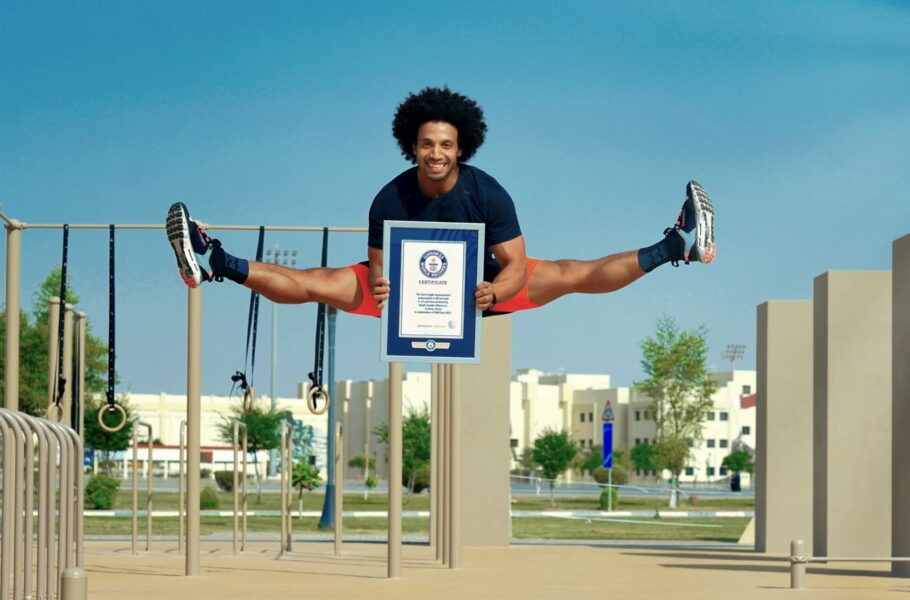
Doha-based experienced gymnast Ayoub Touabe smashed the Guinness World Records title for the Most single leg backwards somersaults in 30 seconds with 12, breaking a new, never-previously-attempted world record.
A somersault is a movement in gymnastics in which a person flips in a complete revolution along the ground or in the air bringing the feet over the head.
Ayoub is said to be among a few people globally who are able to do this movement on a consecutive basis on one leg. In fact, the movement puts a lot of pressure on a single leg plus the lower back, making it very challenging even for experienced gymnasts. Based in Doha, Qatar, Ayoub developed this skill during his 23-year career and managed to set a world record at the age of 32.
Ayoub started his journey by mimicking his father’s gymnastic moves at the age of almost 8 years young in 1998. He started professional training at a later age, but also got his degree at a medical institute. He suffered from multiple injuries during his training career. He said:
“I don’t think I spared any part of my body without some sort of an injury”.
“I managed to do my first somersault in 2009, but it took me another 18 months to do another one consecutively. By 2011, I uploaded a video on YouTube doing 10 consecutively. After thorough research, I realised there is no one globally who can do as many.”
Ayoub is currently training people to do gymnastics. His most experienced student has managed to do the first somersault. He adds:
“The moment you realise how to balance and work out your back flexibility and leg stability is when you know how to do it” he added “I am 5 ft 8 in tall and weigh 89kg, which makes somersaults physically very challenging.”
Ayoub’s goal now is to teach more people the value of doing sports, and stand against society’s resistance to sports:
“Throughout the years, I have been told multiple times to give up my sports career, and focus on my university degree, but I refused and today with a Guinness World Records title, I am glad I didn’t give up.”
First held in 2004 to mark Guinness World Records becoming the best-selling copyright book of all time, GWR Day has inspired some now iconic record-breaking achievements. Guinness World Records today celebrates the eighteenth annual GWR Day. Celebrating the theme of Super Skills, record-breaking hopefuls from across the globe have put on a jaw-dropping display of dedication, persistence and elite-level talent. This year over 1000 applications were received from aspiring record-breakers across the world, hoping to attempt records on GWR Day to secure their place in the next edition of the book.
Source and cover image credit: Guinness World Records Press Release
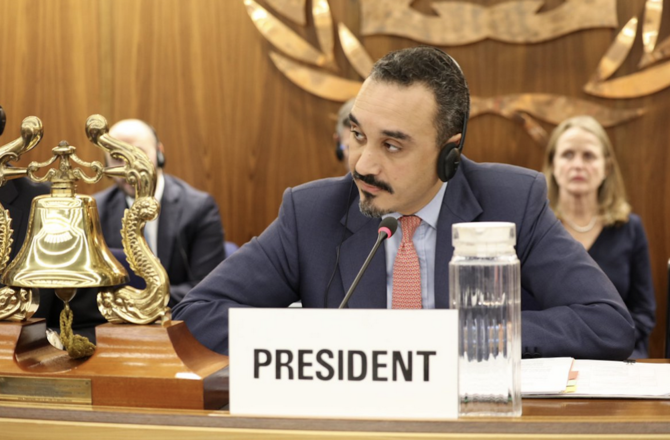
Prince Khalid bin Bandar Al-Saud was appointed via unanimous decision.
Saudi Arabia’s ambassador to Britain was elected on Monday as president of the International Maritime Organization General Assembly by its member states, the Kingdom’s embassy to the UK announced.
During a meeting of its 33rd session in London, the IMO members appointed Prince Khalid bin Bandar Al-Saud via a unanimous decision.
The IMO is the United Nations’ specialized agency with responsibility for the safety and security of shipping and the prevention of marine and atmospheric pollution by ships.
The meeting in the British captial was opened by secretary-general Kitack Lim, who highlighted the organization’s achievements during the current biennium, including the adoption of the 2023 IMO GHG Strategy, and emphasized the need to decarbonize and digitalize shipping in the years ahead.
source/content: arabnews.com (headline edited)
____________
During a meeting of its 33rd session in London, the IMO members appointed Prince Khalid bin Bandar Al-Saud as president via a unanimous decision. (X/@SaudiEmbassyUK)
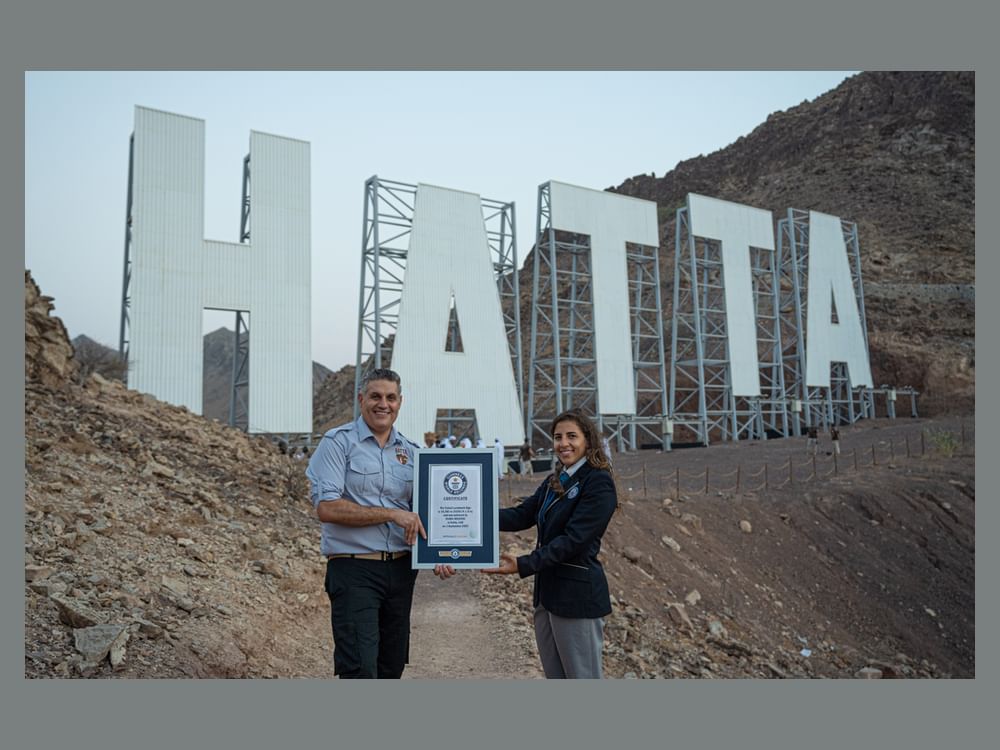
Dubai Holding’s iconic Hatta Sign has garnered international acclaim by breaking the Guinness World Records title for ‘The Tallest Landmark Sign’. Situated atop the Hajar Mountains, the commanding 19.28-metre-tall structure stands as a striking symbol of Hatta’s identity and its status as one of the UAE’s most scenic regions.
The Guinness World Records title will shine a global spotlight on the Hatta region. What was once a local gem is now set to attract international interest, enticing travellers from around the world to experience the enchantment of Hatta firsthand. The heightened attention will help stimulate economic growth, create employment opportunities, and foster local business development, contributing to Hatta’s sustainable growth.
As Dubai Holding’s Hatta Resorts readies itself for opening its upcoming sixth season, the record-breaking Hatta Sign will be a globally recognised attraction that provides visitors a unique backdrop for capturing memorable pictures. Hikers are encouraged to make the ascent to the sign and take in the area’s breathtaking panoramic scenery from a higher altitude.
Hatta’s visitors are welcome to indulge in further adventures at the Hatta Resorts Wadi Hub, the main centre for outdoor activities in the region, including ziplining, mountain biking, rock climbing, zorbing, archery and axe-throwing, with new thrilling activities soon to be introduced in Season 6.
Visitors may also extend their journey with a stay at Hatta Resorts by Dubai Holding and enjoy an array of unique glamping experiences that seamlessly blend nature and culture with its array of outstanding trailers, lodges, domes and caravans. Already impressing visitors with its physical presence, the Hatta Sign now acquires global cultural significance. The landmark serves as a reminder of Hatta’s rich history as well as its newly attained international recognition.