Arabs & Arabian Records Aggregator. Chronicler. Milestones of the 25 Countries of the Arabic Speaking World (official / co-official). AGCC. MENA. Global. Ist's to Top 10's. Records. Read & Enjoy./ www.arabianrecords.org
Regional Director for the Guinness World Records in the Middle East and North Africa region Ahmed Bakr Meklad said Bahr Al Baqr wastewater treatment plant has received a Guinness World Records’ certificate for being the largest water plant in the world with a capacity of 64.8 cubic meters per second along with the use of ozone in the wastewater treatment process.
Speaking to “Good Morning Egypt”, Meklad said the plant has been established with the highest and best international standards.
The plant was inspected by Guinness World Records team of judges over a period of one year during which data were exchanged to review the plant’s competitiveness with similar projects.
The cost of this massive project is LE20 billion, and its daily capacity is 5.6 million cubic meters to be used in the reclamation of 400 acres in Sinai, he said.
Considered one of Egypt’s most important projects, the plant treats more than 2 billion cubic meters of wastewater per year which will be used to irrigate 1,400 sq km of land in Sinai. It is located east of the Nile Delta in the town of Bahr El-Baqar, about 35 km south of Port Said.
The project is set to improve water security, provide jobs, support communities, and reduce pollution for decades to come.
The plant comprises the pumping building of the water intake – rapid mixing basins – slow mixing basins – sedimentation basins – filters with discs – ozone basins – chloride tanks, treated water, sludge condensing basins – mechanical drying buildings – solar units for sludge drying and an administrative area which includes (headquarter building – employers building – mosque – generators – workshops – chemicals – chloride – ozone) – interior roads networks and landscaping.
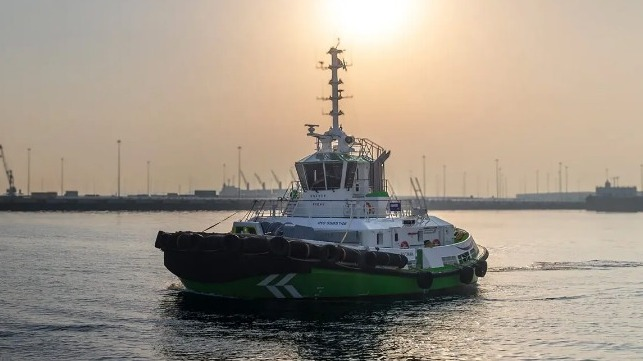
Fully electric tugs have quickly emerged from a novelty in the industry and now Damen Shipyards Group and its client SAFEEN Group, part of AD Ports Group’s Maritime & Shipping Cluster, have set a Guinness World Record as the Most Powerful Electric Tugboat. The vessel delivered earlier this year demonstrated what the companies are calling “unprecedented for a fully electric tug” and further the growth of this sector of the industry.
The record was set by measuring the bollard pull of Damen RSD-E Tug 2513 Bu Tinah, which achieved an average high peak pull of 78.2 tonnes. It is the first fully electric tug to operate in the Middle East and now has the unique distinction of the unique honor by a world-recognized body for record keeping. Launched in 1954 as a promotional idea for the Guinness Brewery, the Guinness Book of Records (today Guinness World Records) is an often-quoted source of data.
“This Guinness World Record achievement demonstrates that the transition to alternative energy does not come at the cost of performance,” said Captain Ammar Mubarak Al Shaiba, CEO – Maritime & Shipping Cluster, AD Ports Group. “We are very proud that the first electric tug in the Middle East is also making waves on a global level with this accolade and the fact that in parallel it is improving the sustainability of our operations alongside cost efficiencies in terms of overall fuel saving is extremely important.”
The record-breaking performance took place at Khalifa Port, AD Ports Group’s flagship facility where the tug is a key component of AD Ports Group’s Marine Services fleet and its electrification strategy.
The RSD-E Tug 2513 according to Damen is designed with a focus on sustainability. It offers zero emissions from tank to wake playing a significant role in reducing emissions.
The RSD-E Tug 2513 builds on the already efficient design of the diesel propulsion RSD Tug 2513. The spec sheet highlights a 320 gross ton tug with a length of 24.73 meters (81 feet). It is designed to operate at a speed of up to 12 knots and can be recharged in two hours.
The vessel can operate with a crew of just two or three persons or a maximum of up to sic and can be customized with options for oil and pollution control or fire fighting.
The electric version according to its spec sheet is very similar to the earlier diesel version which has a maximum bollard pull of 80 tonnes. It operates at a speed of 12.6 knots.
Damen has been at the forefront of electric tug development, including delivering the world’s first electric harbor tug, aptly named Sparky, in 2022 to Ports of Auckland. It won the prestigious “Tug of the Year” at the 2022 International Tug and Salvage Awards ceremony and pioneered the growing deployment of electric tugs in ports around the world.
source/content: maritime-executive.com
__________
Damen’s electric tug delivered to AD Ports set a new record for pull power for electric tugs (Damen) / Published Nov 12, 2024 7:44 PM by The Maritime Executive ________________________________________________
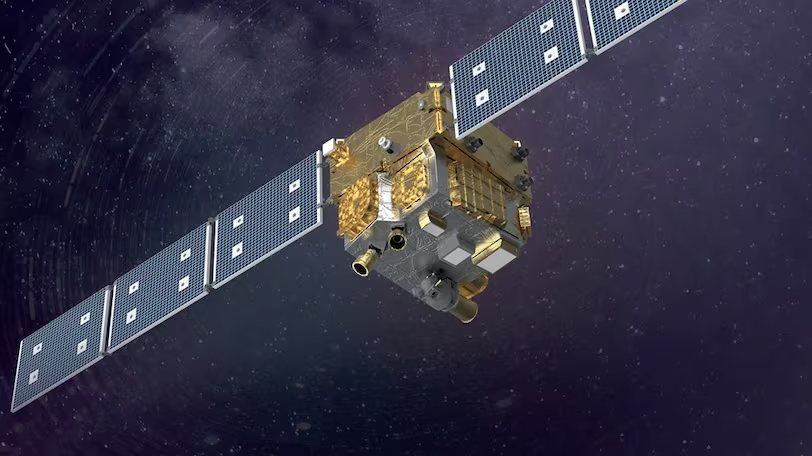
A satellite jointly built by Arab nations is a step closer to launch, with lift-off preparations complete.
More than 30 engineers from the United Arab Emirates University in Al Ain and engineers and researchers from 11 other Arab countries helped to develop the 260kg Earth observation satellite called 813.
It was expected to be launched in June from China aboard a ride-share carrier rocket, but it is now scheduled for the last quarter of this year, according to state news agency Wam.
The project was announced in 2019 with the intention of bringing Arab nations together and increasing their space sectors’ capabilities.
The satellite is named after 813AD. That was the year that Baghdad’s House of Wisdom became a public academy and library. It would attract the finest minds and usher the Arab world into a period of intellectual advancement known as the Islamic Golden Era.
Engineers from the UAE, Saudi Arabia, Egypt, Jordan, Bahrain, Sudan, Kuwait, Oman and Lebanon have taken part in the satellite’s development.
Amar Vora, head of space for Serco Middle East, told The National in an earlier interview that the project was a “powerful signal from the Arab world”.
“Much like Europe’s model under the European Space Agency, where long-standing co-operation has transformed Europe into a space leader, this satellite shows that Arab nations can also leverage collective strength to advance strategic capabilities,” he said.
“It brings together engineers, scientists, researchers and policymakers across the region in a way that builds not only hardware, but human capital, sovereign capability and institutional trust.”
The satellite will enter a sun-synchronous orbit at an altitude of 550km to 650km, where it will help to capture data on agriculture, natural resource management and environmental monitoring around the world.
Engineers installed a hyperspectral imaging payload system in the satellite, which will allow in-depth analysis of soil conditions, water quality, crop health, land cover changes and pollution levels.
All stages of the satellite, including its design, assembly, integration and environmental and functional testing, were completed at the university’s National Space Science and Technology Centre.
It has also developed an operational system on campus so that data from the satellite can be received, processed and converted into maps and scientific resources that will be available for researchers and university students.
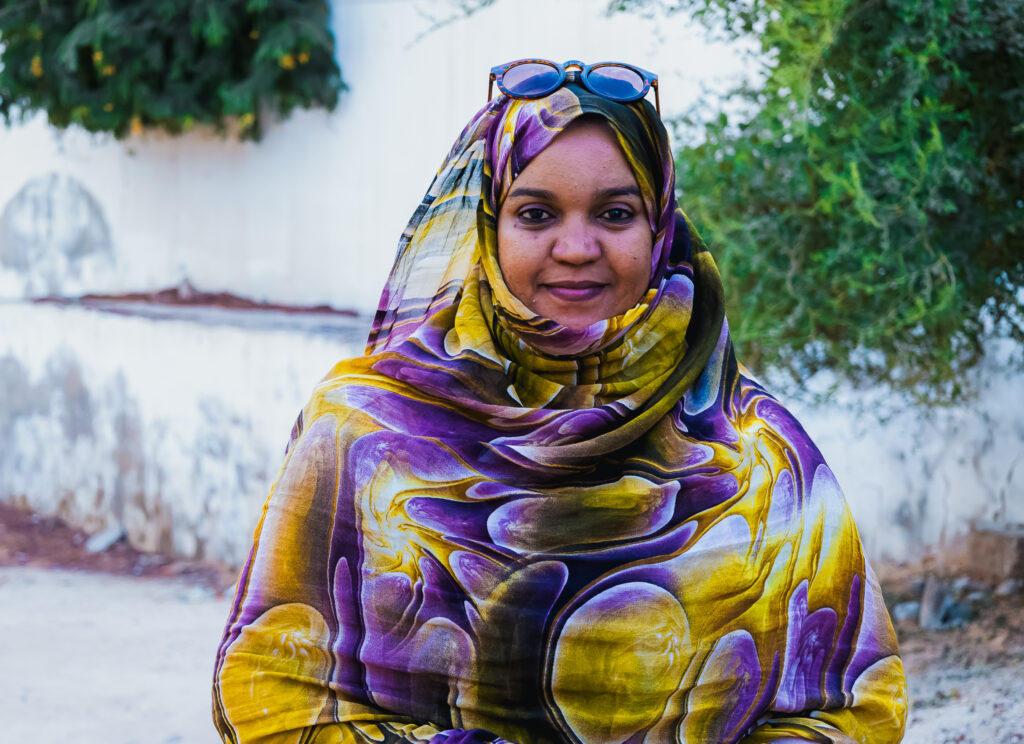
“Contributing to mitigating climate change” is the great challenge that Aziza Sidi Bouna, a 32-year-old Mauritanian renewable energy engineer, has set for herself. To achieve this, she has developed an innovative solution: producing biogas from animal, plant, and domestic waste. She is a pioneer in her field and is determined to revolutionize this sector in Mauritania. In 2019, she launched SBGAZ, a start-up specialized in valorizing agricultural and livestock by-products.
Regularly, she roams the markets of Nouakchott, the capital, in search of this precious raw material. “Until today, cow dung, excrement from certain ruminants like camels, were undervalued in my country. I wanted to change that,” explains this dynamic entrepreneur. “You can find the raw material everywhere: on the farm, in the village, at the slaughterhouse, and of course, at home. It is an almost inexhaustible source,” she adds. In fact, in Mauritania, livestock production is one of the pillars of the national economy. It represents more than 15% of GDP, which is thousands of tons of animal waste per year. It is more than enough to produce huge quantities of biogas.
A Source of Clean Energy
Once collected, livestock manure is placed in a biodigester, a natural solution for recycling organic waste, which allows for the production of a combustible gas, biogas, and also a highly effective fertilizer, digestate. “Production lasts between 15 and 45 days, depending on the season,” explains Aziza Sidi Bouna.
“Our biogas has the advantage of being carbon neutral. We don’t use any fossil energy to extract the gas. It’s called methanization, and it’s 100% carbon natural.”
Aziza Sidi Bouna, Founder and CEO of SB-GAZ
“We started designing several biodigester prototypes in 2019,” she continues. “The resulting biogas is a clean energy that can be produced cheaply. It’s much less expensive than propane gas traditionally used for cooking.” And to demonstrate this, the engineer highlights an irrefutable argument: with one kilogram of cow dung, according to her, one can produce gas for one to two hours of gentle cooking.
But that’s not all. Aziza Sidi Bouna’s biodigesters also transform organic waste and excrement into biological fertilizer, which is excellent for increasing agricultural yields. And she affirms, “Out of 100 kilograms of organic waste digested by the machine, we recover 10 kilograms of manure that is as good as or even more effective than chemical fertilizer.”
It Runs in the Family
Aziza Sidi Bouna is not alone in her ambitious project. Her right-hand man and the technical director of SBGAZ is none other than her father, Ahmed Sidi Bouna. As a rural economics engineer, he is particularly proud of his daughter, whom he has always supported, especially in a country where women are often confined to domestic work. Together, they aim to popularize biodigesters throughout society. Thanks to funding from the International Committee of the Red Cross, they have installed several biodigesters in the Mbera refugee camp, providing relief for families in their daily struggles. In Bassikounou, in the southeast of the country, SBGAZ’s first industrial biodigester is up and running, and “almost daily, more than 200 households come to fill their biogas bottles,” says Aziza. “With a USD150,000 grant from the United Nations Development Programme (UNDP), I hope to achieve my dream of providing a clean and accessible source of energy to all Mauritanian and Sahelian households in the future,” she adds.
An Alternative to Fossil Fuels
This dream is within reach and, if realized, would have a tangible impact. In fact, the widespread use of biodigesters in Mauritanian households would reduce dependence on fossil fuels such as oil or coal, which are imported mainly from abroad. This would also reduce the emissions of fossil fuels that contribute to climate change. “With my project, I want to contribute to reducing greenhouse gas emissions for the future of our children and our planet. This is the challenge of our century, and it is my responsibility as an entrepreneur,” says Aziza.
Protecting the environment by producing green energy is thus Aziza Sidi Bouna’s promise, and she hopes to create hundreds of new jobs through the development of this new sector. The young woman already employs five workers aged 28 to 45, including two women, “and many more in the future,” she says confidently. Aziza believes in the future, not just for herself but for all her country’s youth. She wants her journey to serve as an example for all the young people in Mauritania and beyond. “I want to change the mindset of the youth here, in the Sahel, and even in Africa. We, young people, have the power to make a difference,” concludes Aziza Sidi Bouna.
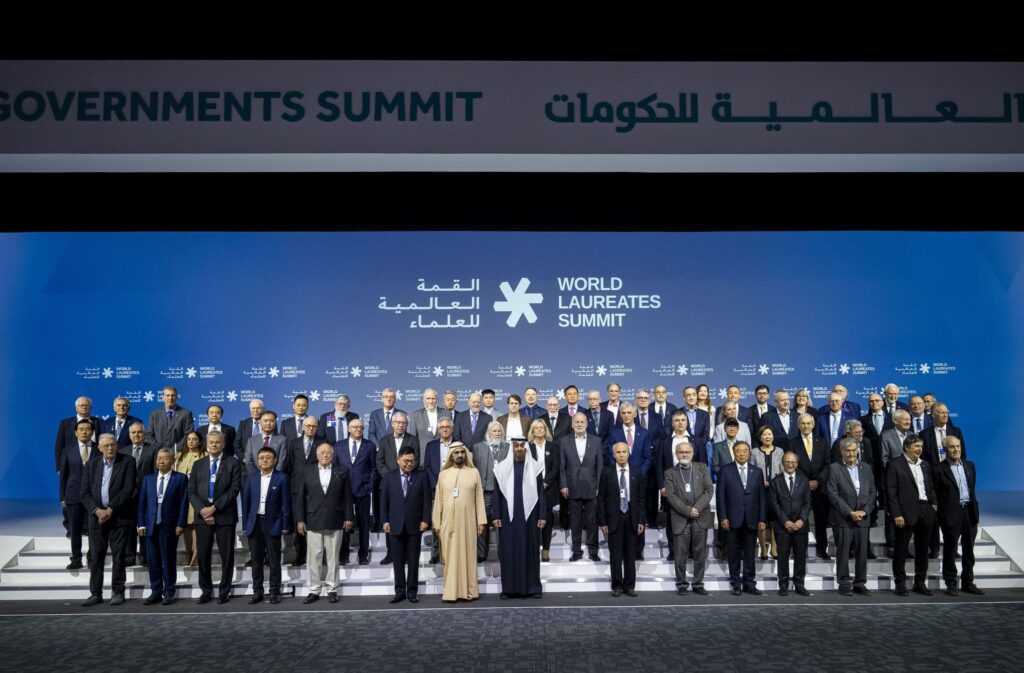
President His Highness Sheikh Mohamed bin Zayed Al Nahyan, and His Highness Sheikh Mohammed bin Rashid Al Maktoum, Vice President, Prime Minister, and Ruler of Dubai, inaugurated the World Laureates Summit, the largest global gathering of Nobel Prize winners and recipients of other prestigious scientific awards.
Also present at the inauguration were His Highness Sheikh Mansour bin Zayed Al Nahyan, Vice President, Deputy Prime Minister and Chairman of the Presidential Court, and His Highness Sheikh Hamdan bin Mohammed bin Rashid Al Maktoum, Crown Prince of Dubai, Deputy Prime Minister and Minister of Defence.
The World Laureates Summit, which commenced today and runs for three days, brings together more than 100 scientists and participants, including Nobel laureates, recipients of major international scientific awards, and leaders of research institutions.
It coincides with the World Governments Summit 2026, taking place from 3 to 5 February, with 3 February designated as a joint day that brings laureates together with heads of state and government, ministers, and leaders of international organisations and institutions participating in the World Governments Summit.
During the summit, Their Highnesses were briefed on key discussions involving a distinguished group of Nobel laureates and researchers from various vital disciplines, affirming the summit’s role as an international scientific platform for dialogue focused on long-term strategic thinking and multidisciplinary cooperation. The summit supports the role of basic sciences in addressing global challenges at a time of mounting economic, social, and political pressures and an urgent need for innovative solutions to sustain development efforts and ensure the continuity of humanity’s civilisational progress.
His Highness Sheikh Mohamed bin Zayed Al Nahyan highlighted that scientists are essential partners in shaping the future and that investing in knowledge and scientific research is the key to navigating global challenges. His Highness stated that the UAE will remain a global platform that brings visionaries and thinkers together and supports innovation in service of all of humanity.
His Highness Sheikh Mohamed bin Zayed continued by stating that science and scientists are at the core of the UAE’s vision for the future, extending from the belief that countries that make knowledge a national priority are the ones capable of leading global transformations and shaping a better tomorrow.
His Highness added that the World Laureates Summit reflects the UAE’s efforts and unwavering commitment to building a comprehensive scientific ecosystem that enhances quality of life and lays the foundations for sustainable prosperity rooted in solid scientific principles.
His Highness remarked that the world today faces major challenges that require unconventional solutions, underscoring the importance of this major scientific gathering. His Highness stated that the responsibility of scientists today extends beyond the confines of research centres, as they must become active partners in decision-making and in shaping development-focused policies.
His Highness expressed his hope that this scientific dialogue would contribute creative solutions to global challenges, ensuring the sustainability of resources for future generations. He added that the UAE will continue to strengthen its role as a bridge connecting scientific outputs with the needs of societies while supporting scientific research and the development of emerging technologies in service of peace and development.
Science is the Wealth of Nations
His Highness Sheikh Mohammed bin Rashid Al Maktoum affirmed that the UAE has been, and will continue to be, a nexus for visionaries and bold ideas. “Convening 100 scientists and Nobel Prize laureates in the World Laureates Summit is our way of saying: Civilisation happens when we appreciate science and scientists. Our goal is to open the doors wide for innovators so they can turn the impossible into tangible reality.”
His Highness added: “Science is the true wealth of nations, and scientists are the architects of humanity’s future. The UAE embraces bright minds, empowers researchers and offers the space to turn ideas into accomplishments.
His Highness stated: “People are our greatest asset. Through science, we can forge a better future for all. The UAE continues to establish itself as a global hub for science and knowledge and a magnet for talent and creative minds from around the world, driven by our belief that investing in people is key to achieving sustainable development and shaping the future.”
Investing in Knowledge and Science
His Excellency Mohammad Al Gergawi, Minister of Cabinet Affairs and Chairman of the World Governments Summit, said in his opening remarks at the World Laureates Summit that the vision of UAE President His Highness Sheikh Mohamed bin Zayed Al Nahyan has made the UAE an incubator for intellect and a meeting point for global thought leaders, praising His Highness’ continued support for science and scientists.
His Excellency Al Gergawi said the UAE believes that building a nation cannot be achieved by relying solely on resources, but also on people, and that the greatest investment in the future is an investment in knowledge and science. His Excellency noted that a nation that prioritises science and believes strongly in knowledge as the shortest path to prosperity and in research and openness as integral to its foundations is a strong nation capable of achieving and sustaining excellence.
His Excellency added that humanity’s journey of knowledge is undergoing a fundamental transformation. The rapid evolution of artificial intelligence and the aspiration for longer, healthier lives require new scientific approaches. He pointed out that conventional boundaries separating physicists, computer scientists, and biologists are beginning to dissolve, stressing that, where such boundaries continue to exist, society must overcome and redefine them.
His Excellency Al Gergawi affirmed that the World Laureates Summit draws its value and historical significance from being held at a pivotal time marked by political shifts, rapid technological acceleration, and unprecedented economic pressures amid growing concern about humanity’s future. In such moments, he said, the role of scientists is not secondary, but critical.
His Excellency concluded: “Our gathering today sends a message of hope to humanity: Despite the negative noise filling the world, human beings are still capable of choosing the path of reason and of working to improve this world. This is where the spirit of the UAE echoes the spirit of this scientific gathering, as neither sees the past as a ceiling or finish line but the future as a responsibility. Both believe that hope is not awaited but created, and that progress does not happen by chance, but as the result of collective action, clear vision, and faith in human potential.”
His Excellency Al Gergawi thanked the attending scientists, whose presence makes them part of a future that is more humane, just, and knowledgeable. He concluded: “Your being in the UAE today, in the presence of our leadership, will help shape a better future for humans and a healthier, more advanced planet.”
New WLA base in the UAE
Professor Roger Kornberg, President of the World Laureates Association (WLA), Nobel Laureate in Chemistry (2006) and Professor of Medicine, Stanford University, revealed WLA plans to launch a new base in the UAE, bringing together scientists from around the world and positioning the UAE as a global hub for scientific collaboration, research, and innovation.
Prof Kornberg stated: “The UAE is not following the future of science—it is setting its direction.”
Delivering the opening remarks for the World Laureates Summit, Kornberg described the event as a remarkable and unprecedented gathering in its scope, diversity and breadth.
Kornberg said: “This joint summit is also unprecedented in another way: it places science alongside government, industry, and finance. Scientists rarely have the opportunity to engage directly with policymakers at this level and on this scale. Here, we create a space where discovery and decision-making meet.”
Kornberg added: “In organising this summit, our goal was not only to explain science, but to address questions of broad societal importance. This is reflected in the sessions you will see over the coming days: Can AI actually discover anything? Can science save the Earth? Are we approaching the end of disease? These questions help ensure that science is not only understood but heard far beyond these halls.”
He added: “This is where the partnership with the World Governments Summit is so important. By convening the world’s leaders, the WGS ensures that the voice of science reaches decision-makers at the highest level.”
Knowledge as a driver of progress
Wang Hou, Executive Director and Secretary-General of the World Laureates Association, stated that the UAE’s deep appreciation for science and of its people’s belief in knowledge as a driver of progress are the reasons that helped the World Laureates Summit convene with great success.
He expressed his sincere thanks to members of the World Laureates Association for joining the summit, noting that their work has shaped human understanding of the world and continues to advance humanity in profound and lasting ways.
Hou stressed that the world stands at a pivotal moment that demands joint efforts for the future of humanity and the advancement of modern science. He highlighted the UAE’s hosting of the World Laureates Summit as a major step on this path, stating: “From the UAE, the future of science is not observed—it is shaped. Here, knowledge leads policy, and discovery is translated into global progress.”
The World Laureates Summit, organised in partnership between the World Governments Summit and the World Laureates Association, is the largest scientific gathering of its kind. It brings together an elite group of laureates who are recipients of the Nobel Prize, Turing Award, the Wolf Prize, the Lasker Award, the Fields Medal, and the Breakthrough Prize, alongside other recipients of prestigious international scientific awards.
The World Laureates Association comprises 187 leading scientists, including 78 Nobel laureates, as well as recipients of the prestigious scientific honours.
The summit’s agenda features a high-level programme centred on the theme “Basic Sciences: Scientific Consensus for Addressing the Challenges of Humanity” and includes keynote addresses, plenary sessions, specialised forums, strategic roundtables, and extended dialogues spanning a wide range of fields – most notably artificial intelligence and machine learning, quantum science and nanotechnology, biotechnology and genomics, data science and cryptography, and neurotechnology.
Discussions focus on how fundamental sciences contribute to governance and economic systems, how emerging technologies can be developed responsibly, and how international scientific cooperation can be strengthened in an increasingly complex geopolitical environment.
The first day’s agenda, in addition to the opening ceremony, included the AI Sciences Forum, the forum titled “AI Science Forum: Can AI Discover Anything?” and the Disruptive Technologies Forum, the New Energy Forum, and the Scientific Discovery Forum.
The second day’s agenda includes nine forums: “Six Senses and The Brain Forum”, “Genetic Science Forum”, “Life Sciences Forum”, “Physics Forum”, “Hospital Leaders Forum”, “Blockchain Science Forum”, “Carbon Materials Forum”, “Nuclear Physics Forum”, and “University Leaders Forum”.
The third day features the Young Scientists Forum, as well as joint sessions between the World Governments Summit and the World Laureates Summit.
Saudi Arabia won several Arab awards in medicine and nursing during the 63rd session of the Council of Arab Health Ministers, held recently in Tripoli, Libya, highlighting the Kingdom’s growing prominence in regional health excellence and the strength of its national health workforce.
The achievements reflect the rapid development of Saudi Arabia’s health sector and the high caliber of its medical and nursing professionals, who continue to contribute to innovation, enhanced health preparedness and the delivery of sustainable healthcare — in line with the objectives of the Health Sector Transformation Program under Saudi Vision 2030, said a statement issued on Thursday by the Saudi Ministry of Health.
As part of the Arab Doctors Award 2025 by the General Secretariat of the Arab League’s Social Affairs Sector, Dr. Ahmed bin Salem Bahammam, director of the Prince Naif Center for Health Research, received the award for excellence in scientific research and innovation.
Dr. Zuhair bin Yousef Al-Hlais, senior consultant in cardiac surgery at King Faisal Specialist Hospital, was honored with the award for excellence, leadership and professional medical impact.
For nursing, a Saudi team comprising Dr. Manal Saeed Banassr, Iman Mohammed Al-Shammari, Abdulrahman Abdullah Abu Khadaah, Jawharah Fahad Al-Harbi and Reem Mohammed Al-Humaidan won first place in the clinical practice category of the “Outstanding Work in Nursing and Midwifery” award for their project, the INS Model.
The innovative scheme focuses on strengthening surge capacity in intensive care units during disasters by enhancing nursing workforce readiness and increasing ICU capacity in times of crisis.
The model was developed during the COVID-19 pandemic.
In addition, Dr. Badriah Awad Al-Shehri, chief nursing executive at King Saud Medical City, jointly won the “Outstanding Work in Nursing and Midwifery” award with Egypt for the Nethathon Project, which aims to advance nursing education and training, enhance workforce competencies and improve the quality of health education outcomes.
The awards highlight Saudi Arabia’s leadership in medical innovation and professional excellence across the Arab region.
source/content: arabnews.com (headline edited)
______________
Saudi Arabia wins Arab awards in medicine and nursing at Arab Health Ministers’ Meet 2025. (Supplied)
His Highness Sheikh Mohammed bin Rashid Al Maktoum, Vice President, Prime Minister and Ruler of Dubai, honoured the six winners of the Great Arab Minds 2025 edition at the Museum of the Future in Dubai.
Great Arab Minds is the largest Arab initiative dedicated to celebrating outstanding Arab achievement, highlighting contributions to advance human civilisation, support the expansion of scientific and knowledge-based endeavours, and showcasing the creative impact of Arab talent across the region and globally.
His Highness affirmed that the Great Arab Minds initiative was designed to expand the horizons for established and emerging Arab talent, nurturing and investing in their potential; recognise Arab achievement across research, development, innovation, technology, culture, and architecture; and to reinforce a culture of pride and sustained support for Arab individuals who have inspired significant progress in key fields.
His Highness Sheikh Mohammed said, “Today, we honour Great Arab Minds in recognition of achievements that advance civilisation and build societies. From the Museum of the Future in Dubai, we reaffirm our support for Arab talent committed to innovation, creativity, and excellence.”
His Highness further said, “We congratulate the winners of the Great Arab Minds 2025: Professor Abbas El Gamal in the Engineering and Technology category, Dr. Nabil Seidah in the Medicine category, Professor Badi Hani in the Economics category, Professor Majed Chergui in the Natural Sciences category, Dr. Suad Amiry in the Architecture and Design category, and Professor Charbel Dagher in the Literature and Arts category. We encourage them to continue their journey of achievement and contribution, serving as true role models for younger generations in our region and around the world, inspiring them to shape a better future through science and knowledge.”
His Highness expressed his confidence in the ability of Arab talent to drive progress in scientific research, knowledge creation, and the cultural sector, supported by expertise, institutional support, and the ambition of young people across the region.
Focused on a better future
Sheikh Mohammed noted that the Great Arab Minds initiative will continue to highlight the achievements of Arab individuals who look to the future with optimism and pursue ambitions that recognise no limits.
The awards ceremony was attended by H.H. Sheikh Maktoum bin Mohammed bin Rashid Al Maktoum, First Deputy Ruler of Dubai, Deputy Prime Minister and Minister of Finance of the UAE; H.H. Sheikh Ahmed bin Mohammed bin Rashid Al Maktoum, Second Deputy Ruler of Dubai and Chairman of the Dubai Media Council; H.H. Sheikh Ahmed bin Saeed Al Maktoum, President of the Dubai Civil Aviation Authority, Chairman of Dubai Airports, and Chairman and Chief Executive of Emirates Airline and Group; His Highness Sheikh Mansoor bin Mohammed bin Rashid Al Maktoum, President of the UAE National Olympic Committee; H.H. Sheikha Latifa bint Mohammed bin Rashid Al Maktoum, Chairperson of the Dubai Culture and Arts Authority (Dubai Culture); and H.H. Sheikh Mohammed bin Rashid bin Mohammed bin Rashid.
Mohammed bin Abdullah Al Gergawi, Minister of Cabinet Affairs and Chair of the Higher Committee for the Great Arab Minds initiative, was among numerous ministers and senior officials in attendance along with scientists, academics and diplomats.
His Excellency Al Gergawi stated that the Great Arab Minds initiative launched by His Highness Sheikh Mohammed represents a profound recognition of Arab achievement across disciplines, and a significant strategic investment in empowering talent and encouraging renewed contributions to Arab intellectual and scientific progress.
He added that the Great Arab Minds initiative embodies Sheikh Mohammed’s vision to inspire confidence in Arab capabilities and motivate individuals to take an active role in shaping their societies and the future of a region that has long contributed to human civilisation through science, literature, thought, and architecture.
‘Powerful message’
He praised the achievements of the Great Arab Minds awardees across medicine, engineering, technology, sciences, architecture, arts, and literature, saying, “Your presence today on the Great Arab Minds 2025 platform at the Museum of the Future sends a powerful message to hundreds of millions of young people to pursue excellence, achievement, and leadership in research, innovation, creativity, and knowledge, and to help shape a brighter future for Arab and human civilisation.”
The award recognised one winner in each of its six categories: Medicine, Economics, Engineering and Technology, Natural Sciences, Architecture and Design, and Literature and Arts.
In Medicine, Dr. Nabil Seidah was honoured for his medical and research achievements in cardiovascular health and cholesterol regulation.
In Economics, Professor Badi Hani was awarded for his pioneering contributions to econometrics and the development of economic analysis tools, particularly in panel data analysis. His work enabled more accurate and in-depth analysis by combining data across multiple time periods and sources.
In Engineering and Technology, Professor Abbas El Gamal was awarded for his pioneering contributions to network information theory.
In Natural Sciences, Professor Majed Chergui was honoured for his contributions to understanding light-matter interactions, developing techniques and applications that enable the study of ultrafast molecular and material dynamics at the atomic level.
In Architecture and Design, Dr. Suad Amiry was honoured for her contributions to preserving Palestinian architectural heritage through documentation, restoration, and adaptive reuse of historical buildings.
In Literature and Arts, Professor Charbel Dagher was honoured for a body of work that constitutes a key reference in the study of Arab and Islamic arts, Arabic calligraphy, and modern visual arts.
Professor Abbas El Gamal said, “I extend my sincere gratitude to His Highness Sheikh Mohammed bin Rashid Al Maktoum for his vision in launching Great Arab Minds. Being honoured in this way is deeply meaningful to me.”
Professor Majed Chergui said, “I am Algerian of Syrian origin, born in Morocco and raised in Algeria and Lebanon. In this way, the Arab world comes together in who I am. For me personally, this award is not only the highest recognition of my achievements; it touches me deeply because it comes from an Arab country.”
Dr. Suad Amiry said, “In 1981, when I decided to live in the city of Ramallah, my aim was to study traditional architecture in rural Palestine. Ten years later, I founded the Riwaq Centre, which since then has been dedicated to documenting, restoring, and rehabilitating architectural heritage in Palestine. Winning this award is a great honour for me and for the Riwaq Centre.”
Professor Badi Hani said: “This award recognises not only my work, but also the people and places that shaped me, my family, my mentors, my city, and the Arab world that nurtured my earliest aspirations.”
Dr. Nabil Seidah said, “My father’s adage, that knowledge is something no one can ever take away from you, has been the principle that guided me throughout my journey. Your trust represents a powerful motivation for Arab scientists to serve as role models for future generations, and I pledge to continue serving science with the same passion that has always driven me.”
Professor Charbel Dagher said: “Commitment to the Arabic language has remained a defining hallmark of everything I have done: teaching, writing, and research, to the point that I live within Arabic itself. We cannot exist outside our language or our culture. Allow me to share this award with those who supported me, and my gratitude extends to everyone who has worked and continues to work to ensure that Arabic remains a living language of science, knowledge, and culture.”
The awardees were chosen by six high-level specialised committees, one for each category. Abdulla bin Touq Al Marri, Minister of Economy and Tourism, chaired the Economics Committee; Sarah Al Amiri, Minister of Education, chaired the Engineering and Technology Committee; Mohammed Ahmed Al Murr, Chairman of the Board of Directors of the Mohammed bin Rashid Al Maktoum Library Foundation, chaired the Literature and Arts Committee; Dr. Amer Sharif, Chief Executive Officer of Dubai Health and President of the Mohammed Bin Rashid University of Medicine and Health Sciences headed the Medicine Committee; Professor Sehamuddin Galadari, Senior Vice Provost-Research and Managing Director of the Research Institute at New York University Abu Dhabi chaired the Natural Sciences Committee; Professor Hashim Sarkis, Dean of the School of Architecture and Planning at the Massachusetts Institute of Technology chaired the Architecture and Design Committee.
In addition to the committee chairs, the specialised committees also included Essa Kazim, Governor of the Dubai International Financial Center; Dr Mohammed Madhi, Dean of the College of Business and Economics at UAE University; Dr Rabah Arezki, Chief Economist for the Middle East and North Africa (MENA) region at the World Bank and Senior Fellow at Harvard University’s John F. Kennedy School of Government; Ferid Belhaj, Fellow at the Policy Center for the New South; and Dr Jihad Azour, Director of the Middle East and Central Asia Department at the International Monetary Fund.
The committees also included Professor Ismael Al Hinti, President of Al Hussein Technical University; Adel Darwish, Regional Director of the International Telecommunication Union; Dr Ahmed Zayed, Director of the Bibliotheca Alexandria; His Excellency Dr. Alawi Alsheikh-Ali, Director General of Dubai Health Authority; Professor Elias Zerhouni, Professor Emeritus at Johns Hopkins University; Dr Noureddine Melikechi Dean of the Kennedy College of Sciences and Professor of Physics at the University of Massachusetts Lowell; Professor Nader Masmoudi, Professor at the Courant Institute of Mathematical Sciences at New York University Abu Dhabi; Dr Latifa Elouadrhiri Laboratory Directed Research Staff Scientist at the Thomas Jefferson National Accelerator Facility; and Professor Dr Jehane Ragai, Emeritus Professor of Chemistry at The American University in Cairo.
The specialised committees also included Dr Adrian Lahoud, Dean of the School of Architecture at the Royal College of Art; and Professor Ali Malkawi, Professor of Architectural Technology, Director of the Doctor of Design Studies Program, and Founding Director of the Harvard Center for Green Buildings and Cities.
The Nominations Committee included Huda Al Hashimi, Deputy Minister of Cabinet Affairs for Strategic Affairs; Chucrallah Haddad, Partner and Head of Advisory at KPMG Lower Gulf; Abdulsalam Haykal, President and Founder of Majarra Company; Ali Matar, Head of LinkedIn Middle East and North Africa and Emerging Markets in Africa and Europe; and Saeed Al Nazari, Secretary-General of the Great Arab Minds Initiative.
Widely known as the ‘Arab Nobel,’ the Great Arab Minds initiative recognises distinguished Arab achievement and highlights extraordinary contributions that reflect the region’s historic role in advancing knowledge and human progress globally. For a third consecutive edition, the initiative continues to strengthen its position as a platform for celebrating Arab creators and as a point of reference for promising Arab talent, by highlighting achievements that inspire young people and contribute to expanding Arab participation in global knowledge and civilisational advancement.
This combination of compassion and technology earned Al-Matrudi’s team multiple global awards this year.
For Dalal Al-Matrudi, innovation began not in a lab but at home, watching a loved one battle multiple sclerosis. What started as empathy soon turned into invention, leading her and her team to develop a smart medical device that is now winning awards on international stages.
“Our innovation is a smart medical device designed to assist patients with multiple sclerosis by providing localized muscle massage controlled through a mobile application,” said Al-Matrudi. “It helps relieve pain, reduce muscle stiffness and improve patients’ comfort and daily mobility.”
The device also connects patients directly with their doctors for real-time monitoring. “In emergency situations, it can instantly alert healthcare providers to ensure the patient receives immediate assistance,” she said.
This combination of compassion and technology earned Al-Matrudi’s team multiple global awards this year, including the Gold Medal with Jury’s Honor, the GCC Patent Office Award, and the Grand Prize at the International Invention Fair of the Middle East, or IIFME, hosted by the Kuwait Science Club. The invention was also recognized at the Geneva International Exhibition of Inventions, one of the most prestigious global platforms for innovation.
For Al-Matrudi, 21, who hails from Riyadh, the project was deeply personal. “Our inspiration came from personal experience — one of my family members suffers from multiple sclerosis, and seeing their daily struggle with pain and mobility challenges deeply affected me,” she said.
Together with her teammates, she transformed that emotional drive into a purpose-driven invention. “We wanted to create something practical and compassionate that could truly improve patients’ lives,” she said.
Under the mentorship of Prof. Dr. Kholoud Al-Muqrin, a distinguished professor of nuclear physics known for empowering young Saudi innovators, the team refined their prototype into an award-winning solution. “Her continuous guidance and scientific insight played a vital role in shaping our project and transforming our idea into a tangible, award-winning innovation,” Al-Matrudi said.
She believes the foundation of every great innovation is care. “We believed that technology should serve humanity, and that small ideas born from care can evolve into meaningful advancements that bring relief and hope to many,” she added.
Months of research, design and testing culminated in an unforgettable moment at IIFME 2025.
“The most emotional moment was standing on stage when our team’s name, Team May, was announced as the Grand Prize Winner,” she said. “I remember holding my teammates’ hands tightly, feeling both disbelief and overwhelming pride.”
For Al-Matrudi, the victory symbolized much more than recognition. “It wasn’t just about the prize — it was about realizing that months of dedication, late nights and countless trials were finally worth it,” she said.
She recalls how their mentor’s tears turned the win into a collective triumph. “I could see tears in everyone’s eyes, especially our supervisor’s, which made it even more special,” she said. “That moment reminded me that passion and persistence can turn ideas into achievements that reach beyond borders.”
Although the invention is not directly tied to her academic major, medical physics, Al-Matrudi says her background gave her the edge she needed to design effectively.
“Studying medical physics enhanced my scientific thinking and deepened my knowledge of how the human body interacts with medical devices,” she said. “This understanding helped me design a solution that is both safe and effective.”
She believes the key to meaningful innovation lies in combining technical knowledge with emotional intelligence. “Gaining international recognition encouraged me to continue combining my medical knowledge with creative thinking to develop innovations that make healthcare more compassionate, practical and accessible for all,” she said.
Al-Matrudi’s story reflects a growing wave of young Saudi women who are redefining the global image of innovation.
“I hope my journey shows Saudi women that ambition and creativity have no limits,” she said. “Science and innovation are not exclusive fields — they welcome curiosity, persistence and passion.”
Her experience also underscores how inclusion fuels progress. “When women step into these spaces, they bring empathy and fresh perspectives that drive real progress,” she said.
Her message is simple but powerful: “I want every Saudi girl with a dream to believe that she can represent her country globally, no matter her field. Our achievements are proof that with teamwork, guidance and confidence, Saudi women can lead the way in shaping the future of science and technology.”
Today, Al-Matrudi stands as one of the brightest examples of how Saudi youth are translating Vision 2030’s goals into real-world impact. Through her invention, she’s proving that innovation is not just about devices, it’s about dignity, hope and humanity.
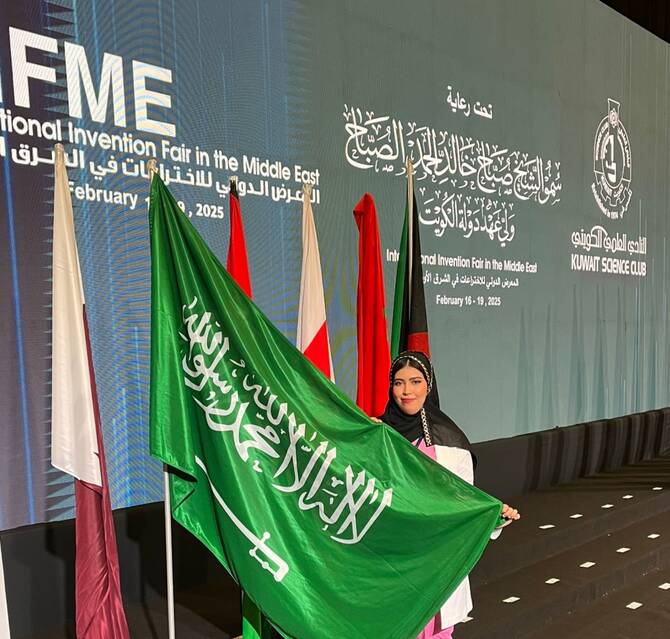
As she proudly waved the Saudi flag on stage in Kuwait, surrounded by fellow inventors and mentors, Al-Matrudi’s message was clear: Saudi women are not just participating in the global innovation movement, they’re leading it.
source/content: arabnews.com (headline edited)
______________
Saudi innovator Dalal Almatrudi proudly holds the Saudi flag after winning the Grand Prize at the International Invention Fair of the Middle East 2025 in Kuwait. (SUPPLIED)
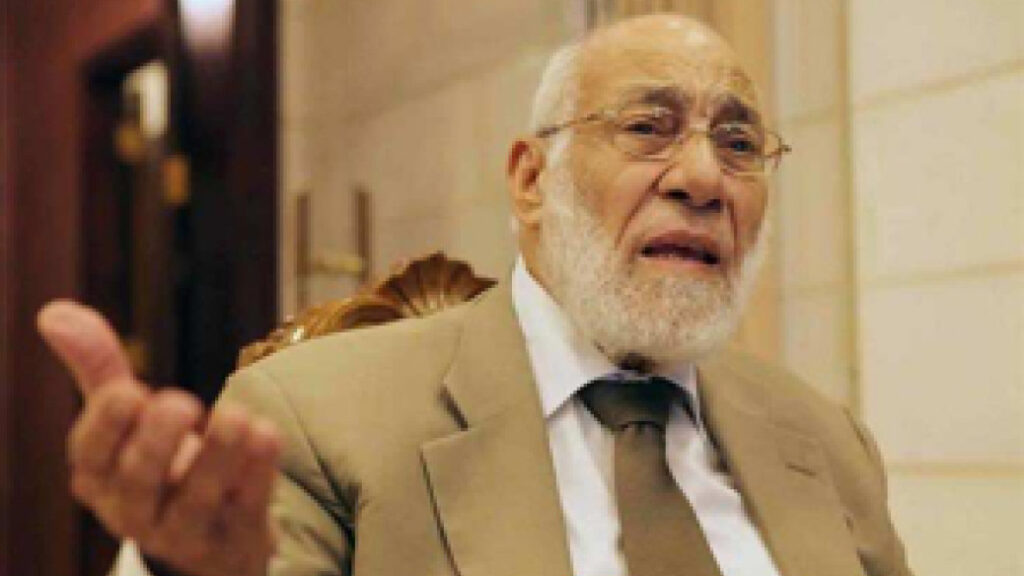
Egyptian Islamic scholar and geologist Zaghloul El-Naggar, a leading figure in the field of scientific interpretation of the Qur’an, has died at the age of 92.
El-Naggar passed away in Amman, Jordan, after a battle with illness, according to statements released on his official social media accounts on Sunday.
His funeral prayer will be held on Monday at Abu Aisha Mosque in Amman, followed by burial at Umm Al-Qutain Cemetery.
Born on 17 November 1933 in the village of Mashal in Egypt’s Gharbia Governorate, El-Naggar showed an early passion for science.
He graduated with honours in geology from Cairo University in 1955, earning the Mustafa Baraka Award in Earth Sciences. He obtained a PhD from the University of Wales in 1963 and became a full professor in 1972.
El-Naggar’s career spanned decades of teaching and research at universities in Egypt, the UK, Saudi Arabia, Qatar, Yemen, Jordan, and the United States.
He chaired the geology department at Qatar University, taught at King Fahd University of Petroleum and Minerals, and served as a visiting professor at UCLA.
He also directed Al-Ahqaf University in Yemen and later taught at the World Islamic Sciences and Education University in Jordan.
He became one of the Arab world’s most recognised voices on the relationship between science and faith, authoring numerous books and delivering hundreds of lectures on what came to be known as the “scientific miracles of the Qur’an and Sunnah”.
His popular TV programme Ayat Bayyinat (“Clear Verses”) aired across Arab channels, exploring Quranic descriptions of natural phenomena.
El-Naggar was a member of the International Commission on Scientific Signs in the Qur’an and Sunnah and was honoured several times for his contributions to promoting scientific understanding within an Islamic framework.
source/content: newarab.com (headline edited)
______________
El-Naggar passed away in Amman, Jordan, after a battle with illness [Al-Araby Al-Jadeed]
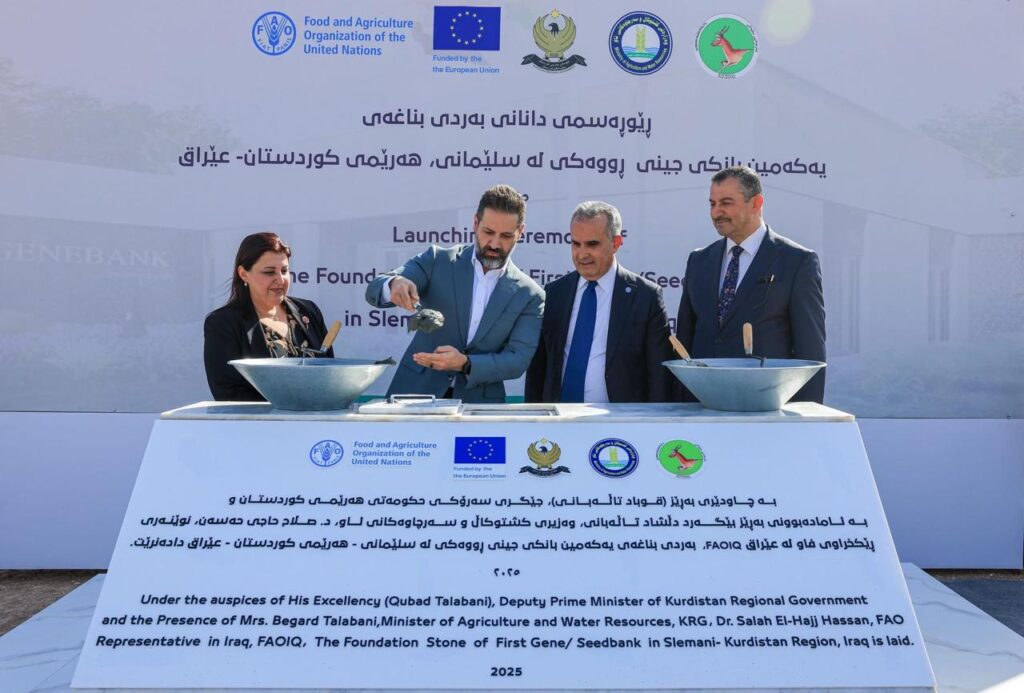
Under the auspices of H.E. Mr. Qubad Talabani, Deputy Prime Minister of the Kurdistan Regional Government, Iraq marked a major step toward safeguarding its agricultural heritage and enhancing its food security with the laying of the foundation stone for the first-ever Gene/Seed Bank in the Region.
The facility, located in Hawari Shar Park in Sulaymaniyah, is funded by the European Union (EU) and implemented by the Food and Agriculture Organization of the United Nations (FAO), in collaboration with the Federal and Regional Governments as part of the “Restoration and Strengthening the Resilience of Agri-Food Systems in Iraq” project. The facility will enable the preservation of plant genetic diversity, enhance food security, and build resilience against climate change.
The event was inaugurated by H.E. Deputy Prime Minister of the Kurdistan Regional Government, Mr. Qubad Talabani; H.E. Minister of Agriculture and Water Resources, Ms. Begard Talabani; the Governor of Sulaymaniyah, Dr. Haval Abubakir; the Mayor of Sulaymaniyah, Ms. Leyla Omar Ali; the FAO Representative in Iraq, Mr. Salah El Hajj Hassan; along with a number of senior representatives from academic and agricultural institutions.
H.E. Mr Qubad Talabani, Deputy Prime Minister, emphasised the importance of this initiative, saying: ‘The gene bank is an investment for the future; it protects our past and secures our future.’
The Gene/Seed bank is a strategic facility for conserving Iraq’s rich plant genetic diversity, which includes over 3,500 plant species originating from the ancient civilizations that once flourished in Iraq—the cradle of civilization. These species hold scientific, historical, and human value across the region and globally. The facility will enable the conservation of rare plant genetic resources, including wild varieties of grains, vegetables, and indigenous crops. It will also strengthen Iraq’s capacity to conserve seeds and make use of valuable genetic traits—such as drought tolerance—from wild species to support the development of more climate-resilient crops.
In her remarks, H.E. Minister Begard Talabani stated: “This initiative represents a strategic milestone in the journey of developing the agricultural sector by protecting plant diversity and supporting scientific research. It will enable farmers to benefit from our historical plant heritage and will allow us to preserve our agricultural legacy for future generations.”
FAO Representative in Iraq, Mr. Salah El Hajj Hassan, expressed his sincere appreciation to FAO’s national partners in the federal government and the Kurdistan Regional Government for their close collaboration and support. He also acknowledged and thanked the European Union for funding this initiative under the scope of the “Restoration and Strengthening the Resilience of Agri-Food Systems in Iraq,” project, which also reflects the follow-up to the recommendations resulting from the FAO Director-General visit to Iraq and his meetings with senior officials. He added that this facility represents a center for scientific innovation in research and resilience-building. It enables the preservation of Iraq’s historical, environmental and agricultural heritage, ensures that future generations can benefit from it, and stands as a testament to FAO’s commitment to transforming Iraq’s agricultural legacy into a powerful tool for sustainable development.”
The gene bank will house modern storage vaults, laboratories, research and training facilities, and seed data documentation and conservation areas. Future expansion is anticipated to include a field gene bank, a tissue culture laboratory, and a cryobank.
The initiative directly contributes to the Sustainable Development Goals (SDGs), particularly SDG 2: Zero Hunger and SDG 13: Climate Action, by investing in biodiversity conservation and climate-resilient agriculture.
source/content: fao.org – FAO of the UN (headline edited)